
#18,976
Just over 18 years ago, in a blog called Hickory Farms Will Hate Me For This, I began promoting the idea that - instead of gifting cheese platters, fruitcakes and ugly sweaters to friends and family - we should be giving preparedness items for holidays, birthdays, and anniversaries.Most disasters boil down to unscheduled camping - for days, or sometimes weeks - in your home, in a community shelter, or possibly even in your backyard. Preparedness can not only make that process possible, it can make it less miserable as well.So, in what has become a holiday tradition at AFD, for the 19th year running I present my updated list of preparedness items - ranging from stocking stuffers to some big ticket items - that I've either recently bought or built for myself, or have given as gifts (sometimes both).
Living in hurricane country, my biggest concerns revolve around prolonged power outages, which also can impact other utilities (including water, sewer, and internet).
Not quite five years ago, in February of 2021, 3 successive winter storms swept across Texas, Louisiana, and Oklahoma, causing the worst collapse of the Texas energy grid on record (see Texas: The Latest - But Not The Last - Grid Down Crisis), resulting in hundreds of deaths (see City of Austin & Travis County 2021 WINTER STORM URI AFTER-ACTION REVIEW).
My primary goal is to have enough sustainable power for lights, radio, phone charging, and fans. Trying to run appliances, HVAC, or other high-draw devices is simply beyond my budget (but if you have enough money . . . . it can be done ).
The following is an example of how you can put together a plug-and-play mini solar power system for under $100; one that will keep your phones, lanterns, and charged, along with some mini-fans.

While I'm not recommending specific brands or suppliers, these are all typical of items I've purchased and used myself.
The accessories: . . . in my case, they include mini-fans, rechargeable lanterns, cell phones, my iPAD, and a USB powered battery charger. This allows me to recharge my supply of Ni-CD or Ni-MH batteries that power my walkie-talkies, battery operated lanterns, radios, and other devices.
Many people are now opting for `solar generators' being sold by a number of companies. These are not true `generators', but rather large batteries with a variety of output options to power devices. Most will only run a large appliance (like a refrigerator) for a few hours, without recharging.
While more expensive, solar generators are a plug-and-play solution that can be set up by just about anyone, and that have a good deal more capacity than the USB system described above.But if something breaks, you have to send it back to the factory for repairs. That turnaround time might be weeks. No matter how good the warranty, it's of limited comfort when the power is already out.
A year ago, I detailed my home build of (3) USB power banks (see Post-Milton Improvements To My Power Preps). By building my own, I saved some money, and if one breaks, I have a decent chance of being able to repair it (I have spare parts for major components).

Weighing in at less than 15 lbs, this 50 amp/hr (600 watt/hour) setup is self contained, with storage for cables, a wall charger, and a small 110v inverter. All you need to add is a solar panel (100 watts or better).
Whether home built, or store bought, these `solar generators' can greatly expand what you can do during a prolonged blackout.For Christmas presents two years ago I purchased some very nice 4-packs of LED lanterns, and some USB battery powered water pumps that attach as a faucet to large water jugs. Just three days after they arrived I endured a 3-day water outage at home, and found the faucets actually worked pretty well.

Sometimes I make the gifts myself, as when several years back I cobbled together some first aid kits, and distributed them to a number of friends and relatives. You can either put one together yourself, or purchase one already assembled.

Believe me, there is no substitute for having a well stocked first aid kit when you really need one. Having a kit isn't enough. Knowing what to do in an emergency is equally important. Luckily there are a number of good first aid books available, including:
Although (unscented) bleach will work, it requires measuring, and imparts a taste to the water many dislike. An option that has gotten a lot less expensive in recent years are personal filtration systems, like the LifeStraw ®.

At just 2 ounces, this personal water filter will reportedly filter 1000 liters down to .2 microns. Not bad for around $20. I've recently added the Sawyer Mini-Filter to my preps, again about $20.

Speaking of water, having a way to store enough water for three days (1 gal/person/day) is essential. A family of 4 will need at least 12 gallons for 72 hours. Personally, I keep enough on hand for a couple of weeks.
While there are plenty of `free options’ – like rinsed and recycled 2-liter plastic soda bottles or other food-safe plastic jugs – you can also buy collapsible 5 gallon containers.
A couple of years ago I bought several 5 gal. buckets (with lids) from a home improvement store, along with mylar bags and oxygen absorbers from Amazon, and put together some long-term food storage buckets for friends.

Cost per bucket? About $40. But enough food (rice, beans, tinned meat, etc.) to keep two people going for ten days or more in an emergency. I keep a couple on hand (one for me, one for the cat), myself.
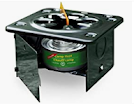
With a propane or butane camp stove or even a single burner Propane burner (see below) and a couple of 1 pound gas cylinders (about $5 each) and you can cook for a week or longer. Typically, a 1lb cylinder proves 1.5 to 2.0 hours of cooking.



This year - with a mutated seasonal H3N2 virus steadily rising, COVID still hanging on, and the specter of bird flu in the wings - safety goggles, a box of vinyl or nitrile gloves, or a box of facemasks (or N95 masks) should be in everyone’s emergency kit as well.

Books, board games, and having good old-fashioned conversations are undoubtedly the best, but when they run dry having a low-drain-battery-powered MP3 player, or a battery run DVD player, can seem like a lifesaver.
As an aside - I've collected (public domain) OTR (Old Time Radio) shows since the early 1990s, and have literally thousands of hours stored on CDs in MP3 format. The Internet Archive has a huge repository where you can download them for free, along with thousands of audio books.
I keep a couple of MP3 players filled with these shows and with audio books in my bug-out bag. When the power and internet were down, they provided me with hours of entertainment.
Over the years I've bought several cheap MP3 players ($20-$30) and filled them with thousands of hours of these shows (mostly from the 1940s and 1950s), giving them as gifts. And the nice thing is, you don't have to wait for an emergency to enjoy them.
Admittedly, some of the items listed above are useful more for comfort and convenience, than for survival.
But the physical and psychological impacts stemming from the hardships following a disaster are quite real (see Post-Disaster Sequelae), and a modicum of creature comforts can go a long ways towards mitigating their effects.
FEMA, Ready.gov and a myriad of other state and national entities know the risks we face, and would like to see Americans adopt and embrace a culture of preparedness.
And we can do that for ourselves, our families, and our friends.
One gift at a time.
