Showing posts sorted by relevance for query Egypt. Sort by date Show all posts

Monday, March 16, 2015

Egypt’s H5N1 Bird Flu Beat Goes On . . . .

image

Credit WHO


# 9835


Despite the fact that Egypt is more than 4 months into the worst H5N1 outbreak since the virus emerged in the mid-1990s, with at last count – 115 human cases since November 1st – we get very little day-to-day information about the crisis.  


Unfortunately, no news doesn’t always equal good news.


The Egyptian Ministry of Health stopped reporting publicly on a regular basis in late January (see The Silence Of The Egyptian MOH), and the media’s coverage has been both sparse and confused.


The last `official’ number we received was from the World Health Organization’s March 3rd update, which showed 88 cases and 26 deaths for the year (see below), based on reports provided to them by the Egyptian MOH. 

image

Excerpted from WHO Case Count Table – March 3rd


Exactly how current Egypt’s last notification to the WHO was, and how many cases have been detected since this update, are open questions. Based on media reports, new cases continue to emerge, but details are often absent and the YTD totals remain murky at best.


Sharon Sanders, whose conservatively curated 2015 Egypt H5N1 Case List had  94 cases and 26 deaths as of this morning, but also has several `probable's’ in waiting. 


Today, however, the FAO published notifications of 17 recent human H5N1 cases from Egypt (see below), that appear to be recent enough not to have been included in the last WHO update.  Some of these, Sharon believes she’s already captured on her list, but others appear to be `new’.


As these FAO updates lack identifying details, like age and gender, accurately matching them up to the FluTracker’s list isn’t possible at this time, but it is a pretty good indication that Egypt’s bird flu outbreak continues to steamroll along.


Sharon estimates that perhaps 9 of these cases will end up added to her list, once the WHO publishes a usable line listing. 


All of which puts Egypt’s probable YTD case count something north of 100, and growing.  Shattering Vietnam’s record year (2005) which saw 61 cases and 19 deaths, and Indonesia’s 2006 total of 55 cases and 45 deaths.


The `good news’, as far as we can tell from FAO, WHO, and Egyptian statements is that these human infections appear to be caused by direct contact with infected birds. 


A couple of small `family clusters’ have been mentioned in recent months, but there’s been nothing at this point to indicate the virus is transmitting easily, or efficiently, from person-to-person.


Below you’ll find a listing of today’s FAO notifications:


  1. 16/03/2015: Egypt - Influenza – Avian Confirmed Influenza - Avian in Kafr-el-sheikh, for human
  2. 16/03/2015: Egypt - Influenza – Avian Confirmed Influenza - Avian in Al Jizah (giza), for human
  3. 16/03/2015: Egypt - Influenza – Avian Confirmed Influenza - Avian in Al Daqahliyah (dakahlia), for human
  4. 16/03/2015: Egypt - Influenza – Avian  Confirmed Influenza - Avian in Ash Sharqiyah (sharkia), for human
  5. 16/03/2015: Egypt - Influenza – Avian  Confirmed Influenza - Avian in Al Buhayrah (behera), for human
  6. 16/03/2015: Egypt - Influenza – Avian Confirmed Influenza - Avian in Al Buhayrah (behera), for human
  7. 16/03/2015: Egypt - Influenza – Avian Confirmed Influenza - Avian in Ash Sharqiyah (sharkia), for human
  8. 16/03/2015: Egypt - Influenza – Avian Confirmed Influenza - Avian in Al Minya (menia), for human
  9. 16/03/2015: Egypt - Influenza – Avian Confirmed Influenza - Avian in Qina, for human
  10. 16/03/2015: Egypt - Influenza – Avian Confirmed Influenza - Avian in Qina, for human
  11. 16/03/2015: Egypt - Influenza – Avian Confirmed Influenza - Avian in Al Buhayrah (behera), for human
  12. 16/03/2015: Egypt - Influenza – Avian Confirmed Influenza - Avian in Al Minya (menia), for human
  13. 16/03/2015: Egypt - Influenza – Avian  Confirmed Influenza - Avian in Al Qalyubiyah (kalyoubia), for human
  14. 16/03/2015: Egypt - Influenza – Avian Confirmed Influenza - Avian in Al Qahirah (cairo), for human
  15. 16/03/2015: Egypt - Influenza – Avian Confirmed Influenza - Avian in Al Jizah (giza), for human
  16. 16/03/2015: Egypt - Influenza – Avian  Confirmed Influenza - Avian in Al Buhayrah (behera), for human
  17. 16/03/2015: Egypt - Influenza – Avian  Confirmed Influenza - Avian in Ash Sharqiyah (sharkia), for human

Monday, March 30, 2015

FAO: Egypt’s H5N1 Case Count Continues To Climb

image 


# 9883


Although the Egyptian MOH remains largely silent on their H5N1 outbreak, and the Egyptian media continues to publish numbers from some alternate reality (this report today cites only 13 deaths for the year), we’re able to keep some semblance of track via updates from the World Health Organization, releases from the FAO EMPRES website, and the hard work of Sharon Sanders who curates the Egypt - 2015 WHO/MoH/Provincial Health Depts H5N1 Confirmed Case List.


Our last update from the FAO came two weeks ago (see Egypt’s H5N1 Bird Flu Beat Goes On . . . .),  which was followed up a few days later by a WHO EMRO Update On Egypt’s H5N1 Outbreak, which pegged the number of H5N1 cases in Egypt for the year at 116, with 36 deaths (as of March 17th).


While we’ve seen scattered reports in the media of additional cases over the past two weeks, we rarely see a confirmation by Egyptian authorities.  Luckily, they still continue to report to International agencies like the WHO and FAO under the rules established under the IHR (International Health Regulations).


Today the FAO has announced 11 more H5N1 cases, the links you’ll find below:


  1. 30/03/2015: Egypt - Influenza – Avian  Confirmed Influenza - Avian in Assiut, for human
  2. 30/03/2015: Egypt - Influenza – Avian  Confirmed Influenza - Avian in Port Said, for human
  3. 30/03/2015: Egypt - Influenza – Avian  Confirmed Influenza - Avian in Fayoum, for human
  4. 30/03/2015: Egypt - Influenza – Avian  Confirmed Influenza - Avian in Shrkia, for human
  5. 30/03/2015: Egypt - Influenza – Avian  Confirmed Influenza - Avian in Shrkia, for human
  6. 30/03/2015: Egypt - Influenza – Avian  Confirmed Influenza - Avian in Menoufia, for human
  7. 30/03/2015: Egypt - Influenza – Avian  Confirmed Influenza - Avian in Dakahlia, for human
  8. 30/03/2015: Egypt - Influenza – Avian  Confirmed Influenza - Avian in Suhag, for human
  9. 30/03/2015: Egypt - Influenza – Avian  Confirmed Influenza - Avian in Shrkia, for human
  10. 30/03/2015: Egypt - Influenza – Avian  Confirmed Influenza - Avian in Behera, for human
  11. 30/03/2015: Egypt - Influenza – Avian  Confirmed Influenza - Avian in Shrkia, for human

Based on this report, previous reports, and FluTrackers2015 Egypt H5N1 Case List , Egypt is up to 128 cases for the year. Deaths are often reported late (or sometimes not at all), but the WHO’s last tally was 36, and several more appear to have died since then.

While it is not entirely clear what is behind this sudden increase in H5N1 cases, Egypt has reported heavy rates of poultry infections this winter – even among vaccinated flocks (see Egypt H5N1: Poultry Losses Climbing, Prices Up 25% - which calls into question the effectiveness of the vaccines currently being used.


Poorly matched vaccines can often protect poultry against illness – but with increasingly diverse and rapidly evolving avian flu viruses - they cannot always prevent infection. The end result is that healthy looking chickens can harbor undetected infections, that viruses continue to circulate, and new variants or reassortants continue to emerge.


And without the traditional warning signs of sick or dying chickens, people who handle them are not aware of the the danger they pose.


While we’ve not seen any evidence of increased or efficient human-to-human transmission of the H5N1 virus in Egypt, it is worrisome that this outbreak has now gone on for five full months, and that in excess of 150 people have been infected. 


Twice as many human cases as has ever been reported by one country in a single year.  And each human infection provides the virus with another opportunity to better adapt to human physiology.


Although the future threat from H5N1 is unknown, these outbreaks in  Egypt and the rapid emergence and spread of new HPAI H5 reassortants around the globe over the past year recently prompted the World Health Organization to issue a pointed warning (see WHO: H5 Currently The Most Obvious Avian Flu Threat).

Tuesday, December 03, 2019

EID Journal: Novel Reassortant HPAI A(H5N2) Virus in Broiler Chickens, Egypt


#14,557

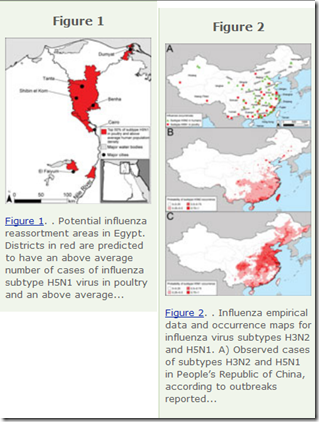
In March of 2013, in EID Journal: Predicting Hotspots for Influenza Virus Reassortment, both China and Egypt were at the top of the list of areas likely  to spawn the next novel flu virus.

image
EID Influenza Hotspots For Reassortment - 2013
As a historical note, just over two weeks after its publication, China announced the first wave of human H7N9 cases.

While China has since gotten most of our attention, rapidly producing H10N8, H5N6, and H5N8 (to name a few), between November 2014 and May 2015, Egypt saw the biggest outbreak of human infection with H5N1 on record (see EID Dispatch: Increased Number Of Human H5N1 Infection – Egypt, 2014-15). 
Both countries lie beneath major migratory flyways, both are major poultry producers (with many backyard flocks), and both have numerous LPAI and HPAI subtypes circulating in local birds. 
While China appears to have gained better control of avian flu the past few years, Egypt continues to struggle with spotty poultry vaccination campaigns that often rely on older, mismatched vaccines (see Egypt: A Paltry Poultry Vaccine), which can potentially drive vaccine escape mutations.
As a result, multiple clades of HPAI H5 viruses (H5N1 and H5N8) - along with H9N2 - have all become endemic in Egyptian poultry.
In early March of this year, in Egyptian MOA: Reassorted H5N2 Detected On Duck Farm, we saw a short statement announcing the detection of a new H5N2 virus on an Egyptian duck farm, followed 3 days later by a barebones OIE Notification.
That announcement followed similar reports from Russia, which in December of 2017 and again in August 2018, reported outbreaks of HPAI H5N2 in poultry farms in Kostroma Oblast.
The OIE confirmed that the second Russian H5N2 virus was of clade 2.3.4.4. - which suggested it was a relatively new reassortment - likely from either HPAI H5N8 or HPAI H5N6.

In June (see Viruses: A Novel Reassortant H5N2 Virus In Egypt), we got our first detailed look at the Egypt's new H5N2 virus (A/duck/Egypt/VG1099/2018), published in the journal Viruses. As with the Russian H5N2, it was of clade 2.3.4.4. 
More specifically, a reassortant between HPAI H5N8 and LPAI H9N2, both of which - along with HPAI H5N1 - co-circulate in Egypt.
Today we've a new study, which describes an entirely different reassorted H5N8/H9N2 virus, in broiler farms in Egypt. A concern because up until earlier this year, HPAI H5 and H9N2 have appeared to co-circulate in Egypt without reassorting.

A link, and some excerpts from today's EID dispatch, then I'll return with a postscript.
Volume 26, Number 1—January 2020
Dispatch

Novel Reassortant Highly Pathogenic Avian Influenza A(H5N2) Virus in Broiler Chickens, Egypt
 

Kareem E. Hassan, Jacqueline King, Magdy El-Kady, Manal Afifi, Hassanein H. Abozeid, Anne Pohlmann, Martin Beer, and Timm Harder
Abstract

We detected a novel reassortant highly pathogenic avian influenza A(H5N2) virus in 3 poultry farms in Egypt. The virus carried genome segments of a pigeon H9N2 influenza virus detected in 2014, a nucleoprotein segment of contemporary chicken H9N2 viruses from Egypt, and hemagglutinin derived from the 2.3.4.4b H5N8 virus clade.


Since 2006, Egypt’s poultry industry has been plagued by endemic infections with highly pathogenic avian influenza (HPAI) virus, subtype H5N1, clade 2.2.1, of the goose/Guangdong (gs/GD) lineage (1). In addition, low pathogenicity avian influenza (LPAI) virus of subtype H9N2, G1 lineage, introduced in 2011 (2), and HPAI H5N8 (gs/GD clade 2.3.4.4b) introduced in 2016, have become entrenched in local poultry populations (3). Despite ongoing control measures, respiratory disease with increased mortality rates is endemic in poultry farms in Egypt.


The zoonotic nature of HPAI H5N1 2.2.1 viruses has caused in Egypt the highest number of human infection cases per country worldwide; a low level of sporadic benign human cases of H9N2 viral infection has also been reported from Egypt (4). Continued adaptation by point mutations, but not reassortment, to enhance replication in mammalian hosts has been repeatedly reported in avian influenza in Egypt (5). Here, we describe the detection of a new reassortant HPAI virus in commercial chicken holdings in Egypt. This virus carries the hemagglutinin (HA) gene of HPAI clade 2.3.4.4b H5N8 virus and 7 genome segments derived from Egyptian H9N2 viruses (6).

(SNIP)


In March 2019, Egypt’s Ministry of Agriculture announced the detection of a new influenza A(H5N2) virus from seemingly healthy ducks in the Dakahlia governorate (11); recently published information on this reassortant indicated the presence of a neuraminidase N2 segment of chicken H9N2 viruses in the background of an HPAI H5 clade 2.3.4.4b virus (11). 

Our data confirm the presence of a different H5N2 reassortant and its occurrence in chickens in different geographic regions of Egypt (Table). We detected the current reassortant HPAI H5N2 viruses in 2 different broiler farms in Beheira (January and March 2019) and 1 broiler farm in Fayoum (January 2019) governorates (Table). 

The HA amino acid sequence of these reassortants does not signal antigenic variation compared with parent HPAI H5 subtype of clade 2.3.4.4b. Antigenic and further phenotypic properties, such as host specificity, require investigation as soon as isolates are available. For the H5N2-positive samples, only FTA card material was available at Friedrich-Loeffler-Institut. However, H5N2 isolates were successfully generated at the Beni-Suef University, Egypt, but were currently not available for further antigenic and phenotypic analyses (M. El-Kady, unpub. data).

Intensified targeted surveillance in poultry and pigeons is urgently required and may lead to detection of additional reassortants. However, co-detection in a sample of H5N8 and H9N2 subtypes by reverse transcription quantitative PCR may blur the identification of H5N2 reassortants; plaque purification of such samples would aid in separating subtypes but cannot currently be used in routine diagnostics.

There is a risk for transboundary spread of HPAI A(H5N2) virus in northern Africa and the Middle East, and similar reassortment events are to be expected in regions where clade 2.3.4.4 HPAI and H9N2 viruses are co-circulating.
Long-term solutions in combating avian influenza virus infections in poultry are sorely needed and would help to lower risks of human exposure to zoonotic avian influenza viruses such as the highly zoonotic H7N9 viruses in China that carry a full set of internal genes of an H9N2-G1–like avian influenza virus (12).

Dr. Hassan is a poultry veterinary specialist at Beni-Suef University, currently on leave to complete his PhD studies at the Friedrich-Loeffler-Institut, Isle of Riems, Germany. His primary research interest is focused on respiratory infectious diseases in poultry with an emphasis on avian influenza.


LPAI H9N2 is ubiquitous in Asia and across much of the Middle East, and while it currently is viewed as being a relatively minor pandemic threat (see CDC IRAT SCORE), over the past few years, we've seen it acquire new, and worrying mammalian adaptations.
PLoS Path.: PB2 Mutations in H9N2 Enhance Replication & Growth In Mammals

Virology Journal: Mouse-adapted H9N2 Avian Influenza Virus Causes Systemic Infection in Mice
Viruses: Characterization of the H9N2 Avian Influenza Viruses Currently Circulating in South China
Of the HPAI viruses of greatest concern over the past decade – H5N1, H7N9, and H5N6 – all share a couple of important features (see Study: Sequence & Phylogenetic Analysis Of Emerging H9N2 influenza Viruses In China):
  • They have all come about through viral reassortment in poultry 
  • And while their HA and NA genes may differ - they all carry one or more internal genes from the avian H9N2 virus
As a standalone virus, H9N2 may be of only limited concern, but when it lends its internal genes to more dangerous HPAI H5 and H7 viruses, it appears to increase both their biological `fitness' and pandemic potential.

All of which makes two separate reassortment events in Egypt this year between HPAI H5N8 and LPAI H9N2 very much worthy our attention.

Saturday, August 22, 2015

Revisiting Egypt’s Murky H5N1 Battle


#10,437


We’ve some interesting numbers, released today from Egypt’s Central Agency for Public Mobilization and Statistics  on their growing avian influenza problem, but first some background and catch-up.


Since late January, getting credible information out of Egypt on their AI (Avian Influenza) problem has become increasingly difficult.  During the first three weeks of the year – when human H5N1 cases were climbing rapidly – we saw daily status reports issued. 


But after January 22nd, that practice abruptly stopped (see Egypt’s MOH Confirms 21st H5N1 Case).


Since then, as I’ve noted before (see The Silence Of The Egyptian MOH Media: WHO H5N1 Mission To Egypt), the Egyptian MOH has ceased to report most cases on their website and the YTD numbers attributed to MOH spokesmen in the Egyptian media have been `fanciful at best.


Although I wouldn’t wager anything I’d care to lose on its accuracy (it is, after all, based on Egypt’s self reporting), the World Health Organization  reports 134 human H5N1 cases (and 37 deaths) in Egypt during the first half of the year. 


To put this into perspective, prior to 2015, all of the world’s countries combined had never reported more than 115 cases in a single year.


More than five months ago World Health Organization, along with the FAO, OIE,  NAMRU-3, CDC & UNICEF were invited to Egypt as a joint mission to investigate and to make recommendations on containing that outbreak. In early May we aw the  WHO Statement On Joint H5N1 Mission To Egypt,  with specific recommendations for addressing the crisis.

image

The 7-page executive summary, warns:

` . . .  the presence of H5N1 viruses in Egypt with the ability to jump more readily from birds to humans than viruses in other enzootic countries is of concern and requires a high level of vigilance from the Ministries of Health and Agriculture.’


You can read the full details in my May 15th blog, WHO Statement On Joint H5N1 Mission To Egypt.  The status of the 2-year action plan’ - outlined in the executive summary and supposedly due by now – remains uncertain.


Although human infections are of the greatest concern, equally murky have been the number and severity of HPAI outbreaks in Egypt’s poultry population.  


Since 2008, H5N1 has been considered endemic in Egyptian poultry, and regular reporting to the OIE ceased (see 07/07/08 Final report (endemic)), . That final report stated, `No more follow-up reports will be made, but instead, information about this disease will be included in the future six-monthly reports.’


Although hard numbers have been difficult to obtain, between Arabic media reports, and sporadic reporting to the OIE and FAO, it has been no secret that HPAI continues to ravage Egyptian poultry. 


Like China, Egypt depends heavily upon HPAI poultry vaccines to control their AI problem, and is in fact the world’s second largest consumer of these vaccines (after China). But as we’ve seen elsewhere in the world, the longer they have been in use, the less effective they have become (see A Paltry Poultry Vaccine). 


While Egypt’s AI problems never went away, it did seem on the decline after 2010. In mid-2014 we began to see signs that the number of poultry outbreaks was increasing, and in the fall of 2014 Egypt began the largest, and longest running, outbreak of human H5N1 in history. 


The likely explanation for this spike in human cases was that more poultry were falling ill and therefore more human exposures were occurring.


In February of this year, in Egypt H5N1: Poultry Losses Climbing, Prices Up 25%, we saw reports of vaccinated poultry flocks succumbing to the H5N1 virus, and and growing panic in the poultry industry.  And in April, a report in the ECDC’s Eurosurveillance journal appeared to shed additional light on this change in AI activity.


In Eurosurveillance: Emergence Of A Novel Cluster of H5N1 Clade 2.2.1.2, we learned that the predominant H5N1 virus in Egypt had changed in mid-2014, just months before the human and poultry outbreaks began to rise.  From the Abstract:


A distinct cluster of highly pathogenic avian influenza viruses of subtype A(H5N1) has been found to emerge within clade 2.2.1.2 in poultry in Egypt since summer 2014 and appears to have quickly become predominant. Viruses of this cluster may be associated with increased incidence of human influenza A(H5N1) infections in Egypt over the last months.


As AI outbreaks always decline during the heat of the summer,  we’re seeing very little in the way of H5N1 reports right now.  In the meantime, we have a very brief report today that sheds some light on last year’s abrupt increase in poultry outbreaks in Egypt.


Note, this is a comparison of poultry outbreaks reported in 2014 vs. 2013, and they attribute the increase to a `mutation of the virus’ .  We don’t have official numbers for the current year.


281.6% increase in the incidence of bird flu

Saturday, August 22, 2015 11:46

Cairo - Gate delegation

Central Agency for Public Mobilization and Statistics, revealed that the total incidence of bird flu epicenter was 374 in 2014 compared to 98 the focus in 2013, an increase of 281.6%.

He attributed this surge device for the mutation of the virus that causes the disease which led to the ineffectiveness of fortifications used and thus increase the number of casualties.

The device, in its annual report on animal diseases in Egypt, that the Minya governorate registered the highest percentage of injury where the number of spots reached 47 focus, by 12.6%, followed by Giza province, where the number of foci of 38 focus by 10.2%, followed by Sohag 36 focus by 9.6 % of the total number of outposts


These are, of course, only officially reported (and recorded) outbreaks.  As with any type of disease reporting, 100% accuracy and year-to-year consistency in surveillance and reporting is impossible to achieve. 


Sill, a nearly 3-fold increase in outbreaks over 2013 is a pretty telling statistic.


The big concern this year is that it won’t just be Egypt and China dealing with the bulk of avian flu this winter.   HPAI H5 is expected to return to plague North America’s poultry industry,  Europe may well find HPAI H5 and H7 making inroads again, Southeast Asia remains vulnerable to H5N6 and H7N9, and Africa continues to report a major surge in bird flu reports.


Stay tuned . . . and fasten your seatbelts . . . it’s likely to be a bumpy ride.


Saturday, September 21, 2019

Emerg. Microbes & Inf.: Active Surveillance & Genetic Evolution of Avian Influenza Viruses in Egypt, 2016–2018


#14,319

After peaking in Southeast Asia and Europe between 2005 and 2009, by 2012 avian influenza activity appeared to be in decline, with only 32 human (H5N1) cases reported around the globe. 
Bird flu activity in past hot spots like Vietnam and Indonesia had fallen dramatically, while some signs of increased activity were being reported from Egypt and Cambodia.
Even as some were predicting the avian flu threat was ending, in March of 2013, in EID Journal: Predicting Hotspots for Influenza Virus Reassortment, we looked at a paper that identified areas of the globe most likely to spawn the next novel flu virus.

image
EID Influenza Hotspots For Reassortment - 2013
The study cited:
Potential geographic foci of reassortment include the northern plains of India, coastal and central provinces of China, the western Korean Peninsula and southwestern Japan in Asia, and the Nile Delta in Egypt.
Timing, as they say, is everything:
  • Less than 3 weeks later, China announced the emergence of the biggest avian flu threat seen to date - H7N9 - which first appeared (as predicted) in the central coastal provinces of China (Anhui, Shanghai).
  • Before the end of 2013, two more novel viruses would spring forth from China, a clade 2.3.4.4. H5N8 that would spread globally sparking large avian epizootics, and the brief appearance of H10N8.
  • In the spring of 2014, HPAI H5N6 would emerge in a Sichuan China poultry flock, and has since infected at least two dozen people in China, and appeared in poultry in Vietnam, Laos, and Cambodia.
Fast forward more than six years, and once again we appear to be in an avian flu drought, brought on in large part by an aggressive nationwide poultry vaccination program in China, which has greatly dampened down avian flu transmission.
But, with the possible exception of avian flu in China, the conditions remain ripe for these same regions to produce newly reassorted (avian or swine) flu viruses.  And no one can say how long China's poultry vaccination program will keep the lid on their bird flu.
While the 2009 H1N1 pandemic showed that a pandemic reassortment can happen anywhere - including in the Americas - with China's avian flu activity temporarily suppressed, many experts are eyeing Egypt (and the Middle East) - which has at least 3 major subtypes (H5N1, H5N8, H9N2) co-circulating - as a potential proving ground for avian flu.

Some recent blogs include:
Viruses: A Novel Reassortant H5N2 Virus In Egypt
J. Virology: Genetic Compatibility of Reassortants Between Avian H5N1 & H9N2 Influenza Viruses
Two Studies On The Recent Evolution Of HPAI H5 Viruses In The Middle East
Sci. Reports: Efficacy Of AI Vaccines Against The H5N8 Virus in Egypt

Egypt continues to struggle with spotty poultry vaccination campaigns, often relying on older, mismatched vaccines that can often mask symptoms (see Egypt: A Paltry Poultry Vaccine), and can potentially drive vaccine escape mutations.
As a result, multiple clades of HPAI H5 viruses - along with H9N2 - have all become endemic in Egyptian poultry.
While the Egyptian government remains circumspect when discussing their avian flu problems (see Revisiting Egypt’s Murky H5N1 Battle), we do get the occasional research paper published in that region.

Today we've a highly detailed study on the recent genetic evolution of avian flu viruses in Egypt, published in Emerging Microbes & Infections, that - while not providing any bombshells - does remind us of the potential for reassortment in the region.
The authors describe - in diplomatic terms - how suboptimal vaccination campaigns have likely exacerbated Egypt's predicament, and may provide future avenues for new viruses to emerge.
Due to its length, I've only included a few excerpts. Follow the link below to read the study in its entirety.

Active surveillance and genetic evolution of avian influenza viruses in Egypt, 2016–2018
Ahmed Kandeil, Joseph T. Hicks, Sean G. Young, Ahmed N. El Taweel, Ahmed S. Kayed, Yassmin Moatasim, show all

Pages 1370-1382 | Received 13 Mar 2019, Accepted 22 Jul 2019, Published online: 17 Sep 2019

https://doi.org/10.1080/22221751.2019.1663712
Egypt is a hotspot for avian influenza virus (AIV) due to the endemicity of H5N1 and H9N2 viruses. AIVs were isolated from 329 samples collected in 2016–2018; 48% were H9N2, 37.1% were H5N8, 7.6% were H5N1, and 7.3% were co-infections with 2 of the 3 subtypes.

The 32 hemagglutinin (HA) sequences of the H5N1 viruses formed a well-defined lineage within clade 2.2.1.2. The 10 HA sequences of the H5N8 viruses belonged to a subclade within 2.3.4.4. The 11 HA of H9N2 isolates showed high sequence homology with other Egyptian G1-like H9N2 viruses. 

The prevalence of H5N8 viruses in ducks (2.4%) was higher than in chickens (0.94%). Genetic reassortment was detected in H9N2 viruses. Antigenic analysis showed that H9N2 viruses are homogenous, antigenic drift was detected among H5N1 viruses. AI H5N8 showed higher replication rate followed by H9N2 and H5N1, respectively. H5N8 was more common in Southern Egypt, H9N2 in the Nile Delta, and H5N1 in both areas. Ducks and chickens played a significant role in transmission of H5N1 viruses. 

The endemicity and co-circulation of H5N1, H5N8, and H9N2 AIV coupled with the lack of a clear control strategy continues to provide avenues for further virus evolution in Egypt.

(SNIP)
Discussion
Continuous active surveillance for AIVs in poultry is critical to optimize control and monitor the genesis and emergence of novel strains. Through our systematic active surveillance of AIV in Egypt, four major events were observed: emergence of the H5N8 virus in domestic poultry in Egypt, spread of reassortant H9N2 virus that contains four internal genes from Eurasian viruses, increased detection rate of AIV since the emergence of H5N8, and decreased detection of H5N1 viruses.
        (SNIP)
Selection bias may have affected the results shown here as not all geographic areas of Egypt were sampled and convenience sampling was used. However, the main aim of this work was to study the genetic and antigenic characteristics of the viruses circulating at the time of the study. Hence, our detection rates may not indicate the true incidence or prevalence of AI infection among Egyptian poultry.
Another issue is the lack of data on vaccinations used in the sampled sites. If vaccines are heavily used, then the estimates provided in this study will be underestimated and the analysis by bird health can be biased.
In Egypt, co-circulation of HPAI H5N1 and H5N8 with H9N2 viruses among poultry has been observed. Eradication of these viruses from Egypt is considered unlikely due to gaps in the application of recommended AIV control strategies. Global active surveillance of AIV among domestic and migratory wild birds needs to be sustained to monitor the spread and genesis of circulating viruses.
        (Continue . . . )


Our current respite from avian flu is a welcome one, but it should not lull us into complacency.  The raw ingredients are all out there, continually mixing and matching genes, and it is just a matter of time before the right combination sets up an emerging virus for infamy.

Thursday, May 28, 2020

Study: Genotyping & Reassortment Analysis of HPAI H5N8 and H5N2 viruses from Egypt

image


#14,590

In mid-March of 2013 - at a time when HPAI H5N1 was the world's primary avian flu concern - we examined a research article (see EID Journal: Predicting Hotspots for Influenza Virus Reassortment that identifies 6 key geographic regions for avian flu reassortment (see graphic above).
The two biggest contenders?  Coastal China, and the Nile Valley region of Egypt.
Since timing is everything, just a little over 2 weeks later, China announced their first outbreak of LPAI H7N9, a virus that would evolve into both LPAI and HPAI strains (and two lineages) and spark 5 yearly epidemics (see below) before an effective vaccine was deployed in 2017.

H7N9 Epidemic Waves - June 14th - Credit FAO

Eighteen months after the emergence of H7N9, Egypt saw the world's biggest HPAI H5 human outbreak (see EID Dispatch: Increased Number Of Human H5N1 Infection – Egypt, 2014-15), resulting in at least 165 infections, and 51 deaths.
Since then, Egypt has only reported sporadic human infections, but their surveillance and reporting has long been intermittent (see Revisiting Egypt’s Murky H5N1 Battle).
But what we have seen has been a continual evolution of HPAI H5Nx viruses, with the introduction of HPAI H5N8 in 2016, and their reassortment with LPAI H9N2 (introduced in 2010).  In the spring of 2019, a new, novel H5N2 appeared in Egypt (see Viruses: A Novel Reassortant H5N2 Virus In Egypt), which identified it as clade 2.3.4.4.
Eight months later, yet another novel H5N2 (a reassortment of H5N8 & H9N2) was described in the EID Journal (see Novel Reassortant HPAI A(H5N2) Virus in Broiler Chickens, Egypt).
While Egypt has long maintained a poultry vaccination program, it has been plagued with vaccine failures and lapses in application (see Sci. Reports: Efficacy Of AI Vaccines Against The H5N8 Virus in Egypt) - which, unlike in China - has done little to curb the spread and evolution of avian flu viruses.

A few recent blogs include:
Emerg. Microbes & Inf.: Active Surveillance & Genetic Evolution of Avian Influenza Viruses in Egypt, 2016–2018

Two Studies On The Recent Evolution Of HPAI H5 Viruses In The Middle East

J. Virology:Genetic Compatibility of Reassortants Between Avian H5N1 & H9N2 Influenza Viruses
To this growing list we can add a new study, published this week in Infection, Genetics and Evolution, that finds the pace of HPAI H5Nx evolution in Egypt continues to quicken, and warns that these viruses are picking up increased antiviral resistance as well. 
Genotyping and reassortment analysis of highly pathogenic avian influenza viruses H5N8 and H5N2 from Egypt reveals successive annual replacement of genotypes
Kareem E.Hassan Noha Saad Hassanein H.Abozeid Salama Shany  Magdy F.El-Kady Abdelsatar Arafa Azza A.A.EL-Sawah Florian Pfaff Hafez M.Hafez  Martin Beer Timm Harder  
https://doi.org/10.1016/j.meegid.2020.104375 
Highlights
  • Systematic reassortment analysis of all publicly available Egyptian whole genome sequences of HP H5N8, reassortant HP H5N2 and LP H9N2 viruses revealed presence of at least seven different genotypes of HPAI H5Nx viruses of clade 2.3.4.4b in Egypt.
  • Heat mapping and tanglegram analyses suggested that several internal gene segments in both HP H5Nx and H9N2 viruses originated from avian influenza viruses circulating in wild bird species in Egypt.
  • Amino acid substitutions in the Matrix (M2) and the Neuraminidase (NA) proteins of newly established sequences suggested presence of resistance against both Amantadine and Oseltamivir.

Abstract

Highly pathogenic (HP) H5N1, clade 2.2.1, and low pathogenic avian influenza (LPAI) H9N2 viruses, G1-B lineage, are endemic in poultry in Egypt and have co-circulated for almost a decade. Surprisingly, no inter-subtypic reassortment events have been reported from the field during that time.
After the introduction of HPAIV H5N8, clade 2.3.4.4b, in Egyptian poultry in 2016, suddenly HP H5N2 reassortants with H9N2 viruses emerged. The current analyses focussed on studying 32 duck flocks, 4 broiler chicken flocks, and 1 turkey flock, suffering from respiratory manifestations with moderate to high mortality reared in two Egyptian governorates during 2019. Real-time RT-PCR substantiated the presence of HP H5N8 in 21 of the 37 investigated flocks with mixed infection of H9N2 in two of them.
HP H5N1 was not detected. Full hemagglutinin (HA) sequencing of 10 samples with full-genome sequencing of three of them revealed presence of a single genotype. Very few substituting mutations in the HA protein were detected versus previous Egyptian HA sequences of that clade. Interestingly, amino acid substitutions in the Matrix (M2) and the Neuraminidase (NA) proteins associated with conferring both Amantadine and Oseltamivir resistance were present.
Systematic reassortment analysis of all publicly available Egyptian whole genome sequences of HP H5N8 (n = 23), reassortant HP H5N2 (n = 2) and LP H9N2 (n = 53) viruses revealed presence of at least seven different genotypes of HPAI H5Nx viruses of clade 2.3.4.4b in Egypt since 2016.
For H9N2 viruses, at least three genotypes were distinguishable.
Heat mapping and tanglegram analyses suggested that several internal gene segments in both HP H5Nx and H9N2 viruses originated from avian influenza viruses circulating in wild bird species in Egypt. Based on the limited set of whole genome sequences available, annual replacement patterns of HP H5Nx genotypes emerged and suggested selective advantages of certain genotypes since 2016.
         (Continue . . . )


While China and Southeast Asia have historically been world's primary hotspot for avian flu evolution, the Middle East - with its less-than-stellar infection control and a growing stable of circulating avian flu strains - has to be viewed as a serious contender. 

Friday, April 03, 2015

Eurosurveillance: Emergence Of A Novel Cluster of H5N1 Clade 2.2.1.2

image

Credit Eurosurveillance 


# 9899


Over the past 5 months in Egypt we’ve witnessed the largest, and most sustained, outbreak of H5N1 among humans since the virus first emerged in China in 1996.  While numbers are murky, we are somewhere in the vicinity of 160 confirmed cases since November 1st, and roughly 50 deaths. 


Or roughly 50% higher than the greatest previous one year combined total (for 9 countries) of 115 cases set back in 2006.


Although we’ve seen a few small family clusters where H-2-H transmission may have occurred, we’ve seen no signs of increased human-to-human transmissibility of the H5N1 virus.


But obviously something has changed in Egypt. 


Last January in a CIDRAP report (see FAO Reports Mutations In H5N1 Virus From Egyptian Poultry) we learned that genetic characterizations of H5N1 viruses sampled from Egyptian poultry recently showed signs of several troubling `mammalian adaptations’, and we’ve seen repeated reports of large numbers of poultry outbreaks – even among previously vaccinated poultry (see Egypt H5N1: Poultry Losses Climbing, Prices Up 25%).


Yesterday the journal Eurosurveillance published a Rapid Communications characterizing the genetic changes in a rapidly spreading strain of H5N1 that  appears to have emerged in early 2014, and is quickly supplanting other strains of the virus in that region.


Eurosurveillance, Volume 20, Issue 13, 02 April 2015

Rapid communications

Emergence of a novel cluster of influenza A(H5N1) virus clade 2.2.1.2 with putative human health impact in Egypt, 2014/15

A S Arafa1,2, M M Naguib1,2,3, C Luttermann3, A A Selim1, W H Kilany1, N Hagag1, A Samy1, A Abdelhalim1, M K Hassan1, E M Abdelwhab1, Y Makonnen4, G Dauphin5, J Lubroth5, T C Mettenleiter3, M Beer3, C Grund3, T C Harder ()3


A distinct cluster of highly pathogenic avian influenza viruses of subtype A(H5N1) has been found to emerge within clade 2.2.1.2 in poultry in Egypt since summer 2014 and appears to have quickly become predominant. Viruses of this cluster may be associated with increased incidence of human influenza A(H5N1) infections in Egypt over the last months.


In Egypt, highly pathogenic avian influenza (HPAI) influenza A(H5N1) viruses of clade 2.2.1 and their descendants have been circulating in poultry populations since 2006, causing sporadic human infections [1]. Human influenza A(H5N1) infections in Egypt have been reported since the introduction of the virus in 2006 with 204 cases occurring until end of 2014 and a fatality rate of 35,8% in laboratory-confirmed cases reported to the World Health Organization (WHO). However, since January 2015, the incidence of human H5N1 cases in Egypt has increased dramatically: as of 21 March 2015, 116 human cases including 36 deaths have been reported to WHO [2]. This study was initiated to analyse molecular properties of H5N1 viruses that have caused outbreaks in poultry in Egypt since summer 2014 and to compare them with published sequences from H5N1 viruses obtained from recent human cases.

<SNIP>

Discussion

(Excerpt)


Our data confirm the emergence of an additional virus cluster within the Egyptian 2.2.1.2 clade of H5N1 HPAI viruses. Since November 2014, viruses of this new cluster appear to have become dominant over the previously described clade 2.2.1.2 phylotypes circulating in various poultry species. The only two publicly available sequences of viruses isolated from recent human H5N1 cases in Egypt show similar mutation patterns and fall into the same phylogenetic group. The molecular determinants that may improve the evolutionary fitness of these viruses need to be further clarified. The emergence of new clusters of H5N1 HPAI viruses in Egypt is not without precedence: In late 2007, a subclade of antigenic drift variants, later designated 2.2.1.1, emerged and expanded (clade 2.2.1.1a) in commercial poultry in Egypt but disappeared until end of 2010 [14] and, contrary to the current situation, did not replace 2.2.1 viruses. Viruses of clade 2.2.1.1 that emerged in 2007 hardly caused any human cases: according to the OpenFlu database [15]: only one of 100 H5N1 isolates from humans in Egypt belonged to clade 2.2.1.1; all others belonged to clade 2.2.1 and 2.2.1.2. In contrast, the emerging cluster identified in this study seems to be predominant across all poultry production sectors and has already caused a third of all human infections reported in Egypt since 2006 in only three months of 2015.


Given the endemic status of influenza H5N1 in poultry and the limitations of the reporting system of H5N1 HPAI virus outbreaks in poultry in Egypt, it is difficult to assess whether the altered epidemiological pattern of the emerging phylotype is due to altered biological properties in poultry or whether the increased incidence of infections in poultry merely reflects an increased viral burden across all poultry sectors in Egypt. In any case, the observed recent rise in outbreaks in poultry probably resulted in increased exposure risks for humans in contact with poultry, which may have caused an increased incidence in human cases. However, it can at this point not be excluded with certainty that the emerging phylotype of viruses may have increased zoonotic potential and may be transmitted more efficiently to humans, although this assumption cannot be drawn from the molecular evidence described here. Further studies of the pathogenicity and transmissibility of these viruses in humans, e.g. in the ferret model, are required. Concerted efforts of both veterinary and public health authorities are urgently needed to interrupt virus circulation in poultry in Egypt efficiently. This will help decrease the risk of human exposure to the virus.

(Continue . . .)


While the exact impact of these changes on the transmissibility of H5N1 to humans isn’t certain, its rapid spread among Egyptian poultry has – at the very least – increased the odds of human exposure. 


While the future course of the H5N1 virus is uncertain, the more opportunities it gets to infect humans, the more chances it will have to adapt to our physiology.  


Add in the recent emergence of H5N8, H5N6, H5N3 in Asia and novel reassortants of H5N2 and H5N1 in North America, and it is hardly surprising that the World Health Organization recently released a pointed warning that H5 Is Currently The Most Obvious Avian Flu Threat.

Wednesday, March 25, 2015

WHO EMRO Update On Egypt’s H5N1 Outbreak

image

Credit WHO


# 9859


Although you’d hardly know it by recent public announcements from the Egyptian Ministry of Health, or reports in Egypt’s highly controlled media, their H5N1 tally continues to climb at a steady rate.  The Egyptian MOH stopped reporting publicly on a regular basis two months ago (see The Silence Of The Egyptian MOH), and the media’s coverage since then  has been both sparse and confused.


Luckily, Egypt continues to notify the WHO of new cases under the terms of the IHR, and so according to a recently published EMRO news statement - as of March 17th, Egypt has reported 116 cases (36 deaths) for 2015. 


When you add in the 26 cases that occurred in November and December of 2014, and ongoing media reports of new cases, this current outbreak must be approaching 145 cases.  


The two pieces of good news in all of this is:

  • We’ve seen no signs suggestive of improved human-to-human transmission of the virus.  Direct contact with infected poultry appears to be the primary risk factor for infection.
  • The Case Fatality Ratio (CFR) remains about half of the global average, running between 30%-35%.


While it is not entirely clear what is behind this sudden increase in H5N1 cases, Egypt has reported heavy rates of poultry infections this winter – even among vaccinated flocks (see Egypt H5N1: Poultry Losses Climbing, Prices Up 25% - which calls into question the effectiveness of the vaccines currently being used.


Previously, in 2012’s  Do commercial avian influenza H5 vaccines induce cross-reactive antibodies against contemporary H5N1 viruses in Egypt?, we saw researchers test six commercial poultry vaccines in use in Egypt, and find that only one appeared protective.


While even poorly matched vaccines can often protect poultry against illness - with increasingly diverse and rapidly evolving avian flu viruses - they cannot always prevent subclinical infection. The end result is that healthy looking chickens can harbor undetected infections, that viruses continue to circulate, and new variants or reassortants continue to emerge.


And without the traditional warning signs of sick or dying chickens, people who handle them are not aware of the the danger they pose.


This update from WHO’s EMRO.


Avian influenza A (H5N1) in Egypt update, 21 March 2015


21 March 2015 | The Ministry of Health and Population of Egypt has notified the World Health Organization (WHO) of an additional 17 human cases of avian influenza A(H5N1).

With these new cases, the total number of avian influenza A (H5N1) cases in Egypt stands at 116, including 36 deaths for the period of 1 January to 17 March 2015. Since it was first reported in March 2006, a total of 318 human cases of avian influenza A(H5N1), including 112 related deaths (case–fatality rate = 35.2%) have been reported in Egypt.

Among these newly reported human cases of avian influenza A (H5N1), 11 cases were female and six cases were male. These human cases are reported from the governorates of Sharkia, Behera, Giza, Qaluobia, Menia, Qena, Dakahlia and Kafr Alshekh.

From 8 to 12 March 2015, a joint high-level mission was conducted in Egypt comprising of representatives of WHO, the Food and Agriculture Organization of the United Nations, World Organisation for Animal Health, US Naval Medical Unit-3 and UNICEF on the current H5N1 situation in Egypt and understand the current and future risks of transmission of the currently circulating avian influenza viruses. The mission reviewed the effectiveness of the recent and ongoing disease control measures implemented by both the human and animal health sectors, as well as assessed gaps in disease control policies and strategies. Recommendations were presented to the Ministry of Health and Population following conclusion of the mission.


FluTracker’s conservatively curated Egypt - 2015 WHO/MoH/Provincial Health Depts H5N1 Confirmed Case List  has added a couple of cases since the reporting cutoff of today’s report,  putting the number at roughly 118 cases for the year.


And lastly, Lisa Schnirring of CIDRAP News has a roundup of all of this in her report last night called: WHO update shows ongoing H5N1 activity in Egypt

Friday, March 13, 2015

ECDC Rapid Risk Assessment On H5N1 In Egypt

image

Credit ECDC


# 9824


Egypt is currently experiencing the largest outbreak of human H5N1 infections since the virus re-emerged in 2003, with roughly 115 cases reported over the past 17 weeks (see WHO H5N1 Update – Egypt).  


While transmission still appears to be bird-to-human, and the virus remains difficult to spread from person-to-person, this uptick is nonetheless a worrisome development.


Today the ECDC has released one of their detailed Rapid Risk Assessments on Egypt’s recent H5N1 outbreak.  First the summary, and then a link to, and excerpts from the document.


Rapid risk assessment: Human infection with avian influenza A(H5N1) virus, Egypt, first update

  •  13 Mar 2015

Available as PDF in the following languages

EN

This document is free of charge.

Abstract

Human cases and fatalities due to influenza A(H5N1) virus continue to increase in Egypt, with cases from the country now accounting for the highest number of human cases reported worldwide.

Continuous increase of virus circulation in backyard poultry and exposure to infected poultry are most probably contributing to the increase in human cases. Whenever avian influenza viruses circulate in poultry, sporadic infections and small clusters of human cases are possible in people exposed to infected poultry or contaminated environments.

Although Egypt has reported an increased number of animal-to-human infections over the past few months, the influenza A(H5) viruses do not appear to transmit easily among people, and no sustained human-to-human transmission has been observed. As such, the risk of these viruses spreading in the community remains low.

Increased human infectivity of the circulating virus and the protection conferred by the poultry vaccines currently in use should be further investigated.

The current assessment remains that there is no risk for the general public in the EU. Travellers from the EU should avoid direct contact with poultry or poultry products when travelling to Egypt.

There is a low but ongoing and continuous risk of the virus being introduced and cases being imported into Europe and therefore both veterinary and public health authorities should maintain preparedness.


RAPID RISK ASSESSMENT Human infection with avian influenza A(H5N1) virus, Egypt


First update, 13 March 2015

image


ECDC threat assessment for the EU

Egypt has reported a dramatic increase in human cases and deaths due to A(H5N1) in recent months. During the  same period, a large increase in outbreaks among poultry has been reported, mainly related to backyard farming. A(H5N1) affects all sectors of poultry production, is detected in different bird species and circulates in all geographical areas.


The reason for the current increase in human infections is believed to be the spread of the virus within the backyard poultry population and the intensive virus circulation. There has also been speculation that increased co circulation of A(H9N2) might have contributed to the intensified spread of A(H5N1) in poultry and associated human cases in Egypt. The current joint WHO/CDC/FAO/OIE mission to Egypt will hopefully provide more information on the reason for the sharp increase in human cases. A strategy needs to be established to prevent further geographical spread.


Although the risk of an introduction of A(H5N1) into Europe via migratory birds seems to be very low, the increase in the number of outbreaks and the higher level of virus circulation in the poultry population in Egypt might increase the likelihood for A(H5N1) infections of migratory birds. In particular, migratory waterfowl are known to be potential vectors for the introduction of A(H5N1) to free areas as they undertake movements at certain times of the year. Therefore in Europe there is a theoretical risk that the virus may spread to poultry and the veterinary sector should maintain vigilance, using well-established surveillance systems for early detection, should new introductions occur.


Whenever avian influenza viruses are circulating in poultry, sporadic infections and small clusters of human cases are possible in people exposed to infected poultry or contaminated environments. Although an increased number of animal-to-human infections has been reported by Egypt over the past few months, these influenza A(H5) viruses do not appear to transmit easily among people at present. As such, the risk of these viruses spreading in the community remains low.

Human infections are related to exposure to infected poultry, with the increase in outbreaks among backyard poultry most probably contributing to the increase in human cases. Increased human infectivity of the circulating virus and protection conferred by the poultry vaccines currently in use should be further investigated. No indications of human–to-human transmission have been reported from Egypt. As such, the risk of these viruses spreading in the community remains low, and the assessment of the last ECDC Rapid Risk Assessment published on 23 December 2014 remains valid.


Although the areas where there has been transmission in poultry are mostly rural, the importation of a sporadic travel-related human A(H5N1) case into the EU is possible and public health authorities should be prepared. The risk of EU citizens being infected in Egypt is extremely low. No cases of A(H5N1) among travellers to Egypt have ever been notified. Travellers should be advised to avoid direct contact with poultry or poultry products.

Thursday, January 21, 2016

EID Journal: H5N1 In Egypt


#10,917


Despite the overly reassuring (and quite possibly fanciful) statements coming out of Egypt's MOH this year (see Egyptian MOH Statement: No Bird Flu Cases Since Last Summer)  the expectation is many - perhaps even most - human avian flu infections go undetected. 


It's a phenomenon we've seen repeated in China with H7N9, where estimates (see Lancet: Clinical Severity Of Human H7N9 Infection) ran from 12 to 200 times the official number of cases, to the United States where Swine variant flu infections in 2012 (see CID Journal: Estimates Of Human Infection From H3N2v (Jul 2011-Apr 2012)) were estimated 200 times greater than reported.

Similarly, Saudi Arabia has reported 1285 MERS infections to date, yet a seroprevalence study published last April in the Lancet (see Presence of Middle East respiratory syndrome coronavirus antibodies in Saudi Arabia: a nationwide, cross-sectional, serological study  by Drosten & Memish et al.,  projected 44 951 (95% CI 26 971–71 922) individuals older than 15 years might be seropositive for MERS-CoV in Saudi Arabia.

None of these are actual head counts, yet based on the limited serological studies that have been done and some calculations way above my pay grade, the numbers are probably reasonable extrapolations.  


Last year Egypt reported roughly 160 H5N1 cases, four time more than in any twelve month period before.  These represented only those sick enough to be hospitalized, and lucky enough to be tested. Presumably some number were only mildly ill, were misdiagnosed,  or otherwise lost in the shuffle.

Last year we also saw evidence that the H5N1 virus in Egypt - which has been poorly controlled for a decade - had developed some `mammalian' mutations (see Eurosurveillance: Emergence Of A Novel Cluster of H5N1 Clade 2.2.1.2) that might have made it easier for the virus to jump to humans. 

Over the years we've seen several analyses indicating that most of the poultry vaccines in use have been ineffective (see A Paltry Poultry Vaccine) and may only have hidden signs of infection in poultry, allowing viruses to spread and mutate. 


All of which brings us to an EID Journal study, published today, that suggests there may have been tens (perhaps, hundreds) of thousands of human H5N1 infections in Egypt over the past decade.

If true, it would dramatically lower the CFR (Case Fatality Rate) for the virus (a good thing), but it would aslo indicate the virus is more human adapted than previously thought (a not-so good thing).


The authors base this assumption on a limited serological study that found antibodies for H5 in roughly 2% of the people tested.  Even more remarkably, this study found 5.6% to 7.5% seroprevlance of antibodies to H9N2, an even less commonly reported human infection.


I've only excerpted the abstract, along with a few choice selections from this lengthy, data-rich, and fascinating report. It is well worth reading in its entirety.


Avian Influenza A(H5N1) Virus in Egypt


Ghazi KayaliComments to Author , Ahmed Kandeil, Rabeh El-Shesheny, Ahmed S. Kayed, Asmaa M. Maatouq, Zhipeng Cai, Pamela P. McKenzie, Richard J. Webby, Samir El Refaey, Amr Kandeel, and Mohamed A. Ali 
Abstract

In Egypt, avian influenza A subtype H5N1 and H9N2 viruses are enzootic in poultry. The control plan devised by veterinary authorities in Egypt to prevent infections in poultry focused mainly on vaccination and ultimately failed. Recently, widespread H5N1 infections in poultry and a substantial increase in the number of human cases of H5N1 infection were observed. We summarize surveillance data from 2009 through 2014 and show that avian influenza viruses are established in poultry in Egypt and are continuously evolving genetically and antigenically. We also discuss the epidemiology of human infection with avian influenza in Egypt and describe how the true burden of disease is underestimated. We discuss the failures of relying on vaccinating poultry as the sole intervention tool. We conclude by highlighting the key components that need to be included in a new strategy to control avian influenza infections in poultry and humans in Egypt.


An unprecedented increase in the number of human infections with the highly pathogenic avian influenza A(H5N1) virus was observed in Egypt during the 2014–15 winter season. The World Health Organization reported that 31 cases were confirmed in 2014, of which 27 were in persons infected as of September (1). The Ministry of Health and Population in Egypt confirmed 31 cases in 2014 and 88 in January and February 2015. Thus, the official number of cases during September 2014–February 2015 was 114, including 36 deaths. Furthermore, in February 2015, the first human case of subtype H9N2 virus infection in Egypt was reported. These events compelled national and international authorities to examine the reasons behind the increase in human infections and implement control measures.

(SNIP)
Extent of Avian Influenza Infection in Egypt
In Egypt, the number of reported human cases of avian influenza infection appears to be underestimated. An underestimation might result in an overestimation of the case-fatality rate, but it would certainly underestimate the extent of human infection with avian influenza viruses. Results from a controlled, serologic cohort study of persons in Egypt exposed and not exposed to poultry estimated the seroprevalence of antibodies against H5N1 (titers >80) at 2% (19).
If this seroprevalence were to be extrapolated to the entire poultry-exposed population in Egypt, the true number of infections would amount to several hundred thousand. These figures are even more striking when it comes to human infection with H9N2 viruses. The seroprevalence of H9N2 antibodies detected in the same cohort study (19) ranged from 5.6% to 7.5%, whereas just 1 case of H9N2 infection was reported.

H5N1 viruses elicit a poor humoral immune response, providing low antibody titers that typically fade over a short period (20,21). Thus, relying on serologic testing to detect prevalence or incidence of infection can yield underestimated results. 

(SNIP)

Conclusions

Egypt is one of the few countries where H5N1 virus has become enzootic and is the only country with a high number of H5N1 outbreaks among poultry and cases among human. During the 2014–15 winter season, a sudden and substantial increase in human infection with H5N1 viruses was observed. There is no obvious or confirmed reason for this increase, but data indicate the following:
1) H9N2 virus is co-circulating and co-infecting with H5N1 viruses,
2) H5N1 viruses causing the infections possess some mutations that were rarely seen in the past, and
3) the poultry vaccination program is failing.
However, our perspective was limited to the data available through our surveillance program, which might not be representative of the epizootiology of avian influenza virus in Egypt. Regardless of the causes of the recent increase in human H5N1 cases, this situation evolved because of the ineffective control strategy that was implemented. Controlling the situation requires a One Health approach, but certainly the greater share of responsibility now lies with the veterinary side.
Dr. Kayali is a staff scientist at the St. Jude Children’s Research Hospital, Memphis, TN. His research interests are the epidemiology of influenza and viral zoonotic diseases.