Thursday, August 31, 2023

Eurosurveillance: Asymptomatic infection with clade 2.3.4.4b HPAI A(H5N1) in carnivore pets, Italy, April 2023


#17,650

Not quite two months ago, in Italian MOH Statement: H5N1 Seroconversion In Dogs & Cats On Affected Poultry Farm In Brescia, we looked at the initial reports of yet another spillover of HPAI H5 into companion animals (see Media Reports Of Unusual Cat Deaths In Poland).

Unlike in Poland, these dogs and cats in Italy remained asymptomatic, and were only discovered due to aggressive testing of humans and other mammals on the affected farms (see chart above). 

In early July the Italian website https://sivemp.it/ (Sindacato Italiano Veterinari Medicina Pubblica) carried a brief news story (link), which described the virus (isolated from the poultry) as HPAI H5N1 clade 2.3.4.4b of a genotype (BB) recently found in northern Italian gulls, and that it carried a rarely found mammalian adaption (T271A in the PB2 protein) that may increase its zoonotic potential.

The puzzle being that this mutation - which has been found in a small percentage of mammals infected with the H5 clade 2.3.4.4b virus - has not been previously seen in infected avian species in Europe.  This raises the possibility of transmission from mammals back to poultry. 

Today the Journal Eurosurveillance has a follow up report, which includes a second round of serological testing of both humans and dogs.  While no humans tested positive, the antibody titres in the dogs continued to show strong signs of past infection. 

Due to its length, I've only reproduced the abstract, and the discussion/conclusion below.  Follow the link to read the paper in its entirety. 

Asymptomatic infection with clade 2.3.4.4b highly pathogenic avian influenza A(H5N1) in carnivore pets, Italy, April 2023  
Ana Moreno1 , Francesco Bonfante2 , Alessio Bortolami2 , Irene Cassaniti3,4 , Anna Caruana8 , Vincenzo Cottini7 , Danilo Cereda5 , Marco Farioli5 , Alice Fusaro2 , Antonio Lavazza1 , Pierdavide Lecchini6 , Davide Lelli1 , Andrea Maroni Ponti6 , Claudia Nassuato7 , Ambra Pastori2 , Francesca Rovida3,4 , Luigi Ruocco6 , Marco Sordilli6 , Fausto Baldanti3,4,* , Calogero Terregino2,*

Since autumn 2021, highly pathogenic avian influenza A (HPAI) H5N1 clade 2.3.4.4b viruses have been detected in several continents [1] with a several spill-over events in mammals, which have raised concern about the ability of these viruses to infect and adapt to humans. The polymerase activity of avian influenza viruses (AIVs) is a known determinant of viral fitness. However, it is still unclear why the polymerase activity of viruses of avian origin is limited in mammalian cells. The adaptation of avian viruses to mammals, through natural selection processes leading to adaptive mutations in polymerase proteins, is an essential factor in increasing its replicative capacity in mammals [2,3].

Here we report a case of influenza A(H5N1) infection in a domestic cat and five dogs living on a rural backyard poultry farm where an HPAI H5N1 outbreak was notified; the infection in poultry was caused by an HPAI H5N1 virus strain belonging to the BB genotype that was characterised by the presence of a PB2 mutation related to mammalian adaptation.

          (SNIP)

Discussion

Here we report the serological evidence of HPAI H5N1 virus infection in five dogs and one cat on a rural farm in Italy. The virus identified in hens on the same farm, potentially responsible for the transmission of the virus to pet carnivores, belonged to the BB genotype, which emerged in Europe in May 2022 from reassortment events with the gull-adapted H13 subtype viruses, from which PA, NP and NS genes were acquired. In Italy, genotype BB was first identified in January 2023 and has spread widely in black-headed gulls in northern Italy, causing mass mortality events around Lake Garda in the same geographical area when the affected farm is placed [9]. This genotype was also responsible for seven outbreaks on commercial farms in the Veneto and Emilia Romagna regions [9]. Hence, its detection in this backyard farm in the Lombardy region was not unexpected, given its wide distribution among wild birds in the area surrounding the farm. 

It was surprising to observe that the virus characterised in this study, detected in hens, differed from all other HPAI A(H5N1) clade 2.3.4.4b viruses circulating in poultry and in birds by a mutation in the PB2 protein, T271A, which is a marker of virus adaptation to mammalian species; it has previously been shown to be associated with increased polymerase activity in mammalian cells [2,10] and is present in the 2009 pandemic A(H1N1) virus [2]. It should be noted that this mutation has never been observed in H5Nx viruses of clade 2.3.4.4b collected from birds in Europe since 2020. In contrast, it has been detected in ca 7% of clade 2.3.4.4b viruses identified in mammals in Europe, including the virus responsible for the outbreak on a mink farm in Spain [15]. This molecular finding suggests that virus spread from mammals to birds cannot be excluded.

The recent cases of influenza A(H5N1) virus infections in domestic cats in France [16] and Poland [17] and in farmed fur animals across Finland [18] were initially detected because of their overt clinical manifestations characterised by severe respiratory distress and neurological signs; similar presentations are commonly associated with H5N1 cases in wild mammals [9].

In contrast, the affected pets in this report were completely asymptomatic, raising concerns over the possibility of subclinical infections with zoonotic viruses in animals in close contact with humans. The presence of antibody titres against HPAI H5 between 1:40 and 1:320 in the MN test suggests true infection rather than just exposure to the antigen. These results are in line with the recently published study by Chestakova et al. on a high number of HPAI H5 virus infections and antibodies in wild carnivores in the Netherlands during 2020–2022 [19]. In that study, antibody titres against HPAI H5 from 1:20 to 1:160 by HI test were detected and were considered indicative of natural infection even in the absence of clinical symptoms.

In addition, experimental challenge of Beagles with an H5N8 virus of clade 2.3.4.4b by nasal route presented a pathogenetic and clinical picture compatible with that observed in our case series, as the dogs showed few or no signs of infection with low nasal viral shedding, seroconversion with low HI titres, and transmission of infection to a sentinel contact [20].

The infection and transmission routes, as well as the pathogenicity of influenza A(H5N1) viruses in farmed and pet carnivores are still poorly understood. To improve our surveillance strategy and preparedness, further serological surveys and experimental research are needed to fully understand the ecology of H5N1 viruses in these animals.

Following the evolution of the epidemiological situation for HPAI and in light of the increasing signs of the circulating viruses’ adaptation to mammals, the Italian Ministry of Health has prepared, in the event of an outbreak of HPAI, specific surveillance plans for exposed people (Ministerial circular 0056437–08/12/2021-DGPRE-DGPRE-P) [21] and domestic carnivores (Device 0009342–04/04/2023 - DGSAF-MDS-P) [22] through syndromic, virological and serological surveillance. 

Conclusions

This study highlights the importance of genetic surveillance to promptly detect viruses with increased zoonotic potential. Complete genomic sequencing of viruses is essential to identify the presence of gene mutations correlated with an adaptation of avian viruses to mammals.


As we've discussed previously, there are now dozens of genotypes of HPAI H5 clade 2.3.4.4b viruses circulating around the world, and many genetic variations may exist within each genotype. 
It is not totally unexpected that dogs and cats infected with one genotype might experience severe illness or death, while those infected with another might remain asymptomatic. 

And that's the rub.  We aren't dealing with a single, monolithic, HPAI H5N1 virus. We are dealing with literally scores of similar avian viruses, on multiple continents, all pursuing their own evolutionary path.

Those viruses that remain in wild birds or poultry are expected to evolve differently than those that spill over into marine mammals, mink, or peridomestic animals. 

The fact that some mammals - particularly companion animals - may be able to carry (and potentially spread) the virus without showing overt signs of illness, means that investigators will have to rely on more than cursory inspections when it comes to ruling out mammalian infections. 

No News Is . . . Now Commonplace

 
#17,649


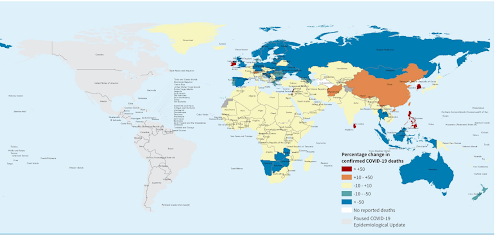
As we approach the fall respiratory season in the Northern Hemisphere, more than 90% of the world's countries no longer regularly report COVID hospitalizations, ICU admissions, or deaths to the World Health Organization.  

The map above, from this week's WHO epidemiological report, shows the entire Western Hemisphere as a blank slate, with no updates provided since early August.  But even those few countries that have reported data have greatly reduced their testing and surveillance. 

 While presenting the available data, the WHO warns:

As countries discontinue COVID-19-specific reporting and integrate respiratory disease surveillance, WHO will use all available sources to continue monitoring the COVID-19 epidemiological situation, especially data on impact. COVID-19 remains a major threat and WHO urges Member States to maintain, not dismantle, their established COVID-19 infrastructure. It is crucial to sustain early warning, surveillance and reporting, variant tracking, early clinical care provision, administration of vaccine boosters to high-risk groups, improvements in ventilation, and regular communication.

Currently, reported cases do not accurately represent infection rates due to the reduction in testing and reporting globally. During this 28-day period, 44% (103 of 234) of countries reported at least one case to WHO – a proportion that has been declining since mid-2022. It is important to note that this statistic does not reflect the actual number of countries where cases exist.

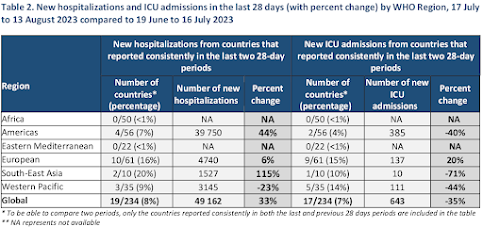
Data is so sparse that the WHO now reports (see table below) data based on the combined past two 28-day monitoring periods, instead of the standard past 28 days alone

Otherwise, there'd be a more than just two WHO regions with data listed as N/A on this chart. 

Among the roughly 8% of countries that are consistently reporting to the WHO, a significant portion (35%) are seeing an increase in ICU admissions. 

Among the 17 countries consistently reporting new ICU admissions to WHO, six (35%) countries showed an increase of 20% or greater in new ICU admissions during the past 28 days compared to the previous 28-day period: Ireland (16 vs six; +167%), Malta (seven vs four; +75%), Singapore (10 vs six; +67%), Latvia (five vs three; +67%), Greece (27 vs 17; +59%), and Netherlands (12 vs 10; +20%). The highest numbers of new ICU admissions were reported from Brazil (375 vs 627; -40%), Australia (82 vs 148; -45%), and Italy (57 vs 61; -7%).

But based on the increasingly inconsistent, and flimsy global reporting, it is impossible to say whether  that represents a genuine trend, or simply a blip in the data.  

I'm seeing anecdotal reports on social media (and in the press, such as this one today from Serbia) of increased hospital admissions for COVID in a few places around the globe, but without good data it is impossible to put it into any reasonable context.

The political decision to declare victory, and dismantle COVID surveillance and reporting (primarily to improve the global economy), only works as long as COVID cooperates. 

On the plus side, with surveillance like this, we will have far less time to worry about the next wave. 

CDC COCA Call Today: 2023-2024 Recommendations for Influenza Prevention and Treatment in Children

Credit CDC 

#17.648

Last year, seasonal influenza arrived and peaked unusually early (see CDC graphic below), catching a lot of people off guard, and many still unvaccinated. 

Every flu season is different, but already we've seen reports of scattered flu-related school closures around the country. 


Vaccine timing is particularly important for children receiving their first flu vaccination, as the CDC explains:
  • Children who need two doses of flu vaccine should get their first dose of vaccine as soon as vaccine becomes available. The second dose should be given at least four weeks after the first.
  • Vaccination in July or August can be considered for children who have health care visits during these months, if there might not be another opportunity to vaccinate them. For example, some children might have medical visits in the late summer before school starts and might not return to see a health care provider in September or October.
Later today (2 pm EDT) the CDC will hold a COCA Call, geared for pediatricians, on this year's recommendations for influenza prevention and treatment in children. This presentation is augmented by a 67-page PDF Slide presentation

These presentations are often technical, and are of greatest interest to clinicians and healthcare providers, but also may be of interest to the general public. As always, if you are unable to attend the live presentation, these (and past) webinars are archived and available for later viewing at this LINK.
2023-2024 Recommendations for Influenza Prevention and Treatment in Children: An Update for Pediatric Providers

Free Continuing Education

Overview

Influenza remains a serious threat to children due to its potential to cause severe morbidity and mortality. Annual influenza vaccination is the most effective way to prevent influenza illness and associated complications, including death. Clinicians play a critical role in the immunization of children and their family members and caregivers.

During this COCA Call, presenters will provide an overview of influenza prevention and treatment recommendations for the 2023–2024 season from the American Academy of Pediatrics (AAP) and the Centers for Disease Control and Prevention (CDC).

Presenters

Fatimah Dawood, MD, FAAP
Pediatrician and Medical Officer
Influenza Prevention and Control Team
Influenza Division
National Center for Immunization and Respiratory Diseases
Centers for Disease Control and Prevention

Kristina A. Bryant, MD, FAAP, FPIDS
Member, Committee on Infectious Diseases, American Academy of Pediatrics
Professor of Pediatrics, University of Louisville School of Medicine
Hospital Epidemiologist at Norton Children’s Hospital
Director for System Pediatric Epidemiology and Infectious Diseases, Norton Children’s Medical Group, Louisville, KY

Call Materials

View slides [PDF – 3 MB]
Call Details


When:
Thursday, August 31, 2023,
2:00 PM – 3:00 PM ET


Webinar Link:
https://www.zoomgov.com/j/1600020619

Webinar ID: 160 002 0619

Passcode: 752590

Telephone:+1
+1 646 828 7666 US (New York)

One-tap mobile:
+16692545252,,1600020619#,,,,*752590# US (San Jose)
+16469641167,,1600020619#,,,,*752590# US (US Spanish Line
International numbers

Wednesday, August 30, 2023

UKHSA To Move COVID/Flu Jabs Forward Due To Concerns Over BA.2.86

Credit ACIP/CDC

#17,468

As I mentioned in my last post (see NYC Statement On Detection Of COVID BA.2.86 In Wastewater), while we lack much in the way of solid information on BA.2.86, it's getting a lot of attention from public health entities. 

Today, the UK has announced an early start to their fall COVID/Flu jab campaign - which normally begins in October - due to the unknowns surrounding the emerging BA.2.86 variant. 

The press release from the UK HSA follows:

Flu and COVID autumn vaccine programmes brought forward

Precautionary measure taken to protect those most vulnerable from illness during winter following the identification of COVID-19 variant BA.2.86.

From:Department of Health and Social Care, UK Health Security Agency, and Maria Caulfield MP Published 30 August 2023

Vaccinations are now set to start on 11 September 2023 in England with adult care home residents and those most at risk to receive vaccines first

Eligible people urged to come forward for their jab as soon as they’re invited

This year’s autumn flu and COVID-19 vaccine programmes will start earlier than planned in England as a precautionary measure following the identification of a new COVID-19 variant.

The precautionary measure is being taken as scientists from the UK Health Security Agency (UKHSA) examine the variant BA.2.86, which was first detected in the UK on Friday 18 August 2023.

According to the latest risk assessment by UKHSA, BA.2.86 has a high number of mutations and has appeared in several countries in individuals without travel history.

While BA.2.86 is not currently classified as a variant of concern, advice from UKHSA suggests that speeding up the autumn vaccine programme will deliver greater protection, supporting those at greatest risk of severe illness and reducing the potentia
From:Department of Health and Social Care, UK Health Security Agency, and Maria Caulfield MP Published30 August 2023
l impact on the NHS.

The decision means those most at risk from winter illness - including people in care homes for older people, the clinically vulnerable, those aged 65 and over, health and social care staff, and carers - will be able to access a COVID vaccine in September.

The annual flu vaccine will also be made available to these groups at the same time wherever possible, to ensure they are protected ahead of winter.

Vaccinations are now set to start on 11 September 2023, with adult care home residents and those most at risk to receive vaccines first. NHS England will announce full details of the accelerated roll-out soon, and those who fall into higher-risk groups are being encouraged to take up the jab as soon as they’re invited.

There is no change to the wider public health advice at this time.

Health Minister, Maria Caulfield said:
As our world-leading scientists gather more information on the BA.2.86 variant, it makes sense to bring forward the vaccination programme.
It is absolutely vital the most vulnerable groups receive a vaccine to strengthen their immunity over winter to protect themselves and reduce pressure on the NHS.
I encourage anyone invited for a vaccination - including those yet to have their first jab - to come forward as soon as possible.

Chief Executive of the UK Health Security Agency, Dame Jenny Harries said:
As we continue to live with COVID-19 we expect to see new variants emerge.
Thanks to the success of our vaccine programme, we have built strong, broad immune defences against new variants throughout the population. However, some people remain more vulnerable to severe illness from COVID-19. This precautionary measure to bring forward the autumn programme will ensure these people have protection against any potential wave this winter.
There is limited information available at present on BA.2.86 so the potential impact of this particular variant is difficult to estimate. As with all emergent and circulating COVID-19 variants - both in the UK and internationally - we will continue to monitor BA.2.86 and to advise government and the public as we learn more. In the meantime, please come forward for the vaccine when you are called.
For operational expediency and in line with public health recommendations, wherever possible flu and COVID-19 vaccines should be administered at the same time.

The vaccination campaign was previously due to commence in early October 2023. This is because the best protection is usually provided by getting vaccinated with as short a gap as possible before exposure to circulating influenza and COVID-19 viruses.

The advice from the Joint Committee on Vaccination and Immunisation (JCVI) for this autumn, is to offer the vaccine to those at high risk of serious disease from COVID-19 and who are therefore most likely to benefit from vaccination.

Those eligible for vaccination are encouraged to take up the offer of the vaccine as soon as they are called to ensure they head into winter with the best protection.

NYC Statement On Detection Of COVID BA.2.86 In Wastewater

#17,247

Although it is too early to predict how much of an impact the recently discovered, and highly mutated, BA.2.86 variant will have on the trajectory of COVID this fall, it has certainly grabbed the attention of researchers, and public health entities, around the globe. 

CDC Initial Risk Assessment On COVID BA.2.86


UKHSA Risk Initial Risk Assessment & Update on BA.2.86

This variant has been detected in more than a dozen countries so far, and while it is expected to be highly evasive of pre-existing immunity (from vaccines or previous infections), we don't know if it will produce more severe illness. 

Yesterday, New York City's Department of Health announced the detection of BA.2.86 in local wastewater, which suggests the variant is already circulating in the local population:

STATEMENT FROM THE NYC HEALTH COMMISSIONER DR. ASHWIN VASANON THE BA.2.86 COVID-19 VARIANT

Like all viruses, Covid-19 adapts, and we continue to adapt to keep New Yorkers safe too. One recent change to COVID-19 is the BA.2.86 variant, which has been seen in other parts of the U.S. and was recently detected in New York City’s sewage. While we have yet to find it in a specimen from a local resident, it is almost certainly circulating here. 

Based on the degree of mutations – while vaccinated people continue to be protected against serious illness – this variant may be more likely to evade immunity that has developed from vaccination or prior infection than earlier variants. But there is currently no indication that it causes more severe illness.

 e continue to monitor this carefully, alongside our colleagues at the U.S. Centers for Disease Control and Prevention and the World Health Organization. As cases rise, precautions become increasingly important, especially for our most vulnerable New Yorkers who are older, disabled, or have underlying health conditions.

Staying up to date with COVID-19 vaccines, along with other proven prevention tools – like masking, testing, and staying home when sick – continue to be our best defense against COVID-19 and other respiratory viruses. 

Antibodies from vaccination and prior infection will continue to provide some protection, as will available antiviral treatments like Paxlovid, which is still effective against all circulating strains of COVID-19. As we enter the traditional respiratory virus season, an updated COVID-19 vaccine is expected to become available in the coming weeks.

Studies are still evaluating the new booster for its effectiveness against the BA.2.86 variant, but indicators suggest it will be effective at preventing severe illness and death. 

That’s why it’s especially important that New Yorkers that are most vulnerable get the new booster when it's available. New Yorkers should talk to their health care or vaccination providers about the updated COVID-19 vaccine and this year’s flu vaccine. It is also a perfect time to get this year’s flu vaccine when available. For new parents, talk to your child’s pediatrician about the benefits of the RSV monoclonal antibody for infants, and for older or at-risk adults, talk to your provider about getting the new RSV vaccine.

For assistance with finding a health care provider, call 311 or visit vaccinefinder.nyc.gov to find a location near you and make an appointment.


While we don't know how protective this fall's updated COVID vaccine will be against BA.2.86 infection (it was formulated with XBB.1.5) - I still plan to get it - since it should reduce the risks of serious illness or death, and XBB strains may continue to circulate.  

But one type of intervention we know works against all strains are NPIs; face masks, hand washing, and avoiding crowds.  

They may not be popular in some circles, but if properly, and consistently employed . . . they can significantly reduce one's risk of infection.  

YMMV, but until we know more about the risks from BA.2.86 (and other emerging variants), I consider their inconvenience to be cheap insurance. 

Viruses: Recurring Trans-Atlantic Incursion of Clade 2.3.4.4b H5N1 Viruses by Long Distance Migratory Birds from Northern Europe to Canada in 2022/2023


#17,646

As recently as a decade ago, there was still a bitter debate over whether migratory birds were A) capable of spreading HPAI viruses over long distances and B) whether migratory birds could bring Eurasian avian flu viruses to North America by crossing the Bering straits.

While it was known that some waterfowl species could carry HPAI viruses asymptomatically, the rallying cry that `Sick birds don’t fly’ was often used to argue that migratory birds couldn't be blamed for the international spread of the virus.

In January of 2014, in response to the South Korean assertion that migratory Birds were the likely source of their H5N8 outbreak, the UN's Scientific Task Force on Avian Influenza and Wild Birds quickly issued a statement saying:

"There is currently no evidence that wild birds are the source of this virus and they should be considered victims not vectors.

A year later - following the first transpacific spread of HPAI H5 to North America - they would modify their stance somewhat, stating that typically the `. . . spread of HPAI virus is via contaminated poultry, poultry products and inanimate objects although wild birds may also play a role'. 

Despite the 2014 incursion of avian flu from Asia to Alaska (crossing the relatively narrow Bering Straits), the spread from Europe across a much wider Atlantic Ocean was still considered unlikely. 

Still, a number of researchers thought it was possible (see 2014's PLoS One: North Atlantic Flyways Provide Opportunities For Spread Of Avian Influenza Viruses) with Iceland or Greenland cited as possible staging areas for bird flu. 

In 2017, in  Iceland Warns On Bird Flu, we saw reports suggesting that European birds carrying avian flu may have reached Iceland. Iceland is the first major landing spot for wing-weary travelers, followed by Greenland (see 2016's Avian Flu Surveillance In Greenland).

In late 2021, the inevitable happened, as HPAI H5 arrived in Eastern Canada and Western Canada via two different routes; crossing the Pacific and the Atlantic (Multiple Introductions of H5 HPAI Viruses into Canada Via both East Asia-Australasia/Pacific & Atlantic Flyways).

Changes in the HPAI H5 clade 2.3.4.4b virus since 2016 have undoubtedly increased its host range (both avian and non-avian), and its ability to be spread by migratory birds.  

But today we have a report in the Journal Viruses presenting evidence that the Trans-Atlantic incursion of HPAI H5 in late 2021 was not an isolated incident, and that further exchange of viruses across oceans can be expected. 

Due to its length, I've only some excerpts.  Follow the link to read it in its entirety. I'll have a bit more after the break. 


by

Viruses 2023, 15(9), 1836; https://doi.org/10.3390/v15091836 (registering DOI)
Received: 30 July 2023 / Revised: 21 August 2023 / Accepted: 23 August 2023 / Published: 30 August 2023

Abstract

In December 2022 and January 2023, we isolated clade 2.3.4.4b H5N1 high-pathogenicity avian influenza (HPAI) viruses from six American crows (Corvus brachyrhynchos) from Prince Edward Island and a red fox (Vulpes vulpes) from Newfoundland, Canada. Using full-genome sequencing and phylogenetic analysis, these viruses were found to fall into two distinct phylogenetic clusters: one group containing H5N1 viruses that had been circulating in North and South America since late 2021, and the other one containing European H5N1 viruses reported in late 2022.

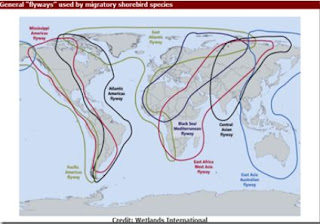
The transatlantic re-introduction for the second time by pelagic/Icelandic bird migration via the same route used during the 2021 incursion of Eurasian origin H5N1 viruses into North America demonstrates that migratory birds continue to be the driving force for transcontinental dissemination of the virus.

This new detection further demonstrates the continual long-term threat of H5N1 viruses for poultry and mammals and the subsequent impact on various wild bird populations wherever these viruses emerge. The continual emergence of clade 2.3.4.4b H5Nx viruses requires vigilant surveillance in wild birds, particularly in areas of the Americas, which lie within the migratory corridors for long-distance migratory birds originating from Europe and Asia.

Although H5Nx viruses have been detected at higher rates in North America since 2021, a bidirectional flow of H5Nx genes of American origin viruses to Europe has never been reported. In the future, coordinated and systematic surveillance programs for HPAI viruses need to be launched between European and North American agencies.


(SNIP)

Here, we demonstrated a new incursion of a genetically distinct H5N1 HPAI virus into Eastern Canada during late 2022, representing a second incursion into this region after clade 2.3.4.4b HPAIV first arrived in North America in late 2021. On both occasions, the most parsimonious explanation is that the virus had been translocated by migratory birds from Northern Europe via the transatlantic route.

The continual emergence of clade 2.3.4.4b viruses in avian hosts [35] requires vigilant surveillance for avian influenza in wild birds, particularly in areas of the Americas that are entry points for long-distance migratory birds from Europe and Asia. This complex and intertwining inter-continental seasonal connectivity of wild birds has led to the introduction of H5Nx HPAI viruses to Canada four times so far during 2014/2015, late 2021, winter/spring 2022 and winter 2022/2023, and raises the possibility that this could become a regular occurrence if these viruses remain circulating in wilds birds. 

To date, this flow of viruses has only been detected from Europe to North America, but the continued circulation of these viruses in wild birds and their increasing expansion in host ranges (including new bird taxa) creates increased opportunity for the spread of the virus through multiple wild bird migratory pathways, both short and long.

The possibility of bi-directional translocation of viruses is highly plausible given the known wild bird movement pathways (albeit smaller in scale than north to south routes) and considering the genetic diversity, increasing the likelihood that viruses which have evolved independently in the Americas could be detected on the eastern Atlantic seaboard. This level of risk reinforces the need for enhanced genetic surveillance, which is crucial to identifying such occurrences.

         (Continue . . .)


All of this matters because influenza's superpower is its ability to reassort; to reinvent itself by `borrowing' genetic material from other flu viruses it encounters in its journeys.  The more diverse the array of viruses it meets, the more opportunities there are for change. 

The continual (and potential bi-directional) movement of viruses across oceans only increases those opportunities. 

In 2023, what happens with HPAI in migratory birds and poultry in Asia and Europe is of greater concern for North and South America than ever before, as oceans are no longer the protective barrier we once thought. 

Which is why we need to be prepared for surprises going forward. 

Idalia Now A CAT 4 Hurricane Approaching Landfall


#17,645

In the next few hours Cat 4 hurricane Idalia will make landfall in big bend area of Florida, and then move into southern Georgia as a hurricane.  Hurricane warnings have now been issued all the way into South Carolina.

While the heavily populated west coast and Tampa Bay area appear to have been spared from catastrophic damage overnight, some significant coastal flooding has been reported.


At this point, residents in the path of Idalia have either done all they can to protect life and property and have evacuated, or they have chosen to ride out the storm.  Although the next 12 hours will be crucial to their immediate safety, the impacts of a major hurricane can last for weeks or months. 

Living as I do in hurricane country, I've made it a point to have a disaster plan, a disaster buddy, a bug-out destination, and the things I would need to survive without electricity, running water, open grocery stores or pharmacies for a week or longer: 

  • A battery operated NWS Emergency Radio to find out what was going on, and to get vital instructions from emergency officials
  • A decent first-aid kit, so that you can treat injuries
  • Enough non-perishable food and water on hand to feed and hydrate your family (including pets) for the duration
  • A way to provide light when the grid is down.
  • A way to cook safely without electricity
  • A way to purify or filter water
  • A way to handle basic sanitation and waste disposal. 
  • A way to stay cool (fans) or warm when the power is out.
  • A small supply of cash to use in case credit/debit machines arCoping with a Disaster or Traumatic Evente not working
  • An emergency plan, including meeting places, emergency out-of-state contact numbers, a disaster buddy, and in case you must evacuate, a bug-out bag
  • Spare supply of essential prescription medicines that you or your family may need
  • A way to entertain yourself, or your kids, during a prolonged blackout

I do this not only for my physical health and comfort, but for my mental health as well. I sleep better at night knowing I'm prepared for the worst, and if it happens, I'll be less stressed and less challenged than had I not prepared. 

I'm not as young, or as physically able, as I used to be.  I realize that conditions I might have tolerated when I was 30 are a lot harder to deal with, now that I'm nearing 70.

While often hidden from view, the psychological impact of a disaster can be enormous and ongoing. In 2011, in Post Disaster Stress & Suicide Rates, we looked at some of the impacts of disaster-related PTSD (Post Traumatic Stress Disorder). 

Preparedness is cheap insurance.  A good place to get started is READY.GOV http://www.ready.gov/

 For more on dealing with the trauma of a disaster, the CDC has a website geared to post-disaster stress.

The outbreak of coronavirus disease 2019 (COVID-19), may be stressful for people and communities.

Learn more about coping during COVID-19.

During and after a disaster, it is natural to experience different and strong emotions. Coping with these feelings and getting help when you need it will help you, your family, and your community recover from a disaster. Connect with family, friends, and others in your community. Take care of yourself and each other, and know when and how to seek help.

People with preexisting mental health conditions should continue with their treatment plans during an emergency and monitor for any new symptoms. Additional information can be found at the Substance Abuse and Mental Health Services Administration (SAMHSA) website.

Explore the resources below to learn how to cope and take care of yourself and each other during an emergency. 

Taking Care of Your Emotional Health

Helping Children Cope

Planning Resources for State and Local Governments

Response Resources for Leaders

Responders: Tips for Taking Care of Yourself

A small reminder that in the wake of a disaster not all wounds bleed, not all fractures show up on an X-ray, and that the best treatment doesn't always come from inside your first aid kit. 

Tuesday, August 29, 2023

EID Journal: Estimate of COVID-19 Deaths, China, December 2022–February 2023


#17,644

During the first 3 years of the COVID pandemic, China - with a population of 1.4 billion - only admitted to 5242 deaths from the virus.  While many countries attempt to `manage' bad news, China has elevated that skill set into an art form. 
While there were persistent (albeit, unverifiable) reports of crematoriums running 24/7, hospitals overrun, and estimates of hundreds of millions of infections over the next couple of months - officially - COVID was mild and deaths were relatively few. 

Last week, in JAMA Open: Excess All-Cause Mortality in China After Ending the Zero COVID Policy. we saw an estimate of roughly 1.87 million excess deaths in China in the two months following the collapse of Zero COVID.

Today we've a slightly more conservative estimate published in the CDC's EID journal.  While their estimate was 1.41 million deaths over 60 days, that was more than 17-fold higher than `officially' reported by China (n=82,000).

Due to its length, I've only reproduced some excerpts. Follow the link to read the report in full.  I'll have a postscript after the break. 


Volume 29, Number 10—October 2023
Dispatch

Zhanwei Du, Yuchen Wang, Yuan Bai, Lin Wang, Benjamin John Cowling, and Lauren Ancel Meyers
Abstract

China announced a slight easing of its zero-COVID rules on November 11, 2022, and then a major relaxation on December 7, 2022. We estimate that the ensuing wave of SARS-CoV-2 infections caused 1.41 million deaths in China during December 2022–February 2023, substantially higher than that reported through official channels.


For almost 3 years, China maintained a zero-COVID policy that effectively suppressed SARS-CoV-2 transmission. China began rolling back those rules on November 11, 2022, and ended most restrictions on December 7, 2022 (China Focus, 2023, link , in response to the reduced severity of the Omicron variant or the growing socioeconomic and political costs of the restrictions. COVID-19 immediately surged; China reported nearly 82,000 COVID-19–related deaths during December 16, 2022–February 17, 2023 (1).

In December 2022, China disbanded its national COVID testing system and twice modified its criteria for classifying COVID-19–related deaths (2,3). The resulting uncertainties in reported occurrences and low official death counts have spurred speculation that official mortality reports from China substantially underestimate the full burden of the December 2022–January 2023 wave (4). 

In early December of 2022, the Chinese Center for Disease Control and Prevention (China CDC) launched a sentinel household surveillance program, tracking SARS-CoV-2 test positivity in 420,000 people in 22 provinces across China (5). We used those data to estimate a plausible range for the total number of COVID-19–related deaths during December 2022–January 2023. We classified a death as COVID-19–related if it occurred within 28 days of confirmed infection (6).
(SNIP)

Conclusions

COVID-19 deaths are related to a variety of health complications, including septic shock, multiorgan failure, respiratory failure, heart failure, and secondary infections (8). China’s official reports may underestimate the COVID-19 death toll by a factor of 17 (95% CrI 14–22). Our analyses suggest that, in barely a month, COVID-19 killed >1 million persons in China. The difference between China’s official mortality reports and our estimates may stem from delays in hospital reporting (9), omission of deaths happening outside of hospitals (2), gaps in China’s vital registration system (4), or intentional reclassification after the insurance industry in China largely stopped covering COVID-19 in December 2022 (South China Morning Post, December 17, 2022, LINK).

(SNIP)

Our findings rely on the validity of data from the China CDC’s sentinel household surveillance program, which might have some quality issues (e.g., double counting of persons who test multiple times). China CDC reports include graphs of daily positivity in this sample that enable rapid approximation of epidemic trends on a national scale (5). In addition, we assume that reported vaccinations were the only source of prior immunity and that all infections were by Omicron variants; surveillance data suggest that only 0.4% of specimens collected during this period were not Omicron (5).

In summary, our study suggests that the official mortality reports from China substantially underestimate the full burden of the December 2022–January 2023 COVID-19 wave, raising concerns about the accuracy and transparency of China’s reporting system, as well as potential underestimation of reports from other countries that limit data collection and reporting. The decision to relax China’s zero-COVID policies without adequate measures to protect high-risk populations had severe consequences. Other countries prioritized vaccines for older age groups and other vulnerable populations (13), and many studies have indicated that targeting medical countermeasures and protective measures toward groups with high infection-fatality rates can be life and cost saving (14,15). We expect that the true toll of COVID-19 in China will become clearer as additional epidemiologic data become available.

Dr. Du is a research assistant professor in the School of Public Health, LKS Faculty of Medicine, The University of Hong Kong, Hong Kong, China. He develops mathematical models to elucidate the transmission dynamics, surveillance, and control of infectious diseases.


We will probably never know the full impact of COVID on China - or the rest of the world - because there are so many economic and political incentives for officials (from local level up to the national level) to downplay the numbers.  

Officially, roughly 7 million people have died from SARS-CoV-2 globally since December 2019, but the real number is likely 2 or 3 times higher. Today, 90% of countries no longer report COVID hospitalizations or deaths to the WHO on a regular basis. 

While `sanitized' numbers may be good for the economy, or help politicians get re-elected, they can also mask new and emerging threats.  But that isn't really a problem until it happens, and in the meantime, we can party like its 2019.

Idalia, Now A Hurricane, Expected To Batter FL/GA Tonight


#17,643

Although Idalia has struggled to achieve hurricane intensity over the past couple of days, now that it has entered the Gulf of Mexico rapid intensification is expected, as well as significant increase in forward speed. 

While the Tampa Bay area won't come away completely unscathed, once again it appears we will dodge the worst effects of this hurricane.  Coastal storm surge, heavy rains, and tornadoes are still a threat. 

The impacts further up the Gulf coast, however, are likely to be catastrophic.  The Key messages this morning from the National Hurricane Center are:


While I won't be forced to evacuate (as I was in 2017, and again last year), it is possible my area will see some power outages as the storm passes to our west, which may prevent me from updating this blog tomorrow. 

Those who live in the Big Bend region of Florida -all the way into southern Georgia - will be contending with the worst of Idalia (see After The Storm Passes), and impacts are expected along the Southeastern Coast (GA, SC, NC) before the system moves out to sea.

While I'll be doing usual hurricane preparedness blogs - and I follow (and recommend) Mark Sudduth's Hurricane Track, and Mike's Weather page - your primary source of forecast information should always be the National Hurricane Center in Miami, Florida.

These are the real experts, and the only ones you should rely on to track and forecast the storm.If you are on Twitter, you should also follow @FEMA, @NHC_Atlantic, @NHC_Pacific and @ReadyGov, and of course take direction from your local Emergency Management Office.

For more Hurricane resources from NOAA, you'll want to follow these links.

HURRICANE SAFETY

ADDITIONAL RESOURCES


Monday, August 28, 2023

After The Storm Passes


#17,642


With Hurricane Idalia expected to to impact much of the Florida peninsula over the next 72 hours, many residents are rightfully concerned about evacuating, or riding out the storm at home. 

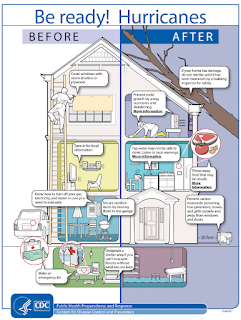
But as we've discussed many times, the dangers from a hurricane often increase in the days and weeks after the storm has passed, due to injuries or illness that occur during the `recovery' period.

Some of the many dangers include:
One of the most common, and dangerous threats comes from floodwaters which may linger for days, or even weeks following the storm. Waters that may contain toxic chemicals, dangerous viruses and bacteria, and hidden hazards like snakes, rats, and broken glass, sharp metal, or even live electrical wires.

The CDC maintains a web page on the dangers of Flood Waters or Standing Waters.
Stay out of floodwater

Floodwaters contain many things that may harm health. We don’t know exactly what is in floodwater at any given point in time. Floodwater can contain:
  • Downed power lines
  • Human and livestock waste
  • Household, medical, and industrial hazardous waste (chemical, biological, and radiological)
  • Coal ash waste that can contain carcinogenic compounds such as arsenic, chromium, and mercury
Other contaminants that can lead to illness
  • Physical objects such as lumber, vehicles, and debris
  • Wild or stray animals such as rodents and snakes
  • Exposure to contaminated floodwater can cause:
  • Wound infections
  • Skin rash
  • Gastrointestinal illness
  • Tetanus
  • Leptospirosis (not common)

It is important to protect yourself from exposure to floodwater regardless of the source of contamination. The best way to protect yourself is to stay out of the water.

If you come in contact with floodwater:
  • Wash the area with soap and clean water as soon as possible. If you don’t have soap or water, use alcohol-based wipes or sanitizer.
  • Take care of wounds and seek medical attention if necessary.
  • Wash clothes contaminated with flood or sewage water in hot water and detergent before reusing them.If you must enter floodwater, wear rubber boots, rubber gloves, and goggles.

One of my most vivid memories from standing in the French Quarter of New Orleans in 2005 - a few weeks after Hurricane Katrina - was the staggering number of refrigerators and freezers dragged out to the curbs - filled with rotting food - waiting to be hauled away.

With the power likely to be out for days, there is a real danger of food poisoning.
 
The USDA maintains a Food Safety and Inspection website with a great deal of consumer information about how to protect your food supplies during an emergency, and how to tell when to discard food that may no longer be safe to consume.
In an Emergency
Find out how to keep food safe during and after an emergency, such as a flood, fire, national disaster, or the loss of power.

Emergency Preparedness (USDA)
Provides materials, including videos and podcasts, on ensuring food safety during emergencies. [resources available in Spanish]

Food and Water Safety During Hurricanes, Power Outages, and Floods
(FDA)
Proper safety precautions to keep food and water safe. [available in Spanish and French]

Keep Food and Water Safe After a Disaster or Emergency
(CDC)
Includes tips for making water safe to drink and storing food.

Food, Water, Sanitation, and Hygiene Information for Use Before and After a Disaster or Emergency
(CDC)

Chart: Refrigerated Food:
Is food in the refrigerator safe during a power outage? Use this chart to find out.

Chart: Frozen Food:
Is thawed or partially thawed food in the freezer safe to eat? Use this chart as a guide.

Chainsaw accidents also figure prominently after many weather-related disasters, as many people with little experience find themselves clearing driveways and rooftop of fallen branches. The CDC maintains a chainsaw safety web page:


Stay Safe
  • Wear proper protective clothing and glasses.
  • Choose the proper size of chain saw to match the job.
  • Operate, adjust, and maintain the saw according to manufacturer’s instructions.
  • Take extra care in cutting “spring poles” trees or branches that have been bent, twisted, hung up on, or caught under another object during a high wind.
  • Be sure that bystanders are at a safe distance from cutting activities.
  • Check around the tree or pole for hazards, such as nails, power lines, or cables, before cutting.
  • Each year, approximately 36,000 people are treated in hospital emergency departments for injuries from using chain saws. The potential risk of injury increases after hurricanes and other natural disasters, when chain saws are widely used to remove fallen or partially fallen trees and tree branches.

Gasoline generators, along with improvised cooking and heating facilities, can put people at risk of Carbon Monoxide poisoning. Each year, hundreds of Americans die from exposure to this odorless and colorless gas.
Prevention Guidelines

With the possibility of widespread power outages the potential for this sort of preventable tragedy in the post-storm period can’t be ignored. In Carbon Monoxide: A Stealthy Killer I wrote in depth on the issue, but a few tips from the CDC include:
Prevention Guidelines
  • You Can Prevent Carbon Monoxide Exposure
  • Do have your heating system, water heater and any other gas, oil, or coal burning appliances serviced by a qualified technician every year.
  • Do install a battery-operated CO detector in your home and check or replace the battery when you change the time on your clocks each spring and fall. If the detector sounds leave your home immediately and call 911.
  • Do seek prompt medical attention if you suspect CO poisoning and are feeling dizzy, light-headed, or nauseous.
  • Don't use a generator, charcoal grill, camp stove, or other gasoline or charcoal-burning device inside your home, basement, or garage or near a window.
  • Don't run a car or truck inside a garage attached to your house, even if you leave the door open.
  • Don't burn anything in a stove or fireplace that isn't vented.
  • Don't heat your house with a gas oven.

And as a last stop on our post-storm safety tour, a visit to the CDC’s Emergency Preparedness and Response website, which provides advice on a variety of post-storm topics including electrical and fire hazards, mosquitoes, mold, unstable buildings and structures, and the dangers posed by wild and stray animals.

While many believe the worst will be over once the storm has passed, in truth, often the biggest challenges are found during the days and weeks that follow.

For more preparedness information I would invite you to visit:

FEMA http://www.fema.gov/index.shtm
READY.GOV http://www.ready.gov/
AMERICAN RED CROSS http://www.redcross.org/