Showing posts with label Composition. Show all posts

Thursday, February 20, 2014

WHO: Recommended Composition Of 2014-15 Northern Hemisphere Flu Vaccine

image

Credit NIAID


# 8314


Twice each year influenza experts gather to discuss recent developments in human and animal influenza viruses around the world, and to decide on the composition of the next influenza season’s flu vaccine. Due to the time it takes to manufacture and distribute a vaccine, decisions on which strains to include must be made six months in advance.


Which means the composition of the northern hemisphere’s vaccine must be decided upon in February of each year, while decisions on the southern hemisphere’ vaccine are made in September.


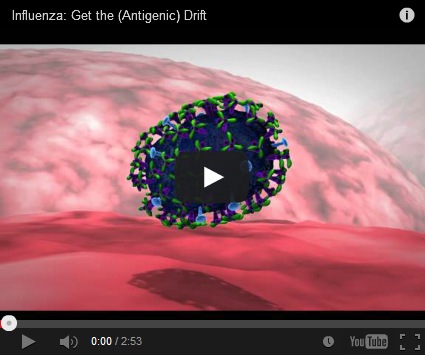
NIAID has a terrific 3-minute video that shows how influenza viruses drift over time, and why the flu shot must be frequently updated, which you can view at this link. 


Of course, there is always the danger that during the manufacturing or service period for this vaccine a new flu virus could emerge (as happened with pH1N1 in 2009), or that one of the currently circulating viruses changes enough antigenically to evade the vaccine. A year is a long time to prognosticate the behavior of influenza.


Yet despite these challenges, most years the flu vaccine turns out to provide at least a moderate level of protection (see CDC Vaccine Effectiveness - How Well Does the Flu Vaccine Work?), and along with good flu hygiene (washing hands, covering coughs, etc.), are your best protection against catching the flu.


This week the World Health Organization brought together representatives from  GISRS (Global Influenza Surveillance and Response System), along with members of OFFLU (the OIE/FAO Network on Animal Influenza), and other experts  to determine the recommended composition of influenza virus vaccines for use in the 2014-15 northern hemisphere influenza season.


After reviewing copious influenza surveillance reports, the committee has recommended keeping the same formulation as was adopted last February for the 2013-14 flu season, and for the upcoming 2014 Southern Hemisphere flu season (see WHO: Southern Hemisphere 2014 Flu Vaccine Composition).


Recommended composition of influenza virus vaccines for use in the 2014-15 northern hemisphere influenza season

20 February 2014

It is recommended that trivalent vaccines for use in the 2014-15 influenza season (northern hemisphere winter) contain the following:

  • an A/California/7/2009 (H1N1)pdm09-like virus;
  • an A/Texas/50/2012 (H3N2)-like virus;
  • a B/Massachusetts/2/2012-like virus.

It is recommended that quadrivalent vaccines containing two influenza B viruses contain the above three viruses and a B/Brisbane/60/2008-like virus.

For more information

        Friday, September 27, 2013

        WHO: Southern Hemisphere 2014 Flu Vaccine Composition

        image


        # 7818


        Twice each year influenza experts gather to discuss recent developments in human and animal influenza viruses around the world, and to decide on the composition of the next influenza season’s flu vaccine.


        Due to the time it takes to manufacture a vaccine, decisions on which strains to include must be made six months in advance. 

        The composition of the northern hemisphere’s vaccine is decided upon in February of each year, and decisions on the southern hemisphere’ vaccine are made in September.


        NIAID has a terrific 3-minute video that shows how influenza viruses drift over time, and why the flu shot must be frequently updated, which you can view at this link.


        The World Health Organization recently brought together representatives from  GISRS (Global Influenza Surveillance and Response System), along with members of OFFLU (the OIE/FAO Network on Animal Influenza), and other experts  to determine the composition of next year’s (2014) Southern Hemisphere flu shot.


        • The (formerly pandemic2009 H1N1 virus continues to circulate and remains surprisingly stable, and so that component remains  unchanged.  
        • Although remaining antigenically similar, H3N2 continues to evolve, and so next year’s formula will see a strain change to  an A/Texas/50/2012 (H3N2)-like virus which matches the strain in this fall’s Northern Hemisphere flu shot.  
        • The  influenza B strain selected - a B/Massachusetts/2/2012-like virus (Yamagata lineage) - is the same B strain selected last February for inclusion in this year’s (2013-14) Northern Hemisphere flu vaccine.
        • For quadrivalent formulations – available for the first time this year – a second B strain (Victoria Lineage) is recommended; B/Brisbane/60/2008-like virus.


        The WHO describes the new recommended H3N2 component as:

        `A/Texas/50/2012 is an A(H3N2) virus that following adaptation to growth in eggs has maintained antigenic properties similar to the majority of recently circulating cell - propagated A(H3N2) viruses including A/Victoria/361/2011.’


        More resources from the World Health Organization