Showing posts with label WHO. Show all posts

Tuesday, May 26, 2015

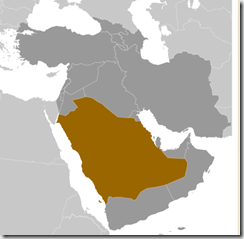
WHO MERS-CoV Update – Saudi Arabia

image


# 10,092


The World Health Organization has published another MERS update, detailing four recent cases from Saudi Arabia.  Two of these cases may be tangentially linked to the Hofuf (aka `Hafoof’, `Hafouf’,`Hufof;) cluster we’ve been following for the past three weeks, but the circumstances of their infection are far from clear.


As we’ve discussed previously, sometimes the route of infection is pretty obvious, but often we don’t really know how community-acquired cases were exposed (see WHO EMRO: Scientific Meeting Reviews MERS Progress & Knowledge Gaps).


Middle East Respiratory Syndrome coronavirus (MERS-CoV) – Saudi Arabia

Disease outbreak news
25 May 2015

Between 18 and 23 May, the National IHR Focal Point for the Kingdom of Saudi Arabia notified WHO of 4 additional cases of Middle East respiratory syndrome coronavirus (MERS-CoV) infection, including 1 death.

Details of the cases are as follows:
  • A 77-year-old female from Hafouf city developed symptoms on 17 May and was admitted to hospital on the same day. A nasopharyngeal swab tested positive for MERS-CoV on 22 May. The patient has comorbidities. She was admitted to the same hospital as a laboratory-confirmed MERS-CoV case (case 2 – see below). Investigation of history of exposure to other known risk factors in the 14 days prior to the onset of symptoms is ongoing. Currently, the patient is in critical condition in ICU.
  • A 48-year-old male from Hafouf city developed symptoms on 1 May and was admitted to hospital on 10 May. The patient, who has comorbidities, was initially diagnosed with a cardiovascular condition. He was transferred to a cardiac center in Hafouf city on 14 May. On 20 May, a nasopharyngeal swab tested positive for MERS-CoV, which led to the patient being transferred to the MERS-CoV reference hospital in Hafouf on the same day. He was admitted to the same ward and treated by the same health workers as a laboratory-confirmed MERS-CoV case that was reported in a previous DON on 24 May (case n. 12). The patient has no history of exposure to other known risk factors in the 14 days prior to onset of symptoms. Currently, he is in critical condition in ICU.
  • A 73-year-old female from Aflaj City developed symptoms on 14 May while admitted to hospital since 2 May due to an unrelated medical condition. The patient had comorbidities. A nasopharyngeal swab tested positive for MERS-CoV on 17 May. Investigation of history of exposure to known risk factors in the 14 days prior to the onset of symptoms is ongoing. The patient passed away on 18 May.
  • A 59-year-old, non-national female from Riyadh city developed symptoms on 15 May and was admitted to hospital in Riyadh on 16 May. A nasopharyngeal swab tested positive for MERS-CoV on 17 May. The patient has comorbidities. Investigation of history of exposure to known risk factors in the 14 days prior to the onset of symptoms is ongoing. Currently, the patient is in stable condition isolated at home.

Contact tracing of household contacts and healthcare contacts is ongoing for these cases.

The National IHR Focal Point for the Kingdom of Saudi Arabia also notified WHO of the death of 3 previously reported MERS-CoV cases. The cases were reported in previous DONs on 24 May (case n. 5, 9) and on 8 May (case n. 1).

Globally, WHO has been notified of 1139 laboratory-confirmed cases of infection with MERS-CoV, including at least 431 related deaths.

Monday, May 25, 2015

Be Prepared For Surprises (Redux)

image

WHO IHR Infographic


# 10,086


Last February, after a year of unprecedented emergence of new flu subtypes, the remarkable and rapid spread of HPAI H5 viruses to Europe and North America, and several months of Egypt dealing with the worst human H5N1 outbreak in history, the World Health Organization released a blunt assessment called:


Warning signals from the volatile world of influenza viruses

February 2015

The current global influenza situation is characterized by a number of trends that must be closely monitored. These include: an increase in the variety of animal influenza viruses co-circulating and exchanging genetic material, giving rise to novel strains; continuing cases of human H7N9 infections in China; and a recent spurt of human H5N1 cases in Egypt. Changes in the H3N2 seasonal influenza viruses, which have affected the protection conferred by the current vaccine, are also of particular concern.

(Continue . . .)


The entire report is well worth reading, but after warning that H5 viruses were currently the most obvious threat to health, they also advised:

Warning: be prepared for surprises

Though the world is better prepared for the next pandemic than ever before, it remains highly vulnerable, especially to a pandemic that causes severe disease. Nothing about influenza is predictable, including where the next pandemic might emerge and which virus might be responsible. The world was fortunate that the 2009 pandemic was relatively mild, but such good fortune is no precedent.


While the point being made here by the WHO is that we could easily be blindsided by a newly emerged or recently mutated influenza strain, that isn’t the only way we can be caught off guard by another global health emergency.


There is nothing new in the fact that many countries endeavor to `manage’ the release of bad news to their best advantage, but these past six months have seen an noticeable escalation in `strategic reporting’  from two of the hardest hit bird flu regions in the world; Egypt (H5N1) and China (H7N9). 


The size and trajectory of both avian flu outbreaks have been difficult to gauge due to their respective MOH’s decisions to delay, or withhold information.  Neither of which imbues one with a lot of trust regarding what little they do report.


The reporting on MERS cases out of Saudi Arabia, quite frankly, won’t win any awards either.   But at least they do report on a daily basis (most of the time).


And there are a lot of countries from which we hear little or nothing (think: Indonesia, Cambodia, North Korea, etc.) that may or may not be dealing with outbreaks.   While we can always hope that `no news is good news’, experience has often shown otherwise.


Granted,  the WHO, FAO, and other agencies do post outbreak summaries (constrained by whatever information is provided and authorized for release by these reporting countries), but they are often delayed, redacted, or woefully lacking in details (see WHO: A Very Brief H7N9 Update – China).


There are legal requirements for reporting, but the reality is, we are a long way from having any semblance of a working,  global, cohesive disease surveillance system.  


In 2005 the World Health Organization adopted the IHR (International Health Regulations) that – among other things - requires countries to develop mandated surveillance and testing systems, and to report certain disease outbreaks and public health events to WHO.


Although the agreement went into force in 2007, member states had until mid- 2012 to meet core surveillance and response requirements. Most nations failed to meet that deadline, as explained below by the WHO:


A majority of States Parties, however, have requested and obtained a two-year extension to this deadline and, in exceptional circumstances, may be granted an additional extension, not exceeding two years.


That extension – not to exceed two years – expired last summer, but by February of 2014 the writing was already on the wall, and another 2 year extension was authorized (see WHO: IHR & Global Health Security) pushing the deadline  for final implementation of the IHR to 2016.  

A couple of days ago the WHO tweeted:

image


While this year’s WHA has ratified the Committee’s recommendation to extend the deadline to 2016 to all countries that need more time to implement the Regulations, there is already talk of needing another extension. 


I suspect when the phrase `herding cats’  was first coined, it was in reference to getting 190 politically motivated member nations of the World Health Assembly to buckle down and actually complete a common (and badly needed) goal.


Last February’s WHO warning was specifically about the ability of influenza viruses to evolve unpredictably and surprise us.


But the recent lack of transparency in disease reporting from China, Egypt, and elsewhere  - combined with a failure of 2/3rds of the world’s governments to meet the IHR minimum core surveillance and response requirements – means that we have more than a few good additional reasons to heed the caveat:


Be prepared for surprises


Sunday, May 24, 2015

WHO MERS-CoV Updates: South Korea, Qatar, UAE

image

Coronavirus – Credit CDC PHIL


# 10,083


The World Health Organization has also posted updates on three recent MERS events outside of Saudi Arabia.  The first details South Korea’s first imported case, and subsequent transmission of the virus.


Middle East respiratory syndrome coronavirus (MERS-CoV) – Republic of Korea

Disease outbreak news
24 May 2015

On 20 May 2015, the National IHR Focal Point of the Republic of Korea notified WHO of the first laboratory confirmed case of Middle East respiratory syndrome coronavirus (MERS-CoV) infection. On 21 May, two additional confirmed cases were reported.

Details of the case are as follows:

The first case is a 68 year-old male with the following travel history: 18-29 April, Bahrain; 29-30 April, United Arab Emirates; 30 April to 1 May, Bahrain; 1-2 May, the Kingdom of Saudi Arabia; 2 May, Bahrain; and 2-3 May, Qatar. The patient arrived at Korea’s Incheon International airport via Qatar on 4 May. He was asymptomatic on arrival. The patient developed symptoms on 11 May and sought medical care at a clinic from 12 May to 15 May on an outpatient basis. He was then admitted to hospital on 15 May and discharged on 17 May. On the evening of discharge, the patient visited the emergency department of another hospital. A sputum sample tested positive for MERS-CoV on 20 May, whereupon he was transferred to the nationally designated treatment facility for isolation. The patient has no history of exposure to known risk factors in the 14 days prior to detection. Investigation of the source of infection is ongoing.

The two additional cases were laboratory-confirmed for MERS-CoV on 21 May. One is a household contact. The other is a patient who shared the same hospital room with the first case. Currently, all three patients are in stable condition.

(Continue . . . )


This week we’ve also seen reports of two MERS cases from Qatar . The following report details the first of these.


Middle East respiratory syndrome coronavirus (MERS-CoV) – Qatar

Disease outbreak news
24 May 2015

On 21 May 2015, the National IHR Focal Point of Qatar notified WHO of 1 additional case of Middle East respiratory syndrome coronavirus (MERS-CoV) infection

Details of the case are as follows:

A 29-year-old, non-national male from Doha developed symptoms on 15 May and sought medical advice at a primary health care center on 19 May, whereupon he was treated symptomatically and sent home with home isolation instructions. Nasopharyngeal and oropharyngeal swabs tested positive for MERS-CoV on 20 May, whereupon the patient was admitted to hospital. He has no comorbidities. The patient has a history of frequent contact with camels but no consumption of raw camel milk. He has no history of exposure to other known risk factors in the 14 days prior to the onset of symptoms. Currently, the patient is in stable condition in a negative pressure isolation room on a ward. Contact tracing of household contacts and healthcare contacts is ongoing for the case.

(Continue . . . )


And the third reports the finding of a second asymptomatic MERS case among workers who were transporting camels from Oman to the UAE.  Imported camels are routinely tested for the virus, and when a positive reading was found, those with exposure were also tested (see WHO: Asymptomatic MERS-CoV Case – UAE).


Middle East respiratory syndrome coronavirus (MERS-CoV) – United Arab Emirates

Disease outbreak news
24 May 2015

On 18 May 2015, the IHR National Focal Point of the United Arab Emirates notified WHO of 1 additional case of Middle East respiratory syndrome coronavirus (MERS-CoV) infection.

Details of the case are as follows:

The patient is a 33-year-old, non-national male from Al Ain. He has a history of contact with MERS-CoV infected camels imported from Oman (see DON of 18 May). A sputum sample tested positive for MERS-CoV on 17 May, whereupon the patient was admitted to hospital. He was asymptomatic at the time of laboratory testing. He has no comorbidities and no history of exposure to other known risk factors in the 14 days prior to detection. Currently, the case is still asymptomatic and in stable condition in a negative pressure room on a ward.

Contact tracing of household contacts and healthcare contacts is ongoing for the case. The National IHR Focal Point of the United Arab Emirates informed the National IHR Focal Point of Oman about this case. Investigation of human contacts of the MERS-CoV infected camels is ongoing in Oman.

(Continue . . . )


Asymptomatic infections are of particular interest since so many community-acquired cases seemingly have no known exposure risks.  While it isn’t known yet whether asymptomatic cases can transmit the virus, researchers are eager to study these cases to try to figure that out (see Study: Possible Transmission From Asymptomatic MERS-CoV Case)..

WHO MERS-CoV Update – Saudi Arabia

image

Saudi Arabia


# 10,082


We’ve been watching a growing cluster of cases from Hafuf (aka `Hafoof’, `Hafouf’,`Hufof;) which appears to have begun in mid-April (see here).  A second case – described as `a contact’ of the first was reported on May 5th.  Two days later 4 more cases described as `household contacts of a confirmed case’ were reported.


Since then, three more cases from Hafuf have been reported generically as `contacts’ of a previously confirmed case, the most recent coming yesterday.


What we don’t know is the relationship between these cases, the circumstances of exposure, and why new cases continue to pop up more than a month after the index case was first reported.


Although we’ve seen large nosocomial clusters of MERS infection previously, big household clusters are less common (see Community Case Clusters of Middle East Respiratory Syndrome Coronavirus in Hafr Al-Batin, Kingdom of Saudi Arabia: A Descriptive Genomic study by Z.A. Memish et al.), making the details of these cases of particular interest.


Today the World Health Organization has released an update with details on 12 recent MERS case – 5 of which belong to the Hafuf cluster – but that only states that these cases have `a history of contact with two laboratory-confirmed MERS-CoV cases that were reported in previous DONs on 17 May (case n. 4) and on 29 April (case n. 2)’

Of the 7 other cases reported, 1 (in Jeddah) had direct contact with a previous case, 1 fell ill 10 days after entering a hospital (but also had camel contact), 1 (in Taif) fell ill while admitted to the same ward as another MERS case, 1 had frequent camel contact, and three others (from Riyadh) had no known risk exposures.

Middle East Respiratory Syndrome coronavirus (MERS-CoV) – Saudi Arabia

Disease outbreak news
24 May 2015

Between 11 and 13 May, the National IHR Focal Point for the Kingdom of Saudi Arabia notified WHO of 12 additional cases of Middle East respiratory syndrome coronavirus (MERS-CoV) infection, including 2 deaths.

Details of the cases are as follows:
  • A 66-year-old male from Qunfuthah city developed symptoms on 12 May while admitted to hospital since 3 May due to an unrelated medical condition. A nasopharyngeal swab tested positive for MERS-CoV on 14 May. The patient has a history of frequent contact with camels and sheep as well as consumption of raw camel milk. He has no history of exposure to other known risk factors in the 14 days prior to the onset of symptoms. Currently, the patient is in stable condition in a negative pressure isolation room on a ward.
  • A 31-year-old male from Hafouf city developed symptoms on 4 May and was admitted to hospital on the same day. A nasopharyngeal swab tested positive for MERS-CoV on 13 May. The patient is a smoker and has no comorbid conditions. He has a history of contact with two laboratory-confirmed MERS-CoV cases that were reported in previous DONs on 17 May (case n. 4) and on 29 April (case n. 2). The patient has a history of frequent contact with camels and consumption of raw camel milk. He has no history of exposure to other known risk factors in the 14 days prior to onset of symptoms. Currently, the patient is in stable condition in a negative pressure isolation room on a ward.
  • A 36-year-old male from Jeddah city developed symptoms on 10 May and was admitted to hospital on the same day. A nasopharyngeal swab tested positive for MERS-CoV on 11 May. The patient has no comorbidities. He has a history of contact with a laboratory-confirmed MERS-CoV case that was reported in a previous DON on 17 May (case n. 3). The patient has no history of exposure to other known risk factors in the 14 days prior to the onset of symptoms. Currently, the patient is in stable condition in a negative pressure isolation room on a ward.
  • A 46-year-old, non-national male from Riyadh city developed symptoms on 25 April and was admitted to hospital on 9 May. A nasopharyngeal swab tested positive for MERS-CoV on 10 May. The patient has comorbidities. He has a history of frequent contact with camels and consumption of raw camel milk. The patient has no history of exposure to other known risk factors in the 14 days prior to the onset of symptoms. Currently, he is in stable condition in a negative pressure isolation room on a ward.
  • A 71-year-old male from Riyadh city developed symptoms on 3 May and was admitted to hospital on 6 May. A nasopharyngeal swab tested positive for MERS-CoV on 10 May. The patient has comorbidities. Investigation of history of exposure to known risk factors in the 14 days prior to the onset of symptoms is ongoing.
  • A 33-year-old, non-national male from Riyadh city developed symptoms on 1 May and was admitted to hospital on 7 May. A nasopharyngeal swab tested positive for MERS-CoV on 9 May. The patient has no comorbidities. Investigation of history of exposure to known risk factors in the 14 days prior to the onset of symptoms is ongoing. Currently, the patient is in stable condition in a negative pressure isolation room on a ward.
  • A 33-year-old, non-national male from Riyadh city developed symptoms on 1 May and was admitted to hospital on 6 May. A nasopharyngeal swab tested positive for MERS-CoV on 8 May. The patient had no comorbidities. He passed away on 14 May. Investigation of history of exposure to known risk factors in the 14 days prior to the onset of symptoms is ongoing.
  • A 74-year-old male from Taif city developed symptoms on 9 May while admitted to hospital since 28 April due to an unrelated medical condition. A nasopharyngeal swab tested positive for MERS-CoV on 10 May. The patient had comorbidities. He was admitted to the same ward and treated by the same health workers as a laboratory-confirmed MERS-CoV case that was reported in a previous DON on 17 May (case n. 3). The patient had no history of exposure to other known risk factors in the 14 days prior to the onset of symptoms. He passed away on 10 May.
  • A 30-year-old female from Hafouf city developed symptoms on 4 May and was admitted to hospital on the same day. A nasopharyngeal swab tested positive for MERS-CoV on 10 May. The patient has no comorbidities. She has a history of contact with two laboratory-confirmed MERS-CoV cases that were reported in previous DONs on 17 May (case n. 4) and on 29 April (case n. 2). The patient has no history of exposure to other known risk factors in the 14 days prior to the onset of symptoms. Currently, she is in stable condition in a negative pressure isolation room on a ward.
  • A 59-year-old female from Hafouf city developed symptoms on 4 May and was admitted to hospital on the same day. A nasopharyngeal swab tested positive for MERS-CoV on 10 May. The patient has comorbidities. She has a history of contact with two laboratory-confirmed MERS-CoV cases that were reported in previous DONs on 17 May (case n. 4) and on 29 April (case n. 2). The patient has no history of exposure to other known risk factors in the 14 days prior to the onset of symptoms. Currently, she is in stable condition in a negative pressure isolation room on a ward.
  • A 24-year-old female from Hafouf city developed symptoms on 4 May and was admitted to hospital on the same day. A nasopharyngeal swab tested positive for MERS-CoV on 10 May. She has a history of contact with two laboratory-confirmed MERS-CoV cases that were reported in previous DONs on 17 May (case n. 4) and on 29 April (case n. 2). The patient has no history of exposure to other known risk factors in the 14 days prior to the onset of symptoms. Currently, she is in stable condition in a negative pressure isolation room on a ward.
  • A 30-year-old male national from Hafouf city developed symptoms on 4 May and was admitted to hospital on the same day. A nasopharyngeal swab tested positive for MERS-CoV on 10 May. The patient has no comorbidities. He has a history of contact with two laboratory-confirmed MERS-CoV cases that were reported in previous DONs on 17 May (case n. 4) and on 29 April (case n. 2). The patient has no history of exposure to other known risk factors in the 14 days prior to the onset of symptoms. Currently, the patient is in stable condition in a negative pressure isolation room on a ward.

Contact tracing of household contacts and healthcare contacts is ongoing for these cases.


As we’ve discussed often in the past, sometimes the route of infection is pretty obvious, but most of the time we don’t really know how community-acquired cases were exposed (see WHO EMRO: Scientific Meeting Reviews MERS Progress & Knowledge Gaps).


For more on this, you may wish to revisit The Community Transmission Mystery.

Tuesday, May 19, 2015

WHO: H5N1 Update & Risk Assessment

 image


# 10,065


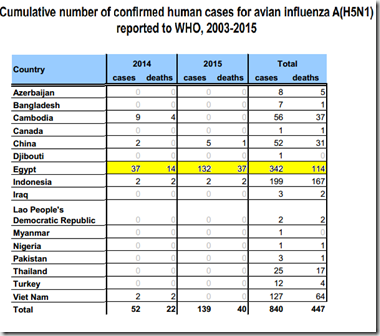
The World Health Organization has posted their latest Influenza at the Human-Animal Interface, monthly risk assessment summary – current through May 1st – which adds 13 additional H5N1 cases from Egypt during the month of April, and 1 from China.


image


Influenza at the human-animal interface


Summary and assessment as of 1 May 2015


Human infection with avian influenza A(H5) viruses

From 2003 through 1 May 2015, 840 laboratory-confirmed human cases of avian influenza A(H5N1) virus infection have been officially reported to WHO from 16 countries. Of these cases, 447 have died. 1 Since the last WHO Influenza update on 31 March 2015, 14 new laboratory-confirmed human cases of avian influenza A(H5N1) virus infection, including one fatal case, were reported to WHO from Egypt (13) and China (one).


Of the 13 human cases of influenza A(H5N1) virus infection reported from Egypt, nine had onset of disease in March and the rest had onset of disease in April. The cases were reported from eight different governorates of Egypt (see table 1 in the annex). The age range of the 13 cases is from three to 58 years, with a median of 31 years and 23% of the cases are under 10 years of age. Slightly more females than males were affected. Only one fatal case was reported and the rest have recovered and been discharged from hospital. All cases had exposure to poultry or poultry, all cases were hospitalized and all reportedly received treatment with antiviral medication.


Although all influenza viruses evolve over time, preliminary laboratory investigation has not detected major genetic changes in the limited number of viruses isolated from the patients and animals in Egypt compared to previously circulating isolates thus far, but further in depth analysis is ongoing.


Compared to the previous five months, there has been a decrease in the number of laboratory confirmed human cases of avian influenza A(H5N1) virus infection reported by Egypt since the last risk assessment. The decrease in the number of human cases over the past month is presently unclear. It is likely attributed to a mixture of factors, including fewer outbreaks in poultry, heightened public health awareness of risks and seasonal factors. The proportion of fatal cases has been consistently lower in Egypt than in other countries, especially in children.


China reported one human case of infection with an avian influenza A(H5N1) virus from Yunnan province, where two cases were detected last month. The case has recovered from his illness and was not reported to have had known exposure to poultry before illness.


Various influenza A(H5) subtypes, such as influenza A(H5N1), A(H5N2), A(H5N3), A(H5N6) and A(H5N8), have recently been detected in birds in west Africa, Asia, Europe, and North America, according to reports received by OIE. Although these influenza A(H5) viruses might have the potential to cause disease in humans, so far with the exception of human infections with influenza A(H5N1) and A(H5N6) viruses, no other subtypes of A(H5) virus infection in humans has been reported.


Overall public health risk assessment for avian influenza A(H5) viruses: The human cases reported appear to be sporadic and the virus is known to be endemic in poultry in these countries. Whenever avian influenza viruses are circulating in poultry, sporadic infections and small clusters of human cases are possible in people exposed to infected poultry or contaminated environments. Therefore additional human cases would not be unexpected.

Although an increased number of animal-to-human infections have been reported by Egypt over the past few months, these influenza A(H5) viruses do not currently appear to transmit easily among people. As such, the risk of community-level spread of these viruses remains to be low and the risk assessment remains unchanged.


Further studies are needed to understand the risk factors for human infections and the potential role of mild cases if they are occurring. More analyses on the viruses from both animals and humans need to be undertaken to better understand if any subtle changes in the transmissibility of the virus from animals to humans may be playing a role in the current situation.


A statement on the joint high-level mission to Egypt in March 2015, as well as the executive summary of the mission report, can be found at this link:


http://www.emro.who.int/egy/egypt-news/upsurge-h5n1-human-poultry-cases-may-2015.html


With the rapid spread and magnitude of avian influenza A(H5) outbreaks, notably in areas that had not experienced this disease in animals until recently, there is an increasing need for vigilance in the public health sector. Surveillance should be enhanced to detect, at the earliest stage, human infections if they occur and changes in viruses of transmissibility and pathogenicity that could have significant public health implications.

(Continue . . . )

Monday, May 18, 2015

WHO: Asymptomatic MERS-CoV Case – UAE

image


# 10,063


We’ve not seen anywhere near the number of MERS cases this year as we did during the spring of 2014, but we continue to see sporadic reports – mostly from Saudi Arabia – but also from Iran and now the UAE. Today’s notification is of an asymptomatic truck driver who was tested after some camels he was transporting from Oman tested positive for the virus.


This is only the second UAE MERS case reported in 2015, with the first being a fatal case last February.


In Lancet: Camels Found With Antibodies To MERS-CoV-Like Virus we saw a study showing specific antibodies to the MERS coronavirus in all 50 (100%) dromedary camel samples gathered (from multiple locations) in Oman, indicating past infection. 


While most have antibodies, since camels clear the virus fairly quickly, most camels are not actively infected at any given time.


Since one of the unknowns with the MERS coronavirus is how it is being transmitted in the community, finding and studying asymptomatic (yet PCR positive) cases is of particular interest.  It is unknown whether asymptomatic cases can spread the virus on to others, but some studies have suggested it is possible (see Study: Possible Transmission From Asymptomatic MERS-CoV Case).


Also unknown is how many asymptomatic (or mildly symptomatic) cases go undetected. Testing of asymptomatic contacts of known cases has turned scores of them, however.


In November of 2013, we looked at a study published in The Lancet Infectious Diseases, that attempted to quantify the likely extent of transmission of the MERS virus in the Middle East. (Middle East respiratory syndrome coronavirus: quantification of the extent of the epidemic, surveillance biases, and transmissibility).


They calculated  that for every case identified, there were likely 5 to 10 that went undetected.


While only an estimate, this is in line with studies of other novel viruses that seek to estimate uncounted cases.  And if true, would provide a plausible answer as to how hundreds of people – without obvious exposures – continue to contract the virus in the community.


Here is today’s report from the World Health Organization.


Middle East respiratory syndrome coronavirus (MERS-CoV) – United Arab Emirates

Disease outbreak news
18 May 2015

On 13 May 2015, the National IHR Focal Point of the United Arab Emirates (UAE) notified WHO of 1 additional case of Middle East respiratory syndrome coronavirus (MERS-CoV) infection.

Details of the case are as follows:

A 29-year-old, non-national male from Abu Dhabi tested positive for MERS-CoV on 12 May. The patient works as a truck driver and frequently transports camels from Oman to UAE. He travelled to Ibri city, Oman on 6 May and transported camels to Abu Dhabi on 9 May. As part of the national policy of testing all imported camels for MERS-CoV, on 9 May, laboratory examinations were carried out on the camels that the truck driver was transporting. The animals tested positive for MERS-CoV on 10 May. This triggered an investigation of the truck driver, which started on the same day. Following hospital admission, the patient tested positive for MERS-CoV on 12 May. He was asymptomatic at the time of laboratory testing. The patient has no comorbidities and no history of exposure to other known risk actors in the 14 days prior to detection. Currently, he is asymptomatic in a negative pressure room on a ward.

Contact tracing of household contacts and healthcare contacts is ongoing for the case. The National IHR Focal Point of the United Arab Emirates informed the National IHR Focal Point of Oman to undertake the necessary investigation back in Oman.

Globally, WHO has been notified of 1118 laboratory-confirmed cases of infection with MERS-CoV, including at least 423 related deaths.

(Continue . . . )

Sunday, May 17, 2015

WHO MERS-CoV Update – Saudi Arabia

image

Saudi Arabia


# 10,058


The World Health Organization has published a Disease Outbreak News (DON) report on 5 recent MERS cases in KSA, one of which answers a question we’ve had about the index case of a recent cluster of cases in Hofuf, which now appears to have started almost a month ago.   


On April 20th we learned of a case in Hofuf, later described in the April 29th WHO DON as:


A 61-year-old male from Hafouf city developed symptoms on 16 April and was admitted to hospital on 18 April. The patient has comorbidities and a history of frequent contact with camels and sheep as well as consumption of raw camel milk. He has no history of exposure to other known risk factors in the 14 days prior to the onset of symptoms. Currently, the patient is in stable condition in a negative pressure isolation room on a ward.


Two weeks later (May 5th) we saw another announced case from Hofuf, which we now learn is a contact of the April 20th case (the following excerpt comes from today’s DON):

.

A 39-year-old male from Hofuf city developed symptoms on 28 April and was admitted to hospital on 3 May. The patient is a smoker and has no comorbidities. He is a contact of a laboratory-confirmed MERS-CoV case that was reported in a previous DON on 29 April (case n. 2). The patient has no history of exposure to other known risk factors in the 14 days prior to the onset of symptoms. Currently, he is in critical condition in ICU.


This case is listed as `a contact’ of the April 20th case, although it doesn’t say what the relationship with the index case was.  Since then, we’ve seen 5 more cases from Hafuf listed at `household contacts of a confirmed case’ presumably all part of the same family cluster - although we have yet to see full epidemiological details on those.  


While we’ve seen larger nosocomial or community clusters of MERS infection in Saudi Arabia, this may represent the largest household cluster to date (see Community Case Clusters of Middle East Respiratory Syndrome Coronavirus in Hafr Al-Batin, Kingdom of Saudi Arabia: A Descriptive Genomic study by Z.A. Memish et al.)


It isn’t clear at this point if all seven these Hafof cases are all part of the same household, or perhaps the `household cluster’ only involves the six reported since May 5th.  Details that will hopefully be sorted out soon.


Of the other four unrelated cases reviewed in today’s release, two have no known risk factors, while two others have some level of exposure to camels or sheep (one, however is pretty weak).  While an opportunity for infection, exposure to livestock is no guarantee that was the source of infection.


As we’ve discussed often (see WHO EMRO: Scientific Meeting Reviews MERS Progress & Knowledge Gaps), there remains a lot about how MERS spreads that we simply don’t fully understand, including the role of asymptomatic carriage and transmission of the virus.  


Anyone contemplating a visit to the region will want to review CDC Traveler’s Advice: Umrah, The Hajj and MERS.


Middle East Respiratory Syndrome coronavirus (MERS-CoV) – Saudi Arabia

Disease outbreak news
17 May 2015

Between 4 and 9 May, the National IHR Focal Point for the Kingdom of Saudi Arabia notified WHO of 5 additional cases of Middle East respiratory syndrome coronavirus (MERS-CoV) infection.

Details of the cases are as follows:
  • A 75-year-old male from Abqaiq city developed symptoms on 30 April and was admitted to hospital on 3 May. He is an ex-smoker and has comorbidities. Investigation of history of exposure to known risk factors in the 14 days prior to the onset of symptoms is ongoing. Currently, the patient is in stable condition in a negative pressure room on a ward.
  • A 61-year-old, non-national male from Najran city developed symptoms on 28 April and was admitted to hospital on 1 May. He had comorbidities. The patient had no history of direct contact with camels or consuming raw milk; however, he lived in an area with camels and sheep. The patient had no history of exposure to other known risk factors in the 14 days prior to the onset of symptoms. The patient passed away on 8 May.
  • A 48-year-old male from Taif city developed symptoms on 3 May and was admitted to hospital on 8 May. He has comorbidities. Investigation of history of exposure to known risk factors in the 14 days prior to the onset of symptoms is ongoing. Currently, the patient is in critical condition in ICU.
  • A 39-year-old male from Hofuf city developed symptoms on 28 April and was admitted to hospital on 3 May. The patient is a smoker and has no comorbidities. He is a contact of a laboratory-confirmed MERS-CoV case that was reported in a previous DON on 29 April (case n. 2). The patient has no history of exposure to other known risk factors in the 14 days prior to the onset of symptoms. Currently, he is in critical condition in ICU.
  • A 41-year-old, non-national male from Huraimla city developed symptoms on 13 April and was admitted to hospital on 23 April. He has comorbidities as well as a history of frequent contact with camels and consumption of raw camel milk. The patient has no history of exposure to other known risk factors in the 14 days prior to the onset of symptoms. Currently, he is in critical in ICU.

Contact tracing of household contacts and healthcare contacts is ongoing for these cases.

Globally, WHO has been notified of 1116 laboratory-confirmed cases of infection with MERS-CoV, including at least 423 related deaths.

Friday, May 15, 2015

WHO Statement On Joint H5N1 Mission To Egypt

image


# 10,054


We’ve been following an unprecedented surge in human H5N1 infection in Egypt since late last fall, and while the Egyptian MOH has been less than forthcoming in their public statements regarding the outbreak, between the WHO, the FAO, and the efforts of independent news gatherers like FluTrackersEgypt - 2015 WHO/MoH/Provincial Health Depts H5N1 Confirmed Case List we’ve managed to keep reasonable track of its progress.


Two months ago  World Health Organization, along with the  FAO, OIE,  NAMRU-3, CDC & UNICEF were invited to Egypt as a joint mission to investigate and to make recommendations on containing that outbreak.   We’ve been expecting a report on what they found for some time.


As I mentioned earlier this week, a summary report was briefly posted on the WHO EMRO  website on May 3rd, but was taken down almost immediately without explanation. 


Today the WHO has posted a similar - but more abbreviated - summary of their findings along with a link to an executive summary.  Changes from the May 3rd release include updated case counts to the end of April (165 cases, 48 deaths), and the removal of a section with specific recommendations for addressing the crisis, which are now to be found in the executive summary.


Egypt: upsurge in H5N1 human and poultry cases but no change in transmission pattern of infection


15 May 2015 – The recent increase in the number of people affected by the avian influenza virus H5N1 in Egypt is not related to virus mutations but rather to more people becoming exposed to infected poultry, according to a recent mission of six organizations assessing the H5N1 situation in the country.

Since November 2014 to 30 April 2015, the period analysed by the international mission, a total of  165 cases, including 48 deaths were reported. This is by far the highest number of human cases ever reported by a country over a similar period. There are indications that H5N1 is circulating in all sectors of poultry production and in all parts of Egypt.

The mission stressed that the way the influenza H5N1 virus is transmitted in Egypt appears to have remained stable despite the recent upsurge in numbers of human and poultry infections. While the risk for the current situation to escalate into an H5N1 pandemic does not appear to have been changed appreciably, the situation remains a cause for considerable concern.

“Based on all the evidence we have, we believe the upsurge is not explained by changes in the virus itself,” said Dr Keiji Fukuda, WHO Assistant Director-General for Health Security and head of the H5N1 investigation team in Egypt. “The most likely reason for the increase in cases is that more poultry in Egypt are infected by H5N1 and so more people are exposed to this virus. Coupled with insufficient awareness, behavioural patterns and inadequate precautions taken by humans when interacting with poultry this explains what we are seeing.”

For successful reduction of the negative impact on human health and associated economic and food security consequences, it will be essential to strengthen animal and human disease surveillance, biosecurity and disease control programmes, in a context of a strengthened and close collaboration between human health and animal health departments. This includes appropriate animal vaccination programmes through joint efforts by the public and private sector in charge of animal health.

The report found that: 

  • although  human-to-human transmission cannot be excluded, the key epidemiological and demographic features of the recent human cases did not significantly change compared to those reported before the recent increase;  
  • there was no evidence for transmission from patients to health care workers during the upsurge; 
  • the vast majority of recent human cases – approximately 70% – had known exposure to infected backyard poultry; 
  • analysis of the genetic sequence data did not identify changes suggesting more efficient human-to-human transmission.

Although some of the apparent upsurge in cases might be a result of increased testing for H5N1 in humans, this cannot explain the whole picture. The upsurge of infections in poultry and the cases in people has likely been caused by changes in the economy and the poultry industry.

Many small farmers have turned to raising poultry for food and income in an unmonitored and uncontrolled farming sector. The implementation of a proper veterinary control strategy will require strengthening the response capacity, public–private partnerships, vaccination strategies and biosecurity in most poultry production sectors. Ensuring compliance with intergovernmental standards on animal health and regulatory statutes at national level, both in poultry production enterprises or households will be critical for limiting the spread of the H5N1 virus.

The report also notes that Egypt has already recognized the key features leading to the increase in disease, and has recently proposed important structures, sound policies and strategies. However, for them to be effective will require better implementation and concerted commitments at national, governorate and local level. The report recommended that Egypt should make long-term investments in agriculture, veterinary services, health and rural communities to combat H5N1. Policies should be developed to engage the large number of unlicensed commercial and semi-commercial poultry farms in developing new means of implementing and assuring effective disease prevention and control.


 image

The 7-page executive summary, warns:

` . . .  the presence of H5N1 viruses in Egypt with the ability to jump more readily from birds to humans than viruses in other enzootic countries is of concern and requires a high level of vigilance from the Ministries of Health and Agriculture.’


After reviewing their findings, and listing their recommendations, the report concludes:


The way forward

A successful approach to addressing H5N1 requires long-term, sustainable investments in agriculture, health and communities. In particular, close collaboration between sectors is required in communications, policy development, surveillance and response, and the production and sharing of information. Accurate, regular assessment of the impact of control measures is required to evaluate progress.


The government should undertake one or more pilot projects at the district level to determine which changes in policies and practices are most effective in reducing spread of infection among poultry and to humans and sustainable on a medium- to long-term basis. Addressing H5N1 nationally will require long-term changes in policies, practices, culture, awareness and community engagement.

Within three months, a two-year action plan that encompasses these recommendations and includes clear outcomes and indicators for monitoring will be developed by the ministries of health, agriculture and local development. FAO, WHO and OIE will support development of the plan, which will be presented to the NSC.


Hopefully we’ll soon see another Influenza at the Human-Animal Interface report from the WHO updating us on the progress and the epidemiology of this outbreak.

Thursday, May 14, 2015

WHO: A Very Brief H7N9 Update – China

 image


# 10,052


As we’ve seen with increasing frequency over the past year, the quality and quantity of disease outbreak information being provided to the World Health Organization -  and by extension to the public and the international scientific community - by  Saudi Arabia, Egypt & China continues to decline. 


Today the WHO has posted an H7N9 update – based on information provided to them by China on May 9th – that is current only through April 12th. 


When you can describe the epidemiological details of six H7N9 cases in 100 words or less (as is done below), you know you’ve reached a new level of parsimony in disease outbreak reporting.


These are all likely cases that we’ve picked up on, and reported previously. But matching them up to those vague reports based on the information provided here won’t be easy. 


Human infection with avian influenza A(H7N9) virus – China

Disease outbreak news
14 May 2015

On 9 May 2015, the National Health and Family Planning Commission (NHFPC) of China notified WHO of 6 additional laboratory-confirmed cases of human infection with avian influenza A (H7N9) virus, including 2 deaths.

Onset dates ranged from 26 March to 12 April 2015. Cases ranged in age from 3 to 67 years with a mean age of 36 years. Of these 6 cases, 4 (67%) were male. Four cases (67%) reported exposure to poultry related environment and 2 cases (33%) had unknown exposure. No clusters were reported. Cases were reported from five provinces and municipalities: Anhui (1), Fujian (1), Jiangsu (1), Shanghai (1), and Zhejiang (2).

The Chinese Government has taken the following surveillance and control measures
  • Strengthen outbreak surveillance and situation analysis;
  • Reinforce case management and medical treatment;
  • Conduct risk communication with the public and dissemination information.

WHO is assessing the epidemiological situation and conducting further risk assessment based on the latest information. Overall, the public health risk from avian influenza A(H7N9) viruses has not changed.

Comparing with previous two months, the infection case number is decreasing. Further sporadic human cases of avian influenza A(H7N9) infection are expected in affected and possibly neighboring areas. Should human cases from affected areas travel internationally, their infection may be detected in another country during or after arrival. If this were to occur, community level spread is considered unlikely as the virus does not have the ability to transmit easily among humans.

(Continue . . . )

Tuesday, May 12, 2015

WHO EMRO: Scientific Meeting Reviews MERS Progress & Knowledge Gaps

image

Saudi Arabia


# 10,039


We are rapidly approaching three years since the novel coronavirus now known as MERS-CoV was first discovered in Saudi Arabia, and yet there is still much we don’t know about how the virus is transmitted to, and among, humans. 


A fair number of cases have been linked to hospital spread, and camels have been shown to carry the virus and are presumed to play some part in introduction of the virus to humans, but for most cases the source of infection remains unknown.


The lack of obvious epidemiological links between many cases raises the question of transmission of the virus from mildly symptomatic (or asymptomatic) carriers of the virus.  We know from limited testing of contacts of known cases that some percentage (roughly 20%)  can be infected and show little or no outward signs of illness. 


Whether these people can transmit the virus onward isn’t known, but we’ve seen some hints that it may be a factor (see Study: Possible Transmission From Asymptomatic MERS-CoV Case).


Also unexplained are the heavily skewed demographics of infection (predominately older, and male)  shown in the following graphic from the most recent ECDC Rapid Risk Assessment on MERS.  The minor representation of patients under the age of 20 (which comprise roughly 40% of Egypt’s population) is also a mystery.

image


Normally we’d get answers to these questions from a well mounted case-control study, where epidemiologists would compare laboratory-confirmed cases to a large number of controls, matched for age, sex, and by neighborhood. By examining their respective exposures against their outcomes, patterns of risk are often revealed.


While repeated promises have been made regarding this study (see KSA Announces Start To Long-Awaited MERS Case Control Study), for whatever reason, we’ve yet to see the results.


Today the World Health Organization’s EMRO published the following report on a recent scientific meeting, calling for renewed emphasis on finding the answers to these, and other, questions.


International scientific meeting on MERS-CoV reviews progress and identifies remaining knowledge gaps


Cairo 10 May 2015 – The WHO Regional Office for the Eastern Mediterranean held an international scientific meeting on Middle East Respiratory Syndrome coronavirus (MERS-CoV) in Cairo, Egypt, to discuss and share new scientific evidence and identify remaining gaps in knowledge pertaining to the virus’s origin, reservoir, and transmission mode. The overall goal of the meeting was to improve the global health response based on the new evidences accumulated so far on the risk factors for transmission of this virus. In the two and a half years since emergence of MERS-CoV in 2012, the understanding of the epidemiology of the virus has greatly improved but several important questions remain unanswered.  

Participations of the meeting include experts in human and animal health from Jordan, Oman, Saudi Arabia and United Arab Emirates, in addition to representatives of international health agencies: Centers for Disease Control and Prevention, Atlanta; United States Naval Medical Research Unit 3 (NAMRU-3); Institute of Virology, University of Bonn, Erasmus Medical Centre in Nedtherland; Institute Pasteur, Mount Sinai Hospital, Toronto, Canada; China Faculty of Medicine; Chinese University of Hong Kong, the US Centers for Disease Control and Prevention (US-CDC); Food and Agriculture Organization of the United Nations (FAO); and World Organisation for Animal Health (OIE).

To date, WHO has organized four international scientific meetings on MERS-CoV. The first was held in January 2013, the second in December 2013 and the third in Riyadh, Saudi Arabia, in March 2014, during which the final protocol for the case–control study on MERS-CoV was finalized. “These meetings, including this fourth one, have contributed immensely to improving our understanding of the virus, its evolution and risk factors for transmission, as well as identifying critical information and knowledge gaps that can better guide an effective global public health response,” said WHO’s Regional Director Dr Ala Alwan. “Today, once again, this meeting has underscored the need for the animal health and human health sectors to work together and collaboratively in MERS-CoV’s investigation, surveillance and research. Without the active collaborative support and engagement of both of these two sectors, the virus will continue to threaten public health,” Alwan concluded. 

As a novel virus of zoonotic origin and with its ability to cause severe disease in a number of patients, the virus continues to pose a serious threat to global health security. The participants of the meeting discussed the new scientific knowledge that has been accumulated so far surrounding the origin, reservoir and transmission mode of MERS-CoV in animals and humans. 

The participants confirmed that the epidemiological researches and all current accumulated scientific evidence prove that camels are the source of MERS-CoV.  However, what’s still unknown is how the virus is transmitted from camels to humans. By reviewing the research findings, participants concluded that all hospital outbreaks were caused by poor and inadequate infection control practices and measures in the healthcare environment, and not because of any change in the virus transmission.

As such, the meeting also reviewed the best practices in detecting, preventing and controlling the virus. Additionally, they looked into the most effective means of controlling the outbreak in both community and hospital settings.

Most importantly, they identified many knowledge gaps that need to be addressed to better understand the transmission dynamics of the virus among animals, between animals and humans, and from human to humans. These knowledge gaps include: the risk factors for transmission between camels and humans, the role of mild or asymptomatic cases in the infection transmission, the seasonal trend of the disease, the specific exposures that put the healthcare workers at highest risk illness, the underlying factors that are contributing into the transmissibility of the virus in healthcare settings, and the behaviors that put certain groups of people at higher risk of illness, etc. 

The participants agreed to work together to translate the information that has been generated so far on the virus, into a set of evidence-based recommendations that aims at improving the global preparedness against MERS-CoV.  As of 30 April 2015, WHO has been notified of 1111 laboratory-confirmed cases of infection with MERS-CoV globally, including at least 422 related deaths

Monday, May 11, 2015

Interim Independent Expert Report On WHO’s Ebola Response


image


# 10,034


In the wake of numerous criticisms over their initial response to the Ebola Outbreak in West Africa, the World Health Organization’s Director-General commissioned A panel of independent experts to assess WHO's response in the Ebola outbreak in March, with the goal of presenting their first progress report at the 68th World Health Assembly being held this month.


Today, that committee released a 12-page interim report that found serious problems in the WHO’s early response to the Ebola crisis, and stated there was a  “strong, if not complete, consensus that WHO does not have a robust emergency operations capacity or culture.”


A few excerpts, but follow the link to read the entire report.


The Panel considers this a defining moment for the work of WHO. Together, the WHO leadership and the Member States need to take determined action to address the challenges at hand. “Business as usual” or “more of the same” is not an option. Although there may be responsibility on the part of individuals for the way in which the response to the Ebola outbreak has been handled, it is necessary to identify and correct the structural causes of any shortcomings. In doing so, it must be recognized that there is an increasingly complex nexus of health, humanitarian and security crises that requires the United Nations system to find new approaches that go beyond institutional silos.

<SNIP>

There were serious gaps in the early months of the outbreak in terms of engaging with the local communities. Traditional cultural practices, including funeral and burial customs, contributed to virus transmission, yet culturally sensitive messages and community engagement were not prioritized. Essentially, bleak public messaging emphasized that no treatment was available and reduced communities’ willingness to engage; medical anthropologists should have been better utilized to develop this messaging. It must also be realized that the fact that communities were already in a post conflict situation manifested itself in high levels of distrust in authority. Owing to an extent to a lack of involvement on the part of the broader humanitarian systems, the nongovernmental organization resources, such as community development workers and volunteers, many from the countries and communities themselves, were not mobilized in the early stages. Given WHO’s extensive experience with outbreaks, health promotion and social mobilization, it is surprising that it took until August or September 2014 to recognize that Ebola transmission would be brought under control only when surveillance, community mobilization and the delivery of appropriate health care to affected communities were all put in place simultaneously.

It is still unclear to the Panel why early warnings, approximately from May through to July 2014, did not result in an effective and adequate response. Although WHO drew attention to the “unprecedented outbreak” at a press conference in April 2014, this was not followed by international mobilization and a consistent communication strategy. The countries most affected, other WHO Member States, the WHO Secretariat, and the wider global community were all “behind the curve” of the rapid spread of the Ebola virus. Many of the nongovernmental organizations that were on the ground in the affected countries, running development or humanitarian programmes, were faced with having to respond to a situation for which they were not well prepared; they lacked normative guidance and no adequate coordination mechanisms existed. The Panel is continuing to explore reasons for this delay, including political, cultural, organizational and financial factors.


This report does acknowledge that this Ebola outbreak was unprecedented in both size and scope, that the WHO was simultaneously dealing with several other major disease `hotspots’  (MERS in Saudi Arabia, H7N9 in China, and the declaration of Polio as a PHEIC) during the spring of last year.


Among the report’s recommendations:


At present, WHO does not have the operational capacity or culture to deliver a full emergency public health response. A number of options have been suggested by different organizations and individuals: (i) a new agency should be established for health emergencies; (ii) the emergency part of the health response should be led by another United Nations agency; or (iii) investments should be made so that the operational capacity of WHO for emergency response is fully in place.


The panel recommends that the third option should be pursued with vigour. Establishing a new agency would take time to put in place and substantial new resources would be required to establish its basic administrative systems, and operational response capacity. A new agency would, in any case, have to rely on and coordinate with WHO for public health and technical resources, creating an unnecessary interface. Similarly, if another United Nations agency were expected to develop health operational capacity, it too would need to coordinate in depth with WHO, especially with respect to the International Health Regulations (2005). All this suggests that, as WHO already has the mandate to deliver on operational response, it would be a far more effective and efficient use of resources to make WHO fit for purpose. This will require the resources and political will of the Member States.


The final report is expected in July.  

Saturday, May 09, 2015

WHO Declares Ebola Outbreak In Liberia Over

image

Credit WHO – May 6th Ebola Activity Map


# 10,029


With no new reported cases of Ebola in Liberia in 42 days, the World Health Organization has officially declared that embattled nation free of the disease.  Neighboring Sierra Leone and Guinea – while also making gains – continue to battle the virus, and so the entire region remains vigilant for any new outbreak.


The victory in Liberia, while welcome, is also fragile. 


This statement was emailed out by the World Health Organization this morning.  Follow the link to read it in its entirety.


The Ebola outbreak in Liberia is over

Report

from World Health Organization

Published on 09 May 2015

Today, 9 May 2015, WHO declares Liberia free of Ebola virus transmission. Forty-two days have passed since the last laboratory-confirmed case was buried on 28 March. The outbreak of Ebola virus disease in Liberia is over.

Interruption of transmission is a monumental achievement for a country that reported the highest number of deaths in the largest, longest, and most complex outbreak since Ebola first emerged in 1976. At the peak of transmission, which occurred during August and September 2014, the country was reporting from 300 to 400 new cases every week.

During those two months, the capital city Monrovia was the setting for some of the most tragic scenes from West Africa’s outbreak: gates locked at overflowing treatment centres, patients dying on the hospital grounds, and bodies that were sometimes not collected for days.

Flights were cancelled. Fuel and food ran low. Schools, businesses, borders, markets, and most health facilities were closed. Fear and uncertainty about the future, for families, communities, and the country and its economy, dominated the national mood.

Though the capital city was hardest hit, every one of Liberia’s 15 counties eventually reported cases. At one point, virtually no treatment beds for Ebola patients were available anywhere in the country. With infectious cases and corpses remaining in homes and communities, almost guaranteeing further infections, some expressed concern that the virus might become endemic in Liberia, adding another – and especially severe – permanent threat to health.


(Continue . . . )

Friday, May 08, 2015

WHO: Best Practices For Naming New Human Infectious Diseases

image

Credit WHO


# 10,025


Given the number of new – mostly zoonotic – diseases that have appeared over the past 30 years, and the trend (see The Third Epidemiological Transition) towards seeing more of the same,  the sticky issue of what to name these diseases will undoubtedly continue.  


In the past, it has been customary to name a disease after its place of origin (or perceived origin), or discoverer. 


Hence we’ve had the `Asian Flu’ of 1957, the `Hong Kong Flu’ of 1968, Ebola (named after the Ebola river), Lyme Disease, Legionnaire’s Disease and most recently MERS (Middle Eastern Respiratory Syndrome).


During the H1N1 pandemic of 2009, the media took to calling the virus `swine flu’ – much to the dismay of pork producers around the world who lost a lot of sales over unfounded fears of the virus.  Worse, in some parts of the world, the virus was dubbed `The Mexican Flu’, which unfairly maligned an entire nation for a virus that may, or may not, even have originated there.


In recent years there have been calls to come up with a naming convention for new, emerging diseases that did not unfairly stigmatize a people, ethnic group,  nation or region.   Today the World Health Organization has published a set of guidelines it hopes will help prevent these sorts of problems going forward.


Given that the media and the Internet have a will of their own, and are always quick to latch onto a snappy headline or catchphrase, it will be interesting to see how much impact today’s guidance will have.  


To be successful, it will be important for some agency or authority to quickly come up with and publicize an acceptable name before an independent (and possibly unfortunate) descriptor emerges and takes root.  Since it took more than two years after the H1N1 virus emerged before an `official’ name was announced (see WHO: Call It A(H1N1)pdm09), who gets to handle this `hot potato’ is far from clear.


First, excepts from the press release, followed by a link and excerpts from the Guidelines.


WHO issues best practices for naming new human infectious diseases

Note for the media

8 May 2015 | GENEVA - WHO today called on scientists, national authorities and the media to follow best practices in naming new human infectious diseases to minimize unnecessary negative effects on nations, economies and people.

“In recent years, several new human infectious diseases have emerged. The use of names such as ‘swine flu’ and ‘Middle East Respiratory Syndrome’ has had unintended negative impacts by stigmatizing certain communities or economic sectors,” says Dr Keiji Fukuda, Assistant Director-General for Health Security, WHO. “This may seem like a trivial issue to some, but disease names really do matter to the people who are directly affected. We’ve seen certain disease names provoke a backlash against members of particular religious or ethnic communities, create unjustified barriers to travel, commerce and trade, and trigger needless slaughtering of food animals. This can have serious consequences for peoples’ lives and livelihoods.”

Diseases are often given common names by people outside of the scientific community. Once disease names are established in common usage through the Internet and social media, they are difficult to change, even if an inappropriate name is being used. Therefore, it is important that whoever first reports on a newly identified human disease uses an appropriate name that is scientifically sound and socially acceptable.

(Continue . . .)


World Health Organization Best Practices for the Naming of New Human Infectious Diseases May 2015


Objective


The World Health Organization (WHO), in consultation and collaboration with the World Organisation for Animal Health (OIE) and the Food and Agriculture Organization of the United Nations (FAO), has identified best practices for the naming of new human diseases, with the aim to minimize unnecessary negative impact of disease names on trade, travel, tourism or animal welfare, and avoid causing offence to any cultural, social, national, regional, professional or ethnic groups.


Given the increasingly rapid and global communication through social media and other electronic means, it is important that an appropriate disease name is assigned by those who first report a new human disease. WHO strongly encourage scientists, national authorities, the national and international media and other stakeholders to follow the best practices set out in this document when naming a human disease. If an inappropriate name is released or used or if a disease remains unnamed, WHO, the agency responsible for global public health events, may issue an interim name for the diseases and recommend its use, so that inappropriate names do not become established.


The name assigned to a new human disease by WHO or other parties following the present best practices may or may not be confirmed by the International Classification of Diseases (ICD1) at a later stage. The ICD, managed by WHO and endorsed by its Member States, provides a final standard name for each human disease according to standard guidelines that are also aimed at reducing negative impact from names while balancing science, communication, and policy. Thus, the best practices are not intended to replace or interfere with the existing ICD system, but span the gap between identification of a new human disease event and assigning of a final name by ICD. Further, WHO recognizes that existing international systems and bodies are responsible for taxonomy and nomenclature of pathogens, which are not directly affected by these best practices.


Scope of disease naming


The present best practices apply to a new disease:

• That is an infection, syndrome, or disease of humans;

• That has never been recognized before in humans;
• That has potential public health impact; and
• Where no disease name is yet established in common usage


Best practices for disease naming

A disease name should consist of a combination of terms listed in Table A, based on the below principles. Terms listed in Table B should be avoided. General principles of use of terms include:

1. Generic descriptive terms can be used in any name. Generic terms will be most useful when available information on the disease or syndrome is not sufficiently robust, because these basic characteristics are unlikely to change as additional information become available.
e.g. respiratory disease, hepatitis, neurologic syndrome, watery diarrhoea, enteritis


2. Specific descriptive terms should be used whenever the available information is considered sufficiently robust that the vast changes to the epidemiology or clinical picture are unlikely to occur. Plain terms are preferred to highly technical terms.
e.g. progressive, juvenile, severe, winter


3. If the causative pathogen is known, it should be used as part of the disease name with additional descriptors. The pathogen should not be directly equated with the disease as a pathogen may cause more than one disease.
e.g. novel coronavirus respiratory syndrome


4. Names should be short (minimum number of characters) and easy to pronounce.
e.g. H7N9, rabies, malaria, polio


5. Given that long names are likely to be shortened into an acronym, potential acronyms should be evaluated to ensure they also comply with these best practices.


6. Names should be as consistent as possible with guidance from the International Classification of Diseases (ICD) Content Model Reference Guide

image

image