Showing posts with label Disaster. Show all posts

Thursday, March 26, 2015

COCA Call Today: Disaster/Emergency Preparedness For Clinicians

image

Credit CDC


# 9865


A reminder that today:  March 26, 2015 at 2:00pm EST, the CDC will hold a COCA call on disaster and emergency preparedness for clinicians.


Emergency Preparedness for Clinicians - From Guidelines to the Front Line

Image of Continuing Education Credits abbreviation. = Free Continuing Education

Date:Thursday, March 26, 2015

Time:2:00 – 3:00 PM (Eastern Time)

Participate by Phone:

  • 888-323-9813 (U.S. Callers)
  • 212-547-0291 (International Callers)

Passcode:3257688

Participate by Webinar:https://www.mymeetings.com/nc/join.php?i=PW1955511&p=3257688&t=c

Presenter(s)

Michael D. Christian, MD, MSc
Chief Safety Officer
Vice Chair, Disaster Network
Niagara Health System

Niranjan (Tex) Kissoon, MD, FRCPC, FAAP, MCCM, FACPE
Vice President, Medical Affairs
BC Children’s Hospital
Professor, Pediatric and Surgery
University of British Columbia
Vancouver, BC

Lewis Rubinson, MD, PhD, FCCP
Associate Professor
University of Maryland School of Medicine
Director of the Critical Care Resuscitation Unit
R Adams Cowley Shock Trauma Center

Timothy Uyeki, MD, MPH, MPP
Chief Medical Officer
Influenza Division
National Center for Immunization and Respiratory Diseases
Clinical Team Lead, Ebola Response
Centers for Disease Control and Prevention

Overview

Natural disasters, industrial accidents, terrorism attacks, and pandemics all have the capacity to result in large numbers of critically ill or injured patients. A barrage of patients with various clinical needs can quickly exhaust the care delivery capacity of a healthcare system. It is important for clinicians to have a disaster response plan that addresses approaches to maintaining quality care during times of patient surge and resource scarcity. During this COCA Call, participants will learn about the series of suggestions that focus on the management of multiple critically ill patients during a disaster or pandemic, and the importance of collaboration among front-line clinicians, hospital administrators, professional societies, and public health or government officials.

Objectives

At the conclusion of the session, the participant will be able to accomplish the following:

  • Outline the five main levels of disaster preparedness and response from the American College of Chest Physicians’ Guidelines for Care of the Critically Ill and Injured during Pandemics and Disasters
  • Discuss the importance of pediatric emergency preparedness for both pediatric and non-pediatric providers
  • Identify key lessons learned from the recent Ebola outbreak for improving emergency preparedness in North American
  • Describe ways clinicians and public health practitioners can collaborate to respond to disasters and pandemics
Additional Resources


While primarily of interest to healthcare providers, COCA (Clinician Outreach Communication Activity) calls are designed to ensure that practitioners have up-to-date information for their practices.  The audio from these calls are posted several days after they are held.  You can access COCA calls going back to 2012 at this link.

Monday, March 09, 2015

Four Years After Japan’s Great Earthquake & Tsunami

image +

Credit NHK News – Fukushima evacuation zone March 2011


# 9798


This week marks the fourth anniversary of Japan’s greatest modern natural disaster, and as the following Red Cross summary shows, thousands of (mostly elderly) people are still displaced, and for many life remains far from normal.  


First the statement, then I’ll be back with more on the long-term effects of disasters.


Great East Japan Earthquake and Tsunami – 4 years on. Despite progress in recovery, Red Cross continues to address high levels of vulnerability amongst survivors
2015/03/09

Four years have now passed since the Great East Japan Earthquake and Tsunami devastated large areas of Eastern Japan and while much progress has been made in overall recovery, there are serious delays in rebuilding communities, and the Red Cross continues to support thousands of mainly elderly survivors who still live in temporary housing. The tsunami also caused meltdown at the Fukushima Daiichi nuclear plant forcing the evacuation of large numbers of people who will not be able to return home in the foreseeable future because of radioactive contamination.

“There has been considerable progress in overall recovery from the devastation,” said Tadateru Konoe, President of the Japanese Red Cross (JRCS) and of the International Federation of Red Cross and Red Crescent Societies (IFRC), “however, there have been critical delays in rebuilding communities back and particular attention must be given to the needs of many elderly and other vulnerable people who have been unable to get back on their feet. The Red Cross will continue to support them.”

Clean-up efforts have reduced the levels of radioactivity around the Fukushima nuclear power plant, but areas close to the reactor will remain uninhabitable for years to come. With support from the IFRC and national Red Cross & Red Crescent societies around the world, the JRCS continues to provide extensive support to those displaced by the Fukushima meltdown, including health services and psychosocial support. Meanwhile the IFRC is supporting the newly established JRCS Nuclear Disaster Resource Center, which operates a digital library that collects information and experiences related to the nuclear disaster. The center has also drafted an operational manual which will be referred to in developing the IFRC’s guideline for nuclear emergency preparedness.

The Japanese Red Cross has been instrumental in the rebuilding of hospitals, nursery homes, and other vital institutions, and most of these large scale projects are either finished or nearing completion. The rebuilding of permanent homes for the affected population has not progressed as quickly, mainly due to constraints in land acquisition, but several Red Cross supported housing projects for elderly people have been constructed.

Whereas the living conditions of younger generations have by now mostly returned to normal, the situation is more serious for a large number of elderly people who lack a supporting family network and have not yet been able to restore their lives. The Red Cross maintains a focus on providing services to displaced elderly people who need assistance. This includes organizing social activities for residents of both temporary and permanent housing projects.

In addition to the mostly completed large scale construction projects the Japanese Red Cross Society continues to provide medical services, psychosocial support and other assistance to affected people in Iwate, Miyagi and Fukushima prefectures.

(Continue . . . )


Although a relatively rich country, Japan is still rebuilding after the devastation of the earthquake/tsunami/nuclear accident four years later, and the decommissioning of the Fukushima plant will take many more years.   


In Haiti, which suffered a horrific 7.0 earthquake in January of 2010, at last report more than 80,000 people still live in makeshift tent cities, often without running water or adequate sanitation (see USA Today Voices: Haiti, still suffering 5 years after earthquake).  


Although news headlines, and the public’s interest in disasters tend to wane and move to the next big story relatively quickly, recovery from disasters like these - and others like Hurricane Sandy in New York & New Jersey, tornadoes in Joplin and Tuscaloosa, and typhoons in the Philippines – can often take years.


Underappreciated is the toll these disasters can have on the mental and physical health of those heavily affected, and that those effects can continue for years. 


While often hidden from view, the psychological impact of a disaster can be enormous and ongoing.


Three years ago, in  Post Disaster Stress & Suicide Rates we looked at the impact of disaster-related PTSD (Post Traumatic Stress Disorder). This has been recognized as such a pressing problem that in 2013 the World Health Organization released a comprehensive Guidelines For Post-Trauma Mental Health Care book on the treatment of PTSD, acute stress, and bereavement:

image

While the psychological impact of a major disaster cannot be completely mitigated, encouraging individual, family, and business preparedness can go a long ways towards reducing the impact of any disaster.


FEMA, Ready.gov, along with organizations like the American Red Cross (and indeed, this blog), spend a great deal of time trying to convince individuals, families, businesses and communities of the value of preparing for a wide variety of emergencies and disasters.

image

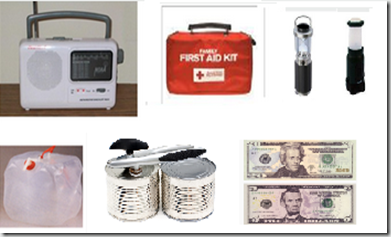
Basic kit : NWS radio, First Aid Kit, Lanterns, Water & Food & cash


Having a modest supply of food, water, and medicine – and a workable family or business disaster plan – can go a long ways toward reducing both stress and hardship during and after a disaster. The standard advice is that everyone needs to be prepared to deal with a disaster for at least 3 days (meaning having a first aid kit, emergency supplies, and a plan) before help arrives.


Sure . . .  they’d like you to be prepared for longer . . .  but 72 hours is a reasonable start. I personally advocate having 2 week’s worth of supplies, but then I live in the heart of hurricane country, and have a fondness for eating regularly (see NPM11: Living The Prepared Life). 


Although a good disaster plan and emergency kit are imperative to get you through the opening hours, days, or even weeks of a disaster, knowing how to help friends, family, and neighbors deal with the psychological effects of a disaster can be equally important.


A few resources you may wish to revisit:


In Psychological First Aid: The WHO Guide For Field Workers we looked a simple guidebook anyone can use to help others in emotional distress.


The CDC also provides a website which contains a number of resources devoted to coping with disasters.

Coping With a Disaster or Traumatic Event

Trauma and Disaster Mental Health Resources

The effects of a disaster, terrorist attack, or other public health emergency can be long-lasting, and the resulting trauma can reverberate even with those not directly affected by the disaster. This page provides general strategies for promoting mental health and resilience. These strategies were developed by various organizations based on experiences in prior disasters.


For more on disaster preparedness, you may wish to revisit:


When 72 Hours Isn’t Enough

In An Emergency, Who Has Your Back?

An Appropriate Level Of Preparedness

The Gift Of Preparedness – 2014 Edition

Monday, September 01, 2014

NPM 2014: Be Disaster Aware, Take Action to Prepare.

image


# 9023


After getting smacked repeatedly by hurricanes in the middle of the last decade (Katrina, Wilma, Rita, etc. . .), and pummeled by huge tornado outbreaks in 2010 and 2011 (see Weathering Heights: A Year For The Record Books), the United States has – comparatively speaking – enjoyed a welcome lull in major disasters.


Disasters still occur, of course.  Last months California quake caused billions of dollars in damage and major disruptions in the lives it affected, as did Hurricane Sandy in 2012.  But so far this year FEMA has only declared 33 major disasters nationwide – well behind the pace of 2011 (which saw 99 total).


While good news, this lull can’t be counted on to last. 2009 was a relatively mild year for disasters, but it was followed by the disaster ridden years of 2010 and 2011.  While no one can predict when the tide will turn, emergency managers know it is just a matter of time.


Unfortunately, individual, family, business and community preparedness remains less than FEMA, Ready.gov and local Emergency Management agencies would like to see. Only about half of the adults recently polled say they have a disaster plan, and of those, some of their preparations may be less than adequate.

image


Today marks the first day of National Preparedness Month, with the goal of getting Americans better prepared to deal with local, or national, disasters. 


The campaign really takes off tomorrow with a 2pm EDT Twitter Thunderclap, which where hundreds of twitter users (including @Fla_Medic) will simultaneously tweet the following message to over 6 million followers (details on how you can participate here).
 

image


All this month, as I do every September,  I’ll be featuring preparedness articles in this blog.  Some will be updates of earlier blogs, while others will be new content.  


Coincidentally, today (Sept 1st) is also Disaster Prevention Day in Japan,  which is the anniversary of the disastrous 1923 M7.9  quake that left Tokyo in ruins and killed – by some estimates – more than 140,000 residents.  Since 1960, that date has been used to conduct some of the most impressive disaster drills on the planet.


This year, one of the things the Japanese government is asking its citizens to add to their emergency stockpile is toilet paper.


Seriously, although some of the reasons behind this campaign may be more economic than practical.  Still, Japan saw a `toilet paper shortage’ after the Great 2011 Earthquake, and fears another natural disaster could see the supplies on the shelves bottom out (head down in shame, but moving on . . . ). 

It isn’t such a crazy idea, since there are often shortages of `necessities’ following a disaster.  And the use of `substitutes’ for toilet paper can clog sewer pipes and septic tanks, adding to the misery and health hazards following a disaster. 


Lest anyone think shortages like that can’t happen here, I would remind you of America’s Toilet Paper Panic of 1973 – one caused not by a natural disaster, but by a late night TV joke.


In December of 1973, the United States was suffering through the first of the OPEC oil shocks, and gas prices had tripled. Americans were understandably shaken by gas shortages and long lines at the pump.

Enter Wisconsin congressman Harold Froehlich who made the papers when he expressed concerns over a wood pulp shortage that could portend a paper shortage in 1974.  He quote an unnamed GAO source as saying they’d recently had trouble acquiring a full allotment of toilet paper.

Picking up on this obscure news item, staff writers for Johnny Carson’s Tonight Show wrote a joke for his monologue, saying that the next shortage congress was worried about was of toilet paper.

It got a modest laugh.

The next morning, however, millions of Tonight Show fans ran out and cleaned the shelves of all of the available toilet paper. Some people bought shopping cart's full. By noon, there wasn't a roll to be had in most major cities.

The supplies were, err, wiped out, so to speak.

That night, Johnny Carson went on the air to explain, and apologize. There was no shortage, folks.  It was all just  a joke  . . .  

Only one problem: Now there was a shortage.

As soon as new supplies were delivered and put on the shelves, they were snapped up by worried customers who hadn’t seen a roll on the shelf for days. People were hoarding toilet paper out of fear, and so the shortage continued.

Even though the supply chain was unbroken, it took 3 weeks before normalcy returned. And all of this took place back when stores actually had stockrooms, and didn't rely on just-in-time inventory restocking.

Now, consider what would happen if there were an actual break in the supply chain.  If production were reduced, or even halted, or if trucks couldn’t deliver goods to regions of the country.   Shortages could last not days, but weeks or longer. 


Granted, toilet paper isn’t exactly the highest priority item to have on hand in a disaster.  Food, water, required prescription meds, emergency lights, and a NWS weather radio all rank considerably higher on the list of `must haves’.  

Still, keeping a couple of extra rolls in the preps closet isn’t such a bad idea. 


This month FEMA and READY.GOV are both urging everyone to BUILD A KIT, MAKE A PLAN, and to BE INFORMED.

image

Basic kit : NWS radio, First Aid Kit, Lanterns, Water & Food & cash  for 3 Days minimum


Because during any disaster, the advantage goes to those who were already prepared.

Thursday, March 27, 2014

Post-Disaster Stress Cardiomyopathy: A Broken-Hearted Malady

image

Credit Wikipedia


# 8407


Although once thought to be the figment of a poet’s imagination, doctors now know it is possible to die from a `broken heart’ – from a condition known as Takotsubo cardiomyopathy – or stress induced cardiomyopathy.  Also known as broken heart syndrome, this acute ballooning of the heart ventricles is a well-recognized cause of acute heart failure and dangerous cardiac arrhythmias.


Johns Hopkins Medicine has a Frequently Asked Questions about Broken Heart Syndrome, that describes the condition:


1. What is “stress cardiomyopathy?”

Stress cardiomyopathy, also referred to as the “broken heart syndrome,” is a condition in which intense emotional or physical stress can cause rapid and severe heart muscle weakness (cardiomyopathy). This condition can occur following a variety of emotional stressors such as grief (e.g. death of a loved one), fear, extreme anger, and surprise. It can also occur following numerous physical stressors to the body such as stroke, seizure, difficulty breathing (such as a flare of asthma or emphysema), or significant bleeding.

2. What are the symptoms of stress cardiomyopathy?

Patients with stress cardiomyopathy can have similar symptoms to patients with a heart attack including chest pain, shortness of breath, congestive heart failure, and low blood pressure. Typically these symptoms begin just minutes to hours after the person has been exposed to a severe, and usually unexpected, stress.

3. Is stress cardiomyopathy dangerous?

Stress cardiomyopathy can definitely be life threatening in some cases. Because the syndrome involves severe heart muscle weakness, patients can have congestive heart failure, low blood pressure, shock, and potentially life-threatening heart rhythm abnormalities. The good news is that this condition improves very quickly, so if patients are under the care of physicians familiar with this syndrome, even the most critically ill tend to make a quick and complete recovery.


Since this condition is normally associated with the sudden loss of a loved one, or some other form of severe stress, it shouldn’t come as a complete surprise research finds an increased incidence of this syndrome in stress filled post-disaster scenarios. 


First a press release from the American College of Cardiology, after which I’ll return with a bit more.


Clusters of 'broken hearts' may be linked to massive natural disasters

Analysis of US Takotsubo cardiomyopathy cases shows pattern to cue emergency responders

WASHINGTON (March 27, 2014) — Dramatic spikes in cases of Takotsubo cardiomyopathy, also called broken heart syndrome, were found in two states after major natural disasters, suggesting the stress of disasters as a likely trigger, according to research to be presented at the American College of Cardiology's 63rd Annual Scientific Session. Authors call for greater awareness among emergency department physicians and other first responders.

Takotsubo cardiomyopathy, or broken heart syndrome, is a disorder characterized by a temporary enlargement and weakening of the heart muscle, which is often triggered by extreme physical or emotional stress – for example, being in a car accident or losing a child or spouse. Previous international studies have also linked broken heart syndrome to natural disasters, including the 2004 earthquake in Japan. This is the first U.S. study to examine the geographic distribution of the condition in relation to such catastrophes.

Researchers at the University of Arkansas identified 21,748 patients diagnosed with primary cases of broken heart syndrome in 2011 using a nationwide hospital discharge database. After mapping the cases by state, Vermont and Missouri emerged as having the highest rate of cases, with 380 cases per million residents in Vermont and 169 per million in Missouri. Most states had fewer than 150 cases per million residents. New Hampshire and Hawaii had the lowest rate of the disease that year.

The rate of broken heart cases in Vermont in 2011 was more than double most other states. This was the same year that Tropical Storm Irene pummeled the state with heavy rain and wind, causing the most devastation Vermont has experienced since the Great Flood of 1927. Similarly, researchers found broken heart syndrome at a rate of 169 cases per million in Missouri in 2011, the same year a massive tornado ripped through Joplin, Mo., demolishing neighborhoods and killing at least 158 people.

"Despite the seemingly increasing number of natural disasters we have, there is limited data about how it might affect the heart," said Sadip Pant, M.D., internist at the University of Arkansas for Medical Sciences, and lead investigator of the study. "Our findings suggest two disasters, one in Vermont and one in Missouri, might have been possible triggers for the clustering of Takotsubo cardiomyopathy cases in these regions."

(Continue . . .)


We’ve looked at the post-disaster (often stress related) effects on human health previously, including earlier this month in Tulane University: Post-Katrina Heart Attack Rates – Revisited, where heart attack rates remain elevated by 300% in New Orleans six years after that hurricane struck.


And just last month, in The Long Term Effects Of A Major Disaster, we looked at the post-tsunami deaths due to stress and displacement that exceeded – at least in one prefecture – those experienced during the initial earthquake and tsunami. And last fall - in Sandy 1 Year Later: Coping With The Aftermath - we looked at the lingering psychological effects of New England’s brush with that late season super storm of 2012.


While often hidden from view, the psychological impact of a disaster can be enormous and ongoing. Last year in Post Disaster Stress & Suicide Rates we looked at the impact of disaster-related PTSD (Post Traumatic Stress Disorder). This has been recognized as such a pressing problem that last  August the World Health Organization released a comprehensive Guidelines For Post-Trauma Mental Health Care book on the treatment of PTSD, acute stress, and bereavement:

image


While the psychological impact of a major disaster cannot be completely mitigated, encouraging individual, family, and business preparedness can go a long ways towards reducing the impact of any disaster.


Which is why FEMA, Ready.gov, along with organizations like the American Red Cross, spend so much time trying to convince individuals, families, businesses and communities of the value of preparing for a wide variety of emergencies and disasters.The bottom line is that those who follow the advice to Have A Plan, Make A Kit, and Be informed  will be not only be better able to deal with a disaster, they will be better prepared to weather the rigors of a long recovery as well.


And that, in turn, could help reduce the risks of a variety of post-disaster health issues.


For more on all of this, a few of my (many) blogs on disaster preparedness include:


  • In An Emergency, Who Has Your Back?
  • When 72 Hours Isn’t Enough
  • When Evacuation Is The Better Part Of Valor
  • Monday, November 11, 2013

    Disasters, Dead Bodies, And The Epidemic Disease Myth

    image


    # 7960


    Large disasters - like earthquakes - or the Typhoon that struck the Philippines over the weekend, can sometimes generate hundreds or even thousands of deaths, while at the same time degrading that society’s ability to handle the dead.  Initial recovery efforts are, out of necessity, directed towards helping the survivors while the recovery of bodies takes secondary importance.


    As a result, bodies can sometimes remain unrecovered for days or even weeks, and rapidly and inevitably, decomposition takes hold. Particularly in warm, wet environments.


    There is a pervasive belief that decomposing bodies pose an epidemic risk, one that has been often exacerbated by careless media coverage.  It stems, I suppose, from the old belief that illness could be transmitted via bad odors the Miasma Theory – which was widely held up until the end of the 19th century. 


    While scientifically incorrect, it was an understandable deduction at the time.  Epidemics generate dead bodies, decaying bodies become odiferous in a hurry, and so linking the smell with disease in a pre-germ-aware society was probably inevitable.  


    While borne of faulty logic, it probably did encourage people to quickly bury their dead and to dig their latrines some distance from their wells. So it had some public health value.


    But with few exceptions, decaying bodies do not pose a serious threat of spreading disease. If they did, the life expectancy of medical examiners, morticians, and rescue and recovery personnel around the world would be substantially shortened. Having done my share of body recovery, I can assure you that while always unpleasant, it rarely poses a serious health risk.


    There are some exceptions, of course.  Primarily when deaths are produced by certain types of infectious diseases, like Cholera, Ebola, CCHF or other hemorrhagic fevers, Nipah, Tuberculosis, Typhus, or plague.


    But the truth is, if any of these diseases are in the affected population, you are probably more likely to contract one from dealing with the survivors that from the dead.


    The World Health Organization has a technical document that discusses the disposal of bodies after a disaster.


    Disposal of dead bodies in emergency conditions


    WHO Technical Note for Emergencies No. 8

    volunteers remove bodies with extreme caution

    This technical note provides guidance on the disposal of dead bodies in emergency situations. Where there are many fatalities, the collection and disposal of bodies becomes an urgent need. This is not usually due to any health-related risks, which are likely to be negligible, but is important because of the possible social and political impact and trauma. So emergency relief teams should primarily be concerned with the mental health of the community and its need to carry out the cultural obligations and traditions to take care of the dead, rather than potential disease transmission.

    Physical health risks

    The widespread belief that corpses pose a risk of communicable disease is wrong. Especially if death resulted from trauma, bodies are quite unlikely to cause outbreaks of diseases such as typhoid fever, cholera, or plague, though they may transmit gastroenteritis or food poisoning syndrome to survivors if they contaminate streams, wells, or other water sources.

    Mental health risks

    The psychological trauma of losing loved ones and witnessing death on a large scale is the greatest cause for concern. It is therefore, important to collect corpses as quickly as possible to minimize this distress. It is, however, not necessary to rush their burial or cremation. This does not allow for the correct identification and record taking of the details of the dead. Nor does it give the time for the bereaved to carry out the ceremonial and cultural practices, which would normally occur after a death.

    (Continue . . .)

    An editorial by Claude de Ville de Goyett, published by PAHO in 2004, tackles this myth as well:


    Epidemics caused by dead bodies: a disaster myth that does not want to die


    Last stop is an article that appeared in the Canadian Journal of Infectious Diseases and Medical Microbiology in 2005.


    Can J Infect Dis Med Microbiol. 2005 Sep-Oct; 16(5): 269–270.

    PMCID: PMC2095048

    Natural disasters, corpses and the risk of infectious diseases

    JM Conly, MD1 and BL Johnston, MD2

    (EXCERPT)

    Simple precautions may greatly reduce the potential risk of transmission of any pathogenic microorganisms associated with the handling of corpses. The practice of basic hygienic measures, such as handwashing, the use of universal precautions as outlined in several documents and the use of personal protective equipment will greatly mitigate the risk of transmission of any potential pathogens from corpses (10). These practices include the use of gloves when handling corpses, avoidance of handling of personal items with contaminated gloves or hands, and the use of personal protective equipment (gowns, masks and eyewear) as appropriate if splashes are anticipated.

    In summary, there is no compelling evidence to suggest that corpses themselves pose a risk for an acute epidemic of an infectious disease. It is more likely that the increased risk of infection occurs in the postevent period and that a higher risk of water-borne diseases is associated with flooding where there is contamination of drinking water facilities and a lack of proper sanitation.


    Bottom line, I’d certainly want to wear disposable gloves and a surgical mask when doing body recovery work after a natural disaster, but I wouldn’t worry unnecessarily over the health risks.

    WHO Declares Grade 3 Emergency In The Philippines

    image

    Source OCHA Situation Report – Nov. 10th


    # 7960


    Many relief organizations (including, but not limited to the American Military, USAID, the Red Cross, CARE, and Save The Children) around the globe are pouring supplies and resources into the Philippines following its devastating hit by Typhoon Haiyan on Friday.   Crof has been providing exemplary coverage of this ongoing tragedy on his blog for the past several days.


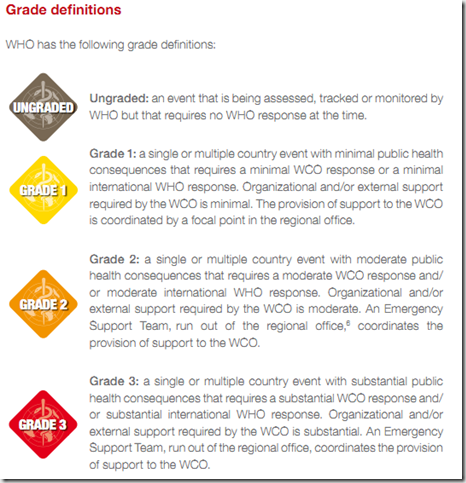
    Today the World Health Organization has announced their determination of a GRADE 3 Emergency – and their immediate relief response - in a brief news item and followed up by an emailed press release.

    image

    WHO Emergency Response Framework


    As you can see, a Grade 3 Emergency is the top of the scale.  First, the brief announcement from the WHO, followed by their emailed press release.


    Haiyan (Yolanda) 2013

    11 November 2013 -- IRINNEWS reports that aid agencies are bracing for the worst after Typhoon Haiyan slammed into the Philippines in the early hours of 8 November, triggering landslides, heavy flooding and affecting tens of millions of people. The category five super typhoon, locally known as Yolanda, struck the central island of Samar before moving west. Heavy rain flooded many areas but the full extent of the damage remains unknown. The Director-General of WHO has declared the crisis a Grade 3 emergency. WHO is resolving to put Organization-wide resources at the disposal of the WHO Head of Office for the Philippines and the Emergency Support Team that the Western Pacific Regional Office is establishing to support this operation.


    And this from the emailed press release:


    WHO RESPONDING TO HEALTH NEEDS CAUSED BY  TYPHOON HAIYAN (“YOLANDA”)

    MANILA, Philippines ¦ 11 November 2013 – The World Health Organization (WHO) has activated an organization-wide mobilization to work closely with the Department of Health, Philippines (DoH) to organize relief efforts for the survivors of Typhoon Haiyan.

    The typhoon—locally known as Yolanda—ravaged the central part of the archipelago Friday morning with winds reaching speeds of more than 250 km per hour causing storm surges of up to 5 metres. Many people living in these affected areas were injured and the devastating effects of this typhoon left already vulnerable health facilities damaged or completely destroyed. As a result of the breadth and severity of the storm, health services in the worst affected areas no longer exist or are severely stretched, with medical supplies in very short supply.

    “We are working closely with the Philippine Government and local authorities to assess and rapidly address the life-saving needs of the people affected by this typhoon,” says Dr Julie Hall, WHO Representative to the Philippines. “WHO has an assessment team on the ground in Bohol, and we are sending teams to Cebu and Tacloban with the United Nations Disaster Assessment and Coordination (UNDAC) teams in support of national response efforts. WHO is flying in more than two dozen health emergency relief experts and emergency health kits for the initial response.”

    The Government estimates that some 4.5 million people have been affected in the Central Philippines. WHO is mobilizing supplies to assist the government in providing a coordinated, effective and rapid response: 

    • An initial shipment of four emergency kits with medicines and supplies to cover basic health needs of 120 000 persons during one month and supplies to perform 400 surgical interventions are being deployed. Four diarrhoeal disease kits with medicines and supplies to treat 3000 cases of acute diarrhoea are also being sent.
    • WHO is also supporting the Department of Health (DoH) in strengthening its early warning alert and response network (EWARN) to rapidly detect disease outbreaks and other public health threats related to food and environmental hazards.
    • The Government is receiving international assistance such as field hospitals and medical teams, and WHO is working closely with the Government to ensure those supplies and teams go where they are needed most.
    • Medical storage spaces have also been damaged, and  WHO is working to re-establish logistics bases for new supplies that are arriving.


    In the aftermath of the typhoon, reaching the affected areas and people has proven to be a sizeable logistical challenge. The true extent of the death and destruction has yet to be quantified. The super typhoon ripped roofs off houses and uprooted trees, interrupting telecommunications and electricity supplies. Many air- and sea-ports in the affected areas are closed. Until roads are cleared, movement will be difficult in these areas, posing significant logistical challenges to emergency relief operations.


    Adding to the complexity of this response, another tropical storm is expected to hit the Philippines later this week. Foreign governments and international aid agencies have already pledged support in the form of air transportation and equipment, but more help is urgently needed to save the lives of the survivors.
    WHO’s rapid deployment of health experts and supplies to the Philippines has been possible thanks to the financial support for surge capacity provided by numerous international partners, including the European Commission. Due to the magnitude of the disaster, WHO is seeking immediate financial contributions to cover initial response operations. A joint appeal by United Nations and non-governmental organizations will be issued in the coming days.

    Saturday, November 02, 2013

    Oklahoma Insurance Commissioner Warns On Earthquake Risks

    image

    Earthquakes last 7 Days – Credit Leonard Geophysical Laboratory


    # 7930


    While Oklahomans are more accustomed to threats dropping down from the sky than they are from those rising under their feet, as I wrote about 10 days ago (see USGS: Oklahoma Earthquake Swarm Continues), Oklahoma has seen an abrupt rise in the number of small earthquakes since 2009. 


    A reminder that that threats can change over time, and with that, so must our readiness and response.


    The swarm of (mostly small) earthquakes - particularly north and east of Oklahoma City -  continues unabated, which has prompted the Insurance Commissioner of the state to remind residents that regular homeowners policies do not cover earthquake damage, and encourages them to buy earthquake coverage.


    First stop, the press release, followed by some `Earthquake Insurance’ realities,  after which I’ll be back with a bit more.


    News Release Header

    Commissioner Doak Encourages Homeowners to Purchase Earthquake Insurance

    OKLAHOMA CITY – Oklahoma Insurance Commissioner John D. Doak is encouraging Oklahomans to purchase earthquake insurance after a new report predicts continued seismic activity in the central part of the state. The U.S. Geological Survey (USGS) said central Oklahoma has experienced more than 200 magnitude 3.0 or greater earthquakes since January 2009.

    “Looking into earthquake insurance after your home or business has sustained damage resulting from an earthquake will do little good to help you recover,” said Doak. “Now is the time to protect yourself before the next one occurs.”

    USGS reports an average of 40 earthquakes per year in Oklahoma from 2009 to 2013, an increase from an average of two to six yearly from 1975 to 2008. Oklahoma’s record-breaking 5.6-magnitude quake in November 2011 destroyed 14 homes and damaged dozens more. However, an estimated less than one percent of Oklahomans carry earthquake insurance. Standard homeowners or renters insurance policies do not cover damage caused from earthquakes.

    (Continue . . .)


    The State of Oklahoma  provides an Earthquake Insurance `Basics’ webpage, which provides a great deal of information on how to obtain coverage, and some of the limitations of these policies.  

    oklahoma earthquakes

  • Earthquake insurance typically must be purchased apart from a standard homeowners policy, either as an “endorsement” added to the policy by the company that carries the purchaser’s homeowners insurance, or as a separate policy from a company specializing in earthquake coverage. Consumers will also have to wait a period of time – usually 30 to 60 days – after the most recently reported earthquakes in their area before they can purchase new earthquake insurance, due to the likelihood of aftershocks.
  • The cost of an earthquake policy varies depending on factors, including the carrier and the policyholder’s desired level of coverage, but typically an Oklahoma homeowner might expect to pay between $100 and $150 per year for earthquake insurance.
  • Earthquake policies frequently have nuances, such as providing or not providing coverage for brick or stone veneers on the home.
  • Earthquake insurance carries a separate and often substantial deductible, apart from the standard homeowners deductible. Often this deductible is calculated as a percentage of the insured property’s value – commonly 5 to 10 percent, but occasionally lower or higher – meaning that a $100,000 home would require a deductible of $5,000 to $10,000. 
  • (Continue . . . )


    Less costly, but no less important, is having a good earthquake disaster plan, and the supplies you will need in the event of a major quake. 


    While many natural disasters – like hurricanes, wild fires, and tornados – have a `season’, earthquakes can come at any time and without warning.  Which means that any earthquake plan – particularly in the North and Midwest – must anticipate what you would do if a quake hits in the middle of winter.


    Compared to West Coast earthquakes, those that occur in the Midwest and Eastern half of the country tend to be felt across a much larger area (see USGS: Eastern Earthquakes - Rare But Powerful). The following shake map from the USGS shows the areas reporting shaking from two recent quakes, a 6.0 in Central California, and the recent 5.8 Virginia quake. By an incredibly large margin, the smaller eastern quake was felt over a much bigger area.

    image


    And the effects of an earthquake can go far beyond the loss of life and property damage.  Ripple effects caused by economic losses can affect regions far removed from the epicenter. In 2011, in The Ripple Effect, we saw that 2/3rds of all businesses in New Zealand were economically impacted by the Christchurch earthquakes.


    Working to improve earthquake awareness, preparation, and safety is Shakeout.org, which promotes yearly earthquake drills and education around the country (see NPM13: A Whole Lotta Shakeouts Going On).  If you live in one of these seismically active areas, I would encourage you to take part in these yearly drills.

    image


    As a bare minimum, everyone should have a well thought out disaster and family communications plan, along with a good first aid kit, a `bug-out bag’, and sufficient emergency supplies to last at least 72 hours.


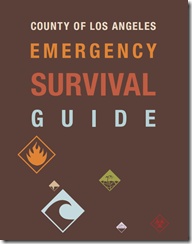
    In When 72 Hours Isn’t Enough, I highlighted  a colorful, easy-to-follow, 100 page `survival guide’ released by Los Angeles County, that covers everything from earthquake and tsunami preparedness, to getting ready for a pandemic.

    image

    The guide may be downloaded here (6.5 Mbyte PDF).

    While designed specifically for the nearly 10 million residents of Los Angeles County, this guide would be a valuable asset for anyone interested in preparing for a variety of hazards. And in Los Angeles, the advice is to have emergency supplies (food, water, etc) to last up to 10 days. In my humble opinion, 2-weeks in an earthquake zone isn’t overkill.


    To become better prepared as an individual, family, business owner, or community to deal with all types of disasters, I would invite you to visit the following preparedness sites.


    FEMA http://www.fema.gov/index.shtm

    READY.GOV http://www.ready.gov/

    AMERICAN RED CROSS http://www.redcross.org/


    And lastly, in NPM13: The Greatest Prep Of All,  I wrote about what I consider to be the most important preparedness step you can take – having, and being,  a disaster buddy.  Cultivating a network of family and friends to whom you can turn for help in a disaster, to who can turn to you for aid,  if they need it.


    Because no matter where you live, its just a matter of time before the next disaster strikes.

    Monday, September 23, 2013

    NPM13: Radiological Emergencies

    image

    Photo Credit CDC PHE


    Note: This is day 23 of National Preparedness Month.  Follow this year’s campaign on Twitter by searching for the #NPM or #NPM13 hash tag.

    This month, as part of NPM13, I’ll be rerunning some updated  preparedness essays, along with some new ones (like this one).


    # 7801


    For most Americans, the idea that we might have to deal with a radiological emergency sounds like something out of the Cold War era (1950s to the1980s), when multiple Soviet warheads were targeted on every major American city and nuclear annihilation seemed all but unavoidable . Today, we’ve pulled back from that brink, have reduced our nuclear stockpiles by 80%, and a global thermonuclear war seems unlikely.


    But radiological threats remain, both due to deliberate acts, and due to accidents and natural disasters.   One need look only as far as the Fukushima disaster of 2011 to see how quickly a radiological emergency can affect a large population. 

    This from the CDC’s PHE website:


    A radiological or nuclear incidents occurring within the U.S. homeland or elsewhere could take a number of forms, including: contamination of food or water with radioactive material; placement of radiation sources in public locations; detonation of radiological dispersal devices that scatter radioactive material over a populated area; an attack on a nuclear power plant or a high-level nuclear waste storage facility; or an improvised nuclear device.


    The CDC, HHS, FEMA, and other agencies take these threats seriously, as is evidenced by a multi-million dollar contract let last week by the HHS to stockpile Thrombosomes freeze-dried platelets – used for the treatment of acute radiation sickness.


    HHS funds development of freeze-dried platelets for disaster response

    New product could improve care for Acute Radiation Syndrome and daily medical care

    Date: September 20, 2013

    Organization: Cellphire Inc. of Rockville, Md.

    Funding: This contract is for $11 million in the first 18 months and can be extended if milestones are met for a total of up to five years and up to $56.7 million.

    About this contract:  Cellphire will further develop Thrombosomes as a possible treatment for acute radiation syndrome. Thrombosomes is a novel freeze-dried blood product derived from human platelets.

    Using a proprietary stabilization method, Cellphire can convert platelets into a powder that can be stored at room temperature for extended periods. When the product is needed, the powder can be reconstituted rapidly using sterile water and injected to restore normal clotting.

    (Continue . . .)


    The CDC’s Public Health Emergency Website lists six types of radiological threats, with links to tell you more about them.


    Illustration of an IND

    Nuclear Emergencies

    • A nuclear emergency involves the explosion of a nuclear weapon or improvised nuclear device (IND).
    • The explosion produces an intense pulse of heat, light, air pressure, and radiation.
    • Nuclear explosions produce fallout (radioactive materials that can be carried long distances by the wind).

    Learn more about nuclear emergencies


    Illustration of a dirty bomb

    Dirty Bomb or Radiological Dispersal Device (RDD)

    • A dirty bomb (also known as a radiological dispersal device) is a mix of explosives such as dynamite, with radioactive powder or pellets.
    • A dirty bomb cannot create an atomic blast.
    • When the explosives are set off, the blast carries radioactive material into the surrounding area.

    Learn more about dirty bombs


    Illustration of a radiological exposure device

    Radiological Exposure Device (RED)

    • A radiological exposure device (also called a hidden sealed source) is made of or contains radioactive material.
    • REDs are hidden from sight to expose people to radiation without their knowledge.

    Learn more about radiological exposure devices


    Illustration of an power plant accident

    Nuclear Power Plant Accident

    • An accident at a nuclear power plant could release radiation over an area.
    • Nuclear power plants have many safety and security procedures in place and are closely monitored by the Nuclear Regulatory Commission (NRC) External Web Site Icon

    Learn more about nuclear power plant accidents


    Illustration of a transportation accident

    Transportation Accidents

    • It is very unlikely that a transportation accident involving radiation would result in any radiation-related injuries or illnesses.
    • Shipments involving significant amounts of radioactive material are required to have documentation, labels, and placards identifying their cargo as radioactive.

    Learn more about transportation accidents


    Illustration of an occupational accident

    Occupational Accidents

    • Radiation sources are found in a wide range of settings such as health care facilities, research institutions, and manufacturing operations.
    • Accidents can occur if the radiation source is used improperly, or if safety controls fail.

    Learn more about occupational accidents


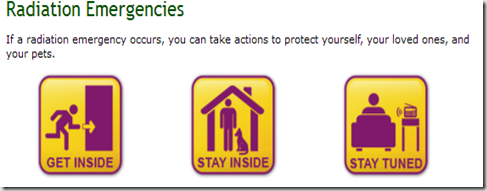
    Preparing for a radiological emergency isn’t so very different from what you would do for any other type of disaster.  You want to be prepared to shelter-in-place, stay out of harm’s way, and keep up with advisories.  Steps that are explained on PHE’s  Radiation Emergencies - What should I do?  webpage.


    image

    Get Inside

    Get Inside

    In a radiation emergency you may be asked to get inside a building and take shelter for a period of time.

    • This action is called "sheltering in place."
    • Get to the middle of the building or a basement, away from doors and windows.
    • Bring pets inside.

    Learn about sheltering options


    Stay Inside

    Stay Inside

    Staying inside will reduce your exposure to radiation.

    • Close and lock windows and doors.
    • Take a shower or wipe exposed parts of your body with a damp cloth.
    • Drink bottled water and eat food in sealed containers.

    Learn what to do while taking shelter


    Stay Tuned

    Stay Tuned

    Emergency officials are trained to respond to disaster situations and will provide specific actions to help keep people safe.

    • Use radios, televisions, computers, mobile devices, and other tools to get the latest information.
    • Emergency officials will provide information on where to go to get screened for contamination.

    Learn how to stay informed


    The goal of NPM2013 is to foster a culture of national preparedness, and to encourage everyone to plan and be prepared to deal with any disaster where they can go at least 72 hours without electricity, running water, local services, or access to a supermarket.

    image

    These are, of course, minimum goals.


    Disruptions that accompany hurricanes, floods, pandemics, and yes . . . even radiological disasters  . .  can potentially last for days or even weeks, and so – if you are able to do so - being prepared for 10 days to 2 weeks makes a good deal of sense (see When 72 Hours Isn’t Enough).


    While a radiological hazard may be far down your list of `probable’ threats, the common sense steps you take to prepare for any disaster will serve you well, even in a radiation emergency.  For more on `all hazards’ preparedness, I’d invite you to visit:


    FEMA http://www.fema.gov/index.shtm

    READY.GOV http://www.ready.gov/

    AMERICAN RED CROSS http://www.redcross.org/


    And you can use this link to read earlier NPM preparedness posts on this blog.

    Tuesday, August 20, 2013

    TEPCO Reports New Leak In Fukushima Plant

    image

    Photo credit IAEA


    # 7581


    It’s been nearly 2 &1/2 years since the Great East Japan Earthquake and tsunami of March 2011 which sparked the worst nuclear disaster since the Chernobyl meltdown and explosion of 1986.


    Over the past 30 months crews have been working to safe and decommission the stricken Fukushima Daiichi #1 nuclear plant – a process that is expected to take decades.


    About a month ago, TEPCO (Tokyo Electric Power Company) admitted that the Fukushima nuclear plant was likely leaking contaminated water into the Pacific (see AP article Japan nuclear plant likely contaminating sea).


    Overnight, TEPCO announced the discovery of a new leak, which involves highly radioactive water.  The following coverage from AFP, BBC, and Reuters, after which I’ll have more. 


    TEPCO reports worst radioactive leak from tank at Japan's Fukushima

    AFP

    Tuesday, Aug 20, 2013

    TOKYO - Some 300 tonnes of radioactive water is believed to have leaked from a tank at Japan's crippled nuclear plant, the worst such leak since the crisis began, the operator said Tuesday.


    Tokyo Electric Power Company (TEPCO) said the leak was believed to be continuing Tuesday at Fukushima and it had not yet pinpointed the source of it.


    TEPCO said puddles with extremely high radiation levels - about 100 millisieverts per hour - have been found near the water tanks at the ruined plant.


    "This means you are exposed to the level of radiation in an hour that a nuclear plant worker is allowed to be exposed to in five years," a TEPCO spokesman told a press conference.

    (Continue  . . .)


    Fukushima nuclear plant: Radioactive water leak found

    BBC 20 August 2013 Last updated at 06:57 ET

    Radioactive water has leaked from a storage tank into the ground at Japan's Fukushima plant, its operator says.

    Tokyo Electric Power Company (Tepco) said the leak of at least 300 tonnes of the highly radioactive water was discovered on Monday.

    (Continue . . .)


    Wrecked Fukushima plant springs highly radioactive water leak

    By Yoko Kubota and Yuka Obayashi

    TOKYO | Tue Aug 20, 2013 10:31am BST

    (Reuters) - Contaminated water with dangerously high levels of radiation is leaking from a storage tank at Japan's crippled Fukushima nuclear plant, the most serious setback to the cleanup of the worst nuclear accident since Chernobyl.

    (Continue . . .)


    While officials are describing this newest leak as a LEVEL 1 incidentthe lowest level of concern on the 7 point International Nuclear and Radiological Event Scale - this is the first such declaration since the initial event in 2011.


    The long term effects or implications of this release of radioactive water have not been determined, but at the very least, this is another psychological blow to those living or working in the stricken region.  


    Last February, in  WHO: Estimated Health Risks From The Fukushima Radiation Release, we saw a report that stated the radiation risks to those living outside of the immediate Fukushima region were low, but `that the estimated risk for specific cancers in certain subsets of the population in Fukushima Prefecture has increased and, as such, it calls for long term continued monitoring and health screening for those people.’


    But the  press release went on to state that cancers are not the only serious long-term health consequences from the Fukushima disaster.


    As well as the direct health impact on the population, the report notes that the psychosocial impact may have a consequence on health and well-being. These should not be ignored as part of the overall response, say the experts.


    In Disaster’s Hidden Toll, we looked at a report on the  long-term, largely unseen, effect of this disaster on nursing home patients who were forced to evacuate to temporary facilities.


    The study showed a 2.4 fold increase in deaths during the 8 months following the earthquake.  Deaths not caused by the quake, tsunami, or radiation release itself – but likely brought on by the stress of having to live in make-shift emergency shelters.


    A unusually large number of these excess deaths were due to pneumonia or bronchitis, which many attribute to insufficient emergency shelters provided for the elderly and frail.


    We’ve looked at other post-disaster health impacts in the past, such as in Post Disaster Stress & Suicide Rates. One disaster discussed was a 1999 7.3 earthquake that struck in Chi-Chi, Nantou county in central Taiwan killing more than 2,300 people.


    A study that subsequently appeared in the Taiwan Journal of Medicine (Disease-specific Mortality Associated with Earthquake in Taiwan Hsien-Wen Kuo, Shu-Jen Wu, Ming-Chu Chiu) found `a considerable increase in the number of suicides after the earthquake’.

    PTSD (Post Traumatic Stress Disorder) can often occur in the wake of a disaster or traumatic experience. Symptoms may include anxiety, depression, suicide and PTSD may even lead to drug and alcohol-related disorders.


    Two weeks ago in WHO: Guidelines For Post-Trauma Mental Health Care we looked at a new report from the World Health Organization on post-disaster management of stress-related illness.


    image

    Credit WHO


    The aftermath of disasters often results in social, economic, and psychological upheavals (see Surviving A Different Kind Of Aftershock).


    Our short attention span, combined with the news media’s proclivity for moving on to the next big disaster or story, can make us forget that the struggle to rebuild devastated families and communities can take years.


    Although a good disaster plan and emergency kit are imperative to get you through the opening hours and days of a disaster, knowing how to help friends, family, and neighbors deal with the psychological effects of a disaster can be equally important.


    In Psychological First Aid: The WHO Guide For Field Workers we looked a simple guidebook anyone can use to help others in emotional distress.


    The CDC also provides a website which contains a number of resources devoted to coping with disasters.


    Coping With a Disaster or Traumatic Event

    Trauma and Disaster Mental Health Resources

    The effects of a disaster, terrorist attack, or other public health emergency can be long-lasting, and the resulting trauma can reverberate even with those not directly affected by the disaster. This page provides general strategies for promoting mental health and resilience. These strategies were developed by various organizations based on experiences in prior disasters.


    As does the National Center For PTSD - including videos - on how to provide Psychological First Aid.

    Psychological First Aid: Field Operations Guide

    Psychological First Aid

    For Disaster Responders

    Developed jointly with the National Child Traumatic Stress Network, PFA is an evidence-informed modular approach for assisting people in the immediate aftermath of disaster and terrorism: to reduce initial distress, and to foster short and long-term adaptive functioning.


    A small reminder that not all wounds bleed, not all fractures will show up on an X-ray, and that the best treatment may not always reside inside your first aid kit.