Showing posts with label Holidays. Show all posts

Sunday, November 25, 2012

The Gift of Preparedness 2012


# 6737


As this weekend officially kicks off the holiday buying season, its time once again to roll out my yearly (updated) preparedness gifts column.


Throughout the year I keep an eye out for inexpensive, yet useful, preparedness items that I give to friends and family for birthdays, holidays, and other occasions. 


Starting in November of 2007 I began blogging on the idea that rather than giving out ugly neckties, holiday themed sweaters, or boxes of assorted cheeses we should be giving preparedness gifts (see Hickory Farms Will Hate Me For This).


Now when I impulse buy gadgets, at least I can call it research. 


While I’m not endorsing any specific product or manufacturer, below you’ll find examples of some of the preparedness gifts I’ve either bought for myself, or for family and friends over the past few years.


These are items, I have to believe, that a lot of people enduring the aftermath of Hurricane Sandy (or any other disaster) would have been happy to have on hand.


My mania began in earnest in 2006 when I stumbled across a bin of `shake LED flashlights’ at a bargain closeout warehouse for .77 cents.  I bought 40 of them, and all but two ended up as gifts or stocking stuffers.


image


A couple of years ago I ran across a deal on LED headlamps, and bought about 20 of them for $2 apiece.  The following year, I found LED Cap lights (they clip to the bill of a baseball style cap) for $3 each, which I confess I like even better.


image

Hands free light can be a real plus in a crisis.  These too ended up in a number of people's Christmas and birthday packs.


During the year I keep my eye out for bargains such as these, and stock up when I find things on sale.Several years ago I picked up a number of LED lanterns for $3 apiece at a closeout store. They are particularly nice, and run about 40 hours on a set of AA batteries.


image


But last year, I found a newer item; a combination LED lantern/flashlight that sells for about $5, and it is rapidly become my new favorite.  Lightweight, versatile, and cheap.  A hard combination to beat.


image


This year, I’m seeing a lot more variety in LED lanterns and flashlights, providing a lot more bang for the buck. Not only do LEDs run a long time on a set of batteries, unlike gas lanterns, they don’t pose a fire safety hazard.


Every home should have a battery operated radio, yet many do not. A few years ago I bought my daughter a combination windup-battery-solar AM/FM/SW radio for under $40, and she uses it every day.


image


Last year, I found a combination AM/FM Weather ALERT radio at a discount store for under $20. Again, every home and business should have an emergency alert radio.


NOAA Radio


A pair of the FRS radios, like the ones I highlighted in this blog, would make an excellent gift for many families, and can be had for less than $25.


image


This year I picked up a few single burner Propane stove units on sale for $10 each. Add a 1 pound propane cylinder (about $3) and you can cook for a week. 


image


I’ve also picked up a few magnesium fire starters at $4 each, which will end up as stocking stuffers.

image


For Christmas a couple of years back I put together some first aid kits, and distributed them to a number of friends and relatives. You can either put one together yourself, or purchase one already assembled.


image


Living as I do in hurricane country, I’m always aware of the need to store water for emergencies. One of the items I’ve purchased for friends (and myself) are those collapsible 5-gal water carriers. For only about $5, you can store 5 gallons of water, and when not in use they fold up for storage. 


image


Although a bit pricier, I’ve also purchased emergency water filter/purification systems for several friends over the years.


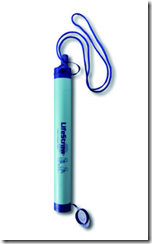
I’m particularly pleased this year to see the LifeStraw ® is now available in the United States and Canada; at just 2 ounces, this personal water filter will reportedly filter 1000 liters down to .2 microns. 


Not bad for around $20.
image


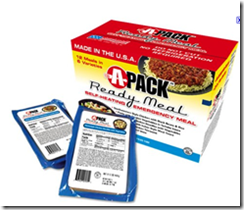
Even MREs can make an excellent gift, and a couple of years back I found cases of them heavily discounted at my local Costco warehouse. 
image


Battery chargers, or an inverter to turn any 12 volt battery into a 120 volt electrical source make wonderful gifts as well. 

chargers


Three summers ago, on a particularly hot Florida afternoon, we had a power outage that lasted more than 6 hours.  I wrote about it in Sweltering In Place.


While I was already set up with a 12 volt fan, my Sister and Father weren’t so lucky. . . . they ended up driving across town to sit in an air-conditioned restaurant for several hours.


The next day, I went out and bought them each a battery operated personal cooling fan, one that will run for nearly 24 hours on 4 D-Cells.

I paid about $12 each for them.

personal Fan


Something as simple, and as utilitarian, as a multifunction `Swiss’ army knife or a `Multi-tool’ makes a great preparedness gift.


swiss knife

image


Another inexpensive gift idea: For under $10 you can buy a box of exam gloves, and a box of facemasks.

image


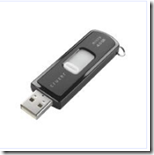
Several years ago Joel over at Preparedness and Response came up with what I consider to be an excellent preparedness idea, giving USB flash drives to family and friends and instructions on how to back up their important papers and documents.
image

Inexpensive USB Drives start under $10.


He explains it in  his essay Helping others prepare (Personal Preparedness), where he gives his rationale for going with the durable mil-spec and encrypted, but fairly pricey IronKey brand.


My thanks to Joel for a terrific idea.


And lastly, I've put together CD's of preparedness videos, along with copies of online manuals and preparedness guides.  For the cost of a blank CD or DVD, and a little bit of my time, I've at least put this valuable information into my friend's hands.


I may just copy all of this info on to the USB drives I’m giving out this year instead of on CDs.


These are all useful, indeed, potentially lifesaving items, that most people simply don't think about needing until it is too late.


Giving them as gifts, instead of more traditional items,  not only helps prepare the people you love and care about for an emergency, it opens the door for conversations about pandemic and disaster preparedness.


We need to cultivate a culture of preparedness in this country, and around the world.


We can start doing that, one gift at a time.


And one last reminder for the upcoming Holiday Season.


This year, when we think about ways to give back to our community, remember that more people will be relying on community food banks than in years past.


In addition to anything else you might do, this is a good time to go through your pantry and donate foodstuffs that are approaching (but not exceeding) their `use by' date.

Tuesday, November 22, 2011

`Tis The Season


# 5971 


image


Although the reasons are less than entirely clear, every year during the winter months - more specifically from Thanksgiving to just after New Years Day – we see an increase in the rate of heart attacks and coronary related deaths.


This spike in `winter mortality’ has been blamed on a variety of factors.


Colder temperatures, increased respiratory infections (including influenza & Pneumonia), over indulgence in food and alcohol, diminished activity levels, forgetting to take prescription medicines, and the combined stressors of shopping, running up debt for gifts, traveling, meal preparation, and/or the stress that comes from dysfunctional family gatherings.


My guess is all play some part. 


But as a former paramedic, I can tell you that the holiday season always meant a lot of emergency calls.  Everything from cardiac arrests and car accidents to domestic violence and overdoses.


The rate of heart attacks in the winter run as much as 53% higher than during the summer. 


Seasonal distribution of acute myocardial infarction in the second National Registry of Myocardial Infarction.

Spencer FA, Goldberg RJ, Becker RC, Gore JM.


While cold weather combined with strenuous physical activity (like clearing snow from sidewalks) has often been blamed for this spike, even in balmy Southern California, studies have shown a 33% increase in heart attacks over the holidays.


When Throughout the Year Is Coronary Death Most Likely to Occur?
A 12-Year Population-Based Analysis of More Than 220 000 Cases

Robert A. Kloner, MD, PhD; W. Kenneth Poole, PhD; Rebecca L. Perritt, MS


Additionally, outcomes during the winter are worse – on average – than during the summer.  Again, there are theories as to why this might be so.


One idea is that during the holidays, people are more likely to delay getting treatment so as not to `ruin the holidays’ for friends and family.   They ignore chest pains, or other symptoms, hoping they will pass.


Another area of concern is that while hospital censuses are typically higher in the winter, the holidays may contribute to temporary staffing shortages.


A Duke University study looked at records of 134,609 heart attack patients admitted to the hospital in the middle 1990s.


They found that those hospitalized between December 15th and January 15th were slightly less likely to receive proven life saving procedures (angioplasty, beta blockers, even aspirin upon admission) than patients during the rest of the year.

And it isn’t just the time of the year that can affect the severity, frequency, and outcome of heart attacks, studies show that the time of day plays a major role as well.


Earlier this year, in A Bad Way To Start Your Day, we  looked at research that appeared in the BMJ Heart Journal that found that STEMI (ST segment elevation myocardial infarction) were more likely to occur during the dark-to-light transition period (6:00–noon).


STEMIs are serious heart attacks that affect a large portion of cardiac muscle and show up on EKGs (ST segment elevation) and produce a spike in cardiac enzymes (indicative of muscle damage).


The peak levels of cardiac enzymes released - Creatine kinase (CK) and troponin-I (TnI) – provide a good indication of the amount of coronary muscle damage.


By comparing peak enzyme levels in patients with their time of coronary onset, researchers were able to determine what time of day the most severe heart attacks occurred.


And the results  showed that heart attacks that began during the dark-to-light transition period (6:00–noon), showed roughly 20% more tissue death, compared with heart attacks with onsets between 6pm and midnight.


The current theory as to why this might be is that the body’s circadian rhythm influences the production of cardio-protective proteins called salvage kinases, which are released in greater quantities later in the day.

All of the above I hoping will inspire my readers to exercise a little moderation this holiday season, to remember to take your prescribed medications, and to pay attention to the signs and symptoms of a heart attack.


From the CDC’s Heart Attack Information page:

Symptoms of a Heart Attack

The five major symptoms of a heart attack are—

  • Pain or discomfort in the jaw, neck, or back.
  • Feeling weak, light-headed, or faint.
  • Chest pain or discomfort.
  • Pain or discomfort in arms or shoulder.
  • Shortness of breath.

If you think that you or someone you know is having a heart attack, you should call 9–1–1 immediately.


And while you are thinking about gifts for your family and friends this year, one gift you can give them is to take a CPR course – so you can help save their life if their heart should stop due to a heart attack, electrocution, anaphylactic reaction or drowning.


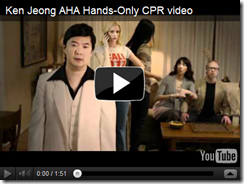
Compression-only CPR is now the standard for laypeople, and is easier to do than the old way.  The American Heart Association has produced this short video showing the importance of learning this life saving technique.


image 

(Click Image to View on YouTube)


Taking a class only requires a few hours of your time, and it could end up helping you save the life of someone you love.


To find a local CPR course contact your local chapter of the American Red Cross, the American Heart Association, or (usually) your local fire department or EMS can steer you to a class.

Monday, November 22, 2010

A Different Kind Of Holiday Tradition


# 5079


image


For reasons that are not entirely clear (or agreed upon), winter and the holiday season (generally Thanksgiving-through just after New Years) each year sees a marked increase in heart attacks, and coronary related deaths.


This spike in `winter mortality’ has been blamed on a variety of factors.


Colder temperatures, increased respiratory infections, over indulgence in food and alcohol, diminished activity levels, forgetting to take prescription medicines, and the combined stressors of shopping, running up debt for gifts, traveling, meal preparation, and/or the stress that comes from dysfunctional family gatherings.


My guess is all play some part. 


But all I can state with authority is that when I was a paramedic, the holidays meant a lot of emergency calls.  Everything from cardiac arrests and chokings, to domestic violence and overdoses.


A little research on my part confirms what I already knew in my . . . err, heart.  The rate of heart attacks in the winter run as much as 53% higher than during the summer. 


Seasonal distribution of acute myocardial infarction in the second National Registry of Myocardial Infarction.

Spencer FA, Goldberg RJ, Becker RC, Gore JM.


While cold weather combined with strenuous physical activity (like clearing snow from sidewalks) has often been blamed for this spike, even in balmy Southern California, studies have shown a 33% increase in heart attacks over the holidays.


When Throughout the Year Is Coronary Death Most Likely to Occur?

A 12-Year Population-Based Analysis of More Than 220 000 Cases
Robert A. Kloner, MD, PhD; W. Kenneth Poole, PhD; Rebecca L. Perritt, MS


Additionally, outcomes during the winter are worse – on average – than during the summer.  Again, there are theories as to why this might be so.


One idea is that during the holidays, people are more likely to delay getting treatment so as not to `ruin the holidays’ for friends and family.   They ignore chest pains, or other symptoms, hoping they will pass.


Another area of concern is that while hospital censuses are typically higher in the winter, the holidays may contribute to temporary staffing shortages.


A Duke University study looked at records of 134,609 heart attack patients admitted to the hospital in the middle 1990s.


They found that those hospitalized between December 15th and January 15th were slightly less likely to receive proven life saving procedures (angioplasty, beta blockers, even aspirin upon admission) than patients during the rest of the year.


All of which should serve as ample reasons to exercise a little moderation this holiday season, to remember to take your prescribed medications, and to pay attention to the signs and symptoms of a heart attack.


From the CDC’s  Heart Attack Information page:


Symptoms of a Heart Attack

The five major symptoms of a heart attack are—

  • Pain or discomfort in the jaw, neck, or back.
  • Feeling weak, light-headed, or faint.
  • Chest pain or discomfort.
  • Pain or discomfort in arms or shoulder.
  • Shortness of breath.

If you think that you or someone you know is having a heart attack, you should call 9–1–1 immediately.


And while you are thinking about gifts for your family and friends this year, one gift you can give them is to take a CPR course – so you can help save their life if their heart should stop due to a heart attack, electrocution, anaphylactic reaction or drowning.


Compression-only CPR is now the standard for laypeople, and is easier to do than the old way.


While it won’t take the place of an actual class, you can watch how it is done on in this brief instructional video from the American Heart Association.


A class only takes a few hours, and it could end up helping you save the life of someone you love.


To find a local CPR course contact your local chapter of the American Red Cross, the American Heart Association, or (usually) your local fire department or EMS can steer you to a class.