# 5327
Back in the mid-1980s when my second wife and I decided to buy a sailboat and take off for a year of cruising, we started the process in earnest more than a year before our planned departure date.
First, we located an older boat we could afford (read: dirt cheap). Then we practically stripped her to a bare hull, and spent the next 12 months rebuilding her with an eye towards simplicity, reliability, and survivability.
Remarkably, we managed to purchase the boat, and refit her, for less than $7,500. A bargain, even in 1984.
Inexperienced sailors at the time, we knew that our lives depended on getting it right.
And so we diligently researched the subject, talked to other cruisers, and envisioned – and planned and trained for – likely problems.
Although small, and quite spartan in accommodation, we saw a lot of miles pass safely under little Halcyon’s keel over the following year.
The success of our extended sailing sabbatical, I’m certain, can be directly credited to our year of planning.
We encountered adverse weather (brushed by 1 hurricane and 2 Tropical storms, and rode through numerous thunderstorms), suffered a few minor injuries, and experienced mechanical problems along the way – but we were prepared for them.
We’d planned, practiced, and drilled in anticipation of a hundred potential crises . . . and our reward was a safe, and extremely rewarding life-experience.
While you and your family may not be planning on intentionally sailing into harm’s way, disasters can happen anytime, anywhere. You don’t have to go looking for trouble, for it to find you.
Which is why I’m such a strong proponent of emergency preparedness.
Ready.gov and FEMA, along the the American Red Cross and other agencies, all urge individual, family, business and community preparedness.
And you’ll find toolkits, videos, and other preparedness information at those sites.
But today I thought I’d highlight a particularly good preparedness guide that I discovered about a year ago, released by Los Angeles County in 2010, that covers everything from earthquake and tsunami preparedness, to getting ready for a pandemic.
The guide may be downloaded here (6.5 Mbyte PDF).
While designed specifically for the nearly 10 million residents of Los Angeles County, this guide would be a good toolkit for anyone interested in preparing for a variety of hazards.
And it just might serve as inspiration, perhaps, for other municipalities to produce their own location-specific guide.
Some screen shots from this 100 page survival guide follow.
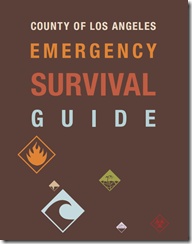


With football season passed, and spring weather still a few weekends away, now would be a great time to either set up, or review, your family’s emergency preparedness plan.
For some more inspiration, a few of my essays on home preparedness include:
In An Emergency, Who Has Your Back?
Inside My Bug Out Bag
Those Who Forget Their History . . .
The Gift Of Preparedness
Red Cross Unveils `Do More Than Cross Your Fingers’ Campaign
And for more potentially life saving preparedness information, go to:
FEMA http://www.fema.gov/index.shtm
READY.GOV http://www.ready.gov/
AMERICAN RED CROSS http://www.redcross.org/
* * * * *
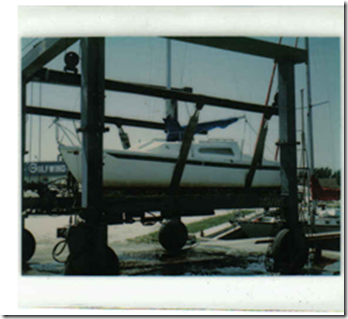
Halcyon, our diminutive but hearty little cruiser. A 1973 23’ Grampian sailboat hauled out for a bottom job.
Our second boat (below), Island Time, was quite a step up. She became our home for another 9 years.