Showing posts sorted by date for query NPM13. Sort by relevance Show all posts

Sunday, December 10, 2023

The Gift of Preparedness - Winter 2023 Edition


CDC Infographic

#17,808

In late 2007 I penned a blog called Hickory Farms Will Hate Me For This, where I began promoting the idea that instead of gifting cheese platters, fruitcakes and ugly sweaters to friends and family, we should all be giving preparedness gifts for holidays, birthdays, and anniversaries.

Since then, it has become a bit of a Christmas tradition; one which I've expanded each year with new suggestions, and details on items I've purchased over the past year.

When I buy myself a luxury, it is quite likely to be a preparedness item. This year:

  • I upgraded my solar power generation equipment (see My Upgraded Solar Power System (2023 Edition), 
  • bought an upgraded USB powered MP3 player (for audio books/music when the power is out), 
  • replaced my ancient carbon monoxide detector in the kitchen, 
  • and bought an emergency indoor propane heater (with 20lb tank & hose).  

For Christmas presents this year I've purchased some very nice 4-packs of LED lanterns, and some USB battery powered water pumps that attach as a faucet to large water jugs. Just three days after they arrived I endured a 3-day water outage at home, and found the faucets actually worked pretty well. 

Note: Products mentioned or pictured in this blog post are to provide a general idea of the type of gift, and should not be viewed as an endorsement of one brand over another.

In years past I've gifted friends and family first aid kits, cans of long-life dehydrated food, emergency tire pumps, windup/solar NOAA weather radios, Lifestraw water filters, USB battery banks, small solar panels,  numerous LED flashlights and lanterns, and ample supplies of AA and AAA batteries. 

Stuff that people don't tend to buy for themselves before an emergency, but often wish they had during an emergency. Usually these items are not terribly expensive, but they can be hard to find when a hurricane is approaching or the lights have gone out. 

I sometimes find these gifts on sale in discount stores, bargain basements, and flea markets, and stock up whenever I come across a good deal. But it should be stressed that quality counts. You don't want your life to depend on a $1 pocket knife.
 
Sometimes I make the gifts myself, as when several years back I cobbled together some first aid kits, and distributed them to a number of friends and relatives. You can either put one together yourself, or purchase one already assembled.


Believe me, there is no substitute for having a well stocked first aid kit when you really need one. Having a kit isn't enough. Knowing what to do in an emergency is equally important. Luckily there are a number of good first aid books available, including:


When the lights go out, nothing beats having a couple of good LED flashlights or lanterns. And each year they get brighter, and cheaper. Most run between $5 and $10, and that beats the heck out of cursing the darkness.


High on the list of things to have is a way to make water potable.

Although (unscented) bleach will work, it requires measuring, and imparts a taste to the water many dislike. An option that has gotten a lot less expensive in recent years are personal filtration systems, like the LifeStraw ®.


At just 2 ounces, this personal water filter will reportedly filter 1000 liters down to .2 microns. Not bad for around $20. I've recently added the Sawyer Mini-Filter to my preps, again about $20.

Speaking of water, having a way to store enough water for three days (1 gal/person/day) is essential. A family of 4 will need at least 12 gallons for 72 hours. Personally, I keep enough on hand for a couple of weeks.

While there are plenty of `free options’ – like rinsed and recycled 2-liter plastic soda bottles or other food-safe plastic jugs – you can also buy collapsible 5 gallon containers.

A couple of years ago I bought several 5 gal. buckets (with lids) from a home improvement store, along with mylar bags and oxygen absorbers from Amazon, and put together some long-term food storage buckets for friends.

Cost per bucket? About $30. But enough food to keep two people going for ten days or more in an emergency. I keep a couple on hand (one for me, one for the cat), myself.

A few years back, however, I added some dehydrated/freeze dried foods (by the bucket, or in #10 cans) to this culinary category, as they only require hot or boiling water to prepare.

With a propane or butane camp stove or even a single burner Propane burner (see below) and a couple of 1 pound gas cylinders (about $5 each) and you can cook for a week or longer. Typically, a 1lb cylinder proves 1.5 to 2.0 hours of cooking.

Indoors, even a `Sterno Stove' can be used for basic `heat and eat' cooking. 


Every home should have a battery operated radio (with NWS weather band), yet many do not. Some are available with crank or solar charging. In any event, you'll want something which can pick up the NOAA NWS Emergency Broadcaster in you region.


I've also invested (for myself, and some components for friends) in an array of `off-the-shelf' solar items, including fans, LED lanterns, several USB battery packs, and a 21 watt Solar panel (see Some Simple Off-The-Shelf Solar Solutions For Power Outages)..

This year, following Hurricane Ian, I added a second 30-watt solar panel, and have made some upgrades to my Solar Battery Project (for CPAP). In 2023 I upgraded to lighter, and more powerful, LiFePO4 batteries.

While my primary concern in Florida is staying cool during a summer power outage, in colder climes, staying warm can be a major concern. Sleeping bags, pop-up tents (that can be used indoors or out), and propane or kerosene heaters can be lifesaving.


Something as simple, and as utilitarian, as a multi-function `Swiss’ army knife, a`Multi-tool’, a `plug in' auto 12 volt USB charger (see below), or even multi packs of AA or AAA batteries, makes a great preparedness gift.
The greatest gift is to have - and to be - a disaster buddy (see NPM13: The Greatest Prep Of All); cultivating a network of family, friends, and neighbors to whom you can turn for help in a emergency, who can turn to you for aid, if they need it.

Disasters often boil down to unscheduled camping - for days, or sometimes weeks - in your home, in a community shelter, or possibly in your backyard. If you think of preparedness that way, it becomes far less daunting.

FEMA, Ready.gov and a myriad of other state and national entities know the risks we face, and would like to see Americans adopt and embrace a culture of preparedness.

And we can do that for ourselves, our families, and our friends. 

One gift at a time.

Sunday, December 18, 2022

The Gift of Preparedness


CDC Infographic 

#17,179

A little over 15 years ago, in a blog I called Hickory Farms Will Hate Me For This, I began promoting the idea that instead of gifting cheese platters, fruitcakes and ugly sweaters to friends and family, we should all be giving preparedness gifts for holidays, birthdays, and anniversaries. 

Since then, one or twice a year - often before the holidays - I run an updated blog, showing some of the preparedness items I've bought (or made) for friends, family, and for myself over the years. 

Every year major disasters like hurricanes, wildfires, floods, and blizzards affect millions of Americans - and with an increasingly chaotic climate - those numbers are only likely to go up over the coming years. 

But it doesn't require a widespread natural disaster to ruin your whole day. The impact of smaller, everyday emergencies - like a flat tire, or a temporary power outage - can often be mitigated by being prepared. 

Having a decent first aid kit (and the knowledge to use it), or an easily accessible fire extinguisher in your kitchen, or a 12 volt tire inflator in your trunk, could save the day. 

So, a week before Christmas, a look at stocking stuffers, and some larger gifts, that just might help a loved one get through an emergency in the new year. 

Note: Products mentioned or pictured below are to provide a general idea of the type of gift, and should not be viewed as an endorsement of one brand over another.

Although where you live, and your local threat environment, may dictate some changes, the general goals for personal and family preparedness should include:

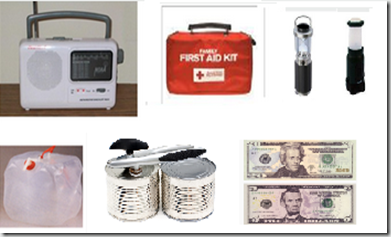
  • A battery operated NWS Emergency Radio to find out what was going on, and to get vital instructions from emergency officials
  • A decent first-aid kit, so that you can treat injuries
  • Enough non-perishable food and water on hand to feed and hydrate your family (including pets) for the duration
  • A way to provide light when the grid is down.
  • A way to cook safely without electricity
  • A way to purify or filter water
  • A way to handle basic sanitation and waste disposal. 
  • A way to stay cool (fans) or warm when the power is out.
  • A small supply of cash to use in case credit/debit machines are not working
  • An emergency plan, including meeting places, emergency out-of-state contact numbers, a disaster buddy, and in case you must evacuate, a bug-out bag
  • Spare supply of essential prescription medicines that you or your family may need
  • A way to entertain yourself, or your kids, during a prolonged blackout

I often find these gifts on sale in discount stores, bargain basements, and flea markets, and stock up whenever I come across a good deal. But it should be stressed that quality counts.  You don't want your life to depend on a $1 pocket knife. 

Sometimes I make the gifts myself, as when several years back I cobbled together some first aid kits, and distributed them to a number of friends and relatives. You can either put one together yourself, or purchase one already assembled.


Believe me, there is no substitute for having a well stocked first aid kit when you really need one. Having a kit isn't enough. Knowing what to do in an emergency is equally important. Luckily there are a number of good first aid books available, including:


When the lights go out, nothing beats having a couple of good LED flashlights or lanterns. And each year they get brighter, and cheaper. Most run between $5 and $10, and that beats the heck out of cursing the darkness.


High on the list of things to have is a way to make water potable.

Although (unscented) bleach will work, it requires measuring, and imparts a taste to the water many dislike. An option that has gotten a lot less expensive in recent years are personal filtration systems, like the LifeStraw ®.


At just 2 ounces, this personal water filter will reportedly filter 1000 liters down to .2 microns. Not bad for around $20. I've recently added the Sawyer Mini-Filter to my preps, again about $20.

Speaking of water, having a way to store enough water for three days (1 gal/person/day) is essential. A family of 4 will need at least 12 gallons for 72 hours. Personally, I keep enough on hand for a couple of weeks.

While there are plenty of `free options’ – like rinsed and recycled 2-liter plastic soda bottles or other food-safe plastic jugs – you can also buy collapsible 5 gallon containers.

A couple of years ago I bought several 5 gal. buckets (with lids) from a home improvement store, along with mylar bags and oxygen absorbers from Amazon, and put together some long-term food storage buckets for friends.

Cost per bucket? About $30. But enough food to keep two people going for ten days or more in an emergency. I keep a couple on hand (one for me, one for the cat), myself.

A few years back, however, I added some dehydrated/freeze dried foods (by the bucket, or in #10 cans) to this culinary category, as they only require hot or boiling water to prepare.

With a propane or butane camp stove or even a single burner Propane burner (see below) and a couple of 1 pound gas cylinders (about $3 each) and you can cook for a week or longer. Typically, a 1lb cylinder proves 1.5 to 2.0 hours of cooking.

Indoors, even a `Sterno Stove' can be used for basic `heat and eat' cooking. 


Every home should have a battery operated radio (with NWS weather band), yet many do not. Some are available with crank or solar charging. In any event, you'll want something which can pick up the NOAA NWS Emergency Broadcaster in you region.


I've also invested (for myself, and some components for friends) in an array of `off-the-shelf' solar items, including fans, LED lanterns, several USB battery packs, and a 21 watt Solar panel (see Some Simple Off-The-Shelf Solar Solutions For Power Outages)..

This year, following Hurricane Ian, I added a second 30-watt solar panel, and have made some upgrades to my Solar Battery Project (for CPAP). My goal is to upgrade to lighter, and more powerful, LiFePO4 batteries in the future.

While my primary concern in Florida is staying cool during a summer power outage, in colder climes, staying warm can be a major concern. Sleeping bags, pop-up tents (that can be used indoors or out), and propane or kerosene heaters can be lifesaving.

Something as simple, and as utilitarian, as a multi-function `Swiss’ army knife, a`Multi-tool’, a `plug in' auto 12 volt USB charger (see below), or even multi packs of AA or AAA batteries, makes a great preparedness gift.

The greatest gift is to have - and to be - a disaster buddy (see NPM13: The Greatest Prep Of All); cultivating a network of family, friends, and neighbors to whom you can turn for help in a emergency, who can turn to you for aid, if they need it.

Disasters often boil down to unscheduled camping - for days, or sometimes weeks - in your home, in a community shelter, or possibly in your backyard. If you think of preparedness that way, it becomes far less daunting.

FEMA, Ready.gov and a myriad of other state and national entities know the risks we face, and would like to see Americans adopt and embrace a culture of preparedness.

And we can do that for ourselves, our families, and our friends. 

One gift at a time.

Saturday, September 17, 2022

#Natlprep: Cultivating Preparedness - One Gift At A Time

Note: September is National Preparedness Month. Follow this year’s campaign on Twitter by searching for the #NatlPrep #BeReady or #PrepMonth hashtags.

This month, as part of #NPM22, I’ll be rerunning some updated preparedness essays, along with some new ones

 #17,012 

In 2007 I wrote a blog called Hickory Farms Will Hate Me For This - where I began promoting the idea that instead of gifting cheese platters, fruitcakes and ugly sweaters to friends and family, we should all be giving preparedness gifts for holidays, birthdays, and anniversaries.

Every year major disasters like Hurricanes, wildfires, floods, and blizzards affect millions of Americans - and with an increasingly chaotic climate - those numbers are only likely to go up over the coming years.

But it doesn't require a widespread natural disaster to ruin your whole day. Smaller, everyday emergencies  can often be averted or diminished by being prepared. 

Having a decent first aid kit (and the knowledge to use it), can be invaluable when accidents happen.  As can having an easily accessible fire extinguisher in your home. 

For my money, the most important prep is to have - and to be - a disaster buddy (see NPM13: The Greatest Prep Of All). Cultivate a network of family, friends, and neighbors to whom you can turn for help in a emergency, who can turn to you for aid, if they need it.

But it only works if it is reciprocal.

Of course, having some basic (and sometimes not-so-basic) preparedness items on hand before an emergency strikes, is important. Admittedly, it is harder to find, and more expensive to buy, preparedness items today than it was a couple of years ago. 

The COVID-19 pandemic has complicated matters greatly, raising prices, and stressing many supply chains around the world. All of which makes preparing early, before a threat appears, all that more important.


While where you live, and your local threat environment, may dictate some changes, the general goals for personal and family preparedness should include:
  • A battery operated NWS Emergency Radio to find out what was going on, and to get vital instructions from emergency officials
  • A decent first-aid kit, so that you can treat injuries
  • Enough non-perishable food and water on hand to feed and hydrate your family (including pets) for the duration
  • A way to provide light when the grid is down.
  • A way to cook safely without electricity
  • A way to purify or filter water
  • A way to handle basic sanitation and waste disposal. 
  • A way to stay cool (fans) or warm when the power is out.
  • A small supply of cash to use in case credit/debit machines are not working
  • An emergency plan, including meeting places, emergency out-of-state contact numbers, a disaster buddy, and in case you must evacuate, a bug-out bag
  • Spare supply of essential prescription medicines that you or your family may need
  • A way to entertain yourself, or your kids, during a prolonged blackout
Products mentioned or pictured below are to provide a general idea of the type of gift, and should not be viewed as an endorsement of one brand over another.

I often find these gifts on sale in discount stores, bargain basements, and flea markets, and stock up whenever I come across a good deal. But it should be stressed that quality counts.  You don't want your life to depend on a $1 Store pocket knife. 

Sometimes I make the gifts myself, as when several years back I cobbled together some first aid kits, and distributed them to a number of friends and relatives. You can either put one together yourself, or purchase one already assembled.


Believe me, there is no substitute for having a well stocked first aid kit when you really need one. Having a kit isn't enough. Knowing what to do in an emergency is equally important. Luckily there are a number of good first aid books available, including:


When the lights go out, nothing beats having a couple of good LED flashlights or lanterns. And each year they get brighter, and cheaper. Most run between $5 and $10, and that beats the heck out of cursing the darkness.


High on the list of things to have is a way to make water potable.

Although (unscented) bleach will work, it requires measuring, and imparts a taste to the water many dislike. An option that has gotten a lot less expensive in recent years are personal filtration systems, like the LifeStraw ®.


At just 2 ounces, this personal water filter will reportedly filter 1000 liters down to .2 microns. Not bad for around $20. I've recently added the Sawyer Mini-Filter to my preps, again about $20.


Speaking of water, having a way to store enough water for three days (1 gal/person/day) is essential. A family of 4 will need at least 12 gallons for 72 hours. Personally, I keep enough on hand for a couple of weeks.

While there are plenty of `free options’ – like rinsed and recycled 2-liter plastic soda bottles or other food-safe plastic jugs – you can also buy collapsible 5 gallon containers.

A couple of years ago I bought several 5 gal. buckets (with lids) from a home improvement store, along with mylar bags and oxygen absorbers from Amazon, and put together some long-term food storage buckets for friends.


Cost per bucket? About $30. But enough food to keep two people going for ten days or more in an emergency. I keep a couple on hand (one for me, one for the cat), myself.

A few years back, however, I added some dehydrated/freeze dried foods (by the bucket, or in #10 cans) to this culinary category, as they only require hot or boiling water to prepare.

While considerably more pricey than buying staples like rice and beans (and harder to get now, during the pandemic), they are more convenient. With a propane or butane camp stove or even a single burner Propane burner (see below) and a couple of 1 pound gas cylinders (about $3 each) and you can cook for a week or longer. Typically, a 1lb cylinder proves 1.5 to 2.0 hours of cooking.


Every home should have a battery operated radio (with NWS weather band), yet many do not. Some are available with crank or solar charging. In any event, you'll want something which can pick up the NOAA NWS Emergency Broadcaster in you region.


As I described last summer (see My New (And Improved) Solar Battery Project (for CPAP)), if you are even a little bit handy, it is a relatively easy cobble together a simple solar charging system.


No, you won’t keep the A/C or refrigerator running on a budget system, but you can keep your LED lantern batteries, cell phone, CPAP, iPod or iPad, or notebook computer running.  Add a $20 inverter (converts 12 volt battery power to 120v AC), and you can do a heck of a lot.


I've also invested (for myself, and some components for friends) in an array of `off-the-shelf' solar items, including fans, LED lanterns, several USB battery packs, and a 21 watt Solar panel (see Some Simple Off-The-Shelf Solar Solutions For Power Outages)..


While my primary concern in Florida is staying cool during a summer power outage, in colder climes, staying warm can be a major concern. Sleeping bags, pop-up tents (that can be used indoors or out), and propane or kerosene heaters can be lifesaving.

Something as simple, and as utilitarian, as a multi-function `Swiss’ army knife, a`Multi-tool’, a `plug in' auto 12 volt USB charger (see below), or even multi packs of AA or AAA batteries, makes a great preparedness gift.


Often forgotten, but safety goggles, a box or two of vinyl or nitrile gloves, and a box of surgical face masks (or N95 masks) should be in everyone’s emergency kit as well - whether you're dealing with a nasty flu season, COVID-19, or smoke from wildfires.


And while not necessarily lifesaving, having a way to occupy your mind (or your kids) during an extended grid down situation can help maintain your sanity. Books, board games, and having good old-fashioned conversations are undoubtedly the best, but when they run dry having a low drain battery powered MP3 player, or a battery run DVD player, can seem like a lifesaver.


Disasters often boil down to unscheduled camping - for days, or sometimes weeks - in your home, in a community shelter, or possibly in your backyard. If you think of preparedness that way, it becomes far less daunting.

Admittedly, many of the items listed above are needed more for comfort and convenience, than for survival. But the physical and psychological impacts stemming from the hardships following a disaster are quite real (see Post-Disaster Sequelae), and a modicum of creature comforts can go a long ways towards mitigating their effects.

FEMA, Ready.gov and a myriad of other state and national entities know the risks we face, and would like to see Americans adopt and embrace a culture of preparedness.

And we can do that for ourselves, our families, and our friends. 

One gift at a time.

Sunday, September 04, 2022

#NatlPrep: Giving Your Preparedness Plan A Shot In The Arm


Note: This is day 4 of National Preparedness Month. Follow this year’s campaign on Twitter by searching for the #NatlPrep #BeReady or #PrepMonth hashtags.

This month, as part of NPM22, I’ll be rerunning some updated preparedness essays, along with some new ones.

#16,987

Because we live in an uncertain and sometimes dangerous world - which was true, even before 2020 rolled around - I'm a life-long proponent of being prepared to deal with the unexpected. 

For this reason I devote a good deal of this blog each September to National Preparedness Month.

I keep a well stocked first aid kit in my home and car,  a couple of weeks of extra food and water in the pantry, try to maintain a months worth of extra Rx meds, and have a bug out bag, a disaster plan, and a couple of `Disaster Buddies' I can call on in an emergency.

I'm far from being a `survivalist' - mainly because at my age (68), with my cholesterol, weight, and B/P - that's probably not a realistic goal. But I am a modest `prepper', and have been for my entire adult life (see NPM13: The Making Of A Prepper).
 
You might not have thought about it, but getting your seasonal flu shot each year should be part of your overall preparedness plan. During a disaster or prolonged emergency you are going to be tired, stressed, and your immune systems likely weakened. The last thing you need to be dealing with during a crisis is to be sick with the flu.

Granted, if I were truly committed, I'd also eat healthier, lose weight, and exercise more . . . but at this late date, I'm pretty sure that's not going to happen.

But I do get the flu shot every fall, and have now for the past 17 years. Which is why sometime in the next week or two, I'll visit my local pharmacy and get my yearly flu jab.  While most years the flu shot only provides modest protection (40%-60%), I've only had the flu once since 2005. 

YMMV, of course. 

While we can't predict what kind of flu season lies ahead - we are coming off 2 years of suppressed flu activity due to our response to the COVID pandemic - and community immunity to seasonal influenza is believed to be low. 

Other signs that the flu may return with a vengeance this fall include: Australia has just come off a very early, and robust, flu season (see Australia's Early and Impressive Flu Season), while Vietnam and much of Southern China have reported an unusually strong summer wave of H3N2.

And while nobody is quite sure how often it happens, there are also concerns over the health impacts of dual (COVID and flu) infection (see The Lancet: SARS-CoV-2 Co-infection With Influenza Viruses, RSV, or Adenoviruses).  

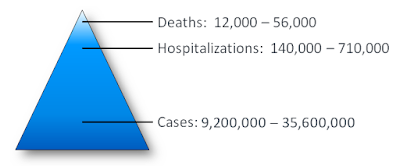
Even by itself, influenza can be deadly. In a normal year, seasonal flu kills roughly as many Americans as does gun violence, or car accidents. In a bad year - such as we saw in 2017-2018, influenza can kill as many as both of those combined.

https://www.cdc.gov/flu/about/disease/burden.htm

The evidence that influenza infection raises the risks of heart attack and/or strokes continues to grow, including:


Even when the flu shot doesn't prevent infection, there is growing evidence it can reduce the severity of one's illness, and reduce your odds of having a heart attack or stroke (see Study Suggests Flu Vaccine May Lower Stroke Risk in Elderly ICU Patients).

Although they've been available and offered without official recommendation over the standard flu shot for years, this summer - the CDC Endorsed ACIP's Recommendation On High-Dose/Adjuvanted Flu Vaccines For Seniors.
 
While the current flu vaccine is far from perfect, and can’t promise 100% protection, it – along with practicing good flu hygiene (washing hands, covering coughs and/or wearing a mask  & staying home if sick) – remains your best strategy for avoiding the flu and staying healthy this winter.

And with our concurrent COVID pandemic, anything that can help keep you out of the hospital this fall and winter is worth doing. 

Sunday, September 26, 2021

#Natlprep: Cultivating Preparedness - One Gift At A Time


Note: September is National Preparedness Month.  Follow this year’s campaign on Twitter by searching for the #NatlPrep #BeReady or #PrepMonth hashtags.

This month, as part of #NPM21, I’ll be rerunning some updated preparedness essays, along with some new ones.

#16,215


Fourteen years ago I wrote a blog called Hickory Farms Will Hate Me For This - where I began promoting the idea that instead of gifting cheese platters, fruitcakes and ugly sweaters to friends and family, we should all be giving preparedness gifts for holidays, birthdays, and anniversaries.

Every year major disasters like Hurricanes, wildfires, floods, and blizzards affect millions of Americans - and with an increasingly chaotic climate - those numbers are only likely to go up over the coming years.

But it doesn't require a widespread natural disaster to ruin your whole day. 

Smaller, everyday emergencies  can often be averted or diminished by being prepared.  Having a decent first aid kit (and the knowledge to use it), can be invaluable when accidents happen.  As can having an easily accessible fire extinguisher in your home. 

For my money, the most important prep is to have - and to be - a disaster buddy (see NPM13: The Greatest Prep Of All). Cultivate a network of family, friends, and neighbors to whom you can turn for help in a emergency, who can turn to you for aid, if they need it.

But it only works if it is reciprocal.

Of course, having some basic (and sometimes not-so-basic) preparedness items on hand before an emergency strikes, is important. Admittedly, it is harder to find, and buy, preparedness items today than it was a a couple of years ago. 

The COVID-19 pandemic has complicated matters greatly, raising prices, and stressing many supply chains around the world. All of which makes preparing early, before a threat appears, all that more important.


While where you live, and your local threat environment, may dictate some changes, the general goals for personal and family preparedness should include:
  • A battery operated NWS Emergency Radio to find out what was going on, and to get vital instructions from emergency officials
  • A decent first-aid kit, so that you can treat injuries
  • Enough non-perishable food and water on hand to feed and hydrate your family (including pets) for the duration
  • A way to provide light when the grid is down.
  • A way to cook safely without electricity
  • A way to purify or filter water
  • A way to stay cool (fans) or warm when the power is out.
  • A small supply of cash to use in case credit/debit machines are not working
  • An emergency plan, including meeting places, emergency out-of-state contact numbers, a disaster buddy, and in case you must evacuate, a bug-out bag
  • Spare supply of essential prescription medicines that you or your family may need (see A Prescription For Disaster).
  • A way to entertain yourself, or your kids, during a prolonged blackout. Below you'll find some of the types of items that I have either bought for myself, or given to other people, in my quest to become better prepared. Most of these items are inexpensive - many under $20 - but are invaluable when you really need them.
Products mentioned or pictured below are to provide a general idea of the type of gift, and should not be viewed as an endorsement of one brand over another.

I often find these gifts on sale in discount stores, bargain basements, and flea markets, and stock up whenever I come across a good deal. But it should be stressed that quality counts.  You don't want your life to depend on a $1 Store pocket knife. 

Sometimes I make the gifts myself, as when several years back I cobbled together some first aid kits, and distributed them to a number of friends and relatives. You can either put one together yourself, or purchase one already assembled.


Believe me, there is no substitute for having a well stocked first aid kit when you really need one. Having a kit isn't enough. Knowing what to do in an emergency is equally important. Luckily there are a number of good first aid books available, including:


When the lights go out, nothing beats having a couple of good LED flashlights or lanterns. And each year they get brighter, and cheaper. Most run between $5 and $10, and that beats the heck out of cursing the darkness.


High on the list of things to have is a way to make water potable.

Although (unscented) bleach will work, it requires measuring, and imparts a taste to the water many dislike. An option that has gotten a lot less expensive in recent years are personal filtration systems, like the LifeStraw ®.


At just 2 ounces, this personal water filter will reportedly filter 1000 liters down to .2 microns. Not bad for around $20. I've recently added the Sawyer Mini-Filter to my preps, again about $20.


Speaking of water, having a way to store enough water for three days (1 gal/person/day) is essential. A family of 4 will need at least 12 gallons for 72 hours. Personally, I keep enough on hand for a couple of weeks.

While there are plenty of `free options’ – like rinsed and recycled 2-liter plastic soda bottles or other food-safe plastic jugs – you can also buy collapsible 5 gallon containers.


A couple of years ago I bought several 5 gal. buckets (with lids) from a home improvement store, along with mylar bags and oxygen absorbers from Amazon, and put together some long-term food storage buckets for friends.


Cost per bucket? About $30. But enough food to keep two people going for ten days or more in an emergency. I keep a couple on hand (one for me, one for the cat), myself.

A few years back, however, I added some dehydrated/freeze dried foods (by the bucket, or in #10 cans) to this culinary category, as they only require hot or boiling water to prepare.

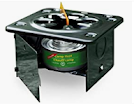
While considerably more pricey than buying staples like rice and beans (and harder to get now, during the pandemic), they are more convenient.With a propane or butane camp stove or even a single burner Propane burner (see below) and a couple of 1 pound gas cylinders (about $3 each) and you can cook for a week or longer. Typically, a 1lb cylinder proves 1.5 to 2.0 hours of cooking.



Every home should have a battery operated radio (with NWS weather band), yet many do not. Some are available with crank or solar charging. In any event, you'll want something which can pick up the NOAA NWS Emergency Broadcaster in you region.


As I described earlier this summer (see My New (And Improved) Solar Battery Project (for CPAP)), if you are even a little bit handy, it is a relatively easy cobble together a simple solar charging system.


No, you won’t keep the A/C or refrigerator running on a budget system, but you can keep your LED lantern batteries, cell phone, CPAP, iPod or iPad, or notebook computer running.  Add a $20 inverter (converts 12 volt battery power to 120v AC), and you can do a heck of a lot.


I've also invested (for myself, and some components for friends) in an array of `off-the-shelf' solar items, including fans, LED lanterns, several USB battery packs, and a 21 watt Solar panel (see Some Simple Off-The-Shelf Solar Solutions For Power Outages).
.


While my primary concern in Florida is staying cool during a summer power outage, in colder climes, staying warm can be a major concern. Sleeping bags, pop-up tents (that can be used indoors or out), and propane or kerosene heaters can be lifesaving.

Something as simple, and as utilitarian, as a multi-function `Swiss’ army knife, a`Multi-tool’, a `plug in' auto 12 volt USB charger (see below), or even multi packs of AA or AAA batteries, makes a great preparedness gift.


Often forgotten, but safety goggles, a box or two of vinyl or nitrile gloves, and a box of surgical face masks (or N95 masks) should be in everyone’s emergency kit as well - whether you're dealing with a nasty flu season, COVID-19, or smoke from wildfires.


And while not necessarily lifesaving, having a way to occupy your mind (or your kids) during an extended grid down situation can help maintain your sanity. Books, board games, and having good old-fashioned conversations are undoubtedly the best, but when they run dry having a low drain battery powered MP3 player, or a battery run DVD player, can seem like a lifesaver.


Disasters often boil down to unscheduled camping - for days, or sometimes weeks - in your home, in a community shelter, or possibly in your backyard. If you think of preparedness that way, it becomes far less daunting.

Admittedly, many of the items listed above are needed more for comfort and convenience, than for survival. But the physical and psychological impacts stemming from the hardships following a disaster are quite real (see Post-Disaster Sequelae), and a modicum of creature comforts can go a long ways towards mitigating their effects.

FEMA, Ready.gov and a myriad of other state and national entities know the risks we face, and would like to see Americans adopt and embrace a culture of preparedness.

And we can do that. One gift at a time.