Showing posts sorted by relevance for query NPM14. Sort by date Show all posts

Tuesday, September 30, 2014

America’s Preparathon! : It Started Like Any Other Day

image


# 9124


Today marks the end of National Preparedness Month, where FEMA and Ready.gov and a coalition of thousands of others (including AFD) have worked all month to promote better disaster preparedness for Americans.  On twitter the hashtags #NPM14 and #NatlPrep will lead you to find many of these efforts.


We know – often because we’ve been there – that disasters do strike, and that the advantage goes to the prepared.


The popularity of Doomsday Preppers on the National Geographic Channel  has a lot of people believing that preppers are all getting set for the impending apocalyptic collapse of society.  But for the vast majority of us who embrace the preparedness lifestyle - it is the far more common localized disaster that spurs us on:


. .. hurricanes, tornadoes, ice storms, blizzards, earthquakes, floods (and yes, even a pandemic)  . . . along with even more limited emergencies like house fires, car accidents, or personal accident and injury.


These types of events happen with surprising regularity - and unlike an abrupt 30 degree shift of the earth’s crust or the eruption of the Yellowstone Super Volcano - are something being prepared for is actually likely to help.  The following 4 minute video called `It Started Like Any Other Day’  illustrates three such examples:

image


There are many legitimate disaster threats out there – and many can strike without warning -  which is why FEMA, READY.GOV, and many other agencies constantly promote personal, family, and business preparedness.


As a former paramedic, I can’t stress enough the importance of having a good first aid kit at home, and another one in your car.  And just as importantly, learning how to properly use one.

image

Taking a first-aid course, and CPR training, are both investments that could pay off big someday, for you, and for your loved ones. 


And every home should have no less than a 72-hour supply of emergency food and water, for all of its occupants (including pets!).  This is a bare minimum, here in the United States many agencies and organizations recommend that households work towards having a 10-day supply of food, water, and emergency supplies on hand.


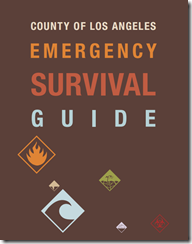
In When 72 Hours Isn’t Enough, I highlighted  a colorful, easy-to-follow, 100 page `survival guide’ released by Los Angeles County, that covers everything from earthquake and tsunami preparedness, to getting ready for a pandemic.

image

While admittedly California-threat specific, this useful guide may be downloaded here (6.5 Mbyte PDF).
 

And speaking of California threats, if you live in a seismically active region (and that includes most of the nation) you need to visit Shakeout.org before October 16th to learn how you, your family and your co-workers can take part in this year’s important earthquake drill.

image


Although I’ve covered a great many specifics for becoming better prepared (see NPM14: Infrastructure Failure Preparedness & NPM14: When You’ve Got To `Get Out Of Dodge’ In A Hurry), there is one prep I consider to be the most important of all.


Having – and being – a `disaster buddy’.


In NPM14: In an Emergency, Who Are You Going To Call?, I wrote about that - A `Disaster Buddy’ is simply someone you have prearranged that you can call on during a crisis, and who in turn, can call on you if they need help.


Much in the way that community fire departments, EMS, and law enforcement agencies have a `mutual aid’ agreement with nearby communities, you should foster the same kind of arrangement with your friends, family, and neighbors.


In the parlance of paramedics, cops, firefighters and the military . . .  “you have their back, and in return, they have yours.”  Now - before a disaster occurs - is the time to sit down and talk to your friends, family, and neighbors about how you will help one another during a personal or community wide crisis.


While  National Preparedness Month comes to an end today, the task of becoming better prepared doesn’t end with September – it is a year-round responsibility.  To help you on your way, you can retrieve a list of this year’s NPM blogs by clicking this link.


And for more  potentially life saving preparedness information, I invite you to visit:

FEMA http://www.fema.gov/index.shtm

READY.GOV http://www.ready.gov/

AMERICAN RED CROSS http://www.redcross.org/

Thursday, January 01, 2015

Resolve To Be Ready For 2015

image

2015 Preparedness Calendar – Ready.gov 


# 9522


When it comes to large-scale natural disasters, American’s have enjoyed a couple of relatively quiet years. The last big hurricane to strike was Sandy in November of 2012, and after the devastating tornado outbreaks of 2010 and 2011, the past two years have been eerily quiet on that front as well.  


We did see a modest M6.0 Quake Rattle the Region North Of San Francisco  last August, a much stronger M7.9 strike an isolated region of Alaska, and literally hundreds of smaller quakes (including many in the middle of the country), but seismically America’s luck continues to hold.


In 2014, the United States only saw 45 Federally declared disasters – which ranged from floods to blizzards to even a volcanic eruption in Hawaii – and while impacting millions of people, was overall far fewer disasters than average.


In 2011, there were 99 disaster declarations, and in 2010, there were 81.


Globally things have been much tougher, with large and deadly typhoons in the Pacific, floods in Asia, heat waves in Australia, earthquakes in China, avalanches in Nepal, epidemics (including Ebola), and a number of civil wars taking a horrendous toll. 


While we can’t know what kind of disasters await in 2015, our planet can be a violent and unforgiving one.  This year, as happens every year, millions of people will find themselves suddenly thrust into the midst of some type of crisis or disaster – a storm, an earthquake, or a prolonged power outage -  and those who are best prepared the ones who are most likely to emerge unscathed.


There are many legitimate disaster threats out there – and many can strike without warning -  which is why FEMA, READY.GOV, and many other agencies constantly promote personal, family, and business preparedness.


As a former paramedic, I can’t stress enough the importance of having a good first aid kit at home, and another one in your car.  And just as importantly, learning how to properly use one. Taking a first-aid course, and CPR training, are both investments that could pay off big someday, for you, and for your loved ones. 

image

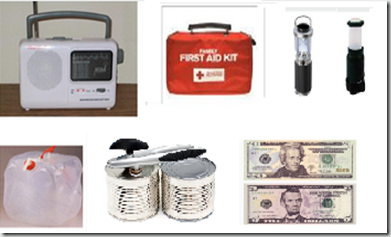
Basic kit : NWS radio, First Aid Kit, Lanterns, Water & Food & cash  


And every home should have no less than a 72-hour supply of emergency food and water, for all of its occupants (including pets!).  This is a bare minimum, here in the United States many agencies and organizations recommend that households work towards having a 10-day supply of food, water, and emergency supplies on hand.


In When 72 Hours Isn’t Enough, I highlighted  a colorful, easy-to-follow, 100 page `survival guide’ released by Los Angeles County, that covers everything from earthquake and tsunami preparedness, to getting ready for a pandemic.

image

While admittedly California-threat specific, this useful guide may be downloaded here (6.5 Mbyte PDF).

And speaking of California threats, if you live in any seismically active region (and that includes most of the nation) you need to visit Shakeout.org  to learn how you, your family and your co-workers can take part in this year’s important earthquake drills.

image

Although I’ve covered a great many specifics for becoming better prepared (see NPM14: Infrastructure Failure Preparedness & NPM14: When You’ve Got To `Get Out Of Dodge’ In A Hurry), there is one prep I consider to be the most important of all.


Having – and being – a `disaster buddy’.


In NPM14: In an Emergency, Who Are You Going To Call?, I wrote about that - A `Disaster Buddy’ is simply someone you have prearranged that you can call on during a crisis, and who in turn, can call on you if they need help.

Much in the way that community fire departments, EMS, and law enforcement agencies have a `mutual aid’ agreement with nearby communities, you should foster the same kind of arrangement with your friends, family, and neighbors.


In the parlance of paramedics, cops, firefighters and the military . . .  “you have their back, and in return, they have yours.”  Now - before a disaster occurs - is the time to sit down and talk to your friends, family, and neighbors about how you will help one another during a personal or community wide crisis.


While we all make New Year’s resolutions, and most of them are quickly dropped and forgotten, making this year the year you and your family get better prepared to deal with emergencies is a resolution worth keeping.


For more  potentially life saving preparedness information, I invite you to visit:

FEMA http://www.fema.gov/index.shtm

READY.GOV http://www.ready.gov/

AMERICAN RED CROSS http://www.redcross.org/

Sunday, September 14, 2014

NPM14: CPR Skills & AED Simulator

image

Source American Heart Association

Note: This is day 14 of National Preparedness Month.  Follow this year’s campaign on Twitter by searching for the #NatlPrep or #NPM14 hash tag. This month, as part of NPM14, I’ll be rerunning some updated  preparedness essays, along with some new ones.


#9075


Although we often talk about preparedness in terms of having an emergency plan and  the right supplies (First Aid Kit, Emergency Radio, Bottled Water, Full Pantry, etc.), it is also important to have the right skills to deal with an emergency. 


Basic stuff – like how to use a fire extinguisher, how to turn off the gas supply to your home or business, how to stop bleeding or apply first aid.

One of the most common emergency situations you are likely to encounter is witnessing a Sudden Cardiac Arrest (SCA).  More than a thousand occur every day across the nation, often in public places like parking lots, shopping malls, and houses of worship.   


This from the Heart Rhythm Association:

  • Sudden Cardiac Arrest (SCA) is a leading cause of death in the United States, claiming more than 350,000 lives each year. 
  • Approximately 92% of those who experience sudden cardiac arrest do not survive.
  • SCA kills more than 1,000 people a day, or one person every 90 seconds

What the people who witness these events do in the first few minutes can mean the difference between life and death for the stricken individual. Luckily, hands-only CPR (cardio-pulmonary resuscitation) is easier to do than ever before, and there are thousands of AEDs (automated external defibrillators) stationed in public venues across the nation.


With a little bit of training, you have the potential to save someone’s life.


AEDs are designed to be used by laypersons who ideally should have received some AED training.  Like doing CPR, the required skills are relatively simple, but they do require some degree of familiarity.  I would strongly encourage everyone to take a CPR class, and if you already done so – take a refresher course every couple of years.


While this blog isn’t a substitute for taking a CPR class, it can help familiarize you with the basics.


Witnessing a cardiac arrest, particularly of a loved-one, can be a terrifying and traumatic experience. Far too often, bystanders are paralyzed into doing nothing while they wait for rescuers to arrive. As a paramedic, only rarely did I arrive on scene to find someone attempting to resuscitate a patient.


Almost inevitably, however, some kind soul had placed a pillow under the head of the victim to make them more `comfortable’, effectively closing off their airway.


Consequently, even with the advanced life support equipment we carried, our success rate in reviving these patients was dismally low.


Luckily, the new hands only resuscitation method -  which eliminates the need for mouth-to-mouth ventilation - makes doing CPR easier than ever before. But hand’s on training is still important, if you expect to be able to react properly during an emergency. While it won’t take the place of an actual class, you can watch how it is done on in this brief instructional video from the American Heart Association.


A CPR class only takes a few hours, can be fun, and is well worth the effort.


To find a local CPR course contact your local chapter of the American Red Cross, the American Heart Association, or (usually) your local fire department or EMS can steer you to a class.


Last  year a buddy of mine passed along a link to an online training site that, in a few short minutes, can familiarize the layperson with what to do when confronted by a sudden cardiac arrest, and what to expect when opening and using an AED.


This interactive video is particularly well done, and is provided by the Medtronic Foundation, in conjunction with the Heart Rescue Project.  First the three steps you should know, then the video.


What to do if you see someone suddenly collapse.

If you see someone collapse suddenly, check if the victim is responsive. If not, remember these three easy steps.

Call 911

Have them send help. Stay on the line and listen for further instructions.

Start Chest Compressions

If the person is not breathing normally, start chest compressions. Push down hard and fast in the center of the chest. Keep your arms straight. Send someone to find an AED.

Use An AED

The AED (automated external defibrillator) is a portable medical device that delivers an electrical shock to restart a person’s heart. It provides voice prompts that tell you exactly what to do and will only administer a shock if needed, so there’s no reason to hesitate.

It only takes a few minutes to familiarize yourself with the operations of an AED by visiting the following website.  

LINK

image


I should point out that not all cardiac arrests can be corrected by defibrillation, even if conducted in a timely manner. There are non-shockable arrhythmias that an AED cannot convert to sinus rhythm.

Non-shockable cardiac arrest arrhythmias are asystole (flat line) and PEA (Pulseless Electrical Activity) – what we used to call back in the stone age of EMS, electromechanical dissociation.

Neither of which respond to defibrillation.

Patients can sometimes still be saved with CPR alone, at least until the right cardiac meds can be administered. For more on all of this, we have the press release from the American Heart Association.


Guidelines-based CPR saves more non-shockable cardiac arrest victims

April 02, 2012

Study Highlights:

  • CPR can save someone with cardiac arrest even if they don’t respond to a defibrillator.
  • People with non-shockable cardiac arrest are more likely to live if they receive CPR based on recent guidelines emphasizing chest compressions.
  • The American Heart Association’s CPR guidelines emphasizing chest compressions are saving more lives, according to a new study.


Of course, despite your best efforts, many SCA victims will not survive. It isn’t at all like on TV, where 75% of  recipients of CPR survive.  Even when cardiac arrests occur inside a hospital, the survival to discharge rate is less than 40%. Outside the hospital, the odds of seeing a good outcome are lower.


While there are no guarantee of success, early and coordinated action taken by bystanders (calling 911, starting CPR, using AED if available) can substantially improve the SCA’s chances of survival. 


For more on heart attacks, and CPR, you may wish to visit some of these earlier blogs.


Deadlier Than For The Male

Survivability Of Non-Shockable Rhythms With New CPR Guidelines

Fear Of Trying

NPM11: Early CPR Saves Lives

Thursday, April 09, 2015

UK: 2015 Civil Risks Register

image


# 9917


Since 2008 the UK government has produced, and updated every two years, a National Risk Register For Civil Emergencies – essentially a short list of disaster scenarios (man-made & natural) that the Cabinet Office believe to be genuine threats.  The Cabinet Office describes it as:


The National Risk Register of Civil Emergencies (NRR) is the unclassified version of the National Risk Assessment (NRA), a classified assessment of the risks of civil emergencies facing the UK over the next five years. The NRR is a public resource for individuals and organisations wishing to be better prepared for emergencies.


Since emergency preparedness is a big part of this blog, knowing what governments view as their greatest disaster threats can go a long way in helping us decide how, and for what, we should be preparing.  


There are regional differences that must be considered -  the UK is not prone to major earthquakes, tornadoes, or Hurricanes –  so those who live in areas that are must adjust accordingly.


The UK has divided their disaster risks into three broad categories:

  1. Malicious or Terrorist Attacks
  2. Natural Hazards
  3. Major Accidents


This document bases its assessment on each scenario on the likelihood of it happening over the next five years and on the consequences or impacts to the population. They use what the NRA and NRR consider to be a ‘reasonable worst case’ scenario, while  `highly implausible scenarios’ are excluded.


Plausibility for terrorist attack scenarios are rated from low to high, while (broad) numerical odds are offered for the other types of disasters.  In either case, the impact factor is rated from 1 (low) to 5 (maximum).


Despite the airtime and attention that terrorism gets, the following chart shows that most `terrorist-related’ scenarios cluster the overall impact in the mid-range, with probabilities running from medium-low to high.  A truly catastrophic terrorist attack is only accorded a medium-low probability.

image


When it comes to `high impact and high probability’ events, the following chart (highlight mine) shows that Pandemic Influenza stands alone atop the list.  While thermonuclear war or an asteroid impact could conceivably wreak more havoc on our planet, neither are considered to be anywhere near as likely as a severe pandemic.


 image

From the section on Pandemic Influenza, they write:


Pandemic influenza

2.3 Influenza pandemics are natural phenomena that have occurred over the centuries, and most recently in 2009 in the shape of the H1N1 influenza pandemic. There are other influenza strains in circulation globally, such as H5N1 (avian influenza) which emerged in South East Asia in 1996 and caused millions of deaths among poultry and several hundred human deaths. The consensus view among experts is that there is a high probability of another influenza pandemic occurring. It is impossible to forecast its timing or the nature of its impact.


Emerging infectious diseases

2.4 Over the past 25 years, more than 30 new, or newly recognised, infections have been identified around the world, although the likelihood of a new disease spreading to the UK is low. A recent example of a newly emerged infectious disease is SARS (Severe Acute Respiratory Syndrome), which emerged in Asia in November 2002 and posed a global health threat.


Consequences


2.5 Consequences may include:
  • in the case of pandemic influenza, half the UK population potentially being infected, with between 20,000 and 750,000 additional deaths potentially by its end
  • around 2,000 people infected in the case of a new/emerging infectious disease, with some 100 additional deaths potentially by its end
  • in the absence of early or effective interventions to deal with a pandemic, significant social and economic disruption, significant threats to the continuity of essential services, lower production levels, and shortages and distribution difficulties.


It is no coincidence that a severe pandemic has ranked at the top of almost every list of highly disruptive national security threats in recent years (see 2011 OECD Report: Future Global Shocks,  UK: Civil Threat Risk Assessment, Influenza Pandemic As A National Security Threat).    


image

Credit - HHS Interim Pre-Pandemic Planning Guidence: Community Strategy For Pandemic Influenza Mitigation In the United States.


Considered just as likely to occur – but carrying a lower impact – are events such as:

  • Severe Space Weather  (see NASA: The Solar Super Storm Of 2012)
  • Weather Extremes (Cold weather & Heavy snow  or Heat wave)
  • Poor Air quality events
  • Explosive Volcanic Eruptions (impacting, but outside of the UK)
  • Storms and Gales

Considered somewhat less  likely, but with potentially higher impacts for the UK, are extreme coastal flooding and widespread electrical outages (see  GridEx 2013 Preparedness Drill). 


Without electricity, gas pumps won’t work, credit & debit cards are useless (got cash?), and refrigerated foods may quickly begin to spoil (in your home, and in the store).  For those who depend on electric heat during the winter or those who rely on medical devices – like oxygen generators – a prolonged outage could have deadly implications.


Our dependence upon our modern infrastructure, just in time deliveries, and a continuous supply of electricity makes all of us particularly vulnerable to any sudden interruption.  And as this risk assessment shows, there are a lot of things that could impact those resources. 


And this list is far from being all-inclusive.  The proverbial Black Swan Event  – the one no one really saw coming – is always a possibility.


Which is why agencies here in the United States -  like the HHS, CDC, FEMA, Ready.gov and others - work each day to convince citizens of the importance of being prepared for the unexpected, and why I devote a fair amount of this blog to everyday preparedness.

image


Given the broad range of potential disaster scenarios it doesn’t make sense to `prepare for a pandemic’ or `prepare for an earthquake’, since neither may show up when the wheel of misfortune is spun for your community. 


Instead, it makes sense to maintain a general level of preparedness against `all threats’.


As a former paramedic, I can’t stress enough the importance of having a good first aid kit at home, and another one in your car.  And just as importantly, learning how to properly use one. Taking a first-aid course, and CPR training, are both investments that could pay off big someday, for you, and for your loved ones. 

image

Basic kit : NWS radio, First Aid Kit, Lanterns, Water & Food & cash


And every home should have no less than a 72-hour supply of emergency food and water, for all of its occupants (including pets!).  This is a bare minimum, here in the United States many agencies and organizations recommend that households work towards having a 10-day supply of food, water, and emergency supplies on hand (see When 72 Hours Isn’t Enough). 

.

Although I’ve covered a great many specifics for becoming better prepared (see NPM14: Infrastructure Failure Preparedness & NPM14: When You’ve Got To `Get Out Of Dodge’ In A Hurry), there is one prep I consider to be the most important of all.


Having – and being – a `disaster buddy’.


In NPM14: In an Emergency, Who Are You Going To Call?, I wrote that a `Disaster Buddy’ is simply someone you have prearranged that you can call on during a crisis, and who in turn, can call on you if they need help.


None of this is to suggest you should be sitting around worrying about the myriad of possible disaster scenarios.  Worrying never solved anything. You should be preparing – sensibly – instead. 


After all, preparing is easy . . . it’s worrying that is hard.

Thursday, September 04, 2014

NPM14: Create A Family Communications Plan

image


# 9036


September is National Preparedness Month, and this year the theme for Week 1 is: How to Reconnect With Family after a Disaster, where FEMA and Ready.gov  urge that all families create an emergency communications plan.


Disasters can strike with little or no warning, and some family members may be at school, work, or simply away from home.  In the event of a sudden evacuation or displacement, you’ll want to have a meeting place already decided upon, and for everyone to have a list of emergency contact information.


To drive home the message, this year FEMA has produced a PSA called `Waiting’, which shows anxious parents in a community shelter trying – and failing – to reconnect with their child during a disaster.

image


Separation from family was a constant worry during the `bad old days’ of the cold war – when just about everyone feared that nuclear attack was not only inevitable, but imminent. 


Those of us born in the 1950s grew up with `duck & cover drills’, graphic civil defense film strips, and even cute cartoon characters like `Bert the Turtle’   giving us tips on how best to survive a surprise atomic attack. Admittedly some of that advice was fairly suspect in the face of an atomic attack, but it was better than nothing.


Previously, I’ve described how my family created their own `emergency rendezvous plan’  during the 1962 Cuban missile crisis, so my brother, sister and I would know where to go if we were separated. 


image


While the threat of global thermonuclear war is greatly diminished today, the world remains a dangerous place. 


Between natural disasters like earthquakes, floods, hurricanes, and tornadoes – and the potential for man-made disasters like train derailments, chemical plant explosions, and ever terrorist attacks – one could argue that our threat level is higher today than it has been since the mid-1980s.


To help get your family prepared to deal with disruptions and disasters large and small, FEMA and Ready.gov have created a pair of Family Communications toolkits.  Each comes in the form of a fill-in-the blanks PDF file, which you can download, fill out, and print.


image

Family Communication Plan for Parents (English)

Family communication plan template designed for parents to organize emergency contact phone numbers and identify an emergency meeting place.

image

Family Communication Plan for Kids (English)

Family communication plan template designed for kids to organize emergency contact phone numbers and identify an emergency meeting place.


Filling out these cards may seem like a small step, but that's what most preparedness involves.


Getting prepared doesn’t have to be complicated, expensive, or time consuming. By taking small, organized steps, in no time you’ll find that you and your family far better prepared to face any emergency. Over the next month I’ll have a series of easily digestible preparedness blogs to help get you started, so look for the NPM14 heading.


For more on how to prepare, visit these websites:


FEMA http://www.fema.gov/index.shtm

READY.GOV http://www.ready.gov/

AMERICAN RED CROSS http://www.redcross.org/
 

Wednesday, September 24, 2014

NPM14: When You’ve Got To `Get Out Of Dodge’ In A Hurry

bob 001a

My Bug-out-bag, Canteen, & Toiletry kit

Note: This is day 24  of National Preparedness Month.  Follow this year’s campaign on Twitter by searching for the #NatlPrep & NPM14 hash tag.

This month, as part of NPM12, I’ll be rerunning some edited and updated older preparedness essays, along with some new ones.


# 9007


There is probably no tougher decision to be made in the face of a disaster than having to evacuate from your home. Home is familiar, home is comfortable, and home is where your processions are.


So quite understandably, no one wants to leave home during an emergency if they can possibly avoid it. In fact, it can be such a traumatic decision that some people will risk everything to avoid evacuating.


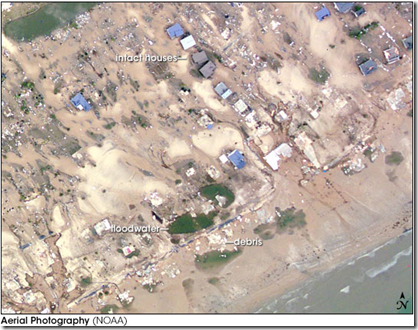
But the following photo taken in Crystal Beach after Hurricane Ike in 2008 proves that staying home in the face of a flood, a hurricane, or other natural disaster can have deadly consequences.

image

Being able to leave in a hurry when an evacuation has been ordered means having a plan, a destination, and an emergency `to go’ kit or `BOB’ already equipped, and standing by.


In the vernacular, a `bug-out bag'  or `BOB’  (or sometimes GOOD bag for `Get Out Of Dodge’) a bag of emergency supplies, ideally kept at the ready, that one can grab on the way out the door during an emergency.


Every hurricane season I go through my personal bug out bag, and replace flashlight and radio batteries from last year, and swap out older emergency rations for newer ones.


A BOB isn't supposed to be a survival kit, but rather, is supposed to provide the essentials one might need during the first 72 hours of a forced, and sometimes unexpected, evacuation.


It should contain food, water, any essential prescription medicines, copies of important papers (ID's, insurance, important Phone #s), a first aid kit, portable radio, flashlight, extra batteries, and ideally blankets and extra clothes.


While having to evacuate your home may seem like an unlikely event, every years hundreds of thousands of Americans are forced to do so.  Rivers spill their banks, dams break, brush fires rage out of control, even sudden industrial accidents can force evacuations.


And unlike with a hurricane, you won’t always have advance warning.


Ready.gov has the following advice on how to prepare for an evacuation.


Evacuating Yourself and Your Family

image

There may be conditions under which you will decide to get away or there may be situations when you are ordered to leave. Follow these guidelines for evacuation:

  • Plan places where your family will meet, both within and outside of your immediate neighborhood. Use the Family Emergency Plan to decide these locations before a disaster.
  • If you have a car, keep a full tank of gas in it if an evacuation seems likely. Keep a half tank of gas in it at all times in case of an unexpected need to evacuate. Gas stations may be closed during emergencies and unable to pump gas during power outages. Plan to take one car per family to reduce congestion and delay.
  • Become familiar with alternate routes and other means of transportation out of your area. Choose several destinations in different directions so you have options in an emergency.
  • Leave early enough to avoid being trapped by severe weather.
  • Follow recommended evacuation routes. Do not take shortcuts; they may be blocked.
  • Be alert for road hazards such as washed-out roads or bridges and downed power lines. Do not drive into flooded areas.
  • If you do not have a car, plan how you will leave if you have to. Make arrangements with family, friends or your local government.
  • Take your emergency supply kit unless you have reason to believe it has been contaminated.
  • Listen to a battery-powered radio and follow local evacuation instructions.
  • Take your pets with you, but understand that only service animals may be permitted in public shelters. Plan how you will care for your pets in an emergency.

    Since I live in a hurricane evacuation zone, I have an emergency plan, a pre-arranged place to go, and my evac  kit (see Inside My New Bug Out Bag) packed and ready to go.


    Of course, you’d be hard pressed to put everything for a family of four into one bag.  So each family member should have their own BOB.

    Some items, like the radio, lights, and first aid kit needn’t be duplicated in each bag. 


    I keep my BOB within arm’s reach of my first aid kit, and would hopefully be able to grab both, even in an emergency. 

    image


    On top of this, I keep a spare first aid kit in my car, along with an `overnight bag’, and I have a third duffle bag packed with extra supplies, that I would hopefully be able to throw in the car as well.


    But if I had to, I could easily go 72 hours on just my bug-out bag alone.


    I do these things to give me peace of mind and confidence that I’m ready to deal with just about any emergency that comes my way.


    The truth is, preparing is easy.

    It’s worrying that is hard.

    Sunday, September 28, 2014

    NPM14: Infrastructure Failure Preparedness

    image

    Basic kit : NWS radio, First Aid Kit, Lanterns, Water & Food & cash  


    Note: This is day 28  of National Preparedness Month. Follow this year’s campaign on Twitter by searching for the #NatlPrep & NPM14 hash tag.


    # 9119


    Historically, for most of us living in North America, our biggest disaster threats come from severe weather (tornadoes, floods, blizzards & hurricanes), wildfires, or earthquakes.  But as we become more urbanized, and increasingly dependent upon aging, oft times fragile infrastructures, the threats we face are likely to evolve over time.


    A prime example, which lasted but a few days last August, was contamination of the water supply for Toledo, Ohio and surrounding areas with a harmful toxin produced by microcystis algae (see Water, Water, Everywhere But Not A Drop To Drink). 

    image


    Unlike most disaster scenarios (and Michael Bay movies) cities weren’t destroyed, and lives weren’t lost.  But had the algae bloom lasted longer, or remained near the water intakes on Lake Erie for a few more days, the societal and economic impacts would have been much greater.


    Despite warnings from NOAA that it could happen (it had previously, on a smaller scale) – few were prepared with enough water on hand to last their households even three days.


    Lest you think this is a freak occurrence, every four years the ASCE (American Society of Civil Engineers) releases a report card on America’s infrastructure, and their latest (2013) warns that our cumulative GPA for infrastructure sits at only a D+, and two of our most vulnerable infrastructures are drinking water and the electrical grid.


    The truth is, parts of our ageing electrical grid are more than 100 years old, and even newer components are vulnerable to everything from severe weather to solar storms to cyber attacks. And there are thousands of miles of rusting century-old water mains running under the streets of Los Angeles, New York, Boston, and elsewhere. 


    There are 84,000 dams (average age 52 years) in this country, and 100,000 miles of levees.  Both rate a not-so-reassuring D on the ASCE report card, and many are in grave need of repairs and upgrades. While we usually normally pay little attention to these structures, as they age, they can pose hidden risks to those who live near them.


    Add in a precipitating event – like an earthquake, hurricane, or flood – and the risks of failure only increase.


    In terms of widespread impact, a prolonged widespread power outage has the greatest potential for disruption. It is the job of the North American Electric Reliability Corporation (NERC) to "ensure the reliability of the North American bulk power system", a mandate given to it in 2006 as a result of the 2003 Northeast blackout which affected more than 50 million people in the United States and Ontario, Canada. 


    In  2009, NERC issued a public notice warning that the grid was `vulnerable’ to cyber attack, and that same year  the National Academy of Sciences produced a 134 page report on the potential damage that a major solar flare could cause in Severe Space Weather Events—Understanding Societal and Economic Impacts (see Solar Storms, CMEs & FEMA).


    Last October, in GridEx 2013 Preparedness Drill, we looked at a major drill to determine their ability to respond to a full grid-down situation, caused by a cyber-attack.  Despite attempts to `harden’ the electrical grid against attacks, last July Bloomberg News reported:


    U.S. Power Grid Vulnerable to Attack: Congressional Research Service

    A coordinated and simultaneous attack on the nation's electricity grid could have “crippling” effects including widespread extended blackouts and “serious economic and social consequences,” according to a federal report on the physical security of high-voltage transformer substations.


    Of course, it doesn’t take a cyber-attack, solar storm, or EMP to take down the grid for millions of people for days or even weeks at a time.  We’ve seen that happen from ice storms, hurricanes, and blizzards in the past.  A major earthquake could do so, as well.  

    Without electricity, gas pumps won’t work, credit & debit cards are useless (got cash?), and refrigerated foods may quickly begin to spoil (in your home, and in the store).  For those who depend on electric heat during the winter or those who rely on medical devices – like oxygen generators – a prolonged outage could have deadly implications.


    Interruptions in food deliveries, closed pharmacies, 911 system failures, cell phone & internet disruptions, hospitals and emergency services operating on generators and a finite supply of fuel . . .  well, you get the picture.


    Which pretty much described the scene I found in New Orleans when I helped my brother retrieve his belongings from the French Quarter six weeks after Hurricane Katrina inundated the city, and more recently, for the residents of New York and New Jersey who went a week or longer without power after `super storm’ Sandy struck two years ago.  


    Admittedly, in most cases, power would be restored in a few days. But the difference between a prolonged outage being an inconvenience and an absolute nightmare can often hinge on your level of preparedness.


    If an infrastructure failure struck your region today, and the power went out, stores closed their doors, and water stopped flowing from your kitchen tap for the next 7 days  . . .  do you have:


    • A battery operated NWS Emergency Radio to find out what was going on, and to get vital instructions from emergency officials?
    • A decent first-aid kit, so that you can treat injuries?
    • Enough non-perishable food and water on hand to feed and hydrate your family (including pets) for the duration?
    • A way to provide light (and in cold climates, heat) for your family without electricity?   And a way to cook?  And to do this safely?
    • An emergency plan, including meeting places, emergency out-of-state contact numbers, and in case you must evacuate, a bug-out bag?
    • Spare supply of essential prescription medicines that you or your family may need?
    • Enough emergency cash to get you through a week or more without access to an ATM or the use of a credit/debit card?

    If your answer is `no’, you have some work to do.  A good place to get started is by visiting either  Ready.gov or the FEMA.gov websites.

    Tuesday, September 09, 2014

    NPM14: Because Pandemics Happen

    image

    Credit ECDC – 125 years of  Pandemic  History


    Note: This is one of a continuing series of preparedness blogs for this year’s National Preparedness Month.  You can search for NPM14 (or last year’s NPM13) to find additional entries.


    # 9058


    While the timing, source, or severity of the next pandemic is unknowable, history tells us that influenza pandemics come along several times each century, making it very likely we will see another one sometime in the not-to-distant future.


    Although a novel strain of influenza is considered the most likely contender, we’ve seen evidence over the past decade that non-influenza viruses – like SARS and MERS – have pandemic potential, as well.


    Last February, in Influenza Pandemic As A National Security Threat,  we looked at a threats assessment by the Director Of National Intelligence that included:

    Worldwide Threats Assessment – published January 29th, 2014,

    (Excerpt)

    Health security threats arise unpredictably from at least five sources: 

    • the emergence and spread of new or reemerging microbes;
    • the globalization of travel and the food supply;
    • the rise of drug-resistant pathogens;
    • the acceleration of biological science capabilities and the risk that these capabilities might cause inadvertent or intentional release of pathogens; and
    • adversaries’ acquisition, development, and use of weaponized agents. 


    In December of 2012 the U.S. National Intelligence Council released a report called  "Global Trends 2030: Alternative Worlds" that tries to anticipate the global shifts that will likely occur over the next two decades (see Black Swan Events). Number one on their hit parade?

    Global Trends 2030's potential Black Swans

    1. Severe Pandemic

    "No one can predict which pathogen will be the next to start spreading to humans, or when or where such a development will occur," the report says. "Such an outbreak could result in millions of people suffering and dying in every corner of the world in less than six months."

    The threat of another influenza pandemic is consistently ranked higher by most governments than a major cyber/terrorist attack, solar flare, or nuclear/WMD war – and is considered all but inevitable by many experts.


    Despite the known risks, pandemic preparedness over the past few years has largely fallen by the wayside.


    The declassification last year of a 2009 Northern Command Pandemic Plan (see SciAm story Pandemic Flu Plan Predicts 30% of U.S. Could Fall Ill) briefly caught the attention of a number of news organizations and websites with its estimates that during a moderately severe pandemic 30% of the population could fall ill, 3 million could require hospitalization, and 2 million Americans could die.

    Although a certain amount of surprise was registered in these media reports, these are roughly the same numbers that were being openly discussed by local, state, and federal agencies during the pandemic planning phase of 2006-2008.

    image 

    Credit - HHS Interim Pre-Pandemic Planning Guidence: Community Strategy For Pandemic Influenza Mitigation In the United States.

    In fact, in 2008, the HHS outlined their vision of the likely impact in the United States of a severe and a moderate pandemic (see A Tale Of Two Scenarios).   As you’ll see, the numbers of hospitalizations anticipated during a severe pandemic is quite a bit higher than the Northcom plan.

    The HHS defined a severe pandemic as:

      • An attack rate of 30% (90 million Americans sickened)
      • 50% (45 million) requiring outpatient medical care
      • 11% (9.9 million) requiring hospitalization
      • 745,000 requiring mechanical ventilation
      • 1.9 million deaths (2.1% fatality ratio)

    A moderate (1958/68-like) pandemic is described as follows:

      • An attack rate of 30% (90 million Americans sickened)
      • 50% (45 million) requiring outpatient medical care
      • .9% (865,000) requiring hospitalization
      • 64,875 requiring mechanical ventilation
      • 209,200 deaths (.23% fatality ratio)

    In other words, while the number of people affected doesn't change, a severe pandemic is envisioned to be about 10 times worse than a moderate one.


    Pandemics, like hurricanes, are measured on a five point scale, with a CAT 5 pandemic – as bad or worse than 1918 – at the top of the scale.  While there are many similarities between the hurricane and pandemic scales, there is one aspect where they differ greatly.


    With Hurricanes, there are physical limitations that keep the storms from growing much stronger than 200 mph winds. Category 5 storms start at 156 MPH, and these storms are only capable of intensifying about 35% above that wind speed.


    There are no such restraints on a severe pandemic. While a 2% CFR indicates a Cat 5 pandemic, so does a 5% or 10% CFR. Yet, the difference between the impact of these three CFRs would be enormous. Although the 1918 pandemic is often used as a model for the next severe pandemic, doctors and scientists generally admit that the Spanish Flu isn't the worst that nature could throw at us.

    image


    The thing about pandemics is, even after one starts, you never know how bad it is going to be until it is over.   And even then it can take years to sort our just how bad it really was.  Experts continue to wrestle with the toll of the 2009 H1N1 pandemic. 


    A pandemic can start out mild, and over time become more virulent – as did the 1918 H1N1 pandemic -  or it could look really serious at the start, but prove milder than expected (as we saw in 2009). 


    While we can’t know when the next pandemic will arrive, or how bad it may be, we can prepare for a `reasonable-worst-case’ scenario – which  is probably somewhere on the order of the 1918 Spanish Flu.  To that end, the HHS has a number of pandemic planning toolkits available on their Flu.gov website.


    Pandemic Flu

    The federal government cannot prepare for or respond to the challenge of a flu pandemic alone. Your community can develop strategies that reduce the impact and spread of pandemic flu.

    Faith-Based & Community Organizations Pandemic Influenza Preparedness Checklist (PDF – 68.91 KB)

    Lista de Preparacion para una Pandemia de Gripe Tanto para Organizaciones Comunitarias como Religiosas (PDF – 268 KB)

    Community Strategy for Pandemic Influenza Mitigation (PDF – 10.3 MB)

    Plan Now to Be Ready for the Next Flu Pandemic (PDF – 213.55 KB)

    The Next Flu Pandemic: What to Expect (PDF – 226.83 KB) (excerpts below)

    image

    image

    Their advice (and this is for before a pandemic threat becomes imminent).

    image

    Over the past 18 months I’ve written a number of pandemic preparedness blogs, including what the United States government is doing to prepare for a possible pandemic.  You can revisit these at the following links:


    The Pandemic Preparedness Messaging Dilemma
    Pandemic Planning For Business
    CDC: Pandemic Planning Tips For Public Health Officials
    H7N9 Preparedness: What The CDC Is Doing


    Admittedly, we may not see another severe pandemic for years, or even decades. But we are entering the winter respiratory season in the Northern hemisphere, and we have a full plate of novel influenza viruses we are watching for development – including H7N9, H5N1, H10N8, and H5N6.


    Since it is impossible to predict when the next pandemic will occur, it makes sense to incorporate pandemic planning into your family, community or business disaster plans now, and in the future.  


    Tuesday, September 01, 2015

    Kicking Off National Preparedness Month

     image


    # 10,473


    September is National Preparedness Month, and as I do every year, I’ll be devoting a good deal of time in this blog to the idea of individual, business, and community preparedness.  Over the next 30 days I’ll be posting a variety of new, and updated, preparedness articles along with my usual litany of EID information.


    I come by my penchant for preparedness honestly, having been born and raised in Florida, and having my first brush with disaster at the age of 6 when a truly impressive Hurricane Donna came to town in 1960.  Two years later Florida was practically on a war footing, with schools practicing `duck and cover’ drills and handing out civil defense pamphlets on radiation sickness and building fallout shelters, during the Cuban Missile Crisis.


    Add in the fact that for a lot of that time my family and I lived aboard an ageing 63 foot boat (see below), and well  . . . preparedness was something we thought about, and practiced, a lot.

    image


    Over the years there would be other hurricanes (Betsy in 65, Agnes in 72, Elena in 85), I’d become a boy scout, then after high school I became an EMT (later a paramedic) and worked in both Florida and Arizona. Eventually I’d end up spending more than a decade living aboard a couple of sailboats, and I’d even end up spending another 10 years `going back to the land’, in the backwoods of Missouri.


    For me, being prepared has just been part of life.  And it has come in handy more than once.


    The popularity of Doomsday Preppers on the National Geographic Channel  has a lot of people believing that preparedness is all about getting ready for the perpetually impending apocalyptic collapse of society.  But for the vast majority of us who embrace the preparedness lifestyle - it is the far more common localized disaster that spurs us on:


    . .. hurricanes, tornadoes, ice storms, blizzards, earthquakes, floods (and yes, even a pandemic)  . . . along with even more limited emergencies like power outages, house fires, car accidents, or personal accident and injury.


    While we can’t pick and choose what emergencies will befall us – we can elect whether or not to be prepared to deal with them –  which is why federal agencies like FEMA and READY.GOV work year-round to encourage Americans to think about their risks, and to prepare for them.


    Ready.gov recommends that first and foremost, you need to Make a Plan, then you can go about Building A Kit.


    Things like having a good first aid kit at home, and another one in your car.  And just as importantly, learning how to properly use one. Taking a first-aid course, and CPR training, are both investments that could pay off big someday, for you, and for your loved ones. 

    image

    Having enough stored water for at least 3 days (1 gal/day per person + pets), a reasonable supply of non-perishable food, a NWS Emergency weather radio, a little cash in case the ATMs and Credit Card readers are down, and a safe form of emergency lighting (not candles) are all things every household should have on hand. 


    And for my money, perhaps most importantly, having – and being – a `disaster buddy’. 


    In NPM14: In an Emergency, Who Are You Going To Call?, I wrote that a `Disaster Buddy’ is simply someone you have prearranged that you can call on during a crisis, and who in turn, can call on you if they need help.  And the more `disaster buddies’  you have in your personal network, the more options you will have in an emergency.


    I hope you’ll  take some time during the coming weeks to think about how to make your family, business, or community better prepared to deal with the next disaster, and then act on it.   And that you’ll encourage others to do the same.   


    For more on how to prepare, visit these websites:

    FEMA http://www.fema.gov/index.shtm

    READY.GOV http://www.ready.gov/

    AMERICAN RED CROSS http://www.redcross.org/


    And if you are on twitter, follow #NatlPrep for more on National Preparedness Month activities.