Showing posts with label NPM14. Show all posts

Tuesday, September 30, 2014

America’s Preparathon! : It Started Like Any Other Day

image


# 9124


Today marks the end of National Preparedness Month, where FEMA and Ready.gov and a coalition of thousands of others (including AFD) have worked all month to promote better disaster preparedness for Americans.  On twitter the hashtags #NPM14 and #NatlPrep will lead you to find many of these efforts.


We know – often because we’ve been there – that disasters do strike, and that the advantage goes to the prepared.


The popularity of Doomsday Preppers on the National Geographic Channel  has a lot of people believing that preppers are all getting set for the impending apocalyptic collapse of society.  But for the vast majority of us who embrace the preparedness lifestyle - it is the far more common localized disaster that spurs us on:


. .. hurricanes, tornadoes, ice storms, blizzards, earthquakes, floods (and yes, even a pandemic)  . . . along with even more limited emergencies like house fires, car accidents, or personal accident and injury.


These types of events happen with surprising regularity - and unlike an abrupt 30 degree shift of the earth’s crust or the eruption of the Yellowstone Super Volcano - are something being prepared for is actually likely to help.  The following 4 minute video called `It Started Like Any Other Day’  illustrates three such examples:

image


There are many legitimate disaster threats out there – and many can strike without warning -  which is why FEMA, READY.GOV, and many other agencies constantly promote personal, family, and business preparedness.


As a former paramedic, I can’t stress enough the importance of having a good first aid kit at home, and another one in your car.  And just as importantly, learning how to properly use one.

image

Taking a first-aid course, and CPR training, are both investments that could pay off big someday, for you, and for your loved ones. 


And every home should have no less than a 72-hour supply of emergency food and water, for all of its occupants (including pets!).  This is a bare minimum, here in the United States many agencies and organizations recommend that households work towards having a 10-day supply of food, water, and emergency supplies on hand.


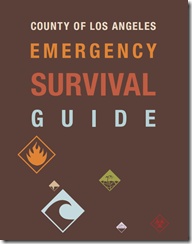
In When 72 Hours Isn’t Enough, I highlighted  a colorful, easy-to-follow, 100 page `survival guide’ released by Los Angeles County, that covers everything from earthquake and tsunami preparedness, to getting ready for a pandemic.

image

While admittedly California-threat specific, this useful guide may be downloaded here (6.5 Mbyte PDF).
 

And speaking of California threats, if you live in a seismically active region (and that includes most of the nation) you need to visit Shakeout.org before October 16th to learn how you, your family and your co-workers can take part in this year’s important earthquake drill.

image


Although I’ve covered a great many specifics for becoming better prepared (see NPM14: Infrastructure Failure Preparedness & NPM14: When You’ve Got To `Get Out Of Dodge’ In A Hurry), there is one prep I consider to be the most important of all.


Having – and being – a `disaster buddy’.


In NPM14: In an Emergency, Who Are You Going To Call?, I wrote about that - A `Disaster Buddy’ is simply someone you have prearranged that you can call on during a crisis, and who in turn, can call on you if they need help.


Much in the way that community fire departments, EMS, and law enforcement agencies have a `mutual aid’ agreement with nearby communities, you should foster the same kind of arrangement with your friends, family, and neighbors.


In the parlance of paramedics, cops, firefighters and the military . . .  you have their back, and in return, they have yours.”  Now - before a disaster occurs - is the time to sit down and talk to your friends, family, and neighbors about how you will help one another during a personal or community wide crisis.


While  National Preparedness Month comes to an end today, the task of becoming better prepared doesn’t end with September – it is a year-round responsibility.  To help you on your way, you can retrieve a list of this year’s NPM blogs by clicking this link.


And for more  potentially life saving preparedness information, I invite you to visit:

FEMA http://www.fema.gov/index.shtm

READY.GOV http://www.ready.gov/

AMERICAN RED CROSS http://www.redcross.org/

Wednesday, September 24, 2014

NPM14: When You’ve Got To `Get Out Of Dodge’ In A Hurry

bob 001a

My Bug-out-bag, Canteen, & Toiletry kit

Note: This is day 24  of National Preparedness Month.  Follow this year’s campaign on Twitter by searching for the #NatlPrep & NPM14 hash tag.

This month, as part of NPM12, I’ll be rerunning some edited and updated older preparedness essays, along with some new ones.


# 9007


There is probably no tougher decision to be made in the face of a disaster than having to evacuate from your home. Home is familiar, home is comfortable, and home is where your processions are.


So quite understandably, no one wants to leave home during an emergency if they can possibly avoid it. In fact, it can be such a traumatic decision that some people will risk everything to avoid evacuating.


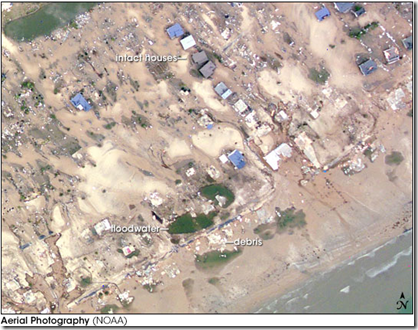
But the following photo taken in Crystal Beach after Hurricane Ike in 2008 proves that staying home in the face of a flood, a hurricane, or other natural disaster can have deadly consequences.

image

Being able to leave in a hurry when an evacuation has been ordered means having a plan, a destination, and an emergency `to go’ kit or `BOB’ already equipped, and standing by.


In the vernacular, a `bug-out bag'  or `BOB’  (or sometimes GOOD bag for `Get Out Of Dodge’) a bag of emergency supplies, ideally kept at the ready, that one can grab on the way out the door during an emergency.


Every hurricane season I go through my personal bug out bag, and replace flashlight and radio batteries from last year, and swap out older emergency rations for newer ones.


A BOB isn't supposed to be a survival kit, but rather, is supposed to provide the essentials one might need during the first 72 hours of a forced, and sometimes unexpected, evacuation.


It should contain food, water, any essential prescription medicines, copies of important papers (ID's, insurance, important Phone #s), a first aid kit, portable radio, flashlight, extra batteries, and ideally blankets and extra clothes.


While having to evacuate your home may seem like an unlikely event, every years hundreds of thousands of Americans are forced to do so.  Rivers spill their banks, dams break, brush fires rage out of control, even sudden industrial accidents can force evacuations.


And unlike with a hurricane, you won’t always have advance warning.


Ready.gov has the following advice on how to prepare for an evacuation.


Evacuating Yourself and Your Family

image

There may be conditions under which you will decide to get away or there may be situations when you are ordered to leave. Follow these guidelines for evacuation:

  • Plan places where your family will meet, both within and outside of your immediate neighborhood. Use the Family Emergency Plan to decide these locations before a disaster.
  • If you have a car, keep a full tank of gas in it if an evacuation seems likely. Keep a half tank of gas in it at all times in case of an unexpected need to evacuate. Gas stations may be closed during emergencies and unable to pump gas during power outages. Plan to take one car per family to reduce congestion and delay.
  • Become familiar with alternate routes and other means of transportation out of your area. Choose several destinations in different directions so you have options in an emergency.
  • Leave early enough to avoid being trapped by severe weather.
  • Follow recommended evacuation routes. Do not take shortcuts; they may be blocked.
  • Be alert for road hazards such as washed-out roads or bridges and downed power lines. Do not drive into flooded areas.
  • If you do not have a car, plan how you will leave if you have to. Make arrangements with family, friends or your local government.
  • Take your emergency supply kit unless you have reason to believe it has been contaminated.
  • Listen to a battery-powered radio and follow local evacuation instructions.
  • Take your pets with you, but understand that only service animals may be permitted in public shelters. Plan how you will care for your pets in an emergency.

    Since I live in a hurricane evacuation zone, I have an emergency plan, a pre-arranged place to go, and my evac  kit (see Inside My New Bug Out Bag) packed and ready to go.


    Of course, you’d be hard pressed to put everything for a family of four into one bag.  So each family member should have their own BOB.

    Some items, like the radio, lights, and first aid kit needn’t be duplicated in each bag. 


    I keep my BOB within arm’s reach of my first aid kit, and would hopefully be able to grab both, even in an emergency. 

    image


    On top of this, I keep a spare first aid kit in my car, along with an `overnight bag’, and I have a third duffle bag packed with extra supplies, that I would hopefully be able to throw in the car as well.


    But if I had to, I could easily go 72 hours on just my bug-out bag alone.


    I do these things to give me peace of mind and confidence that I’m ready to deal with just about any emergency that comes my way.


    The truth is, preparing is easy.

    It’s worrying that is hard.

    Sunday, September 21, 2014

    NPM14: Giving Preparedness A Shot In The Arm

    image

    Photo Credit PHIL


    Note: September is National Preparedness Month, and this is one of a series of new or updated preparedness articles I will be running for the occasion.


    # 9098


    While it is hard to quantify the absolute risks from any of them, in the nearly 9 years that I’ve been doing this blog, I don’t ever recall seeing as many infectious disease threats on the horizon as I do this fall and winter. 


    In addition to the standard onslaught of seasonal flu (which can vary greatly in intensity each year) and our usual host of winter respiratory viruses (RSV, Adenoviruses, Rhinoviruses), we’ve got a rogue enterovirus sweeping across the nation called EV-D68, affecting mostly (but not solely) kids (see CDC EV-D68 Update & FAQ).

    .

    image


    Another cause of `flu like’ symptoms, but less common than the winter respiratory viruses, are infection via one the vector borne diseases like West Nile Virus, Dengue and Chikungunya. 


    What all of these have in common is that they can initially present as do most viral infections  – like a mild cold or the flu; Fever, malaise, body aches . . . sometimes accompanied by a cough or other respiratory symptoms.


    All of which not only makes getting a firm diagnosis from your doctor (other than you’ve picked up `a virus’ ) problematic, it increases your chances of picking up `something’. 


    Much, much further down the list of things to be worried about (at least in North America) are imported exotics like H7N9, H5N1, and MERS-CoV. 


    Still, they cannot be ruled out completely, as 2 of the 3 have already happened this year (see CDC Statement On 1st H5N1 Case In North America & CDC : 2nd Imported MERS Case Confirmed In Florida), and public health officials continue to watch for additional cases.


    With heightened scrutiny over these imported threats (not to mention Ebola), traveling while symptomatic (fever, cough, vomiting) may prove exceedingly difficult this fall.  Many international airports are screening passengers for fever, and showing up at the terminal with `flu-like symptoms’  just might get you bumped from your flight . . . or worse.


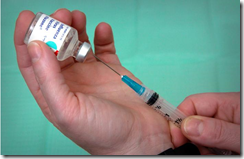
    Making this year – perhaps more than ever before – a good year to go ahead and get that flu shot early.  


    No, the shot won’t protect against any of these exotics.. The vaccine only offers protection against 3 or 4 pre-selected stains of seasonal influenza. Sill, flu is a relatively common severe winter respiratory virus – and claims tens of thousands of lives every year – making it well worth avoiding if at all possible.  


    As we’ve discussed before, flu vaccines – while considered very safe – most years only offer a moderate level of protection against influenza. Their VE (vaccine effectiveness) can vary widely between flu shot recipients, and is often substantially reduced among those older than 65 or with immune problems.


    In 2011, NFID - the National Foundation for Infectious Diseases - convened a group of experts to address the issues of influenza and the elderly. From that panel a 5-page brief has emerged, called: Understanding the Challenges and Opportunities in Protecting Older Adults from Influenza.

    image

    While the elderly generally see less protection from the flu vaccine, they state that older individuals may still mount a robust immune response. Even if the vaccine doesn’t always prevent infection in the elderly, studies suggest that the vaccine may blunt the seriousness of the illness in those over 65.


    You might not have thought about it, but getting your seasonal flu shot each year should be part of your overall preparedness plan. During a disaster or prolonged emergency you are likely to be tired, stressed, and your immune systems could be weakened.


    The last thing you need during a crisis is to be sick with the flu on top of it.


    Which is why I’ve already paid a visit to my local CVS pharmacy and got my yearly seasonal flu shot.  The process (and the shot – nice job, Carol) were painless.


    According to the CDC, more than 50 million doses of this year’s flu vaccine have already been distributed, so finding a shot should be no trouble.

     image


    September might seem a little early to be getting the flu shot, but we are already seeing scattered reports of influenza around the country, and it takes a couple of weeks after getting the shot for immunity to kick in. 


    While the vaccine can’t promise 100% protection, it – along with practicing good flu hygiene (washing hands, covering coughs, & staying home if sick) – remains your best strategy for avoiding the flu (and other viruses) this winter.


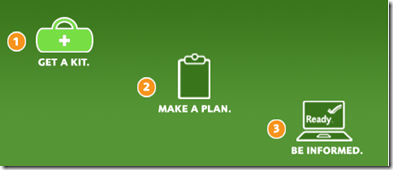
    Ready.gov urges all Americans to follow these 3 steps to better preparedness:

    image

    GET A KIT

    MAKE A PLAN

    BE INFORMED

    Sage advice. But if you want to be truly prepared, I would add an important 4th step.

    Get a shot

    Friday, September 19, 2014

    NPM14: Your Daily Threats Assessment Briefing

    image

    Photo Credit- NOAA Know your Risk


    Note: Today is day 19 of National Preparedness Month, and this is one of a series of updated blogs and articles about personal preparedness that I am featuring this month.

    # 9095


    Every day the President of the United States, along busy CEOs, investors, emergency planners, and public health officials receive specialized Daily Intelligence briefings outlining current or anticipated threats, along with other vital information.


    While you may not hold the fate of nations, a billion dollar portfolio, or a fortune 500 company in your hands you do have a need to know your risks if you want you and your family to be prepared for a disaster.


    And those risks can, and do, change on a daily basis. Particularly those involving climate and weather.


    Fortunately, the Internet makes it easy to create a short list of websites to visit each day (I do so early each morning) that in a few short minutes will give you an early warning of what threats might be expected in the next few days.


    Depending where you live, and where your personal interests lie, you will probably want to customize your `daily briefing’.  But to get you started, a quick tour of mine.


    Note: I quickly scan these websites for news, alerts, or forecasts of interest for my region.  I certainly don’t attempt to read them in depth each day.


    First stop, The National Weather Service’s Daily Briefing - which replaces the recently discontinued NOAAWatch’s Daily Briefing – and provides an excellent overview of the natural threats facing the nation.

    image 


    My second stop is usually NOAA’s Storm Prediction Center, which looks ahead as far as a week for areas that may expect severe weather.  At a glance I can see when, and where, weather trouble is expected.  This is particularly important during the spring and summer tornado season.

    image

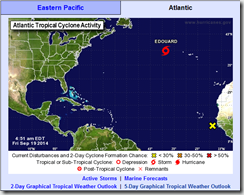
    And during hurricane season, I also swing by the National Hurricane Center website each morning (and if there is an active storm, several times each day).

    image

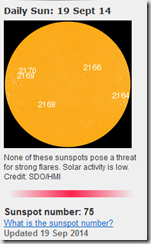
    Although the sun remains unusually quiet, I also swing by Spaceweather.com or NOAA’s SPACE WEATHER PREDICTION CENTER for the latest on solar activity. 

    image

    And last, but not least, I visit the FEMA Blog to see what they are keeping an eye on.

    image

    During the day and overnight, I rely on NOAA WEATHER RADIO (NWR) and Twitter to follow @FEMA, @NHC_Atlantic, @NOAA and @CraigAtFEMA for real-time emergency alerts.

    image

    Like having an emergency kit and a first aid kit - having a weather radio is an important part of being prepared.


    Of course, just knowing about the threats isn’t enough. You have to make use of that information.


    To learn how to prepare as an individual, family, business owner, or community I would invite you to visit the following sites and use THIS LINK to access some of my recent preparedness blogs.

    FEMA http://www.fema.gov/index.shtm

    READY.GOV http://www.ready.gov/

    AMERICAN RED CROSS http://www.redcross.org/


    While some people lie awake at night worrying about disasters, I’ve discovered that being prepared is the key to sleeping well.

    Preparing is easy.

    It’s worrying that’s hard.

    Tuesday, September 16, 2014

    NPM14: Disaster Preparedness For Kids

     image


    # 9081


    Growing up on the west coast of Florida in the 1950s and 1960s – and spending a good part of that time living aboard a boat – I was exposed early to idea that disasters can happen quickly and without warning. Going to bed every night with a life preserver hanging within easy reach quickly imbues one with idea that you should always have an emergency plan.


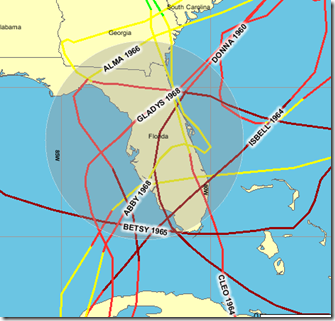
    And of course, we lived in Hurricane Alley. Here are the storm tracks of the hurricanes that turned Florida into a tropical shooting gallery during my formative years between 1954-1972. Donna, in 1960 (I was six) howled like a banshee and sent part of an oak tree crashing into our roof.

    image


    Most kids in Florida kept a hurricane tracking map on their bedroom wall, moving the colored pins several times each day to the coordinates provided by famed local weather forecaster Roy Leep.  Until the mid-1960s, before the Tiros satellites went into service, hurricanes were both mysterious and their tracks notoriously difficult to predict.


    Add in the cold war, the 1960 Cuban Missile Crisis, and constant duck & cover drills, evacuations, and Civil Defense films like Survival Under Atomic Attack in elementary school and you’d think you’d have a recipe for night terrors and phobias.


    But amazingly, most of us just took it in stride.  In large part, I believe, because we were encouraged at a very young age to participate in disaster preparedness. 


    While the atomic attack scenarios were certainly scary, we were empowered by being `prepared for the worst’, even if some of those preparations were a a bit dubious.


    Luckily, disaster preparedness – particularly for kids - has come a long way from the `bad old days’ of the cold war.


    Today, our concerns are focused on natural disasters, like floods, hurricanes, and earthquakes.  Scenarios that are far more survivable than an all-out nuclear attack, and that can be approached in a more `kid-friendly’ fashion.


    But the core message – that disasters happen, and we should all be prepared – hasn’t changed.


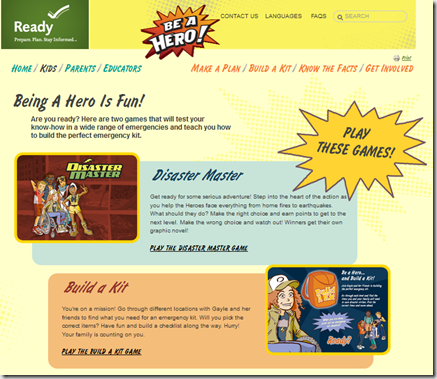
    Ready.gov’s kid friendly preparedness page contains games and activities for kids along with  information for parents and educators on how to teach simple, but effective preparedness lessons.  


    image


    Many states have their own preparedness site for kids, such as Florida Division of Emergency Management’s Kids Get A Plan page, which provides an excellent interactive introduction to preparedness for children. 


    image

    Florida’s http://www.kidsgetaplan.com/  Disaster Preparedness For Kids


    If you’ve got young kids, or grandkids – and would like to introduce them to preparedness concepts without inducing undue trauma - these sites are very much worth while checking out.

    Sunday, September 14, 2014

    NPM14: CPR Skills & AED Simulator

    image

    Source American Heart Association

    Note: This is day 14 of National Preparedness Month.  Follow this year’s campaign on Twitter by searching for the #NatlPrep or #NPM14 hash tag. This month, as part of NPM14, I’ll be rerunning some updated  preparedness essays, along with some new ones.


    #9075


    Although we often talk about preparedness in terms of having an emergency plan and  the right supplies (First Aid Kit, Emergency Radio, Bottled Water, Full Pantry, etc.), it is also important to have the right skills to deal with an emergency. 


    Basic stuff – like how to use a fire extinguisher, how to turn off the gas supply to your home or business, how to stop bleeding or apply first aid.

    One of the most common emergency situations you are likely to encounter is witnessing a Sudden Cardiac Arrest (SCA).  More than a thousand occur every day across the nation, often in public places like parking lots, shopping malls, and houses of worship.   


    This from the Heart Rhythm Association:

    • Sudden Cardiac Arrest (SCA) is a leading cause of death in the United States, claiming more than 350,000 lives each year. 
    • Approximately 92% of those who experience sudden cardiac arrest do not survive.
    • SCA kills more than 1,000 people a day, or one person every 90 seconds

    What the people who witness these events do in the first few minutes can mean the difference between life and death for the stricken individual. Luckily, hands-only CPR (cardio-pulmonary resuscitation) is easier to do than ever before, and there are thousands of AEDs (automated external defibrillators) stationed in public venues across the nation.


    With a little bit of training, you have the potential to save someone’s life.


    AEDs are designed to be used by laypersons who ideally should have received some AED training.  Like doing CPR, the required skills are relatively simple, but they do require some degree of familiarity.  I would strongly encourage everyone to take a CPR class, and if you already done so – take a refresher course every couple of years.


    While this blog isn’t a substitute for taking a CPR class, it can help familiarize you with the basics.


    Witnessing a cardiac arrest, particularly of a loved-one, can be a terrifying and traumatic experience. Far too often, bystanders are paralyzed into doing nothing while they wait for rescuers to arrive. As a paramedic, only rarely did I arrive on scene to find someone attempting to resuscitate a patient.


    Almost inevitably, however, some kind soul had placed a pillow under the head of the victim to make them more `comfortable’, effectively closing off their airway.


    Consequently, even with the advanced life support equipment we carried, our success rate in reviving these patients was dismally low.


    Luckily, the new hands only resuscitation method -  which eliminates the need for mouth-to-mouth ventilation - makes doing CPR easier than ever before. But hand’s on training is still important, if you expect to be able to react properly during an emergency. While it won’t take the place of an actual class, you can watch how it is done on in this brief instructional video from the American Heart Association.


    A CPR class only takes a few hours, can be fun, and is well worth the effort.


    To find a local CPR course contact your local chapter of the American Red Cross, the American Heart Association, or (usually) your local fire department or EMS can steer you to a class.


    Last  year a buddy of mine passed along a link to an online training site that, in a few short minutes, can familiarize the layperson with what to do when confronted by a sudden cardiac arrest, and what to expect when opening and using an AED.


    This interactive video is particularly well done, and is provided by the Medtronic Foundation, in conjunction with the Heart Rescue Project.  First the three steps you should know, then the video.


    What to do if you see someone suddenly collapse.

    If you see someone collapse suddenly, check if the victim is responsive. If not, remember these three easy steps.

    Call 911

    Have them send help. Stay on the line and listen for further instructions.

    Start Chest Compressions

    If the person is not breathing normally, start chest compressions. Push down hard and fast in the center of the chest. Keep your arms straight. Send someone to find an AED.

    Use An AED

    The AED (automated external defibrillator) is a portable medical device that delivers an electrical shock to restart a person’s heart. It provides voice prompts that tell you exactly what to do and will only administer a shock if needed, so there’s no reason to hesitate.

    It only takes a few minutes to familiarize yourself with the operations of an AED by visiting the following website.  

    LINK

    image


    I should point out that not all cardiac arrests can be corrected by defibrillation, even if conducted in a timely manner. There are non-shockable arrhythmias that an AED cannot convert to sinus rhythm.

    Non-shockable cardiac arrest arrhythmias are asystole (flat line) and PEA (Pulseless Electrical Activity) – what we used to call back in the stone age of EMS, electromechanical dissociation.

    Neither of which respond to defibrillation.

    Patients can sometimes still be saved with CPR alone, at least until the right cardiac meds can be administered. For more on all of this, we have the press release from the American Heart Association.


    Guidelines-based CPR saves more non-shockable cardiac arrest victims

    April 02, 2012

    Study Highlights:

    • CPR can save someone with cardiac arrest even if they don’t respond to a defibrillator.
    • People with non-shockable cardiac arrest are more likely to live if they receive CPR based on recent guidelines emphasizing chest compressions.
    • The American Heart Association’s CPR guidelines emphasizing chest compressions are saving more lives, according to a new study.


    Of course, despite your best efforts, many SCA victims will not survive. It isn’t at all like on TV, where 75% of  recipients of CPR survive.  Even when cardiac arrests occur inside a hospital, the survival to discharge rate is less than 40%. Outside the hospital, the odds of seeing a good outcome are lower.


    While there are no guarantee of success, early and coordinated action taken by bystanders (calling 911, starting CPR, using AED if available) can substantially improve the SCA’s chances of survival. 


    For more on heart attacks, and CPR, you may wish to visit some of these earlier blogs.


    Deadlier Than For The Male

    Survivability Of Non-Shockable Rhythms With New CPR Guidelines

    Fear Of Trying

    NPM11: Early CPR Saves Lives

    Tuesday, September 09, 2014

    NPM14: Because Pandemics Happen

    image

    Credit ECDC – 125 years of  Pandemic  History


    Note: This is one of a continuing series of preparedness blogs for this year’s National Preparedness Month.  You can search for NPM14 (or last year’s NPM13) to find additional entries.


    # 9058


    While the timing, source, or severity of the next pandemic is unknowable, history tells us that influenza pandemics come along several times each century, making it very likely we will see another one sometime in the not-to-distant future.


    Although a novel strain of influenza is considered the most likely contender, we’ve seen evidence over the past decade that non-influenza viruses – like SARS and MERS – have pandemic potential, as well.


    Last February, in Influenza Pandemic As A National Security Threat,  we looked at a threats assessment by the Director Of National Intelligence that included:

    Worldwide Threats Assessment – published January 29th, 2014,

    (Excerpt)

    Health security threats arise unpredictably from at least five sources: 

    • the emergence and spread of new or reemerging microbes;
    • the globalization of travel and the food supply;
    • the rise of drug-resistant pathogens;
    • the acceleration of biological science capabilities and the risk that these capabilities might cause inadvertent or intentional release of pathogens; and
    • adversaries’ acquisition, development, and use of weaponized agents. 


    In December of 2012 the U.S. National Intelligence Council released a report called  "Global Trends 2030: Alternative Worlds" that tries to anticipate the global shifts that will likely occur over the next two decades (see Black Swan Events). Number one on their hit parade?

    Global Trends 2030's potential Black Swans

    1. Severe Pandemic

    "No one can predict which pathogen will be the next to start spreading to humans, or when or where such a development will occur," the report says. "Such an outbreak could result in millions of people suffering and dying in every corner of the world in less than six months."

    The threat of another influenza pandemic is consistently ranked higher by most governments than a major cyber/terrorist attack, solar flare, or nuclear/WMD war – and is considered all but inevitable by many experts.


    Despite the known risks, pandemic preparedness over the past few years has largely fallen by the wayside.


    The declassification last year of a 2009 Northern Command Pandemic Plan (see SciAm story Pandemic Flu Plan Predicts 30% of U.S. Could Fall Ill) briefly caught the attention of a number of news organizations and websites with its estimates that during a moderately severe pandemic 30% of the population could fall ill, 3 million could require hospitalization, and 2 million Americans could die.

    Although a certain amount of surprise was registered in these media reports, these are roughly the same numbers that were being openly discussed by local, state, and federal agencies during the pandemic planning phase of 2006-2008.

    image 

    Credit - HHS Interim Pre-Pandemic Planning Guidence: Community Strategy For Pandemic Influenza Mitigation In the United States.

    In fact, in 2008, the HHS outlined their vision of the likely impact in the United States of a severe and a moderate pandemic (see A Tale Of Two Scenarios).   As you’ll see, the numbers of hospitalizations anticipated during a severe pandemic is quite a bit higher than the Northcom plan.

    The HHS defined a severe pandemic as:

      • An attack rate of 30% (90 million Americans sickened)
      • 50% (45 million) requiring outpatient medical care
      • 11% (9.9 million) requiring hospitalization
      • 745,000 requiring mechanical ventilation
      • 1.9 million deaths (2.1% fatality ratio)

    A moderate (1958/68-like) pandemic is described as follows:

      • An attack rate of 30% (90 million Americans sickened)
      • 50% (45 million) requiring outpatient medical care
      • .9% (865,000) requiring hospitalization
      • 64,875 requiring mechanical ventilation
      • 209,200 deaths (.23% fatality ratio)

    In other words, while the number of people affected doesn't change, a severe pandemic is envisioned to be about 10 times worse than a moderate one.


    Pandemics, like hurricanes, are measured on a five point scale, with a CAT 5 pandemic – as bad or worse than 1918 – at the top of the scale.  While there are many similarities between the hurricane and pandemic scales, there is one aspect where they differ greatly.


    With Hurricanes, there are physical limitations that keep the storms from growing much stronger than 200 mph winds. Category 5 storms start at 156 MPH, and these storms are only capable of intensifying about 35% above that wind speed.


    There are no such restraints on a severe pandemic. While a 2% CFR indicates a Cat 5 pandemic, so does a 5% or 10% CFR. Yet, the difference between the impact of these three CFRs would be enormous. Although the 1918 pandemic is often used as a model for the next severe pandemic, doctors and scientists generally admit that the Spanish Flu isn't the worst that nature could throw at us.

    image


    The thing about pandemics is, even after one starts, you never know how bad it is going to be until it is over.   And even then it can take years to sort our just how bad it really was.  Experts continue to wrestle with the toll of the 2009 H1N1 pandemic. 


    A pandemic can start out mild, and over time become more virulent – as did the 1918 H1N1 pandemic -  or it could look really serious at the start, but prove milder than expected (as we saw in 2009). 


    While we can’t know when the next pandemic will arrive, or how bad it may be, we can prepare for a `reasonable-worst-case’ scenario – which  is probably somewhere on the order of the 1918 Spanish Flu.  To that end, the HHS has a number of pandemic planning toolkits available on their Flu.gov website.


    Pandemic Flu

    The federal government cannot prepare for or respond to the challenge of a flu pandemic alone. Your community can develop strategies that reduce the impact and spread of pandemic flu.

    Faith-Based & Community Organizations Pandemic Influenza Preparedness Checklist (PDF – 68.91 KB)

    Lista de Preparacion para una Pandemia de Gripe Tanto para Organizaciones Comunitarias como Religiosas (PDF – 268 KB)

    Community Strategy for Pandemic Influenza Mitigation (PDF – 10.3 MB)

    Plan Now to Be Ready for the Next Flu Pandemic (PDF – 213.55 KB)

    The Next Flu Pandemic: What to Expect (PDF – 226.83 KB) (excerpts below)

    image

    image

    Their advice (and this is for before a pandemic threat becomes imminent).

    image

    Over the past 18 months I’ve written a number of pandemic preparedness blogs, including what the United States government is doing to prepare for a possible pandemic.  You can revisit these at the following links:


    The Pandemic Preparedness Messaging Dilemma
    Pandemic Planning For Business
    CDC: Pandemic Planning Tips For Public Health Officials
    H7N9 Preparedness: What The CDC Is Doing


    Admittedly, we may not see another severe pandemic for years, or even decades. But we are entering the winter respiratory season in the Northern hemisphere, and we have a full plate of novel influenza viruses we are watching for development – including H7N9, H5N1, H10N8, and H5N6.


    Since it is impossible to predict when the next pandemic will occur, it makes sense to incorporate pandemic planning into your family, community or business disaster plans now, and in the future.  


    Friday, September 05, 2014

    NPM14: The Advantages Of Having A Shaky Preparedness Plan

    image

    2014 Update of the United States National Seismic Hazard Maps


    # 9040


    Although I’ve lived most of my life in Florida - one of the few regions of the United States with little or no seismic risk - I did spend a decade living within spitting distance of the New Madrid fault (well inside the red bulls eye in the middle of the map above).


    While earthquakes were always a concern, the added hazards of ice storms, floods (we lived on a river), and tornadoes also spurred us to stay prepared.


    And while we never experienced the `big one’, there were certainly occasions when we were glad we had at least a couple of weeks of food in the pantry, battery operated lanterns, a windup radio, and enough water stored to last a week (we also had a river, two springs, and a water filter as a backup).


    The recent M6.0 Quake That Rattled Region North Of San Francisco was but a small taste of what will happen to a great American city at some point in the future.  Like pandemics, earthquakes along fault lines are inevitable.  It is just the timing that is unknown.


    Last December, in Dr. Lucy Jones: `Imagine America Without Los Angeles’, we looked at a presentation given by Dr. Jones at the  annual meeting of the American Geophysical Union (held this year in San Francisco),  that emphasized that should the `big one’ hit Southern California, we could literally `lose’ Los Angeles.


    She warned that the damage could be far greater, and last much longer, than most people believe.  While 99 out of 100 modern buildings might remain standing, the (often buried) infrastructure needed to provide water, electricity, internet connectivity, and natural gas – the lifeblood -  to the region could be devastated (see CBS News report).


    f this sounds like hyperbole to you, in 2010 (see Revised Risk Of `The Big One’ Along San Andreas Fault) we looked at a study that suggested that Southern California may be more overdue for another major quake than previously thought.


    And in 2011 (see Estimating The Economic Impact Of A San Andreas Quake) we looked at a report from the U.S. Bureau of Labor Statistics that endeavored to gauge the crippling impact that a highly feasible (and long overdue) 7.8 magnitude Southern California earthquake would have on jobs and local businesses.

    image

    Download PDF file

    A quake of this magnitude, they estimate, could affect  430,000 businesses and 4.5 million workers and deliver a devastating – and prolonged – blow to the local (and national) economy.


    What may be even a greater threat lurks along the Cascadia Fault line, which runs parallel to the Pacific Northwest Coastline, and has a long history of a producing major earthquakes and tsunamis, the last one in the year 1700.

    image

    The geological record indicates massive quakes have struck the region at least 7 times over the past 3500 years. If we wait long enough, another is sure to strike again.  We looked at the threats posed by this particular fault line back in 2011 in Just A Matter Of Time.


    Although large earthquakes in the Eastern half of the United States have been recorded in the past (including the Charleston, SC earthquake of 1886), the August 2011 5.8 earthquake that rocked Virginia and the Nation’s capital (see USGS Statement On The Virginia Earthquake) provided fresh evidence not only of their potential to occur,  but also how widely felt they may be (see USGS: Eastern Earthquakes - Rare But Powerful).


    Another strong quake hit the Heartland a few months later (see 5.6 Mag Quake Rattles Oklahoma), and since then, the number of quakes in north central Oklahoma have increased to the point that last May, the USGS/OGS issued a Joint Statement On Increased Earthquake Threat To Oklahoma warning of the risks of a bigger damaging quake.

    image

    USGS-OGS Oklahoma Earthquake Activity


    And if all this weren’t enough, seismic threats extend beyond just earthquakes


    They encompass volcanic eruptions (see Washington State: Volcano Awareness Month) - and Tsunamis – both of which have the ability to affect both people and property thousands of miles away from the originating event  (see The USGS West Coast Tsunami Scenario Report & East Coast Tsunami Threats).


    Even though the majority of Americans live in a seismically active region of the country, few are really prepared to deal with the aftermath of a major quake.  As a bare minimum, everyone should have a well thought out disaster and family communications plan, along with a good first aid kit, a `bug-out bag’, and sufficient emergency supplies to last at least 72 hours.


    In When 72 Hours Isn’t Enough, I highlighted  a colorful, easy-to-follow, 100 page `survival guide’ released by Los Angeles County, that covers everything from earthquake and tsunami preparedness, to getting ready for a pandemic.

    image

    The guide may be downloaded here (6.5 Mbyte PDF).

    While designed specifically for the nearly 10 million residents of Los Angeles County, this guide would be a valuable asset for anyone interested in preparing for a variety of hazards. And in Los Angeles, the advice is to have emergency supplies (food, water, etc) to last up to 10 days. In my humble opinion, 2-weeks in an earthquake zone isn’t overkill.


    Working to improve earthquake awareness, preparation, and safety is Shakeout.org, which promotes yearly earthquake drills and education around the country (see NPM13: A Whole Lotta Shakeouts Going On).  If you live in one of these seismically active areas, I would encourage you to take part in these yearly drills.

    image


    As September is National Preparedness Month, now is  an opportune time to become better prepared as an individual, family, business owner, or community to deal with all types of disasters   I would invite you to visit the following preparedness sites.


    FEMA http://www.fema.gov/index.shtm

    READY.GOV http://www.ready.gov/

    AMERICAN RED CROSS http://www.redcross.org/
     

    And lastly, in NPM13: The Greatest Prep Of All,  I wrote about what I consider to be the most important preparedness step you can take – having, and being,  a disaster buddy.  Cultivating a network of family and friends to whom you can turn for help in a disaster, to who can turn to you for aid,  if they need it.


    Because no matter where you live, its just a matter of time before the next disaster strikes.

    Thursday, September 04, 2014

    NPM14: Create A Family Communications Plan

    image


    # 9036


    September is National Preparedness Month, and this year the theme for Week 1 is: How to Reconnect With Family after a Disaster, where FEMA and Ready.gov  urge that all families create an emergency communications plan.


    Disasters can strike with little or no warning, and some family members may be at school, work, or simply away from home.  In the event of a sudden evacuation or displacement, you’ll want to have a meeting place already decided upon, and for everyone to have a list of emergency contact information.


    To drive home the message, this year FEMA has produced a PSA called `Waiting’, which shows anxious parents in a community shelter trying – and failing – to reconnect with their child during a disaster.

    image


    Separation from family was a constant worry during the `bad old days’ of the cold war – when just about everyone feared that nuclear attack was not only inevitable, but imminent. 


    Those of us born in the 1950s grew up with `duck & cover drills’, graphic civil defense film strips, and even cute cartoon characters like `Bert the Turtle’   giving us tips on how best to survive a surprise atomic attack. Admittedly some of that advice was fairly suspect in the face of an atomic attack, but it was better than nothing.


    Previously, I’ve described how my family created their own `emergency rendezvous plan’  during the 1962 Cuban missile crisis, so my brother, sister and I would know where to go if we were separated. 


    image


    While the threat of global thermonuclear war is greatly diminished today, the world remains a dangerous place. 


    Between natural disasters like earthquakes, floods, hurricanes, and tornadoes – and the potential for man-made disasters like train derailments, chemical plant explosions, and ever terrorist attacks – one could argue that our threat level is higher today than it has been since the mid-1980s.


    To help get your family prepared to deal with disruptions and disasters large and small, FEMA and Ready.gov have created a pair of Family Communications toolkits.  Each comes in the form of a fill-in-the blanks PDF file, which you can download, fill out, and print.


    image

    Family Communication Plan for Parents (English)

    Family communication plan template designed for parents to organize emergency contact phone numbers and identify an emergency meeting place.

    image

    Family Communication Plan for Kids (English)

    Family communication plan template designed for kids to organize emergency contact phone numbers and identify an emergency meeting place.


    Filling out these cards may seem like a small step, but that's what most preparedness involves.


    Getting prepared doesn’t have to be complicated, expensive, or time consuming. By taking small, organized steps, in no time you’ll find that you and your family far better prepared to face any emergency. Over the next month I’ll have a series of easily digestible preparedness blogs to help get you started, so look for the NPM14 heading.


    For more on how to prepare, visit these websites:


    FEMA http://www.fema.gov/index.shtm

    READY.GOV http://www.ready.gov/

    AMERICAN RED CROSS http://www.redcross.org/


    Monday, September 01, 2014

    NPM 2014: Be Disaster Aware, Take Action to Prepare.

    image


    # 9023


    After getting smacked repeatedly by hurricanes in the middle of the last decade (Katrina, Wilma, Rita, etc. . .), and pummeled by huge tornado outbreaks in 2010 and 2011 (see Weathering Heights: A Year For The Record Books), the United States has – comparatively speaking – enjoyed a welcome lull in major disasters.


    Disasters still occur, of course.  Last months California quake caused billions of dollars in damage and major disruptions in the lives it affected, as did Hurricane Sandy in 2012.  But so far this year FEMA has only declared 33 major disasters nationwide – well behind the pace of 2011 (which saw 99 total).


    While good news, this lull can’t be counted on to last. 2009 was a relatively mild year for disasters, but it was followed by the disaster ridden years of 2010 and 2011.  While no one can predict when the tide will turn, emergency managers know it is just a matter of time.


    Unfortunately, individual, family, business and community preparedness remains less than FEMA, Ready.gov and local Emergency Management agencies would like to see. Only about half of the adults recently polled say they have a disaster plan, and of those, some of their preparations may be less than adequate.

    image


    Today marks the first day of National Preparedness Month, with the goal of getting Americans better prepared to deal with local, or national, disasters. 


    The campaign really takes off tomorrow with a 2pm EDT Twitter Thunderclap, which where hundreds of twitter users (including @Fla_Medic) will simultaneously tweet the following message to over 6 million followers (details on how you can participate here).
     

    image


    All this month, as I do every September,  I’ll be featuring preparedness articles in this blog.  Some will be updates of earlier blogs, while others will be new content.  


    Coincidentally, today (Sept 1st) is also Disaster Prevention Day in Japan,  which is the anniversary of the disastrous 1923 M7.9  quake that left Tokyo in ruins and killed – by some estimates – more than 140,000 residents.  Since 1960, that date has been used to conduct some of the most impressive disaster drills on the planet.


    This year, one of the things the Japanese government is asking its citizens to add to their emergency stockpile is toilet paper.


    Seriously, although some of the reasons behind this campaign may be more economic than practical.  Still, Japan saw a `toilet paper shortage’ after the Great 2011 Earthquake, and fears another natural disaster could see the supplies on the shelves bottom out (head down in shame, but moving on . . . ). 

    It isn’t such a crazy idea, since there are often shortages of `necessities’ following a disaster.  And the use of `substitutes’ for toilet paper can clog sewer pipes and septic tanks, adding to the misery and health hazards following a disaster. 


    Lest anyone think shortages like that can’t happen here, I would remind you of America’s Toilet Paper Panic of 1973 – one caused not by a natural disaster, but by a late night TV joke.


    In December of 1973, the United States was suffering through the first of the OPEC oil shocks, and gas prices had tripled. Americans were understandably shaken by gas shortages and long lines at the pump.

    Enter Wisconsin congressman Harold Froehlich who made the papers when he expressed concerns over a wood pulp shortage that could portend a paper shortage in 1974.  He quote an unnamed GAO source as saying they’d recently had trouble acquiring a full allotment of toilet paper.

    Picking up on this obscure news item, staff writers for Johnny Carson’s Tonight Show wrote a joke for his monologue, saying that the next shortage congress was worried about was of toilet paper.

    It got a modest laugh.

    The next morning, however, millions of Tonight Show fans ran out and cleaned the shelves of all of the available toilet paper. Some people bought shopping cart's full. By noon, there wasn't a roll to be had in most major cities.

    The supplies were, err, wiped out, so to speak.

    That night, Johnny Carson went on the air to explain, and apologize. There was no shortage, folks.  It was all just  a joke  . . .  

    Only one problem: Now there was a shortage.

    As soon as new supplies were delivered and put on the shelves, they were snapped up by worried customers who hadn’t seen a roll on the shelf for days. People were hoarding toilet paper out of fear, and so the shortage continued.

    Even though the supply chain was unbroken, it took 3 weeks before normalcy returned. And all of this took place back when stores actually had stockrooms, and didn't rely on just-in-time inventory restocking.

    Now, consider what would happen if there were an actual break in the supply chain.  If production were reduced, or even halted, or if trucks couldn’t deliver goods to regions of the country.   Shortages could last not days, but weeks or longer. 


    Granted, toilet paper isn’t exactly the highest priority item to have on hand in a disaster.  Food, water, required prescription meds, emergency lights, and a NWS weather radio all rank considerably higher on the list of `must haves’.  

    Still, keeping a couple of extra rolls in the preps closet isn’t such a bad idea. 


    This month FEMA and READY.GOV are both urging everyone to BUILD A KIT, MAKE A PLAN, and to BE INFORMED.

    image

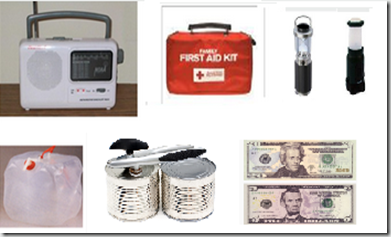
    Basic kit : NWS radio, First Aid Kit, Lanterns, Water & Food & cash  for 3 Days minimum


    Because during any disaster, the advantage goes to those who were already prepared.