Showing posts with label NatlPrep. Show all posts

Thursday, September 17, 2015

#NatlPrep : Tsunami Awareness

image


Credit NOAA


Note: This is day 17  of National Preparedness Month . Follow this year’s campaign on Twitter by searching for the #NatlPrep hash tag.

This month, as part of NPM15, I’ll be rerunning some edited and updated older preparedness essays, along with some new ones.


# 10,531


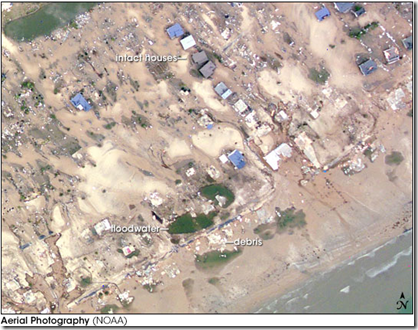
The full extent of the damage from last night’s Chilean 8.3 Quake & Pacific Tsunami Watch has yet to be revealed, but the good news is this quake struck some distance from the highly populated capital of Santiago. Coastal regions near the epicenter have reported tsunami waves as high as 15ft.


While a major tsunami is not expected when the effects reach the Hawaiin islands later this morning (3 am local time), strong currents or small waves dangerous to persons or crafts in or very near the water are possible. There is also an advisory issued for a small section of the California coast.


Although extensive damage beyond Chile is unlikely with this tsunami, it does serve as a warning that all coastal regions of the United States are vulnerable to tsunamis, and that some in the past have been quite destructive.


Primarily thought of as a West Coast, or Pacific Ocean hazard, Tsunamis have also swept across the Atlantic and Caribbean basin as well, something we looked at last spring in The Caribbean’s Hidden Tsunami Potential (Revisited).


In 2013 the USGS released a report detailing the likely West Coast impact of a tsunami generated by a 9.1 Alaskan earthquake – and the numbers are sobering.  From the USGS news release  Experts Team Up on Tsunami Resilience in California:


In this scenario approximately 750,000 people would need to be evacuated, with 90,000 of those being tourists and visitors. Additionally, one-third of the boats in California's marinas could be damaged or completely sunk, resulting in $700 million in losses. It was concluded that neither of California's nuclear power plants would likely be damaged by this particular event.


The study (link) also estimates damage to marinas, businesses and homes range between $3.5 billion and $6 billion, and as many as 8,500 could be left homeless.


An even greater threat lurks along the Cascadia Fault line, which runs parallel to the Pacific Northwest Coastline and has a long history of a producing major earthquakes and tsunamis, the last one in the year 1700. The geological record indicates massive quakes have struck the region at least 7 times over the past 3500 years.

image

Recent publicity in the New Yorker Magazine has raised awareness of this threat and we’ve seen renewed calls for preparedness in the region (see OSU: Pragmatic Action - Not Fatalism - In Order To Survive The `Big One’).   We looked at the threats posed by this particular fault line back in 2011 in Just A Matter Of Time.


While strong earthquakes are the most common cause of tsunami waves, other causes include submarine landslides, meteo-tsunamis generated by anomalous weather events, and rarest of all – tsunamis caused by asteroid impacts.


The mysterious Daytona Beach `rogue wave’ of 1992 -  which was described by witnesses as being between 10 and 18 feet tall - slammed onto a 27 mile stretch of Florida Beaches without warning and smashed hundreds of cars, causing as many as 75 (mostly minor) injuries,  was theorized to have been a meteo-tsunami.


You can access current Tsunami warnings and arrival times at the  Pacific Tsunami Warning Center.

image

As far as what to do before a tsunami threatens, READY.GOV has a Tsunami Awareness Page with helpful hints.


Before a Tsunami

The following are things you can do to protect yourself, your family and your property from the effects of a tsunami:

  • To begin preparing, you should build an emergency kit and make a family communications plan.
    • Talk to everyone in your household about what to do if a tsunami occurs. Create and practice an evacuation plan for your family. Familiarity may save your life. Be able to follow your escape route at night and during inclement weather. You should be able to reach your safe location on foot within 15 minutes. Practicing your plan makes the appropriate response more of a reaction, requiring less thinking during an actual emergency.
    • If the school evacuation plan requires you to pick your children up from school or from another location. Be aware telephone lines during a tsunami watch or warning may be overloaded and routes to and from schools may be jammed.
    • Knowing your community's warning systems and disaster plans, including evacuation routes.
  • Know the height of your street above sea level and the distance of your street from the coast or other high-risk waters. Evacuation orders may be based on these numbers.
  • If you are a tourist, familiarize yourself with local tsunami evacuation protocols. You may be able to safely evacuate to the third floor and higher in reinforced concrete hotel structures.
  • If an earthquake occurs and you are in a coastal area, turn on your radio to learn if there is a tsunami warning.


You’ll find more Tsunami preparedness information on the NOAA TsunamiReady Website:
image


While it may seem unlikely that a tsunami will affect you or your region - this is just one of many potential hazards that may threaten you and your community - and they all require similar preparedness steps.


Knowing your local threats, whether they be tsunamis, forest fires, floods, earthquakes or hurricanes  . . . and then becoming prepared to deal with them, will provide you and your family the best safety insurance available.


Everyone needs an appropriate disaster plan, just as everyone should have a good first aid kit, a `bug-out bag’, and sufficient emergency supplies to last a bare minimum of 72 hours.


For more on  disaster preparedness, I would invite you to visit Ready.gov, FEMA,  or revisit these blogs:

In An Emergency, Who Has Your Back?

An Appropriate Level Of Preparedness

When 72 Hours Isn’t Enough.


Tuesday, September 15, 2015

#NatlPrep: Giving Preparedness A Shot In The Arm

image

Photo Credit PHIL


Note: This is day 15  of National Preparedness Month . Follow this year’s campaign on Twitter by searching for the #NatlPrep hash tag.

This month, as part of NPM15, I’ll be rerunning some edited and updated older preparedness essays, along with some new ones.


# 10,522


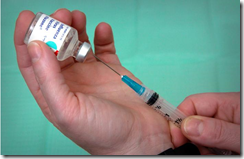
As I do every fall, yesterday I paid a visit to my local pharmacy (in this case, CVS) and got my yearly flu shot, skillfully and painlessly administered by Ibukun, one of their resident pharmacists.  I was in and out in less than 15 minutes, my insurance paid 100% of the cost, and I was quite happy to have crossed one more item off my fall `to do’ list.


This year, I opted to go with the quadrivalent shot.  One that contains 4 flu strains, not the 3 strains included in the traditional trivalent vaccine.  I’ll explain why.


Twice each year (in February for the Northern Hemisphere and September for the Southern Hemisphere), global flu experts meet to decide upon the formulation of the next seasonal flu vaccine.  It’s a dicey proposition, as the viruses in circulation can change radically over a period of months


In addition to picking two influenza A strains (H1N1 & H3N2), experts must also decide which of  two lineages of influenza B virus (Yamagata or Victoria) they believe will dominate the upcoming flu season.


This year, they selected the B/Phuket/3073/2013-like virus for the trivalent vaccine,  which is part of the Yamagata lineage of B viruses.  And so far, that appears to be a pretty good choice.   


But their record of success in picking the `right’ B strain over the years hasn’t exactly been sterling.  Which is why - in 2012 - the FDA approved the first Quadrivalent Flu vaccine; one containing both Victoria and Yamagata lineage B strains (see Two B's Or Not Two B's? That Is the Question).  Since then, the availability of the quadrivalent vaccine each year has increased steadily.


While influenza B doesn’t get as much respect as influenza A, B viruses are nonetheless capable of causing serious illness.  They often become the predominant strain late in the flu season, after influenza A has peaked, which puts even more time between the decision of what lineage to use, and its arrival. 


The past few months we’ve been watching an unusual level of influenza B activity in the Southern Hemisphere (see Dr. Ian Mackay’s  To (type) B or not to (type) B...),  including reports of a rising number of Victoria lineage infections  (see the ECDC’s report from last August Eurosurveillance: B/Victoria Prevalence In Early New South Wales Flu Season).   

In it, they write:  

During the early weeks of the 2015 Australian influenza season, influenza B accounted for 67% (821/1,234) of all positive influenza tests in New South Wales. Of 81 successive influenza B viruses characterised, 33 (41%) were from children aged < 16 years; 23/81 (28%) belonged to the B/Victoria lineage.

This lineage is not contained in the southern hemisphere's 2015 trivalent influenza vaccine. The significant B/Victoria lineage activity in the southern hemisphere suggests that the quadrivalent vaccine should be considered for the northern hemisphere.


Since I’m a bit of a belt and suspenders type guy, this year I’m hedging my bets and going with a vaccine that is formulated to include both B lineages.  


Despite last year’s high profile miss on the H3N2 component (see CDC: Updated Estimated Seasonal Flu Vaccine Effectiveness), most years the flu shot provides a moderate level of protection against catching the flu, and may reduce the severity of your illness even if you are sickened.


You might not have thought about it, but getting your seasonal flu shot each year should really be part of your overall preparedness plan. During a disaster or prolonged emergency you are going to be tired, stressed, and your immune systems likely weakened.


The last thing you need to be dealing with during a crisis is to be sick with the flu on top of it. 


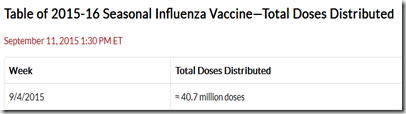
According to the CDC, more than 40 million doses of this year’s flu vaccine have already been distributed, so finding a shot should be no trouble.  


image


September might seem a little early to be getting the flu shot, but we are already seeing scattered reports of influenza around the country, and it takes a couple of weeks after getting the shot for immunity to kick in.  


The CDC recommends getting it earlier, rather than later (see Should I wait to get vaccinated so that my immunity lasts through the end of the season?)


While the vaccine can’t promise 100% protection, it – along with practicing good flu hygiene (washing hands, covering coughs, & staying home if sick) – remains your best strategy for avoiding the flu and staying healthy this winter.

Monday, September 14, 2015

#NatlPrep : One For The Home, And One More For The Road

kit2

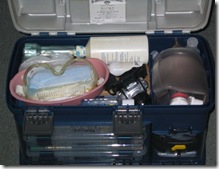
My primary first aid kit. Masks, gloves, goggles, Ambu-bag and flashlights in the top bin.


Note: This is day 14  of National Preparedness Month . Follow this year’s campaign on Twitter by searching for the #NatlPrep hash tag.

This month, as part of NPM15, I’ll be rerunning some edited and updated older preparedness essays, along with some new ones.


# 10,519


Forty-four years ago - when I was a teenager in a sleepy Florida town - I took a 3-night first aid class offered by the American Red Cross, and taught by our local fire chief.  Part of our homework was to put together a `cigar-box’  first aid kit, which we would pledge to carry in our cars, or keep in our home.  


I made two.  One for the home, and one more for the road.


While they weren’t exactly professional quality, and I’ve upgraded many times since, I’ve never lost the habit. The following year I went on to become an EMT, and two years later a paramedic, and  I confess to still feeling a bit naked these many years later without having a decent first aid kit within easy reach.


I’ll admit that owning two ambu-bags borders on the excessive, but I certainly feel better knowing they are there.


Well equipped first aid kits are a necessity in every home, and should also be found in the trunk of every car. While you can purchase a ready-made kit (the quality of which varies depending on price), I’ve always preferred to create my own.


I undoubtedly have a more elaborate kit than most, but perhaps a look inside my auto first aid bag will inspire some of my readers to make one of their own.


The `bag’ is an old style Laptop computer case, with a handle and a shoulder strap.  I like these, because they have numerous compartments, are soft, and are reasonably waterproof.

auto kit 009

On the `trauma’ side of the bag, I’ve got `Kling’ roll bandages, an ACE bandage, a couple of cravat `Triangle’ bandage (sling & swath), sterile 4x4 gauze pads, paper tape, Band-Aids, antibiotic cream and several absorbent feminine pads (they make excellent trauma dressings). 

auto kit 003

On the opposite side, I’ve got an `ambu’ bag-mask resuscitator along with a selection of adult and child airways, a foam C-Collar, a B/P cuff, stethoscope, flashlight, and some ammonia caps – hidden away where you can’t see them are bandage shears, tweezers, and a magnifying glass, along with a spare pair of reading glasses.

auto kit 002

There is also a penlight, a felt tipped pen, and a note pad.

Under the front `cover’ flap, I keep some basic OTC medicines, including aspirin, acetaminophen, some hand antiseptic, and a bulb syringe (can be used for minor suctioning).

auto kit 004

Under the flap on the other side, I’ve got surgical & N95 masks, exam gloves, and a `space’ blanket.

auto kit 005

Of course, having a kit isn’t enough.  You need to know how to use it.


And for that, you need first aid training.  If you haven’t already taken a course, contact your local Red Cross chapter, and find out what is available in your area.   And don’t forget the CPR training (or recertification!) as well.


Whether you buy a ready-made kit, or make your own, now is a good time to make sure you are fully equipped to deal with a medical emergency.


For more information I would invite you to visit:

FEMA http://www.fema.gov/index.shtm

READY.GOV http://www.ready.gov/

AMERICAN RED CROSS http://www.redcross.org/

Friday, September 11, 2015

#NatlPrep – When Evacuation Becomes The Better Part Of Valor

bob 001a

My Bug-out-bag, Canteen, & Toiletry kit


Note: This is day 11  of National Preparedness Month . Follow this year’s campaign on Twitter by searching for the #NatlPrep hash tag.

This month, as part of NPM15, I’ll be rerunning some edited and updated older preparedness essays, along with some new ones.


#10,511


Although I pride myself in having enough basic disaster preparedness supplies to go a week or longer in my home, I live in an area and in a structure that I would have to leave should we get a direct hit from a major hurricane.  It is not a happy thought, but sometimes circumstances and common dictate that you must leave your home - and the bulk of your preps - behind.


Luckily, I have several pre-arranged places I can go.   Friends, who are also disaster buddies (see In An Emergency, Who Has Your Back?), who know my couch is always available to them.


Regular readers know I very nearly had to `bug-out’ three years ago (see At The End Of My Rope), when the world came crashing down in the middle of the night, and fellow blogger Maryn McKenna described her close call from 2013 in The Risks You Don’t Think of: A Plea to Pack a ‘Go Bag’.


The world is an uncertain place, and everything from storm or earthquake damage, to rising flood waters or a house fire, or industrial accidents to terrorism could suddenly force you and your family to evacuate with only minutes notice.   It happens more often – and to more people each year – than you think. 


And it could easily happen to you.


The following photo taken in Crystal Beach after Hurricane Ike in 2008 proves that staying home in the face of a flood, a hurricane, or other natural disaster can have deadly consequences.

image


Being able to leave in a hurry when an evacuation has been ordered means having a plan, a destination, and an emergency `to go’ kit or `BOB’ already equipped, and standing by.


In the vernacular, a `bug-out bag'  or `BOB’  (or sometimes GOOD bag for `Get Out Of Dodge’) a bag of emergency supplies, ideally kept at the ready, that one can grab on the way out the door during an emergency.


Every hurricane season I go through my personal bug out bag, and replace flashlight and radio batteries from last year, and swap out older emergency rations for newer ones.


A BOB isn't supposed to be a survival kit, but rather, is supposed to provide the essentials one might need during the first 72 hours of a forced, and sometimes unexpected, evacuation.


It should contain food, water, any essential prescription medicines, copies of important papers (ID's, insurance, important Phone #s), a first aid kit, portable radio, flashlight, extra batteries, and ideally blankets and extra clothes.


While having to evacuate your home may seem like an unlikely event, every years hundreds of thousands of Americans are forced to do so.  Rivers spill their banks, dams break, brush fires rage out of control, even sudden industrial accidents can force evacuations.


And unlike with a hurricane, you won’t always have advance warning.


Ready.gov has the following advice on how to prepare for an evacuation  


Evacuating Yourself and Your Family

image

There may be conditions under which you will decide to get away or there may be situations when you are ordered to leave. Follow these guidelines for evacuation:

  • Plan places where your family will meet, both within and outside of your immediate neighborhood. Use the Family Emergency Plan to decide these locations before a disaster.
  • If you have a car, keep a full tank of gas in it if an evacuation seems likely. Keep a half tank of gas in it at all times in case of an unexpected need to evacuate. Gas stations may be closed during emergencies and unable to pump gas during power outages. Plan to take one car per family to reduce congestion and delay.
  • Become familiar with alternate routes and other means of transportation out of your area. Choose several destinations in different directions so you have options in an emergency.
  • Leave early enough to avoid being trapped by severe weather.
  • Follow recommended evacuation routes. Do not take shortcuts; they may be blocked.
  • Be alert for road hazards such as washed-out roads or bridges and downed power lines. Do not drive into flooded areas.
  • If you do not have a car, plan how you will leave if you have to. Make arrangements with family, friends or your local government.
  • Take your emergency supply kit unless you have reason to believe it has been contaminated.
  • Listen to a battery-powered radio and follow local evacuation instructions.
  • Take your pets with you, but understand that only service animals may be permitted in public shelters. Plan how you will care for your pets in an emergency.

    Since I live in a hurricane evacuation zone, I have an emergency plan, a pre-arranged place to go, and my evac  kit (see Inside My New Bug Out Bag) packed and ready to go.

    Of course, you’d be hard pressed to put everything for a family of four into one bag.  So each family member should have their own BOB.

    Some items, like the radio, lights, and first aid kit needn’t be duplicated in each bag. 

    I keep my BOB within arm’s reach of my first aid kit, and would hopefully be able to grab both, even in an emergency. 

    image


    On top of this, I keep a spare first aid kit in my car, along with an `overnight bag’, and I have a third duffle bag packed with extra supplies, that I would hopefully be able to throw in the car as well.


    But if I had to, I could easily go 72 hours on just my bug-out bag alone.


    I do these things to give me peace of mind and confidence that I’m ready to deal with just about any emergency that comes my way.


    The truth is, preparing is easy.


    It’s worrying that is hard.

    Thursday, September 10, 2015

    #NatlPrep: Instead Of Cursing The Darkness

    NOAA Radioimage image


    Note: This is day 10 of National Preparedness Month.  Follow this year’s campaign on Twitter by searching for the #NatlPrep hash tag.  This month, as part of NPM15, I’ll be rerunning some updated  preparedness essays, along with some new ones.


    10,507


    Short term power outages affect most of us each year, usually lasting anywhere from a few minutes to a couple of hours.  Longer outages, while less common, are far from rare.  


    • During the summer of 2012, a powerful Derecho swept across the Mid-Atlantic states leaving nearly 4 million people without power, some for several days.
    • Later in 2012, during and after Hurricane Sandy, as many as 8 million residents of New York and New Jersey were without power, some for as long as a week. 
    • During the ice storm of December 2013, hundreds of thousands of Ontarians were without power for several days, and parts of Michigan were hard hit as well.


    Hurricanes, ice storms, Nor’easters, tornados, floods, tornadoes . . .  and even solar storms (see Solar Storms, CMEs & FEMA) are capable of crippling power production and delivery.  Add in our aging infrastructure, and the potential of cyber (or physical) attacks on the system, and the odds of seeing more major power outages only increases.


    It is the job of the North American Electric Reliability Corporation (NERC) to "ensure the reliability of the North American bulk power system", a mandate given to it in 2006 as a result of the 2003 Northeast blackout which affected more than 50 million people in the United States and Ontario, Canada. 


    In  2009, NERC issued a public notice warning that the grid was `vulnerable’ to cyber attack.


    Nearly three years ago, in GridEx 2013 Preparedness Drill, we looked at a major drill mounted by NERC to determine their ability to respond to a full grid-down situation, due to a cyber-attack.  Despite attempts to `harden’ the electrical grid against attacks, the following year Bloomberg News reported:


    U.S. Power Grid Vulnerable to Attack: Congressional Research Service

    A coordinated and simultaneous attack on the nation's electricity grid could have “crippling” effects including widespread extended blackouts and “serious economic and social consequences,” according to a federal report on the physical security of high-voltage transformer substations.


    Without electrical power, water and gasoline doesn’t pump, elevators and air conditioners don’t run, ATM machines and banks close, grocery stores can’t take debit or credit cards, and everything from cooking, to flushing toilets, becomes a major challenge.  Particularly in urban settings.


    Having lived for more than a year `on the hook’ on a sailboat, I understand what its like to be off the grid.  But of course, I’d prepared for that. 


    I had solar panels, kerosene lanterns, battery operated devices, and other work arounds.   It wasn’t luxurious, or even comfortable a good deal of the time, but living aboard a boat in the tropics tends to make up for such things.


    Today, I’ve `swallowed the anchor’, and live on dry land.  But I keep the much of the same gear I had aboard my sailboat, in case the power goes out.  Battery operated radios, LED lanterns (much improved over the old, hot, smelly kerosene lanterns),  a propane camp stove (with extra fuel) . . .  even a small solar panel to recharge batteries.


    If a disaster struck your region today, and the power went out, stores closed their doors, and water stopped flowing from your kitchen tap for the next 7 days  . . .  do you have:

    • A battery operated NWS Emergency Radio to find out what was going on, and to get vital instructions from emergency officials?
    • A decent first-aid kit, so that you can treat injuries?
    • Enough non-perishable food and water on hand to feed and hydrate your family (including pets) for the duration?
    • A way to provide light (and in cold climates, heat) for your family without electricity?   And a way to cook?  And to do this safely?
    • A small supply of cash to use in case credit/debit machines are not working?
    • An emergency plan, including meeting places, emergency out-of-state contact numbers, and in case you must evacuate, a bug-out bag?
    • Spare supply of essential prescription medicines that you or your family may need?

    If your answer is `no’, you have some work to do.  A good place to get started is by visiting Ready.gov.


    Unfortunately, a lot of people make the wrong choices when they do prepare.  They buy candles instead of battery operated lights, they use generators inside their house or garage, or resort to dangerous methods to cook or to heat their homes. 


    As a result, when the power goes out, house fires and carbon monoxide poisonings go up. Each year hundreds of Americans are killed, and thousands affected, by CO poisoning (see In Carbon Monoxide: A Stealthy Killer).


    Food safety after a power outage is another concern, and is something I covered a couple of years ago in USDA: Food Safety When The Power Goes Out.


    While preparedness may seem like a lot of work, it really isn’t.  You don’t need an underground bunker, an armory, or 2 years worth of dehydrated food.  But you do need the basics to carry on for a week or two, and a workable family (or business) emergency/disaster plan.


    For more information on how to prepare, I would invite you  to visit:

    FEMA http://www.fema.gov/index.shtm

    READY.GOV http://www.ready.gov/

    AMERICAN RED CROSS http://www.redcross.org/

    Tuesday, September 08, 2015

    #NatlPrep - The Gift Of Preparedness

     image

    CDC Infographic


    Note: This is day 8 of National Preparedness Month.  Follow this year’s campaign on Twitter by searching for the #NatlPrep hash tag.  This month, as part of NPM15, I’ll be rerunning some updated  preparedness essays, along with some new ones.


    #10,500


    Despite years of campaigns by FEMA, Ready.gov, and the Red Cross to try to get Americans prepared for disasters (see America’s Preparathon! : It Started Like Any Other Day), polling shows that half of American families remain ill prepared to deal with even a 3-day disruption in essential services like electrical power, water, or the ability to run to the grocery store.  


    Those that say they are prepared often overestimate their ability to fend for themselves during a prolonged crisis.


    Which is why, for many years, I’ve given preparedness gifts to family and friends in lieu of the traditional ugly sweater, necktie, or boxed meat and cheese selection for birthdays, anniversaries, or holidays. I first started blogging this concept back in 2007 (see Hickory Farms Will Hate Me For This), and have updated the list every year since then.


    Products mentioned below are to provide a general idea of the type of gift, and should not be viewed as an endorsement of one brand over another. I often find these gifts on sale in discount stores, bargain basements, and flea markets, and stock up whenever I come across a good deal.


    Sometimes I make the gifts myself, as when several years back I put together some first aid kits, and distributed them to a number of friends and relatives. You can either put one together yourself, or purchase one already assembled.  There is no substitute for having a well stocked first aid kit when you need one.

    image


    A couple of years ago I also bought several 5 gal. buckets (with lids) from a home improvement store, along with mylar bags and oxygen absorbers from Amazon, and put together some long-term food storage buckets for friends.  

    image

    Cost per bucket?  About $30.  But enough food to keep two people going for a week or more in an emergency.  


    Anyone who knows me knows that I have a particular interest in (ok, its more of a compulsion to buyLED flashlights and lanterns.  In 2006 I lucked upon a closeout bin of cheap imported `shake flashlights’ for .77 cents each, and bought out the store (40 of them, 38 of which I gave as gifts).

    image

    A couple of years later I ran across a deal on LED headlamps, and bought about 20 of them for $2 apiece.  The following year, I found LED Cap lights (they clip to the bill of a baseball style cap) for $3 each, which I confess I like even better.


    And it seems each year the LED lanterns get lighter, brighter, and cheaper. 


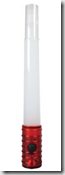
    This year I ran across a display of LED light sticks, with three modes of light, and a built in whistle.  The button batteries promise 200 hrs of running, but even if they last half that, at $3 each they were a bargain.  I bought 5 to test out.  One for my car, one for my bug out bag, and three for stocking stuffers.

    image

    My collection of LED lights continues to grow, and the best part is none of the items pictured below cost me more than $5 each.

    image

    Every home should have a battery operated radio, yet many do not. A few years ago I bought my daughter a combination windup-battery-solar AM/FM/SW radio for under $40, and she uses it every day.  I have larger windup Baygen shortwave radio for my own use, plus several small battery operated radios.

    image

    I also found a combination AM/FM Weather ALERT radio at a discount store for under $20. Again, every home and business should have an emergency alert radio.

    NOAA Radio

    Last year I upgraded my FRS radios from my old Motorola Walkabout T5000s to a pair of Motorola MJ270R 22-Channel Two-Way Radios.  They not only have a built in NOAA Weather Radio, they each have an LED Flashlight as well (nirvana!).

    image

    My old T5000s still work, so they will be handed out to neighbors in the event of a local crisis, to help with neighborhood communications.


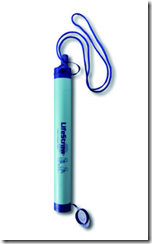
    A couple of years ago  I bought several water filtration systems, one to keep and a couple to give to prepping buddies.  LifeStraw ® is now available in the United States and Canada; at just 2 ounces, this personal water filter will reportedly filter 1000 liters down to .2 microns. Not bad for around $20.

    image

    Speaking of water, having a way to store enough water for three days (1 gal/person/day) is essential. A family of 4 will need at least 12 gallons for 72 hours.   Personally, I keep enough on hand for a couple of weeks.  While there are plenty of `free options’ – like rinsed and recycled 2-liter plastic soda bottles or other food-safe plastic jugs – you can also buy collapsible 5 gallon containers.

    image

    I also picked up a few single burner Propane stove units on sale for $10 each. Add a couple of 1 pound propane cylinders (about $3 each) and you can cook for a week. 

    image

    I also buy a  few magnesium fire starters each year (at $4 each) which will end up as stocking stuffers.

    image


    As I’ve described in  Preparedness: Solar Power On A Budget, it is a relatively easy task to set up a simple solar charging system. No, you won’t keep the A/C or refrigerator running on a budget system, but you can keep your LED lantern batteries, cell phone, iPod or iPad, or notebook computer running.


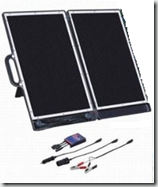
    I’m seeing reasonably priced `briefcase’ solar panels – often for between $50 and $80 – that, when unfolded, can charge a 12 volt storage battery with up to 13 watts of power.  Add a $20 inverter (converts 12 volt battery power to 120v AC), and you can do a heck of a lot.


    If I didn’t already have a couple of more powerful panels left over from my sailboat, I’d seriously consider one of these.

    image

    Typical 13 watt Solar System

    Speaking of inverters, I have a 400 watt unit for my solar setup, but I’ve also just purchased an 80 watt cigarette lighter inverter for my car.  It can power a small laptop, and has a USB charger port as well.  Under $20. A few of these will end up in the stockings of friends this year. .

    image

    And for under $10, you can pick up a cigarette lighter USB charger, that can top off your phone or mobile device.


    Something as simple, and as utilitarian, as a multifunction `Swiss’ army knife or a `Multi-tool’ makes a great preparedness gift.

    swiss knife

    image

    Another inexpensive gift idea that is handy every flu season, and could be even more valuable during an epidemic – is for under $10 you can buy a box of exam gloves, and a box of facemasks.

    image

    Several years ago Joel over at Preparedness and Response came up with what I consider to be an excellent preparedness idea, giving USB flash drives to family and friends and instructions on how to back up their important papers and documents.

    image

    Inexpensive USB Drives start under $10.


    He explains it in  his essay Helping others prepare (Personal Preparedness), where he gives his rationale for going with the durable mil-spec and encrypted, but fairly pricey IronKey brand.


    My thanks to Joel for a terrific idea. 


    These are all useful, indeed, potentially lifesaving items, that most people simply don't think about buying fror themselves until it is too late.


    Giving them as gifts, instead of more traditional items, not only helps prepare the people you love and care about for an emergency, it opens the door for conversations about pandemic and disaster preparedness.


    We need to cultivate a culture of preparedness in this country, and around the world.


    We can start doing that, one gift at a time.

    Tuesday, September 30, 2014

    America’s Preparathon! : It Started Like Any Other Day

    image


    # 9124


    Today marks the end of National Preparedness Month, where FEMA and Ready.gov and a coalition of thousands of others (including AFD) have worked all month to promote better disaster preparedness for Americans.  On twitter the hashtags #NPM14 and #NatlPrep will lead you to find many of these efforts.


    We know – often because we’ve been there – that disasters do strike, and that the advantage goes to the prepared.


    The popularity of Doomsday Preppers on the National Geographic Channel  has a lot of people believing that preppers are all getting set for the impending apocalyptic collapse of society.  But for the vast majority of us who embrace the preparedness lifestyle - it is the far more common localized disaster that spurs us on:


    . .. hurricanes, tornadoes, ice storms, blizzards, earthquakes, floods (and yes, even a pandemic)  . . . along with even more limited emergencies like house fires, car accidents, or personal accident and injury.


    These types of events happen with surprising regularity - and unlike an abrupt 30 degree shift of the earth’s crust or the eruption of the Yellowstone Super Volcano - are something being prepared for is actually likely to help.  The following 4 minute video called `It Started Like Any Other Day’  illustrates three such examples:

    image


    There are many legitimate disaster threats out there – and many can strike without warning -  which is why FEMA, READY.GOV, and many other agencies constantly promote personal, family, and business preparedness.


    As a former paramedic, I can’t stress enough the importance of having a good first aid kit at home, and another one in your car.  And just as importantly, learning how to properly use one.

    image

    Taking a first-aid course, and CPR training, are both investments that could pay off big someday, for you, and for your loved ones. 


    And every home should have no less than a 72-hour supply of emergency food and water, for all of its occupants (including pets!).  This is a bare minimum, here in the United States many agencies and organizations recommend that households work towards having a 10-day supply of food, water, and emergency supplies on hand.


    In When 72 Hours Isn’t Enough, I highlighted  a colorful, easy-to-follow, 100 page `survival guide’ released by Los Angeles County, that covers everything from earthquake and tsunami preparedness, to getting ready for a pandemic.

    image

    While admittedly California-threat specific, this useful guide may be downloaded here (6.5 Mbyte PDF).


    And speaking of California threats, if you live in a seismically active region (and that includes most of the nation) you need to visit Shakeout.org before October 16th to learn how you, your family and your co-workers can take part in this year’s important earthquake drill.

    image


    Although I’ve covered a great many specifics for becoming better prepared (see NPM14: Infrastructure Failure Preparedness & NPM14: When You’ve Got To `Get Out Of Dodge’ In A Hurry), there is one prep I consider to be the most important of all.


    Having – and being – a `disaster buddy’.


    In NPM14: In an Emergency, Who Are You Going To Call?, I wrote about that - A `Disaster Buddy’ is simply someone you have prearranged that you can call on during a crisis, and who in turn, can call on you if they need help.


    Much in the way that community fire departments, EMS, and law enforcement agencies have a `mutual aid’ agreement with nearby communities, you should foster the same kind of arrangement with your friends, family, and neighbors.


    In the parlance of paramedics, cops, firefighters and the military . . .  you have their back, and in return, they have yours.”  Now - before a disaster occurs - is the time to sit down and talk to your friends, family, and neighbors about how you will help one another during a personal or community wide crisis.


    While  National Preparedness Month comes to an end today, the task of becoming better prepared doesn’t end with September – it is a year-round responsibility.  To help you on your way, you can retrieve a list of this year’s NPM blogs by clicking this link.


    And for more  potentially life saving preparedness information, I invite you to visit:

    FEMA http://www.fema.gov/index.shtm

    READY.GOV http://www.ready.gov/

    AMERICAN RED CROSS http://www.redcross.org/

    Wednesday, September 24, 2014

    NPM14: When You’ve Got To `Get Out Of Dodge’ In A Hurry

    bob 001a

    My Bug-out-bag, Canteen, & Toiletry kit

    Note: This is day 24  of National Preparedness Month.  Follow this year’s campaign on Twitter by searching for the #NatlPrep & NPM14 hash tag.

    This month, as part of NPM12, I’ll be rerunning some edited and updated older preparedness essays, along with some new ones.


    # 9007


    There is probably no tougher decision to be made in the face of a disaster than having to evacuate from your home. Home is familiar, home is comfortable, and home is where your processions are.


    So quite understandably, no one wants to leave home during an emergency if they can possibly avoid it. In fact, it can be such a traumatic decision that some people will risk everything to avoid evacuating.


    But the following photo taken in Crystal Beach after Hurricane Ike in 2008 proves that staying home in the face of a flood, a hurricane, or other natural disaster can have deadly consequences.

    image

    Being able to leave in a hurry when an evacuation has been ordered means having a plan, a destination, and an emergency `to go’ kit or `BOB’ already equipped, and standing by.


    In the vernacular, a `bug-out bag'  or `BOB’  (or sometimes GOOD bag for `Get Out Of Dodge’) a bag of emergency supplies, ideally kept at the ready, that one can grab on the way out the door during an emergency.


    Every hurricane season I go through my personal bug out bag, and replace flashlight and radio batteries from last year, and swap out older emergency rations for newer ones.


    A BOB isn't supposed to be a survival kit, but rather, is supposed to provide the essentials one might need during the first 72 hours of a forced, and sometimes unexpected, evacuation.


    It should contain food, water, any essential prescription medicines, copies of important papers (ID's, insurance, important Phone #s), a first aid kit, portable radio, flashlight, extra batteries, and ideally blankets and extra clothes.


    While having to evacuate your home may seem like an unlikely event, every years hundreds of thousands of Americans are forced to do so.  Rivers spill their banks, dams break, brush fires rage out of control, even sudden industrial accidents can force evacuations.


    And unlike with a hurricane, you won’t always have advance warning.


    Ready.gov has the following advice on how to prepare for an evacuation.


    Evacuating Yourself and Your Family

    image

    There may be conditions under which you will decide to get away or there may be situations when you are ordered to leave. Follow these guidelines for evacuation:

    • Plan places where your family will meet, both within and outside of your immediate neighborhood. Use the Family Emergency Plan to decide these locations before a disaster.
    • If you have a car, keep a full tank of gas in it if an evacuation seems likely. Keep a half tank of gas in it at all times in case of an unexpected need to evacuate. Gas stations may be closed during emergencies and unable to pump gas during power outages. Plan to take one car per family to reduce congestion and delay.
    • Become familiar with alternate routes and other means of transportation out of your area. Choose several destinations in different directions so you have options in an emergency.
    • Leave early enough to avoid being trapped by severe weather.
    • Follow recommended evacuation routes. Do not take shortcuts; they may be blocked.
    • Be alert for road hazards such as washed-out roads or bridges and downed power lines. Do not drive into flooded areas.
    • If you do not have a car, plan how you will leave if you have to. Make arrangements with family, friends or your local government.
    • Take your emergency supply kit unless you have reason to believe it has been contaminated.
    • Listen to a battery-powered radio and follow local evacuation instructions.
    • Take your pets with you, but understand that only service animals may be permitted in public shelters. Plan how you will care for your pets in an emergency.

      Since I live in a hurricane evacuation zone, I have an emergency plan, a pre-arranged place to go, and my evac  kit (see Inside My New Bug Out Bag) packed and ready to go.


      Of course, you’d be hard pressed to put everything for a family of four into one bag.  So each family member should have their own BOB.

      Some items, like the radio, lights, and first aid kit needn’t be duplicated in each bag. 


      I keep my BOB within arm’s reach of my first aid kit, and would hopefully be able to grab both, even in an emergency. 

      image


      On top of this, I keep a spare first aid kit in my car, along with an `overnight bag’, and I have a third duffle bag packed with extra supplies, that I would hopefully be able to throw in the car as well.


      But if I had to, I could easily go 72 hours on just my bug-out bag alone.


      I do these things to give me peace of mind and confidence that I’m ready to deal with just about any emergency that comes my way.


      The truth is, preparing is easy.

      It’s worrying that is hard.

      Sunday, September 21, 2014

      NPM14: Giving Preparedness A Shot In The Arm

      image

      Photo Credit PHIL


      Note: September is National Preparedness Month, and this is one of a series of new or updated preparedness articles I will be running for the occasion.


      # 9098


      While it is hard to quantify the absolute risks from any of them, in the nearly 9 years that I’ve been doing this blog, I don’t ever recall seeing as many infectious disease threats on the horizon as I do this fall and winter. 


      In addition to the standard onslaught of seasonal flu (which can vary greatly in intensity each year) and our usual host of winter respiratory viruses (RSV, Adenoviruses, Rhinoviruses), we’ve got a rogue enterovirus sweeping across the nation called EV-D68, affecting mostly (but not solely) kids (see CDC EV-D68 Update & FAQ).

      .

      image


      Another cause of `flu like’ symptoms, but less common than the winter respiratory viruses, are infection via one the vector borne diseases like West Nile Virus, Dengue and Chikungunya. 


      What all of these have in common is that they can initially present as do most viral infections  – like a mild cold or the flu; Fever, malaise, body aches . . . sometimes accompanied by a cough or other respiratory symptoms.


      All of which not only makes getting a firm diagnosis from your doctor (other than you’ve picked up `a virus’ ) problematic, it increases your chances of picking up `something’. 


      Much, much further down the list of things to be worried about (at least in North America) are imported exotics like H7N9, H5N1, and MERS-CoV. 


      Still, they cannot be ruled out completely, as 2 of the 3 have already happened this year (see CDC Statement On 1st H5N1 Case In North America & CDC : 2nd Imported MERS Case Confirmed In Florida), and public health officials continue to watch for additional cases.


      With heightened scrutiny over these imported threats (not to mention Ebola), traveling while symptomatic (fever, cough, vomiting) may prove exceedingly difficult this fall.  Many international airports are screening passengers for fever, and showing up at the terminal with `flu-like symptoms’  just might get you bumped from your flight . . . or worse.


      Making this year – perhaps more than ever before – a good year to go ahead and get that flu shot early.  


      No, the shot won’t protect against any of these exotics.. The vaccine only offers protection against 3 or 4 pre-selected stains of seasonal influenza. Sill, flu is a relatively common severe winter respiratory virus – and claims tens of thousands of lives every year – making it well worth avoiding if at all possible.  


      As we’ve discussed before, flu vaccines – while considered very safe – most years only offer a moderate level of protection against influenza. Their VE (vaccine effectiveness) can vary widely between flu shot recipients, and is often substantially reduced among those older than 65 or with immune problems.


      In 2011, NFID - the National Foundation for Infectious Diseases - convened a group of experts to address the issues of influenza and the elderly. From that panel a 5-page brief has emerged, called: Understanding the Challenges and Opportunities in Protecting Older Adults from Influenza.

      image

      While the elderly generally see less protection from the flu vaccine, they state that older individuals may still mount a robust immune response. Even if the vaccine doesn’t always prevent infection in the elderly, studies suggest that the vaccine may blunt the seriousness of the illness in those over 65.


      You might not have thought about it, but getting your seasonal flu shot each year should be part of your overall preparedness plan. During a disaster or prolonged emergency you are likely to be tired, stressed, and your immune systems could be weakened.


      The last thing you need during a crisis is to be sick with the flu on top of it.


      Which is why I’ve already paid a visit to my local CVS pharmacy and got my yearly seasonal flu shot.  The process (and the shot – nice job, Carol) were painless.


      According to the CDC, more than 50 million doses of this year’s flu vaccine have already been distributed, so finding a shot should be no trouble.

       image


      September might seem a little early to be getting the flu shot, but we are already seeing scattered reports of influenza around the country, and it takes a couple of weeks after getting the shot for immunity to kick in. 


      While the vaccine can’t promise 100% protection, it – along with practicing good flu hygiene (washing hands, covering coughs, & staying home if sick) – remains your best strategy for avoiding the flu (and other viruses) this winter.


      Ready.gov urges all Americans to follow these 3 steps to better preparedness:

      image

      GET A KIT

      MAKE A PLAN

      BE INFORMED

      Sage advice. But if you want to be truly prepared, I would add an important 4th step.

      Get a shot