Showing posts with label ASTMH. Show all posts

Tuesday, April 21, 2015

AJTMH/NIH: The Threat From Fake & Substandard Pharmaceuticals

image


# 9964


A topic we’ve touched on in the past, and coincidentally mentioned last Saturday (see Early Signs Of Artemisinin-Resistant Malaria In Africa), is the proliferation of fake or substandard pharmaceuticals around the globe; everything from antimalarials, to antibiotics, to chemotherapy agents.


Three years ago, in Interpol & FDA: Operation Pangea V, we looked at a consortium of 100 nations engaged in a crackdown on illegal pharmaceutical sales via the Internet. That marked the fifth year that Operation Pangea has been run, and according to Interpol, thousands of illegal websites have been targeted.


Some of these drugs may have none of the promised active ingredients, while others may be less potent than advertised, or are laced with potentially dangerous substitutes or fillers. Often more money is spent trying to duplicate the packaging of a legitimate product, than is spent producing the medicine itself.


And the end result can not only be tragic for the user – but also to society – as using substandard medicines is one of the ways that drug resistant bacteria, viruses, and parasites can be created and spread.


Yesterday the NIH, in concert with the publication of a series of reports in the AJTMH (The American Journal of Tropical Medicine and Hygiene), released the following statement.


For Immediate Release: Monday, April 20, 2015

Global pandemic of fake medicines poses urgent risk, scientists say

Poor quality medicines are a real and urgent threat that could undermine decades of successful efforts to combat HIV/AIDS, malaria and tuberculosis, according to the editors of a collection of journal articles published today. Scientists report up to 41 percent of specimens failed to meet quality standards in global studies of about 17,000 drug samples. Among the collection is an article describing the discovery of falsified and substandard malaria drugs that caused an estimated 122,350 deaths in African children in 2013. Other studies identified poor quality antibiotics, which may harm health and increase antimicrobial resistance. However, new methodologies are being developed to detect problem drugs at the point of purchase and show some promise, scientists say.

Seventeen articles in all, detailing various aspects of the issue and proposing possible solutions, are included in a special journal supplement “The Global Pandemic of Falsified Medicines: Laboratory and Field Innovations and Policy Perspectives,” published online ahead of print by The American Journal of Tropical Medicine and Hygiene. Several articles suggest policy interventions, including an international framework and the adoption of stricter national laws against drug counterfeiting.

“This problem continues to spread globally, creating an even greater challenge to cooperation among stakeholders, many with limited resources,” noted the supplement’s co-editor, Joel Breman, M.D., M.P.H., senior scientist emeritus at the National Institutes of Health’s Fogarty International Center. “The need is urgent for collaboration among those with expertise in policy, science, technology, surveillance, epidemiology and logistics, in order to secure global supply chains.”

<SNIP>

An urgent and coordinated international response is required to address the pandemic of poor quality drugs, the scientists maintain. Policy proposals include a global agreement, similar to the Framework Convention on Tobacco Control External Web Site Policy, and stricter national laws to prosecute those who knowingly sell counterfeit medicines.

In addition to Fogarty, the supplement is sponsored by the Bill and Melinda Gates Foundation and the New Venture Fund.

The individual articles will be published online at: http://www.ajtmh.org/content/early/recent External Web Site Policy

(Continue . . . )


While bogus medicines – devoid of any therapeutic benefit - have been reported around the globe, researchers at the London School of Hygiene & Tropical Medicine analyzed 2,028 antimalarials from Tanzania and Cambodia and found that while as many as  31% were substandard, none sampled were completely fake.


From another related press release (Fake malaria drugs not as common as previously reported) we get the following summations:


Dr Harparkash Kaur from the London School of Hygiene & Tropical Medicine, lead investigator of the drug quality programme of the ACT Consortium, said: "Although there have been alarming reports about the prevalence of fake antimalarials, our study provides ample data showing that the quality of drugs is not so bad based on comprehensive sampling and analysis presented here. This type of study is very cost intensive, both for the purchase and analysis of drugs. The lack of falsified medicines in Cambodia and Tanzania are reassuring, but the presence of substandard medicines is definitely a concern."

Dr Shunmay Yeung from the London School of Hygiene & Tropical Medicine, lead author of the study in Cambodia - one of the epicentres of resistance to artemisinin - said: "Falsified medicines have received much attention globally, but substandard drugs are far more prevalent and of great concern. Not only do they leave patients with malaria undertreated, which could be fatal, but they may also contribute to the development of resistance to ACTs, the most effective drugs for malaria. Generally, the fact that no falsified antimalarials were identified reflects the positive impact of the country's effort to control drug quality."

 
But whether wholly bogus, adulterated, or simply substandard – these counterfeit medications represent a serious threat to global health.


Unless you are buying your prescription drugs from an unscrupulous online pharmacy, Americans are most likely to encounter these fake or substandard medications while traveling to developing countries.  The CDC’s Traveler’s Health website offers the following advice.


Counterfeit Drugs

Bottle of pills

Counterfeit (or fake) medicines are manufactured using incorrect or harmful ingredients. These medicines are then packaged and labeled to look like real brand-name and generic drugs. Counterfeit medicines are unsafe because they may not be effective or may even harm you.

Counterfeiting occurs throughout the world, but it is most common in countries where there are few or no rules about making drugs. An estimated 10%–30% of medicines sold in developing countries are counterfeit. In the industrialized world (countries such as the United States, Australia, Japan, Canada, New Zealand, and those in the European Union), estimates suggest that less than 1% of medicines sold are counterfeit.

The only way to know if a drug is counterfeit is through chemical analysis done in a laboratory. Counterfeit drugs may look strange or be in poor-quality packaging, but they often seem identical to the real thing. The only way to make sure you have the real thing is to bring all the drugs you will need during your trip with you from the United States, rather than buying them while you are traveling.

Pills being manufactured

If an emergency occurs and you must buy drugs during your trip, you can reduce your chances of buying drugs that are counterfeit:

  • Buy medicines only from licensed pharmacies and get a receipt. Do not buy medicines from open markets.
  • Ask the pharmacist whether the drug has the same active ingredient as the one that you were taking.
  • Make sure that the medicine is in its original packaging.
  • Look closely at the packaging. Sometimes poor-quality printing or otherwise strange-looking packaging will indicate a counterfeit product.
  • If you buy drugs online, visit Buying Prescription Medicines Online: A Consumer Safety Guide to learn how to buy safely.

Saturday, November 13, 2010

Haiti: Three Non-Cholera Health Threats


# 5052


While the world’s attention has been (at least briefly) focused on the Cholera epidemic in Haiti, it is worth noting that there are other serious health threats affecting the residents of that beleaguered nation.


I’ve selected three that were around before the cholera outbreak began (but have been greatly exacerbated by last January’s earthquake) to highlight.


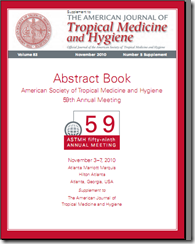
Earlier this week I mentioned the abstract book from this past week’s American Society of Tropical Medicine and Hygiene (ASTMH) 59th Annual Meeting.   A search on the word `Haiti’ produced several studies on serious health problems endemic to that Caribbean nation.


A few excerpts from these abstracts along with some background.   You can find the entire abstract book here.


The first, like cholera, involves a serious diarrhea producing waterborne contaminant; cryptosporidium.


image


Although rarely fatal in healthy individuals, `Crypto’ can be deadly for the very young, the very old, and those with compromised immune systems. Cohorts that are common in Haiti.


The CDC  maintains a large Crypto Information Site.


Occasionally campers, swimmers, or those drawing water from untreated wells will contract Crypto here in the United States.  The largest outbreak occurred in Milwaukee in 1993, when Cryptosporidium entered the public water supply (exactly how, remains a mystery), and sickened 400,000 people and killed more than 100 who were immunocompromised.


Cryptosporidium is chlorine resistant, making it particularly difficult to eliminate from water sources.  The Milwaukee incident has led to increased water testing, and the use of ozone, filters, and other interventions across the nation to help make our water supply safer.


Measures that are pretty much unavailable for most of Haiti.


Crypto is spread via the fecal-oral route, and as the study below indicates, is abundant in water samples taken in Haiti.  


#440  CRYPTOSPORIDIUM CONTAMINATION OF SURFACE AND WATER SUPPLIES IN HAITI

Philippe M. Brasseur, Ketty Balthazard-Accou, Patrice
Agnamey, Evens Emmanuel, Michel Vaillant, Christian Raccurt

Cryptosporidiosis is one of the most frequent causes of diarrhoea in Haiti. Transmission in children less than five years-old, HIV-infected individuals, and people living in low socio-economic conditions is frequently due to consumption of water or food contaminated by Cryptosporidium oocysts.

<SNIP>

In the district of Port-au-Prince, 24/37 (65%) of water samples collected were contaminated by Cryptosporidium oocysts and the number of oocysts per 100L ranged from 4 to 1,274.


In the reservoirs used by people living in peripheral
areas, 10/11 (91%) of samples collected were contaminated with a mean number of 140 oocysts per 100L. In water samples from public standpipes
provided by Camep, the public company of water distribution in Port-au-Prince, 7/13 (54%) were contaminated
.


All surface water 4/4 collected in Port-au-Prince or in peripheral areas was highly contaminated. In Les Cayes 8/15 (53%) samples contained ryptosporidium oocysts and the number detected varied from 5 to 100 (mean 29) / 100 L of water filtered.


In conclusion, a commitment to environmental improvement in Port-au-Prince and in Les Cayes is required to improve the quality of drinking water
and to limit the risk of human transmission of cryptosporidiosis.


Another common tropical parasite, Malaria, is also endemic in Haiti – and with hundreds of thousands of post-earthquake displaced persons living in tents and under tarps, exposure to malaria (Anopheles) mosquitoes has increased.

Once again you’ll find a comprehensive Malaria information site at cdc.gov.


In the wake of the January earthquake, the CDC, Save the Children, and the Ministry of Public Health in Port-au-Prince conducted a malaria surveillance program to determine just how prevalent the infection was among refugees.


# 778 MALARIA SURVEILLANCE IN HAITI, POST-EARTHQUAKE, 2010


David A. Townes, Ribka Amsalu, Roc Magloire, Michelle Chang, Meredith McMorrow, S. Patrick Kachur

<SNIP>


Plasmodium falciparum malaria is endemic in Haiti where the principal vector is the Anopheles albimanus mosquito, which frequently bites outdoors. Thus, displaced persons living outdoors or in temporary shelters in Haiti are at substantial risk for malaria.


We conducted a survey of 1,629 consecutive suspected malaria patients presenting to medical clinics managed by Save the Children in the earthquake affected areas of Leogane and Jacmel from March 4 to April 9, 2010. Suspected malaria accounted for 3.0% of all consultations.


Females accounted for 59% of suspected malaria
consultations. A malaria rapid diagnostic test (RDT) was performed on 96% (1,564/1,629) of these patients with an overall positivity rate of 20.3% (317/1,564).


Among 341 children less than five years of age, 7.6% were RDT positive, 87.7% were RDT negative, and 4.7% had no RDT result recorded.


<SNIP>


Of the 317 patients with a positive RDT, 87.7% received chloroquine, 2.5% received quinine, and 9.8% had no anti-malarial documented.


Malaria is an important public health problem in Haiti post-earthquake with the potential for an increase in cases given the large number of displaced individuals and the onset of the rainy season. Continued malaria surveillance is essential to monitor prevalence, identify areas of potential increased transmission, detect epidemics should they occur, and help direct and monitor interventions and response.


A third surveillance study, again by Save The Children, indicates that ARIs (acute respiratory infections) constitute the most common health threat to children under the age of five in post-earthquake Haiti.


You may recall that earlier this week I highlighted the World Lung Foundation’s Acute Respiratory Infection Atlas, which details the global impact of ARI’s and in particular, childhood pneumonia.


image

Even in 2008, the death rate in children under 5 from pneumonia was more than twice that of neighboring Dominican Republic (72 vs. 33  per 100K).


# 1135  ACUTE RESPIRATORY INFECTION, MAIN CAUSE FOR MORBIDITY FOR CHILDREN 0-5 YEARS OF AGE, IN POST-ARTHQUAKE, HAITI, 2010


Ribka Amsalu Tessera


Save the Children , Wahington, DC, United States

<SNIP>

Disease surveillance is one of the key tasks of the medical team to prioritize health action and determine the occurrence of disease outbreaks. From January 31st  - April 4th, 21 Mobile Medical team of Save the Children  composed of medical doctors, midwife and nurses, had 52,761 consultations in Port-au-Prince and Jacmel, out of which 22% were due to Acute Respiratory Infections (ARIs).


ARI accounted for 48.4% of consultations among children 0-5yr of age, and 12.5% among those over the age of 5yrs. The total consultation due to ARIs was four fold higher than the total number of consultations due to diarrhea and suspected malaria among children 0-5yr of age.


The World Health Organization (WHO), estimates that prior to the earthquake pneumonia accounted for 20% of mortality among children in Haiti, much higher than diarrhea (16%) and malaria (1%).


Crowded leaving conditions, low vaccination coverage, and poor nutritional situation have exacerbated the risk for pneumonia among children in post-earthquake Haiti.


All of this means that once the furor and media attention over the cholera outbreak fades away, Haiti will still face huge public health and humanitarian challenges.


So if you can find a way to help support the relief efforts in Haiti through a donation to one of the reputable NGOs working on the ground there (ie. Red Cross, CARE.ORG, SAVE THE CHILDREN), I’m certain they - and the people of Haiti - will be grateful for your generosity.

Wednesday, November 10, 2010

ASTMH 59th Annual Meeting Abstract Book


# 5043


There was a time when I considered an evening curled up with a good novel by Robert Ludlum, Tom Clancy, or Dale Brown as having been well spent. 


These days, however, you are more likely to find me reading a different kind of techno-thriller . . .  abstracts from infectious disease meeting presentations.


Earlier this year I highlighted the abstract book from the International Conference on Emerging Infectious Diseases (ICEID 2010) conference held last July in Atlanta, Georgia.


Today, once again from Atlanta, we have the abstract book from this past week’s American Society of Tropical Medicine and Hygiene (ASTMH) 59th Annual Meeting.


ASTMH 59th Annual Meeting

November 3-7, 2010
Marriott Atlanta Marquis Hotel
Atlanta, Georgia, USA


Abstracts and Education

Abstract Book


The abstract book is available in electronic format only.  Download these abstract book files before the annual meeting.  The book is provided as one file and as six files, depending on the file size your computer can accommodate.

One File
Full abstract book

Six Files
Abstracts 1 - 231 (pages 1 - 69)
Abstracts 232 - 468 (pages 70 - 140)
Abstracts 469 - 710 (pages 140 - 211)
Abstracts 711 - 945 (pages 211 - 282)
Abstracts 946 - 1189 (pages 283 - 353)
Abstracts 1190 - 1345 and Author Index (pages 354-A425)

image


And here is enough reading to keep even the most devout disease geek engaged for weeks.


In excess of 1300 short abstracts on such diverse subjects as Dengue, Chikungunya, West Nile Virus, Malaria, along with a plethora of additional parasites, bacteria, and viruses to peruse.


I plan to highlight a few of these presentations in the coming days and weeks.


Admittedly, this kind of reading material may not be everybody’s cup of tea, but I wanted to provide my readers with a link to this source before I begin. 

Wednesday, July 28, 2010

ASTMH: Dengue and Insect-Borne EIDs In The US


# 4763


EID’s are Emerging Infectious Diseases, and many are transmitted by mosquitoes and other insect vectors The CDC maintains a website by their DVBID (Division of Vector-Borne Infectious Diseases) that covers many of these emerging pathogens.


DVBID Logo

Bacterial
Diseases Branch

Arboviral
Diseases Branch

Dengue
Branch


Quite a rogues gallery of nasty diseases, many of which are on the comeback trail here in the United States.


We’ve a press release from the American Society of Tropical Medicine and Hygiene (ASTMH) expressing deep concern over proposed budget cuts in the CDC’s Division of Vector-Borne Infectious Diseases.


Dengue Fever and Insect-Borne Infections Emerging as Public Health Problem in Areas of the United States

- Areas of Texas and Florida report recent cases of dengue fever, a virus-based disease spread by mosquitoes -


- The American Society for Tropical Medicine and Hygiene supports continued funding of government programs to detect and control diseases transmitted by insects and ticks, as Obama's 2011 budget threatens to cut funding -


Press Release Source: The American Society of Tropical Medicine and Hygiene On Tuesday July 27, 2010, 2:00 pm EDT

DEERFIELD, Ill., July 27 /PRNewswire/ -- Several cases of dengue fever, a potentially fatal viral disease transmitted by the bite of urban dwelling Aedes aegypti and Aedes albopictus mosquitoes, have recently been reported in the continental United States.  Prevalent in Central America and the Caribbean, dengue fever's most common symptoms include fever, chills, headache, and body aches lasting several days.  The disease's more threatening form, dengue hemorrhagic fever, can cause internal bleeding, loss of blood pressure, and death. Over the past five years, outbreaks of both forms of the disease have been reported in Texas and Florida.


Despite the threat of further introduction of dengue into the mainland United States, as well as the risk of introduction of additional vector-borne diseases, President Obama's 2011 fiscal budget reduces to zero the funding to support the vector-borne infectious disease program at the Centers for Disease Control and Prevention (CDC), the only national program that focuses of detection and outbreak control of vector-borne diseases including dengue, plague, viral encephalitis and Lyme disease.


"At the American Society for Tropical Medicine and Hygiene, we are concerned that the currently proposed 2011 budget would not provide sufficient funding for this important government function.  One in fifty people in the world dies of an illness acquired from an insect bite, and tens of thousands of Americans already fall ill each year from infections transmitted by mosquitoes and ticks.  Insects do not respect state borders, and neither can our national response," said Edward T. Ryan, M.D., President, American Society of Tropical Medicine and Hygiene (ASTMH).  "Although we recognize and applaud the need to constantly scan the Federal budget to identify outdated or unnecessary programs, eliminating the CDC's vector-borne infectious disease program is not one of these areas.  The proposed cuts to this program would be shortsighted, and would harm the health of the American people."

(Continue  . . . .)


While I recognize the need to get some control over the ballooning budget, it seems to me that the CDC should be among the last places to make substantial cuts.