Showing posts with label surveillance. Show all posts

Monday, May 25, 2015

Be Prepared For Surprises (Redux)

image

WHO IHR Infographic


# 10,086


Last February, after a year of unprecedented emergence of new flu subtypes, the remarkable and rapid spread of HPAI H5 viruses to Europe and North America, and several months of Egypt dealing with the worst human H5N1 outbreak in history, the World Health Organization released a blunt assessment called:


Warning signals from the volatile world of influenza viruses

February 2015

The current global influenza situation is characterized by a number of trends that must be closely monitored. These include: an increase in the variety of animal influenza viruses co-circulating and exchanging genetic material, giving rise to novel strains; continuing cases of human H7N9 infections in China; and a recent spurt of human H5N1 cases in Egypt. Changes in the H3N2 seasonal influenza viruses, which have affected the protection conferred by the current vaccine, are also of particular concern.

(Continue . . .)


The entire report is well worth reading, but after warning that H5 viruses were currently the most obvious threat to health, they also advised:

Warning: be prepared for surprises

Though the world is better prepared for the next pandemic than ever before, it remains highly vulnerable, especially to a pandemic that causes severe disease. Nothing about influenza is predictable, including where the next pandemic might emerge and which virus might be responsible. The world was fortunate that the 2009 pandemic was relatively mild, but such good fortune is no precedent.


While the point being made here by the WHO is that we could easily be blindsided by a newly emerged or recently mutated influenza strain, that isn’t the only way we can be caught off guard by another global health emergency.


There is nothing new in the fact that many countries endeavor to `manage’ the release of bad news to their best advantage, but these past six months have seen an noticeable escalation in `strategic reporting’  from two of the hardest hit bird flu regions in the world; Egypt (H5N1) and China (H7N9). 


The size and trajectory of both avian flu outbreaks have been difficult to gauge due to their respective MOH’s decisions to delay, or withhold information.  Neither of which imbues one with a lot of trust regarding what little they do report.


The reporting on MERS cases out of Saudi Arabia, quite frankly, won’t win any awards either.   But at least they do report on a daily basis (most of the time).


And there are a lot of countries from which we hear little or nothing (think: Indonesia, Cambodia, North Korea, etc.) that may or may not be dealing with outbreaks.   While we can always hope that `no news is good news’, experience has often shown otherwise.


Granted,  the WHO, FAO, and other agencies do post outbreak summaries (constrained by whatever information is provided and authorized for release by these reporting countries), but they are often delayed, redacted, or woefully lacking in details (see WHO: A Very Brief H7N9 Update – China).


There are legal requirements for reporting, but the reality is, we are a long way from having any semblance of a working,  global, cohesive disease surveillance system.  


In 2005 the World Health Organization adopted the IHR (International Health Regulations) that – among other things - requires countries to develop mandated surveillance and testing systems, and to report certain disease outbreaks and public health events to WHO.


Although the agreement went into force in 2007, member states had until mid- 2012 to meet core surveillance and response requirements. Most nations failed to meet that deadline, as explained below by the WHO:


A majority of States Parties, however, have requested and obtained a two-year extension to this deadline and, in exceptional circumstances, may be granted an additional extension, not exceeding two years.


That extension – not to exceed two years – expired last summer, but by February of 2014 the writing was already on the wall, and another 2 year extension was authorized (see WHO: IHR & Global Health Security) pushing the deadline  for final implementation of the IHR to 2016.  

A couple of days ago the WHO tweeted:

image


While this year’s WHA has ratified the Committee’s recommendation to extend the deadline to 2016 to all countries that need more time to implement the Regulations, there is already talk of needing another extension. 


I suspect when the phrase `herding cats’  was first coined, it was in reference to getting 190 politically motivated member nations of the World Health Assembly to buckle down and actually complete a common (and badly needed) goal.


Last February’s WHO warning was specifically about the ability of influenza viruses to evolve unpredictably and surprise us.


But the recent lack of transparency in disease reporting from China, Egypt, and elsewhere  - combined with a failure of 2/3rds of the world’s governments to meet the IHR minimum core surveillance and response requirements – means that we have more than a few good additional reasons to heed the caveat:


Be prepared for surprises


Thursday, May 14, 2015

KSA: A Sudden Dearth Of MERS Data

image


UPDATED 05/15/15:  Saudi MOH Coronavirus Website Back Up


# 10,051


For the third day in a row the Saudi MOH Coronavirus website seems to be having problems loading (sometimes slow, sometimes displaying an error), and for the past two days another Saudi website wecanstopthis.com has carried a single, daily graphic (see above) showing the location and number of MERS cases, recoveries, or deaths.


Gone are the daily tables, although one summarizing cases from April 19-25th is posted. Hopefully this is just a temporary `fix’ while they get their main website working again. 


But over the past year we’ve seen an ongoing degradation of the MERS data provided by the Saudi MOH, with fewer and fewer epidemiological details being released in their daily reports.  The promise has been made that we’d see full details in weekly summaries, but those have been disappointing as well.


This trend in delayed and minimal reporting is something that we’ve also seen adopted by China this year with their H7N9 outbreak, and even more strikingly, by the Egyptian MOH with their H5N1 outbreak (see More Than One Way to `Contain An Outbreak’).


While these countries are presumably still providing the requisite information to the World Health Organization under the IHR reporting regulations, a growing lack of transparency – coupled with increased restrictions on what the media can report  – are a lousy recipe for effective global disease surveillance.


I’ll withhold judgment on this latest change in the way MERS is being reported by the Saudi’s until we see if it is permanent change or simply a stop-gap measure while they address their website issues.


But based on the trends of the past year, I’m not terribly hopeful.

Monday, March 16, 2015

Study: Co-Circulating H5, H9, H10 Avian Flu Subtypes In Nanchang, China LBMs

image

How viruses shuffle their genes (reassort)


# 9833


When it comes to the source for the next novel flu virus, nature has a lot of options. 


Last month, in Virology J: Human-like H3N2 Influenza Viruses In Dogs - Guangxi, China, we looked at canine hosted flu viruses and their potential threat to humans, while last year in Keeping Our Eyes On The Prize Pig we looked at the array of swine variant flu viruses (H1N1v, H1N2v, H3N2v) that have sporadically jumped to humans over the past few years. 


In Eurosurveillance: Avian H10N7 Influenza In Harbor Seals and mBio: A Mammalian Adapted H3N8 In Seals, we even looked at the potential for seeing a human flu arise from a marine mammal host.


Cats and bats and horses . . . even camels (see Equine H3N8 In Mongolian Bactrian Camel) . . .  are susceptible to various types of flu viruses – a testament to influenza’s promiscuity and adaptability – and while pretty far down our suspect list, all probably have some possibility of spawning the next novel flu.  


But influenza is first and foremost of avian origin, and has its greatest diversity and incidence in birds - both wild and domesticated – putting them at the top of our watch list.


Over the past several years we’ve watched an explosion in the diversity of highly pathogenic avian flu viruses around the world.  While some of this shift may be due to better testing, surveillance, and reporting  - there seems little doubt that we are seeing a increase in the incidence, variety, and virulence of avian flu viruses.


Of the avian flu viruses we are currently watching with the greatest  concern – H5N1, H5N2, H5N3, H5N6, H5N8, H7N9, H10N8 -  all  share several important features (see Study: Sequence & Phylogenetic Analysis Of Emerging H9N2 influenza Viruses In China):

    • They all first appeared in  Mainland China
    • They all  have come about through viral reassortment in poultry
    • And most telling of all, while their HA and NA genes differ - they all carry the internal genes from the avian H9N2 virus

Today we’ve a study, appearing in the Japanese Journal of Infectious Diseases, that looks at the incidence of avian flu in live bird markets (LBMs) in Nanchang, China in late 2013 and early 2014, immediately following the first human H10N8 case reported in that city (see EID Dispatch: Human Infection with Influenza Virus A(H10N8) From LPMs).

.


Although hampered by a lack of sequencing, and limited to HA testing, this study turned up high levels of infection by H9, H10, and H5 viruses – with a surprisingly high rate of multiple flu infections among poultry. 


First the link, abstract, and some excerpts – after which I’ll return with a bit more:


Coexistence of Avian Influenza Virus H10 and H9 Subtypes among Chickens in Live Poultry Markets during an Outbreak of Human Infection with Novel H10N8 Virus in Nanchang, China

Maohong Hu1), Xiaodan Li2), Xiansheng Ni1), Jingwen Wu1), Rongbao Gao2), Wen Xia1), Dayan Wang2), Fenglan He1), Shengen Chen1), Yangqing Liu1), Shuangli Guo1), Hui Li1), Yuelong Shu2), Jeffrey W. Bethel3), Mingbin Liu1), Justin B. Moore4), Haiying Chen1)

[Advance Publication] Released 2015/03/13

 Full Text PDF [1739K]

Human infections with the novel H10N8 virus have raised concerns about pandemic potential worldwide. We report the results of a cross sectional study on avian influenza virus (AIV) in live poultry markets (LPMs) in Nanchang, China after the first patient case with H10N8 virus was reported in the city. A total of 201 specimens tested positive for AIVs of the 618 samples collected from 24 LPMs in Nanchang from December 2013 to January 2014.

We found that the LPMs were heavily contaminated by AIVs, with H9, H10 and H5 being the predominant subtypes and more than half of the LPMs providing samples positive for H10 subtype. Moreover, the coexistence of different subtypes was common in LPMs. Of the 201 positive samples, 20.9% (42/201) were mixed infections of different HA subtypes of AIVs.

Of the 42 mixed infections, 50% (21/42) were coexistence of H9 and H10 subtypes with or without H5, and were from chicken samples. This indicated that H10N8 virus probably originated from the segment reassortment of H9 and H10 subtypes during the period of emerging of the H10N8 virus.


The entire study is available online. One striking aspect is the shift in the subtypes of viruses detected over what was reported in the same region a decade ago.  This from the study:


A previous study conducted in Nanchang approximately 10 years ago showed that H2, H3, H4 and H9 subtypes, were isolated most frequently from chickens and ducks in LPMs, but no H7 or H10 subtype was isolated (13). The difference of the subtypes revealed the variation of AIVs over time while H9 was continuous existing in the LPMs in Nanchang


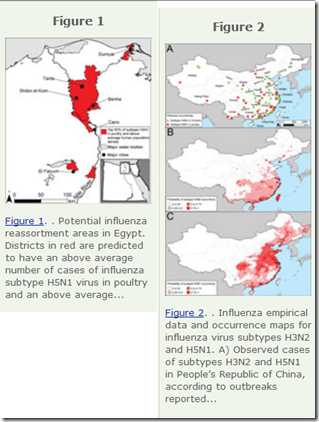
Two years ago – coincidentally, just  two weeks before we learned of the emergence of H7N9 in Eastern China – we looked at a study in the EID Journal: Predicting Hotspots for Influenza Virus Reassortment that found Eastern China to be one of the worlds best breeding grounds for novel flu viruses.


Potential geographic foci of reassortment include the northern plains of India, coastal and central provinces of China, the western Korean Peninsula and southwestern Japan in Asia, and the Nile Delta in Egypt.

image


Interestingly, two of the biggest concerns cited – China and Egypt – are the prime focus of our current bird flu watches, and H5N8 first came to our attention on the western Korean Peninsula just over a year ago.


While it is true that most of this new crop of avian influenza viruses have yet to demonstrate the ability to infect and sicken humans, their growing diversity provides essential viral building blocks from which new, possibility more dangerous, viruses can be constructed. 


You can view a short (3 minute) video from NIAID on reassortment here.


And even viral subtypes that currently don’t easily infect humans can, over time, acquire genetic changes that might eventually change their behavior – either through further reassortment or antigenic drift.  It is this continual evolutionary process - highlighted by the Journal Nature last week (see Nature: Dissemination, Divergence & Establishment of H7N9 In China) – that places H7N9 at or near the top of our pandemic threats list.


While we can’t predict when, from where, or through what HA-NA subtype the next pandemic will arise, what is clear is that we live in an increasingly viral-threat-rich environment, with new flu subtypes emerging over the past couple of years at an accelerated rate.


Which no doubt influenced the World Health Organization  last month when they issued  a statement called Warning signals from the volatile world of influenza viruses  where they cautioned:


Warning: be prepared for surprises


Indeed.

Tuesday, January 13, 2015

EID Journal: Timing of Influenza A(H5N1) in Poultry and Humans Worldwide, 2004–2013

image

Figure 3. Monthly average number of highly pathogenic avian influenza A(H5N1) infection outbreaks among poultry (black line) and human H5N1 cases (white bars) for 8 study countries (Bangladesh, Cambodia, China, Egypt, Indonesia, Thailand, Turkey, and Vietnam) that reported 90% of all poultry H5N1 outbreaks and 97% of all human H5N1 cases during 2004–2013.


# 9569


While it will come as no surprise that they found the incidence of H5N1 infection – both in poultry and people – peaks during the months of January–March, there’s more to the synopsis which appeared yesterday in the CDC’s EID Journal on H5N1 activity over the past decade.


First, a link and the abstract, along with a few snippets from the discussion section (bolding mine) of this detailed, well-timed report, then I’ll return with more.


Volume 21, Number 2—February 2015
Synopsis

Timing of Influenza A(H5N1) in Poultry and Humans and Seasonal Influenza Activity Worldwide, 2004–2013

Lizette O. Durand, Patrick Glew, Diane Gross, Matthew Kasper, Susan Trock, Inkyu K. Kim, Joseph S. Bresee, Ruben Donis, Timothy M. Uyeki, Marc-Alain Widdowson, and Eduardo Azziz-BaumgartnerComments to Author

 Abstract

Co-circulation of influenza A(H5N1) and seasonal influenza viruses among humans and animals could lead to co-infections, reassortment, and emergence of novel viruses with pandemic potential.

We assessed the timing of subtype H5N1 outbreaks among poultry, human H5N1 cases, and human seasonal influenza in 8 countries that reported 97% of all human H5N1 cases and 90% of all poultry H5N1 outbreaks. In these countries, most outbreaks among poultry (7,001/11,331, 62%) and half of human cases (313/625, 50%) occurred during January–March.

Human H5N1 cases occurred in 167 (45%) of 372 months during which outbreaks among poultry occurred, compared with 59 (10%) of 574 months that had no outbreaks among poultry. Human H5N1 cases also occurred in 59 (22%) of 267 months during seasonal influenza periods. To reduce risk for co-infection, surveillance and control of H5N1 should be enhanced during January–March, when H5N1 outbreaks typically occur and overlap with seasonal influenza virus circulation.

<SNIP>

Discussion

Our study reaffirms that, in Southeast Asia, H5N1 outbreaks among poultry and human H5N1 cases often occur seasonally, during months when temperatures are relatively cool. Even when accounting for H5N1-endemic countries outside Southeast Asia, most (>50%) poultry H5N1 outbreaks and human H5N1 cases of H5N1 infection occurred during January–March.

Our analysis of 2004–2013 data from 8 countries also suggests that lower ambient temperatures are associated with H5N1 outbreaks among poultry, even though half of our data came from tropical countries, where annual temperature variations are often small. These results are similar to those described by Park and Glass, who observed poultry H5N1 outbreaks during 1997–2006 in Southeast Asia and China and concluded that these outbreaks most often occurred during colder months (10). Other studies have found similar associations (5,25,26). A decrease in temperature can make poultry more susceptible to H5N1 because lower ambient temperature can decrease poultry immunity (27–29). Moreover, cold weather may enable prolonged viral survival in the secretions and feces of infected poultry, and anticipation of seasonal holidays (e.g., Chinese New Year) often results in increases in population density of domestic poultry and in trafficking of poultry (27–34).

Human H5N1 cases were almost 5 times more common in months during which poultry H5N1 outbreaks occurred. These findings reaffirm reports that human H5N1 virus infection is typically preceded by exposure to sick or dead poultry (35) and suggest that human and animal health officials in affected countries should explore the effectiveness of education and outreach efforts before and postexposure prophylaxis during anticipated H5N1 epidemic periods. 

Our data also suggest that one fifth of human H5N1 cases occurred in months during which seasonal influenza was epidemic. Concurrent H5N1 and human seasonal influenza activity provides opportunities for humans and other animals (e.g., swine) to become co-infected with these co-circulating viruses and for the viruses to reassort. Reassortment may generate novel influenza A virus strains with the ability to cause sustained human-to-human transmission.

(Continue . . . .)


The final paragraph excerpted above discusses the dangers of having H5N1 co-infecting humans (or other hosts) with an already humanized seasonal flu virus (i.e. H3N2, H1N1). 


image

Reassortment is the mechanism where two different flu viruses infect the same cell simultaneously, and swap genetic material, producing a new, hybrid virus. -  Credit AFD


We know this can happen in the wild, as reassortment in birds and/or swine is the route by which many new subtypes of influenza are created.  It is how the H5N1 virus originally evolved in the 1990s, and how H7N9 abruptly appeared in the spring of 2013. 


Over the past year we’ve seen several additional reassortants of concern: including H5N6, H5N8, and H5N3, H10N8, and based on reports from Taiwan this week, a new H5N2.


We’ve also seen this process (albeit, rarely) in humans. In 2011 an influenza co-infection in Canada led to the creation of a unique hybrid reassorted virus (see Webinar: pH1N1 – H3N2 A Novel Influenza Reassortment), although it was not passed on to anyone else.


Influenza co-infections in humans are rarely documented, but probably occur more frequently than we suppose.  Luckily, the creation of successful reassortant viruses is the exception, not the rule.


In the summer of 2013, in the Lancet: Coinfection With H7N9 & H3N2, we saw the first evidence of co-infection with the newly emerged H7N9 virus and a seasonal flu virus in a human. While last October, in EID Journal: Human Co-Infection with Avian and Seasonal Influenza Viruses, China, we looked at co-infections in 2 patients in Hangzhou, in January 2014. In these cases, no reassortant virus was detected.


While an influenza co-infection leading to the creation of a biologically `fit’, and competitive, novel virus is the viral equivalent of hitting the lottery, when you have a growing number of viral players (H5N1, H7N9, H5N6, H5N8 . . .),  buying huge numbers of tickets (infecting hosts) every week, the chances of hitting the `right’ genetic combination go from being astronomically bad to being reasonably good over the long run.


Which is why we watch H5N1, H7N9, and the bevy of newly emerged avian viruses carefully for any signs that they are playing too well with others.

Thursday, January 08, 2015

Fujian Province Reports 6 H7N9 Cases In December

image

Fujian Province – Credit Wikipedia


# 9545


One of the more encouraging aspects of 2013’s H7N9 epidemic in China was the unprecedented openness on the part of the Chinese government in announcing cases, releasing studies, and keeping the outside world well informed on this newly emerged avian threat.   


It was a dramatic, and praiseworthy change from the tactics employed during the 2003 SARS outbreak, and it was followed in much the same fashion the following winter for the second wave.


But this year, not so much.


We’ve seen a smattering of very brief case reports issued from a few provinces, but rarely with the kind of detail we became used to during the first two waves. Onset dates, routes of likely exposure, and follow up reports have been few and far between.


And quite frankly, there’s been a growing feeling among the newshounds following these reports that we’re not seeing all of the cases reported in a timely fashion.


Supporting this concern, this morning there was a report in the Chinese press that last month – December of 2014 – Fujian Province recorded 6 H7N9 cases. The only one previously announced was on December 3rd (see Fujian Province: 1 H7N9 Case Reported), meaning that we have no details at all on at least 5 cases.


This report from Chinanews.com

Fujian six people infected with H7N9 avian bird flu cold city

At 14:21 on January 8, 2015 Source: China News Network 

Reporters learned from the Fujian Provincial Health Planning Commission last month, the province reported a total of six cases of human infection with the H7N9 bird flu cases and no deaths reported. Health experts said the Planning Commission of Fujian Province, people infected with H7N9 is an acute respiratory infection caused by the H7N9 virus. At present, evidence suggests that exposure to live poultry markets are risk factors for the incidence of human infection with H7N9, carrying the virus in poultry and their droppings, secretions of human infection with H7N9 virus may be the source of infection.


Admittedly, not much of a report.  But Sharon Sanders on FluTrackers has found another confirmation, via a monthly summary of communicable diseases published by the Fujian Provincial Health Department.


Fujian December 2014 notifiable infectious diseases


Published: 2015-01-07 |

December 2014 (at 0:00 on December 1, 2014 to December 31 24), the province reported a total of A and B infectious diseases 11,363 cases and 19 deaths. This month except plague, cholera, SARS, polio, highly pathogenic avian influenza, rabies, Japanese encephalitis, anthrax, epidemic cerebrospinal meningitis, whooping cough, diphtheria, neonatal tetanus, leptospirosis, schistosomiasis no case reports, the rest are being reported. The top five reported incidence of A and B infectious diseases: viral hepatitis, syphilis, tuberculosis, gonorrhea, HIV, accounting for 98.29% of the total incidence; infectious disease deaths reported as: AIDS, tuberculosis. December, the province reported a total of six cases of human infection with the H7N9 cases, no deaths.

December 2014, the province reported a total of 11,036 cases of class C infectious diseases, no deaths. Reported incidence of the top five diseases were: other infectious diarrheal diseases other than cholera, bacillary and amoebic dysentery, typhoid and paratyphoid, foot and mouth disease, influenza, mumps, acute hemorrhagic conjunctivitis, accounting for 99.88% of the total number of class C infectious diseases.

 
While there is no mention on the front page of the Fujian Provincial Health & Family Planning’s website of these cases, yesterday they did feature prominently the following advisory on avoiding H7N9.


Do routine prevention, away from people infected with H7N9

Published: 2015-01-07 | Source: Ministry of Health and Family Planning | Hits:210|

    People infected with H7N9 is an acute respiratory infection caused by the H7N9 virus. At present, evidence suggests that exposure to live poultry markets are risk factors for the incidence of human infection with H7N9, carrying the virus in poultry and their droppings, secretions of human infection with H7N9 virus may be the source of infection. Everyday life, experts say, away from people infected with H7N9, take the following precautions are critical:

   (1) daily life should avoid direct contact with live poultry, birds or their droppings, especially disease (dead) birds; if it has contact Wash hands with soap and water as soon as possible. Children should avoid direct contact with poultry and wild birds. If you find disease (dead) birds, animals, do not deal with on their own, should report the authorities.

   (2) Do not buy live poultry slaughtered on their own, do not touch, do not eat sick (dead) poultry, meat, do not buy without quarantine certificates fresh, live, frozen poultry and their products.

   (3) raw poultry, meat and eggs must be cooked fully cooked.

   (4) attention to food hygiene, food processing, food process, there must be raw and cooked separately to avoid cross contamination, handling raw poultry, meat chopping board, knives and containers can not be used for cooked food; in processing raw poultry After the meat and eggs thoroughly wash their hands.

   (5) a healthy lifestyle is very important for the prevention of this disease. Usually should strengthen physical exercise, plenty of rest, avoid over exertion; no smoking, wash hands, pay attention to personal hygiene, cover your nose and mouth when sneezing or coughing.

   (6) children, the elderly, the infirm and those with chronic diseases should be minimal to crowded public places.

   To wear a mask (7) when the doctor or go to the hospital to visit patients.

   (8) If fever and respiratory symptoms should wear a mask, as soon as possible to medical institutions, and remember to tell your doctor before the onset of whether the travel or contact history with poultry. Should be under the guidance of a doctor for regular treatment and medication. (Committee Propaganda Department)


    While we are always cognizant that surveillance and reporting can only pick up a portion of the actual number of cases, over the past couple of years we’ve come to rely heavily upon the excellent reporting by China’s provinces in providing us a pretty good real-time barometer of their H7N9 epidemic status.


    It would be a great loss if this year should prove any different.

    Thursday, December 04, 2014

    Zhuhai Live Market Surveillance Finds H7N9 In 40% Of Recent Samples

    image

    Credit Wikipedia


    # 9410


    In what is feared could be a harbinger of things to come later this winter, Chinese officials are reporting the findings of environmental testing of poultry stalls at live markets in the prefecture-level coastal city of Zhuhai, in Guangdong province which indicates a rising, and currently high level of H7N9 detection.


    Unlike many of the other avian influenza viruses (H5N1, H5N3, H5N8, etc.), the H7N9 virus generally produces no symptoms in birds, and so it can spread silently throughout poultry populations, often only coming to light when an exposed human becomes infected.


    According to the following statement from the Zhuhai.gov.cn website, the rate of H7N9 detection at live poultry stalls in the city has doubled in recent months – going from about 20% to 40%.


    H7N9 detected outside the city market experts call for managers to further implement the prevention and control system

    2014-12-04


    Buy and live bird markets where live poultry public employees to pay attention, City CDC in communication at the media briefing yesterday: the city's live poultry wholesale markets and farmers markets outside environment has H7N9 virus was detected in some markets virus contamination rate of 40%. Disease control experts have warned that the market managers to further implement the live animal markets, "1110" system, individuals should strengthen protection.

    It is reported that since last winter, the CDC has been working on the external market environment, the city has conducted live animal sampling H7N9 virus, H7N9 virus were found to have been contaminated, the highest contamination rate of 40%, or 40 samples in 16 parts positive, the average pollution rate of 20%. CDC assistant director, director of prevention and control of epidemics Ruan Feng told reporters after entering the winter, poultry and market presence of H7N9 virus might infect people. At present, there have been people in Dongguan infection, given the sampling of the H7N9 virus contamination, Zhuhai risk of sporadic cases is relatively large, the government, market managers, employees and the public attach great importance to guard against.

    CDC Emergency Office director told Ye Zhongwen, Guangdong Province has implemented a live animal markets last year "1110" system, market managers should continue to be implemented, and effectively cleaned and disinfected market 1 week a clean-up, January 1 closed for the night, but in the live poultry market. Live poultry stalls in the main wear masks, gloves, wearing boots, the public is best not to direct contact with live birds, not as fresh map, will buy live poultry house a few days before slaughter.

    CDC Deputy Director Li Yurong, said bird flu is a highly disease mortality, infection route and very clear, from birds to humans, no one infected person, if management from the source, can control this disease appears. At present, Guangzhou, Shenzhen, Foshan, has been in the pilot "centralized slaughtering, cold chain distribution, fresh listing," Li Yurong called Zhuhai this approach should also be implemented as soon as possible, the only way to "cure." (Posted: 珠海特区报)


    This story is getting a lot of coverage in the Chinese press, such as with this report from the Sing Tao Daily.


    The detection rate of H7N9 infection rates by up Zhuhai

    [2014-12-04] 

    Zhuhai City CDC recently include external market environment for sampling the farmers market, live poultry wholesale market found, H7N9 virus detection rate increased from 20 percent in 2014 to around 40 percent in the first half. The center said, which means that the probability of human infection with H7N9 surge. In this regard, the Centre is recommended to promote centralized slaughtering, chilled sales and other measures as soon as possible, in order to check the source of the H7N9.


    According to Zhuhai City CDC introduced since the 2013 H7N9 epidemic, Zhuhai has been in the conduct of monitoring environmental samples for the foreign market. In the recent period of time, H7N9 virus detection rate increased significantly, reaching an average of about 40%. "This ratio is quite high, the chance of human infection with H7N9 means greatly improved, especially in the live bird market practitioners."


    "Nanfang Dushi Bao" reported on December 4, the center said relevant, good personal protection and Health is one thing, but more important is the prevention and control should be carried out from the source.

    Tuesday, September 16, 2014

    USDA IAV-S Surveillance Program Detects Novel H3N1 In US Swine

    image


    # 9081


    While Ebola and MERS have had the bulk of our attention recently, high up on our perennial list of concerns are the non-human influenza viruses that circulate in birds, pigs, horses and even dogs that – with a little evolutionary help – could make the jump to mankind.  


    The 2009 H1N1 virus was one such virus that had bounced around swine farms for years before it jumped species and sparked a pandemic.


    Over the past several years we’ve been watching several swine variant influenza viruses – H3N2v, H1N1v, H1N2v – making tentative jumps into the human population (see Keeping Our Eyes On The Prize Pig) and each summer the CDC issues advice on preventing infection at county and state fairs (see Measures to Minimize Influenza Transmission at Swine Exhibitions, 2014).


    Today, thanks to a report in the National Hog Farmer (picked up by ProMed Mail) we’ve learned of new version of an older swine flu virus – H3N1 – that has recently been detected in at least two states. 


    While swine H3N1 has been known to circulate in pigs for nearly a decade (see EID Journal 2006 article Novel Swine Influenza Virus Subtype H3N1, United States) this latest variant, which has been reported on several occasions since December 2013, differs in that it has picked up the human seasonal H3 HA protein.


    First the email sent out from the USDA to all SIV (swine influenza virus) approved NAHLN (National Animal Health Laboratory Network) labs published by the National Hog Farmer, then I’ll be back with a bit more.


    H3N1 Identified in Swine in Two States

    Sep 11, 2014 Source: USDA Animal and Plant Health Inspection Service, Veterinary Services

    The U.S. Department of Agriculture IAV-S surveillance program has identified several H3N1s in U.S. swine in at least two states since December 2013. Although this is not the first time H3N1s have been detected in swine in the United States, it is a rare occurrence and needs further examination.

    More importantly, two of these H3N1s carry a novel human seasonal HA gene from contemporary human viruses and are distinct from our current swine H3 viruses.

    A review of Genbank data indicates there may be more human-like H3 genes (in either H3N1 or H3N2) circulating in U.S. swine subtypes than what the USDA surveillance data has captured. Potential spread of H3N1 or H3N2 that carries the human-like H3 could have significant impact in swine herds due to poor herd immunity as well as potential public health ramifications. Preliminary findings by the USDA-ARS from testing of one of these H3N1 isolates with the human-like H3 gene in swine indicate the virus is fully virulent, causing typical influenza disease.

    We are sharing this information to alert producers, veterinarians, and National Animal Health Laboratory Network labs of this occurrence. The surveillance program for IAV-S in swine was established to:

    • Monitor the genetic evolution of endemic IAV-S to better understand endemic and emerging influenza virus ecology,
    • Make IAV-S isolates and associated epidemiologic data available for research and analysis, and
    • Select proper isolates for the development of relevant diagnostic reagents, updating diagnostic assays, and vaccine seed stock products in swine.

    The identification of this new human-like H3 in swine subtypes is a key example of how IAV-S surveillance can benefit swine health.

    It is anticipated that additional information about swine subtypes carrying the human-like H3 will be captured through the surveillance system to assist in determining how wide-spread the virus is and whether additional actions may be needed by veterinarians, producers and vaccine manufacturers.

    The USDA’s surveillance program for influenza A in Swine (IAV-S) began in 2009 with the intent of monitoring the 2009 H1N1 pandemic virus in swine. Since that time their surveillance efforts have broadened to include monitoring all types of influenza circulating in pigs, with the primary goal of tracking the evolution of these viruses.


    Since participation is voluntary, and many swine farmers remain reluctant to have their herds tested after the financial beating the industry took in 2009, there are some limitations to this type of surveillance.


    The following report shows that of the three major swine strains tracked, H1N1, H1N2 & H3N2 incidence has far overshadowed H3N1.


    USDA Update on Surveillance for Influenza A Virus in Swine

    image

    USDA IAV-Surveillance

    The following IAV-S surveillance summary data covers data received as of July 1, 2014 and spans November 2009 to June 2014. Note that there can be a monthly time lag in data submission and sequence deposits into GenBank.


    Total samples submitted: 61,060 (99.3% from sick pig submissions to diagnostic laboratories)


    Accessions submitted: 14,899
    Number of positive accessions 5,517
    Accessions subtyped 3,633
    Accessions with viral isolates 3,100
    Number of samples sequenced 2,455
    to GenBank


    While humans have a long history of exposure to seasonal H3N2 flu viruses, research has shown only limited community immunity to earlier swine variant strains (see CIDRAP: Children & Middle-Aged Most Susceptible To H3N2v). 


    It is far to early to know when, or even if, this novel H3N1 will present a significant human disease threat. But with county and State fair season going into high gear, public health officials will no doubt be keeping a close watch to see if any clusters of influenza are reported associated with fair attendance.


    Swine are highly susceptible to a variety of flu viruses (human, swine, avian) - and are viewed as excellent `mixing vessels’, allowing viruses to reassort into new hybrid strains, a topic well covered by Helen Branswell a few years ago in a SciAm article called called Flu Factories.

    Reassortant pig[6]


    Some of my earlier blogs on swine variant influenza include: H3N2v: When Pigs Flu , You Say You Want An Evolution? & The (Swine) Influenza Reassortment Puzzle while last July we looked at J. Virol: Continued Reassortment Of Swine Flu Viruses With Genes From pH1N1 In China


    Monday, July 28, 2014

    MERS: The Price Of Vigilance

    image


    # 8874


    Although there’s been a precipitous drop in the number of MERS cases reported by Saudi Arabia (and other) Middle Eastern nations over the past month, concerns remain that international travelers could carry the virus to other areas of the globe. 


    While not always making headlines, many countries are engaged in testing for the virus among symptomatic travelers coming from the Middle East.  


    Today, we’ve a report from Hong Kong’s CHP on three people being tested (1 has intially tested negative).  Over the past year Hong Kong has tested scores of travelers for MERS, and thus far, all have proved negative. First the report, then I’ll return with more:

    .

    Three suspected cases of MERS

     
    The Centre for Health Protection (CHP) of the Department of Health (DH) is today (July 28) investigating two suspected cases of Middle East Respiratory Syndrome (MERS) affecting a 34-year-old man and a 45-year-old woman, and called on the public to stay alert and maintain good personal, food and environmental hygiene during travel. In addition, the CHP provided an update on the suspected case of MERS notified yesterday (July 27). The 2-year-old boy's respiratory specimen tested negative for MERS Coronavirus (MERS-CoV).


    The first patient is a 34-year-old man with good past health. He travelled from Pakistan to Hong Kong via Dubai yesterday and arrived in Hong Kong today. He has presented with fever and vomiting and was screened to have fever at the Hong Kong International Airport today. He was subsequently transferred to Princess Margaret Hospital for isolation. He is currently in stable condition.


    The second patient is a 45-year-old woman with good past health. She returned to Hong Kong from Paris via Dubai on July 25 and arrived in Hong Kong on July 26. She has presented with fever and diarrhoea since yesterday and was admitted to Princess Margaret Hospital for isolation today. She is currently in stable condition.


    Both patients' respiratory specimens have been collected for laboratory testing by the CHP's Public Health Laboratory Services Branch (PHLSB). Their travel collaterals have remained asymptomatic.


    Regarding the suspected case of MERS notified yesterday, the 2-year-old boy's nasopharyngeal aspirate tested negative for MERS-CoV upon preliminary laboratory testing by the CHP's PHLSB. The patient travelled with his family from Dubai to Hong Kong on July 23. He has presented with fever since July 24 and cough since July 26. He was admitted to Princess Margaret Hospital on July 26 and has been in stable condition. His travel collaterals remain asymptomatic. 

    "We strongly advise travel agents organising tours to the Middle East not to arrange camel rides and activities involving camel contact, which may increase the risk of infection. In addition, travellers are reminded to avoid going to farms, barns or markets with camels, and avoid contact with animals, especially camels, birds, poultry or sick people during travel," a spokesman for the DH said.

    (Continue . . . .)


    The odds are that these cases, like the ones before them, will test negative for the virus.  


    But the truth is, as long as the virus continues to occasionally infect humans in the Middle East, public health officials in Hong Kong – and around the world – must be alert to the possibility that international travelers could be arriving with the virus.


    A little over a week ago, in EID Journal: Respiratory Viruses & Bacteria Among Pilgrims During The 2013 Hajj, we looked at the extraordinarily high percentage of Hajjis (approx. 80%)  who leave Saudi Arabia with some type of respiratory infection.  The vast majority of these respiratory infections were due to either rhinoviruses or influenza, with a smaller number of cases of pneumonia.


    While MERS wasn’t a major factor among religious pilgrims last year, since that time the number of MERS cases in Saudi Arabia has increased five-fold, and any traveler leaving the region who develops respiratory symptoms is urged to be screened for MERS-CoV.


    Whether or not MERS infections surge during the Hajj, public health agencies around the world are going to be taxed by the sheer volume of symptomatic (with `something’) travelers returning from the Middle East this fall.   Most (hopefully, all) will have something mundane, like seasonal influenza or the common cold.


    Hong Kong’s CHP is particularly pragmatic when it comes to the potential for seeing MERS arrive in their jurisdiction.  In their new release, they also advise:


    Early identification of MERS-CoV is important, but not all cases can be detected in a timely manner, especially mild or atypical cases. Health-care workers (HCWs) should maintain vigilance and adhere to strict infection control measures while handling suspected or confirmed cases to reduce the risk of transmission to other patients, HCWs or visitors. Regular education should be provided.


    Travellers returning from the Middle East who develop respiratory symptoms should wear face masks, seek medical attention and report their travel history to the doctor. HCWs should arrange MERS-CoV testing for them. Patients' lower respiratory tract specimens should be tested when possible and repeat testing should be undertaken when clinical and epidemiological clues strongly suggest MERS.


    While having more MERS cases spreading internationally this fall would be a serious public health concern, just the threat of seeing the virus arrive poses a tremendous challenge for public health agencies around the world.


    And this comes at a time when public health funding and staffing in the United States continues to erode (see TFAH report Investing in America’s Health: A State-by-state Look at Public Health Funding & Key Health Facts).


    Even as funding for public health declines, the number of global disease threats only seems to be increasing. 

    To MERS-CoV we can add H5N1, H7N9, Chikungunya, Dengue, Ebola, Lassa Fever,  CCHF, Polio, NDM-1, CRE, XDR-TB  . . .  and of course the one we don’t know about yet . . . Virus X.


    Faced as we are with an ever expanding rogue’s gallery of pathological fliers, the recent cuts in public health spending are all the more difficult to fathom.  And are an economy we could easily come to regret.

    Saturday, July 05, 2014

    EID Journal: Shelter Dogs as Sentinels for Trypanosoma cruzi – Texas

    image

    # 8806


    Chagas disease – caused by infection with Trypanosoma cruzi - is one of five parasitic diseases that have been declared by the CDC as being   important Neglected Parasitic Infections in the United States.  The other four are Cysticercosis, Toxoplasmosis, Toxocariasis, and Trichomoniasis.


    The parasite - Trypanosoma cruzi – is vectored by  an infected triatomine bug (or "kissing bug"), an insect that takes blood meals from both humans and animals.


    Of the estimated 300,000 infected individuals in the United States, nearly all are believed to have acquired the infection in Central or South America, although the type of bug capable of carrying the disease can be found in this country as well. 

    image


    While the CDC reports there are 11 species of triatomine bugs that have been found the southern United States, the risks of contracting Chagas within the United States is considered very low.  The CDC explains:


    In areas of Latin America where human Chagas disease is an important public health problem, the bugs nest in cracks and holes of substandard housing. Because most indoor structures in the United States are built with plastered walls and sealed entryways to prevent insect invasion, triatomine bugs rarely infest indoor areas of houses.


    Across Mexico, Central America, and South America an estimated 8 million people are infected, although most are unaware of their condition.  During the acute phase of their infection many will show no symptoms, but some may experience fever, fatigue, body aches, headache, rash, loss of appetite, diarrhea, and vomiting and a characteristic swelling of the eyelids (Romaña's sign) for a period of a few weeks


    Left untreated, the infection can progress to chronic condition, which the CDC describes as:

    During the chronic phase, the infection may remain silent for decades or even for life. However, some people develop:

    • cardiac complications, which can include an enlarged heart (cardiomyopathy), heart failure, altered heart rate or rhythm, and cardiac arrest (sudden death); and/or
    • intestinal complications, which can include an enlarged esophagus (megaesophagus) or colon (megacolon) and can lead to difficulties with eating or with passing stool.

    The average life-time risk of developing one or more of these complications is about 30%.

    .

    Although primarily vectored by infected triatomine bugs, they infection can also be acquired through:

      • congenital transmission (from a pregnant woman to her baby);
      • blood transfusion;
      • organ transplantation;
      • consumption of uncooked food contaminated with feces from infected bugs; and
      • accidental laboratory exposure.


                Up until recently, there was little concern over contracting Chagas disease from triatomine bugs in the United States, as they were believed to rarely take blood meals from humans.   In 2012, in an EID Journal Dispatch, researchers found that 38% of (an admittedly small sample) of triatomine bugs tested in Arizona and California had fed on human blood. 


                Vector Blood Meals and Chagas Disease Transmission Potential, United States

                Lori Stevens , Patricia L. Dorn, Julia Hobson, Nicholas M. de la Rua, David E. Lucero, John H. Klotz, Justin O. Schmidt, and Stephen A. Klotz
                Abstract

                A high proportion of triatomine insects, vectors for Trypanosoma cruzi trypanosomes, collected in Arizona and California and examined using a novel assay had fed on humans. Other triatomine insects were positive for T. cruzi parasite infection, which indicates that the potential exists for vector transmission of Chagas disease in the United States.


                Last year, in Autochthonous Transmission of Trypanosoma cruzi, Louisiana, the EID Journal reported on a likely local infection with T. cruzi in Louisiana.


                Abstract

                Autochthonous transmission of the Chagas disease parasite, Trypanosoma cruzi, was detected in a patient in rural New Orleans, Louisiana. The patient had positive test results from 2 serologic tests and hemoculture. Fifty-six percent of 18 Triatoma sanguisuga collected from the house of the patient were positive for T. cruzi by PCR.


                The Chagas parasite can be carried by a wide variety of mammalian hosts, including raccoons, opossums, armadillos, foxes, skunks, dogs, wood rats and squirrels, giving it plenty of indigenous hosts to inhabit, waiting to be vectored by a hungry triatomine bug.

                All of which serves as prelude to a new study, just published in the EID Journal, that seeks to use shelter dogs as sentinels for the prevalence of Chagas disease in the United States. 


                Shelter Dogs as Sentinels for Trypanosoma cruzi Transmission across Texas

                Trevor D. Tenney, Rachel Curtis-Robles, Karen F. Snowden, and Sarah A. HamerComments to Author

                Author affiliations: Texas A&M University, College Station, Texas, USA

                Abstract

                Chagas disease, an infection with the parasite Trypanosoma cruzi, is increasingly diagnosed among humans in the southern United States. We assessed exposure of shelter dogs in Texas to T. cruzi; seroprevalence across diverse ecoregions was 8.8%. Canine serosurveillance is a useful tool for public health risk assessment.

                Conclusions

                Shelter dogs had widespread exposure to T. cruzi across 7 ecologic regions in Texas, with a conservative statewide average of 8.8% seroprevalence. The presence of seropositive dogs across all sampled regions, age classes, breed groups, and canine origins suggests that ecologic requirements for parasite transmission to dogs are not constrained to focal areas or particular breed groups. Although the travel histories of dogs in our study are unknown, the presence of antibodies in dogs across all age classes, including young dogs that are less likely to have traveled, suggests local exposure.

                <SNIP>

                Dogs that arrive at shelters, especially stray dogs, are likely to have had increased exposure to the outdoors and vectors and have been shown to have higher exposure to vectorborne pathogens than client-owned dogs that are brought to veterinary clinics (16). Shelter dogs, therefore, provide a sensitive population for assessment of local canine transmission risk, and we suggest that awareness of kissing bugs and Chagas disease risk among citizens and the medical community should be heightened in areas where seropositive dogs are detected.

                (Continue . . .)


                For now, autochthonous transmission of Chagas disease in the United States remains a rare diagnosis, although it is also likely an under-reported disease. With changes to our climate and increased incursion of mankind into areas where wildlife (and triatomine bugs) may carry this parasite, the possibility exists that the number of locally acquired cases will increase in the future.


                Making the development of sentinel surveillance techniques, such as described above, of growing importance.

                Friday, June 20, 2014

                MMWR: West Nile & Other Arboviral Diseases — United States, 2013

                image

                Credit CDC


                # 8765


                As the chart above indicates, even before West Nile arrived in 1999, North America already had a relatively long list of major mosquito-borne encephalopathies to deal with; SLE (St. Louis Encephalitis), EEE (Eastern Equine Encephalitis), WEE (Western Equine Encephalitis), LAC (LaCrosse Virus), and POW (Powassan Encephalitis).


                While the number of human infections each year was relatively low, what we lacked for in patient counts we made up for in variety.  


                To these neuroinvasive (i.e., meningitis, encephalitis, or acute flaccid paralysis producing) arboviruses we can add additional mosquito-borne diseases such as dengue, malaria, and the new threat on the block; Chikungunya. While North America is hardly a hotbed of mosquito borne diseases, they are decidedly less rare today than they were two or three decades ago.


                And given the regular importation of new vector-borne diseases via international travelers, this seems to be a trend likely to continue (see The Global Reach Of Infectious Disease).

                .


                Yesterday the CDC’s MMWR published an update on the 2013 West Nile/Arbovirus season (excluding dengue).  While far from being the worst year we’ve seen (WNV was down by about 50% over 2012), 2013 provided its fair share of arboviral misery. 

                • 2,469 cases of WNV disease
                • 85 cases of La Crosse virus (LACV)
                • 22 cases of Jamestown Canyon virus (JCV
                • 15 cases of Powassan virus (POWV)
                • 8 cases of eastern equine encephalitis virus (EEEV)


                Despite the reputation for Florida and the Southeastern states as being a mosquito haven, those states ranked among the lowest in reports of neuroinvasive WN disease.

                image

                Incidence* of reported cases of West Nile virus neuroinvasive disease, by state — United States, 2013


                It is too soon to know what kind of year 2014 will be for mosquito-borne diseases in North America. With both dengue and chikungunya threatening to make inroads, this year’s mosquito season will be watched closely across the country. In the meantime, some excerpts from last year’s surveillance report below, but follow the link to read it in its entirety.


                West Nile Virus and Other Arboviral Diseases — United States, 2013

                Weekly

                June 20, 2014 / 63(24);521-526

                Nicole P. Lindsey, MS1, Jennifer A. Lehman1, J. Erin Staples, MD1, Marc Fischer, MD1 (Author affiliations at end of text)

                Arthropod-borne viruses (arboviruses) are transmitted to humans primarily through the bites of infected mosquitoes and ticks. West Nile virus (WNV) is the leading cause of domestically acquired arboviral disease in the United States (1). However, several other arboviruses also cause sporadic cases and seasonal outbreaks of neuroinvasive disease (i.e., meningitis, encephalitis, and acute flaccid paralysis) (1). This report summarizes surveillance data reported to CDC in 2013 for WNV and other nationally notifiable arboviruses, excluding dengue. Forty-seven states and the District of Columbia reported 2,469 cases of WNV disease. Of these, 1,267 (51%) were classified as WNV neuroinvasive disease, for a national incidence of 0.40 per 100,000 population. After WNV, the next most commonly reported cause of arboviral disease was La Crosse virus (LACV) (85 cases), followed by Jamestown Canyon virus (JCV) (22), Powassan virus (POWV) (15), and eastern equine encephalitis virus (EEEV) (eight). WNV and other arboviruses continue to cause serious illness in substantial numbers of persons annually. Maintaining surveillance remains important to help direct and promote prevention activities.

                <SNIP>

                Discussion

                In 2013, WNV was the most common cause of neuroinvasive arboviral disease in the United States. However, LACV was the most common cause of neuroinvasive arboviral disease among children. More JCV cases were reported in 2013 than in any previous year and included the first cases reported from eight states. This increase is likely related to the initiation of routine immunoglobulin M testing for JCV at CDC in 2013 and suggests that the incidence of JCV infection in prior years might have been underestimated. EEEV disease, although rare, remained the most severe arboviral disease, with four deaths among eight patients. More than 90% of arboviral disease cases occurred during April–September, emphasizing the importance of focusing public health interventions during this period.

                Reported numbers of arboviral disease cases vary from year to year. Weather (e.g., temperature and precipitation), zoonotic host and vector abundance, and human behavior (e.g., repellent use, outdoor activities, and use of air conditioning or screens in the home) are all factors that can influence when and where outbreaks occur. This complex ecology makes it difficult to predict how many cases of disease might occur in the future and where they will occur. Increased numbers of reported cases and the identification of cases in new locations might reflect actual changes in incidence and epidemiology or increased disease awareness.

                The incidence of WNV neuroinvasive disease declined substantially in 2013 (incidence of 0.40 per 100,000 population) compared with 2012 (0.92 per 100,000 population), when a large multistate outbreak occurred, with incidence nearing the levels observed in 2002 and 2003 (4). However, the incidence in 2013 was similar to that during 2004–2007 (median = 0.43; range = 0.39–0.50) and was higher than that during 2008–2011 (median = 0.18; range: 0.13–0.23) (3–5). WNV activity remained focalized in 2013, with more than half of the neuroinvasive disease cases being reported from just six states.

                The findings in this report are subject to at least two limitations. First, ArboNET is a passive surveillance system that relies on clinicians to consider the diagnosis of an arboviral disease and obtain appropriate diagnostic tests, and on health-care providers and laboratories to report laboratory-confirmed cases to public health authorities. Second, testing and reporting are incomplete, leading to a substantial underestimate of the actual number of cases (6). For example, data from previous studies suggest there are 30–70 nonneuroinvasive disease cases for every reported case of WNV neuroinvasive disease (7–9). Extrapolating from the 1,267 WNV neuroinvasive disease cases reported, an estimated 38,000–88,500 nonneuroinvasive disease cases might have occurred in 2013. However, only 1,202 (1%–3%) were diagnosed and reported.

                Arboviruses continue to cause substantial morbidity in the United States. However, cases occur sporadically, and the epidemiology varies by virus and geographic area. Surveillance is essential to identify outbreaks and guide prevention efforts aimed at reducing the incidence of these diseases. Health-care providers should consider arboviral infections in the differential diagnosis of cases of aseptic meningitis and encephalitis, obtain appropriate specimens for laboratory testing, and promptly report cases to public health authorities (2). Because human vaccines against domestic arboviruses are not available, prevention of arboviral disease depends on community and household efforts to reduce vector populations (e.g., applying insecticides and reducing mosquito breeding sites), personal protective measures to decrease exposure to mosquitoes and ticks (e.g., use of repellents and wearing protective clothing), and screening blood donors.

                Acknowledgment

                ArboNET surveillance coordinators in state and local health departments.

                (Continue . . . )


                Tuesday, June 17, 2014

                Florida Surveillance: Imported Chikungunya, Dengue, Malaria

                image

                Source Florida Arbovirus Surveillance – Week 24


                # 8754


                If you want to gauge the latest fashion trends, you go to Paris.  If you are looking for the latest in bleeding edge technology, you go to Silicon Valley. But if you are interested in monitoring imported mosquito-borne disease threats to the United States, the place to pitch your tent is Florida. 


                With well over 80 million visitors each year, Florida is the top travel destination in the world.  


                And many of those travelers come from places around the world where dengue, malaria, and chikungunya are endemic. Which means that nearly every week, some number of infected travelers unpack their bags in Florida.


                Up until 2009, Florida had kept dengue at bay for  6 decades.  But one (or likely, more) infected international travelers arrived in Key West, and the virus jumped into the local mosquito population (see MMWR: Dengue Fever In Key West).


                Since then, we’ve seen sporadic locally acquired dengue cases in south Florida(see Florida: Dengue Forces Suspension Of Blood Donations In Two Counties), likely due to repeated `reseeding’ of the virus among local mosquito populations.


                The concern is, that the same thing could happen with malaria, or the recently emerged Chikungunya virus, which is now exploding across the Caribbean.


                In 2013, Florida recorded 120 imported cases of Dengue (plus 23 locally acquired cases), 53 imported cases of malaria (0 local cases), and 0 imported cases of Chikungunya.  


                Today, the Florida Department of Health’s weekly Arbovirus surveillance report – Week 24 has come out, and we find – while no locally transmitted cases have been reported – travel associated dengue, malaria, and chikungunya cases continue to rise.


                Over the past week, four new malaria importations, and 17 new Chikungunya importations were reported.


                International Travel-Associated Dengue Fever Cases: Twenty-four cases of dengue with onset in 2014 have been reported in individuals with travel history to a dengue endemic country in the two weeks prior to onset. Countries of origin were: Bolivia, Brazil (2), Caribbean, Cuba (8), Dominican Republic (4), Guadeloupe, Honduras, Puerto Rico (3), Trinidad, and Venezuela (2). Counties reporting cases were: Alachua, Broward (2), Clay, Hillsborough (3), Marion, Miami-Dade (10), Orange, Osceola (3), Pinellas, and Seminole. Four of the cases were reported in non-Florida residents.


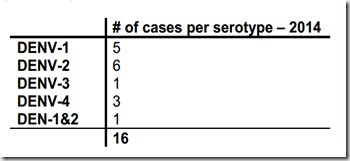
                In 2014, 16 of the 24 cases of dengue reported in Florida have been serotyped by PCR. Additional serotyping and strain typing are being conducted.

                image 

                International Travel-Associated Chikungunya Fever Cases: Forty-two cases of chikungunya with onset in 2014 have been reported in individuals with travel history to a chikungunya endemic country or area experiencing an outbreak in the two weeks prior to onset. Countries of origin were: Dominica, Dominican Republic (8), Haiti (31), and Martinique (2). Counties reporting cases were: Brevard, Broward (7), Charlotte, Clay, Duval (2), Flagler, Hillsborough (3), Lake, Lee, Leon, Miami-Dade (7), Orange (3), Osceola, Palm Beach (7), Pasco, Santa Rosa, Seminole, St. Lucie, and Volusia. Eight of the cases were reported in non-Florida residents.

                International Travel-Associated Malaria Cases:  Eighteen cases of malaria with onset in 2014 have been reported. Countries of origin were: Angola, Dominican Republic, Equatorial New Guinea (2), Ghana, Guatemala, India, Ivory Coast (2), Kenya, Sierra Leone (4), Sudan, Uganda (2), and multiple sub-Saharan African countries (1). Counties reporting cases were: Broward (4), Duval, Escambia, Hernando, Hillsborough (3), Miami-Dade (2), Okaloosa, Orange, Osceola, Palm Beach, Pasco, and Santa Rosa. Two of the cases were reported in non-Florida residents.


                Thirteen cases (72%) were diagnosed with Plasmodium falciparum. Three cases (17%) were diagnosed with Plasmodium vivax.One case (5.5%) was diagnosed with Plasmodium malariae. One case (5.5%) was diagnosed with Plasmodium Ovale.


                The good news is, despite repeated introductions this spring, we’ve not seen any local transmission of these mosquito-borne diseases in Florida. The not-quite-so-good news is our mosquito season is really just getting started.


                While there are no vaccines available for these viruses, these are still largely preventable diseases. Local Health departments urge people to always follow the `5 D’s’ of prevention:

                image