Showing posts with label Antimicrobial Products. Show all posts

Monday, December 16, 2013

FDA Reviewing Safety & Effectiveness Of Antibacterial Soaps

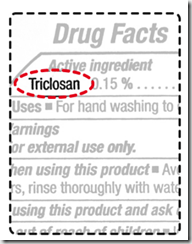
image

Credit FDA


# 8078


A topic we’ve touched on more than a couple of times in the past has been the wisdom of using products containing the antimicrobial ingredient Triclosan (see Study: Bisphenol A, Triclosan and The Hygienic Hypothesis, Referral: Maryn McKenna On Triclosan, Allergies, and The `hygiene hypothesis’).


While evidence is scant, in recent years there have been studies that suggest the daily use of triclosan (in liquid soaps) and triclocarban (in bar soaps) could potentially pose a health hazard, and might foster the development of resistant bacteria.


Today, the FDA has announced a proposed rule that would require manufacturers to demonstrate both the safety and effectiveness of these products, or face relabeling or even removal from the marketplace.


FDA NEWS RELEASE

For Immediate Release: Dec. 16, 2013

Media Inquiries: Andrea Fischer, 301-796-0393, andrea.fischer@fda.hhs.gov

Consumer Inquiries: 888-INFO-FDA

FDA issues proposed rule to determine safety and effectiveness of antibacterial soaps

En EspaƱol

The U.S. Food and Drug Administration today issued a proposed rule to require manufacturers of antibacterial hand soaps and body washes to demonstrate that their products are safe for long-term daily use and more effective than plain soap and water in preventing illness and the spread of certain infections. Under the proposal, if companies do not demonstrate such safety and effectiveness, these products would need to be reformulated or relabeled to remain on the market.


Today’s action is part of a larger, ongoing review of antibacterial active ingredients by the FDA to ensure these ingredients are proven to be safe and effective. This proposed rule does not affect hand sanitizers, wipes, or antibacterial products used in health care settings.


Millions of Americans use antibacterial hand soap and body wash products. Although consumers generally view these products as effective tools to help prevent the spread of germs, there is currently no evidence that they are any more effective at preventing illness than washing with plain soap and water. Further, some data suggest that long-term exposure to certain active ingredients used in antibacterial products—for example, triclosan (liquid soaps) and triclocarban (bar soaps)—could pose health risks, such as bacterial resistance or hormonal effects.


“Antibacterial soaps and body washes are used widely and frequently by consumers in everyday home, work, school, and public settings, where the risk of infection is relatively low,” said Janet Woodcock, M.D., director of the FDA’s Center for Drug Evaluation and Research (CDER). “Due to consumers’ extensive exposure to the ingredients in antibacterial soaps, we believe there should be a clearly demonstrated benefit from using antibacterial soap to balance any potential risk.”


The widespread consumer use of antibacterial products, the accumulated scientific information and concerns raised by health care and consumer groups have prompted the FDA to reevaluate what data are needed to classify the active ingredients in consumer antibacterial products as “generally recognized as safe and effective” or GRASE.  Under the proposed rule, manufacturers who want to continue marketing antibacterial products will be required to provide the agency with additional data on the products’ safety and effectiveness, including data from clinical studies to demonstrate that these products are superior to non-antibacterial soaps in preventing human illness or reducing infection.


“While the FDA continues to collect additional information on antibacterial hand soaps and body washes, we encourage consumers to make an educated choice about what products they choose to use,” said Sandra Kweder, M.D., deputy director, Office of New Drugs at CDER. “Washing with plain soap and running water is one of the most important steps consumers can take to avoid getting sick and to prevent spreading germs to others.”


Consumers should continue to be diligent about washing their hands. If soap and water are not available, an alcohol-based hand sanitizer that contains at least 60 percent alcohol should be used.  More information on appropriate hand washing from the CDC may be found here.


Almost all soaps labeled “antibacterial” or “antimicrobial” contain at least one of the antibacterial ingredients addressed in the proposed rule. The most common active ingredients in antibacterial soaps are triclosan and triclocarban. Some soaps labeled “deodorant” may also contain these ingredients.


The proposed rule does not require the antibacterial soap products to be removed from the market at this time. When the proposed rule is finalized, as previously stated, either companies will have provided data to support an antibacterial claim, or if not, they will have to reformulate (remove antibacterial active ingredients) or relabel (remove the antibacterial claim from the product's labeling) these products in order to continue marketing. The proposed rule is available for public comment for 180 days, with a concurrent one year period for companies to submit new data and information, followed by a 60-day rebuttal comment period.


From the FDA’s Triclosan: What Consumers Should Know 

What consumers should know:
  • Triclosan is not known to be hazardous to humans.
  • FDA does not have sufficient safety evidence to recommend changing consumer use of products that contain triclosan at this time.
  • In light of questions raised by recent animal studies of triclosan, FDA is reviewing all of the available evidence on this ingredient’s safety in consumer products. FDA will communicate the findings of its review to the public in winter 2012.
  • At this time, FDA does not have evidence that triclosan added to antibacterial soaps and body washes provides extra health benefits over soap and water. Consumers concerned about using hand and body soaps with triclosan should wash with regular soap and water.
  • Consumers can check product labels to find out whether products contain triclosan.

Wednesday, August 31, 2011

Study: Hospital Uniforms And Bacteria


image

Photo Credit CDC PHIL 


# 5798


HAIs, or Hospital Acquired Infections, take an incredible toll on patient’s health and our health care system every year. 


According to the HHS, they rank among the top ten leading causes of death in the United States, and accounted for an estimated 1.7 million infections and 99,000 associated deaths in 2002.


While hospitals are constantly working to reduce the incidence of HAIs, it is a daunting task.  We live in a  germy world, and the opportunities to spread bacteria in a healthcare setting are abundant.


Studies have shown that while compliance rates are improving, up to 50% of health care workers in the United States may fail to consistently wash their hands between patients (cite).


This year, the World Health Organization designated May 5th as global  CLEAN YOUR HANDS DAY - to encourage HCWs (Healthcare workers) to improve and sustain hand hygiene practices around the world (see A Movement With Five Moments).


One of the ongoing concerns regarding nosocomial transmission of pathogens has been that lab coats, neckties, and long sleeves might help to spread harmful bacteria from patient to patient in a healthcare facility.


In response, in 2007 the NHS banned the wearing of long-sleeved white coats, wristwatches, and neckties by HCWs in hospital wards, and in 2009 the AMA (American Medical Assoc.) considered a “bare below the elbows” dress code during their annual meeting, but decided the issue needed more study (see Lab Coat Legislation).


The rap against lab coats and neckties has primarily been that they are not usually freshly laundered every day.


One recent study showed that 62% of doctors surveyed waited 2-weeks or longer to launder their coats. 


While that sounds like a bit of a red flag, earlier this year we saw a study (see The Long And The Short Of It) that found no statistical difference between the amount of bacteria of freshly laundered short sleeve uniforms versus infrequently laundered white coats after only 8 hours wear.


And what isn’t known is how well pathogens transfer from contaminated uniforms to the surrounding environment, or on to patients.


Today, another study appears in APIC’s American Journal of Infection Control, that looks at the prevalence of harmful bacteria on uniforms worn in a university-affiliated hospital in Israel.


The areas of each uniform tested were the abdominal zone, sleeves' ends and pockets.


Potentially pathogenic bacteria were isolated from the uniforms of 85 participants (63%) and were detected in half the samples taken.


They found 21 cultures from the nurses uniforms and 6 from physician uniforms grew multi-drug resistant pathogens, including 8 that grew MRSA.


While a bit disconcerting, given the environment in which these uniforms are worn, and previous studies we’ve seen, these results are not all that surprising.


The abstract can be read at:


AJIC: American Journal of Infection Control
Volume 39, Issue 7 , Pages 555-559, September 2011

Nursing and physician attire as possible source of nosocomial infections

Conclusion

Up to 60% of hospital staff’s uniforms are colonized with potentially pathogenic bacteria, including drug-resistant organisms. It remains to be determined whether these bacteria can be transferred to patients and cause clinically relevant infection.


In an Elsevier Health Services Press Release (Doctors' and nurses' hospital uniforms contain dangerous bacteria majority of the time, study shows), APIC President Russell Olmsted, MPH, CIC is quoted as saying:


"It is important to put these study results into perspective. Any clothing that is worn by humans will become contaminated with microorganisms. The cornerstone of infection prevention remains the use of hand hygiene to prevent the movement of microbes from these surfaces to patients.


New evidence such as this study by Dr. Wiener-Well is helpful to improve the understanding of potential sources of contamination but, as is true for many studies, it raises additional questions that need to be investigated."


Last year, according to Infection Control Today, the American Medical Association (AMA)  announced plans to begin formal research on "textile transmission of infections" singling out the "physician's white lab coat as a primary concern associated with textile transmission of infections."


Promising new technologies, including bacteria-resistant fabrics, are being developed in hopes that they will reduce HAIs.


But for now, more research is needed to determine just how much of a role contaminated uniforms really play in the spread of harmful pathogens to patients in the hospital.

Monday, December 06, 2010

Referral: Maryn McKenna On Triclosan, Allergies, and The `hygiene hypothesis’


# 5120


Last week I took a run at writing about a University of Michigan  study that addressed growing concerns over two commonly used chemicals – Triclosan and Bisphenol A (BPA) - and their possible impacts on our immune systems.


Study: Bisphenol A, Triclosan and The Hygienic Hypothesis


Today Maryn McKenna takes a far more in depth look at the use of Triclosan, and at the `hygienic hypothesis’ in her Superbug Blog entry called:


Triclosan, allergies and the “hygiene hypothesis”


Well worth reading.


Monday, November 29, 2010

Study: Bisphenol A, Triclosan and The Hygienic Hypothesis


# 5098


From the University of Michigan today a study that addresses growing concerns over two commonly used chemicals – Triclosan and Bisphenol A (BPA) - and their possible impacts on our immune systems.


The `Hygienic Hypothesis’ is a multi-faceted school of thought that contends that some of the allergies and autoimmune diseases common to modern man come about due to a lack of exposure to certain biological agents (bacteria, viruses, and even parasites)  . . . particularly in early childhood.


Additionally, over the last decade research has increasingly linked the use of household cleaners (bleach, disinfectants, carpet cleaners, etc) and other chemicals (turpentine, insecticides, etc) to childhood onset asthma and allergies (see MedNews Today Asthma in kids linked to household cleaning products and chemicals).


Essentially, the hygienic hypothesis says we may be trying to be `too clean’ for our own good.


First excerpts from the press release to the study - "The Impact of Bisphenol A and Triclosan on Immune Parameters in the U.S. Population," which appears online in Environmental Health Perspectives Nov. 30th, followed by a 4-minute audio interview with EM Clayton, one of the authors of the study.


Allison E. Aiello of the University of Michigan, is the lead researcher on this project. If the name sounds familiar it is because I’ve featured her work in the field of influenza research in the past.

Michigan NPI Study: A Closer Look
Study: Effectiveness of NPIs Against ILI's
Study: NPI's Can Help Prevent Spread Of Flu-Like Illnesses


I’ll follow up with some recent developments in the BPA controversy.


Study suggests that being too clean can make people sick

ANN ARBOR, Mich.---Young people who are overexposed to antibacterial soaps containing triclosan may suffer more allergies, and exposure to higher levels of Bisphenol A among adults may negatively influence the immune system, a new University of Michigan School of Public Health study suggests.


Triclosan is a chemical compound widely used in products such as antibacterial soaps, toothpaste, pens, diaper bags and medical devices. Bisphenol A (BPA) is found in many plastics and, for example, as a protective lining in food cans. Both of these chemicals are in a class of environmental toxicants called endocrine-disrupting compounds (EDCs), which are believed to negatively impact human health by mimicking or affecting hormones.


Using data from the 2003-2006 National Health and Nutrition Examination Survey, U-M researchers compared urinary BPA and triclosan with cytomegalovirus (CMV) antibody levels and diagnosis of allergies or hay fever in a sample of U.S. adults and children over age 6. Allergy and hay fever diagnosis and CMV antibodies were used as two separate markers of immune alterations.


"We found that people over age 18 with higher levels of BPA exposure had higher CMV antibody levels, which suggests their cell-mediated immune system may not be functioning properly," said Erin Rees Clayton, research investigator at the U-M School of Public Health and first author on the paper.


Researchers also found that people age 18 and under with higher levels of triclosan were more likely to report diagnosis of allergies and hay fever.


There is growing concern among the scientific community and consumer groups that these EDCs are dangerous to humans at lower levels than previously thought.

(Continue . . . )


image

(Click to listen)


BPA is used primarily to make plastics, including baby bottles and the liners of some food-grade metal cans, and it has been in common use for more than 50 years. 


In recent years growing concerns over the chemical’s ability to leach synthetic estrogen-like hormones from the plastic into food and liquids has prompted numerous studies.


In 2009 (see US NWR Studies Report More Harmful Effects From BPA) linked it to cardiac arrhythmias and fertility problems in babies whose mothers were exposed to the chemical.


Chemical industry experts, however, disputed these findings and criticized some of the testing methods used.


In November of 2009, the WHO and FAO released a report stating that while some `uncertainties’ existed pertaining to the risk of BPA exposure, that there has been no evidence of adverse affects in humans from exposure to BPA.

image


The debate continued into 2010, when in January the FDA released a document that expressed reservations over the ongoing use of products that utilize BPA (Update on Bisphenol A for Use in Food Contact Applications: January 2010)


A few excerpts from the overview include:


Overview

Bisphenol A (BPA) is an industrial chemical that has been present in many hard plastic bottles and metal-based food and beverage cans since the 1960s.


Studies employing standardized toxicity tests have thus far supported the safety of current low levels of human exposure to BPA.

However, on the basis of results from recent studies using novel approaches to test for subtle effects, both the National Toxicology Program at the National Institutes of Health and FDA have some concern about the potential effects of BPA on the brain, behavior, and prostate gland in fetuses, infants, and young children.

In cooperation with the National Toxicology Program, FDA’s National Center for Toxicological Research is carrying out in-depth studies to answer key questions and clarify uncertainties about the risks of BPA.

In the interim:

  • FDA is taking reasonable steps to reduce human exposure to BPA in the food supply. These steps include:
    • supporting the industry’s actions to stop producing BPA-containing baby bottles and infant feeding cups for the U.S. market;
    • facilitating the development of alternatives to BPA for the linings of infant formula cans; and
    • supporting efforts to replace BPA or minimize BPA levels in other food can linings.


Canada, meanwhile, has declared BPA to be a toxic substance, and is calling for its removal from food packaging and polycarbonate bottles likely to be used by infants (see Globe & Mail Story  Canada first to declare bisphenol A toxic).


Some researchers are urging an even broader ban.


Not all scientists are in agreement over the dangers to human health from the exposure to BPA, however.


Australia and New Zealand’s Food Standards agency (FSANZ), as recently as Nov. of 2010, have stated:

    • FSANZ has evaluated the safety of BPA in food, including that consumed by infants and concluded that levels of intake of BPA are very low and do not pose a significant human health risk for any age group

Last September the European Food Safety Authority (EFSA) published its latest scientific opinion, stating that there is no `convincing evidence’ for it to revise current exposure limits for BPA.


However, just 4 days ago (Nov 25th) it was announced that BPA would be banned from the manufacture of baby bottles starting in 2011 (see Reuters EU to ban Bisphenol A in baby bottles in 2011).


While the evidence against BPA is both sparse and mixed, many researchers point out that it can take years – even decades – to establish an absolute link between any chemical and its long-term health effects.


Meanwhile -as research into the matter proceeds and governments decide how to react - for better or worse, billions of pounds of BPA continue to be used in the manufacturing of plastics each year around the globe.