Showing posts with label HAI. Show all posts

Tuesday, July 22, 2014

Hong Kong: Two Hospital Clusters Of MDR Acinetobacter Infections

image

Credit CDC PHIL


# 8856


Because it is such an international city, and boasts one of the most diligent (and open) public health agencies in the world (Centre For Health Protection), Hong Kong has become a terrific  barometer for the growth of multiple drug resistant infections from around the world.


One of the toughest bacteria that hospitals must deal with is called multidrug-resistant (MDR) Acinetobacter baumannii, which in recent years has made headlines as the cause of difficult to treat wound infections among our troops serving in the Middle East.


Acinetobacter (of which there are many varieties, but A. baumannii is most often linked to human infection ) are ubiquitous in nature, and can be found in soil, water, animals and humans. A very hardy species, they can survive for extended period of time on inanimate surfaces, making them difficult to control in a health care setting (see AJIC report Hospital cleaning protocol ineffective against A. baumannii)..


And like with MRSA, many people can be colonized, but not show signs of infection.  Often very serious infections develop among those who are very ill, wounded, or immunocompromised.


Today Hong Kong’s CHP has published two reports on hospital clusters of MDR  Acinetobacter infection.


Cluster of Multi-drug Resistant Acinetobacter cases in Queen Elizabeth Hospital

The following is issued on behalf of the Hospital Authority:


The spokesperson for Queen Elizabeth Hospital (QEH) made the following announcement today (July 22):


Five male patients (aged 35 to 80) of a Ventilator Ward have been confirmed as having Multi-drug Resistant Acinetobacter (MDRA) since July 14. Two of them are infected cases and are still hospitalised at QEH. The remaining three patients were confirmed to be MDRA carriers without clinical symptoms. Out of these cases, two are still hospitalised under medical surveillance and isolation at QEH. The remaining patient has been transferred to Hong Kong Buddhist Hospital. All of the five patients are in stable condition.

(Continue. . . )

Cluster of Multi-drug Resistant Acinetobacter cases in Caritas Medical Centre

The following is issued on behalf of the Hospital Authority:


     The spokesperson of Caritas Medical Centre made the following announcement today (July 22):


Three patients (aged 37 to 88) of a male Medicine and Geriatrics Ward have been confirmed as having Multi-drug Resistant Acinetobacter (MDRA) since July 17. Two of them are infected cases. The patients are still hospitalised under medical surveillance and isolation. Two of them are in stable condition, while the other one is in serious condition.

(Continue . . .)


Just yesterday, Hong Kong reported a Case of NDM-5 Carbapenemase-producing Enterobacteriaceae under CHP investigation in a 30-year-old woman with a urinary tract infection.  


NDM-5 is a novel variant of the NDM-1 enzyme which first made headlines four years ago when  The Lancet published a study (see NDM-1: A New Acronym To Memorize)  by Walsh, Toleman, Livermore, et al.  on the emergence and growing prevalence of the antibiotic resistant enzyme on the Indian sub-continent.

While still relatively rare – at least in the United States and Europe – this growing rogues gallery of new, multi-drug resistant organisms continues to gain traction around the world, threatening an early demise for much of our current antibiotic arsenal. 


In early 2012 World Health Director-General Margaret Chan expressed a dire warning about our dwindling antibiotic arsenal (see Chan: World Faces A `Post-Antibiotic Era’) – a sentiment echoed a year later by CDC Director Thomas Frieden during the release of a major US report on the threat (see McKenna On CDC Antibiotic Resistance Report).


Dark, if not Inevitable conclusions, backed up by a long list of reports and studies showing the inexorable erosion the effectiveness of our current antibiotics to deal with rapidly evolving bacteria.   Some of these reports I’ve covered in the past include:


EID Journal: Acquisition of Drug Resistant Genes Through International Travel

AAP/CDC: New Guidance On For Antibiotics For Children

The Lancet: Antibiotic Resistance - The Need For Global Solutions

UK CMO: Antimicrobial Resistance Poses `Catastrophic Threat’

MMWR Vital Signs: Carbapenem-Resistant Enterobacteriaceae (CRE)


For a more complete look at the complex issues of antibiotic resistance, and the dearth of new drugs on the horizon, I can think of no resource better than Maryn McKenna’s superb book (and recent winner of the 2013 June Roth Memorial Book Award, American Society of Journalists and Authors) Superbug: The Fatal Menace of MRSA.

Superbug (MRSA) Book

And while I dabble in writing about the issues of antibiotic resistance, undoubtedly the best coverage can be found on Maryn’s Superbug blog.

Thursday, February 27, 2014

Assessment Of Hand Hygiene Strategies In US Healthcare Facilities

image

Credit WHO Hand Hygiene Campaign


# 8332


One hundred and sixty-seven years ago, a Hungarian physician named Ignaz Semmelweis published a controversial medical book called Etiology, Concept and Prophylaxis of Childbed Fever.


Childbed, or puerperal fever, was a major cause of mortality and morbidity among postpartum women, and Semmelweis demonstrated in his Viennese hospital that its incidence could be greatly reduced by having doctors wash their hands before performing gynecological exams.


His theories were considered radical (Pasteur wouldn’t come up with his `germ theory’ for another 17 years), and went against all currently accepted medical science. Besides, it was outrageous to suggest that doctors might actually be causing disease and death among their patients.


Today, while we know the importance of good hand hygiene – both inside and outside of medical settings – each year lapses in good hand cleansing practices lead to hundreds of thousands of avoidable hospital acquired infections (HAI’s) around the world, causing uncounted misery and costing tens of thousands of lives.


Which is the reason that the CDC, the ECDC, and the World Health Organization (among others) have promoted enhanced hand hygiene as the first – and most basic – step in reducing HAIs.  A few of their campaigns I’ve covered in the past include:


Aye, There’s The Rub
Study: Exam Gloves, Dispensers & Bacterial Contamination
Fomite to Fingers To Face: A Triple Play Combination
A Movement With Five Moments
Global Clean Your Hands Day


Although alcohol hand sanitizers are not without their limitations – particularly when dealing with norovirus and C.diff  (see CDC C. Diff FAQ & CMAJ: Hand Sanitizers May Be `Suboptimal’ For Preventing Norovirus) – their speed, availability, and ease of use make them an important part of any health facility's infection control program.


Yet, despite ongoing awareness campaigns, the latest report published in the American Journal of Infection Control indicates that there are still significant lapses in the WHO hand hygiene guidelines, even in the United States.

image


Between April and December 2011  health-care facilities around the world were invited to participate in a Hand hygiene self-assessment framework on the completion of the above Framework. The first analysis of that data (Summary report of the Framework global survey) was released in May of 2012, is available on the WHO website.


Between July and December of 2011, 2238 US facilities participating in the WHO global campaign were invited to complete the Hand Hygiene Self-Assessment Framework online.  Disappointingly, only 168 facilities (7.5%) responded, which limits the conclusions that can be drawn.


First a press release from Columbia University Medical Center, then a link to the study.


One in 5 US hospitals don't put hand sanitizer everywhere needed to prevent infections

Research from WHO and Columbia University School of Nursing

(NEW YORK, NY, February 27, 2014) – Approximately one in five U.S. health facilities don't make alcohol-based hand sanitizer available at every point of care, missing a critical opportunity to prevent health care-associated infections, according to new research from Columbia University School of Nursing and the World Health Organization (WHO) published in the American Journal of Infection Control. The study, which examined compliance with WHO hand hygiene guidelines in the U.S., also found that only about half of the hospitals, ambulatory care, and long-term care facilities had set aside funds in their budgets for hand hygiene training.

A research team jointly led by Laurie Conway, RN, MS, CIC, PhD student at Columbia Nursing, and Benedetta Allegranzi, MD, lead of the WHO infection control program Clean Care is Safer Care, surveyed compliance with WHO hand hygiene guidelines at a sample of 168 facilities in 42 states and Puerto Rico. Overall, 77.5% of facilities reported that alcohol-based sanitizer was continuously available at every point of care, the study found. About one in ten facilities reported that senior leaders such as the chief executive officer, medical director, and director of nursing didn't make a clear commitment to support hand hygiene improvement, according to the study.

"When hospitals don't focus heavily on hand hygiene, that puts patients at unnecessary risk for preventable health care-associated infections," says Conway. "The tone for compliance with infection control guidelines is set at the highest levels of management, and our study also found that executives aren't always doing all that they can to send a clear message that preventing infections is a priority."

(Continue . . . )


The full AJIC report is linked below:


Status of the implementation of the World Health Organization multimodal hand hygiene strategy in United States of America health care facilities

Results

Of 2,238 invited facilities, 168 participated in the survey (7.5%). A detailed analysis of 129, mainly nonteaching public facilities (80.6%), showed that most had an advanced or intermediate level of hand hygiene implementation progress (48.9% and 45.0%, respectively). The total Hand Hygiene Self-Assessment Framework score was 36 points higher for facilities with staffing levels of infection preventionists > 0.75/100 beds than for those with lower ratios (P = .01) and 41 points higher for facilities participating in hand hygiene campaigns (P = .002).

Conclusion

Despite the low response rate, the survey results are unique and allow interesting reflections. Whereas the level of progress of most participating facilities was encouraging, this may reflect reporting bias, ie, better hospitals more likely to report. However, even in respondents, further improvement can be achieved, in particular by embedding hand hygiene in a stronger institutional safety climate and optimizing staffing levels dedicated to infection prevention. These results should encourage the launch of a coordinated national campaign and higher participation in the WHO global campaign.

(Read entire study online . . . )


This oft quoted assessment from the CDC on the burden of Hospital Acquired Infections in the United States is from 2010.

A new report from CDC updates previous estimates of healthcare-associated infections. In American hospitals alone, healthcare-associated infections account for an estimated 1.7 million infections and 99,000 associated deaths each year. Of these infections:

  • 32 percent of all healthcare-associated infection are urinary tract infections
  • 22 percent are surgical site infections
  • 15 percent are pneumonia (lung infections)
  • 14 percent are bloodstream infections


We live in a germ laden world, and you don’t have to work in a hospital or a doctor’s office to be concerned with good hand hygiene. For more on all of this I’d invite you to visit:


http://www.globalhandwashingday.org/


And can also visit the CDC’s hand hygiene website, where you will find many resources, including information on how to complete the Hand Hygiene Self-Assessment Framework.


image

Monday, January 27, 2014

SHEA Infection Control Recommendations On HCW Attire

image

MRSA - Photo Credit CDC PHIL


# 8227

While exotic infectious diseases like bird flu make for fascinating study, in reality you are far more likely to be adversely impacted by an HAI (Hospital Acquired Infection) than you are by  H5N1 or H7N9 right now.  MRSA, Pseudomonas, CRE, NDM-Producing CRKP are just a few of the invasive, and often deadly, bacteria that can spread easily in a healthcare setting.

This oft quoted assessment from the CDC on the burden of Hospital Acquired Infections in the United States is from 2010.


A new report from CDC updates previous estimates of healthcare-associated infections. In American hospitals alone, healthcare-associated infections account for an estimated 1.7 million infections and 99,000 associated deaths each year. Of these infections:

  • 32 percent of all healthcare-associated infection are urinary tract infections
  • 22 percent are surgical site infections
  • 15 percent are pneumonia (lung infections)
  • 14 percent are bloodstream infections


In recent years we’ve looked at a number of infection control programs and policies designed to reduce these infections, including:

Aye, There’s The Rub

Study: Exam Gloves, Dispensers & Bacterial Contamination

NEJM: Targeted vs Universal Decolonization For ICU Patients


While hand hygiene and environmental surface cleaning have been at the forefront of the battle against HAIs, a debate over the impact of HCW (health care worker) attire in the spread of infections has raged, largely unresolved for several years.


Contaminated lab coats, long sleeves, neckties, and jewelry have all come under scrutiny as potential vectors for bacteria, and we’ve seen attempts by both governmental regulation, and hospital policy, to address these concerns.


While `textile transfer’ of bacteria in the healthcare setting makes sense, the scientific evidence linking sleeve cuffs and neckties to actual HAIs is scant, mostly anecdotal, and sometimes even contradictory.


In 2011, a study (see The Long And The Short Of It) found no statistical difference between the amount of bacteria of freshly laundered short sleeve uniforms versus infrequently laundered white coats after only 8 hours wear.


The argument can still be made, however, that long sleeve cuffs (and neckties) are more likely to come in contact with a series of patients than the fabric of short sleeved shirts.


In 2007, Britain’s NHS decided to ban the wearing of long-sleeved white coats, wristwatches, and neckties by healthcare providers in hospital wards. In the United States, the AMA (American Medical Assoc.) considered a “bare below the elbows” dress code during their annual meeting in 2009, but decided the issue needed more study. 


Some healthcare facilities – like the Mayo Clinic – have pushed ahead with their own dress codes to address the issue.  


In 2011, in Lab Coat Legislation, I reported on attempts by the New York State legislature to enact a  `hygienic dress code for medical professionals’ – one that would  eventually prohibit the wearing of jewelry, wristwatches, neckties, long sleeves, and the iconic white lab coat.


Fast forward to 2014, and SHEA (the Society for Healthcare Epidemiology of America) – while acknowledging gaps in our understanding of the role that attire can play in the spread of HAIs -  has released updated recommendations for HCW attire in clinical settings.


For Immediate Release: January 20, 2014
Society for Healthcare Epidemiology of America
Contact: Tamara Moore /
tmoore@gymr.com/ 202-745-5114
Study contact: Gonzalo Bearman MD, MPH/
gbearman@mcvh-vcu.edu

Infectious Diseases Experts Issue Guidance on Healthcare Personnel Attire

Recommendations to help prevent healthcare-associated infections transmitted through clothing

CHICAGO (January 20, 2014) – New guidance from the Society for Healthcare Epidemiology of America (SHEA) provides recommendations to prevent transmission of healthcare-associated infections through healthcare personnel (HCP) attire in non-operating room settings. The guidance was published online in the February issue of Infection Control and Hospital Epidemiology, the journal of the SHEA, along with a review of patient and healthcare provider perceptions of HCP attire and transmission risk, suggesting professionalism may not be contingent on the traditional white coat.

" studies have demonstrated the clothing of healthcare personnel may have a role in transmission of pathogens, the role of clothing in passing infectious pathogens to patients has not yet been well established," said Gonzalo Bearman, MD, MPH, a lead author of the study and member of SHEA's Guidelines Committee. "This document is an effort to analyze the available data, issue reasonable recommendations, define expert consensus, and describe the need for future studies to close the gaps in knowledge on infection prevention as it relates to HCP attire."

The authors outlined the following practices to be considered by individual facilities:

  1. "Bare below the elbows" (BBE): Facilities may consider adopting a BBE approach to inpatient care as a supplemental infection prevention policy; however, an optimal choice of alternate attire, such as scrub uniforms or other short sleeved personal attire, remains undefined. BBE is defined as wearing of short sleeves and no wristwatch, jewelry, or ties during clinical practice.
  2. White Coats: Facilities that mandate or strongly recommend use of a white coat for professional appearance should institute one or more of the following measures:
    1. HCP should have two or more white coats available and have access to a convenient and economical means to launder white coats (e.g. on site institution provided laundering at no cost or low cost).
    2. Institutions should provide coat hooks that would allow HCP to remove their white coat prior to contact with patients or a patient's immediate environment.
  3. Laundering:
    1. Frequency: Optimally, any apparel worn at the bedside that comes in contact with the patient or patient environment should be laundered after daily use.
    2. Home laundering: If HCPs launder apparel at home, a hot water wash cycle (ideally with bleach) followed by a cycle in the dryer or ironing has been shown to eliminate bacteria.
  4. HCP footwear: All footwear should have closed toes, low heels, and non-skid soles.
  5. Shared equipment including stethoscopes should be cleaned between patients.
  6. No general guidance can be made for prohibiting items like lanyards, identification tags and sleeves, cell phones, pagers, and jewelry, but those items that come into direct contact with the patient or environment should be disinfected, replaced, or eliminated.

If implemented, the authors recommend that all practices be voluntary and accompanied by a well-organized communication and education effort directed at both HCP and patients.

In their review of the medical literature, the authors noted that while patients usually prefer formal attire, including a white coat, these preferences had little impact on patient satisfaction and confidence in HCPs. Patients did not tend to perceive the potential infection risks of white coats or other clothing, however when made aware of these risks, patients seemed willing to change their preferences of HCP attire.

The authors developed the recommendations based on limited evidence, theoretical rationale, practical considerations, a survey of SHEA membership and SHEA Research Network, author expert opinion and consensus, and consideration of potential harm where applicable. The SHEA Research Network is a consortium of more than 200 hospitals collaborating on multi-center research projects.

(Continue . . .)

Monday, July 01, 2013

Study: Exam Gloves, Dispensers & Bacterial Contamination

  image

Credit WHO Hand Hygiene Campaign


# 7438


Although individually packaged sterile gloves are recommended for surgery, suturing, or other highly invasive procedures, most of the time clinicians and health care workers (HCWs) will don a pair of non-sterile exam gloves, usually pulled from an open dispenser, when interacting with patients.


Today, we’ve a study appearing in the Australasian Medical Journal – conducted by researchers from New Zealand’s University of Otago that found significant levels of bacterial contamination are introduced into these dispensers over time.


It turns out that poor hand hygiene by hospital staff - combined with the current design of these glove box dispensers – are likely to facilitate the transfer of dangerous bacteria to unused gloves.


World Health Organization (and other) guidelines emphasize the need for good hand hygiene before donning gloves, but compliance among HCWs has historically been low.


image

Source WHO Glove Use Guidance


First a link to the study and some excerpts from the abstract, then I’ll return with a bit more.


Bacterial Contamination of Unused, Disposable Non-sterile Gloves on a Hospital Orthopaedic Ward

Jon Cornwall, Kim Hughes, Jean-Claude Theis, Heather Brooks

Abstract

Background

Non-sterile disposable gloves are used on large hospital wards, however their potential role as a vehicle for pathogen transmission has not been explored in this setting.


<SNIP>

Results

Total bacterial counts ranged from 0 to 9.6 x 10³ cfu/glove. Environmental bacteria, particularly Bacillus species, were present on 31/38 (81.6%) of samples.


Half (19/38) the samples were contaminated with skin commensals; coagulase negative staphylococci were predominant. Enterococcus faecalis, Klebsiella pneumoniae, Pseudomonas sp. or methicillin susceptible Staphylococcus aureus were recovered from 5/38 (13.2%) of samples.


Significantly more skin commensals and pathogens were recovered from samples from days 3, 6, 9 than box-opening samples. Staphylococcus epidermidis and Klebsiella pneumoniae inoculated onto gloves remained viable for several days but counts decreased.

Conclusion

Health-care workers introduced skin commensals and pathogenic bacteria into glove boxes indicating that unused, non-sterile gloves are potential pathogen transmission vehicles in hospitals. Findings highlight adherence to hand-washing guidelines, common glove retrieval practice, and glove-box design as targets for decreasing bacteria transmission via gloves on hospital wards.


From the full text of this study, we get the following summary:


What this study adds:

1. In a hospital ward setting, unused non-sterile disposable gloves (NSDG) may become contaminated with skin commensals and pathogens during the act of glove retrieval.

2. Contaminated NSDG therefore have the potential to act as transmission vehicles for bacteria as demonstrated by these results.

3. Glove box design and glove withdrawal technique could be further examined to decrease the potential for pathogen transfer to unused gloves.


In the fall of 2011 we looked at a study published in Infection Control and Hospital Epidemiology (see A Barrier To Good Hand Hygiene) that found that exam glove use may actually decrease HCW compliance with good hand hygiene practices.


The study, which was conducted at 15 hospitals in the UK, found that hand hygiene compliance – even in this age of heightened awareness of infection control - was `disappointingly low’.


Overall hand hygiene compliance was observed to be just 47.7%, while the use of gloves was associated with a further decrease to just 41%.


Studies have shown that although compliance rates are improving, 50% of health care workers in the United States fail to consistently wash their hands between patients (cite).


For more on the challenge of preventing Hospital Acquired Infections you may wish to visit the CDC’s HAI PAGE.

image


Or revisit some of these earlier blogs on hospital acquired infections.


HPA: Healthcare-Associated Infection (HCAI) Survey
Study: Hospital Uniforms And Bacteria
Study: HAIs, Universal Surveillance, & MRSA

Thursday, May 30, 2013

NEJM: Targeted vs Universal Decolonization For ICU Patients

image 

UPDATED:   Maryn Mckenna – who is Flublogia’s resident expert in all things antimicrobial – has just posted a blog post on this important story on her Superbug Blog.

To Prevent MRSA In Hospitals, Don’t Prevent Only MRSA


# 7341


HCAIs (Health care associated Infections) or HAIs (Hospital acquired infections) constitute a major threat to life, health, and the cost of medical care in this country, and around the world.


This oft quoted assessment from the CDC on the burden of Hospital Acquired Infections in the United States is from 2010.


A new report from CDC updates previous estimates of healthcare-associated infections. In American hospitals alone, healthcare-associated infections account for an estimated 1.7 million infections and 99,000 associated deaths each year. Of these infections:

  • 32 percent of all healthcare-associated infection are urinary tract infections
  • 22 percent are surgical site infections
  • 15 percent are pneumonia (lung infections)
  • 14 percent are bloodstream infections


Since 2008 the Centers for Medicare & Medicaid Services (CMS) have adopted a `no pay’ rule for `preventable infections’, or medical mistakes associated with hospital stays in order to encourage facilities to improve procedures and patient safety.


The problem is that many people entering hospitals are colonized – but not necessarily infected – with bacteria like MRSA. When hospitalized, invasive procedures (needle sticks, catheterization, PICC lines, etc) can turn a benign colonization into a life threatening infection.


And their bacteria can be transferred to other patients, staff, or visitors as well.


We’ve covered HAIs often in this blog, including:


HPA: Healthcare-Associated Infection (HCAI) Survey
A Barrier To Good Hand Hygiene
Study: Hospital Uniforms And Bacteria
Study: HAIs, Universal Surveillance, & MRSA


Today, a look at a large study -involving 74 adult ICUs and 74,256 patients between 2009-2011 – published yesterday in the  NEJM - that compared three HAI prevention strategies for ICU patients.


  1. MRSA screening and isolation of colonized patients;
  2. Targeted decolonization (screening, isolation, & 5 day decolonization regimen of MRSA carriers)
  3. Universal decolonization (decolonization of all patients without screening - ie. twice-daily intranasal mupirocin x 5 days, daily bathing with chlorhexidine-impregnated cloths for the entire stay)


The results showed that bloodstream infections were cut by more than 40% with universal decolonization. The CDC – which was a participant in this study – has the press release below, after which I have a link to the NEJM study itself.


MRSA study: simple steps slash deadly infections in sickest hospital patients

Bloodstream infections cut by more than 40 percent in study of more than 74,000 patients


A new studyExternal Web Site Icon on antibiotic-resistant bacteria in hospitals shows that using germ-killing soap and ointment on all intensive-care unit (ICU) patients can reduce bloodstream infections by up to 44 percent and significantly reduce the presence of methicillin-resistant Staphylococcus aureus (MRSA).  Patients who have MRSA present on their bodies are at increased risk of developing a MRSA infection and can spread the germ to other patients.


Researchers evaluated the effectiveness of three MRSA prevention practices: routine care, providing germ-killing soap and ointment only to patients with MRSA , and providing germ-killing soap and ointment to all ICU patients.   The study found:

  • Routine care did not significantly reduce MRSA or bloodstream infections.
  • Providing germ-killing soap and ointment only to patients with MRSA reduced bloodstream infections by any germ by 23 percent.
  • Providing germ-killing soap and ointment to all ICU patients reduced MRSA by 37 percent and bloodstream infections by any germ by 44 percent.

The study, REDUCE MRSA trial, was published in the New England Journal of Medicine and took place in two stages from 2009-2011. A multidisciplinary team from the University of California, IrvineExternal Web Site Icon, Harvard Pilgrim Health Care InstituteExternal Web Site Icon, Hospital Corporation of AmericaExternal Web Site Icon (HCA) and the Centers for Disease Control and Prevention (CDC) carried out the study.  A total of 74 adult ICUs and 74,256 patients were part of the study, making it the largest study on this topic to date.


You can read the NEJM Editorial on REDUCE MRSA Trial, and the study at the link below.

Targeted versus Universal Decolonization to Prevent ICU Infection

Susan S. Huang, M.D., M.P.H., Edward Septimus, M.D., Ken Kleinman, Sc.D., Julia Moody, M.S., Jason Hickok, M.B.A., R.N., Taliser R. Avery, M.S., Julie Lankiewicz, M.P.H., Adrijana Gombosev, B.S., Leah Terpstra, B.A., Fallon Hartford, M.S., Mary K. Hayden, M.D., John A. Jernigan, M.D., Robert A. Weinstein, M.D., Victoria J. Fraser, M.D., Katherine Haffenreffer, B.S., Eric Cui, B.S., Rebecca E. Kaganov, B.A., Karen Lolans, B.S., Jonathan B. Perlin, M.D., Ph.D., and Richard Platt, M.D. for the CDC Prevention Epicenters Programthe AHRQ DECIDE Network and Healthcare-Associated Infections Program

May 29, 2013DOI: 10.1056/NEJMoa1207290

Full Text of Results...

Conclusions

In routine ICU practice, universal decolonization was more effective than targeted decolonization or screening and isolation in reducing rates of MRSA clinical isolates and bloodstream infection from any pathogen. (Funded by the Agency for Healthcare Research and the Centers for Disease Control and Prevention; REDUCE MRSA ClinicalTrials.gov number, NCT00980980.)


It is an impressive result, and reduced not only MRSA, but bloodstream infections by any pathogen. It may very well affect the way ICU admissions are handled in the future.


One caveat from the authors was that extensive use of these antimicrobials could eventually lead to bacteria developing resistance to mupirocin and chlorhexidine.


The authors conclude by writing:


In conclusion, we found that universal decolonization prevented infection, obviated the need for surveillance testing, and reduced contact isolation. If this practice is widely implemented, vigilance for emerging resistance will be required.

Friday, March 01, 2013

Revisiting The Seasonality Of MRSA

 image

Credit CDC PHIL


# 6976


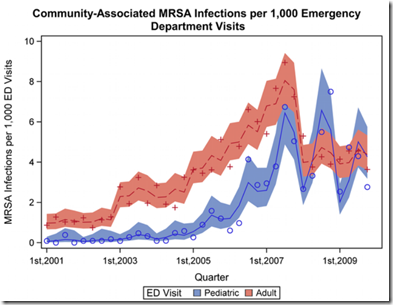
Just shy of two years ago, in MRSA: It’s Got Seasonality, we looked at a PLoS One study that found a significant spike in CA-MRSA infections reported by Rhode Island Emergency rooms during the 3rd & 4th quarters of the year.


Seasonality of MRSA Infections

Mermel LA, Machan JT, Parenteau S (2011) Seasonality of MRSA Infections. PLoS ONE 6(3): e17925. doi:10.1371/journal.pone.0017925


The authors reported that pediatric patients saw roughly 1.85 times as many community-associated CA-MRSA infections and 2.94 times as many hospital-associated HA-MRSA infections in the second two quarters of the year as opposed to the first two quarters.


image


While a similar pattern was observed for adults, it was less pronounced, with 1.14 times as many CA-MRSA infections in the 3rd & 4th quarters, but no detectable increase in adult HA-MRSA infections.


The authors suggested that factors such as excessive hydration of the skin (sweating), summer insect bites, and warm, humid environments conducive to bacterial survival and spread may partially account for the rise, but summer conditions alone cannot not account for the increases.


Temperatures in the 2nd quarter of the year in Rhode Island are normally much higher than during the 4th quarter. 


Fast forward a couple of years, and a new study in the American Journal of Epidemiology finds a similar - but not quite identical – pattern across the United States between 2005 and 2009.


The Changing Epidemiology of Methicillin-Resistant Staphylococcus aureus in the United States: A National Observational Study

Eili Y. Klein, Lova Sun, David L. Smith and Ramanan Laxminarayan*


While the abstract is free, the complete study is behind a subscription/pay wall. Luckily, the following press release from Johns Hopkins Medicine gives us a pretty good overview.


Strains of antibiotic-resistant 'Staph' bacteria show seasonal preference; children at higher risk in summer

Strains of potentially deadly, antibiotic-resistant Staphylococcus aureus bacteria show seasonal infection preferences, putting children at greater risk in summer and seniors at greater risk in winter, according to results of a new nationwide study led by a Johns Hopkins researcher.


It's unclear why these seasonal and age preferences for infection with methicillin-resistant Staph aureus (MRSA) occur, says Eili Klein, Ph.D., lead author on the study and a researcher at the Johns Hopkins Center for Advanced Modeling in the Social, Behavioral and Health Sciences.


But he says that increased use of antibiotics in the winter may be one of the reasons. The winter strain that infects seniors at a greater rate is generally acquired in the hospital and resistant to more antibiotics. On the other hand, the summer strain of MRSA, which is seen with growing frequency in children, is largely a community-transmitted strain that is resistant to fewer antibiotics.


"Overprescribing antibiotics is not harmless," Klein notes. "Inappropriate use of these drugs to treat influenza and other respiratory infections is driving resistance throughout the community, increasing the probability that children will contract untreatable infections."


In fact, the study found that while MRSA strains exhibit a seasonal pattern, overall MRSA infections have not decreased over the last five years, despite efforts to control their spread.


A report on the study, which used sophisticated statistical models to analyze national data for 2005-2009, appears today in the online issue of the American Journal of Epidemiology.


As the researchers report, hospitalizations from infections tied to MRSA doubled in the United States between 1999 and 2005. The ballooning infection numbers were propelled by MRSA acquired in community settings, not hospital or other health care settings, as had been the case prior to 1999.


Specifically, the study found that a strain of MRSA typically seen in community settings is more likely to cause infection during the summer months, peaking around July/August. The authors' data analysis showed children were most at risk of becoming infected with this strain, typically from a skin or soft tissue wound or ailment.


In fact, in examining data for one year — 2008 — the research team found that 74 percent of those under the age of 20 who developed an infection with MRSA had a community-associated MRSA infection.


Meanwhile, the health care-associated MRSA strain, which is typically seen in hospitals, nursing homes and other health care settings, was found to be most prevalent in the winter months, peaking in February/March. Patients aged 65 or older are more likely to acquire a MRSA infection from this strain.


"Our analysis ... shows significant seasonality of MRSA infections and the rate at which they affect different age groups," write the authors of the report titled "The changing epidemiology of methicillin-resistant Staphylococcus aureus in the United States: A national observational study."


Klein said additional research on seasonal patterns of MRSA infections and drug resistance may help with developing new treatment guidelines, prescription practices and infection control programs.


Unlike with the smaller Rhode Island study, these researchers found an increase in HA-MRSA among adults (particularly over the age of 65) that peaked during the 1st quarter. A trend, the authors suggest, that may be linked to the increased use of antibiotics during the winter.


From the Abstract, the authors sum up:


We observed significant differences in infection type by age, with HA-MRSA–related hospitalizations being more common in older individuals. We also noted significant seasonality in incidence, particularly in children, with CA-MRSA peaking in the late summer and HA-MRSA peaking in the winter, which may be caused by seasonal shifts in antibiotic prescribing patterns.

Saturday, December 01, 2012

Persistent Pathogens

 image

Credit CDC PHIL


# 6757


While exotic emerging viruses tend to garner the greatest headlines, old school bacterial nemeses like C. diff, S. aureus, and A. baumannii exact an impressive toll each year, killing tens of thousands of hospitalized patients and adding billions of dollars in health care costs.


This oft quoted assessment from the CDC on the burden of Hospital Acquired Infections in the United States is from 2010.


A new report from CDC updates previous estimates of healthcare-associated infections. In American hospitals alone, healthcare-associated infections account for an estimated 1.7 million infections and 99,000 associated deaths each year. Of these infections:

  • 32 percent of all healthcare-associated infection are urinary tract infections
  • 22 percent are surgical site infections
  • 15 percent are pneumonia (lung infections)
  • 14 percent are bloodstream infections


Hospitals are engaged in a perpetual warfare against the spread of infection - and while progress is being made - many pathogens continue to slip past the infection control safeguards.


The American Journal of Infection Control - the official publication of APIC – provides a sobering overview of this daily battle, and while infection control techniques are improving, bacteria can be masters at evading even the most stringent measures.


One of the toughest bacteria that hospitals must deal with is multidrug-resistant (MDR) Acinetobacter baumannii, which in recent years has made headlines as the cause of difficult to treat wound infections among our troops serving in the Middle East.


Acinetobacter (of which there are many varieties, but A. baumannii is most often linked to human infection ) are ubiquitous in nature, and can be found in  soil, water, animals and humans. A very hardy species, they can survive for extended period of time on inanimate surfaces, making them difficult to control in a health care setting.


Yesterday the AJIC carried an article on just how tough eradicating this bacteria really is.


The effect of terminal cleaning on environmental contamination rates of multidrug-resistant Acinetobacter baumannii

Paula Strassle, BS, Kerri A. Thom, MD, J. Kristie Johnsonm, PhD(ABMM), Surbhi Leekha, MBBS, MPH, Matthew Lissauer, MD, FACS, Jingkun Zhu, MS, Anthony D. Harris, MD, MPH

We evaluated the prevalence of multidrug-resistant Acinetobacter baumannii environmental contamination before and after discharge cleaning in rooms of infected/colonized patients. 46.9% of rooms and 15.3% of sites were found contaminated precleaning, and 25% of rooms and 5.5% of sites were found contaminated postcleaning. Cleaning significantly decreased environmental contamination of A baumannii; however, persistent contamination represents a significant risk factor for transmission. Further studies on this and more effective cleaning methods are needed.


The full text to this study are available on the AJIC website, but we’ve also a brief summary via a press release.


Hospital cleaning protocol ineffective against A. baumannii

Washington, November 30, 2012 -- Current hospital cleaning protocol may be inadequate to rid patient rooms of multidrug-resistant (MDR) Acinetobacter baumannii, according to a study in the December issue of the American Journal of Infection Control, the official publication of the Association for Professionals in Infection Control and Epidemiology (APIC).


A team of researchers from the University of Maryland collected 487 cultures from 32 hospital rooms occupied by just-discharged patients with a known history of MDR A. baumannii both before and after terminal cleaning of the rooms. Over half of the rooms positive for the A. baumannii bacteria prior to cleaning remained contaminated after terminal cleaning had occurred.


Fifteen rooms (46.9 percent) and 41 sites (n=268, 15.3 percent) tested positive for MDR A. baumannii before cleaning. Post-cleaning, eight rooms (25 percent) and 12 sites (n=219, 5.5 percent) still tested positive for the pathogen. Sites with post-cleaning contamination included the floor (12.5 percent), call button (10 percent), door handle (9.4 percent) bedside table (7.4 percent), and supply cart (3.8 percent).


"Persistent room contamination serves as a potential reservoir for transmission and colonization of future room occupants," state the authors in the article. "Current cleaning techniques in terms of products used or thoroughness of cleaning may not be adequate in the decontamination of this pathogen."


Acinetobacter baumannii is a type of bacteria that has become increasingly prevalent in healthcare facilities and is resistant to most antibiotics. Infections from this pathogen primarily occur in very ill, wounded, or immunocompromised patients. The germ can remain on wet or dry surfaces for longer than most other organisms, making it harder to eradicate.


"This study shows how difficult it is to ensure removal of particularly resistant organisms from the environment even upon thorough discharge cleaning," said Anthony D. Harris, MD, MPH, lead study author and professor of epidemiology and public health at the University of Maryland School of Medicine. "With new, innovative means of monitoring cleaning processes that we have incorporated since the study was done, coupled with other infection control efforts, we are seeing lower rates of A. baumannii at our hospital."


The good news is that while difficult, control of these organisms is possible with the right measures. We’ve looked at the problem of controlling HAIs frequently in the past.  A few examples include:


That said, the subjects of HAIs and resistant bacteria are most consistently (and frankly, better) addressed by Maryn McKenna on her excellent Superbug Blog, and was a major focus of her book SUPERBUG: The Fatal Menace Of MRSA.

Both of which are highly recommended.

Friday, October 19, 2012

Revisiting An Earlier Fungal Meningitis Outbreak


image

Exserohilum rostratum – Credit CDC


# 6646


One of the basic tenets of modern medicine is Primum non nocere, or `First, do no harm’.  And while that is undoubtedly the goal of every practitioner, sadly, it doesn’t always work out that way.


Whether by accident, misdeed, or miscalculation - sometimes a patient’s health is made worse by the treatment they receive from the healthcare system.


When that happens it is called an Iatrogenic (from the Greek iatros, physician & genein, to produce) illness or injury.


HCAIs (Health Care Associated Infections) or HAIs (Hospital Acquired Infections) fall under the Iatrogenic umbrella, and according to the AHRQ :


HAIs are the most common complication of hospital care and are one of the top 10 leading causes of death in the United States, accounting for an estimated 1.7 million infections and 99,000 associated deaths in 2002. The financial burden attributable to these infections is estimated at $28 to $33 billion in excess health care costs each year.


As we watch the rising number of fungal meningitis cases among recipients of steroid preparations from an New England compounding pharmacy, it may surprise many to learn that a strikingly similar tragedy occurred a decade ago.


The year was 2002, and the origin was – once again – a compounding pharmacy, this time in South Carolina.  While number of cases was fewer - and the type of fungus was different - the narrative is hauntingly familiar. 


This from the CDC’s MMWR of December 2002:


Exophiala Infection from Contaminated Injectable Steroids Prepared by a Compounding Pharmacy --- United States, July--November 2002

In the United States, pharmacists compound medications to meet unique patient drug requirements or to prepare drug products that are not available commercially (1). In September 2002, the North Carolina Division of Public Health (NCDPH) was notified of two cases of meningitis caused by a rare fungus in patients who had received epidural injections at outpatient pain management clinics.


This report describes five cases of fungal infection associated with contaminated drugs prepared at a compounding pharmacy. Clinicians should consider the possibility of improperly compounded medications as a source of infection in patients after epidural or intra-articular injections.


In this case, the contamination was eventually linked to an improperly maintained and operated autoclave.


An investigation of compounding pharmacy A by the South Carolina Board of Pharmacy (SCBP) found improper performance of an autoclave with no written procedures for autoclave operation, no testing for sterility or appropriate checking of quality indicators, and inadequate clean-room practices as outlined in the American Society of Health-System Pharmacists (ASHP) guidance for pharmacy-prepared sterile products (2)


Of particular concern was the revelation that: Cases occurred up to 152 days following an injection.


The source of suspected contamination at the NECC facility in Massachusetts has not been determined, but yesterday the FDA announced that unopened vials from one of the batches of recalled methylprednisolone acetate were found to harbor Exserohilum rostratum.


Last night, the Annals of Internal Medicine published a perspective by John R. Perfect, M.D. who dealt with the South Carolina outbreak ten years ago. Dr. Perfect is Chief of the Division of Infectious Diseases at Duke University Medical Center. 


The article is free, informative, and much worth reading in its entirety.


Iatrogenic Fungal Meningitis: Tragedy Repeated

John R. Perfect, MD

Ann Intern Med. 18 October 2012

Recent reports of fungal meningitis cases caused by contaminated corticosteroid injections demand that we remember prior lessons learned, while scrambling to care for currently affected persons even before all the facts are in hand.


In 2002, the Centers for Disease Control and Prevention (CDC) detailed 5 cases of Exophiala (Wangiella) dermatitidis meningitis or arthritis related to contaminated, injectable, preservative-free methylprednisolone acetate prepared from a compounding pharmacy (1).

(Continue . . .)

Thursday, October 11, 2012

The Flight Of The Bacterial Intruder

image

Credit CDC PHIL


# 6625


HCAIs (Health care associated Infections) or HAIs (Hospital acquired infections) constitute a major threat to life, health, and the cost of medical care in this country, and around the world. This oft quoted assessment from the CDC on the burden of Hospital Acquired Infections in the United States is from 2010.


A new report from CDC updates previous estimates of healthcare-associated infections. In American hospitals alone, healthcare-associated infections account for an estimated 1.7 million infections and 99,000 associated deaths each year. Of these infections:

  • 32 percent of all healthcare-associated infection are urinary tract infections
  • 22 percent are surgical site infections
  • 15 percent are pneumonia (lung infections)
  • 14 percent are bloodstream infections


A 2009 report The Direct Medical Costs of Healthcare-associated Infections in U.S. Hospitals and the Benefits of Prevention finds:


Applying two different Consumer Price Index
(CPI) adjustments to account for the rate of inflation in hospital resource prices, the overall annual direct medical costs of HAI to U.S. hospitals ranges from $28.4 to $33.8 billion (after adjusting to 2007 dollars using the CPI for all urban consumers) and $35.7 billion to $45 billion (after adjusting to 2007 dollars using the CPI for inpatient hospital services).


As you can imagine, hospitals are engaged in a perpetual battle against the spread of infection - and while progress is being made - many pathogens continue to slip past the infection control safeguards.


A study from the University of Leeds recently published in the Journal Building and Environment may provide a clue as to why the infection control measures being used today have failed to curb the spread of bacteria in the hospital setting.


Bioaerosol Deposition in Single and Two-Bed Hospital Rooms: A Numerical and Experimental Study

M.F. King, C.J. Noakes, P.A. Sleigh, M.A. Camargo-Valero


You’ll find the abstract, along with figures and tables from this article, at the link above. But the full paper is behind a pay wall. The University of Leeds website, however, has a synopsis of this research project, which is excerpted below:.


Superbugs ride air currents around hospital wards

Published Thursday 11th October 12

Hospital superbugs can float on air currents and contaminate surfaces far from infected patients’ beds, according to University of Leeds researchers.


The results of the study, which was funded by the Engineering and Physical Sciences Research Council (EPSRC), may explain why, despite strict cleaning regimes and hygiene controls, some hospitals still struggle to prevent bacteria moving from patient to patient.


It is already recognised that hospital superbugs, such as MRSA and C-difficile, can be spread through contact. Patients, visitors or even hospital staff can inadvertently touch surfaces contaminated with bacteria and then pass the infection on to others, resulting in a great stress in hospitals on keeping hands and surfaces clean.


But the University of Leeds research showed that coughing, sneezing or simply shaking the bedclothes can send superbugs into flight, allowing them to contaminate recently-cleaned surfaces.


PhD student Marco-Felipe King used a biological aerosol chamber, one of a handful in the world, to replicate conditions in one- and two-bedded hospital rooms. He released tiny aerosol droplets containing Staphyloccus aureus, a bacteria related to MRSA, from a heated mannequin simulating the heat emitted by a human body. He placed open Petri dishes where other patients’ beds, bedside tables, chairs and washbasins might be and then checked where the bacteria landed and grew.


The results confirmed that contamination can spread to surfaces across a ward. “The level of contamination immediately around the patient’s bed was high but you would expect that. Hospitals keep beds clean and disinfect the tables and surfaces next to beds,” said Dr Cath Noakes, from the University’s School of Civil Engineering, who supervised the work. “However, we also captured significant quantities of bacteria right across the room, up to 3.5 metres away and especially along the route of the airflows in the room.”


“We now need to find out whether this airborne dispersion is an important route of spreading infection,” added co-supervisor Dr Andy Sleigh.

(Continue . . .)


While we often think first of viruses when it comes to airborne transmission of illness, some types of bacteria (e.g. Legionella, Mycoplasma pneumonia, Tuberculosis) are easily aerosolized and transmitted.


This study is not the first to identify the airborne spread of Staphylococcus aureus, but they have developed an ingenious way to quantify it.


Regarding MRSA and C. Difficile the Journal of The Royal Society published a review in 2009 called:


Airborne transmission of disease in hospitals

I. Eames, J. W. Tang,Y. Li and P. Wilson

(EXCERPT)

MRSA can survive on surfaces or skin scales for up to 80 days and spores of Clostridium difficile may last even longer. MRSA can be transmitted in aerosol from the respiratory tract but commonly attaches to skin scales of various sizes. The distance of travel depends on the size of the scale, the larger falling to the floor within 1–2 m, the smaller travelling the entire length of the ward.

<SNIP>

Clostridium difficile spores are thought to spread in the air and can be found near a patient carrying the organism (Roberts et al. 2008). However, unlike MRSA, they are rarely isolated from air samples.


Not surprisingly, in 2010, we saw a study published in the AJIC: American Journal of Infection Control that found that the more roommates you have during a hospital stay, the greater chance you will have of contracting an HAI like MRSA or C. Diff.


Exposure to hospital roommates as a risk factor for health care–associated infection

Meghan Hamel, MSc, Dick Zoutman, MD, FRCPC, Chris O'Callaghan, DVM, MSc, PhD


The authors used this study to promote the idea  of making private (or at least, semi-private) rooms the norm in Canadian hospitals. While acknowledging that it would involve considerable up-front costs, they believe the long-term savings would be considerable.


All of this highlights the great challenges involved in substantially reducing the incidence of HAIs in our health care facilities.


Solutions must not only include stringent hand hygiene and improved cleaning methods, but engineering solutions as well.


For more on the prevention of Hospital Acquired Infections you may wish to visit the CDC’s HAI PAGE.


image


Or revisit some of these earlier blogs on hospital acquired infections.


HPA: Healthcare-Associated Infection (HCAI) Survey
A Barrier To Good Hand Hygiene
Study: Hospital Uniforms And Bacteria
Study: HAIs, Universal Surveillance, & MRSA


And finally, the subject of HAIs is often addressed by Maryn McKenna on her excellent Superbug Blog, and was a major focus of her book SUPERBUG: The Fatal Menace Of MRSA.


Both are highly recommended.

Wednesday, May 23, 2012

HPA: Healthcare-Associated Infection (HCAI) Survey


# 6340


The UK’s HPA has released a comprehensive survey of antimicrobial use, and HCAI (Healthcare-Associated Infections), across 114 hospitals (99 NHS acute trusts and 5 independent sector organizations), providing us with a snapshot of conditions between September and November 2011.


Although the full global burden of HCAIs or HAIs (Hospital Acquired Infections) is unknown and underappreciated, even in countries with modern healthcare facilities they constitute a major threat to life and health.


The following is an oft quoted assessment from the CDC on HAI’s (Hospital Acquired Infections) in the United States back in 2010.

A new report from CDC updates previous estimates of healthcare-associated infections. In American hospitals alone, healthcare-associated infections account for an estimated 1.7 million infections and 99,000 associated deaths each year. Of these infections:

  • 32 percent of all healthcare-associated infection are urinary tract infections
  • 22 percent are surgical site infections
  • 15 percent are pneumonia (lung infections)
  • 14 percent are bloodstream infections


The subject of HAIs is often addressed by Maryn McKenna on her excellent Superbug Blog, and was a major focus of her book SUPERBUG: The Fatal Menace Of MRSA. Both are highly recommended.


The HPA is working to reduce the incidence of HAIs in the UK, and according to their latest report, progress has been made. The greatest reductions have been made in MRSA bloodstream infections and C. difficile infections.


Of special note, Enterobacteriaceae (includes E. coli, Klebsiella spp.,Enterobacter spp. and others) were the most frequently reported organisms associated with HCAI, infecting roughly .9% of the patient population, and making up nearly 1/3rd of all infections.


Links to the 140 page preliminary report, 144 page appendices, and a 16  page FAQ at the link below.


English National Point Prevalence Survey on Healthcare-associated Infections and Antimicrobial Use, 2011: preliminary data

English PPS on HCAI and AMU 2011

Authors:

HPA

Publication date: May 2012

Synopsis

The Health Protection Agency (HPA) coordinated the fourth National Point Prevalence Survey (PPS) on healthcare-associated infection (HCAI) and first National PPS on antimicrobial use (AMU) in England. This survey is not directly comparable to previous surveys.


The aims of the PPS were to determine the burden of HCAI and AMU in acute hospitals and to use the results to identify priority areas for the future.

Key points

  • The prevalence of healthcare-associated infections (HCAI) was 6.4% in 2011 compared to 8.2% in 2006.
  • The most frequent HCAIs detected were respiratory tract, urinary tract and surgical site infections.
  • The prevalence of antimicrobial use (AMU) was 34.7%. This is the first time AMU was measured nationally. This provides a baseline for future monitoring.
  • The prevalence of HCAIs, AMU and device use was highest in intensive care units, which relates in part to the complexity and vulnerability of patients in this setting.

Download full publication

English National Point Prevalence Survey on Healthcare-Associated Infections and Antimicrobial Use, 2011 - Appendices (PDF, 3.3 MB)


PPS Frequently Asked Questions (PDF, 654 KB)


English National Point Prevalence Survey on Healthcare-associated Infections and Antimicrobial Use, 2011 (PDF, 1.9 MB)


While there is much to be gleaned from these reports, a few highlights from the FAQ include:


3.1 What is the overall prevalence of HCAI in English hospitals?

The overall prevalence of HCAI in acute hospitals was 6.4%.The prevalence in NHS acute trusts was 6.5% Independent sector organisation had a lower prevalence of HCAI of 2.2%.

It is not appropriate to compare the prevalence between these hospital types because they represent distinct case mixes, patient populations and specialties. Further the numbers included were very small in paediatric and independent hospitals and these results should be interpreted with caution.


3.2 Does a prevalence of 6.4% mean that if I go in to hospital I have a one in sixteen chance of getting a HCAI?

No. This means that at any time one in sixteen inpatients in hospital will have a HCAI. A prevalence survey counts the number of patients with HCAI at any point in time.

People with HCAI tend to stay in hospital longer and those patients who stay in hospital for longer periods of treatment tend to be more seriously ill and therefore more at risk of contracting HCAI. The large majority of patients are successfully treated in hospital and go home without acquiring a HCAI.


3.3 Can you tell me what my chance is of contracting HCAI during my hospital stay?


No. This is not shown by the current prevalence survey. In order to calculate how likely a person is to get a HCAI an incidence study would be required. This would look at all patients who were treated within the hospital on a regular basis over a defined time period.


The other focus of this survey was to determine the level of AMU (Antimicrobial Usage) in acute care hospitals in England.  The report found:


The overall prevalence of AMU was 34.7%. The prevalence of AMU was greatest in the independent sector hospitals (46.7%) compared with NHS organisations at 34.3%. The prevalence of AMU in adults was 35.3% and in paediatrics 28.7%. AMU prevalence was greatest in ICU at 60.8%.


The total number of antimicrobials prescribed in the survey was 25,942 for 18,219 (34.7%) patients, which equates to 1.4 AM per patient prescribed antimicrobials. AMU were most frequently prescribed for community acquired infections (53.0%). Thirteen percent of patients were on an antimicrobial (AM) for surgical prophylaxis; 30.3% of surgical prophylaxis was administered for greater than one day.


The majority of AMU was for respiratory tract infections (30.9%). The second most common reason for AMU was skin, soft tissue, bone and joint infections (19.0%).


The use of a standardized survey technique should go a long ways towards developing better year-to-year comparisons of HCAIs and AMU in UK facilities, and will facilitate comparisons with other EU countries that have adopted similar surveys.