Showing posts with label Blood Supply. Show all posts

Wednesday, October 08, 2014

ECDC: Risk Of Ebola Transmission From Blood Products & Other Substances Of Human Origin In the EU

image


# 9161


While the Ebola epidemic is currently only spreading in three West African countries, there are concerns that over time the virus could migrate to other African nations - or to other regions of the world - necessitating the thinking about possible public health risks both as they stand now, and how they might evolve down the road.


Yesterday the ECDC published a technical report on managing the potential risks to the blood supply, and to organ and cell donations, due to the Ebola epidemic.


Risk of transmission of Ebola virus via donated blood and other substances of human origin in the EU

06 Oct 2014

Abstract

​The epidemic of Ebola virus disease (Zaïre ebolavirus) has increased the risk of Ebola virus transmission via donated blood and blood components, cells, tissues and organs.  

This technical report assesses the risk of Ebola virus transmission through substances of human origin and offers guidelines on the safety of donations where the potential donors are travellers returning from Ebola-affected countries, people exposed to Ebola virus or patients who have recovered from the disease. 


SoHO refers to substances of Human Origin, such as blood, blood products, or organ donation. A few excerpts from the Technical report include:


Risk of transmission of Ebola virus via donated blood and other substances of human origin in the EU

(Excerpts)

Background


The epidemic of Ebola virus disease (EVD) in West Africa in 2014 has increased the risk of Ebola virus transmission via donated blood and blood components, cells, tissues and organs (substances of human origin - SoHO). There are no specific EU regulations or recommendations for the safety of SoHO donated by patients who have recovered from EVD; people exposed to Ebola virus; or people who have visited or reside in EVD-affected areas.


Ebola virus transmissions through donated blood, tissues or organs have not been described. Asymptomatic replicative infections with Ebola virus have been described [1,2]. Travellers from Ebola-affected countries* are deferred for donation because malaria-risk countries overlap with the current Ebola-risk countries in Africa [3]. However, there is a need for specific guidelines to maintain the safety of SoHO donation by people who have been exposed to Ebola virus. There is a possibility that the current outbreaks in West Africa and the Democratic Republic of Congo will spread to areas where there is no malaria risk.

Risk assessment


The risk of Ebola virus transmission through SoHO is related to the presence of Ebola virus in the donor’s blood, tissues and organs. The presence and concentration of virus in organs, tissues, blood and other bodily fluids changes during the course of the infection. The virus concentration peaks when the patient is most sick, and viruses can be detected and isolated from breast milk and semen weeks after recovery [4]. There are limited data available on when patients become viraemic and infectious during the incubation period. The assumption is that the rate of virus replication and excretion into bodily fluids is not high enough in the pre-symptomatic phase to result in person-to-person transmission through day-to-day contacts in the community. However, there are no data on when viraemia starts during the incubation period. During the symptomatic phase of EVD, the virus is present in high concentrations in all bodily fluids, tissues and organs [5]. When the disease is fatal, the dead body remains highly contagious. After recovery from the acute phase, a patient may continue to excrete live and infective viruses for long periods [4].

There are currently insufficient data on which to base deferral period recommendations for recovered EVD patients; contacts of EVD cases and people who have visited the EVD-affected countries but do not have a documented exposure. EVD has an acute onset of prominent symptoms that is believed to be temporally related to the viraemia. This makes it unlikely that patients in the viraemic phase would be accepted for donation of SoHO, because it would be obvious that they were ill.

Recommendations for the safety of SoHO donations


Travellers or residents returning from EVD-affected areas


It is expected that a deferral of donation for two incubation periods will provide a reasonable margin of safety for asymptomatic donors returning from EVD-affected areas. The longest incubation period for EVD has been estimated at 21 days. However, a recent study has proposed to extend the longest possible incubation period to 25 days [6]. Thus, asymptomatic travellers or residents returning from EVD-affected areas should be temporarily deferred from donation of SoHO for two months after leaving an area affected by EVD.


It should be noted that all Ebola outbreaks to date have occurred in malaria-endemic areas in Africa and that, according to EU Directive 2004/33/EC of 22 March 2004 [3], asymptomatic blood donors returning from malaria risk areas are deferred for blood donation for at least four months. However, the donor deferral for malarial risk is not required when the donation is used exclusively for plasma for fractionation. So, the asymptomatic travellers or residents returning from EVD affected area should defer donation of plasma for fractionation until two months after return.


According to EU directives, malaria testing of potential donors of tissues and cells returning from malaria-endemic areas is mandatory only under certain circumstances, but for organ donation malaria testing is not mandatory [7,8]. Therefore, asymptomatic travellers or residents returning from an Ebola affected area should be deferred from donation of cells, tissues and organs for two months after return. This period can be reduced to one month in the case of urgent need for organ transplantation, provided that the potential donor tests negative for Ebola virus by nucleic acid amplification testing (NAT).


(Continue . . .)


Thursday, September 12, 2013

Florida: Dengue Forces Suspension Of Blood Donations In Two Counties

image

Credit Martin County Health Department


# 7758


In a follow up to a report from a couple of weeks ago (see Florida: Dengue Count Rises To 8) the latest State of Florida Arbovirus Surveillance report indicates:


In 2013, a total of 16 cases of locally acquired dengue have been reported.

Fifteen cases of dengue have been reported as acquired in Martin County with onsets in July (4) and August (11), 2013. Of these 15 cases, nine are residents of Martin County; four are residents of St. Lucie County; and two are out-of-state visitors. One case of dengue has been reported as acquired in Miami-Dade County by a Miami-Dade resident with onset in August, 2013.

image

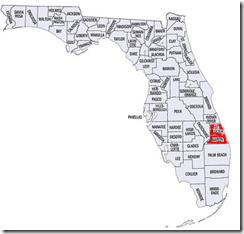
Location St. Lucie & Martin Counties

Since it is possible to be infected with Dengue, yet show no signs of illness, and since the virus can be carried and transmitted by blood, out of an abundance of caution the largest blood collection agency in the region has temporarily announced suspension of blood donations in Martin & St. Lucie county.


Oneblood.org released the following press release (and video), yesterday.

Blood Center to Temporarily Halt Collections in Martin and St. Lucie Counties

Proactive Steps Taken Due to Dengue Fever

(Orlando, Florida | September 11, 2013) As a proactive and precautionary measure, OneBlood is temporarily suspending blood collection operations in Martin and St. Lucie counties in Southeast Florida until further notice.  The decision comes after more than a dozen cases of Dengue Fever have been reported by the Florida Department of Health in these two counties over the past several weeks.

“Safety of the blood supply is our number one priority,” said Dr. Rita Reik, Chief Medical Officer for OneBlood.  “We will resume blood collections in Martin and St. Lucie counties once it is determined the threat of Dengue Fever has been minimized,” Reik said.

OneBlood will remain in close contact with the Florida Department of Health and the Food and Drug Administration (FDA) and will be alerted should additional cases of Dengue Fever be reported. 

Blood collections in other areas of OneBlood’s service area remain operational.  The blood center urges people living in areas not impacted by Dengue Fever to please donate and help ensure safe and available blood for local hospitals and their patients.

The public should take great comfort in knowing our local blood supply is safe and meets the highest possible standards mandated by the FDA.

Blood donations profoundly affect the lives of patients in our community and in many cases one donation can save up to three patients. For more information about donating blood and to find a donor center near you visit www.oneblood.org.


Earlier this year, the CDC’s EID Journal published a dispatch on the safety of Australia’s blood supply  following sporadic outbreaks of Dengue in that country. Their finding was the odds of contracting dengue through a blood transfusion was low, but not non-existent.


Dispatch

Implications of Dengue Outbreaks for Blood Supply, Australia

Helen M. FaddyComments to Author , Clive R. Seed, Jesse J. Fryk, Catherine A. Hyland, Scott A. Ritchie, Carmel T. Taylor, Kathryn L. Van Der Merwe, Robert L.P. Flower1, and William J.H. McBride1
Abstract

Dengue outbreaks have increased in size and frequency in Australia, and transfusion-transmitted dengue poses a risk to transfusion safety. Using whole blood samples collected during the large 2008–2009 dengue epidemic, we estimated the risk for a dengue-infectious blood donation as ≈1 in 7,146 (range 2,218–50,021).

Dengue causes >50 million infections per year worldwide; however, the true incidence is expected to be higher given that asymptomatic infection is possible (1). Dengue virus types 1–4 (DENV-1–4) are emerging or reemerging in many regions of the world (1,2), including Australia (3). One of the largest epidemics in at least 50 years occurred in Queensland, Australia, during 2008–2009, with separate outbreaks in Cairns (and surrounding regions; DENV-2, DENV-3; 2008–2009), Innisfail (DENV-4; 2009), and Townsville (DENV-1, DENV-3; 2009), totaling >1,000 confirmed clinical cases (3).

(Continue . . . )


And in 2009, the Journal of Transfusion Medicine published a 55 page (open access) study  Is Dengue A Threat To The Blood Supply?, from which the following excerpt was lifted.


RISK OF TRANSFUSION-TRANSMITTED DENGUE

(EXCERPT)

Increased prevalence in the population increases the risk that blood will be collected from a viraemic donor during the asymptomatic or subclinical phase of infection. Transmission of dengue through blood collected from asymptomatic donors has been demonstrated in the two reports from Hong Kong and Singapore, both occurring during the height of epidemics in these countries (Chuang et al., 2008; Tambyah et al., 2008). Blood services in countries experiencing dengue epidemics will need to decide whether stronger measures are needed to protect the blood supply.

(Continue . . . )


Meanwhile, the Martin County Health Department has issued a number of Dengue alerts and updates:


image


Prior to 2009, Florida had gone 6 decades without recording a locally acquired case.


Although the number of dengue cases reported in Florida remains very low, since Florida is home to two mosquito species that can transmit Dengue (Aedes aegypti & Aedes albopictus), and each year we see dozens of visitors arrive who are viremic (have the virus in their blood) – the ingredients are there to reintroduce local transmission of the disease.


For now, the the overall risk of contracting a mosquito-borne illness in Florida (or elsewhere in the United States) remains small, but sporadic reports of Dengue (along with West Nile, EEE, SLEV, and other rare arboviral threats) are a good enough reason that everyone should remember to follow the `5 D’s’ of mosquito safety:

image

Tuesday, September 06, 2011

Referral: Maryn McKenna On Babesia And The Blood Supply


image


# 5817


I’ve been dealing with an extremely flakey ISP connection all day, and so I’ve just now come across Maryn McKenna’s write up on today’s announcement by the CDC regarding the threat of Babesia to the blood supply.


Babesia is a tickborne parasite that causes a condition called babesiosis. Some people may be infected by this parasite without knowing it, while others can experience life threatening illness.


The CDC issued a press release today on the need for a test for Babesia that can be used to screen the blood supply.


U.S. Blood Supply Vulnerable to Parasitic Infection Spread by Ticks

To reduce risk, Babesia test is needed to screen blood donors

ATLANTA, Sept. 6, 2011 /PRNewswire-USNewswire/ -- Babesia, a tickborne parasite of red blood cells, is being transmitted through blood transfusions, according to results of a collaborative study, led by the Centers for Disease Control and Prevention, of data from the past three decades. Transfusion-associated cases of babesiosis have been increasingly recognized since 1979, the year the first known case occurred.


The article about the study and an accompanying editorial appear today online in the Annals of Internal Medicine.


In the report, CDC and collaborators describe 159 transfusion-related babesiosis cases that occurred during 1979–2009, most (77 percent) from 2000 to 2009. No Babesia test approved by the Food and Drug Administration is available for screening prospective blood donors, who can feel fine despite being infected.

(Continue . . . )


Maryn McKenna, writing today on her Superbug Blog, has more background on this story, and so I’ll step out of the way and direct you to:


Tick-Borne Infections Infiltrate U.S. Blood Supply

Maryn McKenna