Showing posts with label Dr. Ian Lipkin. Show all posts

Tuesday, July 08, 2014

mBio: Debating The Dromedary - MERS Coronavirus Connection

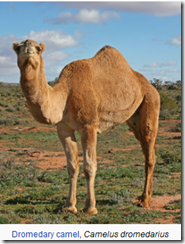
Photo: ©FAO/Ami Vitale

Credit FAO


# 8812


For nearly a year we’ve watched the evidence mount up that camels play a major role in the hosting, and probable spread, of the MERS coronavirus which was first discovered two years ago in the Middle East.  Dromedaries aren’t viewed as being the only possible animal reservoir of the virus, nor are they believed responsible for he majority of human cases.


But the virus (or antibodies to the virus) have certainly been found in camels (see Kuwait Tests Camels - Finds 6% Positive For MERS-CoV), and we’ve seen a few instances where camel-to-human transmission is strongly suspected (see CIDRAP: More Evidence for Camel-to-Human MERS-CoV Transmission).


Last month,  in Eurosurveillance: MERS-CoV Antibodies & RNA In Camel’s Milk – Qatar we looked at research supporting the notion that consumption of unpasteurized camel’s milk might be a route to infection.


Some of the most compelling research has been associated with Dr. Ian Lipkin, including a study published last February (see mBio: MERS-CoV In Saudi Arabian Camels) that established MERS-CoV to be a common, likely mild or asymptomatic, infection in young camels in Saudi Arabia and that suggested that they may well be the source of at least some portion of the human infections we’ve seen over the past two years.


Another study, again involving Dr. Lipkin, was published the end of April (see mBio: MERS-CoV Carriage By Dromedaries) that recovered the MERS-CoV from nasal swabs of camels, and demonstrated that whole-genome consensus sequences were indistinguishable from MERS coronaviruses recovered from humans.


An accompanying press release, Columbia University's Mailman School of Public Health, states:

"The finding of infectious virus strengthens the argument that dromedary camels are reservoirs for MERS-CoV," says first author Thomas Briese, PhD, associate director of the Center for Infection and Immunity and associate professor of Epidemiology at the Mailman School. "The narrow range of MERS viruses in humans and a very broad range in camels may explain in part the why human disease is uncommon: because only a few genotypes are capable of cross species transmission," adds Dr. Briese.


Despite the preponderance of evidence, not everyone is ready to accept these findings as `proof’ of the role of camels in the spread of the MERS coronavirus (see Saudi MOA Spokesman: Camel Link Unproven).


Today the open access journal mBio has published a long letter, written by Emad M. Samara Ph.D and Professor Khalid A. Abdoun, both of the Department of Animal Production at King Saud University  that call into question the findings of the two previously mentioned studies involving Dr. Lipkin. 


After listing a number of the findings in these previous studies, the authors argue that they cannot be taken as `conclusive evidence’  that dromedary camels carry the infectious form of MERS-CoV or have ever infected humans. 


They suggest it is equally plausible (albeit, unproven) that humans are the ones who have infected camels.


It’s a long letter – far too long to reproduce here – and so in fairness to their argument,  I would invite my readers to follow the link to read it in its entirety.    When you return, I’ll have a link to a reply from Dr. Lipkin et al.


Concerns about Misinterpretation of Recent Scientific Data Implicating Dromedary Camels in Epidemiology of Middle East Respiratory Syndrome (MERS)

Emad M. Samara, Khalid A. Abdoun 

LETTER

This letter addresses some concerns about two recent articles published by the same authors in mBio (1, 2), specifically many uncertainties regarding the potential applicability of their epidemiological data, which were obtained from dromedary camels (DCs) infected with Middle East respiratory syndrome coronavirus (MERS-CoV), to human public health.

(Continue . . . )


The reply to this critique is fairly brief - where the authors stand by their work - can be read at the following link:


Reply to “Concerns About Misinterpretation of Recent Scientific Data Implicating Dromedary Camels in Epidemiology of Middle East Respiratory Syndrome (MERS)”

Abdulaziz N. Alagailia, Thomas Brieseb, William B. Kareshc, Peter Daszakc, W. Ian Lipkinb


It is absolutely true that one can rarely say `case closed, time to etch our findings in stone’  with any field of scientific research. `Conclusive evidence’  is a very high, sometimes unobtainable, standard of proof. 


And few would argue that more work doesn’t need to be done on the virology, ecology, and epidemiology of the MERS coronavirus. 


But until that can happen, we pretty much have to go by the preponderance of evidence. And for now, despite the misgivings of these authors from King Saud University, that evidence strongly suggests camels play an important role in the hosting, and spread of MERS-CoV.  

Wednesday, May 21, 2014

The ASM 2014 Videos

image


# 8649


Over the past three days the American Society for Microbiology has been holding its 114th General Meeting – this time in Boston – where hundreds of scientific sessions were held, and thousands of poster sessions were on display.


The Final Program PDF runs 295 pages. 


For those of us unable to attend, there are live webcasts (almost immediately available on the MicrobeWorld Youtube Channel) featuring interviews with presenters and discussions on some of the hottest topics at this year’s meeting.


While I’m sure my readers will find something of interest in all of the ASM Live videos, one in particular strikes close to home.   Below you’ll find a discussion with Ian Lipkin, of Columbia University, and Lyle Petersen, of the CDC.


Thumbnail
ASM Live - The Next Emerging Threat
American Society for Microbiology

37:41


Some other videos on this year’s roster include:


Tuesday, May 20, 2014

Dr. Ian Lipkin On The Threat Posed By MERS-CoV

image

Dr. Lipkin - Credit CII Columbia University


# 8644


Dr. Ian Lipkin - Director of the Center for Infection and Immunity at Columbia University’s Mailman School of Public Health  - and world renowned virus hunter, has penned an opinion piece for CNN News on the threat posed by the MERS coronavirus.


Dr. Lipkin, whose lab has done extensive work on the virus (see here, here, and here), writes that concern over this virus is warranted and `vigilance is essential’,  but that he does not (yet) see signs that it will spark a pandemic. 


Follow the link below to read:


Will MERS become a global threat?

By W. Ian Lipkin

updated 7:44 AM EDT, Tue May 20, 2014

Watch this video

Deadly virus spreads to 3rd U.S. patient

STORY HIGHLIGHTS

  • A third case of Middle East Respiratory Syndrome in the U.S. has been reported
  • W. Ian Lipkin: The recent rise of MERS cases should not cause panic
  • He says if we see clusters of infections that would be cause for concern
  • Lipkin: New MERS cases are not surprising given how globally connected we are

Editor's note: W. Ian Lipkin is John Snow professor of epidemiology and director of the Center for Infection and Immunity at Columbia University. The opinions expressed in this commentary are solely those of the author.

(CNN) -- A third case of Middle East Respiratory Syndrome in the United States has been reported. An unidentified Illinois man was infected after having "extended face-to-face contact" with an Indiana man who was diagnosed with the MERS virus. Fortunately, he is no longer ill.

The rise in the reported number of MERS cases in the United States, Asia and Europe has fueled concern that this may be the big one: the 21st century equivalent of the 1918 influenza pandemic that killed 3% to 5% of the world population.

(Continue . . .)

Tuesday, April 29, 2014

mBio: MERS-CoV Carriage By Dromedaries

image


# 8549


On a day when the new Saudi Minister of Health appears to be taking the MERS-Camel connection more seriously (see Crofsblog Saudi Arabia: Faqih urges avoidance of camel meat and milk), we get a new study appearing in the open-access journal mBio that further implicates camels as the source of the virus.


Researchers report recovering MERS-CoV from nasal swabs of dromedaries whose complete genetic sequences are indistinguishable from those found in humans.  Furthermore, they found that camels can be simultaneously infected with multiple strains of MERS.


The study, led by an international team from Columbia University , King Saud University, and the EcoHealth Alliance, found the MERS virus in 3/4ths of the camels they tested. 


Middle East Respiratory Syndrome Coronavirus Quasispecies That Include Homologues of Human Isolates Revealed through Whole-Genome Analysis and Virus Cultured from Dromedary Camels in Saudi Arabia

Thomas Briesea, Nischay Mishraa, Komal Jaina, Iyad S. Zalmoutb, Omar J. Jabadoc, William B. Kareshd, Peter Daszakd, Osama B. Mohammedb, Abdulaziz N. Alagailib,e, W. Ian Lipkina

ABSTRACT

Complete Middle East respiratory syndrome coronavirus (MERS-CoV) genome sequences were obtained from nasal swabs of dromedary camels sampled in the Kingdom of Saudi Arabia through direct analysis of nucleic acid extracts or following virus isolation in cell culture. Consensus dromedary MERS-CoV genome sequences were the same with either template source and identical to published human MERS-CoV sequences. However, in contrast to individual human cases, where only clonal genomic sequences are reported, detailed population analyses revealed the presence of more than one genomic variant in individual dromedaries. If humans are truly infected only with clonal virus populations, we must entertain a model for interspecies transmission of MERS-CoV wherein only specific genotypes are capable of passing bottleneck selection.

IMPORTANCE In most cases of Middle East respiratory syndrome (MERS), the route for human infection with the causative agent, MERS coronavirus (MERS-CoV), is unknown. Antibodies to and viral nucleic acids of MERS-CoV have been found in dromedaries, suggesting the possibility that they may serve as a reservoir or vector for human infection. However, neither whole viral genomic sequence nor infectious virus has been isolated from dromedaries or other animals in Saudi Arabia. Here, we report recovery of MERS-CoV from nasal swabs of dromedaries, demonstrate that MERS-CoV whole-genome consensus sequences from dromedaries and humans are indistinguishable, and show that dromedaries can be simultaneously infected with more than one MERS-CoV. Together with data indicating widespread dromedary infection in the Kingdom of Saudi Arabia, these findings support the plausibility of a role for dromedaries in human infection.

(Continue . . .)


In an accompanying press release, Columbia University's Mailman School of Public Health quotes authors Thomas Briese, Abdulaziz N. Alagaili, and Ian Lipkin  on the findings:


"The finding of infectious virus strengthens the argument that dromedary camels are reservoirs for MERS-CoV," says first author Thomas Briese, PhD, associate director of the Center for Infection and Immunity and associate professor of Epidemiology at the Mailman School. "The narrow range of MERS viruses in humans and a very broad range in camels may explain in part the why human disease is uncommon: because only a few genotypes are capable of cross species transmission," adds Dr. Briese.

"Given these new data, we are now investigating potential routes for human infection through exposure to camel milk or meat products," says co-author Abdulaziz N. Alagaili, PhD, director of the Mammals Research Chair at King Saud University. "This report builds on work published earlier this year when our team found that three-quarters of camels in Saudi Arabia carry MERS virus."

<SNIP>

"Although there is no evidence that MERS-CoV is becoming more transmissible, the recent increase in reported cases is a cause for concern," says senior author W. Ian Lipkin, MD, director of the Center for Infection and Immunity and the John Snow Professor of Epidemiology at the Mailman School. "It is essential that investigators commit to data and sample sharing so that this potential threat to global health is addressed by the entire biomedical research community."


Looks like its time for Ian Mackay to break out his smoking camel graphic again.


Monday, August 26, 2013

Referral: Mackay On MERS, Bat Samples & Prospective Screening


image

Credit Wikipedia


# 7600


Dr Ian Mackay is on a roll this morning, with no fewer than four new entries his Virology Down Under blog.  While you’ll want to read all of them, I’d like to call your attention to two of them in particular.


First, Ian shares correspondence with Dr. Ian Lipkin – Director of the Center for Infection and Immunity at Columbia University’s Mailman School of Public Health and world renowned virus hunter – whose lab recently found a match to the MERS-CoV in a sample from bat samples collected in Saudi Arabia (see Detection Of MERS-CoV In Saudi Arabian Bat).

Prof Lipkin: There is no more sequence coming from that bat sample

Many thanks to Prof Ian Lipkin's indulgence of my eMail questions.


Also, check out the TWiV webcast by Prof Lipkin.

(Continue . . .)


Second, Ian expands on comments he’s made in the past regarding the importance of prospective testing – and not just for MERS-CoV and H7N9 – but for a variety of respiratory pathogens.


Editor's rant: Why testing the few may not benefit the many...

Prospective screening without regard for whether the person is sick. That's what I think we need more of, in order to truly understand respiratory viruses and acute respiratory infections (ARIs).


And I don't just mean the scary ones like MERS-CoV or influenza A(H5N1) virus or H7N9 or H7N7 (zoonotic flu).

(Continue . . .)


Both of these articles are highly recommended.


Since his arrival to Flublogia back in April, Dr. Mackay has nicely filled the scientific void left behind when Revere pulled down the shades at  Effect Measure in 2010.


Ian brings a level of expertise and understanding of virology, lab procedures, and testing that Crof and I could never begin to approach.


So if if Ian’s VDU website isn’t already on your daily list of sites to visit, it should be.