Showing posts with label Video. Show all posts

Saturday, March 28, 2015

USDA Avian Flu Biosecurity Videos

image


# 9877


Although Europe, Asia, Africa, and the Middle East have had to deal with highly pathogenic avian H5 viruses for the better part of a decade, until very recently North America’s poultry industry and wild bird population have been spared.  All that changed last December when a dozen poultry farms in British Columbia’s Fraser Valley reported an outbreak of HPAI H5, which in very short order was reported in Washington, Oregon, and California.


Like falling dominos, more states began to report detections of HPAI H5 (H5N1, H5N2, H5N8) in wild birds, and backyard and commercial poultry operations. As of this week 11 states have now reported the virus, although their actual spread is likely to be greater.


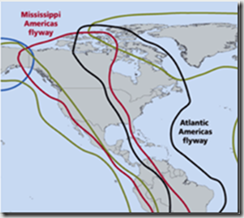
Since November we’ve seen H5N8 and/or H5N2/H5N1 turn in both the Pacific and Mississippi Americas Flyways, and at this point no one would be terribly surprised to see these viruses turn up further east along the Atlantic Americas flyway.

image

Credit FAO


While migratory flyways are predominately north-south corridors, their overlapping allows for a lateral (east-west) movement of avian viruses as well – often via shared nesting areas and ponds – something we’ve looked at recently in The North Atlantic Flyway Revisited & FAO On The Potential Threat Of HPAI Spread Via Migratory Birds.


Since we’ve yet to see any human infections from these reassortant H5 viruses, the immediate health risk to the public is considered very low. But as these new subtypes are related to viruses which have caused serious human infections (H5N1, H5N6) in other countries, they are being viewed cautiously by the CDC (see CDC: HPAI H5 Viruses In The United States)

image


The more immediate concerns revolve around protecting commercial and backyard poultry operations from infection, as these viruses are not only devastating to flocks in their current incarnation, they have the potential to evolve or reassort with other avian viruses with unpredictable results.


While commercial poultry operations have the most to lose, they are probably the best prepared to prevent infection.


In recent years we’ve seen a resurgence in the raising of backyard flocks in this country, and they are particularly vulnerable to infection. Late yesterday afternoon the USDA posted a blog on small flock biosecurity measures, along with links to several videos.


Bird Flu Is a Reminder For Back Yard Poultry Owners to Protect Their Birds By Practicing Good Biosecurity

Posted by Dr. Chrislyn Wood Nicholson, Poultry Health Specialist, USDA Animal and Plant Health Inspection Service, on March 27, 2015 at 5:00 PM

Dr. Wood on set with Healthy Harry taping new biosecurity videos.

Dr. Wood on set with Healthy Harry taping new biosecurity videos.

Since December 2014, there have been several highly pathogenic avian influenza (HPAI) confirmations in migratory wild birds, back yard flocks, captive wild birds and commercial poultry in several states along the Pacific, Mississippi and Central Flyways.  These HPAI virus strains can travel in wild birds without them appearing sick.  In fact, if back yard poultry flocks are exposed to these particular HPAI virus strains, they are highly contagious and cause bird death.  We are expecting that there will be more HPAI confirmations this spring as the bird migrations continue, so if you own or handle poultry, now is a great time to check your biosecurity practices.  You should follow good biosecurity at all times to help protect the birds’ health.  Your actions can make a difference!  Learn more here: http://healthybirds.aphis.usda.gov

As part of good biosecurity, you should prevent contact between your birds and wild birds, and report sick birds or unusual bird deaths to State/Federal officials, either through the state veterinarian or through USDA’s toll-free number: 1-866-536-7593.  You also should avoid contact with sick/dead poultry or wildlife. If contact occurs, wash your hands with soap and water and change clothing before having any contact with healthy domestic poultry and birds.   You are the best protection your birds have!  Learn more here:  http://healthybirds.aphis.usda.gov

What is biosecurity?  Biosecurity means taking some simple steps to keep your birds away from germs AND germs away from your birds.   If you follow good biosecurity, you will help ensure your birds remain healthy.

For backyard bird owners, there are 6 simple steps to biosecurity:

Commercial producers should follow biosecurity recommendations from their industry associations and the National Poultry Improvement Plan.

Want to learn more about practicing good biosecurity while being entertained?  Need to share information with 4H, FFA or school groups?  Here are links to a series of videos about biosecurity on YouTube:

Healthy Flocks Rock

Keep It Clean

Know Your Birds

Simple Steps to Keep Your Backyard Poultry Healthy

These videos will help you see biosecurity in action so you can feel confident you are taking the right steps to protect your backyard birds.

Thursday, February 12, 2015

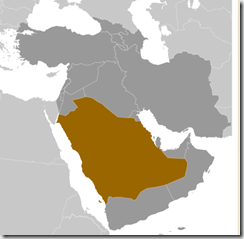
Saudi MOH: New MERS Awareness Video PSAs

image


# 9704


Over the next few weeks and months the Saudi MOH – under new leadership (see December’s Saudi King Appoints New MOH Amid Sweeping Changes To Ministries) – is expected to have to deal with another spring wave of the MERS coronavirus.  


And if it is anything like last year, it could be a very busy few months.


Already this week we are seeing signs of an uptick in cases (5 yesterday) and an exported case to the Philippines, and Arabic twitter is carrying both rumors and denials of additional cases this afternoon.


This time last year there was a huge amount of internal debate over whether camels were a possible vector (see Saudi MOA Spokesman: Camel Link Unproven), hospitals were still not taking the infectious disease risk seriously, and the risks to the public were downplayed by the MOH.


Fortunately, the Saudi MOH now seems fully onboard with the idea that camels are an infection risk, we’ve seen some strong messaging to the health sector about infection control (see Saudi MOH: `Veros_Korona’), and last month we even saw the Saudi MOH Close A Riyadh Dialysis Center Over MERS Concerns.


Today, the Saudi MOH has released a series of short informational videos on the Coronavirus, with both English and Arabic versions.  


These videos focus on corona transmission and safety in the workplace, the potential for contracting the virus from camels and camel products, and guidance of the use of facemasks


They, and many others – mostly in Arabic - can be found on the Saudi MOH Youtube Channel.


These videos were only posted within the past few hours, and are showing up on twitter and other Arabic social sites.  While none of this tells us how successful the MOH will be in dealing with the MERS threat over the next few months, this does suggest a higher degree of engagement than we’ve seen previously. 


A hopeful sign, perhaps.  


In any event, below you’ll find links to the English language versions of these MERS PSAs.  


  • 0:42

  • Important guidelines outline how to handle camels to avoid infection of #Corona Virus


  • 1:28

  • Important guidance on the use of Masks


    • 2:08
  •   

  • Friday, January 02, 2015

    HHMI 2014 Holiday Lecture Series

    image


    # 9523


    Five years ago I highlighted an online (and free) holiday lecture series  offered by HHMI (Howard Hughes Medical Institute) that focused on Infectious Diseases. Those four (roughly 1 hour lectures) were geared for and delivered to an audience of high school science students.


    In HHMI’s Holiday Lecture Series: 2012, I highlighted this series again, this time featuring four lectures on our changing planet, while in 2013, the focus was on medicine in the Genomic Era.


    These lecture series are a yearly event, and for nearly two decades  they have focused on a variety of topics, including: Cancer, Genomics, Biodiversity, Immunology, Neuroscience, and Infectious Diseases. This year, the focus is on Biodiversity in the Age of Humans, with a half dozen 30-minute lectures available.


    A link, with a brief description, follows:


    The 2014 Holiday Lectures on Science


    Biodiversity in the Age of Humans

    Now available for on-demand streaming!

    Lecture 1: Learning from Past Extinctions, by Anthony D. Barnosky PhD

    Lecture 2: Humans, Biodiversity, and Habitat Loss, by Elizabeth A. Hadly PhD

    Lecture 3: Rescuing Species, by Elizabeth A. Hadly PhD

    Lecture 4: Extreme Life of the Sea, by Stephen R. Palumbi PhD

    Lecture 5: Ocean Species Respond to Climate Change, by Stephen R. Palumbi PhD

    Lecture 6: Dodging Extinction, by Anthony D. Barnosky PhD


    Are we witnessing a sixth mass extinction? What factors threaten ecosystems on land and in the sea? What are researchers doing to try to conserve biodiversity and ecosystems such as tigers in Asia and coral reefs around the world? What tools do we have to avoid a global catastrophe? In six half-hour lectures, three leading scientists describe the state of biodiversity on our planet and how to face the great challenges that lie ahead.

    Our lecturers are:

    Anthony D. Barnosky, University of California, Berkeley (link to lab page)
    Elizabeth A. Hadly, Stanford University (
    link to lab page)
    Stephen R. Palumbi, Hopkins Marine Station, Stanford University (
    link to lab page)


    For those who would like to sample the earlier lectures, their are 86 of them available as free podcasts through iTunes.

    The rest of the Howard Hughes Medical Institute  website is well worth exploring as well, for it contains numerous short science films, virtual laboratories, and interactive mini-lessons, all designed to feed your `inner science geek’.

    This is a veritable treasure trove for science geeks everywhere, and I’m looking forward to sampling many of these lectures over the holiday

    Tuesday, November 25, 2014

    CDC Video & Slideshow: What You REALLY Need To Know About Ebola

    image


    # 9371


    Although the media hype has died down, and Americans have seen that Ebola – while a terrible disease – just doesn’t spread in the developed world the way it does in resource poor regions of the world, the CDC knows that Ebola could easily return to the the United States, and so their efforts to educate and reassure the American public continue.


    Last week, the CDC released a 10 point PDF poster called Top 10 Things You Really Need to Know about Ebola[PDF - 1 page] November 19, 2014, and today has followed up with a slide show presentation, and a Youtube video.


    What You REALLY Need To Know about Ebola

    image

     Published November 25, 2014

    Find out what you really need to know about Ebola. Mosquitoes are the deadliest animals in the world, but did you know that they don’t spread Ebola? Did you know that Ebola is only spread once someone has symptoms? Find out everything else you need to know.

    Presentation Slides: What You Really Need To Know About Ebola {PPT - 17 slides]

    Wednesday, October 22, 2014

    The Ebola PPE Demonstration Video

    image


    NOTE: For the PAPR Version used at Emory University, you can watch the Video: The Emory Ebola PPE Doffing Protocol


    # 9230


    For those who missed it, the 25 minute PPE demonstration provided during yesterday’s Webcast Of HCW Ebola Training Session, has been archived and is available for view on the Greater New York Hospital Association (GNYHA) website.


    This demonstration is a `must see’ for every healthcare worker in the country. 


    It is only by watching this precise PPE donning and doffing ballet that one can appreciate the importance of having both a system, and a system coordinator.  As an example, I counted 10 points during the PPE doffing routine (N95 version) where the HCW must stop and sanitize their hands.  


    Miss just one, and you increase the risk of exposure during this difficult process.


    A step by step listing can be viewed on the CDC’s http://www.cdc.gov/vhf/ebola/hcp/procedures-for-ppe.html website.


    image


    It appears that the excellent presentation by the CDC’s Dr. Arjun Srinivasan will be made available today or tomorrow, but for now the PDF version of his talk is available.

     
    Again, I cannot overstress the need for all HCWs – and hospital administrators – to watch and to study this video carefully - so that you and your facility can have the supplies, knowledge and skills to  deal with a potential Ebola patient.

    Sunday, September 07, 2014

    ICACC 2014 Videos: Antibiotic Stewardship, Peramivir Study & More

    image

    Antibiotic Stewardship: Saving Drugs, Saving Money


    #9047


    The 54rd Interscience Conference on Antimicrobial Agents and Chemotherapy (ICAAC) runs through September 9th in Washington D.C. , and once again we’re fortunate to have videos of press conferences being webcast live and archived via MicrobeWorld’s Youtube channel.


    On Saturday two videos were live streamed, and the schedule calls for 3 more today (Sunday) and four on Monday (Sept 8th).  Subjects range from antibiotics and antivirals to MERS and Ebola.


    Some background and an abbreviated list of scheduled videos follow:


    ASM Live at ICAAC - The Live Internet Talk Show


    Participate in ASM Live at ICAAC 2014 in Washington, D.C., where we will be live streaming video interviews of select presenters with host Michael Schmidt, Professor and Vice Chairman of Microbiology and Immunology at the Medical University of South Carolina and co-host of the This Week in Microbiology podcast sponsored by the American Society for Microbiology.

    Tapings will take place at the Walter E. Washington Convention Center, Room 146A, in Washington, D.C., and meeting registrants are encouraged to attend. You can watch ASM Live below and topics will be archived immediately on YouTube and MicrobeWorld for future viewing.

    Saturday, September 6

    9:00 a.m. -- Antibiotic Stewardship: Saving Drugs, Saving Money

    .
    Nishant Prasad, New York Hospital, Queens
    Fredrik Resman, Lund University

    11:00 a.m. -- New Single-Dose Influenza Drug

    Bill Sheridan, BioCryst
    Rich Whitley, University of Alabama at Birmingham

    Sunday, September 7


    10:00 a.m. -- Tests for Rapid Detection of Antibiotic Resistant Bacteria

    Laurent Poirel, University of Fribourg, Switzerland
    Karim Morey, Oregon State Public Health Lab

    11:00 a.m. -- New Antifungal Option for Cancer Patients

    Kieren Marr, Johns Hopkins University
    Andrew Ullmann, Julius Maximilians University

    12:00 noon -- Each Day in Hospital Increases Resistance Risk
     

    John Bosso, Medical University of South Carolina

    Monday, September 8

    9:00 a.m. -- How Quickly Viruses Can Contaminate a Building
     

    Charles Gerba, University of Arizona, Tucson

    9:45 a.m. -- New Targets for SARS/MERS Drugs

    Hao Lei, University of Illinois at Chicago
    Hyun Lee, University of Illinois at Chicago
    Jasper Chan, University of Hong Kong

    10:30 a.m. -- New Antimicrobial Strategy Silences NDM-1 Resistance Gene in Pathogens
    Bruce Geller, Oregon State University, Corvallis

    12 noon -- MEDIA AVAILABILITY: Ebola Experts

    Barbara Knust, Centers for Disease Control and Prevention, Atlanta, GA
    Gary Kobinger; National Microbiology Lab., Winnipeg, Canada
    Aneesh Mehta, Emory University School of Medicine

    ASM Live Archives

    To find an episode quickly please visit the ASM Live Archives.


    Friday, July 25, 2014

    MOSAIC: Video `How To Catch The Flu’

     image

    Credit – How To Catch Flu – Imperial College


    # 8865


    MOSAIC (Mechanisms of Severe Acute Influenza Consortium) was set up in the summer of 2009 at Imperial College in the UK during the H1N1 pandemic to investigate `the clinical, viral, host genetic, immunological and molecular events underlying severe influenza infection’.


    Sponsored by the Wellcome Trust and the Medical Research Council (MRC), UK – MOSAIC’s network of 45 researchers and their teams have advanced our knowledge of influenza, including learning about the role that the IFITM3 gene plays in the hosts vulnerability to influenza (see Luck Of The Draw).


    Getting people to understand that influenza is neither trivial, or predictable has been a major frustration for public health officials for decades.  It is a message we saw resonate briefly during the opening days of the 2009 pandemic, but as it became apparent the H1N1 virus wasn’t extraordinarily deadly, the public quickly lost interest.


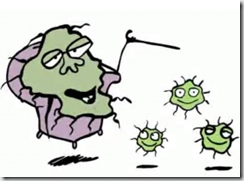
    In an attempt to help raise public awareness on the dangers of influenza – and its ability to mutate into new and potentially deadly strains - MOSAIC researchers have collaborated with collaborated with illustrator Steven Appleby and animator Pete Bishop to make a short (and entertaining) animated film called 'How to Catch Flu'.


    What better way to end the week than to spend a few quality minutes with a sage, anthropomorphized flu virus?

    image


    For more on this film, and MOSAIC,  Imperial College, London published a background article today under News & Events.  Follow the link below to read:


    Flu tells its story in new film

    by Francesca Davenport 25 July 2014

    Influenza researchers have collaborated with an illustrator to make a short animated film titled 'How to Catch Flu'.

    The film is presented by a flu virus who gives a comical and slightly macabre account of flu’s history and its possible future. Sitting in an armchair, it informs viewers of its evolution over the years, its preferred victims and what can facilitate or stop its spread. The film then provides advice on how to avoid the flu and limit its impact.

    (Continue . . .)

    Saturday, June 28, 2014

    PAHO Chikungunya Update & Videos

    image

    Aedes Albopictus – Asian Tiger Mosquito


    # 8792


    Up until about a decade ago, Chikungunya was a rarely seen mosquito-borne virus pretty much limited to central and eastern Africa.  All of that changed in 2005 when it jumped to Reunion Island in the Indian Ocean, where it reportedly infected about 1/3rd of that island’s population (266,000 case out of  pop.770,000) in a matter of a few months.


    From there, apparently aided and abetted by a recent mutation that allowed it to be carried by the Aedes Albopictus `Asian tiger’ mosquito (see A Single Mutation in Chikungunya Virus Affects Vector Specificity and Epidemic Potential), it quickly cut a swath across the Indian ocean and into the Pacific. 

    image


    That is, until about six months ago, when one (or more) infected travelers apparently arrived on the French Part of St. Martins, introducing the virus into the local mosquito population.  On December 10th there were 2 confirmed, 4 probable and 20 suspected cases of chikungunya on the island. 


    A short six months later, and the virus has spread across nearly the entire Caribbean basin, and has infected at least 260,000 people

    image

    Further expansion into North, South, and Central America seems but a matter of time.


    A textbook example of what happens when a emerging infectious disease enters an immunologically naive population under favorable environmental conditions.  And the reason why we talk so much about the global spread of disease in this age of globalization and increased international travel  (see The Global Reach Of Infectious Disease).


    Yesterday’s update from PAHO has already made headlines, as it shows an increase of roughly 93,000 cases over the previous week (a 40% increase), although not all of those cases emerged over the past 7 days. 


    As you’ll see by the chart below, some countries are still several weeks behind in their reporting, and surveillance and reporting in some regions is `sub-optimal’, so these numbers are still likely a significant undercount.


    image

    image


    This week the WHO/PAHO Youtube Channel released several short videos showing the effects of the illness. The first one is more of a slide show, but shows the symptoms of the disease.  The second video on Clinical Management is in Spanish, but has English sub-titles. 


    image


    image


    There are currently at total of five videos in their CHIKUNGUNYA Playlist.


    For more on how the State of Florida and the CDC are working to meet the challenges of chikungunya, you may wish to revisit:


    Florida Prepares For Chikungunya 

    Chikungunya Update & CDC Webinar Online

    CDC HAN Advisory On Recognizing & Treating Chikungunya Infection


    Wednesday, May 21, 2014

    The ASM 2014 Videos

    image


    # 8649


    Over the past three days the American Society for Microbiology has been holding its 114th General Meeting – this time in Boston – where hundreds of scientific sessions were held, and thousands of poster sessions were on display.


    The Final Program PDF runs 295 pages. 


    For those of us unable to attend, there are live webcasts (almost immediately available on the MicrobeWorld Youtube Channel) featuring interviews with presenters and discussions on some of the hottest topics at this year’s meeting.


    While I’m sure my readers will find something of interest in all of the ASM Live videos, one in particular strikes close to home.   Below you’ll find a discussion with Ian Lipkin, of Columbia University, and Lyle Petersen, of the CDC.


    Thumbnail
    ASM Live - The Next Emerging Threat
    American Society for Microbiology

    37:41


    Some other videos on this year’s roster include:


    Monday, April 07, 2014

    WPRO World Health Day Video: Small Bite, Big Threat

    image

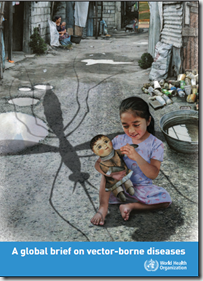
    Global brief on vector-borne diseases
    pdf, 4.45 Mb


    # 8441


    Globally, the World Health Organization estimates that one out of two people are at risk of contracting a vector-borne illness; diseases carried by mosquitoes, ticks, biting flies, and freshwater snails.  Globally Malaria infects more than 200 million people each year - killing over 600,000 - while 40% of the world’s population is now at risk of Dengue. 


    Add in the considerable burdens of schistosomiasis, lymphatic filariasis, Japanese encephalitis and a bevy of other VBDs (Vector-borne diseases) and you’ll understand why the WHO has dedicated World Health Day: 2014 to highlighting these preventable infections.


    While their greatest impact is undoubtedly in the least developed, poorest nations of the world - we’ve seen ample evidence that oceans, borders, and technology cannot prevent their spread around the globe. 


    West Nile Virus arrived in North American in 1997 and since then has become endemic across the lower 48 states and into Canada (see WNV: The Economic Costs Of An Invasive Arbovirus), while Dengue fever has made exploratory incursions into Florida (see MMWR: Dengue Fever In Key West), Texas and and only last fall resulted in a case of Locally Acquired Dengue In New York City.


    Chikungunya’s recent arrival in the Caribbean (see Chikungunya Update & CDC Webinar Online) now has many researchers concerned that it is well positioned to threaten North America in the months or years ahead. 


    The CDC’s: Estimate Of Yearly Lyme Disease Diagnoses In The United States is now believed closer to 300,000 than to the 30,000 cases officially reported each year, while newly discovered vector borne diseases – like the Heartland Virus and SFTS () – provide sobering hints that there are likely many more emerging VBDs yet to be discovered.


    As part of World Health Day, WPRO – the Western Pacific Region Office of the World Health Organization – has produced a video on the burden of Vector borne diseases in the Western Pacific, which you can access from the link below:


    World Health Day 2014: Small bite, big threat

    Video

    Summary

    For World Health Day 2014, a special film was commissioned to highlight the challenges posed by a number of vector-borne diseases in the Western Pacific Region, along with stories from the frontlines depicting how WHO supports Member States in tackling these diseases. In "Small Bite, Big Threat", filmmaker Mark Hammond captures several stories showing how collaboration between governments and civil society, supported by WHO, is vital in addressing malaria, dengue, schistosomiasis, lymphatic filariasis and Japanese encephalitis.

    Authors

    WHO Regional Office for the Western Pacific

    Publication details

    Publication date: 6 April 2014
    Languages: English


    While exotic diseases like Ebola, Marburg, and Avian Influenza garner the most headlines, in terms of actual impact on human health, they all pale in comparison to VBDs like malaria or dengue.  To learn more about these threats, and how you can help prevent them, set aside some time today to visit the WHO’s World Health Day website:

    image


      And for some earlier blogs on VBDs, you may wish to revisit:


    ECDC Updates Chikungunya & Zika Virus Outbreaks – March 17th

    The Risks Of Chikungunya Outbreaks In The United States

    DVBID: 2012 Record Number Of West Nile Fatalities

    Wednesday, April 02, 2014

    CDC Video: Responding To An Ebola Outbreak

    image

    Photo Credit - CDC


    # 8427


    Hot off the presses (posted only an hour ago), the CDC has released an informative, 6 minute video on how their Special Pathogens Branch responds to Ebola outbreaks in Africa.   This video does a very nice job of showing how difficult and complex a task it is to respond to a deadly disease outbreak in a remote region of the world.

    Click the image to view on Youtube.

    image

    Wednesday, November 20, 2013

    HSPH Video: The Next Pandemic: Are We Ready?

    image

    Credit HSPH


    # 7994


    On November 13th the Harvard School of Public Health (HSPH) put together a forum of experts to talk about our readiness for the next pandemic, and the current threats of H7N9 and MERS-CoV. I’ve been waiting for the video of this hour-long presentation to show up on the Harvard University Youtube site, and discovered this morning that it was uploaded yesterday.


    From the HSPH Forum website we get the following description of the broadcast:

    Summary

    New cases of the life-threatening MERS coronavirus in the Middle East and the H7N9 bird flu virus in China have prompted questions about the world’s readiness to confront potential resulting pandemics. This Forum event examined risks associated with these particular viruses, vaccine technologies to combat them, strategies to track them, global preparedness plans and lessons learned from past deadly outbreaks such as SARS and H1N1.

    Part of: The Andelot Series on Current Science Controversies.

    Presented in Collaboration with PRI's The World and WGBH


    The panel is comprised of four experts:

    Klaus Stohr, Vice President and Global Head, Influenza Franchises, Novartis Vaccines and Diagnostics
    Anita Barry, Director of the Infectious Disease Bureau, Boston Public Health Commission
    Marc Lipsitch, Professor of Epidemiology at Harvard School of Public Health and Director, Center for Communicable Disease Dynamics 
    Robert Huebner, Director, Influenza Division, Biomedical Advancement Research and Development Authority in the Office of the Assistant Secretary for Preparedness and Response, U.S. Department of Health and Human Services

    MODERATOR
    Peter Thomson
    , Environment Editor, PRI's The World


    I can highly recommend that you take the hour required to watch this video in its entirety.

     image

    Thursday, July 18, 2013

    WHO: Transcript, Audio, Video Of MERS-CoV Press Briefing

    image 

    Photo Credit WHO


    # 7494


    After the close of yesterday’s IHR meeting on the MERS-CoV threat (see WHO Statement On IHR Meeting On MERS-CoV) which concluded that this virus `is serious and of great concern, but does not constitute a Public Health Emergency of International Concern at this time.’ – Dr Keiji Fukuda, Assistant Director-General for Health Security and the Environment, held a 45 minute press conference in Geneva. 


    Below you’ll find links to the transcript, audio, and video recordings of this session.


    Middle East respiratory syndrome coronavirus (MERS-CoV) press briefings

    Video, audio and transcripts from the briefings


    17 July 2013 press briefing by Dr Keiji Fukuda, Assistant Director-General for Health Security and the Environment
    5 July 2013 press briefing by Dr Keiji Fukuda, Assistant Director-General for Health Security and the Environment

    Tuesday, May 21, 2013

    Reminder: ASM Webcast Today On H7N9

    image


    # 7301


    A quick reminder that later this morning (9am MDT) 11am EDT, there will be a webcast called Update on H7N9: Should We Be Concerned? as part of the he 113th General Meeting of the American Society for Microbiology which is being held in Denver this week.


    Live Denver 2013
    Tuesday May 21

    9:00 a.m. MDT - ASM Live - Update on H7N9: Should We Be Concerned?
    Robert Webster; St. Jude Res. Hosp., Memphis, TN


    This webcast, along with 9 others (see Webcast: ASM Live Denver 2013) will be archived almost immediately on the MicrobeWorld Youtube Channel.

    Saturday, April 27, 2013

    H7N9: Malik Peiris Video Interview


    image


    # 7199


    Malik Peiris is the Chair Professor of Microbiology at The University of Hong Kong, a Virologist at the Queen Mary Hospital and the Scientific Director of the HKU-Pasteur Research Centre at Hong Kong.


    And if that weren’t enough, Peiris was also one of the genuine heroes of the SARS outbreak in 2003. He and his team were the first to identify the causative agent  (coronavirus) behind that epidemic.


    Today we’ve a 7 minute video interview with Professor Peiris, courtesy of the Wall Street Journal (follows a brief commercial).


    Could H7N9 Become the World’s Next Flu Pandemic?

    The World Health Organization warns that birds seem not be the only means of H7N9 transmission. Professor Malik Peiris, a key investigator of the virus, tells us what we need to know about prevention.

    Sunday, December 30, 2012

    HHMI’s Holiday Lecture Series: 2012

    image

    Credit HHMI


    # 6810


    A couple of years ago I highlighted an online (and freeholiday lecture series  offered by HHMI (Howard Hughes Medical Institute) that focused on Infectious Diseases. These four (roughly 1 hour lectures) were geared for and delivered to an audience of high school science students.


    Which means that . . . while informative . . .  you didn’t have to be a full fledged microbiologist or virologist in order to follow along.


    These lecture series are a yearly event, and over the past 18 years they have focused on a variety of topics, including: Cancer, Genomics, Biodiversity, Immunology, Neuroscience, and Infectious Diseases.


    This year, the focus is on our changing planet, with four lectures available.


    2012 Holiday Lectures

    Changing Planet: Past, Present, Future

    The 2012 Holiday Lectures are viewable via Flash streaming (720p HD or 360p SD) or in an iOS MP4 download (360p SD) compatible with iPhone, iPod, and iPad.

    Lecture 1: The Deep History of a Living Planet, by Andrew Knoll, Ph.D.


     Lecture 2: Building Scientific Knowledge: The Story of Plate Tectonics, by Naomi Oreskes, Ph.D.


     Lecture 3: Earth's Climate: Back to the Future, by Daniel Schrag, Ph.D.


     Lecture 4: Climate Change: How Do We Know We're Not Wrong?, by Naomi Oreskes, Ph.D.


    You’ll find a variety of lecture series in the archives, along with a number of `informal talks’.


    These videos are a wonderful resource, with dozens of hours available on subjects ranging from genetics to anthropology, and everything in between.


    The rest of the Howard Hughes Medical Institute  website is well worth exploring as well, for it contains numerous short science films, virtual laboratories, and interactive mini-lessons, all designed to feed your `inner science geek’.


    Many of these videos, lectures, and podcasts are also accessible via iTunes.


    Highly recommended, whether you are a young student just starting out, or an old science geek like myself.

    Saturday, December 15, 2012

    ECDC Influenza Virus Characterization

    image


    # 6784


    The only constant with influenza viruses is their ability to change over time. Since immune systems can learn to recognize and defeat previously seen viral infections, they would soon run out of susceptible hosts if they could not continually evolve.


    Most of the time, these changes are incremental, and are due to a process called Antigenic drift. Drift comes about due to replication errors that are common with single-strand RNA viruses.


    Over time these minor changes can accumulate to the point that previously infected immune systems will fail to recognize it, giving the virus a fresh supply of hosts. 


    NIAID has a nice 3-minute video illustrating the process, which you can view on their Youtube Channel or in the box below.


    So, while we talk about seasonal A/H3N2 or A/H1N109 as if they are single entities, in truth, there are a good many minor variations on each theme circulating around the world.


    Within each strain, we can see numerous `clades’, or genetically distinct groups.  We watch the formation, and progress of these clades carefully, since they may eventually require a change in the flu vaccine’s formulation.


    Roughly once a month the ECDC releases an influenza virus characterization report, providing laboratory analysis of recently collected flu virus samples across Europe. Collection dates only extend through week 39, but this latest ECDC report indicates continued diversity among the viruses in circulation.


    The vast majority of flu viruses identified (68%) were of the type A/H3N2. Relatively few A/H1N1 viruses were collected.


    Among the influenza B viruses received, samples were pretty evenly divided between the Victoria lineage (included in last year’s vaccine) and the Yamagata lineage (part of this year’s vaccine).


    Here’s the link to their report, and the abstract.


    Influenza virus characterisation - Summary Europe, November 2012

    Surveillance reports - 14 Dec 2012

    Influenza virus characterisation - Summary Europe, November 2012

    Available as PDF in the following languages:


    ABSTRACT

    During the 2011/2012 season, A(H1N1)pdm09, A(H3N2) and B/Victoria and B/Yamagata lineage influenza viruses, with collection dates between 1 January and 30 September 2012 (weeks 1–39), have been detected in ECDC-affiliated countries.

    • Type A viruses predominated over type B.
    • A(H3N2) viruses predominated over A(H1N1)pdm09 viruses.
    • A(H1N1)pdm09 viruses continued to show genetic drift from the vaccine virus, A/California/07/2009, but the vast majority remained antigenically similar to it.
    • Antigenic drift of A(H3N2) viruses compared to the A/Perth/16/2209 vaccine virus resulted in a recommendation to change to an A/Victoria/361/2011-like component for the 2012/2013 influenza season.
    • B/Victoria lineage viruses fell within the B/Brisbane/60/2008 genetic clade and were antigenically similar to reference cell-propagated viruses of the B/Brisbane/60/2008 genetic clade.
    • Recent B/Yamagata-lineage viruses fell into two genetic clades in approximately equal proportions: clade 3 represented by the recommended vaccine component for the 2012/2013 influenza season, B/Wisconsin/1/2010, and clade 2 represented by B/Estonia/55669/2012. Viruses in each clade are antigenically distinguishable.


    The split between clade 2 and clade 3 of the Yamagata B virus lineage bears watching, and A/H3N2 shows the most variety with samples falling into 5 distinct genetic groups.


    The good news, despite this growing diversity among flu viruses, is that the majority of those collected in Europe through week 39 still appear antigenically similar to this year’s vaccine strains.

    Saturday, October 20, 2012

    The Narrow Margin

    image

    Photo Credit – Wikipedia


    # 6649


    Cold and flu season is upon us, and that means the consumption of over the counter (OTC) remedies will go up considerably over the next few months. So each fall I try to do a piece on some of the hidden dangers of these commonly used medications.  


    • Last year, in Kids, Colds, And OTC Meds we looked at the continuing trend of parents – against the advice of the CDC  – to use OTC medications to treat cold and flu symptoms in toddlers under the age of four.


    The plain truth is, accidental and intentional poisonings from OTC medications are very common.


    A study published last year in the American Journal of Preventive Medicine (see Emergency Department Visits for Overdoses of Acetaminophen-Containing Products) found that - in the United States alone – there are an estimated 78,414 ER visits each year due to acetaminophen (aka Tylenol, paracetamol, APAP) poisoning.


    While most of these were intentional overdoses (69.8%), more than 13,000 ER visits were described as due to `therapeutic misadventures’  . . . or accidental overdoses.


    The problem with acetaminophen is that there is a narrow margin between the maximum therapeutic dose and a potentially toxic (and sometimes fatal) overdose


    While well tolerated when taken as directed, APAP in larger doses is a hepatotoxin; it overwhelms and destroys the liver. In fact, APAP poisoning is the biggest cause of acute liver failure in the United States (cite).


    Since more than 600 products (OTC and Rx) contain acetaminophen, many consumers may be unaware that they could be `doubling up’ their dose when they take two or more of them. 


    All of which leads me to a press release issued earlier this week by the AAC  (Acetaminophen Awareness Coalition)  who have launched a Know Your Dose campaign to help educate consumers about the safe use of acetaminophen. 


    Excerpts below, but follow the links to read them in their entirety.


    image

    Credit – Acetaminophen Awareness Coalition


    U.S. Health Coalition Reminds Consumers: Double Check, Don't Double Up

    As Cold and Flu Season Nears, Consumers Are Urged to Double Check Their Medicine Labels to Avoid Doubling Up on Acetaminophen

    WASHINGTON, Oct. 17, 2012 /PRNewswire-USNewswire/ --

    The Acetaminophen Awareness Coalition is launching a nationwide initiative today calling on consumers to double check their medicine labels so they don't double up on medicines that contain acetaminophen during the cold and flu season. Acetaminophen is the most common drug ingredient in America. It is found in more than 600 different medicines, including prescription (Rx) and over-the-counter (OTC) pain relievers, fever reducers, sleep aids and numerous cough, cold and flu medicines. It is safe and effective when used as directed, but there is a limit to how much can be taken in one day. Taking more than directed is an overdose and can lead to liver damage.


    Each year, Americans catch an estimated one billion colds, and as many as 20 percent get the flu. Seven in 10 consumers use over-the-counter medicines, many of which contain acetaminophen, to treat their symptoms. The Coalition is targeting its "Double Check, Don't Double Up" message to the more than 50 million Americans who use acetaminophen weekly for conditions such as headache and chronic pain, and directing them to double check their medicine labels before taking a cold or flu medicine that also contains acetaminophen.


    <SNIP>

    When taking medicines for cough, cold or flu this coming season, consumers should follow these four simple acetaminophen safety steps:

    1. Know if medicines contain acetaminophen, which is in bold type or highlighted in the "active ingredients" section of over-the-counter medicine labels and sometimes listed as "APAP" or "acetam" on prescription labels.
    2. Never take two medicines that contain acetaminophen at the same time.
    3. Always read and follow the medicine label.
    4. Ask your healthcare provider or a pharmacist if you have questions about dosing instructions or medicines that contain acetaminophen.

    (Continue . . . )


    For more on this issue, we turn to the FDA’s  Youtube channel for the following videos.


    While drugs like acetaminophen are extremely useful and safe when taken as directed, the number of ER visits each year testify to the harm they can do when taken inappropriately.