Showing posts with label Mental Health. Show all posts

Tuesday, May 05, 2015

WHO/UNHCR: New Mental Health Guidance For Humanitarian Emergencies

image


# 10,013


Over the years one of the topics we’ve returned to often has been the long-term psychological (and physical) effects that disasters, wars, and other humanitarian crises can inflict on a population. 


Last year, in Post-Katrina Heart Attack Rates – Revisited, we saw that heart attack rates in New Orleans remained greatly elevated 6 years after the city was inundated by Hurricane Katrina, while in Post Disaster Stress & Suicide Rates we looked at the psychological aftermath of some major disasters.


The loss of loved ones, personal injury or injury to a loved one, loss of one’s home or livelihood, and in some cases – the  uprooting and destruction of an entire community - can lead to increased rates of PTSD, depression, and even self-destructive behavior (i.e. drug and alcohol abuse, suicide, etc.) in a community.


Victims of personal violence, rescue and medical workers, victims of disasters, terrorism, physical or psychological trauma, and/or a combat zone are also  at risk of suffering some level of PTSD. PTSD symptoms may include anxiety, depression, suicide and PTSD may even lead to drug and alcohol-related disorders. 


While mental health professionals may be available in some settings, in others – particularly in low-resource regions of the world, or in the midst of a crisis – there may be little or no professional psychological support.  


In recent years, however, there has been an emphasis on psychological first aid (PFA) – that can be learned, and administered, by lay persons.


PFA training – which can usually be completed in a day – teaches the lay person how to provide emotional support to those who have recently experienced, or are currently going through, an emotionally traumatic experience.  In 2011, the World Health Organization unveiled a Psychological first aid: Guide for field workers in low-resource settings, which we looked at here.


In 2013, we looked at a far more comprehensive WHO: Guidelines For Post-Trauma Mental Health Care  on post-disaster management of stress-related illness, this time geared to health-care workers for treating the mental health consequences of trauma and loss.

image

Credit WHO

Number of pages: 273
Publication date: 2013
Languages: English
ISBN: 978 92 4 150540 6

Downloads
Overview

These WHO mhGAP guidelines were developed to provide recommended management strategies for conditions specifically related to stress, including symptoms of acute stress, post-traumatic stress disorder and bereavement.

The guidelines were developed by an independent Guidelines Development Group and inform a new mhGAP module on the Assessment and Management of Conditions Specifically Related to Stress.


Today the WHO has unveiled a new guide on dealing with mental health issues in the midst of a humanitarian emergency, one that builds on the successes and lessons of previous efforts.   This 68-page guide is written specifically for healthcare practitioners working in the midst of a humanitarian crises such as a war zone, or disaster.


WHO/UNHCR issue new guide on mental health in humanitarian emergencies

Joint WHO/UNHCR note for the media

5 May 2015 ¦ Geneva - Worldwide close to 80 million people are currently impacted by humanitarian emergencies arising from natural disasters and armed conflicts, such as those in the Central African Republic, South Sudan, Syrian Arab Republic, Yemen, and more recently, Nepal. WHO estimates 5% to 10% of these people suffer from a mental health condition such as depression as a result of the emergency.

People with mental health disorders rarely have access to specialized health workers trained in assessing and managing their conditions. WHO and the United Nations High Commissioner for Refugees (UNHCR) have therefore produced a Mental health Gap Action Programme Humanitarian Intervention Guide (mhGAP-HIG), so non-specialist health workers can better identify, assess and manage mental health needs.

The new guide provides practical, first-line management recommendations for mental, neurological and substance use conditions. Contents include modules on assessing and managing conditions such as acute stress, grief, moderate-severe depressive disorder, post-traumatic stress disorder, epilepsy, and harmful use of alcohol and drugs.

(Continue . . . . )

WHO and UNHCR

Publication details

Number of pages: 68
Publication date: 2015
Languages: English
ISBN: 978 92 4 154892 2

Downloads


The aftermath of disasters often results in social, economic, and psychological upheavals (see Surviving A Different Kind Of Aftershock). Our short attention span, combined with the news media’s proclivity for moving on to the next big disaster or story, can make us forget that the struggle to rebuild devastated families and communities can take years.


Although a good disaster plan and emergency kit are imperative to get you through the opening hours and days of a disaster, knowing how to help friends, family, and neighbors deal with the psychological effects of a disaster can be equally important.


The CDC also provides a website which contains a number of resources devoted to coping with disasters.

Coping With a Disaster or Traumatic Event

Trauma and Disaster Mental Health Resources

The effects of a disaster, terrorist attack, or other public health emergency can be long-lasting, and the resulting trauma can reverberate even with those not directly affected by the disaster. This page provides general strategies for promoting mental health and resilience. These strategies were developed by various organizations based on experiences in prior disasters.


As does the National Center For PTSD - including videos - on how to provide Psychological First Aid.


Psychological First Aid: Field Operations Guide

Psychological First Aid

For Disaster Responders

Developed jointly with the National Child Traumatic Stress Network, PFA is an evidence-informed modular approach for assisting people in the immediate aftermath of disaster and terrorism: to reduce initial distress, and to foster short and long-term adaptive functioning.


A small reminder that not all wounds bleed, not all fractures will show up on an X-ray, and that the best treatment may not always reside inside your first aid kit.

Monday, October 21, 2013

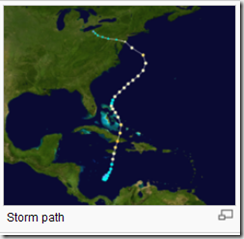
Sandy 1 Year Later: Coping With The Aftermath

image
Sandy’s Path – Credit Wikipedia


# 7884


As a former medic, I can tell you that no one comes out of a major disaster unscathed.   Some people are more adept than others at covering up the effects, but that doesn't mean they aren't affected.


Unfortunately, with our short attention span and the never-ending parade of dramatic news being live-streamed to us via the Internet, TV, and other media, we often lose track of a disaster hit community’s struggles to rebuild once the cameras move on. 


While a storm may last less than 24 hours, the rebuilding of lives, families, and businesses can sometimes take years. For many, life never goes back to the way it was before the disaster.


We are coming up to the one-year anniversary of Super-storm Sandy’s onslaught on the eastern seaboard, with the coastal areas of New Jersey being particularly hard hit. 


In terms of dollar losses, Sandy ranks second among Altantic hurricanes (65 billion),  exceeded only by 2005’s Hurricane Katrina.  But the damage left behind extends far beyond monetary losses.


PTSD (Post Traumatic Stress Disorder) is increasingly recognized as a serious factor in the wake of any traumatic event, and early recognition and treatment can be invaluable in reducing its impact  (see WHO: Guidelines For Post-Trauma Mental Health Care).  Symptoms may include anxiety, depression, suicide and PTSD may even lead to drug and alcohol-related disorders. 


Victims of personal violence, rescue and medical workers, victims of disasters, terrorism, physical or psychological trauma, and/or a combat zone are all at risk of suffering some level of PTSD. Sadly, not everyone who could benefit from psychological first aid  or post-disaster counseling, seeks it out, or receives it.


We’ve looked at other post-disaster health impacts in the past, such as in Post Disaster Stress & Suicide Rates. One disaster discussed was a 1999 7.3 earthquake that struck in Chi-Chi, Nantou county in central Taiwan killing more than 2,300 people.


A study that subsequently appeared in the Taiwan Journal of Medicine (Disease-specific Mortality Associated with Earthquake in Taiwan Hsien-Wen Kuo, Shu-Jen Wu, Ming-Chu Chiu) found `a considerable increase in the number of suicides after the earthquake’.


In the wake of Hurricane Katrina, a study funded by the National Institute of Mental Health, which surveyed 1,043 survivors,  found:

  • More than 11% were diagnosed with a serious mental illness following the storm. This compares to just over 6% before the hurricane.
  • 9.9% had mild-moderate mental illness, compared to 9.7% before Katrina.
  • They estimated  200,000 people facing serious mental problems, such as PTSS (Post Traumatic Stress Syndrome) and depression, in the three states most affected.


All of which serves as prelude to a story that appears today on http://www.njspotlight.com/ , which looks at the long term effects from Hurricane Sandy on the residents of New Jersey.


Sandy Survivors Still Bear Emotional Scars of Their Ordeal

Andrew Kitchenman | October 21, 2013

Mental-health experts report many NJ residents still hesitant to seek support
sandy mental health panel

Among those taking part in forum on mental-health issues related to Hurricane Sandy were Carolyn Beauchamp, president of the Mental Health Association in New Jersey; Dr. John R. Lumpkin, director of the Robert Wood Johnson Foundation’s healthcare group; Faith Liguori, a Seaside Park resident who lost her home to the storm; and Mayor Matt Doherty of Belmar.

For many survivors of Hurricane Sandy, emotional well-being remains as much a work in progress as the construction sites and vacant homes scattered across the New Jersey landscape.


Mental health professionals say it's as urgent for Sandy victims to seek help now as it was nearly 12 months ago, when the storm forever altered their lives.


Counselors are reporting that many marriages that survived the first several months after Sandy are breaking up as the one-year anniversary approaches, according to Carol Benevy, the project lead for New Jersey Hope and Healing

(Continue . . . )


The entire report is well worth reading.


The Mental Health Association of New Jersey is working to provide badly needed emotional support to those affected by this disaster, offering both hope and healing.

image


Obviously, the impact and the response to Hurricane Sandy extends far beyond just the state of New Jersey.  The Mental Health Association for New York City offers post-Sandy counseling services, as do many other affected states and municipalities.


While there is much variability in the levels of stress created by different disasters (exacerbated by both the severity and duration), cultural attitudes towards suicide, and in the effectiveness of individual coping skills, there seems little doubt that major disasters can cause both temporary and long-term mental health problems.


The CDC’s website contains a number of resources devoted to coping with disasters.


Coping With a Disaster or Traumatic Event

Trauma and Disaster Mental Health Resources

The effects of a disaster, terrorist attack, or other public health emergency can be long-lasting, and the resulting trauma can reverberate even with those not directly affected by the disaster. This page provides general strategies for promoting mental health and resilience. These strategies were developed by various organizations based on experiences in prior disasters.

Information for Individuals & Families

(Continue . . . )


And from the National Center For PTSD, you’ll find abundant resources - including videos - on how to provide Psychological First Aid.


Lastly, while the psychological impact of a major disaster cannot be fully prevented, individual, family, and business preparedness can go a long ways towards reducing the impact of any disaster.


Those that follow FEMA’s, and Ready.gov’s advice to Have A Plan, Make A Kit, and Be informed  will be better equipped to deal with any eventuality.


September is National Preparedness Month, but being ready to deal with an emergency – large or small – should be a year-round endeavor.


A couple of my (many) blogs on that subject include:


  • In An Emergency, Who Has Your Back?
  • An Appropriate Level Of Preparedness
  • Saturday, August 06, 2011

    Post Disaster Stress & Suicide Rates


    # 5739


    Nearly 5 months after the triple horrors of a deadly 9.0 earthquake, a series of massive coastal tsunamis, and an ongoing nuclear crisis, the lives and futures of millions of Japanese remain disrupted and uncertain.


    In a matter of a few hours more than  20,000 lives were lost, hundreds of thousands of survivors became refugees, families were separated, entire towns were destroyed, and uncounted businesses and individual livelihoods wiped out.


    Added to that, millions of residents have endured scores of strong aftershocks, rattling both previously damaged infrastructures and already raw nerves.


    And so stories, such as the one that appeared yesterday on the Voice of America's website about the fears of a rise in post-disaster suicides have become fairly common in the media.


    Fears of Suicide Surge in Japan's Tsunami Zone

    Henry Ridgwell | Sendai, JapanThese people care for their infant, and are among more than 430,000 forced into emergency shelters after the earthquake and tsunami struck Japan on March 11 of this year, in Sendai, Japan, August 2011

    Photo: VOA

    These people care for their infant, and are among more than 430,000 forced into emergency shelters after the earthquake and tsunami struck Japan on March 11 of this year, in Sendai, Japan, August 2011

    Months after Japan's devastating earthquake and tsunami, mental health experts say the psychological effects of the disaster might only now be coming to the surface. Phone counseling services are building up their presence along Japan's northeast coast for fear of increased suicides and other mental health problems.

    (Continue . . .)


    Japan, somewhat notoriously, was already known for having one of the highest rates of suicide in the world.  Not the highest, as many media stories have suggested (Lithuania, Kazakhstan, and Belarus all reportedly surpass Japan’s rate), but very high nonetheless.


    According to the Japanese government, more than 30,000 citizens took their own lives in 2010. Differences in international reporting make exact comparisons between countries difficult to make.


    Historically, Japan’s suicide rate has been closely tied to its economy, jumping more than 30% following their severe economic downturn in the late 1990s. Suicides often peak in May, during a period called  “gogatsu byo” or “May Sickness” – a time of increased stress that coincides with end of the corporate year in Japan.


    While exact numbers in the wake of Japan’s tragedy are hard to come by, according to a report appearing in The Australian newspaper last June, suicide rates have risen markedly.


    Suicide rates are increasing in Japanese regions most effected by the tsunami and nuclear disasters

    Richard Lloyd Parry, Asia Editor June 17, 2011

    The country already has one of the highest suicide rates in the world, but new figures show that the number of deaths has risen almost a fifth compared with a year ago. In Miyagi, the region worst hit by the March 11 tsunami, the figures are especially alarming, with suicides up 39 per cent.

    (Continue . . . )


    Many of these reports are anecdotal  in the turmoil following Japan’s disaster, and it will probably be years before the full psychological impact of this national rauma can be fully assessed.


    Studies from previous disasters around the world have provided mixed, and sometimes confusing, results.


    In 1999 a 7.3 earthquake struck in Chi-Chi, Nantou county in central Taiwan killing more than 2,300 people.


    A study that subsequently appeared in the Taiwan Journal of Medicine (Disease-specific Mortality Associated with Earthquake in Taiwan Hsien-Wen Kuo, Shu-Jen Wu, Ming-Chu Chiu) found `a considerable increase in the number of suicides after the earthquake’.


    Among their findings:


    . . .  the psychological effect of the earthquake in the disaster areas was far greater for women than for men. For men and women, suicide mortality rates were highest in the 25 to 39 year age group. Suicide rates among the 22 townships in the disaster areas varied markedly and were significantly correlated to severity of damage (number of injuries and number of collapsed/ partially collapsed buildings) within the township.


    But another study, this time following California’s 6.7 magnitude Northridge earthquake in 1994, found exactly the opposite.  The rate of suicide actually dropped in the three years following that disaster.


    Suicides in Los Angeles County in Relation to the Northridge Earthquake

    Kimberley Shoaf,DrPH; Cary Sauter,MPH; Linda B. Bourque, PhD;Christian Giangreco,MPH;  Billie Weiss,MPH

    Conclusion: It does not appear that suicide rates increase as a result of earthquakes in this setting. This study demonstrates that the psychological
    impacts of the Northridge earthquake did not  culminate in an increase in the rates of suicide.


    Adding to the confusion, we’ve seen conflicting reports on suicide rates following the devastation of New Orleans from Hurricane Katrina. 


    While some sources have cited a 3-fold increase in suicide in the months following that disaster (see CNN report New Orleans' suicide rate nearly triples) a Harvard Study released in the summer of 2006 came to a different conclusion.


    Mental illness and suicidality after Hurricane Katrina.

    Ronald C. Kessler, Sandro Galea, Russell T. Jones, Holly A. Parker, and Hurricane Katrina Community Advisory Group


    Funded by the  National Institute of Mental Health, the study surveyed 1,043 survivors.  They found:


    • More than 11% were diagnosed with a serious mental illness following the storm. This compares to just over 6% before the hurricane.
    • 9.9% had mild-moderate mental illness, compared to 9.7% before Katrina.
    • They estimated  200,000 people facing serious mental problems, such as PTSS (Post Traumatic Stress Syndrome) and depression, in the three states most affected.


    Despite this doubling of serious mental health issues, they found that fewer people expressed thoughts of committing suicide.


    They concluded:


    Despite the estimated prevalence of mental illness doubling after Hurricane Katrina, the prevalence of suicidality was unexpectedly low. The role of post-traumatic personal growth in ameliorating the effects of trauma-related mental illness on suicidality warrants further investigation


    In 2002 (and updated in 2005) Fran H. Norris of the Dartmouth Medical School and National Center for PTSD released a comprehensive review of the mental health impact of 132 different disasters between 1981 and 2004.


    Range, Magnitude, and Duration of the Effects of Disasters on Mental Health:  Review Update 2005


    The following slides come from an HHS presentation on Research on the Mental Health Consequences of Disaster by Ferris Tuma, Sc.D.


    image

    image

    image


    While there appears to be much variability in the levels of stress created by different disasters (exacerbated by both the severity and duration), cultural attitudes towards suicide, and in the effectiveness of individual coping skills, there seems little doubt that major disasters can cause both temporary and long-term mental health problems.


    The CDC’s website contains a number of resources devoted to coping with disasters.


    Coping With a Disaster or Traumatic Event

    Trauma and Disaster Mental Health Resources

    The effects of a disaster, terrorist attack, or other public health emergency can be long-lasting, and the resulting trauma can reverberate even with those not directly affected by the disaster. This page provides general strategies for promoting mental health and resilience. These strategies were developed by various organizations based on experiences in prior disasters.

    Information for Individuals & Families

     (Continue . . . )


    And from the National Center For PTSD, some resources - including videos - on how to provide Psychological First Aid.

    image


    Psychological First Aid: Field Operations Guide


    Psychological First Aid

    For disaster responders

    Developed jointly with the National Child Traumatic Stress Network, PFA is an evidence-informed modular approach for assisting people in the immediate aftermath of disaster and terrorism: to reduce initial distress, and to foster short and long-term adaptive functioning. It is for use by first responders, incident command systems, primary and emergency health care providers, school crisis response teams, faith-based organizations, disaster relief organizations, Community Emergency Response Teams, Medical Reserve Corps, and the Citizens Corps in diverse settings. The 5th appendix consists of Handouts for Survivors (PDF).


    Online training on how to provide Psychological First Aid is available from http://learn.nctsn.org/, and you can view a series of videos about the process that are available on the PFAOnlinevideos Channel of Youtube.

    image


    Lastly, while the psychological impact of a major disaster cannot be fully prevented, individual, family, and business preparedness can go a long ways towards reducing the impact of any disaster.


    Those that follow FEMA’s, and Ready.gov’s advice to Have A Plan, Make A Kit, and Be informed  will be better equipped to deal with any eventuality.


    September is National Preparedness Month, but being ready to deal with an emergency – large or small – should be a year-round endeavor.


    Finally, a couple of my (many) blogs on that subject include:


  • In An Emergency, Who Has Your Back?
  • An Appropriate Level Of Preparedness