Showing posts with label NHS. Show all posts

Friday, May 30, 2014

Public Health England Launches Airport MERS Advisory Campaign

image


# 8685


With the Holy month of Ramadan less than a month away, and the Hajj coming up in early October, the number of people passing through London airports traveling to or from the Middle East is only going to increase over the next few months. As the MERS outbreak continues unabated on the Arabian peninsula, concerns run high over its potential to spread.


Already, at least two known MERS-CoV infected passengers have transited through Heathrow, sparking intensive contact tracing and follow up of airline passengers (see  Public Health England Press Release On MERS Case Transiting London).


In an attempt to mitigate the risks of travelers unwittingly carrying the virus on air flights, or spreading it once they arrive at their destinations,  PHE (Public Health England) has issued two new informational posters on MERS for placement at airports, and is advising up their 999 and 111 systems on how to handle possible enquires. 


The first poster (at top of post) deals with passengers headed to the Middle East.  A number of US airports posted a similar notice a couple of weeks ago (see MERS Advisories Go Up In Some U.S. Airports) – although  unlike the new PHE posters - those did not specifically warn about contact with camels.


The second (below) is for returning passengers.


image


PHE has issued a press release on this campaign, with quotes from experts on the risks of MERS infection:


Posters featuring advice for travellers to and from the Middle East have been distributed to UK airports and airlines.

Public Health England (PHE) is providing two posters to major UK airports to warn about the risks of Middle East respiratory syndrome coronavirus (MERS-CoV). The first poster gives general advice for travellers to the Middle East, while the second issues advice for travellers returning to the UK.


MERS-CoV is a new type of coronavirus, first identified in a Middle Eastern citizen in 2012. Although cases continue to be reported from the Middle East, no new cases of MERS-CoV have been detected in the UK since the cases linked to the Middle East in February 2013.


PHE scientists recently met to review the current risk assessment and concluded the risk to UK residents and travellers to the Middle East remains very low. Travellers, particularly people with underlying or chronic medical conditions, are advised to avoid contact with camels in the Middle East, avoid drinking raw camel milk and handling raw camel meat, and adhere to good general food and hand hygiene measures.


After diagnosing one of the first cases of MERS-CoV in the world at the health protection laboratories in Colindale in September 2012, PHE remains at the forefront of providing public health advice and information on MERS-CoV.

Professor Nick Phin, Head of Respiratory Diseases for PHE, said:

There is growing evidence of the possible role of camels in transmitting MERS-CoV to humans. We advise travellers, particularly those with underlying or chronic medical conditions, to avoid contact with camels in the Middle East and practice good hand and respiratory hygiene to reduce the risk of respiratory illnesses.


Healthcare professionals are advised to remain vigilant for severe unexplained respiratory illness occurring in anyone who has recently travelled in the Middle East, as well as any unexplained cluster of severe respiratory illness or healthcare worker with unexplained severe respiratory illness.


PHE will continue to provide advice on infection control, urgent diagnostic investigation and identification of contacts of suspected cases who may need to be followed up to check on their health.

Dr Brian McCloskey, Director of Global Health at PHE, said:

The recent reports of cases in travellers visiting the region and the rise in global cases we’ve seen is concerning, and we will continue to monitor the global situation and adjust our risk assessment as appropriate.


The risk of UK residents contracting infection in the UK remains very low. The risk to UK residents travelling to Middle Eastern countries may be slightly higher than within the UK, but is still very low.


PHE will maintain its current enhanced levels of surveillance and continue to liaise with WHO and ECDC colleagues to ensure we have the best available information so that our advice is accurate and up to date.

Contact: infections-pressoffice@phe.gov.uk


Meanwhile, NHS Pathways has issued the following guidance to those who must respond to calls from the public regarding possible infection.


MERS Coronavirus – General Advice for responding to calls from the public


Important information for anyone taking calls within a 999 or NHS 111 service.  Please print and circulate copies of this instruction sheet to all staff handling 111 and 999 calls


Public Health England are planning to publish posters at airports in the UK on 29th May 2014 regarding Middle East Respiratory Syndrome Coronavirus (MERS-CoV).


There have been various public health alerts relating to passengers travelling by air from MERS--CoV affected countries in the Middle East.  Public Health England is issuing general guidance for members of the public travelling to and from the Middle East, which includes advice to call NHS 111. The countries covered by this travel advice include: Syria, Iraq, Lebanon, Palestinian Territories, Israel, Jordan, Saudi Arabia, Kuwait, Bahrain, United Arab Emirates, Oman, Yemen or Saudi Arabia.


If a caller identifies themselves as having been to a known MERS-CoV affected region within the 14 days before their symptoms started:

  • AND they have shortness of breath or cough with a fever
  • Triage their symptoms as normal
  • BUT if the final disposition is less urgent than ‘Contact a Primary Care Service within 12 hours’, you MUST upgrade the disposition to ‘Contact a Primary Care  Service within 12 hours’


It is vital that these callers are seen within this time frame They MUST tell the Primary Care Service that they have been to the Middle East when  they are seen.

Do not alter the disposition if it is more urgent than Contact Primary Care Service within 12 hours.
If an AMBULANCE has been dispatched to a caller who has declared travel to an affected area, ensure that the crew is made aware to enable them to follow the Public health guidance regarding MERS – CoV


If a caller identifies themselves as having travelled to the affected areas, but they DO NOT have any of the above symptoms:

  • Triage the presenting symptoms

If a caller identifies themselves as having travelled to the affected areas, but they DO NOT have ANY symptoms and are just concerned:

  • Pass the call to the NHS Pathways clinician for advice

FOR NHS Pathway’s Clinician


Reassure them that the risk of infection is low

  1. Give the following advice “If you develop shortness of breath or cough with a fever in the 2 weeks after return then”:
  • During normal working hours, contact a Primary Care Service within 12 hours.
  • Out of normal surgery hours, call 111

They MUST tell the Primary Care Service that they have been to the Middle East when they are seen.

Wednesday, September 26, 2012

HPA Letter To NHS Staff On Coronavirus

 image

 SARS coronavirus – Credit CDC PHIL


# 6584


Although it actually went out to GPs yesterday (Sept 25th), the HPA has today published the letter they sent to NHS staff in England and Scotland on the coronavirus case being treated at a London hospital.


This letter provides us with perhaps the most detailed account to date on the events surrounding this case, including contact tracing.


Patient receiving treatment for novel coronavirus

26 September, 2012

The Department of Health has issued an alert to advise of a case of a novel coronavirus in a patient receiving treatment in a London hospital.


On 22 September 2012 a novel coronavirus was identified in lower respiratory tract specimens of a previously well, adult male Qatari national receiving treatment for a severe respiratory illness in London.

Please see the full alert from the Department of Health


Publication title: Novel coronavirus in a Qatari national receiving treatment for a severe respiratory illness in London

Document type: Letter

Publication description: This is to advise of a case of a novel coronavirus in a patient receiving treatment in a London hospital.

Publication author: Department of Health

Copyright holder: Crown

DH Gateway number: 18180

Date of publication: 26 September, 2012

Series number: CEM/CMO/2012/15

Some excerpts from the letter (slightly reformatted for readability) include:

NOVEL CORONAVIRUS IN A QATARI NATIONAL RECEIVING TREATMENT FOR A SEVERE RESPIRATORY ILLNESS IN LONDON

On 22 September 2012 a novel coronavirus was identified in lower respiratory tract specimens of a previously well, adult male Qatari national receiving treatment for a severe respiratory illness in London. The virus is virtually identical genetically to a novel coronavirus recently identified by Dutch researchers in a clinical sample from a Saudi Arabian national who was ill with pneumonia over three months ago. These are currently the only two known cases from whom this virus has been isolated.


Coronaviruses are causes of the common cold but also include the virus responsible for SARS.  Strict respiratory isolation has been instituted around the current case and all personnel caring for the patient are wearing the appropriate personal protective clothing.


Respiratory symptoms in the current case started in early September after a reported visit to Saudi Arabia. The patient was admitted to hospital in Qatar and, as symptoms worsened, was transferred to London by air ambulance on 11 September where he is now being treated in intensive care.


Initial routine investigations revealed no cause for the illness but on 21 September, following a report in ProMED describing the identification of a novel human coronavirus, in a fatal respiratory illness in an adult Saudi Arabian national, specimens from the London patient were examined for coronavirus infection, and were found to be positive.Genetic characterisation of the virus revealed that it was virtually identical to the virus that caused the illness in the earlier case from Saudi Arabia.


In the light of the severity of the illness in the two confirmed cases and the novel nature of the virus, contacts of the cases, predominantly health care workers, are being contacted to ensure they are well and that further transmission has not occurred. 


Follow up of the contacts of the current case is underway; no illness due to this infection has been confirmed so far in this group. Many of these contacts are already likely to be beyond the incubation period (currently assumed to be seven
days, based on what is known about other human coronavirus infections) when symptoms would have developed had they been infected. No other cases of confirmed or probable infection with this virus.


Information about these cases, and advice on the need to be vigilant for the possibility of further cases, has been developed for health care workers in the UK. 


http://www.hpa.org.uk/Topics/InfectiousDiseases/InfectionsAZ/RespiratoryViruses/NovelCoronavirus/respinfoforprofnovelcoronavirussept2012/  


Friday, June 08, 2012

Updating Edinburgh’s Legionnaires Outbreak


# 6372


Since yesterday, an additional 10 cases of Legionella have been identified in Edinburgh, Scotland bring the total to 61 in a week. It is considered likely that more people are affected, albeit mildly and are not seeking medical care.


While no environmental source has been identified, HVAC cooling towers (the most common point of origin) in the south western part of the city have been treated, and it is hoped that this will result in a drop in cases.


For more on the origins of this outbreak, and a brief history of Legionnaires diseases, you may wish to revisit (The Legionella Outbreak in South West Edinburgh).


You’ll also find a very instructive PDF file available from the ECDC website called:


Legionella Pneumonia Geographic Information System: a helpful tool in cluster detection


image

This presentation was made by Sjoerd M. Euser, PhD at the 2010 European Scientific Conference on Applied Infectious Disease Epidemiology (ESCAIDE) in Lisbon in 2010.


We’ve the latest statement from NHS Lothian, the public health authority in charge of the Edinburgh area.


Outbreak of Legionella in South West Edinburgh

Update - 07/06/2012 17:30

Legionnaires’ outbreak update - number of cases stands at 61


The latest reports from the Scottish Government Resilience Room (SGoRR) on the Edinburgh Legionnaires’ disease outbreak show that there are now 24 confirmed cases and 37 suspected cases.


As at 12pm today, of those cases being treated in hospital, 12 were in intensive care and 28 are on general wards.


A total of 13 cases are being treated in the community, five have been discharged from hospital and one person has sadly died.


Two cases are being treated outwith the NHS Lothian area – one in Highland and one in the north of England. Both of these cases are being treated as part of the south west Edinburgh outbreak and have connections to the area.


People that are being admitted to hospital with symptoms are now generally speaking in a better state of health than has previously been the case. The ages of those affected now ranges between 19 and 88, with more males than females affected.


As of yesterday, NHS 24 had received 48 calls to the dedicated helpline. However, there was a 20 per cent increase in the number of calls to their regular number about Legionnaire’s disease.


The investigation into the source of the outbreak is continuing, with all 16 cooling towers in the affected area now having been inspected.


Those cooling towers which were considered to possibly require re-treating are now undergoing this process.


Health Secretary Nicola Sturgeon said: “It is a positive sign that those people being admitted to hospital are, generally speaking, less ill than had been the case at the start of the outbreak and we are seeing an increase in the numbers of people well enough to be treated in the community.


“NHS Lothian services are busy but coping and I would like to pay tribute to NHS staff who are coping extremely well with this situation.


“It remains the case that the risk to the general public remains low but anyone with concerns should contact their GP or NHS 24’s dedicated hotline on 0800 0858 531.


“I want to stress that this bacteria is not passed on person to person or by drinking water.


“Investigations into the source of this outbreak, which are primarily led by the City of Edinburgh Council and the Health and Safety Executive and supported by Health Protection Scotland, are making good progress. I would hope that over the next few days this investigation will start to deliver answers about where the source of the outbreak might be. However, it is important to note that sometimes it is not possible to conclusively identify a source.


Thursday, June 07, 2012

The Legionella Outbreak in South West Edinburgh

image

Legionella Bacteria - Photo Credit CDC PHIL


# 6370


There’s a rapidly spreading outbreak of Legionella in Scotland this week,  and I’ve details from the NHS and HSE. 


But first . . . a little background and history.


In July of 1976, while many of us in the health care field were waiting for the expected arrival of a swine flu pandemic (see Deja Flu, All Over Again), another medical crisis was brewing  at the Bellevue Stratford Hotel in Philadelphia.


This was the scene of the gathering of hundreds of veterans belonging to the American Legion, celebrating this country’s bicentennial.  Within a couple of days of their arrival, scores fell ill with a serious flu-like illness.


At first, many believed this was the first arrival of the expected flu pandemic, but soon it became evident that this was something else entirely.  But exactly what it was would take months to determine.


During this outbreak, 221 people were treated and 34 died.


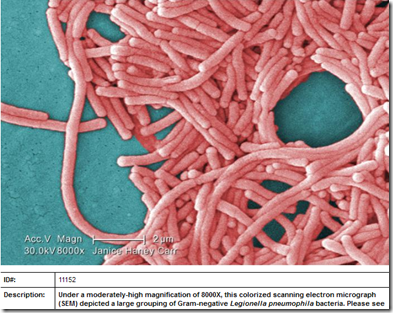
But it wouldn’t be until early in 1977 that a definitive cause would be isolated by the CDC a Gram negative, aerobic bacteria found growing in the hotel’s air-conditioning cooling tower – that provoked a serious form of pneumonia.


Dubbed `Legionnaire's Disease’ by the press, this bacterium was named Legionella, and the pneumonia it produces Legionellosis.


While `discovered’ in 1976 and identified the following year, Legionella had been with us, and causing serious illness, for a long time. It had caused earlier outbreaks, including one in Austin, Minnesota in 1957 (Osterholm et al., 1983) and at Saint Elizabeth’s Hospital in Washington, D.C. in 1965.  


The cause of these outbreaks wasn’t identified, however, until retrospective studies were conducted after the Philadelphia outbreak.  


We now know Legionella to be a major cause of infectious pneumonia, and that it sometimes sparks large outbreaks of illness.  According to the CDC between 8,000 and 18,000 Americans are hospitalized with Legionnaire's Disease each year, although the actual number of infected is likely higher.


All of which serves as prelude to the following report on the rising number of Legionella cases being diagnosed this week in Edinburgh Scotland.


As of today, the Associated Press is reporting 51 confirmed cases (link), one death, and more cases are expected to turn up.


So far, the source of this environmental pneumonia has not been identified.


image


Running point in the investigation is NHS Lothian, which is the public health authority for the Edinburgh area. 


The first press release on this outbreak came 4 days ago with the announcement of the first four cases. The next day there were six,  and the day after that . . . thirteen. 


Now the number stands at 51, and at least 10 more suspected cases are being tested.


You can read the progression of daily reports by the NHS at the link below, with the last update from yesterday.


Outbreak of Legionella in South West Edinburgh - Last updated 07/06/2012 AM

Update - 07/06/2012 AM

The Cabinet Secretary for Health & Wellbeing made a statement on the Legionella Outbreak at the Scottish Parliament this morning. You can watch it online at 

http://www.scottish.parliament.uk/newsandmediacentre/30912.aspx


Update - 06/06/2012

Resilience team report on outbreak latest

The latest reports from the Scottish Government Resilience Room (SGoRR) on the Edinburgh Legionnaires’ outbreak show that there are now 21 confirmed cases and 19 suspected cases.


One of the confirmed cases has died, two have been discharged from hospital and 12 are being treated in intensive care.


An emergency information leaflet will be delivered to all homes and businesses in affected areas tomorrow. GPs have also been provided with information on spotting the signs of infection.


A dedicated NHS helpline has been set up for anyone concerned and can be reached on 0800 0858 531.


Health Secretary Nicola Sturgeon said:


“The fact remains that the risk to the general public is low – however, due to the incubation period of the infection we are still expecting to see an increase in cases over the next couple of days.

(Continue . . . )


Obviously these numbers continue to rise, and press reports now differ from the numbers posted above.


The NHS maintains the following  website with more information on Legionella:


Legionnaires' disease

Introduction

Legionnaires’ disease is a potentially fatal lung infection (pneumonia) that is caused by the legionella bacteria. Legionnaires’ disease is caught by breathing in small droplets of contaminated water. It is not contagious and cannot be spread directly from person to person.


Initial symptoms include a high fever and muscle pain. Once the bacteria begin to infect your lungs, you may also develop a persistent cough (see Legionnaires disease - symptoms). Prompt treatment using antibiotics is essential to reduce the risk of death. See Legionnaires’ disease - treatment for more information.

(Continue . . . )


To put this in context, the largest outbreak of Legionnaires disease in recent years in the UK occurred a decade ago, in the town center of Barrow-in-Furness, Cumbria which ultimately produced 180 known infections, and 7 deaths.


The following 62-page report on that outbreak is available on the HSE website:


Report of the public meetings into the legionella outbreak in Barrow-in-Furness, August 2002PDF


While doctors struggle to treat those infected, disease detectives in Scotland are working to find the environmental source of this virulent bacteria, in order to stop the outbreak.


I’ll update this story when new details emerge.

Tuesday, December 28, 2010

UK: 2010 Flu Vaccine Policy Debated


# 5182


With the UK on the cusp of what may turn into the first major flu epidemic in a decade, difficult questions are being raised about this year’s flu vaccination policies. 


The NHS provides free influenza vaccines to groups deemed to be at high risk from the virus, and this year that includes:


It is recommended you have a flu jab if you:

  • are 65 or over
  • are pregnant (see below)
  • have a serious medical condition (see box)
  • live in a residential or nursing home
  • are the main carer for an elderly or disabled person whose welfare may be at risk if you fall ill
  • are a healthcare or social care professional directly involved in patient care
  • work with poultry (see below)


This is essentially a return to the pre-pandemic recommendations, based on the long standing determination that those over-65, and those with chronic health conditions, are most at risk from the influenza virus.


Children under the age of 5 were included (a carry over from last year’s pandemic) until The Independent Joint Committee on Vaccination and Immunisation dropped that recommendation last July.


Now . . .  with the HPA reporting (as of Dec. 24th) 460 people in intensive care, and 27 flu-related fatalities, this year’s vaccination policy has turned into a heated medical, scientific, and political debate.


The novel H1N1 virus – which since it emerged has shown a predilection for those under 65 – is once again the predominant strain of influenza in the UK (but not globally . . . go figure).


As a result, 89% of those in Intensive care units are under the age of 65.


There are now accusations being made in the media, and by some Shadow Ministers (members of Her Majesty's Loyal Opposition) that the exclusion of otherwise healthy under-5’s from the high-risk list was a cost cutting move, and ill advised.


It should be noted that by far, the most heavily impacted age group (based on ICU admissions) are those between the ages of 16-64 (79%).


Under-5’s made up about 6% of the total ICU admissions (n=26).


Details on how many of each group had pre-existing conditions, and would have been eligible for (or actually received) the jab, have not been made available.


Health Secretary Andrew Lansley is defending the decision, stating that their vaccination program was based based on age and risk factors and was continually under review.


This morning, a report from the BBC which includes statements by John Oxford, Professor of Virology at St Bartholomew’s and the Royal London Hospital, on our need to adapt to the changing threat from influenza.


28 December 2010 Last updated at 05:48 ET

Flu vaccine policy for children defended

Friday, March 05, 2010

UK: NHS `Just Coped’ With Pandemic


# 4405


An interesting read this morning from This Is Nottingham concerning post-pandemic wave assessments made by a variety of practitioners and medical professionals from the Nottingham, UK region.


Chris Locke, chief executive of the Notts Local Medical Committee (LMC),  believes that the NHS (National Health Service) `just coped with the pandemic.


Had it been much more severe, he states, `many services would have collapsed under the strain’.


While this article is UK-centric, many of the difficulties discussed in this article would apply to other countries as well.


As bad as it was, we collectively dodged a bullet with this pandemic.  It could have been a lot worse.


This is a long article, an informal post-mortem if you will, on the NHS response.  An official assessment is underway, and is expected in May.


I’ve just reproduced the opening paragraphs.  Follow the links to read it in its entirety.


NHS 'just coped' with flu pandemic

Friday, March 05, 2010, 11:14

A LEADING doctor has revealed local health services "would have collapsed under the strain" if the swine flu pandemic had been more widespread.


Local NHS officials expected hospitals, phone lines and GP services to be swamped after the World Health Organisation declared a swine flu pandemic last June.


But the disease didn't take hold as quickly or as widely as expected.


Chris Locke, chief executive of the Notts Local Medical Committee (LMC), has said health services across county would not have been able to cope if the threat had fully materialised.


He said: "Despite several years of preparation, the NHS only just managed to cope with this pandemic.


"If it had turned out to be as bad as predicted, many services would have collapsed under the strain.


"Emergency departments, out-of-hours services, GP practices and community staff were all overstretched at certain times."


The LMC, which represents GPs, says the Government made mistakes in the way it responded to the pandemic.

(Continue . . . )