Showing posts with label pneumonia. Show all posts

Sunday, December 28, 2014

Libyan MOH: Statement On Severe Pneumonia Cases

image


# 9504


Yesterday numerous media outlets reported 4 H5N1 Deaths In Libya, although no official statement was posted on the Libyan Ministry Of Health Website.  While the MOH site remains silent, today Sharon Sanders of FluTrackers has dug up a (machine translated) statement from the Libyan MOH Facebook page.


As you will see, it doesn’t exactly clear up matters. At least one case is identified as having H1N1, others having `influenza A’, and still others were apparently not tested.  


Regardless of yesterday’s reportage, whether any of this really adds up to H5N1 is anyone’s guess at this point.  Given the political turmoil and fighting in the region, getting reliable information anytime soon may prove difficult, but we’ll keep an eye on it.


image

The Committee held the substantive follow-up to the pandemic by the National Centre for disease control convened an emergency meeting at the headquarters of the Centre on Sunday 28/12/2014, during which the current situation regarding the occurrence of pneumonia where the record number (10) cases of severe acute respiratory syndrome have the same common symptoms are cough-heat-phlegm with blood-acute respiratory failure "died from 5 cases were as follows :-

The Tripoli medical center ((two two pregnant women in their thirties one of them proved fatal case of H1N1 and they be still underneath the intensive care ventilator-the third case of a young man in the 1940s is still in intensive care waiting for lab results. the fourth case of a young man in his 30s died of the lab results confirmed as having avian influenza type a-A fifth case of a young man in the 1930s remained hospitalized in intensive care, pending the outcome of the alhalil-the sixth case of a pregnant woman with the same symptoms converted from Center The Tripoli medical companies and hospitals died in hospital))

Tobruk (cases (4 cases reported the same symptoms died, including three patients, two brothers aged 28 and 40-year-old died and not taken them sample-the second chip died in Egypt is sufficient information about the patient as the fourth case is still under the care of laboratory technician

Through these cases, the Committee stresses that the current situation does not constitute transboundary epidemic with wide-ranging as current data and communicate with hospitals to prepare for any emergency.


Monday, February 03, 2014

Egypt: 4th Doctor Dies Of Pneumonia

image


# 8263


Two weeks ago - in Watching Egypt Again . . . - we looked at a series of reports in the Arabic press regarding respiratory outbreaks, including media speculation that either H5N1 or MERS was to blame.  Adding to the alarm, there were separate reports of 4 doctors hospitalized with `pneumonia’ or `respiratory illness’ over the previous few weeks, three of whom had supposedly died.  


This From Flutrackers.


1) Dr. Ahmed Abdullatif – deceased

Egypt - Ministry of Health closes private hospital after death of a doctor from pneumonia - negligence alleged - Banha, Qalyubia governorate - December 28

2) Dr. Osama (last name assumed to be Rashid) - hospitalized on respirator

Egypt - Doctor, 37, hospitalized suspected novel coronavirus - tests pending - Mansoura, Dakahlia govenorate - January 8

3) Dr. Doaa Ahmed Ismail – deceased

Egypt - Unknown respiratory virus killed pregnant doctor - alleged to be coronavirus - another hospitalized - in Dakahia govenorate January 17

4) Dr. Yasser Barbary – deceased

Egypt - Health denies infectious diseases in hospitals in Qaliubiya govenorate after the death of a doctor - investigation demanded by coalition of doctors - January 18


Very quickly, Egypt’s Ministry of Health issued blanket denials (see MOH Denies H5N1 or Coronavirus Cases In Egypt), yet additional reports have continued to filter in through the media.  Official explanations have hinted at either H1N1, or perhaps MRSA pneumonia as being the culprit.


 FluTrackers has kept track of these reports on this thread, including a report yesterday that the 2nd doctor in the list above – Dr. Osama Rashid – has recently died, making the 4th physician death in Egypt from pneumonia in a month.


While a machine translation, this morning we have an English language version of the report from the Egypt Independent.


Fourth doctor dies of acute pneumonia in Mansoura

 Sun, 02/02/2014 - 16:39

Al-Masry Al-Youm

A doctor in Mansour fell victim to respiratory infection at Mansoura University hospital, marking the fourth death among doctors from the same infection in less than one month.

The doctor, called Osama Rashed, was treated for three weeks in the hospital’s intensive care unit.

Officials at the doctors syndicate warned against the spread of acute pneumonia, calling on the Health Ministry not to be reluctant toward taking precautionary measures to prevent the disease turn to epidemic.

Around six doctors were reportedly infected in January with the same disease, causing four to die. Two of them were from Qalyoubeya, two were from Daqahliya.

Taher Mokhtar, former member of the syndicate board in Alexandria, said Rashed was infected while performing his duty. In a statement on Sunday, he said the ministry had not yet declared reason of the doctors’ death. He added that the four doctors were below 40 years old. “How many citizens have died of this infection at governmental hospitals so far, while the ministry still has not recognized the situation?” he wondered.

(Continue . . .)


Although it is certainly possible that H1N1 or bacterial pneumonia are behind these deaths – or that multiple etiologies are at play - four young doctors dying from pneumonia in the space of a month is far from normal.  In the past few days there have been calls by local doctors for an official investigation by the MOH. 


Hopefully we’ll learn more soon.

Monday, January 28, 2013

HPA: Unusual Number Of PVL Pneumonia Cases In the UK

image

Credit CDC


# 6892


In an article called Warning over killer pneumonia linked to flu, Rebecca Smith, Medical Editor for The Telegraph writes today that a rare type of bacterial pneumonia – one that usually only accounts for 30 to 40 cases each year in the UK - has been identified in 18 cases of community acquired pneumonia between December 6th and January 7th.


The culprit is a strain of Staphylococcus aureus that carries a gene for PVL (Panton-Valentine leukocidin) – which is a potent cytotoxin that can destroy human neutrophils (white blood cells), spark severe infections, and cause necrotizing pneumonia.


PVL producing genes have been detected in at least 14 different strains of S. aureus (cite BMJ), but are found in less than 2% of all S. aureus bacteria. It is most commonly associated with aggressive skin and soft tissue infections (SSTIs), but it is also the cause of a small number of severe (usually community-acquired) pneumonia cases each year. 


S. aureus is a very common bacteria that is carried asymptomatically by as much as 30% of the population  – including some strains with the PVL gene – as part of the normal bacterial flora of their skin and mucus membranes (see Coffee, Tea, or MRSA?).


The HPA website describes PVL (updated July 2012) this way:


PVL-associated Staphylococcus aureus

Panton-Valentine Leukocidin (PVL) is a toxic substance produced by some strains of Staphylococcus aureus which is associated with an increased ability to cause disease.


Although several other countries have encountered widespread problems with PVL-related disease, infections caused by PVL remain uncommon in the UK and, to date, most have been caused by bacteria which are sensitive to a range of antibiotics.


PVL has been seen in the UK since the 1950s and 60s but cases continue to be seen here only in small numbers. There is currently no UK-based evidence to suggest that children are more vulnerable than other groups to PVL-related infections or that these infections are acquired or spread through playgrounds.


The risk to the UK general public of becoming infected with PVL Staphylococcus aureus is small but the Agency is actively working alongside healthcare colleagues to raise awareness of this infection, as well as ensuring appropriate research continues to monitor trends in infection.


PVL genes can be found in  both methicillin-sensitive S. aureus (MSSA) and methicillin-resistant S. aureus (MRSA) strains.  According to today’s article in The Telegraph.


The 18 cases have all needed intensive care and several required sophisticated life-support known as ECMO, where oxygen is pumped into the blood outside the body because the lungs are overwhelmed with infection.


The patients ranged in age from four to 63 years with a median age of 41 and most have flu-like symptoms before developing pneumonia. In five cases the bug had spread between family members.


The Telegraph article refers to an HPA bulletin on these cases, but I’ve been unable to locate it as of this writing.  I’ll update this post with a link when it becomes available.


From the Annals of Intensive Care in 2011, we get some interesting research on PVL pneumonia, that looked at 32 case reports, with an overall mortality rate of 41%. 


They describe the infection:


Community-acquired necrotizing pneumonia due to S. aureus-secreting PLV toxin is a highly lethal infection, affecting a young and healthy population group [5]. The hallmarks are an influenza-like prodrome, leukopenia, rapid progression to septic shock, and respiratory distress, with multilobar necrosis and haemoptysis [5,6,14].


The Open Access article is available at:

Community-acquired necrotizing pneumonia due to methicillin-sensitive Staphylococcus aureus secreting Panton-Valentine leukocidin: a review of case reports

Lukas Kreienbuehl1*, Emmanuel Charbonney2 and Philippe Eggimann


In examining the records of 32 patients, they concluded:


Conclusions

Necrotizing pneumonia due to PVL-secreting S. aureus mandates prompt recognition and specific treatment to prevent premature death in immunocompetent patients.


Early suspicion should be triggered by the presence of influenza-like prodrome, leucopenia, rapid progression to septic shock, respiratory distress with multilobar necrosis, and hemoptysis.


For PVL-secreting MSSA-necrotizing pneumonia, influenza-like prodrome may be associated with fatal outcome, whereas previous SSTI may reduce mortality. Further studies based on a larger patient number are necessary to confirm this finding.


Today’s story from the UK mention 5 cases of family transmission, which is somewhat reminiscent of a story we followed last spring at the end of what was an otherwise lackluster 2011-12 flu season.


Our attention was briefly directed towards three members of a family (out of five who fell ill) that died from a respiratory infection in Calvert County, Maryland (see Calvert County: Update On Fatal Cluster Of Respiratory Illness).


While these deaths made national headlines and spurred considerable speculation as to the viral cause, in the end we learned that it was seasonal H3N2 influenza, exacerbated by a MRSA (or necrotizing) pneumonia co-infection.


According to The Telegraph article, the HPA is not worried this will to turn into an epidemic, but since early diagnosis is crucial, they are urging that, “Healthcare personnel should remain vigilant for such cases, especially during the influenza/ respiratory virus season.”


The HPA provides the following HCP guidance for the treatment of PVL pneumonia on their website.


Steering Group on Healthcare Associated Infection; Guidance on the diagnosis and management of PVL-associated Staphylococcus aureus infections (PVL-SA) in England, 2nd Edition. 2008


Management of PVL-Staphylococcus aureus, Health Protection Agency, Local and Regional Services; Recommendations for Practice 2010


Staphylococcus aureus, Health Protection Agency (HPA)

Friday, December 07, 2012

Study: Benzodiazepines And Community Acquired Pneumonia

Photo: A healthcare professional studying an xray.

Photo Credit CDC 


Note: I’ll be on the road today and tomorrow, and may not be able to update this blog until Sunday.

In the meantime, I invite you to check in with Crofsblog for the latest news, Maryn McKenna for the latest on antibiotic resistance (and other topics), and to explore FluTrackers


# 6768


A study that appeared this week in the BMJ respiratory disease journal Thorax finds that `Benzodiazepines were associated with an increased risk of, and mortality from CAP’ (Community Acquired Pneumonia).


Benzodiazepines are a commonly prescribed class of  anti-anxiety, sedative, and anti-convulsive medications that include such stalwarts as Valium, Paxal, and Halcion (among many others). 


Their sedative effects can (particularly when combined with alcohol) depress the respiratory system, and act as a cough suppressant – both of which could conceivably contribute to an increased incidence of pneumonia.


The study – which looked at nearly 5,000 pneumonia cases and more than 29,500 controls - found a 54% increase in pneumonia among patients taking benzodiazepines (although not with chlordiazepoxide (Librium)) and a 22% increased mortality rate.


A link to the study, and excerpts from the abstract follow:


The impact of benzodiazepines on occurrence of pneumonia and mortality from pneumonia: a nested case-control and survival analysis in a population-based cohort

Eneanya Obiora, Richard Hubbard, Robert D Sanders, Puja R Myles

Abstract

Objectives Benzodiazepines have been associated with an increased incidence of infections, and mortality from sepsis, in the critically ill. Here, we determined the effect of community use of benzodiazepines on the occurrence of, and mortality following, pneumonia.

<SNIP Methods & Results>

Conclusions Benzodiazepines were associated with an increased risk of, and mortality from, CAP. These hypothesis generating data suggest further research is required into the immune safety profile of benzodiazepines.


It is worth noting that an earlier study (J Am Geriatr Soc. 2011 Oct) found quite the opposite; that opioids, but not benzodiazepines, were associated with increased incidences of pneumonia.


Use of opioids or benzodiazepines and risk of pneumonia in older adults: a population-based case-control study.

Dublin S, Walker RL, Jackson ML, Nelson JC, Weiss NS, Von Korff M, Jackson LA.

Source

Group Health Research Institute, Seattle, Washington 98101, USA. dublin.s@ghc.org

Abstract
OBJECTIVES:

To examine whether use of opioids or benzodiazepines is associated with risk of community-acquired pneumonia in older adults.

CONCLUSION:

Use of opioids but not benzodiazepines was associated with pneumonia risk. The differences in risk seen for different opioid regimens warrant further study.


Dueling studies are nothing new. Different methodologies, and different patient demographics, can produce strikingly different results.


The second study - which found no link between benzodiazepines and pneumonia - looked only at older patients (aged 65 to 94), and was based on a much smaller number of pneumonia cases and controls.


So while similar in intent, comparing these studies is not quite like comparing apples to apples.


Although not a slam dunk, there is enough evidence here that the authors of this week’s study urge:


These hypothesis generating data suggest further research is required into the immune safety profile of benzodiazepines.

Monday, November 26, 2012

Hong Kong: Investigating An Unidentified Respiratory Illness Outbreak


image

Photo Credit USDA


# 6740


From Hong Kong’s Centre for Health Protection today a report on five workers at an agricultural station who have contracted an – as yet unidentified – respiratory illness.


These patients have tested negative for the `usual suspects’, including influenza, RSV, and Legionnaire’s Disease. They all work at an animal management center that recently took in 16 seized parrots, 3 of which subsequently died.  


Testing is now underway for Psittacosis (parrot fever).  First the report, then I’ll return with a few brief notes.


Joint investigation into suspected outbreak of respiratory disease in Sheung Shui


The Centre for Health Protection (CHP) of the Department of Health is today (November 26) conducting a joint investigation with the Agriculture, Fisheries and Conservation Department (AFCD) into a suspected outbreak of respiratory disease involving five AFCD staff working in the New Territories North Animal Management Centre (NTNAMC) in Sheung Shui. They were all males aged between 27 and 64 with onset of symptoms from November 6 to November 24.


The first case affected a 64-year-old man who presented with upper respiratory symptoms since November 6. He was admitted to a hospital in Australia since November 12.


The second case is a 55-year-old man. He developed chills, cough and sore throat since November 8 and fever, shortness of breath, headache and myalgia since November 19. He was admitted to Queen Mary Hospital (QMH) on November 22. His chest X-ray showed bilateral upper zone patchiness and the clinical diagnosis was pneumonia. He is now receiving care in the Intensive Care Unit of QMH in stable condition.


Respiratory and urine specimens taken from the 55-year-old patient at QMH tested by the hospital yielded negative results for influenza virus, respiratory syncytial virus (RSV) and Legionnaires' Disease, while test results for psittacosis and leptospirosis are pending. CHP's Public Health Laboratory Centre performed tests on the patient's respiratory specimens and it was negative for Novel Coronavirus associated with Severe Respiratory Disease.


The third case affected a 62-year-old man who developed bilateral red eyes on November 12, and was admitted to Alice Ho Miu Ling Nethersole Hospital on November 17 because of cough with blood-stained sputum, malaise, chills, rigors and sore throat. His condition was stable. The diagnosis was pneumonia. Preliminary laboratory testing for influenza virus, parainfluenza virus, RSV and adenovirus was negative.


The fourth case is a 27-year-old man. He developed fever, headache and malaise on November 14 and was admitted to Yan Chai Hospital on November 18. The diagnosis was pneumonia. He recovered after treatment and was discharged home on November 22 and his condition was stable.


The fifth case affected a 62-year old man who presented with cough, chills and rigor since November 24 and was admitted to Princess Margaret Hospital for further management on November 26. His condition is stable.


The home contacts of the patients are asymptomatic.


CHP staff conducted a site visit to NTNAMC today and provided health advice to the staff.


According to the information provided by AFCD, there is a batch of 16 seized parrots being kept in NTNAMC since October 20. Subsequently, three died and 10 were euthanised as precautionary measures. The health condition of the three surviving birds is being closely monitored.


The possibility of psittacosis outbreak among these staff is being actively investigated.


While we don’t yet know if Psittacosis is behind this outbreak, parrot fever continues to cause small outbreaks around the world. It is caused by Chlamydia psittaci, one of several microorganisms in the genus Chlamydia that is shed in the feces of many birds.


In 2007 (see To You, My Heart Cries Out Chlamydia) I wrote about a small outbreak that occurred at a Bird lovers Society show in Weurt, Norway.


And earlier this year I told the fascinating story of how parrot fever was responsible for the creation of the NIH in the United States (see How Parrot Fever Changed Public Health In America).


The CDC maintains a Psittacosis website, with the following information.


Clinical Features
In humans, fever, chills, headache, muscle aches, and a dry cough. Pneumonia is often evident on chest x-ray.

Etiologic Agent
Chlamydia psittaci, a bacterium

Incidence
Since 1996, fewer than 50 confirmed cases were reported in the United States each year. Many more cases may occur that are not correctly diagnosed or reported.

Sequelae
Endocarditis, hepatitis, and neurologic complications may occasionally occur. Severe pneumonia requiring intensive-care support may also occur. Fatal cases have been reported.

Transmission
Infection is acquired by inhaling dried secretions from infected birds. The incubation period is 5 to 19 days. Although all birds are susceptible, pet birds (parrots, parakeets, macaws, and cockatiels) and poultry (turkeys and ducks) are most frequently involved in transmission to humans.

Risk Groups
Bird owners, pet shop employees, and veterinarians. Outbreaks of psittacosis in poultry processing plants have been reported.

Surveillance
Psittacosis is a reportable condition in most states.

Trends
Annual incidence varies considerably because of periodic outbreaks. A decline in reported cases since 1988 may be the result of improved diagnostic tests that distinguish C.psittaci from more common C. pneumoniae infections.

Challenges
Diagnosis of psittacosis can be difficult. Antibiotic treatment may prevent an antibody response, thus limiting diagnosis by serologic methods. Infected birds are often asymptomatic. Tracebacks of infected birds to distributors and breeders often is not possible because of limited regulation of the pet bird industry.

Opportunities
Characterize new and rapid diagnostic tests for human and avian psittacosis, and determine value of screening flocks for avian psittacosis to prevent human infection.


Monday, July 30, 2012

UK: Probable Source Of Legionnaires Outbreak Indentified

image

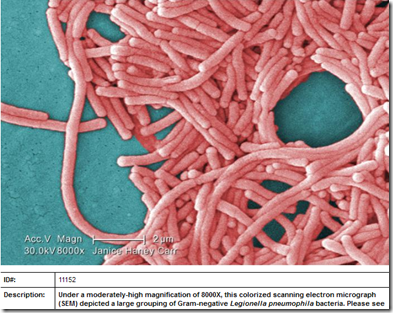
Legionella Bacteria - Photo Credit CDC PHIL


# 6461


The outbreak of Legionella in the UK I wrote about last week (see HPA Updates The Stoke-On-Trent Legionella Outbreak) has expanded to 18 cases, and today the HPA has announced that they believe they have tracked down the bacteria’s source.


It appears that 17 of the 18 cases visited a JTF Mega Discount Warehouse where hot tubs were displayed and sold.  Genetic fingerprinting has determined that the same strain of Legionella found in these patients was present in the hot tub.


As this was a unique strain, not previously encountered, the odds are pretty good they’ve found the source.


The legionella bacteria thrives in warm water, such as is often found in air-conditioning cooling towers, hot tubs, and even ornamental water fountains. Improper maintenance, or poor design, can lead to the bacteria blooming.


When aerated the bacteria can become airborne, and if inhaled by a susceptible host, can cause a serious (and sometimes fatal) form of pneumonia. 


This update comes from the HPA.


Stoke-on-Trent Legionnaires’ Disease Outbreak – probable source identified

30 July 2012

Public and environmental health experts investigating the Legionnaires’ disease outbreak at Stoke-on-Trent believe they have identified a probable source.


The probable source is a hot tub based at JTF Warehouse, City Road, Fenton, Stoke-on-Trent. We would like to emphasise that investigations are still ongoing. Environmental Health specialists from the Health and Safety Executive and Stoke-on-Trent City Council have taken and continue to take samples from sites across Stoke.


A spokesperson from the Health and Safety Executive said: "HSE continues to inspect premises where we are the enforcing authority and will do so until we have eliminated those sites from our investigations and are sufficiently assured there are no other possible sources."


The samples from the hot tub at JTF Warehouse were confirmed by the Health Protection Agency’s specialist laboratory in Colindale last night as being an unusual strain legionella bacteria. The strain matched those taken from patients. JTF warehouse are fully cooperating with the investigation.


Dr Sue Ibbotson, regional director, Health Protection Agency West Midlands said: “We have identified the probable source of the Legionnaires' disease outbreak in Stoke. We have the evidence from DNA fingerprinting of samples from the hot tub and the patients being caused by the same previously unseen strain of legionella. The HPA also took detailed histories from the confirmed cases and we know that 17 of the 18 confirmed cases visited this warehouse in the two weeks before they fell ill. Added to that we know that spa pools are known to be effective mechanisms for spreading legionella infection.


“We may still expect to see new cases of Legionnaires’ disease related to this outbreak. JTF Warehouse decommissioned the hot tub on 24 July. It can take up to two weeks following exposure for people to develop symptoms of Legionnaires’ disease and a further few days before they go to see their GP. We continue to work with our partners to investigate this outbreak and continue to take samples across the city in case there are other sites with the same strain of legionnella.”

(Continue . . . )


For an even more unusual source of Legionella, you may wish to revisit a blog from 2010 where we looked at a Study: Wiper Fluid And Legionella.

Wednesday, July 25, 2012

HPA Updates The Stoke-On-Trent Legionella Outbreak


image

Legionella Bacteria - Photo Credit CDC PHIL

# 6450


Yesterday Crof reported on the UK: Legionnaires' disease outbreak in Stoke-on-Trent that involved 7 patients hailing from that city in Staffordshire, England.


Today, we’ve an update from the HPA indicates that two more cases have been identified, and that early microbiology testing is consistent with there being an (as yet, unidentified) common source.


3.00pm update on Legionnaires' disease in Stoke-on-Trent

25 July 2012

Two further case of Legionnaires' disease have been confirmed in the Stoke-on-Trent outbreak bringing the total number of cases to nine. All those affected are between their late 40s and mid 70s and are being treated at University Hospital of North Staffordshire. The Health Protection Agency (HPA) is also investigating two cases identified in early summer as being possibly linked to the current cluster.


Professor Harsh Duggal, Director of the Health Protection Unit in Stafford, said: “Early microbiology typing results back from the HPA laboratories show that samples taken from some of the patients look very similar so far and this is consistent with the cases having caught their infection from the same environmental source. We are taking detailed histories of the movements of the patients to see if there are similar patterns which would indicate a local source of infection.

(Continue . . . )


While an infectious pneumonia, Legionella is not a contagious disease.  It is transmitted environmentally, usually through water.


Legionella got it’s name after it was identified as the bacterial cause of a large pneumonia outbreak at Philadelphia’s Bellevue Stratford Hotel during an American Legion convention in 1976.


During this outbreak, 221 people were treated and 34 died.


We now know Legionella to be a major cause of infectious pneumonia, and that it can sometimes spark large outbreaks of illness.  According to the CDC between 8,000 and 18,000 Americans are hospitalized with Legionnaire's Disease each year, although many more milder cases likely occur.


For more information on the disease, the CDC maintains a fact sheet at Patient Facts: Learn More about Legionnaires' disease.

The bacteria thrives in warm water, such as is often found in air-conditioning cooling towers, hot tubs, and even ornamental water fountains. Improper maintenance or poor design can lead to the bacteria blooming.


When water is sprayed into the air the bacteria can become airborne, and if inhaled by a susceptible host, can cause a serious (and sometimes fatal) form of pneumonia.


While large outbreaks of Legionella are often traced to specific causes, quite often the source of the infection for sporadic cases remains a mystery.  


Today’s HPA announcement stresses that these cases are not hospital acquired, and that the authorities are working to identify the source.

Thursday, June 07, 2012

The Legionella Outbreak in South West Edinburgh

image

Legionella Bacteria - Photo Credit CDC PHIL


# 6370


There’s a rapidly spreading outbreak of Legionella in Scotland this week,  and I’ve details from the NHS and HSE. 


But first . . . a little background and history.


In July of 1976, while many of us in the health care field were waiting for the expected arrival of a swine flu pandemic (see Deja Flu, All Over Again), another medical crisis was brewing  at the Bellevue Stratford Hotel in Philadelphia.


This was the scene of the gathering of hundreds of veterans belonging to the American Legion, celebrating this country’s bicentennial.  Within a couple of days of their arrival, scores fell ill with a serious flu-like illness.


At first, many believed this was the first arrival of the expected flu pandemic, but soon it became evident that this was something else entirely.  But exactly what it was would take months to determine.


During this outbreak, 221 people were treated and 34 died.


But it wouldn’t be until early in 1977 that a definitive cause would be isolated by the CDC a Gram negative, aerobic bacteria found growing in the hotel’s air-conditioning cooling tower – that provoked a serious form of pneumonia.


Dubbed `Legionnaire's Disease’ by the press, this bacterium was named Legionella, and the pneumonia it produces Legionellosis.


While `discovered’ in 1976 and identified the following year, Legionella had been with us, and causing serious illness, for a long time. It had caused earlier outbreaks, including one in Austin, Minnesota in 1957 (Osterholm et al., 1983) and at Saint Elizabeth’s Hospital in Washington, D.C. in 1965.  


The cause of these outbreaks wasn’t identified, however, until retrospective studies were conducted after the Philadelphia outbreak.  


We now know Legionella to be a major cause of infectious pneumonia, and that it sometimes sparks large outbreaks of illness.  According to the CDC between 8,000 and 18,000 Americans are hospitalized with Legionnaire's Disease each year, although the actual number of infected is likely higher.


All of which serves as prelude to the following report on the rising number of Legionella cases being diagnosed this week in Edinburgh Scotland.


As of today, the Associated Press is reporting 51 confirmed cases (link), one death, and more cases are expected to turn up.


So far, the source of this environmental pneumonia has not been identified.


image


Running point in the investigation is NHS Lothian, which is the public health authority for the Edinburgh area. 


The first press release on this outbreak came 4 days ago with the announcement of the first four cases. The next day there were six,  and the day after that . . . thirteen. 


Now the number stands at 51, and at least 10 more suspected cases are being tested.


You can read the progression of daily reports by the NHS at the link below, with the last update from yesterday.


Outbreak of Legionella in South West Edinburgh - Last updated 07/06/2012 AM

Update - 07/06/2012 AM

The Cabinet Secretary for Health & Wellbeing made a statement on the Legionella Outbreak at the Scottish Parliament this morning. You can watch it online at 

http://www.scottish.parliament.uk/newsandmediacentre/30912.aspx


Update - 06/06/2012

Resilience team report on outbreak latest

The latest reports from the Scottish Government Resilience Room (SGoRR) on the Edinburgh Legionnaires’ outbreak show that there are now 21 confirmed cases and 19 suspected cases.


One of the confirmed cases has died, two have been discharged from hospital and 12 are being treated in intensive care.


An emergency information leaflet will be delivered to all homes and businesses in affected areas tomorrow. GPs have also been provided with information on spotting the signs of infection.


A dedicated NHS helpline has been set up for anyone concerned and can be reached on 0800 0858 531.


Health Secretary Nicola Sturgeon said:


“The fact remains that the risk to the general public is low – however, due to the incubation period of the infection we are still expecting to see an increase in cases over the next couple of days.

(Continue . . . )


Obviously these numbers continue to rise, and press reports now differ from the numbers posted above.


The NHS maintains the following  website with more information on Legionella:


Legionnaires' disease

Introduction

Legionnaires’ disease is a potentially fatal lung infection (pneumonia) that is caused by the legionella bacteria. Legionnaires’ disease is caught by breathing in small droplets of contaminated water. It is not contagious and cannot be spread directly from person to person.


Initial symptoms include a high fever and muscle pain. Once the bacteria begin to infect your lungs, you may also develop a persistent cough (see Legionnaires disease - symptoms). Prompt treatment using antibiotics is essential to reduce the risk of death. See Legionnaires’ disease - treatment for more information.

(Continue . . . )


To put this in context, the largest outbreak of Legionnaires disease in recent years in the UK occurred a decade ago, in the town center of Barrow-in-Furness, Cumbria which ultimately produced 180 known infections, and 7 deaths.


The following 62-page report on that outbreak is available on the HSE website:


Report of the public meetings into the legionella outbreak in Barrow-in-Furness, August 2002PDF


While doctors struggle to treat those infected, disease detectives in Scotland are working to find the environmental source of this virulent bacteria, in order to stop the outbreak.


I’ll update this story when new details emerge.

Thursday, March 08, 2012

CIDRAP: MRSA Pneumonia Suspected In Calvert County Flu Cluster


PHIL Image 10046

Clumps of methicillin-resistant Staphylococcus aureus – Credit CDC PHIL

# 6210


Although we haven’t seen any official updates since late yesterday afternoon, reports have been trickling in through various media outlets suggesting that the fatal flu cluster in Lusby, Md.  involved the seasonal H3N2 virus and an aggressive form of MRSA pneumonia.


Lisa Schnirring of CIDRAP News  brings us up to date this evening with this report.  Follow the link to read her report in its entirety.


MRSA pneumonia suspected in fatal flu cluster

Lisa Schnirring * Staff Writer

Mar 8, 2012 (CIDRAP News) – Another family member linked to a fatal flu cluster in Calvert County, Md., has been hospitalized, as suspicion grew that an aggressive drug-resistant form of pneumonia may have played a role in the severe illnesses, according to media reports.


Maryland and Calvert County health officials didn't report any new details about the cases, but the Washington Post reported yesterday that the sister of the 81-year-old woman who died has been hospitalized at MedStar Washington Hospital Center with fever but no other flu symptoms.

(Continue . . . )


Tissues taken during autopsies from two of the victims have reportedly been sent to the CDC for further analysis, which can take a day or two to complete.

Thursday, September 01, 2011

Follow Up On Korea’s `Mystery Pneumonia’


# 5801

image


Nearly 4 months ago, in The Korean `Mystery’ Pneumonia, I wrote about confusing, incomplete, and sometimes contradictory reports regarding a number of pregnant women in a Seoul Hospital with a `mystery’ respiratory virus.


At the time, there were 8 pregnant women, and 1 man - who came from different hospitals and  clinics across Korea – suffering from an unusually aggressive (and rapidly fulminating) form of  Idiopathic pulmonary fibrosis (IPF) a scaring and stiffening of lung tissue without a known cause that normally takes months or years to manifest.


For more background on this story, FluTrackers has maintained this extensive thread with more than 120 entries to date.


Although this disease was being referred to as a `mystery virus’ in the media, its exact etiology (viral, bacterial, fungal, or environmental) was unknown.


After some impressive epidemiological detective work, the KCDC (Korea Centers For Disease Control) believes they have found a link between the use of a specific type of sterilizing fluid used in home humidifiers and this illness.


While not yet able to establish a firm cause-and-effect relationship between exposure to fumes from this sterilizer and this respiratory disease, they have found that those who were exposed to it in their home humidifier were 47 times more likely to develop the condition than a control group.


The exact chemical used in this sterilizing solution was not specified by the KCDC. For now they are urging the public not to use chemical disinfectants in their home humidifiers, and to change the water daily and clean them with detergent instead.


The KCDC said that pregnant women were likely more susceptible to this lung damage because they spent more time at home resting, and because they tended to take deeper breaths.


A full report from the KCDC is expected in the coming months.


A couple of news items on this story include:


Mystery malady traced to fluid in humidifiers – Korea JoongAng Daily

Steriliser blamed for mysterious S. Korean deaths – AFP

Monday, June 13, 2011

South Korea: Ministry Probes `Mystery’ Disease


# 5624


A brief update to yesterday’s blog Catching Up With The Korean `Mystery’ Pneumonia which mentioned the first suspected family cluster  (mother/daughter) in the recent spate of Idiopathic pulmonary fibrosis (IPF) cases being treated at a Seoul Hospital.


The Korean Herald (h/t Alert on FluTrackers) is reporting today that a second child in the above mentioned family – a 1 year old – is also suspected of suffering from IPF, although the child is too young for  lung biopsy and so the diagnosis is not certain.


Ministry probes mystery disease

2011-06-13 18:25

The government is keeping a close watch on three members of a family reportedly suffering from idiopathic pulmonary fibrosis.

The disease is thought to be similar to the mysterious virus which recently killed three pregnant women.

(Continue . . . )


As the story tells us, although there are many unanswered questions surrounding these cases, the Korean government continues to offer assurances that whatever the cause – they do not believe it to be an infectious disease.


The story also points out that while these cases are similar, they may not be related to the earlier cases (see The Korean `Mystery’ Pneumonia) reported in April and May.


The Korean language press has been covering this story fairly extensively, and you’ll find an ongoing thread at FluTrackers with many machine translations.


While sometimes useful, these automated translations tend to be difficult to interpret, and so I use them sparingly.


For now, the good news is that whatever the cause (viral, bacterial, fungal, environmental) of these illnesses - the number of cases remains small - and there are no obvious signs of human transmission.


Of course, this story continues to evolve and we’ll keep an eye on it.

Thursday, May 19, 2011

Study: PPIs & Increased Pneumonia Risk


#  5561


PPIs  are Proton Pump Inhibitors – a group of drugs that greatly reduce gastric acid production and are used for the treatment of Dyspepsia, Peptic ulcer, GERD, Barretts esophagus, and other gastric conditions.


These drugs are available as prescription (Nexium, Dexilant, Prilosec, Zegerid, Prevacid, Protonix, Aciphex, Vimovo) medications and over-the-counter (Prilosec OTC (omeprazole), Zegerid OTC (omeprazole), Prevacid 24HR (lansoprazole)) remedies.


Like all medicines, the use of PPIs carry with it some risks, and those must be weighed against the (sometimes considerable) health benefits of taking them.


Last year the FDA warned consumers to:


  • Be aware that an increased risk of fractures of the hip, wrist, and spine have been reported in some studies of people who use PPIs. The greatest increased risk for these fractures was seen in those who receive high doses of these medications or use them for a year or longer.
  • Read and follow the directions on the “Drug Facts” label when considering the use of an over-the-counter PPI.
  • Be aware that the over-the-counter PPIs should only be used as directed for 14 days for the treatment of frequent heartburn. If your heartburn continues, talk to your health care professional. No more than three 14-day treatment courses should be used in one year.


Prolonged use of PPIs has also been associated with low magnesium levels, increased incidence of Clostridium difficile,  and a number of studies – going back several years – have suggested a link between their use and increased risks of hospital and community acquired pneumonia.

A couple of examples include:


In 2009, Herzig et al. wrote in a JAMA article (doi: 10.1001/jama.2009.722) that : In this large, hospital-based pharmacoepidemiologic cohort, acid-suppressive medication use was associated with 30% increased odds of hospital-acquired pneumonia. In subset analyses, statistically significant risk was demonstrated only for proton-pump inhibitor use.


Earlier this year, the CMAJ published a systematic review and meta-analysis of the literature on PPIs (CMAJ. 2011 Feb 22;183(3):310-9) that found: Use of a proton pump inhibitor or histamine(2) receptor antagonist may be associated with an increased risk of both community- and hospital-acquired pneumonia. Given these potential adverse effects, clinicians should use caution in prescribing acid-suppressive drugs for patients at risk.


Which brings us to today’s study, which adds some more weight to the concerns expressed by these earlier studies.  


This time, the study appears in the European Respiratory Journal, and it suggests that recent initiation (< 30 days) of PPI treatment was associated with a three-fold increased risk of CAP (community acquired pneumonia).


Microbial evaluation of proton pump inhibitors and the risk of pneumonia

S.C.A. Meijvis, M.C.A. Cornips, G. Paul Voorn, P.C. Souverein, H. Endeman, D.H. Biesma, H.G.M. Leufkens, E.M.W. van de Garde


The authors compared the characteristics of 430 hospitalized adults admitted with community-acquired pneumonia against 1,720 patients from a population control group.  The authors write:


'After adjusting for co-morbidities, age, sex and pneumonia severity score, recent PPI initiation was independently associated with intensive care unit admission, although this was a small patient group.'


None of this should be viewed as a condemnation of PPIs, of course.  For many patients, their use can improve the quality, and even duration, of their lives.


While a number of studies have indicated an increase in the relative risk of developing complications such as pneumonia and bone fractures, in terms of absolute risk, the dangers appear relatively small.


Of course, if you are taking PPIs – or any medication for that matter – that you don’t really need to be taking, you are incurring a health risk without enjoying an offsetting therapeutic benefit.


Which means that even though they are available O-T-C, you should discuss using PPIs with your health care provider, especially if you intend to use them longer than the FDA recommended maximum of three 14-day treatment courses in one year.

Tuesday, April 05, 2011

Statins & Pneumonia: Revisited


# 5465


The idea certainly isn’t new.  


If fact, I mentioned it in this blog as far back as 2006, and have written about it extensively probably a dozen times since then.  


While unproven, and not without controversy, over the years we’ve seen several studies suggesting that taking statins - cholesterol reducing drugs - can improve survival rates among those with influenza and/or pneumonia.


Dr. David Fedson – former Professor of Medicine at the University of Virginia School of Medicine and formerly Director of Medical Affairs, Aventis Pasteur MSD - has long championed the idea that we should be looking at statins for pandemic flu, which he believes may help modulate the immune response.


A couple of his papers on the subject include:


Pandemic Influenza: A Potential Role for Statins in Treatment and Prophylaxis

David S. Fedsona


New Approaches to Confronting an Imminent Influenza Pandemic

Dr. Fedson and Peter Dunnill, DSc,FREng


In 2007 we saw a study that seemed to support the idea, one that indicated that statins lowered the mortality rate of people with pneumonia.


Statin drugs lower respiratory death risk: study

Tue Apr 10, 2007 12:40pm EDT

By Maggie Fox, Health and Science Editor

WASHINGTON (Reuters) - People who use statin drugs are less likely to die of influenza and chronic bronchitis, according to a study that shows yet another unexpected benefit of the cholesterol-lowering medications.


And in 2008 this encouraging report made the headlines:


Statins may cut pneumonia death, blood clot risks

27 Oct 2008 20:00:13 GMT

Source: Reuters

By Will Dunham

WASHINGTON, Oct 27 (Reuters) - Cholesterol-fighting drugs known as statins reduced the risk of dying from pneumonia or developing dangerous blood clots in the legs, adding to a growing list of benefits from the popular drugs, two research groups said on Monday.


But not all of the studies have been positive.


In July of 2009 there was a report that found no evidence of benefit among pneumonia patients (see Another Take On Statins And Pneumonia) taking statins.


But another study, presented in October of 2009 at the annual meeting of the IDSA, the Infectious Diseases Society of America, in Philadelphia suggested the opposite - that statins cut the mortality rate for seasonal flu by 50%.


Maryn McKenna writing for CIDRAP brought us the details.


Statins may help patients with severe seasonal flu

Maryn McKenna * Contributing Writer

Oct 29, 2009 (CIDRAP News) – Commonly available drugs that are sold in lower-cost generic versions improve the survival of patients hospitalized for seasonal influenza, researchers reported today, raising the possibility of a widely available treatment that could be used in a severe flu pandemic if other drugs are in short supply.


So while not all of these studies are in agreement, many of them have supported the notion that statins may be of considerable value during a pandemic, and may contribute to the survival rate of patients with pneumonia.


Today we’ve another study – this time by the London School of Hygiene and Tropical Medicine published in the BMJ – that looks at 6 month post-pneumonia survival rates among those taking statins, and those not taking these medications.


While there may be other factors at work here – and more research is needed - survival rates were considerably higher (87% vs 80%) among those already taking statins when they fell ill.


As of this posting, the study has not appeared on the BMJ website.  I assume it will shortly. 


Here are excerpts from the LSHTM press release:


Pneumonia death rate lower among people who take statins

Tuesday, 5 April 2011

LSHTM study finds evidence for protective effect of cholesterol-lowering medication


Taking statins could help prevent people dying from pneumonia, according to a study by the London School of Hygiene and Tropical Medicine.


The researchers found that the risk of death in the six month period after diagnosis of pneumonia was substantially lower among those who were already receiving the cholesterol-lowering drugs compared with those who were not.


Previous studies have suggested that statins may be associated with a more favourable outcome after bacterial infection.


This study, published online in the BMJ today, supports a possible protective effect of statins against mortality in patients with pneumonia.


But the researchers point out that as they looked at patients who were already taking the medication when they developed pneumonia, a randomised clinical trial is needed to determine whether starting a statin at the time of diagnosis has a similar effect.

(CONTINUE  . . . . )

Notes to Editors:

Title of study online at BMJ: “Effect of statin treatment on short term mortality after pneumonia episode: cohort study” by Ian Douglas, Stephen Evans and Liam Smeeth.


The $64 question is whether administering statins after a pneumonia diagnosis provides any protective benefits.  There are reasons to believe that it might, but further studies are needed to prove or disprove it.


If you’d like to learn more about Dr. David Fedson and some of his ideas on statins, there are three 1-hour radio interviews available from 2009 that were conducted by Sharon Sanders of FluTrackers


You’ll find them archived at the FluTrackers links below.


David Fedson 06 April 2009

http://www.flutrackers.com/forum/aud...pril062009.mp3


David Fedson 18 May 2009

http://www.flutrackers.com/forum/aud...May18.2009.mp3


David Fedson 02 November 2009

http://www.flutrackers.com/forum/aud...Nov02.2009.mp3

Thursday, March 24, 2011

Some Curious Reports Out Of Juarez


Note: Update on 3/26/11 Follow Up On Juarez Reports identifies illness as H1N1


# 5439


Given the sudden emergence of a novel H1N1 pandemic virus out of Mexico almost exactly 2 years ago, one can understand a heightened sense of vigilance whenever we begin to hear of unusual respiratory ailments coming out of that region of the world.


Yesterday, newshounds on FluTrackers began to pick up multiple news reports on what has been called an `atypical pneumonia’ that has claimed the life of a healthy 28 year-old police officer, and sickened a number of other officers.


In just over 12 hours, nearly a dozen news reports have been gathered (and machine translated) by newshounds Tonka, CopsitoSP, Alert, and Tetano


The thread with these reports may be accessed here.


`Atypical Pneumonia’ is generally used to describe several specific bacterial infections; including Legionella pneumophila , Mycoplasma pneumoniae , and Chlamydophila pneumoniae.


Pneumonia due to mycoplasma and chlamydophila bacteria is generally mild, while legionella can often produce more serious illness – particularly in older patients, smokers, or those with chronic illnesses.


But it isn’t at all clear from these translated newspaper articles whether these illnesses stem from these relatively common bacterial infections, or perhaps from something more unusual.


The first report calls it a rare, and mystifying illness.  It also calls it a `virus’, although that may simply be a non-exact description or an artifact of translation.  


This from Excelsior.com.


Attacks agents Ciudad Juárez a deadly virus ...

One died and three have the same symptoms of a rare disease. There is a commander in critical condition


Carlos Coria Rivas / Correspondent

CHIHUAHUA, March 23 .- A rare viral disease attacked several municipal traffic police in Ciudad Juarez, killing one, while three have the same symptoms.


The commander of the Eastern sector, Guadalupe Gutiérrez Palma, was reported in critical condition and two more agents are under observation have the same disease.


At a press conference, authorities of the municipality, headed by Dr. Ariel Díaz de León, they were puzzled by the unknown origin and characteristics of evil.

(Continue . . . )


Since that article yesterday, we’ve seen a steady stream of reports that have suggested everything from H1N1, to bacteria, to fungi (and even cobalt poisoning) as potential causes of these illnesses.


The latest report suggests an increased level of concern by the local government, although the nature of the illness has yet to be announced.


Enact health fence today for deadly virus outbreak
F. CABRERA / M. VARGAS
2011-03-24  00:00:12


After the reported death of a Transit agent caused as a result of an alleged fulminant atypical pneumonia and more people infected by a virus not yet identified, the state government decreed the establishment of a local health fence, it was learned unofficially .


A source said the state governor, Cesar Duarte Jaquez and federal health secretary, José Ángel Córdova moved yesterday evening to this city to personally assess the problem and atypical outbreaks suddenly appeared and claimed that a person's life.


For as yet unknown health care plan will be implemented and are expected today during the day the announcement is official, after an extraordinary meeting to be called the health departments of the three levels of government.


(Continue . . . )


For a full translation visit this FluTrackers link.


The latest reports raise the number of suspect cases to 14, with at least one in critical condition, and with 1 fatality.  


The Mexican media and local officials appear to be taking these reports seriously, although they may yet end up being due to something fairly common, like Legionella or H1N1.


Hopefully we’ll get some test results soon that will clear up this mystery. 

Friday, August 27, 2010

UK Study: PCV7 Vaccine Success Story


# 4739


Given the nearly constant vitriol spewed on the internet by activists railing against the use of vaccines, it is worth giving the other side a bit of the spotlight from time to time.   


The PCV7 (pneumococcal conjugate vaccine) was introduced in the United States for children in early 2000, and was designed to help prevent 7 common types of pneumococcal infection found in the United States.


This year, the new PCV13 replaces the original PCV7, and adds coverage for 6 more types of pneumococcal bacteria. 


The CDC has a factsheet on this new vaccine.


While this vaccine doesn’t prevent all types of pneumococcal infections, according to the CDC the introduction of the PCV7 vaccine in the United States has reduced the rate of severe pneumococcal disease by nearly 80% among children under the age of 5.


The UK introduced the PCV7 vaccine in 2006, after seeing an unexpected increase in hospitalizations for bacterial pneumonia and empyema (infection and pus in pleural space) among young children.


Today we’ve a study showing that between 1997 and 2006 the rates of childhood bacterial pneumonia and
empyema hospital admissions in the UK were steadily increasing, and then began to decrease (by 19% and 22%, respectively) after the inclusion of the PCV7 vaccine into their national immunization program in 2006.


While not a panacea for pneumococcal disease, these results do show genuine progress is being made, and the hopes are that the new PCV13 will make further strides in the reduction of morbidity and mortality due to these bacterial infections.


The study is titled:


Impact of the seven-valent pneumococcal conjugate vaccination (PCV7) programme on childhood hospital admissions for bacterial pneumonia and empyema in England: national time-trends study, 1997 – 2008

Elizabeth Koshy, Joanna Murray, Alex Bottle, Mike Sharland, Sonia Saxena


You can also read the press release from the Imperial College of London on this study.


Vaccine has cut child cases of bacterial pneumonia, says study

The number of children admitted to English hospitals with bacterial pneumonia decreased by a fifth in the 2 years following the introduction of a vaccine to combat the disease

While the PCV7 and PCV13 vaccines are intended for children, I would note that there is an adult 23-valent pneumococcal polysaccharide vaccine (PPSV23) available as well.


For several years I’ve urged my readers to talk to their doctors about whether this vaccine is appropriate for them.


CDC Issues Pneumococcal Vaccine Recommendations
Seven Steps You Can Take Now To Prepare For A Pandemic
It Doesn't Have To Be Pandemic Flu
 

It isn’t universally recommended by the CDC, but for many people in a variety of risk groups, it can be an important preventative against many causes of secondary bacterial pneumonias.


Even if you aren’t sure if you fall into one of the risk groups, you may wish to discuss this option with your family physician. 

Thursday, June 17, 2010

Study: Probiotic Therapy Cuts VAP Risk


# 4655


VAP, or Ventilator Associated Pneumonia, is a serious lung infection that occurs in a distressingly high (30%) number of patients who remain on a ventilator for more than 48 hours.


And those that acquire it are at considerable risk of dying (studies suggest between 25% to 50%), while those that recover require much longer time in the ICU.


VAP not only costs thousands of lives each year, it also creates a sizable financial burden for the health care system.


Normally, when combating bacterial infections, we think of antibiotics as the weapon of choice.  But some intriguing research has shown that among a small, carefully selected subset of ICU patients, the daily use of Probiotics reduced the incidence of VAP by almost half.


It should be noted that 90% of ICU patients were excluded from this study, and so these findings can’t be considered universally applicable.

The `money quote’ from the press release is:


After almost 5 years, the researchers found that daily use of probiotics not only decreased VAP infections by about 50 percent compared to placebo, but also reduced the amount of antibiotics needed in comparison to placebo-treated patients.

This reduction in antibiotic consumption led to significantly fewer Clostridium difficile infections in patients given probiotics. No side effects attributable to the probiotics were observed.


The study appears in the latest issue of


Here’s the opening to the press release, followed by the abstract.  


Probiotic therapy cuts risk of VAP in half for some in ICU


Daily use of probiotics reduced ventilator-associated pneumonia (VAP) in critically ill patients by almost half, according to new research from Creighton University School of Medicine in Omaha, Nebraska.


The study was published on the American Thoracic Society's Web site ahead of the print edition of the American Journal of Respiratory and Critical Care Medicine.


It is estimated that VAP complicates the care of up to 30 percent of critical care patients receiving mechanical ventilation. "Patients with VAP have increased morbidity, mortality and hospital costs as well as prolonged intensive care unit (ICU) and hospital lengths of stay, and increased costs."


"We chose to study probiotics in this context because VAP is increasingly caused by pathogens associated with antimicrobial resistance and the supply of novel antibiotics is essentially nonexistent for the foreseeable future," said Lee E. Morrow, M.D., M.Sc., associate professor of medicine at Creighton University and lead author. "The implication is that novel methods of prevention must be our priority."

(Continue . . . )


You can read the abstract here:


Probiotic Prophylaxis of Ventilator-associated Pneumonia: A Blinded, Randomized, Controlled Trial

Lee E. Morrow1*, Marin H. Kollef2, and Thomas B Casale3


<SNIP>

Conclusions: These pilot data suggest that Lactobacillus rhamnosus GG is safe and efficacious in preventing VAP in a select, high-risk ICU population. Clinical Trials Registry Information: ID#NCT00613795 registered at www.clinicaltrials.gov


Although considered `natural’ and `healthy’ by most people (and available over the counter), probiotics have been linked to rare, but potentially harmful side effects.


Still, this is a fascinating study that will hopefully expand our knowledge of how and why VAP occurs, and ways to prevent it.