Showing posts with label Qatar. Show all posts

Friday, May 22, 2015

Qatar Announces Their 4th MERS Case Of 2015

image


# 10,078


One day after announcing their third case of the year, Qatar’s Supreme Council of Health is back with a report of another MERS case, this time involving a 73 year old.  


Beyond that, very little information is provided – and at this time we don’t even know if these latest two cases are epidemiologically linked.


Qatar’s SCH English language portal indicates that The translation process is in progress, so for now all we have is this machine translation from the Arabic.


Top Health announces record new cases of "Corona"

Date of issue: May 22, 2015

Supreme Council of Health announced a record new cases of laboratory-confirmed virus, Corona virus that causes AIDS Middle East respiratory Qatari citizen at the age of 73 years, This is the fourth case that have been recorded this year, it has been diagnosed with the situation in the reference laboratories in HMC confirmation.

The Council pointed out that the patient is suffering from severe pneumonia and is currently receiving treatment in the hospital.

And immediately upon receipt of the communication by the Field Investigation Team registration of all contacts and check if them from matches the standard definition of a case of suspected according to the World Health Organization definition, as well as to make the necessary them tests, and will be followed for two weeks to make sure you do not receive any symptoms of them and provide them with appropriate preventive advice . And working the joint field investigation team from the Supreme Council of Health and the Department of Livestock Ministry of Environment to conduct epidemiological investigations and field. It is worth mentioning that the team on duty to protect the health and combating diseases transitional working around the clock to receive any communications or queries on the hotline numbers 66740948 66740951 -or


Why, after a couple of relatively quiescent months MERS has suddenly started popping up again (in Saudi Arabia, Iran, the UAE,  and exported to South Korea) isn’t clear.  


But with the yearly influx of religious pilgrims expected for Ramadan (June 17th-July 17th this year) less than a month away, this resurgence has captured the attention of public health agencies around the globe.

Sunday, March 08, 2015

Qatar Announces Their 11th MERS Case

image


# 9795


Although I haven’t found anything posted yet on the Qatari Supreme Council of Health (SCH) website, Crof on Crofsblog picked up a media report about an hour ago (see Qatar: SCH reports a new case of MERS) of what I believe to be the second case reported in 2015.


First a report from KUNA, after which I’ll be back with a bit more. 


Note, while `an apple a day keeps the doctor away’, in machine translated Arabic, the word `apple’ – like the word `beauty’ – often refers to `camels’.


New cases of HIV Corona Qatari citizen


08/03/2015 Now - KUNA 8:30:04 PM

New cases of HIV Corona Qatari citizen
Qatari Supreme Council of Health

Qatari Supreme Council of Health announced here today for the registration of new cases of laboratory confirmed infection (Corona) that causes AIDS Middle East respiratory Qatari citizen at the age of 69 years.


The council said in a press statement that the patient is suffering from several Ail chronic and he showed symptoms of high temperature and cough with sore throat has been admitted to the Hamad Medical Corporation to receive necessary medical care.


The statement added that the initial diagnosis was pneumonia sharply after conducting the detection and action necessary tests at national laboratories identified the positive samples for the virus (Corona).


He explained that he and immediately upon receipt of the communication team Investigation to follow up the patient, where the state of his health is stable and showed initial reports that he had been exposed to the mixing condition confirmed infected with the virus.


He said that the patient did not travel outside the State of Qatar during the last two weeks before the onset of symptoms, noting that he was mixing camel, referring to the start of conduct the necessary tests on all contacts prospective patients of family members and medical staff therapist.


He noted that the transmission routes are still unknown exactly Although much of the research studies that including the national survey, which is being implemented in the State of Qatar has pointed out the existence of a close relationship between the incidence of infection and exposure to Apple or derivatives.


The Qatari Supreme Council of Health announced on 14 February for the healing of a patient with HIV (La Coruna), which has been recording his injury in the first of February, explaining that this is the only case that has been Tsgeleta in the current year


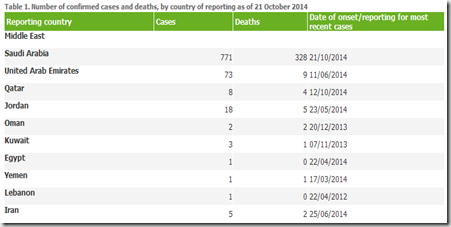
With 941 cases, more than 85% of all known MERS infections have originated in Saudi Arabia.  Eight other Middle Eastern nations have contributed at least one case, with the UAE in second place with 75 cases, and Jordan in 3rd with 19.


In fourth place is Qatar, which – until today –  had 10 only cases recorded.  Today announcement from  Qatar’s Supreme Council of Health brings their known total to 11.


With nearly daily reports out of Saudi Arabia, yesterday’s report out of Germany of a case imported from the UAE, and now this case from Qatar, our spring MERS season seems well under way once again.

Monday, February 02, 2015

Qatar SCH Statement On New MERS Case

image

Qatar’s proximity to Saudi Arabia


# 9659


With 845 cases, more than 85% of all known MERS infections have originated in Saudi Arabia.  Eight other Middle Eastern nations have contributed at least one case, with the UAE in second place with 73 cases, and Jordan in 3rd with 19. 


In fourth place is Qatar, which – until today –  had 9 cases recorded.  The last two in October of 2014 (see Qatar SCH Statement On 2nd Recent MERS Case).


Today  Qatar’s Supreme Council of Health has announced their 10th known case. Beyond telling us the patient’s age (55), this report provides more reassurance and advice than it does details.  


SCH Reports a New Case of MERS-CoV

Publication Date:
01 February 2015
Category:
Primary News


Supreme Council of Health (SCH) has announced that a new “Middle East Respiratory Syndrome Corona Virus (MERS-CoV) case has been reported for a resident patient aged 55 years old. The patient have had fever for 4 days and joint pain. Patient was transferred to Hamad Medical Corporation where he is currently receiving appropriate treatment. The laboratory diagnosis was confirmed in the national reference laboratory in Doha.


The Rapid Response Team of SCH conducted an epidemiological investigation including line listing of all close contacts to the case and initiate screening . Health education about appropriate preventive measures was given to the contacts along with close follow-up for any symptoms. Infection prevention and control measures in all health facilities have been re-enforced by the SCH.


SCH urges all community members to implement all the recommended infection prevention and control measures. As a general precaution, anyone visiting farms, markets, barns, or other places where animals are present should practice general hygiene measures, including regular hand washing before and after touching animals, and avoid contact with sick animals.


People with diabetes, renal failure, chronic lung disease, and immunocompromised persons are considered to be at high risk of severe disease from MERS‐CoV infection. Therefore, these people should avoid contact with camels, drinking raw camel milk or eating meat that has not been properly cooked.


Last week’s MMWR carried a MERS Epidemiological Update & Guidance document for clinicians, public health, and the public in anticipation that we might see a major surge in cases again this spring, like we did in 2014. More than half of all the cases since 2012 were reported between March and May of last year.

Thursday, October 23, 2014

Qatar SCH Statement On 2nd Recent MERS Case

image

Qatar’s proximity to Saudi Arabia


# 9236


On October 12th Qatar’s Supreme Council of Health (SCH) announced the evacuation from Saudi Arabia of a 71 year-old Qatari citizen who had contracted the MERS-CoV infection (see KUNA: Qatar Announces MERS Case).


Today the SCH reported a second case for 2014, and despite  its length, it doesn’t tell us very much about the patient, or how the patient might have contracted the virus, although some kind of contact with camels is intimated.


We also get a brief update on the first case, who appears to be recovering.  First the report, then I’ll be back with a bit more:


New Corona Virus case has been reported

Publication Date:  22 October 2014

The Supreme Council of Health (SCH) has announced that a new “Middle East Respiratory Syndrome Corona Virus (MERS-CoV) case has been reported for Qatari patient aged 43 years old. The patient have had fever for few days and was transported by ambulance to the Emergency Department at Hamad General Hospital. Upon assessment and laboratory investigations, the patient was diagnosed with pneumonia and subsequently confirmed as MERS-CoV case.

As soon as the Health protection Rapid Response Team got the notification, a series of standard investigation and contact tracing steps were implemented. These include verifying whether contacts have any symptoms and specimen collected. However, all contacts would be monitored for two weeks. Within the same framework, a joint team from human Health and animal resources started investigation process involving camels and individuals in contact with them for specimen collection and follow up.


On the other hand, medical follow up reports indicated that the previous case diagnosed with MERS-CoV is improving and now is stable. He is still under the standardized infection prevention and control measures. In addition, all of his contacts were tested negative for MERS-CoV and none has developed any similar symptoms so far.

SCH has alerted all healthcare providers in the country to stay alerted and report any suspected case and urging all healthcare workers to strictly abide to the infection prevention and control measures. SCH will continue to stress on the importance of epidemiological surveillance, case management and isolation with infection prevention and control, with the enhanced implementation, and health education on preventive measures recommended so far.

The SCH urges all society member to follow the recommended infection prevention and control measures such as keeping away from getting in close proximity with the camels especially those with weak immune system, or having any long standing medical condition whenever they had to visit farms and camel barns. The public who might be visiting a farm or camel barn should comply with the standard personal hygiene and hand washing before and after handling camel with staying away from sick animals.

Among countries on the Arabian Peninsula, Qatar ranks 4th in the number of reported MERS cases (n=9), making up less than 1% of all cases reported since 2012.   Fully 85% of all cases worldwide have been reported out of Saudi Arabia.

image

Credit ECDC MERS Update – Oct 22nd


Although the camel connection to MERS was initially disputed in Saudi Arabia (see Saudi MOA Spokesman: Camel Link Unproven), the Saudi MOH now seems fully onboard with the idea that camels are likely responsible for the continual re-introduction of  the virus into the human population. 


Last September we saw the KSA MOH Reiterates Camel Warnings On MERS. While the exact role of camels in the transmission of MERS to humans has yet to be established, evidence continues to mount that pegs camels as a likely source of human infection (see EID Journal: Replication & Shedding Of MERS-CoV In Inoculated Camels).


Once introduced into the human population, the virus is capable of limited forward transmission – and based on clustering of cases to date – seems to do so best in a hospital setting. There also appears to be a seasonal component to these outbreaks, with the bulk of cases appearing in late winter and into the spring. 


For now, the virus does not appear to spread among humans in an efficient and sustained manner.


The ECDC, in their most recent MERS update, indicate we may be set to see another increase in MERS cases. 

Conclusions

• The incidence of cases in September and October 2014 is slightly higher than in July and August 2014. This pattern was also observed in 2012 and 2013. The majority of MERS-CoV cases are still being reported from the Arabian Peninsula, specifically from Saudi Arabia, and all cases have epidemiological links to the outbreak epicentre.

• According to the pattern observed in 2012 and 2013, more cases could be observed in the coming weeks.

• The latest importation to the EU (Austria) and to Turkey are not unexpected and do not indicate a significant change in the epidemiology of the disease. Importation of MERS-CoV cases to the EU remains possible. However, the risk of sustained human-to-human transmission remains very low in Europe.

Tuesday, December 17, 2013

The Lancet: Identification Of MERS Virus In Camels

image

Photo Credit Wikipedia


#8080


Since early August, when the first evidence was presented (see Lancet: Camels Found With Antibodies To MERS-CoV-Like Virus), researchers have known that some camels on the Arabian peninsula had been exposed to a MERS-like virus, but the exact virus was undetermined. 


It could have been the same MERS-CoV that has been infecting humans for the past two years, or it could have been a close relative.


Subsequent studies have incremented our knowledge, but we’ve not had solid evidence linking the human virus to the camel antibodies.  That is, until now.


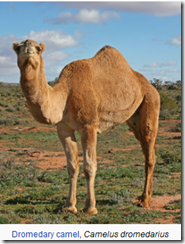
On November 27th, Qatari officials announced that the MERS virus had been detected in Camels on a farm where two people had become infected (see Qatar Supreme Council of Health Statement On MERS-CoV In Camels), and that further investigations were underway by the local Health Ministry and RIVM laboratory and Erasmus Medical Centre in the Netherlands. 


Last night The Lancet published a study, led by Marion Koopmans, DVM, PhD, head of virology at the Laboratory for Infectious Diseases at the RIVM in the Netherlands, that determined that the human viruses and the camel viruses were almost an identical match. So close, in fact, that they were unable to determine whether the humans or the camels were infected first.


While pretty much confirming that both humans and camels were infected with the same virus, the report states: “We cannot conclude whether the people on the farm were infected by the camels or vice versa, or if a third source was responsible.”


First, a link to the article’s abstract, then a link to coverage by Helen Branswell and by Robert Roos at CIDRAP.


Middle East respiratory syndrome coronavirus in dromedary camels: an outbreak investigation

Bart L Haagmans PhD a †, Said H S Al Dhahiry PhD b †, Chantal B E M Reusken PhD c †, V Stalin Raj PhD a †, Monica Galiano PhD d, Richard Myers PhD d, Gert-Jan Godeke BSc c, Marcel Jonges MSc c, Elmoubasher Farag MPH e, Ayman Diab MPH e, Hazem Ghobashy PhD e, Farhoud Alhajri BSc e, Mohamed Al-Thani ABCM e, Salih A Al-Marri ABFM e, Hamad E Al Romaihi ABCM e, Abdullatif Al Khal PhD e, Alison Bermingham PhD d, Prof Albert D M E Osterhaus PhD a, Dr Mohd M AlHajri ABCM e , Prof Marion P G Koopmans PhD a c

Summary

Findings

We obtained samples from 14 camels on Oct 17, 2013. We detected MERS-CoV in nose swabs from three camels by three independent RT-PCRs and sequencing. The nucleotide sequence of an ORF1a fragment (940 nucleotides) and a 4·2 kb concatenated fragment were very similar to the MERS-CoV from two human cases on the same farm and a MERS-CoV isolate from Hafr-Al-Batin. Eight additional camel nose swabs were positive on one or more RT-PCRs, but could not be confirmed by sequencing. All camels had MERS-CoV spike-binding antibodies that correlated well with the presence of neutralising antibodies to MERS-CoV.

Interpretation

Our study provides virological confirmation of MERS-CoV in camels and suggests a recent outbreak affecting both human beings and camels. We cannot conclude whether the people on the farm were infected by the camels or vice versa, or if a third source was responsible.


Helen Branswell brings us additional remarks by lead author Dr. Marion Koopmans, in her report entitled:


Questions remain about MERS and camels

By Helen Branswell The Canadian Press

A new scientific paper confirms that camels on a farm in Qatar were sick with MERS earlier this fall.

But the report does not make clear whether camels infected people on the farm in question, whether people infected camels or whether an unidentified third species infected both.

In fact, the senior author of the study says the evidence as it exists cannot determine which way the virus spread.

And virologist Marion Koopmans, of the Dutch National Institute of Public Health, says it is unlikely that the mystery will be cleared up in this case.

(Continue . . . )


And last stop, Robert Roos writing for CIDRAP NEWS files this report:


Nearly identical MERS-CoV strains found in camels, humans

MERS-CoV

Robert Roos | News Editor | CIDRAP News

Dec 16, 2013

Researchers today reported that dromedary camels on a farm in Qatar were infected with a strain of Middle East respiratory syndrome coronavirus (MERS-CoV) nearly identical to that found in two people associated with the farm. The findings point to an outbreak that involved both camels and humans, but they don't answer the key question of whether camels infected humans or the other way around.

Qatari health officials announced Nov 27 that the virus had been found in camels on the farm. Today's report in the Lancet Infectious Diseases spells out the science behind the announcement and says the findings mark the first definitive confirmation of the virus in camels.

(Continue . . . )

Saturday, November 30, 2013

Qatar, Camels, And the Coronavirus

image


# 2020


Although I’m not seeing much news on the UAE family cluster of MERS this morning in the Arabic press (see Following The UAE MERS Cluster) there appears to be ample coverage over fears of camels being infected by the virus.  So much so, that tomorrow the Qatar’s Supreme Council of Health will hold a special press conference .


Corona virus Tomorrow: hold the Supreme Council of Health held a press conference tomorrow ... # Qatar # News

Hold the Supreme Council of Health held a press conference on Sunday at half past twelve at the headquarters of the Council on the first case of infection with Corona for three camels in Qatar, which recently announced the latest developments. Will speak at the conference a number of senior officials in the Supreme Council of Health and the Ministry of Environment.


Another press reports tells us of rising concerns that camels are being imported into Qatar without testing for the MERS coronavirus, and also question’s Qatar’s ability to adequately detect the virus. Camel owners are calling for mobile veterinarian clinics to visit camel farms and inspect and vaccinate their herds.


The problem of course being, there is currently no vaccine available for the MERS coronavirus.  And as far as imported camels are concerned, we’ve no idea if they are the source of the virus, or if the virus is being acquired locally.


The following report comes from The Peninsula.


MERS: Ministry slammed for not checking imported camels

November 30, 2013 - 5:08:48 am

DOHA: Camel owners are critical of the Ministry of Environment and say it doesn’t carry out medical check-ups on the animals imported from a neighbouring country.

Owners claim that when it was earlier announced that the dreaded Middle East Respiratory Syndrome (MERS) virus spread from camels in Saudi Arabia, the animals brought from there should be checked.

One owner said he suspected that camels could also contract the virus through fodder and yet the fodder isn’t tested.

A camel owner, Musfir Al Marri, told the local Arabic daily Al Raya that in recent years camels were being ignored by authorities. “Not enough attention is being paid to the animal wealth of the country although their collective value could be billions of riyals.”

According to Al Marri, after three camels have been detected with the virus, there is panic among camel owners.


 (Continue . . . )


Thursday, November 28, 2013

Qatar Supreme Council of Health Statement On MERS-CoV In Camels

image


# 8016


Yesterday was a bit of a `lost day’ for me, but I’m slowly catching up.  Below you’ll find the official statement from the Qatar’s Supreme Council of Health on the detection of the coronavirus in three camels. For more context, I would refer you to a pair of overnight blogs by  Dr. Mackay On MERS Cluster In Camels. 

Based on recent Scientific Research:

Three camels hit by MERS Coronavirus in Qatar

Doha - Wednesday, 27 Nov 2013

The Supreme Council of Health and the Ministry of Environment in collaboration with the National Institute of Public Health and Environment (RIVM) of the Ministry of Health and the Erasmus Medical Centre in the Netherlands announced confirmation of the first case of Middle East Respiratory Syndrome Coronavirus (MERS-CoV) in 3 camels in a herd in Qatar in a barn, which is linked to two confirmed human cases who have since then recovered.


For transparency purposes, we can confirm that the 3 camels were investigated among a herd of 14 camels, and the samples were collected as part of the epidemiological investigation in coordination between the Public Health Department and the Department of Animal Resources. It is to be noted that none of the 14 camels showed any sign of disease when the samples were collected. As a precautionary measure, the 14 camels were put in quarantine since the initial sampling and after 40 days as of now, none have shown any symptom or sign of the disease.


For information, the presence of the MERS-CoV is newly recognized among animals, and currently there is neither clear scientific case definition nor enough information as to the role animals may play in transmitting and spreading the diseases.


All contacts of the two recovered MERS-CoV cases, including relatives, friends and workers in the same barn have been screened with negative results. The two Departments are following up with the reference laboratory and Erasmus Medical Centre to test additional samples from other animal species and from the environment of the barn. The joint team of the Supreme Council of Health and the Department of Animal Resources is continuously monitoring the development of this disease and taking all necessary measures to prevent the spread of the disease.


This discovery came as a result of the collaborative efforts between the two ministries, and the RIVM laboratory and Erasmus Medical Centre in the Netherlands, together with the World Health Organization (WHO). Currently the two Departments are conducting a national survey to investigate the presence of virus in animals, humans and the environment, and the potential modes of transmission and exposure to the virus among humans who are in close contacts with animals. Until more information is available, it is recommended, that as a precautionary measure, any animals that have been in close contact with newly detected human MERS-CoV cases are separated for investigation of the presence of infection with the virus.


It is also recommended that people with underlying health conditions, such as heart disease, diabetes, kidney disease, respiratory disease, the immunosuppressed, and the elderly, avoid any close animal contacts when visiting farms and markets, and to practice good hygiene, such as washing hands

Friday, November 22, 2013

A Confusing MERS-CoV Report From Qatar

image


# 8000


What ought to be routine announcement – that of another MERS death in the Middle East - is complicated by the fact that this patient appears to be the same one who was reported earlier this week to have fully recovered and been released from the hospital. Tracking of individual cases in the Middle East is admittedly difficult since no identifying information other than age – and usually their gender and location – are generally provided.


Based on FluTrackers’  MERS Case List by Country, Qatar has only announced one 48 year-old MERS case thus far, which leaves us with a bit of a mystery.


First a link and text from one of the many Arabic media reports this morning (no update on Qatar’s Supreme Council of Health website), and then a flashback to the announcement last Tuesday that their 48 year-old MERS case had recovered and been released.


Qatar Health announced the death of a resident infected with Corona

The Supreme Council for the health of the country today for the death of a resident at the age of 48 years are infected with (Corona) that causes respiratory syndrome Middle East.


The Supreme Council of Health Qatar in a statement that the deceased, who did not disclose his identity had been suffering from several chronic diseases.


With this announcement toll of victims who Hsdhm virus since the beginning of his appearance to more than 67 deaths worldwide, according to statistics from the World Health Organization.


Compare this report to this announcement, lifted earlier this week from Qatar’s Supreme Council of Health website, apparently announcing this same patient’s recovery.


One patient recovered, another one died in MERS coronavirus, SCH says

Doha - Tuesday, 19 Nov 2013

The Supreme Council of Health (SCH) has announced Tuesday the recovery of one resident patient inflicted with MERS coronavirus and another passed away due to the same illness.

The 48-year-old first patient was admitted to hospital for three weeks to receive proper treatment. After a course of treatment, he recovered, the SCH said in a press statement.

In the same context, the SCH announces the death of 61-year old expat patient who was battling several chronic health issues and tested positive for the MERS coronavirus.


Perhaps this discrepancy comes from an error in reporting (either today, last Tuesday, or in the reported age of one of the previous cases). It’s possible, I suppose, there might be another 48-year-old MERS case we don’t know about. There are a lot of possibilities here.


When there were but a handful of cases, keeping a reasonably accurate line-listing of patients was fairly easy. 


But as the number of cases has grown, and given deplorable lack of information (such as onset dates, dates of hospitalization, or dates of death) being provided by the respective Ministries of Health, the task of compiling and tracking cases has grown much harder. 


No one truly believes that the (roughly) 160  MERS cases identified to date represents the full burden of the disease (see Referral: Dr. Ian Mackay On `The Slowly Growing Epidemic’ Of MERS-CoV).  But these line lists have provided important information regarding the rate of new cases being detected, and their geographic spread.


At some point, if MERS cases continue to accrue, it will become impossible to keep reasonable track of individual cases.  We saw that with the H1N1 Pandemic virus quite early on, and that is to be expected with any emerging disease that find success in the human population.

 
But when that happens we will lose an important tracking tool, one that could have been even more valuable had public health officials in the Middle East been just a little more forthcoming with epidemiological details on these early cases.

Tuesday, November 19, 2013

MERS Update From Qatar – 1 Patient Recovers, While 1 Patient Dies

image

# 7993


I’m seeing this reported in multiple Arabic news sources (here, and here) but have yet to locate an announcement on Qatar’s Supreme Council of Health website.  These reports indicate that the 48 year-old has recovered and has been released from the hospital after three weeks of treatment, while the 61 year-old – who fell  ill on November 4th, and was hospitalized on the 7th, has died.


Qatar: heal the sick b 'Corona' and another death

Doha - «life»

Tuesday, November 19, 2013

The Supreme Council of Health in Qatar for Healing resident (48 years) infected with Corona virus that causes respiratory syndrome Middle East and out of the hospital since received appropriate health care for three weeks.

The Council also announced in a press statement today on the status of the expatriate's death 61-year-old had been suffering from chronic illnesses and infected with Corona virus that causes respiratory syndrome Middle East.


UPDATED: A slightly more readable version has been published by KUNA.


Qatar announces heal infected patient (SK) and the death of another

19/11/2013 | 07:27 PM
|
 

Doha - 19 - 11 (KUNA) - The Supreme Council of Health in Qatar here on healing the patient is infected with a virus (Corona) that causes respiratory syndrome Middle East and an elderly man died was infected with the virus.

The Council said in a statement that a resident in Doha (48 years) virus recovered from his injury (CK) and discharge from the hospital after receiving proper health care for three weeks.

The statement also pointed to register new deaths expatriate (61 years) was suffering from a chronic disease and infected (Corona) that causes respiratory Middle East syndrome. (End) nn d / ct KUNA 191 927 GMT Nov 13

Friday, November 15, 2013

A Little More On Qatar’s Latest MERS-CoV Case

image

Coronavirus – Credit CDC PHIL


UPDATED Nov 15th 0840 hrs EST

The World Health Organization has now confirmed, via their twitter account, this latest case.

image 


# 7979


Yesterday in KUNA: Qatar Reports New MERS-CoV Case we saw a bare-bones report of a fresh MERS case in an expat in Qatar.  Beyond his age (61), and that he had entered the country `a month ago’, few details were announced.  Today, via The Peninsula, we get an English language report with a few more details.


This report also goes on to mention the two recent Kuwaiti cases, and the isolation and testing of 8 camels in Saudi Arabia (follow the link).


Another expat tests positive for MERS

Friday, 15 November 2013

DOHA: A 61-year-old expatriate who came to Qatar looking for a job a few months ago has tested positive for the deadly corona virus-Middle East Respiratory Syndrome (MERS), the Supreme Council of Health (SCH) said yesterday.


This is the third confirmed case of MERS in the country involving an expatriate. Six Qataris had been infected earlier, of whom three died. A 48-year-old expat was reported infected last week.


The new case was confirmed during tests at the specialised laboratory at Hamad Medical Corporation and the victim remains admitted to the Intensive Care Unit.  It was not known whether he contracted the disease from someone infected with the virus, SCH said.

All those who came into contact with the person were also tested but preliminary results were negative, said SCH.

The Peninsula/Agencies

(Continue . . . )

Thursday, November 14, 2013

KUNA: Qatar Reports New MERS-CoV Case

image


# 7976


KUNA, the Kuwait News Agency is reporting a fresh MERS-CoV case has been identified in Qatar, reportedly a 61 year-old man who entered the country a month ago in search of work.  Without a date of illness onset, figuring out where his exposure might have taken place will have to wait.


If confirmed by the World Health Organization, I believe this would become Qatar’s 9th case.


Qatar announces record new cases of HIV (CK)

14/11/2013 | 04:37 PM
|
Doha - 14 - 11 (KUNA) - The Supreme Council for the health of the country here today registered new cases of laboratory confirmed HIV (Corona) that causes respiratory Middle East syndrome for expatriate at the age of 61 years.


He said the Supreme Council of Health said in a statement that the patient is suffering from several chronic diseases and is currently receiving treatment in intensive care.


He pointed out that the patient presented to the country a month ago in search of work did not prove that he was mixing with confirmed indicating that the examination was conducted on all contacts of the patient and the initial results were negative. (End) nn d / ct KUNA 141 637 GMT Nov 13


Sunday, November 10, 2013

WHO MERS-CoV Update – Nov 10th

image

Coronavirus – Credit CDC PHIL


# 7958


The World Health Organization has released a new GAR (Global Alert & Response) report on the MERS coronavirus, this time regarding Friday’s reported case in Qatar (see Media Reports Of A New MERS-CoV Case In Qatar). He has recent history of visiting animal barns, but no foreign travel history, and no known contact with previously infected persons.


So how he came to be infected remains unknown.


Middle East respiratory syndrome coronavirus (MERS-CoV) - update 10 November 2013

10/11/2013

WHO has been informed of an additional laboratory-confirmed case of infection with Middle East respiratory syndrome coronavirus (MERS-CoV in Qatar.

The patient is a 48-year-old man with underlying medical conditions.  He became ill on 25 October 2013 and was admitted to a hospital on 31 October 2013.  He is in currently in a critical condition.  Preliminary investigations reveal that he frequently visited animal barns.  The patient did not recently travel and has had no contact with a previously laboratory-confirmed case with MERS-CoV.

Globally, from September 2012 to date, WHO has been informed of a total of 151 laboratory-confirmed cases of infection with MERS-CoV, including 64 deaths.

Based on the current situation and available information, WHO encourages all Member States to continue their surveillance for severe acute respiratory infections (SARI) and to carefully review any unusual patterns.
Health care providers are advised to maintain vigilance. Recent travellers returning from the Middle East who develop SARI should be tested for MERS-CoV as advised in the current surveillance recommendations.

(Continue . . . )

Tuesday, October 29, 2013

WHO MERS-CoV Update – Qatar

Middle East respiratory syndrome coronavirus (MERS-CoV)

Coronavirus - Photo Credit WHO


# 7916


The World Health Organization has updated the MERS-CoV situation in Qatar, adding 1 additional case  – a close contact of a confirmed case from nearly 2 weeks ago (see WHO MERS-CoV Update – Qatar) – who also has a common animal exposure as well.   As we’ve seen with some other younger patients, he appears to be experiencing a relatively mild illness.


Middle East respiratory syndrome coronavirus (MERS-CoV) - update

Disease outbreak news

29 October 2013 - WHO has been informed of an additional laboratory-confirmed case of Middle East respiratory syndrome coronavirus (MERS-CoV) infection in Qatar.

The patient is a 23-year-old man who was identified as a close contact of a previously laboratory-confirmed case as part of the epidemiological investigation. He is a worker in the animal barn owned by the previously laboratory-confirmed case. The man developed mild symptoms of illness and is in good condition. Preliminary investigations revealed that he did not recently travel outside the country.

Globally, from September 2012 to date, WHO has been informed of a total of 145 laboratory-confirmed cases of infection with MERS-CoV, including 62 deaths.

Based on the current situation and available information, WHO encourages all Member States to continue their surveillance for severe acute respiratory infections (SARI) and to carefully review any unusual patterns.

(continue . . . )


Meanwhile, we are watching developments in France, where a patient is currently being tested for the virus (see France: MOH Statement On Suspected MERS-CoV Case).

Friday, October 18, 2013

WHO MERS-CoV Update – Qatar

Middle East respiratory syndrome coronavirus (MERS-CoV)

Coronavirus - Photo Credit WHO


# 7870


This morning the  World Health Organization has released an update on yesterday’s reported MERS-CoV case from Qatar (see Qatar Reports MERS-CoV Case).  Unlike neighboring Saudi Arabia – which tends to be parsimonious in their release of MERS patient information - Qatar has provided an impressive amount of epidemiological detail. 


The patient, who was hospitalized a week ago - had no history of recent foreign travel or contact with known MERS cases – but does own a farm, where he had contact with many animals including camels, sheep, and poultry.


Testing of these farm animals is ongoing, but so far, none have tested positive for the MERS coronavirus. While bats are strongly believed to be the primary host for this betacoronavirus, one or more (as yet, unidentified) intermediate animal host is suspected to be involved in its transmission. 


In August, we saw a study in the Lancet: Camels Found With Antibodies To MERS-CoV-Like Virus, that suggests - but falls short of proving -  that camels might be one of those intermediate hosts.


Middle East respiratory syndrome coronavirus (MERS-CoV) - update

Disease outbreak news

18 October 2013 - WHO has been informed of an additional laboratory-confirmed cases of Middle East respiratory syndrome coronavirus (MERS-CoV) infection in Qatar.

The patient is a 61-year-old man with underlying medical conditions who was admitted to a hospital on 11 October 2013. He is currently hospitalized and is in a stable condition. The patient was tested positive for MERS-CoV infection in Qatar and was confirmed by the reference laboratory of Public Health England yesterday.

Preliminary investigations revealed that the patient had not travelled outside Qatar in the two weeks prior to becoming ill. The patient owns a farm and has had significant contact with the animals, including camels, sheep and hens. Some of the animals in his farm have been tested and were negative for MERS-CoV. Further investigations into the case and the animals in the farm are ongoing.

Globally, from September 2012 to date, WHO has been informed of a total of 139 laboratory-confirmed cases of infection with MERS-CoV, including 60 deaths.

Based on the current situation and available information, WHO encourages all Member States to continue their surveillance for severe acute respiratory infections (SARI) and to carefully review any unusual patterns.

Health care providers are advised to maintain vigilance. Recent travellers returning from the Middle East who develop SARI should be tested for MERS-CoV as advised in the current surveillance recommendations.

Specimens from patients’ lower respiratory tracts should be obtained for diagnosis where possible. Clinicians are reminded that MERS-CoV infection should be considered even with atypical signs and symptoms, such as diarrhoea, in patients who are immunocompromised.

Health care facilities are reminded of the importance of systematic implementation of infection prevention and control (IPC). Health care facilities that provide care for patients suspected or confirmed with MERS-CoV infection should take appropriate measures to decrease the risk of transmission of the virus to other patients, health care workers and visitors.

All Member States are reminded to promptly assess and notify WHO of any new case of infection with MERS-CoV, along with information about potential exposures that may have resulted in infection and a description of the clinical course. Investigation into the source of exposure should promptly be initiated to identify the mode of exposure, so that further transmission of the virus can be prevented.

WHO does not advise special screening at points of entry with regard to this event nor does it currently recommend the application of any travel or trade restrictions.

WHO has convened an Emergency Committee under the International Health Regulations (IHR) to advise the Director-General on the status of the current situation. The Emergency Committee, which comprises international experts from all WHO Regions, unanimously advised that, with the information now available, and using a risk-assessment approach, the conditions for a Public Health Emergency of International Concern (PHEIC) have not at present been met.

Thursday, October 17, 2013

Qatar Reports MERS-CoV Case

image


# 7869


For the better part of an hour Sharon Sanders of FluTrackers and I have been huddled on Skype trying to track down a story – first tweeted by @makoto_au_japon – regarding a MERS-CoV case in Qatar.  After checking a number of sources, including Qatar’s Supreme Council of Health, we finally found the following English language news bulletin issued by the Qatar News Agency.


SCH Reports New Case of Coronavirus

Articale No:35

Articale Date:10/17/2013

Articale Time:4:01 PM

Doha ,October 17 (QNA) - The Supreme Council of Health (SCH) registered Thursday a new case of the deadly coronavirus after a Qatari man was diagnosed with flu . The 61-year-old man was diagnosed in the national center for flu, the SCH said in a press statement. The Qatari man also suffers from chronic diseases, the SCH statement added . It said the patient now receives treatment and his health condition is stable. The statement noted that the epidemiological investigation procedures showed that the patient did not travel outside the country during the two weeks prior to the onset of symptoms and he has not been subjected to socialize with a confirmed case . All the patient 's family members and others were checked up and the initial results were negative, the statement said .(QNA)


The lack of travel history, or known contact with a MERS infected individual, is sure to raise new questions over how this virus is transmitting to humans.


I would note that Crof over at Crofsblog also has this story, from an Arabic source (see Qatar reports a new MERS case).

Sunday, September 08, 2013

Referral: Dr. Mackay On Respiratory Infections & MERS Surveillance in Qatar


image


# 7742


Dr. Ian Mackay, writing on his Virology Down Under blog this morning, looks at recent news reports on a rise in respiratory infections in Qatar, and how their surveillance methods may not be sufficient to catch mild or moderately ill MERS-CoV pateints.


Follow the link to read:


Flu-like symptoms on the rise in Qatar...

Sunday, 8 September 2013

The Gulf Times notes a rise in cases of "flu-like symptoms" in Doha, Qatar. Dr Sameer Kalanden, a general practitioner (GP) notes a rise on cases coming to the clinic. He usually prescribes medication  or "an injection" to reduce the fever (please don't let it be antibiotics..oh. It is antibiotics).

(Continue . . .)

Wednesday, September 04, 2013

Qatar: SCH Statement On MERS-CoV Fatality

image


Brief Hiatus : I’ll be away from my desk for the next 3 or 4 days, and while I’ll have my laptop with me, my blogging schedule is likely to be light and sporadic.


While I’m gone I’ll be keeping up with infectious disease news by visiting Crofsblog, Virology Down Under, and FluTrackers  several times a day, and I would invite you to do the same. 

# 7631


Qatar’s Supreme Council Of Health has posted an update on yesterday’s reported MERS-CoV fatality. 


Although the SCH cites a total of three cases, this tally does not include two earlier cases that originated in Qatar during the fall of 2012, but were subsequently diagnosed outside the country (UK & Germany).


The three cases mentioned have all been reported in Qatar over the past two weeks.  Although the SCH stated last week that the 29-year-old Qatari had an exposure to an earlier case, we’ve no official word on how this latest case acquired the infection.


SCH Reports One Death from MERS Coronavirus

Doha - Tuesday, 3 Sep 2013

The Supreme Council of Health (SCH) reported Tuesday a new confirmed Middle East Respiratory Syndrome coronavirus case, bringing the total cases to three.


The new case is for 56-year-old Qatari citizen who suffers from several chronic diseases and risk factors. She was admitted to intensive care unit at a hospital on 23 August and died on 31 August.


The second case is a 59-year-old Qatari citizen who felt the symptoms while abroad. Upon his arrival on 15 August he was checked up and diagnosed with the disease, but he recovered.


The third is a 29-year-old Qatari citizen who suffers from one chronic disease and several risk factors. He felt the symptoms on 17 August. He is in a critical condition and is receiving treatment in the intensive care unit.


This came in a statement released by SCH today. It said that all those who have exposure to the patients were tested in Hamad Medical Corporation (HMC) laboratory and their diagnoses were negative, adding that a fact-finding team is monitoring and giving advice to all those who have exposure to the patients in accordance with World Health Organization recommendations.


The SCH emphasized that surveillance and monitoring procedures are always tightening up and infection control for all cases of acute respiratory infections are also tightened up, stressing on continuing to check up all those who have exposure to confirmed cases in cooperation with Hamad Medical Corporation (HMC) and other medical service providers.


The World Health Organization (WHO) said that there is no restrictions on travel and trading as well as check up for the travelers to and from the countries. In the meantime, WHO is highly recommending all the countries to strengthen the health awareness and surveillance of MERS Coronavirus.


Thursday, August 29, 2013

WHO: MERS-CoV Update On Qatari Cases

image


# 7614


Yesterday the World Health Organization’s Global Alert & Response (GAR) page updated us on 8 recent Saudi MERS cases (see WHO: MERS-CoV Update - August 28th). today they confirm two cases from Qatar we learned about over the past week (see SCH Statement On Latest Qatari MERS-CoV Case).


Interestingly, one detail which we’d seen earlier this week in the SCH statement, isn’t mentioned in this WHO update   . . .  the assertion that the 29-year-old Qatari case had an exposure to an earlier case.


Here are excerpts from today’s announcement:


Middle East respiratory syndrome coronavirus (MERS-CoV) - update

Disease Outbreak News

29 August 2013 - WHO has been informed of an additional two laboratory-confirmed cases of Middle East respiratory syndrome coronavirus (MERS-CoV) infection in Qatar.


The patients include a 59-year old man with an underlying medical condition who became ill on 15 August 2013. He is currently hospitalised and is in stable condition.


Preliminary epidemiological investigations reveal that the patient travelled to Medina, Saudi Arabia for 6 days and returned to Qatar on 15 August 2013. He did not take part in Umrah and did not visit to Al-Masjid an-Nabawi in Medina. Further investigation is on-going.


The second patient is a 29-year-old man with an underlying medical condition who had no history of recent travel outside the country.


The results of both the cases were confirmed by an international reference laboratory. A total of 138 healthcare workers, family and community contacts have been screened in the country and so far all tested negative for MERS-CoV infection.


Globally, from September 2012 to date, WHO has been informed of a total of 104 laboratory-confirmed cases of infection with MERS-CoV, including 49 deaths.

(Continue . . . )


Wednesday, August 21, 2013

The Hunt For Details On The New Qatari MERS Case

image


# 7583


Late yesterday afternoon (EDT) sparse news reports began to appear on the wires indicating that Qatar had diagnosed a MERS-CoV case (see Crofsblog  Qatar: New MERS case & Qatar: Still no real news on the new MERS case).  Repeated checks to the Qatar’s Supreme Council of Health since that time have failed to turn up any official announcement.


Overnight FluTrackers has managed to compile a list of news stories on this thread, but still, no official statement from the Qatari government.


Perhaps the closest thing we have right now is the following, from the Qatar News Agency (h/t Sharon Sanders on FluTrackers).


Supreme Council of Health announces cases of "Corona"

Doha, August 20 / Qena / Supreme Council of Health registered new cases of Corona virus that causes respiratory syndrome Middle East for a patient diagonal at the age of 59 years.


The council said in a press statement today that the patient was out of the country and felt symptoms before coming to the state, and upon arrival it was detected and diagnosed with the disease in the National Influenza Laboratory, stressing that "the patient Atqly treatment right now is in stable condition" ..


The statement emphasized the continued tightening of surveillance and monitoring procedures and infection control for all cases of acute respiratory infections, especially for those coming from the travel .. He pointed out that all the samples are examined at the National Influenza Laboratory in coordination with HMC.


The Supreme Council is keen to inform the health of citizens and residents to new information or health and epidemiology of infectious diseases and provide them with the latest developments and to provide appropriate support when needed.


The Council has recently launched an electronic page awareness about HIV Corona, through his website, a hotline devoted to inquire about the virus or any other infectious disease around the clock at (66,740,948)


A related report printed today in Al-Sharq, also posted by Sharon on Flutrackers, carries an interview with Dr. Mohammad Al-Hajri, Director of Health Protection and Communicable Diseases for Qatar, which primarily provides assurances that the health sector and Qatar’s government are working together to protect the public against this virus.


The upshot is that 16 hours after the first announcement all we really know is that a 59 year-old Qatari has been diagnosed with MERS-CoV, that he fell ill while out of the country, and was hospitalized when he returned to Qatar. 

Where he was when he fell ill, what contacts he may have had, even an onset date, are not given.


A final note that may be of some assistance to others looking for information. After multiple visits to Qatar’s Supreme Council of Health Website overnight I found my browser blocked from accessing the site.


I was directed to an error page that read:


The requested URL was rejected. Please consult with your administrator


I was able to restore access by deleting numerous cookies left behind by the sch.gov.qa website on my computer.


Quick Update:   I just talked to Sharon Sanders at FluTrackers, and she reports that her access to the Qatar Supreme Health Council site has been blocked as well.

Monday, May 20, 2013

Tunisia Reports Coronavirus Fatality – Ex Gulf States

image


# 7296


News this morning trickling out of Tunisia (h/t @HelenBranswell) and already blogged by Crof (see Tunisia: MERS death confirmed (confusingly)) on the first confirmed MERS-CoV case to be reported on the African continent – this time in a traveler who recently visited Qatar and the Gulf States.


Despite news reports of a MOH announcement, a quick check of Tunisia’s Ministry of Health website (in Arabic & French) fails to turn up anything on the front page.


FluTrackers has a thread of French media reports, some of which suggest that two sons of the deceased may have been infected (and have since recovered) as well.


Hopefully we’ll get a clearer explanation - including a timeline showing when this individual traveled to Qatar, and returned, and when he was hospitalized – in the coming hours or days.