Showing posts with label Triclosan. Show all posts

Monday, December 16, 2013

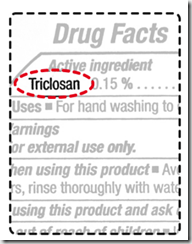
FDA Reviewing Safety & Effectiveness Of Antibacterial Soaps

image

Credit FDA


# 8078


A topic we’ve touched on more than a couple of times in the past has been the wisdom of using products containing the antimicrobial ingredient Triclosan (see Study: Bisphenol A, Triclosan and The Hygienic Hypothesis, Referral: Maryn McKenna On Triclosan, Allergies, and The `hygiene hypothesis’).


While evidence is scant, in recent years there have been studies that suggest the daily use of triclosan (in liquid soaps) and triclocarban (in bar soaps) could potentially pose a health hazard, and might foster the development of resistant bacteria.


Today, the FDA has announced a proposed rule that would require manufacturers to demonstrate both the safety and effectiveness of these products, or face relabeling or even removal from the marketplace.


FDA NEWS RELEASE

For Immediate Release: Dec. 16, 2013

Media Inquiries: Andrea Fischer, 301-796-0393, andrea.fischer@fda.hhs.gov

Consumer Inquiries: 888-INFO-FDA

FDA issues proposed rule to determine safety and effectiveness of antibacterial soaps

En EspaƱol

The U.S. Food and Drug Administration today issued a proposed rule to require manufacturers of antibacterial hand soaps and body washes to demonstrate that their products are safe for long-term daily use and more effective than plain soap and water in preventing illness and the spread of certain infections. Under the proposal, if companies do not demonstrate such safety and effectiveness, these products would need to be reformulated or relabeled to remain on the market.


Today’s action is part of a larger, ongoing review of antibacterial active ingredients by the FDA to ensure these ingredients are proven to be safe and effective. This proposed rule does not affect hand sanitizers, wipes, or antibacterial products used in health care settings.


Millions of Americans use antibacterial hand soap and body wash products. Although consumers generally view these products as effective tools to help prevent the spread of germs, there is currently no evidence that they are any more effective at preventing illness than washing with plain soap and water. Further, some data suggest that long-term exposure to certain active ingredients used in antibacterial products—for example, triclosan (liquid soaps) and triclocarban (bar soaps)—could pose health risks, such as bacterial resistance or hormonal effects.


“Antibacterial soaps and body washes are used widely and frequently by consumers in everyday home, work, school, and public settings, where the risk of infection is relatively low,” said Janet Woodcock, M.D., director of the FDA’s Center for Drug Evaluation and Research (CDER). “Due to consumers’ extensive exposure to the ingredients in antibacterial soaps, we believe there should be a clearly demonstrated benefit from using antibacterial soap to balance any potential risk.”


The widespread consumer use of antibacterial products, the accumulated scientific information and concerns raised by health care and consumer groups have prompted the FDA to reevaluate what data are needed to classify the active ingredients in consumer antibacterial products as “generally recognized as safe and effective” or GRASE.  Under the proposed rule, manufacturers who want to continue marketing antibacterial products will be required to provide the agency with additional data on the products’ safety and effectiveness, including data from clinical studies to demonstrate that these products are superior to non-antibacterial soaps in preventing human illness or reducing infection.


“While the FDA continues to collect additional information on antibacterial hand soaps and body washes, we encourage consumers to make an educated choice about what products they choose to use,” said Sandra Kweder, M.D., deputy director, Office of New Drugs at CDER. “Washing with plain soap and running water is one of the most important steps consumers can take to avoid getting sick and to prevent spreading germs to others.”


Consumers should continue to be diligent about washing their hands. If soap and water are not available, an alcohol-based hand sanitizer that contains at least 60 percent alcohol should be used.  More information on appropriate hand washing from the CDC may be found here.


Almost all soaps labeled “antibacterial” or “antimicrobial” contain at least one of the antibacterial ingredients addressed in the proposed rule. The most common active ingredients in antibacterial soaps are triclosan and triclocarban. Some soaps labeled “deodorant” may also contain these ingredients.


The proposed rule does not require the antibacterial soap products to be removed from the market at this time. When the proposed rule is finalized, as previously stated, either companies will have provided data to support an antibacterial claim, or if not, they will have to reformulate (remove antibacterial active ingredients) or relabel (remove the antibacterial claim from the product's labeling) these products in order to continue marketing. The proposed rule is available for public comment for 180 days, with a concurrent one year period for companies to submit new data and information, followed by a 60-day rebuttal comment period.


From the FDA’s Triclosan: What Consumers Should Know 

What consumers should know:
  • Triclosan is not known to be hazardous to humans.
  • FDA does not have sufficient safety evidence to recommend changing consumer use of products that contain triclosan at this time.
  • In light of questions raised by recent animal studies of triclosan, FDA is reviewing all of the available evidence on this ingredient’s safety in consumer products. FDA will communicate the findings of its review to the public in winter 2012.
  • At this time, FDA does not have evidence that triclosan added to antibacterial soaps and body washes provides extra health benefits over soap and water. Consumers concerned about using hand and body soaps with triclosan should wash with regular soap and water.
  • Consumers can check product labels to find out whether products contain triclosan.

Tuesday, June 19, 2012

The Return Of The Hygiene Hypothesis


 image

Photo Credit-CDC 


# 6394


While I often use this blog to promote better hand and respiratory hygiene, I must confess to a fascination with the hygiene hypothesis.


For those unfamiliar with it, this is  multi-faceted and controversial theory that proposes that some diseases common to modern man may come about due to a lack of exposure to various biological agents (bacteria, viruses, and even parasites)  . . . particularly in early childhood.


Research over the past decade has increasingly linked the use of household cleaners (bleach, disinfectants, carpet cleaners, etc) and other chemicals (turpentine, insecticides, etc) to childhood onset asthma and allergies (see MedNews Today Asthma in kids linked to household cleaning products and chemicals).


Essentially, the hygienic hypothesis says we may be trying to be `too clean’ for our own good.


Back in 2010, I wrote about a University of Michigan  study that addressed growing concerns over two commonly used chemicals – Triclosan and Bisphenol A (BPA) - and their possible impacts on our immune systems.


Study: Bisphenol A, Triclosan and The Hygienic Hypothesis


While my article focused mostly on BPA, Maryn McKenna took a deeper look at the use of Triclosan, and at the `hygienic hypothesis’ in her Superbug Blog entry called: Triclosan, allergies and the “hygiene hypothesis”. 


Very much worth reading.


All of which serves as prelude to a new study today, from the Johns Hopkins Children’s Center, that links antibacterial chemical exposure to a higher incidence of allergies in children.


First some excerpts from the press release, followed by  a link to the study, and finally a few closing comments.


Antibacterials in Personal-Care Products Linked to Allergy Risk in Children

MEDIA CONTACT: Ekaterina Pesheva
EMAIL: epeshev1@jhmi.edu
PHONE: (410) 502-9433

June 18, 2012

Exposure to common antibacterial chemicals and preservatives found in soap, toothpaste, mouthwash and other personal-care products may make children more prone to a wide range of food and environmental allergies, according to new research from Johns Hopkins Children’s Center.


Results of the NIH-funded study are published online ahead of print June 18 in the Journal of Allergy and Clinical Immunology.


Using existing data from a national health survey of 860 children ages 6 to 18, Johns Hopkins researchers examined the relationship between a child’s urinary levels of antibacterials and preservatives found in many personal-hygiene products and the presence of IgE antibodies in the child’s blood. IgE antibodies are immune chemicals that rise in response to an allergen and are markedly elevated in people with allergies.


“We saw a link between level of exposure, measured by the amount of antimicrobial agents in the urine, and allergy risk, indicated by circulating antibodies to specific allergens,” said lead investigator Jessica Savage, M.D., M.H.S., an allergy and immunology fellow at Hopkins.


The researchers caution that the findings do not demonstrate that antibacterials and preservatives themselves cause the allergies, but instead suggest that these agents play a role in immune system development.

<SNIP>

Children with the highest urine levels of triclosan had nearly twice the risk of environmental allergies as children with the lowest urinary concentrations. Those with highest levels of propyl paraben in the urine had twice the risk of an environmental allergy. Food allergy risk was more than twice as pronounced in children with the highest levels of urinary triclosan as in children with the lowest triclosan levels. High paraben levels in the urine were not linked to food allergy risk.

(Continue . . . )


The study, which appears in the Journal of Allergy and Clinical Immunology, is called:


Urinary levels of triclosan and parabens are associated with aeroallergen and food sensitization

Jessica H. Savage, MD, MHS, Elizabeth C. Matsui, MD, MHS, Robert A. Wood, MD, Corinne A. Keet, MD, MS


For more on the Hygiene Hypothesis,  a couple more resources to consider.


First, from a Scientific American podcast from April of 2011, an interview with Johns Hopkins School of Medicine researcher Kathleen Barnes, who studies this theory.


Can It Be Bad to Be Too Clean?: The Hygiene Hypothesis

Johns Hopkins School of Medicine researcher Kathleen Barnes talks about the hygiene hypothesis, which raises the possibility that our modern sterile environment may contribute to conditions such as asthma and eczema


Another, highly controversial aspect of this theory, is that intestinal parasites (ie. worms) – which have been largely eliminated in the western world - are actually beneficial, and can help prevent (or even cure) certain types of inflammatory bowel disease.


NPR (along with many other media outlets) covered this story at length back in 2010 (see Eat Your Worms: The Upside Of Parasites).


This past week, with the release of an avalanche of News From The Human Microbiome Project, we are learning just how much of our body consists of non-human microbes – which exist in or on just about every part of the human body. 


Over hundreds of thousands of years man has evolved to co-exist with – and  yes, even depend upon  - many of these micro organism to protect our skin, digest our food, and even produce vitamins and anti-inflammatory compounds in our intestines.


Chemicals (and drugs - see The Other Reason Not To Abuse Antibiotics) that can upset the balance of these naturally occurring – often  beneficial – organisms have the potential to affect our health in unexpected ways.


While intriguing, the Hygiene Hypothesis remains both controversial and unproven. 


Good hand hygiene, avoidance of infection, and general cleanliness remain essential parts of staying healthy, and no one is seriously suggesting we indulge in geophagy (eating dirt), intentionally ingest worms, or move down into the sewers to enhance our immune system.


But there is increasing evidence to suggest that our modern mania for cleanliness - particularly with the use of chemicals like triclosan and parabens – may exact an unexpected cost on our overall health.


How much of a penalty is involved, and whether the tradeoff is worth it, are questions that are yet to be answered.