Showing posts with label Vietnam. Show all posts

Sunday, April 05, 2015

Media Report: 2 H5N6 Cases In Nghe An Province (Updated)

image


UPDATED:  Apparently my initial concerns with this story were warranted, as media reports this morning now indicate that the 2 patients suspected of H5N6 infection have tested positive for seasonal influenza instead (see report at bottom).


# 9903


With the caveat that we are dealing with a media report, and I’ve yet to locate an official source, today several Vietnamese news sites are carrying a report of two people infected with the recently emerged A/H5N6 avian virus in Nghe An Province.


Giving at least some credence to this report is the fact that just over two weeks ago we saw the virus reported in the adjacent province to the north (see H5N6 Reported In Thanh Hóa Poultry).


First the report, then I’ll be back with a bit more.


Nghe An: Detecting 2 patients infected with influenza A / H5N6

TPO - An outbreak of avian influenza A / H5N6 outbreak in Quy Hop district, Nghe An infection caused two people. Local Veterinary Authority has issued 11,000 doses of vaccine prevention, control the outbreak.

The source of the Pioneer said, outbreaks of avian influenza outbreaks in the neighborhood Dinh Xuan Nghia, Quy Hop district, Nghe An, near the tip. Place of concentrated populated, located on Highway 48A. Following 2 people infected with bird flu.

Talking to reporters dimension 5/4, Director DARD Nghe An Ho Ngoc Sy confirm the source said, adding, after the outbreak, the veterinary authorities in collaboration with the district of Nghe An advanced Quy Hop emergency measures to enclosure, control and extinguish the outbreak.

"There are families raising chickens, 150 children in infected chickens. The province has mobilized 11,000 doses of vaccine against the disease and conduct quarantine, disinfection whole barn area with bird flu. Temporarily banned the sale of poultry in the affected area, "said Ho Ngoc Sy said.

Director of Health Services of Long Bui Dinh Nghe An, said two patients infected with avian influenza A / H5N6 was transferred to Hanoi treatment. The patient was his wife Tr.K.Ch, LTTh. Housing neighbor Dinh Xuan Nghia, Quy Hop district, he Ch. poultry husbandry; His wife has just joined the women in the neighborhood classifieds market has traded Palace.


One of the `new crop’ of HPAI H5 viruses to appear over the past 18 months – H5N6 –  unlike H5N8 and H5N2, has shown an ability to infect and seriously sicken humans.


We first saw it appear, infecting poultry and killing one person, last April in Nanchong City (see Sichuan China: 1st Known Human Infection With H5N6 Avian Flu). Since then, two more human cases have been reported in China, of which only one survived.


In early August of 2014 the virus suddenly popped up in widely separated outbreaks in central and northern Vietnam (see OIE: Two Outbreaks Of H5N6 In Vietnamese Poultry), hundreds of kilometers south of its original emergence.  Since then there have been at least a half dozen additional reports of outbreaks in Vietnamese poultry.


Over the past few months China has reported more than 2 dozen outbreaks around the country (see OIE Follow-up report No.7) , and two days ago FluTrackers picked up an unconfirmed report from China - Farmer suspected H5N6 bird flu case after outbreak in geese - April 3, 2015.

image


Although it has not spread as far, or as famously, as H5N8 and H5N2 – H5N6 is viewed with extra caution because it has already demonstrated the ability to infect humans (see FAO Warns on H5N6).


Hopefully we’ll get clarification on both of these incidents in the next couple of days.


UPDATE:

This morning several Vietnamese news outlets are carrying reports indicating that both cases tested positive for regular flu, not H5N6. This from Vietnamplus.


Nghe An confirmed no patients infected with influenza A/H5N6

Dr. Phan Van Cong, head of communicable disease control, biological vaccines, preventive health center of Nghe An province, confirmed the province doesn't have any patients infected influenza A/H5N6 as the communication media has brought.

In mid March, 2015, an outbreak of influenza A/H5N6 were erupting on chickens at communal Sense Spring (district of Nghe An, Where your knees). General Tran Kim's family and her sister Lü BU in A Phoenix neighborhood, civil Sense Spring chickens and there have been dozens of chickens infected and die.

On March 3, Mr Chan Kim Chung caught a cold, high fever. To 31/3, sister Lü BU Thuy (his wife Chung) also have a cold, high fever. Fear before public health situation with the flu have occurred on the adoptive family's chickens, relatives have taken the couple Mr. and Mrs. Chung, Cards out at the Oph parasite Virus, a tropical hospital Central.

After doing tests, the hospital reported two patients with influenza A is common sense. A central tropical hospital has been treating patients with antibiotics, the pill provides reproductive. After six days of treatment at a hospital on the Central Lowland, both Public Health and the patient has stabilized, recovered. Expected in the afternoon of 6/4, British couple, the Cards will be discharged from hospital.

Wednesday, March 18, 2015

Media Reports: H5N6 Reported In Thanh Hóa Poultry

image

Thanh Hoa Province – Credit Wikipedia


# 9839


One of the `second generation’ of HPAI H5 viruses to appear over the past 18 months – H5N6 – is one that that, unlike H5N8 and H5N2, has shown an ability to infect and seriously sicken humans. We first saw it appear, infecting poultry and killing one person, last April in Nanchong City (see Sichuan China: 1st Known Human Infection With H5N6 Avian Flu). 


Once the threat was identified, local poultry was culled, and we heard nothing more for several months.


All was quiet regarding  H5N6 until early August, when the virus suddenly popped up in widely separated outbreaks in central and northern Vietnam (see OIE: Two Outbreaks Of H5N6 In Vietnamese Poultry), hundreds of kilometers south of its original emergence.


Over the next few weeks we began to see additional outbreaks in Vietnam (see Vietnam Gears Up To Detect, Fight Avian H5N6) and two thousand miles away in northern China (see China: H5N6 Outbreak In Heilongjiang Poultry).  Laos has also reported outbreaks in poultry.

.

Last October, in China: H5 AI Rising, we looked at 24 recently reported outbreaks of H5N6 across China.

image


The following month, in FAO-EMPRES Report On The Emergence And Threat Of H5N6, we looked at an analysis of H5N6, and other recently emerged avian flu viruses in China. Since then, two more human cases have been reported see China Reports 3rd H5N6 Case (Fatal) – Yunnan Province), of which only one survived.


We’ve not seen an OIE report from China on H5N6 since early February (Follow-up report No. 5) and Viet Nam has been unusually quiet since the New Year as well, with just a small number of H5N1 and HPAI H5 outbreaks reported in 2015.


Today, however, we have multiple media account of a recent outbreak of H5N6 in Thanh Hoa. I’ve checked the Vietnam’s MARD website, but no notice has been posted at this time.  If confirmed, we should see an OIE notification in the next few days.


Thanh Hóa: appeared bird flu A/H5N6

AFP From mid March, 2015, at Thanh Hoa, bird flu has appeared in a household in Hai Tinh Gia district, which Fields nearly 300 children infected poultry. Sample swabs for the positive result for influenza A/H5N6.

Bird flu appear on household flocks Le post added, Hamlet 2, Hai Tinh Gia district Chiefs Township to 293 the poultry (ducks, 103 190 chicks) infected.

According to the results of tests by the veterinary agency 3, sample swabs positive for influenza A/H5N6. This is the strain of the virus causing the bird flu threat, viruses have high and can spread to people with high mortality rates.

This is a new virus strains emerge in Thanh Hoa province, poultry vaccination has not been immune to this virus type. On the other hand, prolonged overcast weather increases the risk of epidemic scale.

Before the situation on the Thanh Hoa province, has express about making urgent measures in prevention of avian influenza A/H5N6.

(Continue . . . )


Similar reports are available from The Voice Of Vietnam (see Thanh Hoa appear outbreak of avian influenza H5N6) and Workers (see Influenza A / H5N6 appeared in Thanh Hoa).


Although not as well known, or as well distributed as H5N8 and H5N2 – H5N6 is viewed with extra suspicion because it has already demonstrated the ability to infect humans (see FAO Warns on H5N6


But as with the H5N1 virus, we’ve not seen any evidence that it is capable of transmitting efficiently from human-to-human.

Thursday, December 18, 2014

H5N6 Resurfaces In Vietnam

image  

Credit Wikipedia 


# 9457


While H5N8 popping up in Germany, the Netherlands, the UK, Japan, and now Italy has garnered most of the avian flu headlines over the past six weeks, H5N6 – the other newly emerged HPAI H5 virus of 2014 (see Sichuan China: 1st Known Human Infection With H5N6 Avian Flu) – hasn’t gone away. 


Unlike H5N8, which to date has not been reported to have infected humans - H5N6 has a track record of infecting, and killing, at least one person.


Reports of H5N6 this fall have been sporadic, with China notifying the OIE of a couple of dozen outbreaks in poultry in October (see China: H5 AI Rising), and a half dozen or so reports also coming out of Vietnam (see FAO Warns On H5N6). 


Six weeks ago – before the sudden and unexpected arrival of H5N8 in Europe – H5N6 was considered the `one to watch’  (see FAO-EMPRES Report On The Emergence And Threat Of H5N6).

image


Perhaps more accurately, one of six to watch, as we’ve added five new Highly Pathogenic Avian Flu subtypes in less than 2 years; H7N9, H5N6, H5N8, H5N3, and H10N8. 

image

The sixth viral horseman in this poultry apocalypse being the venerable H5N1 virus, which continues to infect birds, poultry, and occasionally humans in Asia and the Middle East.

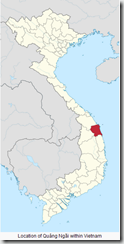
All of which brings us to the latest report of an outbreak of H5N6 in the central Vietnam province of Quang Ngai.


Quang Ngai canceled 12,000 quails were infected with influenza A / H5N6

Dinh Thi Huong (VNA / Vietnam +) at: 18/12/14 15:01

Artwork. (Source: Dinh Hue / VNA)

In the morning of 18/12, the Steering Committee of disease prevention cattle, poultry Son Tinh district (Quang Ngai) was carried out to destroy the entire 12,000 quails were infected with influenza A / H5N6 family of Pham Hoang Diep (team 8, Loc Lam Village North, Ha Tinh, Son Tinh district). Pham Hoang Diep said his family lay eggs, quail farming, including 10,000 children were seven months old, and 45 days of age and 2,000 children were vaccinated Room vaccine regulations.

However, the last 14/12 days, Diep discovered many quail died of unknown causes. He told officers Veterinary Station Ha Tinh and Son Tinh district. Immediately after receiving the notice, the veterinary station officials have sent samples to the Veterinary Authority the 4 tests. Test results showed that the male quail Diep infected with influenza A / H5N6.

Steering Committee for prevention of animal disease, avian Son Tinh District has conducted the entire destruction of 12,000 quail Diep. Agency mailings y 4 in Da Nang area also has to check and monitor the implementation of measures of disinfection, sterilization and disposal of the body dead poultry in his household to control Scallops source of the epidemic spreading.

To prevent the spread of the disease across the board, steering committee for animal disease prevention poultry Son Tinh district has directed the officials veterinary station urgently spraying, spreading lime to disinfect cages farms throughout the district. outbreak of Pham Hoang Diep family's flu outbreak A / H5N6 occurred Thursday in the province of Quang Ngai. Currently, the Steering Committee of disease prevention poultry Quang Ngai province continues to closely monitor outbreaks, detect and treat if detected a new outbreak; and implement measures to prevent influenza A / H5N6 to humans. /.


Given the limits of surveillance and reporting across much of China and  other parts of Asia, it is likely that outbreaks of H5N6 – as well as other avian flu varieties– are underreported.


Although only reported thus far in China and Vietnam, as I wrote last month in Bird Flu Spread: The Flyway Or The Highway?, these avian viruses have a habit of disseminating themselves across a wide geographic area, often aided and abetted by migratory and wild birds, legal or illegal transport of poultry or poultry products, or other man-made devices.

image

Major Global Migratory Flyways – Credit FAO


In March of 2013, in a case of unusually good timing, we looked at a study that selected East-Central China a one of the top hotspots in the world for the creation of zoonotic influenza viruses – those that can jump from animals to man (see EID Journal: Predicting Hotspots for Influenza Virus Reassortment).


Two weeks later China announced the discovery of the H7N9 virus, followed over the next 18 months by the emergence of H10N8, H5N8, H5N6, and H5N3.


While most of these viruses are likely to remain a threat primarily to poultry and wild birds, scientists take the threat posed by any emerging novel influenza virus seriously.  And given this recent rapid expansion of HPAI subtypes, one shouldn’t be terribly surprised to see this trend continue, and have new subtypes emerge in the months or years to come.

Monday, September 22, 2014

FAO Warns On H5N6

image

Photo Credit – FAO


#9099


Last April a new strain of HPAI H5N6 appeared in poultry, killing one person in Nanchong City (see Sichuan China: 1st Known Human Infection With H5N6 Avian Flu).  Once the threat was identified, local poultry was culled, and we heard nothing more for several months.


While Low Pathogenic H5N6 had been identified previously in wild birds  in Taiwan, Germany, Sweden and the United States this new strain was classified as highly pathogenic


And like the H5N8 virus which emerged last January and ravaged South Korea’s poultry industry throughout the spring, this new virus was a reassortant of the H5N1 avian flu virus (see Whole-Genome Sequence Of Reassortant H5N6 Avian Virus).


All was quiet on the H5N6 front until early August, when the virus showed up in widely separated outbreaks in central and northern Vietnam (see OIE: Two Outbreaks Of H5N6 In Vietnamese Poultry).


In short order we began to see additional outbreaks in Vietnam (see Vietnam Gears Up To Detect, Fight Avian H5N6) and two thousand miles away in northern China (see China: H5N6 Outbreak In Heilongjiang Poultry).


Last week, the central Vietnamese Quang Ngai province reported their fourth outbreak in just over a month, and over the weekend Vietnamese media have reported that a massive cull is underway (see A/H5N6 flu virus: Quang Nam culls 800,000 ducks).


While its threat to humans is uncertain, the threat to the poultry industry – and to the the food security and meager incomes of households that raise subsistence poultry – could be dire. 


After a decade of losses due to H5N1, and the recent introduction of the stealthy H7N9 virus, the last thing anyone wanted to see in that part of the world is another avian flu threat.  As if that weren’t enough, South Korea’s H5N8 virus – which briefly made it to Japan last spring – could also make further inroads across Asia this fall and winter.


Today the FAO released the following news article on their website.  Excerpts follow, and I’ll have  a bit more when you return.


Increased concern over latest strain of avian influenza in Southeast Asia

FAO urges continued vigilance to safeguard poultry and livelihoods

22 September 2014, Rome - A recently-emerged strain of avian influenza virus in poultry in Southeast Asia known as A(H5N6) represents a new threat to animal health and livelihoods and must be closely monitored, FAO said today.
Chinese authorities first reported the influenza A(H5N6) virus in poultry in April 2014. Since then, the Lao People's Democratic Republic and Viet Nam have also detected the H5N6 virus in poultry.


"Influenza viruses are constantly mixing and recombining to form new threats," said FAO's Chief Veterinary Officer, Juan Lubroth. "However, H5N6 is particularly worrisome, since it has been detected in several places so far from one another, and because it is so highly pathogenic, meaning infected poultry quickly become sick and, within 72 hours, death rates are very high."


The fact that the virus is highly virulent in chickens and geese and potentially spread across a large part of Southeast Asia translates into a real threat to poultry-related livelihoods. Poultry contributes to the incomes of hundreds of millions of people throughout the subregion.


The World Organisation for Animal Health (OIE), which works together with FAO and the World Health Organization (WHO) to support countries' responses to animal and human disease threats, is also monitoring the situation closely.


"An effective surveillance and an early detection of animal disease at source are two main keys to reduce the risk of dissemination and to ensure safe trade. The OIE calls on its 180 member countries to respect their commitment and to immediately notify on WAHIS any outbreak detected on their territory," said OIE Director-General Bernard Vallat.

Limited threat to human health

Only one case of H5N6 has been reported in humans after contact with exposure to poultry shortly after its detection in China. The person later died. There have been no other human cases.  Though the scientific community is still in the process of understanding the dynamics of this new strain, it is unlikely that H5N6 represents an immediate and significant threat to human health.

"Current evidence suggests H5N6 poses a limited threat to human health at this stage," said WHO epidemiologist Elizabeth Mumford. "It's been detected in multiple places in poultry, yet we only have one human infection reported. This suggests that the virus does not easily jump from animals to humans. Of course, we still need to remain vigilant, because prevalence in poultry and therefore human exposure could increase during the winter."


Even if the public health risks posed by H5N6 currently appears to be low, other pathogens, including other subtypes of influenza viruses such as H5N1 and H7N9, still can present cause for concern. FAO and WHO recommend consumers follow appropriate hygiene, food preparation and food safety guidelines. These include: washing hands often, cleaning utensils and surfaces used during food preparation, and eating only well-cooked poultry meat products. People should also avoid handling sick birds or those that have died of illness.


FAO and WHO are stressing that at this time it is critical for countries in Southeast and East Asia -- especially those with links to poultry production and trade -- to ramp up efforts to detect and report influenza viruses in poultry and monitor for any human infections.


(Continue . . . )


Although Southeast Asia has long been known as the `cradle of influenza’ -  an area of the world where both human and animal influenza viruses circulate in close proximity more-or-less year round and can occasionally serve up hybrids – the past couple of years has seen a remarkable number of reassortants appear.


H7N9, H5N6, H5N8, H10N8, H6N1 . . . .  all with a increasing number of clades, as well.


Of these, H7N9 has provoked the most concern by far, as it has sparked two sizable human waves of infection, and is expected to return when temperatures cool this fall and winter.  But H10N8 is no slouch, having killed three people in China last winter, while the others are too new to really evaluate their public health impact.


The good news is that reassortant viruses with genuine pandemic potential only appear very rarely. 


The bad news is that nature’s laboratory is open 24/7, and it is constantly trying to produce the next `successful’ virus.  And the more subtypes it has to play with, the greater the odds are it will come up with something we really don’t want to have to deal with.


All of which highlights the need for continual and enhanced surveillance of humans, livestock, and wild birds for emerging viral threats. Because it isn’t a question of if another pandemic will emerge.


It’s really just a matter of when.

Wednesday, September 17, 2014

Vietnam Reports Additional H5N6 Outbreaks In Poultry

image

Credit Wikipedia


# 9086


We continue to see reports out of both Vietnam (see Vietnam: More H5N6 Outbreaks In Poultry) and China (see China: H5N6 Outbreak In Heilongjiang Poultry) that the recently emerged H5N6 avian flu virus keeps popping up over a wide swath of Eastern Asia. 


Previously low pathogenic versions of H5N6 have been reported around the world, including in the United States and Europe. But as we learned last Sunday (see Whole-Genome Sequence Of Reassortant H5N6 Avian Virus) this new HPAI virus is a far cry from its LPAI cousin – consisting of 7 parts HPAI H5N1 and 1 part H6N6.


HPAI H5N6 first emerged in Southern China last April in poultry, killing one person in Nanchong City (see Sichuan China: 1st Known Human Infection With H5N6 Avian Flu). 


While one known human infection does not a pandemic threat make, HPAI H5N6 – unlike the HPAI H5N8 virus which ravaged South Korea’s poultry industry last winter – has shown at least some limited ability to jump to humans and cause serious disease, and that is enough to make this virus a potential public health concern.


For now, both subtypes are regarded as primarily threats to the poultry industry and this winter should tell us a lot about just how prevalent each is in the environment.   Summer is usually the slow season of avian flu outbreaks.  


Today VietnamPlus is reporting the fourth recent outbreak in Quang Ngai, a province we looked at two weeks ago with reported outbreaks (see Vietnam: More H5N6 Outbreaks In Poultry).


Quang Ngai destroys 1,000 A/H5N6 infected ducks

17/09/2014 | 10:54:44

The central province of Quang Ngai’s Steering Committee for cattle and poultry disease prevention, together with the Veterinary Sub-department, culled 1,000 A/H5N6 infected birds on September 16.


The infected birds were traced back to a poultry farm in Tin An Dong commune, Quang Ngai city. This is the fourth H5N6 bird flu virus case in the province.


The 40-day old flock had been vaccinated, but dozens of them died suspiciously and tested positive for the virus.


In order to prevent an outbreak spread, local authorities promptly destroyed the infected birds and sterilised the poultry farm to contain the virus. Furthermore, they informed residents not to consume infected poultry products.


According to the vice director of the Quang Ngai’s veterinary station, Nguyen Duc Kieu, the station has called upon the 23 localities to conduct supplementary A/H5N6 bird flu virus vaccination on their unvaccinated birds.


To date, local authorities have implemented a number of measures to prevent the outbreak of the virus and prevent poultry-to human transmission.-VNA

Friday, August 22, 2014

Meanwhile, Back In Vietnam . . . .

image

Credit FAO


# 8987


The FAO is reporting a third outbreak of the newly emerging avian H5N6 virus – this time on a Pheasant farm in Lao Cai Province.  This latest outbreak is nearly 300km distant from the closest of the two outbreaks reported last week (see  Vietnam Gears Up To Detect, Fight Avian H5N6), suggesting the virus is already widely dispersed.


image


Like the H5N8 avian virus, which appeared in South Korean poultry last January, H5N6 is a relatively new avian threat.  While low pathogenic versions of this virus have been reported in the past, it wasn’t until last spring did we see a highly pathogenic (HPAI) strain emerge – this time in Southern China.


And in that case – unlike H5N8 – there was a (fatal) human infection involved (see Sichuan China: 1st Known Human Infection With H5N6 Avian Flu).


Up until last week, we’d not heard any more about this upstart virus, and there were hopes it was a flash in the pan.  But over the summer two widely separated outbreaks were reported in Vietnam, and now we have a this third, more recent report.  


Both of these emerging avian viruses are related to the highly pathogenic H5N1 virus, which has infected more than 600 people over the past decade, killing roughly 60% of known cases.   In the case of H5N8, we know it is continuing to evolve, and now consists of multiple clades (see EID Journal: Describing 3 Distinct H5N8 Reassortants In Korea).


While less is known about the evolution of the H5N6 virus, the longer it remains in circulation, the more opportunities it will have to mix and match genes with other avian viruses (notably H9N2), and the better chance it will have to become firmly entrenched in the environment.


While we watch the Ebola outbreak in Africa, and wait to see if MERS-CoV has any ambitions this fall, it is important to remember that historically, the most efficient pandemic viruses have been influenza viruses. 


While we may not see another pandemic for years to come, right now we have no lack of contenders in the wild - H5N1, H7N9, H10N8, H5N6, H9N2 . . . . – to keep our eyes on.

Friday, August 15, 2014

Vietnam Gears Up To Detect, Fight Avian H5N6

image

Photo Credit – FAO


# 8956


Although its track record in infecting humans is limited to only one known case (see May 2014 Sichuan China: 1st Known Human Infection With H5N6 Avian Flu), the emergence of a highly pathogenic H5N6 virus on a poultry farm in China earlier this spring has raised concerns that we might have yet another avian flu threat to contend with. 


Similarly, last January we saw a highly pathogenic H5N8 virus appear in South Korea, which resulted in the culling of more than 10 million birds, and significant economic losses.  The virus also briefly appeared in Japan, but since its arrival was anticipated, it was quickly contained.


While the (multiple stains) of H5N8 in South Korea have yet to infect a human, we have seen evidence of their ability to seroconvert in canines (see Korea Found Dogs With H5N8 Antibodies).  Both of these emerging avian viruses are related to the highly pathogenic H5N1 virus, which over the past 12 years has become endemic in a half dozen Asian and Middle Eastern countries.


These new subtypes come about from a process called antigenic shift, or  reassortment.


For shift to happen, a host (human, swine, or avian) must be infected by two influenza different viruses at the same time.  Shift occurs when one virus swap out chunks of their genetic code with gene segments from another virus.

image


With literally dozens of avian subtypes and clades circulating in avian, canine, equine, and swine populations there are ample opportunities for new hybrids to be generated.  Most will be evolutionary failures, less fit than the viruses already in circulation, and will die out. 

But every once in awhile a new virus emerges which has the possibility of being a contender.


After making a brief appearance last April in China, we hadn’t heard anything about HPAI H5N6 until earlier this week (see OIE: Two Outbreaks Of H5N6 In Vietnamese Poultry).  Now the concern is over just how widespread this new virus might be, since the two detections were several hundred kilometers apart.


image

Location of Outbreaks – Source OIE


Overnight Vietnam’s MARD (Ministry of Agriculture & Rural Affairs) issued the following warning on this new virus.


Regarding urgent public to strengthen measures to prevent and combat bird flu


(MARD - 08/14/2014) To proactively prevent influenza virus A / H5N6 influenza viruses and other poultry, minimize influenza virus infection and fatal to humans, affects community health, reduce economic losses to the livestock industry; Ministry of Agriculture and Rural Development proposed Chairman of the People's Committees of provinces and centrally run cities concerned, only the People's Committees at all levels and departments of local implementing measures measures to prevent bird flu in the spirit of power steering at the 200 / CD-TTg of the Prime Minister dated 02.14.2014 focus on avian flu and avian influenza viruses infect humans.

For more information please see the attached file here.


And from Hanoimoi.com.vn


For the first time, the influenza virus A / H5N6 were recorded in Vietnam

Friday 08/15/2014 06:32

(HNM) - Afternoon 14-8, Deputy Minister of Health Nguyen Thanh Long has sent urgent dispatches signing Chairman provinces and cities across the country to strengthen the prevention and control of influenza A / H5N6.

Accordingly, at the announcement of the Department of Animal Health (MARD) through active surveillance has detected a number of cases positive for influenza A / H5N6 in chickens raised in Trang Dinh district, Lang Son and the ducks feed Ky Anh district, Ha Tinh province. This is the first time the influenza virus A / H5N6 were reported in Vietnam. Test results with gene sequencing of virus samples of influenza A / H5N6 detected in our country that there is a 99% similarity with the strain of influenza A / H5N6 deaths in the first in Sichuan Province, China Nations in January 4-2014. According to the World Organization for Animal Health, this is a highly virulent strain and no evidence of transmission from person to person, so the monitoring and supervision of the new strain changes need to be done to close apps timely response to outbreaks in poultry.

(Continue . . . )


This expanding array of new avian influenza subtypes hasn’t been limited to just the H5s. 


While up until last spring, if you talked about avian flu - most people would assume you meant the H5N1 `bird flu’  which re-emerged in Vietnam in 2003 and subsequently spread globally . But things have changed considerably over the past 18 months.


Since then we’ve seen two impressive waves of the H7N9 epidemic in China, Taiwan reported Infection With Avian H6N1 last year, and last winter no fewer than three human cases of H10N8 infection were reported in China. 


To that you can add a handful of H7 infections in Italy, an occasional H9N2 infection in Asia, and continued sporadic infections with Swine variant viruses (H1N1v, H1N2v, H3N2v)  in North America (see Keeping Our Eyes On The Prize Pig)..


Of course, none of this guarantees that one of these above mentioned emerging viruses will adapt well enough to humans to pose a global health threat. 


We’ve watched H5N1 for more than a decade, and it hasn’t managed to increase its transmissibility despite splitting into more than 20 clades. 


But it is a numbers game - the more novel flu viruses that are out there swapping gene segments and picking up host-adaptive amino acid substitutions - the better the odds are that one of these viruses will someday hit the jackpot.


And if the past 18 months are any indication, the roster of new influenza subtypes to keep track of will only likely continue to expand.

Tuesday, August 12, 2014

OIE: Two Outbreaks Of H5N6 In Vietnamese Poultry

image

Location of Outbreaks – Source OIE


# 8947


Last May the H5N6 virus made headlines (see Sichuan China: 1st Known Human Infection With H5N6 Avian Flu) when it was detected in samples taken from a 49 year-old man who had been exposed to dead chickens and died of pneumonia.


Subsequently the China’s Ministry of Agriculture and Veterinary Bureau filed an OIE report on the local outbreak in poultry, where more than 1300 birds were culled.


Although Low Pathogenic H5N6 had been identified previously in wild birds  in Taiwan, Germany, Sweden and the United States this new strain was classified as highly pathogenic.  And like the H5N8 virus which emerged last January in South Korea, this new virus appeared to be a reassortant of the H5N1 avian flu virus.


Today the OIE has published a notification of two – widely separated – H5N6 outbreaks in Vietnamese poultry.  The first, located near the border with China, had an onset in April – and began at roughly the same time as China’s previously mentioned outbreak (albeit several hundred miles distant). 


The second outbreak, several hundred kilometers further south, began in June. The delays in reporting these outbreaks are attributed to the time it has taken to determine the identity of this new strain of avian influenza. 


Although apparently not spreading as rapidly or as widely as the H5N8 virus did in South Korea last winter, this virus only appeared on the radar at the end of spring, traditionally when avian flu outbreaks in poultry are on the decline.  Obviously there will be a lot of eyes watching for its possible return this fall. 


And unlike H5N8, this strain has a track record of having infected, and killed, at least one person.


image

  image

image

Friday, March 07, 2014

Vietnam Reporting H5N1 Poultry Vaccine `Failures’

image

Photo Credit – FAO


# 8358


We’ve a pair of (likely related) reports this morning regarding the spread of the the 2.3.2.1C clade of H5N1 and the recent illness in previously vaccinated ducks in Southern Vietnam’s Tra Vinh Province.


The first report, from Thanh Nien News, reports on H5N1 infection among vaccinated ducks in Tra Vinh province, which they somewhat vaguely report as due to a `possible mutation’  of the H5N1 virus.


Vietnam reports bird flu virus mutation

Friday, March 07, 2014 12:10


Vaccine-resistant mutation of H5N1 bird flu virus strain has been confirmed in the Mekong Delta province of Tra Vinh while vaccinated fowls fell sick in central Vietnam.

Ngo Duc Thanh, director of Tra Vinh animal health department, said the kinds of vaccine that have been used for many years showed weaker effects this year.

Thanh said most samples from sick poultry would be tested for a new mutation.

(Continue . . . )


A somewhat more specific report comes this morning from Xinhua News, which states that the 2.3.2.1C clade of the H5N1 virus – previously seen in Northern and Central Vietnam and known to evade older vaccines - has moved further south in Vietnam, and has been detected in nearby Dong Nai province. 

image

The `mutation’ mentioned in the Tra Vinh report may well turn out to be this already-known, but continually expanding variant of the H5N1 virus. Testing will tell us if it is that, or (less likely, but still possible) a new variant of the virus. It is also possible that this flock was not properly vaccinated to begin with.


H5N1 spreads to Vietnam's southern province

English.news.cn   2014-03-07 13:45:59
 

HO CHI MINH CITY, March 7 (Xinhua) -- The H5N1 strain of avian influenza virus, clade 2.3.2.1C, which has been prevalent in Vietnam's northern regions, was discovered for the first time in a number of dead ducks in southern Dong Nai province, about 1,120 km from capital Hanoi, local media reported Friday.

State-run Vietnam News Agency quoted an official from Dong Nai province's Animal Health Department as reporting that results were confirmed after a sample from the birds tested positive for the virus.

Previously, the A/H5N1 strain, clade 1.1, were found in affected poultry sold at many markets across Vietnam, with the availability rate up to 6 percent in 2013.

From late 2013 and particularly in the first two months of 2014, the A/H5N1 strain, clade 2.3.2.1.C, has penetrated into southern regions, along with clade 1.1. To date, eight out of 13 city and provinces in southern Mekong delta were reported to be struck with avian flu outbreaks.

Dong Nai province is home to the largest number of poultry raised nationwide, with over 12 million. It is also located at the gateway of Ho Chi Minh City, the key economic hub in the south. As such, the transportation of poultry products is more likely to trigger the outbreak of bird flu, according to the local animal health department.

Currently, only 10 percent of the poultry in Dong Nai has been vaccinated against the A/H5N1 strain of the virus. Earlier, the province detected two bird flu cases in Trang Bom and Cam My districts.

The latest statistics from the National Steering Committee on Bird Flu Prevention and Control revealed that the H5N1 virus hit 23 provinces and cities across Vietnam, with over 80,000 infected poultry culled. Two Vietnamese died from the virus so far this year, one in southern Binh Phuoc and the other in Dong Thap provinces.


While most countries have adopted a strict `quarantine and stamp out (cull)’ policy when it comes to avian flu, China, Indonesia, Vietnam & Egypt have – for a variety of economic and social reasons – embraced poultry vaccines as a major part of their control strategy.


The challenge is that the  H5N1 virus is continually evolving, and over time new strains emerge that can (either partially, or totally) evade the vaccines in current use.


In 2012, in Egypt: A Paltry Poultry Vaccine, we looked at a  study conducted by the Virology department at St. Jude Children’s Research Hospital appearing in the journal Poultry Science, that gauged the effectiveness of six commercially available H5 poultry vaccines currently deployed in Egypt.


Of the 6 vaccines tested, only one (based on a locally acquired H5N1 seed virus) actually appeared to offer protection.


Poultry vaccines that provide only partial protection can mask infections, but may not prevent the spread (and possible mutation) of a virus.  A situation that experts, like Professor C.A. Nidom, of the Institute of Tropical Disease, Airlangga University have warned about in the past (see Indonesia: Debate Over Poultry Vaccination).


The World Health Organization's Western Pacific Office (WPRO) has a detailed fact sheet on Vietnam’s H5N1 challenges (below), from which I’ve pulled a few excerpts.


H5N1 in Viet Nam

(EXCERPTS)

  • Viet Nam is considered to be endemically infected with H5N1, with disease outbreaks being detected in a number of provinces across the country in 2012. In the south of Viet Nam the clade 1 virus persists since 2004 indicating that there is an endemic disease cycle with that particular clade and with no persisting introductions from other areas or countries.
  • In contrast, in northern and central Viet Nam the previous clade 2.3.4 virus was replaced from 2009 by clade 2.3.2.1 suggesting that additional incursions of new viruses were still occurring. Viruses belonging to the 2.3.2.1 “clade” have been detected in many countries in Asia, Middle East and Eastern Europe.
  • This pattern of incursion and establishment of new clades or variants has continued. In 2011, a new variant of H5N1 within clade 2.3.2.1 was detected and this virus caused immediate concern as the available poultry vaccines gave poor protection against it. A similar event has occurred in 2012 with another variant appearing. As of September 2012 at least three different H5N1 viruses variants were causing disease in poultry.
  • The Government of Viet Nam has, through the H5N1 control programme, detected these new virus strains as a result of disease outbreaks being reported and subsequent virus monitoring in the laboratory. This detailed knowledge of the viruses present is a very important outcome of the monitoring programme.
  • Department of Animal Health-led trials, supported by FAO, continually test vaccine efficacy against emerging strains of virus. In September 2012 a vaccine trial was underway to test a newly available H5N1 vaccine against the second 2.3.2.1 variant found two months previously. Information is on hand from earlier work about vaccine effectiveness against previously recognized viruses.
  • The different clades of the H5N1 viruses continue to be present in Viet Nam for two main reasons –trade in poultry with neighbouring countries and virus circulation in older ducks, commonly layers, which can become infected and not show clinical disease. Also, wild birds are known to carry influenza viruses, but H5N1 viruses of the 2.3.2.1 clade have not been detected to date in wild birds in Viet Nam.


Essentially, as long as these novel viruses are able to survive in the wild, or in domesticated poultry flocks - they continue to evolve – pitting our vaccine technology, surveillance methods, and biosecurity protocols against their evolutionary prowess and growing diversity. 


A viral `arms race’, that shows no signs of abating, and that has recently been joined by H7N9, H5N8, and a short-but-growing list of other worrisome novel  flu viruses.


For more on the evolution of the H5N1 virus, you may wish to revisit these earlier blogs.


EID Journal: H5N1 Clade 2.3.2.1 In Indonesia
Moving Viral Targets
EID Journal: The Expanding Variants Of H5N1


Wednesday, February 26, 2014

Vietnam Girds Against H7N9 As H5N1 Spreads

image

Photo Credit – FAO


# 8331


Vietnam has dealt with the deadly H5N1 avian flu virus for more than a decade, winning temporary battles, but never the war. In recent weeks we’ve seen a steady resurgence in the number of  provinces reporting infected poultry, which I last blogged about on the Feb. 15th (see Vietnam: H5N1 Poultry Outbreaks Spread To 8 Provinces).


Although media sources are reporting a range of figures, today the Bernama news agency is reporting that the avian virus has spread to 21 provinces:


Bird Flu Hits 21 Provinces In Vietnam

HANOI, Feb 26 (Bernama) - Bird flu has hit 21 provinces and cities across Vietnam with around 64,000 infected chickens culled, according to latest statistics from the Animal Health Department.

The number of birds killed in the central province of Khanh Hoa and the northwestern province of Lao Cai has reached almost 20,000, members of the National Steering Committee for Bird Flu Prevention and Control heard at a meeting here on Wednesday.

Vietnam News Agency (VNA) reports the outbreak was attributed to the complicated weather in the first two months of the year, and the increase in shipping and trading of poultry during the recently-ended Lunar New Year (Tet) festival.

(Continue . . .)


Complicating matters, less than a month ago we learned that the H7N9 virus had shown up in Guangxi Province, expanding its range southward, and moving it closer to Northern Vietnam (see  Guangxi Province Reports Their First H7N9 Case). 


This prompted the FAO earlier this month to issue a statement on H7N9’s Cross Border Threat advising neighboring countries to act now to prepare for possible outbreaks


Today, veteran science writer Declan Butler has a cautionary piece appearing in Nature News on Vietnam’s vulnerability to this new avian threat, and the steps they are taking to combat it.  Follow the link below to read:


Vietnam on high alert over flu risk

H7N9 avian influenza may spread from China for first time.

26 February 2014

The H7N9 avian-influenza virus that has killed more than 100 people in China in the past year has for the first time been detected in a province bordering Vietnam, raising the prospect that the disease may take hold across Asia and beyond. It was found in poultry in the live-bird markets of southern China’s Guangxi province in late January, and has caused three known human cases in the region.

The news comes as a surge in human H7N9 flu cases in China since the start of the year shows signs of abating, possibly because of the re­introduction of control measures. Vietnam, which had already prepared response plans for such an H7N9 outbreak, has placed itself on high alert. “There is a very high likelihood of H7N9 entering the poultry sector in Vietnam,” says Peter Horby, a researcher at the Oxford University Clinical Research Unit in Hanoi.

(Continue . . . )


In a related story, Thanh Nien News is reporting:


Vietnam fears lack of equipment to cope with H7N9

Wednesday, February 26, 2014 10:24

Vietnamese health authorities have expressed concerns over the lack of equipment to cope with the possible outbreak of the new virulent H7N9 strain of bird flu.

Health Minister Nguyen Thi Kim Tien told an online conference Sunday that nine of the 28 thermometers at border gates across the country used for anti-bird flu work are currently out of order.

Meanwhile, H7N9 can enter the country at any time, she said.

According to a representative from the US Food and Agriculture Organization (FAO), the shut-down of poultry markets in China has led to poultry being sold to other countries at low prices, while it is difficult for Vietnam to control the imports of poultry via the border with China.

Takeshi Kasai, World Health Organization (WHO) representative to Vietnam, said H7N9 can enter Vietnam via smuggled poultry or humans.

Authorities in Lang Son Province, which borders China, said they are maintaining 14 checkpoints to control the import of poultry around-the-clock at border areas.

Currently, 17 provinces around Vietnam have reported outbreaks of the H5N1 strain of bird flu.


Given the history of a porous border with China, considerable illicit poultry trade, and the devastating effects from the introduction of the H5N1 virus more than a decade ago,  Vietnamese officials are understandably on guard against this new virus.


The history with avian flu viruses has been, that once they become entrenched in a region’s poultry population, they can be extraordinarily difficult to eradicate.


And while H5N1 and H7N9 are currently the two viruses that are viewed with the most concern, we’ve seen evidence of other novel reassortants appearing in Chinese poultry (H10N8, H5N5, even a new version of H7N7, etc) which conceivably could eventually spread beyond their borders as well.

Saturday, February 15, 2014

Vietnam: H5N1 Poultry Outbreaks Spread To 8 Provinces

image

Photo Credit – FAO


# 8301


With the recent emergence of H7N9 and H10N8, there is a tendency to think of avian H5N1 as being so 2012, but it continues to circulate in poultry and wild birds in Asia and the Middle East, occasionally jumps to humans, and remains on the short list of novel flu viruses with genuine pandemic potential. 


Vietnam, the world’s hotspot for human H5N1 cases a decade ago - through aggressive culling, poultry vaccination, and public education – by 2006 had become the `poster child’ for successful bird flu eradication and containment.  They went from seeing 90 human cases in 2004-5 to seeing none in 2006.


Since then, Vietnam has managed to keep human cases down to the low-to-middle single digits each year.


But scattered poultry outbreaks continued through the second half of the last decade, and in 2010 a new clade (2.3.2.1) emerged that was resistant to the existing poultry vaccine (see FAO Warns On Bird Flu) sparking a new round of large outbreaks.

Between H5N1 outbreaks, and the H7N9 virus moving closer to Vietnam’s northern border, concerns over bird flu in Vietnam have escalated in recent months.


Today Xinhua News is reporting that 8 Vietnamese provinces are experiencing H5N1 outbreaks in poultry, and the Ministry of Agriculture and Rural Development (MARD), is calling for an immediate, and robust response to the threat.


Vietnamese gov't urges drastic measures as avian flu breaks out in eight provinces

English.news.cn   2014-02-15 18:23:45
 

HANOI, Feb. 15 (Xinhua) -- Vietnam has reported outbreaks of A/ H5N1 avian flu in eight provinces across the country, according to the website of the Department of Animal Health under Vietnam's Ministry of Agriculture and Rural Development (MARD) on Saturday.

Specifically, avian flu outbreaks have occurred in Nam Dinh province in northern Vietnam, and provinces including Ca Mau, Dak Lak, Khanh Hoa, Kon Tum, Long An, Quang Ngai and Tay Ninh in central and southern region.

Since the end of the Lunar New Year Festival, authorities in Vietnam's central provinces have culled as many as 30,000 infected poultries. Quang Ngai province is currently being a hotspot of the epidemic with more than 5,000 poultries culled so far.

Over 2,500 poultries in southern Long An province were also disposed, said the department.

Meanwhile, other provinces are also being put on high alert over the risks of avian flu outbreak, as some 4 million poultries in Quang Nam province have not been vaccinated against the disease yet, according to Quang Nam Veterinary Department.

In less than three weeks, Vietnamese Prime Minister (PM) has urgently issued two dispatches to authorities at all levels from ministries to sectors and localities over the spread of the disease.

Accordingly, in the latest message sent earlier on Friday, Prime Minister Nguyen Tan Dung urged the establishment of inspection teams to promote anti-bird flu efforts at localities, especially those vulnerable to the epidemic.

The dispatch requested the minister of MARD, who is also the head of the National Steering Committee for Bird Flu Prevention and Control, to take immediate action to prevent the transfer of avian flu to human.

(Continue . . . )

Despite ongoing, albeit, limited numbers of human infections, this virus still has a hard time infecting humans. It is adapted to avian physiology – not human - and must mutate further if it is to become an imminent public health threat.


But with 20+ clades of the virus now circulating, and numerous opportunities to expose and infect other hosts (human, swine, mammal, and avian), the virus may yet succeed.

The current WHO phase of pandemic alert for avian influenza A(H5N1) is: ALERT

image
Alert phase: This is the phase when influenza caused by a new subtype1 has been identified in humans. Increased vigilance and careful risk assessment, at local, national and global levels, are characteristic of this phase. If the risk assessments indicate that the new virus is not developing into a pandemic strain, a de-escalation of activities towards those in the interpandemic phase may occur.


Which is why – while we currently watch H7N9 with the most concern -  the world remains in pre-pandemic ALERT phase on the H5N1 virus as well.


(Editor’s note: My thanks to Eric Starbuck for reminding me I’d used the old WHO Alert Phase graphic (now corrected) - a sure sign of caffeine deficiency).

Wednesday, February 05, 2014

FAO On H7N9’s Cross Border Threat

image

Credit Wikipedia


# 8267


On January 29th we learned that the H7N9 virus had shown up in Guangxi Province, expanding its range southward, and moving it closer to Northern Vietnam (see  Guangxi Province Reports Their First H7N9 Case).  Given the history of a porous border, considerable illicit poultry trade with China, and the devastating effects from the introduction of the H5N1 virus more than a decade ago,  Vietnamese officials are understandably on guard for this new virus.


Today the UN’s Food & Agriculture Organization’s (FAO) Regional Office for Asia and the Pacific has issued a statement regarding the potential of seeing cross border transmission of this virus, and advises neighboring countries to act now to prepare for possible outbreaks.


Influenza virus H7N9 now detected in southern China increasing risk of cross-border spread

Influenza virus H7N9 now detected in southern China increasing risk of cross-border spread

Bangkok, Thailand, 05 Feb 2014 -- The spread of the H7N9 virus among poultry in live bird markets (LBM) in China’s Guangxi Province has significantly increased the risk that it will progressively spread to other neighbouring countries of China, posing an increased human health risk, the United Nation’s Food and Agriculture Organization (FAO) warned today.


The virus, which produces no detectable symptoms among infected birds, has seriously disrupted poultry production and markets in 14 provinces of China, as well as Hong Kong SAR and Taiwan Province of China. It has resulted in at least 290 confirmed illnesses with 66 human deaths from animal-to-human transmission. There is no evidence of human-to-human transmission with many human cases being linked to poultry exposure at live bird markets (LBM).


Authorities in China have tracked movement of the infection to live bird markets in Guangxi between 24 and 28 January 2014, where the province’s first human casualty was also reported. Guangxi Province shares a border with Viet Nam while its neighbouring province, Yunnan, shares borders with Myanmar, Lao People’s Democratic Republic and Viet Nam.


FAO has been working closely with Viet Nam’s Department of Animal Health, Ministry of Agriculture and Rural Development, to support H7N9 surveillance in more than 60 LBMs in northern provinces of the country since June 2013.  So far, there is no evidence that the virus is present in Viet Nam or any of China’s other neighbouring countries in Southeast Asia. But there are indications, based on previous experience with the H5N1 virus, that H7N9 is easily capable of circulating across borders.


Given the current understanding of the way poultry moves between China and neighbouring countries, and in addition to the economic losses suffered by an outbreak, H7N9 presents a serious public health risk when there is close contact between infected poultry and humans, particularly during times of festival such as the recent lunar new year celebrations. The lack of any visible symptoms among infected birds makes early detection more challenging.

Therefore it is critical that all of China’s neighbouring countries in the sub-region review their emergency preparedness and response plans to effectively address outbreaks of H7N9.   “The key issues that need to be considered immediately are the enhancement of ongoing surveillance and a comprehensive risk communication plan to raise awareness of the threat H7N9 poses to both the animal and human health sectors,” said Hiroyuki Konuma, FAO’s Assistant Director-General and Regional Representative for Asia and the Pacific. “Urgent initiatives are needed to improve biosecurity in live bird markets and a clear response plan to disrupt the transmission cycle of the virus in case of an incursion is also necessary.”


FAO has been working closely with its international partners, including the World Health Organization (WHO), the authorities in China and those in a number of other countries in Asia, since the emergence of H7N9 in China early last year and has been responding to the H5N1 virus since 2004. The current situation in Guangxi will require a renewed vigilance to mitigate the effects of cross-border spread. FAO will continue to work with governments and its other partners in that regard.


China’s poultry industry has already taken a serious hit from the emergence of H7N9, so much so that they are urging the government to stop reporting individual cases and to cease calling it `avian flu’. Requests that the government would find difficult to grant given the International Health Reporting requirements for H7 and H5 avian viruses.

Saturday, February 01, 2014

Vietnam Reports 2nd H5N1 Fatality Of 2014

image

Credit Wikipedia


# 8255


For the second time in less than two weeks (see January 20th Xinhua News: Vietnam Reports H5N1 Fatality) news media is carrying reports of an H5N1 fatality in Southern Vietnam.  This time, the victim is reported to be a 60 year-old woman from Dong Thap Province, who died on the 28th.


A hat tip to both Tetano and Gert van der Hoek on FluTrackers for picking up this report.


A/H5N1 flu death in Dong Thap

02/01/2014 10:52 (GMT + 7)

TTO - According to Dong Thap Province Department of Health, a 60-year-old woman, Binh Thanh District 28-1 is the date of death due to influenza A/H5N1 infection.

Samples of this woman done by the HCM City Pasteur Institute and announced.

On 22-1, the patient had a high fever and the next day the family brought to the District Hospital in New Market (An Giang province) treatment.

By day 27-1 patients continue to be transferred to the General Hospital in An Giang treatment but died the following day.

After the test results of the Pasteur Institute of Ho Chi Minh City, the authorities conducted Dong Thap province spray disinfection, disinfection of the poultry sector have been exposed patient, the health monitor family. Veterinary science sampling tests in the poultry sector.

Meanwhile in Trung Hiep, Vung Liem District (Vinh Long) is happening pretty much dead chickens condition of unknown cause. According to Le Van Hau, his chickens had 40 children died in a month. Some neighbors also have a similar situation. The most obvious symptom is the chicken was limp, drooling and died. Fearing chickens infected with A/H5N1 flu so people are buried.


Just as China is celebrating the Lunar New Year this week, Tết Nguyên Đán (Feast of the First Morning) is the most important holiday each year in Vietnam, with similar travel, family reunions, and celebrations. And just as in China, there are concerns that these gatherings, and movements of people, could help spread infectious diseases.


While Vietnam has come a long way from 8 or 9 years ago when it led the world in yearly H5N1 cases, the virus remains endemic in some regions, and occasionally infects humans.  Complicating matters, China’s H7N9 epidemic continues to move further south, with cases recently reported within a few hundred miles of Vietnam’s Northern border.


For now, H5N1 remains poorly adapted to humans - only rarely being passed from one person to another - and is primarily a threat to poultry.


But along with China’s H7N9 outbreak, today’s report is a reminder that emerging influenza viruses are an ongoing public health threat, and that we need to watch them closely for any signs that they may be becoming better adapted to humans.

Monday, January 20, 2014

Xinhua News: Vietnam Reports H5N1 Fatality


image

Credit Wikipedia


# 8196

While our attention has been understandably drawn to the 50+ H7N9 cases reported over the past 3 weeks out of China, the death of a nurse earlier this month in Canada who had recently returned from Beijing (see WHO GAR Update On Canadian H5N1 Fatality), and today’s report out of Vietnam, serve to remind us that the H5N1 virus remains active, and is still a health threat in many regions of the world.


This report from Xinhua News.


Vietnam reports first H5N1 bird flu death in 2014

English.news.cn   2014-01-20 23:27:34
 

HANOI, Jan. 20 (Xinhua) -- The first death caused by H5N1 bird flu in Vietnam in 2014 has been reported in southern Binh Phuc province, the country's Department of Preventive Medicine under the Ministry of Health announced late Monday.

The victim, a man at his 52, was hospitalized on Jan. 11 due to symptoms of fever, cough, and shortness of breath.

The patient was later confirmed infected with the virus, said the announcement, adding that his lung was damaged quickly. He died on Jan. 18, presenting the first death in Vietnam in 2014 after nine months without any H5N1 bird flu cases reported on human.

Test results later showed that he was positive for avian influenza.

The department recommended that local people should not eat sick, dead or unknown of origin poultry. When poultry are detected sick or dead, local authorities should be informed immediately.

Bird flu, or avian influenza, is a contagious disease of animal origin caused by viruses that normally infect only birds and, less commonly, pigs. It can be fatal to humans.