Showing posts with label H7N9. Show all posts

Thursday, May 14, 2015

WHO: A Very Brief H7N9 Update – China

 image


# 10,052


As we’ve seen with increasing frequency over the past year, the quality and quantity of disease outbreak information being provided to the World Health Organization -  and by extension to the public and the international scientific community - by  Saudi Arabia, Egypt & China continues to decline. 


Today the WHO has posted an H7N9 update – based on information provided to them by China on May 9th – that is current only through April 12th. 


When you can describe the epidemiological details of six H7N9 cases in 100 words or less (as is done below), you know you’ve reached a new level of parsimony in disease outbreak reporting.


These are all likely cases that we’ve picked up on, and reported previously. But matching them up to those vague reports based on the information provided here won’t be easy. 


Human infection with avian influenza A(H7N9) virus – China

Disease outbreak news
14 May 2015

On 9 May 2015, the National Health and Family Planning Commission (NHFPC) of China notified WHO of 6 additional laboratory-confirmed cases of human infection with avian influenza A (H7N9) virus, including 2 deaths.

Onset dates ranged from 26 March to 12 April 2015. Cases ranged in age from 3 to 67 years with a mean age of 36 years. Of these 6 cases, 4 (67%) were male. Four cases (67%) reported exposure to poultry related environment and 2 cases (33%) had unknown exposure. No clusters were reported. Cases were reported from five provinces and municipalities: Anhui (1), Fujian (1), Jiangsu (1), Shanghai (1), and Zhejiang (2).

The Chinese Government has taken the following surveillance and control measures
  • Strengthen outbreak surveillance and situation analysis;
  • Reinforce case management and medical treatment;
  • Conduct risk communication with the public and dissemination information.

WHO is assessing the epidemiological situation and conducting further risk assessment based on the latest information. Overall, the public health risk from avian influenza A(H7N9) viruses has not changed.

Comparing with previous two months, the infection case number is decreasing. Further sporadic human cases of avian influenza A(H7N9) infection are expected in affected and possibly neighboring areas. Should human cases from affected areas travel internationally, their infection may be detected in another country during or after arrival. If this were to occur, community level spread is considered unlikely as the virus does not have the ability to transmit easily among humans.

(Continue . . . )

Sunday, May 10, 2015

CHP: Zhejiang, Jiangsu & Fujian (Belatedly) Report 4 H7N9 Cases

image


# 10,032


Reporting on H7N9 cases out of Mainland China during this third winter wave has been frustratingly slow, and often devoid of useful details.  In early March, after a winter of intermittent and inconsistent reporting, daily reports all but dried up (see H7N9: No News Is . . . . Curious). 


Since then we’ve seen a few `bulk’ announcements of older cases, often buried in EOM epidemiological reports, and almost always with little or no epidemiological information.


Hong Kong’s CHP today reports they’ve been informed of 4 additional H7N9 cases – all apparently from between 4 and 6 weeks ago – from three mainland provinces. The fact that they are only now sharing this information with Hong Kong’s Centre For Health Protection underscores how lax reporting from the mainland has become. 


First their statement, then I’ll be back with a bit more.


CHP notified of additional human cases of avian influenza A(H7N9) in Mainland


The Centre for Health Protection (CHP) of the Department of Health (DH) today (May 10) received notification of four additional human cases of avian influenza A(H7N9) with onset of symptoms between March 27 and April 12 from the National Health and Family Planning Commission, and again urged the public to maintain strict personal, food and environmental hygiene both locally and during travel.


The patients comprise two men and two women aged 5 to 67 and two of them (one man and one woman) died. Two cases are from Zhejiang, one is from Fujian and one is from Jiangsu.


From 2013 to date, 640 human cases of avian influenza A(H7N9) have been reported by the Mainland health authorities. Regarding the third wave in the Mainland since November 2014, a total of 200 cases have been reported, including 72 in Guangdong, 40 in Fujian, 40 in Zhejiang, 18 in Jiangsu, eight in Anhui, seven in Xinjiang, six in Shanghai, three in Jiangxi, two in Hunan, two in Shandong, one in Guizhou and one in Hubei.


Today’s announcement brings this year’s `official’ total to 200 cases – considerably more than the 1st wave of 2013 (n=133), but less than the 2nd wave (n=303).


While seemingly an improvement over last year, the continual foot dragging in reporting from the mainland and the dearth of data provided, make it a lot harder to compare this year’s wave to the first two.


Even the best disease surveillance system in the world won’t pick up all of the cases of a disease outbreak. Some cases will have mild symptoms, and never seek medical care. Some may die, untested or misdiagnosed, and never be counted.


The `official’ number is always going to be a subset of the total burden of an outbreak.  The `tip of the iceberg’.


When you have good, consistent, and honest surveillance you can deal without having exact numbers. You can follow trends (increasing or decreasing case loads), geographic spread, or changes in the behavior of the virus (CFR, age or gender shifts, etc.).  


Radically change the way you report cases – as we’ve seen from China during this third wave  - and data comparisons become far more difficult.


It is possible (perhaps even likely) that this 3rd winter wave of H7N9 was less severe than the previous year, perhaps due to the closing of some live bird markets, the weather, or other factors.


But to make that call, you have to be comfortable with the accuracy and completeness of the data. And this year, that’s an open question.

Wednesday, May 06, 2015

Hong Kong CHP Notified Of An H7N9 Case In Anhui Province

         image 


# 10,015


Occasional H7N9 case reports continue to filter in from Mainland China (Jiangxi Province reported a case on Saturday), but past 60 days has seen unexpectedly low numbers. Reporting from many provinces, however, has not as timely or a detailed as we’d like, leaving some doubt as to whether we are seeing the whole picture.


We may yet get another round of `bulk’ H7N9 announcements  from the EOM epidemiological reports filed by the individual provinces near the middle of this month, but this year’s epidemic seems to be winding down.


That said, we’ve another H7N9 report  - this time from Anhui Province – published by the Hong Kong Centre for Health Protection.


CHP closely monitors additional human case of avian influenza A(H7N9) in Anhui

The Centre for Health Protection (CHP) of the Department of Health (DH) is today (May 6) closely monitoring an additional human case of avian influenza A(H7N9) in Anhui, and again urged the public to maintain strict personal, food and environmental hygiene both locally and during travel.


According to the Health and Family Planning Commission of Anhui Province, the male patient aged three in Huaibei had mild symptoms and was in stable condition. He had poultry exposure before onset.


From 2013 to date, 636 human cases of avian influenza A(H7N9) have been reported by the Mainland health authorities. Regarding the third wave in the Mainland since November 2014, a total of 196 cases have been reported, including 72 in Guangdong (see attachment for geographical distribution), 39 in Fujian, 38 in Zhejiang, 17 in Jiangsu, eight in Anhui, seven in Xinjiang, six in Shanghai, three in Jiangxi, two in Hunan, two in Shandong, one in Guizhou and one in Hubei.

(Continue  . . .)


The tally of  636 mainland cases provided by the CHP above represents only the `sickest of the sick’ – those ill enough to seek medical care and deemed ill enough to be tested for the virus.


Since H7N9 is capable of producing a broad range of symptoms in humans – ranging anywhere from asymptomatic or mild to severe pneumonia – the big unknown is how many cases go undetected in the community. 


As with any disease, conventional surveillance and reporting can only reveal the tip of the pyramid. 

surveillance

Credit CDC


Despite their obvious limitations, passive surveillance systems can often tell us if an outbreak is trending up or down  - or spreading to new geographic areas - and it affords an opportunity for epidemiologists to test contacts of known cases to look for signs of human-to-human transmission.

Monday, May 04, 2015

Referral: Mackay Recaps H7N9’s 3rd Wave

image

Credit Dr. Ian MackayVDU Blog 


# 10,004


By just about all measures, `the fog of flu’ in the two countries hardest hit by HPAI (H7N9 & H5N1), has been unusually thick this winter, with data only slowly and intermittently emerging from China and Egypt. While Egypt’s outbreak appears to be ongoing, case reports out of China have slowly ground to a halt.


Last night Ian Mackay blogged on the dearth of data coming out of China (see Hubei province listed its first H7N9 case in April...some rare detail), while today. Ian  has published a recap of this winter’s 3rd wave of H7N9, with an abundance of updated charts and maps.


Follow both links to read:


The third outbreak of influenza A(H7N9) virus seems to be over...

Cumulative curves of reported H7N9 cases and deaths in humans.
Click on graph to enlarge.

By the looks of the curve on the right, the rush of cases that defined the third known outbreak of the low pathogenicity avian influenza A virus subtype, H7N9, is over...for another season anyway.


If we get into the nitty gritty, as I have below, there are a couple of interesting things to see. First though - let us remember that these are just reported data:

(Continue . . .)

Saturday, May 02, 2015

HK CHP Notified Of An Additional Mainland H7N9 Case

image

Location of Jiangxi Province – Wikipedia


# 10,001


Despite the abrupt slowdown in H7N9 reporting out of China beginning the first week of March (see H7N9: No News Is . . . . Curious), the Mainland has still managed to post nearly 200 cases since November of 2014.  Based on limited, and often delayed reporting to date, this third wave appears to have been less active than the 2nd wave.


Note: Many provinces have elected tor release bulk information in EOM epidemiological reports, and it is possible we’ll see additional `April’ cases announced over the next couple of weeks.


In the meantime, we’ve got this announcement from Hong Kong’s CHP of their notification of a single H7N9 case in Jiangxi province. 


CHP closely monitors additional human case of avian influenza A(H7N9) in Mainland

May 2, 2015 Issued at HKT 18:09

The Centre for Health Protection (CHP) of the Department of Health (DH) is today (May 2) closely monitoring an additional human case of avian influenza A(H7N9) in the Mainland, and again urged the public to maintain strict personal, food and environmental hygiene both locally and during travel.


According to the Health and Family Planning Commission of Jiangxi Province, the patient is a 39-year-old woman who is hospitalised for treatment in critical condition.


From 2013 to date, 635 human cases of avian influenza A(H7N9) have been reported by the Mainland health authorities. Regarding the third wave in the Mainland since November 2014, a total of 195 cases have been reported, including 72 in Guangdong , 39 in Fujian, 38 in Zhejiang, 17 in Jiangsu, seven in Anhui, seven in Xinjiang, six in Shanghai, three in Jiangxi, two in Hunan, two in Shandong, one in Guizhou and one in Hubei.


"Locally, we will remain vigilant and work closely with the World Health Organization and relevant health authorities to monitor the latest developments," a spokesman for the DH said.


The DH's Port Health Office conducts health surveillance measures at all boundary control points. Thermal imaging systems are in place for body temperature checks on inbound travellers. Suspected cases will be immediately referred to public hospitals for follow-up.


The display of posters and broadcast of health messages in departure and arrival halls as health education for travellers is underway. The travel industry and other stakeholders are regularly updated of latest information.


Travellers, especially those returning from avian influenza-affected areas with fever or respiratory symptoms, should immediately wear masks, seek medical attention and reveal their travel history to doctors. Healthcare professionals should pay special attention to patients who might have had contact with poultry, birds or their droppings in affected areas.

(Continue . . . )

Monday, April 27, 2015

Hubei Province Reports 1st H7N9 Case

image

Hubei Province – Credit Wikipedia


# 9981


News of H7N9 coming out of China this year has been sparse, with many provinces simply posting a lump-sum figure buried in their EOM epidemiological reports (see More Than One Way to `Contain An Outbreak’), and so we don’t have a really good feel for how their 3rd wave of the virus has gone.


It does seem likely – based at least on the sharp drop in exported H7N9 cases this year to Hong Kong – that fewer cases may have occurred on the mainland this year.  But without solid, timely data, there is no way to know for sure.


Today, however, we do have a small bit of H7N9 news (h/t thread by Tetano & Sharon Sanders on FluTrackers), who have found reports on Hubei Province’s first officially reported case.  


This from the Hubei Health and Family Planning Commission.


Hubei Province, the first case of H7N9 cases


2015  04  26

April 26, the Chinese Center for Disease Control and Prevention to review the province's first confirmed H7N9 cases.


The patient, male, 50 years old, household Luotian engaged in live poultry trade and slaughter activities. April 22, the Hubei Provincial People's Hospital admissions after the patient was diagnosed as a suspected H7N9 case, then go to Wuhan required medical treatment centers treated in isolation. At present, the patient's condition is stable, and its close contact with staff was no exception. By laboratory tests and epidemiological investigation confirmed that causes contact with the patient entered the provinces, carrying live chickens H7N9 virus related.


The incident has started emergency measures required to close the live animal markets, all of the batch of chickens were culled herds and sound processing, carried out a health care practitioners; carry out a comprehensive medical and health institutions and fever of unknown The reason to monitor cases of pneumonia, good emergency treatment preparations to ensure that the epidemic preventable and controllable.


It should be noted that a year ago, a resident of Wuhan, Hubei Province fell ill while in Guangdong Province, and subsequently died.   That case ended up being attributed to Guangdong’s totals.

Friday, April 10, 2015

Hong Kong Notified Of Additional H7N9 Cases On The Mainland

image


# 9925


On Wednesday, in FluTrackers: Zhejiang Province Reports 10 H7N9 Cases In March, we saw the belated announcement of 10 additional H7N9 cases from Zhejiang province (buried in an EOM spreadsheet). 


This winter we’ve witnessed a disappointing lack of timely and detailed avian flu reporting out of both Egypt and China (see More Than One Way to `Contain An Outbreak’).


Today, Hong Kong’s CHP takes note of those cases, along with three additional cases from Fujian and Shandong, bringing the number of cases reported out of China to 633.


10 April 2015

CHP notified of additional human cases of avian influenza A(H7N9) in Mainland 

The Centre for Health Protection (CHP) of the Department of Health (DH) today (April 10) received notification of 13 additional human cases of avian influenza A(H7N9) with onset of symptoms between February 14 and March 21 from the National Health and Family Planning Commission, and again urged the public to maintain strict personal, food and environmental hygiene both locally and during travel.

The patients comprise nine men and four women aged 32 to 80 and three of them (two men and one woman) died. Ten cases are from Zhejiang, two are from Fujian and one is from Shandong.

To date, 633 cases of human H7N9 infection have been reported by the Mainland health authorities cumulatively since 2013. In the third wave since November 2014, 193 cases have been reported in the Mainland, including 72 cases in Guangdong (see attachment for geographical distribution), 39 cases in Fujian, 38 cases in Zhejiang, 17 cases in Jiangsu, seven cases in Xinjiang Uygur Autonomous Region, seven cases in Anhui, six cases in Shanghai, two cases in Hunan, two cases in Jiangxi, two cases in Shandong and one case in Guizhou.

"Locally, we will remain vigilant and work closely with the World Health Organization and relevant health authorities to monitor the latest developments," a spokesman for the DH said.

(Continue . . .)


We’ve not heard anything from Guangdong province – this year’s H7N9 hotspot through the end of February – for more than a month. Hopefully we’ll see an EOM epidemiological summary from Guangdong, and other provinces, emerge in the coming days.

Wednesday, April 08, 2015

FluTrackers: Zhejiang Province Reports 10 H7N9 Cases In March

image

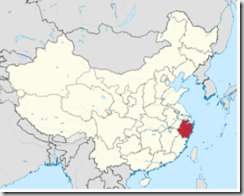
Zhejiang Province – Credit Wikipedia


#  9913


With the exception of a couple of cases reported out of Shanghai over the past week, we’ve heard almost nothing out of China regarding H7N9 cases since early March (see H7N9: No News Is . . . . Curious).  Compared to the first two waves, reporting this year has been more sporadic and less detailed, and so the hope has been that some end of month `bulk announcements’ might be forthcoming.


Today Sharon Sanders of FluTrackers has picked up just such a report, this time from the Zhejiang Provincial Health and Family Planning Commission, that has buried deep inside a (Chinese language) spreadsheet; notification that Zhejiang Province detected 10 H7N9 cases during the Month of March.


Since Sharon has done the detective work here, I’ll link you to her post on FluTrackers.


China - 10 H7N9 cases including 10 deaths reported by Zhejiang province for March 2015 - 8 new cases not previously known - April 8, 2015


Zhejiang Provincial Health and Family Planning Commission announced in March 2015 the province's legal infectious diseases

Release Date: 2015-04-08
Source: Ministry of Health and Family Planning Disease Control Department
 

March 2015 (at 0:00 on March 1, 2015 to March 31 24), the province reported a total of 20,029 cases of notifiable infectious diseases, the death of 43 people. Among them, the Group reported no cases of infectious diseases. B infectious diseases, in addition to SARS, polio, highly pathogenic avian influenza, rabies, Japanese encephalitis, anthrax, diphtheria, leptospirosis, schistosomiasis incidence and deaths foreign reports, the remaining 17 kinds of infectious disease cases were reported in 10,210 cases, 43 deaths; reported incidence of the top five diseases were: tuberculosis, syphilis, viral hepatitis, gonorrhea, measles, accounting for reported cases of class B infectious diseases 94.1% of the total.


The same period, the province's Class C infectious diseases were reported in 9819 cases and no deaths reported. The top three reported cases of diseases were other infectious diarrhea, hand-foot-mouth disease and influenza accounted for 93.9% of the total reported cases of class C infectious diseases.
Schedule:
March 2015 in Zhejiang Province of notifiable infectious disease, mortality tables

Zhejiang Provincial Health and Family Planning Commission
April 7, 2015

Click image for larger version

Name:	zhejiangh7n9march15.JPG
Views:	1
Size:	13.1 KB
ID:	19071

http://www.zjwst.gov.cn/art/2015/4/8...62_438460.html
machine translation


Interestingly, although included in the spreadsheet, there is no specific mention of H7N9 in the summary report. Kudos to Sharon for drilling down deep into the data to uncover this information.


Since we’ve seen nothing reported out of Guangdong Province – this year’s hotspot for H7N9 -  since March 7th, it will be interesting to see what ends up posted in their End of Month Epidemiological report as well.  Their reports tend to come out around the middle of the month.


Stay tuned.

Hong Kong Stands Down From `Serious’ Influenza Response Level

image

# 9911


On December 27th, 2014 we saw Hong Kong Raise Influenza Pandemic Response Level to Serious after their first detection of an imported H7N9 case from the Mainland for the 2014-15 winter season.  This made the 11th such case detected since the virus emerged in the spring of 2013, and would be the first of three cases imported this year.


From the Preparedness Plan for Influenza Pandemic The Government of the Hong Kong Special Administrative Region (2014)

Serious Response Level


9. Serious Response Level corresponds to a situation where the risk of a novel influenza virus causing new and serious impact to human health in Hong Kong is moderate. Generally, it depicts a moderate risk of serious human infections caused by the novel influenza virus in Hong Kong, but serious infections are not expected to be widespread in the short term. Illustrative scenarios are shown in Box 2.

image


With fewer reports of H7N9 coming from the Mainland in the past 30 days, and the last imported case six weeks ago, the government of Hong Kong has decided to reduce the response level from `Serious’ to `Alert’.


Serious influenza response stands down

The Government today (April 8) lowered the response level of the Preparedness Plan for Influenza Pandemic from "Serious" to "Alert".


The response level was raised to "Serious" upon the detection of the first confirmed human case of avian influenza A(H7N9) in winter, imported from the Mainland on December 27, 2014. Since then Hong Kong has so far recorded three confirmed cases, which were all imported. The latest case was confirmed on February 23, 2015. The surveillance system of local public and private hospitals has not detected any new cases for more than a month.


A spokesman for the Centre for Health Protection (CHP) of the Department of Health said that the "Alert" response level was activated in view of the ongoing activity of highly pathogenic avian influenza among poultry outside Hong Kong.


"We will continue to closely monitor the global situation of avian influenza. So far, there is no evidence of efficient human-to-human transmission," the spokesman added.


Members of the public are advised to stay vigilant and maintain good personal and environmental hygiene, including washing hands frequently, particularly after sneezing or coughing; maintaining good indoor ventilation; building up good body immunity by having a balanced diet, regular exercise and adequate rest; and avoiding smoking.

Ends/Wednesday, April 8, 2015
Issued at HKT 14:45

Tuesday, April 07, 2015

Shanghai Reports 2nd Recent H7N9 Case

image

Location Shanghai China


# 9906


After nearly a month of no news regarding H7N9 in China we’ve our second report out of Shanghai in three days, this time regarding a 37 year-old woman who is reportedly in critical condition. 


Although not mentioned in this CHP notification, the statement on the Shanghai Municipal Commission On Health And Family Planning  lists this woman from neighboring Jiangsu Province.


This from Hong Kong’s CHP.


CHP closely monitors additional human case of avian influenza A(H7N9) in Mainland 

The Centre for Health Protection (CHP) of the Department of Health (DH) is today (April 7) closely monitoring an additional human case of avian influenza A(H7N9) in the Mainland, and again urged the public to maintain strict personal, food and environmental hygiene both locally and during travel.


According to the Shanghai Municipal Commission of Health and Family Planning, the patient is a 37-year-old woman who is under treatment in critical condition.


To date, 620 human cases of avian influenza A(H7N9) have been reported by the Mainland health authorities in Guangdong (181 cases), Zhejiang (167 cases), Jiangsu (73 cases), Fujian (59 cases), Shanghai (47 cases), Hunan (26 cases), Anhui (24 cases), Xinjiang (10 cases), Jiangxi (10 cases), Shandong (six cases), Beijing (five cases), Henan (four cases), Guangxi (three cases), Jilin (two cases), Guizhou (two cases) and Hebei (one case).

(Continue . . .)

Sunday, April 05, 2015

HK CHP Notified Of H7N9 Case In Shanghai

image

Location Shanghai China


# 9901


For nearly a month we’ve heard practically nothing regarding H7N9 cases from the Chinese mainland – case reports abruptly stopped on March 9th – a full two months earlier than previous waves would have led us to expect. 


Whether this represents a true halt in cases, or a change in the way the Chinese are choosing to report cases, isn’t known.  Even before this stoppage, getting timely reports out of China this winter has been difficult.


In any event, yesterday Xinhua News carried a report of an H7N9 case in Shanghai, and roughly 24 hours later there is an official notification published by Hong Kong’s CHP.


CHP closely monitors additional human case of avian influenza A(H7N9) in Mainland

The Centre for Health Protection (CHP) of the Department of Health (DH) is today (April 5) closely monitoring an additional human case of avian influenza A(H7N9) in the Mainland, and again urged the public to maintain strict personal, food and environmental hygiene both locally and during travel.


According to the Shanghai Municipal Commission of Health and Family Planning, a male patient aged 52 was hospitalised for management in stable condition.


To date, 619 human cases of avian influenza A(H7N9) have been reported by the Mainland health authorities in Guangdong (181 cases), Zhejiang (167 cases), Jiangsu (73 cases), Fujian (59 cases), Shanghai (46 cases), Hunan (26 cases), Anhui (24 cases), Xinjiang (10 cases), Jiangxi (10 cases), Shandong (six cases), Beijing (five cases), Henan (four cases), Guangxi (three cases), Jilin (two cases), Guizhou (two cases) and Hebei (one case).

(Continue . . .)


For more on the erratic reporting of avian flu cases by both China and Egypt this winter, you may wish to revisit More Than One Way to `Contain An Outbreak’.

Wednesday, April 01, 2015

EID Journal: The Transmission Potential Of A(H7N9) In China

image


# 9892


Whether you cast your gaze towards Egypt (H5N1), or China (H7N9), recent outbreaks of avian flu among humans continue to raise concerns over their pandemic potential.  Neither virus has demonstrated an ability to spread efficiently from human-to-human, but both continue to get fresh opportunities to try to figure us out.


Last month, in WHO: H5 Currently The Most Obvious Avian Flu Threat, the World Health Organization – while not ignoring H7N9’s potential - weighed in on the risks posed by the recent and dramatic surge in both the variety, and spread, of HPAI H5 viruses around the globe.


A couple of weeks later, in Nature: Dissemination, Divergence & Establishment of H7N9 In China, we saw renewed warnings over the evolutionary path that the H7N9 virus has been taking over the past two years.  A topic we revisited the next day, in H7N9: Primus Inter Pares?


To this short list, we must also add a growing variety of reassortant avian and swine viruses (H5N8, H5N6, H5N2, H10N8, H3N8, H3N2v, etc.), many of which have at least some potential to adapt to humans. 


Today the EID Journal has published a new review of the transmissibility of the avian H7N9 virus in China, and while no evidence of sustained transmission was detected, they found:

  • `evidence of a small but significant amount of transmission between humans in the first and second waves’
  • `evidence of increased transmission potential in the second wave’

First a few excerpts from the study (follow the link to read it in its entirety), after which I’ll be back with a bit more.


Volume 21, Number 5—May 2015
Dispatch

Transmission Potential of Influenza A(H7N9) Virus, China, 2013–2014

Adam J. Kucharski1Comments to Author , Harriet L. Mills1, Christl A. Donnelly, and Steven Riley
Abstract

To determine transmission potential of influenza A(H7N9) virus, we used symptom onset data to compare 2 waves of infection in China during 2013–2014. We found evidence of increased transmission potential in the second wave and showed that live bird market closure was significantly less effective in Guangdong than in other regions.

From February 19, 2013, through April 22, 2014, a total of 429 cases of influenza A(H7N9) virus infection in humans in China were reported and occurred in 2 outbreak waves. During the first wave in spring 2013, live bird markets were closed in several parts of China (1,2); these market closures substantially reduced the risk for infection in affected regions (3). During a second wave in autumn 2013 (4), markets were again closed in some provinces (57). Analysis of the largest clusters of subtype H7N9 virus infection in 2013 suggested that the basic reproduction number (R0, the average number of secondary cases generated by a typical infectious host in a fully susceptible population) was higher in some clusters than in others (8,9), although the absence of sustained transmission implied that R0 was less than the critical value of 1. To determine the transmission potential of influenza A(H7N9) virus in the first and second waves in 2013, we compared symptom onset data. We also measured the extent to which market closures in 2014 reduced spillover hazard (i.e., risk for animal-to-human infection).

<SNIP Study Details>

Conclusions

We found no evidence of reduced human-to-human transmission between the 2 waves. For a serial interval of 7 days, we estimated that R0 increased in Zhejiang. Furthermore, the effectiveness of live bird market closures varied between regions; short-term closures were substantially less effective than interventions in other regions. These results emphasize the value of prompt and sustainable control measures during outbreaks of influenza A(H7N9) virus infection.


Last summer, in Eurosurveillance: Genetic Tuning Of Avian H7N9 During Interspecies Transmission, we saw evidence of the genetic diversity, and continual evolution, of the H7N9 virus in Mainland China.  Researchers found that at least 26 separate genotypes had emerged, mostly during the first wave, through a process they called `genetic tuning’.


The Nature report, mentioned above, expands that H7N9 universe to 48 genotypes, spread across three major clades.


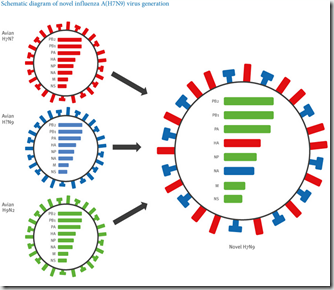
Not only are the incarnations of H7N9 continuing to grow, the H7N9 virus has also reassorted into at least two new subtypes on the Chinese mainland; H7N7 (see  Nature: Genesis Of The H7N9 Virus) and a new H7N6 virus described in the recent Nature report.


This malleable H7N9 virus, which is spreading asymptomatically and stealthily in China’s poultry, could also potentially reassort with a human influenza virus like H3N2 or H1N1.  Something that Hong Kong’s CHP Director has discussed repeatedly this winter (see  HK’s Dr. Ko Wing-man On Flu Reassortment Concerns).


While there are seemingly a lot of ways for H7N9 to become a pandemic threat, it is also possible that there is some – as yet unidentified - `species barrier’  that prevents avian flu viruses from adapting well enough to humans to pose a serious threat.


The progression of human influenza pandemics over the past 130 years has been H2, H3, H1, H2, H3, H1, H1 . . . .  and while that doesn’t prove that  an H5 or an H7 virus couldn’t adapt to humans (or hasn’t in the past), it has led some researchers to wonder whether a non H1, H2, or H3 virus has the `right stuff’ to spark a pandemic.


While some scientists believe that may be a possibility (see Are Influenza Pandemic Viruses Members Of An Exclusive Club?), few are willing to bet the farm on our being that lucky.

Sunday, March 29, 2015

More Than One Way to `Contain An Outbreak’

image

Credit WHO


# 9879


Until the middle of January, Egypt’s Ministry of Health got good marks in reporting this winter’s surge in H5N1 cases, publishing frequent updates that included YTD numbers for cases, deaths, hospitalizations, and recoveries. 


That streak ended on January 22nd, when Egypt’s MOH Confirms their 21st H5N1 Case of 2015.


Since then, as has been noted often (see The Silence Of The Egyptian MOHMedia: WHO H5N1 Mission To Egypt), the Egyptian MOH has ceased to report most cases on their website and the YTD numbers attributed to MOH spokesmen in the Egyptian media have been `fanciful’ at best.


As a result, we continue to see reports like the one below – published today - which cherry picks a single recent H5N1 case, while at the same dramatically downsizing the YTD impact of this year’s H5N1 outbreak.  


While never directly mentioning 2015’s YTD numbers, by admitting to 16 deaths and referring to a CFR of 37.4%, the reader is left with the idea that there have been perhaps 43 or 44 cases this year.  


A far cry from the latest World Health Organization numbers (as of March 17th) of 116 cases and 36 deaths for the year (see Avian influenza A (H5N1) in Egypt update, 21 March 2015).


Egypt bird flu death toll at 16 in 2015

Sun, 29/03/2015 - 11:43

A 27-year old woman who raised birds in her home in the Sohag governorate, died of bird flu on Sunday.

Tahta Fevers Hospital received the victim, who was suffering from bird flu symptoms, before she was transferred to Assiut Fevers Hospital upon the request of her family, according to a medical source at Tahta hospital.

A medical team inspected the woman's house in Tahta and conducted tests on those who were in contact with the woman as a preventive measure.

(Continue . . .)

Although local media reports are sporadic, and are unlikely to represent the true burden of this year’s outbreak,  FluTracker’s conservatively curated Egypt - 2015 WHO/MoH/Provincial Health Depts H5N1 Confirmed Case List  continues to add cases, with at least 120 cases logged for the year.


Fortunately,  Egypt continues to report cases to the World Health Organization under the IHR (International Health Regulations) - which requires countries to develop mandated surveillance and testing systems, and to report certain disease outbreaks and public health events to WHO – so we are not completely in the dark regarding this H5N1 outbreak.


While we don’t have a recent WHO update to compare it to, China’s recent silence on H7N9 is also suspect, with no new cases reported now for 20 days (see last week’s HK CHP Avian Flu Report: 2 Weeks Without An H7N9 Case Report and  H7N9: No News Is . . . . Curious).  


This dramatic halt in reporting comes – perhaps coincidentally – at the same time we saw a major study appear in the Journal Nature  (see Dissemination, Divergence & Establishment of H7N9 In China) warning that the H7N9 virus was evolving rapidly, and that it posed a growing pandemic threat.


A search on Xinhua’s English language news site for the term `H7N9’ returns their last article on March 12th of this year, which (again, perhaps coincidentally) dealt with the Nature study above (see Scientists call for effective measures amid H7N9 mutation Xinhuanet 2015-03-12 14:13).


image


The Chinese language IFENG search engine does return more recent `H7N9’ articles, but they all refer to cases in February and/or steps local and national health officials are taking to prevent new cases.  


But if there have been any H7N9 cases detected since early March, they aren’t being reported in the media, or on provincial MOH websites.


It is certainly possible that fewer infections are being recorded this winter, and interventions such as the closing of live poultry markets have dramatically reduced transmission.  That all cases should halt abruptly, this early in the year, and across the entire region would be remarkable, however. 


We’ll have more to go on when the next WHO update on China is released.


Since China and Egypt are both dealing with high-profile infectious disease outbreaks, their `management’ of the news understandably draws a good deal of attention, but they are far from being the only nations who indulge in `creative disease reporting’.  


All governments have an aversion to mobs bearing pitchforks and torches, and therefore want to project the image that they are competent, in control, and (most importantly) vitally important to the people they supposedly serve. 


Even in this country I see a number of state and local health and agricultural department websites which seem far more concerned with extolling their services and achievements, than they are in addressing local problems.  Of course, none of them are dealing with a deadly avian flu outbreak, so direct comparisons are hard to make.


While it may seem an odd bit of logic, as long as governments can control the message - as we are seeing in Egypt – it is a pretty good sign that avian flu infections remain sporadic and that efficient transmission of the virus is not happening.   


So, in a sense, no news can be `good news’ – at least in the short run. 


The problem is, the less we know about the early trajectory of an outbreak, the less lead time we’ll have to prepare - if and when something does start to change.

Tuesday, March 24, 2015

HK CHP Avian Flu Report: 2 Weeks Without An H7N9 Case Report

image


# 9856


Compared to the first two waves of H7N9 in China, where we saw daily reports from affected provinces which included both case counts and rudimentary epidemiological information, this year’s reporting has been less detailed and far more haphazard. 


Some provinces have just reported an aggregate total in their end of month infectious disease reports, while others have dumped `bulk’ case announcements at irregular intervals (see Jiangsu Province’s Uncertain H7N9 Count).


All of which has made it very difficult to compare this year’s outbreak to previous years. As I mentioned last week, in H7N9: No News Is . . . . Curious, for the past couple of weeks H7N9 case reporting has gone strangely silent.   As the first two H7N9 waves didn’t end until May, an abrupt halt in case in early March is unexpected.


Today, Hong Kong’s CHP has published their latest Avian Influenza Report, and for the second week in a row, confirm that no new H7N9 cases have been reported by the Chinese Mainland since March the 9th.  


Avian Influenza Report (Volume 11, Number 12 (Week 12))

Summary


1. There were no new human cases of avian influenza A(H5N1) reported by the World Health Organization (WHO)#. One new human case of avian influenza A(H5N1) involving a 34-year-old man from Yunnan Province was reported by the National Health and Family Planning Commission (NHFPC) on March 23, 2015.


2. From 2010 to 2014, 32 to 62 confirmed human cases of avian influenza A(H5N1) were reported to WHO annually (according to onset date). In 2015 (as of March 23, 2015), 89 cases were reported by WHO* and two additional cases were reported by NHFPC.


3. Since the previous issue of Avian Influenza Report, there were no new human cases of avian influenza A(H7N9). Since March 2013 (as of March 23, 2015), there were a total of 638 cases reported.

image


It is certainly possible that fewer infections are being recorded this winter, and interventions such as the closing of live poultry markets have dramatically reduced transmission.  It is also worth noting that more spring-like weather has returned to many areas of Eastern China over the past several weeks, which could be a mitigating factor.


But this precipitous drop in reporting also comes – perhaps coincidentally – at the same time we saw a major study appear in the Journal Nature  (see Dissemination, Divergence & Establishment of H7N9 In China) warning that the H7N9 virus was evolving rapidly, and that it posed a growing pandemic threat.


China is, of course, required to notify the World Health Organization of new H7N9 cases under the terms of the IHR, but how and when they choose to publically disclose case information – even to Hong Kong’s CHP - is pretty much up to them. 


If we are truly seeing a less active, and truncated H7N9 wave, then that would be good news indeed.  But the inconsistent reporting out of China these past few months makes it difficult to assume the best based simply on the absence of data.

Thursday, March 19, 2015

H7N9: No News Is . . . . Curious

image

Credit WHO – January 2015


# 9846


During the first two waves of H7N9 in China we saw cases run from early winter until early May, with the peak numbers falling between February and March. So it is curious that the last official H7N9 notification to be published by Hong Kong’s CHP came 10 days ago, on March 9th (see CHP notified of additional human cases of avian influenza A(H7N9) in Mainland).


Since then, we’ve seen one notification of an H5N1 case in Sichuan, but on the H7N9 front – nothing but silence.


Guangdong Province, China’s hotspot for reporting this winter (35 cases in February), hasn’t publically announced a new case since March 7th (see HK CHP Notified Of 2 More H7N9 Cases In Guangdong Province).


Unlike during the first two waves, this year we’ve seen less robust and timely reporting out of China, with some provinces now only releasing data in monthly epidemiological reports.  Most of the reports we get are summations without any standard epidemiological details (age, gender, onset date, locations, exposures, etc.).


As a result, we don’t have a very good sense of how this year’s outbreak compares with the first two years.


It is certainly possible that fewer infections are being recorded this winter, and that the season is ending early. Perhaps due to more aggressive closing of live bird markets or an earlier arrival of spring. But the irregular reporting out of China this year makes it impossible to tell. 


It is possible that provinces like Guangdong - that were reporting on a daily basis -  have switched to monthly reports, and we’ll get `caught up’  at some point.  


China is, of course, required to notify the World Health Organization of new H7N9 cases under the terms of the IHR, but how and when they choose to publically disclose case information is pretty much up to them.  


As a final note - while it may be entirely coincidental - this sudden drop in reported cases began at roughly the same time that a high profile study appeared in the Journal Nature  (see Dissemination, Divergence & Establishment of H7N9 In China) warning that the H7N9 virus was evolving rapidly, and that it posed a growing pandemic threat.


Whatever is behind this recent drop in case reporting – be it a genuine slowdown in cases or simply `strategic’ reporting -  this sudden lack of information coming out of China is more than a little curious.

Thursday, March 12, 2015

WHO: The DON Patrol

image

Credit WHO


# 9814


Amid the flurry of news reports and studies released yesterday, we also saw three World Health Organization DONs (Disease Outbreak News) summaries posted – 2 on MERS, and 1 on H7N9 in China. 


While these are follow up reports, and mostly serve to recap cases we’ve already heard about, they do often provide additional details of value.  


To view the latest reports, follow the links below:


Recent DONs

11 March 2015
Human infection with avian influenza A(H7N9) virus – China

On 9 March 2015, the National Health and Family Planning Commission (NHFPC) of China notified WHO of 59 additional laboratory-confirmed cases of human infection with avian influenza A(H7N9) virus, including 17 fatal cases. Onset dates ranged from 21 January to 25 February 2015. Below is a breakdown of the 59 cases included in this notification by epidemiological week of symptom onset:

  • Week 4 (19 – 25 January) 5 cases
  • Week 5 (26 January – 1 February) 13 cases
  • Week 6 (2 – 8 February) 9 cases
  • Week 7 (9 – 15 February) 15 cases
  • Week 8 (16 – 22 February) 14 cases
  • Week 9 (24 – 25 February) 3 cases

Of these 59 cases, 44 (75%) were male. The majority (49 cases, 83%) reported exposure to live poultry or live poultry markets; the exposure history of six cases is unknown or unavailable. Three family clusters were reported, each comprised of two cases; four of the six cases had exposure to live poultry or live poultry markets, one case had no exposure to poultry, and one case is still under investigation. Cases were reported from nine provinces: Anhui (4), Fujian (1), Guangdong (35), Guizhou (1), Hunan (2), Jiangsu (3), Jiangxi (1), Shanghai (1), and Zhejiang (11).


11 March 2015
Middle East respiratory syndrome coronavirus (MERS-CoV) – Qatar

On 9 March 2015, the IHR National Focal Point of Qatar notified WHO of 1 additional case of Middle East respiratory syndrome coronavirus (MERS-CoV) infection.


11 March 2015
Middle East respiratory syndrome coronavirus (MERS-CoV) – Saudi Arabia

Between 26 February and 2 March 2015, the National IHR Focal Point for the Kingdom of Saudi Arabia notified WHO of 18 additional cases of Middle East respiratory syndrome coronavirus (MERS-CoV) infection, including 5 deaths. Cases are listed by date of reporting, with the most recent case listed first.

H7N9: Primus Inter Pares?

image

  Credit Eurosurveillance


# 9813


Although well known (and respected) by infectious disease geeks, yesterday’s publication in Nature: Dissemination, Divergence & Establishment of H7N9 In China has suddenly thrust this H7 avian flu virus into the limelight, casting it in the role of the potentially driving the next influenza pandemic.


It isn’t alone, of course.  There are other pandemic contenders out there, including the venerable H5N1 virus.


But H7N9’s rapid spread, and growing genetic diversity in China – combined with its ability to infect humans – has seemingly elevated it to the level of  Primus inter pares – or `first among equals’ – in the pandemic flu world. 


Overnight we’ve seen a plethora of headlines heralding the threat:


H7N9 bird flu has the makings of a pandemic virus, scientists warn

Scientists warn H7N9 bird flu may pose pandemic threat

Bird Flu Mutating in China, Threatens Pandemic

Report: H7N9 bird flu has makings of pandemic


While yesterday’s report in Nature provides more information, and includes a stern warning about its implications, this isn’t the first study to cast H7N9 in a possible pandemic role.  Very early on after it appeared in China in the spring of 2013 we began to hear warnings from scientists, and over the past couple of years, we’ve followed the virus’s evolution.


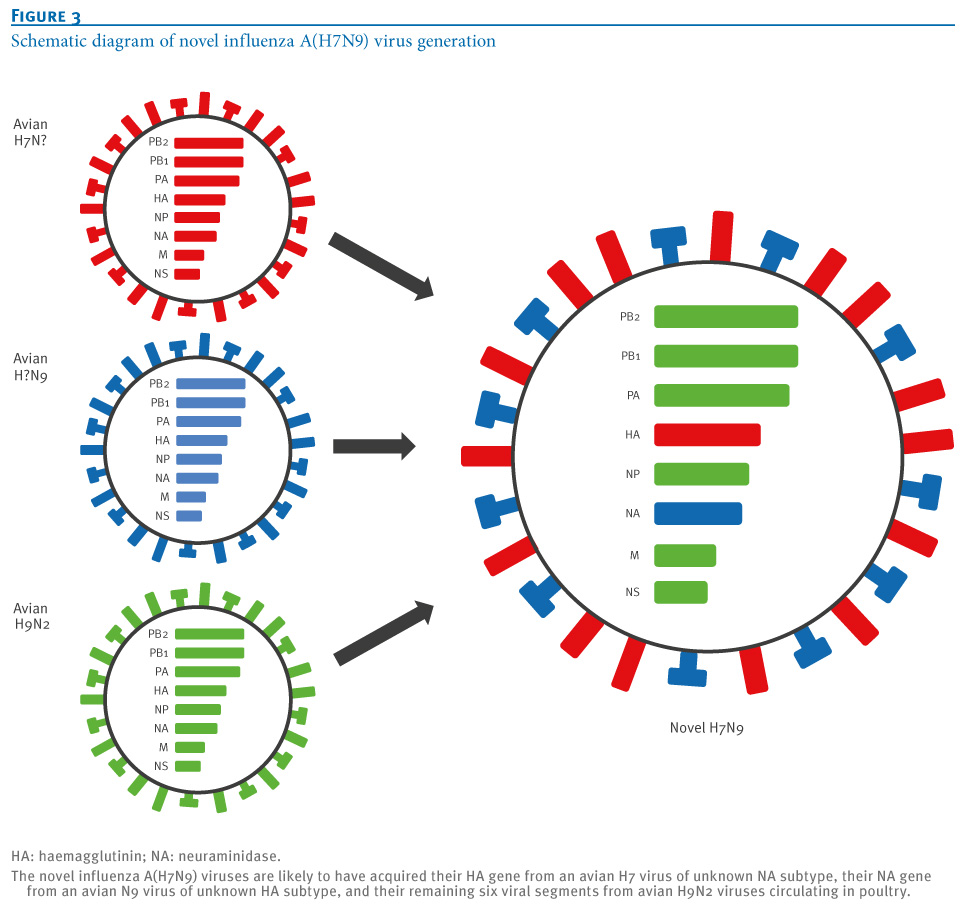
In June of 2014, in Eurosurveillance: Genetic Tuning Of Avian H7N9 During Interspecies Transmission, we saw evidence of the genetic diversity, and continual evolution, of the H7N9 virus in Mainland China.  Researchers found that at least 26 separate genotypes had emerged, mostly during the first wave, through a process they called `genetic tuning’.


Yesterday’s report expands that array of genotypes to 48, divided among three well defined clades, and even includes a previously unrecognized subtype – H7N6 - in chickens.  Previously, during the first wave in 2013, a new H7N7 virus was also recognized (see Nature: Genesis Of The H7N9 Virus).


The power, and the threat, of H7N9 isn’t simply that it could pick up the `right’ mutations and become fully transmissible in humans, thereby sparking a pandemic.   It’s that H7N9 is genetically malleable enough to serve as a stepping stone – or bridge – to a completely new subtype. 


As we’ve seen over the past couple of years with the sudden expansion of the HPAI H5 universe – which now encompasses H5N1, H5N2, H5N3, H5N5, H5N6, and H5N8 -  H7N9 seems poised to grow the H7 flu line as well.


Two years ago we really only had one avian flu virus we worried about; H5N1.  But in the spring of 2013 the novel flu field was joined by the unexpected arrival of highly pathogenic (in humans) H7N9 virus, which spread stealthily, and asymptomatically in chickens.  


And over the next 12 months, we saw a parade of new subtypes begin to emerge, including H6N1, H10N8, H5N2, H5N3, H5N6 and H5N8.


The process by which these new subtypes evolve is called reassortment, and that can happen anytime a single host is simultaneously infected with two different flu subtypes. 

image


For avian viruses, birds are the obvious host of choice, while swine flu viruses reassort primarily in pigs.  But any susceptible host can produce a reassortant virus, including dogs, cats, horses, and humans.  


Fortunately, most reassortant viruses are evolutionary dead ends – unable compete against existing viruses.  But increasingly over the past few years, we are seeing `biologically fit’ reassortants emerge, capable of holding their own, and even thriving in the wild.


Last month, in HK’s Dr. Ko Wing-man On Flu Reassortment Concerns, we looked at the very real concerns expressed by Hong Kong’s Director of their Centre for Health Protection, that H7N9 could reassort with H3N2 during their particularly heavy flu season.


It is not an unreasonable concern.  While rarely detected, co-infections with two flu subtypes do occur, and probably more often than we suspect.  


Previously, in the Lancet: Coinfection With H7N9 & H3N2, we saw the first evidence of co-infection with the newly emerged H7N9 virus and a seasonal flu virus in a human. While last October, in EID Journal: Human Co-Infection with Avian and Seasonal Influenza Viruses, China, we looked at co-infections in 2 patients in Hangzhou, in January 2014.


In all of three of these cases, no reassortant virus was detected.


But In 2011,  an influenza co-infection in Canada led to the creation of a unique hybrid reassorted virus (see Webinar: pH1N1 – H3N2 A Novel Influenza Reassortment), although it was not passed on to anyone else.


In recent years we’ve seen a growing list of novel (avian, swine, canine, even seal) flu viruses emerge (H5N3, H5N2, H5N5, H5N6, H5N8, H7N9, H10N8, H10N7, H3N8, H6N1, H1N1v, H1N2v, H3N2v, etc. . .), and each carries some risk of reassortment. 


With other novels viruses, or with human viruses. Or conceivably both.


Over the past couple of years, the number of novel flu threats has grown dramatically, and that growth spurt shows no signs of abating.  With more and more influenza subtypes, clades - and genotypes within these clades - circulating,  Nature’s laboratory gets more `interchangeable parts’  to play with. 


While a pandemic may not be imminent, given the amount of `viral chatter’ we are hearing, the threat level is certainly elevated.  And by the time it is obvious that a pandemic threat has emerged, our `lead time’ to prepare may be down to weeks.


Two weeks ago, the World Health Organization released a statement called Warning signals from the volatile world of influenza viruses   where they cautioned:

Warning: be prepared for surprises

Though the world is better prepared for the next pandemic than ever before, it remains highly vulnerable, especially to a pandemic that causes severe disease. Nothing about influenza is predictable, including where the next pandemic might emerge and which virus might be responsible. The world was fortunate that the 2009 pandemic was relatively mild, but such good fortune is no precedent.


Whether the next big global health crisis stems from H7N9, H5N1, a new flu reassortant, MERS-CoV, or `Virus X’ – the one we don’t know about . . .  yet – our level of preparedness will, in large measure, determine its impact.


Now is the time for agencies, organizations, businesses, communities, and families to dust off their pandemic plans, review them, and make any needed refinements.  


You do have a pandemic plan, don’t you?


For some recent pandemic preparedness blogs, you may wish to revisit:


Do You Still Have A CPO?
Pandemic Planning For Business
NPM13: Pandemic Planning Assumptions
The Pandemic Preparedness Messaging Dilemma

Wednesday, March 11, 2015

Nature: Dissemination, Divergence & Establishment of H7N9 In China

image

# 9812


On a day that has hardly lacked for avian flu news (see APHIS: HPAI H5N2 Confirmed In Arkansas Turkey Flock & WHO: Updated H5N1 Cumulative Case Count Table), perhaps the most eagerly awaited story has been the publication of an analysis of the H7N9 virus in China, authored by a veritable `Who’s Who’ of virology.


Since both Declan Butler and Debra Mackenzie have already published overviews, I’ll avoid re-inventing the wheel and post the link to the article followed by links to both of their reports.


Dissemination, divergence and establishment of H7N9 influenza viruses in China

Tommy Tsan-Yuk Lam, Boping Zhou, Jia Wang, Yujuan Chai, Yongyi Shen, Xinchun Chen, Chi Ma, Wenshan Hong, Yin Chen, Yanjun Zhang, Lian Duan, Peiwen Chen, Junfei Jiang, Yu Zhang, Lifeng Li, Leo Lit Man Poon, Richard J. Webby, David K. Smith, Gabriel M. Leung, Joseph S. M. Peiris, Edward C. Holmes, Yi Guan & Huachen Zhu

 Since 2013 the occurrence of human infections by a novel avian H7N9 influenza virus in China has demonstrated the continuing threat posed by zoonotic pathogens1, 2. Although the first outbreak wave that was centred on eastern China was seemingly averted, human infections recurred in October 2013 (refs 3, 4, 5, 6, 7). It is unclear how the H7N9 virus re-emerged and how it will develop further; potentially it may become a long-term threat to public health. Here we show that H7N9 viruses have spread from eastern to southern China and become persistent in chickens, which has led to the establishment of multiple regionally distinct lineages with different reassortant genotypes. Repeated introductions of viruses from Zhejiang to other provinces and the presence of H7N9 viruses at live poultry markets have fuelled the recurrence of human infections. This rapid expansion of the geographical distribution and genetic diversity of the H7N9 viruses poses a direct challenge to current disease control systems. Our results also suggest that H7N9 viruses have become enzootic in China and may spread beyond the region, following the pattern previously observed with H5N1 and H9N2 influenza viruses8, 9.


Declan Butler’s piece in Nature News:


Flu genomes trace H7N9's evolution and spread in China

But surveillance of avian influenza viruses is patchy and slow.

11 March 2015

No one knows whether the H7N9 avian influenza that has infected more than 560 people in China and killed 204 might yet evolve to spread easily among people. But the largest-ever genomic survey of the virus in poultry now provides a more detailed picture of its evolution and and spread.

(Continue . . .)


And from Debra McKenzie at New Scientist has this take:


Threatwatch: Bird flu's back and it's brought friends

Threatwatch is your early warning system for global dangers, from nuclear peril to deadly viral outbreaks. Debora MacKenzie highlights the threats to civilisation – and suggests solutions

H5N1 bird flu burst out of China in 2003 and stormed across Eurasia and into Africa three years later. It's been there ever since and this week its victims are Egyptians. Now another strain of bird flu, H7N9, is spreading in China and the signs are that it might soon rampage across the continent just like H5N1.

(Continue . . . )


The growing diversity of – and perceived threat from – the H7N9 virus isn’t new.  We’ve been following its progress for several years, in studies such as:


PNAS: Evolution Of H9N2 And It’s Effect On The Genesis Of H7N9
Eurosurveillance: Genetic Tuning Of Avian H7N9 During Interspecies Transmission
EID Journal: H7N9 As A Work In Progress


And practically each step along the way, we’ve been warned:

Overall, due to the genetic tuning procedure, the potential pandemic risk posed by the novel avian influenza A(H7N9) viruses is greater than that of any other known avian influenza viruses.


While today’s study in Nature supports this notion, coming up from behind are a plethora of HPAI H5 viruses (H5N1, H5N2, H5N3,H5N6, H5N8), which have made a dramatic showing the past few months, particularly in Egypt, where we are seeing the worst human outbreak of H5N1 since that virus emerged more than a decade ago.


Add in the continually reassorting HPAI H5 variants spreading rapidly around the globe, and 2 weeks ago we saw a statement from  WHO: H5 Currently The Most Obvious Avian Flu Threat.


While we can debate whether H7 or H5 has the greatest chance of sparking a pandemic, the bottom line is that with this large of a novel flu field in place, the risks of having one of them make that leap are probably better than they have been in years.