Showing posts with label chikungunya. Show all posts

Saturday, August 30, 2014

PAHO/WHO: Epidemiological Alert On Chikungunya & Dengue In the Americas

image


# 9020


While Ebola garners the bulk of the headlines, other serious disease threats like Chikungunya and Dengue continue their inexorable spread across the globe, infecting hundreds of times more people than does Ebola, albeit with a far lower morality rate.   


For 2013, PAHO provides the following assessment for Dengue in the Americas:


In 2013, dengue behaved like a classic epidemic for the Americas region, with the largest historical cases reported. In total, countries in the Americas reported more than 2.3 million cases of dengue, with 37,692 cases of severe dengue and 1,280 deaths, for a mortality rate of about 0.05%.


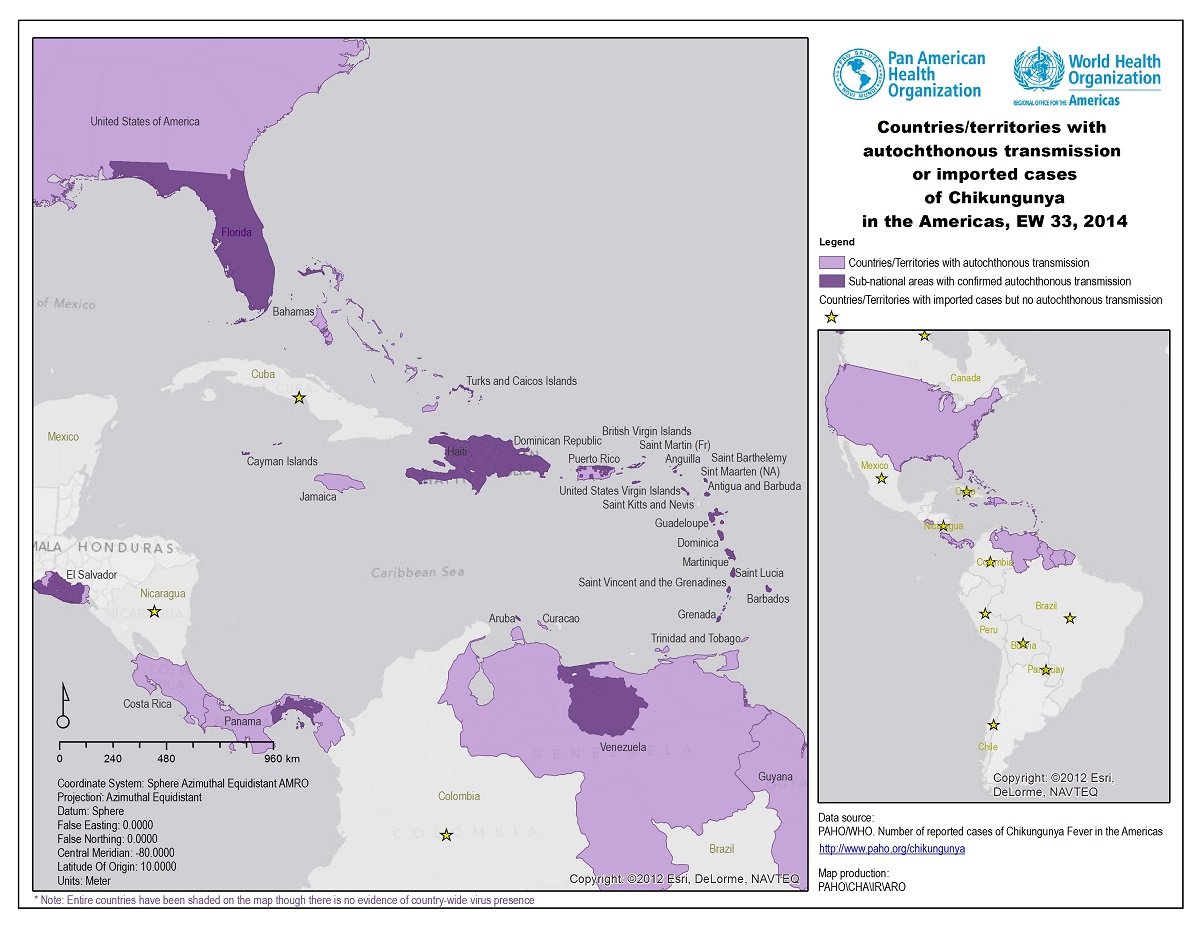
This year, for the first time, the Americas are also dealing with Chikungunya – which arrived late last fall in the Caribbean, and has spread rapidly since then.  PAHO’s most recent report (Week 34) indicates just over 650,000 CHKV infections in the Americas, and 37 deaths.
image


The arrival of Chikungunya to the Americas has been anticipated for some time, and the CDC & PAHO produced a 161 page guide on preparing for its arrival 3 years ago (see Preparedness and Response for Chikungunya Virus Introduction in the Americas).


Last May, in Florida Prepares For Chikungunya we looked at local preparations for its arrival.  Given its climate, its position as the gateway to the Caribbean, and that it receives millions of tourists every year -  Florida was considered a likely first US battleground against any CHKV invasion.  


And indeed, the first first locally acquired case in Florida was reported in July.


For now, the major concern is in the Caribbean, Central & South America where both Dengue and CHKV co-circulate, and where the burden of these diseases is infinitely higher than it is in the United States. As the height of the Dengue season generally occurs in the second half the year, the next few months are considered a critical time for mosquito control programs.


Yesterday PAHO and the World Health Organization released an 8-page PDF Epidemiological Alert for the Americas on these co-circulating mosquito-borne diseases.  Follow the link to read the entire document:


Epidemiological Alert

Chikungunya & Dengue Fever In the Americas

29 August 2014

Situation summary

The first evidence of autochthonous chikungunya transmission in the Americas was recorded in December 2013, since then, autochthonous transmission has been detected in 33 countries and territories of the Americas (27 countries and territories in the Caribbean, 3 countries in Central America, 1 country and 1 territory in South America and 1 country in North America).1,2 As of epidemiological week (EW) 35 of 2014, the Pan American Health Organization / World Health Organization (PAHO/WHO) has been informed of a total of 659,367 cases, including 37 deaths, in the Americas.


Usually during the second semester of the year, Central America, Mexico and the Caribbean experience a seasonal increase in dengue fever transmission. Currently, the Dominican Republic, El Salvador, Guatemala, and Honduras, are recording increases in cases coinciding with this period of greater transmission.


The threats posed by the seasonal increase of dengue transmission and the introduction, or risks of introduction of the chikungunya virus in the Region require an integrated approach of prevention and vector control activities of both diseases. With the rapid spread of the chikungunya virus observed in some countries of the Americas, simultaneous dengue and chikungunya outbreaks may occur, which would result in increased health care demand. Accordingly, health care services must be prepared to meet expected increased demand without compromising quality of care; preparations should be guided by the PAHO/WHO recommendations for clinical management of patients with dengue or chikungunya.
 

(Continue . . . . .)


With the rapid expansion of both Dengue and Chikungunya around the globe, Europe and the United States are seeing signifcant increases in the number of imported cases every year – each with at least the potential to seed local mosquito populations with the virus. So far locally acquired infections in both regions remain relatively rare.


The lack of an abundant non-human animal reservoir for the virus is likely partly responsible. But in 2003, a CDC EID study also found that economics and lifestyle may have a lot to do to with our lack of locally transmitted Dengue (see Texas Lifestyle Limits Transmission of Dengue Virus).


But given the availability of two competent mosquito vectors (Aedes Aegypti & Aedes Albopictus), and repeated introductions of the virus from travelers coming from regions where the virus is endemic, our luck in this matter may not last forever.


The good news is that these mosquito-borne illnesses (and others, including WNV, SLEV, EEE, etc.) are largely preventable.


Florida’s Health department reminds people to always follow the `5 D’s’:

image

Tuesday, August 19, 2014

CMI: The Globalization Of Chikungunya

image

Chikungunya’s Spread in the Americas – Credit PAHO


# 8970


Up until 2005, Chikungunya was an obscure mosquito-borne disease that only sporadically caused outbreaks in Eastern and central Africa.  Then, in an unexpected plot twist , a mutation in the envelope protein gene (E1-A226V) of the virus allowed Aedes Albopictus or `Asian tiger’ mosquito to transmit the virus more efficiently (see A Single Mutation in Chikungunya Virus Affects Vector Specificity and Epidemic Potential).


After decades of of having limited impact, CHKV began to tear across the Indian Ocean with a vengeance, first sparking an epidemic on Reunion Island where it reportedly infected about 1/3rd of that island’s population (266,000 case out of  pop.770,000) in a matter of a few months, before moving on to Southeast Asia.


In 2007, a viremic traveler returning from India introduced the virus to Northern Italy (see It's A Smaller World After All), sparking a short-lived outbreak in the province of Ravenna, where nearly 300 cases were reported.  Since then we’ve seen further spread of the virus across Southeast Asia and the Pacific, and most recently, CHKV’s jump to the Americas.


Chikungunya arrived in the Caribbean on the French part of St. Martins late last fall – but quickly spread to other islands in the Leeward and Windward chains - and has now appeared in Central and South America. In July, the first locally acquired case was reported in Florida (see CDC Statement On 1st Locally Acquired Chikungunya In United States).


While rarely fatal, the CDC describes the symptoms of infection as lasting a few days to a few weeks, producing `debilitating illness, most often characterized by fever, headache, fatigue, nausea, vomiting, muscle pain, rash, and joint pain’,  although some may experience `incapacitating joint pain, or arthritis which may last for weeks or months.’


PAHO’s latest numbers indicate more than 580,000 cases have been reported across the Americas since December, resulting in 37 deaths, although this is likely an undercount.  While the virus hasn’t gained a firm foothold in North America yet, as we’ve seen in Florida Prepares For Chikungunya, many health officials fear it is only a matter of time.


All of which serves as prelude to a report that was published yesterday in the journal Clinical Microbiology & Infection (CMI) called:


Globalization of Chikungunya: 10 years to invade the world

R. N. Charrel1, I. Leparc-Goffart2, P. Gallian1,3 and X. de Lamballerie1

Considering the worldwide dissemination of Aedes mosquitoes, several years ago some of us anticipated the globalization of Chikungunya virus through invasion of the Americas, and stated that the question was not whether it can happen, but when it will happen [1].

(Continue . . . .)


Although not terribly long, this open access report provides four points for public health officials to consider with regards to this emerging virus.

.

  • There is a high risk for the introduction of CHKV to new regions, for endemization, and for subsequent local transmission of the virus.
  • Retrospective laboratory analysis have uncovered a small, but significant number of serious clinical presentations of the virus, including respiratory failure, kidney failure, meningoencephalitis, and other CNS symptoms.
  • There are open questions regarding the safety of the blood supply in endemic areas, particularly given the potential for asymptomatic infection.  
  • While processing a far greater capacity to spread, CHKV is often ignored by the media and the public due to coverage of more high profile disease threats like Ebola and MERS.


The report can be read in its entirety at this link.

Wednesday, July 23, 2014

West Nile Virus, Dengue & Chikungunya Update

image

Credit CDC


# 8858


With MERS cases dwindling, and H7N9 and H5N1 basically in hibernation until fall, our attentions this summer have been focused largely on vector borne diseases that tend to flourish during warm weather months.   And three we are watching closely – WNV, Dengue & Chikungunya – are all relatively recent arrivals to the United States.


Over just a few years, WNV was able to spread from New York City, to every state in the lower 48.  In 2012, it caused nearly 3,000 cases of neuroinvasive WNV, and 286 deaths (see DVBID: 2012 Record Number Of West Nile Fatalities) – while the number of milder West Nile Fever cases probably exceeded 100,000.

image

From the USGS Factsheet on West Nile Virus


Each summer the CDC produces weekly surveillance reports on WNV activity (in humans, birds, and animals). And while these reports tend to lag behind actual events by a week or so (fatalities even more so, since some cases may be hospitalized for weeks before succumbing), they give us an excellent idea of how the WN season is progressing around the country.


While each WNV season varies as to its intensity and outbreak timing, so far we’ve not seen huge numbers of cases reported.  It is, however, usually the months of August and September that tells the tale.

image

Neuroinvasive cases (which present with meningitis, encephalitis, or flaccid Paralysis), while less common, are severe enough that they nearly always result in hospitalization and diagnosis, and so they are considered the best indicator of the scope of each year’s epidemic.  The number of `non-neuroinvasive’ cases counted is considered to represent only 1%-3% of the total.


Unlike Unlike Chikungunya and Dengue,  which primarily affect humans and non-human primates – WNV is mainly a disease of birds – which gives the virus a large natural reservoir to over winter in.  Humans and horses are considered `incidental’ infections (see WNV vs CHIKV: A Host Of Differences).

Dengue – which has increased tremendously around the world over the past 5 decades – has literally exploded in the Western Hemisphere since the year 2000 (see PAHO Five-fold increase in dengue cases in the Americas over the past decade), but thus far, has only made small inroads into North America.


In 2009 the Natural Resources Defense Council (NRDC) released a report outlining the risks that Dengue could re-establish itself in North America, that included this map showing the areas of the United States that are vulnerable to the introduction of Dengue.

image

Northern climes are far less likely to see dengue take hold than say, Florida or Southern Texas. Still, in the 18th and 19th century, both Malaria and Yellow Fever were endemic up and down the mid-Atlantic coast.


While we see hundreds of imported cases of dengue in the United States each year – each with at least the potential to seed local mosquito populations with the virus – so far locally acquired cases have remained rare.  The lack of an abundant non-human animal reservoir for the virus is likely partly responsible.


In 2003, a CDC EID study also found that economics and lifestyle may have a lot to do to with our lack of locally transmitted Dengue (see Texas Lifestyle Limits Transmission of Dengue Virus).


But given the availability of two competent mosquito vectors (Aedes Aegypti & Aedes Albopictus), and repeated introductions of the virus from travelers coming from regions where the virus is endemic, our luck in this matter may not last forever.


With well over 80 million visitors each year, many coming from regions where dengue, malaria, and chikungunya are endemic, Florida is the ideal place to monitor mosquito-borne diseases coming into the United States. The most recent Florida Arbovirus Surveillance Report (week 29) illustrates these repeated introductions:


International Travel-Associated Dengue Fever Cases: One case of dengue fever was reported this week in a person that had international travel: Brevard County. In 2014, 27 travel-associated cases have been reported.


Dengue Fever Cases Acquired in Florida:No cases of locally acquired dengue fever were reported this week. In 2014, a total of one case of locally acquired dengue fever has been reported.


International Travel-Associated Chikungunya Fever Cases: Six cases of chikungunya fever were reported this week in persons that had international travel. In 2014, 87 travel-associated cases have been reported.


Chikungunya Fever Cases Acquired in Florida:Two case of locally acquired chikungunya fever were reported this week in residents of Miami-Dade and Palm Beach Counties. In 2014, a total of two cases of locally acquired chikungunya fever have been reported.


Additionally, 28 cases of International Travel-Associated Malaria have been reported in Florida in 2014.  Over the past decade there have only been about a dozen locally acquired cases of Malaria in Florida.The only clusters were reported in 1996 (2 cases) and again in 2003 (8 cases) of locally acquired P. vivax malaria detected in Palm Beach County (see  Multifocal Autochthonous Transmission of Malaria --- Florida, 2003).


The new kid on the block is Chikungunya, and as with Dengue before it, it is now exploding across the Caribbean. The latest PAHO numbers show 436,586 cases since the outbreak began in December, but that is likely an undercount. Hardest hit has been the Dominican Republic, accounting for more than half of the total cases reported.

image


As with Dengue, the virus is maintained in the human population, and spread by mosquitoes – giving hope that the same environmental and economic factors that limit the spread of Dengue in the United States may also help suppress the spread of Chikungunya.


But the unknown factor is the Aedes Albopictus mosquito – aka the `Asian Tiger’ mosquito – which ironically also only recently arrived in North America.   First seen in Texas in the early 1980s (believed to have been imported on cargo ships from S.E. Asia), this aggressive biter can now be found from Florida to Maine, and swarms well into the Midwest.

image


In 2005 a mutation in the envelope protein gene (E1-A226V) of the Chikungunya virus was credited with allowing Aedes Albopictus or `Asian tiger’ mosquito to transmit the virus more efficiently (see A Single Mutation in Chikungunya Virus Affects Vector Specificity and Epidemic Potential), and has led to its rapid expansion across the globe.


It remains to be seen whether Chikungunya will act more like West Nile Virus – and become entrenched across large swaths of the United States – or act more like Dengue, and require constant reseeding from international travelers, only causing small localized clusters of infection.


The good news is that these mosquito-borne illnesses (and others, including SLEV, EEE, etc.) are largely preventable.


Florida’s Health department reminds people to always follow the `5 D’s’:

image

Thursday, July 17, 2014

CDC Statement On 1st Locally Acquired Chikungunya In United States

image


# 8845


Building on the earlier report from Florida’s Department of Health (See Florida DOH Announces 1st Locally Acquired Chikungunya Cases In U.S.) we have the following statement from the CDC regarding the potential for additional spread of this mosquito borne virus which only arrived in the Americas 7 months ago.


After the CDC report, I’ll be back with a bit more.


First Chikungunya case acquired in the United States reported in Florida

Photo: mosquito.

Seven months after the mosquito-borne virus chikungunya was recognized in the Western Hemisphere, the first locally acquired case of the disease has surfaced in the continental United States. The case was reported today in Florida in a male who had not recently traveled outside the United States. The Centers for Disease Control and Prevention is working closely with the Florida Department of Health to investigate how the patient contracted the virus; CDC will also monitor for additional locally acquired U.S. cases in the coming weeks and months.

Since 2006, the United States has averaged 28 imported cases of chikungunya (chik-un-GUHN-ya) per year in travelers returning from countries where the virus is common. To date this year, 243 travel-associated cases have been reported in 31 states and two territories. However, the newly reported case represents the first time that mosquitoes in the continental United States are thought to have spread the virus to a non-traveler. This year, Puerto Rico and the U.S. Virgin Islands reported 121 and two cases of locally acquired chikungunya respectively.

“The arrival of chikungunya virus, first in the tropical Americas and now in the United States, underscores the risks posed by this and other exotic pathogens,” said Roger Nasci, Ph.D., chief of CDC’s Arboviral Diseases Branch. “This emphasizes the importance of CDC’s health security initiatives designed to maintain effective surveillance networks, diagnostic laboratories and mosquito control programs both in the United States and around the world.”

Chikungunya virus is transmitted to people by two species of mosquitoes, Aedes aegypti and Aedes albopictus. Both species are found in the southeastern United States and limited parts of the southwest; Aedes albopictus is also found further north up the East Coast, through the Mid-Atlantic States and is also found in the lower Midwest.

CDC and the Florida Department of Health are assessing whether there are additional locally acquired cases and are providing consultation to the public on ways to prevent further spread of the virus by controlling mosquitoes and educating people about personal and household protection measures to avoid mosquito bites. CDC has asked state health departments to report cases of chikungunya to help track the virus in the United States. Local transmission occurs when a mosquito bites someone who is infected with the virus and then bites another person.

It is not known what course chikungunya will take now in the United States. CDC officials believe chikungunya will behave like dengue virus in the United States, where imported cases have resulted in sporadic local transmission but have not caused widespread outbreaks. None of the more than 200 imported chikungunya cases between 2006 and 2013 have triggered a local outbreak. However, more chikungunya-infected travelers coming into the United States increases the likelihood that local chikungunya transmission will occur.

Outbreaks of chikungunya have been previously reported from countries in Africa, Asia, Europe, India, and the Middle East, and on the French side of the Caribbean island of St. Martin. The virus spread quickly in St. Martin through the Caribbean in December 2013 and into South and Central America. Local transmission has been reported in 23 countries in the hemisphere prior to the U.S. case. 

People infected with chikungunya virus typically develop fever and joint pain. Other symptoms can include muscle aches, headaches, joint swelling or rash. Travelers returning from areas with chikungunya activity and those living in areas where the virus has been reported in the United States should seek medical care if they experience chikungunya symptoms. Health care providers in areas with reported cases should be on the alert for possible cases. People infected with chikungunya should protect themselves by wearing insect repellents, using air conditioning or window and door screens to keep mosquitoes out, wearing long pants and long-sleeved shirts when possible, and emptying standing water outside your home. Protecting yourself and others  from mosquito bites during the first few days of illness can help prevent other mosquitoes from becoming infected and reduce the risk of further spread.

Infection with chikungunya virus is rarely fatal, but the joint pain can often be severe and debilitating. This virus is not spread person to person. There is no vaccine and no specific treatment for infection, but research is underway in both areas. Patients recover in about a week, although long-term joint pain occurs in some people. According to CDC, infection is thought to provide lifelong immunity.

For more information, visit www.cdc.gov/chikungunya. For more information about preventing mosquito bites, visit www.cdc.gov/chikungunya/prevention/index.html.


Up until about a decade ago, Chikungunya was a rarely seen mosquito-borne virus pretty much limited to central and eastern Africa.  All of that changed in 2005 when it jumped to Reunion Island in the Indian Ocean, where it reportedly infected about 1/3rd of that island’s population (266,000 case out of  pop.770,000) in a matter of a few months.


From there, apparently aided and abetted by a recent mutation that allowed it to be carried by the Aedes Albopictus `Asian tiger’ mosquito (see A Single Mutation in Chikungunya Virus Affects Vector Specificity and Epidemic Potential), it quickly cut a swath across the Indian ocean and into the Pacific.


All of that changed about 7 months ago, when one (or more) infected travelers apparently arrived on the French Part of St. Martins, introducing the virus into the local mosquito population.  On December 10th there were 2 confirmed, 4 probable and 20 suspected cases of chikungunya on the island.


Since then, literally hundreds of thousands of infections have been reported across the Caribbean and even into Central and South America. 


The arrival of Chikungunya to the Americas has been anticipated for some time, and the CDC & PAHO produced a 161 page guide on preparing for its arrival 3 years ago (see Preparedness and Response for Chikungunya Virus Introduction in the Americas).


Last May, in Florida Prepares For Chikungunya we looked at local preparations for its arrival.  Given its climate, its position as the gateway to the Caribbean, and that it receives millions of tourists every year -  Florida was considered a likely first US battleground against any CHKV invasion. 


The good news is that mosquito borne illnesses like Chikungunya, West Nile Fever, and Dengue  are largely preventable.


While the overall risk of contracting a mosquito-borne illness anywhere in the United States remains very small, with no vaccines available, and scattered cases of Dengue, West Nile Virus, EEE, SLEV, and now the arrival of Chikungunya - Florida’s Health departments urge people to always follow the `5 D’s’:
image

Florida DOH Announces 1st Locally Acquired Chikungunya Cases In U.S.

image

One of two highly competent vectors in the Americas


# 8844


Although it has been expected for several months, it is now official.  Chikungunya has been locally acquired in the United States, with Florida’s Department of Health reporting two recent cases in South Florida.


FOR IMMEDIATE RELEASE Contact: DOH Communications

July 17, 2014 (850) 245-4111

FLORIDA DEPARTMENT OF HEALTH CONFIRMS FIRST LOCALLY ACQUIRED CASES OF CHIKUNGUNYA FEVER


~ Drain standing water to stop mosquitoes from multiplying ~
~ Cover skin with clothing or repellent ~
~ Cover doors and windows with screens to keep mosquitoes out ~

TALLAHASSEE – The Florida Department of Health today confirmed the first cases of locally acquired chikungunya (\chik-en-gun-ye) fever, one in Miami Dade County and the other in Palm Beach County. Chikungunya is a disease spread by bites from infected Aedes aegypti or Aedes albopictus mosquitoes. If a person is infected and bitten by a mosquito, that mosquito may later spread the infection by biting another person. Chikungunya is not contagious from person to person, is typically not life threatening and will likely resolve on its own.


“The Department has been conducting statewide monitoring for signs of any locally acquired cases of chikungunya.” said Dr. Anna Likos, State Epidemiologist and Disease Control and Health Protection Director. “We encourage everyone to take precautions against mosquitoes to prevent chikungunya and other mosquito-borne diseases by draining standing water, covering your skin with clothing and repellent and covering doors and windows with screens.”


Aedes mosquitoes are day biters which can lay eggs in very small water containers. Early detection of the symptoms and preventing mosquitoes from multiplying and biting will help prevent the disease. Symptoms of chikungunya include sudden onset of high fever (>102⁰F), severe joint pain mainly in the arms and legs, headache, muscle pain, back pain and rash. Symptoms appear on average three to seven days after being bitten by an infected mosquito. Most patients feel better after a few days or weeks, however, some people may develop long-term effects. Complications are more common in infants younger than a year old; those older than 65; and people with chronic conditions such as diabetes and hypertension.


If you experience symptoms of chikungunya fever, consult with your health care provider immediately and protect yourself against further mosquito bites. A person infected with chikungunya should stay indoors as much as possible until symptoms subside to prevent further transmission. Avoiding mosquito bites while you are sick will help to protect others from getting infected. Use mosquito netting to protect children younger than two months.


Chikungunya fever does not often result in death; however, some individuals may experience persistent joint pain. There is currently no vaccine or medication to prevent chikungunya fever.


DRAIN standing water to stop mosquitoes from multiplying.


 Drain water from garbage cans, house gutters, buckets, pool covers, coolers, toys, flower pots
or any other containers where sprinkler or rain water has collected.
 Discard old tires, drums, bottles, cans, pots and pans, broken appliances and other items that
aren't being used.
 Empty and clean birdbaths and pet's water bowls at least once or twice a week.

 Protect boats and vehicles from rain with tarps that don’t accumulate water.
 Maintain swimming pools in good condition and appropriately chlorinated. Empty plastic swimming pools when not in use.

COVER skin with clothing or repellent.


 Wear shoes, socks, long pants and long-sleeves.
 Apply mosquito repellent to bare skin and clothing.
 Always use repellents according to the label. Repellents with DEET, picaridin, oil of lemon eucalyptus and IR3535 are effective.
COVER doors and windows with screens to keep mosquitoes out.
 Keep mosquitoes out of your house. Repair broken screens on windows, doors, porches, and patios.
To learn more about the chikungunya virus, visit
www.floridahealth.gov/diseases-and-conditions/mosquito-borne-diseases/chikungunya.html.


The Florida Department of Health works to protect, promote & improve the health of all people in Florida through integrated state, county, & community efforts.


Follow us on Twitter at @HealthyFla and on Facebook. Follow us on Twitter at @HealthyFla and on Facebook. For more information about the Florida Department of Health please visit www.floridahealth.gov.
###

Saturday, June 28, 2014

PAHO Chikungunya Update & Videos

image

Aedes Albopictus – Asian Tiger Mosquito


# 8792


Up until about a decade ago, Chikungunya was a rarely seen mosquito-borne virus pretty much limited to central and eastern Africa.  All of that changed in 2005 when it jumped to Reunion Island in the Indian Ocean, where it reportedly infected about 1/3rd of that island’s population (266,000 case out of  pop.770,000) in a matter of a few months.


From there, apparently aided and abetted by a recent mutation that allowed it to be carried by the Aedes Albopictus `Asian tiger’ mosquito (see A Single Mutation in Chikungunya Virus Affects Vector Specificity and Epidemic Potential), it quickly cut a swath across the Indian ocean and into the Pacific. 

image


That is, until about six months ago, when one (or more) infected travelers apparently arrived on the French Part of St. Martins, introducing the virus into the local mosquito population.  On December 10th there were 2 confirmed, 4 probable and 20 suspected cases of chikungunya on the island. 


A short six months later, and the virus has spread across nearly the entire Caribbean basin, and has infected at least 260,000 people

image

Further expansion into North, South, and Central America seems but a matter of time.


A textbook example of what happens when a emerging infectious disease enters an immunologically naive population under favorable environmental conditions.  And the reason why we talk so much about the global spread of disease in this age of globalization and increased international travel  (see The Global Reach Of Infectious Disease).


Yesterday’s update from PAHO has already made headlines, as it shows an increase of roughly 93,000 cases over the previous week (a 40% increase), although not all of those cases emerged over the past 7 days. 


As you’ll see by the chart below, some countries are still several weeks behind in their reporting, and surveillance and reporting in some regions is `sub-optimal’, so these numbers are still likely a significant undercount.


image

image


This week the WHO/PAHO Youtube Channel released several short videos showing the effects of the illness. The first one is more of a slide show, but shows the symptoms of the disease.  The second video on Clinical Management is in Spanish, but has English sub-titles. 


image


image


There are currently at total of five videos in their CHIKUNGUNYA Playlist.


For more on how the State of Florida and the CDC are working to meet the challenges of chikungunya, you may wish to revisit:


Florida Prepares For Chikungunya 

Chikungunya Update & CDC Webinar Online

CDC HAN Advisory On Recognizing & Treating Chikungunya Infection


Sunday, June 15, 2014

Dealing With Uninvited Guests

image

Aedes Albopictus – Asian Tiger Mosquito


# 8746


Yesterday Dr. Jen Halverson left a highly informative comment on my PAHO Chikungunya Update blog, which describes her impressions of the outbreak in Haiti, and is deserving of additional exposure.


The situation is Haiti is, as you said, very badly underreported. I got chikungunya (confirmed by testing in the US) on 5/14. I was one of the first cases among my friends. The vast majority of my ex-pat friends in Port au Prince have had it. Other cities are very affected as well. The majority of my Haitian friends and colleagues have already had it. My conservative estimate for Haiti is at least a million cases so far, and probably more. We will obviously never know the true numbers. I have been working in Haiti for 16 years (I'm an ER doctor) and I've never seen anything like this.


My thanks to Dr. Halverson for this sobering first hand report, and for the work she does under difficult conditions.  


Her account is all the more concerning as the rainy season in Haiti is really just getting underway. While tropical temps abound year-round, the rainy season runs from May through October, and can be greatly exacerbated by tropical storms and hurricanes which most often arrive in August and September. 


It is worth noting that this first Chikungunya outbreak began in late November of last year, after the end of the traditional rainy season, and has spread with remarkable efficiency during what are considered the driest 6 months of the year.


As you can see by the following CDC chart for Puerto Rico, dengue (which is spread by the same types of mosquitoes as Chikungunya), usually peaks in late September, during the height of the rainy season.   

 image


Given the Chikungunya outbreak in the Caribbean, public health departments here in Florida and around the United States, are urging people to be more diligent about removing breeding places for mosquitoes around their homes.


But it isn’t just outside the home where people need to check . . .  some mosquito species are perfectly capable of setting up light housekeeping inside the home as well.


While the Aedes aegypti has long been associated with spreading nasties such as yellow fever, dengue and Chikungunya, in 2005 a mutation in the envelope protein gene (E1-A226V) of the Chikungunya virus was credited with allowing Aedes Albopictus or `Asian tiger’ mosquito to transmit the virus efficiently (see A Single Mutation in Chikungunya Virus Affects Vector Specificity and Epidemic Potential). 


An important development in that the `Asian tiger’ mosquito is both well distributed around the world, and that it is a very aggressive daytime biter.  


While most often found outdoors, research has shown that the Ae. albopictus lives longer, may exhibit increased nighttime biting activity, and produces more offspring when living in an indoor environment (see PLoS One Indoor-Breeding of Aedes albopictus in Northern Peninsular Malaysia and Its Potential Epidemiological Implications).


Although this particular study was set in Malaysia, the Aedes albopictus mosquito has made extensive inroads in the rest of the world over the past 40 years, and is considered one of the top 100 worst invasive species according to the Global Invasive Species Database.

image

Dark Blue indicates the A. Albopictus native range, while green indicates new introductions in last 40 years.


Having lived aboard a sailboat in the Florida keys around the Everglades,  I can assure you that well-fitted screens are your most important barrier against indoor mosquitoes.  Yet, despite your best efforts, some may still get inside. 


Since mosquito larvae can grow in as little as a tablespoon of water, it is important to consider indoor potted plants, and other places where stagnant water may exist, as well as outdoor breeding places.  Aedes mosquitoes have been been found breeding in such unusual places as Waterpiks, fridge trays, and seldom used toilets (according to the Miami Herald Mosquitoes carrying dengue fever can live indoors).

image

Source - Mosquito Control Measures CHIK (2.0 MB PDF)


Given the risks posed by Chikungunya and dengue (and that of other mosquito borne diseases in the U.S., like WNV, EEE, & SLEV), it makes sense to take proactive mosquito prevention steps to protect you and your family.


So today would be a good day to go around and look for likely breeding places in, and around your home. This should become a weekly habit – at least during mosquito season.


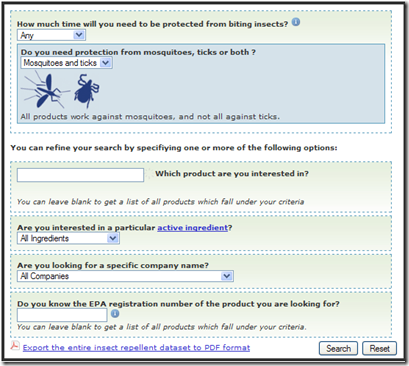
And to help you with warding off these pests, we’ve an interactive insect repellant search engine developed by the EPA that will that will allow you to input your needs and it will spit out the best repellants to use.

image

(click image to go to search engine)


And a final note, if you live in the United States (and this presumably is valid in other places as well), and you are seeing an unusual number of mosquitoes in your neighborhood, call your local mosquito control board and report it.  Quite often they will respond to your request by dispatching inspectors to look for, and eliminate, nearby breeding places.

Saturday, June 14, 2014

PAHO Chikungunya Surveillance Update – June 13th

image


# 8742


The Chikungunya virus – which was only first reported in this hemisphere last December on the French Part of St. Martins - continues to spread across the Caribbean and make incursions into Central and South America at an impressive rate. 


Two weeks ago (see PAHO Chikungunya Epidemiological Update – May 30th) the estimated number of cases had grown to just over 100,000 – today that number exceeds 165,0000.


As impressive as these growth numbers are, it should be noted that surveillance in some of the reporting nations is sub-optimal, and in some cases, reporting to PAHO lags behind by several weeks.  Meaning the number of reported cases today is likely to be an undercount.  


First a look at the latest numbers, then I’ll be back with more:


The hardest hit areas are islands in the `Latin Caribbean’, which have reported more than 90% of all of the cases in this outbreak to date.  Particularly hard hit are Martinique and the Dominican Republic, although anecdotal reports suggest the situation in Haiti is badly underreported.

image


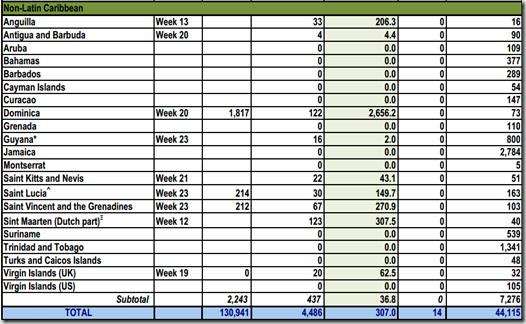
While lagging well behind, the Non-Latin Caribbean nations have reported a roughly 30% increase in cases over the past two weeks.

image


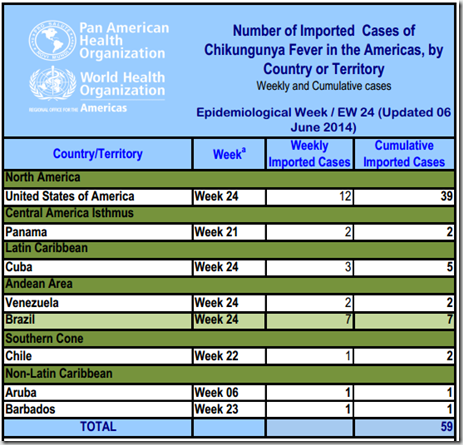
And lastly, a look at nations that have reported imported Chikungunya cases – but as of yet, no local transmission of the virus. 

image


While this virus has spread quite efficiently through just the normal tourist trade and international travel, this week the month-long FIFA World Cup begins in Brazil, which is expected to draw more than 500,000 visitors.  And among them will be some who either reside in, or have recently visited, areas where this virus is currently spreading (see  The ECDC Risk Assessment On Brazil’s FIFA World Cup).


With an incubation period of between 3 and 7 days, and the enormous amount of international travel to, and from, the Caribbean, the concern is that this virus will soon migrate to other areas that also have a favorable climate and the right kind of mosquitoes.


In April, in Study: Chikungunya’s Growing Threat To The Americas, we looked at models showing how the spread of CHKV could be aided and abetted by the spike in travelers to the World Cup this summer. 


Until about a decade ago, the Chikungunya virus was fairly localized in Central Africa, and only believed transmitted by the Aedes Aegypti mosquito.  In 2005  the virus took off on the wings of the Aedes Albopictus mosquito, and quickly conquered the Indian Ocean and parts of Asia, and moved into the Pacific.


Between the two, these mosquito vectors cover a lot of territory, including much of the Eastern United States and Southern Europe.

image


While no one knows how well the virus will spread, once it gets a foot hold in the United States or Europe, public health agencies are trying to be as proactive as they can in anticipation of its arrival. The state of Florida is concerned enough that it has issued warnings to the public, and is actively Preparing For Chikungunya. 


In March the CDC held a Chikungunya Webinar, in December they released a CDC HAN Advisory On Recognizing & Treating Chikungunya Infection, and just last week the MMWR published a report on  Chikungunya In the Caribbean & South America.


Chikungunya – while rarely fatal, can cause prolonged fever and severe polyarthralgias (joint pain), which in some cases can last weeks, months, or even longer.  


While the kind of widespread epidemic we are seeing in the Caribbean seems highly unlikely in the United States or Europe (based primarily on differences in lifestyle, better mosquito control, and other socio-economic factors), no one really knows what will happen when this emerging arbovirus, aided and abetted by a pair of competent and ubiquitous vectors, is introduced to a highly susceptible and immunologically naive population.


But considering Chikungunya’s remarkable run over the past 10 years, it seems likely that this virus will continue to spread to new territories, bringing with it serious public health challenges.

Monday, June 09, 2014

WNV vs CHIKV: A Host Of Differences

image

Credit CDC


# 8720


Despite the considerable public health problems that West Nile Fever causes in this country, and around the world, humans (and horses) are essentially a dead-end for the virus.  We are `incidental’ hosts, as we don’t produce enough of the virus in our bloodstream to allow another mosquito to transfer it on to others.


West Nile virus is actually a disease of birds, which serve as amplifying hosts for the virus, and human infection is basically a case of unintended collateral damage (see graphic below).

image

Photo Credit CDC


The vast majority of people infected by WNV are asymptomatic, or end up with mild nonspecific symptoms reminiscent of a summer `cold’.  The mild form of the disease is called West Nile Fever, and only 1%-3% who experience it are ever diagnosed, although estimates are 100,000 Americans or more are infected each year.


Neuroinvasive cases (which present with meningitis, encephalitis, or flaccid Paralysis) are severe enough that they nearly always result in hospitalization and diagnosis, and so they are considered the best indicator of the scope of each year’s epidemic. 


In 2012, the United States saw nearly 3,000 cases of neuroinvasive WNV, and 286 deaths (see DVBID: 2012 Record Number Of West Nile Fatalities).  


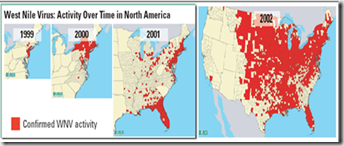
An impressive tally for a disease that infects humans – strictly speaking – only by virtue of happenstance. As you can see by the maps below, after its introduction in 1999, WNV spread across much of the United States in a matter of a few short years.  Today is is found in all 48 contiguous states.

image

From the USGS Factsheet on West Nile Virus


Chikungunya, on the other hand, has evolved to become a `humanized’ virus.  Outside of Africa (where it also resides in non-human primates), humans are the primary host for the virus, and once infected, can `amplify’  the virus efficiently for days.


According to the CDC: The risk of a person transmitting the virus to a biting mosquito or through blood is highest when the patient is viremic during the first 2–6 days of illness. 

image


Unlike with WNV, the majority of people infected with Chikungunya will become symptomatic. In their information for healthcare providers, the CDC lists:


Clinical findings

  • Majority of infected people become symptomatic
  • Incubation period usually 3–7 days (range 1–12 days)
  • Acute onset of fever and polyarthralgia are the primary clinical findings
  • Joint symptoms usually symmetric and often occur in hands and feet; they can be severe and debilitating
  • Other symptoms: Headache, myalgia, arthritis, conjunctivitis, nausea/vomiting, maculopapular rash
  • Lymphopenia, thrombocytopenia, elevated creatinine, and elevated hepatic transaminases are the most common clinical laboratory findings

Clinical course and outcomes

  • Acute symptoms typically resolve within 7–10 days
  • Rare complications include uveitis, retinitis, myocarditis, hepatitis, nephritis, bullous skin lesions, hemorrhage, meningoencephalitis, myelitis, Guillain-Barré syndrome, and cranial nerve palsies
  • Persons at risk for severe disease include neonates exposed intrapartum, older adults (e.g., > 65 years), and persons with underlying medical conditions (e.g., hypertension, diabetes, or cardiovascular disease)
  • Some patients might have relapse of rheumatologic symptoms (e.g., polyarthralgia, polyarthritis, tenosynovitis) in the months following acute illness
  • Studies report variable proportions of patients with persistent joint pains for months to years
  • Mortality is rare and occurs mostly in older adults


Treatment

  • No specific antiviral therapy
  • Supportive care with rest and fluids
  • Non-steroidal anti-inflammatory drugs (NSAIDs) to relieve acute pain and fever
  • Persistent joint pain may benefit from use of NSAIDs, corticosteroids, or physiotherapy

                        Over the past six months we’ve watched as Chikungunya  has spread across much of the Caribbean, infecting well over 100,000 people. While seemingly better equipped to spread across the United States than West Nile Virus – which, despite its limitations, has done a pretty good job – we really don’t know how much of a problem Chikungunya will pose to Americans this summer.  


                        We’ve had similar concerns with the expansion of Dengue – another `humanized’ arbovirus  that has made great strides around the globe – and has seen recent introductions into the United States (see MMWR: Dengue Fever In Key West).


                        While now the most common mosquito-borne virus in the world (causing up to 100 million infections a year), Dengue has managed to do little more than spark a few limited outbreaks in North America, despite an abundance of the right mosquito vectors.


                        In 2003, a CDC EID study looked at this paradox, and found that economics and lifestyle, may have more do to with our success against Dengue, than anything else.

                        Texas Lifestyle Limits Transmission of Dengue Virus

                        Paul Reiter* , Sarah Lathrop*, Michel L. Bunning*, Brad J. Biggerstaff*, Daniel Singer*, Tejpratap Tiwari*, Laura Baber†, Manuel Amador*, Jaime Thirion‡, Jack Hayes§, Calixto Seca¶, Jorge Mendez‡, Bernardo Ramirez#, Jerome Robinson†, Julie Rawlings¶, Vance Vorndam*, Stephen Waterman*, Duane Gubler*, Gary Clark*, and Edward Hayes*
                        Abstract

                        Urban dengue is common in most countries of the Americas, but has been rare in the United States for more than half a century. In 1999 we investigated an outbreak of the disease that affected Nuevo Laredo, Tamaulipas, Mexico, and Laredo, Texas, United States, contiguous cities that straddle the international border. The incidence of recent cases, indicated by immunoglobulin M antibody serosurvey, was higher in Nuevo Laredo, although the vector, Aedes aegypti, was more abundant in Laredo. Environmental factors that affect contact with mosquitoes, such as air-conditioning and human behavior, appear to account for this paradox. We conclude that the low prevalence of dengue in the United States is primarily due to economic, rather than climatic, factors.

                        Whether our luck will hold with Chikungunya (or continue to hold with Dengue) is anyone’s guess.  The global track record with both of these diseases has been impressive to date, and so one is not inclined to bet against their future success.


                        The overall risk of contracting a mosquito-borne illness anywhere in the United States remains very small, but it has increased in recent years, with the emergence of new threats like WNV, Dengue, and Chikungunya.


                        While there are no vaccines available for these viruses, these are still largely preventable diseases.  Local Health departments urge people to always follow the `5 D’s’ of prevention:

                        image

                        Saturday, June 07, 2014

                        PAHO: Chikungunya Numbers Jump Nearly 30K In Past Week

                        image


                        # 8717


                        With the caveat that an exact count of cases is impossible, and the numbers we have are likely an undercount, yesterday PAHO (Pan American Health Organization) released their weekly update on Chikungunya, which shows a jump of nearly 30,000 cases across the Caribbean during the past week. 


                        Last week (see PAHO Chikungunya Epidemiological Update – May 30th) the number of suspected and confirmed cases sat at just over 103,000.


                        This latest update (June 6th) sits at nearly 131,0000, with the vast majority of cases being reported on the Latin Caribbean islands, with Haiti and the Dominican Republic showing the fastest rise in cases.


                        image image


                        Previously, Chikungunya has shown the ability to spread explosively among an immunologically naive population when the competent vectors (Aedes mosquitoes) and favorable environmental and societal conditions converge.


                        The 2005 outbreak on Reunion Island in the Indian Ocean reportedly resulted in the infection of roughly 1/3rd of that island’s population (266,000 case out of  pop.770,000) in a matter of a few months.


                        In the past couple of days Crof has carried a number of reports from Haiti and the Dominican Republic (see Dr. Halverson on Haiti's chikungunya numbers) that give us some idea on how pervasive this virus has become in 6 short months in parts of the Caribbean.


                        While rarely fatal, Chikungunya can produce a severe fever and excruciating joint pain usually lasting for at least a week.  Some studies (cite) indicate significant arthritis-like sequelae can persist for months or even years post-infection.


                        With an incubation period of between 3 and 7 days, and the enormous amount of international travel to, and from, the Caribbean, the concern is that this virus will soon migrate to other areas that also have a favorable climate and the right kind of mosquitoes. 


                        Brazil is particularly at risk this summer with the FIFA World Cup, something we discussed yesterday.


                        But then, so is the United States, and even parts of Europe (Italy saw a mini-epidemic in 2007 when just one infected traveler started a chain of infection that eventually touched 300 people).  


                        The good news, at least in most of the United States, is that most of us live and work in air-conditioned spaces, and live in regions that maintain pretty good mosquito control programs, and so we aren’t as apt to be continually exposed to (and bitten by) mosquitoes as people living in the Caribbean.


                        But as a native Floridian, I can assure you that it is pretty much impossible to totally avoid feeding our unofficial `state bird’.


                        The state of Florida is concerned enough that it has issued warnings to the public, and is actively Preparing For Chikungunya.  In March the CDC held a Chikungunya Webinar and last December they released a CDC HAN Advisory On Recognizing & Treating Chikungunya Infection


                        No one knows if Chikungunya will spread rapidly in the United States, like West Nile Virus has over the past 15 years, or produce infrequent and highly sporadic outbreaks, as has Dengue.  


                        But given its rapid global expansion over the past nine years, no one in public health is taking the threat lightly.

                        Thursday, June 05, 2014

                        MMWR: Chikungunya In the Caribbean & South America

                        image

                        CHIKV in the Caribbean – Source ECDC


                        # 8712


                        For the past six months we’ve been watching the explosive spread of a recently introduced mosquito-borne virus called Chikungunya, that was first reported in the Americas on French Part of St. Martins last December.  Chikungunya – until a decade ago – was only seen in Africa, but in 2005 it abruptly jumped to Reunion Island in the Indian Ocean, and has been on the move ever since.


                        In the its first six months, PAHO estimates that more than 100,000 people have been infected in the Caribbean. 


                        All eyes are now on Florida, Texas, and the rest of the United States as concerns rise that the virus may move north over the summer months (see Florida Prepares For Chikungunya.  In March the CDC held a Chikungunya Webinar and last December they released a CDC HAN Advisory On Recognizing & Treating Chikungunya Infection.


                        Today the CDC’s MMWR carries a report on the outbreak in the Caribbean.  I’ve only posted some excerpts, follow the link to read this in its entirety, and to access the linked resources.


                        Notes from the Field: Chikungunya Virus Spreads in the Americas — Caribbean and South America, 2013–2014

                        Weekly

                        June 6, 2014 / 63(22);500-501

                        Marc Fischer, MD1, J. Erin Staples, MD1 (Author affiliations at end of text)

                        In December 2013, the World Health Organization reported the first local transmission of chikungunya virus in the Western Hemisphere, with autochthonous cases identified in Saint Martin (1). Since then, local transmission has been identified in 17 countries or territories in the Caribbean or South America (Anguilla, Antigua and Barbuda, British Virgin Islands, Dominica, Dominican Republic, French Guiana, Guadeloupe, Guyana, Haiti, Martinique, Puerto Rico, Saint Barthelemy, Saint Kitts and Nevis, Saint Lucia, Saint Martin, Saint Vincent and the Grenadines, and Sint Maarten).

                        As of May 30, 2014, a total of 103,018 suspected and 4,406 laboratory-confirmed chikungunya cases had been reported from these areas.* The number of reported cases nearly doubled during the previous 2 weeks. More than 95% of the cases have been reported from five jurisdictions: Dominican Republic (38,656 cases), Martinique (30,715), Guadeloupe (24,428), Haiti (6,318), and Saint Martin (4,113). The highest incidences have been reported from Saint Martin (115 cases per 1,000 population), Martinique (76 per 1,000), Saint Barthelemy (74 per 1,000), and Guadeloupe (52 per 1,000). Further expansion of these outbreaks and spread to other countries in the region is likely.

                        Chikungunya virus is a mosquito-borne alphavirus transmitted primarily by Aedes aegypti and Aedes albopictus mosquitoes (1‒3). These vectors also transmit dengue virus and are found throughout much of the Americas, including parts of the United States. Humans are the primary amplifying host for chikungunya virus, and most infected persons develop symptomatic disease (2). The most common clinical findings are acute onset of fever and polyarthralgia. Joint pains are usually bilateral and symmetric; they can be severe and debilitating. Mortality is rare and occurs mostly in older adults.

                        Chikungunya outbreaks previously have been documented in countries in Africa, Asia, Europe, and the Indian and Pacific Oceans. Before the cases on Saint Martin, the only chikungunya cases identified in the Americas were in travelers to or from known endemic areas. None of these cases resulted in local transmission or outbreaks.

                        Chikungunya is not a nationally notifiable disease in the United States. However, chikungunya cases can be reported to ArboNET, a national passive surveillance system for arthropod-borne diseases. During 2006–2013, studies identified an average of 28 persons per year (range: 5‒65) with positive tests for recent chikungunya virus infection from one of the four U.S. laboratories that perform testing. All were travelers visiting or returning to the United States from affected areas, mostly in Asia (1,4). Only 23% of the cases were reported to ArboNET. Beginning in 2014, cases have been identified in travelers returning from the Caribbean.

                        As of June 2, a total of 28 chikungunya cases had been reported to ArboNET from U.S. states and territories. On May 30, the Puerto Rico Department of Health reported their first locally transmitted case; local transmission has not been identified in other U.S. states or territories. The remaining U.S. cases have occurred in travelers returning from affected areas, including 26 travelers returning from the Caribbean (Dominica, Dominican Republic, Haiti, Martinique, Saint Martin, and Sint Maarten) and one traveler returning from Asia (Indonesia). With the recent outbreaks in the Caribbean and the Pacific, the number of chikungunya cases among travelers visiting or returning to the United States from affected areas will likely increase. These imported cases could result in local spread of the virus in other parts of the United States.

                        Chikungunya virus infection should be considered in patients with acute onset of fever and polyarthralgia, especially travelers who recently returned from areas with known virus transmission. Chikungunya virus diagnostic testing currently is performed at CDC, three state health departments (California, Florida, and New York), and one commercial laboratory (Focus Diagnostics).

                        (Continue . . . . )