Showing posts with label data. Show all posts

Wednesday, May 14, 2014

MERS, KSA & Sins Of Omission

image

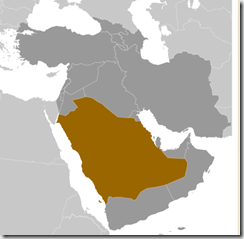
Saudi Arabia


# 8623


Overnight the Saudi Gazette carried a story that not only demonstrates the seriousness of the MERS outbreak, but also illustrates dearth of information being provided by the Saudi MOH.  First an excerpt from the report, then some digging into the Saudi MOH announcements.


MERS kills two doctors in Jeddah

JEDDAH – Two specialist doctors from Jeddah were among the latest fatalities of MERS coronavirus.


Dr. Tarek Waleed Rajikhan, dermatologist at King Fahd Hospital (KFH), and Dr. Ahmed Al-Ghunaim, who was working at a private hospital in the city, died after being infected with the deadly virus. Tarek’s body was buried on Tuesday.


Waleed Rajikhan, father of Tarek and a consultant doctor at KFH, said that his son, aged 29, was admitted to the hospital one month ago after he got infected with the disease. He is survived by his wife and a two-month-old daughter.

Although we don’t have an age for Dr. Al-Ghunaim, Dr. Rajikhan’s death appears to have been announced (without identifying him as a Healthcare worker) in yesterday’s MOH update, unceremoniously described as:


A 29-year-old man passed away on May 12, 2014.  He was previously recorded as a confirmed case in Jeddah. May Allah have mercy upon him.


It is likely that one of the other fatalities mentioned yesterday was Dr. Al-Ghunaim, but we haven’t enough information to identify him.  One would think that the death of two doctors from MERS, in the same city and at roughly the same time, would merit more than a passing mention.


But in Saudi Arabia, I guess one would be wrong.


I’ve spent some time trying to match this `previously recorded confirmed case’  to an entry on FluTracker’s MERS Case Line List, but have been unable to find a corresponding record.  Given the haphazard reporting on cases by the Saudi MOH, this isn’t completely surprising.  


But it is disappointing.


As is the fact that In recent days KSA’s daily report has been strangely inconsistent in mentioning asymptomatic cases, or identifying any cases as being Healthcare Workers (HCWs), both of which are pertinent pieces of the MERS puzzle.


Yesterday the Saudi MOH Announced a `Package’ Of MERS Control Measures, that was both broad and vague at the same time. While one has hopes they will follow through, over the past year the KSA’s MOH has also promised – but has yet to deliver on – a number of  research projects, including an oft requested Case Control Study (see case-control study protocol Jul 2013).


Another telling point, the World Health Organization, which reports on new cases once they are officially reported to them by each member state’s MOH, has posted 11 MERS updates over the past 30 days (from  UAE, Jordan, Greece, etc), but not one of them deals with Saudi Arabia – which accounts for the majority of recent cases.


Exactly why updates have not appeared in a month has not been disclosed, but it suggests a major lack of communications on the part of the Saudi’s.


All of which may help explain the level of exasperation (and downright skepticism) heard in some of the reporter’s questions regarding the Saudi’s past (and future) response to the MERS threat at today’s WHO IHR Emergency Meeting press conference. (Audio Link) 


A sign that health and science journalists are a savvy group, have been down this road before, and tend not to suffer fools gladly.

Tuesday, February 05, 2013

GSK Pledges To Release All Drug Trial Data

image


# 6909


It’s genuinely big news this afternoon that GSK (Glaxo-Smith-Kline) has pledged that they will publish all results of clinical study reports (CSRs) and clinical trials, not only going forward, but also going back on all approved medications developed since the year 2000.


It is estimated that roughly half of all clinical trials never see the light of day, and in 2010 an NHS Health Technology Assessment concluded that:


Studies with significant or positive results were more likely to be published than those with non-significant or negative results . . .


I’ve written in the past on the reluctance of Roche to release all of their clinical trial data on Tamiflu, and in RCTs: All That’s Gold Standard Doesn’t Glitter, we looked at a Johns Hopkins Study on pediatric clinical trials that found:


Overall, 41 percent of the 146 trials in the review had improper or poorly described randomization techniques. Industry-funded trials were six times more likely to have high risk for biased randomization than government-funded trials or those funded by nonprofit organizations.


While public concerns over industry reporting bias and secrecy have grown over the years, the charge has really been led by All Trials Registered, All Results Reported.

image


An initiative of Sense About Science, Bad Science, BMJ, James Lind Initiative, the Centre for Evidence-based Medicine and others, their grassroots campaign has put considerable pressure on pharmaceutical companies to release their data.


Today, in what can only be described as a major victory for the AllTrials campaign, GSK posted the following announcement on their corporate website, pledging to publish detailed drug trial data.


GSK announces support for AllTrials campaign for clinical data transparency

Issued: Tuesday 5 February 2013, London UK

GSK today further demonstrated its commitment to clinical trial transparency by announcing its support for the AllTrials campaign. The campaign is calling for registration of clinical trials and the disclosure of clinical trial results and clinical study reports (CSRs) to help drive further scientific understanding.


GSK already publicly discloses a significant amount of information about its clinical trials. The company registers and posts summary information about each trial it begins and shares the results of all its clinical trials – whether positive or negative – on a website accessible to all. Today this website includes almost 5,000 clinical trial result summaries and receives an average of almost 11,000 visitors each month. The company has also previously committed to seek publication of the results of all of its clinical trials that evaluate its medicines to peer-reviewed scientific journals.


Expanding on this, GSK is committing to make CSRs publicly available through its clinical trials register. CSRs are formal study reports that provide more details on the design, methods and results of clinical trials and form the basis of submissions to the US Food and Drug Administration (FDA), European Medicines Agency (EMA) and other regulatory agencies. From now, GSK will publish CSRs for all of its medicines once they have been approved or discontinued from development and the results have been published. This is to allow for the data to be first reviewed by regulators and the scientific community. Patient data in the CSRs and their appendices will be removed to ensure patient confidentiality is maintained.


In addition, while there are practical challenges, the company also intends to publish CSRs for clinical outcomes trials for all approved medicines dating back to the formation of GSK. This will require retrieval and examination of each historic CSR to remove confidential patient information. Given the significant volume of studies involved, the company will put in place a dedicated team to conduct this work which it expects to complete over a number of years. Posting will take place in a step-wise manner, with priority given to CSRs for its most commonly prescribed medicines.

(Continue . . . )


Hopefully this will be the first of many such industry announcements.