Showing posts with label electrical grid. Show all posts

Thursday, October 31, 2013

Instead Of Cursing The Darkness

NOAA Radioimage image


# 7924


When I wrote about the upcoming GridEX II exercise on Sunday (see GridEx 2013 Preparedness Drill) I mentioned National Geographic’s upcoming `docudrama’ movie  – American Blackout – and its mention in the CDC’s   Public Health Matters Blog.  I’ve now had a chance to watch the movie (and it’s UK counterpart) – and while neither is exactly Citizen Kane – both do a good job illustrating why it is important to be prepared for any type of emergency or disaster.


The plot in both movies is a cyber attack taking down the national grid.  And once down, it stays down for days.  And as you might expect, by day 2 or 3, a lot of unprepared people were getting pretty desperate.


Without electrical power, water and gasoline doesn’t pump, elevators and air conditioners don’t run, ATM machines and banks close, grocery stores can’t take debit or credit cards, and everything from cooking, to flushing toilets, becomes a major challenge.  Particularly in urban settings.


Having lived for more than a year `on the hook’ on a sailboat, I understand what its like to be off the grid.  But of course, I’d prepared for that.  I had solar panels, kerosene lanterns, battery operated devices, and other work arounds.   It wasn’t luxurious, or even comfortable a good deal of the time, but living aboard a boat in the tropics tends to make up for such things.


Today, I’ve `swallowed the anchor’, and live on dry land.  But I keep the much of the same gear I had aboard my sailboat, in case the power goes out.  Battery operated radios, LED lanterns (much improved over the old, hot, smelly kerosene lanterns),  a propane camp stove (with extra fuel) . . .  even a small solar panel to recharge batteries.


Not because I’m expecting a `100% grid-down’ situation as depicted in these movies, but because I live in hurricane country, and these tropical systems have a nasty habit of shutting off the juice for days or weeks at a time.  As do ice storms, tornadoes, blizzards, floods, earthquakes, severe thunderstorms and derechos across the nation.


Add in the real possibility of solar storms, cyber attacks, and good old fashioned equipment failures, and the odds of your spending a few days without electrical power over  the next couple of years go up appreciably.


If a disaster struck your region today, and the power went out, stores closed their doors, and water stopped flowing from your kitchen tap for the next 7 days  . . .  do you have:


  • A battery operated NWS Emergency Radio to find out what was going on, and to get vital instructions from emergency officials?
  • A decent first-aid kit, so that you can treat injuries?
  • Enough non-perishable food and water on hand to feed and hydrate your family (including pets) for the duration?
  • A way to provide light (and in cold climates, heat) for your family without electricity?   And a way to cook?  And to do this safely?
  • An emergency plan, including meeting places, emergency out-of-state contact numbers, and in case you must evacuate, a bug-out bag?
  • Spare supply of essential prescription medicines that you or your family may need?


If your answer is `no’, you have some work to do.  A good place to get started is by visiting Ready.gov.


Unfortunately, a lot of people make the wrong choices when they do prepare.  They buy candles instead of battery operated lights, they use generators inside their house or garage, or resort to dangerous methods to cook or to heat their homes. 


As a result, when the power goes out, house fires and carbon monoxide poisonings go up. Each year hundreds of Americans are killed, and thousands affected, by CO poisoning.


In Carbon Monoxide: A Stealthy Killer I wrote in depth on the issue, but a few tips from the CDC include:

Prevention Guidelines

You Can Prevent Carbon Monoxide Exposure
  • Do have your heating system, water heater and any other gas, oil, or coal burning appliances serviced by a qualified technician every year.
  • Do install a battery-operated CO detector in your home and check or replace the battery when you change the time on your clocks each spring and fall. If the detector sounds leave your home immediately and call 911.
  • Do seek prompt medical attention if you suspect CO poisoning and are feeling dizzy, light-headed, or nauseous.
  • Don't use a generator, charcoal grill, camp stove, or other gasoline or charcoal-burning device inside your home, basement, or garage or near a window.
  • Don't run a car or truck inside a garage attached to your house, even if you leave the door open.
  • Don't burn anything in a stove or fireplace that isn't vented.
  • Don't heat your house with a gas oven.

Food safety after a power outage is another concern, and is something I covered a couple of years ago in USDA: Food Safety When The Power Goes Out.


The USDA maintains a Food Safety and Inspection website with a great deal of consumer information about how to protect your food supplies during an emergency, and how to tell when to discard food that may no longer be safe to consume.


A Consumer's Guide to Food Safety: Severe Storms and Hurricanes

This illustrated PDF version (2.1MB) is recommended for printing.


While preparedness may seem like a lot of work, it really isn’t.  You don’t need an underground bunker, an armory, or 2 years worth of dehydrated food.  But you do need the basics to carry on for a week or two, and a workable family (or business) emergency/disaster plan.


For more information on how to prepare, I would invite you  to visit:


FEMA http://www.fema.gov/index.shtm

READY.GOV http://www.ready.gov/

AMERICAN RED CROSS http://www.redcross.org/


And you can use this link to read earlier NPM (National Preparedness Month) posts on this blog

Friday, August 03, 2012

Because It Can Happen Here


image


# 6469


While we wait for the next flu to drop in the H3N2v swine flu story, a brief side trip this morning as we look at our nation’s resilience – or lack thereof – to disasters.


As most of you know, earlier this week India saw a 2-day blackout of their electrical grid that affected nearly 10% of the world’s population. While unprecedented in size, large scale electrical blackouts like this have occurred in many parts of the world before.


This week’s event inspired the CDC’s Public Health Matters Blog to publish a post called India in the Dark: A Call For Preparedness that asks:


What if the United States experienced a power outage all the way from Anchorage, Alaska to the sandy shores of South Beach, Florida?  Even if it’s not to that extent, minor power outages are enough to inconvenience people and cause distress.  And it doesn’t take much for a power outage to occur.  Thunderstorms, snow storms, earthquakes, technical glitches or man-made disasters can all cause them.


It’s a serious question.


Here in Florida, it isn’t unusual to go a week, or even two, after a major hurricane without electrical power.  Parts of New Orleans were still without electricity a month after Katrina.


While a prolonged national grid failure may seem an unlikely event, there are scenarios where it could happen. 


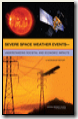
In 2009 the National Academy of Sciences produced a 134 page report on the potential damage that a major solar flare could cause in Severe Space Weather Events—Understanding Societal and Economic Impacts.

image

You can download the PDF for free from the National Academies Press at the above link.


In early 2010  FEMA  held a major table-top exercise in anticipation of the upcoming solar maximum (expected in 2013), and they now include a solar weather update in their daily briefings.


A 30 page PDF file is available for download from the FEMA library on this exercise which envisioned a `near worst-case scenario’.

Managing Critical Disasters in the Transatlantic Domain - The Case of a Geomagnetic Storm

Resource Record Cover Image Thumbnail - summary_geomag_cvr_web.jpg


Their `near-worst-case’ scenario envisions much of North America without electrical power for weeks or even months following a severe geomagnetic storm.


But it doesn’t take anything as exotic and rare as a massive Coronal Mass Ejection from the sun to take down large parts of the electrical grid.


Natural disasters, like earthquakes and severe storms, can wreak havoc on the power grid, and prolonged heat waves and droughts can tax their capacity to the breaking point.


Add in terrorist attacks (including cyber attacks) and an ageing power delivery infrastructure, and the potential for seeing a major power disruption becomes more than trivial.


Despite concerted efforts by FEMA, Ready.gov, and other agencies to encourage individual and community preparedness, recent polls indicate that at least half of us are unprepared for even a small disaster.


In recent CDC Blog called Startling Facts You Should Know About Disaster Preparedness, out of 1,000  respondents to a national poll by Adelphi University Center for Health Innovation, 48% lacked even the basic emergency supplies they would need in the event of a disaster (flashlights, emergency radio, non-perishable food, water, first aid kit, etc.).


More than half did not have a designated rendezvous place for family members, nor had they made and safely stored copies of their important documents.


While emergency officials plan on a community, state, and national level to deal with disasters, what keeps many of them up at night is knowing how unprepared most individuals are to deal with a major disaster.


They know that after an earthquake, hurricane, or similar disaster that the 911 system may be down, emergency crews will be swamped, and many people will have to fend for themselves during the first few days.


In a truly epic disaster . . .  even weeks.


Which is why every year September is designated National Preparedness Month, to encourage people to take disaster preparedness seriously.  But no one should be waiting till then to prepare. Preparedness is a year-round endeavor, and the time to start is now.


If a disaster struck your region today, and the power went out, stores closed their doors, and water stopped flowing from your kitchen tap for the next 7 days  . . .  do you have:


  • A battery operated NWS Emergency Radio to find out what was going on, and to get vital instructions from emergency officials?
  • A decent first-aid kit, so that you can treat injuries?
  • Enough non-perishable food and water on hand to feed and hydrate your family (including pets) for the duration?
  • A way to provide light (and in cold climates, heat) for your family without electricity?   And a way to cook?  And to do this safely?
  • An emergency plan, including meeting places, emergency out-of-state contact numbers, and in case you must evacuate, a bug-out bag?
  • Spare supply of essential prescription medicines that you or your family may need?


If the answer to any of these questions is `no’, then you have a lot of work to do.  A good place to get started is by visiting Ready.gov.

image


Because, whether you are ready or not. 


Disasters can happen here.

Saturday, March 26, 2011

When The Lights Go Out


# 5450


Some illuminating (and not so illuminating) satellite photos put together by NOAA show us the impact of the March 11th earthquake and tsunami on Japan’s electrical grid.


A side by side comparison of the average nighttime lighting before and after the quake is depicted below:


image 

You’ll find the article, and high-res (1920 x 1080) photos HERE.


Literally millions of people were affected by these power outages, and two weeks after the quake, hundreds of thousands are still without electrical power.


While the disaster in Japan was a `worst-case scenario’, large scale, and prolonged, power outages occur with some frequency around the world – particularly in the aftermath of natural disasters.


Residents in Florida, and along the Gulf and Atlantic coast, are well aware that the power can be out for days – or even weeks – in the wake of a major hurricane.


The power was still out in parts of New Orleans when I arrived there 6 weeks after Katrina to clean out my brother’s apartment, and it took a couple of weeks to restore power to all of Miami after hurricane Wilma. 


Earthquakes, floods, tornadoes, ice storms, and even solar storms (see Solar Storms, CMEs & FEMA) all have the potential to knock the power out in your community for days or even longer.


Given our reliance on electricity for practically every aspect of modern living, most families are woefully unprepared to deal with a significant interruption in the grid.   


Aside from lighting and powering such `necessities’ as the Internet and cable TV, many homes also heat and cook solely with electricity. 


And there are some who rely on oxygen concentrators, or other medical equipment who must have continuous electrical power.


Those on wells depend upon electricity to pump water into their homes.


Prolonged outages can even affect a municipality’s ability to deliver water, and carry away sewage from your home or business.


All of which points out the need for individuals and families to consider how they would cope if the power were to go out for days, or even weeks, where they live.


Do you have enough food and water to last at least 72 hours, but preferably 10 to 14 days?


Do you have a source of lighting (other than candles) that will provide sufficient light for a week or longer?


If you live in a frigid climate, can you and your family stay warm without electric power?


If the power goes out, can you flush toilets?   If not, have you made provisions for sanitation needs?


Can you charge cell phones, or run emergency radios, for a week or longer?


The solution that many immediately consider is to buy a generator, and while a reasonable solution for some families, many will find it impractical.


Generators must always be run outdoors, well away from enclosed living spaces, and require large amounts of flammable and difficult to store fuel.


They are expensive, noisy, and can attract unwanted attention. And generators require maintenance and occasional repair.


FEMA has some useful safety tips on using a generator, for those still considering their use.


For most people, the better solution is to find workarounds during power outages like LED lighting, chemical toilets, sleeping bags, and camp stoves.


In my essay The Gift Of Preparedness: 2010 I highlight a number of small ticket items that would come in very handy during a prolonged power outage, including:


NOAA Radioimage

imageimage


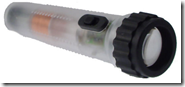
LED lanterns and flashlights can run up to 10 times longer on a set of batteries than with incandescent bulbs.


I personally have a solar power setup, to provide (very) limited 110 volt power should the need arise.  You can read about my system, and how you can make one for yourself at Preparedness: Solar Power On A Budget.


solar1


For the price of a solar setup, however, you can buy a lot of alkaline batteries.  As with buying a generator, solar isn’t for everybody.


For those living in colder climates, staying warm during a winter power outage may be the biggest challenge.


Those with wood, oil, or LP gas heat have an advantage  - although heating a home without electrical blowers can be a bit tricky (and dangerous) - even with these alternative forms of heat.


The time to figure out how to do these things safely is now, before a disaster or crisis arrives.


One way to do that is to hold a power outage drill.  Pick a weekend to shut off the main breaker to your home for 24 hours, and live without the luxury of the grid.


In short order you’ll discover what areas of your family’s emergency plan needs work.


While it may sound daunting, I lived successfully `off the grid’ for several years aboard a small sailboat during the 1980s. 


It required some adjustments to my lifestyle, but with the proper preparations, it was eminently doable.