Showing posts with label CDC. Show all posts

Tuesday, May 26, 2015

CDC Statement On Imported (Fatal) Case Of Lassa Fever – New Jersey

image

Credit CDC’s Lassa Information Page


# 10,091


A recurring theme in public health is just how easily that `exotic’ diseases can cross vast oceans or borders, propelled by our modern air travel industry and our penchant for international travel (see The Global Reach Of Infectious Disease). 


Every week scores of viremic travelers arrive on our shores, carrying everything from measles to dengue to Chikungunya. For some of these diseases – like measles - the risk of them spreading here is quite real. 


For others, while plausible, the risks of their spreading are far lower. 


Last night it was announced that a traveler – recently returned from Liberia – had died after being isolated last week when suspected of having a hemorrhagic fever.  While he tested negative for Ebola, yesterday his tests confirmed Lassa fever.  


The CDC believes that the risk to others is extremely low.


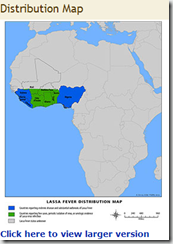
Lassa is endemic in Western Africa and  is commonly found in local rodents that often like to enter human dwellings. Exposure is typically through their urine or dried feces.  Roughly 80% who are infected only experience mild symptoms.  The overall mortality rate is believed to be in the 1%-2% range, although it runs much higher (15%-20%) among those sick enough to be hospitalized.


You may recall a similar importation last year (see Minnesota: Rare Imported Case Of Lassa Fever), along with a couple of earlier cases (2004 in New Jersey (MMWR) & 2010 in Pennsylvania (EID Journal)) – none of which resulted in a secondary transmission of the virus.


While the risks are considered quite low, contact tracing and monitoring will be conducted by health authorities to ensure that any possible spread is quickly detected and contained.   


This from the CDC’s media center:


Lassa Fever Confirmed in Death of U.S. Traveler Returning from Liberia

Risk to others considered extremely low


Press Release

For Immediate Release: Monday, May 25, 2015
Contact:
Media Relations
(404) 639-3286

The CDC and the New Jersey Department of Health have confirmed a death from Lassa fever which was diagnosed earlier today in a person returning to the United States from Liberia. The patient traveled from Liberia to Morocco to JFK International Airport on May 17th. The patient did not have a fever on departure from Liberia, did not report symptoms such as diarrhea, vomiting, or bleeding during the flight, and his temperature was taken on arrival in the U.S. and he did not have a fever at that time. On May 18th, the patient went to a hospital in New Jersey with symptoms of a sore throat, fever and tiredness. According to the hospital, he was asked on the 18th about his travel history and he did not indicate travel to West Africa. The patient was sent home the same day and on May 21st returned to the hospital when symptoms worsened. The patient was transferred to a treatment center prepared to treat viral hemorrhagic fevers. Samples submitted to CDC tested positive for Lassa fever early this morning. Tests for Ebola and other viral hemorrhagic fevers were negative. The patient was in appropriate isolation when he died there this evening.

Lassa fever is a viral disease common in West Africa but rarely seen in the United States. There has never been person-to-person transmission of Lassa fever documented in the United States. The New Jersey case is the sixth known occurrence of Lassa fever in travelers returning to the United States since 1969, not including convalescent patients. The last case was reported in Minnesota in 2014. Although Lassa fever can produce hemorrhagic symptoms in infected people, the disease is different from Ebola, which is responsible for the current outbreak in West Africa. In general, Lassa fever is less likely to be fatal than Ebola (approximately 1% case fatality rate for Lassa vs approximately 70% case fatality rate for Ebola without treatment) and less likely to be spread from person to person. However, some Lassa patients develop severe disease, as the patient in New Jersey did.

In West Africa, Lassa virus is carried by rodents and transmitted to humans through contact with urine or droppings of infected rodents. In rare cases it can be transmitted from person to person through direct contact with a sick person's blood or bodily fluids, through mucous membrane, or through sexual contact. The virus is not transmitted through casual contact, and patients are not believed to be infectious before the onset of symptoms. About 100,000 to 300,000 cases of Lassa fever, and 5,000 deaths related to Lassa fever, occur in West Africa each year.

CDC is working with public health officials to generate a list of people who had contact with the patient. Those identified as close contacts of the patient will be monitored for 21 days to see if symptoms occur.

Updates will be provided as the investigation continues.

Tuesday, May 19, 2015

Upcoming COCA Call: Diseases of Food Animals Threaten Global Food Security

image

1 person in 8 is Undernourished Photo Credit – FAO


# 10,067


With tens of millions of birds in the United States destroyed (or soon to be) due to our worst HPAI outbreak in history, several recently introduced porcine diseases (see mBio: A Novel Pathogenic Mammalian Orthoreovirus In Diarrheic American Pigs) killing piglets, and a long list of other exotic or emerging epizootic diseases around the globe, concerns over the safety and viability of the world’s food supply are mounting.


Although the United States can absorb the kind of poultry loses we’ve taken these past few months, many resource limited regions have been severely tested by outbreaks of avian flu, FMD, and other food animal diseases.


Next week the CDC will sponsor a COCA Call that delves into the challenges of controlling these outbreaks, and why they seem to be occurring with more frequency.


While primarily of interest to healthcare providers, COCA (Clinician Outreach Communication Activity) calls are designed to ensure that practitioners have up-to-date information for their practices.  The audio from these calls are posted several days after they are held.  You can access COCA calls going back to 2012 at this link.


First the link to next week’s presentation, after which I’ll have a bit more:


Emerging and Exotic Diseases of Food Animals Threaten Global Food Security


Image of Continuing Education Credits abbreviation. = Free Continuing Education

Date:Thursday, May 28, 2015

Time:2:00 - 3:00 pm (Eastern Time)

Join by Phone:

  • 800-369-2062 (U.S. Callers)
  • 517-308-9046 (International Callers)

Passcode:1302224

Join by Webinar:https://www.mymeetings.com/nc/join.php?i=PW3643037&p=1302224&t=c

Presenter(s)

James A. Roth, DVM, PhD, Diplomate ACVM
Clarence Hartley Covault Distinguished Professor
Director, Center for Food Security and Public Health
Executive Director, Institute for International Cooperation in Animal Biologics
College of Veterinary Medicine
Iowa State University

Overview

New diseases of food animals are emerging at an increasing rate and are spreading regionally and globally. Many of the same factors leading to emergence of human diseases are responsible for the emergence of animal diseases, and many of the animal diseases are zoonotic. The challenges of controlling emerging food animal diseases are very different in intensive animal agriculture and small holder animal production and depend upon the veterinary and public health infrastructure available. During the COCA call, participants will learn about reasons for the increasing rate of emergence of food animal diseases, some specific examples, challenges for their control, and implications for public health and food security.

Objectives

At the conclusion of the session, the participant will be able to accomplish the following:

  • Review recent examples of emerging diseases of food animals
  • Discuss reasons for emergence and dissemination of diseases of food animals
  • Describe challenges for control of zoonotic and non-zoonotic food animal diseases
  • Suggest infrastructure changes needed to improve prevention and control of food animal diseases

Call Format

  • Audio conference call on 5/28/15: 2:00 - 3:00 PM
  • Web-on-demand training after 3:00 PM on 5/28/15
  • Materials: PowerPoint slide set


Previously we’ve explored some of the choices made by governments around the world to protect their animal food sources – not all of which have worked out as well as they might have hoped.


Two years ago in Food Insecurity, Economics, And The Control Of H7N9, we looked at some country’s decision to go with poultry vaccination instead of culling to control avian flu - despite OIE warnings that vaccination of poultry cannot be considered a long-term solution (see Does OIE recommend vaccination of animals to control the disease?).


Since then we’ve seen a number of studies suggesting that the proliferation of new avian flu viruses over the past couple of years may have arisen from the continued use of outmoded or ineffectual vaccines (see The HPAI Poultry Vaccine Dilemma).


As you might guess, this is a complex problem with answers are neither easy or clear cut.  For more on global food insecurity, you may wish to visit the FAO’s most recent report:


The State of Food Insecurity in the World 2014

The State of Food Insecurity in the World 2014 presents updated estimates of undernourishment and progress towards the Millennium Development Goal (MDG) and World Food Summit (WFS) hunger targets. A stock-taking of where we stand on reducing hunger and malnutrition shows that progress in hunger reduction at the global level and in many countries has continued but that substantial additional effort is needed in others.

Sustained political commitment at the highest level is a prerequisite for hunger eradication. It entails placing food security and nutrition at the top of the political agenda and creating an enabling environment for improving food security and nutrition. This year’s report examines the diverse experiences of seven countries, with a specific focus on the enabling environment for food security and nutrition that reflects commitment and capacities across four dimensions: policies, programmes and legal frameworks; mobilization of human and financial resources; coordination mechanisms and partnerships; and evidence-based decision-making.

Wednesday, April 29, 2015

Two CDC Updates: HPAI H5 & H3N2 Canine Flu

image

CDC HPAI Risk Assessment


# 9992


Although neither of these viruses have shown the ability to infect humans, they are nevertheless newly arrived pathogens in North America, are spreading with impressive speed, and are capable of further evolution.  


All of which means that – while they currently pose little threat to human health -  they need to be carefully watched.


The CDC has updated their HPAI H5 webpage, and has published an announcement on the sequencing of the canine H3N2 virus, which they say shows no overt signs of being better able to infect humans than the H3N8 canine flu.


H5 Viruses in the United States

Page last updated: April 29, 2015

Highly pathogenic avian influenza (HPAI) H5 infections have been reported in U.S. domestic poultry (backyard and commercial flocks), captive wild birds, and wild birds. HPAI H5 detections began in December 2014 and have continued into April 2015. USDA is reporting that H5 viruses have been detected in birds in 18 U.S. states; 13 states have experienced outbreaks in poultry flocks and 5 states have detected H5 in wild birds.

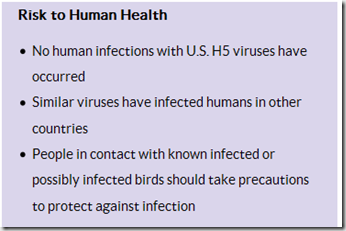
No human infections with these viruses have been detected at this time, however similar viruses have infected people in other countries and caused serious illness and death in some cases. Human infections with other avian influenza viruses have occurred after close and prolonged contact with infected birds or the excretions/secretions of infected birds (e.g., droppings, oral fluids).

While the health risk posed to the general public by these domestic HPAI outbreaks is low at this time, it is possible that human infections with these viruses may occur. CDC has guidance for clinicians and public health professionals in the United States on appropriate follow-up, preventive treatment, testing, specimen collection and processing of samples from patients who may be infected with H5 viruses and has been in close contact with state health departments from all 16 states that have detected H5 in birds.

CDC Recommendations for the Public
  • As a general precaution, people should avoid wild birds and observe them only from a distance; avoid contact with domestic birds (poultry) that appear ill or have died; and avoid contact with surfaces that appear to be contaminated with feces from wild or domestic birds.
  • People who have had contact with infected bird(s) should monitor their own health for possible symptoms (for example, conjunctivitis, or flu-like symptoms).
  • People who have had contact with infected birds may also be given influenza antiviral drugs preventatively.
  • Health care providers evaluating patients with possible HPAI H5 infection should notify their local or state health departments which in turn should notify CDC. CDC is providing case-by-case guidance at this time.
  • There is no evidence that any human cases of avian influenza have ever been acquired by eating properly cooked poultry products.
  • CDC will update the public as new information becomes available.


Update on H3N2 Canine Influenza (Dog Flu) Virus

April 28, 2015 – Experts from CDC’s Influenza Division have analyzed genetic sequences of the H3N2 canine influenza A virus recently detected in the United States and found no evidence suggesting an increased potential for this virus to infect humans or cause severe disease in humans. Therefore, the risk to humans posed by this virus continues to be low and is equivalent to that associated with previously circulating H3N8 canine influenza viruses.

CDC conducts year-round surveillance and genetic analysis on circulating human and novel influenza A viruses in order to assess human health risk and prepare for vaccine virus selection. This work is based in part on an informal inventory of genetic mutations that are associated with viral characteristics like increased transmissibility or severity. While genetic analysis of the H3N2 canine flu virus did not show any of these markers, the agency will continue to analyze this virus and watch the field situation closely.

H3N2 canine flu virus is responsible for an outbreak of dog flu reported in the Chicago area according to a press release issued by Cornell University, home to the New York State Animal Diagnostic Laboratory. Dog flu is a contagious respiratory disease in dogs. Two canine influenza viruses have been identified worldwide: an influenza A H3N8 virus and an influenza A H3N2 virus. No human infections with either of these canine influenza viruses have ever been reported.

Previously, canine influenza A H3N8 viruses have been identified in U.S. dog populations. However, testing at the New York State Animal Diagnostic Laboratory and the Wisconsin Veterinary Diagnostic Laboratory showed that the dog flu virus responsible for the current outbreak in dogs is an H3N2 virus. This virus is similar to H3N2 dog flu viruses that have been detected in dogs in parts of Asia since 2007.

Updates on ongoing antigenic and phenotypic analyses will be shared when they are available. For more information on canine influenza (dog flu), please visit Key Facts about Canine Influenza.

Tuesday, April 28, 2015

The CDC Recaps The 2014-15 Flu Season

image

P&I Mortality the past 5 Flu Seasons – Credit FluView


# 9987


With this year’s flu season essentially over in the Northern Hemisphere, it is time once again for the CDC to assess the damage, and as many already know – it was a tough flu year.   Between having an H3 dominated year, and a `drifted’ H3N2 virus that largely evaded this year’s vaccine, the impact was particularly hard on those over the age of 65.


2014-15 will go down as the third moderately severe flu season in a row, which followed two comparatively mild seasons (2010-11 & 2011-12), proving you just never know what the next flu season will bring.


Yesterday the CDC released the following post-mortem analysis of this latest influenza epidemic season.


2014-2015 Flu Season Drawing to a Close

April 27, 2015 – Flu activity continues to decline, according to the most recent FluView, which reports that influenza-like-illness (ILI) in the United States has fallen below baseline for the second consecutive week since the middle of November. Other key indicators are declining as well, signaling that the 2014-15 flu season is drawing to a close. The April 24, 2015 FluView covers influenza activity reported from April 12-April 18, 2015.

During the 2014-2015 season, influenza activity started early and had a relatively long duration. Influenza-like-illness (ILI) went above baseline the week ending November 22 and remained elevated for 20 consecutive weeks, making this season slightly longer than average. For the past 13 seasons, influenza-like-illness has been at or above baseline for 13 weeks on average, with a range of 1 week to 19 weeks. The ILI curve for this season is most similar to that from the 2012-2013 season, which is the season during which ILI activity remained above baseline for 19 weeks.

This season was severe for people 65 and older especially. While hospitalization rates are almost always highest among people 65 and older, this season CDC recorded the highest hospitalization rates among this age group since this type of record-keeping began in 2005. People 65 and older accounted for more than 60 percent of all reported hospitalizations and from September 28 through April 18, an estimated 313.8 per 100,000 people in the age group were hospitalized from flu. The next highest recorded hospitalization rate in this age group (182.3 per 100,000) occurred during the 2012-2013 season.

The extremely high hospitalization rate in older adults elevated the overall hospitalization rate for all age groups in the United States to 63.6 per 100,000 people. Hospitalization rates for other age groups were either similar to or lower than what has been seen previously. For example, the age group normally next-most affected by severe illness resulting in hospitalization is children 0-4 years of age. While children in that age group did have the second-highest hospitalization rate this season, that rate through the week ending April 18 (55.4 per 100,000) is lower than what was seen during the same week in 2012-2013 (65.9 per 100,000).

During most of the season influenza A (H3N2) viruses predominated however the country experienced a second wave of influenza B flu activity since early March. Second waves of influenza B activity are common. Seasons during which influenza A (H3N2) viruses predominate typically have higher rates of hospitalizations and more deaths, particularly among older people and children. The last season when H3N2 viruses predominated was in 2012-2013.

Flu-related deaths this season were within expected boundaries for an H3N2 dominant season. CDC monitors flu-related deaths through the 122 Cities Mortality Reporting System, which reports the total number of death certificates processed and the number of those for which pneumonia or influenza is listed as the underlying or contributing cause of death in 122 U.S. cities. Pneumonia and influenza diagnoses (P&I) first rose above the epidemic threshold the week ending January 3, 2015 and peaked the week ending January 17, 2015 at 9.3%. This is comparable to recorded percentages for past severe seasons, including the 2003-04 season when P&I reached 10.4% and the 2012-13 flu season when P&I peaked at 9.9%.

(Continue . .. )


Our eyes now turn to the Southern Hemisphere, where the newly formulated flu vaccine is hoped will make a bigger dent in H3N2’s impact this year. But we never really know whether the Southern Hemisphere will be a continuation of our outgoing flu season, or prove to be a harbinger of changes we might see here come the fall.

Saturday, April 25, 2015

CDC’s Key Facts On The New H3N2 Canine Flu

image

Credit CDC - Healthy Pets Healthy People


# 9979


Two weeks ago, in Midwest Canine Influenza Outbreak Due To `New’ Korean H3N2 Virus, we learned that an outbreak of canine influenza which began a month or so ago around Chicago was due to an Asian H3N2 canine flu subtype which emerged in 2007 (see Transmission of Avian Influenza Virus (H3N2) to Dogs). 


How this emerging influenza subtype managed to jump from Korea (or perhaps China) to the United States is unclear. But now that it is here, it appears to be spreading rapidly through an immunologically naive dog population. 


Unlike our domestic canine H3N8 - which jumped from horses to dogs in 2004, and has circulated in North America sporadically since then - this subtype has also been shown capable of infecting cats as well (see Korea: Interspecies Transmission of Canine H3N2). 


Adding yet another wrinkle, this H3N2 virus appears to be of avian origin. The HA and NA of the A/canine/Korea/01/2007 (H3N2) isolate was closely related to those identified from South Korean chickens and doves in 2003.


As with the existing equine and canine strains of H3N8, we’ve not seen any evidence of human infection with this canine H3N2 virus. But like all influenza viruses, canine H3N2 is a continually moving target.  It can not only evolve via antigenic drift, it can also pick up entire gene segments from other flu viruses via antigenic shift (aka reassortment).

image


And while rare, as any virologist will tell you – shift happens.


Last summer we saw evidence of just such an event, in a report appearing in the journal Epidemiology & Infection, that  found a new reassortment of the canine H3N2 virus – one that had picked up the M (matrix) gene from the 2009 H1N1 pandemic virus (see Canine H3N2 Reassortant With pH1N1 Matrix Gene) – in china.


When found in reassorted swine variant viruses, The CDC has speculated that `This M gene may confer increased transmissibility to and among humans, compared to other variant influenza viruses.’ – CDC HAN 2012


But so far, we’ve seen no evidence that this canine H3N2 can infect humans.


This week the CDC published a new updated FAQ file on Canine influenza, specifically addressing this newly arrived subtype, including whether it has the potential to jump to humans.  I’ve excerpted the first two segments, so follow the link to read it in its entirety.


Key Facts about Canine Influenza (Dog Flu)

What is canine influenza (dog flu)?

Canine influenza (also known as dog flu) is a contagious respiratory disease in dogs caused by specific Type A influenza viruses known to infect dogs. These are called "canine influenza viruses." Dog flu is a disease of dogs. No human infections with canine influenza have ever been reported. There are two different influenza A dog flu viruses: one is an H3N8 virus and the other is an H3N2 virus.

Can canine influenza viruses infect humans?

To date, there is no evidence of transmission of canine influenza viruses from dogs to people and there has not been a single reported case of human infection with a canine influenza virus.

However, influenza viruses are constantly changing and it is possible for a virus to change so that it could infect humans and spread easily between humans. Human infections with new influenza viruses (against which the human population has little immunity) are concerning when they occur. Such viruses could present pandemic influenza threats. For this reason, CDC and its partners are monitoring the canine influenza H3N8 and H3N2 viruses (as well as other animal influenza viruses) closely. In general, canine influenza viruses are considered to pose a low threat to humans.

  • Where did canine influenza viruses come from and how long has it been around?
  • What are signs of canine influenza infection in dogs?
  • How serious is canine influenza infection in dogs?
  • How is canine influenza spread?
  • Is there a test for canine influenza?
  • Is there a vaccine for canine influenza?
  • My dog has a cough. What should I do?
  • Where can I find more information on canine influenza virus?
  • Friday, April 24, 2015

    CDC HAN Advisory & MMWR: HIV & HCV Among Injectable Drug Users

    image


    # 9974


    Over the past month we’ve been following the HIV and HCV outbreak in Southeastern Indiana (see Indiana Gov To Declare HIV Health Emergency In Scott County & Scott County HIV Epidemic Reaches 130 Cases) which has now grown to 142 cases. 


    Reportedly, at least 80% of these cases are injectable drug users, and this practice appears to be driving this epidemic.


    Today the CDC, along with officials from the State of Indiana, held a 50-minute-long press conference in advance of the release of a CDC HAN  message, and an early release MMWR called  Community Outbreak of HIV Infection Linked to Injection Drug Use of Oxymorphone — Indiana, 2015.

    The MMWR describes socio-economic situation in Scott County as:

    Injection drug use in this community is a multi-generational activity, with as many as three generations of a family and multiple community members injecting together. IDU practices include crushing and cooking extended-release oxymorphone, most frequently 40 mg tablets not designed to resist crushing or dissolving. Syringes and drug preparation equipment are frequently shared (e.g., the drug is dissolved in nonsterile water and drawn up into an insulin syringe that is usually shared with others). The reported daily numbers of injections ranged from four to 15, with the reported number of injection partners ranging from one to six per injection event.

    Like many other rural counties in the United States, the county has substantial unemployment (8.9%), a high proportion of adults who have not completed high school (21.3%), a substantial proportion of the population living in poverty (19%), and limited access to health care (1). This county consistently ranks among the lowest in the state for health indicators and life expectancy (2).


    And the demographics of the outbreak:


    The age range of the 135 patients is 18–57 years (mean = 35 years; median = 32 years); 74 (54.8%) are  male. A small number of pregnant women were diagnosed with HIV infection and started on antiretroviral  therapy during pregnancy. As of April 21, no infants had tested positive for HIV. Of the 135 persons with diagnosed HIV infection, 108 (80.0%) have reported injection drug use (IDU), four (3.0%) have reported no IDU, and 23 (17.0%) have not been interviewed to determine IDU status. Among the 108 who have reported IDU, all reported dissolving and injecting tablets of oxymorphone as their drug of choice. Some reported injecting other drugs, including methamphetamine and heroin. Ten (7.4%) female patients have been identified as commercial sex workers. Coinfection with hepatitis C virus has been diagnosed in 114 (84.4%) patients


    Because the conditions described in Scott county are not necessarily unique to that part of the country, the CDC has issued a HAN Advisory to alert clinicians to be alert to signs of similar outbreaks in their communities, so that public health interventions can come sooner rather than later.


    Some excerpts from a much longer HAN Advisory follow: 


    Outbreak of Recent HIV and HCV Infections among Persons Who Inject Drugs

     This is an official CDC HEALTH ADVISORY

    Distributed via the CDC Health Alert Network
    April 24, 2015, 11:00 ET (11:00 AM ET)
    CDCHAN-00377

    Summary

    The Indiana State Department of Health (ISDH) and the Centers for Disease Control and Prevention (CDC) are investigating a large outbreak of recent human immunodeficiency virus (HIV) infections among persons who inject drugs (PWID). Many of the HIV-infected individuals in this outbreak are co-infected with hepatitis C virus (HCV). The purpose of this HAN Advisory is to alert public health departments and healthcare providers of the possibility of HIV outbreaks among PWID and to provide guidance to assist in the identification and prevention of such outbreaks.

    <SNIP>

    Recommendations for Health Departments

    • Review the most recent sources of data on HIV diagnoses, HCV diagnoses (acute as well as past or present), overdose deaths, admissions for drug treatment, and drug arrests. Attributes of communities at risk for unrecognized clusters of HIV and HCV infection include the following:
      • Recent increases in the:
        • Number of HIV infections attributed to injection drug use,
        • Number of HCV infections, particularly among persons aged < 35 years;
      • High rates of injection drug use and especially prescription-type opioid abuse, drug-related overdose, drug treatment admission, or drug arrests.
    • Ensure complete contact tracing for all new HIV diagnoses and testing of all contacts for HIV and HCV infection.
    • Ensure persons actively injecting drugs or at high-risk of drug injection (e.g., participating in drug substitution programs, receiving substance abuse counseling or treatment, recently or currently incarcerated) have access to integrated prevention services,9 and specifically:
      • Are tested regularly for HIV and HCV infection (consider more frequent testing based on frequency of injection drug usage or sharing of injection equipment);
      • If diagnosed with HIV or HCV infection:
      • Are rapidly linked to care and treatment services;
      • If actively injecting drugs:
        • Have access to medication-assisted therapy (e.g., opioid substitution therapy) as well as other substance abuse services, if not already engaged,
        • Are counseled not to share needles and syringes or drug preparation equipment (e.g., cookers, water, filters),
        • Have access to sterile injection equipment from a reliable source.
      • If not HIV infected but actively injecting drugs:
        • Are referred for consideration of HIV pre-exposure prophylaxis10 and if potentially exposed within the past 72 hours (e.g., shared drug preparation or injection equipment with a known or potentially HIV-infected person) HIV post-exposure prophylaxis11,12
    • Remind venues that may encounter unrecognized infections, such as emergency departments and community-based clinical practices (e.g., family medicine, general medicine, prenatal care) of the importance of routine opt-out HIV testing as well as HCV testing per current recommendations13-15
    • Local health departments should notify their state health department and CDC of any suspected clusters of recent HIV or HCV infection.

    Recommendations for Healthcare Providers

    • Ensure all persons diagnosed with HCV infection are tested for HIV infection,16 and that all persons diagnosed with HIV infection are tested for HCV infection.17
    • Ensure persons receiving treatment for HIV and/or HCV infection adhere to prescribed therapy and are engaged in ongoing care.
    • Encourage HIV and HCV testing of syringe-sharing and sexual partners of persons diagnosed with either infection.
    • Report all newly diagnosed HIV and HCV infections to the health department.
    • For all persons with substance abuse problems:
      • Refer them for medication-assisted treatment (e.g., opioid substitution therapy) and counseling services,
      • Use effective treatments (e.g., methadone, buprenorphine), as appropriately indicated.
    • For any persons for whom opioids are under consideration for pain management:
      • Discuss the risks and benefits of all pain treatment options, including ones that do not involve prescription analgesics.
      • Note that long-term opioid therapy is not associated with reduced chronic pain.18
    • Contact the state or local health department to report suspected clusters of recent HIV or HCV infection.

    (Continue . . .)

    Tuesday, April 14, 2015

    CDC Statement On H3N2 Canine Influenza In Chicago Region

    image


    # 9937


    Yesterday, after the news broke that the Chicago area canine influenza outbreak was due to an unexpected strain of flu,  we took an extended look at the history of the canine influenza – with a special focus on the Korean canine H3N2 virus which emerged in 2007 (see Midwest Canine Influenza Outbreak Due To `New’ Korean H3N2 Virus).


    Late yesterday, in a follow up to their report last week (see CDC Statement On Canine Influenza In Chicago), the CDC released the following statement on the first discovery of canine H3N2 in the United States.


    Update on Canine Influenza (Dog Flu) Outbreak Reported in Chicago Area

    April 13, 2015 – A canine influenza A H3N2 virus is responsible for an outbreak of dog flu reported in the Chicago area according to a press release issued by Cornell University, home to the New York State Animal Diagnostic Laboratory. Dog flu is a contagious respiratory disease in dogs. Two canine influenza viruses have been identified worldwide: an influenza A H3N8 virus and an influenza A H3N2 virus. No human infections with either of these canine influenza viruses have ever been reported.

    Previously, canine influenza A H3N8 viruses have been identified in U.S. dog populations. However, testing at the New York State Animal Diagnostic Laboratory and the Wisconsin Veterinary Diagnostic Laboratory suggests the dog flu virus responsible for the current outbreak in dogs is an H3N2 virus similar to Asian H3N2 dog flu viruses that have been detected in dogs in parts of Asia since 2007.

    The National Veterinary Services Laboratories in Ames, IA is sequencing two isolates from this outbreak to facilitate rapid complete characterization of the viruses. A virus isolate also is being sent to the Centers for Disease Control and Prevention for additional analysis.

    Signs of dog flu infection in dogs include cough, runny nose and fever, but not all dogs will show signs of illness. The severity of illness associated with dog flu in dogs can range from no signs to severe illness resulting in pneumonia and sometimes death in dogs. Tests are available to determine if a dog has been infected. CDC recommends that people concerned about dog flu in their pets speak to their veterinarian.

    Almost all dogs can be susceptible to infection with canine influenza viruses, and illness tends to spread among dogs housed in kennels and shelters. A vaccine to protect dogs against canine influenza A H3N8 has been available in the United States since 2009. It is not known yet whether the H3N8 dog flu vaccine will offer protection against the H3N2 dog flu virus.

    To date, there is no evidence of transmission of dog flu viruses from dogs to people and there have been no reported human infections with the canine influenza viruses. Animal studies suggest that neither virus transmits well to other companion animal species[308 KB, 10 pages] with the exception of H3N2 dog flu, which has been known to infect cats. CDC considers the human health risk posed by this dog flu outbreak to be low at this time. Once available, full genetic sequencing information on this virus will further inform the human health risk assessment. CDC will continue to watch this situation closely and provide updated information as it becomes available.

    Two Dog Flu Viruses

    Canine influenza A (H3N8) virus is closely related to an influenza virus found in horses for more than 40 years. Experts believe this horse influenza virus changed in a way that allowed it to infect dogs, and the first dog flu infections caused by these viruses were reported in 2004, initially in greyhounds. This virus is now considered a dog-specific lineage of influenza A (H3N8) virus.

    In 2007, a canine influenza A H3N2 virus was detected in dogs in South Korea. This virus seems to have been an avian influenza virus that adapted to infect dogs. This canine H3N2 virus has since been reported in China and Thailand, and reportedly can affect cats as well as dogs. It is different from human seasonal H3N2 viruses.

    Sunday, April 12, 2015

    CID: CDC Modeling Efforts in Response to a Potential Pandemic

    Credit - HHS Interim Pre-Pandemic Planning Guidance: Community Strategy For Pandemic Influenza Mitigation In the United States.


    # 9930


    The journal Clinical Infectious Diseases has published a large supplement on the challenges of responding to an influenza pandemic  that is – sadly – mostly behind a pay wall.  We do have excerpts and abstracts to draw on, and even with this limited access, can glean some salient points.


    The entire issue is called:


    CDC Modeling Efforts in Response to a Potential Public Health Emergency: Influenza A(H7N9) as an Example

    Volume 60 suppl 1 May 1, 2015


    And we get a pretty good overview of the rationale behind these pandemic modeling exercises in:


    Standardizing Scenarios to Assess the Need to Respond to an Influenza Pandemic
    • Martin I. Meltzer, Manoj Gambhir, Charisma Y. Atkins, and David L. Swerdlow
    • Clin Infect Dis. (2015) 60 (suppl 1): S1-S8 doi:10.1093/cid/civ088

    An outbreak of human infections with an avian influenza A(H7N9) virus was first reported in eastern China by the World Health Organization on 1 April 2013 [1]. This novel influenza virus was fatal in approximately one-third of the 135 confirmed cases detected in the 4 months following its initial identification [2], and limited human-to-human H7N9 virus transmission could not be excluded in some Chinese clusters of cases [3, 4]. There was, and still is, the possibility that the virus would mutate to the point where there would be sustained human-to-human transmission. Given that most of the human population has no prior immunity (either due to natural challenge or vaccine induced), such a strain presents the danger of starting an influenza pandemic.

    In response to such a threat, the Joint Modeling Unit at the Centers for Disease Control and Prevention (CDC) was asked to conduct a rapid assessment of both the potential burden of unmitigated disease and the possible impacts of different mitigation measures. We were tasked to evaluate the 6 following interventions: invasive mechanical ventilators, influenza antiviral drugs for treatment (but not large-scale prophylaxis), influenza vaccines, respiratory protective devices for healthcare workers and surgical face masks for patients, school closings to reduce transmission, and airport-based screening to identify those ill with novel influenza virus entering the United States. This supplement presents reports on the methods and estimates for the first 5 listed interventions, and in this introduction we outline the general approach and standardized epidemiological assumptions used in all the articles.

    (Continue . . . )


    First some links to the accompanying pandemic modeling studies, after which I’ll return with a bit more.


    The late George E. P. Box (18 October 1919 – 28 March 2013) - Professor Emeritus of Statistics at the University of Wisconsin - is often credited with coining the familiar adage:


    All models are wrong, but some models are useful.”


    While imperfect, we use computer models every day to try to mathematically simulate real-life events; everything from highway traffic flow to weather forecasting. Rare events - like pandemics - with a limited data-set of information are particularly difficult to model. 


    Over the years we’ve discussed the different pandemic assumptions adopted by various state and federal agencies, and they have been – quite frankly – all over the map.


    While the most severe pandemic in modern history (1918) produced a 2.5% mortality rate, and killed approximately 675,000 Americans, no one really knows what the next severe pandemic will bring. So we’ve seen a lot of models.


    Two years ago, the 2009 Northern Command Pandemic Plan (see SciAm story Pandemic Flu Plan Predicts 30% of U.S. Could Fall Ill) was declassified with its estimates that during a moderately severe pandemic 30% of the population could fall ill, 3 million could require hospitalization, and 2 million Americans could die.


    In 2008 the HHS outlined their vision of the likely impact in the United States of a severe pandemic (see A Tale Of Two Scenarios).   As you’ll see, the numbers of hospitalizations anticipated during a severe pandemic is quite a bit higher than the Northcom plan.

    The HHS defined a severe pandemic as:

      • An attack rate of 30% (90 million Americans sickened)
      • 50% (45 million) requiring outpatient medical care
      • 11% (9.9 million) requiring hospitalization
      • 745,000 requiring mechanical ventilation
      • 1.9 million deaths (2.1% fatality ratio)


    In this round of modeling, in Estimating the Potential Effects of a Vaccine Program Against an Emerging Influenza Pandemic—United States, the authors elected to go with two  (considerably less severe) scenarios:


      1. 20% Attack Rate, a .5% hospitalization rate, and a case fatality rate of .08%
      2.  30% Attack Rate, a 4.2% hospitalization rate, and a case fatality rate of .53%


    Scenario #1 would equate to a Category 1 pandemic using the 2008 HHS guidelines (see graphic at top of blog), and scenario #2 would reach Category 3 intensity.  Using that standard, the 1918 pandemic was a Category 5.


    While a more severe pandemic is certainly possible, the experience of the last 100 years suggests that mild to moderate pandemics are more common, and that truly severe pandemics are outlier events.  


    And based on even the moderately-severe pandemic scenarios presented in these papers, the challenges of procuring and distributing adequate supplies of vaccines, antivirals, ventilators, and masks would be considerable. 


    One of the topics we’ve discussed often in the past has been the limited supply of PPEs (Personal Protective Equipment) like N95 masks, and the impact running out of these would have on the healthcare delivery system during a pandemic (see NIOSH: Options To Maximize The Supply of Respirators During A Pandemic).


    We’ve seen estimates that many regions would exhaust their supplies of PPEs within 2 or 3 weeks.


    Our Strategic National Stockpile has hundreds of millions of N95 and surgical masks in reserve, but the numbers needed as envisioned by the Potential Demand for Respirators and Surgical Masks During a Hypothetical Influenza Pandemic in the United States run into the billions.


    From their Results and Conclusions:

    Assuming that 20% to 30% of the population would become ill, 1.7 to 3.5 billion respirators would be needed in the base case scenario, 2.6 to 4.3 billion in the intermediate demand scenario, and up to 7.3 billion in the maximum demand scenario (for all scenarios, between 0.1 and 0.4 billion surgical masks would be required for patients). For pandemics with a lower attack rate and fewer cases (eg, 2009-like pandemic), the number of respirators needed would be higher because the pandemic would have longer duration. Providing these numbers of respirators and surgical masks represents a logistic challenge for US public health agencies. Public health officials must urgently consider alternative use strategies for respirators and surgical masks during a pandemic that may vary from current practices.


    The take away from all of this is that we don’t have to see a Category 5, 1918-style pandemic to severely test our public health delivery system. 


    Even a moderately-severe pandemic would provide more than enough challenges.


    And until we can reasonably meet those – there’s probably not much to be gained by modeling more extreme worst-case scenarios.

    Thursday, April 09, 2015

    CDC Statement On Canine Influenza In Chicago

    image 
    3D model generic Flu Virus – Credit CDC PHIL


    # 9920


    Up until a dozen years ago, most veterinarians would have told you that dogs are not generally susceptible to influenza viruses, but that notion changed in 2004 when we saw the jump of equine H3N8-like influenza to Florida greyhounds.


    In 2008, an EID Journal article reported:


    Influenza A Virus (H3N8) in Dogs with Respiratory Disease, Florida

    Sunchai Payungporn*, P. Cynda Crawford†, Theodore S. Kouo*, Li-mei Chen*, Justine Pompey*, William L. Castleman†, Edward J. Dubovi‡, Jacqueline M. Katz*, and Ruben O. Donis*Comments to Author
    Abstract

    In 2004, canine influenza virus subtype H3N8 emerged in greyhounds in the United States. Subsequent serologic evidence indicated virus circulation in dog breeds other than greyhounds, but the virus had not been isolated from affected animals. In 2005, we conducted virologic investigation of 7 nongreyhound dogs that died from respiratory disease in Florida and isolated influenza subtype H3N8 virus.

    Antigenic and genetic analysis of A/canine/Jacksonville/2005 (H3N8) and A/canine/Miami/2005 (H3N8) found similarity to earlier isolates from greyhounds, which indicates that canine influenza viruses are not restricted to greyhounds. The hemagglutinin contained 5 conserved amino acid differences that distinguish canine from equine lineages. The antigenic homogeneity of the canine viruses suggests that measurable antigenic drift has not yet occurred. Continued surveillance and antigenic analyses should monitor possible emergence of antigenic variants of canine influenza virus.


    Like its equine counterpart (which has been around at least a half century) - canine H3N8 has not been shown to infect humans. The CDC considers this a dog-specific lineage of H3N8.


    North American canine H3N8 should not be confused with a similarly named avian Mammalian Adapted H3N8 In Seals, Equine H3N8, or the more recently emerged canine H3N2 virus which is spreading in dogs and cats across parts of Asia (see Korea: Interspecies Transmission of Canine H3N2).


    Over the past few weeks there has been an unusually large outbreak of canine H3N8 in and around the Chicago area, and yesterday the CDC posted the following statement.


    Canine Influenza (Dog Flu) Outbreak in Chicago Area

    April 8, 2015 – CDC is aware of reports of a canine influenza (dog flu) outbreak in the Chicago area. Dog flu is a contagious respiratory disease in dogs that does not cause illness in humans. A vaccine against this disease in dogs has been available since 2009. CDC recommends that people concerned about dog flu speak to their veterinarian.

    Signs of dog flu infection include cough, runny nose and fever, but not all dogs will exhibit signs. The severity of illness associated with dog flu can range from no signs to severe illness resulting in pneumonia and sometimes death. Tests are available to determine if a dog has been infected, and your veterinarian can tell you if testing is appropriate. You and your veterinarian can also discuss whether vaccinating your dog against canine influenza is indicated.

    Dog flu is caused by an influenza A (H3N8) virus that is closely related to an influenza virus found in horses for over 40 years. Experts believe this horse influenza virus changed in a way that allowed it to infect dogs, and the first dog flu infections caused by these viruses were reported in 2004, initially in greyhounds. This virus is now considered a dog-specific lineage of influenza A (H3N8) virus. Almost all dogs can be susceptible to infection, and illness tends to spread among dogs housed in kennels and shelters.

    To date, there is no evidence of transmission of dog flu from dogs to people and there has not been a single reported case of human infection with the canine influenza virus.

    For more information on dog flu, please visit:


    While this strain of canine influenza is not currently viewed as having zoonotic properties, we’ve looked at studies on other canine-acquired influenza viruses – particularly in Asia – that have put dogs on the radar as a possible `mixing vessel’ for influenza reassortment.


    A few recent blogs include:


    Virology J: Human-like H3N2 Influenza Viruses In Dogs - Guangxi, China

    China: Avian-Origin Canine H3N2 Prevalence In Farmed Dogs

    MAFRA: H5N8 Antibodies Detected In South Korean Dogs (Again)

    Tuesday, March 31, 2015

    CDC Study: Lives Saved By the Flu Vaccine

    image


    # 9887


    Given this year’s poor performance, and resultant bad press, from the seasonal flu shot it is understandable that the CDC, and other public health entities, would want to `rehabilitate’ the flu vaccine’s recently maligned reputation.  Particularly since - even in a `bad-match’ year - the flu vaccine can save lives.


    The flu shot – while far from perfect – has an excellent safety profile, and most years provides a moderate degree of protection against seasonal influenza.  


    As regular readers of this blog already know, I get one every year. And while I sometimes worry that the benefits (and effectiveness) of the flu vaccine are oversold, flu vaccines remain our best protection against a virus that is estimated to kill a half million people around the globe each year.    


    I often liken it to wearing a seatbelt – something that cannot guarantee you’ll walk away from a head-on collision - but it does definitely improve your chances.


    Flu shots do not, however, protect against non-influenza respiratory viruses. And this year – due to the late arrival of a `drifted’ H3N2 virus (see CDC HAN Advisory On `Drifted’ H3N2 Seasonal Flu Virus) – it didn’t do very well against influenza either.


    Seasonal flu VE (Vaccine Effectiveness) ratings, which normally run 50%-60%, came in at a disappointing 18% according to the CDC’s Updated Estimated Seasonal Flu Vaccine Effectiveness report.


    Given the speed by which influenza viruses mutate, and the need for six months lead time to create, produce, and deploy the vaccine, it is inevitable that some years the vaccine will miss its mark. 


    Our reliance on what is essentially 50 year-old vaccine production technology is a bottleneck we’ve discussed often (see Revisiting CIDRAP’s - The Need For Better Flu Vaccines), and one that could really come to haunt us should a pandemic virus emerge. 


    Showing that even a modestly effective vaccine can save lives, we have the following CDC sponsored study published in the journal Vaccine, followed by a press statement from the CDC.


    Deaths averted by influenza vaccination in the U.S. during the seasons 2005/06 through 2013/14

    Ivo M. Foppaa, b, , , , Po-Yung Chenga, b, Sue B. Reynoldsa, c, David K. Shaya, Cristina Cariasd, e, Joseph S. Breseea, Inkyu K. Kima, b, Manoj Gambhird, Alicia M. Frya

    Abstract

    Background

    Excess mortality due to seasonal influenza is substantial, yet quantitative estimates of the benefit of annual vaccination programs on influenza-associated mortality are lacking.

    Methods

    We estimated the numbers of deaths averted by vaccination in four age groups (0.5 to 4, 5 to 19, 20 to 64 and ≥65 yrs.) for the nine influenza seasons from 2005/6 through 2013/14. These estimates were obtained using a Monte Carlo approach applied to weekly U.S. age group-specific estimates of influenza-associated excess mortality, monthly vaccination coverage estimates and summary seasonal influenza vaccine effectiveness estimates to obtain estimates of the number of deaths averted by vaccination. The estimates are conservative as they do not include indirect vaccination effects.

    Results

    From August, 2005 through June, 2014, we estimated that 40,127 (95% confidence interval [CI] 25,694 to 59,210) deaths were averted by influenza vaccination. We found that of all studied seasons the most deaths were averted by influenza vaccination during the 2012/13 season (9398; 95% CI 2,386 to 19,897) and the fewest during the 2009/10 pandemic (222; 95% CI 79 to 347). Of all influenza-associated deaths averted, 88.9% (95% CI 83 to 92.5%) were in people ≥65 yrs. old.

    Conclusions

    The estimated number of deaths averted by the US annual influenza vaccination program is considerable, especially among elderly adults and even when vaccine effectiveness is modest, such as in the 2012/13 season. As indirect effects (“herd immunity”) of vaccination are ignored, these estimates represent lower bound estimates and are thus conservative given valid excess mortality estimates


    CDC Study: Flu Vaccine Saved 40,000 Lives During 9 Year Period

    March 30, 2015 – The seasonal flu vaccine prevented more than 40,000 flu-associated deaths in the United States during a nine year period from 2005-2006 through 2013-2014 according to estimates in a new study published in the journal Vaccine. This estimate represents a little less than a one-quarter (22%) reduction in the deaths that would have occurred in the absence of flu vaccination during that time. CDC has estimated previously that seasonal flu-associated deaths in the United States range between 3,000 and 49,000 people each year.

    Estimates from the study showed that the majority of the flu-associated deaths prevented—nearly 89 percent (88.9%)—were in people 65 years of age and older. Next to older people, young children 6 months through 4 years of age benefitted most from flu vaccine in terms of the percentage of deaths averted. Children younger than 5 years old and adults 65 years of age and older are at high risk of serious flu complications and typically account for the majority of flu-associated deaths and have the highest flu-associated hospitalization rates.

    The study included a breakdown of deaths prevented by season. The most deaths were prevented during the 2012-2013 season, when nearly 9,400 deaths were prevented by vaccination, despite modest estimated vaccine effectiveness that season. Like the current 2014-2015 flu season, H3N2 viruses circulated predominantly during the 2012-2013 season.

    The fewest deaths prevented by flu vaccination occurred during the 2009 pandemic. Researchers estimated that 222 deaths were prevented by vaccination that season. Study authors attributed this to the fact that 2009 monovalent pandemic vaccine did not become widely available until well after the peak of influenza illness had occurred. Flu activity during the pandemic was dominated by 2009 H1N1 virus circulation, with almost no seasonal viruses being detected during that time.

    To conduct the study, researchers applied statistical modeling with U.S. age-group specific estimates of flu-associated excess deaths, monthly flu vaccination coverage estimates, and summary seasonal flu vaccine effectiveness (VE) estimates.

    Overall, the findings from the study continue to support the benefits of flu vaccination and suggest that both increased flu vaccination coverage and increased flu vaccine effectiveness would help to prevent more flu-associated deaths.

    The article is available online from the Vaccine journal’s website.


    Tuesday, March 24, 2015

    CDC: HPAI H5 Viruses In The United States

    image


    Note: As I was away over the weekend, I missed this update posted late Friday on the CDC’s website.


    # 9857


    With several highly pathogenic H5 avian flu strains being reported in North America for the very first time, and good prospects that they will continue to spread via wild and migratory birds beyond the 10 states already reporting cases, the CDC has published a number of new guidance documents.

    image


    First a link to the H5 Summary (follow the links included for more detailed information), followed by excerpts from the CDC’s current risk assessment, after which I’ll return with a bit more.


    H5 Viruses in the United States

    Highly pathogenic avian influenza (HPAI) H5 infections have been reported in U.S. domestic poultry (backyard and commercial flocks), captive wild birds, and wild birds. HPAI H5 detections began in December 2014 and have continued into March 2015.

    No human infections with these viruses have been detected at this time, however similar viruses have infected people in other countries and caused serious illness and death in some cases. While the public health risk posed by these domestic HPAI outbreaks is considered low at this time, it is possible that human infections with these viruses may occur.

    Most human infections with avian influenza viruses have occurred after close and prolonged contact with infected birds or the excretions/secretions of infected birds (e.g., droppings, oral fluids). CDC has posted guidance for clinicians and public health professionals, and is working with state health departments and animal health colleagues to minimize public health risk.

    CDC Recommends
    • As a general precaution, people should avoid wild birds and observe them only from a distance; avoid contact with domestic birds (poultry) that appear ill or have died; and avoid contact with surfaces that appear to be contaminated with feces from wild or domestic birds.
    • People who have had contact with infected bird(s) should monitor their own health for possible symptoms (for example, conjunctivitis, or flu-like symptoms).
    • People who have had contact with infected birds may also be given influenza antiviral drugs preventatively.
    • Health care providers evaluating patients with possible HPAI H5 infection should notify their local or state health departments which in turn should notify CDC. CDC is providing case-by-case guidance at this time.
    • There is no evidence that any human cases of avian influenza have ever been acquired by eating properly cooked poultry products.
    • CDC will update the public as new information becomes available.


    Update: Outbreaks of Avian Influenza A H5 in U.S. Wild and Domestic Birds: Human Health Implications

    CDC Risk Assessment

    Most human infections with avian influenza viruses (including Asian HPAI H5 viruses and LPAI H7N9 in China) have occurred in people with direct or close contact with infected birds. Limited transmission from person-to-person has been documented rarely, after very close and prolonged contact with someone who is sick. Sustained human-to-human transmission with avian influenza has not been documented.

    CDC considers the risk to people from these HPAI H5 infections in U.S. birds and poultry to be low at this time because infections with avian influenza viruses are rare and – when they occur – these viruses have not spread easily to other people. However it’s possible that human infections with HPAI viruses associated with these outbreaks in birds may occur at some time.

    The U.S. Department of Interior and the USDA are the lead federal departments for outbreak investigation and control in wild birds and the USDA’s Animal and Plant Health Inspection Service (APHIS) is the lead agency for such activities in domestic birds. CDC is communicating and coordinating with state health departments on appropriate human health measures and is working with animal health colleagues to evaluate and minimize public health risk.

     (continue . . . )


    Although closely related to the HPAI H5N8 viruses that have been reported in Asia and Europe, the HPAI H5N2 and H5N1 viruses detected in the United States are all reassortants, with genes contributed by both H5N8 and by North American Avian viruses.


    In short order we’ve seen the arrival of H5N8, a `new’ reassorted H5N1, and a reassorted H5N2 emerge, and additional subtypes may evolve as they encounter other avian, human, or swine flu viruses.

    image 


    While none of these HPAI H5 viruses have shown the ability to infect humans, they are related to viruses that have, and therefore must be watched for signs that they too are adapting to mammalian hosts. 


    The risks right now from these viruses are low, but not zero.


    The USDA offers the following biosecurity advice for those who may come in contact with wild birds:


    Bird Enthusiasts:

    Do not pick up deceased or obviously sick birds. Contact your State, tribal, or Federal natural resources agency if you find sick or dead birds.

    • Wear rubber gloves when cleaning your bird feeders.
    • Wash hands with soap and water immediately after cleaning feeders.
    • Do not eat, drink, or smoke while cleaning bird feeders.

    Hunters:

    Follow routine precautions when handling wild birds.

    • Do not handle or consume game animals that are obviously sick or found dead.
    • Do not eat, drink, or smoke while cleaning game.
    • Wear rubber gloves when cleaning game.
    • Wash hands with soap and water, or alcohol wipes, immediately after handling game.
    • Wash tools and working surfaces with soap and water and then disinfect.
    • Keep uncooked game in a separate container, away from cooked or ready-to-eat foods.
    • Cook game meat thoroughly; poultry should reach an internal temperature of 165 degree Fahrenheit to kill disease organisms and parasites.
    • To report unusual signs in birds you have seen in the wild, call 1-866-4-USDA-WS. To learn more about how you can help, visit usda.gov/birdflu.