Wednesday, May 31, 2023

WHO DON & Risk Assessment On Two Asymptomatic H5N1 Cases In the UK


#17,477

Two weeks ago the UK reported the detection of a pair of H5N1 positive nasal/throat swabs collected from two asymptomatic poultry workers, although it wasn't immediately clear whether these were genuine infections, or merely the detection of contaminated `dust' in these worker's respiratory tract.

Viable avian viruses can be spread via dried feces, feathers, and other airborne contaminants that are generated by wet markets and poultry farms (see Zoonoses & Public Health: Aerosol Exposure of Live Bird Market Workers to Viable Influenza A/H5N1 and A/H9N2 Viruses, Cambodia). 

Which means that it would not be unexpected to see H5N1 positive nasal and throat swabs from poultry workers, even if they aren't truly infected. Last year Spain detected viral fragments in the throat swabs of two asymptomatic poultry workers, and a similar case was reported by the United States, but actual evidence of infection was lacking. 

For now, the jury is still out on whether these latest cases from the UK were actually infected. Serology testing over the next few weeks may provide additional clues.  

Yesterday the WHO published their a new DON (Disease Outbreak News) and Risk Assessment on this event, where they deem the risk of spread as low.   I've only posted some excerpts, so follow the link to read it in its entirety. 

Avian Influenza A(H5N1) - United Kingdom of Great Britain and Northern Ireland
30 May 2023

Situation at a glance

In mid-May, the United Kingdom of Great Britain and Northern Ireland reported to the World Health Organization (WHO) the detection of avian influenza A(H5) virus in a poultry worker at a farm in England where poultry was infected with high pathogenicity avian influenza (HPAI) A(H5N1) viruses. Another detection was reported in a second individual performing culling operations on the farm. Both detections were later confirmed by additional testing as A(H5N1). Both cases were asymptomatic and detected as part of an ongoing enhanced surveillance study of asymptomatic workers exposed to poultry infected with avian influenza.

All the workers at this farm and their contacts have been identified; none of the contacts have reported symptoms, and no other influenza cases have been identified. The United Kingdom Health Security Agency (UKHSA) has not detected evidence of human-to-human transmission.

Based on the available information, WHO considers these as sporadic detections of avian influenza viruses among humans with no evidence of person-to-person transmission to date. Thus, the likelihood of international disease spread through humans is considered to be low.

Given the widespread circulation in birds and the constantly evolving nature of influenza viruses, WHO stresses the importance of global surveillance to detect virological, epidemiological and clinical changes associated with circulating influenza viruses which may affect human (or animal) health.

Description of the situation

In late April, the UKHSA was notified by the Animal and Plant Health Protection Agency (APHA) of an outbreak of HPAI (H5N1) on a poultry farm in England, United Kingdom. The human cases were detected through an ongoing enhanced surveillance study of asymptomatic workers exposed to poultry infected with avian influenza.

The UKHSA Rapid Investigation Team were deployed to the farm in early May 2023 to recruit exposed participants for the study. Of the 24 eligible persons, one tested positive for influenza A (with no detection of human seasonal subtypes H1 or H3) on the first sample self-taken at the premises. Two further nasopharyngeal samples collected from the same person tested negative for influenza A by a UKHSA regional laboratory and by the UKHSA national influenza reference laboratory. The participant remained clinically asymptomatic throughout.

An update from the United Kingdom authorities to WHO in mid-May 2023, notified of an additional case from the same farm as influenza A(H5) positive on two separate samples. This second person was a poultry culler exposed to infected birds at the same farm. The poultry culler worked on the farm in early May using personal protective equipment (PPE). The case was clinically assessed and remains asymptomatic. The case was treated with oseltamivir and was negative on respiratory sampling taken on the last day of isolation.

Sequencing later confirmed the virus detected in both individuals as A(H5N1). All samples from these two individuals were negative for seasonal influenza viruses. All other study participants remain well and have tested negative for influenza A on their samples to date. Follow-up of contacts has been completed. The affected farm is one of the first recruited in the ongoing enhanced surveillance study of asymptomatic workers exposed to poultry infected with avian influenza.

Work to determine whether these are infections or not (i.e., could instead be due to transient mucosal contamination of the nose with virus particles) is underway, though it may be difficult to reach a conclusion.

(SNIP)

WHO risk assessment

The two reported individuals with influenza A(H5N1) detection in their samples have remained asymptomatic and tested negative for influenza in their most recent samples to date. Their close contacts were asymptomatic and the follow-up period has been completed. 
Both cases were detected as part of an ongoing enhanced surveillance study of asymptomatic workers exposed to poultry infected with avian influenza. In these cases, detections may have resulted from either transient respiratory tract contamination (with no virus replication) or asymptomatic infection. Further testing (e.g., serology) is needed to confirm infection.
Whenever avian influenza viruses are circulating in birds, humans who are exposed to these birds or their environments are at risk of infection.

Sporadic human cases and transient contaminations of humans are rare, but not unexpected in such contexts. Thus far, there is no evidence of person-to-person transmission in this incident.

Although both reported cases were asymptomatic in this instance, previous A(H5N1) infections have resulted in severe infections in humans.

Based on the available information, WHO assesses that the risk for the general population posed by this virus is low, and for occupationally exposed persons it is low to moderate.

          (Continue . . . )


Tuesday, May 30, 2023

Preprint: The Bat-borne Influenza A Virus H9N2 Exhibits a Set of Unexpected Pre-pandemic Features


Flu Virus binding to Receptor Cells – Credit CDC

#17,476

In 2012 scientists from the U.S. CDC and the Universidad del Valle in Guatemala City announced the first discovery of a bat-borne influenza A (H17) virus collected from little yellow-shouldered bats (Sturnira lilium) captured at two locations in Guatemala (see A New Flu Comes Up To Bat).

While a remarkable finding, researchers were unable to propagate this virus in cell cultures, suggesting it was a long way from being able to pose a threat to humans.

Two years later (2013), another new subtype (H18N11) was identified, again in South American Bats (see PLoS Pathogens: New World Bats Harbor Diverse Flu Strains), leading to speculation that these mammalian-adapted flu viruses might someday jump to other species – including man.

For the next couple of years only novel `bat specific' (H17 & H18) flu subtypes were detected in bats, suggesting a wide gulf between human and bat flu.

In 2015 PLoS One published Serological Evidence of Influenza A Viruses in Frugivorous Bats from Africa - which described serological evidence of prior H9 influenza infection in bats tested in Ghana - raising new questions about the range of flu viruses carried by bats.

The author's wrote:
Preliminary results indicate serological evidence against avian influenza subtype H9 in about 30% of the animals screened, with low-level cross-reactivity to phylogenetically closely related subtypes H8 and H12.
To our knowledge, this is the first report of serological evidence of influenza A viruses other than H17 and H18 in bats. As avian influenza subtype H9 is associated with human infections, the implications of our findings from a public health context remain to be investigated.

In 2018 (see J. Virology: Isolation & Characterization of a Distinct Influenza A virus from Egyptian Bats) a study described the isolation and characterization of a genetically distinct Influenza A H9-like virus from Egyptian fruit bats which already had the ability to replicate in the lungs of experimentally infected mice.

The authors wrote: 

Through surveillance, we isolated and characterized an influenza A virus from Egyptian fruit bats. This virus had affinity to avian-like receptors but was also able to infect mice. Our findings indicate that bats may harbor a diversity of influenza A viruses. Such viruses may have the potential to cross the species barrier to infect other species including domestic birds and mammals and possibly humans.

The fact that the virus they isolated was similar to LPAI H9N2 - a promiscuous avian virus that is already ubiquitous in poultry and wild birds, and has spilled over into humans scores of times (see FluTrackers case list) - only increased concerns. 

Although most reported H9N2 human infections have been mild or moderate, in November of 2021 China reported a rare fatal outcome in a 39-year-old man from Qiandongnan Autonomous Prefecture, Guizhou Prefecture. 

While H9N2 may not be at the very top of our pandemic threats list, it is still regarded as having at least some pandemic potential (see CDC IRAT SCORE), and several candidate vaccines have been developed

All of which brings us to a new preprint, published last week in Nature Portfolio, which finds the bat-borne Old World H9N2 virus isolated in Egypt in 2017 already ticks a lot of the pre-pandemic boxes;

    • it readily infects and transmits incredibly well among ferrets
    • it replicates efficiently in human (explant) lung tissue
    • is able to escape human MxA (myxovirus resistance protein A)
    • there appears to be little pre-existing community immunity to H9 viruses 
I've only posted the abstract and a brief excerpt from the body of the report, so follow the link to read it in its entirety.  I'll have a brief postscript when you return. 
The bat-borne influenza A virus H9N2 exhibits a set of unexpected pre-pandemic features

Nico Halwe, Lea Hamberger, Julia Sehl-Ewert, Christin Mache, Jacob Schön, and 23 more
https://doi.org/10.21203/rs.3.rs-2937503/v1

This work is licensed under a CC BY 4.0 License

          PDF Link 


Abstract

An Old-World bat H9N2 influenza A virus (IAV) identified in Egypt exhibits high replication and transmission potential in ferrets, efficient infection of human lung explant cultures and marked escape from the antiviral activity of MxA. Together with low antigenic similarity to N2 of seasonal human strains, bat H9N2 meets key criteria for pre-pandemic IAVs.

          (EXCERPT)

Our study shows that the Old World bat H9N2 virus meets key characteristics of a pre pandemic IAV, including replication in and efficient transmission between ferrets, the ability to replicate efficiently in human lung explants and evasion from MxA-mediated restriction.  Intriguingly, bat H9N2 exhibits an immediate (at 1 dpe) and highly efficient transmission potential (100%) not previously observed in any avian-derived H9N2 isolate24 , which may also 7 allow for spread among and further adaptation to humans. 

Our data also suggests that bat H9N2 can suppress the expression of MxA, thereby overcoming this important restriction factor for zoonotic spill-over25 . This is in strong contrast to zoonotic H5N1 and H7N9 viruses of avian origin that are potently inhibited in hMxAtg/tg mice21. Given the ability of bat H9N2 to infect turkey hatchlings, introduction of bat H9N2 into poultry farms and reassortment with avian IAV cannot  be ruled out, necessitating increased attention and close monitoring of possible human spillover infections in Africa. 

A further prerequisite of pre-pandemic viruses is their antigenic novelty to the human immune system. Since the human population is presently exposed only to the currently-circulating H1N1 and H3N2 subtypes, a lack of humoral immunity to bat H9N2 is very likely. Indeed, our serological data demonstrates that seasonal influenza vaccines containing H1N1 and H3N2 do not elicit cross-reactive antibodies to the bat N2 protein, substantiating the general pre pandemic features of bat H9N2.

          (Continue . . . )
 

Were it easy for novel avian, swine, or bat influenza viruses to adapt to human physiology, we'd be hip deep in pandemic viruses all of the time. Fortunately, there are a number of `species barriers' that must be overcome, including (but not limited to):

A lot of novel flu viruses are able to overcome one or two of these obstacles, but only rarely do we see one circumvent all three.  While this hat-trick may not be all that is required to launch this bat-borne H9N2 virus on a world tour, it is an impressive start. 

Add in (at least avian) H9N2's track record of spilling over into pigs and other mammals, and its ability to reassort with other influenza viruses, and that makes this bat-borne H9N2 virus one worthy of our attention. 


Monday, May 29, 2023

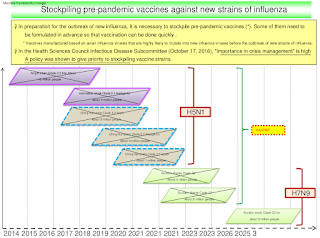
Japan MOH To Stockpile 10 Million Doses of H5N1 Vaccine


Credit Japan MOH 


#17,475

Although there are no guarantees that avian H5N1 will spark the next pandemic, its recent global surge and its increasing ability to spillover into mammalian wildlife make it a credible threat.  Of course, H5N1 has loomed large before - only to recede - and that could happen again. 

Over the past 20 years we've seen many nations - including the United States - stockpile relatively small quantities of H5N1 pre-pandemic vaccines.  

Since these vaccines have a limited shelf life, and these viruses continue to evolve, it is impractical to stockpile large quantities. As new clades appear the WHO & CDC Work to Develop Candidate H5N1 Vaccinesand to date more than three dozen H5 CVVs have been selected by WHO for development.

Most of those viruses are now extinct, making this an expensive proposition, but having an already approved CVV can save weeks or even months of valuable time if mass production and distribution of a vaccine are ever required.

Since manufacturing any useful amount of vaccine - even assuming a matching CVV is already available - would take months, some countries are once again considering stockpiling a limited quantity of updated H5N1 vaccine.  

Late last week Japan's MOH announced their intention to produce and stockpile enough to vaccinate 10 million people (about 8% of their population). 

The MOH outlined their rationale for this more in the following (translated) statement:

HPAIV (H5N1) has not acquired the ability to efficiently transmit from person to person, and is unlikely to lead to a pandemic in humans at this time. Since many cases of infection with HPAIV (H5N1) have been reported, the chances of human exposure to HPAIV (H5N1) are increasing, and there is a high possibility that sporadic cases of human infection will continue to be reported.

As the infection spreads in animals, amino acid mutations accumulate and the infectivity to humans becomes higher.

We cannot deny the possibility that such viruses will emerge in the future.

Although the two documents released by the MOH (PDF 1 and PDF 2) are in Japanese, I've machine translated the summary below.

Summary image of the above correspondence

Pre-pandemic vaccine strains to be stockpiled for up to 10 million people were selected from Clade 2.3.4.4b, which is widely spread and has been observed in mammals, among the H5 subtypes that have been prevalent in recent years.

Of these, in view of the vaccine production schedule, we will select vaccine strains owned by the National Institute of Infectious Diseases. On top of that, from the viewpoint of antigenic similarity with the prevalent virus strain, this year A/Astrakhan/3212/2020 (IDCDC-RG71A) will be stockpile

Regarding the selection of vaccine strains for FY2024 and beyond, we will promptly consider the latest findings, including the possibility of manufacturing by companies. In addition, based on the recent research and development of vaccines against the new coronavirus infection, we will reconsider the stockpiling policy, including future research.

The gamble being that since a fully evolved pandemic strain has not emerged, there are no guarantees the currently selected CVV will be good match.  As a result, next year Japan will re-evaluate the situation and possibly select a different CVV for future manufacturing. 

Since we've seen difficulties in producing bulk H5N1 vaccines in the past, particularly in egg-based production facilities (see Manufacturing Pandemic Flu Vaccines: Easier Said Than Done), smaller runs (without a time imperative) could help iron out manufacturing problems. 

While H5N1 has the potential to produce a deadlier pandemic than COVID, the claims on social media that it kills `50% of those who are infected' are probably overblown.  At worst, it kills 50% of those sick enough to be hospitalized, an important distinction that I go into at some length in Revisiting the H5N1 CFR (Case Fatality Rate) Debate.  

Fortunately, we have several influenza antivirals (oseltamivir, oral baloxavir, inhaled zanamivir, or intravenous peramivir) that are expected to significantly reduce morbidity and mortality from H5N1.

But having a sufficient quantity of an effective and well-tolerated vaccine would be our best protection against an H5 avian influenza.  And if we hope to have that, we need to be aggressively working towards that before a pandemic takes off. 

Sunday, May 28, 2023

CDC Update: Rapid Assessment Of COVID Outbreak At 2023 EIS Conference


#17,474

Just over a month ago (Apr 24-27th) the CDC held a large (virtual and in-person) 2023 Epidemic Intelligence Service (EIS) Conference in Atlanta, GA which was attended by roughly 1800 individuals (mostly EIS officers, Laboratory Leadership Service (LLS) fellows, and other trainees).

A few days after the conference had ended it was widely reported that the CDC was investigating `several dozen' COVID infections reported by attendees.

Given the irony of the situation - a superspreader event among a conference of disease detectives - it received a lot of press. 

Late Friday the CDC published the following media statement which expands the number of people infected at this conference (based on a voluntary survey) to over 180 people (roughly 1 in 8).

I'll have a brief postscript after the break. 

Update on Rapid Assessment of SARS-CoV-2 Transmission at 2023 EIS Conference
 
Media Statement

For Immediate Release: Friday, May 26, 2023
Contact: Media Relations
(404) 639-3286

CDC’s 2023 Epidemic Intelligence Service (EIS) Conference brought together approximately 1,800 in-person and 400 virtual attendees during April 24–27, 2023, in a hotel conference facility in Atlanta, Georgia. This annual, multi-purpose event consists of both traditional scientific presentations, as well as one-on-one and small-group recruitment events for incoming EIS officers and staff from CDC and state and local health departments.

On Thursday, April 27, several in-person attendees notified conference organizers that they had tested positive for SARS-CoV-2, the virus that causes COVID-19. That same day, EIS leaders made an announcement at the conference about potential cases and took action to reduce further spread connected with the conference and related events. After the conference ended, CDC received additional reports of attendees testing positive for SARS-CoV-2 and worked with the Georgia Department of Public Health to initiate a rapid assessment. The goals were to learn more about transmission that occurred and add to our understanding as we transition to the next phase of COVID-19 surveillance and response.

The rapid assessment team surveyed in-person attendees from May 5–12 about their COVID-19 testing results and healthcare-seeking behavior. Among 1,443 survey respondents (over 80% of the in-person attendees):
  • 181 (13%) respondents reported testing positive for SARS-CoV-2
  • Of those who reported testing positive, 52% reported no known prior COVID-19 infection
  • 1,435 (99.4%) of respondents reported at least one COVID-19 vaccine dose
  • 49 (27%) of the respondents who tested positive received antiviral medications
  • 70% of respondents reported not wearing a mask; the event coincided with a period of low COVID-19 Community Levels, where masking is not recommended in CDC guidance
  • None were hospitalized
These findings underline the importance of vaccination for protecting individuals against severe illness and death related to COVID-19. Nearly every respondent reported receiving at least one COVID-19 vaccine dose, and none of the 181 people who reported testing positive were hospitalized.

Not surprisingly, there was an increased chance of infection the longer participants attended the conference and the more events they participated in. Specifically, respondents who tested positive reported attending the conference on average for all four days, and the risk of infection was 70% greater among those who attended for three or more days versus those who attended for two or fewer days.

Again, the findings of this rapid assessment support previous data that demonstrate that COVID-19 vaccines, antiviral treatments, and immunity from previous infection continue to provide people with protection against serious illness. CDC continues to recommend that everyone ages six months and older stay up to date with all COVID-19 vaccines, including receiving an updated vaccine. COVID-19 vaccines are effective at protecting people from getting seriously ill, being hospitalized, and dying.

          (Continue . . . )

This is a reminder that even though the COVID crisis has been declared over, the risk of infection - particularly when attending large public venues - remains.  Given the continued evolution and spread of COVID variants, this is unlikely to be the last such outbreak. 

While this is the first detailed statement we've seen, hopefully someone is working on a more thorough analysis of this event, as we still lack a lot of details, including:

  • The age demographics of attendees (since this was a training conference, I suspect it will skew towards younger adults, but I'm guessing).
  • 70% of attendees reportedly did not wear masks, but doesn't tell us how many of those who were masked were infected
  • What percentage of attendees actually tested themselves (and how often) after the conference?  
  • A better breakdown of vaccination status than (99.4%) reporting at least one COVID-19 vaccine dose
  • And frankly, an 80% survey response rate from a conference of disease detectives is a bit underwhelming.
While I fully support the idea that COVID vaccines likely reduced the severity of these infections - at least in what was likely a younger, and relatively healthy cohort - I personally believe that masking remains an appropriate countermeasure, particularly in a crowded venue like this. 

A quaint notion that was apparently still shared by 30% of the attendees of this conference. 

Saturday, May 27, 2023

USDA Update On Mammalian H5 Infections In US & USFWS Condor Update


 #17,473

We last looked in at the USDA's list of mammalian wildlife infections with H5N1 three weeks ago when the number sat at 176 (excluding recent reports in domestic cats here, and here), with Red Foxes and skunks make up more than 60% of the detected infections. 

Since the majority of wildlife detections of H5N1 have come from peridomestic animals in urban or suburban settings, it makes sense to protect your cat and dog when they are outside. The CDC has some advice on keeping your pets, and yourself, safe from the virus.

Why nearly all of the reports to date have come from northern states isn't clear, although it may come down to differences in climate and terrain (swamps vs. forests vs. deserts), and the fact that some states may be looking harder than others.

Mammals often die in remote and difficult to access places where their carcasses are quickly scavenged by other animals, meaning most never discovered or tested.  Those that are reported likely only represent a small fraction of actual infections. 

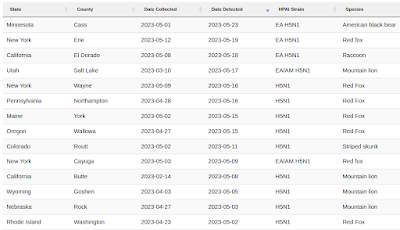
This week the USDA updated their list of mammals infected with H5 avian influenza, bringing the total to 191 (not including the domestic cats mentioned above).  The list below only reflects positives reported since May 1st.


Although the increased number of spillovers of HPAI to mammalian hosts is concerning, the `saving grace' has been that we've seen very little evidence of mammal-to-mammal transmission of the virus (possible exceptions being farmed mink and marine mammals)

This is considered important - particularly with zoonotic diseases like avian flu - because long chains of infection can lead to adaptive mutations, which can make the virus even better suited for a specific host. 

But since much of what goes on in the wild is hidden from view, just because we aren't seeing it doesn't mean it isn't happening.  Scavengers - like feral cats, foxes, vultures, and raccoons - may be creating unseen chains of infection in the wild. 

Among those scavenger species who are also at risk from the virus are critically endangered California Condors, whose population had declined to just 23 known survivors by the early 1980s.  While it has made a dramatic recovery since then (roughly 500 either captive or in the wild), their survival is not guaranteed. 

Over the past 6 weeks we've been following H5N1's impact on this endangered species (see here and here), including an investigation into the feasibility of vaccinating them against the H5 virus.  The vaccine is currently being trialed in vultures, and if that is successful, they will try in on captive Condors. 

The US Fish and Wildlife Service has posted an update on the impact of H5N1 on California Condors, and the good news is, no new deaths have been reported since our last update.

California Condor HPAI Response Update - May 26, 2023
May 26, 2023

The U.S. Fish and Wildlife Service’s Incident Command Team, in collaboration with partner agencies, continues to respond to Highly Pathogenic Avian Influenza (HPAI), also known as bird flu, in the Southwest flock of California condors.

Partners and stakeholders have initiated vaccine trials and are working to improve the ability of flock managers in swiftly responding to potential future HPAI outbreaks through management of the flocks, and facility and infrastructure improvements. The Incident Command will provide updates on the incident in this format on a routine basis until further notice.

Incident Update


On May 16, HPAI vaccination trials began with 20 vultures and eight controls as surrogates for the condor to determine safety and effectiveness of the vaccine. All vultures that received the vaccine appear to be in good health with no vaccine site reactions. A blood draw was conducted this morning, May 26, as part of a preliminary check and will be analyzed at the USDA’s Southeast Poultry Research Center for HPAI antibodies to evaluate immune response. It is too early to detect effectiveness of the vaccine, but we hope to observe some level of immune response.

Depending on the results of this trial, the second step will be to implement the trial on 25 captive California condors. Trial design was collaboratively developed by the Service, USDA APHIS and U.S. Geological Survey.

Status of HPAI in the Southwest Flock as of May 26, 2023
Changes are indicated in bold in our reporting below.
Mortality:Total mortality: 21 condors
Deceased and recoverable: 17 condors
Deceased and unrecoverable: four condors
Breeding pairs impacted:

Eight breeding pairs (13 individuals deceased)
Rescues:Number of condors in care: five condors
HPAI Results:Total condors tested: 21 condors
Confirmed HPAI positive: 19 condors (17 deceased, two in care at Liberty Wildlife)
Confirmed HPAI negative: two condors in care at Liberty Wildlife
Vaccination trials:Birds vaccinated: 20 vultures

Field Operations

Field monitoring continues to ensure the Arizona-Utah flock remains healthy.

Rescued condors 757, 982, 1061 and 1108 are in care at Liberty Wildlife and partners will determine when it safe to release them back in the wild.

Flock managers across the range of the California condor are adapting strategies to avoid congregation of birds through discontinuation of communal feeding sites and watering areas.
          (Continue . . . )


MMWR: Estimates of Bivalent mRNA Vaccine Durability in Preventing COVID-19–Associated Hospitalization and Critical Illness


COVID Vaccine Uptake - Credit CDC

#17,472

Between vaccine fatigue, the emergence of a less virulent Omicron variant, and the constant anti-vaccine rhetoric on social media, the uptake of the new bivalent COVID vaccine introduced last fall has been disappointing.  

Only about 17% of Americans have embraced the shot, although among those 65 or older, that number jumps to 42%.

Admittedly, the shot struggles to prevent infections, particularly since the emergence late last year of XBB (recombinant) variants, however evidence continues to suggest it can still reduce the risks for severe illness, hospitalization, and death. 

About a month ago, the CDC endorsed the FDA's recommendation to authorize a second bivalent booster shot for specific groups (primarily those > 65 and immunocompromised patients), and a streamlining of the booster process for practically everyone else (see COCA Call: Updated Recommendations for COVID-19 Vaccine Use).

While there are plans to roll out an XBB-specific vaccine in the fall (see WHO Recommends Switching To A Monovalent XBB based COVID Vaccine), until then the bivalent vaccine is our best pharmacological defense against the virus.  

This week, the CDC's MMWR carries a detailed report on the durability of the vaccine's protection over the first 6 months. 

While its ability (in non-immunocompromised individuals) to prevent hospitalizations waned from 62% to 24% after 4 months, it was more effective in preventing deaths. This suggests that those who received a bivalent booster last fall are at or near the end of its protection. 

The link, summary, and some excerpts from the report follow.  I'll have a brief postscript after the break. 

Estimates of Bivalent mRNA Vaccine Durability in Preventing COVID-19–Associated Hospitalization and Critical Illness Among Adults with and Without Immunocompromising Conditions — VISION Network, September 2022–April 2023

Weekly / May 26, 2023 / 72(21);579–588

Ruth Link-Gelles, PhD1; Zachary A. Weber, PhD2; Sarah E. Reese, PhD2; Amanda B. Payne, PhD1; Manjusha Gaglani, MBBS3,4; Katherine Adams, MPH5; Anupam B. Kharbanda, MD6; Karthik Natarajan, PhD7,8; Malini B. DeSilva, MD9; Kristin Dascomb, MD, PhD10; Stephanie A. Irving, MHS11; Nicola P. Klein, MD, PhD12; Shaun J. Grannis, MD13,14; Toan C. Ong, PhD15; Peter J. Embi, MD16; Margaret M. Dunne, MSc2; Monica Dickerson5; Charlene McEvoy, MD9; Julie Arndorfer, MPH10; Allison L. Naleway, PhD11; Kristin Goddard, MPH12; Brian E. Dixon, PhD13,17; Eric P. Griggs, MPH1; John Hansen, MPH12; Nimish Valvi, DrPH13; Morgan Najdowski, MPH1; Julius Timbol, MS12; Colin Rogerson, MD13; Bruce Fireman12; William F. Fadel, PhD13,17; Palak Patel, MBBS5; Caitlin S. Ray, MPH5; Ryan Wiegand, PhD1; Sarah Ball, ScD2; Mark W. Tenforde, MD, PhD5


Summary

What is already known about this topic?

Bivalent mRNA COVID-19 vaccines help provide protection against medically attended COVID-19–associated illness. However, the durability of this protection is uncertain.

What is added by this report?


Among adults aged ≥18 years without immunocompromising conditions, bivalent booster vaccine effectiveness (VE) against COVID-19–associated hospitalization declined from 62% at 7–59 days postvaccination to 24% at 120–179 days compared with VE among unvaccinated adults. Among immunocompromised adults, lower bivalent booster VE was observed. However, bivalent booster VE was sustained against critical COVID-19–associated outcomes, including intensive care unit admission or death.

What are the implications for public health practice?

Adults should stay up to date with recommended COVID-19 vaccines. Optional additional bivalent vaccine doses are available for older adults and persons with immunocompromising conditions.

          (SNIP)


As of May 10, 2023, only one in five (20.5%) U.S. adults had received a bivalent booster dose.*** Among U.S. adults who previously received a monovalent vaccine but had yet to receive a bivalent mRNA booster, most received their last vaccine dose >1 year ago.††† Results of this analysis indicate that these adults might have relatively little remaining protection against COVID-19–associated hospitalization compared with unvaccinated persons, although might have more remaining protection against critical illness.

On April 19, 2023, CDC amended recommendations to permit adults aged ≥65 years and those with immunocompromising conditions to receive ≥1 additional bivalent dose. In this analysis, waning VE patterns were the same in younger and older adults; however, rates of COVID-19–associated hospitalization and death remain substantially higher among older adults, which suggests that an additional dose might confer additional benefit. In addition, although this analysis did not demonstrate clear evidence of waning VE in immunocompromised adults, overall VE among immunocompromised adults was lower than among those without immunocompromising conditions. Like older adults, persons with immunocompromising conditions remain at higher risk for COVID-19 hospitalization and death and might benefit from additional bivalent doses, although this will require future evaluation.

The findings in this study are subject to at least six limitations. 
    • First, previous SARS-CoV-2 infection was not accounted for in this analysis. According to a national seroprevalence survey, a large proportion of the population has now experienced SARS-CoV-2 infection; infection-induced immunity decreases the risk for future medically attended COVID-19 illness and might affect observed VE.§§§ The findings of this analysis should therefore be interpreted in the context of this underlying immunity as the incremental benefit provided by COVID-19 vaccination. 
    • Second, although all case-patients included in the analysis had COVID-19–like illness and a positive SARS-CoV-2 test result at the time of the included hospitalization, some might have had relatively mild COVID-19 disease and been hospitalized because of reasons unrelated to COVID-19, which could lower measured VE. 
    • Third, although models adjusted for relevant confounders, such as age and calendar time, residual confounding is possible, including by behavioral differences, history of previous SARS-CoV-2 infection, and use of COVID-19 treatments such as nirmatrelvir-ritonavir (Paxlovid). 
    • Fourth, differences in sublineage-specific VE could not be compared because of limited statistical power. 
    • Fifth, this analysis did not compare product-specific bivalent booster VE estimates. 
    • Finally, because these data are from seven states, the patients in this analysis might not be representative of the entire U.S. population.
In this study of durability of bivalent VE, bivalent doses helped provide protection against COVID-19–associated hospitalization and critical disease. Although waning of protection was evident in some groups, VE was more sustained for critical illness, indicating the vaccines are continuing to help protect adults from the most severe COVID-19 outcomes. All adults should stay up to date with recommended COVID-19 vaccines.


While North America and much of Europe appear to be enjoying a relative lull in COVID activity the same cannot be said for China, parts of Asia, Africa, and the Western Pacific (see WHO COVID Weekly Epidemiological Report).  


New XBB variants continue to emerge, and there are no guarantees how long our current quiescent period will last.  Which is why - even though it probably isn't very effective in preventing infection with newer XBB variants - I've elected to get the second booster. 

Even a little protection beats none at all. Particularly for those of us on the wrong side of 65. 

Friday, May 26, 2023

MMWR: Five Recent Reports On Mpox Outbreaks & Vaccine Effectiveness


#17,471

Sixteen days ago the city of Chicago issued a HAN (Health Alert Network) alert on a cluster of recent Mpox cases (n=13), a large percentage (69%) which were fully vaccinated with the JYNNEOS vaccine. While this vaccine was never expected to be 100% protective, this outbreak has raised concerns over a new surge in cases this summer. 

Six days later the CDC released a nationwide HAN Update (see CDC HAN: Potential Risk for New Mpox Cases), and followed up with a live webinar 3 days later (see COCA Call : Mpox Update on Testing, Treatment, and Vaccination).

Over the past week the CDC has also published 5 MMWR reports (3 on May 19th and 2 yesterday) on the potential for additional Mpox outbreaks, and the apparent effectiveness of the vaccine. 

You'll find links and summaries from these reports below, but you'll want to follow the links to read them in their entirety. 

I'll have a brief postscript after the break. 

The CDC Domestic Mpox Response — United States, 2022–2023

Weekly / May 19, 2023 / 72(20);547–552
 
Jennifer H. McQuiston, DVM1; Christopher R. Braden, MD2; Michael D. Bowen, PhD1; Andrea M. McCollum, PhD1; Robert McDonald, MD3; Neal Carnes, PhD4; Rosalind J. Carter, PhD5; Athalia Christie, DrPH6; Jeffrey B. Doty, MS1; Sascha Ellington, PhD7; S. Nicole Fehrenbach, MPP8; Adi V. Gundlapalli, MD, PhD9; Christina L. Hutson, PhD1; Rachel E. Kachur, MPH3; Aaron Maitland, PhD10; Christine M. Pearson1; Joseph Prejean, PhD4; Laura A. S. Quilter, MD3; Agam K. Rao, MD1; Yon Yu, PharmD8; Jonathan Mermin, MD11 

Summary

What is already known about this topic?

After being detected in May 2022, U.S. monkeypox (mpox) cases increased rapidly, peaking in August. Infection was primarily spread by sexual contact among gay, bisexual, and other men who have sex with men.

What is added by this report?


Rapid adaptation of smallpox preparedness systems and tools, and prioritized communication expertise from HIV prevention programs, were leveraged to reach communities at risk. In 1 year, more than 30,000 cases were reported and >1 million JYNNEOS vaccine doses were administered. Black and Hispanic persons represented 33% and 31% of cases, respectively; 87% of 42 fatal cases occurred in Black persons.

What are the implications for public health practice?

The U.S. risk for future mpox outbreaks remains. Ongoing surveillance, vaccination, and communication are important prevention tools, especially for Black and Hispanic persons in groups at risk.

          (Continue . . . ) 


Effectiveness of JYNNEOS Vaccine Against Diagnosed Mpox Infection — New York, 2022
Weekly / May 19, 2023 / 72(20);559–563

Eli S. Rosenberg, PhD1,2,3; Vajeera Dorabawila, PhD1; Rachel Hart-Malloy, PhD1,2,3; Bridget J. Anderson, PhD1; Wilson Miranda, MPH1; Travis O’Donnell1; Charles J. Gonzalez, MD1,3; Meaghan Abrego, MPH1; Charlotte DelBarba, MPH1; Cori J. Tice, MPH1; Claire McGarry, MPH1; Ethan C. Mitchell, MPH1; Michele Boulais, MPA1; Bryon Backenson, MS1,2; Michael Kharfen1; James McDonald, MD1; Ursula E. Bauer, PhD1  

Summary

What is already known about this topic?

The JYNNEOS vaccine was deployed in a national and state vaccination campaign during the 2022 monkeypox (mpox) outbreak. Postexposure prophylaxis and vaccination of persons at highest risk (primarily men who have sex with men) were prioritized. Evidence of vaccine effectiveness (VE) from controlled studies has been limited.

What is added by this report?

A comparison of men aged ≥18 years who received a diagnosis of mpox during July 24–October 31 in New York to controls with rectal gonorrhea or primary syphilis, based on systematically collected surveillance data, found adjusted combined 1-dose (received ≥14 days earlier) or 2-dose VE of 75.7%.

What are the implications for public health practice?


These findings support recommended 2-dose JYNNEOS vaccination consistent with CDC and New York State Department of Health guidance
.

          (Continue . . . ) 


Estimated Effectiveness of JYNNEOS Vaccine in Preventing Mpox: A Multijurisdictional Case-Control Study — United States, August 19, 2022–March 31, 2023

Weekly / May 19, 2023 / 72(20);553–558

Alexandra F. Dalton, PhD1,*; Alpha Oumar Diallo, PhD1,*; Anna N. Chard, PhD1; Danielle L. Moulia, MPH1; Nicholas P. Deputy, PhD1; Amy Fothergill, PhD1; Ian Kracalik, PhD1; Christopher W. Wegner, MPH2; Tiffanie M. Markus, PhD3; Preeti Pathela, DrPH4; William L. Still, MS5; Sam Hawkins, MPH6; Anil T. Mangla, PhD5; Nivedita Ravi, DVM7; Erin Licherdell, MPH8; Amber Britton, MPH9,10; Ruth Lynfield, MD11; Melissa Sutton, MD6; AmberJean P. Hansen, MPH12; Gabriela S. Betancourt, DrPH4; Jemma V. Rowlands, MPH13; Shua J. Chai, MD2,14; Rebecca Fisher, MPH15; Phoebe Danza, MPH15; Monica Farley, MD9,10; Jennifer Zipprich, PhD11; Gregory Prahl16; Karen A. Wendel, MD17; Linda Niccolai, PhD12; Jessica L. Castilho, MD18; Daniel C. Payne, PhD1; Amanda C. Cohn, MD1; Leora R. Feldstein, PhD1; CDC Multijurisdictional Mpox Case-Control Study Group


Summary

What is already known about this topic?

Real-world vaccine effectiveness (VE) estimates for JYNNEOS vaccine against monkeypox (mpox) are limited. To date, no VE estimates by route of administration or for immunocompromised persons have been published.

What is added by this report?

In this study, adjusted VE was 75% for 1 dose and 86% for 2 doses of JYNNEOS vaccine, indicating substantial protection against mpox, irrespective of route of administration or immunocompromise status.

What are the implications for public health practice?

Persons at high risk for mpox exposure should be vaccinated with the recommended 2-dose JYNNEOS series.

          (Continue . . .)

Yesterday (May 25th) the following two reports were published:

Urban and Rural Mpox Incidence Among Persons Aged 15–64 Years — United States, May 10–December 31, 2022

Weekly / May 26, 2023 / 72(21);574–578

Carla E. Zelaya, PhD1,*; Brandi P. Smith, PhD1,*; Aspen P. Riser, MPH1; Jaeyoung Hong, PhD1; Samantha Distler, MPH1; Siobhán O’Connor, MD1; Ermias Belay, MD1; Mohammad Shoeb, PhD1; Michelle A. Waltenburg, DVM1; Maria E. Negron, DVM, PhD1; Sascha Ellington, PhD1 

Summary

What is already known about this topic?

Monkeypox (mpox) has disproportionately affected gay, bisexual, and other men who have sex with men (MSM). Information on urbanicity of mpox cases during the 2022 outbreak is limited.

What is added by this report?

During May–December 2022, U.S. mpox incidence was 13.5 per 100,000 persons peaking in August. Among cisgender men and cisgender women, incidence in rural areas was 4% and 11% of incidence in large central urban areas, respectively. Incidence among Black or African American and Hispanic or Latino persons was higher than among White persons.

What are the implications for public health practice?


National mpox surveillance should be continued to ensure persons at risk for mpox get tested and treated. Prevention efforts should be focused on MSM in urban areas.

          (Continue . . .)


Potential for Recurrent Mpox Outbreaks Among Gay, Bisexual, and Other Men Who Have Sex with Men — United States, 2023

Weekly / May 26, 2023 / 72(21);568–573
 
Emily D. Pollock1; Patrick A. Clay1; Adrienne Keen2; Dustin W. Currie3; Rosalind J. Carter4; Laura A. S. Quilter1; Adi V. Gundlapalli5; Jonathan Mermin1; Ian H. Spicknall1  

Summary

What is already known about this topic?


Monkeypox (mpox) has disproportionately affected gay, bisexual, and other men who have sex with men (MSM); the percentage of MSM with immunity due to vaccination or infection varies among jurisdictions.

What is added by this report?

Mathematical modeling suggests that the risk for future outbreaks depends linearly on the level of immunity in the population at risk; cumulative incidence, on the other hand, has multiple thresholds. More than 592,000 MSM live in jurisdictions with risk for mpox recurrences capable of sustained transmission if a cluster of infectious cases were reintroduced.

What are the implications for public health practice?


Increasing vaccination coverage among MSM at risk
 and in jurisdictions with low immunity has the potential to reduce the risk for and potential size of future mpox outbreaks.

          (Continue . . .)


Although the WHO discontinued their PHEIC (Public Health Emergency of International Concern) status for Mpox just over two weeks ago, concerns over the future spread, and evolution, of this virus remain. 

Like all viruses, Monkeypox continues to evolve and diversify, as discussed in the 2014 EID Journal article Genomic Variability of Monkeypox Virus among Humans, Democratic Republic of the Congo, where the authors cautioned:

Small genetic changes could favor adaptation to a human host, and this potential is greatest for pathogens with moderate transmission rates (such as MPXV) (40). The ability to spread rapidly and efficiently from human to human could enhance spread by travelers to new regions.

And in a 2020 report, published by the Bulletin of the World Health Organization, researchers warned that our waning immunity to smallpox put society at greater risks of seeing Monkeypox epidemics (see WHO: Modelling Human-to-Human Transmission of Monkeypox).  

Last September The Lancet published a correspondence also warning of the dangers of failing to contain this virus:

Evolutionary consequences of delaying intervention for monkeypox

Philip L F Johnson, Carl T Bergstrom, Roland R Regoes, Ira M Longini, M Elizabeth Halloran, Rustom Antia
Published:September 21, 2022
DOI:https://doi.org/10.1016/S0140-6736(22)01789-5

While most of the public seems to view mpox as a `niche' or `lifestyle' disease - and unlikely to affect them - the longer the virus circulates, the more opportunities it will have to widen its base and possibly evolve into something worse. 

We underestimate its potential at our own peril. 

Thursday, May 25, 2023

NOAA Predicts a Near-Normal 2023 Atlantic Hurricane Season


#17,470


Six weeks ago, in El Niño & The CSU Initial Atlantic Hurricane Season Forecast, we looked at prospect for an El Niño setting up in the Pacific the summer, and early predictions for fewer Atlantic basin tropical storms for the 2023 season. 

While the warming of Pacific equatorial waters (El Niño) doesn't guarantee a quiet Hurricane season, statistically El Niño years have fewer storms form in the Atlantic, while more storms are produced in the Pacific. 

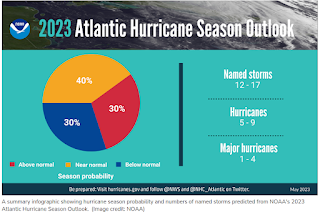
Today NOAA released their initial 2023 Atlantic Hurricane Season Outlook, and while it calls for slightly more activity that last April's CSU forecast (13 named storms, 6 hurricanes (2 major)) - after several years of intense activity - it is a refreshing return to a `near-normal' season.  

While El Niño's impacts are global, its impact on the Atlantic Hurricane season is described by NOAA as: Simply put, El Niño favors stronger hurricane activity in the central and eastern Pacific basins, and suppresses it in the Atlantic basin (Figure 1)

The usual caveats apply, since 1992 was an El Niño year, and it saw one of the most destructive hurricanes on record (Andrew) hit South Florida, during what was otherwise a lackluster hurricane season.  1969 was an active El Niño year, which saw CAT 5 hurricane Camille slam into the upper gulf coast.  

While I'm slightly heartened by these predictions, it just takes one bad hurricane to ruin your entire summer, so I will still be preparing the same as I do every year (see National Hurricane Preparedness Week 2023).

The link, and some excerpts, from today's press release follow.


NOAA predicts a near-normal 2023 Atlantic hurricane season

El Nino, above-average Atlantic Ocean temperatures set the stage

May 25, 2023

NOAA forecasters with the Climate Prediction Center, a division of the National Weather Service, predict near-normal hurricane activity in the Atlantic this year. NOAA’s outlook for the 2023 Atlantic hurricane season, which goes from June 1 to November 30, predicts a 40% chance of a near-normal season, a 30% chance of an above-normal season and a 30% chance of a below-normal season.

NOAA is forecasting a range of 12 to 17 total named storms (winds of 39 mph or higher). Of those, 5 to 9 could become hurricanes (winds of 74 mph or higher), including 1 to 4 major hurricanes (category 3, 4 or 5; with winds of 111 mph or higher). NOAA has a 70% confidence in these ranges.

(SNIP)


The upcoming Atlantic hurricane season is expected to be less active than recent years, due to competing factors — some that suppress storm development and some that fuel it — driving this year's overall forecast for a near-normal season.

After three hurricane seasons with La Nina present, NOAA scientists predict a high potential for El Nino to develop this summer, which can suppress Atlantic hurricane activity. El Nino’s potential influence on storm development could be offset by favorable conditions local to the tropical Atlantic Basin. Those conditions include the potential for an above-normal west African monsoon, which produces African easterly waves and seeds some of the stronger and longer-lived Atlantic storms, and warmer-than-normal sea surface temperatures in the tropical Atlantic Ocean and Caribbean Sea which creates more energy to fuel storm development. These factors are part of the longer term variability in Atlantic atmospheric and oceanic conditions that are conducive to hurricane development — known as the high-activity era for Atlantic hurricanes — which have been producing more active Atlantic hurricane seasons since 1995.

          (Continue  . . .)


While I'll be doing usual hurricane preparedness blogs - and I follow Mark Sudduth's Hurricane Track, and Mike's Weather page - your primary source of forecast information should always be the National Hurricane Center in Miami, Florida.

These are the real experts, and the only ones you should rely on to track and forecast the storm.If you are on Twitter, you should also follow @FEMA, @NHC_Atlantic, @NHC_Pacific and @ReadyGov, and of course take direction from your local Emergency Management Office.

For more Hurricane resources from NOAA, you'll want to follow these links.

HURRICANE SAFETY

ADDITIONAL RESOURCES

PLoS Med.: SARS-CoV-2 Transmission With and Without Mask Wearing or Air Cleaners in Schools in Switzerland


#17,469

Although the elderly were hit far harder by COVID than the young, thousands of infected children were hospitalized, and nearly 2000 kids (age<18) died in the U.S. alone. Children also served as potential conduits for the virus into the home, where older - often more vulnerable - house members were likely exposed. 

Hopefully the worst of COVID is behind us, but the next pandemic may not go quite as easy on children or adolescents.  

While the use of face masks in public is highly divisive for some people, we continue to see strong evidence that when properly and consistently used, they work to reduce the spread of respiratory diseases (full disclosure: I'm still wearing a mask in crowded indoor venues).  


Today we've a new study out of Switzerland, published in PLoS Medicine, that measured the amount of virus in the air in classrooms of 2 secondary schools over 7 week period during an early Omicron wave, comparing the viral load between no interventions, the wearing of masks, and the use of air cleaners.


Compensating for day-to-day changes, the authors state:

Analyses of environmental changes were adjusted for different ventilation, the number of students in class, school and weekday effects. We modeled disease transmission using a semi-mechanistic Bayesian hierarchical model, adjusting for absent students and community transmission.

What they discovered was that the wearing of masks indoors was associated with a dramatic decrease (69%) in average bioaerosol levels while the use of air cleaners only produced a 39% decrease. 

I've only reproduced the Abstract and author's summary below, so follow the link to read it in its entirety.  I'll have a brief postscript after the break. 

SARS-CoV-2 transmission with and without mask wearing or air cleaners in schools in Switzerland: A modeling study of epidemiological, environmental, and molecular data

Nicolas Banholzer , Kathrin Zürcher , Philipp Jent, Pascal Bittel, Lavinia Furrer, Matthias Egger, Tina Hascher, Lukas Fenner

Published: May 18, 2023

Abstract

Background

Growing evidence suggests an important contribution of airborne transmission to the overall spread of Severe Acute Respiratory Syndrome Coronavirus 2 (SARS-CoV-2), in particular via smaller particles called aerosols. However, the contribution of school children to SARS-CoV-2 transmission remains uncertain. The aim of this study was to assess transmission of airborne respiratory infections and the association with infection control measures in schools using a multiple-measurement approach.

Methods and findings

We collected epidemiological (cases of Coronavirus Disease 2019 (COVID-19)), environmental (CO2, aerosol and particle concentrations), and molecular data (bioaerosol and saliva samples) over 7 weeks from January to March 2022 (Omicron wave) in 2 secondary schools (n = 90, average 18 students/classroom) in Switzerland. We analyzed changes in environmental and molecular characteristics between different study conditions (no intervention, mask wearing, air cleaners). Analyses of environmental changes were adjusted for different ventilation, the number of students in class, school and weekday effects. We modeled disease transmission using a semi-mechanistic Bayesian hierarchical model, adjusting for absent students and community transmission.

Molecular analysis of saliva (21/262 positive) and airborne samples (10/130) detected SARS-CoV-2 throughout the study (weekly average viral concentration 0.6 copies/L) and occasionally other respiratory viruses. Overall daily average CO2 levels were 1,064 ± 232 ppm (± standard deviation). Daily average aerosol number concentrations without interventions were 177 ± 109 1/cm3 and decreased by 69% (95% CrI 42% to 86%) with mask mandates and 39% (95% CrI 4% to 69%) with air cleaners.
Compared to no intervention, the transmission risk was lower with mask mandates (adjusted odds ratio 0.19, 95% CrI 0.09 to 0.38) and comparable with air cleaners (1.00, 95% CrI 0.15 to 6.51).

Study limitations include possible confounding by period as the number of susceptible students declined over time. Furthermore, airborne detection of pathogens document exposure but not necessarily transmission.

Conclusions

Molecular detection of airborne and human SARS-CoV-2 indicated sustained transmission in schools. Mask mandates were associated with greater reductions in aerosol concentrations than air cleaners and with lower transmission. Our multiple-measurement approach could be used to continuously monitor transmission risk of respiratory infections and the effectiveness of infection control measures in schools and other congregate settings.

Author summary

Why was this study done?
  • Public health authorities worldwide closed businesses and schools during the Coronavirus Disease 2019 (COVID-19) pandemic.
  • The closure of schools has been most intensely debated.
  • The contribution of school children to Severe Acute Respiratory Syndrome Coronavirus 2 (SARS-CoV-2) transmission and the role of school rooms remain unknown.
What did the researchers do and find?
  • We used molecular, environmental, and epidemiological data to understand the transmission of the virus causing COVID-19 (SARS-CoV-2) in 2 secondary schools (90 students) in Switzerland in the presence and absence of mask wearing and air cleaners.
  • We detected SARS-CoV-2 in aerosols in the air and saliva samples from the students throughout the study.
  • Aerosol and particle concentrations were on average 70% lower with mask mandates and 40% lower with air cleaners.
  • The transmission model estimated that between 2 and 19 infections could be avoided during the study period with mask wearing.
What do these findings mean?
  • Molecular analyses indicated sustained airborne SARS-CoV-2 transmission.
  • Mask wearing may be more effective than air cleaners in reducing aerosol concentrations and transmission of SARS-CoV-2.
  • This approach can be used to assess transmission dynamics and the effectiveness of infection control measures in reducing transmission of respiratory infections during future epidemics.

         (Continue . . . )


Despite millions of COVID deaths, SARS-CoV-2 was not the worst that nature could have thrown at us. Its overall CFR (Case Fatality Rate) was about 1%, and was mostly concentrated among the elderly.

A 1918-like flu pandemic might have double or triple that fatality rate, and skew towards a younger demographic. An H5 or H7 avian flu pandemic, or MERS-CoV, or Virus X could conceivably be even worse. 

Studies like this one continue to show the value of basic NPIs (Non-pharmaceutical Interventions) - like face masks (and to a lesser extent, air filtration) - which can not only reduce infection risks, they can help society remain open and functioning as much as possible during a public health crisis.