Sunday, May 31, 2026

QJM: Avian Influenza in Humans: Virology, Transmission, and Clinical Priorities


Credit WHO

#19,184

While there are no signs that avian influenza is spreading in an efficient or sustained manner between humans, there are concerns that some spillover infections are going unrecognized, and each instance provides with virus with another opportunity to adapt to a human host.

Retrospective antibody testing has shown that some infections are either mild, or subclinical (see JAMA Open: Asymptomatic Human Infections With Avian Influenza A(H5N1) Virus Confirmed by Molecular and Serologic Testing).

Although HPAI H5N1 (clade 2.3.4.4b) is currently viewed as the most worrisome avian flu virus, there are many others, including other H5 subclades (2.3.2.1c or 2.3.2.1a), other H5Nx subtypes, H7 viruses, H9N2, H3N8, and H10Nx

We've also seen reports of atypical presentation (both mild and severe) with avian influenza, along with difficulties in testing some patients, even in a modern hospital setting.

Because of this, we've seen many instances where patients have been hospitalized for days or even weeks before their avian flu infection was finally confirmed.  A few examples:
  • Last April, in Eurosurveillance, we looked at an imported fever/cough case in Italy who initially tested negative for influenza A/B, RSV & COVID, but after a more invasive BAL (Bronchoalveolar lavage), was identified as having H9N2 on the 6th day of his hospitalization. 
While avian flu normally presents as a respiratory infection, we've also seen cases where the symptoms were primarily gastrointestinal, neurological, or subclinical. 

In April of 2025 we saw a preliminary report on a neuroinvasive infection in an 8-y.o. girl (see Vietnam: Ho Chi Minh DOH Reports A Rare H5N1 Encephalitis Case In a Child). While her throat and nose swabs tested negative for influenza A, H5N1 was detected in the patient's cerebrospinal fluid.
As noted by infectious experts, this is a rare case in which the A/H5N1 avian influenza virus damages the central nervous system and does not attack the respiratory tract.
All of which brings us to a narrative review - published this week in the QJM - which argues that avian flu is no longer just a `poultry exposure risk', as its many variants continue to expand both their geographic and (avian & mammalian) host ranges around the globe. 

The opportunities for spillover into humans have increased markedly over the past few years, which makes its important for clinicians to raise their index of suspicion - particularly during times of known outbreaks - even when dealing with atypical presentations or negative test results. 

While this review is `avian flu specific', much of it applies to swine and other novel flu viruses as well. Due to its length, and technical nature, I've only posted some excerpts. Follow the link to read it in its entirety. 

Avian Influenza in Humans: Virology, Transmission, and Clinical Priorities
Nitin Gupta , Anna Smielewska , Jan Felix Drexler , Casandra Bulescu , Marta Mora-Rillo , Aleksandra Barac , Pikka Jokelainen , François-Xavier Lescure , Martin P Grobusch , Sotirios Tsiodras ... Show more
QJM: An International Journal of Medicine, hcag138, https://doi.org/10.1093/qjmed/hcag138
Published:29 May 2026 Article history


PDF
 
Abstract

Avian influenza continues to evolve as a zoonotic threat with important implications for clinical practice and global health preparedness. Sustained circulation in wild birds, repeated spillover into poultry, and an increasing number of infections across diverse mammalian hosts have reshaped exposure pathways and broadened the risk landscape for human infection. For clinicians, this evolving ecology translates into atypical presentations and increased diagnostic uncertainty. Recent global activity has been characterised by widespread animal outbreaks and the emergence of new transmission interfaces, including occupational exposures and livestock-associated events. Human infections remain largely zoonotic and geographically heterogeneous, with patterns influenced by surveillance intensity, exposure context, and healthcare access.
We synthesise current evidence on the virology, transmission, global epidemiology, clinical manifestations, diagnosis, treatment, and prevention of avian influenza in humans. We highlight evolving mammalian adaptation and changing risk interfaces that complicate risk assessment. Improved clinician awareness, early diagnosis, and integrated One Health surveillance remain central to strengthening preparedness for future influenza threats.
(SNIP)

Clinical Presentation and Diagnosis of Avian Influenza in Humans

Human infection with avian influenza viruses spans a broad clinical spectrum, ranging from asymptomatic infection to severe, rapidly progressive multisystem disease (Table 1) [2,56]. Asymptomatic or subclinical infection has increasingly been recognised through serosurveys and occupational surveillance programmes, indicating that mild infections are likely underdetected outside targeted screening settings [57,58]. 

In a serosurvey of bovine veterinary practitioners in the United States during the 2024 H5 outbreak in dairy cattle, antibodies indicating recent infection were detected in 3 of 150 participants (2%), none of whom reported respiratory or influenza-like symptoms [58]. Similar findings from studies among poultry workers have demonstrated measurable seropositivity in individuals without recognised illness [57]. 

These observations indicate that reliance on clinically apparent cases may underestimate the true burden of zoonotic infections and lead to overestimation of case fatality rates based solely on detected severe cases. 

(SNIP)

Neurological complications, including encephalopathy, encephalitis, seizures, convulsions, and altered consciousness, have been reported in severe H5N1 infection and may occasionally dominate the clinical picture, even in the absence of prominent respiratory disease [69,70].

Human case reports describe acute encephalitis with detectable H5N1 RNA in cerebrospinal fluid, including a child with minimal respiratory symptoms who developed encephalitis complicated by obstructive hydrocephalus, supporting direct central nervous system involvement [71]. Other reported manifestations include diffuse encephalitis, coma, and rapidly progressive neurological deterioration in the setting of severe systemic infection.

Neuropathological and postmortem studies have demonstrated viral antigen and RNA in neurons and glial cells across multiple brain regions, supporting direct neuroinvasion rather than solely secondary inflammatory injury [69]. Experimental studies in ferrets further support this neurotropic potential, showing that H5N1 can invade the brain, often via the olfactory pathway, and may be associated with encephalitis, vasculitis, hemorrhagic lesions, and even subclinical but persistent brain injury [72].

       (SNIP) 

Conclusion

Avian influenza is ecologically entrenched, globally mobile, and increasingly multi-host. The expansion of H5Nx viruses into previously unafflicted regions, diverse mammalian species, combined with persistent circulation in wild birds and poultry, underscores that the conditions for emergence are continuously present. Apparent epidemiological lulls may reflect surveillance artefacts rather than reduced risk. 

In a world where birds migrate, viruses reassort, and agricultural systems are intensified, preparedness, not prediction, remains the most reliable defence. Strengthening One Health surveillance, ensuring rapid clinical recognition, and maintaining flexible medical countermeasures are essential to prevent avian influenza from becoming the next global pandemic. For clinicians worldwide, recognising avian influenza as an evolving zoonotic interface rather than a rare exotic infection will be central to early detection and response.

        (Continue . . . )


Friday, May 29, 2026

California: LA County HAN (Health Alert Network) Advisory on Upcoming World Cup

Credit Wikipedia

#19,183

As we discussed at some length last January (see Public Health Ontario: Hazard Identification and Risk Assessment (HIRA) For the FIFA World Cup 2026 Games in Toronto), this summer 16 cities across 3 North American countries (Canada, Mexico, U.S) will host the 2026 world cup, with over 5 million fans expected to travel to the various venues.

As with all mass gathering events (see Potential Impact of Hajj 2025 & Other Mass Gathering Events On Public Health) there are always public health concerns. 

While some of the more exotic diseases (avian flu, MERS-CoV, Ebola, etc.)  are often the first threats that come to mind, most infectious illnesses acquired during these mass gathering/migration events are far more common; seasonal flu, COVID,  pneumonia, measles, meningococcal disease, mpox, norovirus, and vector borne infections (Zika, CHKV, Dengue, Malaria, Yellow Fever, etc.) (see CDC's Traveler's Health Saudi Arabia).

Not all public health threats will be from infectious diseases; as increased heat-related illnesses, accidents, substance use, and overdoses are also often associated with these types of events. 

Accordingly, this week the LA County Department of Public Health released the following HAN Advisory for health care providers on the upcoming World Cup festivities. 


Similar advisories will no doubt be issued by other World Cup venues, as local  hospitals, EMS units, and public health agencies gear up to provide essential services during these events. 

Taiwan Amends Travel Restrictions Due to Ebola Threat


International Air flights - Credit Wikipedia

#19,182

Two days ago, in ECDC Ebola Update & Individual Country Responses From Canada, U.S. & Taiwan, we looked at recently imposed travel restrictions and protocols due to the central African Ebola outbreak here in the U.S., in Canada, and in Taiwan. 

Although the there are long-standing international agreements not to restrict travel and trade during disease outbreaks (see 2005 IHR agreement), as Tip O'Neill famously noted; `. . . all politics is local'. 

We saw this adage in action during the opening days of COVID, when much of the advice contained in the WHO's 2019 91-page Influenza NPI guidance document was quickly abandoned by member nations; particularly their recommendations against border closures and travel restrictions

High-minded ideals (even when backed by science) hold little sway when public officials are forced explain to their constituents why they didn't even try to prevent the entry of a pandemic or epidemic virus.  

Citing similar moves by both Canada and the United States, today Taiwan's government has amended their previously announced policy, and have suspended the issuance of entry visas from the DRC and Uganda (with 4 exceptions) for the next 90 days. 

While not a huge story in and of itself, this is a reminder of how fluid the Ebola situation is - how concerned governments really are -  and how quickly policies may be amended or changed. 

As we discussed two days ago, there is no `one-size-fits-all' solution to the Ebola threat, and so we are likely to see a wide range of responses, with varying degrees of success.  

Stay tuned.

The full translated announcement follows.

In response to the escalating Ebola outbreak, starting from 00:00 on June 2, 2026, entry into the Democratic Republic of Congo and Uganda will be suspended for 90 days, except for four categories of individuals.

Release Date: 2026-05-29

The Centers for Disease Control (CDC) stated today (May 29) that, according to data released by the WHO as of May 27, 2026, the COVID-19 outbreak continues to expand in the Democratic Republic of Congo (DRC) and Uganda, primarily affecting Ituri, North Kivu, and South Kivu provinces within the DRC. The DRC has reported a cumulative total of 906 cases (223 deaths) and 125 confirmed cases (17 deaths). Uganda has reported a cumulative total of 7 confirmed cases to date, including 1 death. Based on the assessment of the Taiwan Centers for Disease Control (CDC), the Ebola outbreaks in the Democratic Republic of Congo and Uganda are likely to continue to escalate. 

In addition to strengthening cross-airport joint prevention and control measures and enhancing port monitoring and interception mechanisms, Taiwan, in order to further reduce the risk of imported cases and referencing practices in the United States and Canada, has jointly discussed with the Ministry of Foreign Affairs and the Bureau of Consular Affairs, the National Immigration Agency of the Ministry of the Interior, and the Civil Aeronautics Administration of the Ministry of Transportation and Communications, and will implement new border epidemic prevention and control measures as follows:

I. Starting from 00:00 on June 2, 2026, the issuance of visas to residents of the Democratic Republic of Congo and Uganda will be suspended; those already issued visas will have their entry temporarily suspended for 90 days. However, the following four categories of individuals will be excluded:
(I) Students who have already obtained admission permission from Taiwan
; (II) Diplomatic and official duties
; (III) Spouses of Taiwanese citizens who are not Taiwanese citizens and their minor children
; (IV) Emergency or humanitarian assistance: such as attending funerals or visiting seriously ill relatives.
II. Taiwanese citizens who have traveled to epidemic areas within 21 days prior to entry, holders of valid Taiwanese residence permits, and those permitted to enter Taiwan are still subject to the measures announced by the Centers for Disease Control and Prevention (CDC) on May 27. They must proactively report to the airport quarantine station upon arrival in Taiwan, where quarantine personnel will issue an "Inbound Passenger Self-Health Management Notice." They must conduct self-health management for 21 days after entry, and follow the requirements of the notice to report their health status. If symptoms appear, they should immediately call the epidemic prevention hotline 1922 for assistance from health authorities.
The CDC explained that the aforementioned control measures will be adjusted in a timely manner based on the latest international epidemic situation and the epidemic prevention risks at Taiwan's borders. The CDC reiterated that the travel epidemic recommendation level for the Democratic Republic of Congo (DRC) and Uganda is Level 3 "Warning," urging the public to avoid all non-essential travel to these countries.

The Taiwan Centers for Disease Control (CDC) reiterates that, to strengthen border quarantine, in addition to enhancing public awareness through airport multimedia electronic billboards, scrolling displays, and signage, it has been making in-flight announcements on all international flights arriving in Taiwan since May 27th. Passengers who have traveled to the Democratic Republic of Congo or Uganda within the past 21 days are urged to proactively report to the quarantine station upon arrival in Taiwan for TOCC and health assessment. Please cooperate with the following quarantine measures:

1. Passengers assessed as having suspected Ebola virus infection symptoms (fever, headache, muscle pain, nausea, vomiting, abdominal pain, diarrhea, or bleeding, etc.) will be immediately transported by ambulance to a contracted hospital for examination, and local health authorities will be coordinated in their prevention and control efforts.

2. Asymptomatic passengers will be issued a "Notice of Self-Health Management for Passengers with Travel History to Ebola-Epidemic Areas." Upon arrival, please cooperate with 21 days of self-health management, keep your phone accessible for contact tracing by health authorities, take your temperature twice daily (morning and evening), and report your health status to the "Public Proactive E-Reporting System." If you experience any of the above symptoms, please call the epidemic prevention hotline 1922 immediately for assistance from the Health Bureau to seek medical attention. Those who do not cooperate with the above measures will be penalized in accordance with the Infectious Disease Prevention and Control A
ct.

WHO DON Update: Hantavirus outbreak linked to cruise ship travel, Multi-locations


#19,181

Although the hantavirus outbreak among the passengers and crew of the m/v Hondius has slowed, 3 new cases have been reported over the past 2 weeks, and the isolation, quarantine, and/or monitoring of exposed individuals continues. 

While additional hantavirus cases are still possible, a much larger threat has since emerged in Central Africa with the rapidly expanding Bundibugyo virus outbreak in the DRC and Uganda.  

Yesterday the WHO released their first formal DON update on the Andes Hantavirus outbreak since May 13th, which adds the 3 latest cases, and reiterates that the global risk level from this outbreak remains low.

Due to its length, I've only posted some excerpts. Follow the link to read it in its entirety.  

Hantavirus outbreak linked to cruise ship travel, Multi-locations

28 May 2026

Situation at a glance

This is the fourth Disease Outbreak News report on the Andes hantavirus outbreak linked to cruise ship travel, following the notification to the World Health Organization (WHO) on 2 May 2026 of severe respiratory illness cases aboard M/V Hondius, a cruise ship. Since the last DON was published on 13 May, three additional confirmed cases were reported, from Canada, the Netherlands, and Spain. The previously reported inconclusive case from the United States of America was subsequently determined to be negative following further laboratory testing and has been removed from the total case count. All cases to date have been passengers or crew members on the ship. 

As of 27 May, a total of 13 cases, including three deaths, have been reported (case fatality ratio 23%). Eleven cases have been laboratory-confirmed for Andes virus (ANDV) infection, and two are probable cases. Given the long incubation period of up to six weeks, it is not unexpected that cases continue to be reported until the end of the six weeks since last exposure. Through the International Health Regulations (2005) (IHR) channels, National IHR Focal Points (NFPs) have all been informed and are supporting international contact tracing and monitoring efforts. WHO has assessed the risk posed by this event to the global population as low and will continue to monitor the epidemiological situation and update the risk assessment as needed.

(SNIP)

High-risk contacts are being quarantined and monitored by local health authorities either in their respective countries or in the ship’s flag country, the Netherlands, or third countries (Table 1). As of 22 May 2026, more than 600 contacts, including 53% high-risk and 47% low-risk contacts, have been identified across 32 countries, territories and areas, and are either under close monitoring or self-monitoring in line with the updated guidance on management of contacts of Andes virus (ANDV) cases from the MV Hondius cruise ship published on 17 May.


WHO risk assessment

WHO continues to assess the risk for passengers and crew who were onboard the cruise ship as moderate, as individuals exposed prior to the implementation of control measures may still develop illness during the incubation period and should therefore be closely monitored.

The risk at the global level is assessed as low for the following reasons:
  • Andes virus has demonstrated limited human-to-human transmission in previous outbreaks, typically occurring among close contacts and within household settings, generally requiring prolonged close exposure. Transmission can be contained through early detection, isolation of cases, clinical management, and contact management. However, the ship environment presented an increased risk due to close living quarters, shared indoor spaces, prolonged exposure, and frequent interpersonal interactions, all of which likely facilitated transmission.
  • Human Pulmonary Syndrome caused by hantaviruses in the Americas, including Andes virus, can have a high case fatality ratio, reaching 40-50%, particularly among elderly individuals and those with co-morbidities. The average age of passengers on board the ship was 65 years old.
  • Investigations on the travel history and potential exposures of the first case in the Southern Cone subregion of the Americas are ongoing and suggest possible exposure to rodents during recreational activities. Viral sequencing analyses are also ongoing and are comparing the ANDV strain associated with this outbreak with strains circulating in Argentina and Chile, where the disease is enzootic. The preliminary sequencing analysis for the cases indicates a high degree of genetic similarity amongst sequenced cases —showing no more than one single nucleotide polymorphisms difference per individual – which strongly indicates that the outbreak likely arose from a single zoonotic spillover event, or from a very small number of closely related spillover events.[1]
  • Additional cases may occur among individuals exposed before implementation of containment measures. However, the current response, including quarantine for those who have left the ship and rapid isolation of any new suspect cases and the monitoring of contacts, is expected to limit the risk of further spread.
  • As there is no specific antiviral treatment for HPS, suspected cases require prompt transfer to an adequately equipped emergency department or intensive care unit, where available, for close monitoring and supportive management to improve chances of recovery. Consequently, for remote areas, rapid transfer to a well-resourced healthcare facility is required, which may be challenging under the current conditions.
For the general public, including people not exposed on board the ship or through close contact with a confirmed case, the overall probability of infection remains low. Current evidence indicates that human-to-human transmission occurs through close and prolonged contact, and can be effectively limited through early detection, isolation of cases, and contact tracing.
   
        (Continue . . . )

Thursday, May 28, 2026

JAMA Network Open: Long COVID Persistence and Surveillance Gaps Across 58 US Hospitals


#19,180

For a variety of economic, political, and societal reasons most of the world's nations have moved towards `normalizing' COVID infection; treating it more as if it were the `flu' or the common `cold'. 
Testing outside of the hospital environment is now uncommon, and ICU admissions and deaths are no longer published by 90% of the world's nations.
Although COVID deaths have dropped, the evidence continues to show that COVID infections - and particularly repeated infections - can still take a considerable toll on human health. 

While `Long COVID' and PASC (Postacute Sequelae of COVID) are now officially recognized conditions, its presentation is often `messy'; with multiple diffuse - and sometimes conflicting - symptoms.  

A few studies of note include:


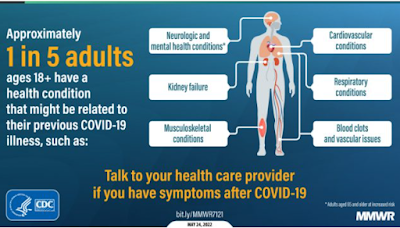
While we've seen estimates of up to 1 in 5 adults experiencing some form of PASC, other studies have shown a much lower incidence; sometimes in the single digits. We've also seen studies that suggest - since the arrival of Omicron in late 2021 - the incidence and/or severity of `Long COVID' has dropped. 

But nearly all of these reports rely heavily on the medical coding systems, which adopted a `Post-COVID syndrome' ICD-10 code (U09.9) in late 2021, but which is only used at the discretion of the treating physician. 

Some clinicians may avoid coding for PASC because it is largely a diagnosis of exclusion, and they may want to rule out other causes first. Others may consider it too broad, and prefer to code specific complaints like fatigue, dyspnea, or cognition problems. 

As a result, when studies are based on EHR (Electronic Health Records) coding, they may miss many probable PASC cases. 

In order to try to remove - or at least narrow - this blind spot, researchers created an AI tool that searched electronic health records for patterns of symptoms and diagnoses consistent with PASC, even though their chart may not have been coded as such.

There are limitations to this type of approach, as it relies heavily on the quality and quantity of the EHR documentation, and so it may have missed some PASC cases. At the same time, temporal association does not establish causation, and so these numbers should be taken with a grain of salt. 

Still, it strongly suggests that the actual burden of PASC is considerably higher than the EHR coding reflects, and that the incidence of Long COVID was still increasing in 2024, two years after the shift to Omicron. 

The full study is well worth reading in its entirety.  I've posted the Abstract and summary below. 

Original Investigation
Infectious Diseases
Long COVID Persistence and Surveillance Gaps Across 58 US Hospitals
Jiazi Tian, MSc1; Alaleh Azhir, MD, MSc1,2; Matthew Decaro, MSc3 et al

JAMA Netw Open
Published Online: May 27, 2026
2026;9;(5):e2614909. doi:10.1001/jamanetworkopen.2026.14909


Key Points

Question What is the true burden of chronic disease following COVID-19, and why does current surveillance fail to capture it?

Findings In this cohort study of 457 950 patients with COVID-19 across 58 hospitals, validated computable phenotyping identified postacute sequelae of SARS-CoV-2 infection in 16.28% of cases, 2-fold higher than diagnostic code–based surveillance. Of identified manifestations, 89.31% represented chronic conditions, with prevalence increasing through mid-2024.

Meaning These findings suggest that approximately 1 in 6 patients with COVID-19 develops postacute sequelae, predominantly chronic conditions currently invisible to surveillance systems, representing an accumulating rather than resolving health care burden.


Abstract
Importance Surveillance of postacute sequelae of SARS-CoV-2 infection (PASC) depends on diagnostic coding systems that capture fewer than one-half of affected individuals, rendering millions invisible to health systems and policymakers.

Objective To quantify the gap between true PASC burden and diagnostic code–based estimates, determine the proportion representing chronic disease, and characterize organ system heterogeneity and temporal trends across diverse populations.

Design, Setting, and Participants This retrospective cohort study used electronic health record data from 58 hospitals and affiliated clinics in 4 US regions, from 2017 to 2025. Adults (aged ≥18 years) with laboratory-confirmed SARS-CoV-2 infection or a COVID-19 diagnosis code were included. A custom artificial intelligence algorithm, the Precision Phenotyping for Research Cohorts (P2RC), was implemented using federated infrastructure.

Exposure Laboratory-confirmed SARS-CoV-2 infection or COVID-19 diagnosis code.

Main Outcomes and Measures The primary outcomes were PASC prevalence, the proportion classified as chronic conditions, organ system distribution, and temporal trends from 2020 to 2024. χ2 Tests were used to assess organ system heterogeneity across regions, and negative binomial regression was used to model quarterly temporal trends, yielding incidence rate ratios (IRRs) with 95% CIs.

Results In this cohort study of 457 950 COVID-19 cases (mean age, 52.05 years; 275 107 [60.07%] female), the P2RC algorithm identified 74 560 PASC cases (16.28% overall; 28 585 [18.58%] in New England, 978 [19.55%] in Southeast Texas, 10 534 [22.69%] in Southern California, and 34 463 [13.64%] in Western Pennsylvania), more than 2-fold higher than the proportion identified by code-based surveillance (<7%). Of 883 International Statistical Classification of Diseases, Tenth Revision, Clinical Modification codes associated with PASC, 594 (67.27%) represented chronic or potentially chronic conditions. Of 74 560 patients with PASC, 66 587 (89.31%) developed chronic conditions requiring ongoing clinical management; this represents 14.54% of the total number of 457 950 patients with COVID-19. Substantial organ system heterogeneity was observed (χ2 = 2504.73; P < .001): New England demonstrated thyroid-predominant endocrine patterns, while Southeast Texas, Southern California, and Western Pennsylvania showed metabolic-predominant profiles. Negative binomial regression revealed increasing PASC prevalence through mid-2024 (IRR per quarter, 1.01 [95% CI, 1.00-1.01; P < .001] in New England; 1.00 [95% CI, 1.00-1.01; P < .001] in Southern California; and 1.02 [95% CI, 1.01-1.02; P < .001] in Western Pennsylvania), indicating an accumulating rather than resolving burden.

Conclusions and Relevance In this cohort study, approximately 1 in 6 patients with COVID-19 developed PASC, and 89.31% of these patients had at least 1 chronic condition. Current diagnostic coding captured fewer than one-half of the cases, obscuring a substantial chronic disease burden. The persistently increasing prevalence through 2024 indicated an accumulating health care burden requiring investment in surveillance infrastructure and integrated care pathways.

        (Continue . . . )


Wednesday, May 27, 2026

ECDC Ebola Update & Individual Country Responses From Canada, U.S. & Taiwan


Full PPE – Credit Emory University

#19,179

Despite what the tabloids and the clickbait internet machine might try to imply, the risk of Ebola Bundibugyo sparking a pandemic is incredibly low. Barring some extraordinary evolutionary leap, Ebola viruses are simply not transmissible enough to pose a global threat. 

But, as was well demonstrated a dozen years ago in West Africa (see below), Ebola is quite capable of sparking a horrendous, and prolonged, regional epidemic. 

The CDC's brief synopsis of the 2014-2016 West Africa outbreak describes 28,610 cases and 11,308 deaths; although the true number was likely higher. During this outbreak, dozens of cases were exported to other regions (see list below), including to Italy, Spain, the UK and the United States. 

The in-hospital cost of treating a single Ebola patient can run 500K-1M, and the costs of contact tracing, testing, and quarantining hundreds of potential contacts can run into the tens-to-hundreds of millions

There are other costs, of course. Including canceled travelreduced public activities, and surges in ERs due to the `worried well'. Even a small-to-moderate cluster of cases in the United States, Europe, or Canada could easily carry a billion-dollar price tag.

So it is little wonder that countries are concerned. And as the ECDC stated this morning, in many ways the Bundibugyo virus outbreak in the DRC and Uganda is unlike any previous ebola outbreak. 

ECDC increases activities as Ebola outbreak in DRC and Uganda intensifies

Press release
27 May 2026

As the Ebola disease outbreak in the Democratic Republic of the Congo (DRC) and Uganda develops rapidly, the European Centre for Disease Prevention and Control (ECDC) is ratcheting up its support on the ground, while continuing to emphasise that the risk of infection to the general population in Europe remains very low.
The current outbreak is of serious concern, and is in many ways not comparable with previous Ebola outbreaks. The highly complex situation in the affected region makes it considerably more difficult to take effective countermeasures. The circumstances are made still more challenging by the fact that this outbreak is caused by Bundibugyo virus, for which there is currently no licensed vaccine or specific treatment.
In order to gather first-hand information from the field, ECDC is working closely with partners to establish a larger presence via the EU Health Task Force to support DRC and Uganda. This will also enable the Centre to gather more detailed information on exit screening, which ECDC continues to emphasise is crucial to reduce risk by identifying travellers who are symptomatic. It will also allow ECDC to promptly update its risk assessment and recommendations for the European Union and European Economic Area (EU/EEA).

The action ECDC is taking to support health authorities in the affected countries while ensuring the health security of people in the EU/EEA includes:
  • Support to EU/EEA countries to provide clear and practical travel advice for all those arriving from the affected areas, including what to do if they develop symptoms
  • Assistance to EU/EEA countries in strengthening readiness to rapidly detect and isolate anyone infected who is arriving from the regions affected and carry out all necessary control measures
  • Daily epidemiological updates
  • Forthcoming ECDC scientific advice on infection prevention and control measures in the EU/EEA
  • Deployment of an ECDC expert to the Africa Centres for Disease Control and Prevention as part of the EU Health Task Force to support coordination and operational planning
  • As a further step, a larger deployment of ECDC experts to the region via the Task Force is in progress​
  • Work on a modelling study on the likelihood of importation of cases into the EU/EEA​
  • Cooperation with the aviation sector to strengthen the safety of all passengers on board, ensuring a consistent approach to the management of suspected cases during flights
  • Development of a series of infographics for policymakers, healthcare practitioners​, and the general public
More than 900 suspected cases of Ebola disease were reported in DRC as of 24 May 2026. Uganda has so far reported seven cases. ECDC continues to assess the likelihood of infection for anyone from the EU/EEA living in or travelling to affected areas as low, provided they follow the recommended precautionary measures.

While there are long-standing general agreements not to restrict travel and trade during disease outbreaks like this in the 2005 IHR agreement, since COVID, countries have been increasingly willing to go their own way.  

Five days ago we looked at the U.S. Enhanced Ebola Airport Screening protocols, which allows non-symptomatic U.S. passport holders with travel history to the affected region to proceed on to their final destinations (with appropriate healthcare advice).

Late yesterday, Canada announced their own - far more restrictive - policy, which will require a 21-day quarantine period upon arrival from the DRC, Uganda, or South Sudan. 

Government of Canada introduces temporary border measures in response to the Ebola disease outbreak

From: Public Health Agency of Canada

News release

May 26, 2026 | Ottawa, Ontario | Public Health Agency of Canada

In response to the Ebola disease outbreak in the Democratic Republic of the Congo, and increasing risks in Uganda and South Sudan, the Government of Canada is taking decisive action by introducing temporary border measures to reduce the risk of the virus entering and spreading within Canada.

The Government of Canada intends to suspend immigration documents for residents of countries that have a high or very high risk of outbreak of Ebola disease for the next 90 days beginning May 27, 23:59 EDT. At this time, this includes the Democratic Republic of the Congo, Uganda and South Sudan. This will mean that even those with a previously approved temporary resident visa, electronic travel authorization (eTA) or permanent resident visa will not be allowed to travel to Canada while their immigration document is suspended. During this time, we also intend to temporarily pause making decisions on applications for these documents from residents of these countries.

The government intends to implement an additional measure effective May 30 at 23:59 pm EDT until August 29, 2026, whereby Canadian citizens, permanent residents, persons registered under the Indian Act, and foreign nationals, who have been in these areas within the previous 21 days and do not have symptoms, will have to quarantine for 21 days. If they do not have a place where they can quarantine safely, they will be provided with an appropriate location. Travellers who have symptoms will be isolated at a hospital for further assessment. These measures are being implemented under the Quarantine Act.

Those who are already in Canada are not impacted by these measures, and may continue to stay here for their authorized period of stay. As per standard procedure, these travellers were already screened upon their arrival by a Canada Border Services Agency Border Services Officers. Canadian citizens and permanent residents could still return to Canada and would undergo screening at ports of entry upon their arrival.

While the risk to people in Canada remains low, the Government of Canada is taking a precautionary approach given the severity of Ebola disease and the evolving international situation, including the FIFA World Cup 2026 ™. There has never been a case of Ebola disease imported into Canada and there are currently no cases of Ebola disease in North America.

The Government of Canada continues to monitor the situation closely and will adjust these measures as needed based on available evidence, including the epidemiological situation in Canada and internationally.

Travellers are reminded that border measures may change with little notice and are encouraged to check the latest information before travelling at travel.gc.ca.
As we discussed last January in Hazard Identification and Risk Assessment (HIRA) For the FIFA World Cup 2026, this summer Toronto, Canada will host 6 FIFA World Cup matches in June and early July, with at least 300,000 visitors expected to descend on the city.
In total, 16 cities across 3 countries (Canada, Mexico, U.S) will host the 2026 world cup, with over 5 million fans expected to travel to the various venues.

Even a whiff of an Ebola scare this summer could be devastating to their economies; a factor which likely loomed large in Canada's calculations.  

Nestled somewhere between Canada's more restrictive `containment' model and the U.S.'s `monitor and manage' strategy, Taiwan's CDC announced a mandatory 21-day `self-health management' policy for arrival from the affected region.

        (Translation)

In response to the rapid development of the Ebola international outbreak, the Centers for Disease Control (CDC) has raised the travel advisory level for the Democratic Republic of Congo and Uganda to Level 3, "Warning," and strengthened cross-border prevention measures. Travelers with the aforementioned travel history must undergo 21 days of self-health management.

Release Date: 2026-05-27

The Centers for Disease Control (CDC) announced today (May 27) that the Ebola outbreak in the Democratic Republic of Congo (DRC) and Uganda, which the World Health Organization (WHO) declared a Public Health Emergency of International Concern (PHEIC) on May 17, 2026, has recently developed rapidly and is becoming increasingly severe. In addition to Ituri Province in the DRC being an outbreak hotspot, cases have also been reported in North Kivu and South Kivu provinces of DRC, as well as neighboring Uganda, indicating a spreading trend. As of May 24, the DRC had a cumulative total of 112 confirmed cases (including 11 deaths) and 906 suspected cases (including 223 suspected deaths), with one US citizen diagnosed after contact with the virus at a local medical facility. Furthermore, Uganda has also reported 7 confirmed cases (including 1 death), all highly related to the DRC outbreak.

The Taiwan Centers for Disease Control (CDC) announced that, to reduce the risk of imported Ebola cases, Taiwan is strengthening cross-agency security measures at its borders and enhancing port monitoring and interception mechanisms, effective immediately. For travelers arriving from the Democratic Republic of Congo and Uganda, quarantine personnel will conduct enhanced TOCC (Travel, Occupation, Contact, and Cluster History) and health assessments.
All travelers must undergo 21 days of self-health management upon arrival. Those assessed as potentially at risk of Ebola infection will be immediately transported by ambulance to contracted hospitals for examination, with simultaneous coordination with local health authorities for prevention and control efforts.

The CDC explained that the Ebola outbreak is currently experiencing a rapid surge, and the actual fatality rate is likely far higher than currently reported official figures. This outbreak is occurring in a complex environment intertwined with security threats and humanitarian challenges. The lack of approved vaccines and specific treatments for this type of virus, coupled with local political instability and high population mobility, has significantly increased the difficulty of epidemic prevention. The WHO assesses that the actual scale of infections is likely far greater than the currently reported numbers, and has rated the risk level of the Democratic Republic of Congo as "very high," Uganda and surrounding areas as "high," and the global risk as "low."

       (Continue . . . )

While this translation uses polite wordage like `requested to', and `cooperate with', there is a bit of a sting in the tail of this announcement.

Asymptomatic passengers will be issued a "Notice of Self-Health Management for Passengers with Travel History to Ebola-Epidemic Areas." Upon arrival, passengers are requested to cooperate with 21 days of self-health management, keep their phones accessible for contact tracing by health authorities, take their temperature twice daily (morning and evening), and report their health status to the "Public Proactive E-Reporting System." If you experience any of the above symptoms, please immediately call the epidemic prevention hotline 1922 for assistance from the health bureau to seek medical attention. Failure to cooperate with these measures will be punished in accordance with the Communicable Disease Control Act.


The reality is, no one truly knows what the `right' measured response to this ebola outbreak is; they only know that the political, economic, and societal price of even a minor breach could be enormous. 

So, as we saw during the opening days of COVID (see No Pandemic Plan Survives Contact With A Novel Virus), we are likely to see a wide variety of approaches. 

Some may be overreactions, while others may be too complacent. But at least with this range of responses, we should come away with a better idea of what works - and what doesn't -  which may prove useful for the next public health crisis. 


Tuesday, May 26, 2026

Vaccines: Lessons from the 2024 avian influenza vaccination campaign in Finland: a qualitative inquiry


#19,178

In 2023 Finland's fur industry was hit hard by HPAI H5N1, with more than 70 fur farms infected, and > 500,000 animals culled. After an uncertain start, the Finnish Food Agency ordered an aggressive quarantine and culling program, which was strongly opposed by the fur industry.

Following on the heels of a mink-variant COVID outbreak in 2020, these HPAI outbreaks also brought renewed calls for the banning of the fur trade in the EU, and around the globe. 

Although outbreaks reports from fur farms declined by the end of 2023, this epizootic - combined with increasing avian flu activity around the globe - led the EU to order a significant quantity of H5 vaccine the following summer.

PRESS RELEASE 11 June 2024 Brussels
Commission secures access for Member States to 665,000 doses of zoonotic influenza vaccines to prevent avian flu

Today, the Commission's Health Emergency Preparedness and Response Authority (HERA) as part of its mandate on preparedness, has signed on behalf of participating Member States, a joint procurement framework contract for the supply of up to 665,000 pre-pandemic vaccine doses of the up-to-date Zoonotic Influenza Vaccine Seqirus, as well as an option for a further 40 million doses over the duration of the contract. Thanks to this contract the participating Member States will have access to medical countermeasures to prevent avian flu.

The vaccine is intended for those most exposed to potential transfers of avian influenza from birds or animals, such as poultry farm workers and veterinarians. It aims to prevent the spread or potential outbreaks of avian influenza in Europe, protecting citizens and livelihoods. The vaccine is the only preventive zoonotic avian influenza vaccine currently authorized in the EU.

        (Continue . . . )

While the intent was to store these doses for use in a future outbreak, the EU carved out 20,000 doses for immediate use in Finland; specifically for the vaccination of high risk fur farmers (see Finland: MOH Announcement On Avian Flu Vaccine Availability For People At High Risk).

In August of 2024, Finland's THL Announced the Start Of H5 Vaccination For High Risk GroupsWhile details on the campaign were scant, last December, in a study published in Nature Microbiology, researchers discussed the disappointingly low uptake - particularly among fur farmers - of this vaccine.
The final sample size was smaller than planned due to recruitment challenges, largely reflecting the overall low vaccine uptake across all target groups. This was particularly evident among fur farm workers, none of whom participated despite repeated outreach efforts. 
I've not been able to determine how many fur farmers actually accepted the vaccine, but it appears to be a small fraction of the roughly 860 people who received as least 1 dose. 

All of which brings us to a new Short Communications, published in the journal Vaccines, which details the Finnish vaccination campaign and some of the perceived difficulties in convincing high-risk individuals to get the shot. 
While the timing, logistics, and `divergent risk perceptionswere cited as barriers to vaccination, distrust of the government appears to have been the biggest factor.

They call it the `most unexpected barrier', but to anyone who has spent any time online - or actually talking to the public over the past 20 years - it can't have been that unexpected. 

This report is based in large part on 17 interviews, of which only one was actually a farmer (poultry). Since no fur farmers were willing to talk to these researchers, many of their conclusions are - by necessity - based on 3rd-party assessments.  

Despite these limitations, this is a fascinating look at the growing chasm between governmental expectations and the public's willingness to cooperate.  I've only posted some excerpts, so follow the link to read it in its entirety. 

I'll have a bit more after the break.

Short communication 
Lessons from the 2024 avian influenza vaccination campaign in Finland: a qualitative inquiry

Vuokko Härmä a, Minttu Palsola a, Aapo Kuusipalo a b, Erika Lindh a, Merit Melin a, Hanna Nohynek a 
https://doi.org/10.1016/j.vaccine.2026.128736 
Under a Creative Commons license

 
Abstract

Highly pathogenicity avian influenza H5N1 (HPAI H5N1) viruses cause a continuous threat to wild avian populations. During recent years, spillover to both wild and domestic mammals has occurred with an increasing frequency. As a consequence of the recent developments in the epidemiological situation, the human-animal interface with the risk of human exposure to HPAI H5 has expanded.

 In 2024, Finland became a global forerunner to offer H5 vaccine to occupational risk groups, specifically fur and poultry workers, following an extensive HPAI H5N1 outbreak in 2023 in fur-farmed minks and foxes. Despite targeted efforts to reach the people at increased risk, only 8,6% of the target population received the first dose and 7,5% completed both doses. 

To seek a better understanding of the barriers behind low vaccine uptake a Behavioural and Cultural (BCI) insight approach was chosen. A rapid qualitative study was conducted in late 2024 (n = 17), utilising semi-structured interviews with health authorities, industry stakeholders, and risk group representatives in the Ostrobothnia region in Finland. Barriers were identified across three dimensions:
(1) logistical failures, including poor timing and difficulties in reaching target groups
(2) divergent risk perceptions, where economic livelihood overshadowed personal health risks; and 
(3) political distrust, stemming from perceived stigmatization by national health authorities. 
The results will provide vital information for future pre-pandemic communication and implementation strategies and helps to identify key stakeholders and target groups.

        (SNIP) 

3.3. Trust and political tensions

Perhaps the most unexpected barrier identified was the erosion of trust between the fur industry and national health authorities. Our analysis suggests that the campaign's reception was influenced by ongoing political and ethical debate regarding the future of fur farming in Finland.

The 2023 outbreak led to intense public debate and strict regulatory measures, including mass culling of animals in affected farms ordered by the Finnish Food Authority as part of outbreak control measures. Advocates of the fur industry publicly argued that such measures were excessive, and that the industry was being “scapegoated” for a natural phenomenon. Statements from national health and political figures during the outbreak were perceived by farmers as stigmatizing. Consequently, when these same national authorities recommended vaccination in 2024, the message was not welcomed but was met with skepticism.

A dichotomy in trust was evident, while farmers generally maintained high trust in local occupational healthcare nurses and municipal doctors, they expressed deep distrust toward national authorities. National-level communication was characterised as bureaucratic, distant, and sometimes “accusatory”. Participants reported that official messaging was perceived as stigmatizing for the fur farmers for the zoonotic risk, which reduced willingness to comply with voluntary measures.

Additionally, local media in the region were reportedly hesitant to publish pro-vaccination content related to avian influenza, fearing backlash from a community already feeling under siege. This created a vacuum of positive reinforcement, further limiting the reach of health messaging.

       (SNIP)

4. Conclusion and implications

The low uptake of the H5 vaccine in Finland serves as a critical case study in the challenges of implementing public health interventions within agricultural and occupational settings that have been involved in political tensions. Achieving high vaccination coverage can be particularly challenging when the target population experiences a combination of marginalisation and structural distrust. However coverage was low across all target groups, which further indicates structural and communicational challenges.

        (SNIP) 

While the socio-political climate of the Finnish fur industry is unique and findings should be applied cautiously to other contexts, this study offers broader insights for One Health interventions. They demonstrate that preparedness requires more than just clinical readiness; it demands a multisectoral strategy that aligns public health goals with the economic and social realities of the agricultural sector. Vaccination outcomes are shaped by context-specific social, political, and cultural factors, which must be considered to ensure optimal uptake.

       (Continue . . . )
 

While the embattled fur farming community is probably not the best proxy for attitudes of the rest of the world's population, convincing the public to take any experimental vaccine in the absence of an imminent high-morbidity/mortality outbreak is always going to be a tough sell. 
Today, trust (and uptake) in vaccines has plummeted, while warnings from the WHO, or the CDC, are often dismissed as hyperbole or part of some conspiratorial `plandemic'. 

Although most of this is ginned up out of whole cloth by clickbait videos and deranged social media posts, some of this mistrust has been rightfully earned (see When Scientists Behave Badly).

When the next global public health threat begins its world tour, governments and health agencies are going to be desperate to find some way to regain the trust - and cooperation - of the public. 

And right now, that's not a battle they appear to be even close to winning. 

Upcoming COCA Call: What Clinicians Should Know about Ebola Bundibugyo Virus


#19,177


Later this week (Thursday, May 28th) the CDC will hold a COCA Call for clinicians and other healthcare professionals on the Ebola Bundibugyo Virus, which is spreading with alarming speed in the DRC and Uganda. 

While the CDC has instituted airport screening - the potential still exists for imported cases to arrive in the United States - much as it did in the fall of 2014 during the West African outbreak (see NEJM: Ebola in the United States — Public Reactions and Implications).

In an effort to better prepared clinicians for potential cases, the CDC will hold a (roughly) 1-hour webinar this week on this emerging virus. These presentations are often technical, and are of greatest interest to clinicians and healthcare providers, but are also archived within a few days, and made available to the general public.

Details are limited, but I've reproduced the announcement below.

What Clinicians Should Know about Ebola Bundibugyo Virus

For Health Care Providers
May 28, 2026

At a glance

During this COCA Call, learn more about this outbreak, the history and ecology of Bundibugyo virus, what U.S. clinicians should know about preparing for, diagnosing, and managing patients with suspect or confirmed Ebola disease, and how to prevent Ebola viruses from spreading.

Overview

The Centers for Disease Control and Prevention is responding to an outbreak of Ebola Bundibugyo virus disease in the Democratic Republic of the Congo and Uganda. The overall risk to the American public and travelers remains low, but as with other high-consequence infectious diseases, clinicians are often the first to diagnose an outbreak. During this COCA Call, learn more about this outbreak, the history and ecology of Bundibugyo virus, what U.S. clinicians should know about preparing for, diagnosing, and managing patients with suspect or confirmed Ebola disease, and how to prevent Ebola viruses from spreading.

Webinar

Thursday, May 28, 2026

2:00 – 3:00 PM ET


A few minutes before the webinar begins, please click this link to join.

COCA Call Objectives

After completing this course, the learner will be able to:
  • Cite background information on the topic covered during the presentation.
  • Identify CDC's role in the topic covered during the presentation.
  • Describe the topic's implications for clinicians.
  • Identify concerns and issues related to preparedness for and response to urgent public health threats.
  • Identify how an interprofessional team of healthcare providers can work with patients to promote disease prevention.

Continuing Education

Continuing education is not offered for this COCA Call.

Target Audience 
  • Physicians
  • Nurses
  • Pharmacists
  • Veterinarians
  • Physician Assistants
  • Health Educators
  • Other Clinicians
Additional Information Contact Information: coca@cdc.gov
Support/Funding: Centers for Disease Control and Prevention, Office of Emergency Risk Communication

Method of Participation: You may participate in the educational activity by viewing the program information above.

Monday, May 25, 2026

Virulence: Surveillance and biological characterization of H3 subtype avian influenza viruses in Eastern China


Credit ECDC

#19,176

Over the past few years we've seen a noticeable uptick in interest by Chinese researchers into H3 virus evolution, particularly in Eastern China's poultry. While perhaps not as alarming as H5N1, H3 viruses have a long history of spilling over into humans and causing pandemics (see graphic above). 

The avian H3N2 pandemic virus emerged in 1968, and while it killed somewhere between 1-4 million people during the pandemic, it has killed many times more than that over the past 56+ years.  

A little over 20 years ago (2004) an equine H3N8 virus jumped to dogs in Florida, before spreading globally. Three years later, an avian H3N2 virus in South Korea, followed suit, with both reassorting with other subtypes (see J. Virology: Zoonotic Risk, Pathogenesis, and Transmission of Canine H3N2).

In 2011 avian H3N8 was found in marine mammals (harbor seals), and 2012’s mBio: A Mammalian Adapted H3N8 In Seals, provided evidence that this virus had recently adapted to bind to alpha 2,6 receptor cells, the type found in the human upper respiratory tract.
In 2015's J.Virol.: Experimental Infectivity Of H3N8 In Swine, we saw a study that found that avian (but not canine or equine) H3N8 could easily infect pigs. 
All worrisome signals, but it was the 2022 emergence of a zoonotic H3N8 virus in China - first infecting 2 children 400 km apart in Henan and Hunan Provinces in April and May of 2022 - and more recently a fatal infection of a 56 year old woman in Guangdong Province, that really raised concerns. 

This led to 2023's EID Journal: Evolution of Avian Influenza Virus (H3) with Spillover into Humans, China, where researchers described finding 4 sub-lineages and an astonishing 126 genotypes of avian H3 viruses circulating in China.  

The authors also described a recent reassortment event where H3N8 acquired the internal genes from LPAI H9N2, a promiscuous virus which had previously contributed genes to both H5N1 and H7N9 (see PNAS: Evolution Of H9N2 And It’s Effect On The Genesis Of H7N9).
Since then, we've looked at a number of cautionary reports on H3 viruses from China, including:
ABSTRACT

H3 subtype avian influenza viruses (AIVs) are frequently detected in poultry and wild birds, however, systematic characterization of contemporary isolates remains limited. We aimed to investigate the genetic evolution, pathogenicity, and transmission characteristics of H3 subtype AIVs circulating in Eastern China.

Seven H3 subtype AIVs isolated between 2014 and 2021, including five H3N2, one H3N3, and one H3N6 strain, were analyzed. Phylogenetic analysis showed that all isolates belonged to the Eurasian lineage. Evidence of extensive reassortment with other AIV subtypes, as well as adaptive mutations associated with pathogenicity, and cross-species transmission, particularly in H3N2 subtype AIVs, was identified.

Notably, H3N2 subtype AIVs exhibited dual receptor-binding properties, recognizing both SA α-2,3-Gal and SA α-2,6-Gal receptors. Although all isolates demonstrated low pathogenicity in chickens, mice, and guinea pigs, variations in transmission efficiency were observed.

The H3N2 strain A/Duck/Anhui/LY/2021 showed the highest capacity for cross-species and aerosol transmission among guinea pigs. Overall, these findings indicate that H3 subtype AIVs have the potential for cross-species transmission and highlight the importance of continued surveillance of H3 subtype AIVs circulating in nature.

(SNIP)

Discussion
In April 2022, the first human infection with the H3N8 virus was reported in Henan Province, China [Citation50]. In May 2022, a second case was identified in a 5-year-old boy in Hunan Province, China [Citation16]. These events have raised substantial concerns regarding the potential public health impact of emerging H3N8 subtype AIVs. In addition to H3N8 subtype AIVs, H3N2 subtype AIVs are continuously detected in poultry throughout the year in southern China, according to epidemiological surveys [Citation51].
Previous studies have demonstrated that H3N2 subtype AIVs can be transmitted between guinea pigs and ferrets via respiratory droplets [Citation2]. Furthermore, recent isolates have acquired mutations associated with increased binding affinity for human-type receptors and enhanced transmissibility in ferrets, posing a potential risk to human health [Citation52].
In China, H3N2 subtype AIVs are widely detected in LPMs [Citation44], increasing the likelihood of cross-species transmission from avians to mammals. Therefore, the cross-species transmission potential of H3N2 subtype AIVs, particularly from avians to mammals, warrants close attention. Phylogenetic analysis in this study showed that all seven H3 subtype AIVs belong to the Eurasian lineage, within which multiple cross-species transmission events have historically occurred. Notably, H3N2 subtype AIVs (LY strain), presented potential cross-species transmission characteristics from avians to mammals, which should be more attention.

(SNIP)
In conclusion, H3N2 subtype AIV, particularly the LY strain exhibited both interspecies and cross-species transmission characteristics, suggesting an increased potential for transmission from avian to mammalian hosts.
These findings imply that continued surveillance of H3N2 AIVs in LPMs is critical, as they may pose an emerging concern to public health, and monitoring key molecular markers associated with mammalian adaptation could help in predicting and preventing future cross-species transmission events [Citation59].

        (Continue . . . )

Although the authors present no evidence of an immediate threat, H3 viruses have a proven pandemic track record, and we continue to see signs of a shift towards dual receptor-binding properties (avian & mamamallian) which should be viewed as concerning. 

While there are many routes to the next pandemic (and not all of them involve novel influenza), twice in my lifetime an avian flu virus has emerged as a pandemic strain (H2N2 in 1957 and H3N2 in 1968). 

A third flu pandemic (H1N1) emerged from swine in 2009, and currently 4 of the top 10 emerging zoonotic threats on the CDC's IRAT list are swine-variant viruses, with China's Avian-like H1N1 swine flu virus at the top of the list.

And as we've discussed often over the past few years (see Are Influenza Pandemic Viruses Members Of An Exclusive Club?), the progression of human influenza pandemics over the past 130 years has been H2, H3, H1, H2, H3, H1, H1

Which suggests that - while an H5, H7, H9, or even H10 pandemic is always possible - the odds probably favor seeing an an avian, swine, or canine emerging H1, H2, or H3 virus as our next pandemic threat. 

Which is why we follow research papers like today's with particular interest.