Showing posts with label Alberta. Show all posts

Thursday, January 09, 2014

CDC Statement On 1st H5N1 Case In North America

image

Global H5N1 cases & Deaths - Credit CDC


# 8149


Although the risk of seeing additional avian flu cases in Canada (or the United States) as a result of yesterday’s announced H5N1 fatality in Alberta, Canada is considered low, the CDC released the following lengthy and informative statement last night on this case, including a good deal of background on avian flu viruses.


First Human Avian Influenza A (H5N1) Virus Infection Reported in Americas

January 8, 2014 – Canada has reported the first case of human infection with avian influenza A (H5N1) virus ever detected in the Americas. The case occurred in a traveler who had recently returned from China. H5N1 virus infections are rare and these viruses do not spread easily from person to person. Most of the 648 human cases of H5N1 infections that have been detected since 2003 have occurred in people with direct or close contact with poultry. The Centers for Disease Control and Prevention (CDC) considers that the health risk to people in the Americas posed by the detection of this one case is very low. CDC is not recommending that the public take any special actions regarding H5N1 virus in response to this case. For people traveling to China, CDC recommends that people take the same protective actions against H5N1 as recommended to protect against H7N9 or other avian influenza A viruses. This information is available on the CDC website at Travelers Health: Avian Flu (Bird Flu).


According to Canadian health officials, the patient, who died on January 4, 2014, recently traveled to Beijing, China, where avian influenza A H5N1 is endemic among poultry. This is the first detected case of human infection with avian influenza A H5N1 virus in North or South America. It also is the first case of H5N1 infection ever imported by a traveler into a country where this virus is not present in poultry. No such H5N1 viruses have been detected in people or in animals in the United States.


While human infection is rare, it often results in serious illness with very high mortality (60%). CDC has recommended enhanced surveillance measures to detect possible cases of H5N1 in this country since 2003. In 2007, “novel influenza A infections” such as H5N1, became nationally notifiable diseases in the United States. Novel influenza A virus infections include all human infections with influenza A viruses that are different from currently circulating human seasonal influenza H1 and H3 viruses. Rapid reporting of human infections with novel influenza A viruses facilitates prompt detection and characterization of influenza A viruses and accelerates the implementation of effective public health responses.


While the current risk from H5N1 viruses is very low and CDC believes it unlikely that cases of H5N1 have occurred in the United States, CDC will send out a reminder to clinicians in this country about when and how to test for H5N1 infection. The recommendations for testing for H5N1 are similar to those for H7N9 and include recent travel (within 10 days) to a country with H5N1 virus infections in birds or people. The guidance for H7N9 is posted on the CDC website at Human Infections with Novel Influenza A (H7N9) Viruses.


According to CDC, more concerning for Americans right now is seasonal flu, which is widespread in much of the country. The agency urges people who have not gotten their seasonal flu vaccine this season to get vaccinated now. A seasonal vaccine will protect you against seasonal flu viruses.


As mentioned previously, avian influenza A H5N1 is endemic in poultry in China. Since 2003, 45 cases of human infection with H5N1 have been reported in China and 30 (67%) have died. Affected persons have ranged in age from 2 years to 62 years, with an average age of 26 years. Most of the reported cases have had poultry exposure.


The detection of one isolated case of H5N1 virus infection in a returned traveler does not change the current risk assessment for an H5N1 pandemic. A pandemic would only result if the H5N1 virus were to gain the ability to spread efficiently from person-to-person and there is no indication that this has occurred.


CDC is in close contact with Canadian public health partners and has offered laboratory and other support as needed. The agency will continue to monitor this situation closely and work with public health partners to rapidly test any incoming specimens and advise local and state authorities regarding control measures if needed. Long-term preparedness measures against H5N1 include the existence of a stockpile of H5N1 vaccine in the Strategic National Stockpile.

(Continue . . . )

PHAC: Speaking Notes Of H5N1 Technical Briefing

image

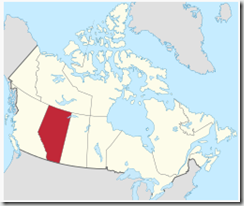
Alberta, Canada – Credit Wikipedia


# 8146


Yesterday’s announcement of North America’s first (imported) case of H5N1 in Alberta was the focus of a technical briefing from Canada’s Health Minister Rona Ambrose and Canada’s deputy chief public health officer, Dr. Gregory Taylor yesterday.


Below you’ll find the speaking notes (posted on the PHAC website) of both of their remarks.


Speaking Notes for the Honourable Rona Ambrose Minister of Health

January 8, 2014
Ottawa, ON

H5N1 Technical Briefing

Good afternoon. I am Rona Ambrose, Canada’s Minister of Health.

I am here to confirm North America’s first human case of H5N1, also known as avian flu.

The Public Health Agency of Canada has confirmed that a resident of Alberta, Canada who recently returned from a trip to China, has died of H5N1.

The health system did everything it could for this individual and our thoughts are with the family at this time.

The risk of H5N1 to Canadians is very low as there is no evidence of sustained human-to-human transmission. Importantly, this is not part of the seasonal flu, which circulates in Canada every year. This is an isolated case.

Our Government and the Public Health Agency of Canada is committed to disease surveillance and is working closely with its public health partners across the country and around the world.

The Public Health Agency of Canada continues to work closely with Alberta Health and other provincial health authorities to ensure the health and safety of Canadians.

The Public Health Agency has notified China, the World Health Organization and other international partners about the case, in keeping with our commitment under the International Health Regulations.

Our Government will work closely with its national and international partners, including the World Health Organization.

The Agency will continue to work with Chinese authorities to follow up on the source and circumstances of this infection.

We are holding today’s technical briefing to deliver a clear message to Canadians, the risk of getting H5N1 is very low. This is not the regular seasonal flu. This is an isolated case

Our Government is committed to ensuring that Canadians have up-to-date, accurate information and we will continue to communicate in an open and transparent way.

Now I’ll turn it over to Dr. Gregory Taylor, our deputy chief public health officer for Canada.

Speaking Notes – Deputy Chief Public Health Officer

January 8, 2014
Ottawa, ON

H5N1 Technical Briefing

Thank you Minister.

I would like to echo the Minister’s comments in extending our condolences to the family and friends of this individual.

H5N1 influenza is not the same as the seasonal flu.

This is the first and only confirmed human case of H5N1 in North America.

The risk of transmission is very low. There is no evidence of sustained human-to-human transmission.

H5N1 is an avian form of influenza which has been found to circulate among birds, mainly poultry. It has been found in birds in Asia, Europe, Africa and the Middle East.

There has only been less than 650 human cases of H5N1 in 15 countries over the last decade, primarily in people who were exposed to infected birds.

The illness it causes in humans is severe and kills about 60 per cent of those who are infected.

No other illnesses of this type have been identified in Canada since the traveller returned from China.

This is an isolated case.

The individual began to feel unwell on a return flight from Beijing to Vancouver (Air Canada 030) and Vancouver to Edmonton (Air Canada 244) on December 27.

The symptoms worsened and the individual was hospitalized, and passed away on January 3.

The Public Health Agency of Canada was notified on January 5th of the case, by Alberta. Our National Microbiology Lab in Winnipeg received specimens yesterday.

Last night, January 7th, lab results confirmed this was H5N1. This morning Canadian officials have been in contact with the World Health Organization.

The patient’s family is not showing any signs of illness. There is no evidence of human-to-human transmission on airplanes.

All evidence is indicating that this is one isolated case in an individual who was infected following exposure in China.

Although we don’t know at this time how the individual contracted the virus, for Canadians travelling abroad – in keeping with our travel health advice – we recommend:

If you are travelling to an area where any avian influenza is a concern:

  1. avoid high-risk areas such as poultry farms and live animal markets;
  2. avoid unnecessary contact with birds, including chickens, ducks and wild birds;
  3. avoid surfaces that may have bird droppings or secretions on them; and
  4. ensure that all poultry dishes are well cooked, including eggs .

Thank you