Showing posts with label Bug-Out-Bag. Show all posts

Friday, September 11, 2015

#NatlPrep – When Evacuation Becomes The Better Part Of Valor

bob 001a

My Bug-out-bag, Canteen, & Toiletry kit


Note: This is day 11  of National Preparedness Month . Follow this year’s campaign on Twitter by searching for the #NatlPrep hash tag.

This month, as part of NPM15, I’ll be rerunning some edited and updated older preparedness essays, along with some new ones.


#10,511


Although I pride myself in having enough basic disaster preparedness supplies to go a week or longer in my home, I live in an area and in a structure that I would have to leave should we get a direct hit from a major hurricane.  It is not a happy thought, but sometimes circumstances and common dictate that you must leave your home - and the bulk of your preps - behind.


Luckily, I have several pre-arranged places I can go.   Friends, who are also disaster buddies (see In An Emergency, Who Has Your Back?), who know my couch is always available to them.


Regular readers know I very nearly had to `bug-out’ three years ago (see At The End Of My Rope), when the world came crashing down in the middle of the night, and fellow blogger Maryn McKenna described her close call from 2013 in The Risks You Don’t Think of: A Plea to Pack a ‘Go Bag’.


The world is an uncertain place, and everything from storm or earthquake damage, to rising flood waters or a house fire, or industrial accidents to terrorism could suddenly force you and your family to evacuate with only minutes notice.   It happens more often – and to more people each year – than you think. 


And it could easily happen to you.


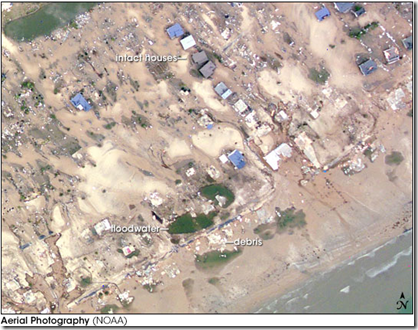
The following photo taken in Crystal Beach after Hurricane Ike in 2008 proves that staying home in the face of a flood, a hurricane, or other natural disaster can have deadly consequences.
image


Being able to leave in a hurry when an evacuation has been ordered means having a plan, a destination, and an emergency `to go’ kit or `BOB’ already equipped, and standing by.


In the vernacular, a `bug-out bag'  or `BOB’  (or sometimes GOOD bag for `Get Out Of Dodge’) a bag of emergency supplies, ideally kept at the ready, that one can grab on the way out the door during an emergency.


Every hurricane season I go through my personal bug out bag, and replace flashlight and radio batteries from last year, and swap out older emergency rations for newer ones.


A BOB isn't supposed to be a survival kit, but rather, is supposed to provide the essentials one might need during the first 72 hours of a forced, and sometimes unexpected, evacuation.


It should contain food, water, any essential prescription medicines, copies of important papers (ID's, insurance, important Phone #s), a first aid kit, portable radio, flashlight, extra batteries, and ideally blankets and extra clothes.


While having to evacuate your home may seem like an unlikely event, every years hundreds of thousands of Americans are forced to do so.  Rivers spill their banks, dams break, brush fires rage out of control, even sudden industrial accidents can force evacuations.


And unlike with a hurricane, you won’t always have advance warning.


Ready.gov has the following advice on how to prepare for an evacuation  


Evacuating Yourself and Your Family

image

There may be conditions under which you will decide to get away or there may be situations when you are ordered to leave. Follow these guidelines for evacuation:

  • Plan places where your family will meet, both within and outside of your immediate neighborhood. Use the Family Emergency Plan to decide these locations before a disaster.
  • If you have a car, keep a full tank of gas in it if an evacuation seems likely. Keep a half tank of gas in it at all times in case of an unexpected need to evacuate. Gas stations may be closed during emergencies and unable to pump gas during power outages. Plan to take one car per family to reduce congestion and delay.
  • Become familiar with alternate routes and other means of transportation out of your area. Choose several destinations in different directions so you have options in an emergency.
  • Leave early enough to avoid being trapped by severe weather.
  • Follow recommended evacuation routes. Do not take shortcuts; they may be blocked.
  • Be alert for road hazards such as washed-out roads or bridges and downed power lines. Do not drive into flooded areas.
  • If you do not have a car, plan how you will leave if you have to. Make arrangements with family, friends or your local government.
  • Take your emergency supply kit unless you have reason to believe it has been contaminated.
  • Listen to a battery-powered radio and follow local evacuation instructions.
  • Take your pets with you, but understand that only service animals may be permitted in public shelters. Plan how you will care for your pets in an emergency.

    Since I live in a hurricane evacuation zone, I have an emergency plan, a pre-arranged place to go, and my evac  kit (see Inside My New Bug Out Bag) packed and ready to go.

    Of course, you’d be hard pressed to put everything for a family of four into one bag.  So each family member should have their own BOB.

    Some items, like the radio, lights, and first aid kit needn’t be duplicated in each bag. 

    I keep my BOB within arm’s reach of my first aid kit, and would hopefully be able to grab both, even in an emergency. 

    image


    On top of this, I keep a spare first aid kit in my car, along with an `overnight bag’, and I have a third duffle bag packed with extra supplies, that I would hopefully be able to throw in the car as well.


    But if I had to, I could easily go 72 hours on just my bug-out bag alone.


    I do these things to give me peace of mind and confidence that I’m ready to deal with just about any emergency that comes my way.


    The truth is, preparing is easy.


    It’s worrying that is hard.

    Saturday, September 21, 2013

    NPM13: When Evacuation Is The Better Part Of Valor


    image

    Colorado Floods 2013 – Credit http://www.nationalservice.gov


    Note: This is day 21 of National Preparedness Month.  Follow this year’s campaign on Twitter by searching for the #NPM or #NPM13 hash tag.

    This month, as part of NPM13, I’ll be rerunning some updated  preparedness essays (like this one) , along with some new ones.


    # 7798


    The floods this past week in Colorado are just the latest example of when events can quickly force thousands of people from their homes, often with little or no warning.  According to the Colorado Office of Emergency Management, as of yesterday nearly 6,000 people were under mandatory evacuation, over 16,000 homes had been damaged, and more than 1,800 have been destroyed. 


    Last month, in NIFC Raises Wildfire Preparedness Level To 5 (Maximum), we looked at the mandatory evacuation of over 1,800 homes due to the 160-square-mile Beaver Creek Fire in Idaho.  And just two days ago, explosions and a massive fire at a chemical factory in Oklahoma City forced residents living nearby to abruptly leave their homes in the middle of the night.


    The first choice for most people in any disaster it to try to shelter-in-place in their own homes. Home is familiar, home is comfortable, and home is where your processions are. So quite understandably, no one wants to leave home during an emergency if they can possibly avoid it. In fact, it can be such a traumatic decision that some people will risk everything to avoid evacuating.


    But the following photo taken in Crystal Beach after Hurricane Ike in 2008 proves that staying home in the face of a flood, a hurricane, or other natural disaster can have deadly consequences.

    image

    Being able to leave in a hurry when an evacuation has been ordered means having a plan, a destination, and an emergency `to go’ kit or `BOB’ already equipped, and standing by.


    In the vernacular, a `bug-out bag'  or `BOB’ is a bag of emergency supplies, ideally kept at the ready, that one can grab on the way out the door during an emergency.

    bob 001a

    My Bug-out-bag, Canteen, & Toiletry kit

    Every hurricane season I go through my personal bug out bag, and replace flashlight and radio batteries from last year, and swap out older emergency rations for newer ones.


    A BOB isn't supposed to be a survival kit, but rather, is supposed to provide the essentials one might need during the first 72 hours of a forced, and sometimes unexpected, evacuation.


    It should contain food, water, any essential prescription medicines, copies of important papers (ID's, insurance, important Phone #s), a first aid kit, portable radio, flashlight, extra batteries, and ideally blankets and extra clothes.


    While having to evacuate your home may seem like an unlikely event, every years hundreds of thousands of Americans are forced to do so.  Rivers spill their banks, dams break, brush fires rage out of control, even sudden industrial accidents can force evacuations.


    And unlike with a hurricane, you won’t always have advance warning.


    Ready.gov has the following advice on how to prepare for an evacuation.

    Evacuating Yourself and Your Family

    image

    There may be conditions under which you will decide to get away or there may be situations when you are ordered to leave. Follow these guidelines for evacuation:

    • Plan places where your family will meet, both within and outside of your immediate neighborhood. Use the Family Emergency Plan to decide these locations before a disaster.
    • If you have a car, keep a full tank of gas in it if an evacuation seems likely. Keep a half tank of gas in it at all times in case of an unexpected need to evacuate. Gas stations may be closed during emergencies and unable to pump gas during power outages. Plan to take one car per family to reduce congestion and delay.
    • Become familiar with alternate routes and other means of transportation out of your area. Choose several destinations in different directions so you have options in an emergency.
    • Leave early enough to avoid being trapped by severe weather.
    • Follow recommended evacuation routes. Do not take shortcuts; they may be blocked.
    • Be alert for road hazards such as washed-out roads or bridges and downed power lines. Do not drive into flooded areas.
    • If you do not have a car, plan how you will leave if you have to. Make arrangements with family, friends or your local government.
    • Take your emergency supply kit unless you have reason to believe it has been contaminated.
    • Listen to a battery-powered radio and follow local evacuation instructions.
    • Take your pets with you, but understand that only service animals may be permitted in public shelters. Plan how you will care for your pets in an emergency.

      Since I live in a hurricane evacuation zone, I have an emergency plan, a pre-arranged place to go, and my evac  kit (see Inside My New Bug Out Bag) packed and ready to go.

      Of course, you’d be hard pressed to put everything for a family of four into one bag.  So each family member should have their own BOB.

      Some items, like the radio, lights, and first aid kit needn’t be duplicated in each bag. 

      I keep my BOB within arm’s reach of my first aid kit, and would hopefully be able to grab both, even in an emergency. 

      image

      On top of this, I keep a spare first aid kit in my car, along with an `overnight bag’, and I have a third duffle bag packed with extra supplies, that I would hopefully be able to throw in the car as well.


      But if I had to, I could easily go 72 hours on just my bug-out bag alone.


      o these things to give me peace of mind and confidence that I’m ready to deal with just about any emergency that comes my way.


      The truth is, preparing is easy.


      It’s worrying that is hard.

      Tuesday, August 20, 2013

      NIFC Raises Wildfire Preparedness Level To 5 (Maximum)


      image


      # 7582


      The NIFC (National Interagency Fire Center) in Boise, Idaho raised their national fire preparedness level (PL) to its highest rating (5) today, the first time this PL level has been declared since 2008.


      A PL5 is declared when:

      Preparedness Level 5

      Geographic Areas are experiencing major incidents which have the potential to exhaust all agency fire resources. Eighty percent (80%) of Type 1 and Type 2 Incident Management Teams and crews are committed, as well as the majority of other National Resources


      The Associated Press is reporting today that in Idaho, `1,850 homes remain evacuated in the resort area of Ketchum and Sun Valley due to the 160-square-mile Beaver Creek Fire’  and that the remote mountain town of Atlanta, 50 miles to the west, is under an evacuation order.


      Today’s status report indicates there are 42 large, uncontained fires, spread across multiple western states.

      image


      The following statement was released earlier today by the NIFC:


      For Release:  August 20, 2013

      Contact:  Don Smurthwaite, 208-387-5458
                          or Mike Ferris, 208-387-5437

       
      National Wildfire Preparedness Moves to Highest Level

       
      Boise – The National Multi-Agency Coordinating Group (NMAC) today increased the national fire Preparedness Level (PL) to its highest point, PL-5.

       
      The PL ranges from one, indicating minimal activity, to five, which signals very high activity.

      NMAC, which consists of top federal and state fire managers, sets the national PL.  The raised level reflects a high degree of wildfire activity, a major commitment of fire resources, and the probability that severe conditions will continue for at least a few days. 


      To date, 31,986 wildfires have burned 3.4 million acres in the United States this year.  While both of those figures roughly represent only about 60% of the ten-year average, wildfire activity has escalated in recent days after thunderstorms, many with little or no moisture, moved across parts of California, Oregon, Idaho and Montana, sparking hundreds of new fires.


      “The decision to move to Preparedness Level 5 reflects the complexity facing our federal and non-federal fire managers,” said Department of the Interior Secretary Sally Jewell.  “This has been a difficult and tragic season, including the loss of 30 of our nation’s firefighters.  We have an experienced and skilled group of national, regional and local fire managers who will make the tough decisions necessary to respond to the
      current workload.  We depend on everyone to do their part to make our communities and homes defensible against fire and to follow the instructions of local authorities.”

      This is the fifth time that PL-5 has been reached in the last ten years. PL-5 indicates fire suppression
      resources are becoming scarce, but Department of Agriculture Secretary Tom Vilsack said cooperation among agencies helps ease the strain.


      “During periods of high wildfire activity, when assets are stretched thin, federal, tribal, state and local partners work together to prioritize wildfires so that those threatening life, property and valuable natural and cultural resources receive assets as quickly as possible,” he said. “Professional wildfire managers adapt their strategies and tactics based on the assets that they receive and do the very best they can to suppress unwanted wildfires effectively and efficiently.”

      During PL-5, further assistance from the military, beyond what is already in use, and international resources may be considered and requested, but no decisions have been made concerning those steps.


      The fire forecast for most of the West shows a general continuation of hot and dry weather into the fall.


      Just last week, the CDC’s Public Health Matters Blog carried a report on Colorado’s Wildfires earlier this summer, and public health communications issues.


      On the Scene: Wildfire Communication in Colorado

      August 14th, 2013 12:38 pm ET  -  Blog Administrator

      By Nicole Hawk

      An estimated 75,000 wildfires occur in the United States each year, and each one has potential public health concerns including evacuating safely, dealing with smoke, or cleaning up spoiled food after a power outage.  In June 2013, Colorado faced multiple devastating wildfires, including the Royal Gorge FireExternal Web Site Icon in CaƱon City, which required the evacuation of a state prison, and the Black Forest FireExternal Web Site Icon in Colorado Springs, which became the most destructive in Colorado history.  The 14,000-acre fire forced 38,000 people to evacuate and destroyed almost 500 homes.  Before, during, and after the wildfires, local, state, and federal public information officers (PIOs) worked together to quickly share emergency information via traditional media, social media, and websites such as InciwebExternal Web Site Icon.

      (Continue . . .)


      Wildfires can move with astonishing speed, can jump firebreaks, highways, and other natural barriers, and can threaten new areas very quickly.  


      Hence the recommendation to develop a network of trusted disaster buddies to whom you can turn in an emergency (as can they to you), several pre-arranged evacuation destinations should you need to `get out of Dodge’ in a hurry, and a 72-hour bug-out bag  you can grab at a moment’s notice.


      bob 001a

      My Bug-out-bag, Canteen, & Toiletry kit

      I also keep an overnight bag, and a fully equipped first aid kit, in the trunk of my car . . .  just in case (see Inside My Auto First Aid Kit).


      FEMA, along with the U.S. Fire Administration, has some advice on how to protect your home against wildfires, and what to do should you, and your home, find yourself in the path of one of these destructive forces of nature.


      As with hurricane, earthquakes, and tornadoes . . . the time to prepare for a wildfire is before one threatens.


      Wildfire - Are You Prepared?

      image


      September is National Preparedness Month, and we’ll be talking about preparedness a lot next month. But disasters don’t follow the calendar, and so you should work towards being better prepared all year round.

      Friday, June 14, 2013

      Referral: Maryn McKenna’s Bug Out Experience


      # 7399


      Everybody’s favorite scary disease girl, Maryn McKenna, journalist, author of Superbug: The Fatal Menace of MRSAm and editor of the Superbug Blog, found herself (along with her husband and cat) in a precarious situation last night as a line of severe weather swept across Atlanta, causing damage in her neighborhood.


      Today Maryn writes about what they did right (and what they would do differently next time) when it looked for a time like they might have to abandon their home on very short notice.


      Maryn’s experience is a great teachable moment, and I would urge you to read her account of how quickly, and unexpectedly, an emergency can arise. She very kindly mentions this blog along the way.


      Here’s a link to her blog post, and when you return, I’ll have a short postscript.


      The Risks You Don’t Think of: A Plea to Pack a ‘Go Bag’

      By Maryn McKenna 06.14.13  5:40 PM

      What if you had 15 minutes’ notice to leave your home, and you didn’t know when you’d be coming back — or what shape your home would be when you did?


      Could you find your key documents, medications, ID, devices, cables? Sturdy shoes, suitable clothing, stuff to comfort your kids and control your pets? Mementos, valuables, things you couldn’t live without? While trying to stay calm, keep your family calm, and figure out what’s going on?

      (Continue . . . )


      Obviously, all of us who know Maryn are relieved her ordeal wasn’t any worse than it was.  But, as we’ve seen with the wildfires in Colorado this week, where hundreds of homes have burned, and thousands have been displaced, happy endings are never guaranteed.


      Regular readers may recall I had a similar event last year (see At The End Of My Rope). Even though I’ve been a long-time vocal proponent of preparedness - when the world came crashing down in the middle of the night - I found I wasn’t quite as prepared as I thought I was.


      Two weeks later, I’d made some changes to my own `bug out’ bag (see Inside My New Bug Out Bag), and about every six months I take a hard look at my emergency plans.


      Because, as this video from Ready.gov shows, your whole world can turn upside down in an instant, and often without warning.


      For more on  disaster preparedness, I would invite you to visit Ready.gov, FEMA,  or revisit these blogs:


      In An Emergency, Who Has Your Back?

      When 72 Hours Isn’t Enough

      The Gift of Preparedness 2012

      Thursday, September 20, 2012

      NPM12: When Evacuation Is The Better Part Of Valor


      bob 001a

      My Bug-out-bag, Canteen, & Toiletry kit

      Note: This is day 20  of National Preparedness Month.  Follow this year’s campaign on Twitter by searching for the #NPM  & NPM12 hash tag.


      This month, as part of NPM12, I’ll be rerunning some edited and updated older preparedness essays, along with some new ones.


      # 6566


      There is probably no tougher decision to be made in the face of a disaster than having to evacuate from your home.


      Home is familiar, home is comfortable, and home is where your processions are.


      So quite understandably, no one wants to leave home during an emergency if they can possibly avoid it. In fact, it can be such a traumatic decision that some people will risk everything to avoid evacuating.


      But the following photo taken in Crystal Beach after Hurricane Ike in 2008 proves that staying home in the face of a flood, a hurricane, or other natural disaster can have deadly consequences.

      image


      Being able to leave in a hurry when an evacuation has been ordered means having a plan, a destination, and an emergency `to go’ kit or `BOB’ already equipped, and standing by.


      In the vernacular, a `bug-out bag'  or `BOB’ is a bag of emergency supplies, ideally kept at the ready, that one can grab on the way out the door during an emergency.


      Every hurricane season I go through my personal bug out bag, and replace flashlight and radio batteries from last year, and swap out older emergency rations for newer ones.


      A BOB isn't supposed to be a survival kit, but rather, is supposed to provide the essentials one might need during the first 72 hours of a forced, and sometimes unexpected, evacuation.


      It should contain food, water, any essential prescription medicines, copies of important papers (ID's, insurance, important Phone #s), a first aid kit, portable radio, flashlight, extra batteries, and ideally blankets and extra clothes.


      While having to evacuate your home may seem like an unlikely event, every years hundreds of thousands of Americans are forced to do so.  Rivers spill their banks, dams break, brush fires rage out of control, even sudden industrial accidents can force evacuations.


      And unlike with a hurricane, you won’t always have advance warning.


      Ready.gov has the following advice on how to prepare for an evacuation.


      Evacuating Yourself and Your Family

      image

      There may be conditions under which you will decide to get away or there may be situations when you are ordered to leave. Follow these guidelines for evacuation:

      • Plan places where your family will meet, both within and outside of your immediate neighborhood. Use the Family Emergency Plan to decide these locations before a disaster.
      • If you have a car, keep a full tank of gas in it if an evacuation seems likely. Keep a half tank of gas in it at all times in case of an unexpected need to evacuate. Gas stations may be closed during emergencies and unable to pump gas during power outages. Plan to take one car per family to reduce congestion and delay.
      • Become familiar with alternate routes and other means of transportation out of your area. Choose several destinations in different directions so you have options in an emergency.
      • Leave early enough to avoid being trapped by severe weather.
      • Follow recommended evacuation routes. Do not take shortcuts; they may be blocked.
      • Be alert for road hazards such as washed-out roads or bridges and downed power lines. Do not drive into flooded areas.
      • If you do not have a car, plan how you will leave if you have to. Make arrangements with family, friends or your local government.
      • Take your emergency supply kit unless you have reason to believe it has been contaminated.
      • Listen to a battery-powered radio and follow local evacuation instructions.
      • Take your pets with you, but understand that only service animals may be permitted in public shelters. Plan how you will care for your pets in an emergency.


      Since I live in a hurricane evacuation zone, I have an emergency plan, a pre-arranged place to go, and my evac  kit (see Inside My New Bug Out Bag) packed and ready to go.


      Of course, you’d be hard pressed to put everything for a family of four into one bag.  So each family member should have their own BOB.


      Some items, like the radio, lights, and first aid kit needn’t be duplicated in each bag. 


      I keep my BOB within arm’s reach of my first aid kit, and would hopefully be able to grab both, even in an emergency. 


      image


      On top of this, I keep a spare first aid kit in my car, along with an `overnight bag’, and I have a third duffle bag packed with extra supplies, that I would hopefully be able to throw in the car as well.


      But if I had to, I could easily go 72 hours on just my bug-out bag alone.


      I do these things to give me peace of mind and confidence that I’m ready to deal with just about any emergency that comes my way.


      The truth is, preparing is easy.


      It’s worrying that is hard.

      Monday, July 09, 2012

      Inside My New Bug Out Bag


      bob 001a

      My Bug-out-bag, Canteen, & Toiletry kit

      # 6426


      Back in 2010 I blogged on Inside My Bug Out Bag, where I highlighted the contents of my GOOD (Get Out Of Dodge) or BOB (Bug Out Bag).


      Since then I’ve made a number of improvements to my emergency bag, and so today a look at the new and improved version that is both lighter, easier to carry, and in many ways more complete.


      A bug out bag – one that is at the ready that you can grab at a moment’s notice – should be at the top of everyone’s preparedness list. You never know when you might suddenly have to abandon your home, or car, during an emergency.


      The following PSA from Ready.gov shows just how important having an emergency kit can be, when events conspire to turn your world upside down.


      The smaller bag - which can clip to the backpack -contains simple toiletries (toothbrush/paste, soap, razor, deodorant), a `shake’ LED flashlight, a lighter, some `personal wipes’, some OTC meds and a couple of essential prescriptions


      Everything is bagged to protect against moisture, and I keep it separate from the main bag to make it easier to carry and use.


      image


      To show the contents of the main bag I’ve divided it into two sections, the first picture shows the contents of the biggest compartment.


      bob 005

      Inside a large plastic bag, I have a change of clothes, with extra socks and underwear. I have a plasticized map with several bug-out locations marked, along with a compass.  There’s a whistle for signaling, light poly rope and tarp for shelter, and a couple of MREs.


      Although I’m carrying a canteen, I’ve also added a LIFESTRAW water filter, which is supposed to be good for 1000 liters, and weighs in at just 2 ounces. 


      The other side and back pouches of the bag contain a variety of useful items, including:

      • A spring loaded fishing reel/and hooks
      • A mess kit
      • Spare glasses
      • Sun glasses
      • A first aid kit
      • Mosquito Repellant/Sun Block
      • Waterproof matches/ Lighter
      • An AM/FM radio with extra batteries
      • LED Lantern
      • Extra rope/Duct tape
      • Electrolytes
      • Water Treatment Tablets
      • Extra Money/ Including Change
      • Multi-Tool/Knife
      • USB FLASH DRIVE with important documents


      bob 009


      I would, of course, grab my cell phone and charger on the way out the door, should I ever have to skedaddle, along with my car keys, pocket knife, and (hopefully) my Samsung netbook.


      In the event that disaster strikes and I must abandon my home, this setup allows me the ability to camp out anywhere from my back yard to (preferably) a friends sofa.


      I have another bag - essentially a large duffle bag - which is already packed and ready, which contains additional supplies which I can throw into the back of my car.  It contains a bigger first aid kit, and food supplies to last for a week or more.


      It is a bit too heavy to lug around for very long if I’m on foot, however.


      Your bug-out bag will no doubt be different than mine, as I’ve rigged mine to suit both my needs, my location (rural), and my particular skill set.


      A bug-out-bag should be a smaller version of a much larger emergency supply that every household should maintain. While a BOB should provide for 72 hours of your family's needs, you should be prepared to stay at home, without outside assistance, for at least 2-weeks.


      For more on how you can put together an emergency bug-out kit for you and your family, you may wish to visit Ready.gov  for some additional advice.


      image

      BUILD A KIT

      A disaster supplies kit is simply a collection of basic items your household may need in the event of an emergency.


      Try to assemble your kit well in advance of an emergency. You may have to evacuate at a moment’s notice and take essentials with you. You will probably not have time to search for the supplies you need or shop for them.


      You may need to survive on your own after an emergency. This means having your own food, water and other supplies in sufficient quantity to last for at least 72 hours. Local officials and relief workers will be on the scene after a disaster but they cannot reach everyone immediately. You could get help in hours or it might take days.


      Additionally, basic services such as electricity, gas, water, sewage treatment and telephones may be cut off for days or even a week, or longer. Your supplies kit should contain items to help you manage during these outages.

      Related Materials

      Recommended Supplies List (PDF)

      Recommended Supplies List (Text)


      A reminder that September is National Preparedness Month, and so I’ll be doing a lot of preparedness blogging over the summer.   While it may seem to be a lot of work to get prepared to deal with an emergency, it really isn’t.


      Preparing is easy.

      It’s worrying that’s hard.