Showing posts with label Maryn McKenna. Show all posts

Thursday, May 07, 2015

Referral: McKenna Blogs On Avian Flu

image

Credit MBAH


# 10,021


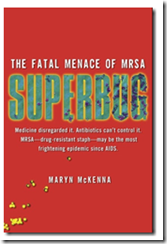
Few of my readers will need an introduction to author and blogger Maryn McKenna, who now writes for National Geographic.  The archive of her long-running Wired Superbug blog contains some of the best coverage of the growing antibiotic resistance issues facing modern medicine . Her award winning book Superbug: The Fatal Menace of MRSA is a superlative and eye-opening read.


And Maryn is certainly no stranger to the topics of avian flu and the safety of our food supply.


So, knowing when it is better just make a quick introduction and step quickly aside, I will simply point you towards Maryn’s Nat Geo blog today, entitled:


The Avian Flu Epidemic: Massive Impact, Uncertain Future

by Maryn McKenna

You might have to be an avid reader of medical journals—or a poultry farmer—to notice that the United States is in the midst of a slow-motion disease disaster.

The disease is avian influenza, and though it has not, as yet, affected any people, it is wreaking havoc nonetheless. As of Monday, almost 26 million chickens and turkeys have either died, or been killed to keep the disease from spreading. Three states—Iowa, Minnesota and Wisconsin—have declared states of emergency. Layoffs have begun at poultry farms, and the industry is warning that there may not be enough surviving turkeys to  fill tables at Thanksgiving. The federal government has released $330 million in emergency funds, and in Minnesota, the National Guard has been called out.

(Continue . . . )

Wednesday, March 05, 2014

CDC: Improving Antibiotic Prescribing Practices In Hospitals

image


# 8349


On Monday, in CDC Telebriefing (March 4th): Improving Antibiotic Prescribing Practices, I wrote about an upcoming CDC Vital Signs  report and web conference on the (often excessive) prescribing of antibiotics in US Hospitals. 


This morning we’ve the audio and transcript from that teleconference, excerpts and links to the MMWR early release, plus detailed reports from author and blogger Maryn McKenna and Lisa Schnirring at CIDRAP News.


First stop, the Teleconference contents, including links to the audio and transcript.


CDC Telebriefing: New Vital Signs Report - Are Prescribing Practices Putting Hospital Patients at Risk?

Poor antibiotic-prescribing practices in hospitals can needlessly put patients at risk for Clostridium difficile infection (deadly diarrhea) and future drug-resistant infections. This month, the CDC Vital Signs report looks at prescribing practices and variations, and calls on all U.S. hospitals to improve antibiotic-prescribing practices. More »

Transcript | AudioAudio/Video file


Accompanying this teleconference we have the following MMWR Early Release illustrating the wide disparity in prescribing practices across the nation.


Vital Signs: Improving Antibiotic Use Among Hospitalized Patients

Early Release

March 4, 2014 / 63(Early Release);1-7

Scott Fridkin, MD1, James Baggs, PhD1, Ryan Fagan, MD1, Shelley Magill, MD, PhD1, Lori A. Pollack, MD1, Paul Malpiedi, MPH1, Rachel Slayton, PhD1, Karim Khader, PhD2 Michael A. Rubin, MD, PhD2, Makoto Jones, MD1, Matthew H. Samore, MD2, Ghinwa Dumyati, MD3, Elizabeth Dodds-Ashley, PharmD3, James Meek, MPH4, Kimberly Yousey-Hindes, MPH4, John Jernigan, MD1, Nadine Shehab, PharmD1, Rosa Herrera1, L. Clifford McDonald, MD1, Amy Schneider, MPH1, Arjun Srinivasan, MD1 (Author affiliations at end of text)

Background: Antibiotics are essential to effectively treat many hospitalized patients. However, when antibiotics are prescribed incorrectly, they offer little benefit to patients and potentially expose them to risks for complications, including Clostridium difficile infection (CDI) and antibiotic-resistant infections. Information is needed on the frequency of incorrect prescribing in hospitals and how improved prescribing will benefit patients.

Methods: A national administrative database (MarketScan Hospital Drug Database) and CDC's Emerging Infections Program (EIP) data were analyzed to assess the potential for improvement of inpatient antibiotic prescribing. Variability in days of therapy for selected antibiotics reported to the National Healthcare Safety Network (NHSN) antimicrobial use option was computed. The impact of reducing inpatient antibiotic exposure on incidence of CDI was modeled using data from two U.S. hospitals.

Results: In 2010, 55.7% of patients discharged from 323 hospitals received antibiotics during their hospitalization. EIP reviewed patients' records from 183 hospitals to describe inpatient antibiotic use; antibiotic prescribing potentially could be improved in 37.2% of the most common prescription scenarios reviewed. There were threefold differences in usage rates among 26 medical/surgical wards reporting to NHSN. Models estimate that the total direct and indirect effects from a 30% reduction in use of broad-spectrum antibiotics will result in a 26% reduction in CDI.

Conclusions: Antibiotic prescribing for inpatients is common, and there is ample opportunity to improve use and patient safety by reducing incorrect antibiotic prescribing.

Implications for Public Health: Hospital administrators and health-care providers can reduce potential harm and risk for antibiotic resistance by implementing formal programs to improve antibiotic prescribing in hospitals.


Our next stop is Maryn Mckenna’s Superbug Blog, where Maryn looks at both the issues of appropriate antibiotic stewardship, and a proposed budget increase for the HHS to monitor help control the growing problem of antibiotic resistance.


CDC: Some Hospitals Need Assistance Using Antibiotics Properly (And the New Federal Budget May Help)

Double-barreled news today from the US Centers for Disease Control and Prevention. In an analysis of several sets of hospital data, gathered by the agency and also purchased from independent databases, the CDC said it found that more than 37 percent of prescriptions written in hospitals involved some sort of error or poor practice, increasing the risk of serious infections or antibiotic resistance. And in a surprise announcement timed to the release of the federal draft budget, the agency said it is in line to receive $30 million to enhance its work combating antibiotic resistance in the US.

(Continue . . . )


Our last stop is CIDRAP News where Lisa Schnirring provides an excellent summation of yesterday’s reports.


CDC calls out antibiotic prescribing problems

Lisa Schnirring | Staff Writer | CIDRAP News

Mar 04, 2014

In a major report today that looked at antibiotic usage, the US Centers for Disease Control and Prevention (CDC) said some clinicians in similar hospital units prescribe triple the amounts, with some making the types of errors that fuel drug-resistance problems that put many more patients at risk.

On a more hopeful note, however, the same report also found hospitals that trim their antibiotic use by 30% can reduce Clostridium difficile (C diff) infections, a potentially deadly diarrheal infection known to sicken patients in health facilities, by 25%. The CDC published the findings today in Morbidity and Mortality Weekly Report (MMWR).

(Continue . . . )

Friday, February 21, 2014

Referral: Maryn McKenna On China’s Agricultural Challenges

image


# 8321


This morning Maryn McKenna takes a hard look at some of the challenges that China – and the world – face as they gear up their agricultural systems to feed more than 1.3 billion people. As mentioned before in this blog, bird flu is a major threat to one of China’s biggest source of meat-protein – poultry -  and other livestock diseases (PED, PRRS, etc.)  threaten swine, goats, and other domesticated animals.


But as Maryn points out in her blog today, China’s growing appetite for meat also raises concerns over water and land usage, agricultural antibiotic use, and food safety. 


Follow the link below to read:


From Bird Flu to Big Farms: The Rise of China’s Agriculture

Sunday, November 17, 2013

The Lancet: Antibiotic Resistance - The Need For Global Solutions

image

Credit CDC Vital Signs


# 7985


With tomorrow (Nov. 18th) marking Antibiotic Resistance Awareness Day in Europe, and kicking off the Get Smart About Antibiotics week in the United States, today The Lancet has published a special collection of reports and articles on the growing problems of antimicrobial resistance (note: Free registration required to access articles).


Antibiotic resistance—the need for global solutions

Published November 17, 2013

Executive summary

The causes of antibiotic resistance are complex and include human behaviour at many levels of society; the consequences affect everybody in the world. Similarities with climate change are evident. Many efforts have been made to describe the many different facets of antibiotic resistance and the interventions needed to meet the challenge. However, coordinated action is largely absent, especially at the political level, both nationally and internationally. Antibiotics paved the way for unprecedented medical and societal developments, and are today indispensible in all health systems. Achievements in modern medicine, such as major surgery, organ transplantation, treatment of preterm babies, and cancer chemotherapy, which we today take for granted, would not be possible without access to effective treatment for bacterial infections. Within just a few years, we might be faced with dire setbacks, medically, socially, and economically, unless real and unprecedented global coordinated actions are immediately taken. This Commission describes the global situation of antibiotic resistance, its major causes and consequences, and identify key areas in which action is urgently needed.

The Lancet Infectious Diseases Commission

Antibiotic resistance—the need for global solutions

Ramanan Laxminarayan, Adriano Duse, Chand Wattal, Anita K M Zaidi, Heiman F L Wertheim, Nithima Sumpradit, Erika Vlieghe, Gabriel Levy Hara, Ian M Gould, Herman Goossens, Christina Greko, Anthony D So, Maryam Bigdeli, Göran Tomson, Will Woodhouse, Eva Ombaka, Arturo Quizhpe Peralta, Farah Naz Qamar, Fatima Mir, Sam Kariuki, Zulfiqar A Bhutta, Anthony Coates, Richard Bergstrom, Gerard D Wright, Eric D Brown, Otto Cars

Related articles and comments in this issue also include:

Antibiotic resistance: global response needed

Simon J Howard, Mike Catchpole, John Watson, Sally C Davies

Global collaboration to encourage prudent antibiotic use

Sarah Earnshaw, Andrea Mendez, Dominique L Monnet, Lauri Hicks, Marilyn Cruickshank, Lynn Weekes, Howard Njoo, Stacie Ross

Antibiotic effectiveness and child survival

Mark Young, Mickey Chopra, Atieno Ojoo

Antibiotic resistance in Ghana

Martha Gyansa-Lutterodt

Light at the end of the tunnel of antibiotic development

Glenn S Tillotson

Antibiotic Action: helping deliver action plans and strategies

Laura JV Piddock


Perseverance, persistence, and the Chennai declaration

Abdul Ghafur

Related content published in The Lancet Infectious Diseases

Antibiotic resistance: long-term solutions require action now


Despite decades of warnings, the persistent overuse of antibiotics has led us to the precipice, and we now face an uncertain and potentially frightening future where previously curable infections may run rampant.  A few recent warnings include:


ECDC: Antibiotic Resistance In the EU – 2012

UK CMO: Antimicrobial Resistance Poses `Catastrophic Threat’

MMWR Vital Signs: Carbapenem-Resistant Enterobacteriaceae (CRE)

CDC HAN Advisory: Increase In CRE Reports In The United States

PNAS: Abundant Antibiotic Resistance Genes In Chinese Swine Farms

Chan: World Faces A `Post-Antibiotic Era’


For a more complete look at the complex issues of antibiotic resistance, and the dearth of new drugs on the horizon, I can think of no resource better than Maryn McKenna’s superb book (and recent winner of the 2013 June Roth Memorial Book Award, American Society of Journalists and Authors)  Superbug: The Fatal Menace of MRSA.

Superbug (MRSA) Book

And while I dabble in writing about the issues of antibiotic resistance, undoubtedly the best coverage can be found on Maryn’s Superbug blog.

Wednesday, October 16, 2013

Referral: McKenna Interviews CDC Director Frieden On Shutdown


# 7866


Maryn McKenna, writing on her Superbug Blog, has a one-on-one interview with CDC Director Thomas R. Frieden, who talks about how crippling this current government shutdown has been for CDC surveillance and other crucial operations.  


Follow the link below to read:


CDC Director: In the Shutdown, ‘We Are Juggling Chainsaws’

Tuesday, September 17, 2013

Referral: McKenna On CDC Antibiotic Resistance Report

image


# 7780


Yesterday the CDC released a comprehensive report on the threat of growing antibiotic resistance, with Director Thomas Frieden warning, `“If we are not careful, we will soon be in a post-antibiotic era.” – a stark forecast not dissimilar from the one that World Health Director-General Margaret Chan gave a year ago (see Chan: World Faces A `Post-Antibiotic Era’).


Bringing all of this together is Flublogia’s favorite `scary disease girl’ - journalist, author, and blogger Maryn McKenna - whose beat regularly revolves around the world of antimicrobial resistance. 


Maryn is the author of the award winning book Superbug: The Fatal Menace of MRSA, and is probably responsible for the sale of more hand sanitizer and soap than any other science writer in the business.


Maryn posted the first of what is likely to be a series of posts on this CDC report yesterday.   Follow the link to read:


CDC Threat Report: ‘We Will Soon Be in a Post-Antibiotic Era’

The U.S. Centers for Disease Control and Prevention has just published a first-of-its-kind assessment of the threat the country faces from antibiotic-resistant organisms, ranking them by the number of illnesses and deaths they cause each year and outlining urgent steps that need to be taken to roll back the trend.


The agency’s overall — and, it stressed, conservative — assessment of the problem:

  • Each year, in the U.S., 2,049,442 illnesses caused by bacteria and fungi that are resistant to at least some classes of antibiotics;
  • Each year, out of those illnesses, 23,000 deaths;
  • Because of those illnesses and deaths, $20 billion each year in additional healthcare spending;
  • And beyond the direct healthcare costs, an additional $35 billion lost to society in foregone productivity.

(Continue . . . )

Wednesday, July 24, 2013

Nature: Maryn McKenna On CRE


image

Credit CDC Vital Signs


# 7512


Maryn McKenna , journalist, author of Superbug: The Fatal Menace of MRSA and editor of the Superbug blog, has a long read on Nature today about the growing dangers from CRE (carbapenem-resistant Enterobacteriaceae).


Follow the link below to read her article, and don’t forget to listen to the 5 minute podcast as well.


Antibiotic resistance: The last resort

Health officials are watching in horror as bacteria become resistant to powerful carbapenem antibiotics — one of the last drugs on the shelf.

24 July 2013


For more, you’ll want to visit Maryn’s Superbug Blog.

A few of my blogs on the topic in the past include:


MMWR Vital Signs: Carbapenem-Resistant Enterobacteriaceae (CRE)
CDC HAN Advisory: Increase In CRE Reports In The United States
APIC: The Persistence Of CRE

Friday, June 14, 2013

Referral: Maryn McKenna’s Bug Out Experience


# 7399


Everybody’s favorite scary disease girl, Maryn McKenna, journalist, author of Superbug: The Fatal Menace of MRSAm and editor of the Superbug Blog, found herself (along with her husband and cat) in a precarious situation last night as a line of severe weather swept across Atlanta, causing damage in her neighborhood.


Today Maryn writes about what they did right (and what they would do differently next time) when it looked for a time like they might have to abandon their home on very short notice.


Maryn’s experience is a great teachable moment, and I would urge you to read her account of how quickly, and unexpectedly, an emergency can arise. She very kindly mentions this blog along the way.


Here’s a link to her blog post, and when you return, I’ll have a short postscript.


The Risks You Don’t Think of: A Plea to Pack a ‘Go Bag’

By Maryn McKenna 06.14.13  5:40 PM

What if you had 15 minutes’ notice to leave your home, and you didn’t know when you’d be coming back — or what shape your home would be when you did?


Could you find your key documents, medications, ID, devices, cables? Sturdy shoes, suitable clothing, stuff to comfort your kids and control your pets? Mementos, valuables, things you couldn’t live without? While trying to stay calm, keep your family calm, and figure out what’s going on?

(Continue . . . )


Obviously, all of us who know Maryn are relieved her ordeal wasn’t any worse than it was.  But, as we’ve seen with the wildfires in Colorado this week, where hundreds of homes have burned, and thousands have been displaced, happy endings are never guaranteed.


Regular readers may recall I had a similar event last year (see At The End Of My Rope). Even though I’ve been a long-time vocal proponent of preparedness - when the world came crashing down in the middle of the night - I found I wasn’t quite as prepared as I thought I was.


Two weeks later, I’d made some changes to my own `bug out’ bag (see Inside My New Bug Out Bag), and about every six months I take a hard look at my emergency plans.


Because, as this video from Ready.gov shows, your whole world can turn upside down in an instant, and often without warning.


For more on  disaster preparedness, I would invite you to visit Ready.gov, FEMA,  or revisit these blogs:


In An Emergency, Who Has Your Back?

When 72 Hours Isn’t Enough

The Gift of Preparedness 2012

Thursday, May 02, 2013

McKenna: New Diseases And National Transparency


image

Coronavirus – Credit CDC PHIL


# 7221


Maryn McKenna, writing on her Superbug Blog this evening, takes a hard look at the delays in reporting, and absence of details, in Saudi Arabia’s announcement today of 7 new novel coronavirus cases (see hCoV-EMC: Saudi Arabia Reports 7 Cases, 5 Fatal).


Since Maryn needs no prefacing from me, I’ll simply invite you to follow the link and read:


New Diseases And National Transparency: Who Is Measuring Up?

Saturday, April 13, 2013

Keeping Track Of The H7N9 Outbreak

image

ECDC Map


# 7129


With the confirmed case count nearing 50, and those numbers in all likelihood to rise, keeping track of individual cases, and outcomes, has become a demanding, and at times, frustrating job.


Gleaning data from press releases and news stories (which can vary in the type, and reliability, of data), flublogians around the world are trying various means to keep information straight and organized.  


Aiding flu-literate journalists like Helen Branswell, Maggie Fox, Jason Gale, and Dr. Richard Besser and bloggers like Crof and Maryn McKenna, and myself, there’s a small army of (mostly volunteer) analysts crunching numbers and making charts available online.


Dr. Ian M. Mackay from the University of Queensland in Australia maintains the  Virology Down Under website and blog, where he is keeps tabs of mew cases and analyzes the data  (link).


As you can see by his terrific chart below, the dataset is beginning to get crowded.  But the trend in onset dates revealed by this graphic provides a much better sense of how this outbreak is progressing. You’ll find more than just charts on the VDU H7N9 website, and so it is worth visiting every day.


Timeline-H7N9-WEEKS


Similarly, the newshounds on FluTrackers are continually scouring the Internet for new case reports, which Sharon Sanders uses to update their running list of confirmed and suspected cases.


2013 Human Case List for Confirmed and Suspected H7N9 Type Influenza*


#1 - Man, 87, onset date February 19, died March 4 - Shanghai Death+
#2 - Man, 27, onset date February 19, died March 10 - possible pork contact - Shanghai Death
#3 - Woman, 35, onset date March 15, hospitalized in critical condition - possible poultry contact - Chuzhou City, Anhui Province Death++
#4 - Woman, 45, onset date March 19, hospitalized March 27 - poultry culler - Jiangning district of Nanjing, Jiangsu province
#5 - Woman, 48, onset date March 19, hospitalized March 30 - Shuyang county of Suqian City, Jiangsu province
#6 - Man, 83, onset date March 20 - hospitalized March 29 - Wujiang district of Suzhou, Jiangsu province Death
#7 - Woman, 32, onset date March 21 - hospitalized March 28 - Binhu district of Wuxi City, Jiangsu province
#8 - Man, 38, onset date March 7, hospitalized March 18, died March 27 - reported to be a cook - Taicang, Zhejiang province Death
#9 - Man, 67, onset date March 25, hospitalized March 25, died April 2? Hangzhou, Zhejiang province
#10 - Man, 64, onset date hospitalized March 29, Zhejiang province Death
#11 - Man, 48, onset date March 28, engaged in chickens and ducks transportation work - Shanghai Death
#12 - Woman, 67, onset date March 22, hospitalized on March 25 in critical condition - Shanghai
#13 - Woman, 52, onset date March 27, died on April 3 - Shanghai Death
#14 - Child, 4, onset date March 31, mild case. Shanghai
#15 - Woman, 61, onset date March 20, from a retirement home - in critical condition Qinhuai District, Nanjing, Jiangsu province
#16 - Man, 79, onset date March 21, from a retirement home. Qinhuai District in Nanjing, Jiangsu province, in critical condition
#17 - Man, 74, onset date March 28, hospitalized March 3, farmer, died April 11 Shanghai Death note
#18 - Man, 66, onset date March 29, hospitalized April 2, in treatment - from a retirement home, Shanghai
#19 - Man, 59, onset on March 25, hospitalized on March 30 Shanghai
#20 - Man, 67 - onset on March 29. Hospitalized on March 30 - in treatment - Shanghai
#21 - Man, 55, onset date March 28, hospitalized April 1 in stable condition - poultry worker - Anhui province
#22 - Age 64, onset date: April 1. Hospitalized on April 7. - Shanghai Death
#23 - Man, 85, onset date March 28, hospitalized April 8 in critical condition, retirement home, Nanjing Shimonosek Jiangsu province
#24 - Woman, 25, pregnant, onset date: March 30. - In critical condition. Zhenjiang City area, Jiangsu province
#25 - Woman, 51, onset date March 13, hospitalized, Huzhou City, Zhejiang Province
#26 - Man, 79, onset date March 29, hospitalized in critical condition, Hangzhou, Zhejiang Province
#27 - Man, 62, onset date April 1, hospitalized April 5, retired Shanghai
#28 - Man, 77, onset date April 3, hospitalized April 7, retired Shanghai
#29 - Man, 65, hospitalized - a farmer Hangzhou, Zhejiang Province
#30 - Man, 70, onset date March 29, Wuxi Huishan, Jiangsu province
#31 - Man, 74, onset date April 2, Jiangyin City, Wuxi City, Jiangsu province
#32 - Woman, 76, onset date April 1, hospitalized April 5, Shanghai
#33 - Woman, 81, hospitalized April 4, farmer , Shanghai
#34 - Man, 31, chef, Yangzhou City, Jiangsu province
#35 - Man, 56, teacher, Suzhou Industrial Park, Jiangsu province
#36 - Man, 74, onset date March 31, hospitalized April 5, died April 11 retiree, Shanghai Death
#37 - Woman, 83, onset date April 2, hospitalized April 7, Shanghai
#38 - Man, 68, onset date April 4, hospitalized April 9, Shanghai
#39 - Man, 53, onset date April 3, hospitalized April 10, Shanghai
#40 - Man, 86, onset date April 3, hospitalized April 6, Shanghai
#41 - Man, 66, onset date April 8, hospitalized April 9, Hangzhou, Zhejiang province
#42 - Man, 74, onset date April 6, hospitalized April 11, Hangzhou, Zhejiang province
#43 - Woman, 54, onset date April 6, hospitalization April 12, Huzhou, Zhejiang province
#44 - Child, 7, hospitalized April 11 Shunyi District Beijing
#45 - Woman, 77, Nanjing former Baixia District, Jiangsu province
#46 - Man, 72, Changshu, Jiangsu province
#47 - Man, 56, onset date April 1, hospitalized April 4; his wife was confirmed positive on April 4, Shanghai
#48 - Man , 65, onset date April 3, hospitalized April 9. Zhejiang Province
#49 - Man , 38, onset date April 6, hospitalized April 11. Zhejiang Province


Laidback Al on FluTrackers also updates charts and maps on this outbreak on this thread.


Another graphical representation of cases, along with links to individual news reports, can be found on Healthmap’s H7N9 page.


image


And the ECDC continues to provide almost daily epidemiological updates (April 13th edition), including charts and maps, on this emerging virus.  Check the ECDC home page for new updates.


image


image


There are dozens of newshounds on flu forums like FluTrackers and The Flu Wiki, scores of people on twitter, and likely hundreds working behinds the scenes at public health organizations like Hong Kong’s CHP, the World Health Organization, the CDC, China’s CDC, and the ECDC who make it their job to keep the numbers straight, and the information flowing.


Admittedly, given the non-stop internet news cycle, and the leapfrogging of updates, it can still be difficult to keep abreast of the latest case counts. 


But without the efforts and generosity of the people mentioned above, and many more like them, it would probably be impossible.


At some point, if this outbreak grows substantially, it may become impractical to keep track of each individual case.


Nevertheless , the work being done right now is invaluable to those of us trying to make sense of the situation. And so a tip of my hat, and a world of thanks, to all those who are pitching in to keep the information rolling.

Sunday, February 10, 2013

A Pair Of Sunday Morning Referrals


# 6919


It’s a pretty quiet morning across flublogia, and while I’m still digging around for a topic to blog on, Crof and Maryn McKenna both have entries well worth your time.


First stop, Maryn McKenna’s wired science Superbug Blog.


Antibiotics And Antibiotic-Resistant Bacteria In Meat: Not Getting Better


After which you’ll want to visit Crofsblog and read Crof’s thoughtful piece on the as-yet unbridged cultural, societal, and technological chasms that keep billions of people living (and dying) much as their ancestors did during the middle ages.


Thinking about H5N1

Friday, January 11, 2013

Referral: McKenna On Almost-Untreatable Gonorrhea


image

From CDC Grand Rounds The Growing Threat of Multidrug-Resistant Gonorrhea

# 6847


A topic that Maryn McKenna (and to a lesser extent, this blog) have addressed in recent years has been increases in reports of Drug Resistant Gonorrhea from around the the world.


Last August, in  Referral: McKenna On Resistant Gonorrhea, Maryn looked at the CDC’s new guidelines on the treatment of gonorrhea, making the oral antibiotic cefixamine no longer the first line drug of choice, and substituting injectable ceftriaxone along with oral doses of either azithromycin or doxycycline.


Earlier Maryn also wrote Drug-Resistant Gonorrhea: How We Lost Track and The Clap Came Back: Multidrug-Resistant Gonorrhea.


A couple of my offerings include:


The Path Of Increased Resistance

Going, Going, Gonorrhea


Today Maryn is back with the details of a Toronto STD clinic that has documented a disturbing trend in the number of `treatment failures’ they’ve seen.  


Follow the link to read the sobering details.


Almost-Untreatable Gonorrhea: Proof That It’s Here

Wednesday, December 26, 2012

Referral: McKenna On MRSA In UK Milk


image

MRSA - Photo Credit – CDC PHIL 

# 6805


During the summer of 2011 news of a new strain of MRSA (Methicillin-resistant Staphylococcus aureus) found in milk in the UK made considerable headlines. 


Although I wrote about it in UK: `New MRSA’ Strain Spreading, the real expert in all things antibiotic resistant in the blogosphere is Maryn Mckenna on her Superbug Blog, who provided in-depth coverage in More MRSA, in milk: A new strain in cows and humans.


Today Maryn is back with another report, this time on the detection of the ST398 strain of MRSA, recently detected in Milk produced in England.


Follow the link below to read:


Livestock MRSA Found For First Time In UK Milk

Tuesday, December 04, 2012

Referral: McKenna On The Steroid-Linked Meningitis Outbreak

image

CDC update 12/3/12


# 6762


Maryn McKenna, writing on her Superbug Blog this morning, has the details of a special briefing provided to her and others from the Association of Health Care Journalists by the CDC on the multi-state meningitis outbreak linked to contaminated steroid injections.


Follow the link to read:


Fungal Meningitis From Injections: Not Even Close To Over

Wednesday, November 14, 2012

A Health Crisis In Slow Motion


image


# 6715


Although truly the miracle drugs of the 20th century, antibiotics are a fragile armamentarium, and over the past 70 years we’ve learned just how quickly bacteria can evolve to evade their antimicrobial effects.


Antimicrobial resistance is a huge and growing threat to public health – perhaps the greatest threat of all. 


Yet it is largely unappreciated by the public because its progression has been gradual, the loss of antibiotics incremental, and so far at least . . . there have always been replacement drugs available when an antibiotic has failed.


But the number of new antibiotics in the pipeline are desperately few, and the frequency of newly emerging resistant bugs has increased in recent years. 


Last March, the Director General of the World Health Organization, Margaret Chan - in a keynote address to the Conference on Combating Antimicrobial Resistance in Copenhagen - painted a bleak picture of the future of antibiotic availability if action is not taken.


The D-G’s entire remarks may be viewed on the WHO’s website at Antimicrobial resistance in the European Union and the world, but I’ve excerpted a few choice statements below.


If current trends continue unabated, the future is easy to predict. Some experts say we are moving back to the pre-antibiotic era. No. This will be a post-antibiotic era. In terms of new replacement antibiotics, the pipeline is virtually dry, especially for gram-negative bacteria. The cupboard is nearly bare.


<SNIP>


A post-antibiotic era means, in effect, an end to modern medicine as we know it. Things as common as strep throat or a child’s scratched knee could once again kill.


Some sophisticated interventions, like hip replacements, organ transplants, cancer chemotherapy, and care of preterm infants, would become far more difficult or even too dangerous to undertake.


This week (Nov. 12th-18th) marks the CDC’s fifth annual Get Smart About Antibiotics Week, which coincides with observances in many regions around the world, including  European Antibiotic Awareness Day, Australia's Antibiotic Awareness Week and Canada's Antibiotic Awareness Week.


The theme of this campaign is the smart usage of antibiotics, and educating the public on the fact that these drugs won’t cure a viral infection, and their overuse leads to resistance.  


image

Get Smart. Take a look at this chart to find out which upper respiratory infections are usually caused by viruses — germs that are not killed by antibiotics. Talk with your doctor about ways to feel better when you are sick. Ask what you should look for at home that might mean you are developing another infection for which antibiotics might be appropriate.


For some ideas about what to do for these types of illnesses without taking antibiotics, the CDC has a Symptom Relief webpage.


Still, many people expect an antibiotic when they go to their doctor with a respiratory infection (and many doctors continue to prescribe them).


Maryn McKenna has more on the public’s often errant perception of proper antibiotic use, and on highly divergent physician prescribing habits across the country. Follow the link to read:


The Persistence of Resistance And Some Reasons Why

  • By Maryn McKenna
  • November 13, 2012 |  


The `go to’ person on all things antibiotic resistant in the blogosphere is undoubtedly Maryn McKenna, author of Superbug: The Fatal Menace of MRSA and editor of the Superbug Blog. Both of which I highly recommend.


I, on occasion, do wade into the shallower depths of the antimicrobial pool in this blog. A few recent examples include:


EID Journal: Challenges To Defining TDR-TB
India: Still Looking For A Policy On Antibiotics
MMWR: NDM-1 Transmission In Rhode Island
ECDC Response Plan To Multi-Drug Resistant Gonorrhea
CDC Grand Rounds: Multidrug-Resistant Gonorrhea


The problems of antimicrobial resistance go far beyond the overuse, or misuse of antibiotics by the American public. Other threats include:


It will take a multi-pronged, international effort to slow the growth of antibiotic resistance. Agencies like the FDA, CDC, WHO, and ECDC are working towards finding solutions, but there are many competing interests and much bureaucratic red tape.


Progress is often slow. 


Other than supporting the wise use of antibiotics internationally, admittedly as individuals we can’t do much about the use of antibiotics in India, or on the farm, or sold over the internet.


But we can be smart about how we use these drugs. Part of the solution is not being part of the problem.


We either exercise proper stewardship over the remaining drugs we have (and hope that new ones can be developed) or we face a very grim future where minor infections - once easily defeated -  will once again claim millions of lives.

Thursday, October 18, 2012

Referral: McKenna On The NEJM Coronavirus Report


image

Coronavirus – Credit CDC PHIL


# 6642


Maryn McKenna, author of the Superbug Blog and two must read science books, takes a look at yesterday’s NEJM brief report and editorial on the novel Coronavirus isolated in a patient in Saudi Arabia.


Follow the link to read:


image

The New Coronavirus: Uncertainty, And How To Talk About It

Wednesday, September 26, 2012

McKenna: Remembering SARS & The New Coronavirus

image

Coronavirus – Credit CDC PHIL


# 6587


Maryn McKenna has penned a terrific look back at the SARS epidemic of 2002-2003, along with analysis of why this newly discovered coronavirus has so unnerved public health officials.


Maryn tells a medical detective story better than anyone I know, so I’ll simply invite you to click on the link below and read:


Why The New Coronavirus Unnerves Public Health: Remembering SARS


Thursday, August 23, 2012

Maryn McKenna Video On Disease, Cities, and Our Crowded Future


# 6512


Maryn McKenna, everyone’s favorite `scary disease girl’, has a new blog post up, along with a link to her 70 minute video presentation at the Science Gallery’s Hack The City gathering this summer in Dublin.


When you can set aside a little more than an hour of your undivided attention, by all means go and watch:


Diseases, Cities And The Coming Crowded Future

  •  Maryn McKenna August 22, 2012
  • image
  • Highly recommended.


    If you haven’t already, you may want to read Maryn’s terrific 2010 book Superbug: The Fatal Menace of MRSA.  Here is a link to my review.

    image

    Friday, August 10, 2012

    Referral: McKenna On Resistant Gonorrhea


    image

    Credit CDC


    # 6487


    A topic that Maryn McKenna and I have both blogged about at length over the past year – Increasingly Drug Resistant Gonorrhea - was the subject of a major announcement out of the CDC yesterday.


    In the wake of rising treatment failures with the existing treatment protocol, Thursday’s MMWR contained new guidelines on the treatment of gonorrhea, making the oral antibiotic cefixamine no longer the first line drug of choice, and substituting injectable ceftriaxone along with oral doses of either azithromycin or doxycycline.


    Last night, Maryn McKenna – Flublogia’s expert in all things antibiotic resistant  - wrote about this bulletin in her SUPERBUG BLOG, and so I would invite you to jump  over to her site to read:


    Resistant Gonorrhea: CDC Says Just One Drug Left


    This problem extends far beyond the growing incidence of resistant Neisseria gonorrhoeae. You’ll find Maryn’s 2010 book Superbug: The Fatal Menace of MRSA serves as a terrific wakeup call and primer covering a wide range of these resistance issues. 


    We’ve known this day was coming, of course. Over the past year I’ve written about the warning signs in:


    ECDC Response Plan To Multi-Drug Resistant Gonorrhea

    WHO: Urgent Action Needed On Resistant Gonorrhea

    CDC Grand Rounds: Multidrug-Resistant Gonorrhea

    Going, Going, Gonorrhea

    The Path Of Increased Resistance


    History has taught us – that given enough time – bacterial pathogens often manage to evolve resistance to whatever antibiotics we use against them.


    With few new classes of antimicrobials in the developmental pipeline, the fear is that a few years down the road, our ability to treat even the simplest of infections may be compromised.


    Director-General Margaret Chan of the WHO warned earlier this year during a keynote address to the Conference on Combating Antimicrobial Resistance in  Copenhagen, Denmark that our World Faces A `Post-Antibiotic Era’.


    The D-G’s entire remarks may be viewed on the WHO’s website at Antimicrobial resistance in the European Union and the world, but I’ve excerpted a few choice statements below, after which you’ll find a link to the World Health Organization’s latest publication on antibiotic resistance.


    Excerpts from D-G Chan’s March 14th, 2012 speech.


    If current trends continue unabated, the future is easy to predict. Some experts say we are moving back to the pre-antibiotic era. No. This will be a post-antibiotic era. In terms of new replacement antibiotics, the pipeline is virtually dry, especially for gram-negative bacteria. The cupboard is nearly bare.

    <SNIP>


    A post-antibiotic era means, in effect, an end to modern medicine as we know it. Things as common as strep throat or a child’s scratched knee could once again kill.


    The World Health Organization recently released a 120 page book that provides options and strategies for combating this global threat.


    The evolving threat of antimicrobial resistance - Options for action

    Authors:
    World Health Organization

    Publication details

    Number of pages: 120
    Publication date: 2012
    Languages: English
    ISBN: 978 92 4 1503181

    Wednesday, August 01, 2012

    Referral: McKenna On Pertussis Vaccines


    image

    # 6465


    Maryn McKenna has a terrific blog this morning about an extraordinarily difficult subject – the recent rise in Pertussis cases even among those who have previously been vaccinated.


    I’ll just step aside and invite you to read:


    Is Childhood Pertussis Vaccine Less Effective Than We Thought?