Showing posts with label Seal. Show all posts

Tuesday, December 16, 2014

SwAM: European Seal Deaths Continue From H10N7 Flu

image

Credit Wikipedia


# 9448


A couple of months ago in  Avian H10N7 Linked To Dead European Seals, I wrote about the recent die off of seals in Denmark and Germany and the determination that their deaths were the result of a combination of avian H10N7 influenza, pneumonia, and bacterial infection, which I followed up last month with a report in Eurosurveillance: Avian H10N7 Influenza In Harbor Seals.


In  2011 we saw a similar die off of seals in New England which was eventually linked to a different avian flu virus (see New England Seal Deaths Tied to H3N8 Flu Virus).


While we normally concentrate on novel avian and swine influenza strains,  the appearance and transmission of (avian-origin) influenza viruses in marine mammals raises concerns because they often show signs of mammalian adaptation – which may indicate a greater threat to humans down the road.


In 2012, in mBio: A Mammalian Adapted H3N8 In Seals, we saw  evidence that that particular avian virus had recently adapted to better bind to alpha 2,6 receptor cells, the type found in the human upper respiratory tract.


Although known human infections with avian H10N7 are limited, we’ve discussed them previously on several occasions . 


Today we’ve a statement from the Swedish Agency for Marine and Water Management (SwAM) indicating that the number of dead seals – previously estimated at around 700 – is likely a huge undercount.   They estimate as many as 3,000 seal deaths likely due to H10N7.


More dead seals on the west coast than previously thought - Sea provides grants to increased sampling

Press Release • 2014-12-16 07:34 CET

More dead seals on the west coast than previously thought - Sea provides grants to increased sampling

Year to date, approximately 3000 harbor seals in Swedish and Danish waters died, probably infected by bird flu virus H10N7.

Marine and Water Authority, Sea, is now 245 000 SEK to the Museum of Natural History in order to get more samples of sick and dead seals.

In April this year, the first reports come in of sick and dead seals along the west coast, mainly in the Gothenburg archipelago. Researchers from the National Veterinary Institute and Museum of Natural History in Stockholm has taken samples of the dead seals. In October, scientists have estimated that it concerned a total of 700 dead animals in total, both in Sweden and Denmark, and that most likely died of bird flu virus H10N7.

- Today, researchers know that significantly more common seals died than those found washed ashore along the coast. Most people who become infected and died fell into the sea, it shows the results from the flyginveteringar made, says Susanne Folds, investigators at the CBD on the seas.

It is probably also the case that most seals infected but the majority have been able to form antibodies against the virus. Even in Germany has during the year found more sick and dead harbor seals than normal.

- Still, we have not the complete picture of how many seals affected, nor exactly how the infection has spread. We therefore spends money to enable researchers to continue sampling and mapping, says Susanne Folds.

Marine and Water Authority is responsible for managing gray and harbor seals and presented the autumn of 2012, management plans for these species. In 2014, it counted approximately 10 000 harbor seals in the Swedish västkusten-

So far this year, only West Coast hit by the seal death in Sweden and it is just about the harbor seal, we have not received reports of dead gray seal. Whoever finds dead seals should first contact the municipality where the find has been made and secondly Museum of Natural History.

(Continue . . .)


Thursday, October 23, 2014

Avian H10N7 Linked To Dead European Seals

image 


# 9237


In 2011 a die off of seals in New England made headlines, which was eventually linked to an avian flu virus (see New England Seal Deaths Tied to H3N8 Flu Virus).  While not a new revelation that seals were susceptible to influenza viruses, this did raise concerns as in 2012, in mBio: A Mammalian Adapted H3N8 In Seals, we saw the first hints that this virus had recently adapted to bind to alpha 2,6 receptor cells, the type found in the human upper respiratory tract.


Until it landed in seals, this H3N8 strain was an avian adapted virus. That is, that it bound preferentially to the kind of receptor cells commonly found in the digestive and respiratory tracts of birds; alpha 2,3 receptor cells.


Seals were suddenly on the radar as potential `mixing vessels’ for influenza, much in the same way as pigs have been for years.  The good news being that seals have less opportunities to mingle with humans than do pigs.


Additional research, published this past September (see Nature Communications: Respiratory Transmission of Avian H3N8 In Ferrets), confirmed that this `virus has an increased affinity for mammalian receptors, transmits via respiratory droplets in ferrets and replicates in human lung cells.


In recent weeks there have been reports of large die offs of seals in Denmark and Germany (My thanks to Fred de Vries for the emailed head’s up), and this past week it was determined that a combination of avian H10N7 influenza, pneumonia, and bacterial infections were behind these deaths.


This report from the Technical University of Denmark.


Seals from several areas of Denmark were infected with influenza

Viral Zoonoses

National Veterinary Institute have found the influenza virus in seals from Anholt, fjord and three locations on the west coast. For the first time, identified a major flu outbreak among seals in Europe.

In recent months, we have found several dead seals along the Danish coasts than normal, and the National Veterinary Institute studies show that the cause of an outbreak of influenza.

In early July this year showed the National Veterinary Institute for the first time influenza type H10N7 two seals from Anholt. In September, the same virus was detected in dead seals from the fjord, and in October, the influenza virus has also been detected in dead seals at White Sands, Sædding and Skallingen on the west coast. The latter virus is not yet typed, but there are probably talking about the same H10N7 virus. The same virus is also detected in dead seals along the Swedish west coast.

"There are previously reported outbreaks of influenza in seals in Asia and the United States, but this is the first time that a major outbreak of influenza virus is found in seals in Europe," says Professor Lars Erik Larsen Section of Virology at the National Veterinary Institute.

Influenza virus weakens the seals, thus becoming more susceptible to other infections which may contribute to the deterioration of the disease and possibly lead to seal door.

"Initially, the seals probably got the flu by being in contact with birds or their droppings, but subsequently there has probably been no suggestion that the virus has infected from seal to seal," explains Lars Erik Larsen.

Do not touch the seals


Discovery of influenza virus in wild ducks are common, without giving rise to infection of other animals and humans. There are no reports of infection in people with the virus identified in these outbreaks among seals in Denmark, but other influenza viruses of the same type have previously caused light infection in humans.

"If you found dead seals should not touch them, but contact Naturstyrelses local wildlife consultant," says Special Mariann Chriél from the Section of Diagnostics and Emergency at the National Veterinary Institute.


Although known human infections with avian H10N7 are limited, we’ve discussed them on several occasions in the past.  In 2004, the first known human infections were reported among two Egyptian toddlers, as described in this report by WHO/CDS/CSR/RMD


Avian Influenza Virus A (H10N7) Circulating among Humans in Egypt

The National Influenza Center (NIC) in Egypt and the WHO Influenza Collaborating Centre in the UK reported the isolation of Avian Influenza A (H10N7) from two human specimens. They refer to two one-year-old infants, residents of Ismaillia, who recovered after presenting a fever and cough. The father of one of them is a poultry merchant who frequently traveled between Isamillia and Damietta. In the latter town, five cases of the same virus were isolated from wild ducks between 18 and 22 April 2004, from samples taken from a market of hunted migratory birds. Additional preliminary investigation tested negative in 75 human samples collected in Ismaillia and in 13 samples from migratory birds from the same market. No influenza outbreak has been reported among poultry in Egypt. At present, there are no public-health implications from this event.
 

And again, in 2012, in EID Journal: Human Infection With H10N7 Avian Influenza, we looked at a limited outbreak among workers at a chicken farm in Australia.  While their symptoms were mild and of short duration, the abattoir instituted enhanced PPE requirements for employees to try to prevent future infections.


Given its limited history of infecting humans, and the mild symptoms it has provoked, H10N7 seems an unlikely candidate to cause a serious public health threat. 


Of course, you could have said the same thing about avian H7 viruses two years ago.  All that changed when a new and deadly H7N9 emerged in China.


H10N7  – like all influenza A viruses –  has the ability to drift, mutate, or reassort with other influenza viruses and – over time -  continually re-invent itself.  


Which makes surveillance of events – such as this seal die off – an important part of the world’s efforts to detect the next emerging disease threat – and perhaps even stop it -  before it can pose a serious public health risk.

Wednesday, September 03, 2014

Nature Communications: Respiratory Transmission of Avian H3N8 In Ferrets

image

Photo Credit Wikipedia


# 9035


For those who aren’t completely overwhelmed by the plethora of zoonotic pathogens that have been coming out of the woodwork over the past few years, we’ve a new study today on an avian influenza virus – first isolated in New England seals back in 2011 (see New England Seal Deaths Tied to H3N8 Flu Virus)  –  that finds it is not only well adapted to mammalian hosts, that it can also be easily transmitted between ferrets via the respiratory route.

 
This H3N8 virus is of a different lineage than the Equine/Canine H3N8 virus, although they are cousins. 


Until it landed in seals, this H3N8 strain was an avian adapted virus.  That is, that it bound preferentially to the kind of receptor cells commonly found in the digestive and respiratory tracts of birds; alpha 2,3 receptor cells.


In 2010, in mBio: A Mammalian Adapted H3N8 In Seals, we saw the first hints that this virus had recently adapted to bind to alpha 2,6 receptor cells, the type found in the human upper respiratory tract.

From the accompanying mBio press release New influenza virus from seals highlights the risks of pandemic flu from animals.


The mBio® study analyzed the DNA of a virus associated with a die-off of 162 New England harbor seals in 2011. Autopsies of five of the seals revealed they apparently died from infection with a type of influenza called H3N8, which is closely related to a flu strain that has been circulating in North American birds since 2002. Unlike the strain in birds, this virus has adaptations to living in mammals and has mutations that are known to make flu viruses more transmissible and cause more severe disease. The virus also has the ability to target a receptor called SAα-2,6, a protein found in the human respiratory tract.

Moscana says the study raises two concerns about flu. First, this strain is a novel virus that infects mammals and may well pass from animal to animal, a combination of traits that make it a potential threat to humans. Also, the possibility that a bird flu virus would infect seals hadn't been widely considered before, highlighting the fact that pandemic influenza can crop up in unexpected ways. She emphasizes the need for readiness.


Fast forward a couple of years, and today we have a study conducted by the USGS and St. Jude Children’s Research Hospital  appearing  in Nature Communications, that looks at the transmissibility of this emerging virus. 


In their words, they found  `the virus has an increased affinity for mammalian receptors, transmits via respiratory droplets in ferrets and replicates in human lung cells.


A triple threat, in any league. And if that weren’t enough, testing of human sera for neutralizing antibodies finds little evidence of population wide immunity to this strain. 


All of this becomes even more concerning when you consider the history of H3N8 in humans.


The H3N8 virus is thought to have sparked the 1900 influenza pandemic. Since then it has continued to circulate in birds and pigs, and is considered a prime candidate to mount a return engagement someday again (see Are Influenza Pandemic Viruses Members Of An Exclusive Club?).


First the Abstract (the full article is behind a pay wall), then a press release with additional details from the USGS.


Respiratory transmission of an avian H3N8 influenza virus isolated from a harbour seal

Erik A. Karlsson, Hon S. Ip, Jeffrey S. Hall, Sun Woo Yoon, Jordan Johnson, Melinda A. Beck, Richard J.  Webby & Stacey Schultz-Cherry Article number:

doi:10.1038/ncomms5791

Published 03 September 2014

The ongoing human H7N9 influenza infections highlight the threat of emerging avian influenza viruses. In 2011, an avian H3N8 influenza virus isolated from moribund New England harbour seals was shown to have naturally acquired mutations known to increase the transmissibility of highly pathogenic H5N1 influenza viruses. To elucidate the potential human health threat, here we evaluate a panel of avian H3N8 viruses and find that the harbour seal virus displays increased affinity for mammalian receptors, transmits via respiratory droplets in ferrets and replicates in human lung cells.

Analysis of a panel of human sera for H3N8 neutralizing antibodies suggests that there is no population-wide immunity to these viruses. The prevalence of H3N8 viruses in birds and multiple mammalian species including recent isolations from pigs and evidence that it was a past human pandemic virus make the need for surveillance and risk analysis of these viruses of public health importance.


From the USGS we have the following press release.


Avian Flu in Seals Could Infect People

Released: 9/3/2014 5:00:00 AM

Contact Information:
U.S. Department of the Interior, U.S. Geological Survey
Office of Communications and Publishing
12201 Sunrise Valley Dr, MS 119
Reston, VA 20192
 

The avian flu virus that caused widespread harbor seal deaths in 2011 can easily spread to and infect other mammals and potentially humans.

A new study by the U.S. Geological Survey and St. Jude Children’s Research Hospital shows that the avian influenza H3N8 strain that infected New England harbor seals could be transmitted to other mammals through the air without physical contact. Transmission by respiratory droplets through coughing, for example, is the main way influenza viruses spread among people. The study also showed that current seasonal flu vaccines do not protect against this seal virus, meaning a new vaccine would be necessary if there ever was an outbreak in humans.

"The ability to transmit through the air is an important step in the path toward any influenza virus becoming pandemic," said USGS scientist Hon Ip. "The lack of protection against the seal virus from the annual seasonal vaccine highlights the risks posed by this H3N8 group of viruses."

The article, led by St. Jude in collaboration with the USGS and the University of North Carolina at Chapel Hill, was published today in the journal Nature Communications and is available online.

The scientists tested a sample of the influenza virus taken from an infected harbor seal in New Hampshire in 2011, and found that the virus was closely related to influenza viruses from wild birds. However, the H3N8 virus isolated from the seal contained mutations that allowed it to reproduce efficiently in human lung cells, cause disease in mice and infect ferrets through the air.

"Findings from this study highlight the need for continued surveillance and study of avian influenza genetics, particularly in areas like coastal regions where wild birds, wild mammals and human populations come into contact with each other,” said USGS scientist Jeff Hall.

H3N8 viruses, common in wild birds, have been associated with ongoing outbreaks in dogs and horses and have also been detected in pigs, donkeys and now seals. Beginning in September 2011, more than 160 young harbor seals were found dead or dying along the New England coast as a result of this infection. In previous H3N8 mortality events, up to 20 percent of the local seal population died.

For more information on zoonotic diseases, or diseases that spread between animals and humans, please visit the USGS National Wildlife Health Center website.


Up until a few years ago most researchers would have said that birds and pigs are the most likely source of the next global health threat. Today, we look at bats, horses, dogs, camels and yes – even seals - as possibly sparking the next pandemic.


For more on the different strains of H3N8 (including canine and equine versions), and influenza in seals,  you may wish to revisit:


EID Journal: Equine H3N8 In Mongolian Bactrian Camel
Study: Dogs As Potential `Mixing Vessels’ For Influenza
The 2009 H1N1 Virus Expands Its Host Range (Again)

Thursday, May 16, 2013

The 2009 H1N1 Virus Expands Its Host Range (Again)


image

Credit Wikipedia


# 7279


While we wait for the next shoe to drop with nCoV and H7N9, there are other infectious disease related stories of note – including a UC Davis study, published yesterday in PLoS One, that finds the 2009 H1N1 influenza virus managed to jump to aquatic mammals.


As you’ll see, this isn’t the first time that marine mammals have been infected with influenza - but this time - there is considerable mystery attached to how they came to be infected.


While we normally think of birds, pigs and humans (and less commonly, horses and dogs) as the normal hosts of influenza viruses, there are other species that have shown the ability acquire and potentially spread certain strains of the virus as well.


The (formerly) pandemic H1N1 2009 flu virus has been documented in humans, swine, turkeys, skunks, ferrets, cats, and dogs. While in That Touch Of Mink Flu I wrote about 11 farms in Holstebro, Denmark that were reported to be infected with a variant of the human H3N2 virus.


Less commonly reported - camels, whales and seals have all been shown to be susceptible to influenza viruses (cite Evolution and ecology of influenza A viruses R.G. Webster et al.)


During the winter of 1979-1980 seals were found suffering from pneumonia on the Cape Cod. In that instance, the culprit turned out to be an H7N7 influenza. (see Isolation of an influenza A virus from seals G. Lang, A. Gagnon and J. R. Geraci)


In 1984 influenza subtype H4N5 – a strain previously only seen in birds – was determined to be behind the deaths of a number of New England seals in 1982 and 1983 (cite Are seals frequently infected with avian influenza viruses?  R G Webster et al.)


And in 1995, in the Journal of General Virology, authors R. J. Callan, G. Early, H. Kida and V. S. Hinshaw wrote of the The appearance of H3 influenza viruses in seals during the early 1990s.


Seals have also been shown susceptible to influenza B (cite Influenza B virus in seals. Osterhaus AD, Fouchier , et al.).


And more recently, in November of 2011 concerns were raised over the discovery that an influenza A strain  – (eventually identified as avian H3N8) – was infecting and killing seals in New England (see mBio: A Mammalian Adapted H3N8 In Seals).


So there is ample precedent for finding influenza viruses in marine mammals, but this marks the first time that a human pandemic strain has been found in one. 


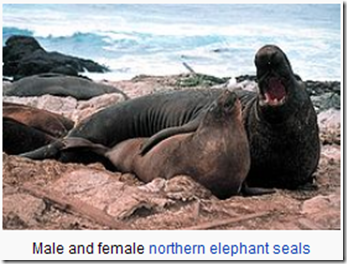
Given that Elephant seals can reach colossal size (bulls can exceed 14ft in length and 5,000 lbs), they can be territorial and aggressive, and they spend 80% of their lives at sea, these marine mammals have very few opportunities for direct human contact.


Which leads to the question of just how these seals managed to acquire the virus?


First a link to the open access study, then some excerpts from the UC Davis press release, then I’ll be back with a little more.


Research Article

Pandemic H1N1 Influenza Isolated from Free-Ranging Northern Elephant Seals in 2010 off the Central California Coast

Tracey Goldstein equal contributor mail, Ignacio Mena equal contributor, Simon J. Anthony, Rafael Medina, Patrick W. Robinson, Denise J. Greig, Daniel P. Costa, W. Ian Lipkin, Adolfo Garcia-Sastre, Walter M. Boyce

bstract

Interspecies transmission of influenza A is an important factor in the evolution and ecology of influenza viruses. Marine mammals are in contact with a number of influenza reservoirs, including aquatic birds and humans, and this may facilitate transmission among avian and mammalian hosts.

Virus isolation, whole genome sequencing, and hemagluttination inhibition assay confirmed that exposure to pandemic H1N1 influenza virus occurred among free-ranging Northern Elephant Seals (Mirounga angustirostris) in 2010. Nasal swabs were collected from 42 adult female seals in April 2010, just after the animals had returned to the central California coast from their short post-breeding migration in the northeast Pacific. Swabs from two seals tested positive by RT-PCR for the matrix gene, and virus was isolated from each by inoculation into embryonic chicken eggs. Whole genome sequencing revealed greater than 99% homology with A/California/04/2009 (H1N1) that emerged in humans from swine in 2009.

Analysis of more than 300 serum samples showed that samples collected early in 2010 (n = 100) were negative and by April animals began to test positive for antibodies against the pH1N1 virus (HI titer of ≥1:40), supporting the molecular findings. In vitro characterizations studies revealed that viral replication was indistinguishable from that of reference strains of pH1N1 in canine kidney cells, but replication was inefficient in human epithelial respiratory cells, indicating these isolates may be elephant seal adapted viruses.


Thus findings confirmed that exposure to pandemic H1N1 that was circulating in people in 2009 occurred among free-ranging Northern Elephant Seals in 2010 off the central California coast. This is the first report of pH1N1 (A/Elephant seal/California/1/2010) in any marine mammal and provides evidence for cross species transmission of influenza viruses in free-ranging wildlife and movement of influenza viruses between humans and wildlife.

From UC Davis, a link to a press release, and a few excerpts.


H1N1 discovered in marine mammals

May 15, 2013

Scientists at the University of California, Davis, detected the H1N1 (2009) virus in free-ranging northern elephant seals off the central California coast a year after the human pandemic began, according to a study published today, May 15, in the journal PLOS ONE. It is the first report of that flu strain in any marine mammal.


“We thought we might find influenza viruses, which have been found before in marine mammals, but we did not expect to find pandemic H1N1,” said lead author Tracey Goldstein, an associate professor with the UC Davis One Health Institute and Wildlife Health Center. “This shows influenza viruses can move among species.”


<SNIP>


“H1N1 was circulating in humans in 2009,” said Goldstein. “The seals on land in early 2010 tested negative before they went to sea, but when they returned from sea in spring 2010, they tested positive. So the question is where did it come from?”

(Continue . . . )


For now that question remains unanswered. 


There is speculation that seabirds might have carried the virus from land out to sea where these seals may have been exposed, or that discharge from cruise ships may have been involved. 


But these are merely guesses.


As to why this might be important?  


Regular readers of this blog are aware that avian influenza strains bind preferentially to the kind of receptor cells commonly found in the digestive and respiratory tracts of birds; alpha 2,3 receptor cells.


Human (and mammalian adapted) influenzas – on the other hand - bind to the kind of receptor cells that line the surfaces of the human upper respiratory system; alpha 2,6 receptor cells.


It turns out that some seals – like pigs – have both types of receptor cells (cite).


If infected by two different strains simultaneously, they could potentially act as a `mixing vessel’ for influenza strains, and produce a hybrid (reassorted) virus. 


image


The operative word being `potentially’. No one really knows how big a threat any of this really poses. We’ve no evidence of any influenza epidemic ever originating from aquatic mammals.


But the authors of yesterday’s study – via the press release – warn:


The findings are particularly pertinent to people who handle marine mammals, such as veterinarians and animal rescue and rehabilitation workers, Goldstein said.


They are also a reminder of the importance of wearing personal protective gear when working around marine mammals, both to prevent workers’ exposure to diseases, as well as to prevent the transmission of human diseases to animals.


With each passing year we learn more about about just how versatile, variable, and incredibly adaptable influenza viruses really are.


A trend that virtually guarantees plenty of avenues of new research for years to come.

Tuesday, July 31, 2012

mBio: A Mammalian Adapted H3N8 In Seals

image

Photo Credit Wikipedia


# 6462


Even though the actual study has not appeared online (now online) in the journal mBio, overnight we’ve seen more than a half dozen stories on soon-to-be published research into a novel influenza virus that infected and killed more than 160 seals along the New England coast last year.


You’ll find an excellent report from Carl Zimmer in the New York Times (see Flu That Leapt From Birds to Seals Is Studied for Human Threat), as well as this reportage from the BBC (see New flu virus found in seals concerns scientists)


Regular readers may recall this story from last fall (see New England Seal Deaths Tied to H3N8 Flu Virus & NOAA: New England Dead Seals Test Positive For Flu), but in brief:


In early October of 2011 media reports indicated that scores of dead seals had been discovered along the shoreline of New England, predominantly from the North Shore of Massachusetts to the southern coast of Maine.


In November NOAA declared these deaths an “Unusual Mortality Event”, cautioned the public to avoid contact with seals, and directed more resources to study the event.


Although the cause of these deaths was still undetermined, some researchers saw similarities to a seal die off that had occurred 30 years earlier.


In that instance, the culprit turned out to be an H7N7 influenza. (see Isolation of an influenza A virus from seals G. Lang, A. Gagnon and J. R. Geraci)


In December it was announced that the pathogen behind this latest seal die off was a variant of the H3N8 avian flu strain, versions of which are known to also infect horses and dogs.


Science team identifies influenza virus subtype that infected five dead seals

Risk to humans and pets low; tests continue


Harbor Seals (Credit NOAA)

A virus similar to one found in birds but never before in harbor seals was the cause of five of 162 recent deaths of the animals  in New England, according to a group of federal agencies and private partners.


This Influenza A virus subtype, H3N8, appears to have a low risk of transmission to humans. Experts continue to analyze this virus, and any findings of public health significance will be immediately released. The virus is not the infamous H5N1  virus that caused a global pandemic in 2007, or the H1N1 virus from 2009.

(Continue . . . )


While we tend to think of humans, pigs, and birds as the main hosts of influenza (and to a lesser extent dogs and horses), a number of other species are susceptible to some kinds of influenza strains as well.


  • In That Touch Of Mink Flu I wrote about 11 farms in Holstebro, Denmark that were reported to be infected with a variant of the human H3N2 virus back in 2009.
  • The AVMA Pandemic Flu page documents species – including dogs, cats, turkeys, skunks, ferrets – that tested positive for the 2009 H1N1 pandemic virus.
  • While less commonly reported - camels, whales and seals have all been shown to be susceptible to influenza (cite Evolution and ecology of influenza A viruses R.G. Webster et al.)


Fast forward eight months and today research is being published to show that the H3N8 virus collected from dead seals last fall has mutated from its avian origins to become better adapted to mammalian hosts. 


First stop, excerpts from a press release from the American Society for Microbiology, publishers of mBio.


New influenza virus from seals highlights the risks of pandemic flu from animals

A new strain of influenza virus found in harbor seals could represent a threat to wildlife and human health, according to the authors of a study appearing July 31 in mBio®, the online open-access journal of the American Society for Microbiology. It is crucial to monitor viruses like this one, which originated in birds and adapted to infect mammals, the authors say, so that scientists can better predict the emergence of new strains of influenza and prevent pandemics in the future.


"There is a concern that we have a new mammalian-transmissible virus to which humans haven't been exposed yet. It's a combination we haven't seen in disease before," says Anne Moscona of Weill Cornell Medical College in New York City, the editor of the report.


<SNIP>


The mBio® study analyzed the DNA of a virus associated with a die-off of 162 New England harbor seals in 2011. Autopsies of five of the seals revealed they apparently died from infection with a type of influenza called H3N8, which is closely related to a flu strain that has been circulating in North American birds since 2002. Unlike the strain in birds, this virus has adaptations to living in mammals and has mutations that are known to make flu viruses more transmissible and cause more severe disease. The virus also has the ability to target a receptor called SAα-2,6, a protein found in the human respiratory tract.

(Continue . . . )

Another press release, from Columbia University's Mailman School of Public Health, titled An avian flu that jumps from birds to mammals is killing New England's baby seals cautions:


Based on full genome sequencing and phylogenetic analysis, seal H3N8 descended from an avian strain that has been circulating in North American waterfowl since 2002, which implies recent transmission from wild birds to seals.


Accordingly, seal H3N8 has acquired the ability to bind sialic acid receptors that are commonly found in the mammalian respiratory tract. Mutations in the HA and PB2 genes – required for cell entry and replication, respectively – suggest enhanced virulence and transmission in mammals, but these putative attributes require further investigation. Given these findings along with the long history of the spread of avian influenza to humans—most notably H1N1 and H5N1—seal H3N8 could pose a threat to public health.


Regular readers of this blog are aware that avian influenza strains bind preferentially to the kind of receptor cells commonly found in the digestive and respiratory tracts of birds; alpha 2,3 receptor cells.


Human (and mammalian adapted) influenzas – on the other hand - bind to the kind of receptor cells that line the surfaces of the human upper respiratory system; alpha 2,6 receptor cells.


In both the BBC and NYTs report, one of the authors of this study – celebrated virus hunter Professor Ian Lipkin of Columbia University – expressed concerns over the discovery that seals – like pigs – have both types of receptor cells.


If infected by two different strains simultaneously, they could act as a `mixing vessel’ for influenza strains, and produce a hybrid (reassorted) virus. 


image


Every day, it seems, we learn more about how remarkably well these influenza viruses evolve and adapt. Despite decades of work by thousands of researchers, there is still so very much we are just beginning to understand.


Although the public health threat from H3N8 is hard to quantify, this is yet another example of how Nature’s laboratory is open and operating 24/7, and why we need to remain alert and prepared for the next pandemic threat that may emerge.


When the mBio study is published, I’ll post the link here.


NOW ONLINE:


Emergence of Fatal Avian Influenza in New England Harbor Seals

S. J. Anthony, J. A. St. Leger, K. Pugliares, H. S. Ip, J. M. Chan, Z. W. Carpenter, I. Navarrete-Macias, M. Sanchez-Leon, J. T. Saliki, J. Pedersen, W. Karesh, P. Daszak, R. Rabadan, T. Rowles and W. I. Lipkin

doi:10.1128/mBio.00166-12

Tuesday, December 20, 2011

New England Seal Deaths Tied to H3N8 Flu Virus


# 6022


We’ve a follow up from NOAA today on the mysterious deaths of seals along the New England coastline earlier this fall.  In early November I reported (see NOAA: New England Dead Seals Test Positive For Flu) that initial tests indicated an influenza A virus, but more testing was needed to determine the exact strain.


In the past, we’ve seen rare and isolated influenza infections resulting in seal deaths from the H7N7 and H4N5 avian flu viruses.


Today we learn that the viral culprit in this latest incident is a variant of the H3N8 avian flu strain, versions of which are known to also infect horses and dogs.


My thanks to @JustinNOAA for the link to this news release.


Science team identifies influenza virus subtype that infected five dead seals

Risk to humans and pets low; tests continue

PDF/Print version


Harbor Seals (Credit NOAA)

A virus similar to one found in birds but never before in harbor seals was the cause of five of 162 recent deaths of the animals  in New England, according to a group of federal agencies and private partners.


This Influenza A virus subtype, H3N8, appears to have a low risk of transmission to humans. Experts continue to analyze this virus, and any findings of public health significance will be immediately released. The virus is not the infamous H5N1  virus that caused a global pandemic in 2007, or the H1N1 virus from 2009.


Any member of the public who sees a seal in distress is reminded to:

  • Stay at least 150 feet away
  • Keep dogs leashed and away from seals
  • Call NOAA Fisheries Service's stranding hotline at 1-866-755-NOAA (6622)

“The work that NOAA and its partners have done to help identify and confirm the virus strain H3N8 in these animals has been an important first step in the investigation into this event,” said Dr. Teri Rowles, lead veterinarian and coordinator of the Marine Mammal Health and Stranding Program for NOAA Fisheries Service. “We are now conducting tests on additional animals to learn more about the role this virus may have played in the die-off and to better understand the virus itself.”


Experts believe that Influenza A virus caused a bacterial pneumonia which was responsible for the death of the five seals. Most terrestrial animals infected with the previously known H3N8 virus suffered upper respiratory infections, and most recovered.


"This H3N8 virus is usually associated with wild birds, and a separate group of H3N8 infects horses and dogs,” said Dr. Hon Ip, of the USGS’s National Wildlife Health Center. "This is the first time that a virus which is similar to the H3N8 avian influenza virus has been associated with a large scale mortality in marine mammals."

(Continue . . . )

Saturday, November 05, 2011

NOAA: New England Dead Seals Test Positive For Flu


image

Photo Credit Wikipedia


# 5942


While we usually think of birds, pigs, humans, horses, and dogs as the normal hosts of influenza viruses, there are other species that can acquire and potentially spread the infection as well. 


Pandemic H1N1 flu has been documented in humans, swine, turkeys, skunks, ferrets, cats, and dogs.  For a listing of animal pandemic flu reports you can visit the AVMA Pandemic Flu page.


In That Touch Of Mink Flu I wrote about 11 farms in Holstebro, Denmark that were reported to be infected with a variant of the human H3N2 virus.


And while less commonly reported - camels, whales and seals have all been shown to be susceptible to influenza (cite Evolution and ecology of influenza A viruses R.G. Webster et al.)


In early October media reports indicated that scores of dead seals had been discovered along the shoreline of New England, predominantly from the North Shore of Massachusetts to the southern coast of Maine.


Testing was underway, but this incident reminded some biologists of an outbreak of influenza among seals in the Cape Cod region more than 30 years ago.


In that instance, the culprit turned out to be an H7N7 influenza. (see Isolation of an influenza A virus from seals G. Lang, A. Gagnon and J. R. Geraci)


Over the past month coastal residents were advised to give any dead seals a wide berth, and report their location to authorities as necropsies, and testing for toxins and pathogens was conducted.


Late yesterday, the story emerged that NOAA, the federal agency investigating the incident, had determined that at least 5 of the dead seals had tested positive for an (as yet) unidentified influenza A virus, and that the incident has been declared an Unusual Mortality Event (UME).


You can read several media reports (see here, here, and here) on this announcement.  I’ve posted excerpts from the NOAA statement below.


OAA declares string of seal deaths in New England an unusual mortality event

Public reminded to maintain safe distance from seals as investigation continues

November 4, 2011

NOAA announced today that the high number of seal deaths that have occurred along the New England coast since September has been declared an “Unusual Mortality Event.” This will enable the agency to direct additional resources to further investigate the cause of these seal deaths.


“We want to remind people to not get close to seals encountered along the shore, to keep their pets away and to report any sightings to us through our stranding hotline, while we continue to assess whether there is any potential human health risk,” said Dr. Teri Rowles, National Marine Mammal Health and Stranding Response Program Coordinator, NOAA Fisheries Service.


The declaration of an Unusual Mortality Event (UME) was determined after a formal consultation with the Working Group on Marine Mammal Unusual Mortality Events, a panel of international experts established under the Marine Mammal Protection Act to monitor and investigate marine mammal health concerns.


From Sept. 1 to Nov. 3, NOAA’s national Marine Mammal Stranding Network, the New England Aquarium’s Marine Mammal Rescue Program and the University of New England's Marine Animal Rescue Center, have been working with NOAA to respond to a reported 146 seals strandings in Maine, New Hampshire and northern Massachusetts.  Most of the animals were harbor seals less than a year old.  This is more than three times the average number of strandings that typically occur this time of year.


Preliminary pathology, biotoxin and virology analysis has been conducted on samples from five seals examined by the New England Aquarium.  Samples from the five seals has tested positive for the Influenza A virus, while test results for six other viral pathogens and biotoxins were negative.


Even though preliminary results have been received, they are only indicative of those five cases, and additional evaluations are underway to determine whether the influenza virus has played a role in the overall mortalities.


An investigation team of marine mammal experts will work closely with NOAA, New England Stranding Network partners and the Working Group on Marine Mammal Unusual Mortality Events to identify and characterize the specific type of Influenza A virus found in these animals.  


(Continue . . .)


In 1984 influenza subtype H4N5 – a strain previously only seen in birds – was determined to be behind the deaths of a number of New England seals in 1982 and 1983 (cite Are seals frequently infected with avian influenza viruses?  R G Webster et al.)


And in 1995, in the Journal of General Virology, authors R. J. Callan, G. Early, H. Kida and V. S. Hinshaw wrote of the The appearance of H3 influenza viruses in seals during the early 1990s.


Seals have also been shown susceptible to influenza B (cite Influenza B virus in seals. Osterhaus AD, Fouchier , et al.).


NOAA reminds people along the shoreline that seals - like other marine mammals - are protected under the Marine Mammal Protection Act, and advise that people:


  • Stay at least 50 yards (150 feet) away from seals or other marine mammals.
  • Keep dogs on a leash and don't allow them to approach seals. Seals and dogs can easily infect each other with diseases since they are closely related species.
  •  

    We’ll obviously be watching for more information on this case, including the identification of the influenza virus.