Showing posts sorted by relevance for query Fractional Monkeypox vaccine. Sort by date Show all posts

Tuesday, August 23, 2022

UK To Allow `Fractional Dosing' Of Monkeypox Vaccine At Selected Clinics

British Columbia Institute of Technology (BCIT).
Download this book for free at http://open.bccampus.ca,
CC BY 4.0, via Wikimedia Commons

#16,957

Faced with a limited supply of the JYNNEOS (TM) Smallpox and Monkeypox Vaccine, two weeks ago the FDA Issued an EUA Allowing `Dose-sparing' Intradermal Injections that would stretch existing vaccine supplies as much as 5-fold.  

Called `Fractional Dosing', this could allow far more people to be protected in the short term, while more vaccine is produced. 

The rationale for this change is based on the results of a single 2015 study which showed that 2 fractional doses (1/5th) of JYNNEOS given intradermally, 28 days apart, provided similar protection as that seen from the original route.  

Last week the European Medicines Agency (EMA) followed suit, issuing 

EMA’s Emergency Task Force advises on intradermal use of Imvanex / Jynneos against monkeypox

News 19/08/2022

EMA’s Emergency Task Force (ETF) has reviewed data on the monkeypox vaccine Imvanex 1 used as an intradermal injection (given just below the top layer of the skin).

The vaccine is only authorised for subcutaneous injection (injection under the skin). However, when given intradermally, a smaller dose of the vaccine can be used. Given the currently limited supply of the vaccine, this means that more people can be vaccinated.

The ETF reviewed data from a clinical trial 2 involving around 500 adults, which compared the vaccine given either intradermally or subcutaneously, as 2 doses with a 4-week interval between each dose. People receiving the vaccine intradermally received one fifth (0.1 ml) of the subcutaneous dose (0.5 ml) but produced similar levels of antibodies to those who received the higher subcutaneous dose.

The ETF cautioned that there was a higher risk of local reactions (e.g. longer-lasting redness, and thickening or discoloration of the skin) after intradermal injections.

The ETF noted that there is no information available on the maximum number of 0.1 ml doses that can be withdrawn from the authorised presentation (0.5 ml suspension) and recommended using low-dead volume syringes to optimise the number of doses that can be extracted. The ETF also emphasised the importance of giving intradermal injections correctly, recommending that only healthcare professionals with experience giving injections intradermally should administer the vaccine this way. Further information for healthcare professionals is included in the ETF’s statement.

Taking into account all these considerations, national authorities may decide as a temporary measure to use Imvanex as an intradermal injection at a lower dose to protect at-risk individuals during the current monkeypox outbreak while supply of the vaccine remains limited.
          (Continue . . . )

Yesterday the UK's Health Security Agency (UKHSA) announced that fractional dosing would be trialed at 3 clinics in the UK, in order to evaluate its performance. 

Press release
Monkeypox vaccines to be piloted in smaller but equally effective doses

Eligible patients offered smaller but equally effective doses of the vaccine, stretching existing supplies to protect more people.

From:UK Health Security Agency Published 22 August 2022


Three NHS sites are set to begin a pilot offering eligible patients smaller but equally effective doses of the vaccine used for the UK’s monkeypox outbreak, stretching existing supplies to protect more people.

The safe and clinically-approved approach, known as ‘fractional dosing’, has been commonly used in other worldwide outbreaks when vaccine supplies are constrained. It will be introduced in one sexual health clinic in Manchester from today (Monday), and a further 2 in London shortly.

Fractional dosing could maximise the number of doses that can be administered without compromising protection, with clinical study results showing it provides a near-identical immune response in patients.

Under the approach, eligible people aged 18 and over will be offered a 0.1ml dose of the smallpox Jynneos vaccine, instead of the 0.5ml dose that is typically administered. This will potentially enable up to a 5-fold increase in the number of people that can be offered vaccination.

Fractional dosing has recently been authorised in the US by the Federal Drug Administration for its own monkeypox response. The European Medicines Agency Emergency Task Force has also approved the approach.

The UK Health Security Agency (UKHSA) has reviewed the evidence in detail alongside the Joint Committee on Vaccination and Immunisation (JCVI) and is now working with NHS England to test the feasibility of the approach at pilot clinics in Chelsea and Westminster NHS Foundation Trust, Central and North West London NHS Foundation Trust, and Locala Health and Wellbeing in Greater Manchester.

In a letter to Directors of Public Health, UKHSA chief executive Professor Dame Jenny Harries has confirmed the details of the pilot, with data gathered by the clinics used to inform planning for possible wider use when more doses of the vaccine arrive in the UK.
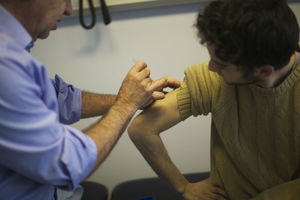

Although expected to be effective, there is limited data on JYNNEOS effectiveness against Monkeypox (see below) in the real world, and so the UK is taking a cautious approach. The CDC states:

Vaccine Effectiveness

Because Monkeypox virus is closely related to the virus that causes smallpox, the smallpox vaccine can protect people from getting monkeypox. Past data from Africa suggests that the smallpox vaccine is at least 85% effective in preventing monkeypox. The effectiveness of JYNNEOS(TM) against monkeypox was concluded from a clinical study on the immunogenicity of JYNNEOS and efficacy data from animal studies.

Smallpox and monkeypox vaccines are effective at protecting people against monkeypox when given before exposure to monkeypox. Experts also believe that vaccination after a monkeypox exposure may help prevent the disease or make it less severe.

For more than a decade researchers have been warning that the risk from Monkeypox was rising, primarily due to our declining immunity to smallpox. Routine vaccination for smallpox - which is believed to have been substantially protective against Monkeypox - was discontinued in the 1970s due to the eradication of the disease.

Today, with very few exceptions, only those over the age of 50 are vaccinated against smallpox. And the durability of protection afforded by that vaccine after 50+ years is unknown.

With limited JYNNEOS vaccine availability - and an uncertain trajectory for the global Monkeypox epidemic - data gleaned from the UK's pilot program could help determine how to best use the limited supply expected to be produced over the next year. 

Saturday, September 17, 2022

CDC EID Journal: Monkeypox in Patient Immunized with ACAM2000 Smallpox Vaccine During 2022 Outbreak


Credit UKHSA


#17,012

Although it has been often stated by public health officials (and the vaccine manufacturers), it bears repeating; we really don't know how effective the JYNNEOS(TM) vaccine approved in 2019 (and the older ACAM2000 smallpox vaccine) will be against the strain of Monkeypox currently spreading globally. 

This from the CDC website:

Vaccine Effectiveness

Because Monkeypox virus is closely related to the virus that causes smallpox, the smallpox vaccine can protect people from getting monkeypox. Past data from Africa suggests that the smallpox vaccine is at least 85% effective in preventing monkeypox. The effectiveness of JYNNEOS(TM) against monkeypox was concluded from a clinical study on the immunogenicity of JYNNEOS and efficacy data from animal studies.

Smallpox and monkeypox vaccines are effective at protecting people against monkeypox when given before exposure to monkeypox. Experts also believe that vaccination after a monkeypox exposure may help prevent the disease or make it less severe.

While the data suggests these vaccines should be largely effective against Monkeypox, that doesn't mean 100% protection.  For many, it may prevent infection, while for others it may simply reduce the severity of infection.  

We also don't know how long this protection will last (presumably for years, though).

As the following EID report illustrates, even the older ACAM2000 vaccine has limitations.  I'v only posted some highlights, follow the link to read the full report.

Research Letter
Monkeypox in Patient Immunized with ACAM2000 Smallpox Vaccine During 2022 Outbreak

Matthew Turner, Jeremy Mandia1, Case Keltner1, Robert Haynes1 , Paul Faestel, and Luke Mease
Author affiliation: Madigan Army Medical Center, Tacoma, Washington, USA

Abstract

We report a case of monkeypox in the United States in a patient who had been vaccinated with ACAM2000 smallpox vaccine 8 years earlier. Despite his vaccination status, he still contracted disease. He showed prodromal symptoms preceding development of painless penile lesions that later coalesced.


In the summer of 2022, the Centers for Disease Control and Prevention initiated an emergency response because of a national outbreak of infection with monkeypox virus. On June 28, 2022, the US Department of Health and Human Services announced a national monkeypox vaccination strategy to contain the pandemic (1).

We report a patient in Washington, USA, who contracted monkeypox despite being successfully immunized against smallpox with the ACAM2000 smallpox vaccine (https://www.sanofi.comExternal Link) 8 years earlier. We pose major questions regarding the efficacy of ACAM2000 vaccine amidst ongoing shortages of the JYNNEOS (https://www.bavarian-nordic.comExternal Link) 2-dose monkeypox vaccine.

The patient was a previously healthy 34-year-old man who had sex with men came to a walk-in sexually transmitted infections clinic because of a 4-day history of malaise, fatigue, and headache and a 2-day history of 4 painless penile lesions. The patient had sought evaluation at a local emergency department 2 days before he visited the clinic. Results for testing performed in the emergency department were negative for Neisseria gonorrhea, Chlamydia trachomatis, and herpes simplex virus. His constitutional symptoms improved over the next 2 days. However, his penile ulcers progressed into white papular lesions, prompting him to seek reevaluation.

(SNIP)

Since the discontinuation of the global smallpox vaccination campaign after eradication of the disease in 1980, monkeypox is the primary circulating orthopoxvirus of public health concern. The ACAM2000 live vaccinia virus vaccine that this patient received in 2014 has been shown to provide protection against monkeypox (2,3). Earlier studies have reported that among persons vaccinated, monkeypox cases tend to be mild in number of lesions and prodromal symptoms (46). A study in 1988 reported that smallpox vaccination offered ≈85% protection against monkeypox (4,7). A study in 2008 reported that ACAM2000 vaccine fully protected cynomolgus monkeys after a lethal dose of monkeypox virus; 1 vaccinated animal had a minor rash at the site of inoculation (8), which is largely consistent with the manifestations and clinical course of this patient.

Although the mild manifestations in this patient might be attributable to his vaccination against smallpox, it did not prevent infection. The JYNNEOS vaccine is a nonreplicating vaccine product that has a Food and Drug Administration indication to protect against smallpox and monkeypox (9). However, the JYNNEOS and ACAM2000 vaccines present disparate challenges. Specifically, the JYNNEOS vaccine is administered as a 2-dose regimen that shows a mild side effect profile, and the ACAM2000 vaccine is a single inoculation that can induce severe adverse effects. However, because of persistent JYNNEOS shortages hampering preexposure and postexposure prophylaxis efforts, vaccination with ACAM2000 might be an option in locales that urgently need immunizations protective against monkeypox. The efficacy of either vaccine in the current outbreak remains unknown.

Although vaccination is foundational for prevention of infectious disease, this case highlights that vaccination alone does not guarantee immunity from monkeypox. Public health leaders should taper expectations that vaccination alone will end the outbreak. Vaccine should complement, not replace, public health campaigns that aim to minimize high-risk health behaviors.

Dr. Turner is a transitional year intern physician at Madigan Army Medical Center in Tacoma, WA. His research interests include thyroid pathology and long-term neurologic sequela of spaceflight.


Further complicating matters, shortages of the JYNNEOS vaccine has prompted the United States, the UK, and other countries to adopt a dose-sparing strategy - based on the results of a single 2015 study - which showed that 2 fractional doses (1/5th) of JYNNEOS given intradermally, 28 days apart, provided similar protection as that seen from the original intramuscular route.

Whether, or how much, this change will impact the effectiveness of the JYNNEOS vaccine remains to be seen.  

None of this is to diminish the value of either vaccine for high risk groups, but neither should be viewed as an impenetrable and/or permanent shield against the current Monkeypox virus, or any future strains that may emerge.

Last week's warning from the FDA On The Potential For Monkeypox To Evade TPOXX (tecovirimat) Antivirals further illustrates that we can't rely on pharmacological solutions alone to end this epidemic. 

It is never that easy.

Wednesday, August 10, 2022

FDA Issues EUA Allowing `Dose-sparing' Intradermal Injection Of JYNNEOS Monkeypox Vaccine

British Columbia Institute of Technology (BCIT). 
CC BY 4.0, via Wikimedia Commons

#16,932

The JYNNEOS Monkeypox vaccine - which was approved in 2019 - remains in short supply while demand continues to soar.  While originally designed to be administered as a subcutaneous injection (see package insert below), the FDA has approved a new, dose-sparing intradermal injection which could increase the number of people who can be vaccinated 5-fold

The rationale for this change is based on the results of a single 2015 study which showed that 2 fractional doses (1/5th) of JYNNEOS given intradermally, 28 days apart, provided similar protection as that seen from the original route. 

First the announcement from the FDA, after which I'll have a brief postscript. 

Monkeypox Update: FDA Authorizes Emergency Use of JYNNEOS Vaccine to Increase Vaccine Supply
 
For Immediate Release:August 09, 2022
Today, the U.S. Food and Drug Administration issued an emergency use authorization (EUA) for the JYNNEOS vaccine to allow healthcare providers to use the vaccine by intradermal injection for individuals 18 years of age and older who are determined to be at high risk for monkeypox infection. This will increase the total number of doses available for use by up to five-fold. The EUA also allows for use of the vaccine in individuals younger than 18 years of age determined to be at high risk of monkeypox infection; in these individuals JYNNEOS is administered by subcutaneous injection.

“In recent weeks the monkeypox virus has continued to spread at a rate that has made it clear our current vaccine supply will not meet the current demand,” said FDA Commissioner Robert M. Califf, M.D. “The FDA quickly explored other scientifically appropriate options to facilitate access to the vaccine for all impacted individuals. By increasing the number of available doses, more individuals who want to be vaccinated against monkeypox will now have the opportunity to do so.”

JYNNEOS, the Modified Vaccinia Ankara (MVA) vaccine, was approved in 2019 for prevention of smallpox and monkeypox disease in adults 18 years of age and older determined to be at high risk for smallpox or monkeypox infection. JYNNEOS is administered beneath the skin (subcutaneously) as two doses, four weeks (28 days) apart. For individuals 18 years of age and older determined to be at high risk of monkeypox infection, the EUA now allows for a fraction of the JYNNEOS dose to be administered between the layers of the skin (intradermally). Two doses of the vaccine given four weeks (28 days) apart will still be needed. There are no data available to indicate that one dose of JYNNEOS will provide long-lasting protection, which will be needed to control the current monkeypox outbreak.

Data from a 2015 clinical study of the MVA vaccine evaluated a two-dose series given intradermally compared to subcutaneously. Individuals who received the vaccine intradermally received a lower volume (one fifth) than individuals who received the vaccine subcutaneously. The results of this study demonstrated that intradermal administration produced a similar immune response to subcutaneous administration, meaning individuals in both groups responded to vaccination in a similar way. Administration by the intradermal route resulted in more redness, firmness, itchiness and swelling at the injection site, but less pain, and these side effects were manageable. The FDA has determined that the known and potential benefits of JYNNEOS outweigh the known and potential risks for the authorized uses.

To support the FDA’s authorization of two doses of JYNNEOS administered by the subcutaneous route of administration in individuals younger than 18 years of age, the FDA considered the available JYNNEOS safety and immune response data in adults as well as the historical data with use of live vaccinia virus smallpox vaccine in pediatric populations.

JYNNEOS has been tested in individuals with immunocompromising conditions and has been found to be safe and effective in the trials that were performed to support approval. It was initially developed specifically as an alternative for use in immunocompromised individuals in the event of a smallpox outbreak.

On the basis of the determination by the Secretary of the Department of Health and Human Services on Aug. 9, 2022, that there is a public health emergency, or the significant potential for a public health emergency, that has a significant potential to affect national security or the health and security of United States citizens living abroad, and the declaration on Aug. 9, 2022, that circumstances exist justifying the emergency use of vaccines, the FDA may issue an EUA to allow emergency use of unapproved vaccines or unapproved uses of approved vaccines.

The FDA will provide updates as developments occur and will continue to work with federal public health partners and industry to ensure timely access to all available medical countermeasures. More information can be found on the agency’s monkeypox webpage.

For more than a decade researchers have been warning that the risk from Monkeypox was rising, primarily due to our declining immunity to smallpox. Routine vaccination for smallpox - which is believed to have provided about 85% protection against Monkeypox - was discontinued in the 1970s due to the eradication of the disease. 

Today, with few exceptions, only those over the age of 50 are vaccinated.  And the durability of protection afforded by that vaccine after 50+ years is unknown. 

While it isn't known exactly how effective JYNNEOS will be against Monkeypox, the CDC states:

Vaccine Effectiveness

Because Monkeypox virus is closely related to the virus that causes smallpox, the smallpox vaccine can protect people from getting monkeypox. Past data from Africa suggests that the smallpox vaccine is at least 85% effective in preventing monkeypox. The effectiveness of JYNNEOS(TM) against monkeypox was concluded from a clinical study on the immunogenicity of JYNNEOS and efficacy data from animal studies.

Smallpox and monkeypox vaccines are effective at protecting people against monkeypox when given before exposure to monkeypox. Experts also believe that vaccination after a monkeypox exposure may help prevent the disease or make it less severe.

With this FDA announcement, the current supply of JYNNEOS vaccine (est. 400,000 remaining doses) can be stretched to roughly 2 million.  And given the speed at which Monkeypox is spreading, those additional doses will almost certainly be needed.