Thursday, February 28, 2019

Eurosurveillance: Novel influenza A(H1N2) Seasonal Reassortant - Sweden, January 2019


#13,900


Three weeks ago, and for the second time in a year, we saw a reassortant H1N2 virus report reported out of Europe (CDC: Sweden Reports An Influenza A(H1N2) Reassortant Infection) that contained genes from both seasonal H1N1 and H3N2.

While only rarely reported over the past 15 years, in 1988-1989 in China (see Human influenza A (H1N2) viruses isolated from China), and again between 2000 and 2003 in the Northern Hemisphere, we saw the brief appearance of a human H1N2 virus - a reassortment between the old (pre-2009) seasonal H1N1 and H3N2.
A minor player in most regions, H1N2 was the predominant Influenza A(H1) virus reported during the UK's 2001–02 influenza season (cite).
These two recent European cases, however, are the only ones recorded with the 2009 H1N1 virus.  Earlier this month the CDC issued a risk assessment:
Risk Assessment:

This A(H1N2) reassortant virus is thought to pose a health risk similar to other seasonal influenza viruses. The virus has not been detected beyond this one person and current seasonal influenza vaccines would likely offer protection against this virus. Additionally, this virus does not have markers associated with resistance to the neuraminidase inhibitor class of antiviral drugs and, thus, should be susceptible to treatment with the currently recommended drugs oseltamivir, zanamivir and peramivir.

It should be noted that these are human-origin H1N2 viruses, not swine-origin variant H1N2 viruses that have circulated in pigs for decades and that we've seen occasionally jump to humans over the past decade.

Today the journal Eurosurveillance has published a Rapid Communications describing both the virus, and the patient who has recovered after a severe illness. 

Rapid communication Open Access
Novel influenza A(H1N2) seasonal reassortant identified in a patient sample, Sweden, January 2019 

Åsa Wiman1,2, Theresa Enkirch1,2, AnnaSara Carnahan3, Blenda Böttiger4, Tove Samuelsson Hagey1, Per Hagstam5, Rosmarie Fält5, Mia Brytting1


As part of Swedish national influenza surveillance, a seasonal reassortant influenza A(H1N2) virus with a novel genetic constellation was identified. This is the second detected seasonal A(H1N2) reassortant in a human in Europe within 1 year. Here, we describe the detection of the virus, its genetic characteristics and follow-up investigations.

(SNIP)

Case description
In the last week of December (week 52 2018), a 68-year-old female patient with a history of chronic obstructive pulmonary disease consulted her primary care physician following 5 days of fever up to 40°C. On clinical suspicion of pneumonia, she was referred to a local hospital in Skåne County where she was hospitalised.
A nasopharyngeal swab taken on the day of admission was positive for influenza A virus and the patient was treated with oseltamivir (75 mg, two times daily) for 5 days. She recovered quickly and was discharged 5 days after admission. The patient had not been vaccinated against influenza during the 2018/19 season.

Diagnosis of influenza A virus infection at the local hospital was performed by real-time PCR using Simplexa Flu A/B and RSV direct kit, (DiaSorin Molecular LLC, California, United States (US)). The sample was forwarded to the Clinical Microbiology Laboratory in Lund for subtyping (as are all influenza A virus-positive samples in Skåne County) with in-house real-time PCRs targeting H3 and N1pdm09 [1].
As this sample was negative in these assays, it was forwarded to the PHAS where influenza A(H1)pdm09 virus was detected by in-house real-time PCR. The presence of A(H1)pdm09 virus was also subsequently confirmed by Filmarray Respiratory Panel BioFire (Diagnostics LLC, Utah, US) at the Clinical Microbiology Laboratory in Lund.
Genetic characterisation
The virus, initially subtyped as A(H1)pdm09 by real-time PCR, was revealed as A(H1N2) on 22 January 2019, after WGS on an Ion Torrent platform (Thermo Fisher Scientific, Waltham, Massachusetts, US). Seven segments (HA, matrix (M) non-structural (NS), polymerase components PB1, PB2 and PA and nucleoprotein (NP)) of this virus are derived from seasonal A(H1N1)pdm09 virus, while the neuraminidase (NA) segment is derived from seasonal A(H3N2) virus. The gene sequence of this strain, A/Ystad/1/2018, is available from the Global Initiative on Sharing All Influenza Data (GISAID) EpiFlu database (EPI_ISL_336041) [2,3].
(SNIP)

Discussion

While co-infections with seasonal A(H1N1) and A(H3N2) influenza strains are not unusual [4-7], only a few studies have described reassortant viruses as a consequence of such co-infections [8-10]. This suggests that reassortment is a rare occurrence and that reassorted A(H1N2)-viruses do not easily spread between humans [11], with the exception of A(H1N2) reassortant viruses circulating in 1988/89 in China [12,13] and worldwide between 2001 and 2003 [14].
Interestingly, a human natural infection with an A(H1N2) reassortant virus harbouring gene segments from seasonal influenza A(H1N1)pdm09 virus (HA and NS) and A(H3N2) virus (PB2, PB1, PA, NP, NA and M) was described as recently as March 2018, by Meijer et al. [15]. In accordance with the hypothesis of limited spread, no further cases were observed, as is the case also (as at 24 February 2019) for the Swedish A(H1N2) reassortant.

Real-time PCR assays targeting at least two genes can detect or give an indication of a reassortment, depending on the combination of targets used and segments reassorted, respectively. Targeting both the HA and NA genes is of interest because a change of the HA and NA constellation might have a possible impact on immune protection. However, WGS provides a powerful tool to both detect and characterise reassortants of all eight gene segments. Here, WGS showed that A/Ystad/1/2018 harbours seven gene segments from seasonal A(H1N1)pdm09 virus and one segment (NA) from A(H3N2) virus.

To our knowledge, this is the first human seasonal A(H1N2) reassortant with this gene segment constellation detected in humans. Since the HA is closely related genetically to that of the A(H1N1)pdm09 viruses circulating in Sweden so far during the 2018/19 season, we expect no difference in vaccine effectiveness (VE) against this reassortant virus compared with seasonal A(H1N1)pdm09 viruses. This season, substantial interim VE has been shown against circulating A(H1N1)pdm09 viruses in studies from Canada, Hong Kong and Europe [16-18]. Antigenic characterisation of this reassortant virus will be conducted at WHO CC.

In conclusion, our results support the observation that the currently co-circulating viruses of A(H1N1)pdm09 and seasonal A(H3N2) viruses have the potential to reassort and form new strains that can spread globally causing epidemics. Reassortment between seasonal and zoonotic influenza might lead to novel pandemic strains and therefore molecular surveillance of circulating influenza strains is of high importance.
        (Continue . . . )


CDFA Expands Newcastle Quarantine For Southern California


CDFA Quarantine Order - Feb 27th


#13,899


Since May of last year we've been following a stubbornly persistent outbreak of   Virulent Newcastle Disease (vND) in Southern California - the first in 15 years in the United States - which began spreading among backyard exhibition poultry.
Until mid-December, all of the outbreaks had been in backyard birds, but on December 14th the virus was discovered in commercial table egg pullets in Riverside county, marking the first such detection in American commercial poultry since 2003.
Since then, three additional commercial operations have been hit (see USDA Confirms 3rd Commercial Poultry Flock Hit With Virulent Newcastle Disease), and 5 weeks ago we learned the virus had been exported to a backyard exhibition flock in Utah.

As of their last posted update (February 19th), the USDA's official count of Newcastle outbreaks/detections in Southern California had reached: 
381 cases of vND in California, including 112 in San Bernardino County, 229 in Riverside County, 41 in Los Angeles County and 1 in Ventura County. USDA also confirmed 1 case in Utah County, Utah
While we've not seen an outbreaks or detections reported in Los Angeles County since late January, yesterday the CDFA (California Department of Food & Agriculture) released a modified Newcastle quarantine that includes all of Los Angeles County and large areas of San Bernardino and Riverside counties.

Virulent Newcastle Disease Update: Quarantine Boundaries Modified in Southern California
SACRAMENTO, February 27, 2019 – California State Veterinarian Dr. Annette Jones today modified Southern California’s quarantine area to further restrict bird movement as work continues to eradicate virulent Newcastle disease (VND). The quarantine mandates the reporting of sick birds and prohibits poultry owners from moving birds in all of Los Angeles County, and in large areas of San Bernardino and Riverside counties.
The modified quarantine extends from the northern and southern borders of western Riverside County to the Salton Sea—including the Coachella Valley—and as far east as Yucca Valley in San Bernardino County, with a northern boundary of State Route 58 at the Kern County line. The quarantine language and a map may be found at CDFA’s VND Web site.
The quarantine requires bird owners to allow diagnostic testing, to isolate poultry from other species, to cease exhibitions, to stop the shipping and receiving of birds, and to enhance biosecurity.
“By modifying the quarantine area in Southern California, we are building upon an ongoing effort to eradicate virulent Newcastle disease,” said Dr. Jones. “The primary way that VND spreads is by people moving sick birds. Extending the prohibition of bird movement across a larger area is the next logical step in being able to stop the spread of the virus and to eradicate the disease.”
VND is a nearly-always fatal respiratory infection in poultry. Birds may seem healthy but will die within days of being infected. There is no cure. The virus is also transmitted by people who have VND on their clothes or shoes, and by equipment or vehicles that can transport the disease from place to place.
There are no human health concerns provided that any meat or eggs are cooked properly. People who come in direct contact with the virus may develop conjunctivitis-like symptoms or run a mild fever.

The only way to stop the virus and eradicate the disease is to euthanize birds. This includes all infected birds as well as birds within heavily-infected areas.
Since May 2018, staff from the California Department of Agriculture (CDFA) and the U.S. Department of Agriculture (USDA) have been working in joint incident command to eradicate VND in Southern California.
The highly contagious virus has resulted, or will soon result, in the euthanasia of more than one million birds in Los Angeles, Riverside, San Bernardino, and Ventura counties.
Birds from four poultry industry producers in Riverside County and two poultry industry producers in San Bernardino County have also been infected with VND and all birds in those facilities have been or will be euthanized.
For more information about movement restrictions, biosecurity, and testing requirements, please call the Sick Bird Hotline (866) 922-2473 or email SFSPermits@cdfa.ca.gov

According to the California Dept. of Food & Agriculture, the last outbreak in commercial poultry - back in 2003 - led to the depopulation of 3.16 million birds at a cost of $161 million.  Prior to that, in 1971, an outbreak in Southern California led the culling of 12 million birds. 
Yesterday's revelation that a million birds have been lost in this latest round of outbreaks is a reminder of how damaging diseases like VND can be to the agricultural community.
We should see a fresh update from the USDA on the number of outbreaks in the next couple of days.

Saudi MOH Reports A MERS Case In Sajir

image


#13,898

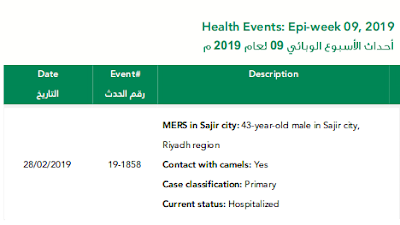
Saudi Arabia's February MERS surge - which has seen 68 cases reported over the past 28 days - appears to be winding down, but KSA's 82nd case of 2019 is reported today from Sajir, located about 200km Northwest of Riyadh.

Today's patient is a 43 year old male, described as a primary case with recent camel contact.
https://www.moh.gov.sa/en/CCC/events/national/Documents/Epiwk9-19.pdf


While its been 3 days since the last case was reported from hard-hit Wadi Aldwasir (see Wadi Aldwasir's 50th MERS Case In A Month) - given up to a  14 day incubation period for MERS - it is still too soon to call that outbreak ended. 
Meanwhile, tight-lipped Oman has not released any new information since their MOH's brief announcement two weeks ago of 4 new cases, bringing their 2019 total to 10 - with 4 fatalities.
For some recent blogs on MERS research, you may wish to revisit:

Epi.& Inf.: Global Status Of MERS-CoV In Camels - A Systemic Review

MERS-CoV In Humans: A Systematic Literature Review
Emerg. Microbe & Inf: MERS Infection In Non-Camelid Domestic Mammals

Vietnam MARD: 96 ASF Outbreaks Across 6 Provinces & Cities


#13,897


Two weeks ago today Taiwan's BAPHIQ reported ASF Positive Pork Products Brought In By Passengers From Vietnam, providing the first hint that the deadly pig disease that hit China last August had extended its reach to Vietnam.
Four days later, Vietnam Reported Their First (3) Outbreaks Of African Swine Fever, across two provinces (Thái Bình and Hưng Yên). Six days later (Feb 25th), Vietnam reported outbreaks in two more provinces  (Hai Phong and Thanh Hoa).
Today Vietnam's Ministry of Agriculture (MARD) has announced that over the past 14 days African Swine Fever has been detected in 96 households (or farms), across 33 villages, 20 communes, 13 districts of 6 provinces and cities.

This rapid escalation of numbers suggests ASF has been spreading, but unreported, in Vietnam for some time. The Deputy Prime Minister, in the following press release, puts much of the blame on the failure of `stagnant' and `inefficient' organization of local animal health bureaucracies.
While the number of outbreaks reported in Vietnam over the past two weeks nearly equals the number China reported in the first 5 months of their outbreak, the average size of Vietnam's outbreaks - which thus far are appearing in family-run operations, not large farms - is vastly lower. 
Most of Vietnam's 30 million pigs are still raised in communes, by individual households. rather than on an industrial scale (cite). But in recent years larger pig farms have begun to appear in Vietnam, and the risk that ASF will begin to strike these larger operations is very real.

This press release from MARD:

Deputy Prime Minister directed the prevention and control of cholera pig in Africa

On the morning of February 28, at the headquarters of the Ministry of Agriculture and Rural Development, Deputy Prime Minister Trinh Dinh Dung chaired an emergency meeting to prevent and limit African swine flu (ASF) to spread to many localities.

Deputy Prime Minister Trinh Dinh Dung gave a speech to direct the conference

According to a report by MARD, as of February 28, African swine flu (ASF) occurred in 96 households, 33 villages, 20 communes, 13 districts of 6 provinces and cities including: Hung Yen and Thai Binh. , Hai Phong, Thanh Hoa, Hanoi and Ha Nam. ASF has appeared in all wild pigs (in Van Xa commune, Kim Bang district, Na Nam). The total number of infected and culled pigs was nearly 2,350 (with a total weight of over 172.5 tons) and caused tens of billions of losses.

According to Deputy Minister of Agriculture and Rural Development Phung Duc Tien, one of the reasons for spreading the epidemic is the merger of the district-level veterinary agency into an agricultural technical service center, but the organization of implementing the prevention and combat tasks Animal diseases are stagnant, inefficient, there are many shortcomings and shortcomings.

In particular, establishments do not actively monitor and timely cap information and report on epidemic situation, do not organize hygiene and disinfection, do not implement vaccination, does not handle violations ...

Meanwhile, policies to support destruction are at VND 27,000 - 38,000 / kg, but administrative procedures are very complicated, making farmers slow to receive money, leading to people selling out sick pigs, pigs suspected to be sick. .

Minister of Agriculture and Rural Development Nguyen Xuan Cuong said that cholera of African pigs does not spread to humans but is very dangerous because it spreads very quickly, and there is no vaccine to prevent disease. If not fiercely prevented, it will greatly affect the livestock industry. Most important today is to synchronously apply integrated solutions, with the motto "room is main".

Addressing at the conference, Deputy Prime Minister Trinh Dinh Dung stated that the current development is complicated and tends to spread to many localities.

Deputy Prime Minister asked ministries and localities to implement drastically measures to prevent epidemics. Good information work for people to understand the level of danger of African cholera epidemic so that people can join in to control the epidemic successfully. Focus on implementing measures to prevent cholera that Ministry of Agriculture and Rural Development has set out. Actively take measures to support epidemic prevention; support farmers in the locality. Positive propaganda information, not to affect consumption and livestock. Ensure the market operates normally.

BBT overall

Wednesday, February 27, 2019

China MOA: Shaanxi Province Reports ASF Outbreak


#13,896


After going a month (Jan 21-Feb 19th) where they reported only 1 outbreak of African Swine Fever, today the China's MOA has reported their 7th outbreak (across 6 Provinces) in the past 9 days. 


African swine fever epidemic in Jingbian County, Shaanxi Province
 
Date: 2019-02-27 16:35 Author: Source: Ministry of Agriculture and Rural Press Office

The Information Office of the Ministry of Agriculture and Rural Affairs was released on February 27, and an African swine fever epidemic occurred in Jingbian County, Yulin City, Shaanxi Province.

On February 27, the Ministry of Agriculture and Rural Affairs received a report from the China Animal Disease Prevention and Control Center, which was diagnosed by the Shaanxi Provincial Animal Disease Prevention and Control Center and an African swine fever epidemic occurred in a farm in Jingbian County.


Up to now, the farm has 11,334 live pigs, with 150 heads and 62 deaths.

Immediately after the outbreak, the Ministry of Agriculture and Rural Affairs sent a steering group to the local area. The local government has started the emergency response mechanism according to the requirements, and adopted measures such as blockade, culling, harmless treatment, disinfection, etc., to treat all the sick and culled pigs harmlessly. At the same time, all pigs and their products are prohibited from being transferred out of the blockade, and pigs are prohibited from being transported into the blockade. At present, the above measures have been implemented.
 
Along with this recent surge in reporting, a Google search for the term `死猪'' (`Dead Pigs') returns a daily barrage of Chinese media reports of suspicious die offs of pigs around the nation, along with the illegal dumping of pig carcasses.

While African Swine Fever is often explicitly denied by local officials, explanations are rarely provided.
There are, admittedly, a number of other serious pig diseases common in China - including FMD, PED & PRRS - that could produce significant pig mortality.

But increasing detection of ASF contaminated food products by customs officials in Taiwan, Japan, South Korea, and Australia suggest significant quantities of ASF contaminated pork are making it into China's food chain.


While ASF poses no health risk to humans - it does speak to the amount of undetected infected livestock being processed - and their export greatly increases the chances that the virus will be spread to other regions of the globe.

OIE Notification: H5N8 In Pakistan (Non-poultry, wild birds)


#13,895


While HPAI H5 reports have been fairly subdued for the past year, we've begun to see a small increase in activity, with recent outbreaks of H5N1 in India (see here and here) H5N6 in China, and H5N8 in a penguin colony in Namibia.
As we've discussed previously, major bird flu seasons - such as we saw in 2016-2017 - are generally followed by one or more less severe years (see chart below), and so this recent lull in activity is not unprecedented,

Overnight the OIE published the first notification of HPAI H5N8 from Pakistan in nearly a year, when a captive game bird (Macaw) at the Lahore zoo was found to be infected.

 
Today's OIE notification involves two outbreaks (early January & early February) of H5N8 affecting four species of wild birds (Mallard, Guinea Fowl, Swan & House Crow) in the Islamabad Capital Territory.
 
http://www.oie.int/wahis_2/public/wahid.php/Reviewreport/Review?page_refer=MapFullEventReport&reportid=29686&newlang=en
 
Source of the outbreak(s) or origin of infection   

Unknown or inconclusive

Epidemiological comments     


Clinical symptoms swan, duck and Guinea fowl included diarrhea, respiratory signs and sudden death. The dead swan, duck and Guinea fowl were submitted to the National Reference Laboratory for Poultry Diseases (NRLPD) and tested positive for influenza A H5N8 virus. A dead crow was sent by an official from the British High Commission to the NRLPD for analysis and tested positive for influenza A H5N8 virus.
 

Nature: Bat Influenza Receptors In Other Mammals (Including Humans)


#13,894

Exactly 7 years ago today (Feb 27, 2012) we looked at an announcement from scientists from the U.S. CDC and the Universidad del Valle in Guatemala City of the first identification of an influenza virus in bats; specifically yellow-shouldered bats (Sturnira lilium) captured at two locations in Guatemala (see A New Flu Comes Up To Bat).
This new influenza virus was described as deviating from the 16 known HAs and was designated as H17. The neuraminidase (NA), and internal genes, were also highly divergent from previously known influenzas.
In 2013 another new subtype (H18N11) was identified, again in South American Bats (see PLoS Pathogens: New World Bats Harbor Diverse Flu Strains), leading to speculation that these mammalian-adapted flu viruses might someday jump to other species – including man.

The good news was that these bat flu viruses did not bind to the same type of receptor cells as regular H1- H16 flu viruses - sialic acid - limiting their threat to humans. The CDC addressed the slim potential for these viruses posing a public health threat in their Bat Flu FAQ.

How could bat flu viruses become capable of infecting and spreading among humans?

Because the internal genes of bat flu viruses are compatible with human flu viruses, it is possible that these viruses could exchange genetic information with human flu viruses through a process called “reassortment.” Reassortment occurs when two or more flu viruses infect a single host cell, which allows the viruses to swap genetic information. Reassortment can sometimes lead to the emergence of new flu viruses capable of infecting humans.
However, the conditions needed for reassortment to occur between human flu viruses and bat flu viruses remain unknown. A different animal (such as pigs, horses, dogs or seals) would need to serve as a “bridge,” meaning that such an animal would need to be capable of being infected with both this new bat flu virus and human flu viruses for reassortment to occur.
Since the discovery of bat flu, at least one study has been conducted to assess the possibility of reassortment events occurring between bat flu and other flu viruses (3). So far, the results of these studies continue to indicate that bat flu viruses are very unlikely to reassort with other flu viruses to create new and potentially more infectious or dangerous viruses. In their current form bat flu viruses do not appear to pose a threat to human health.
Taking a different tack, last April in Back To The Bat Cave: More Influenza In Bats, we looked at new study, published in the Virology Journal, that found that bat receptor cells - while not ideally suited for human influenza viruses - appear somewhat better suited for avian flu viruses.

Last week, an article appeared in the journal Nature that finds bat influenzas bind to MHC-II proteins, which can be found on the surface of a number of important immune cells. 
Immune cells that exist in other mammalian hosts, including humans, opening the door for potential cross-species transmission of these viruses.
This is a lengthy, and highly technical, report.  Luckily, following the abstract we have we have a far more easily digested article, published yesterday in The Conversation.

MHC class II proteins mediate cross-species entry of bat influenza viruses
Umut Karakus, Thiprampai Thamamongood, […]
Silke Stertz

Nature (2019)
Abstract

Zoonotic influenza A viruses of avian origin can cause severe disease in individuals, or even global pandemics, and thus pose a threat to human populations. Waterfowl and shorebirds are believed to be the reservoir for all influenza A viruses, but this has recently been challenged by the identification of novel influenza A viruses in bats1,2.

The major bat influenza A virus envelope glycoprotein, haemagglutinin, does not bind the canonical influenza A virus receptor, sialic acid or any other glycan1,3,4, despite its high sequence and structural homology with conventional haemagglutinins. This functionally uncharacterized plasticity of the bat influenza A virus haemagglutinin means the tropism and zoonotic potential of these viruses has not been fully determined.

Here we show, using transcriptomic profiling of susceptible versus non-susceptible cells in combination with genome-wide CRISPR–Cas9 screening, that the major histocompatibility complex class II (MHC-II) human leukocyte antigen DR isotype (HLA-DR) is an essential entry determinant for bat influenza A viruses. Genetic ablation of the HLA-DR α-chain rendered cells resistant to infection by bat influenza A virus, whereas ectopic expression of the HLA-DR complex in non-susceptible cells conferred susceptibility.

Expression of MHC-II from different bat species, pigs, mice or chickens also conferred susceptibility to infection. Notably, the infection of mice with bat influenza A virus resulted in robust virus replication in the upper respiratory tract, whereas mice deficient for MHC-II were resistant. Collectively, our data identify MHC-II as a crucial entry mediator for bat influenza A viruses in multiple species, which permits a broad vertebrate tropism.
       (SNIP)
Our data uncover MHC-II as an entry mediator for bat IAVs, which identifies a critical molecular determinant of tropism for these newly identified viruses. Similar to conventional IAVs, bat IAVs are promiscuous in that they use a widely expressed and highly conserved entry factor found in many vertebrates—including humans, and livestock routinely contacted by humans. Zoonotic potential for these bat viruses cannot, therefore, be excluded.
        (Continue . . . )


From The Conversation, a summary by , Lecturer in Molecular Virology, Lancaster University.   Due to its length, I've only included some excerpts, so follow the link to read it in its entirety.


February 26, 2019 7.29am EST 

(EXCERPT)

MHC-II proteins are found on the surface of certain immune cells, and they play an important role in discriminating the body’s own structures from pathogens, such as bacteria and viruses.

Because pigs and chickens are able to transmit conventional flu viruses to humans, researchers over-expressed MHC-II proteins from pigs and chickens into human cells. These hybrid cells became susceptible to bat flu, which suggests that the virus could infect chicken and pigs. 

Because of the role farm animals play in transmitting flu to humans, it appeared that the bat flu virus has the potential to either infect humans directly or by first infecting other animals. But given the limited understanding of MHC-II in bats, the biological role of the protein in transmitting bat flu remains obscure and is yet to be investigated.

(SNIP)

We don’t know whether humans have been infected with bat flu in the past, but this research suggests that it is possible. The finding that MHC-II expression in the respiratory tract cells lets bat flu replicate, suggests that the virus could be transmitted to humans through the air. And given the presence of MHC-II receptors in different organs, the bat flu viruses could be spread by bat saliva, urine or faeces. This route of transmission is more likely because of increasing bat-human contact. 

Like swine and bird flu, bat-borne flu viruses are widely prevalent around the globe and the newly identified route of entry is common in many farm animals, so the risk of bat flu infecting humans and livestock is probably high.

Importantly, because of increasing human contacts with wildlife, including bats, consumption of bat “bushmeat” and hunting bats for both food and money has exposed humans to the zoonotic spillover of viruses. In these events, the interaction of bat flu with MHC-II could potentially remove these important immune molecules and put people and animals at risk of other viral and bacterial infections, too.

(Continue . . . )

The past couple of decades have turned out to be busy ones for Chiroptologists. For some more bat-related blogs, you may wish to revisit:

Curr. Opinion Virology: Viruses In Bats & Potential Spillover To Animals And Humans

EID Journal: A New Bat-HKU2–like Coronavirus in Swine, China, 2017

Emerg. Microbes & Infect.: Novel Coronaviruses In Least Horseshoe Bats In Southwestern China

SARS-like WIV1-CoV poised for human emergence
 

Tuesday, February 26, 2019

USGS: California’s Exposure to Volcanic Hazards

https://pubs.er.usgs.gov/publication/sir20185159


#13,893


Although it may seem a remote concern to most Americans, the continental United States has a number of active, and potentially dangerous volcanoes. 
Last October, in USGS Updated Volcano Threat Assessment - 2018, we saw that 11 of the 18 very highest threat volcanoes on U.S. soil are located in the Western United States - 4 in Washington, 4 in Oregon & 3 in California. (note: Yellowstone is ranked 21st).
Additionally, 39 volcanoes are listed as posing a `high threat', and 49 are ranked as a `moderate' threat.  These are not predictions of which volcanoes are apt to blow next, but rather an assessment of the potential severity of impacts that  future eruptions might generate.

We've discussed eruptive hazards before - both internationally (see here, here, and here), and domestically (see Washington State: Volcano Awareness Month). While earthquake damage is generally localized, volcanic eruptions (and tsunamis) can affect property and populations thousands of miles away.
  • In 2010 airline traffic in Europe was disrupted by the eruption of Iceland's Eyjafjallajökull volcano (see study The vulnerability of the European air traffic network to spatial hazards), halting many flights for nearly a week. 
  • When Mount Pinatubo erupted in the Philippines in 1991, within a year its aerosol cloud had dispersed around the globe, resulting in `an overall cooling of perhaps as large as -0.4°C over large parts of the Earth in 1992-93’ (see USGS The Atmospheric Impact of the 1991 Mount Pinatubo Eruption).
  • In 1783 the Craters of Laki in Iceland erupted and over the next 8 months spewed clouds of clouds of deadly hydrofluoric acid & Sulphur Dioxide, killing over half of Iceland’s livestock and roughly 25% of their human population. These noxious clouds drifted over Europe, and resulted in widespread crop failures and thousands of deaths from direct exposure to these fumes (see 2012 UK: Civil Threat Risk Assessment)
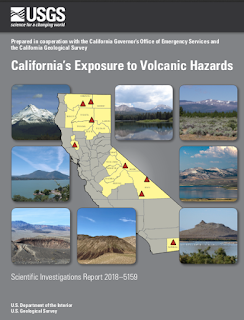
All of which means you don't have to live in the shadow of one of these slumbering giants to be impacted by an eruption. But, according to a new report from the USGS, roughly 200,000 Californian's do work, live, or pass through that state's volcanic hazard zones on a daily basis.
Suggesting that the next `big one' to hit California might be eruptive, rather than an earthquake.
Some volcanic hazards - like ash fall - can spread hundreds of miles. And even a light dusting of volcanic ash can wreak havoc on power lines, and airline traffic.

Due to its length (58 pages) I've only posted the abstract, so follow the link to download the PDF in its entirety.

California’s Exposure to Volcanic Hazards 

Scientific Investigations Report 2018-5159
Prepared in cooperation with the California Governor’s Office of Emergency Services and the California Geological Survey
By: Margaret Mangan, Jessica Ball, Nathan Wood, Jamie L. Jones, Jeff Peters, Nina Abdollahian, Laura Dinitz, Sharon Blankenheim, Johanna Fenton, and Cynthia Pridmore

https://doi.org/10.3133/sir20185159

Links
Document: Report (33.6 MB pdf)
 

First posted February 25, 2019
Volcano Science Center
U.S. Geological Survey
345 Middlefield Road, MS 910
Menlo Park, CA 94025

The potential for damaging earthquakes, landslides, floods, tsunamis, and wildfires is widely recognized in California. The same cannot be said for volcanic eruptions, despite the fact that they occur in the state about as frequently as the largest earthquakes on the San Andreas Fault. At least ten eruptions have taken place in the past 1,000 years, and future volcanic eruptions are inevitable.

The U.S. Geological Survey’s (USGS) national volcanic threat assessment identifies eight young volcanic areas in California as moderate, high, or very high threat. Of the eight volcanic areas that exist in California, molten rock resides beneath at least seven of these—Medicine Lake volcano, Mount Shasta, Lassen Volcanic Center, Clear Lake volcanic field, the Long Valley volcanic region, Coso volcanic field, and Salton Buttes—and are therefore considered “active” volcanoes producing volcanic earthquakes, toxic gas emissions, hot springs, geothermal systems, and (or) ground movement.

The USGS California Volcano Observatory in Menlo Park, California, monitors these potentially hazardous volcanoes to help communities and government authorities understand, prepare for, and respond to volcanic activity. Although volcanic activity can sometimes be forecast, eruptions, like earthquakes or tsunamis, cannot be prevented. Understanding the hazards and identifying what and who is in harm’s way is the first step in mitigating volcanic risk and building community resilience to volcanic hazards.

This report, which was prepared in collaboration with the California Governor’s Office of Emergency Services and the California Geological Survey, provides a broad perspective on the state’s exposure to volcanic hazards by integrating volcanic hazard information with geospatial data on at-risk populations, infrastructure, and resources. This information is intended to prompt site- and sector-specific vulnerability analyses and preparation of hazard mitigation and response plans.

Suggested Citation

Mangan, M., Ball, J., Wood, N., Jones, J.L., Peters, J., Abdollahian, N., Dinitz, L., Blankenheim, S., Fenton, J., and Pridmore, C., 2019, California’s exposure to volcanic hazards: U.S. Geological Survey Scientific Investigations Report 2018–5159, 49 p., https://doi.org/10.3133/sir20185159.

While I don't recommend that anyone lie awake at night worrying about the next potential disaster, every home should be at least minimally prepared to deal with one if it happens.

So . . . if a disaster struck your region today, and the power went out, stores closed their doors, and water stopped flowing from your kitchen tap for the next 7 to 14 days  . . .  do you already have:

  • A battery operated NWS Emergency Radio to find out what was going on, and to get vital instructions from emergency officials
  • A decent first-aid kit, so that you can treat injuries
  • Enough non-perishable food and water on hand to feed and hydrate your family (including pets) for the duration
  • A way to provide light when the grid is down.
  • A way to cook safely without electricity
  • A way to purify or filter water
  • A way to stay cool (fans) or warm when the power is out.
  • A small supply of cash to use in case credit/debit machines are not working 
  • An emergency plan, including meeting places, emergency out-of-state contact numbers, a disaster buddy,  and in case you must evacuate, a bug-out bag
  • Spare supply of essential prescription medicines that you or your family may need
  • A way to entertain yourself, or your kids, during a prolonged blackout
If your answer is `no’, you have some work to do.  A good place to get started is by visiting Ready.gov.

Some other preparedness resources you might want to revisit include:
The Gift Of Preparedness - Winter 2018
#NatlPrep: Revisiting The Lloyds Blackout Scenario

#NatlPrep : Because Pandemics Happen
Disaster Planning For Major Events
All Disaster Responses Are Local

WHO Update: MERS Outbreak In Wadi Aldwasir

Original Map Credit Wikipedia


#13,892


For just shy of a month we've been following a large outbreak of MERS in Wadi Aldwasir - which has involved multiple clusters - and as of yesterday's update, had grown to 50 cases.
This morning the World Health Organization has published the following update which covers the first 39 cases reported to them by the Saudi MOH between January 29th and February 13th.
I've posted some excerpts (bolding mine) below.  Follow the link to read the release in its entirety.   I'll have a short postscript when you return.

Middle East respiratory syndrome coronavirus (MERS-CoV) – The Kingdom of Saudi Arabia
Disease Outbreak News: Update
26 February 2019

On 6 February 2019, the National IHR Focal Point of The Kingdom of Saudi Arabia notified WHO of an ongoing outbreak of MERS-CoV infection in Wadi Aldwasir city and one of its hospitals (referred to as Hospital A). Between 29 January and 13 February 2019, 39 cases of MERS-CoV infection, including four deaths, were reported. At the time of writing, this outbreak remains ongoing.
Human-to-human transmission has occurred between the index patient and health care workers, patients in the emergency department and intensive care unit (ICU) of Hospital A, and from patients to household contacts. As of 13 February, nine health care workers have been infected. Descriptions of the outbreak are based on information WHO has received as of 13 February 2019; further updates will be provided as they become available.

Details regarding each of the cases are provided in the file linked below.
MERS-CoV cases reported between 29 January and 13 February 2019
xls, 123kb


From 2012 through 13 February 2019, a total of 2 345 laboratory-confirmed cases of MERS-CoV, along with 817 associated deaths, have been reported to WHO globally. The number reflects the total number of laboratory-confirmed cases globally reported to WHO under IHR to date. The total number of deaths includes the deaths that WHO is aware of to date through follow-up with affected member states.
Public health response

The Saudi Arabian Ministry of Health (MoH) has launched a full-scaled investigation of the outbreak in Wadi Aldwasir, including identification of all household and healthcare worker contacts of confirmed patients. As of 13 February, a total of 350 contacts have been identified, including 230 household contacts and 120 healthcare worker contacts. All identified contacts will continue to be monitored for 14 days from the last date of exposure as per WHO and national guidelines for MERS-CoV.

Currently, symptomatic and high-risk exposure contacts have been tested for MERS-CoV infection by RT-PCR at least once and many contacts of known patients have been tested repeatedly. Any secondary cases of MERS-CoV infection have been reported to WHO. As of 13 February, the MoH believes that the possible active human-to-human transmission is minimized. The latest cases represent contacts who initially tested negative for MERS-CoV by RT-PCR, but were confirmed positive in subsequent repeat testing. WHO expects more cases epidemiologically linked to known cases to be reported.

Within the health care facilities with high risk of MERS-CoV transmission, infection prevention and control measures have been enhanced, including intensive mandatory on-the-job training on infection control measures for all healthcare workers in emergency room and ICU. Disinfection has been carried out in the emergency room and ICU of Hospital A, and respiratory triage has been enforced in all healthcare facilities in the Riyadh region. Additional hospital staff are also mobilized to support infection control activities. At this time, Hospital A is fully operational.

The MoH media department has launched an awareness campaign targeting Wadi Aldawasir city with special focus on camel owners and camel-related activities.

The Ministry of Agriculture is testing dromedaries in the Wadi Aldwasir area. Three dromedaries have tested positive via PCR and these animals were removed from the local market. Movement in and out of the camel market has also been restricted. Camels owned by confirmed human cases were quarantined regardless of testing results as a precaution. Full genome sequencing of available human and dromedary specimens will be conducted.
WHO risk assessment

Infection with MERS-CoV can cause severe disease resulting in high morbidity and mortality. Humans are infected with MERS-CoV from direct or indirect unprotected contact with infected dromedary camels. MERS-CoV has demonstrated the ability to transmit between humans. So far, the observed non-sustained human-to-human transmission has occurred mainly in health care settings.

As of 13 February, 39 cases have been identified and reported as part of the Wadi Aldwasir outbreak. At the time of writing, contact follow-up is ongoing. It is likely that more cases resulting from human-to-human transmission may be reported as part of this outbreak.
The occurrence of this nosocomial transmission is deeply concerning. However, the epidemiologic patterns are not unusual and there are no signs so far that suggest further propagation of the outbreak.
Human-to-human transmission between patients and health care workers, between patients sharing spaces in health care facilities, and from patients to household members, can occur when there are delays in isolation of suspected cases, inadequate infection and control measures, and late case management.

The notification of these additional cases does not change WHO’s overall risk assessment of MERS-CoV. WHO expects that additional cases of MERS-CoV infection will be reported from the Middle East, and that cases will continue to be exported to other countries by individuals who might acquire the infection after exposure to infected dromedary camels, animal products (e.g. consumption of raw camel milk), or other human cases (e.g. in a health care setting). WHO will continue to monitor the epidemiological situation and conduct risk assessment based on the latest available information. Results of the completed epidemiological investigation, as well as full genome sequencing of available dromedary and human specimens are currently pending. These results will provide information of the extent of dromedary-to-human and human-to-human transmission in this outbreak.

(Continue . . . )

Of note, a number of cases initially tested negative, but later tested positive for the virus, a diagnostic challenge we've looked at previously (see AJIC:Intermittent Positive Testing For MERS-CoV).

While this WHO update provides us with additional information regarding the size and impact of this outbreak, getting full details on the various chains of infection are something I suspect we'll have to wait until a paper is published.


Saudi MOH: 1 MERS Case In Medina


image


#13,891


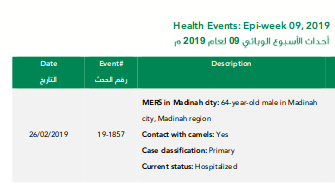
A relatively quiet day from Saudi Arabia, with just one MERS case - the 81st reported in 2019 - hailing from Medina.  The patient is a 64 y.o. male with recent camel contact.

https://www.moh.gov.sa/en/CCC/events/national/Documents/Epiwk9-19.pdf


While the number of new cases has begun to slow during this last week of February, we've already seen more Saudi MERS cases in the first 9 weeks of 2019 than were reported in the last 9 months of 2018.


Epi.& Inf.: Global Status Of MERS-CoV In Camels - A Systemic Review

Fig. 2. Virological and serological evidence for MERS CoV in dromedary camels.


#13,890

Just over a year after the first human infection with MERS-CoV was announced out of Saudi Arabia in 2012, dromedary camels were identified as a host species for the MERS coronavirus (see 2013's The Lancet Camels Found With Antibodies To MERS-CoV-Like Virus).
While bats are believed to be the primary host reservoir for MERS, SARS, and an array of other novel pathogens (see Curr. Opinion Virology: Viruses In Bats & Potential Spillover To Animals And Humans), camels - due to their close contact with people in the Middle East - are the main conduit by which the virus appears to spillover to humans. 
This news was not well received in the Middle East (see Saudi Camel Owners Threaten Over MERS `Slander’) - where camels are both loved and respected -  and despite several years of warnings from public health authorities, many people (locals and tourists) continue to expose themselves to camels and camel products (meat, milk, etc.) without taking recommended precautions

Despite six years of research, many questions remain unanswered about the MERS-camel connection, including:
  • Why 100% of the known and suspected camel-to-human transmissions have been recorded on the Arabian peninsula, while the MERS virus and antibodies have been detected in camels from both Africa and South-Central Asia. 
  • Why roughly 90% of Middle Eastern human MERS infections have been reported by Saudi Arabia
  • Why spillover from camels appears to peak in the winter and spring
  • And why human cases were never identified before 2012, despite evidence of MERS circulation in camels going back 30 years.
While definitive answers for many of the questions remain elusive, we've got a lengthy and detailed review of the literature regarding the carriage of MERS by camels today, published in Epidemiology & Infection.

I've only included some excerpts from this open-access review, so follow the link to read it in its entirety.  When you return, I'll have a brief postscript.

Global status of Middle East respiratory syndrome coronavirus in dromedary camels: a systematic review 
R. S. Sikkema (a1), E. A. B. A. Farag (a2), Mazharul Islam (a3), Muzzamil Atta (a3) ...
https://doi.org/10.1017/S095026881800345X
Published online: 21 February 2019

Abstract
Dromedary camels have been shown to be the main reservoir for human Middle East respiratory syndrome (MERS) infections. This systematic review aims to compile and analyse all published data on MERS-coronavirus (CoV) in the global camel population to provide an overview of current knowledge on the distribution, spread and risk factors of infections in dromedary camels. 
We included original research articles containing laboratory evidence of MERS-CoV infections in dromedary camels in the field from 2013 to April 2018. In general, camels only show minor clinical signs of disease after being infected with MERS-CoV. Serological evidence of MERS-CoV in camels has been found in 20 countries, with molecular evidence for virus circulation in 13 countries. 

The seroprevalence of MERS-CoV antibodies increases with age in camels, while the prevalence of viral shedding as determined by MERS-CoV RNA detection in nasal swabs decreases. In several studies, camels that were sampled at animal markets or quarantine facilities were seropositive more often than camels at farms as well as imported camels vs. locally bred camels. 

Some studies show a relatively higher seroprevalence and viral detection during the cooler winter months. Knowledge of the animal reservoir of MERS-CoV is essential to develop intervention and control measures to prevent human infections.
        (SNIP)
Worldwide distribution of MERS-CoV in dromedary camels

The first evidence of MERS-CoV in camels described so far is the detection of antibodies to MERS-CoV in camel sera from Somalia and Sudan from 1983 of which 81% tested positive [32]. Additional serological evidence of the widespread presence of MERS-CoV infection in camels, included in this review, has been found in 18 additional countries: Bangladesh, Burkina Faso, Egypt, Ethiopia, Iraq, Israel, Jordan, Kenya, KSA, Mali, Morocco, Nigeria, Oman, Pakistan, Qatar, Spain, Tunisia and the UAE (Fig. 2).
In addition, Promed mail reported that virus-positive camels had been found in Kuwait and Iran, the latter reportedly in imported animals (Archive number 20140612.2534919 and 20141029.2912385). In 11 countries, serological findings were complemented with the finding of viral RNA in dromedary camels: Burkina Faso, Egypt, Ethiopia, Iraq, Jordan, KSA, Morocco, Nigeria, Oman, Qatar and the UAE.
Investigations of MERS-CoV circulation amongst dromedary camels in Australia, Japan, Kazakhstan, USA and Canada did not find any proof of MERS-CoV circulation. All countries where MERS-CoV circulates in the camel population, with the exception of Spain (Canary Islands), Pakistan and Bangladesh, are located in the Middle East or Africa [4, 33].
One out of 17 camels that had MERS-CoV antibodies in Bangladesh was born in Bangladesh, 16 others were imported from India [34]. However, there have not been any additional reports of MERS-CoV in camels in India. There is no record of foreign origin of the seropositive camels from Pakistan [35]. Moreover, in previous studies there had already been evidence of seropositive camels that originate from Pakistan [37, 58].
(SNIP)

The increase in MERS-CoV circulation in winter and spring can have multiple explanations. Firstly, the winter is the calving season [10], which leads to a larger proportion of young animals that usually have a higher number of MERS-CoV infections and virus excretion. Moreover, in winter season, there is a major increase of camel and human movements due to camel racing competitions, camel breeding, trading and movements to grazing grounds, which increases the chance of virus spread. Additionally, cooler temperatures may facilitate coronavirus survival in the environment [57].

(SNIP)


Conclusion

Since the discovery of MERS-CoV in 2012, the dromedary camel has been identified as the animal reservoir of human infections with the MERS-CoV. However, the exact route of human primary infections is still unknown.

Moreover, the scale of the spread and prevalence of MERS-CoV in the camel reservoir is not fully known yet since there is still a lack of MERS-CoV prevalence data in some countries that harbour a very significant proportion of the world camel population.

However, knowledge of the animal reservoir of MERS-CoV is essential to develop intervention and control measures to prevent human infections. Prospective studies that include representative sampling of camels of different age groups and sex, within the different husbandry practices, are needed to fully understand the patterns of MERS-CoV circulation. Such studies are important as they may give more information on critical control points for interventions to reduce the circulation of MERS-CoV and/or exposure of humans.

(Continue . . .  )


SARS, Ebola, Marburg, Rabies, Nipah & Hendra are just a few of the other zoonotic viruses that are believed to be of bat origin - but are often transmitted to humans via an intermediate host.

In 2017 researchers from EcoHealth Alliance published a letter in Nature (Host and viral traits predict zoonotic spillover from mammals) providing the first comprehensive analysis of viruses known to infect mammals.

From their website summary: 
The study shows that bats carry a significantly higher proportion of viruses able to infect people than any other group of mammals; and it identifies the species and geographic regions on the planet with the highest number of yet-to-be discovered, or ‘missing’, viruses likely to infect people. This work provides a new way to predict where and how we should work to identify and pre-empt the next potential viral pandemic before it emerges.
For more on bats and the zoonotic viruses they carry, you may wish to revisit:
Curr. Opinion Virology: Viruses In Bats & Potential Spillover To Animals And Humans

Back To The Bat Cave: More Influenza In Bats

EID Journal: A New Bat-HKU2–like Coronavirus in Swine, China, 2017

Emerg. Microbes & Infect.: Novel Coronaviruses In Least Horseshoe Bats In Southwestern China

SARS-like WIV1-CoV poised for human emergence