Saturday, August 30, 2025

CDC Updates COVID Nowcast


#18,856

Earlier this week, in That Uncertain Feeling, I wrote that the CDC's COVID Nowcast webpage had not been updated since June 20th, and that it - and their  wastewater surveillance page - both carried banners indicating `technical difficulties' were delaying data. 

CDC Nowcast Screenshot (8/26/25)

Yesterday the CDC published a revamped COVID Nowcast, albeit on a different web url (https://www.cdc.gov/covid/php/variants/variants-and-genomic-surveillance.html), making it easy to miss.

This new version is (for now, at least) less detailed than the previous incarnation; it drops completely the HHS regional map (see above), and the number of variants being tracked has fallen from 19 (last June) to just 5 today. 

They have added a useful graphic showing the remarkable decline over time in the number of weekly COVID samples sequenced in the United States. 

Those without a magnifying glass should know we've gone from a peak of  > 90,000 sequences a week to averaging less than 300.  A sampling size that makes it difficult to detect new variants until they've established a significant presence. 


Based on extremely limited data, yesterday's update suggests that XFG is the only variant currently gaining ground, while the other four being tracked (NB.1.8.1, LP.8.1, NW.1, & LF.7)  are either losing ground or holding steady. 

After several weeks the CDC has removed the warning banners (see below) from their wastewater surveillance sites in yesterday's update.

But based on the map below, while there are still significant gaps in wastewater testing surveillance around the country, COVID levels are rising particularly in the south and west.  


This chronic dearth of COVID data reflects a global shift in priorities - one that appears to prioritize economics and political expediencies over public health concerns - which has led to a dismantling of surveillance systems around the world (see From Here To Impunity).

As a result we are at increased risk of being blindsided by new COVID variants, an `antigenically shifted' seasonal flu virus, spillovers of H5N1, MERS-CoV, or something worse.

There are increasing obstacles now in place for getting the COVID shot - even for seniors - that in the face of continually waning immunity, are only likely to exacerbate the impact of this fall's respiratory season. 

While hopefully these COVID vaccine availability problem can be solved - until that happens I've still got my stash of KN95 face masks . . . .

And unlike some people, I'm not afraid to use them.  

Friday, August 29, 2025

Los Angeles: County Public Health Reporting An Increase In Flea-Borne Typhus Cases

#18,855


Murine Typhus, aka flea-borne typhus, is a bacterial disease caused Rickettsia typhi - and while no longer terribly common in most of the United States - it is most often reported in California, Texas and Hawaii (see 2017's Texas: DSHS Issues Murine Typhus Alert).

Not to be confused with Typhoid Fever - which is caused by a Salmonella Typhi infection that can (rarely) be transmitted from one person to another - Typhus is acquired from contact with infected fleas that live on rodents, possums, raccoons and cats.

Although some cases recover without treatment, others can become sick enough to require hospitalization, and deaths are not unheard of (see 2023 MMWR Fleaborne Typhus–Associated Deaths — Los Angeles County, California, 2022)

                             The Rise of Typhus in LA County Since 2010

Through the use of vector control methods (including liberal use of DDT during the 1950s and 1960s), the number of cases dropped from > 5400 in 1944 to less than 100 in 1956 (cite). By 1987, incidence had dropped low enough that Murine Typhus was no longer a reportable disease (see chart below).


But over time, DDT lost much of its effectiveness - and was eventually banned in 1972 for environmental reasons - which coincidentally was the year with the lowest case count (n=18). While cases remained low well into the early 2000s, the lack of reporting requirements likely affected the numbers.

In recent years - particularly in Texas and more recently in California - we've seen a resurgence of murine typhus, which led the CDC to release a 1-hour webinar in March of this year which is archived on the COCA Call Website.


Yesterday the Los Angeles County Department of Public Health issued the following news release on a growing number of Typhus cases in Central Los Angeles (and now, apparently Santa Monica).

August 28, 2025

 People urged to take precautions to protect themselves and their pets

The Los Angeles County Department of Public Health is urging people to take precautions following an increase of flea-borne typhus cases across the County. Earlier this year, Public Health investigated a localized outbreak of flea-borne typhus in Central Los Angeles and is currently investigating a second outbreak in the City of Santa Monica.

Flea-borne typhus cases have been rising in Los Angeles County since 2010. In 2024, a record 187 cases were identified. So far in 2025, 106 cases have already been reported, higher than this time last year. Public Health expects additional cases and clusters to appear in the coming months, as flea-borne typhus infections peak in late summer and fall.

“This ongoing increase in flea-borne typhus highlights the importance of taking preventive steps to reduce the risk of infection,” said Muntu Davis, MD, MPH, Los Angeles County Health Officer.

What is Flea-Borne Typhus (Typhus)?

Typhus is an acute febrile illness caused by Rickettsia Typhi bacteria, which is spread by infected fleas. People can become infected when flea feces are rubbed into cuts or scrapes on the skin or rubbed into the eyes.

In Los Angeles County, infected fleas are most commonly found on rats, free-roaming cats, and opossums. Pets such as dogs and cats that go outdoors can bring fleas into and around your home. Infected animals typically do not show signs of illness. Flea-borne typhus is not spread from person to person.

“Flea-borne typhus is serious, but preventable,” said Dr. Davis. “We urge people to take precautions by using flea control on their pets, avoiding contact with stray animals, and preventing wildlife from living in or next to their home or property. If you develop symptoms, such as fever, chills, or a rash, seek medical attention right away.”

How to Prevent Flea-Borne Typhus:

Public Health encourages people to follow these preventive steps to the risk of flea-borne typhus infections:

· Keep fleas off you and your pets.

  • When outside, use EPA-registered insect repellent labeled for protection against fleas.
  • Routinely use flea control products on your pets.
  • Keep pets indoors as much as possible.

· Avoid attracting wild or stray animals.

  • Don’t leave pet food or water outside.
  • Don’t feed or touch stray or wild animals.
  • Keep your yard free of debris and overgrown plants.
  • Store trash in containers with tightly fitting lids.
  • Close off crawl spaces and seal any openings where animals could enter, hide, or find food and water.
  • Report stray animals or signs of rodents or opossums near your property to local animal control officials.

For more detailed information, the LA County Public Health Department maintains a webpage devote to flea-borne typhus, which is located at:

http://publichealth.lacounty.gov/acd/diseases/Typhus/Index.htm


Thursday, August 28, 2025

JoV: An Emerging PB2-627 Polymorphism Increases The Zoonotic Risk of Avian Influenza Virus by Overcoming ANP32 Host Restriction in Mammalian and Avian Hosts


 The global prevalence of PB2-627V in influenza A viruses

#18,854

While we've been closely watching various incarnations of HPAI make sporadic attempts at spilling over into humans for nearly 3 decades, we've been largely protected because avian flu viruses typically carry the PB2-E627 amino acid mutation, which is not fully compatible with human ANP32A/B proteins

In 2016 Wendy Barclay et al. identified ANP32 as an important limiting factor in the replication of avian viruses in mammalian hosts (see Species difference in ANP32A underlies influenza A virus polymerase host restriction) along with the role of specific PB2 mutations:
 
The bottom line being, avian flu viruses don't replicate particularly well in human (or mammalian) hosts.

But, occasionally, we've seen avian viruses pick up a PB2-627K mutationusually after infecting a mammal - which is associated with enhanced replication and pathogenicity in mammals

Fortunately, this mutation attenuates its ability to replicate in birds, thereby limiting its ability to spread in the wild.  

Recently, however, we've seen increased reports of a PB3-627V mutation (see last year's Preprint: An Emerging PB2-627 Polymorphism Increases the Pandemic Potential of Avian Influenza); one which appears to aid and abet human replication, without exacting a fitness penalty in birds.
The authors reported that this PB2-627V mutation not only maintained viral fitness in poultry, it facilitated the aerosol transmission of AIVs between ferrets; raising concerns this mutation could go a long way in overcoming the `species barrier' between avian and mammalian-adapted influenza viruses.
Also last summer, in Transboundary & Emerg. Dis.: H3 Avian Influenza Virus Isolated from China in 2021–2022 Showed the Emerging H3N8 Posed a Threat to Human Health, we learned this mutation turned up in a human infection with avian H3N8 in Hunan province.

The authors wrote:

The E627K mutation of PB2 is known to play a decisive role in the mammalian adaptation of AIVs [41, 42]. The A/Henan/4-10CNIC/2022(H3N8) virus contains the E627K mutation, whereas A/Changsha/1000/2022(H3N8) contains the E627V mutation, which has also been shown to increase the replication or virulence of AIVs in mammals [14, 34, 43]

More recently, in Vet. Research: E627V Mutation in PB2 Protein Promotes the Mammalian Adaptation of Novel H10N3 Avian Influenza Virus, we saw evidence that PB2-627V is becoming increasingly common in AIV poultry isolates in China. 
All of which brings us to a new research article, published yesterday in the Journal of Virology, which calls for `PB2-627V be included as a molecular marker to assess the zoonotic risk of AIVs'.
Due to its length, and technical nature, I've just posted the abstract and a brief excerpt. Hardcore readers will want to read it in its entirety. I'll have a brief postscript after the break. 

An emerging PB2-627 polymorphism increases the zoonotic risk of avian influenza virus by overcoming ANP32 host restriction in mammalian and avian hosts
ABSTRACT
Alterations in the PB2-627 domain of avian influenza virus (AIV) can potentially increase the risk of cross-host species infections in humans and mammals. Recently, there has been a rise in human cases of AIV infections without the presence of the known mammalian determinant PB2-E627K.
Here, we identified a variant, PB2-627V, which has evolved in poultry and has contributed to the increase in human AIV infections. By screening global PB2 sequences, we discovered a new independent cluster of PB2-627V that emerged in the 2010s, prevalent in avian, mammalian, and human AIV isolates, including those of H9N2, H7N9, H3N8, 2.3.4.4b H5N1, and other subtypes. 
We functionally assessed its host adaptation, fitness, and transmissibility across three subtypes of AIVs (H9N2, H7N9, and H3N8) in different host models. PB2-627V combines the viral properties of avian-like PB2-627E and human-like PB2-627K, facilitating AIVs to efficiently infect and replicate in chickens and mice by utilizing both avian- and human-origin ANP32A proteins.
Importantly, PB2-627V promotes efficient transmission between ferrets through respiratory droplets. Deep sequencing of passaged chicken and transmitted ferret viral samples indicates that PB2-627V remains stable across the two host species and shows a high potential for long-term prevalence in avian species. Thus, the PB2-627V mutation in AIVs can stably transmit through poultry and can overcome the cross-species barrier to infect humans. Given the global prominence of AIVs, it will be prudent to monitor influenza viruses for the PB2-627V mutation as a potential marker for zoonotic spread.

IMPORTANCE

Avian influenza viruses (AIVs) are significant zoonotic pathogens. There is a rising trend of human cases of AIVs caused by a range of virus subtypes, including H9N2, H3N8, and H5N1 viruses. Thus, it is crucial to understand the underlying viral changes in AIVs that could result in zoonotic spread.
We identify mutation PB2-627V as an emerging viral factor that confers dual ability to the virus to infect and adapt to mammalian and avian hosts, and virus transmissibility in ferrets. The presence of PB2-627V in multiple subtypes of AIVs has the potential to cause public health risk. We therefore propose that PB2-627V be included as a molecular marker to assess the zoonotic risk of AIVs.

       (Continue . . . )
 

While global surveillance and reporting on sequences remains limited - and publication often lags by years - if this upward trend in PB2-627V continues, it could increase the zoonotic risk from a wide variety of avian flu subtypes (H3N8, H5N1, H5N5, H7N9, H9N2, etc.).

There are likely other genetic hurdles (e.g. Receptor binding) that avian flu viruses must overcome before they can pose a legitimate pandemic threat, but poor replication has long been viewed as a major barrier. 

More proof, as if we needed, that Nature's laboratory is open 24/7 and we should expect to see more surprises along the way. 

Denmark SSI Reports An Unusually Early Major Outbreak of Influenza A (H1N1)


Credit NIAID

#18,853

It is not often that we find ourselves talking about seasonal influenza A in August, but Denmark's SSI is reporting an unusually early appearance of H1N1 which is linked to a large (60K) music festival (Smukfest in Skanderborg  held Aug 3rd-10th). 

Beyond the early appearance of flu (which the SSI compares to a `super-spreader event'), the SSI notes unspecified genetic changes in the virus:
The current outbreak is caused by a variant of influenza A H1N1, which is similar to the viruses that circulated in the 2024/25 season, but with some unique changes.

While it isn't revealed what those `unique changes' might entail, I imagine we'll see a more detailed follow-up (perhaps in Eurosurveillance or on the ECDC website) in the days ahead. 

Whether this particular variant has `legs', and will spread further across Europe, remains to be seen.  There is no mention of increased severity of this virus, but how well it matches this year's vaccine is obviously a concern. 

For now, the only details we have come from the following (translated) statement by Denmark's SSI.


Unusually early flu outbreak can be traced to major festival

The Statens Serum Institut (SSI) has detected a major outbreak of influenza A, which is very likely linked to this year's Smukfest in Skanderborg. This is the first time in 15 years of monitoring that such an early influenza outbreak has been registered in Denmark.

Last edited on August 27, 2025

A number of cases of influenza A H1N1 can probably be traced back to Smukfest in Skanderborg earlier in August.

By examining samples from infected people and interviewing them, the Statens Serum Institut (SSI) has been able to demonstrate that several of the sick were infected with an almost identical virus, and that they had all participated in the festival in week 32.

“Everything points to the outbreak being linked to Smukfest. All those infected with the identical virus had been at the festival, while the other cases had a different source of infection. Therefore, we can very likely link the outbreak to this particular event,” says Ramona Trebbien, section manager at the Statens Serum Institut.
Unique find in 15 years of monitoring

Influenza is a disease that typically only causes major infections in the winter months. It is therefore unusual to see a major outbreak in mid-August.

“This is the first time in the 15 years that we have monitored influenza transmission year-round that we have seen an outbreak at this time of year. It is very unusual, and we are following the development,” says Ramona Trebbien.

The outbreak was identified quickly, among other things, because SSI monitors influenza cases nationally and runs a so-called sentinel surveillance, where selected doctors and laboratories submit samples year-round.

In week 33, influenza A cases nationally increased to 115 from 19 cases the week before. Likewise, 15 out of 56 samples from the sentinel surveillance were positive for influenza, which confirmed the signal of an actual outbreak.
Keeping an eye on developments

The current outbreak is caused by a variant of influenza A H1N1, which is similar to the viruses that circulated in the 2024/25 season, but with some unique changes. SSI is now monitoring the incidence and can add that there has been no further increase in infections this week.

“The weather plays a role in how the infection develops, so we are monitoring whether the good weather can help break the chains of infection,” says Ramona Trebbien.

SSI emphasizes that there is no reason to warn against attending festivals in general, but that the Smukfest episode shows that large events can in rare cases act as super-spreading events if the circumstances are right.

For most healthy people, influenza is an unpleasant but transient illness that typically goes away on its own after a week or so with fever, muscle aches and cough.

However, for young children, pregnant women, the elderly and people with chronic diseases, influenza can in some cases be serious and cause complications. If you have an underlying medical condition or become very ill, you should contact your doctor for advice and possible treatment. If you experience symptoms of influenza, it is recommended that you stay home, rest and drink plenty of fluids.

How to reduce the spread of infection
If you want to avoid getting infected – and infecting others – there are a few tips you can follow:
  • Avoid close contact with people you know are sick.
  • Stay home from work, school, institutions and the like if you are sick.
  • Cough and sneeze into a disposable tissue or, if necessary, your sleeve.
  • Wash your hands frequently with soap and water – especially after coughing, sneezing or blowing your nose. You can also use hand sanitizer.
  • Avoid touching your eyes, nose or mouth without washing your hands first. This will reduce the risk of infection, even if you have contracted the virus on your hands.
  • Keep common items and surfaces clean with regular cleaning
You can read more about influenza and prevention of the disease on SSI's website .

Wednesday, August 27, 2025

CSIRO Pub: Impacts of Long COVID on Disability, Function and Quality of Life for Adults Living in Australia


#18,852

Just 5 days ago, in EHJ: Accelerated Vascular Ageing After COVID-19 Infection: The CARTESIAN Study, we looked at the latest in a long series of studies on the long-term impacts of COVID infection. 

That study found significant `vascular ageing' - particularly in women - following COVID infection, which seems to go along with other studies linking COVID infection to heart attacks, strokes, and other vascular events (see AHA: COVID-19 May Trigger New-Onset High Blood Pressure).

While most people are familiar with the more common signs of `Long COVID'  - like fatigue and `brain fog' -  continue to see evidence of more insidious health impacts that may not become fully apparent for years (e.g. Hypertension, Cardiac problems, Diabetes, Neurodegenerative diseases like `Parkinson's', etc.), or only after repeated infections.

While its true that most people recover from acute COVID infection without sustaining long-term damage - evidence suggests that the more times one tempts fate - the more likely they are to suffer post-COVID challenges. 
And that not only presents individual health challenges, but substantial societal impacts as well.
Today we've another study, this time from Australia, on the impact of Long COVID on disability and quality of life.  Along with it, we've a summary published in `The Conversation'  -  which compares Long COVID to a stroke or Parkinson's - written by three of its authors. 

Firs the abstact, followed by a link to the summary, after which I'll have a brief postscript.

Impacts of long COVID on disability, function and quality of life for adults living in Australia

Danielle Hitch A B C * , Tanita Botha C D , Fisaha Tesfay C E , Sara Holton F G , Catherine M. Said H I J , Martin Hensher K , Kieva Richards A , Mary Rose Angeles C L , Catherine M. Bennett C , Genevieve Pepin A , Bodil Rasmussen F G M N Kelli Nicola-Richmond O
 
* Correspondence to: dani.hitch@deakin.edu.au
Australian Journal of Primary Health 31, PY25033 https://doi.org/10.1071/PY25033
Submitted: 24 February 2025 Accepted: 30 July 2025 Published: 25 August 2025

© 2025 The Author(s) (or their employer(s)). Published by CSIRO Publishing on behalf of La Trobe University.  

Abstract

Background
To describe the impact of long COVID on disability, function and quality of life among adults living in Australia.

Method

People aged >18 years with a history of COVID-19 infection confirmed by polymerase chain reaction or rapid antigen test were eligible for this cross-sectional survey. The World Health Organization Disability Assessment Schedule 2.0 measured disability and function, and the 36-Item Short Form Health Survey assessed quality of life.

Results

Participants (n = 121) reported significant functional impairment and reduced quality of life compared with established population norms for these outcome measures. Most (n = 104, 86%) reported clinically significant disability and participation limitations in daily activities. Mean World Health Organization Disability Assessment Schedule 2.0 scores indicated higher levels of disability than 98% of the general population. The 36-Item Short Form Health Survey scores indicated lower quality of life across all domains, but particularly in relation to vitality and social functioning. Regression analysis found significant associations between the World Health Organization Disability Assessment Schedule 2.0 and 36-Item Short Form Health Survey scores, and vaccine dose number, comorbidities and self-rated recovery.

Conclusion

Long COVID is associated with significantly reduced function and quality of life, which are distinct outcomes requiring targeted assessment and intervention. The overall impact may be exacerbated in people with pre-existing comorbidities who are more susceptible to long COVID in the first place.
The findings underscore the need for targeted rehabilitation and support services for people living in Australia with long COVID, and further longitudinal research to explore the long-term impact on disability and quality of life, and inform policy and healthcare service delivery.

       (Continue . . . )


Long COVID is more than fatigue. Our new study suggests its impact is similar to a stroke or Parkinson’s
Published: August 24, 2025 4:10pm EDT
 

Obviously Long COVID represents a wide range of symptoms, and its impact can range from mild to severe (or even fatal). Some people get better over time, while others do not.  

Based on limited data, the WHO estimates that 1 in 6 people who contract COVID will develop some degree of `Long COVID'. Globally, that suggests > 400 million people, and  > 20 million in the United States.

Despite this expanding butcher's bill, we now trivialize COVID infection (and reinfection) to the point that most people eschew the COVID vaccine and many insist on going to work or school when symptomatic (see Effect of COVID-19 Infection on Presenteeism).

A strategy that may provide short-term benefits, but risks long-term harm. 

Tuesday, August 26, 2025

That Uncertain Feeling


CDC Nowcast Screenshot (6/26/25)

#18,851

Sixty days ago (June 26th) we looked at the WHO's WHO TAG-VE Risk Assessment On COVID VUM (Variant Under Monitoring) XFG, which was released just a month after a similar WHO risk assessment on COVID VUM NB.1.8.1.

At that time, the most recent CDC COVID Nowcast (June 20th) estimated the prevalence of the top 3 COVID variants in the United States (see below) with a tremendous amount of uncertainty.


Due to low numbers of sequences being reported to CDC, precision in the most recent reporting period is low. CDC is moving to longer reporting periods to gather the number of sequences required to provide reliable nowcast estimates.

Since then, COVID activity across the United States has increased (see CDC report below), but the CDC's Nowcast hasn't been updated since June 20th.


The CDC's Wastewater surveillance system has been updating, but they also warn that due to unspecified `technical issues' wastewater data is currently delayed for COVID, Influenza, and RSV. 

What data they do have indicates that the XFG variant has become dominant in the United States (see below), but it isn't at all clear how current, or accurate, this information may be.


Hopefully these `technical issues' are temporary, and can be resolved before the fall/winter respiratory season begins, as it could affect many people's decision on whether (or when) to get the seasonal flu/COVID vaccines.  

This lack of good data isn't just limited to the United States, however, as 90% of the world's countries no longer reliably report COVID statistics to the WHO (see No News Is . . . Now Commonplace). 

We've seen similar reductions in reporting on novel influenza as well. 

Although public health organizations like the WHO and ECDC continue to promote increased surveillance (see ECDC: Updated Reporting Protocol for Zoonotic Influenza Virus) - for numerous and varied economic and political reasons - the sharing of data only seems to be getting worse (see From Here To Impunity).

This reduced surveillance and data sharing only increases the chances that we could be blindsided by a new COVID variant, an `antigenically shifted' seasonal flu virus, spillovers of H5N1, or something worse.

While we may get lucky - and nothing untoward happens this fall or winter - you can only cross a busy street blindfolded so many times before you get flattened. 

Monday, August 25, 2025

Vaccine X: H5N1 Highly Pathogenic Avian Influenza Vaccination: Seroresponse of Mexican Poultry in the 2022–2024


#18,850

Until relatively recently - with the notable exceptions of China, Indonesia, Egypt, Vietnam and Hong Kong - most of the world's nations have avoided the use of poultry avian influenza vaccination in favor of the long-standing OIE recommendation to `stamp out' HPAI infections by culling infected flocks.
That policy advised that vaccines should only be used as a temporary measure, stating that: `Any vaccination campaign must include an “exit strategy” i.e. a return to classic disease control measures.'
There were some pretty good reasons behind those recommendations, not the least of which is the concern that poorly applied, or poorly matched vaccines (see Egypt: A Paltry Poultry Vaccine), could promote the emergence and spread of new subtypes or vaccine-escape variants.

A 2014 EID Journal dispatch called Subclinical Highly Pathogenic Avian Influenza Virus Infection among Vaccinated Chickens, China addressed these exact concerns (bolding mine):

HPAI mass vaccination played a crucial role in HPAI control in China. However, this study demonstrated multiple disadvantages of HPAI mass vaccination, which had been suspected (13,14). For example, this study showed that H5N1 subtype HPAI virus has evolved into multiple H5N2 genotypes, which are all likely vaccine-escape variants, suggesting that this virus can easily evolve into vaccine-escape variants.

This observation suggests that HPAI mass vaccination, which is highly effective in the beginning of an outbreak, may lose its effectiveness with time unless the vaccine strains are updated. Moreover, this study showed that vaccinated chicken flocks can be infected with vaccine-escape variants without signs of illness.

None of this is to suggest that an effective poultry vaccine campaign can't be mounted, or effectively maintained.  But it does require more than just a `vaccinate & forget' strategy. 
China's massive H5+H7 poultry vaccination program over the summer of 2017 quickly shut down their H7N9 epizootic and seasonal human epidemics (2013-2017) - arguably saved their poultry industry - and also greatly reduced the number of HPAI H5N6 infections for the next several years.
Given how dire the situation was with H7N9, and how close the virus appeared to sparking a human pandemic, this was a remarkable success.  But over time, we've seen a rise in human H5N6 infections, which may also be spreading asymptomatically in poultry.

Since 2021, in response to the abrupt rise in HPAI H5 around the globe, more countries have elected to embrace poultry vaccination, including France and Mexico (see Senasica Orders Strategic Vaccination Of High-Risk Poultry Against HPAI H5N1).

In 2023 WOAH (formerly the OIE) announced a policy shift (see WOAH: Rethinking Avian Influenza Prevention and Control Efforts) that recommended a comprehensive control strategy that integrates vaccination with other measures (including testing & culling if needed)

But most countries - including the United States, Canada and the UK - have yet to authorize HPAI poultry vaccines, although many are studying the matter. 

This statement from Canada's CFIA:
Why Canada doesn’t currently vaccinate poultry against HPAI

Canada has historically maintained an HPAI response strategy focused on disease eradication and does not currently vaccinate poultry to protect against HPAI. The scale and duration of the ongoing outbreak, however, has increased global interest in exploring vaccination as a tool for disease management. Some countries already use vaccines as a preventative measure.
Last March's UK Joint Taskforce Policy Paper: Vaccination of Birds Against HPAIV (bird flu) continues to promote eradication, warning:
Use of avian influenza vaccine may reduce poultry mortality and clinical signs of the disease following infection. However, vaccinated birds can still become infected, shed virus, and transmit the virus to other vaccinated or unvaccinated birds, mammals and humans.

There were media reports in June that the USDA was expected to announce their  poultry vaccination strategy against H5N1 sometime in July, but as of today's writing no decision has been announced.  

While vaccinating poultry (and potentially cattle) against HPAI H5N1 could potentially be a game changer, getting it right is imperative.

Using mis-matched vaccines, or skimping on post-vaccination surveillance and testing, could lead to escape variants that might make matters considerably worse (see Preprint: Association of Poultry Vaccination with the Interspecies Transmission and Molecular Evolution of H5 Subtype Avian Influenza Virus).

We've a report today in Vaccine: X which looks at the result of two rounds of HPAI H5 poultry vaccination in Mexico (2022-2024). 


While vaccination provided partial protection against H5N1, it was less than initially hoped for. The author's wrote:

As expected, HPAI vaccination led to a statistically higher immune response in birds in most of Mexico's states. However, seroconversion and seroprotection rates remained below 80 % during the first evaluation period. 
The second round of vaccination improved seroconversion and seroprotection rates, but it still fell short of the goals.  The authors explained:
A total seroconversion rate of 81.59 % was obtained for the second vaccination period, i.e., about 80 % of the vaccinated production birds mounted an immune response above 16 HAU. Four states (Campeche, Jalisco, Yucatán, and Zacatecas) obtained seroconversion rates above 80 %, while the remaining two states had seroconversion rates around 70 % (Table 3).

The total seroprotection rate for this period was 76.76 %, meaning about 70 % of the vaccinated production birds in this period developed an immune response above 32 HAU. Among all states, only Campeche and Zacatecas achieved seroprotection rates above 80 % (Table 3).

First, a link, and abstract from the study, after which I'll have a  postscript. 

H5N1 highly pathogenic avian influenza vaccination: Seroresponse of mexican poultry in the 2022–2024

Brenda Aline Maya Badillo a b, Diana Laura García Hernández a, Rodrigo Armando Moreno García a, Guillermo Orta Pineda a b, Carlos Javier Alcázar Ramiro a, Juana Castillo Castillo a, Mario Solís Hernández a, Roberto Navarro López a 1, Armando García López a

Abstract

Since 2021, the activity and impact of the highly pathogenic H5N1 avian influenza virus have intensified worldwide, causing high mortality in wild birds and birds while also infecting various wild and domestic mammals and humans. Particularly, the severe impact on commercial poultry farming has prompted various countries to implement control and mitigation plans to address the damage caused by these viruses. 

In Mexico, the implementation of vaccination was part of the comprehensive strategies to prevent and control highly pathogenic H5N1 avian influenza outbreaks. For this reason, this work aimed to compare antibody levels in production birds before and after vaccination, examining seroconversion and seroprotection after vaccination in two time periods. 

Serum samples were taken before and after vaccination in 573 Poultry Production Units during the first vaccination period and 205 Poultry Production Units during the second period across various Mexican states. These samples, later, underwent hemagglutination inhibition tests. With the results obtained from serology, comparisons of medians, calculations of seroconversion and seroprotection, as well as logistic regression analysis were performed. 

As expected, vaccination led to a statistically higher immune response in birds in most of Mexico's states. However, seroconversion and seroprotection rates remained below 80 % during the first evaluation period.

Progenitors and commercial posture birds showed better immune responses to vaccination, particularly with vaccines developed through reverse genetics. These results provide valuable insights into the immune response of Mexican domestic birds under the national strategic plan to control the highly pathogenic influenza A H5N1 virus emergency, which will set a precedent to improve the prevention and control of future outbreak

       (Continue . . . )

With vaccination campaigns, the devil is always in the details. 

While seroconversion and seroprotection rates approached or exceeded 80% in many states, looking at the breakdown of the 20 states included in the first round, 7 (33%) scored considerably lower, with 2 states in single digits. 

Although no detailed explanation was provided, 14 of the first round participating states were excluded from the second round (n=6) analysis, including most of the worst performers from round 1.   


The authors noted:

Challenges and limitations appear when developing national strategies for the prevention and control of infectious agents such as HPAI viruses. First, the specific monitoring of each PPU is a factor that we consider relevant.
Although most PPUs complied with the strategic vaccination plan and the requirements requested for its implementation, there were PPUs that showed weak points in this implementation and that could be seen in the serological evaluation of the immune response of the birds before and after vaccination, mainly in the calculation of the seroconversion rate and the seroprotection rate.
These limitations were evident in period one, mainly across southeastern Mexican states because they did not mount an immune response after vaccination with seroconversion and seroprotection rates less than 10 % of their population.
It is likely that some of the critical points of the vaccination plan were not fully met or were not carried out properly.

And there's the rub.  Properly done - and assuming the right vaccine formulas can be developed - poultry (and possibly cattle) vaccination should become valuable tools in our fight against HPAI H5 viruses. 

But as we've repeatedly seen (see Taiwan Seizes 210 Bottles of Illegal Chinese `Poultry Vaccine'), consistently maintaining that level of excellence in the real world can be a challenge
And the costs for getting it wrong - while unknowable - could be substantial. 

Sunday, August 24, 2025

JOI: Prevalence and Transmission of Influenza A (H6) Viruses Pose a Potential Threat to Public Health


#18,849

Among the panoply of avian flu viruses, H5 and H7 viruses get the bulk of our attention, since they are the most destructive to the poultry industry and are known to occasionally spontaneously mutate into HPAI viruses when allowed to circulate in poultry. 

There are dozens of other subtypes (H1Nx-H16Nx) that are not considered `reportable' by WOAH, yet still have some zoonotic properties (Note: H17 & H18 viruses have been reported in bats).  

After all, a reassorted H3 avian virus sparked the 1968 H3N2 pandemic, and has remained in constant circulation in humans for nearly 60 years, as did a reassorted H2 avian virus in the late 1950s

While trying to predict which novel flu will spark the next pandemic is a mug's game, we do try to track activity that may indicate a virus's progress in that direction. 

A few  contenders (excluding H5, H7, and swine variant flu viruses) include:

One of the lower-profile subtypes we've been watching for the past dozen years are A(H6) viruses, which made headlines in 2013 and 2014 after a college student was hospitalized with pneumonia, and several dogs were found infected in Taiwan. 
Taiwan CDC: Epidemiological Analysis Of Human H6N1 Infection

EID Journal: Influenza A(H6N1) In Dogs, Taiwan

The CDC currently has this to say about H6 viruses: 

Avian Influenza A(H6) Viruses

LPAI A(H6) virus outbreaks in birds are not internationally reportable, therefore, its true prevalence is unknown. However, LPAI A(H6) viruses have been identified in various species of wild waterfowl and domestic poultry in Eurasia and the Americas. Known subtypes of A(H6) viruses include LPAI A(H6N1) and A(H6N2). In 2013, Taiwan reported the first known human infection with LPAI A(H6N1) virus.
Over the past 12 years we've seen a number of studies suggesting that H6 viruses may be better adapting to mammalian hosts, including:
Study: Influenza A (H6N6) Viruses Isolated from Chickens Replicate in Mice and Human lungs Without Prior Adaptation

All of which brings us to a new report - published last week in the Journal of Infection - which highlights that H6 viruses are widespread, genetically diverse, capable of mammalian spillover, and pose a growing threat to public health. 

While a relatively brief report, I've only posted some excerpts.  Follow the link to read it in its entirety. 
Prevalence and Transmission of Influenza A (H6) Viruses Pose a Potential Threat to Public Health

Xingdong Song 1, Xiaohong Hou 1, Yue Li, Ruihua Zhang, Yu Meng, Yanli Zhu, Liangmeng Wei, Shijin JiangShow more
 
https://doi.org/10.1016/j.jinf.2025.106594
Dear Editor,

On March 25, 2024, the clade 2.3.4.4b highly pathogenic influenza H5N1 virus infection was reported in dairy cattle in Texas, USA. As of June 7, 2025, outbreaks of H5N1 virus occurred in more than 1000 dairy farms across 17 states, with a mortality rate of up to 10% in infected cattle. Additionally, the H5N1 virus caused 41 confirmed human infections among dairy workers in 2024.1 Highly pathogenic influenza viruses pose a persistent threat to global public health, while the potential risks of low pathogenic influenza viruses should not be ignored.

Recently, we read with interest the articles published in the Journal of Infection regarding human infections with low pathogenic H3N8, H7N4, H9N2, H10N3, H10N5 and H10N8 subtype influenza viruses.2, 3, 4, 5, 6, 7 In addition to the aforementioned subtypes, the H6 subtype influenza virus has also garnered significant attention from the scientific community.

 It is reported that H6 subtype viruses were widely circulating in various avian hosts, including wild, domestic aquatic and terrestrial bird species. Notably, some H6 viruses could cross species barrier to infect mice and ferrets without prior adaptation, and even acquired the ability to bind to human-type receptors.

Furthermore, a serological analysis targeting individuals with occupational exposure to poultry in China demonstrated that among 15689 serum samples collected from 22 provinces across mainland China, 63 tested positive for H6 avian influenza virus (AIV). Strikingly, the first human case with H6N1 subtype AIV infection was reported in Taiwan region, China in 2013.8
These data indicate the extensive host range that the H6 virus can infect, and the virus has resulted in spillover events, posing a potential threat to public health security.

        (SNIP)

Furthermore, we evaluated the global migration of H6 viruses, and identified 14 credible migrative routes, with North America, East Asia and South Asia implicated in seven, six and five supported dispersal routs, respectively, indicating their central roles in viral dissemination (Fig. 2C)

In addition, there were four decisively supported routes with BF larger than 1000 (Table S3), including two routes from China to East Asia and South Asia, then from East Asia to Russian Federation, and from South Asia to Europe. It is worth noting that the H6 viruses from North America contributed to the transmission of the viruses to China, with the BF of 53.9726.

In conclusion, our research findings provide new insights into the geographical distribution and transmission routes of global H6 subtype viruses. With the continuous transmission and expanding geographical distribution of H6 viruses, their potential threat to public health security have become impossible to ignore, and we recommend that active and comprehensive surveillance of H6 viruses should be strengthened.

        (Continue . . . )


None of this is to suggest that H6 is an imminent pandemic threat, only a plausible one.  Of course, there are myriad other ways the next pandemic could emerge. 

A year ago the WHO Released their 2024 Pathogens Prioritization Report, which identified 34 priority pathogens from 16 families (see graphic below).


Sadly, the recent dismantling of our global surveillance, reporting, and response systems following the declaration of `victory' over COVID suggests we haven't learned the primary lesson from the last pandemic; 

That if it's happened before, it can happen again.

But fear not.  I'm sure Nature will find some way to remind us again in the future. 

Saturday, August 23, 2025

EHJ: Accelerated Vascular Ageing After COVID-19 Infection: The CARTESIAN Study

 
#18,848


According to the CDC latest COVID Data Tracker update (see above), we are seeing another late summer uptick in COVID Cases across the nation. While still small compared to previous waves, with declining immunity and a decreased uptake of COVID vaccines, millions of people are at risk of infection. 

And as we've seen, reinfections - even mild ones - have been linked to `Long COVID' and other chronic illnesses (see Preprint: Incidence of Long COVID Following Reinfection with COVID-19).  

Very early on (spring, 2020) it became apparent that COVID-19 infection was a high morbidity - (relatively) low mortality infection; several times deadlier than than seasonal flu, but still with a 98%-99% survival rate. 

While obviously welcomed news, it was tempered by worrying reports of long hospitalizations, and slow recoveries by many COVID-19 patients, along with many anecdotal reports linking COVID infection to heart attacks, strokes, and other vascular events

In the first 6 months of the pandemic we saw reports on:

EID Journal: Pulmonary Embolism and Increased Levels of d-Dimer in COVID-19 Patients

EID Journal: Two Reports On Thrombotic Events In COVID-19 Patients

Large-Vessel Stroke as a Presenting Feature of Covid-19 in the Young

JAMA Neurology: Elevated Risk of Ischemic Stroke With COVID-19

JAMA: Two Studies Linking SARS-CoV-2 Infection To Cardiac Injury
By 2021 it was increasingly apparent that Post-COVID sequelae may include cardiovascular, renal, pulmonary, neurological, and endocrine disorders (see AHA: COVID-19 May Trigger New-Onset High Blood Pressure).

Hypertension - Credit CDC 

Some cardiologists have warned that the impact of COVID-19 on cardiovascular health may not be fully appreciated for years to come (see Coronavirus Disease 2019 (COVID-19) and the Heart—Is Heart Failure the Next Chapter? by Clyde W. Yancy, MD, MSc1,; Gregg C. Fonarow, MD).

Since then, we've seen a long procession of studies showing the long-term impact of COVID appears far from trivial.  A few of many include:

This week we've another study, published in the European Heart Journal, that significant `vascular ageing' - particularly in women - following COVID infection.  

Due to its length, I've just posted the Abstract, and a brief snippet, followed by a link (and excerpts) to a press release.  I'll have more after the break. 
Accelerated vascular ageing after COVID-19 infection: the CARTESIAN study
Rosa Maria Bruno , Smriti Badhwar , Leila Abid , Mohsen Agharazii , Fabio Anastasio , Jeremy Bellien , Otto Burghuber , Luca Faconti , Jan Filipovsky , Lorenzo Ghiadoni ... Show more
European Heart Journal, ehaf430, https://doi.org/10.1093/eurheartj/ehaf430
Published: 17 August 2025 Article history


PDF

Background and Aims

Increasing evidence suggests that COVID-19 survivors experience long-term cardiovascular complications possibly through development of vascular damage. The study aimed to investigate whether accelerated vascular ageing occurs after COVID-19 infection, and if so, identify its determinants.

Methods

This prospective, multicentric, cohort study, included 34 centres in 16 countries worldwide, in 4 groups of participants—COVID-19-negative controls (ⅰ) and three groups of individuals with recent (6 ± 3 months) exposure to SARS-CoV-2: not hospitalized (ⅱ), hospitalized in general wards (ⅲ), and hospitalized in intensive care units (ⅳ). The main outcome was carotid-femoral pulse wave velocity (PWV), an established biomarker of large artery stiffness.

Results

2390 individuals (age 50 ± 15 years, 49.2% women) were recruited. After adjustment for confounders, all COVID-19-positive groups showed higher PWV (+0.41, +0.37, and +0.40 m/s for groups 2–4, P < .001, P = .001 and P = .003) vs. controls [PWV 7.53 (7.09; 7.97) m/s adjusted mean (95% CI)]. In sex-stratified analyses, PWV differences were significant in women [PWV (+0.55, +0.60, and +1.09 m/s for groups 2–4, P < .001 for all)], but not in men.
Among COVID-19 positive women, persistent symptoms were associated with higher PWV, regardless of disease severity and cardiovascular confounders [adjusted PWV 7.52 (95% CI 7.09; 7.96) vs. 7.13 (95% CI 6.67; 7.59) m/s, P < .001]. A stable or improved PWV after 12 months was found in the COVID+ groups, whereas a progression was observed in the COVID− group.

Conclusions

COVID-19 is associated with early vascular ageing in the long term, especially in women.

        (SNIP)

Conclusions

In conclusion, despite the acknowledged limitations intrinsic to the design of the study, our data indicate that COVID-19 infection is associated with mid-term and long-term accelerated vascular ageing, especially in women.
Further studies are needed to confirm these findings with pre-post studies and to elucidate the effect of vaccination, as well as to demonstrate whether these preclinical alterations are associated with clinical CV events; whether newer SARS-CoV-2 variants are able to induce accelerated vascular ageing to the same extent, and whether reinfections55 are associated with worse arterial stiffness.

       (Continue . . . )
 

Excerpt from the accompanying press release:

Covid infection ages blood vessels, especially in women 
18 Aug 2025
Topic(s): Risk Factors and Prevention

A Covid infection, particularly in women, may lead to blood vessels aging around five years, according to research published in the European Heart Journal [1] today.

Blood vessels gradually become stiffer with age, but the new study suggests that Covid could accelerate this process. Researchers say this is important since people with stiffer blood vessels face a higher risk of cardiovascular disease, including stroke and heart attack.

The study was led by Professor Rosa Maria Bruno from Université Paris Cité, France. She said: “Since the pandemic, we have learned that many people who have had Covid are left with symptoms that can last for months or even years. However, we are still learning what’s happening in the body to create these symptoms.

We know that Covid can directly affect blood vessels. We believe that this may result in what we call early vascular ageing, meaning that your blood vessels are older than your chronological age and you are more susceptible to heart disease. If that is happening, we need to identify who is at risk at an early stage to prevent heart attacks and strokes.”

The study included 2,390 people from 16 different countries (Austria, Australia, Brazil, Canada, Cyprus, France, Greece, Italy, Mexico, Norway, Turkey, UK and US) who were recruited between September 2020 to February 2022. They were categorised according to whether they had never had Covid, had recent Covid but were not hospitalised, hospitalised for Covid on a general ward or hospitalised for Covid in an intensive care unit.

Researchers assessed each person’s vascular age with a device that measures how quickly a wave of blood pressure travels between the carotid artery (in the neck) and femoral arteries (in the legs), a measure called carotid-femoral pulse wave velocity (PWV). The higher this measurement, the stiffer the blood vessels and the higher the vascular age of a person. Measurements were taken six months after Covid infection and again after 12 months.

(SNIP)

The CARTESIAN study makes the case that COVID-19 has aged our arteries, especially for female adults. The question is whether we can find modifiable targets to prevent this in future surges of infection, and mitigate adverse outcomes in those afflicted with COVID-19-induced vascular ageing.”

ENDS

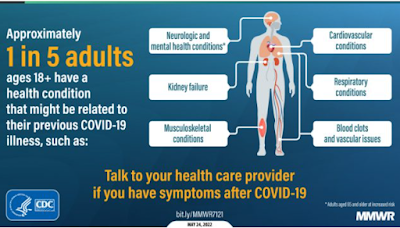
Most people are familiar with the more obvious signs of `Long COVID' (see CDC list below):  


But there may be more insidious health impacts that may not fully manifest for years (e.g. Hypertension, Cardiac problems, Diabetes, Neurodegenerative diseases like `Parkinson's', etc.), or only after repeated infections. 

While there are proven ways to reduce the risk of reinfection (COVID vaccines, wearing face mask in public, avoiding indoor crowds, etc.), society - in an attempt to return to `normal' - has trivialized the COVID infection to the point that few now bother. 

While many maintain that `what doesn't kill you makes you stronger', what we are learning about many the impacts of `Long COVID' makes a pretty good argument to the contrary.