Showing posts with label EV-68. Show all posts

Monday, September 15, 2014

CDC: EV-D68 COCA Call Tomorrow

image


# 9077


The EV-D68 virus has only been confirmed in six states, but another 15 states are reporting clusters of respiratory illness they suspect may be due to this rarely seen enterovirus, and are awaiting test results (see CDC EV-D68 Update & FAQ). EV-D68 is not a `reportable’ illness, and so it is likely the virus is more widespread than official reports thus far indicate.


While most who contract this respiratory infection will experience nothing worse than a bad `cold’, some serious illnesses have been reported – particularly among children with asthma.


Late Friday night the CDC issued a HAN (Health Alert Network) Advisory on the outbreak (see CDC HAN Advisory On EV-D68) and tomorrow afternoon the CDC will hold a COCA Call as well. Although primarily of interest to clinicians, the CDC holds frequent COCA (Clinician Outreach Communication Activity) calls which are designed to ensure that practitioners have up-to-date information for their practices.


Enterovirus D68 in the United States: Epidemiology, Diagnosis & Treatment


Date:Tuesday, September 16, 2014

Time:2:00 – 3:00 PM (Eastern Time)

Participate by phone

Audio Bridge Line:

  • 888-995-9727 (U.S. Callers)
  • 210-234-0034 (International Callers)

Passcode:7753493


Presenter(s)

Susan Gerber, MD
Medical Epidemiologist
Division of Viral Diseases
National Center for Immunization and Respiratory Diseases - CDC

Mary Anne Jackson, MD, FAAP
Division Director, Infectious Disease
Children’s Mercy Hospital & Clinics
Professor of Pediatrics
University of Missouri-Kansas City School of Medicine

Daniel Johnson, MD, FAAP
Associate Professor of Pediatrics
University of Chicago Medicine
Comer Children’s Hospital

Overview

Hospitals across the U.S., especially in Missouri and Illinois, are seeing more children with severe respiratory illness caused by enterovirus D68 (EV-D68). Several states are also investigating similar clusters of severe respiratory illness. There are no vaccines for preventing EV-D68 infections. Clinicians should consider EV-D68 as a potential cause of clusters of severe respiratory illness, particularly in children. During this COCA call, clinicians will learn about the current EV-D68 situation in the U.S., laboratory testing, reporting suspected clusters, and approaches to prevention and treatment.

Objectives

At the conclusion of the session, the participant will be able to accomplish the following:

  • Discuss the current EV-D68 situation in the United States, including clusters in Missouri and Illinois
  • Describe the procedures for laboratory testing and reporting clusters of suspected cases
  • Explain prevention and treatment strategies to address EV-D68

Thursday, September 11, 2014

CDC EV-D68 Update & FAQ

States with Confirmed EV-D68 Infections

States with Confirmed EV-D68 Infections

From August 21 to September 10, 2014, a total of 84 people in Colorado, Illinois, Iowa, Kansas, Kentucky and Missouri have been confirmed to have respiratory illness caused by enterovirus D68 (EV-D68).


# 9064


Although fewer than 100 cases have been confirmed by the CDC’s testing, anecdotal reports suggest that thousands of kids have been infected by the EV-D68 virus over the past several week, with hospitals from Chicago to Atlanta reporting huge increases in respiratory infections among children – some requiring ICU admission.


We started following this story two weeks ago (see Kansas City Outbreak Identified As HEV 68 & Enterovirus D-68 (HEV-D68) Update), and on Monday the CDC held a press briefing.  The audio and transcript for that briefing is available at the following links.

Monday, September 8 at 1:00 pm ET

Transcript | AudioAudio/Video file

Today the CDC has updated their Non-Polio Enterovirus D68 webpage with the following Q&A information.


Q: What is enterovirus D68?

A: Enterovirus D68 (EV-D68) is one of many non-polio enteroviruses. This virus was first identified in California in 1962, but it has not been commonly reported in the United States.

Q: What are the symptoms of EV-D68 infection?

A: EV-D68 can cause mild to severe respiratory illness.

  • Mild symptoms may include fever, runny nose, sneezing, cough, body and muscle aches.
  • Severe symptoms may include difficulty breathing and wheezing. People with asthma may have a higher risk for severe respiratory illness.

Q: How does the virus spread?

A: Since EV-D68 causes respiratory illness, the virus can be found in respiratory secretions, such as saliva, nasal mucus, or sputum. EV-D68 likely spreads from person to person when an infected person coughs, sneezes, or touches contaminated surfaces.

Q: How many people have been confirmed to have EV-68 infection?

A: As of September 10, 2014, a total of 84 people in six states have been confirmed to have respiratory illness caused by EV-D68.

Q: How common are EV-D68 infections in the United States?

A: EV-D68 infections are thought to occur less commonly than infections with other enteroviruses. However, CDC does not know how many infections and deaths from EV-D68 occur each year in the United States. Healthcare professionals are not required to report this information to health departments. Also, CDC does not have a surveillance system that specifically collects information on EV-D68 infections. Any data that CDC receives about EV-D68 infections or outbreaks are voluntarily provided by labs to CDC’s National Enterovirus Surveillance System (NESS). This system collects limited data, focusing on circulating types of enteroviruses and parechoviruses.

Q: Who is at risk?

Keep your child from getting and spreading Enterovirus D68

A: Like other enteroviruses, anyone can get infected with EV-D68.

Among the recent EV-D68 infections in some states, children with asthma seemed to have a higher risk for severe respiratory illness. However, this is still being investigated.

Q: How is it diagnosed?

A: Many hospitals and doctor’s offices can test for enteroviruses. However, most cannot do testing to determine the specific type of enterovirus, like EV-D68. State health departments and CDC can do this sort of testing.


Q: What are the treatments?

A: There is no specific treatment for people with respiratory illness caused by EV-D68.

For mild respiratory illness, you can help relieve symptoms by taking over-the-counter medications for pain and fever. Aspirin should not be given to children.

Some people with severe respiratory illness may need to be hospitalized .

There are no antiviral medications currently available for people who become infected with EV-D68.

Q: How can I protect myself?

A: You can help protect yourself from respiratory illnesses by following these steps:

  • Wash hands often with soap and water for 20 seconds, especially after changing diapers.
  • Avoid touching eyes, nose and mouth with unwashed hands.
  • Avoid kissing, hugging, and sharing cups or eating utensils with people who are sick.
  • Disinfect frequently touched surfaces, such as toys and doorknobs, especially if someone is sick.

Since people with asthma are higher risk for respiratory illnesses, they should regularly take medicines and maintain control of their illness during this time. They should also take advantage of influenza vaccine since people with asthma have a difficult time with respiratory illnesses. Asthma can also be controlled by avoiding the triggers that can cause an attack, such as tobacco smoke.

Q: Is there a vaccine?

A: No. There are no vaccines for preventing EV-D68 infections.

Q: What should clinicians do?

A: Healthcare professionals should

  • Be aware of EV-D68 as a potential cause of clusters of severe respiratory illness, particularly in young children.
  • Consider laboratory testing of respiratory specimens for enteroviruses when the cause of infection in severely ill patients is unclear. Many hospitals can test for enteroviruses, but they are probably not able to perform enterovirus typing. State health departments or CDC can be approached for typing enterovirus.
  • Before sending specimens to CDC:
    • contact your state or local health department, and
    • consult with CDC by sending an email to wnix@cdc.gov
  • Report cases and clusters of severe respiratory illnesses to state and local health departments for further guidance.

Q: What is CDC doing about EV-D68?

A: CDC is helping states with diagnostic and molecular typing for EV-D68.

CDC is also working with state and local health departments and clinical and state laboratories to

  • enhance their capacity to identify and investigate outbreaks, and
  • perform diagnostic and molecular typing tests to improve detection of enteroviruses and enhance surveillance.

Saturday, September 06, 2014

Enterovirus D-68 (HEV-D68) Update

image

States reporting suspected or confirmed HEV-D68


# 9045


Although lab confirmation is still awaited in some areas, the outbreak of severe respiratory illness in kids that we saw pop up N.W. Missouri a little over a week ago (see Kansas City Outbreak Identified As HEV 68), and then a few days later in St. Louis (see Missouri Health Alert On Enterovirus 68), has now been reported in at least four more states.


This week we’ve seen media reports of hospitals being slammed with (mostly young) patients with respiratory infections in Ohio, Illinois, Kansas, Missouri, and most recently Colorado.  While test results haven’t come back for all of these locations, local doctors are pointing their fingers at the emerging EV 68 virus.


A sampling of some of the media coverage overnight includes:


Severe respiratory virus impacting hundreds of kids reaches Colorado

kdvr.com - ‎15 hours ago‎

DENVER — A potentially severe virus that has plagued hundreds of children across a 900-mile stretch in the Midwest in recent weeks has made its way to Colorado.

Colorado children's hospitals see spike in severe respiratory illness

The Denver Post - ‎12 hours ago‎

Children's hospitals in Denver are experiencing an alarming spike in a severe respiratory illness — especially among very young children and those with asthma — that may be caused by an uncommon viral pathogen.

Hospitals across Denver are on alert for a respiratory illness that can leave ...

The Denver Channel - ‎4 hours ago‎

At Rocky Mountain Hospital for Children, physicians report about 10 of the 20 beds in their pediatric intensive care unit are young people battling the virus. "Our pediatric floor is full of patients with pretty severe respiratory distress," said Dr.Raju Meyappan

Denver hospitals see virus spike in kids

9NEWS.com - ‎10 hours ago‎

DENVER - Denver hospitals and pediatricians offices are seeing a spike in a respiratory virus that is hitting kids hard who have histories of asthma and wheezing. ... "It seems to be what's happening with this virus which is more severe than other viruses.".


Often called EV 68, this virus is primarily known for producing respiratory symptoms - similar to that seen with rhinoviruses - although in some cases it can be severe enough to require hospitalization. There are reports of a number of children ending up in intensive care, some requiring ventilatory assistance, over the past week.


While children are usually the hardest hit, adults are not immune. Co-morbidities – such as asthma – can exacerbate the symptoms.


The virus (genus Enterovirus - family Picornaviridae – species HEV-D) –  is just one of a large family of small RNA viruses that include the three Polioviruses, along with myriad non-polio serotypes of Human Rhinovirus, Coxsackievirus, echovirus, and human, porcine, and simian enteroviruses.


HEV-D68  was first indentified in 1962, but until about 5 years ago, had not been often reported. The CDC called attention to its emergence several years ago - (see MMWR: Clusters Of HEV68 Respiratory Infections 2008-2010) – which looked at a half dozen  HEV 68 associated clusters that occurred in Asia, Europe, and the United States during 2008--2010.


EV 68’s rarity up until now in North America likely equates to very low levels of community immunity, which probably explains its rapid dissemination over the past couple of weeks, spurred on by the start of the school year.


For most kids (and adults) this will likely prove little more than a nasty `cold’ or virus.  But in a small percentage of cases, it can turn severe, and so parents need to pay particular attention this fall.  This virus appears to have `legs’, and so we could see a busy start to the winter respiratory illness season. 


While rarely seen in the United States, over the past 10 years we’ve seen this virus on the ascendant in China, The Netherlands, Japan, and the Philippines, sometimes producing significant outbreaks. 


A few recent studies include:


J Med Microbiol. 2014 Mar;63(Pt 3):408-14. doi: 10.1099/jmm.0.068247-0. Epub 2013 Dec 9.

Detection of enterovirus 68 as one of the commonest types of enterovirus found in patients with acute respiratory tract infection in China.

Lu QB1, Wo Y, Wang HY, Wei MT, Zhang L, Yang H, Liu EM, Li TY, Zhao ZT, Liu W, Cao WC.

Author information
Abstract

Human enterovirus 68 (HEV-68) is an enterovirus associated with respiratory illness. In China, no information about HEV-68 is available for children yet. This study aimed to investigate the presence of HEV-68 in mainland China between 2009 and 2012 and to explore the migration events of HEV-68 across the world.

Among 1565 samples tested from children, 41 (2.6%) were positive for HEV and 223 (14.3%) for human rhinovirus (HRV). Seven (17.1%) of 41 HEVs were HEV-68. Two HEV-68- and five HRV-positive samples were detected in 585 adult samples. HEV-68 is the predominant type of enterovirus in children with acute respiratory tract infection (ARTI), followed by HEV-71 and coxsackievirus A6. Three HEV-68-infected children presented with severe pneumonia and one presented with a severe asthma attack.

The viruses were attributed to two novel distinct sublineages of HEV-68 based on phylogenetic analysis of partial VP1 gene sequences. Migration events analysis showed that the USA and the Netherlands were possible geographical sources of HEV-68, from where three strains migrated to China.

In conclusion, HEV-68 may play a predominant role among the enteroviruses associated with ARTI in children. Additional surveillance is needed to clarify the reason why HEV-68 causes such a wide spectrum of disease, from asymptomatic to severe respiratory disease and even death.

Virology. 2012 Feb 5;423(1):49-57. doi: 10.1016/j.virol.2011.11.021. Epub 2011 Dec 15.

Emergence and epidemic occurrence of enterovirus 68 respiratory infections in The Netherlands in 2010

Meijer A1, van der Sanden S, Snijders BE, Jaramillo-Gutierrez G, Bont L, van der Ent CK, Overduin P, Jenny SL, Jusic E, van der Avoort HG, Smith GJ, Donker GA, Koopmans MP.

Author information
Abstract

Following an increase in detection of enterovirus 68 (EV68) in community surveillance of respiratory infections in The Netherlands in 2010, epidemiological and virological analyses were performed to investigate the possible public health impact of EV68 infections.

We retrospectively tested specimens collected from acute respiratory infections surveillance and through three children cohort studies conducted in The Netherlands from 1994 through 2010. A total of 71 of 13,310 (0.5%) specimens were positive for EV68, of which 67 (94%) were from symptomatic persons. Twenty-four (34%) of the EV68 positive specimens were collected during 2010. EV68-positive patients with respiratory symptoms showed significantly more dyspnea, cough and bronchitis than EV68-negative patients with respiratory symptoms. Phylogenetic analysis showed an increased VP1 gene diversity in 2010, suggesting that the increased number of EV68 detections in 2010 reflects a real epidemic.

Clinical laboratories should consider enterovirus diagnostics in the differential diagnosis of patients presenting with respiratory symptoms.

J Clin Virol. 2011 Oct;52(2):103-6. doi: 10.1016/j.jcv.2011.06.019. Epub 2011 Jul 29.

Upsurge of human enterovirus 68 infections in patients with severe respiratory tract infections

Rahamat-Langendoen J1, Riezebos-Brilman A, Borger R, van der Heide R, Brandenburg A, Schölvinck E, Niesters HG.

 
Abstract

BACKGROUND:

Enterovirus 68 (EV68) belongs to species Human enterovirus D. It is unique among enteroviruses because it shares properties with human rhinoviruses. After the first isolation in 1962 from four children with respiratory illness, reports of (clusters of) EV68 infections have been rare. During the autumn of 2010, we noticed an upsurge of EV68 infections in the Northern part of the Netherlands in patients with severe respiratory illness.

OBJECTIVES:

To give a detailed description of the clinical and virological data of patients with EV68 infection identified in 2010, and compare these with data collected in 2009.

STUDY DESIGN:

We systematically collected clinical data from patients with an EV68 infection detected in 2010. We added four patients with an EV68 infection from 2009. Further characterization of EV68 was performed by partial sequence analysis of the VP1 genomic region.

RESULTS:

In 2010, EV68 was identified as the only cause of respiratory illness in 24 patients, of which 5 had to be admitted to the intensive care unit. Sequence analysis revealed different lineages in the majority of EV68 detected in 2010 as compared to the 2009 isolates.

CONCLUSIONS:

We noticed an increase of EV68 infections and present clinical as well as sequence data, in which two distinct phylogenetic clusters could be identified.

The advice being given this year is pretty standard, but worth repeating:

  • Get your flu shot (no, it won’t prevent EV 68, but it could help prevent a dual flu - Enterovirus infection)
  • stay home if you are sick & obtain consultation from your health care provider 
  • avoid contact with those who are sick
  • practice good `flu hygiene’  (cover coughs & sneezes)
  • Avoid touching your face, mouth, and eyes with unwashed hands
  • and wash your hands often


image

Monday, September 01, 2014

Missouri Health Alert On Enterovirus 68

image


  See Update Sept 6th:  Enterovirus D-68 (HEV-D68) Update


# 9024


On Friday morning, in Kansas City Outbreak Identified As HEV 68, I wrote at some length about an outbreak of respiratory illness among children in Kansas City, Missouri that had been identified as  Enterovirus 68, and about the recent increases in its detection around the globe.


While EV 68 was first identified in the early 1960s, it has only rarely been detected in the United States, although several small clusters were reported (see  MMWR: Clusters Of HEV68 Respiratory Infections 2008-2010) in Arizona, Georgia, and Pennsylvania starting about 5 years ago.


Unlike many of the other non-polio enteroviruses, EV 68 is considered primarily a respiratory virus, although the full spectrum of illness it may produce isn’t well understood. Symptoms are generally like those from a `cold’ or rhinovirus, but severe illness can sometimes result, particularly among children with asthma or other respiratory problems.


Over the weekend I began seeing reports that similar cases were showing up in St. Louis, 250 miles to the east.  On Saturday, the Missouri Department of Health and Senior Services issued  the following Health Alert to the medical community:


Missouri Department of Health & Senior Services
Health Alert


August 29, 2014
FROM: GAIL VASTERLING DIRECTOR


SUBJECT: Respiratory Illnesses Due to Enterovirus D68 (EV-D68) in Missouri


Current Situation


Recently, a pediatric hospital in Kansas City, Missouri has experienced over 300 cases of respiratory illnesses in their facility. Approximately 15% of those illnesses have resulted in childen being placed in an intensive care unit. Testing of specimens from several cases at a specialized laboratory at the Centers for Disease Control and Prevention (CDC) indicated that 19 of the 22 specimens were positive for Enterovirus D68 (EV-D68). The St. Louis area is also experiencing a recent increase in pediatric respiratory illnesses. Many specimens from those cases have tested positive for enterovirus, and further testing for specific virus type is pending. To date, no deaths have been reported due to EV-68 in Missouri.


Background


Enteroviruses are very common viruses. There are more than 100 types of enteroviruses. It is estimated that 10 to 15 million enterovirus infections occur in the United States each year. Most people infected with enteroviruses have no symptoms or only mild symptoms, but some infections can be serious. Most enterovirus infections in the U.S. occur seasonally during the summer and fall, and outbreaks of tend to occur in several-year cycles.


EV-D68 infections occur less commonly than those with other enteroviruses. EV-D68, like other enteroviruses, appears to spread through close contact with infected people. This virus was first isolated in California in 1962 from four children with bronchiolitis and pneumonia, and has been reported rarely since that time. Unlike the majority of enteroviruses that cause a clinical disease manifesting as a mild upper respiratory illness, febrile rash illness, or neurologic illness (such as aseptic meningitis and encephalitis), EV-D68 has been associated almost exclusively with respiratory disease. EV-D68 usually causes mild to severe respiratory illness; however, the full spectrum of EV-D68 illness is not well-defined.


Clusters of respiratory illness associated with EV-D68 in Asia, Europe, and the U.S. during 2008-2010 have been described previously. EV-D68 infection was associated with respiratory illness ranging from relatively mild illness to severe illness requiring intensive care and mechanical ventilation. These clusters confirmed that EV-D68 is associated with outbreaks of respiratory illness severe enough to require hospitalization, and in some cases, might contribute to patient death. New-onset wheezing or asthma exacerbation were notable symptoms. However, in each cluster, respiratory specimens typically were collected from persons who had sought medical care or were hospitalized, which would have biased these reports toward more severe disease. No data is currently available regarding the overall burden of morbidity or mortality from EV-D68 in the U.S. approved by the Food and Drug Administration for use in clinical settings ( Luminex xTAG RVP, Idaho Technologies FilmArray Respiratory Panel). But, these systems use broadly reactive primers that amplify RNA from either human rhinoviruses (HRVs) or enteroviruses, and results are reported as "entero-rhinovirus" or "human rhinovirus/enterovirus". Most hospitals are not able to perform enterovirus typing to identify specific enterovirus. The gold standard test for EV-D68 detection is partial sequencing of the structural protein genes, VP4-VP2 or VP1.


There is no specific treatment for EV-D68 infections; specifically there are no anti-viral medications currently available for this purpose. Many infections will be mild and self-limited, requiring only symptomatic treatment. Some people with severe respiratory illness caused by EV-D68 may need to be hospitalized and receive intensive supportive therapy.

Vaccines for preventing EV-D68 infections currently are not available.


Guidance for Healthcare Professionals

Clinicians should be aware of EV-D68 as one of many causes of viral respiratory disease, and should report clusters of unexplained respiratory illness to the local public health agency, or to the Missouri Department of Health and Senior Services (DHSS) at 573/751-6113 or 800/392-0272 (24/7).

To help reduce the risk of infection with EV-D68, healthcare professionals should recommend the following:

• Wash hands often with soap and water for 20 seconds, especially after changing diapers;
• Avoid touching eyes, nose, and mouth with unwashed hands;
• Avoid kissing, hugging, and sharing cups or eating utensils with people who are sick;
• Disinfect frequently touched surfaces, such as toys and doorknobs, especially if someone is sick;
• Stay home when feeling sick, and obtain consultation from your health care provider.

Sunday, January 20, 2013

The Many Flavors Of ILI


image 
Photo Credit CDC


# 6868


Although flu reports figure prominently in this winter’s news headlines, not every influenza-like-illness (ILI) out there is caused by an influenza virus. In fact, of the more than 12,300 specimens tested by U.S., WHO and NREVSS collaborating labs last week, less than 30% were positive for influenza.
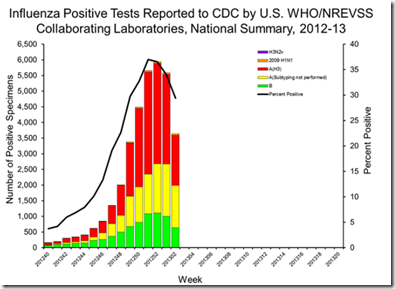
 

image


The rest of the respiratory miseries out there are caused by a variety of viral villains (some unidentified, and some flu-negatives may really be positive), that include RSV (respiratory syncytial virus), respiratory Adenoviruses, parainfluenza viruses, rhinoviruses, coronaviruses, and metapneumovirus (to name a few).

The latest Ontario Respiratory Virus Bulletin, 2012-2013 (Week 2: January 6, 2012 – January 12, 2013) provides a fascinating graph that shows both the variety and seasonal fluctuation of respiratory viruses in institutional outbreaks over the past year.


image


While influenza A is the dominant player this winter, you’ll notice that last season was truly a mixed bag, with comparatively little flu.  The summer months were dominated by Rhino/enterovirus detections.


The DARK BLUE part of  the chart represent unidentified organisms.


The truth is - in a clinical setting - most influenza-like-illnesses go unidentified. Viral respiratory infections are generally self-limiting illnesses, treatment is pretty much the same regardless of etiology, and so there is little point in trying to identify the cause of every illness.


Scientists – with better tools available today – are indentifying `new’ viruses all of the time. A few well distributed viruses that until recently, were unknown, include:


  • The human metapneumovirus (HMPV) was identified in Dutch children with bronchiolitis about a dozen years ago.  Since then, it has been found to be ubiquitous around the world, and responsible for a significant percentage of childhood respiratory infections . . . yet until 2001, no one knew it existed.
  • Human Bocavirus-infection (HBoV) wasn’t identified until 2005, when it was detected in 48 (9.1%) of 527 children with gastroenteritis in Spain (cite).  It has since been found around the globe using PCR testing.


And the list grows longer every year.


Adding to our misery, it is fairly common to be infected by more than one virus at the same time.


In 2008 a study (see Frequent detection of viral coinfection in children hospitalized with acute respiratory tract infection using a real-time polymerase chain reaction) looked at clinical samples taken from 254 children treated in Germany over a 10 month period, finding:


Respiratory syncytial virus (RSV) was the most frequently detected pathogen in 112 samples (44.1%), followed by human bocavirus (hBoV) in 49 (19.3%), and rhinovirus in 17 samples (6.7%).


Viral coinfection was detected in 41 (16.1%) samples with RSV and hBoV being the most dominating combination (27 cases, 10.6%). Viral coinfection was found in 10 cases (17%) of children with bronchitis (n = 58) and in 7 cases (23%) of bronchiolitis (n = 30). In patients with pneumonia (n = 51), 17 cases (33%) were positive for 2 or more viral pathogens.


This plethora of pathogens helps to explain – in part -why so many people who get the flu shot every year complain they still caught `the flu’.   Often, they’ve caught one of these ubiquitous `flu-like illnesses’.


So today, a closer look at three common non-influenza respiratory viruses, and one rare one. 


RSV (Respiratory Syncytial Virus)

One of the most common infections of young children, it has been estimated that by the age of two, nearly all children in the United States have endured at least one bout with this virus. 


For those wondering, `syncytial’ is pronounced (sin-SISH-uhl).


While for most people this virus produces a mild illness, often indistinguishable from a `cold’, it is also considered by the CDC to be the the primary cause of bronchiolitis (inflammation of the small airways in the lung) and pneumonia in children under 1 year of age in the United States (cite).


The CDC estimates between 75,000 and 125,000 children are hospitalized each year with RSV, and while normally thought of as a childhood illness, adults with weakened immune systems and those over 65 are also at increased risk of severe disease.


The CDC maintains an extensive RSV information page.


Respiratory Adenoviruses


With more than 50 varieties identified, respiratory adenoviruses are one of the most common causes of respiratory illness in the world.


The CDC’s Adenovirus Information page describes the virus this way:


Adenoviruses most commonly cause respiratory illness. The symptoms can range from the common cold to pneumonia, croup, and bronchitis. Depending on the type, adenoviruses can cause other illnesses such as gastroenteritis, conjunctivitis, cystitis, and less commonly, neurological disease.


Infants and people with weakened immune systems are at high risk for severe complications of adenovirus infection. Also, adenoviruses commonly cause acute respiratory illness in military recruits.


Interestingly, a person can have – and shed – adenovirus for weeks or even months without showing symptoms. 


While no vaccine is currently available for the public, the military is using a recently approved (March, 2011) oral vaccine against types 4 and 7 on new recruits to help prevent outbreaks.


Over the years we’ve seen some high-profile outbreaks of adenovirus infections that have, at least until they were identified, sounded alarm bells, including  China: Hebei Outbreak Identified As Adenovirus 55.


On rare occasions, outbreaks of emerging strains of adenovirus that have caused more serious illness, including one serotype (Ad14) that has been associated with a number of deaths during the past decade (see 2007 MMWR Acute Respiratory Disease Associated with Adenovirus Serotype 14 --- Four States, 2006—2007).


Parainfluenza Viruses

Human parainfluenza viruses (HPIVs) belong to the Paramyxoviridae family, of which there are 4 types (1-4) and two subtypes  (4a & 4b). Each type has its own set of clinical and epidemiological features.


From the CDC’s HPIV page:

Symptoms and Illnesses

The incubation period, the time from exposure to HPIV to onset of symptoms, is generally 2 to 7 days.

  • HPIV-1 and HPIV-2 are most often associated with croup (laryngotracheobronchitis). HPIV-1 often causes croup in children, whereas HPIV-2 is less frequently detected. Both types can cause upper and lower respiratory tract illnesses. People with upper respiratory tract illness may have cold-like symptoms.
  • HPIV-3 is more often associated with bronchiolitis, bronchitis, and pneumonia.
  • HPIV-4 is not recognized as often, but may cause mild to severe respiratory tract illnesses.

Reinfection

People can get multiple HPIV infections in their lifetime. These reinfections usually cause mild upper respiratory tract illness with cold-like symptoms. However, reinfections can cause serious lower respiratory tract illness, such as pneumonia, bronchitis, and bronchiolitis in some people. Older adults and people with compromised immune systems, in particular, have a higher risk for severe infections.

Most children 5 years of age and older have antibodies against HPIV-3 and approximately 75% have antibodies against HPIV-1 and HPIV-2.


Our last stop is with Human Enterovirus 68 (HEV68), which made headlines in 2011, but of which we’ve heard little of since. In MMWR: Clusters Of HEV68 Respiratory Infections 2008-2010 we looked at reports of six clusters of this rare, emerging enterovirus over the previous couple of years.


Enteroviruses encompass a large family of small RNA viruses that include the three Polioviruses, along with myriad non-polio serotypes of Human Rhinovirus, Coxsackievirus, echovirus, and human, porcine, and simian enteroviruses.


First detected in California in 1962, but rarely seen since that time, the CDC was notified of six clusters of HEV68 from Asia, Europe, and the United States between 2008-2010.  These clusters included severe illness, and three fatalities.


image

Occurrence of human enterovirus 68, by month, duration, and geographic location --- Asia, Europe, and United States, 2008—2010 –MMWR


The summary provided for this MMWR release reads:


What is already known on this topic?

Human enterovirus 68 (HEV68) is a unique enterovirus that shares epidemiologic and biologic features with human rhinoviruses.

What is added by this report?

Although isolated cases of HEV68 have been reported since the virus was described in 1962, clusters of cases have been recognized only recently. The clusters described in this report occurred late in the typical enterovirus season and included severe cases, three of which were fatal.

What are the implications for public health practice?

Clinicians should be aware of HEV68 as one of many possible causes of viral respiratory disease. Some diagnostic tests might not detect HEV68 or might misidentify it as a human rhinovirus.


The number of `known’ respiratory viruses increases practically every year, due to advances in microbiology and sequence-independent amplification of viral genomes.


There is, no doubt, much more to discover about the myriad of non-influenza respiratory viruses in circulation around the world.


Most of these viruses will prove clinically indistinguishable from the respiratory viruses we already know. 


But outliers like SARS CoV in 2003,  HEV68 in 2008-10, or recent infections in the Middle East with the novel coronavirus EMC/2012 – all capable of producing significant levels of serious illness - show that novel viruses can emerge with little warning.


Which makes the surveillance and identification of these respiratory viruses more than just an academic exercise.

Thursday, September 29, 2011

MMWR: Clusters Of HEV68 Respiratory Infections 2008-2010


# 5871


There is probably no more nebulous disease description than that of `ILI’ or an influenza-like-illness.  It ranks up there with `malaise’ and `fatigue’ among the most common of human complaints, and is just about as specific.


Nearly all viral (and a fair number of bacterial, parasitic, and fungal) infections present – at least in their prodromal stage – with flu-like symptoms.


The public tends to categorize mild respiratory infections as `colds’ and more severe illnesses as `the flu’, but doctors know there is a whole galaxy of pathogens out there that can mimic influenza.


Which is why doctors usually refer to `picking up a virus’, or having an ILI (Influenza-like Illness or sometimes ARI Acute Respiratory Infection), when rendering a diagnosis. 


Elaborate testing isn’t usually done because of the costs involved, and because knowing the etiology doesn’t really affect treatment. Bed rest, fever reducers, and plenty of fluids is the usual regimen.


Consequently, there are probably still a number of as-yet unidentified respiratory viruses running around out there.


All of which serves as prelude to a report in today’s MMWR on the detection of  HEV68 – or Human Enterovirus 68 – that has produced a number of clusters of respiratory illness around the world over the past couple of years.


Enteroviruses encompass a large family of small RNA viruses that include the three Polioviruses, along with myriad non-polio serotypes of Human Rhinovirus, Coxsackievirus, echovirus, and human, porcine, and simian enteroviruses. 


The few excerpts from today’s MMWR report (follow the link to read it in its entirety):


Clusters of Acute Respiratory Illness Associated with Human Enterovirus 68 --- Asia, Europe, and United States, 2008--2010

Weekly

September 30, 2011 / 60(38);1301-1304

In the past 2 years, CDC has learned of several clusters of respiratory illness associated with human enterovirus 68 (HEV68), including severe disease. HEV68 is a unique enterovirus that shares epidemiologic and biologic features with human rhinoviruses (HRV) (1).


First isolated in California in 1962 from four children with bronchiolitis and pneumonia (2), HEV68 has been reported rarely since that time and the full spectrum of illness that it can cause is unknown. The six clusters of respiratory illness associated with HEV68 described in this report occurred in Asia, Europe, and the United States during 2008--2010.


HEV68 infection was associated with respiratory illness ranging from relatively mild illness that did not require hospitalization to severe illness requiring intensive care and mechanical ventilation. Three cases, two in the Philippines and one in Japan, were fatal. In these six clusters, HEV68 disproportionately occurred among children.


CDC learned of clusters of HEV68 from public health agencies requesting consultation or diagnostic assistance and from reports presented at scientific conferences. In each cluster, HEV68 was diagnosed by reverse transcription--polymerase chain reaction (RT-PCR) testing targeting the 5'-nontranslated region, followed by partial sequencing of the structural protein genes, VP4-VP2, VP1, or both, to give definitive, enterovirus type-specific information.


This report highlights HEV68 as an increasingly recognized cause of respiratory illness. Clinicians should be aware of HEV68 as one of many causes of viral respiratory disease and should report clusters of unexplained respiratory illness to the appropriate public health agency.

(Continue . . . )


image

Occurrence of human enterovirus 68, by month, duration, and geographic location --- Asia, Europe, and United States, 2008—2010


In recent years, with advances in microbiology and sequence-independent amplification of viral genomes, the ability of scientists to identify new viruses has improved greatly and so they are adding new names to the `suspect list’.


About a decade ago the human metapneumovirus (HMPV) was identified in Dutch children with bronchiolitis.  Since then, it has been found to be ubiquitous around the world, and responsible for a significant percentage of childhood respiratory infections . . . yet until 2001, no one knew it existed.


Human Bocavirus-infection (HBoV) wasn’t identified until 2005, when it was detected in 48 (9.1%) of 527 children with gastroenteritis in Spain (cite).  


And the list grows longer every year.


While discovered 40 years ago, according to this MMWR report, testing for HEV68 remains problematic. So we probably don’t have a good handle on how common it really is. 


The summary provided for this release reads:


What is already known on this topic?

Human enterovirus 68 (HEV68) is a unique enterovirus that shares epidemiologic and biologic features with human rhinoviruses.


What is added by this report?

Although isolated cases of HEV68 have been reported since the virus was described in 1962, clusters of cases have been recognized only recently. The clusters described in this report occurred late in the typical enterovirus season and included severe cases, three of which were fatal.


What are the implications for public health practice?

Clinicians should be aware of HEV68 as one of many possible causes of viral respiratory disease. Some diagnostic tests might not detect HEV68 or might misidentify it as a human rhinovirus.


For more on the expanding universe of non-influenza respiratory viruses, you might wish to revisit these earlier blogs:


BMC Study: A Crowded Viral Field
ILI’s Aren’t Always The Flu