Showing posts with label SARS. Show all posts

Wednesday, January 08, 2014

H5N1 In Canada: A Matter Of Import

image

Scheduled airline traffic around the world, circa June 2009 – Credit Wikipedia


# 8142


On a day when Hong Kong has also reported an imported case of bird flu (see HK CHP Statement On Third (likely) Imported H7N9 Case) from China, the news media is scrambling to cover the announcement of a fatal imported case of H5N1 in Canada ((see Alberta Canada Reports Fatal (Imported) H5N1 Infection).


While obviously a concern to public health authorities, the  two most surprising things about this story are that 1) it’s H5N1 avian flu, not the currently more prevalent H7N9s strain and 2) it hadn’t already happened years ago.


As our ability to travel quickly from one continent to the next improves, so does the ability of pathogens to easily cross oceans and borders.  Each year we see hundreds of exotic infections imported into North America or Europe from around the world, and with each importation, their is a low, but non-zero risk of the virus spreading.


None of this is to suggest that today’s report of the importation of H5N1 into Canada heralds a serious bird flu outbreak in North America (the odds are, it won’t). But it does illustrate how easily a virus can wing its way from some far flung area of the world and show up without warning in New York, or London,  Sydney . . . or Alberta, Canada.


In 2003, we saw the SARS virus hop the Pacific on a flight taken by a 78-year-old woman who had stayed at Hong Kong’s Metropole Hotel, where a doctor who had been treating atypical pneumonia cases inadvertently spread the virus to at least a dozen guests.  Two days after returning from Hong Kong the woman fell ill in Toronto, and before that outbreak was contained, 251 people in Canada had been infected, and 44 died (see SARS And Remembrance).


Dengue fever, not seen in my state for 60 years, returned to South Florida in 2009, likely carried by an international traveler (see (see MMWR: Dengue Fever In Key West). Similarly, the West Nile Virus arrived in New York in the late 1990s, and since then quickly spread across the continent (see  CDC West Nile Update) and now infects thousands of people each year.


Last month, the Caribbean saw their first outbreak of the Chikungunya virus (see CDC Update On Chikungunya In The Caribbean), which up until 2005 was only seen in parts of Africa.  Now it spans much of the Indian Ocean, and arrived – almost certainly via an international traveler – to the island of Saint Martin this fall.


Over the years we’ve looked at a number of studies that have modeled the potential epidemic spread of a novel virus via air travel, including:


Science: The Hidden Geometry of Complex, Network-Driven Contagion Phenomena
MIT: Contagion Dynamics Of International Air Travel
Fluing The Friendly Skies (Revisited)


The world’s airlines carry 2.6 billion passengers each year, on more than 17 million flights.  And as the map at the top of this post indicates, millions of them are international flights.


With most viral diseases having an incubation period of several days or longer, someone who is newly infected with a virus easily could change planes and continents several times before showing their first signs of illness.


Which is why, last year, the CDC  and Canada’s PHAC issued guidance to  health departments on the testing and isolation of both H7N9 and MERS coronavirus cases (see PHAC: Interim Guidelines For Surveillance Of MERS-COV & H7N9 In Canada), simply because of the real potential of someday seeing imported cases.


And along with these studies, we’ve also looked at research that has found little benefit to airport screening of passengers for possible infection, as the success rate of such screening (including thermal scanners) is relatively poor.


Branswell: Limitations Of Airport Disease Screening

Pathogens At the Gate

Japan: Quarantine At Ports Ineffective Against Pandemic Flu


While attempts will be made to intercept and quarantine potentially contagious travelers during any type of novel flu outbreak, no one should comfort themselves with thoughts that a new, highly contagious flu could be kept out of any country for very long.


The bottom line is that we ignore global healthcare and infectious disease outbreaks – even in the remotest areas of the world – at our own peril. Vast oceans and extended travel times no longer offer us protection, and there is no technological shield that we can erect that would keep an emerging pandemic virus out.


The place to try to stop the next pandemic is not at the airport gate, but in the places around the world where they are likely to emerge.


Which makes the funding and support of international public health initiatives like the World Health Organization, animal health initiatives like the FAO and OIE , and disease surveillance grows more important with every passing year.


No matter where on this globe you happen to live.

Wednesday, May 15, 2013

nCoV: PPE Adherence & Infection Control

image


# 7278


While we don’t know exactly how two healthcare workers (HCWs) in Saudi Arabia came to be infected with the novel coronavirus, the fact that it happened – not once . . but twice should provide a clear signal on the the importance of maintaining proper infection control procedures in healthcare settings.


As we aren’t in possession of the facts, I don’t intend to speculate on what factors led to these two HCWs becoming infected.


Regardless of what happened, the best defense against this – or any other contagion – in a healthcare environment are solid infection control procedures and strict adherence to wearing the appropriate PPEs (Personal Protective Equipment).


Lest anyone think that lapses in taking protective measures  are in anyway unique to hospitals located in `other’ countries, a brief review of the literature shows a different story.


Whether due to inadequate infection control protocols, lack of education - or worse, supplies - or simple non-compliance on the part of the HCWs (PPEs can be hot, uncomfortable, and a considerable bother to put on and take off properly), lapses in infection control happen in hospitals around the world on a regular basis.


Exhibit A:


Infect Control Hosp Epidemiol.

2011 Mar;32(3):293-5. doi: 10.1086/658911.

Factors associated with unprotected exposure to 2009 H1N1 influenza A among healthcare workers during the first wave of the pandemic.

Banach DB, Bielang R, Calfee DP.

Abstract

Protecting healthcare workers (HCWs) from occupational exposure to 2009 H1N1 influenza was a challenge. During the first wave of the pandemic, many HCWs reported that they had been exposed to 2009 H1N1 when they were not using respiratory personal protective equipment. Unprotected exposures tended to be more frequent among HCWs caring for patients with atypical clinical presentations.

In a related article that appeared in Infection Control Today, the findings were discussed.  Excerpts below:


Lack of Adherence to Respiratory PPE Seen During First Wave of H1N1 Pandemic

March 8, 2011

(Excerpt)

The researchers note, "The identification of almost five unprotected healthcare exposures for each patient who presented with ILI was a more unexpected finding. Potential explanations include inconsistent use of the screening and isolation protocol, communication barriers, and suboptimal adherence to recommended PPE use. Each of these warrants further research. Previous studies have demonstrated that healthcare worker compliance with respiratory protection guidance, including that related to influenza, is generally poor. A recent study of healthcare workers’ opinions about respirator use identified the need for new equipment that better meets the needs of healthcare workers."


Banach, et al. add, "Since substantial numbers of unprotected exposures occurred during this period of heightened awareness of influenza and at a time when vaccination was not an option, it is likely that similar or perhaps even more exposures occur during typical influenza seasons. This highlights the importance of healthcare worker immunization, when available, and the need for a better understanding of barriers to effective implementation of screening protocols and adherence to recommended respiratory PPE use among healthcare workers."


Moving on to Exhibit B:

The use of personal protective equipment for control of influenza among critical care clinicians: A survey study.

Daugherty EL, Perl TM, Needham DM, Rubinson L, Bilderback A, Rand CS.

DESIGN, SETTING, AND PARTICIPANTS:

A survey of 292 internal medicine housestaff, pulmonary/critical care fellows and faculty, nurses, and respiratory care professionals working in four ICUs in two hospitals in Baltimore, MD.

MEASUREMENTS AND MAIN RESULTS:

Of those surveyed, 88% (n = 256) completed the survey. Only 63% of respondents were able to correctly identify adequate influenza PPE, and 62% reported high adherence (>80%) with PPE use for prevention of nosocomial influenza. In multivariable modeling, odds of high adherence varied by clinician type. Respondents who believed adherence was inconvenient had lower odds of high adherence (odds ratio 0.42, 95% confidence interval 0.22-0.82), and those reporting likelihood of being reprimanded for nonadherence were more likely to adhere (odds ratio 2.40, 95% confidence interval 1.25-4.62).

CONCLUSIONS:

ICU HCWs report suboptimal levels of influenza PPE adherence. This finding in a high-risk setting is particularly concerning, given that it likely overestimates actual behavior.


Both suboptimal adherence levels and significant PPE knowledge gaps indicate that ICU HCWs may be at a substantial risk of developing and/or transmitting nosocomial respiratory viral infection. Improving respiratory virus infection control will likely require closing knowledge gaps and changing organizational factors that influence behavior.


I could provide more references (such as Addressing the Challenges of PPE Non-Compliance) but the point is, compliance wearing appropriate PPEs in healthcare facilities is far too often  – as they phrase it above - `suboptimal’.


Last week the World Health Organization released their Interim Infection Control Guidance On nCoV, and earlier this month PHAC released their Guidance On Handling H7N9 Cases.


Taking an even tougher stance, the CDC released their Interim H7N9 Infection Control Guidelines in the middle of April and are currently recommending their guidance for SARS when dealing with the novel coronavirus (see 2007 Guideline for Isolation Precautions: Preventing Transmission of Infectious Agents in Healthcare Settings).


These guidance documents will likely change and evolve as we learn more about this virus, but they provide a solid foundation for interim HCW protection.


Even though the novel coronavirus is not SARS, there are lessons we can learn from how that epidemic was eventually contained. Hospitals turned out to be an ideal breeding ground for the SARS virus, and it required bold, and difficult steps to stop its spread.


With no vaccine or antivirals available containment was accomplished primarily through the use of isolation, quarantine, and stringent infection control measures.


For more on how these measures have been successfully used in the past to contain epidemics, you may wish to revisit EID Journal: A Brief History Of Quarantine.


Today, in response to the news that two HCWs in Saudi Arabia have been infected, WHO issued a statement  offering the following advice:


Health care facilities that provide care for patients with suspected nCoV infection should take appropriate measures to decrease the risk of transmission of the virus to other patients and health care workers. Health care facilities are reminded of the importance of systematic implementation of infection prevention and control (IPC).


While the future of this virus is unknowable - if it plays out anything like SARS did in 2003 - the battle against this virus may very well end up being won or lost in the trenches of the health care environment.


The good news is - that with the proper precautions in place - that’s a battle that experience has shown we can win.

Tuesday, May 14, 2013

Challenges To Developing A Coronavirus Vaccine

image


# 7271


In what one hopes is not a case of art accurately anticipating the future, Steven Soderbergh’s  2011 pandemic thriller `Contagion’ showed what might happen if a bat-borne virus (dubbed MEV-1 in the movie) jumped species and sparked a human pandemic.


In my review of the movie (see Why You Should Catch `Contagion’) I praised it for a realistic portrayal (with some dramatic license) of how the CDC would tackle an outbreak of a novel zoonotic virus, but found one area where the film seriously stretched credulity.


The biggest quibble for me . . .  was the speed with which a vaccine is developed, manufactured, and starts to be delivered.


While the novel coronavirus is not SARS (much less the fictional MEV-1), it belongs to the same family of pathogens, and the problems inherent with creating a SARS vaccine likely apply to it as well.


The 2003 SARS epidemic was eventually contained, but the World Health Organization has continued to urge research into, and the development of, a SARS vaccine.


Results, to date, have not been encouraging.


In 2004 it was widely reported that China had developed, and administered a SARS vaccine to 36 volunteers, and again in 2009, China once again announced they were working on a new SARS vaccine.


But so far, no viable (safe and effective) vaccine appears to have been developed.


In 2012, a PLoS One  research article found that mice vaccinated with four different experimental SARS candidate vaccines developed the expected antibodies, but experienced lung damage when challenged with the virus.


Immunization with SARS Coronavirus Vaccines Leads to Pulmonary Immunopathology on Challenge with the SARS Virus

Chien-Te Tseng, Elena Sbrana, Naoko Iwata-Yoshikawa, Patrick C. Newman, Tania Garron, Robert L. Atmar, Clarence J. Peters, Robert B. Couch

 
Conclusions

These SARS-CoV vaccines all induced antibody and protection against infection with SARS-CoV. However, challenge of mice given any of the vaccines led to occurrence of Th2-type immunopathology suggesting hypersensitivity to SARS-CoV components was induced. Caution in proceeding to application of a SARS-CoV vaccine in humans is indicated.


Last year, recognizing that a crucial gap exists in our pandemic response, the NIH agreed to fund SARS vaccine research over the next five years at Baylor College.


Baylor College of Medicine receives over $6 million from NIH to develop SARS vaccine

HOUSTON -- (May 22, 2012) -- Researchers at Baylor College of Medicine will receive up to $6.2 million over five years from the National Institute Of Allergy and Infectious Diseases, part of the National Institutes of Health, to develop a vaccine for severe acute respiratory syndrome, commonly called SARS.

(Continue . . .)


While a novel pandemic influenza vaccine could probably be developed and produced (in limited quantities) within six months, we are likely still years away from having a safe, effective, and deployable vaccine against SARS – or any other novel coronavirus.


While we might get lucky and see a breakthrough, as did the CDC’s vaccine researchers in Contagion, those kinds of breaks can only be counted on to happen in the movies.


For more on the challenges of developing a coronavirus vaccine, ABC News has a report today called:


SARS-Like Virus Vaccine Unlikely, Experts Say

By KATIE MOISSE (@katiemoisse)

May 14, 2013

A virus similar to SARS has spread through hospitals in Europe and the Middle East, prompting fears of human-to-human transmission.


But health officials said vaccines were unlikely to play a role in controlling the outbreak, which has sickened 34 people and killed 18.


Instead, they've focused on detecting the novel coronavirus, dubbed nCoV, and have quickly isolated patients.


(Continue . . .)


For more on the development of a SARS vaccine, you may wish to visit the 2009 MEDSCAPE Expert Review of Vaccines called:


SARS vaccines: where are we?

Thursday, March 28, 2013

Sisyphus And The Media


  image

Credit Wikipedia


# 7037


Coming as it has on the 10th anniversary of the SARS epidemic of 2003, the recent spate of novel coronavirus cases originating from the Arabian peninsula have prompted inevitable media comparisons with that infamous outbreak of a decade ago.


Both illnesses are, admittedly, caused by novel coronaviruses, have caused serious morbidity and mortality, and both appear to be of zoonotic origin.


For headline writers and journalists looking for an easily understandable and reasonably descriptive term, `SARS-Like’ is an attractive appellation.


But the World Health Organization has been quick to point out that such comparisons are both premature and potentially misleading. 


Six weeks ago in, WHO: Please Don’t Call It `SARS-Like’, we looked at efforts by WHO’s Gregory Härtl on Twitter to convince the media, journalists, and bloggers not to use the term `SARS-Like’ when describing this emerging virus.


Based on the headlines over the past 24 hours (examples below) this campaign doesn’t appear to have gained much traction.


SARS-Like Virus Kills Two More People in Germany and Britain

By SYDNEY LUPKIN (@slupkin)

March 27, 2013

The mysterious SARS-like virus that appears to be originating in the Middle East has claimed two more victims after people died from the infection in Germany and in Britain.

Emirati dies in Germany from Sars-like virus infection

Kyle Sinclair

Mar 27, 2013 Updated Mar 27, 2013 10.55am

An Emirati man has died in Germany after contracting a new form of a virus similar to Sars.

Emirati man infected with new SARS-linked virus dies in German hospital

By Associated Press, Published: March 26

BERLIN — A man from the United Arab Emirates who was infected with a new SARS-related virus has died in Munich, German authorities said Tuesday.


Despite attempts to rebrand it, `Swine Flu’ is still widely used in headlines around the globe to indicate the 2009 H1N1 virus. While public health officials may prefer the term NCoV, getting the media (and public) to stop saying `SARS-like’ is going to be difficult.


Admittedly, I use NCoV in this blog and will continue to do so (at least until a better name comes along).  But I have an advantage that the mainstream media does not.


My readers are – for the most part – astute followers of infectious disease and are already familiar with the term NCoV.


For the newspaper headline writer, or journalist, asking them to substitute a term that perhaps 10% of the public recognizes for one that 90% already are familiar with is, frankly, an awfully hard sell.


Of course, comparisons between the SARS virus and this emerging coronavirus go far beyond simply using the term `SARS-like’


Yesterday, in a widely distributed newspaper article, the South China Morning Post carried a story called:


New coronavirus appears deadlier than Sars, says HKU

Mysterious coronavirus, though not less infectious, has a higher mortality rate and infects many species, Hong Kong researchers find


Using qualifiers like `if it mutated further’ and `it could be more virulent than [SARS], this article – not unlike others we’ve seen - paints a worrisome, albeit speculative picture of this emerging virus.


The trouble is, our knowledge of this virus remains very limited.


We don’t know what animal species serves as its reservoir, how or why it is spilling over into humans, how many people have already contracted it, how it spreads from one human to the next, and how pathogenic it really is.


Which overnight led  Gregory Härtl to remind the media, and others via Twitter, that it is really too soon to make informed predictions regarding this virus.


image


While these points are well taken, the difficulty is – nearly a year after the first outbreak (Jordan in April 2012) – we know disturbingly little about this virus.  


The information coming out of the Middle East appears often to be delayed by days or even weeks, and has been noticeably lacking in detail.  


The media abhors a vacuum, and with a voracious news cycle, will use whatever information is available to fill the void.  While perhaps less than helpful from a public relations standpoint, media speculation over the threat this virus poses is certainly not beyond the pale.


I’m certain memories of the early tabloidization of the 2009 H1N1 pandemic still weigh heavily on public health officials around the world.


It raised the public’s expectations for seeing a severe pandemic, and then left many believing that governments and health officials `cried wolf’.


So, while I fully appreciate and sympathize on the desire to `set the record straight’, it truly is a Sisyphean task. Attempts to substitute - `It’s too soon to speculate’as a meme, have a low probability of success.


The only `cure’ for these types of stories is more and better information on this virus.


And that can only come about through the complete cooperation and transparency of those countries where this virus currently resides.


Something the WHO is actively seeking, as evidenced by the following requests included in recent WHO NCoV updates:


Based on the current situation and available information, WHO encourages all Member States (MS) to continue their surveillance for severe acute respiratory infections (SARI) and to carefully review any unusual patterns. WHO is currently working with international experts and countries where cases have been reported to assess the situation and review recommendations for surveillance and monitoring.


All MS are reminded to promptly assess and notify WHO of any new case of infection with nCoV, along with information about potential exposures that may have resulted in infection and a description of the clinical course.

Thursday, March 21, 2013

A Hong Kong Civets Lesson

image

Credit Wikipedia


# 7018


Early epidemiological and serological investigations led many researchers to suspect that palm civets – small nocturnal mammals, a delicacy often served in Chinese `wild flavor’ restaurants – were a possible reservoir host for the SARS virus that erupted a decade ago in rural Guangdong Province.


This link first appeared in a World Health Organization  SARS update (#64 Situation in Toronto, detection of SARS-like virus in wild animals) on May 23rd, 2003 (excerpts follow):


Research teams in Hong Kong and Shenzhen, China have today announced the results of a joint study of wild animals taken from a market, in southern China, selling wild animals for human consumption.

The study detected several coronaviruses closely related genetically to the SARS coronavirus in two of the animal species tested (masked palm civet and racoon-dog). The study also found that one additional species (Chinese ferret badger) elicited antibodies against the SARS coronavirus. These and other wild animals are traditionally considered delicacies and are sold for human consumption in markets throughout southern China.

<SNIP>

Information on the potential role of animals in the transmission of SARS is important to overall understanding of SARS. Much more research is needed before any firm conclusions can be reached. At present, no evidence exists to suggest that these wild animal species play a significant role in the epidemiology of SARS outbreaks. However, it cannot be ruled out that these animals might have been a source of human infection.


This research, led by Dr. Guan Yi, led to the temporary ban on the sale of civets and the closing down of numerous wildlife markets across much of China.


While not conclusive, the case against palm civits grew stronger that fall with the publication of:


Isolation and characterization of viruses related to the SARS coronavirus from animals in southern China.

Guan Y, Zheng BJ, He YQ, Liu XL, Zhuang ZX, Cheung CL, Luo SW, Li PH, Zhang LJ, Guan YJ, Butt KM, Wong KL, Chan KW, Lim W, Shortridge KF, Yuen KY, Peiris JS, Poon LL.

Source

Department of Microbiology, The University of Hong Kong, University Pathology Building, Queen Mary Hospital, Hong Kong Special Administrative Region, People's Republic of China. yguan@hkucc.hku.hk

Abstract

A novel coronavirus (SCoV) is the etiological agent of severe acute respiratory syndrome (SARS). SCoV-like viruses were isolated from Himalayan palm civets found in a live-animal market in Guangdong, China. Evidence of virus infection was also detected in other animals (including a raccoon dog, Nyctereutes procyonoides) and in humans working at the same market. All the animal isolates retain a 29-nucleotide sequence that is not found in most human isolates. The detection of SCoV-like viruses in small, live wild mammals in a retail market indicates a route of interspecies transmission, although the natural reservoir is not known.


In January of 2004, when it looked as if SARS might be about to return, China undertook a massive cull of palm civets (see Time Magazine Averting an Outbreak by Karl Taro Greenfeld).


Over the next few years, however, the case against civets grew weaker, as more closely related SARS viruses were detected in bats – suggesting that civets were either secondary, intermediate, or perhaps even incidental hosts.


Bats, civets and the emergence of SARS

Curr Top Microbiol Immunol. 2007;315:325-44.

Wang LF, Eaton BT.

Abstract

Severe acute respiratory syndrome (SARS) was the first pandemic transmissible disease of previously unknown aetiology in the twenty-first century. Early epidemiologic investigations suggested an animal origin for SARS-CoV. Virological and serological studies indicated that masked palm civets ( Paguma larvata), together with two other wildlife animals, sampled from a live animal market were infected with SARS-CoV or a closely related virus.


Recently, horseshoe bats in the genus Rhinolophus have been identified as natural reservoir of SARS-like coronaviruses. Here, we review studies by different groups demonstrating that SARS-CoV succeeded in spillover from a wildlife reservoir (probably bats) to human population via an intermediate host(s) and that rapid virus evolution played a key role in the adaptation of SARS-CoVs in at least two nonreservoir species within a short period.


Since 2007, the case against bats has grown stronger, while the case against civets has become less so. In recent months we’ve seen bats linked to another, emerging coronavirus (see EID Journal: EMC/2012–related Coronaviruses in Bats) out of the Middle East.


This emergent novel coronavirus (dubbed NCoV by the WHO), has public health agencies around the world on high alert (see  WHO: Revised NCoV Surveillance Recommendations), although to date only 15 cases have been identified


Nowhere is this more apparent than in Hong Kong – arguably the city hardest hit by SARS epidemic in 2003 (see SARS And Remembrance) – where their Centre for Health Protection is taking an aggressive, and very public stance against this new viral threat.


While the link between civets and SARS has been diluted over time, the fact is we don’t have a good handle yet on the emerging NCoV.  On Monday of this week a WHO update described our knowledge gap this way:


A number of unanswered questions remain, including the virus reservoir, the means by which seemingly sporadic infections are being acquired, the mode of transmission between infected persons, the clinical spectrum of infection and the incubation period.


Given this current dearth of knowledge, overnight Hong Kong announced that their longstanding ban against importing civets remains in place, and that a new ban on importing bats is going into effect. 


This from http://www.info.gov.hk.


HK continues import ban on game civet cats


The Centre for Food Safety (CFS) of the Food and Environmental Hygiene Department today (March 21) reminded the public that the import of game masked palm civets (also known as Himalayan palm civets or gem-faced civets, or commonly referred to as civet cats) is prohibited.


A spokesman for the CFS said that the import ban on masked palm civets was introduced as a precautionary measure after the outbreak of SARS (Severe Acute Respiratory Syndrome) in 2003 by the Director of Food and Environmental Hygiene.


The spokesman said, "The Government has remained vigilant ever since. We see no justification for relaxing the control."


He pointed out that the import ban would also extend to bats due to the public health threat from novel coronavirus.


No application for importing of the above products had been received over the past decade.


He called on members of the public to exercise caution when contacting, handling or eating wild animals to minimise the risk of zoonotic diseases.


"We will closely monitor the situation and remain vigilant on the latest developments," the spokesman added.

Ends/Thursday, March 21, 2013
Issued at HKT 16:01


Ten years after the SARS epidemic began, there are still many unanswered questions regarding its origins. 


Only six months after NCoV was first detected in a patient from Saudi Arabia, it is not surprising that we still know so very little about its place in the natural environment.


Since we don’t know at this stage how much of a threat NCoV may ultimately provide, public health agencies are obliged to take whatever prudent steps they can to prevent the spread or importation of this, or any other emergent threat.


Because they know that the old adage is true.


`When public health works, nothing happens.’

Wednesday, March 06, 2013

Branswell: Remembering SARS


image

SARS Spread April 2003 – Credit WHO


# 6986


The `must read’ of the day from from the inimitable Helen Branswell of the Canadian Press, who takes us back to the first real epidemic threat of the 21st century: SARS.


At this point, I’ll simply step aside and invite you to read:


SARS: Memories of global health crisis still fresh in the minds of the players

Helen Branswell,

Wednesday, March 06, 2013 2:10 PMTORONTO - It's a thing you notice about the people who came through the SARS crisis of 2003. Survivors, responders — they remember the outbreak in exquisite detail.

Read it on Global News: Global News | SARS: Memories of global health crisis still fresh in the minds of the players

Sunday, February 24, 2013

SARS And Remembrance


image

Credit World Health Organization – May 2003


# 6964


This third week of February, the 21st day to be exact, is the 10th anniversary of the arrival of SARS (Severe Acute Respiratory Syndrome) to Hong Kong. While the virus had been percolating stealthily across rural China since the previous November, this was its first known border crossing.


The virus arrived via a 64-year-old Chinese physician from neighboring Guangdong Province who had recently treated atypical pneumonia cases at Zhongshan hospital.


Asymptomatic when he began his journey, by the time he checked into a 9th floor room of the Metropole Hotel, he was beginning to show signs of illness. Exactly how the virus was transmitted to a dozen guests or more staying at that four-star hotel may never be known.


Perhaps he coughed while standing in a crowded elevator, or contaminated door handles or the pen at the register when he signed in at the lobby. It was speculated he might have even vomited in the hallway.


In October of 2003, WHO issued a consensus document on the epidemiology of SARS that included:


– The implications of the Metropole Hotel outbreak are not yet fully understood.


Intensive investigations of circumstances surrounding the late-February outbreak in the Metropole Hotel, Hong Kong, which seeded the international spread of SARS, have not yet answered all questions. During this incident, the virus was transmitted to at least 16 guests and visitors, all linked to the 9th floor of the hotel. The results of environmental sampling on the carpet outside room 911, where the index case resided, and elevator areas show a hot zone (possibly vomitus or respiratory secretions). Samples were PCR positive for the virus 3 months after the index case spent a single night at the hotel. Although tests demonstrated the presence of SARS coronavirus RNA and not viable virus, this finding may have implications for the persistence of the virus in the environment.


The Metropole Hotel outbreak is recognized as a “superspreading event”. However, the index case did not have an unusually high viral load when tested on days 9 and 11 of illness.


By whatever means, Dr. Liu Jianlun – who died in a Hong Kong hospital two days later – became known as as the first international `super spreader’ of the disease.


The results of his fateful visit to Hong Kong are recounted below in the WHO document Severe acute respiratory syndrome (SARS): Status of the outbreak and lessons for the immediate future.


Days later, guests and visitors to the hotel’s ninth floor had seeded outbreaks of cases in the hospital systems of Hong Kong, Viet Nam, and Singapore.


Simultaneously, the disease began spreading around the world along international air travel routes as guests at the hotel flew home to Toronto and elsewhere, and as other medical doctors who had treated the earliest cases in Viet Nam and Singapore travelled internationally for medical or other reasons.


This still unidentified virus quickly began to show up in Vietnam, Singapore, and even Toronto – and hospital workers – unaware that a new, virulent and highly infectious pneumonia virus was before them, were exposed and infected.


By March 12th, after reviewing the situation in Hanoi, Hong Kong, and Beijing, WHO issues a global alert about cases of atypical pneumonia warning that Cases Of Severe Respiratory Illness May Spread To Hospital Staff.


Two days later (March 14th), three cases appeared in Singapore, brought in most likely by a flight attendant who had also stayed at the Metropole hotel in Hong Kong. 


The next day, the World Health Organization issues emergency travel advisory as it became apparent that whatever this virus was, it was spreading rapidly.


This syndrome, SARS, is now a worldwide health threat,” said Dr. Gro Harlem Brundtland, Director General of the World Health Organization. “The world needs to work together to find its cause, cure the sick, and stop its spread.”


While the virus was definitely on the move, eventually making it to more than 30 countries, no city was harder hit than was Hong Kong.


Between March 11th and June 6th, a total of 1750 cases were identified, and of those, 286 died.


In time, the virus was identified, and contained (see Hong Kong’s Coronavirus Response), with quarantine being the most effective weapon in the public health department’s arsenal. 


But not before nearly 8,000 were infected worldwide, and nearly 800 died.


Bad . . . but not as bad as it might have been.  In many ways we were lucky that time. 


Unlike with influenza, patients were not infectious until they displayed overt symptoms, making the identification and isolation of cases possible.


Last month, In EID Journal: A Brief History Of Quarantine, we looked at the long, successful history of this most basic of public health interventions, and how it was utilized during the SARS outbreak. I wrote:


During the 2003 SARS epidemic, Isolation was used in the United States for patients who were ill, but since transmission of the virus was very limited here, quarantine was not recommended for those exposed (cite).


In other countries, where transmission risks were greater, quarantines were used – quite successfully – in order to contain the virus. 

  • Singapore was one of the first countries to mandate quarantines when more than 800 family members of SARS patients were ordered to stay in their homes. 
  • Hong Kong sealed part of the Amoy Gardens Apartment complex after scores of cases erupted there, and later moved all remaining residents to two holiday camps where they were quarantined.
  • And Toronto, Canada closed schools and quarantined thousands in their bid to contain the virus (see The SARS Experience In Ontario, Canada).

The graph below shows two distinct phases of disease transmission in Canada, both apparently dampened by the implementation of quarantines.

image

While the aggressiveness of quarantine measures taken in Toronto have been criticized by some (see Severe acute respiratory syndrome: Did quarantine help?), many experts have stated that quarantining those exposed (usually in their own homes) helped to halt the epidemic.


The full story of the SARS outbreak is both long, and fascinating, and I heartily recommend both Karl Taro Greenfeld’s  The China Syndrome: The True Story of the 21st Century's First Great Epidemic and David Quammen’s excellent book  Spillover: Animal Infections and the Next Human Pandemic.


The remembrance of this crisis has no doubt helped to amplify the concerns of the public - and health officials - in Asia, and around the world over the recent emergence of another coronavirus in the Middle East.


This novel coronavirus (NCoV) is not SARS, and so far it has failed to demonstrate an ability to spread as easily as did SARS.

Nevertheless, this week - along with a lot of media stories recalling the the 2003 SARS epidemic, we are seeing a number of cautionary statements from doctors and researchers regarding this NCoV.


Vigilance urged over new coronavirus 


Concerted efforts in enhancing surveillance and control measures for novel coronavirus


Not because they are convinced that this newest coronavirus presents an immediate or inevitable public health threat. But because the remarkable success in containing the 2003 SARS epidemic demonstrated the value of a swift, and coordinated, global public health response.


The future of NCoV is highly uncertain right now. It could continue to threaten - or it could easily fizzle – finding itself unable to adapt well enough to humans to thrive. 


These are, as they say, early days.


But if NCoV does fade away, it might very well be due to the unsung efforts of local, regional, and global health officials and researchers (at the WHO, ECDC, CDC, CHP, HPA, etc) who are currently seeking to better understand this virus, and contain its spread.


The old saying is true, `When public health works, nothing happens’.

Sunday, January 20, 2013

The Many Flavors Of ILI


image 
Photo Credit CDC


# 6868


Although flu reports figure prominently in this winter’s news headlines, not every influenza-like-illness (ILI) out there is caused by an influenza virus. In fact, of the more than 12,300 specimens tested by U.S., WHO and NREVSS collaborating labs last week, less than 30% were positive for influenza.
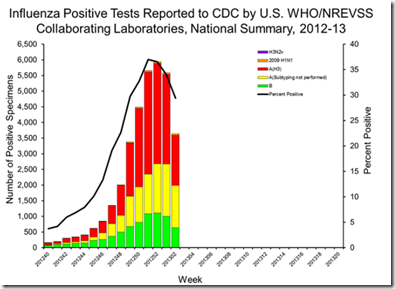
 

image


The rest of the respiratory miseries out there are caused by a variety of viral villains (some unidentified, and some flu-negatives may really be positive), that include RSV (respiratory syncytial virus), respiratory Adenoviruses, parainfluenza viruses, rhinoviruses, coronaviruses, and metapneumovirus (to name a few).

The latest Ontario Respiratory Virus Bulletin, 2012-2013 (Week 2: January 6, 2012 – January 12, 2013) provides a fascinating graph that shows both the variety and seasonal fluctuation of respiratory viruses in institutional outbreaks over the past year.


image


While influenza A is the dominant player this winter, you’ll notice that last season was truly a mixed bag, with comparatively little flu.  The summer months were dominated by Rhino/enterovirus detections.


The DARK BLUE part of  the chart represent unidentified organisms.


The truth is - in a clinical setting - most influenza-like-illnesses go unidentified. Viral respiratory infections are generally self-limiting illnesses, treatment is pretty much the same regardless of etiology, and so there is little point in trying to identify the cause of every illness.


Scientists – with better tools available today – are indentifying `new’ viruses all of the time. A few well distributed viruses that until recently, were unknown, include:


  • The human metapneumovirus (HMPV) was identified in Dutch children with bronchiolitis about a dozen years ago.  Since then, it has been found to be ubiquitous around the world, and responsible for a significant percentage of childhood respiratory infections . . . yet until 2001, no one knew it existed.
  • Human Bocavirus-infection (HBoV) wasn’t identified until 2005, when it was detected in 48 (9.1%) of 527 children with gastroenteritis in Spain (cite).  It has since been found around the globe using PCR testing.


And the list grows longer every year.


Adding to our misery, it is fairly common to be infected by more than one virus at the same time.


In 2008 a study (see Frequent detection of viral coinfection in children hospitalized with acute respiratory tract infection using a real-time polymerase chain reaction) looked at clinical samples taken from 254 children treated in Germany over a 10 month period, finding:


Respiratory syncytial virus (RSV) was the most frequently detected pathogen in 112 samples (44.1%), followed by human bocavirus (hBoV) in 49 (19.3%), and rhinovirus in 17 samples (6.7%).


Viral coinfection was detected in 41 (16.1%) samples with RSV and hBoV being the most dominating combination (27 cases, 10.6%). Viral coinfection was found in 10 cases (17%) of children with bronchitis (n = 58) and in 7 cases (23%) of bronchiolitis (n = 30). In patients with pneumonia (n = 51), 17 cases (33%) were positive for 2 or more viral pathogens.


This plethora of pathogens helps to explain – in part -why so many people who get the flu shot every year complain they still caught `the flu’.   Often, they’ve caught one of these ubiquitous `flu-like illnesses’.


So today, a closer look at three common non-influenza respiratory viruses, and one rare one


RSV (Respiratory Syncytial Virus)

One of the most common infections of young children, it has been estimated that by the age of two, nearly all children in the United States have endured at least one bout with this virus. 


For those wondering, `syncytial’ is pronounced (sin-SISH-uhl).


While for most people this virus produces a mild illness, often indistinguishable from a `cold’, it is also considered by the CDC to be the the primary cause of bronchiolitis (inflammation of the small airways in the lung) and pneumonia in children under 1 year of age in the United States (cite).


The CDC estimates between 75,000 and 125,000 children are hospitalized each year with RSV, and while normally thought of as a childhood illness, adults with weakened immune systems and those over 65 are also at increased risk of severe disease.


The CDC maintains an extensive RSV information page.


Respiratory Adenoviruses


With more than 50 varieties identified, respiratory adenoviruses are one of the most common causes of respiratory illness in the world.


The CDC’s Adenovirus Information page describes the virus this way:


Adenoviruses most commonly cause respiratory illness. The symptoms can range from the common cold to pneumonia, croup, and bronchitis. Depending on the type, adenoviruses can cause other illnesses such as gastroenteritis, conjunctivitis, cystitis, and less commonly, neurological disease.


Infants and people with weakened immune systems are at high risk for severe complications of adenovirus infection. Also, adenoviruses commonly cause acute respiratory illness in military recruits.


Interestingly, a person can have – and shed – adenovirus for weeks or even months without showing symptoms. 


While no vaccine is currently available for the public, the military is using a recently approved (March, 2011) oral vaccine against types 4 and 7 on new recruits to help prevent outbreaks.


Over the years we’ve seen some high-profile outbreaks of adenovirus infections that have, at least until they were identified, sounded alarm bells, including  China: Hebei Outbreak Identified As Adenovirus 55.


On rare occasions, outbreaks of emerging strains of adenovirus that have caused more serious illness, including one serotype (Ad14) that has been associated with a number of deaths during the past decade (see 2007 MMWR Acute Respiratory Disease Associated with Adenovirus Serotype 14 --- Four States, 2006—2007).


Parainfluenza Viruses

Human parainfluenza viruses (HPIVs) belong to the Paramyxoviridae family, of which there are 4 types (1-4) and two subtypes  (4a & 4b). Each type has its own set of clinical and epidemiological features.


From the CDC’s HPIV page:

Symptoms and Illnesses

The incubation period, the time from exposure to HPIV to onset of symptoms, is generally 2 to 7 days.

  • HPIV-1 and HPIV-2 are most often associated with croup (laryngotracheobronchitis). HPIV-1 often causes croup in children, whereas HPIV-2 is less frequently detected. Both types can cause upper and lower respiratory tract illnesses. People with upper respiratory tract illness may have cold-like symptoms.
  • HPIV-3 is more often associated with bronchiolitis, bronchitis, and pneumonia.
  • HPIV-4 is not recognized as often, but may cause mild to severe respiratory tract illnesses.

Reinfection

People can get multiple HPIV infections in their lifetime. These reinfections usually cause mild upper respiratory tract illness with cold-like symptoms. However, reinfections can cause serious lower respiratory tract illness, such as pneumonia, bronchitis, and bronchiolitis in some people. Older adults and people with compromised immune systems, in particular, have a higher risk for severe infections.

Most children 5 years of age and older have antibodies against HPIV-3 and approximately 75% have antibodies against HPIV-1 and HPIV-2.


Our last stop is with Human Enterovirus 68 (HEV68), which made headlines in 2011, but of which we’ve heard little of since. In MMWR: Clusters Of HEV68 Respiratory Infections 2008-2010 we looked at reports of six clusters of this rare, emerging enterovirus over the previous couple of years.


Enteroviruses encompass a large family of small RNA viruses that include the three Polioviruses, along with myriad non-polio serotypes of Human Rhinovirus, Coxsackievirus, echovirus, and human, porcine, and simian enteroviruses.


First detected in California in 1962, but rarely seen since that time, the CDC was notified of six clusters of HEV68 from Asia, Europe, and the United States between 2008-2010.  These clusters included severe illness, and three fatalities.


image

Occurrence of human enterovirus 68, by month, duration, and geographic location --- Asia, Europe, and United States, 2008—2010 –MMWR


The summary provided for this MMWR release reads:


What is already known on this topic?

Human enterovirus 68 (HEV68) is a unique enterovirus that shares epidemiologic and biologic features with human rhinoviruses.

What is added by this report?

Although isolated cases of HEV68 have been reported since the virus was described in 1962, clusters of cases have been recognized only recently. The clusters described in this report occurred late in the typical enterovirus season and included severe cases, three of which were fatal.

What are the implications for public health practice?

Clinicians should be aware of HEV68 as one of many possible causes of viral respiratory disease. Some diagnostic tests might not detect HEV68 or might misidentify it as a human rhinovirus.


The number of `known’ respiratory viruses increases practically every year, due to advances in microbiology and sequence-independent amplification of viral genomes.


There is, no doubt, much more to discover about the myriad of non-influenza respiratory viruses in circulation around the world.


Most of these viruses will prove clinically indistinguishable from the respiratory viruses we already know. 


But outliers like SARS CoV in 2003,  HEV68 in 2008-10, or recent infections in the Middle East with the novel coronavirus EMC/2012all capable of producing significant levels of serious illness - show that novel viruses can emerge with little warning.


Which makes the surveillance and identification of these respiratory viruses more than just an academic exercise.

Monday, January 07, 2013

EID Journal: A Brief History Of Quarantine


image

Photo Credit CDC PHIL


# 6832


Although controversial, and often misunderstood, quarantines have a long and successful history of helping to curb the spread of disease transmission during epidemics.


With the emergence of SARS early in the last decade, the use of quarantines made headlines once again around the world, eliciting both praise and concern.


Just so we are all on the same page, here is how the CDC defines Quarantine and Isolation:


The CDC applies the term "quarantine" to more than just people. It also refers to any situation in which a building, conveyance, cargo, or animal might be thought to have been exposed to a dangerous contagious disease agent and is closed off or kept apart from others to prevent disease spread.

Photo of doctor with patient The Centers for Disease Control and Prevention (CDC) is the U.S. government agency responsible for identifying, tracking, and controlling the spread of disease. With the help of the CDC, state and local health departments have created emergency preparedness and response plans. In addition to early detection, rapid diagnosis, and treatment with antibiotics or antivirals, these plans use two main traditional strategies—quarantine and isolation—to contain the spread of illness. These are common health care practices to control the spread of a contagious disease by limiting people's exposure to it.

The difference between quarantine and isolation can be summed up like this:

  • Isolation applies to persons who are known to be ill with a contagious disease.
  • Quarantine applies to those who have been exposed to a contagious disease but who may or may not become ill.


During the 2003 SARS epidemic, Isolation was used in the United States for patients who were ill, but since transmission of the virus was very limited here, quarantine was not recommended for those exposed (cite).


In other countries, where transmission risks were greater, quarantines were used – quite successfully – in order to contain the virus. 

  • Singapore was one of the first countries to mandate quarantines when more than 800 family members of SARS patients were ordered to stay in their homes. 
  • Hong Kong sealed part of the Amoy Gardens Apartment complex after scores of cases erupted there, and later moved all remaining residents to two holiday camps where they were quarantined.
  • And Toronto, Canada closed schools and quarantined thousands in their bid to contain the virus (see The SARS Experience In Ontario, Canada).


The graph below shows two distinct phases of disease transmission in Canada, both apparently dampened by the implementation of quarantines.


image


While the aggressiveness of quarantine measures taken in Toronto have been criticized by some (see Severe acute respiratory syndrome: Did quarantine help?), many experts have stated that quarantining those exposed (usually in their own homes) helped to halt the epidemic.


A 2003 MMWR report from China’s CDC, called Efficiency of quarantine during an epidemic of severe acute respiratory syndrome--Beijing, China, 2003 found:


The use of quarantine, in combination with enhanced surveillance, isolation of SARS patients, and comprehensive use of PPE by health-care workers, appears to have been effective in controlling the recent epidemic of SARS in Beijing.


Limiting quarantine to persons who have contact with an actively ill SARS patient will likely improve the efficiency of quarantine and allow for better focus of resources in future outbreaks.


Disease transmission dynamics are different with different pathogens, so the lessons from SARS may not be applicable to the next pandemic.  


All of which serves as prelude to an interesting look at the history of quarantine through the ages that appears today in the CDC’s EID Journal.


Historical Review

Lessons from the History of Quarantine, from Plague to Influenza A

Eugenia Tognotti
Abstract

In the new millennium, the centuries-old strategy of quarantine is becoming a powerful component of the public health response to emerging and reemerging infectious diseases. During the 2003 pandemic of severe acute respiratory syndrome, the use of quarantine, border controls, contact tracing, and surveillance proved effective in containing the global threat in just over 3 months. For centuries, these practices have been the cornerstone of organized responses to infectious disease outbreaks.


However, the use of quarantine and other measures for controlling epidemic diseases has always been controversial because such strategies raise political, ethical, and socioeconomic issues and require a careful balance between public interest and individual rights.


In a globalized world that is becoming ever more vulnerable to communicable diseases, a historical perspective can help clarify the use and implications of a still-valid public health strategy.

(Continue . . . )


While unlikely ever to be popular (particularly among those caught up in one) – with novel emerging infectious diseases like SARS  - particularly early in an outbreak, quarantines may be the only effective tool that public health officials have in their arsenal.


That said, the value of quarantines tends to diminish quickly as the number of cases, and geographic spread of a disease, increases.

Saturday, November 24, 2012

Novel Coronavirus: More Questions Than Answers


image

Coronavirus – Credit CDC PHIL


# 6736


While we wait for more information on the novel coronavirus that continues to pop up in the Middle East (see WHO Announces Additional Coronavirus Cases), it isn’t lost on most infectious disease geeks that this month (November) marks the 10th anniversary of the initial outbreak of SARS in Guangdong Province, China. 


Over the next eight months SARS (Severe Acute Respiratory Syndrome) infected more than 8,000 people, killing roughly 10%.  China, Hong Kong, and Taiwan were the hardest hit, but a handful of cases made it into Canada, the United States, and across Europe.


image

Source World Health Organization


By mid-April of 2003 we learned the illness was due to a novel coronavirus (SARS-CoV). A bit of a surprise really, since human coronaviruses had previously only been linked to mild respiratory illnesses.


Although eventually contained, SARS was the first genuine pandemic threat of the 21st century. It also served to remind us that influenza isn’t the only virus with pandemic potential.


One of the most authoritative accounts of the SARS outbreak, and how it appears to have been linked to the practice of consuming bushmeat in China, comes from Karl Taro Greenfeld’s book The China Syndrome: The True Story of the 21st Century's First Great Epidemic.


While civet cats, which were served in `wild flavor’ restaurants in China, were first implicated in this outbreak (see A Civets Lesson), bats have also been shown to carry this Coronavirus, and may be the primary host.


The jury is out on whether the virus was transmitted directly to man from bats, or perhaps from bats to civits to humans.


Now the world is watching another coronavirus – definitely not SARS – but of the same general family, and capable of producing serious, even fatal illness in humans.


And like SARS, this new virus may be of bat-origin.


What we don’t know (yet) is the source of this virus, how it has managed to jump to at least 6 people in two countries, and whether – once contracted – it can be passed on to other humans.


Up until this week, the reassuring mantra has been that the virus does not transmit from human-to-human (H2H). The reason for that assumption has been the lack of nosocomial infection in hospitals where the first couple of cases were treated.


But this week we’ve learned of two family members in Saudi Arabia who tested positive for the virus, and that there were two other family members with similar symptoms, one of whom died.   


One of the two additional family members tested negative, but we’ve little actual experience with the recently developed tests for this virus, and so its sensitivity isn’t well established. Tests are pending on the fourth family member who died.


Although a common environmental exposure is always possible, these latest revelations put H2H transmission back on the table.


The lack of human-to-human transmission in the earlier cases doesn’t rule out H2H transmission now, or in the future. When a virus jumps to a new species, it isn’t necessarily completely optimized for its new environment.


So one of the things we watch for are signs of further adaptation as the virus `figures out’ its new host. 


Influenza viruses are the absolute master at this type of evolutionary adaptation, but are by no means the only virus with this ability.


One of the ways researchers test viruses is via a serial passage experiment.  It is essentially how Ron Fouchier created a `mammalian-adapted’ H5N1 virus in the laboratory last year, and it mimics what viruses do in the wild.


Last year, in H5N1: A Rite Of Passage, I described how serial passage studies are conducted, but briefly, an experimental animal is infected with a virus, and that virus is then collected and used to inoculate another lab animal. 


image

Simplified Illustration of a Serial Passage Experiment. 


The process is repeated, and after 10 or so iterations, the virus is then examined for `adaptive changes’. Sometimes, after multiple passes through a series of hosts, the virus picks up mutations that favor its survival in the new species.


This process happens outside of the laboratory as well, which is why – when a virus jumps to a new species – we watch it carefully to see if it develops `legs’; the ability to spread efficiently.


Over the summer we watched as swine-variant H3N2v viruses tried – and for the time being, failed – to make a sustained jump to humans (see MMWR: H3N2v Related Hospitalizations In Ohio – Summer 2012). But past performance is no guarantee of future results.


There’s always next year.


And so it is with this new coronavirus. It could recede back into the woodwork, or it could sputter ineffectually for years, threatening occasionally - but never quite succeeding -  as a major public health threat.


Or it could develop `legs’ and become the next big global health threat.  At this point, no one knows.


For those looking for comfort, pandemics are a fairly rare occurrence. Many viruses emerge and threaten, but few are truly ready for prime time.


Like with H5N1, H3N2v, Nipah, and a handful of other emerging viruses that continue to make the occasional foray into the human population, we remain in a watchful waiting mode with this new coronavirus. 


For more coverage of this developing story, I’d recommend Maryn McKenna’s blog from last night:


WHO Announces Family Cluster of Cases of New Coronavirus


Any article or report from Helen Branswell is worth reading, but specifically this one from yesterday, and this one from today.


And finally, Crofsblog for the best news round up on the coronavirus, and many other EIDs.