Showing posts with label EV-D68. Show all posts

Wednesday, April 01, 2015

CIDRAP On The Lancet EV-D68 Analysis

image

CDC EV-D68 Fact Sheet


# 9890


In August of last year, a seldom seen (at least, in North America) non-polio enterovirus D-68 (EV-D68) appeared in America’s Midwest and quickly spread across the nation, causing a wide spectrum of respiratory illness, predominantly in young children and adolescents (see Kansas City Outbreak Identified As HEV 68).


At roughly the same time, a coincident rise in cases of neurological illness with AFP (acute flaccid paralysis) or limb weakness – often associated with a recent respiratory illness – was reported across the country.


A month later the CDC  issued a HAN: Acute Neurologic Illness with Focal Limb Weakness of Unknown Etiology in Children, alerting doctors around the country to be aware of this trend, and providing information on reporting cases. While primarily associated with respiratory symptoms, EV-D68 had previously been linked to neurological presentations, including a small cluster of cases the previous winter (see Acute Flaccid Paralysis Cases In California).


Although a causal link wasn’t established, due to the timing and the fact that other enteroviruses have been linked to neurological illnesses, there was a high degree of suspicion that the two conditions were linked.


Enteroviruses encompass a large family of small RNA viruses that include the three Polioviruses, along with myriad non-polio serotypes of Human Rhinovirus, Coxsackievirus, echovirus, and human, porcine, and simian enteroviruses.  We’ve looked at EV-71 and the Coxsackieviruses on numerous occasions in regards to AFP (Acute Flaccid Paralysis) and HFMD (see herehere & here).


According to the CDC  Non-Polio Enteroviruses (NPEVs) cause 10 to 15 million – mostly mild and often asymptomatic – infections in the United States each year, primarily among infants, children, and teenagers.


Fever, runny nose, sneezing, coughing, a skin rash or mouth blisters, and body and muscle aches are the most commonly reported symptoms.


First isolated in 1962, but only rarely reported in North America since, in 2011 – in MMWR: Clusters Of HEV68 Respiratory Infections 2008-2010 – we looked at a recent increase in EV-68 associated clusters reported in Asia, Europe, and the United States during 2008--2010.


We continued to watch the progress of this most recent outbreak over the winter (see CIDRAP: Likely That Polio-like Illness & EV-D68 Are Linked  & Eurosurveillance: Acute Flaccid Paralysis Following EV-D68 Infection – France), and the most recent CDC NCIRD update on last year’s outbreak was posted in early March.


Update

From August 2, 2014 to March 2, 2015, CDC has verified reports of 115 children in 34 states who developed acute flaccid myelitis that meets CDC’s case definition. CDC continues to collaborate with partners nationally to investigate reported cases, risk factors, and possible causes of this condition.

  • The median age of the children was about 8 years.
  • Almost all of them were hospitalized; some were put on breathing machines.
  • Most patients had fever and/or respiratory illness before onset of neurologic symptoms.
  • About two thirds of the children who have been observed (median 19 days) after their illness reported some improvement in symptoms, while about one third showed no improvement. Only two of the children have fully recovered.


          This week a genetic analysis of this emerging enterovirus was published in The LancetA novel outbreak enterovirus D68 strain associated with acute flaccid myelitis cases in the USA (2012–14): a retrospective cohort study – that not only strengthened the link between the EV-D68 infection and paralytic complications, but also identified the virus as being part of a new clade (B1) with polio-like changes that emerged about 5 years ago.


          Since Robert Roos of CIDRAP News  has already done a terrific job covering this study, I’ll simply refer you to last night’s story for the rest of the details.  Follow the link to read:


          Genetic study boosts evidence for EV-D68 in polio-like cases

          Robert Roos | News Editor | CIDRAP News

          |

          Mar 31, 2015

          A careful study of children at two Colorado and California hospitals who had polio-like illnesses strengthens the evidence that cases were related to enterovirus-D68, which caused a widespread outbreak of severe respiratory illnesses in US children last year, according to a report published today in The Lancet Infectious Diseases.

          The virus was found in 12 of 25 patients who had the polio-like condition, called acute flaccid myelitis (AFM), and the proportion probably would have been higher if respiratory samples had been collected earlier, the researchers said. In addition, a thorough genomic search for other viruses in the neural fluid of 14 of the patients found no signs of any other virus that could have caused the patients' limb weakness and related problems.

          "These findings strengthen the putative association between enterovirus D68 and acute flaccid myelitis and the contention that acute flaccid myelitis is a rare yet severe clinical manifestation of enterovirus D68 infection in susceptible hosts," the authors wrote.

          (Continue . . . )

          Wednesday, December 03, 2014

          CIDRAP: Likely That Polio-like Illness & EV-D68 Are Linked

          image

          Credit CDC


          # 9400


          Roughly 4 months ago, a rarely seen non-polio enterovirus D-68 (EV-D68) appeared in America’s Midwest and quickly spread across the nation, causing a wide spectrum of predominantly respiratory illness, mostly in young children and adolescents (see Kansas City Outbreak Identified As HEV 68).


          At roughly the same time, doctors noticed a coincident rise in cases of neurological illness with AFP (acute flaccid paralysis) or limb weakness – often associated with a recent respiratory illness – across the country. 


          While a causal link wasn’t established, due to the timing and the fact that other enteroviruses have been linked to neurological illnesses, there was a high degree of suspicion that the two illnesses were linked.


          In September the CDC  issued a HAN: Acute Neurologic Illness with Focal Limb Weakness of Unknown Etiology in Children, alerting doctors around the country to be aware of this trend, and providing information on reporting cases, and since then we’ve seen several NCIRD (National Center for Immunization and Respiratory Diseases) updates on the investigation.


          For the latest developments into this story we turn to Robert Roos, News Editor for CIDRAP, who last night wrote about the CDC’s investigation into this paralytic illness – now dubbed acute flaccid myelitis (AFM). 


          Following Robert’s report, I’ve excerpts from the CDC’s latest update.


          CDC: Link between polio-like illness and EV-D68 looks likely

           Robert Roos | News Editor | CIDRAP News

           Dec 02, 2014

          With the recent outbreaks of enterovirus D68 (EV-D68) respiratory infections and mysterious polio-like illnesses in US children fading, it seems increasingly likely that the two are related, says an expert with the Centers for Disease Control and Prevention (CDC).

          The CDC has reported 1,121 EV-D68 cases in 47 states since August, a number that has not increased since Nov 20, with nearly all cases in children. Meanwhile, the total for the unexplained polio-like cases, involving sudden onset of weakness in one or more limbs, reached 90 on Nov 28, which was 2 more than a week earlier. Two reported cases were still being verified.

          James J. Sejvar, MD, a neuroepidemiologist with the CDC, said the latest known onset of a case of the polio-like illness occurred about 3 weeks ago. "We're continuing our surveillance and trying to identify new cases, but the good news is that it does appear that new cases have kind of ceased at this point," he told CIDRAP News.

          (Continue . . . )


          The CDC NCIRD update as of November 28th.


          Summary of Findings: Investigation of Acute Flaccid Myelitis in U.S. Children, 2014

          Since September 2014, CDC and partners have been investigating reports of children across the United States who developed a sudden onset of weakness in one or more arms or legs with MRI scans that showed inflammation of the gray matter—nerve cells—in the spinal cord. This illness is now being referred to as acute flaccid myelitis.

          Update

          • From August 2 to November 26, CDC has verified reports of 90 children in 32 states who developed acute flaccid myelitis that meets CDC’s case definition. CDC is working with healthcare professionals and state and local health departments to investigate all the cases reported since August. CDC is also in the process of verifying two additional reports.
          • CDC and partners are working to better understand these cases of acute flaccid myelitis, including potential causes and how often the illness occurs. However, such investigations take time.

          Neurologic Illness with Limb Weakness

          • A sudden onset of weakness in the arms or legs can result from a variety of causes, including viral infections, environmental toxins, and genetic disorders. Guillain-Barre syndrome, a disorder caused by an abnormal immune response, can also cause neurologic illness.
            • Every year, children in the United States develop neurologic illness with limb weakness, and often the causes are not identified.
          • The acute flaccid myelitis cases reported this year, which include MRI scans that show an inflammation predominantly of the gray matter—nerve cells—in the spinal cord, are most similar to illnesses caused by viruses including
            • enteroviruses (polio and non-polio),
            • adenovirus,
            • West Nile virus and similar viruses, and
            • herpesviruses.
             

          What CDC is Doing

          CDC is

          • requesting that healthcare professionals be vigilant for and report cases of acute flaccid myelitis to CDC through their state or local health department
          • verifying reports of cases of acute flaccid myelitis using our case definition
          • working with healthcare professionals and state and local health departments to investigate and better understand the cases of acute flaccid myelitis, including potential causes and how often the illness occurs
          • testing specimens, including stool, respiratory and cerebrospinal fluid, from the children with acute flaccid myelitis
          • working with experts in neurology, pediatrics, critical care medicine, public health epidemiology, and virology to provide interim considerations to help clinicians and public health officials manage care of children with acute flaccid myelitis that meet CDC’s case definition
          • providing information to healthcare professionals, policymakers, general public, and partners in various formats, such as the Morbidity and Mortality Weekly Report, health alerts, websites, social media, and presentations

          Information for Parents

          Being up to date on all recommended vaccinations is the best way to protect yourself and your family from a number of diseases that can cause severe illness and death, including polio, measles, whooping cough, and acute respiratory illnesses such as influenza.

          You can help protect yourselves from infections in general by

          • washing your hands often with soap and water,
          • avoiding close contact with sick people, and
          • disinfecting frequently touched surfaces.

          You can protect yourself from mosquito-borne viruses, such as West Nile virus, by using mosquito repellent, and staying indoors at dusk and dawn, which is the prime period that mosquitoes bite.

          If your child appears very sick or seems to have a sudden onset of weakness in arms or legs, parents should contact the pediatrician to have their child assessed for possible neurologic illness.

          Thursday, November 06, 2014

          Eurosurveillance: Acute Flaccid Paralysis Following EV-D68 Infection – France

          image

          CDC EV-D68 Fact Sheet


          # 9294


          In August of 2014, a seldom seen in North America non-polio enterovirus D-68 (EV-D68) appeared in America’s Midwest and quickly spread across the nation, causing a wide spectrum of respiratory illness, predominantly in young children and adolescents (see Kansas City Outbreak Identified As HEV 68).


          At roughly the same time, a coincident rise in cases of neurological illness with AFP (acute flaccid paralysis) or limb weakness – often associated with a recent respiratory illness – was reported across the country.


          In September the CDC  issued a HAN: Acute Neurologic Illness with Focal Limb Weakness of Unknown Etiology in Children, alerting doctors around the country to be aware of this trend, and providing information on reporting cases.


          While there is a high degree of suspicion that the recent EV-D68 outbreak and the rise in paralytic cases are related, a causal link has not been established.  


          The CDC’s latest EV-D68 update reads:


          From mid-August to November 5, 2014, CDC or state public health laboratories have confirmed a total of 1,112 people in 47 states and the District of Columbia with respiratory illness caused by EV-D68.


          While the CDC’s latest UPDATE on the unexplained neurological cases reads:

          As of October 29, CDC has verified reports of 64 cases in 28 states that meet our case definition below. We are working with healthcare professionals and state and local officials to investigate all of these cases.

          We are also in the process of verifying about half a dozen additional reports. These investigations take time. Therefore, the number of cases will likely increase further as we update these numbers weekly on Thursday, but the increase will not necessarily reflect changes in occurrence of cases in real time.


          While it doesn’t prove causality, today the ECDC’s Eurosurveillance Journal carries a report of France’s first  EV-D68 case with Acute Flaccid Paralysis (AFP).


          Eurosurveillance, Volume 19, Issue 44, 06 November 2014

          Rapid communications

          Acute flaccid paralysis following enterovirus D68 associated pneumonia, France, 2014

          M Lang, A Mirand, N Savy, C Henquell, S Maridet, R Perignon, A Labbé, H Peigue-Lafeuille

          Human enterovirus D68 (EV-D68) is known to be associated with mild to severe respiratory infections. Recent reports in the United States and Canada of acute flaccid paralysis (AFP) in children with detection of EV-D68 in respiratory samples have raised concerns about the aetiological role of this EV type in severe neurological disease. This case study is the first report of AFP following EV-D68 infection in Europe.


          We report the first case of acute flaccid paralysis (AFP) following enterovirus-D68 (EV-D68) infection in Europe. The United States (US) and Canada are currently experiencing nationwide outbreaks of EV-D68 infections associated with severe respiratory diseases especially in children with underlying respiratory disease that began in mid-August 2014 [1,2]. Concomitantly, clusters of neurological illness characterised by AFP with anterior myelitis have been reported in the US and Canada [3,4]. The detection of EV-D68 in nasopharyngeal specimens of some affected children raises the question of a possible link between EV-D68 infections and severe neurological disease.

          <SNIP>

          Discussion

          While EV-D68 has to date been almost exclusively associated with respiratory diseases, investigations are currently underway to determine its role in the acute neurological illnesses that have been reported in children in the US [3] and in Canada [4] since August 2014. Nine EV-D68-associated deaths are currently being investigated at the US Centers for Disease Control and Prevention (CDC) to confirm or refute EV-D68 as the cause of death [15]; as of 5 November, no information has been released about the death’s preceding symptoms.

          The case reported here meets the definition given by CDC to identify similar neurological manifestations characterised by acute onset of focal limb weakness occurring on or after 1 August 2014 and MRI showing a spinal cord lesion largely restricted to grey matter [16]. Common features with the cases reported in the US include (i) respiratory illness preceding development of neurological symptoms, (ii) a local epidemiological context of EV-D68 detection among children admitted to hospital for respiratory infections leading to asthma crisis (data not shown) and (iii) EV-D68 detection in respiratory samples. By contrast, to our knowledge, neither meningeal syndrome nor myocarditis and acute respiratory distress syndrome had been reported in the days preceding the onset of paralysis in the US patients.

          The enterovirus genome was not detected in the CSF of this patient and we cannot assert that EV-D68 was associated with meningitis. There are two case reports in the literature of EV-D68 infection associated with severe neurological disease as evidenced by detection in the CSF [17,18]. As in recent reports, the significance of EV-D68 association with AFP is hampered by the fact that it was only detected in respiratory or stool samples, in which enteroviruses can be detected many weeks after infection. However, the absence of detection in CSF does not necessarily rule out this possibility since poliovirus and EV-A71, two recognised neurotropic EVs, are not frequently recovered [19]. Further physiopathological studies may be needed to assess the neurotropism of EV-D68.

          There are increasingly numerous reports of polio-like illnesses in the US (64 cases as of 30 October 2014) [15].

          Surveillance of AFP cases has already been implemented as a measure in the global initiative to eradicate poliomyelitis and should allow rapid identification of similar neurological manifestations in association with EV-D68 infection [20]. However, determination of AFP aetiologies can be challenging, because of the absence of pathogen detection in the CSF. Investigation of AFP cases should include both EV screening of two stool samples collected ≥ 24 hours apart and < 14 days after symptom onset [21] and early and quick testing of diverse samples, especially upper respiratory samples, for infectious agents including EVs, to increase the chance to identify a pathogen. In the case of EV-D68 infections, the detection capabilities of the EV-D68 genome of commercial and in-house molecular methods should be assessed.


          While our experience with EV-D68 goes back 50 years, the number of outbreaks that have been studied has been small. Testing has been difficult and time consuming, and treatment for EV-D68 is no different than for any other viral respiratory illness.   Therefore, we don’t really know as much about this virus as we’d like.


          Other non-polio enteroviruses have a better documented track record for causing neurological complications, such as EV-71.  In recent years, EV-71 has been linked to a number of clusters of AFP  around the globe, particularly in Asia, Australia, and the Pacific (see Australia: Acute Flaccid Paralysis & EV71).


          For now, the investigation into this rash of unexplained paralysis remains unresolved.

          Wednesday, October 29, 2014

          EID Journal: Genome Sequence of Enterovirus D68 from St. Louis

          image


          # 9262


          In late August we began to track an unusual late summer outbreak of Enterovirus D68, which was first reported in Illinois and Missouri, but which quickly spread across the nation (see Kansas City Outbreak Identified As HEV 68).   Although EV-D68 – one of the dozens of non-polio enteroviruses – had first been indentified 50 years ago, until the past few years it has only rarely been reported in North America.


          In 2011 – in MMWR: Clusters Of HEV68 Respiratory Infections 2008-2010 – we looked at a half dozen  HV 68 associated clusters which occurred in Asia, Europe, and the United States during 2008--2010.


          A few excerpts from that report:


          HEV68 infection was associated with respiratory illness ranging from relatively mild illness that did not require hospitalization to severe illness requiring intensive care and mechanical ventilation. Three cases, two in the Philippines and one in Japan, were fatal. In these six clusters, HEV68 disproportionately occurred among children.


          Previous outbreaks have all appeared to be limited to a few dozen people, although testing for the virus has always been extremely limited.  How pervasive this virus really is in the population is largely unknown. 


          That said, the rapid nationwide spread of EV-D68 over the past three months is unusual, and a coincident rise in neurological illness and limb weakness (see CDC HAN: Acute Neurologic Illness with Focal Limb Weakness of Unknown Etiology in Children) has raised questions as to whether this virus has recently changed.  


          A causal link between these paralysis cases and EV-D68 has not yet been established.


          Yesterday, researchers from Washington University School of Medicine in St. Louis published a letter in the CDC’s EID journal, describing their genetic sequencing of the EV-D68 virus collected from patients in St. Louis.


          There is not a lot of older sequence data to compare the current strain with – making it difficult to pinpoint any changes that may have contributed to its severity or rapid spread.  Having this new data will help track future changes and identify different strains currently in circulation.  According to a news release from the University:


          “The CDC has published some additional genomes from Missouri, Illinois and Kentucky,” said first author Kristine M. Wylie, PhD, research instructor in pediatrics. “The Missouri genomes, including ours, are all very similar, but the Illinois and Kentucky genomes are different from the Missouri types, suggesting there are some distinct strains circulating in the U.S. right now.”

          Wylie also pointed out the importance of continuing to characterize the genetic features of this virus and monitor the health of patients with the D68 strain.

          “Until recently, this virus has been pretty rare,” she said. “It would be helpful to have more data about the virus and the patients so that we can start to associate the genetic features of the virus with the severity of the disease.”


          Some excerpts from the EID Letter follow:


          Volume 21, Number 1—January 2015
          Letter

          Genome Sequence of Enterovirus D68 from St. Louis, Missouri, USA

          To the Editor: During the current (2014) enterovirus/rhinovirus season in the United States, enterovirus D68 (EV-D68) is circulating at an unprecedented level. As of October 6, 2014, the Centers for Disease Control and Prevention (CDC) had confirmed 594 cases of EV-D68 infection in 43 states and the District of Columbia (http://www.cdc.gov/non-polio-enterovirus/outbreaks/EV-D68-outbreaks.html); the actual number of cases was undoubtedly much higher. In mid-August, hospitals in Missouri and Illinois noticed an increased number of patients with severe respiratory illness (1). We observed this pattern at St. Louis Children’s Hospital in St. Louis, Missouri.

          Resources for studying this virus are limited. Before the current season, only 7 whole-genome sequences and 5 additional complete coding sequences of the virus were available. Therefore, determining whether there are genomic elements associated with rapid spread or severe and unusual disease was not possible.

          To address these limitations, we determined the complete coding sequence of 1 strain from St. Louis by using high-throughput sequencing of nucleic acid from a clinical sample. To evaluate the sequence diversity in EV-D68 strains circulating in the St. Louis metropolitan area, we also generated partial-genome sequences from 8 more EV-D68–positive clinical samples from St. Louis. During the preparation of this article, CDC generated and submitted to GenBank 7 complete or nearly complete genome sequences from viruses obtained from the Midwest. We documented the diversity of the sequences of strains from St. Louis and compared them to publicly available sequences.

          <SNIP>

          Comparison of the virus protein 1 sequence with that of publicly available sequences indicated that the strain from St. Louis and the strain from Missouri (CDC) cluster with virus strains identified in Europe and Asia within the past several years (Figure, panel B). The St. Louis virus shared 97%–99% aa sequence identity with all other sequenced strains. We observed little variation in the strains from St. Louis because they shared 98%–99% nt sequence identity (Technical Appendix[PDF - 78 KB - 4 pages] Figure).

          We provide a genome sequence from the 2014 outbreak of EV-D68 infection in St. Louis, Missouri. This sequence seems to be highly representative of the strains circulating in St. Louis during this time because the other genomes we partially sequenced are very similar. To our knowledge, no amino acids have been associated with virulence or increased infectivity of EV-D68; therefore, we cannot associate the changes we observed in these genomes to phenotypic traits. Because changes in the 5′ untranslated region have the potential to affect the rate of replication (810), it is possible that minor genome changes are responsible for the rapid spread and high severity of disease in 2014. Correlation between clinical features of patients in conjunction with additional genomic analysis might provide further insight into the pathogenetic determinants of this strain. Therefore the genome sequence of EV-D68 determined from the 2014 outbreak in St. Louis, Missouri, provides a resource for tracking and genomic comparison of this rapidly spreading virus.

          Thursday, October 16, 2014

          CDC Update On Weekly EV-D68 Activity

          image


          # 9202


          With the faster EV-D68 test now available (see CDC Announces A Faster EV-D68 Lab Test) the CDC is beginning to catch up on the backlog of submitted respiratory samples, and is beginning to get a rough handle on the level of EV-D68 activity around the country. 


          EV-D68 is not a `notifiable’ disease, and only a small fraction of patients can be tested (even with this faster rt-PRC test), so the following information is based on fairly spotty information.


          Thus far the CDC has identified 780 people in 46 states and the District of Columbia with respiratory illness caused by EV-D6, but the actual number of cases probably several orders of magnitude higher.  While most people who contract this enterovirus only experience mild to moderate `flu-like’ symptoms, the CDC does report:


          EV-D68 has been detected in specimens from seven* patients who died and had samples submitted for testing. CDC is reporting test results to state health departments as we obtain them.


          Additionally, the CDC is investigation several clusters of unexplained partial limb weakness or paralysis that have been reported over roughly the same time period as this outbreak, and which may be be due (in part) to the EV-D68 virus.  A causal link has not yet been established, but the latest update from Investigation of Acute Neurologic Illness with Focal Limb Weakness of Unknown Etiology in Children, Fall 2014 reads:


          As of October 15, CDC has verified reports of 37 cases in 16 states that meet our case definition below. We are working with healthcare professionals and state and local officials to investigate all of these cases.

          We are also in the process of verifying more than a dozen additional reports. These investigations take time and are in the early stages. Therefore, the number of cases will likely increase further as we update these numbers weekly on Thursday starting next week, but the increase will not necessarily reflect changes in occurrence of cases in real time.


          The CDC has posted the following update showing the trends for EV-D68 cases across the country over the past week.


          Activity of Enterovirus D68-like Illness in States

          For the week of October 5-11, 2014, 44 states and the District of Columbia have submitted assessments to CDC of activity of EV-D68-like illness.

          • 32 states and the District of Columbia reported low or declining activity
          • 12 states reporting increasing or elevated activity

          Activity of enterovirus-D68-like infections in reporting states is described as: decreased in Alabama, low and similar for Alaska, low and similar for Arkansas, low and similar for Arizona, elevated for California, decreased for Colorado, decreased for Connecticut, decreased for District of Columbia, low and similar for Florida, decreased for Georgia, low and similar in Hawaii, decreased in Idaho, elevated for Illinois, low and similar for Indiana, low and similar for Kansas, decreased for Kentucky, low and similar for Louisiana, elevated for Maine, elevated for Massachusetts, decreased for Michigan, decreased for Minnesota, low and similar for Missouri, low and similar for Mississippi, low and similar for Nebraska, decreased for New Jersey, elevated for New Hampshire, low and similar for New Mexico, decreased for New York, low and similar for North Carolina, elevated for North Dakota, low and similar for Ohio, low and similar for Oregon, increased for Pennsylvania, low and similar for Rhode Island, increased for South Carolina, low and similar for South Dakota, low and similar for Tennessee, low and similar for Texas, elevated for Utah, increased for Virginia, low and similar for Vermont, elevated for Washington, increased for West Virginia, and decreased for Wisconsin.

          Activity of enterovirus-D68-like illness in reporting states  [1 page]

          Since this is the first week that we have posted the map, we cannot compare activity of EV-D68-like illness across the United States with previous weeks.

          The state assessments are based on data that are currently available, which may include

          • laboratory test results for EV-D68 and other enteroviruses and rhinoviruses,
          • emergency department visits by patients who had respiratory illnesses similar to those caused by EV-D68 infection, and
          • reports from doctors and healthcare facilities.

          The state assessments are estimates and take into consideration the following:

          • Enterovirus infections commonly occur in the United States in summer and fall. Right now, enteroviruses and rhinoviruses are likely contributing the most to the increases in respiratory illnesses. This year, the most common type of enterovirus detected has been EV-D68.
          • Many viruses can cause similar respiratory illnesses and can only be identified with laboratory testing. However, many people with respiratory illness who go to the doctor are not tested.
          • Many people with mild respiratory illness may not go to the doctor.
          • By the end of fall, enterovirus infections are expected to decline. At about the same time, respiratory illnesses caused by other viruses, like influenza and respiratory syncytial virus (RSV), will become more common. Therefore, it will be more difficult for states to infer that respiratory illnesses reflected in this map are due to EV-D68. At that time, the map will be removed.

          The state health departments submit this information to CDC voluntarily. Updates will be posted every Thursday.

          Tuesday, October 14, 2014

          CDC Announces A Faster EV-D68 Lab Test

          image


          # 9194


          The number of confirmed Enterovirus D68 cases sits at 691 people from 46 states, but due to the complex and lengthy testing process, there has been a huge backlog of samples awaiting testing. Anecdotal reports from around the nation suggest the actual number of infections is many times higher, but patients with mild or moderate symptoms rarely get tested.


          Today the CDC has announced their development of a faster, more streamlined lab test, which should help clear up the backlog of untested samples. 


          This test is a is a “real-time” reverse transcription polymerase chain reaction, or rRT-PCR, and it reportedly identifies all currently circulating strains of EV-D68 in the United States.  It should quadruple the CDC’s lab capacity to turn around test results.


          But at the same time, a faster test could artificially make the outbreak appear to be accelerating, so the CDC is taking great pains to assure that any sudden jumps in the number of confirmed cases in the coming days is more likely to be due to processing this backlog, than from a sudden spike in transmission.


          This from the CDC’s press release:


          CDC Develops a New, Faster Lab Test for Enterovirus D68

          Confirmed cases will appear to rise as agency accelerates specimen testing; Changes in case counts due to faster testing will not represent a real-time influx of new cases

          The Centers for Disease Control and Prevention (CDC) has developed and started using a new, faster lab test for detecting enterovirus D68 (EV-D68) in specimens from people in the United States with respiratory illness. This test will allow CDC to more rapidly test remaining specimens received from states since mid-September.

          Every year, enteroviruses and rhinoviruses cause millions of respiratory illnesses in children. This year, EV-D68 has been the most common type of enterovirus identified, leading to increases in illnesses among children and affecting those with asthma most severely.  Other rhinoviruses and enteroviruses continue to be detected as well. 

          CDC expects, as with other enteroviruses, that EV-D68 infections will likely begin to decline by late fall.  The real-time lab results combined with data on hospital admissions will help us understand when and where the EV-D68 outbreak is ending.   CDC has received informal reports from some hospitals and states who are seeing signs of decreasing EV-D68 infections.  CDC is gathering more information from states and assessing whether this represents a national trend.

          “CDC has received substantially more specimens for enterovirus lab testing than usual this year, due to the large outbreak of EV-D68 and related hospitalizations,” said Anne Schuchat, MD, assistant surgeon general and director of CDC’s National Center for Immunization and Respiratory Diseases. “When rare or uncommon viruses suddenly begin causing severe illness, CDC works quickly to develop diagnostic tests to enhance our response and investigations. This new lab test will reduce what would normally take several weeks to get results to a few days.”

          Since the outbreak of EV-D68 began in August, CDC has tested 1163 specimens submitted by hospitals and from 45 states.  Of the specimens tested by the CDC lab from August 1 to October 10, about half have tested positive for EV-D68. About one third have tested positive for a rhinovirus or an enterovirus other than EV-D68. The new lab test will allow us to process the approximately one-thousand remaining specimens at a much faster rate.

          Testing for EV-D68 is not used to determine treatment for a particular patient. Treatment for patients with EV-D68 is supportive therapy, such as oxygen therapy.  The outcome of the EV-D68 test is to collect surveillance data to help public health officials target our responses to the outbreak, not to determine the treatment plan for a specific patient.  CDC prioritized testing for the most severe cases since the outbreak began in August to get a better understanding of the disease.

          (Continue . . . )

          Thursday, October 09, 2014

          COCA Call Transcript & Audio On Neurological Illness In Children Now Online

          image


          #9172


          The transcripts & audio from last week’s very important COCA Call on recent cases of  Neurologic Illness with Limb Weakness in Children that has appeared coincident to the recent EV-D68 outbreaks around the nation are now available online. 


          If you are a clinician – and you haven’t heard this hour-long presentation – now is your opportunity.


          I blogged the latest information from the CDC this morning on these cases in CDC Update On Investigation Into Acute Neurological Illness Of Unknown Etiology In Kids.


          Neurologic Illness with Limb Weakness in Children 

          Presenter(s)

          Daniel Feikin, MD
          Chief
          Epidemiology Branch
          Division of Viral Diseases
          National Center for Immunization and Respiratory Diseases - CDC

          Steve Oberste, PhD
          Chief
          Polio and Picornavirus Laboratory Branch
          Division of Viral Diseases
          National Center for Immunization and Respiratory Diseases – CDC

          Overview

          CDC is working closely with partners in Colorado and other state and local health departments to investigate an acute neurologic illness of unknown etiology occurring in children. Characterized by focal limb weakness and abnormalities of the spinal cord gray matter on MRI, a cluster of these illnesses was first reported from Colorado in September, 2014. These neurological findings are coincident with an increase of respiratory illnesses among children. During this COCA Call, clinicians will learn about the latest situation, surveillance, and CDC clinical guidance for testing, patient evaluation and case reporting.

          Call Materials

          CDC Update On Investigation Into Acute Neurological Illness Of Unknown Etiology In Kids

          image

          Credit CDC


          # 9167


          The audio and transcript from last Friday’s CDC COCA Call on  Neurologic Illness with Limb Weakness in Children have yet to be uploaded to the COCA site, but we do have a brief update on the ongoing investigation into recent reports of neurological illness and limb weakness which began around August 1st of this year (see Unexplained Paralysis Hospitalizes Children).


          Almost two weeks ago the CDC released a HAN: Acute Neurologic Illness with Focal Limb Weakness of Unknown Etiology in Children, alerting doctors around the country to be aware of this trend, and providing information on reporting cases.


          Although the CDC has only identified 17 cases from 12 states thus far, anecdotal reports from doctors around the country suggest the number of unusual presentations of limb weakness or paralysis to be much higher.  It will take time for the CDC to fully investigate all of these cases.


          As this increase in cases has been coincident with the recent outbreak of EV-D68 (see Enterovirus D-68 (HEV-D68) Update) and at least some of these paralysis cases have tested positive for this emerging enterovirus, investigators are looking at a possible link between the two, although the etiology of this syndrome has yet to be established.


          Investigation of Acute Neurologic Illness with Focal Limb Weakness of Unknown Etiology in Children, Fall 2014

          The Centers for Disease Control and Prevention (CDC) is working closely with the Colorado Department of Public Health and Environment (CDPHE) and Children’s Hospital Colorado to investigate a cluster of pediatric patients hospitalized with acute neurologic illness of undetermined etiology characterized by focal limb weakness and abnormalities of the spinal cord gray matter on MRI.

          On September 26, CDC issued a request to all states to look for and report other similar neurologic illnesses. We are receiving reports and will update this website with new available data every Wednesday.

          Update

          As of October 8, CDC has verified reports of 17 cases in 12 states that meet our case definition below. We are working with healthcare professionals and state and local officials to investigate all of these cases.

          We are also in the process of verifying dozens of additional reports. These investigations take time and are in the early stages. Therefore, the number of cases will likely increase as we update these numbers weekly on Wednesday, but the increase will not necessarily reflect changes in occurrence of cases in real time.

          Case Definition

          Persons who meet the case definition should be reported to state and local health departments.

          To be considered a case, a patient must meet ALL 4 of the following criteria:

          1. Patient ≤21 years of age,
          2. Acute onset of focal limb weakness,
          3. On or after August 1, 2014, AND
          4. An MRI showing a spinal cord lesion largely restricted to gray matter

                      (Continue . . .)

          Thursday, October 02, 2014

          COCA Call Friday: Neurologic Illness with Limb Weakness in Children

          image

          Credit CDC – Non Polio-Enteroviruses


          # 9141


          Although a causal link has not been established, the recent outbreak of EV-D68 which has rapidly spread across the nation has been tentatively associated with a number of children presenting with varying degrees of neurological illness, including limb weakness or paralysis.


          Last Friday we saw a CDC HAN: Acute Neurologic Illness with Focal Limb Weakness of Unknown Etiology in Children issued, and tomorrow the CDC will hold a COCA (Clinician Outreach Communication Activity) call to ensure that practitioners have up-to-date information for their practices.


          Neurologic Illness with Limb Weakness in Children

           Image of Continuing Education Credits abbreviation. = No Continuing Education

          Date: Friday, October 3, 2014

          Time:2:00 – 3:00 PM (Eastern Time)

          Participate by Phone:

          • 888-831-8979 (U.S. Callers)
          • 415-228-4881 (International Callers)

          Passcode:2142380

          Presenter(s)

          Daniel Feikin, MD
          Chief
          Epidemiology Branch
          Division of Viral Diseases
          National Center for Immunization and Respiratory Diseases - CDC

          Steve Oberste, PhD
          Chief
          Polio and Picornavirus Laboratory Branch
          Division of Viral Diseases
          National Center for Immunization and Respiratory Diseases – CDC

          Overview

          CDC is working closely with partners in Colorado and other state and local health departments to investigate an acute neurologic illness of unknown etiology occurring in children. Characterized by focal limb weakness and abnormalities of the spinal cord gray matter on MRI, a cluster of these illnesses was first reported from Colorado in September, 2014. These neurological findings are coincident with an increase of respiratory illnesses among children. During this COCA Call, clinicians will learn about the latest situation, surveillance, and CDC clinical guidance for testing, patient evaluation and case reporting.

          Monday, September 29, 2014

          ECDC Rapid Risk Assessment For EV-D68

          image


          # 9121


          The outbreak of EV-D68 – an (up-till-now) rarely seen non-polio enterovirus infection – continues in North America with more than 40 states and several provinces in Canada reporting cases.


          While most of those infected (primarily children) will only experience a mild-to-moderate `cold’, a small percentage have been made sick enough to require hospitalization and even require ventilatory support (see CDC Update On EV-D68 – Sept 25th).


          Late on Friday the EV-D68 story took another turn when the CDC announced it was investigating – along with Colorado Health officials – a cluster of 9 children presenting with neurological illness of unknown etiology, and that EV-D68 was on the short list of possible causes (see CDC HAN: Acute Neurologic Illness with Focal Limb Weakness of Unknown Etiology in Children).


          Although primarily associated with respiratory symptoms, EV-D68 has been tentatively implicated in neurological presentations in the past, including last winter (see Acute Flaccid Paralysis Cases In California) . An investigation is now underway to determine the cause of this cluster in Denver, and to see if there are similar cases in other regions of the country.


          While small outbreaks of EV-D68 have been reported in the past – particularly in Asia, the Pacific, and in parts of Europe – this North American outbreak is the largest ever documented.


          That said, EV-D68 is rarely tested for, and generally not considered a `notifiable disease’, and so its actual incidence around the globe is probably greatly underappreciated.


          Taking note of these events, and knowing that infectious diseases perfectly capable of crossing oceans, the ECDC has today released their Rapid Risk Assessment: Enterovirus 68 detections in the USA and Canada.


          The result is a detail-rich history of the virus,  a terrific chart of older outbreaks over the past decade, and an extensive list of journal references and citations.


          I’ve only posted their main conclusions, so follow the link to read the report in its entirety.  When you come back, I’ll have a bit more on one possible reason why this outbreak may be spreading so rapidly.


          Enterovirus 68 detections in the USA and Canada

          Main conclusions


          From mid-August to 24 September 2014, a total of 220 people from 32 US states were confirmed to have respiratory illness caused by EV-D68. Canada has also experienced an increase in severe respiratory illness associated with EV-D68 cases since mid-August 2014.
          • An epidemiological link across the clusters reported in several US states has not yet been established, and it cannot be ruled out that the virus is circulating independently in several locations.
          • To date, EU/EEA countries have not reported a growing number of acute respiratory infections or an increased number of hospital admissions.
          • Sporadic cases of EV-D68 have been documented in several EU/EEA countries in recent years. In 2014, EV-D68 was detected in at least four EU/EEA countries but no epidemic clusters of severe disease have been reported; none of the Member States has so far issued an Early Warning and Response System (EWRS) notification.
          • The likelihood for cases to be laboratory-confirmed in EU/EEA countries is low because most countries do not routinely screen for EV-D68, and the disease is not notifiable.
          • If all other respiratory pathogen detections were negative, or if rhino-/enterovirus was detected initially, EV-D68 should be considered the causative pathogen of the disease. More systematic testing of severe respiratory illness cases for EV-D68 could be considered in EU/EEA countries to better document the circulation of this virus.
          • EU/EEA countries need to remain vigilant and consider strengthening respiratory sample screening for enteroviruses and enterovirus typing.
          • Based on the current information, EU/EEA countries have a moderate risk of EV-D68 transmission because the circulation of this strain in the population is low.


          Buried within this report is a one-line mention and a reference to a study, published late last year, which looked at recent genetic changes to EV-D68:


          Recent research has suggested a change in the antigenicity and receptor properties of EV-D68, which now preferably binds to upper respiratory tract sialic acid receptors as opposed to the earlier lower respiratory tract binding [14].


          The study, published in the Journal of Virology, finds that the EV-D68 virus has evolved into at least three lineages and that they all bind preferentially to α2-6 SAs – the same receptor cell used to great effect by seasonal influenza viruses. They also suggest that relatively recent changes in its antigenicity and/or receptor binding properties may be increasing its prevalence around the globe.


          Antigenic and Receptor Binding Properties of Enterovirus 68

          Tadatsugu Imamuraa, Michiko Okamotoa, Shin-ichi Nakakitab, Akira Suzukia, Mariko Saitoc, Raita Tamakia, Socorro Lupisang, Chandra Nath Roya, Hiroaki Hiramatsuf, Kan-etsu Sugawarad, Katsumi Mizutae, Yoko Matsuzakid, Yasuo Suzukif and Hitoshi Oshitania

          ABSTRACT

          Increased detection of enterovirus 68 (EV68) among patients with acute respiratory infections has been reported from different parts of the world in the late 2000s since its first detection in pediatric patients with lower-respiratory-tract infections in 1962. However, the underlying molecular mechanisms for this trend are still unknown. We therefore aimed to study the antigenicity and receptor binding properties of EV68 detected in recent years in comparison to the prototype strain of EV68, the Fermon strain.

          We first performed neutralization (NT) and hemagglutination inhibition (HI) tests using antisera generated for EV68 strains detected in recent years. We found that the Fermon strain had lower HI and NT titers than recently detected EV68 strains. The HI and NT titers were also significantly different between strains of different genetic lineages among recently detected EV68 strains.

          We further studied receptor binding specificities of EV68 strains for sialyloligosaccharides using glycan array analysis. In glycan array analysis, all tested EV68 strains showed affinity for α2-6-linked sialic acids (α2-6 SAs) compared to α2-3 SAs. Our study demonstrates that emergence of strains with different antigenicity is the possible reason for the increased detection of EV68 in recent years. Additionally, we found that EV68 preferably binds to α2-6 SAs, which suggests that EV68 might have affinity for the upper respiratory tract.

          IMPORTANCE Numbers of cases of enterovirus 68 (EV68) infection in different parts of the world increased significantly in the late 2000s. We studied the antigenicity and receptor binding properties of recently detected EV68 strains in comparison to the prototype strain of EV68, Fermon. The hemagglutination inhibition (HI) and neutralization (NT) titers were significantly different between strains of different genetic lineages among recently detected EV68 strains.

          We further studied receptor binding specificities of EV68 strains for sialyloligosaccharides using glycan array analysis, which showed affinity for α2-6-linked sialic acids (α2-6 SAs) compared to α2-3 SAs. Our study suggested that the emergence of strains with different antigenicities was the possible reason for the increased detections of EV68 in recent years. Additionally, we revealed that EV68 preferably binds to α2-6 SAs. This is the first report describing the properties of EV68 receptor binding to the specific types of sialic acids.


          An intriguing and plausible – but as yet, unproven – explanation for the rapid and (as far as we know) unprecedented spread of EV-D68 in North America.


          But one that will require considerable laboratory analysis and study to prove one way or another.

          Saturday, September 27, 2014

          CDC HAN: Acute Neurologic Illness with Focal Limb Weakness of Unknown Etiology in Children

          image


          # 9117


          There are a fair number of possible causes for a cluster of acute neurological illness in children, ranging from vector-borne encephalopathies like West Nile Virus, to a variety of polio and non-polio enteroviruses. In recent years, EV-71 has been linked to a number of clusters of AFP (acute flaccid paralysis) around the globe, particularly in Asia, Australia, and the Pacific (see Australia: Acute Flaccid Paralysis & EV71).


          A month ago, when the EV-D68 virus was first identified in a cluster of sick kids in the Midwest (see Kansas City Outbreak Identified As HEV 68), I mentioned that this rarely reported non-polio enterovirus had been detected in two of five children who developed a rare polio-like syndrome last winter (see Acute Flaccid Paralysis Cases In California) .


          While this may have simply been an incidental finding, due to the history of other non-polio enteroviruses to cause neurological illness, EV-D68 infection was considered at least plausible cause for these illnesses. The CDC has frequently stated that  `EV-D68 causes primarily respiratory illness, although the full spectrum of disease remains unclear.’

          image

          The EV-D68 virus has now spread to more than 40 states, and has likely sickened tens of thousands of children, but until now we’d not heard any credible reports of EV-D68 infected children developing neurological symptoms. Testing for the virus, however, is both difficult and time consuming – and the battery of tests required to rule out other causes of neurological illness can take considerable time – and so there are often lags in reporting.


          Given the recent surge in enterovirus infections across the nation, and their history of occasionally producing neurological illness, it is not altogether surprising that health authorities in Denver, Colorado have now reported a cluster of children presenting with acute neurological symptoms following recent respiratory infections.


          To date, four of nine have tested positive for the EV-D68 virus. 


          With the caveat that the etiology remains unknown, the CDC is anxious to identify other recent cases or clusters, and to nail down the cause (or causes) of these illnesses. 


          Last night the CDC issued the following HAN (Health Alert Network)  Advisory to clinicians, with instructions on reporting and recommendations for testing. 


          Acute Neurologic Illness with Focal Limb Weakness of Unknown Etiology in Children

          Summary

          The Centers for Disease Control and Prevention (CDC) is working closely with the Colorado Department of Public Health and Environment (CDPHE) and Children’s Hospital Colorado to investigate a cluster of nine pediatric patients hospitalized with acute neurologic illness of undetermined etiology. The illness is characterized by focal limb weakness and abnormalities of the spinal cord gray matter on MRI. These illnesses have occurred since August 1, 2014 coincident with an increase of respiratory illnesses among children in Colorado. The purpose of this HAN Advisory is to provide awareness of this neurologic syndrome under investigation with the aim of determining if children with similar clinical and radiographic findings are being cared for in other geographic areas. Guidance about reporting cases to state and local health departments and CDC is provided. Please disseminate this information to infectious disease specialists, intensive care physicians, pediatricians, neurologists, radiologists/neuroradiologists, infection preventionists, and primary care providers, as well as to emergency departments and microbiology laboratories.

          Background

          The CDPHE, Children’s Hospital Colorado, and CDC are investigating nine cases of acute neurologic illness among pediatric patients. The cases were identified during August 9–September 17, 2014 among children aged 1–18 years (median age 10 years). Most of the children were from the Denver metropolitan area. All were hospitalized. Common features included acute focal limb weakness and specific findings on magnetic resonance imaging (MRI) of the spinal cord consisting of non-enhancing lesions largely restricted to the gray matter. In most cases, these lesions spanned more than one level of the spinal cord. Some also had acute cranial nerve dysfunction with correlating non-enhancing brainstem lesions on MRI. None of the children experienced altered mental status or seizures. None had any cortical, subcortical, basal ganglia, or thalamic lesions on MRI. Most children reported a febrile respiratory illness in the two weeks preceding development of neurologic symptoms. In most cases, cerebrospinal fluid (CSF) analyses demonstrated mild-moderate pleocytosis (increased cell count in the CSF) consistent with an inflammatory or infectious process. CSF testing to date has been negative for West Nile virus and enteroviruses, including poliovirus. Nasopharyngeal specimens were positive for rhinovirus/enterovirus in six out of eight patients that were tested. Of the six positive specimens, four were typed as EV-D68, and the other two are pending typing results. Testing of other specimens is still in process. Eight out of nine children have been confirmed to be up to date on polio vaccinations. Epidemiologic and laboratory investigations of these cases are ongoing.

          The United States is currently experiencing a nationwide outbreak of EV-D68 associated with severe respiratory disease. The possible linkage of this cluster of neurologic disease to this large EV-D68 outbreak is part of the current investigation. CDC is seeking information about other similar neurologic illnesses in all states, especially cases clustered in time and place. CDC has particular interest in characterizing the epidemiology and etiology of such cases.

          Recommendations

          • Patients who meet the following case definition should be reported to state and local health departments:

            Patients ≤21 years of age with

            1. Acute onset of focal limb weakness occurring on or after August 1, 2014;

            AND

            1. An MRI showing a spinal cord lesion largely restricted to gray matter.
          • State and local health departments should report patients meeting the case definition to CDC using a brief patient summary form (www.cdc.gov/non-polio-enterovirus/investigation/). State health departments should send completed summary forms to CDC by email at limbweakness@cdc.gov.
          • Providers treating patients meeting the above case definition should consult with their local and state health department for laboratory testing of stool, respiratory, and cerebrospinal fluid specimens for enteroviruses, West Nile virus, and other known infectious etiologies.
          • Health departments may contact CDC for further laboratory and epidemiologic support by phone through the CDC Emergency Operations Center (770-488-7100), or by email at limbweakness@cdc.gov. Confirmation of the presence of EV-D68 currently requires typing by molecular sequencing.

          Friday, September 26, 2014

          CDC Update On EV-D68 – Sept 25th

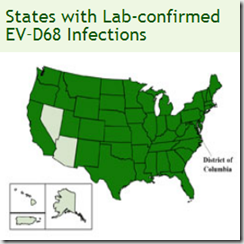
          States with Confirmed EV-D68 Infections


          # 9115


          We’ve been following the EV-D68 outbreak now for over a month (see Kansas City Outbreak Identified As HEV 68 & Enterovirus D-68 (HEV-D68) Update), and as of last night’s update, 38 states have now confirmed cases of this rarely (at least, until now) seen enterovirus.


          While some adults may be infected, this virus seems to mainly affect younger children, probably due to a lack of previous exposure to similar viruses. Most will endure only mild to moderate illness, but a small percentage of (mostly) kids have required hospitalization. 


          The low number of positive cases reported by the CDC only represents the tip of the iceberg, as testing (and reporting) of cases is not mandatory, and often during an outbreak only a few representative samples are forwarded to the State or CDC labs for testing.


          The virus appears to be spreading rapidly, and more states are sending samples for testing every day. If it isn’t already in your state, it likely will be soon.


          Last night the CDC revamped their EV-D68 webpage, with new links and updated information.  Follow the link to view:


          Enterovirus D68 in the United States, 2014

          What We Know

          States with Lab-confirmed EV‑D68 Infections

          From mid-August to September 25, 2014, a total of 226 people in 38 states have been confirmed to have respiratory illness caused by EV-D68. Learn more about states with confirmed cases.

          • EV-D68 infections have recently been documented across the United States.  
            • From mid-August to September 25, 2014, CDC or state public health laboratories have confirmed a total of 226 people in 38 states with respiratory illness caused by EV-D68. Learn about states with confirmed cases. This indicates that at least one case has been detected in each state listed but does not indicate how widespread infections are in each state.
            • Enteroviruses commonly circulate in summer and fall. We’re currently in middle of the enterovirus season, and EV-D68 infections are likely to decline later in the fall.
          • Many state health departments have reported increases this year in cases of severe respiratory illness in children. 
            • This increase could be caused by many different viruses that are common during this time of year. EV-D68 appears to be the predominant type of enterovirus this year and may be contributing to the increases in severe respiratory illnesses.
            • Hospitals in Missouri and Illinois were the first to document this increase that was later identified to be caused predominantly by EV-D68 infection. Read more.
          • CDC is prioritizing testing of specimens from children with severe respiratory illness. There are likely many children affected with milder forms of illness. Of the specimens tested by the CDC lab, about half have tested positive for EV-D68. About one third have tested positive for an enterovirus or rhinovirus other than EV-D68. See map of states with lab-confirmed EV-D68 infections for more information.
          • All the confirmed cases this year of EV-D68 infection have been among children, except for one adult. Many of the children had asthma or a history of wheezing. So far, no deaths attributed to EV-D68 infection have been documented.

          What CDC Is Doing about EV-D68

          CDC is

          • continuing to collect information from states and assess the situation to better understand
            • EV-D68 and the illness caused by this virus and
            • how widespread EV-D68 infections may be within each state and the populations affected.
          • helping states with diagnostic and molecular typing for EV-D68.
          • working with state and local health departments and clinical and state laboratories to
            • enhance their capacity to identify and investigate outbreaks, and
            • perform diagnostic and molecular typing tests to improve detection of enteroviruses and enhance surveillance.
          • helping the Colorado health department investigate these cases among children in Colorado who had respiratory illness and later developed neurologic illness.
          • developing and validating a diagnostic test to detect EV-D68 in specimens. CDC will explore options for providing test kits and protocols to state public health labs.
          • providing information to healthcare professionals, policymakers, general public, and partners in numerous formats, including Morbidity and Mortality Weekly Reports (MMWRs), health alerts, websites, social media, podcasts, infographics, and presentations.

          Related Pages

          Tuesday, September 23, 2014

          CDC: EV-D68 Now Confirmed In 27 States

          States with Confirmed EV-D68 Infections


          # 9004


          It has been less than a month since we saw the Kansas City Outbreak Identified As HEV 68, and since that time this emerging enterovirus has continue to spread across the nation, and has sparked a CDC HAN Advisory On EV-D68, a CDC COCA Call, and an early release MMWR Severe Respiratory Illness Associated With Enterovirus D68.


          While most people who contract this virus will endure only mild to moderate `flu-like’ symptoms, some percentage (particularly kids) have experienced severe respiratory illness, in some cases requiring hospitalization.


          The full burden and extent of this outbreak – and the spectrum of disease it is causing – isn’t well established, but this virus appears to have infected tens of thousands across much of the nation since last month.  


          While kids are the ones being predominantly hospitalized and  tested, anecdotal reports suggests adults are not immune.


          The CDC maintains a Non-Polio Enterovirus D68 webpage and FAQ, and last night updated their tally of states with positive test results.   If your state isn’t listed, that doesn’t mean your area hasn’t seen cases, only that no samples submitted to state and CDC labs have come back positive yet.


          States with Lab-confirmed Enterovirus D68

          From mid-August to September 22, 2014, a total of 175 people from 27 states were confirmed to have respiratory illness caused by EV-D68. The 27 states are Alabama, Arkansas, California, Colorado, Connecticut, District of Columbia, Georgia, Illinois, Indiana, Iowa, Kansas, Kentucky, Louisiana, Michigan, Minnesota, Mississippi, Missouri, Montana, Nebraska, New Jersey, New York, North Dakota, Oklahoma, Pennsylvania, Virginia, Washington, and West Virginia. The cases of EV-D68 infection were confirmed by the CDC or state public health laboratories that notified CDC.

          In the upcoming weeks, more states will have confirmed cases of EV-D68 infection.

          • The primary reason for increases in cases is that several states are investigating clusters of people with severe respiratory illness, and specimens are still being tested for EV-D68. It can take a while to test specimens and obtain lab results. That’s because the testing is complex and slower, and can only be done by CDC and a small number of state public health laboratories. As the backlog of specimens is processed, the number of states and confirmed cases will likely increase. These increases will not necessarily reflect changes in real time, or mean that the situation is getting worse.
          • Some of the increase will be from new EV-D68 infections since people are more likely to get infected with enteroviruses in the summer and fall. We are currently in the middle of the enterovirus season.

          As investigations progress, we will have a better understanding of the trends for EV-D68 infections.


          Nowis the time to take special care to observe good `flu hygiene’; wash your hands often, cover coughs and sneezes, avoid touching your face with unwashed hands, and stay home if you are sick.

          image