Showing posts with label H5N8. Show all posts

Thursday, May 21, 2015

Eurosurveillance: Genetic Diversity Of H5N8 Detected In Japanese Birds

image

Credit U.S. Fish and Wildlife Service


# 10,075


In January of 2014, an emerging HPAI H5N8 appeared in South Korean poultry and wild birds, and although it appears to have originated in China the previous year, it suddenly took off.  It showed up next in Japan, and subsequently showed up across much of China, in Russia, Western Europe, Taiwan, and North America.


Apparently at home in migratory birds, this well-traveled H5N8 virus has reassorted with several local LPAI viruses, producing viable, and highly pathogenic hybrids (H5N2, H5N3, H5N1, etc.) – which taken together have cost the world’s poultry industry billions of dollars over the past 15 months (see Taiwan hit by new type of H5N2, H5N8 for first time).


As with all of the avian flu viruses we’ve been watching, these influenza subtypes (i.e. H5N8 or H5N1) don’t represent a single entity, but rather a family of closely related viruses, all able to `better themselves’  through the evolutionary process. 


As a result, new variants and clades are constantly appearing either through antigenic drift or reassortment. Some fail miserably and quickly fade away, while others are competitive and `biologically fit’ enough to prosper.


We’ve heard a lot about the genetic diversity of H5N1 and the need to update candidate vaccines over the years (see WER: Development Of Candidate Vaccine Viruses For Pandemic Preparedness), but far less is known about how the H5N8 virus is evolving in the wild.


A little a year ago, in EID Journal: Describing 3 Distinct H5N8 Reassortants In Korea, we saw some early evidence of this evolutionary pattern, and last December in NARO: Miyazaki H5N8 Outbreak A Different Sub Clade we learned that a second variation on an H5N8 theme had turned up in a Japanese poultry outbreak.

Last fall (see Japan: H5N8 Detected In Izumi Crane) H5N8 was detected among wild and migratory birds in the Izumi bird preserve on southern tip of Japan, a place famed for the yearly arrival and overwintering of thousands of rare Hooded, and White-naped cranes.

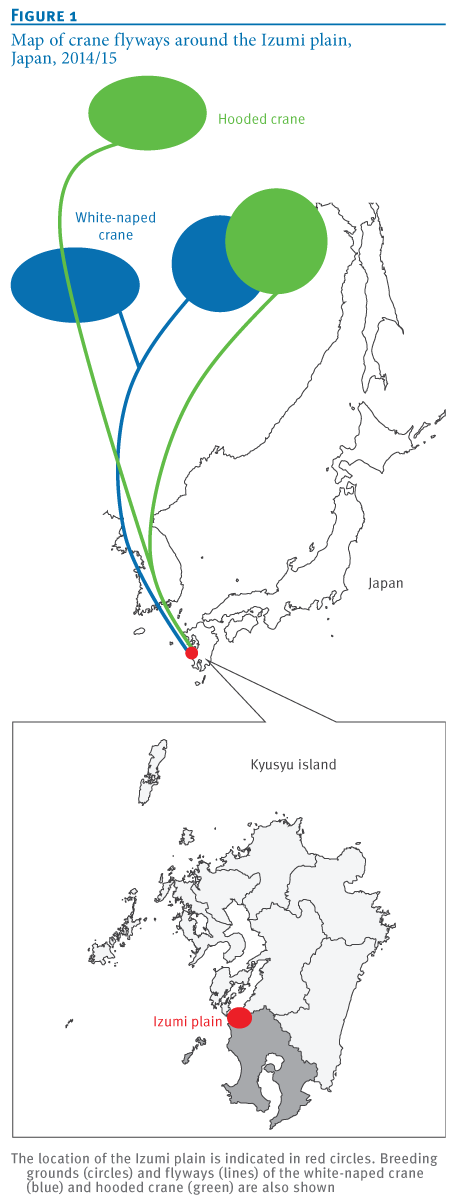
Both species spend their summers in Mongolia, Siberia, or Northwestern China - and of the roughly 10,000 hooded swans in the world - 80% overwinter in Izumi.


All of which serves as prelude to a Rapid Communications that appears in today’s Eurosurveillance that describes the discovery of at least 3 genetically distinct groups of the H5N8 virus.

Eurosurveillance, Volume 20, Issue 20, 21 May 2015

Rapid communications

Genetic diversity of highly pathogenic H5N8 avian influenza viruses at a single overwintering site of migratory birds in Japan, 2014/15

M Ozawa ()1,2,3,4, A Matsuu2,3,4, K Tokorozaki5, M Horie2,3, T Masatani2,3, H Nakagawa1, K Okuya1, T Kawabata2, S Toda5


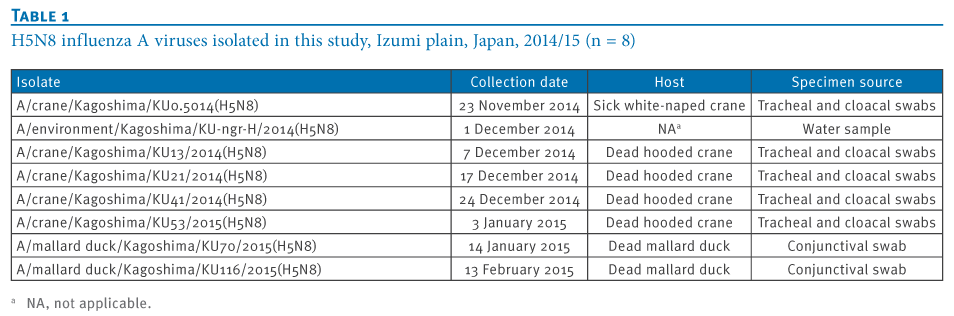
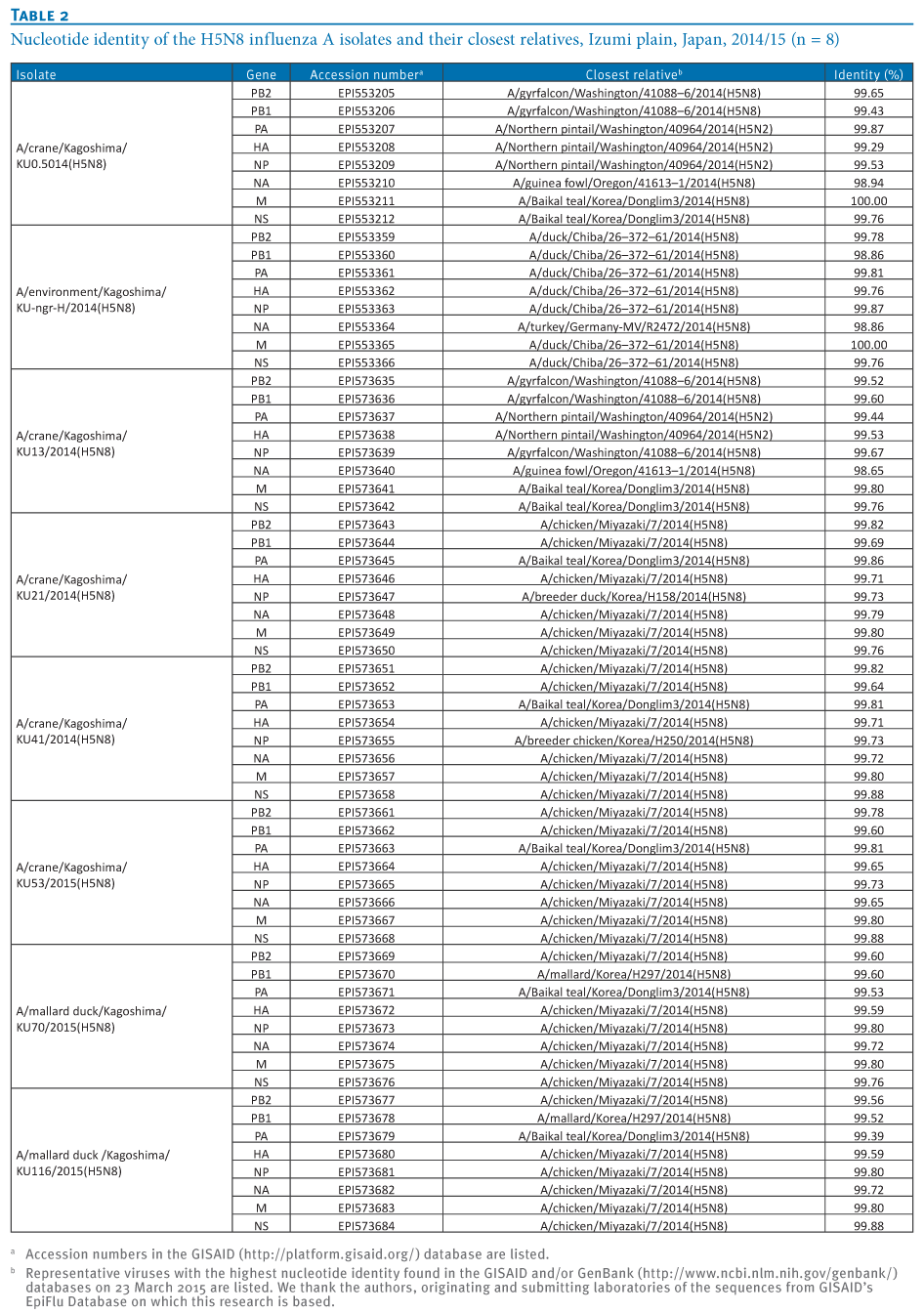
We isolated eight highly pathogenic H5N8 avian influenza viruses (H5N8 HPAIVs) in the 2014/15 winter season at an overwintering site of migratory birds in Japan. Genetic analyses revealed that these isolates were divided into three groups, indicating the co-circulation of three genetic groups of H5N8 HPAIV among these migratory birds. These results also imply the possibility of global redistribution of the H5N8 HPAIVs via the migration of these birds next winter.


In January 2014, newly discovered highly pathogenic H5N8 avian influenza viruses (H5N8 HPAIVs) caused outbreaks in poultry and wild birds in South Korea [1], although their ancestor had been isolated in China in 2013 [2]. Thereafter, these viruses have been circulating in both avian populations in South Korea [3,4] and sporadically in neighbouring countries, including China and Japan. Since November 2014, H5N8 HPAIVs have also appeared in poultry and wild birds in Europe [5,6]. Genetic analyses revealed that these isolates were closely related to the H5N8 viruses circulating in Korean birds. More recently, genetically similar HPAIVs also caused outbreaks in various avian species in North America [7]. These findings suggest that the H5N8 viruses have circulated and evolved in migratory birds.

<SNIP>

Phylogenetic analysis

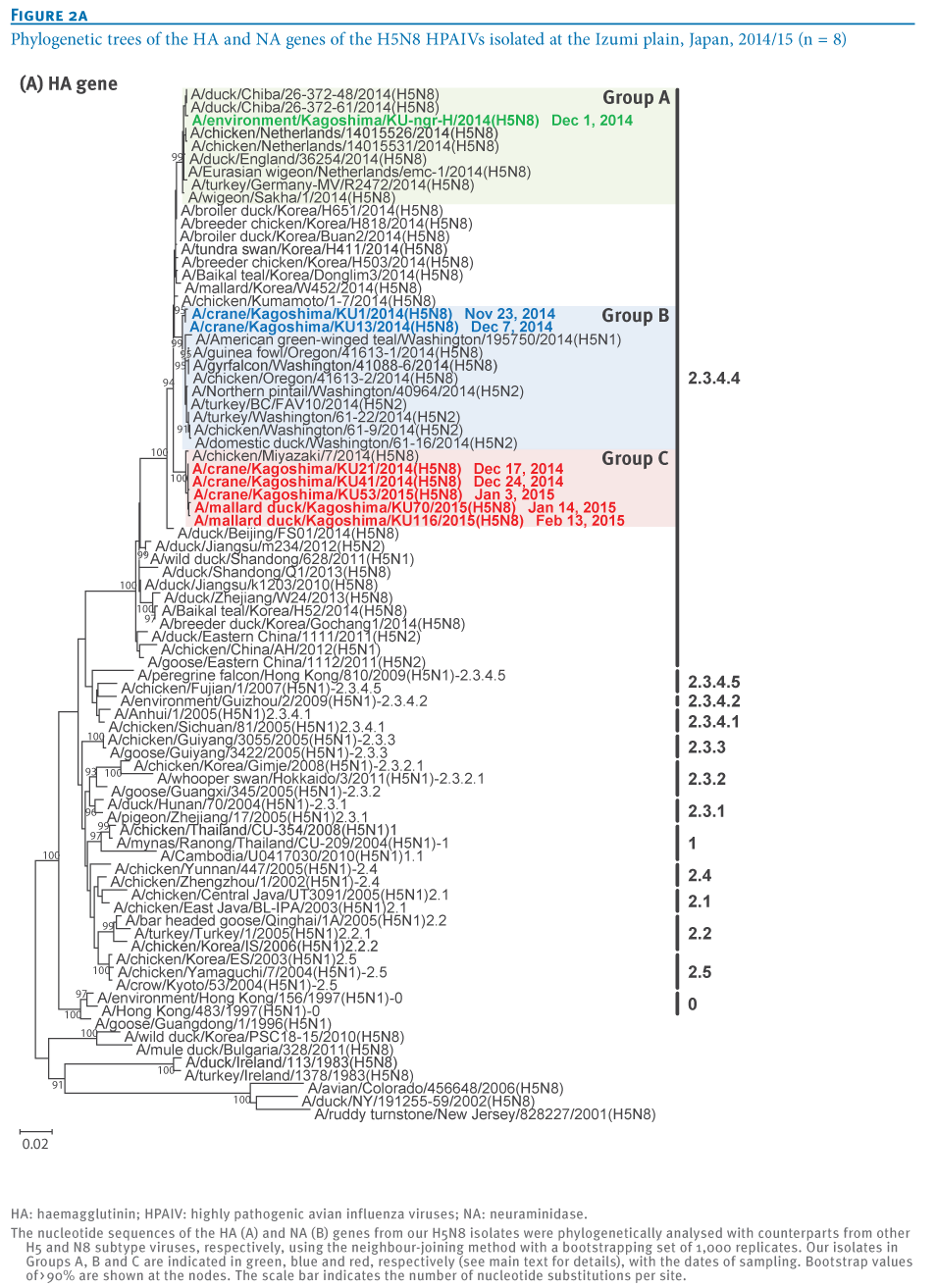
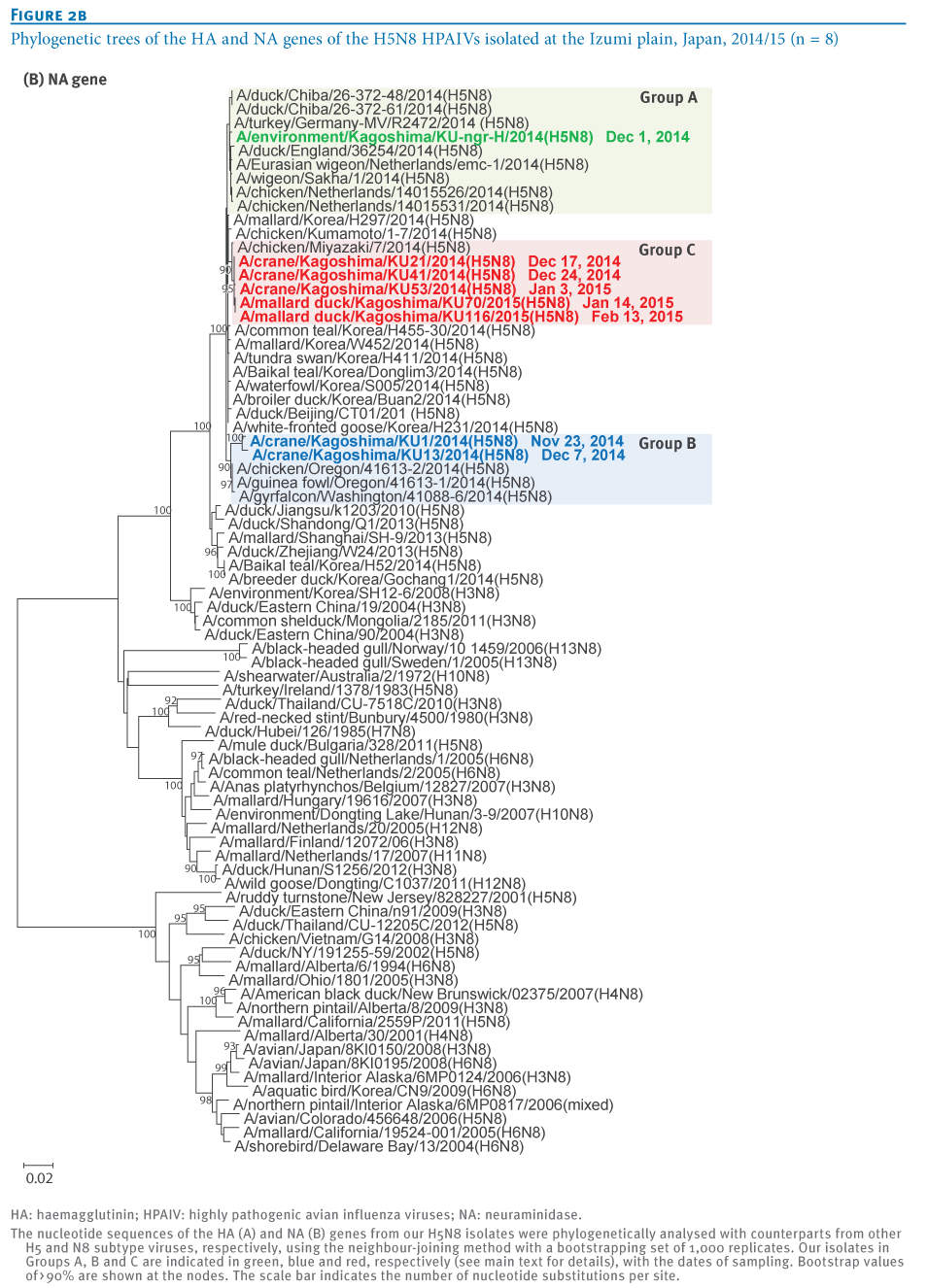
To understand the genetic relationship between our isolates and related viruses, the HA and neuraminidase (NA) genes were phylogenetically analysed with counterparts from the representative avian influenza H5 (Figure 2A) and N8 (Figure 2B) subtypes, respectively.

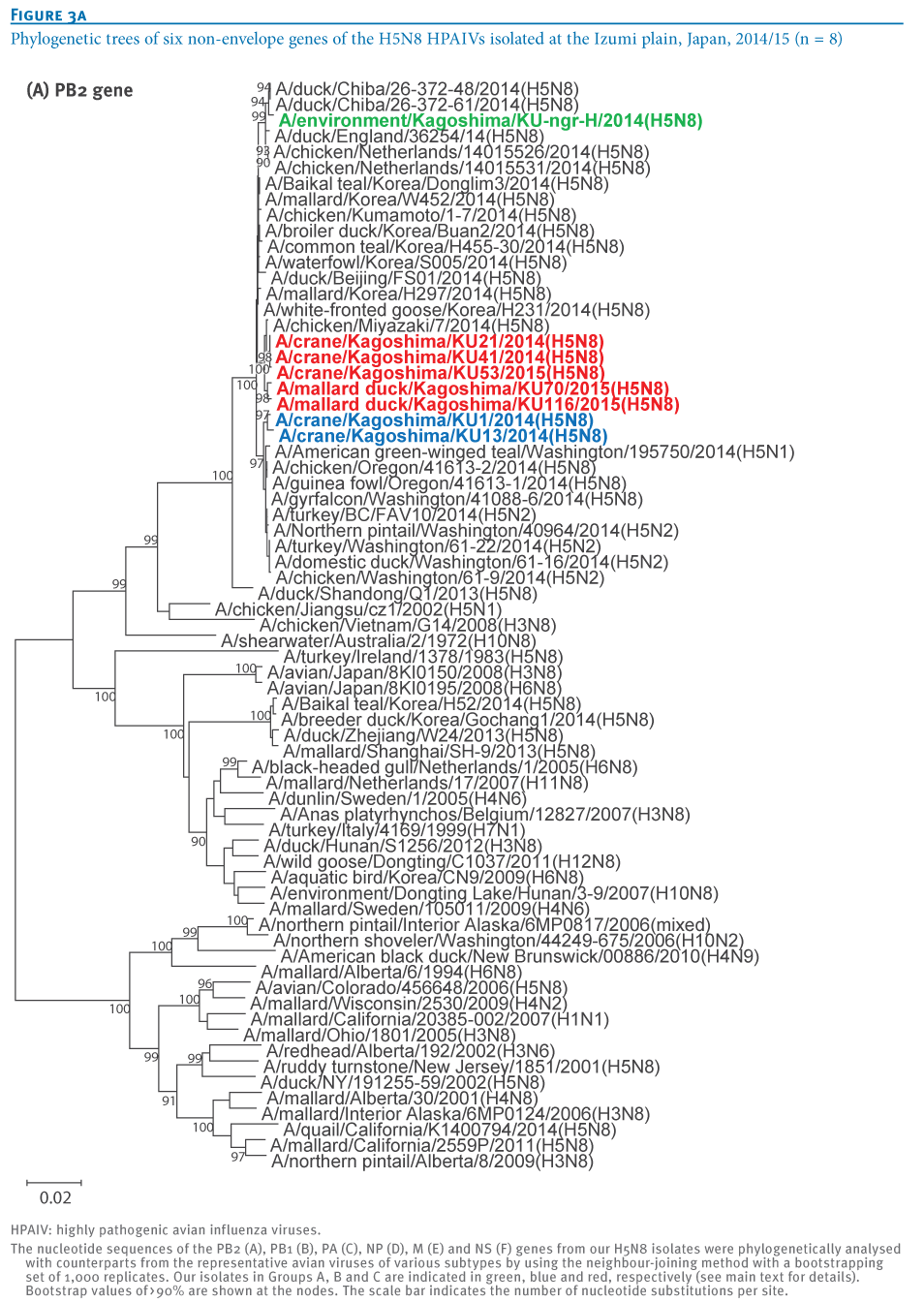
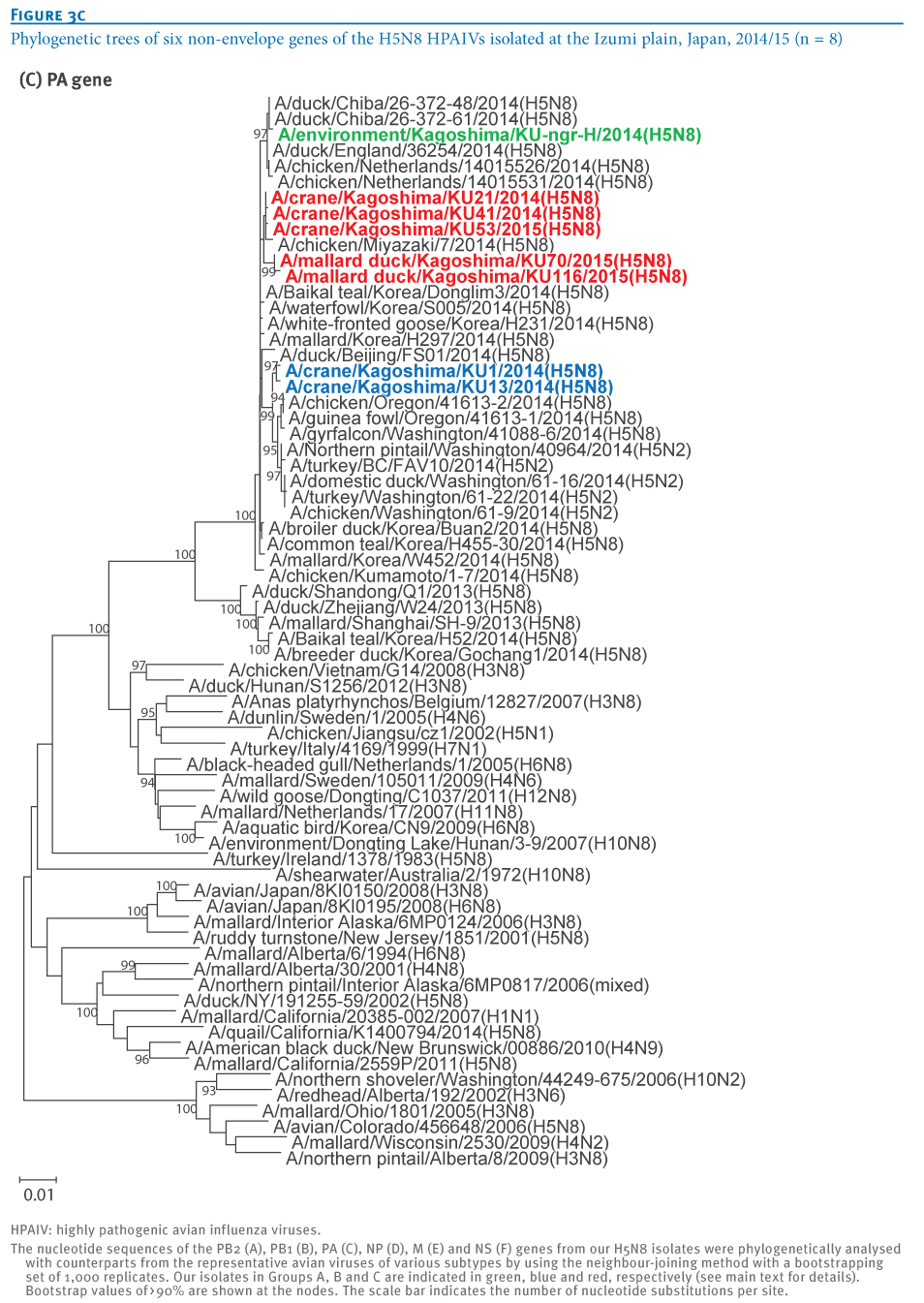
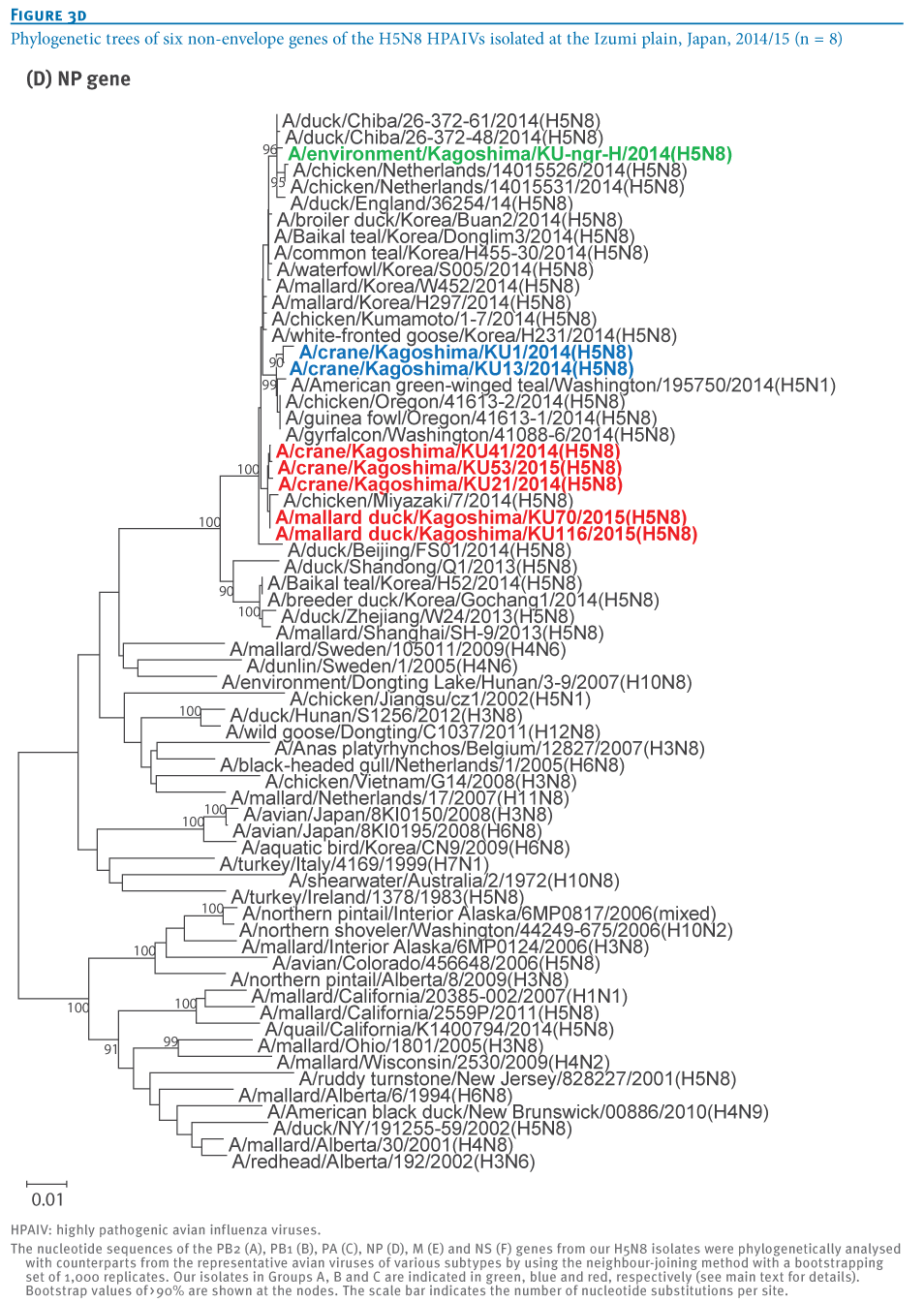
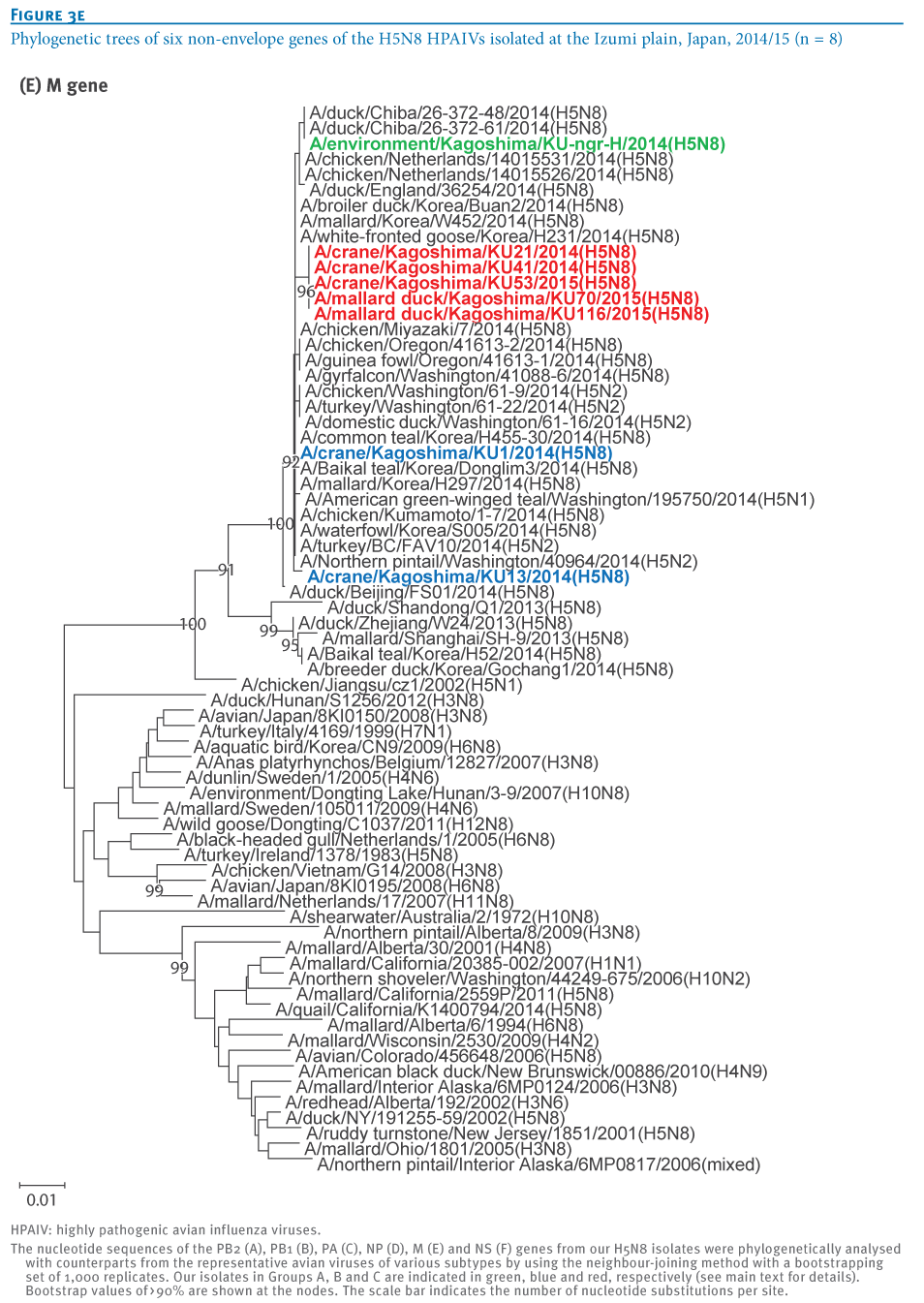
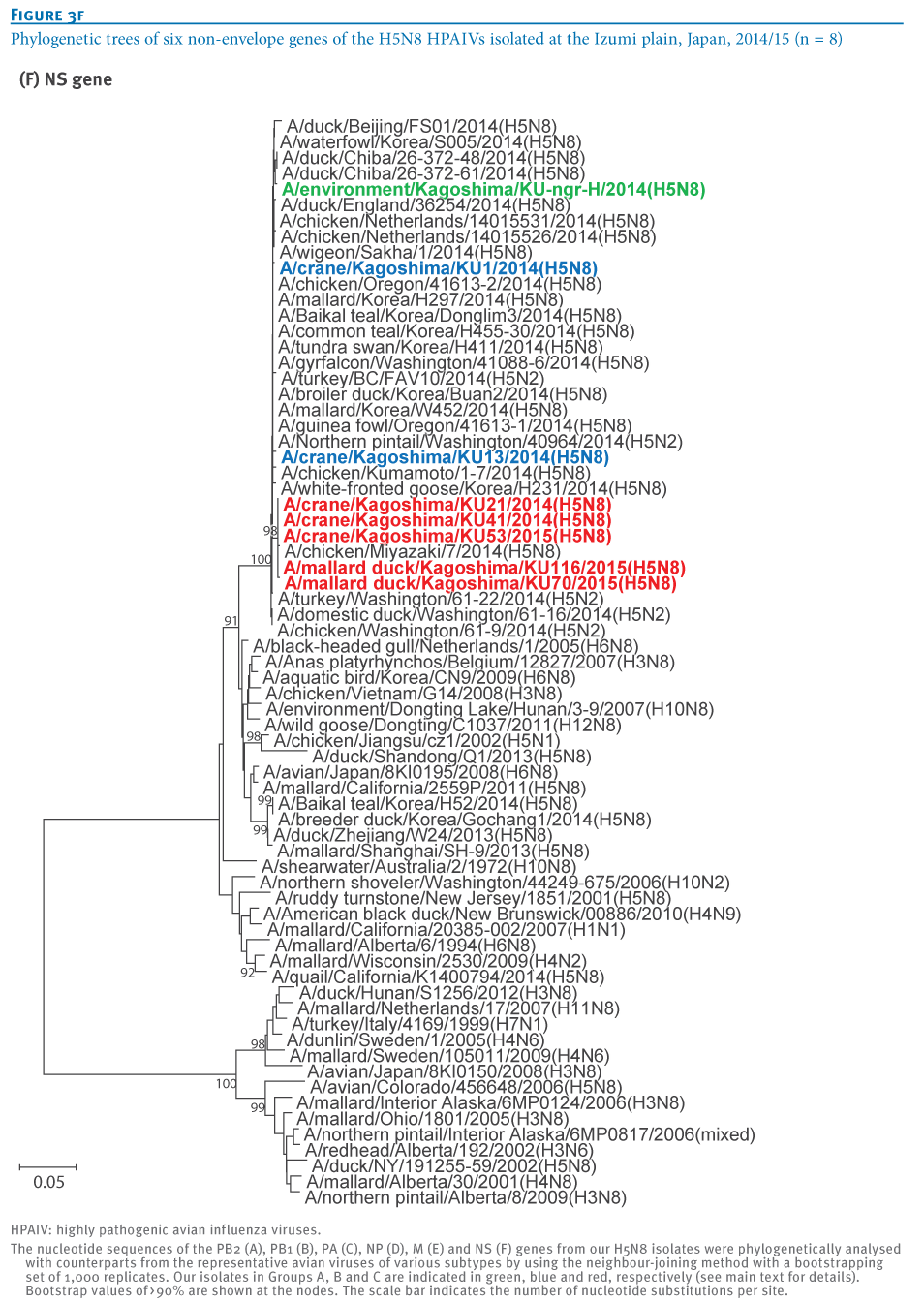
We found that the H5 genes from our eight isolates belonged to clade 2.3.4.4 and were genetically divided into three groups. The water isolate, A/environment/Kagoshima/KU-ngr-H/2014(H5N8), fell into a phylogenetic cluster together with the European isolates and was closely related to two wild duck isolates in Japan (Group A, indicated in green in the Figures). The first and second crane isolates, A/crane/Kagoshima/KU1/2014(H5N8) and A/crane/Kagoshima/KU13/2014(H5N8), were genetically similar to the North American isolates (Group B, blue in the Figures). The HA genes of the rest of our isolates (Group C, red in the Figures), as well as a poultry isolate from Japan were clearly distinct from those of the other recent H5N8 isolates. These findings suggest that three genetically distinct groups of H5N8 HPAIVs were independently circulating among the migratory birds at the Izumi plain.

Intriguingly, the genetic grouping of our isolates matched broadly the dates of sampling; the forth to eighth isolates were categorised into Group C, while earlier isolates were categorised into Group A or B. To determine whether this virus group has genetic characteristics that become predominant among the migratory birds over the remaining virus groups, further investigation would be needed.

<SNIP>

No mutations were found that are known to confer the ability to infect mammalian hosts or to provide resistance against anti-influenza drugs to avian influenza viruses, with the exception of an asparagine at position 31 in the M2 protein, which confers resistance to the M2 ion channel blocker amantadine [11].


Conclusion


We isolated eight H5N8 HPAIVs from migratory birds and the water in their environment at the Izumi plain in southern Japan. Based on their genome sequences, these isolates were genetically divided into three groups. These results indicate the co-circulation of at least three genetic groups of H5N8 HPAIVs among the migratory birds overwintering at a single site in Japan. These H5N8 HPAIVs are most likely to be derived from wild ducks [12], rather than from cranes whose flyways were restricted to East Asian countries (Figure 1A). These findings also imply the possibility of global redistribution of the H5N8 HPAIVs via migration of these ducks next winter.


The birds that overwintered in Japan, Korea, and the Pacific Northwest last fall are now gathered in their summer breeding sites in northern China, Mongolia and Siberia -  sharing lakes, ponds, and streams and no doubt, the occasional avian virus -  and will be winging their way south again in a few short months. 


What new viral variants, clades, or reassortments we will see next fall and winter when they return is anyone’s guess.

Monday, May 11, 2015

USDA Reports H5N8 In Backyard Flock In Indiana (Updated)

image


 UPDATED:  Now includes APHIS Report (see bottom)


# 10,036


There’s not a lot of information available yet, but the USDA’s APHIS website is now showing that a flock of mixed poultry in Whitley County, Indiana  (just west of Ft. Wayne) has tested positive for the HPAI H5N8 virus. 


This not only adds another state to the list, this is the farthest east we’ve seen HPAI H5N8, and the first appearance in the Mississippi Flyway. .

image

Previously, we’ve seen H5N8 in a small number of poultry flocks in California (2) and Oregon (1), and in wild birds collected from  WA, CA, UT, ID, and NV – all part of the Pacific Flyway. Of the 60 wild birds sampled to date (05/05/15), 1/3rd (n=20) have tested positive for H5N8, while the rest have had HPAI H5N2.


HPAI H5N8 presumably arrived via migratory birds in the Pacific Northwest last fall, and quickly reassorted with North American avian viruses and produced a very hearty hybrid; the H5N2 virus which has spread rapidly across half the nation.


Both viruses are capable of being carried by wild and migratory birds, both can inflict heavy damage to the poultry industry, and both could potentially reassort again to produce even more hybrid viruses. Exactly why H5N2 has spread faster, and farther, than H5N8 isn’t really known.


We will probably see additional updates from APHIS, and from some of the more heavily impacted states, later today.


*  *  *  UPDATED *  *  *


APHIS has now posted the following statement on their website:


USDA Confirms Highly Pathogenic H5N8 Avian Influenza in Backyard Flock in Indiana

Published: May 11, 2015

Print

CDC considers the risk to people from these HPAI H5 infections in wild birds, backyard flocks and commercial poultry, to be low

WASHINGTON, May 11, 2015 -- The United States Department of Agriculture’s (USDA) Animal and Plant Health Inspection Service (APHIS) has confirmed the presence of highly pathogenic H5N8 avian influenza (HPAI) in a backyard mixed-poultry flock in Whitley County, Indiana.  While there have been multiple detections of HPAI H5N2 in the Mississippi flyway, this is the first finding of HPAI H5N8 in the Mississippi flyway, which previously had only been confirmed in the Pacific flyway.  CDC considers the risk to people from these HPAI H5 infections in wild birds, backyard flocks and commercial poultry, to be low.  No human infections with the virus have been detected at this time.

Samples from the flock, which experienced increased mortality, were tested at the Indiana Animal Disease Diagnostic Laboratory and the APHIS National Veterinary Services Laboratories in Ames, Iowa confirmed the findings. APHIS is working closely with the Indiana State Board of Animal Health to respond to the finding. State officials quarantined the affected premises and birds on the property will be depopulated to prevent the spread of the disease.

(Continue . . . )


Monday, May 04, 2015

OIE Notification Of First H5N8 Detection In Canadian Wild Bird

image


# 10,006


Just about two weeks after the outbreak of HPAI H5N2 in British Columbia’s Fraser Valley began we saw the first reports of HPAI H5N8 & H5N2 Detected In Washington State Wild Birds, recorded in Whatcom County along the Canadian Border only a few miles south of the infected Canadian poultry farms.

image

Whatcom County, WA


While only a closely related H5N2 strain has been reported in Canadian poultry and wild birds, the assumption has been pretty much that H5N8 must have at least passed through the area last fall, even though it had not shown up in surveillance.


On the American side of the border, of 59 wild bird isolates identified thus far, 18 have been H5N8, 3 have been H5N1, and the rest have been H5N2.


Today the OIE has announced that a juvenile American Wigeon, collected near Abbotsford, BC in February (very near the Whatcom County border), has tested positive for a wholly Eurasian H5N8 virus, very similar to the one collected in Washington State (see  USGS: Genetic Analysis Of North American Reassortant H5N1 Virus From Washington State).


You’ll note that although we are just now hearing about it, this bird was collected in February. The surprise here isn’t that H5N8 has finally been detected in Canada, but that it has taken this long to confirm it. 


This from the OIE.


image

Source of the outbreak(s) or origin of infection

  • Contact with wild species

Epidemiological comments


Canada conducts surveillance for avian influenza in wild birds. In addition, enhanced surveillance was undertaken in wild birds in response to the event in poultry (H5N2) in the province of British Columbia (BC) in December 2014.

This sample was collected in February 2015 as part of the enhanced surveillance undertaken by BC. The sample was received from the BC provincial laboratory by the Canadian Food inspection Agency (CFIA) National Centre for Foreign Animal Disease (NCFAD) on 25 March 2015 for further testing. The results confirmed HPAI H5N8 virus with an IVPI of 2.73. Sequencing of the H5N8 virus isolated indicates it is a wholly Eurasian H5N8 and very similar to the H5N8 virus that was isolated from the gyrfalcon in Washington State in December 2014.

This is the first report of a H5N8 HPAI virus detection in Canada. This virus has NOT been found in commercial poultry anywhere in Canada. In accordance with the Terrestrial Animal Health Code Article 10.4.1, Member Countries should not impose bans on the trade of poultry commodities in response to notification of influenza A virus in wild birds.

Monday, March 23, 2015

OIE Notification: H5N8 In Sweden

image
Sweden In Relation to Europe


# 9855


In a follow up to Friday’s report (see Stockholm: Two Dead Swans – H5N8 Suspected), we have the official OIE Notification, which indicates the two swans were found in different locations, roughly 5km apart. 


image

image

Source of the outbreak(s) or origin of infection

  • Unknown or inconclusive

Epidemiological comments

Ten mute swans found dead in central Stockholm (two batches of five swans each) were post-mortem examined and tested for avian influenza virus as part of routine surveillance. The first five examined were all negative for avian influenza virus and post-mortem exam followed by chemical analysis confirmed lead poisoning. The last five were all positive for influenza A virus (matrix-gene positive). None had macroscopic lesions suggesting highly pathogenic avian influenza infection, whereas macroscopic lesions suggesting possible lead poisoning were found in four, and lesions suggesting traumatic injury found in the fifth.

Two of the birds were positive for H5 and were subsequently typed as highly pathogenic avian influenza H5N8. There are no commercial poultry holdings in the near vicinity. In accordance with the OIE Terrestrial Animal Health Code, Article 10.4.1, point 8, this outbreak does not change the disease free status of Sweden as the birds involved in this outbreak are wild mute swans and do not fall within the OIE definition of poultry.

Thursday, March 19, 2015

EID Journal: Three Looks At The H5N8 Virus In Europe

image

H5N8 Branching Out To Europe & Japan


# 9847


The EID Journal has posted four articles today on the H5N8 virus, three of which are closely related enough to deserve mention in the same blog post.   All three find the H5N8 virus detected in England, Germany, and The Netherlands to be closely related to the Asian/Korean strains.


Despite the reservations expressed by the UN CMS/FAO Co-Convened Scientific Task Force on Avian Influenza and Wild Birds and others over the spread of the virus via migratory birds, all three papers mention the strong possibilty that wild birds are behind its rapid geographic expansion.


Volume 21, Number 5—May 2015
Dispatch

Influenza A(H5N8) Virus Similar to Strain in Korea Causing Highly Pathogenic Avian Influenza in Germany

Timm HarderComments to Author , Sebastian Maurer-Stroh, Anne Pohlmann, Elke Starick, Detlef Höreth-Böntgen, Karin Albrecht, Gunter Pannwitz, Jens Teifke, Vithiagaran Gunalan, Raphael T.C. Lee, Carola Sauter-Louis, Timo Homeier, Christoph Staubach, Carola Wolf, Günter Strebelow, Dirk Höper, Christian Grund, Franz J. Conraths, Thomas C. Mettenleiter, and Martin Beer

 Abstract

Highly pathogenic avian influenza (H5N8) virus, like the recently described H5N8 strain from Korea, was detected in November 2014 in farmed turkeys and in a healthy common teal (Anas crecca) in northeastern Germany. Infected wild birds possibly introduced this virus.

Conclusions

The HPAI outbreak in northeastern Germany in November 2014 resulted from an HPAI (H5N8) subtype virus, represented by isolate AR2472/14, which is closely related to H5N8 subtype viruses that have hitherto been confined to the Far East. Fourteen unique coding mutations of AR2472/14 show differences between this virus and previous isolates from South Korea, but the mutations are shared with the recent H5N8 isolate A/duck/Chiba/26-372-61/2014 from Japan. Epidemiologic and phylogenetic data collected so far are insufficient to establish definite pathways of introduction into Germany. All possible routes, including relay transmission by subclinically infected wild birds, must be thoroughly examined. Enhanced active monitoring of sites frequented by aquatic wild birds and waterfowl is also recommended.


Volume 21, Number 5—May 2015
Dispatch

Full-Genome Sequence of Influenza A(H5N8) Virus in Poultry Linked to Sequences of Strains from Asia, the Netherlands, 2014

Ruth BouwstraComments to Author , Rene Heutink, Alex Bossers, Frank Harders, Guus Koch, and Armin Elbers

Abstract

Genetic analyses of highly pathogenic avian influenza A(H5N8) virus from the Netherlands, and comparison with strains from Europe, South Korea, and Japan, showed a close relation. Data suggest the strains from Europe were probably carried to the Netherlands by migratory wild birds from Asia, possibly through overlapping flyways and common breeding sites in Siberia.

Conclusions

Genetic analysis of influenza A(H5N8) virus from the Netherlands indicates that the virus probably was spread by migratory wild birds from Asia, possibly through overlapping flyways and common breeding sites in Siberia. In addition to the outbreak in the Netherlands, several other outbreaks of HPAI (H5N8) virus infections were reported in Europe at the end of 2014 after exponentially increasing deaths occurred in chicken and turkey flocks. Genetic sequences submitted to the EpiFlu database indicated that the viruses from Europe showed a strong similarity to viruses isolated earlier in 2014 in South Korea, China, and Japan.

An H5N8 virus isolated from a wigeon in Russia in September 2014 is located in the phylogenetic tree near the node of all sequences for H5N8 viruses from Europe. In regard to time, this location fits the hypothesized route of H5N8 virus introduction into Europe. Furthermore, for several reasons, it is highly likely that the introduction of HPAI (H5N8) virus into the indoor-layer farm in the Netherlands occurred via indirect contact. First, despite intensive monitoring, H5N8 viruses have never been detected in commercial poultry or wild birds in the Netherlands. Second, when the virus was detected, the Netherlands had no direct trade contact with other European countries or Asia that might explain a route of introduction. Third, because of the severity of disease in galliforms, outbreaks of H5N8 in the Netherlands before November 2014 would have been noticed.


Volume 21, Number 5—May 2015
Dispatch

Genetic Characterization of Highly Pathogenic Avian Influenza (H5N8) Virus from Domestic Ducks, England, November 2014

Amanda HannaComments to Author , Jill Banks, Denise A. Marston, Richard J. Ellis, Sharon M. Brookes, and Ian H. Brown

Abstract

Genetic sequences of a highly pathogenic avian influenza (H5N8) virus in England have high homology to those detected in mainland Europe and Asia during 2014. Genetic characterization suggests this virus is an avian-adapted virus without specific affinity for zoonoses. Spatio-temporal detections of H5N8 imply a role for wild birds in virus spread.

Conclusions

The genome of the H5N8 virus isolated in England suggests that it is still predominantly an avian-adapted virus, without any specific increased affinity for humans. Close genetic homology among the viral genes of the H5N8 viruses detected in England, the Netherlands, and Germany suggest they share a common ancestor with the recent H5N8 viruses isolated from wild ducks in Japan, a result of reassortment estimated to have occurred in June 2014. Reliable interpretation of the topology of the European and Japanese cluster cannot be made with these similar sequences. Phylogenetic analysis of sequences from more viruses will help to resolve these relationships. Detection of H5N8 (HPAI) viruses in 3 countries in Europe over a short time period in different poultry species without the establishment of clear epidemiologic links implicates a role for wild birds in spreading of viruses. The potential for further dissemination of HPAI (H5N8) viruses in Europe is a threat to poultry. Viral sequence analysis from new outbreaks is recommended to monitor virus evolution, understand risk pathways for introduction, and assess the emergence of mutations that may be relevant for veterinary and public health.

Tuesday, March 17, 2015

Virology: Pathogenesis Of Avian A/H5N8 In Ferrets

image


# 9836


Despite being closely related to avian virus subtypes (H5N1, H5N6) that have produced serious morbidity and mortality in humans, the recently emerged H5N8 virus which has spread to both Europe and North America (see EID Journal: Novel Eurasian HPAI A H5 Viruses in Wild Birds – Washington, USA)  has never been linked to human infection or illness. 


Although not currently considered a serious threat to human health threat, the CDC has issued specific guidance documents for dealing with those who may have been exposed (see CDC Interim Guidance For Testing For Novel Flu & CDC Interim Guidance On Antiviral Chemoprophylaxis For Persons With Exposure To Avian Flu).


Despite the reassuring anecdotal data to date, it is important to understand the pathogenesis of this virus in birds and mammals, with an eye towards understanding how the threat may change over time.  


While humans have been so far unaffected, we have seen reports of dogs being infected with H5N8 (see MAFRA: H5N8 Antibodies Detected In South Korean Dogs (Again)).   The ability to infect canines does not automatically make it a human threat, but it does raise some concerns (see Study: Dogs As Potential `Mixing Vessels’ For Influenza).


Although not perfect, ferrets are considered a reasonable mammalian substitute for humans when testing respiratory viruses because their lung physiology is similar, and because they cough and sneeze when infected, very much as humans do.


All of which brings us to a new study (most of which, alas, is behind a pay wall) that looks at the pathogenesis of two Korean strains of H5N8 challenged ferrets.  What we can tell from the abstract, however, is that ferrets intranasally inoculated suffered no mortality or serious respiratory symptoms, but that ferrets intratracheally infected with one of the H5N8 strains showed `dose-dependent mortality’.


Pathogenesis of novel reassortant avian influenza virus A (H5N8) Isolates in the ferret 

Heui Man Kim1, 2, , Chi-Kyeong Kim1, 3, , Nam-Joo Lee, Hyuk Chu, Chun Kang, Kisoon Kim, Joo-Yeon Lee,

doi:10.1016/j.virol.2015.02.042


Highlights

•  Outbreaks of HAPI H5N8 occurred in 2014, and spread to poultry farms in Korea.

• We evaluated the pathogenesis of H5N8 viruses in ferrets.

• Two Korean H5N8 strains did not induce mortality in intranasal challenged ferrets.

Abstract

Outbreaks of avian influenza virus H5N8 first occurred in 2014, and spread to poultry farms in Korea. Although there was no report of human infection by this subtype, it has the potential to threaten human public health. Therefore, we evaluated the pathogenesis of H5N8 viruses in ferrets. Two representative Korean H5N8 strains did not induce mortality and significant respiratory signs after an intranasal challenge in ferrets. However, ferrets intratracheally infected with A/broiler duck/Korea/Buan2/2014 virus showed dose-dependent mortality. Although the Korean H5N8 strains were classified as the HPAI virus, possessing multiple basic amino acids in the cleavage site of the hemagglutinin sequence, they did not produce pathogenesis in ferrets challenged intranasally, similar to the natural infection route. These results could be useful for public health by providing the pathogenic characterization of H5N8 viruses.


While it isn’t easy to infect a ferret, apparently if you provide a high enough dose, and place it far enough down the respiratory tract, it is possible.  Whether these same (unlikely to occur) conditions would elicit the same response in humans is unknown, but it is possible.

 
Although it is tempting to relegate H5N8 to the `only a threat to poultry’ column, the simple fact is: viruses constantly change. 


We’ve already seen multiple strains, new clades, and additional reassortants (H5N2, H5N3, H5N1) emerge since the H5N8 virus first appeared in early 2014, and more are undoubtedly on the horizon.  How they will behave, and the threat they pose to humans, may change as well. 


For now,  the news remains good, at least in so far as human infection is concerned. 


For the poultry industry, however, there is considerably less to celebrate. 


H5N8 and it’s reassortant H5N2 progeny appear to spread faster, and more easily by wild and migratory birds than any HPAI virus previously observed.  It is highly pathogenic in chickens, turkeys, and ducks - and if Taiwan’s outbreak is any indication (875 farms & counting) - once it enters a region’s poultry population, it is capable of spreading with alarming speed. 


All of which means that H5N8 (and its descendents) have staying power, and are likely to be with us for some time.

Wednesday, February 25, 2015

OIE Notification Of H5N8 On Hungarian Duck Farm

image

Credit NÉBIH


# 9754


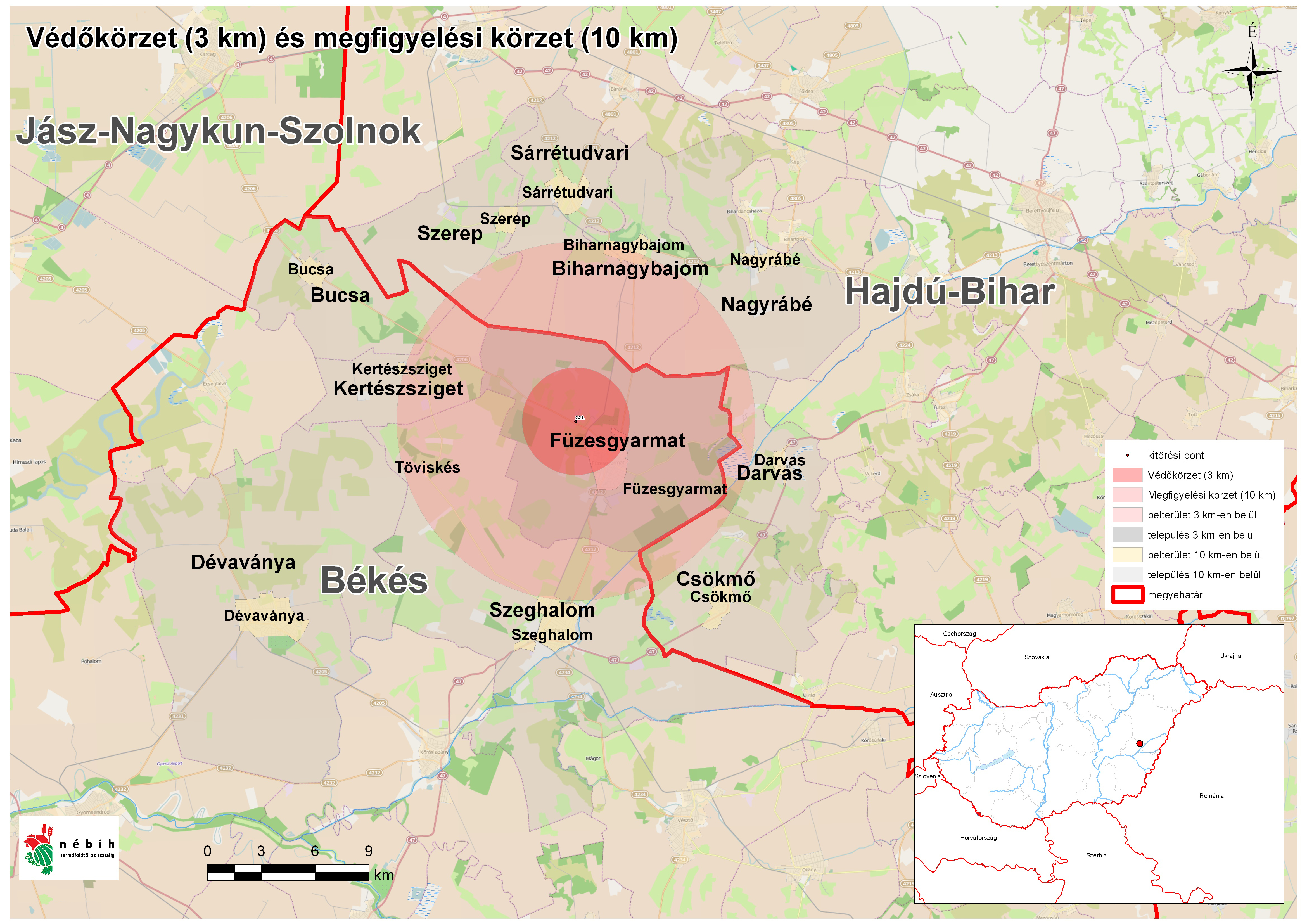
Yesterday, in HPAI Reported At Hungarian Duck Farm, I blogged about a preliminary report of what appeared to be HPAI H5 on a duck farm in Füzesgyarmati (see map above), in the southeastern part of Hungary (see map above).   Today we have confirmation via the following OIE report.


image

image

Affected population


On 23 February 2015, a suspicion of avian influenza was reported to the National Food Chain Safety Office. The local authority immediately visited the affected holding, which is located in Füzesgyarmat, in Békés County. 22,000 fattening ducks are kept in the holding. Neurological signs, nasal discharge and increased mortality were observed. Official samples were taken on the same day. On 24 February, the National Reference Laboratory confirmed avian influenza H5N8 strain. In the neighborhood of the affected holding, there are three contact holdings. All the birds kept in the affected and in the contact holdings will be killed and destroyed.

Epidemiological Comments

On 24 February, the National Reference Laboratory confirmed avian influenza virus H5N8 by RT-PCR and, on the next day, by sequencing partial HA and NA sequence fragments. The amino acid sequence at the hemagglutinin cleavage site is consistent with highly pathogenic avian influenza (HPAI). Preliminary results suggest that the sequences are very closely related to the Asian and also to the four European H5N8 HPAI virus sequences reported so far. Whole genome sequencing is in progress.

 Measures Applied

  • Control of wildlife reservoirs
  • Stamping out
  • Quarantine
  • Movement control inside the country
  • Screening
  • Zoning
  • Disinfection of infected premises/establishment(s)
  • Vaccination prohibited
  • No treatment of affected animals


Of the Highly Pathogenic Avian Influenza (HPAI) viruses that have emerged to date, H5N8 seems particularly well suited for long-distance traveling, having spread from Northeastern Asia to Europe, Japan, Taiwan, the Pacific Northwest, and into at least six western states in the US in less than a year.


Hungary lies within the NE/SW oriented Black Sea / Mediterranean Flyway, which runs from northern Russia to western and central Africa.  This flyway crosses south central Europe where H5N8 has recently been reported (Bulgaria & Italy), and across the Middle East and down to Nigeria – both regions having a history of H5N1.

image

Hungary’s location in the Flyway


You’ll notice that while these migratory bird flyways run essentially north to south – they overlap – which can allow for the lateral (east-west) movement of avian viruses over time as well.  Viruses that are endemic in the East Asia Australian Flyway could conceivably seep into the Central Asian Flyway, and from there move further west into the East African or Black Sea flyways.


We’ve looked at the role of migratory and wild birds in spreading influenza viruses many times, including several weeks ago in Erasmus Study On Role Of Migratory Birds In Spread Of Avian Flu,  and last fall in FAO Warns On H5N8’s Spread.


Although highly pathogenic in poultry, H5N8 has never been known to infect or cause illness in humans.  But as this virus is related to several H5 avian viruses (H5N1, H5N6) that are known infect humans, the CDC maintains a cautious attitude (see CDC Interim Guidance For Testing For Novel Flu).

Tuesday, February 10, 2015

Outbreaks Of H5N8 & FMD Continue To Plague South Korea

 image

Credit Japan’s MAFF


# 9696


With the Lunar New Year (Seollal in Korea) looming, authorities in South Korea are scrambling to try to contain recent outbreaks of avian (H5N8) influenza in poultry and FMD (Foot & Mouth Disease) in pigs.  


In recent days H5N8 was even found in the droppings of birds in the nation’s capital, Seoul. The first detection of HPAI in that city in a decade (see Korea Times Bird flu virus spreads to Seoul).


First this report from Korea JoongAng Daily, after which I’ll have a bit more.


Foot-and-mouth disease, avian flu strain authorities

Officials struggle to control viruses ahead of the Lunar New Year
Feb 11,2015

Quarantine authorities are scrambling to prevent the further spread of foot-and-mouth disease (FMD) and avian influenza (AI) a week before the Lunar New Year, one of the country’s biggest holidays that prompts mass travel.


Those efforts, however, have appeared to have little effect, with both viruses continuing to advance.

Hongseong County, South Chungcheong, the country’s largest pig-breeding region, has confirmed two outbreaks of FMD since Friday, the first in four years. After animals at one farm tested positive on Friday, FMD was confirmed at another site on Monday just 20 meters (65 feet) away.


There are currently 305 pig farms breeding a total of 494,000 pigs in Hongseong County. The last time the county saw an outbreak of the disease was in February 2011, when more than 50,000 pigs from 127 farms were culled, with damage adding up to 10.76 billion won ($9.82 million).

(Continue . . . )


FMD is a highly contagious viral disease that primarily afflicts cloven-hoofed animals (including cattle, sheep, goats, pigs, deer, etc.). Caused by a picornavirus, it has no relation to HFMD, which is a childhood disease in humans caused by a number of non-polio enteroviruses.


During the 2010-2011 FMD outbreak in South Korea, roughly 3.5 million animals were destroyed (151,425 cattle, 3,318,299 pigs, 8,071 goats, and 2,728 deer) and buried at more than four thousand locations around the country (EID Journal Control of Foot-and-Mouth  Disease during 2010–2011 Epidemic, South Korea).


Additionally, over the past year South Korea has culled roughly 15 million birds in their attempts to contain the recently (January 2014) emerged H5N8 virus.


While both diseases were thought under control, last summer we saw South Korea: Fresh Reports Of FMD & H5N8, scattered reports of both livestock diseases throughout the fall , and just last month authorities announced a  36 Hour Farm Lockdown To Halt AI & FMD.


FMD is endemic in many parts of the world (Africa, Asia, South America, some parts of Europe), but has been eradicated in many others.  The last outbreak of FMD in the United States was in 1929 – but vigilance is maintained to prevent its return.


image

Monday, February 02, 2015

MAFRA: H5N8 Antibodies Detected In South Korean Dogs (Again)

image

Spread of H5N8 in Korea – Credit Japan’s MAFF 


*** UPDATED ***


Although it certainly wasn’t clear from the kludgy machine translation of MAFRA’s statement, or the Xinhua News report cited in this blog, this English language report from the Korea Herald  suggests that this latest case may have been detected using rt-PCR (or other viral test method), not through serum antibodies.  

Hopefully we’ll get something a bit more authoritative to clarify matters. Until then, Caveat Lector. 

Avian influenza detected in dog

Published : 2015-02-02 21:47

Avian influenza was found in a dog on a farm in South Gyeongsang Province amid growing concerns that the disease could spread to other animals, officials said Monday.


The dog ― one of three at a duck farm in Goseong-gun, South Gyeongsang Province ― had antigens for the highly pathogenic H5N8 strain of bird flu, the Ministry of Agriculture, Food and Rural Affairs said. The farm was affected by the disease on Jan. 23.


This is the first time bird flu has been found in a dog in Korea through the detection of antigens, but antibodies for the virus were found in a dozen dogs at virus-affected farms in March last year. The detection of antibodies suggests an immune response to the virus, the ministry said.

(Continue . . . )


# 9660


Different viruses have an affinity for binding to, and infecting, different types of cells.  That is why most viruses are fairly selective as to what organ systems they attack, or even what species they can infect.  This explains why a virus might affect a dog, or a cat, or a bird, yet not affect humans. 


This species selectivity is known as its `host range'.


Most viruses generally have a fairly narrow host range (there are exceptions, of course.  Like rabies).  All of which means that avian influenza viruses tend to infect birds, and swine influenza viruses usually infect pigs, and that we pay special attention when ever we see one of these viruses `break the rules’.


The HPAI H5N8 virus, which came to prominence just over a year ago in South Korean poultry and wild birds, has spread remarkably well, now plaguing poultry operations on 3 continents. Although highly destructive in birds, this virus’s one saving grace has been its apparent inability to sicken humans.


I say `apparent inability’ because there has been precious little published on human seroprevalence studies among cullers, poultry workers, and others since the virus emerged last year. 


You may recall that during Korea’s H5N1 outbreaks early in the last decade they found 9 cullers (who received prophylactic Tamiflu ®)  that  went on to develope antibodies to the virus, even though none were symptomatic (see Avian Influenza A (H5N1) Virus Antibodies in Poultry Cullers, South Korea, 2003–2004).


We do know that dogs are susceptible to mild or subclinical infection with H5N8, something we saw reported twice last spring (see Korea Detects H5N8 Antibodies In Farm Dog & Korea Finds More Dogs With H5N8 Antibodies), and that is being reported once again today


First the slightly syntax-challenged translation of South Korea’s MAFRA  announcement, followed by a more easily read Xinhua report, after which I’ll return with a bit more.


Quarantine Division, AI in the dog (H5N8) virus detected confirmation

Added
2015-02-02 10:05:00


Agriculture, Forestry, Livestock Quarantine Division (Head of State otolith) said that the H5N8 virus is released from the two nasal passages are raised in the AI occurred last January 23, Gyeongnam Goseong material broiler duck farms.


Factory farms that slaughter for broiler ducks January 23 AI virus has been identified in the previous inspection, and thus farm AI virus was detected in one of my test result breeding dogs are three sampling time were all three had clinical symptoms, the other two antigens, antibodies

No contact is not being propagated as determined by between two dogs that are breeding farm inspection results generated AI * 2014 23 55 two farms in the confirmation H5 antibodies ** 2015 August 24, two tests both farms antibody not detected Agriculture, Forestry, Livestock Quarantine Division was urged to give careful not therefore believe that it is the AI virus has been confirmed in poultry contamination from infected dogs in the dog is not used to our chickens and ducks from the farm to feed.


S. Korea confirms dog infected with avian flu

Source: Xinhua | February 2, 2015, Monday | Online Edition

SOUTH Korea's agriculture ministry on Monday confirmed a dog at a duck farm has been infected with avian influenza.

The bird flu virus was found in a dog among three dogs at a duck farm in southeastern South Korea where the highly pathogenic H5N8 strain of virus was confirmed on Jan. 23, the Ministry of Agriculture, Food and Rural Affairs said at a briefing.

There have been no antigens nor antibodies found in two other dogs, reflecting no dog-to-dog transmission of the virus, the ministry said.

The three dogs, which the ministry estimated may have had infected ducks, were culled.

Since the first case of a dog being infected with the poultry virus in March 2014, there have been 55 dogs found with antibodies to the bird flu virus. The antibody means the immune system of the dogs eliminated the virus.

More than 1.8 million ducks and chicken have been culled since the latest outbreak of the bird flu was reported in September 2014.


H5N8 infection is believed to have been contracted through the consumption of infected birds, something we’ve seen before with both dogs and cats (see A Dog & Cat Flu Review).  New with this report is the announcement that at least 55 dogs in South Korea have now shown evidence of H5N8 antibodies, a four-fold increase over the number revealed last spring.


While it’s still a major leap from sparking antibodies in dogs to posing a human health threat, the ability for an avian flu virus to affect any mammalian species is considered a bit of a red flag.


This isn’t the first time we’ve seen a novel influenza virus jump to dogs from another species.

  • In 2004, the H3N8 equine influenza – a strain that has been around nearly a half century – suddenly jumped, and adapted to dogs, creating a new dog-specific (canine) lineage of H3N8.  Since then, H3N8 has continued to spread  among dogs, although it has never been known to infect humans.
  • And again from Korea, in 2008 the CDC’s EID Journal carried a report on a newly emerging canine flu jumping from an avian source (see Transmission of Avian Influenza Virus (H3N2) to Dogs). In 2011, we saw the plot thicken yet again, when it was announced that this canine H3N2 had jumped to cats (see Korea: Interspecies Transmission of Canine H3N2). 
  • And during the 2009 H1N1 pandemic, we saw cases of reverse zoonosis, where dogs (and cats) contracted the `humanized’ H1N1 virus from their human contacts (see US: Dog Tests Positive For H1N1)


This ability to be infected by more than one type of influenza virus also opens the door to the possibility that dogs could serve as a `mixing vessel’ for influenza viruses, through a process called Reassortment. 

image 

Reassortment, or `Shift’ occurs when a single host is simultaneously infected with two different influenza viruses.   When that happens, it is possible for viruses to swap parts of their genetic sequence, and create a new, hybrid virus.


While most of the time, this leads to an evolutionary failure, every once in awhile this process produces a viable, even highly competitive, new flu strain. 


Although pigs and birds are vastly better `mixing vessels’ for influenza than dogs or cats will ever be, companion animals are of particular concern because of how closely humans interact with them.  


Of course, if there is some – as yet unidentified - `species barrier’ that prevents H5 viruses from adapting well enough to humans to pose a serious threat, then all of this concern may be moot.  


Some scientists believe that may be a possibility (see Are Influenza Pandemic Viruses Members Of An Exclusive Club?), but few are willing to gamble on our being that lucky. 


On Friday, because of the recent arrival of HPAI H5 (H5N8, H5N2 & a `new’ H5N1) into North American birds, the CDC prudently issued two pieces of interim guidance (see links below), that have this to say about the risks posed by HPAI H5 viruses:


The appearance of newly detected avian influenza A H5 viruses in North America may increase the likelihood of human infection with these viruses in the United States. Because these newly identified avian influenza A H5 viruses are related to avian influenza A viruses associated with severe disease in humans (e.g., highly pathogenic Asian-lineage avian influenza A (H5N1) virus), they should be regarded as having the potential to cause severe disease in humans until shown otherwise.


An acknowledgment that not only do viruses change over time, so can our understanding of their abilities and threats. 


For more, see:

CDC Interim Guidance For Testing For Novel Flu

CDC Interim Guidance On Antiviral Chemoprophylaxis For Persons With Exposure To Avian Flu

Saturday, January 31, 2015

Nevada Reports HPAI H5N8 in Wild Bird

image


# 9651


Nevada becomes the sixth western state to report HPAI H5 in wild birds this winter, as we learn from this release from the Nevada Department of Agriculture. 


Dept. of Ag Says Highly Pathogenic Avian Flu Found in Nevada

Posted: Jan 30, 2015 7:57 PM EST Updated: Jan 30, 2015 7:57 PM EST

From the Nevada Department of Agriculture:

The Nevada Department of Agriculture (NDA) confirms the first case of Highly Pathogenic Avian Influenza (HPAI) was found in Nevada. HPAI is a virus that is highly contagious among birds, and can be deadly to them. This strain (H5N8) has not been shown to cause any human infection.


The infected bird was a female mallard found in Lincoln County on January 23, 2015. The bird was then taken to the California Animal Health & Food Safety Laboratory, where it tested positive for HPAI.


NDA will be working with the United States Department of Agriculture's (USDA) Animal and Plant Health Inspection Service (APHIS) to monitor the situation. HPAI was confirmed in a commercial turkey flock in California, other cases were reported in Oregon, Washington and Idaho.


“So far this is an isolated case,” said Nevada State Veterinarian Michael Greenlee. “If commercial poultry producers or bird owners are concerned about the possible spread to domestic foul, they need to take the proper steps to limit exposure. Prevent contact between their birds and wild birds.”


If you see a sick bird or an unusual bird death, contact officials immediately. If contact occurs, wash hands with soap and water, and change clothing before having any contact with healthy domestic poultry and birds.


HPAI would have significant economic impacts if detected in U.S. domestic poultry. Commercial poultry producers should follow strict biosecurity practices and raise their birds in very controlled environments.


Call USDA's toll-free number at 1-866-536-7593 if there is concern about sick or dying birds. Biosecurity practices for backyard flocks can be found at healthybirds.aphis.usda.gov.


So far only one commercial poultry producer has been affected in the United States (see APHIS: H5N8 Infects California Commercial Turkey Farm), but a small number of backyard flocks have been affected.  While not updated with this latest Nevada detection, the USDA’s Update on Avian Influenza Findings in the Pacific Flyway (Last Modified: Jan 30, 2015) shows the following cases.

image


Since November we’ve seen H5N8 and/or H5N2 turn up in six western states as well as in British Columbia – all of which lie either beneath, or adjacent to,  the Pacific Flyway  Although primarily north-south migratory routes - migratory flyways overlap – providing opportunities for lateral (east-west) spread of avian viruses as well.


image

The H5N8 virus has never been known to infect and sicken humans, so for now, it is considered primarily a threat to poultry operations.  The HPAI H5 outbreaks in Taiwan this winter have already affected more than 500 farms, and have caused millions of dollars in losses, and so poultry producers in North America are urged to increase their biosecurity measures.


.

Monday, January 26, 2015

Taiwan CDC: Genetic Analysis Of H5N2/H5N8

Photo: ©FAO/Tariq Tinazay

Credit FAO 


# 9627


Despite the fearsome reputation of H5N1 as a threat to human health, other H5 avian viruses have demonstrated a wide range of pathogenicity in people. Even among H5N1 clades, not all viruses are created equal. We’ve seen considerable variability in that subtype’s ability to infect, and kill around the globe (see Differences In Virulence Between Closely Related H5N1 Strains).


In Bangladesh, only 1 (14%) of  7 known H5N1 cases has died, while in Cambodia 37 of 56 (66%) have succumbed. In Egypt, the CFR is running about 35%, while in Indonesia, it is a stratospheric 83%.


Although there are likely many factors involved in causing this disparity in CFRs – including quality of, and delays in seeking medical care – it suggests that the H5N1 virus may be more virulent in some regions of the world than in others.


The recently emerged H5N6 is known to have killed at least two people (see WHO GAR Update – H5N6 In China), but the (old) H5N2 virus appears to have – at most – produced antibodies in a handful of poultry workers and The Human Risk From H5N2 Is Considered Low.


Over the past year we’ve watched the emergence of a new, robust Highly Pathogenic (in birds) H5N8 virus that has spawned several other reassortant subtypes – including a new H5N2 – which have spread quickly via migratory birds to poultry farms across Korea, China, Taiwan, Japan and have even made it into Europe and the Pacific Northwest.


Despite a good deal of infected-poultry-to-human contact, we’ve not seen any evidence of these new subtypes causing illness in humans.


Granted, cullers are using PPEs and some are probably receiving prophylactic antivirals, but many poultry workers have had unprotected exposure prior to detection and culling, and none have (as yet) become sick. Despite this reassuring track record, Taiwan public health authorities are monitoring nearly 3,000 people who have been exposed.


Below you’ll find a statement by Taiwan’s CDC on recent genetic analysis of their recently arrived H5N8 and H5N2 subtypes,  that cautiously finds them to pose little threat to human health.


Gene sequence alignment of avian flu viruses shows transmission still limited to poultry; Taiwan CDC continues to closely monitor outbreak situation to ensure health and wellbeing of people in Taiwan ( 2015-01-26 )

In the afternoon of January 23, 2015, the Taiwan Centers for Disease Control obtained the genome sequences of the H5N2 and H5N8 viruses from the Council of Agriculture and submitted it to the National Influenza Center for gene sequence alignment.  The results showed that both the H5N2 and H5N8 viruses are of avian origin.  Based on the sequence data, the Taiwanese viruses were identified as closely related to the Japanese, the American, the Canadian, the German and the Republic of Korea H5N8 viruses. 

Unlike the H7N9 virus, the H5N8 virus does not replicate well in mammalian cells and is not as fatal.  Although several H5N8 outbreaks have been reported many countries around the world, no evidence of bird-to-human transmission has been found.

Taiwan CDC once again emphasizes that the H5N2 and H5N8 viruses are currently still limited to transmission among poultry and no bird-to-human transmission has occurred. As for treatment, the US Centers for Disease Control (US CDC) and the World Health Organization (WHO) currently recommend oseltamivir or zanamivir.  Taiwan CDC will continue to closely monitor the development of the outbreaks and the viruses for new mutations in order to facilitate timely implementation of relevant disease control measures and ensure the health and wellbeing of the people in Taiwan.

In response to the ongoing avian influenza outbreaks among poultry, Taiwan CDC is monitoring everyone who has been exposed to the poultry farms where avian influenza outbreaks have occurred, including poultry farm workers and public health workers, for influenza-like symptoms for 10 days as a precaution.  Those who develop influenza-like illness will be further evaluated and tested for influenza. As of January 24, 2015, a total of 2,906 people are being monitored.  Of the people being followed up, 40 people have developed influenza-like symptoms. Specimens have been collected from 28 of them (1 is positive for seasonal influenza, the other 23 are negative and 4 tests results are pending),while the other 12 people are still being monitored for their health status.  76 other people have been removed from surveillance.

Taiwan CDC reminds poultry farm workers to take additional preventive measures to ward off infection.  If fever or influenza-like symptoms develops,please put on a mask and seek immediate medical attention.  Moreover, poultry farm workers must inform the physician of their exposure and job history to facilitate diagnosis and treatment.  The general public is urged to practice good personal hygiene such as washing hands frequently and putting on a mask when coughing and take preventive measures such as avoiding direct contact with poultry and birds or their droppings/dead bodies, and consuming only thoroughly cooked poultry and eggs to prevent infection.  For more information, please visit the Taiwan CDC website at http://www.cdc.gov.tw or call the toll-free Communicable Disease Reporting and Consultation Hotline, 1922 (or 0800-001922).


So far, good news indeed.  The lack of replication in mammalian host cells is particularly encouraging. 


The caveat being that flu viruses are constantly changing, and what we can say about their behavior today, cannot be guaranteed tomorrow.

Saturday, January 24, 2015

APHIS: H5N8 Infects California Commercial Turkey Farm

image

Credit Wikipedia – Stanislaus County


# 9624


Via APHIS today, we’ve word of the first American commercial poultry operation to be infected with the recently arrived HPAI H5N8 virus, in this case a turkey farm in Stanislaus County, California just east of the San Francisco Bay area.  


Previously several small backyard flocks in Washington, Oregon and Idaho had been affected - as well as wild birds – but no commercial farms.

image

Credit USDA


While ramped up biosecurity measures have been promoted by state and local agricultural agencies, as we’ve seen elsewhere in the world, keeping these avian viruses out of commercial flocks can be a difficult task. The H5N8 virus, in particular, seems well adapted to spread via wild and migratory birds and over the past 12 months has become a serious threat to poultry operations across much of Asia and parts of Europe.


The only good news is, so far we’ve seen no evidence that H5N8 poses a serious threat to human health.  The caveat being that avian viruses continue to evolve, and new reassortant viruses could pose different risks.


Here is the statement from the USDA APHIS website, after which I’ll be back with a bit more:


Highly Pathogenic H5N8 Avian Influenza Confirmed in Commercial Turkey Flock in California

Last Modified: Jan 24, 2015

 No immediate public health concern; detected strain is not known to harm humans

Contacts:
Joelle Hayden (301) 851-4040
joelle.r.hayden@aphis.usda.gov
Ed Curlett (301) 851-4052
ed.c.curlett@aphis.usda.gov


WASHINGTON, Jan. 24, 2015— The United States Department of Agriculture’s (USDA) Animal and Plant Health Inspection Service (APHIS) has confirmed the presence of highly pathogenic (HPAI) H5N8 avian influenza in a commercial turkey flock in Stanislaus County, California.  This is the first finding of HPAI in commercial poultry during the ongoing disease incident in the Pacific Flyway. No human cases of these avian influenza viruses have been detected in the United States, Canada, or internationally, and there continues to be no public health concern.

Samples from the flock, which experienced increased mortality, were tested at the California Animal Health & Food Safety Laboratory System (CAHFS) and the APHIS National Veterinary Services Laboratories in Ames, Iowa confirmed the finding.  APHIS is partnering closely with the California Department of Food and Agriculture (CDFA), which has quarantined the facility.  APHIS and CDFA have initiated an incident command response, and APHIS will assist CDFA in depopulating the remaining birds on the property to prevent the spread of the disease. Birds from the involved flock will not enter the food system. 

H5N8 has not been shown to present a health risk to the public.  As a reminder, the proper handling and cooking of poultry and eggs to an internal temperature of 165 ˚F kills bacteria and viruses.

Federal and State partners are working jointly on additional surveillance and testing in the nearby area, following existing avian influenza response plans.  These plans also will include preventing the movement of risky animals or products out of the immediate area to prevent further disease spread.  The United States has the strongest AI surveillance program in the world, and USDA is working with its partners to actively look for the disease in commercial poultry operations, live bird markets, and in migratory wild bird populations. 

USDA will be notifying the World Organization for Animal Health (OIE) of this detection as part of USDA’s ongoing reporting of all HPAI findings.  USDA also continues to communicate with trading partners to encourage adherence to OIE standards and minimize trade impacts. OIE trade guidelines call on countries to base trade restrictions on sound science and, whenever possible, limit restrictions to those animals and animal products within a defined region that pose a risk of spreading disease of concern. 

These virus strains can travel in wild birds without them appearing sick.  People should avoid contact with sick/dead poultry or wildlife. If contact occurs, wash your hands with soap and water and change clothing before having any contact with healthy domestic poultry and birds.

All bird owners, whether commercial producers or backyard enthusiasts, should continue to practice good biosecurity, prevent contact between their birds and wild birds, and to report sick birds or unusual bird deaths to State/Federal officials, either through your state veterinarian or through USDA’s toll-free number at 1-866-536-7593.  Additional information on biosecurity for backyard flocks can be found at healthybirds.aphis.usda.gov

(Continue . . .)


Over the past couple of months we’ve seen H5N8 and/or H5N2 turn up in five western states (California, Idaho, Utah, Oregon & Washington), as well as in British Columbia – all lying beneath the Pacific Migratory Flyway.

image

It is probably safe to assume that these HPAI viruses are winging their way stealthily across other western states, and could perhaps make it down into Mexico or Central America. The Pacific Flyway extends north-south from Siberia all the way down to the tip of South America. 


As these global migratory flyways overlap, it is possible to see lateral (west-to-east) movement of avian viruses as well. 


Should these highly pathogenic avian viruses become better established in North American birds, they could prove a very expensive challenge for our domestic poultry industry. Over the past 12 months Korea has culled more than 15 million birds due to H5N8, China and Japan continue to do battle with it, and the butcher’s bill from its recent incursion into Taiwan is far from being tallied.


For a virus that just over a year ago was on no one’s radar, H5N8 has made quite the splash, and right now shows no signs of retreating anytime soon.