Showing posts with label FMD. Show all posts

Tuesday, February 10, 2015

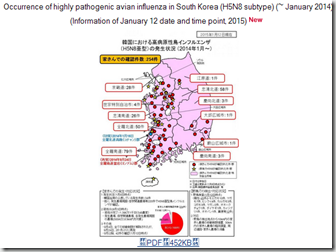
Outbreaks Of H5N8 & FMD Continue To Plague South Korea

 image

Credit Japan’s MAFF


# 9696


With the Lunar New Year (Seollal in Korea) looming, authorities in South Korea are scrambling to try to contain recent outbreaks of avian (H5N8) influenza in poultry and FMD (Foot & Mouth Disease) in pigs.  


In recent days H5N8 was even found in the droppings of birds in the nation’s capital, Seoul. The first detection of HPAI in that city in a decade (see Korea Times Bird flu virus spreads to Seoul).


First this report from Korea JoongAng Daily, after which I’ll have a bit more.


Foot-and-mouth disease, avian flu strain authorities

Officials struggle to control viruses ahead of the Lunar New Year
Feb 11,2015

Quarantine authorities are scrambling to prevent the further spread of foot-and-mouth disease (FMD) and avian influenza (AI) a week before the Lunar New Year, one of the country’s biggest holidays that prompts mass travel.


Those efforts, however, have appeared to have little effect, with both viruses continuing to advance.

Hongseong County, South Chungcheong, the country’s largest pig-breeding region, has confirmed two outbreaks of FMD since Friday, the first in four years. After animals at one farm tested positive on Friday, FMD was confirmed at another site on Monday just 20 meters (65 feet) away.


There are currently 305 pig farms breeding a total of 494,000 pigs in Hongseong County. The last time the county saw an outbreak of the disease was in February 2011, when more than 50,000 pigs from 127 farms were culled, with damage adding up to 10.76 billion won ($9.82 million).

(Continue . . . )


FMD is a highly contagious viral disease that primarily afflicts cloven-hoofed animals (including cattle, sheep, goats, pigs, deer, etc.). Caused by a picornavirus, it has no relation to HFMD, which is a childhood disease in humans caused by a number of non-polio enteroviruses.


During the 2010-2011 FMD outbreak in South Korea, roughly 3.5 million animals were destroyed (151,425 cattle, 3,318,299 pigs, 8,071 goats, and 2,728 deer) and buried at more than four thousand locations around the country (EID Journal Control of Foot-and-Mouth  Disease during 2010–2011 Epidemic, South Korea).


Additionally, over the past year South Korea has culled roughly 15 million birds in their attempts to contain the recently (January 2014) emerged H5N8 virus.


While both diseases were thought under control, last summer we saw South Korea: Fresh Reports Of FMD & H5N8, scattered reports of both livestock diseases throughout the fall , and just last month authorities announced a  36 Hour Farm Lockdown To Halt AI & FMD.


FMD is endemic in many parts of the world (Africa, Asia, South America, some parts of Europe), but has been eradicated in many others.  The last outbreak of FMD in the United States was in 1929 – but vigilance is maintained to prevent its return.


image

Thursday, January 15, 2015

South Korea: 36 Hour Farm Lockdown To Halt AI & FMD

image

AI Disinfection  – Credit MAFRA 


# 9579


For agricultural interests nothing invokes fear like the emergence of a highly pathogenic strain of avian influenza, or an outbreak of FMD (Foot & Mouth Disease). Both can threaten large segments of a region’s food production, and both are difficult to eradicate or control.


Over the past year South Korea has culled roughly 15 million birds in their attempts to contain the H5N8 virus, and between 2010 and 2011, an outbreak of FMD forced the destruction of nearly 3.5 million animals.


While both diseases were thought under control, last summer we saw South Korea: Fresh Reports Of FMD & H5N8, and in the past several months additional outbreaks have been reported. Yesterday, in South Korea Reports New HPAI H5 & FMD Outbreaks, we looked at a new spate of reports of avian flu (and FMD) in South Korea .


Although migratory birds have been blamed for much of the the spread of HPAI H5 in Korea, it is also likely that the agricultural industry has exacerbated the spread through the movement of infected birds, supplies, or contaminated vehicles.   FMD can easily be spread in the same way.


So today Korean authorities  announced a 36-hour lockdown of all poultry, livestock, farm personnel, and their vehicles across the nation – to begin on Saturday - to allow time for a massive disinfection campaign. 


This is the third such lockdown ordered in the past year.


Two reports, first from Yonhap News, then from AFP.


Gov't bans movement of poultry, farmers to prevent spread of AI

2015/01/15 12:02

SEJONG, Jan. 15 (Yonhap) -- The government on Thursday ordered a halt in the movement of all birds, poultry farmers and vehicles to prevent the further spread of bird flu.

The Ministry of Agriculture, Food and Rural Affairs said the ban will go into effect as of 6 a.m. Saturday and stay in place until 6 p.m. Sunday. A total of 106,000 people will be affected along with 31,000 facilities.

Failure to follow the order could result in a maximum fine of 10 million won (US$9,220) or a prison term of less than one year.

The ministry said the order has been issued in consultation with poultry farmers and agricultural cooperatives and that the farmers were given time to stock up on feed.

"Because poultry farmers actively asked for the measure, we expect they will actively adhere to it," said Lee Chun-il, head of the ministry's livestock policy division.

(Continue . . .)

S. Korea orders lockdown to fight animal disease

South Korea on Thursday announced a 36-hour lockdown over the weekend on poultry and livestock farms across the country to curb the spread of two highly contagious animal diseases -- foot and mouth and bird flu.

The agriculture ministry said the movement of animals, people and vehicles at thousands of farms would be banned from 6:00 am (2100 GMT) on Saturday for disinfection.

A series of outbreaks of foot-and-mouth in recent months have resulted in the slaughter of around 25,000 pigs, and concern has grown as cases have spread to farms close to the capital Seoul.

(Continue . . .)

Wednesday, January 14, 2015

South Korea Reports New HPAI H5 & FMD Outbreaks

image

A year of H5N8 In Korea – Credit Japan’s MAFF 


# 9574


This week marks the 1 year anniversary of the first detection of the newly emerged HPAI H5N8 virus on the Korean peninsula (see Media Reporting Korean Poultry Outbreak Due To H5N8), and despite the culling of more than 15 million birds and Korean farms having some of the best poultry biosecurity procedures in the world, the virus continues to resurface.


Reintroduction via wild and migratory birds has been largely blamed, but it is also possible that in some cases the virus is being spread inadvertently by the poultry trade  (see Bird Flu Spread: The Flyway Or The Highway?).


Although other HPAI viruses are known to have spread via wild and migratory birds, the H5N8 virus appears to be unusually adept at this mode dispersal, having now shown up in Japan, Russia, China, Western Europe, and even the United States. 


In addition to recurring avian influenza outbreaks, South Korea is also battling outbreaks of FMD (Food & Mouth Disease) once again  – which according to the article below – has resulted in the detection of more than 50 cases since the beginning of December spread across 13 Korean cities and counties.  


FMD is a highly contagious viral disease that primarily afflicts cloven-hoofed animals (including cattle, sheep, goats, pigs, deer, etc.). Caused by a picornavirus, it has no relation to HFMD, which is a childhood disease in humans caused by a number of non-polio enteroviruses.


During the 2010-2011 FMD outbreak in South Korea, roughly 3.5 million animals were destroyed (151,425 cattle, 3,318,299 pigs, 8,071 goats, and 2,728 deer) and buried at more than four thousand locations around the country (EID Journal Control of Foot-and-Mouth  Disease during 2010–2011 Epidemic, South Korea).


The AI cases announced today are described as HPAI H5, and a final determination of the subtype will be announced over the next few days.  Given the recent events in Taiwan, and the propensity of H5 viruses to reassort, there is always the chance that these outbreaks will end up being something other than H5N8.


Korea confirms additional AI case

Updated : 2015-01-14 19:58

An additional case of avian influenza has been confirmed in Busan, South Korea’s largest sea port, quarantine officials said Wednesday.


According to Busan municipal authorities and quarantine officials, chickens and geese that were found dead at a poultry farm on Tuesday all tested positive for the H5 strain of bird flu.


It said further tests are needed to determine whether they died from the highly pathogenic H5N8 strain of the animal disease.


The confirmation marks the first time that Busan has reported a bird flu case since 2008.


Quarantine officials said 580 birds at the farm that raised geese, chickens and pigeons were all culled to prevent further spreading of the disease. It said four checkpoints have been set up around the poultry farm to disinfect cars and control the movement of people and animals.


In addition to the Busan case, quarantine officials said tests showed birds at a duck farm in Anseong, near Seoul, have tested positive for the H5 strain.


(Continue . . .)

Monday, July 28, 2014

South Korea: Fresh Reports Of FMD & H5N8

+image


# 8873


For large scale agri-business, nothing conjures  feelings of dread like the emergence of a highly pathogenic strain of avian influenza, or an outbreak of FMD (Foot & Mouth Disease), as both threaten large segments of a region’s economy and food production, and neither are easy to eradicate.


Last January South Korea was hit by a new strain of avian flu H5N8 – which spread to scores of farms across the nation and led to the culling of more than 10 million birds.  Although the outbreak appeared to have been stamped out by May, last month (see Korea: Fears Of H5N8 Resurgence) a new outbreak was reported on a poultry farm in Daegu.


After a quiet month on the bird flu front, yesterday Korean media reported another outbreak of H5N8, this time in South Jeolla.


Avian flu confirmed at South Jeolla duck farm

July 28,2014

Avian influenza (AI) was confirmed yesterday at a duck farm in Korea, local officials said, just days after the government detected another instance of the potentially deadly foot-and-mouth disease.


The South Jeolla Livestock Sanitation Office said yesterday that a highly pathogenic strain of bird flu, H5N8, was discovered Friday at a duck farm in Hampyeong in the southwestern province. Upon official confirmation, approximately 42,000 ducks at the farm were immediately culled, officials said.

(Continue . . . )


Although there is a decided seasonality to avian flu outbreaks (peaking in winter & spring), theses viruses can continue to circulate year-round.  Areas where the H5N1 virus is particularly well entrenched – like Egypt & Indonesia – frequently report poultry outbreaks even in the heart of summer.


This is the first summer of H5N8, and thus far, the seasonal pattern of the virus appears to be consistent with what we’ve seen with H5N1 and H7N9.   


Earlier this year, in EID Journal: Describing 3 Distinct H5N8 Reassortants In Korea – we saw a report on the continual evolution of the H5N8 virus.  Like all flu viruses – H5N8 continues to mutate and adapt – meaning that the virus we see next fall, or next year, may not behave quite like the virus we have before us today. 


Adding insult to injury, last week South Korea also reported their first FMD case in three years (see OIE: Foot & Mouth Disease In South Korea), setting off alarm bells, and putting the nation on alert for this hard to eradicate disease.


FMD is a highly contagious viral disease that primarily afflicts cloven-hoofed animals (including cattle, sheep, goats, pigs, deer, etc.). Caused by a picornavirus, it has no relation to HFMD, which is a childhood disease in humans caused by a number of non-polio enteroviruses.

While there were hopes that the discover of FMD last week at a pig farm represented an isolated incident, today another outbreak has been reported on a pig farm 70 kilometers distant from the first report.   This from AFP.


S Korea detects second foot-and-mouth case

POSTED: 28 Jul 2014 17:56

South Korea on Monday (July 28) reported its second case of foot-and-mouth disease in less than a week. An official confirmed the case in a pig farm in North Gyeongsang province, but played down the threat.

(Continue . . . )


During the 2010-2011 FMD outbreak in South Korea, roughly 3.5 million animals were destroyed (151,425 cattle, 3,318,299 pigs, 8,071 goats, and 2,728 deer) and buried at more than four thousand locations around the country (EID Journal Control of Foot-and-Mouth  Disease during 2010–2011 Epidemic, South Korea).


While culling was a huge part of the control operation, South Korea also imported a Serotype 0 vaccine and instituted a `vaccinate to live’ policy, as described in the EID dispatch above:


According to national policy, culling began in November 2010 for all animals on farms with infected animals. Once vaccination was expanded nationwide in mid-January 2011, a vaccination-to-live policy was implemented; that is, vaccinated animals on farms with infected animals were culled only if the outbreak began within 2 weeks after vaccination but not if the outbreak began >2 weeks after vaccination.


As a result, a high percentage of South Korea’s livestock are vaccinated against the currently detected FMD serotype, which ought to help contain its spread.


Although the 7 serotypes of FMD are found all over the world, the United States has not seen an outbreak since 1929.

image

OIE Disease Outbreak Map – Current FMD


A 2013 Homeland Security report (see A World Free of one of the Most Virulent Animal Diseases?) on the creation of a new, (single sero-type) non-live virus vaccine for FMD, warns that the costs of an outbreak in this country could exceed $50 billion.


While definite progress, with 7 sero-types, and more than 60 known subtypes, the world remains a long way from eliminating this scourge.

Thursday, July 24, 2014

OIE: Foot & Mouth Disease In South Korea

image


# 8863


Foot & Mouth Disease (FMD) is a highly contagious viral disease that primarily afflicts cloven-hoofed animals (including cattle, sheep, goats, pigs, deer, etc.) and poses a serious threat to agricultural interests around the world. It is caused by a picornavirus, and has no relation to HFMD, which is a childhood disease in humans caused by a number of non-polio enteroviruses.


There are seven known types and more than 60 subtypes of the FMD virus, and different types are to be found in different parts of the world. 


Overnight South Korea has reported their first case of FMD in 3 years, at a pig farm in Uiseong, North Gyeongsang Province (see Korea Herald report S. Korea reports first outbreak of foot-and-mouth disease).   The OIE report (see below) lists the serotype as O (PanAsia Strain), which raised international concern between 1998-2011 when it spread rapidly across Asia, Africa, & parts of Europe (cite). 

image


At this point, only one farm is known to be affected, and the following control measures are being implemented.

image


This return of FMD comes just months after S. Korea began a prolonged battled against the H5N8 avian flu virus in poultry, which resulted in the culling of millions of chickens and ducks. 


Both Japan and Korea detected FMD in the spring of 2010, and after the destruction of 290,000 head of livestock, Japan declared their FMD crisis over in August. In South Korea, however, the outbreaks continued into 2011, with 155 outbreaks reported.

image

2010-2011 FMD – Credit OIE


FMD is endemic in many parts of the world (Africa, Asia, South America, some parts of Europe), but has been eradicated in many others.  The last outbreak of FMD in the United States was in 1929 – but vigilance is maintained to prevent its return.


image

OIE Disease Outbreak Map – Current FMD


Although South Korea hasn’t reported FMD in over three years, neighboring North Korea has reportedly been doing battle with the disease for several years (see Xinhua News: Extensive H5N1 Outbreaks In North Korean Poultry).


We’ll have to wait to see if this latest outbreak is limited to just one farm, or has already spread.

Monday, May 14, 2012

Laurie Garrett: Risks Of FMD & Bird Flu Destabilizing Egypt

image

Photo Credit – FAO


# 6325


From Laurie Garrett and Steven A. Cook an important story in The Atlantic this morning on the growing destabilization of Egypt due to the spread of FMD and Avian flu.


I’ll just step aside and invite you to read:


Egypt's Real Crisis: The Dual Epidemics Quietely Ravaging Public Health

International May 14 2012, 7:01 AM ET

A combination of avian flu and foot and mouth disease risk destroying the protein supply, eroding public trust, and further destabilizing the Arab world's most populous country . . .

(Continue . . . )

Thursday, March 10, 2011

Vietnam’s Battle With FMD, PRRVS & Bird Flu


# 5365


A disturbing report from the Viet Nam News today on the steady increase in bird flu, foot and mouth disease (FMD), and blue ear syndrome (PRRSV in swine) across the country.


Blaming a lack of vaccines, officials say these diseases are becoming pervasive nationwide. Additionally, local authorities have supposedly failed to report outbreaks to the public.


FMD and PRRVS, unlike bird flu, are not believed to pose a significant direct threat to human health. The FAO  gives this advice on the control of FMD.


Control/Vaccine

To eradicate the disease a stamping out policy can be applied. This involves quarantine, movement restrictions and slaughter and disposal of all affected an in-contact livestock on affected premises followed by cleaning and disinfection.


Inactivated vaccines have been successfully used in many parts of the world. Although protected against disease, vaccinated animals are not totally resistant and can still become infected and shed virus. Resistance falls fairly quickly, so animals must be revaccinated at regular intervals (4-6 months) to maintain immunity.


While not without risk, Vietnamese officials concerned over rising food prices and growing food insecurity, are reportedly looking for ways for consumers to safely process and consume the meat from FMD infected animals.


This from Viet Nam News.


Ministry warns of increasing disease threat

Updated March, 10 2011 10:21:12


HA NOI — Foot-and-mouth disease, bird flu and blue-ear syndrome are becoming more pervasive nationwide, says director of the Ministry of Agriculture and Rural Development's Animal Health Department Hoang Van Nam.


The country did not have enough vaccines to properly combat poultry and cattle diseases and local authorities intentionally have not reported what was actually happening to the public despite the outbreak of the diseases, Nam said.


<SNIP>


"It is not necessary to slaughter all the cattle infected with foot-and-mouth disease; we can eat their meat if it is cooked properly," said agriculture minister Cao Duc Phat.


"We need to instruct people how to hygienically slaughter cattle infected with foot-and-mouth disease," he said.

(Continue . . . )


FMD is endemic in many parts of the world (Africa, Asia, South America, some parts of Europe), but has been eradicated in many others. 


The last outbreak of FMD in the United States was in 1929 – but vigilance is maintained to prevent its return.
 

image

image

(current outbreaks FMD – Source OIE)

Sunday, February 13, 2011

FMD: North Korea’s OIE Report


# 5310


Late this week North Korea officially notified the OIE of a spate of recent FMD (Food and Mouth Disease) outbreaks in their nation going back to December of 2010.


Given the large number of outbreaks in neighboring South Korea over the past few months, and unofficial intelligence reports (see Reports: FMD Suspected In North Korea) beginning nearly a month ago, this notification wasn’t completely unexpected.


Foot-and-mouth (FMD) disease is a severe, highly contagious viral disease of cattle and swine. It also affects sheep, goats, deer, and other cloven-hooved ruminants. FMD is not a threat to people and no human health risks are associated with the disease. FMD is caused by a virus. Signs of illness can appear after an incubation period of 1 to 8 days, but often develop within 3 days. There are seven known types and more than 60 subtypes of the FMD virus.


FMD (not to be confused with HFMD – a usually mild viral illness common to children) is endemic in many parts of the world (Africa, Asia, South America, some parts of Europe), but has been eradicated in many others.


The full OIE report is available available here. 


It details 48 recent outbreaks involving 500 cattle, nearly 10,000 swine, and 165 goats.  The culling of livestock (if ordered) was not mentioned in this report.


According to this initial notification, a locally produced vaccine was employed, but it `was not effective to control the disease’.  The source of these outbreaks was listed as unknown or inconclusive.


The following map shows the first 48 outbreaks.


image


Under Epidemiological comments, this report indicates that this initial notification is incomplete, that additional outbreaks have been detected, and that further details are expected.


This immediate notification report has been prepared and published by the Animal Health Information Department in the meantime and outbreaks are gathered by clusters of outbreaks and by affected district. This is only an approximation of their location.


When the exact data on the location of each outbreak will be provided by the National Veterinary Authorities, this report will be amended to reflect more precise locations of the outbreaks and the disease distribution. Not all the outbreaks are processed since approximate geographic locations have not been found.


There are additional outbreaks notified in January that are not yet processed and that will be processed as soon as the completed information is received from the country.


South Korea meanwhile continues to struggle with their own outbreaks of FMD, with their latest OIE report showing 148 outbreaks since November of 2010.

image


Both Japan and South Korea detected FMD in the spring of 2010, and after the destruction of 290,000 head of livestock, Japan declared their FMD crisis over in August.


South Korea, however, continues to find infected livestock and has destroyed millions of head of their combined swine & cattle herds in an effort to contain the virus.

Friday, February 11, 2011

North Korea: FMD Outbreak


# 5306


Three weeks after the first intelligence reports emerged suggesting that North Korea was battling outbreaks of FMD (Foot and Mouth Disease) (see Reports: FMD Suspected In North Korea), the NK government has reportedly requested assistance from the UN in combating the disease.


Two media reports, then I’ll return with a bit more on FMD. First this from the Korean Herald.


U.N. to help with FMD outbreaks in N.K.

2011-02-11 19:13

Seoul remains lukewarm toward assistance amid stalemate in ties

The U.N. has said it will send experts to North Korea next week over a purported foot-and-mouth disease outbreak, in the first international move to help the impoverished state curb the fast-spreading livestock virus.

(Continue . . . )


And this from the Daily NK, a NK government opposition newspaper published in South Korea.


North Korea Calls for FMD Assistance

By Cheong Sun Jin, Intern

[2011-02-10 17:52 ]  

North Korea has confirmed suspicions that it is battling an outbreak of foot-and-mouth disease, meaning that the disease has now reached every corner of the Korean Peninsula. Pyongyang unexpectedly reported the outbreak to the United Nations’ Food and Agricultural Organization (FAO) yesterday, according to Radio Free Asia (RFA).

(Continue . . .)


Given that diseases tend not to respect political borders, even one as tightly controlled as the Korean DMZ, it isn’t altogether surprising that North Korea should be seeing outbreaks at the same time that South Korea is dealing with the worst FMD epidemic in their history.


According to a recent AFP report, South Korea’s agriculture ministry has spent (US) $1.7 billion fighting their FMD epidemic, culling and burying more than 3 million head of livestock since November. At the same time, the South has been combating a major outbreak of bird flu.


FMD (not to be confused with HFMD – a usually mild viral illness common to children) is a highly contagious viral disease that affects cloven hoof animals, but almost never `infects’ humans.


The virus primarily spreads through the movement of infected animals, contaminated vehicles, or feed.


Humans are also capable of spreading the disease, as the virus may be carried on clothing and footwear for days, and reportedly can remain viable in human nasal passages for more than 24 hours.


FMD is endemic in many parts of the world (Africa, Asia, South America, some parts of Europe), but has been eradicated in many others.  The last outbreak of FMD in the United States was in 1929 – but vigilance is maintained to prevent its return.


image

image

(current outbreaks FMD – Source OIE)


There are 7 known types of FMD, along with numerous sub-types. Immunity to one type does not provide immunity to the others, and the virus continues to mutate, making it even harder to create and maintain vaccine stocks.


Both Japan and Korea detected FMD in the spring of 2010, and after the destruction of 290,000 head of livestock, Japan declared their FMD crisis over in August.  


In South Korea, however, outbreaks have continued. In an attempt to control FMD, in addition to culling, South Korea has embarked on an extensive vaccination campaign.


North Korea, on the other hand, lacks many of the basic resources found in the South. Chronic food shortages make culling of animals a difficult choice, and vaccines against FMD are currently unavailable in the north.


South Korea has supplied emergency relief supplies and expertise to the North in the past when FMD was reported.  But in the wake of the attack on Yeonpyeong Island in November and the sinking of South Korea's Cheonan warship last March, relations between the two nations are in serious decline.


While there is little enthusiasm for assisting the North in the wake of these recent provocations, allowing a virulent animal disease to spread unchecked just across the DMZ may ultimately prove to be a far less attractive option.

Tuesday, January 18, 2011

Reports: FMD Suspected In North Korea


# 5239


While not totally unexpected, the announcement today that FMD (Foot & Mouth Disease) has apparently been detected in North Korean livestock is worrisome news.


First, links to several reports (h/t Makoto on FluTrackers for the first one), then some discussion.


From the Korea JoongAng Daily:


Foot-and-mouth now in North, says military


January 18, 2011

North Korea is apparently suffering from its own bout of foot-and-mouth disease, according to a South Korean military official.


“According to South Korean and U.S. intelligence, roads have been blocked by the military near Pyongyang to decrease movement of people,” said the official, who asked not to be named. The source said that quarantine measures are proving difficult for North Korea, which lacks preventive medicine such as vaccines and quicklime in which to bury contagious animals.

(Continue . . . )


From the Korea Times:


N. Korea may have FMD outbreak

Kim Young-jin


Foot-and-mouth disease, which has caused South Korea to put down some two million heads of livestock, may have hit North Korea as well, officials here said Tuesday.


The officials cited recent visitors to the North who claim the disease broke out late last year in the northern part of the country.

(Continue . . . )


And from the DailyNK:


Intelligence Suggests North Korea Suffering FMD

By Kim So Yeol

[2011-01-18 18:28 ]  

Evidence has emerged that foot-and-mouth disease (FMD) may have broken out in North Korea. Therefore, the question of whether the South Korean government might provide aid to combat any proven outbreak of the disease has arisen.

(Continue . . . )


We get very little direct news out of North Korea, and frequently must rely on observations from the few international relief workers allowed in and out of their country, and military intelligence analyses.


Often these stories are never verified.


The food situation in the North has been described as dire for several years, and so the reports above that suggest that infected livestock are being consumed rather than culled – while not verified – at least sound plausible.


FMD is described by the USDA thusly:


Foot-and-mouth (FMD) disease is a severe, highly contagious viral disease of cattle and swine. It also affects sheep, goats, deer, and other cloven-hooved ruminants. FMD is not a threat to people and no human health risks are associated with the disease. FMD is caused by a virus. Signs of illness can appear after an incubation period of 1 to 8 days, but often develop within 3 days. There are seven known types and more than 60 subtypes of the FMD virus.


FMD (not to be confused with HFMD – a usually mild viral illness common to children) is endemic in many parts of the world (Africa, Asia, South America, some parts of Europe), but has been eradicated in many others. 


The last outbreak of FMD in the United States was in 1929 – but vigilance is maintained to prevent its return.


Both Japan and South Korea detected FMD in the spring of 2010, and after the destruction of 290,000 head of livestock, Japan declared their FMD crisis over in August.


South Korea, however, continues to find infected livestock and has destroyed roughly 15%  (2.1 million animals) of their combined swine & cattle herds in an effort to contain the virus.


South Korea has also reportedly destroyed more than 3 million poultry in response to their recent bird flu outbreaks (see S. Korea: Bird Flu Moves North).


This is the latest Reuters report on the culling of livestock in South Korea:


Major culling in S Korea over foot-and-mouth

Published: 6:09PM Tuesday January 18, 2011 Source: Reuters


FMD is very difficult to eradicate, as is evident by the ongoing struggles in South Korea to contain their recent outbreak. 


North Korea, which lacks many of the resources found in the South, is far less well equipped to deal with an FMD outbreak.


Although South Korea has supplied emergency relief supplies and expertise to the North in the past when FMD was reported, in the wake of the attack on Yeonpyeong Island in November and the sinking of South Korea's Cheonan warship last March, relations between the two nations are in serious decline.


Aside from the obvious humanitarian issues involved, the destabilizing effects of another agricultural/food crisis in North Korea - combined with the prospect of having FMD becoming entrenched in a neighboring country – should make these latest reports of particular concern to interests in both South Korea and China.

Thursday, January 13, 2011

Korea: H5N1 & FMD Outbreaks Continue


# 5227


Today’s report from Yonhap News indicates that 7 new outbreaks of H5N1 were detected today (Thursday) on poultry farms in central and southeastern South Korea, along with two more reports of FMD in livestock.  


This brings the total number of outbreaks of bird flu reported in the past 14 days to 23.


On Wednesday Seoul announced the intent to vaccinate all potentially exposed livestock in the country against FMD.  Up until now, vaccination  has been limited due to fears that it would extend the time before the nation could regain FMD free status.


To date, roughly 10% of that nation’s 10 million pigs and 3.4 million cattle have been culled due to the disease.


For more on the ongoing FMD crisis see South Korea Battles Bird Flu, FMD.


Additionally, over the past 2 weeks more than 3 million birds have reportedly been culled due to the growing H5N1 crisis, and the nation’s bird flu alert level has been raised to `Orange’; the second highest level.


You’ll find more details on these dual animal disease disasters in this Yonhap News report:


2011/01/13 15:17 KST

S. Korea confirms more FMD cases in central, southeastern regions

Sunday, January 09, 2011

South Korea Battles Bird Flu, FMD


Correction: This afternoon I received an email from a reader who kindly informed me of a relatively new FMD testing technology called DIVA (Differentiating Infected from Vaccinated Animals) that could be used to determine whether an animal tested positive due to the disease or the vaccine.


New tools like DIVA will hopefully enable farmers to rescue their herds by `vaccinating to live’, although so far many countries and agencies appear slow to embrace this technology.


DIVA testing is discussed in Animal Health Australia’s  FMD Vaccination FAQ page, and is featured prominently in the recent EXPERT OPINION ON VACCINE AND/OR DIAGNOSTIC BANKS FOR MAJOR ANIMAL DISEASES - SANCO/7070/2010  report.


Since I am hardly expert on FMD or DIVA testing, I would invited interested readers to check out the documents mentioned above - along with the UK site www.warmwell.com - which I’ve only begun to explore, but which seems to provide a wealth of FMD information (along with food security, animal health, rural matters and energy).


My great thanks to the reader who took the time to email me. I’m very happy to correct the record, and along the way, I’ve learned something new. 


# 5213


As feared, more farms in South Korea are detecting the highly pathogenic H5N1 virus, with three new locations reportedly identified on Sunday. 


In addition to several discoveries of wild birds with the virus in the southern half of the country, seven farms have now been found to be infected.


 Korea Japan


All of this comes amid the worst outbreak of FMD (Foot and Mouth Disease) in South Korea’s history, requiring the destruction of nearly one million animals to date.


First this report from Asia Pacific News, then a little more on my part.


S.Korea confirms more bird flu cases


Posted: 09 January 2011 1521 hrs

SEOUL: South Korea confirmed three new cases of bird flu on Sunday as the outbreak that began last month further hit farmers who were also battling the nation's worst-ever outbreak of foot-and-mouth disease.


The agriculture ministry confirmed three new cases of the highly contagious virus at duck farms in the southwestern county of Yeongam, bringing the total number of cases to seven since December 31.

(continue . . . )


The Double Whammy of having both bird flu and FMD striking Korean farms not only increases the economic impact of these animal diseases, it places severe strain on those agencies charged with food safety and disease control.


FMD (not to be confused with HFMD – a usually mild viral illness common to children) is a highly contagious viral disease that affects cloven hoof animals, but almost never infects humans.


It is endemic in many parts of the world (Africa, Asia, South America, some parts of Europe), but has been eradicated in many others.  The last outbreak of FMD in the United States was in 1929 – but vigilance is maintained to prevent its return.


There are 7 known types of FMD, along with numerous sub-types. Immunity to one type does not provide immunity to the others, and the virus continues to mutate, making it even harder to create and maintain vaccine stocks.


As standard antibody <edited> blood tests cannot differentiate between a diseased animal and a vaccinated animal (both carry antibodies), vaccination of herds – while sometimes necessary – can greatly delay a countries return to an FMD Free status (see correction above).


Both Japan and Korea detected FMD in the spring of 2010, and after the destruction of 290,000 head of livestock, Japan declared their FMD crisis over in August.


Korea, however, continues to find diseased animals, and has now destroyed 948,000 pigs and cattle, vaccinated another 1.5 million head, and is looking to secure enough vaccine to inoculate another 6 million farm animals.


Officials at the same time are now forced to deal with an expanding outbreak of H5N1 in poultry, further stressing the system, and increasing the agricultural economic impact.


While the current outbreak of H5N1 has not yet approached the scale of the 2008 outbreak – when 8 million birds were destroyed -  the winter `bird flu season’ still has several more months to run.