Showing posts with label HIV. Show all posts

Friday, April 24, 2015

CDC HAN Advisory & MMWR: HIV & HCV Among Injectable Drug Users

image


# 9974


Over the past month we’ve been following the HIV and HCV outbreak in Southeastern Indiana (see Indiana Gov To Declare HIV Health Emergency In Scott County & Scott County HIV Epidemic Reaches 130 Cases) which has now grown to 142 cases. 


Reportedly, at least 80% of these cases are injectable drug users, and this practice appears to be driving this epidemic.


Today the CDC, along with officials from the State of Indiana, held a 50-minute-long press conference in advance of the release of a CDC HAN  message, and an early release MMWR called  Community Outbreak of HIV Infection Linked to Injection Drug Use of Oxymorphone — Indiana, 2015.

The MMWR describes socio-economic situation in Scott County as:

Injection drug use in this community is a multi-generational activity, with as many as three generations of a family and multiple community members injecting together. IDU practices include crushing and cooking extended-release oxymorphone, most frequently 40 mg tablets not designed to resist crushing or dissolving. Syringes and drug preparation equipment are frequently shared (e.g., the drug is dissolved in nonsterile water and drawn up into an insulin syringe that is usually shared with others). The reported daily numbers of injections ranged from four to 15, with the reported number of injection partners ranging from one to six per injection event.

Like many other rural counties in the United States, the county has substantial unemployment (8.9%), a high proportion of adults who have not completed high school (21.3%), a substantial proportion of the population living in poverty (19%), and limited access to health care (1). This county consistently ranks among the lowest in the state for health indicators and life expectancy (2).


And the demographics of the outbreak:


The age range of the 135 patients is 18–57 years (mean = 35 years; median = 32 years); 74 (54.8%) are  male. A small number of pregnant women were diagnosed with HIV infection and started on antiretroviral  therapy during pregnancy. As of April 21, no infants had tested positive for HIV. Of the 135 persons with diagnosed HIV infection, 108 (80.0%) have reported injection drug use (IDU), four (3.0%) have reported no IDU, and 23 (17.0%) have not been interviewed to determine IDU status. Among the 108 who have reported IDU, all reported dissolving and injecting tablets of oxymorphone as their drug of choice. Some reported injecting other drugs, including methamphetamine and heroin. Ten (7.4%) female patients have been identified as commercial sex workers. Coinfection with hepatitis C virus has been diagnosed in 114 (84.4%) patients


Because the conditions described in Scott county are not necessarily unique to that part of the country, the CDC has issued a HAN Advisory to alert clinicians to be alert to signs of similar outbreaks in their communities, so that public health interventions can come sooner rather than later.


Some excerpts from a much longer HAN Advisory follow: 


Outbreak of Recent HIV and HCV Infections among Persons Who Inject Drugs

 This is an official CDC HEALTH ADVISORY

Distributed via the CDC Health Alert Network
April 24, 2015, 11:00 ET (11:00 AM ET)
CDCHAN-00377

Summary

The Indiana State Department of Health (ISDH) and the Centers for Disease Control and Prevention (CDC) are investigating a large outbreak of recent human immunodeficiency virus (HIV) infections among persons who inject drugs (PWID). Many of the HIV-infected individuals in this outbreak are co-infected with hepatitis C virus (HCV). The purpose of this HAN Advisory is to alert public health departments and healthcare providers of the possibility of HIV outbreaks among PWID and to provide guidance to assist in the identification and prevention of such outbreaks.

<SNIP>

Recommendations for Health Departments

  • Review the most recent sources of data on HIV diagnoses, HCV diagnoses (acute as well as past or present), overdose deaths, admissions for drug treatment, and drug arrests. Attributes of communities at risk for unrecognized clusters of HIV and HCV infection include the following:
    • Recent increases in the:
      • Number of HIV infections attributed to injection drug use,
      • Number of HCV infections, particularly among persons aged < 35 years;
    • High rates of injection drug use and especially prescription-type opioid abuse, drug-related overdose, drug treatment admission, or drug arrests.
  • Ensure complete contact tracing for all new HIV diagnoses and testing of all contacts for HIV and HCV infection.
  • Ensure persons actively injecting drugs or at high-risk of drug injection (e.g., participating in drug substitution programs, receiving substance abuse counseling or treatment, recently or currently incarcerated) have access to integrated prevention services,9 and specifically:
    • Are tested regularly for HIV and HCV infection (consider more frequent testing based on frequency of injection drug usage or sharing of injection equipment);
    • If diagnosed with HIV or HCV infection:
    • Are rapidly linked to care and treatment services;
    • If actively injecting drugs:
      • Have access to medication-assisted therapy (e.g., opioid substitution therapy) as well as other substance abuse services, if not already engaged,
      • Are counseled not to share needles and syringes or drug preparation equipment (e.g., cookers, water, filters),
      • Have access to sterile injection equipment from a reliable source.
    • If not HIV infected but actively injecting drugs:
      • Are referred for consideration of HIV pre-exposure prophylaxis10 and if potentially exposed within the past 72 hours (e.g., shared drug preparation or injection equipment with a known or potentially HIV-infected person) HIV post-exposure prophylaxis11,12
  • Remind venues that may encounter unrecognized infections, such as emergency departments and community-based clinical practices (e.g., family medicine, general medicine, prenatal care) of the importance of routine opt-out HIV testing as well as HCV testing per current recommendations13-15
  • Local health departments should notify their state health department and CDC of any suspected clusters of recent HIV or HCV infection.

Recommendations for Healthcare Providers

  • Ensure all persons diagnosed with HCV infection are tested for HIV infection,16 and that all persons diagnosed with HIV infection are tested for HCV infection.17
  • Ensure persons receiving treatment for HIV and/or HCV infection adhere to prescribed therapy and are engaged in ongoing care.
  • Encourage HIV and HCV testing of syringe-sharing and sexual partners of persons diagnosed with either infection.
  • Report all newly diagnosed HIV and HCV infections to the health department.
  • For all persons with substance abuse problems:
    • Refer them for medication-assisted treatment (e.g., opioid substitution therapy) and counseling services,
    • Use effective treatments (e.g., methadone, buprenorphine), as appropriately indicated.
  • For any persons for whom opioids are under consideration for pain management:
    • Discuss the risks and benefits of all pain treatment options, including ones that do not involve prescription analgesics.
    • Note that long-term opioid therapy is not associated with reduced chronic pain.18
  • Contact the state or local health department to report suspected clusters of recent HIV or HCV infection.

(Continue . . .)

Friday, April 17, 2015

Scott County HIV Epidemic Reaches 130 Cases

image

Scott County – Credit Wikipedia


# 9952


We’ve an update to a story we began to follow last March (see Indiana Gov To Declare HIV Health Emergency In Scott County and Temporary Needle Exchange Program Begins In Scott County, Indiana), where a small rural region in southeastern Indiana has reported a growing outbreak of IV drug-abuse related HIV.


Since our last update twelve days ago, the number of new HIV cases in (mostly from Scott County) has jumped from 89 to 130, a remarkable number considering their relatively low population (24K).  The majority of these appear to be clustered near the small town of Austin (pop. 4,200).


When compared to the entire state of Indiana (pop. 6.6 million) which reported roughly 420 new HIV infections in 2014 (see Indiana Semi-annual HIV report), the rate of HIV detection in and around Scott County is roughly 100 times higher than the state average. 


As the spotlight has fallen on Scott County over the past month, and local testing ramped up, the number of cases being detected has soared.  The region is reportedly plagued by high unemployment, a high dropout rate, skyrocketing teen pregnancy rates, and high drug use (see Chicago Tribune report).


This update from the Indiana State Department of Health.


More HIV Cases Reported in Southeastern Indiana as Testing Ramps Up

Start Date: 4/17/2015

AUSTIN—The number of cases in the HIV outbreak in southeastern Indiana has now reached 130 (120 confirmed and 10 preliminary positive cases), State health officials reported today.  This is an increase of 24 new cases identified in the past week.

“We have seen a significant increase in the number of HIV cases reported this week, but we believe that is because we have been able to offer more testing with the help of additional staff from CDC,” said State Health Commissioner Jerome Adams, M.D., M.P.H. “This sharp increase in the number of HIV-positive cases demonstrates just how critical it is that we are able to locate and test people who have been exposed so that they can avoid spreading it to others and get medical treatment.”

The Centers for Disease Control and Prevention (CDC) began sending support staff last month to assist in the HIV outbreak investigation, following a request by the Indiana State Department of Health. Support staff from CDC are conducting laboratory testing and assisting the State and local health departments with contacting individuals who may have been exposed to HIV.

State, local and federal officials are responding to the outbreak through several other measures, including a One-Stop Shop for services at the Austin Community Outreach Center, a weekly HIV testing and treatment clinic, a needle exchange program and a public awareness campaign called You Are Not Alone.

The Scott County Health Department began a needle exchange program earlier this month at the Community Outreach Center in Austin. Local officials were permitted to do this as the result of an Executive Order issued by Governor Pence on March 26 which temporarily suspends Indiana Code in Scott County making needle exchanges illegal.

The needle exchange program is for Scott County residents only and allows participating individuals to receive enough needles for one week based on reported drug use. Participants are also provided with thick plastic boxes called “sharps” containers to collect needles after they are used. Participants are asked to bring their used needles to exchange for clean ones.

Since opening on April 4, the needle exchange program has provided 5,322 clean syringes to 86 participants.  Approximately 1,400 used syringes have been returned to the Community Outreach Center by participants in the exchange and other community members. As participation in the needle exchange program continues, health officials expect the number of needles returned to more closely match the number of syringes provided.

“This community has been dealing with used syringes being tossed in yards and public areas for a long time, but I want to stress that it’s not safe to pick up syringes unless you have received proper training at one of the community cleanup events and have appropriate protective equipment,” said Dr. Adams. “If you see a syringe, I urge you to please call the Scott County Dispatch and let them know exactly where it is located so they can come collect it.”

In an effort to reach more community members, the Scott County Health Department also began operating a mobile needle exchange out of an SUV earlier this week. The mobile unit will be in the community daily from 3 p.m. to 6 p.m., staffing and weather permitting. Scott County Dispatch can be reached at (812) 752-5550.

The Community Outreach Center is open Monday, Wednesday, Thursday and Saturday from 9 a.m. to 6 p.m.; Tuesday and Friday from 10 a.m. to 8 p.m.; and Sunday from noon to 6 p.m. Grace Covenant Church is providing free shuttle service to and from Austin by calling (317) 617-2223.

The One-Stop Shop at the Austin Community Outreach Center provides free HIV testing, vaccinations against tetanus, hepatitis A and B, and information about HIV and hepatitis prevention, treatment and resources. Substance abuse referrals are available and individuals can also get assistance in enrolling in Healthy Indiana Plan (HIP 2.0) insurance. The One-Stop Shop Info Line is (317) 605-1480.

Visit the Indiana State Department of Health at www.StateHealth.in.gov. Follow the Indiana State Department of Health on Twitter at @StateHealthIN and on Facebook at www.facebook.com/isdh1. Use the hashtag #INstopHIV to follow the outbreak response on Twitter.

Hoosiers who do not have health care coverage or access to a doctor are encouraged to check availability for the new Healthy Indiana Plan—HIP 2.0—by visiting www.HIP.IN.gov or calling 1-877-GET-HIP-9.

###

Contact Information:
Name: Joint Information Center
Phone: 317.238.1784
Email:
JIC@jic.in.gov

Sunday, April 05, 2015

HIV: Temporary Needle Exchange Program Begins In Scott County, Indiana

image

Credit Wikipedia


# 9902


Ten days ago, in Indiana Gov To Declare HIV Health Emergency In Scott County, we looked at a growing outbreak of IV drug-abuse related HIV in rural southern Indiana.   With 72 cases reported over the past 3 months, their rate of infection was roughly 50 times higher than the state average.


Many local physicians were urging the establishment of a needle exchange program to slow the spread of the virus, but this is a public health initiative prohibited by state law. 


At the time, the governor indicated he would consider putting aside that law in Scott County  – at least temporarily – to address the crisis.  Since the last report, at least a dozen additional cases have been identified.


This press release from the Indiana State Department of Health. 


Needle Exchange For Scott County Only Now In Effect

Start Date: 4/4/2015
Entry Description

AUSTIN—A needle exchange program in Scott County begins today. Governor Mike Pence authorized the measure as part of a comprehensive emergency executive order due to the recent HIV outbreak in southeastern Indiana. This temporarily suspends the Indiana Code on needle exchange within Scott County. State health officials today reported a total of 89 cases of HIV-related cases (84 confirmed and five preliminary positive cases).

Late last month, the Indiana State Department of Health and the Centers for Disease Control and Prevention (CDC) advised Governor Pence that the HIV outbreak in Scott County is an epidemic and based on that information, the Governor declared that a public health disaster emergency exists in Scott County.  The Executive Order and needle exchange program expire April 25, but will be evaluated at the end of that period to determine if it should be continued.

The needle exchange will take place at the One-Stop Shop located at the Community Outreach Center, 2277 W. Frontage Road, Austin, Ind. Operated by the Scott County Health Department, the program will be open from 9 a.m. to 6 p.m. Monday through Saturday, and noon to 6 p.m. on Sunday. The Center will not be open on Easter Sunday (April 5). Grace Covenance Church has provided a free shuttle service to and from the One-Stop Shop from Austin by calling (317) 617-2223.

The needle exchange program includes Scott County residents only and participants will be asked to discuss their rate of drug use. The program will collect basic demographic information for research and statistical purposes.

"As State Health Commissioner and a physician, it is my hope that Scott County residents who need these services will take advantage of them and get the help they need and want,” said State Health Commissioner Jerome Adams, M.D., M.P.H.

Participating individuals will receive enough needles for one week. When in need of additional needles, participants are asked to bring their used needles to exchange. The needle exchange will also present an opportunity for health representatives to provide information about substance abuse treatment, as well as information on HIV/AIDS prevention and treatment.

“The goal is a clean syringe for each injection use,” said Brittany Combs, Scott County Public Health Nurse.

The State Health Department has established an incident command center in Scott County to expedite services and messages.  Additionally, the One-Stop Shop is open to provide free HIV testing, vaccinations against tetanus, hepatitis A and B, and information about HIV and hepatitis prevention, treatment and resources. Substance abuse referrals are available and individuals can also get assistance in enrolling in Healthy Indiana Plan (HIP 2.0) insurance. The One-Stop Shop Info Line is (317) 605-1480.


Although not legal in every state, syringe exchange programs (SEPs) have been shown to be effective in the `reduction of harm’ among intravenous drug users, and by extension, the entire community.


From the SAMHSA, a division of the HHS.


image


Scott County reportedly suffers from high unemployment, a high dropout rate, skyrocketing teen pregnancy rates, and high drug use (see Chicago Tribune report), which means it will take more than a 3-week needle exchange program to address its problems.


But it’s a start.


Thursday, March 26, 2015

Indiana Gov To Declare HIV Health Emergency In Scott County

image

Credit Wikipedia


# 9866


With a population of just over 24,000 and located deep in America’s heartland, Scott county, Indiana seems an unlikely place for an outbreak of IV drug-abuse related HIV, but later today the Governor will declare a public health emergency there for exactly that reason.


Governor Pence to Detail Public Health Emergency Declaration Tomorrow

Start Date:  3/25/2015
Start Time: 12:00 AM

End Date: 3/25/2015

Entry Description

Indianapolis – Tomorrow, Governor Pence will hold a press conference to announce the details of his Executive Order declaring a public health emergency in Scott County. Later in the afternoon, he will visit and tour Batesville Tool & Die and Morel Company. Details below.

Thursday, March 26:

10:00 a.m. EDT – Governor Pence to hold press conference on the details of his Executive Order declaring a public health emergency in Scott County

Statehouse – Room 101, 200 W. Washington Street, Indianapolis


Reportedly plagued by high unemployment, a high dropout rate, skyrocketing teen pregnancy rates, and high drug use (see Chicago Tribune report), as of March 20th Scott County has confirmed 55 HIV infections since December, with 13 additional pending positives (see Indiana Health Dept Statement).


The CDC has deployed investigators to help with testing and containment in what they are calling an `epidemic’ of HIV.  This report from NBC news.


HIV 'Epidemic' Triggered by Needle-Sharing Hits Scott County, Indiana

By Bill Briggs


An HIV "epidemic" fueled by needle-sharing opiate addicts has infected at least 72 people in one southern Indiana county as Gov. Mike Pence plans to declare a public health emergency in that community on Thursday.

The outbreak's swift acceleration in Scott County — beginning with seven known HIV-positive patients in late January — has prompted the Centers for Disease Control and Prevention to deploy investigators to test residents and to help control further spread of the virus, Pence said.

CDC officials arrived on Monday and "traveled to the community ... an epidemic 'aid team.' I met with them late Monday," Pence told reporters in Scottsburg, the county seat. "And they informed me that they had confirmed that we have an epidemic in Scott County."

Another seven residents from the area also tested "preliminary positive" for HIV — all similarly linked to opiate injections with dirty needles — bringing the possible caseload to nearly 80, Pence said.

(Continue . . .)


When compared to the entire state of Indiana (pop. 6.6 million) which reported roughly 420 new HIV infections in 2014 (see Indiana Semi-annual HIV report), the rate of infection in Scott county is roughly 50 times higher than the state average.


As most of the Scott county cases are reportedly from the town of Austin, Indiana (pop. 4,200), the incidence of HIV infection in that town is even more pronounced.


Many local physicians are urging the establishment of a needle exchange program to slow the spread of the virus, but according to this report from the Indiana Star (Pence to declare health emergency in HIV epidemic) it is unclear whether the governor will authorize its implementation.


Gov. Mike Pence on Thursday morning is expected to reveal details of an emergency plan to address an HIV epidemic in southeastern Indiana linked to intravenous drug use. But it's not clear whether he will give the green light for clean needle exchange programs.

Just as Pence wrapped up a news conference Wednesday announcing his plans to declare a public health emergency in Scott County, a House panel embarked on a three-hour hearing on whether to pass an emergency amendment opening the door to needle exchange programs, which many medical experts believe are critical to curbing this outbreak and any others.

(Continue . . . )


The Indiana State Department of Health maintains an HIV outbreak information page with the latest update and a list of important links.

HIV Outbreak in Southeastern Indiana

State health officials are working closely with local health departments, health care providers and others to contain the spread of HIV in southeastern Indiana. Disease intervention specialists are in the area, interviewing each newly identified HIV positive individual to obtain information about needle sharing and sex partners, as well as recommending care coordination services, medical care and HIV prevention information.

As of March 20, 2015, there have been 55 confirmed HIV positive cases and an additional 13 preliminary positive cases.

HIV Services Hotline: 1-866-588-4948
Addiction Hotline (24/7): 1-800-662-HELP (4357)
HIV Treatment Works

Monday, July 14, 2014

WHO Clarifies Their Advice For Considering PrEP HIV Antivirals

image
Credit WHO


# 8833


On Friday the World Health Organization issued a news release entitled:


WHO: People most at risk of HIV are not getting the health services they need

News release

11 July 2014 ¦ Geneva - Failure to provide adequate HIV services for key groups – men who have sex with men, people in prison, people who inject drugs, sex workers and transgender people – threatens global progress on the HIV response, warns WHO.

These people are most at risk of HIV infection yet are least likely to have access to HIV prevention, testing and treatment services. In many countries they are left out of national HIV plans, and discriminatory laws and policies are major barriers to access.

WHO today released "Consolidated guidelines on HIV prevention, diagnosis, treatment and care for key populations", in the lead-up to the International AIDS Conference in Melbourne, Australia, starting on 20 July.

Steps to reduce new HIV infections

The guidelines outline steps for countries to reduce new HIV infections and increase access to HIV testing, treatment and care for these five ‘key populations’*. They include a comprehensive range of clinical recommendations but, for these to be effective, WHO also recommends countries need to remove the legal and social barriers that prevent many people from accessing services.

For the first time, WHO strongly recommends men who have sex with men consider taking antiretroviral medicines as an additional method of preventing HIV infection (pre-exposure prophylaxis)** alongside the use of condoms. Rates of HIV infection among men who have sex with men remain high almost everywhere and new prevention options are urgently needed.

(Continue . . .)


This preventative strategy is known as PrEP, or pre-exposure prophylaxis.


Although far from the only point being made in this statement, the recommendation that `. . . men who have sex with men consider taking antiretroviral medicines as an additional method of preventing HIV infection. . . ’  made a big splash in the mass media over the weekend.


The Altantic ran with the headline The WHO Wants All Gay Men to Take HIV Prevention Medication  while Time Magazine went with WHO Says All Men Who Have Sex With Men Should Take Antiretroviral Drugs. 


The problem being, the idea that all gay men take PrEP isn’t exactly the message the WHO was trying to convey.  First their (emailed) clarification, and then I’ll be back with the CDC’s recommendations for Pre-Exposure Prophylaxis against HIV.


Clarification: WHO Consolidated guidelines on HIV prevention, diagnosis, treatment and care for key populations 

WHO is aware of incorrect headlines and reporting linked to its recent recommendations on pre-exposure prophylaxis (PrEP) for HIV.


WHO is not recommending that all men who have sex with men must take PrEP, but supporting it as an additional choice (see paragraph 5 of the WHO news release http://www.who.int/mediacentre/news/releases/2014/key-populations-to-hiv/en/):

For the first time, WHO strongly recommends men who have sex with men consider taking antiretroviral medicines as an additional method of preventing HIV infection (pre-exposure prophylaxis) alongside the use of condoms.

Pre-exposure prophylaxis, or PrEP, is a way for people who do not have HIV, but who are at risk of getting it, to prevent them getting HIV by taking a single pill (usually a combination of two antiretrovirals) every day.  PrEP, when taken consistently, has been shown to reduce the risk of HIV infection in people who are at high risk by up to 92%. PrEP is much less effective if it is not taken consistently.

Rates of HIV infection among men who have sex with men remain high almost everywhere and new prevention options are urgently needed.

Further information on the development of this recommendation can be found here:

http://apps.who.int/iris/bitstream/10665/128114/1/WHO_HIV_2014.9_eng.pdf?ua=1


The new WHO consolidated on key population guidelines include a comprehensive range of recommendations for five key populations - from HIV prevention (including PrEP as an additional prevention choice), diagnosis and a full range of recommendation on all aspects of care and treatment. The guidelines also outline the critical enablers needed to addressed to allow people from key populations to access the services they need in a respectful, inclusive non-discriminatory way.

For more information, contact:

Melbourne:
Glenn Thomas
WHO Communications
Mobile: +41 79 509 0677
Email:
thomasg@who.int


Geneva:
Tunga Namjilsuren
Information Manager
Telephone: +41 22 791 1073
Email:
namjilsurent@who.int


Although it didn’t make as big of splash in the media, last May the CDC issued their own guidelines on the use of PrEP for HIV prevention.  The new federal guidelines recommend that PrEP be considered for people who are - HIV-negative and at substantial risk for HIV – and lists some very specific categories.

For sexual transmission, this includes anyone who is in an ongoing relationship with an HIV-positive partner. It also includes anyone who 1) is not in a mutually monogamous* relationship with a partner who recently tested HIV-negative, and 2) is a

  • gay or bisexual man who has had anal sex without a condom or been diagnosed with an STD  in the past 6 months; or
  • heterosexual manor woman who does not regularly use condoms during sex with partners of  unknown HIV status who are at substantial risk of HIV infection (e.g., people who inject drugs or have bisexual male partners).

For people who inject drugs, this includes those who have injected illicit drugs in the past 6 months and who have shared injection equipment or been in drug treatment for injection drug use in the past 6 months.

Health care providers should also discuss the use of PrEP with HIV discordant heterosexual couples (in which one partner is HIV-positive and the other HIV-negative) during conception and pregnancy as one of several options to protect the partner who is HIV-negative.

You’ll find a lot more information at the link below:


Pre-Exposure Prophylaxis (PrEP)

Pre-exposure Prophylaxis (PrEP)

Pre-exposure prophylaxis, or PrEP, is a way for people who do not have HIV but who are at substantial risk of getting it to prevent HIV infection by taking a pill every day. The pill (brand name Truvada) contains two medicines (tenofovir and emtricitabine) that are used in combination with other medicines to treat HIV. When someone is exposed to HIV through sex or injection drug use, these medicines can work to keep the virus from establishing a permanent infection.

When taken consistently, PrEP has been shown to reduce the risk of HIV infection in people who are at high risk by up to 92%. PrEP is much less effective if it is not taken consistently.

PrEP is a powerful HIV prevention tool and can be combined with condoms and other prevention methods to provide even greater protection than when used alone. But people who use PrEP must commit to taking the drug every day and seeing their health care provider for follow-up every 3 months.

(Continue . . . )

Sunday, December 01, 2013

World AIDS Day - 2013

image

Credit AIDS.gov


# 8021


Like so many others, I’ve lost friends and family members to the AIDS pandemic over the past three decades. AIDS has claimed more than 36 million lives since it was first reported 32 years ago, and today there are an estimated 33 million people around the world living with HIV.


The availability of antiretroviral therapy (ART) means that HIV infection isn’t the automatic death sentence it once was, but not everyone is able to receive this vital treatment.


Despite progress in treatments and ongoing work on candidate vaccines, new challenges continue to emerge with this rapidly mutating retrovirus. Just this week Lund University in Sweden announced their discovery of a new, highly aggressive strain of HIV that leads to the development of AIDS much quicker than HIV normally does. 


From their press release:


There are over 60 different epidemic strains of HIV-1 in the world, and geographic regions are often dominated by one or two of these. If a person becomes infected with two different strains, they can fuse and a recombined form can occur.

"Recombinants seem to be more vigorous and more aggressive than the strains from which they developed", explained Angelica Palm, a doctoral student at Lund University.

The recombinant studied is called A3/02 and is a cross between the two most common strains in Guinea-Bissau, West Africa - 02AG and A3. It has previously been described by Joakim Esbjörnsson, a postdoctoral fellow at the University of Oxford, who is a co-author of the study.

So far, the new strain has only been identified in West Africa, but other studies have shown that the global spread of different recombinants is increasing. In countries and regions with high levels of immigration, such as the US and Europe, the trend is towards an increasingly mixed and complex HIV flora, unlike in the beginning of the epidemic when a small number of non-recombinant variants of the virus dominated. There is therefore reason to be wary of HIV recombinants in general.


In October, Russian media reported on a rapidly emerging strain of HIV in Siberia, which is now responsible for half of all new infections in that region.  And this week the ECDC and WHO, in joint press release, announced that 131,000 new HIV infections were reported in the WHO European region, an increase of 8% over the previous year.  They write:


This confirms a steady increase across Europe over the last year: a 9% rise in eastern Europe and central Asia (EECA) countries and a less than 1% rise in the countries of the European Union and European and Economic Area (EU/EEA).


Of the new HIV infections in the Region, almost 102 000 were reported in the EECA and over  29 000 in the EU/EEA. The total number includes more than 55 000 newly diagnosed HIV infections in 2012 reported to ECDC and the WHO, and nearly 76 000 new cases recorded by the Federal Statistics Agency of the Russian Federation through its database.


Each year December 1s is designated World AIDS Day, and this year the theme is  "Shared Responsibility: Strengthening Results for an AIDS-Free Generation


A few web resources for you include:


This week’s MMWR from the CDC.


World AIDS Day — December 1, 2013

Weekly

November 29, 2013 / 62(47);946-946

World AIDS Day draws attention to the current status of the human immunodeficiency virus/acquired immunodeficiency syndrome (HIV/AIDS) epidemic worldwide. The theme for this year's December 1 observance is "Shared Responsibility: Strengthening Results for an AIDS-Free Generation."

The first cases of AIDS were reported more than 32 years ago in the June 5, 1981, issue of MMWR. Since then, an estimated 36 million persons worldwide have died from HIV/AIDS; an estimated 35.3 million persons continue to live with HIV infection (1).

In the United States, approximately 636,000 persons with AIDS diagnoses have died since the first cases were reported (2); an estimated 1.1 million persons continue to live with HIV infection (3).

Global efforts, including the U.S. President's Emergency Plan for AIDS Relief (for which CDC is an implementing partner), provided antiretroviral therapy to approximately 9.7 million persons in low-income and middle-income countries in 2012, an increase of 1.6 million persons from 2011 (4).


The United State’s government web portal for AIDS/HIV information  AIDS.GOV.

image

And last stop is the WORLD AIDS DAY website, where you can find out more about this ongoing pandemic, and how you can help.

image

Sunday, January 06, 2013

EID Journal: XDR-TB/HIV Treatment Outcomes

image

(From the 2011 TB Progress Report)


# 6828


Despite great advances made against tuberculosis since the introduction of antibiotics in the 1940s, in recent years we’ve seen the rise of new drug resistant strains of this killer disease; MDR-TB (Multi-drug Resistant Tuberculosis) and XDR-TB (Extensively Drug Resistant Tuberculosis).


Although the numbers have decreased in recent years, in 2010 1.4 million deaths were attributed TB, and it remains one of the three greatest causes of death of women (ages 14-44) in the world.


In 2009, the NIH had this to say about the global spread of the disease, including the fact that about 1 in 5 active cases of TB are also co-infected with HIV.


Today, one-third of the world’s population is thought to be infected with Mycobacterium tuberculosis (Mtb), the microbe that causes TB.


An estimated 13.7 million people have the active form of the disease. In 2007, approximately 9.27 million people developed TB, of whom 1.37 million were HIV positive, and 1.75 million died, including 456,000 individuals co-infected with HIV.


And in 2010, the World Health Organization announced:


Drug-resistant tuberculosis now at record levels

18 MARCH 2010 | GENEVA | WASHINGTON DC -- In some areas of the world, one in four people with tuberculosis (TB) becomes ill with a form of the disease that can no longer be treated with standard drugs regimens, a World Health Organization (WHO) report says.


Also from the World Health Organization:


Tuberculosis and HIV


The risk of developing tuberculosis (TB) is estimated to be between 20-37 times greater in people living with HIV than among those without HIV infection. In 2010, there were 8.8 million new cases of TB, of which 1.1 million were among people living with HIV.

In response to demands from countries, WHO recommends 12 TB/HIV collaborative activities, including the Three I's for HIV/TB. The WHO HIV/AIDS and TB Departments and their partners, including community groups, work collaboratively on joint HIV/TB advocacy, policy development and implementation in countries.

The Three I’s

  • Intensified TB case finding
  • Isoniazid preventive therapy
  • Infection control for TB.


While the incidence of co-infection with XDR-TB and HIV is rising, little is known about the effectiveness of treatment of these patients.


We’ve some new research, appearing in the CDC’s EID Journal, indicating that among a small cohort of patients followed in South Africa over 2 years – disappointingly - only 22% were cured or successfully completed treatment.


A few excerpts ( reparagraphed for readability), but follow the link to read the entire study:


Treatment Outcomes for Extensively Drug-Resistant Tuberculosis and HIV Co-infection

Max R. O’Donnell , Nesri Padayatchi, Charlotte Kvasnovsky, Lise Werner, Iqbal Master, and C. Robert Horsburgh

Abstract

High mortality rates have been reported for patients co-infected with extensively drug-resistant tuberculosis (XDR-TB) and HIV, but treatment outcomes have not been reported. We report treatment outcomes for adult XDR TB patients in KwaZulu-Natal Province, South Africa. Initial data were obtained retrospectively, and outcomes were obtained prospectively during 24 months of treatment.


A total of 114 XDR TB patients were treated (median 6 drugs, range 3–9 drugs); 82 (73%) were HIV positive and 50 (61%) were receiving antiretroviral therapy. After receiving treatment for 24 months, 48 (42%) of 114 patients died, 25 (22%) were cured or successfully completed treatment, 19 (17%) withdrew from the study, and 22 (19%) showed treatment failure.


A higher number of deaths occurred among HIV-positive patients not receiving antiretroviral therapy and among patients who did not show sputum culture conversion. Culture conversion was a major predictor of survival but was poorly predictive (51%) of successful treatment outcome.


Discussion

The main findings of our study were a high mortality rate (42%) and a low rate of successful treatment outcomes (22%) for XDR TB patients after completion of 24 months of treatment in a setting with a high incidence of HIV.


All deaths in this cohort occurred in the first 12 months after start of treatment. Predictors of deaths in this cohort included TB-specific (TB culture conversion) and HIV-specific (ART use) factors. Consistent with findings in other studies of treatment of drug-resistant TB/HIV, HIV was not independently associated with death (12,13,20).


Although HIV was not independently associated with death, use of ART among HIV-infected patients was associated with improved survival.


Sex appeared to modify the association between death and HIV because female sex was associated with higher survival rates among HIV-negative XDR TB patients but with higher death rates in women co-infected with HIV than in men co-infected with HIV.


However, this finding was not significant in all strata. TB culture conversion was a useful predictor of survival and treatment outcome. However, it was not sufficiently sensitive in this cohort to be a surrogate for successful TB treatment outcome, given the number of patients who ultimately showed treatment failure (n = 7), defaulted (n = 7), or died (n = 4) after TB culture conversion.


The authors conclude by saying:


Although not addressed by our study, improvements in treatment outcomes for patients co-infected with MDR TB and HIV will require changes in HIV- and TB-related factors. For HIV, these include more rapid HIV testing for early initiation of ART, appropriate monitoring of CD4 T-cell counts, HIV virus load testing, appropriate opportunistic infection prophylaxis, and improvement in ART adherence.


Although not addressed by our study, we recommend that for TB these improvements include widespread implementation of rapid diagnostics, particularly for smear-negative disease; early drug susceptibility testing for first-line and second line agents; improvement in adherence for second-line TB drugs; development of more effective anti-TB drugs and regimens; and guidance of drug selection by timely and ongoing drug susceptibility testing.


While often overshadowed by other issues, the HIV AIDS epidemic (exacerbated by TB) in South Africa (and much of Sub-Saharan Africa) continues to devastate the populace.


The UNAIDS website lists the following grim statistics for South Africa, a country that has seen more than a 10 year-drop in life expectancy since HIV began to spread in the 1980s:


HIV AND AIDS ESTIMATES (2011)

Number of people living with HIV
5,600,000 [5,300,000 - 5,900,000]
 
Adults aged 15 to 49 prevalence rate
17.30% [16.60% - 18.10%]
 
Adults aged 15 and up living with HIV
5,100,000 [4,900,000 - 5,400,000]
 
Women aged 15 and up living with HIV
2,900,000 [2,700,000 - 3,000,000]
 
Children aged 0 to 14 living with HIV
460,000 [410,000 - 520,000]
 
Deaths due to AIDS
270,000 [240,000 - 300,000]
 
Orphans due to AIDS aged 0 to 17
2,100,000 [2,000,000 - 2,300,000]

Saturday, December 01, 2012

World AIDS Day 2012

image


# 6756


While we remain vigilant against the next pandemic – likely to arise from a zoonotic source – the world continues to battle the HIV virus, which has taken the lives of roughly 30 million people over the past 3 decades.


Today, December 1st, is World AIDS Day which serves to draw attention to the current status of this global epidemic.  The theme of this year’s observance is `Working Together for an AIDS-Free Generation’.


Thirty years into this epidemic, it would be hard to find anyone whose life hasn’t been touched in some way by this disease.   According to this week’s MMWR:


In the United States, approximately 602,000 persons diagnosed with AIDS have died since the first cases were reported (3), and approximately 50,000 persons become infected with HIV each year (4). An estimated 1.1 million persons in the United States are living with HIV infection (5).


The United States government maintains an extensive AIDS/HIV information website, called AIDS.gov.  Here you’ll find suggestions as to how you can help today, and every day, with the fight against  AIDS and HIV.


image


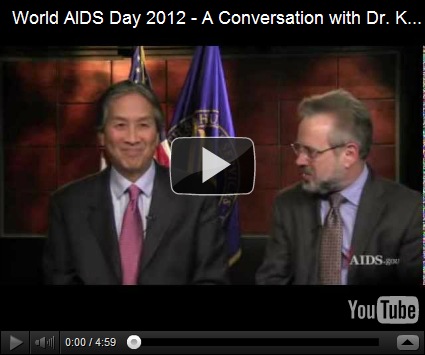
Below you’ll find a short video produced by AIDS.Gov on World AIDS Day 2012.


For a more international perspective you may wish to visit http://www.worldaidscampaign.org/


image


WORLD AIDS DAY

World AIDS Day is celebrated on December 1 each year around the world. It has become one of the most recognised international health days and a key opportunity to raise awareness, commemorate those who have passed on, and celebrate victories such as increased access to treatment and prevention services.


UNAIDS took the lead on World AIDS Day campaigning from its creation until 2004. From 2004 onwards the World AIDS Campaign’s Global Steering Committee began selecting a theme for World AIDS Day in consultation with civil society, organisations and government agencies involved in the AIDS response.


Themes run for one or two years and are not just specific to World AIDS Day. Campaigning slogans such as ‘Stop AIDS. Keep the Promise’ have been used year round to hold governments accountable for their HIV and AIDS related commitments.


History of World Aids Day
World AIDS Day Timeline : 1988 – 2011

World Aids Day Publications
Publications and reports on human rights and universal access

Friday, October 12, 2012

NYC: The Other Meningitis Outbreak

image


# 6628


While the media is understandably focused on the growing fungal meningitis outbreak linked to potentially contaminated steroid injections (see CDC Update: Multi State Meningitis Outbreak – Oct 11th), another outbreak of bacterial meningitis has been reported in New York City over the past several weeks among HIV positive men.


The following notice comes from the New York City Department of Health and Mental Hygiene.

Health Department Recommends Vaccination for HIV-Positive Men at High Risk of Meningitis

The Health Department issued recommendations today for vaccinating against invasive meningococcal disease – commonly known as meningitis – after a spike of cases reported over the past five weeks.


The Department is advising vaccinations for any man who is HIV positive and has had intimate contact with another man that he met through a website, digital application (“App”), or at a bar or party since September 1, 2012.


Vaccines will be available starting Friday at medical facilities throughout the city for men who meet these criteria but who cannot obtain it from their HIV care providers.

 
Read the Press Release


Find a Nearby Clinic with the Meningitis Vaccine


Read the Fact Sheet on the Outbreak


Learn More About Invasive Meningococcal Disease


See Information for Healthcare Providers


From the Fact Sheet on this outbreak:


Meningococcal Outbreak Patient Fact Sheet


An outbreak of invasive meningococcal disease has recently been identified among HIV-infected men who have sex with men. The New York City Department of Health and Mental Hygiene recommends meningococcal vaccination for the following persons: 


Men who are HIV-infected and who have had intimate contact with another man met through a website, digital application (“app”), or at a bar or party since September 1, 2012.


If you think you may be at risk, please read the answers to some important questions below.


What is invasive meningococcal disease?

Invasive meningococcal disease is a serious infection that can cause a high fever, headache, stiff neck, and rash. Some people die from the infection. If you develop these symptoms, you should immediately seek medical care.

 
Does having HIV put me at greater risk of invasive meningococcal disease?


People living with HIV are at greater risk than the general population of acquiring the infection
that causes invasive meningococcal disease. Approximately 20% of people who develop the
disease die of it. 


How is invasive meningococcal disease spread?

The disease is spread by prolonged close contact with an infected person. Examples of prolonged close contact include kissing and having sex. In addition, sharing eating utensils, a drinking glass, or a cigarette with an infected person may spread the disease. It is NOT spread by simply breathing the air where a person with the disease has been.


How can I protect myself?

There are several vaccines licensed for use in adults that can help protect people against invasive meningococcal disease. Meningococcal vaccine may provide protection 7 to 10 days after vaccination, but not everyone will develop protective levels of antibodies. If you are HIV-infected and you do receive the meningococcal conjugate vaccine, you should return to your health care provider eight weeks later for a second dose. 


If you are HIV-infected and need a health care provider, call 311 to find one.


If you do not know your current HIV status, get tested. NYC residents can receive a free HIV test at one of the Health Department’s Sexually Transmitted Disease (STD) or Tuberculosis (TB) clinics, regardless of insurance or immigration status. Call 311 to find a location near you.


Should I get vaccinated with the meningococcal vaccine?

 
If you meet all the criteria listed above, then the Health Department recommends that you receive
meningococcal vaccine.


For more, we go to the CDC’s Bacterial Meningitis Information page:


Bacterial Meningitis

Bacterial meningitis is usually severe. While most people with meningitis recover, it can cause serious complications, such as brain damage, hearing loss, or learning disabilities.


There are several pathogens (types of germs) that can cause bacterial meningitis. Some of the leading causes of bacterial meningitis in the United States include Haemophilus influenzae (most often caused by type b, Hib), Streptococcus pneumoniae, group B Streptococcus, Listeria monocytogenes, and Neisseria meningitidis.


In the United States, about 4,100 cases of bacterial meningitis, including 500 deaths, occurred each year between 2003–2007.


Signs & Symptoms

Meningitis infection may show up in a person by a sudden onset of fever, headache, and stiff neck. It will often have other symptoms, such as

  • Nausea
  • Vomiting
  • Increased sensitivity to light (photophobia)
  • Altered mental status (confusion)

The symptoms of bacterial meningitis can appear quickly or over several days. Typically they develop within 3-7 days after exposure.


(Continue . . . )


Sunday, September 30, 2012

Study: Intra-Continental Spread of Invasive Non-Typhoidal Salmonella

image 

 Salmonella typhimurium bacteria – Credit CDC PHIL


# 6599


You might not think there’d be much of a connection between an emergent serotype of Salmonella and the HIV epidemic in Sub-Saharan Africa - but if researchers from the Wellcome Trust Sanger Institute have it right - this highly pathogenic bacterial strain may have had a powerful viral ally.


There are more than 2500 serovars of Non-Typhoidal Salmonella (NTS) that can produce gastroenteritis or other infections in humans. Taken together, these Gram negative, anaerobic bacteria are believed to be the second most common source of food poisoning in the United States.


Those infected often develop diarrhea, fever, vomiting, and abdominal cramps that may persist for several days.


In the western world most recover without treatment, although the CDC estimates that nearly 400 people infected die each year in the United States (Cite  CDC Food borne Illness Estimates).


In developing countries, Non-typhoidal Salmonella can (and does) exact a much higher toll, particularly among those who may be malnourished or suffer from chronic ailments such as malaria and HIV.


In recent years researchers have also noted a much more virulent form of NTS, spreading across sub-Saharan Africa, that they’ve dubbed  Invasive Non-Typhoidal Salmonella (iNTS). 


Not only is it a multi-drug resistant strain, it is fatal in about 25% of those who contract it.


Today, we’ve a study that appears in Nature Genetics that links the Intracontinental spread and evolution of this invasive and severe form of Salmonella to the emergence and spread of HIV.


Intracontinental spread of human invasive Salmonella Typhimurium pathovariants in sub-Saharan Africa

Chinyere K Okoro,Robert A Kingsley,Thomas R Connor,Simon R Harris,Christopher M Parry,Manar N Al-Mashhadani,Samuel Kariuki,Chisomo L Msefula,Melita A Gordon,Elizabeth de Pinna,John Wain,Robert S Heyderman,Stephen Obaro,Pedro L Alonso,Inacio Mandomando,Calman A MacLennan, Milagritos D Tapia,Myron M Levine,Sharon M Tennant,Julian Parkhill & Gordon Dougan

Published online 30 September 2012


While the bulk of the study is behind a pay wall, the Abstract is available, as is this press release from the Wellcome Trust Sanger Institute.


New pathogen epidemic identified in sub-Saharan Africa

image

Researchers track the spread of human invasive non-Typhoidal Salmonella in sub-Saharan Africa

A new study out today (Sunday 30 September) reveals that the emergence and spread of a rapidly evolving invasive intestinal disease, that has a significant mortality rate (up to 45%) in infected people in sub-Saharan Africa, seems to have been potentiated by the HIV epidemic in Africa.


The team found that invasive non-Typhoidal Salmonella (iNTS) disease is caused by a new form of the bacteria Salmonella Typhimurium that has spread from two different focal hubs in Southern and Central Africa beginning 52 and 35 years ago, respectively. They also found that one of the major contributing factors for the successful spread of iNTS was the acquisition of genes that afford resistance to several front line drugs used to treat blood-borne infection such as iNTS.


iNTS is a blood-borne infection that kills approximately one of four people in sub-Saharan Africa who catch it. Yet, in the rest of the world, NTS is a leading cause of acute inflammatory diarrhoea that is self-limiting and tends to be fatal in less than 1 per cent of people infected. The disease is more severe in sub-Saharan Africa than the rest of the world because of factors such as malnutrition, co-infection with malaria or HIV and potentially the novel genotype of the Salmonella bacteria.


"The immune system susceptibility provided by HIV, malaria and malnutrition at a young age, may provide a population in sub-Saharan Africa that is large enough for this detrimental pathogen to enter, adapt, circulate and thrive," says Chinyere Okoro, joint first author from the Wellcome Trust Sanger Institute. "We used whole genome sequencing to define a novel lineage of Salmonella Typhimurium that is causing a previously unrecognised epidemic across the region. Its genetic makeup is evolving into a more typhoid like bacteria, able to efficiently spread around the human body"


<SNIP>


"There has been some evidence that this disease can be passed from human to human. Now the race is on to discover how NTS is actually transmitted in sub-Saharan Africa so that effective intervention strategies can be implemented."


(Continue . . . )


And for more on all of this, here’s Debra McKenzie’s article for New Scientist.


HIV could be turning salmonella nastier


18:00 30 September 2012 by Debora MacKenzie


A nastier kind of salmonella infection has emerged alongside the HIV epidemic in Africa. The finding is the first evidence that HIV might be allowing new human pathogens to evolve in immunosuppressed people.


(Continue . . . )


Thursday, December 01, 2011

December 1st: World AIDS Day


image


# 5986


Like so many others, I’ve lost friends to the AIDS pandemic over the years, which has claimed more than 25 million lives over the past 3 decades. Today there are an estimated 33 million people around the world living with HIV.


The availability of antiretroviral therapy (ART) today means that HIV infection isn’t the automatic death sentence it once was, but not everyone is able to get this vital treatment.


The global economic difficulties of the past several years have put a dent in public and private funding of many health initiatives, including HIV prevention and treatment (see BBC report  HIV funding cut as science brings 'decisive moment')


Progress has been made, however, although not evenly around the world. Today, a brief roundup of World AIDS Day related links.


First, from the World Health Organization.


Significant global progress in preventing and treating HIV

Portrait of a woman and child

WHO

30 November 2011 -- The new Report on the global HIV/AIDS response released today, shows inspiring progress with a 15% reduction of new infections and a 22% decline in deaths. This progress highlights the importance of long-term investment in HIV/AIDS. There is now a very real possibility of getting ahead of the epidemic. However, gains made to date are being threatened by a decline in resources for AIDS.


The ECDC’s report on AIDS and HIV shows that progress isn’t universal, with new HIV infection rates continuing to rise across the European Union and the European Economic Area (EU/EEA).


World AIDS Day: HIV transmission shows no sign of declining in Europe

30 Nov 2011

ECDC

Marking World AIDS Day 2011, ECDC and the WHO Regional Office for Europe release today their joint publication HIV/AIDS surveillance in Europe 2010. The new data raises concern about the continuing transmission of HIV in Europe, as newly diagnosed HIV infections are still on the increase.


In 2010, 27.116 newly diagnosed HIV infections were reported across the European Union and the European Economic Area (EU/EEA) indicating an increase of around 4%. In contrast, the steady decrease of AIDS cases continued in 2010 with 4.666 reported cases in the EU/EEA region. This constitutes a decrease of nearly 50% in reported AIDS cases from 2004 to 2010.


The HIV epidemics are remarkably distinct in individual countries but overall HIV continues to disproportionally affect certain key populations, in particular men who have sex with men, persons originating from countries with generalised HIV epidemics and people who inject drugs.

(Continue . . . )


The CDC’s  MMWR yesterday released a Vital Signs Report:


Vital Signs: HIV Prevention Through Care and Treatment — United States

Early Release

November 29, 2011 / 60(Early Release);1-6
Abstract

Background: An estimated 1.2 million persons in the United States were living with human immunodeficiency virus (HIV) infection in 2008. Improving survival of persons with HIV and reducing transmission involve a continuum of services that includes diagnosis (HIV testing), linkage to and retention in HIV medical care, and ongoing HIV prevention interventions, including appropriately timed antiretroviral therapy (ART).


Methods: CDC used three surveillance datasets to estimate recent HIV testing and HIV prevalence among U.S. adults by state, and the percentages of HIV-infected adults receiving HIV care for whom ART was prescribed, who achieved viral suppression, and who received prevention counseling from health-care providers. Published data were used to estimate the numbers of persons in the United States living with and diagnosed with HIV and, based on viral load and CD4 laboratory reports, linked to and retained in HIV care.


Results: In 2010, 9.6% of adults had been tested for HIV during the preceding 12 months (range by state: 4.9%--29.8%). Of the estimated 942,000 persons with HIV who were aware of their infection, approximately 77% were linked to care, and 51% remained in care. Among HIV-infected adults in care, 45% received prevention counseling, and 89% were prescribed ART, of whom 77% had viral suppression. Thus, an estimated 28% of all HIV-infected persons in the United States have a suppressed viral load.


Conclusions: Prevalence of HIV testing and linkage to care are high but warrant continued effort. Increasing the percentages of HIV-infected persons who remain in HIV care, achieve viral suppression, and receive prevention counseling requires additional effort.


Implications for Public Health Practice: Public health officials and HIV care providers should improve engagement at each step in the continuum of HIV care and monitor progress in every community using laboratory reports of viral load and CD4 test results.


(Continue . . . )


And last stop is the WORLD AIDS DAY website, where you can find out more about this ongoing pandemic, and how you can help.


image