# 7615
Compared to last year, when more than 300 cases of H3N2v were reported across the country (mostly associated with livestock exposure at county & state fairs), 2013 has seen relatively few cases of swine variant influenza reported.
Prior to today, just 16 cases have been reported to the CDC over the summer. Nevertheless, the CDC and local public health departments remain on alert for new cases, and it is likely that some cases go unidentified.
Last weekend, in CDC Updates H3N2v County & State Fair Advice, we looked at the latest guidance from the CDC for fairgoers and exhibitors.
On July 5th, the CDC released a HAN Advisory On H3N2v, alerting doctors to the possibility that more cases could turn up this summer.
Also in July the CDC also released two new interim guidance documents on H3N2v for local public health agencies; one on case definitions, and the other on surveillance and specimen collection.
The CDC’s most recent assessment of the risk of H3N2v reads:
CDC Assessment
It's possible that sporadic infections and even localized outbreaks among people with this virus will continue to occur. While there is no evidence at this time that sustained human-to-human transmission is occurring, all influenza viruses have the capacity to change and it's possible that this virus may become widespread. Illness associated with H3N2v infection so far has been mostly mild with symptoms similar to those of seasonal flu. Like seasonal flu, however, serious illness, resulting in hospitalization and death is possible. In 2012, for example, 309 infections with H3N2v were detected. Of these cases, 16 people were hospitalized and one of these people died. Most of the people who were hospitalized and the person who died had one or more health or age factor that put them at high risk of serious flu-related complications.
People at high risk of serious complications from seasonal influenza and H3N2v include children younger than 5, people with certain chronic conditions like asthma, diabetes, heart disease, weakened immune systems, pregnant women and people 65 years and older.
CDC has issued guidance for people attending fairs where swine might be present this fair season, including additional precautions for people who are at high risk of serious flu complications. Limited serologic studies indicate that adults may have some pre-existing immunity to this virus while children do not. Most cases of H3N2v infection have occurred in children who have little immunity against this virus.
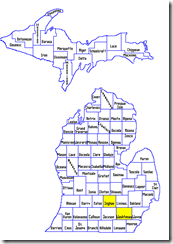
Today Michigan reports their first detection of a swine variant flu infection this year, that of a child who was exposed to an infected pig at the Berrien County Youth Fair, which ran from August 12th to the 17th.
Here is a link to the Berrien County Health Department’s announcement of today’s case.
First Case of Influenza A H3N2 Variant Detected for 2013
FOR IMMEDIATE RELEASE: August 29, 2013LANSING – Today, August 29, 2013, the Michigan Departments of Community Health (MDCH), and Agriculture and Rural Development (MDARD), along with the Berrien County Health Department (BCHD) have identified one case of an H3N2 variant (H3N2v) in a child who was a swine exhibitor at the recent Berrien County Youth Fair, which took place August 12-17, 2013.
The child, who was not hospitalized, is reported to have contracted H3N2v after exposure to swine at the fair. In addition, a sick pig from the fair tested positive for Influenza A H3N2 at the National Veterinary Services Laboratories in Ames, Iowa. MDCH, MDARD, and BCHD are working with the Berrien County Youth Fair (BCYF) board to reach out to swine exhibitors who attended the fair to identify additional illnesses. As a precaution, Michigan public health agencies have conducted an extensive multi-state outreach to meat processing plants that were identified as being in receipt of live swine from the fair. These facilities have been made aware of the potential exposure to their employees, symptoms of illness, and given instruction on seeking care and testing. MDARD has notified managers at eight additional fairs scheduled to take place in the coming weeks, and asked them to reach out to swine exhibitors and the fair veterinarians about the H3N2v case and to use proper safety measures to prevent spreading illnesses.
“Influenza is common to swine and is not a food safety concern,” said Dr. James Averill, MDARD Animal Industry Division Director and State Veterinarian. “Berrien County Youth Fair had hand washing stations, posters, and good biosecurity practices in place, and it’s important that all fairs continue these practices.”
Symptoms of H3N2v infection in people are similar to those of seasonal flu viruses and can include fever and respiratory symptoms, such as cough and runny nose, and possibly other symptoms, such as body aches, nausea, vomiting, or diarrhea. Infections with influenza viruses (including variant viruses like H3N2v) can sometimes cause severe disease, even in healthy people. This can include complications, such as pneumonia, which may require hospitalization, and sometimes results in death. People who are at high risk of developing complications if they get influenza include children younger than 5 years of age, people 65 years of age and older, pregnant women, and people with certain long-term health conditions, such as asthma, diabetes, heart disease, weakened immune systems, and neurological or neurodevelopmental conditions.
“While this variant flu virus has rarely been shown to spread from person to person, we remain on the look-out for such secondary cases. In addition, any individual with flu-like-symptoms at this time, prior to the traditional flu season, should contact their medical provider and local health department,” said Dr. Rick Johansen, Medical Director of the BCHD.
The incubation period (the time it takes from exposure to illness) for this influenza, like the usual seasonal influenza, is 1 to 7 days; and most commonly 2 days. Therefore, it is unlikely that there will be new cases from direct exposure at the recent Berrien County Youth Fair. Early treatment works best and may be especially important for people with a high risk condition. Currently there is no vaccine for H3N2v and the seasonal flu vaccine will not protect against H3N2v.
"While Michigan did see a handful of H3N2v cases in 2012, this first case for 2013 should serve as an important reminder of the simple steps that can be taken to protect our health as we would with any flu season," said Dr. Matthew Davis, Chief Medical Executive with the MDCH. "Washing your hands, covering your nose and mouth when you sneeze or cough, and staying home when you feel sick are some of the best ways to protect yourself and others from becoming ill. This serves as a good reminder for Michigan residents that everyone 6 months and older should get a seasonal flu vaccine each year."
Below are some steps that you can take to protect yourself and prevent the spread of any illness:
- Avoid close contact with sick people.
- Cover your nose and mouth with a tissue when you cough or sneeze. Throw the tissue in the trash after you use it.
- Wash your hands often with soap and water. If soap and water are not available, use an alcohol-based hand rub.
- Do not eat or drink in livestock barns or show rings.
- Avoid touching your eyes, nose and mouth. Germs spread this way.
- If you are sick, stay home from work or school until your illness is over.
- Avoid contact with pigs if you have flu-like symptoms. Wait 7 days after your illness started or until you have been without fever for 24 hours without the use of fever-reducing medications, whichever is longer. If you must have contact with pigs while you are sick, take the protective actions listed above.
- Get an annual influenza vaccination.
For more information about H3N2v, visit www.cdc.gov/flu/swineflu/h3n2v-basics.htm.