Showing posts with label SWINE. Show all posts

Tuesday, May 19, 2015

mBio: A Novel Pathogenic Mammalian Orthoreovirus In Diarrheic American Pigs

image

Photo Credit CDC EID Journal


# 10,064


While American poultry farmers are gearing up to battle HPAI, for the past two years North American swine farmers have been dealing with several recently discovered novel coronaviruses causing diarrheal disease, and often death, in young piglets. 


We’ve seen no evidence of human infection due to these swine coronaviruses, so they are not currently considered a zoonotic disease.  Which is not to say that one or both couldn’t someday pose a threat. Coronaviruses – like all RNA viruses – tend to evolve and mutate at a fairly rapid rate (see discussion of new zoonotic coronaviruses).

Porcine epidemic diarrhea has now been reported in 32 states, and unexpectedly has hit some of the same herds more than once, leading researchers to wonder if there might be more pathogens at work than are already identified.  


All of which leads us to a fascinating bit of viral detective work, where researchers have isolated and identified yet another pathogenic diarrhea-inducing virus circulating in American pigs. 


This time, however, the culprit is not a coronavirus – but a novel mammalian orthoreovirus (MRV).


First the abstract from a much larger (open access) mBio research article, after which I’ll return with more:

A Novel Pathogenic Mammalian Orthoreovirus from Diarrheic Pigs and Swine Blood Meal in the United States

Athmaram Thimmasandra Narayanappaa, Harini Sooryanaraina,  Jagadeeswaran Deventhirana, Dianjun Caoa, Backiyalakshmi Ammayappan Venkatachalama,  Devaiah Kambirandab,  Tanya LeRoitha,  Connie Lynn Heffrona,  Nicole Lindstroma,  Karen Halla,  Peter Jobsta,  Cary Sextonc,  Xiang-Jin Menga, Subbiah Elankumarana 

ABSTRACT

Since May 2013, outbreaks of porcine epidemic diarrhea have devastated the U.S. swine industry, causing immense economic losses. Two different swine enteric coronaviruses (porcine epidemic diarrhea virus and Delta coronavirus) have been isolated from the affected swine population. The disease has been reported from at least 32 states of the United States and other countries, including Mexico, Peru, Dominican Republic, Canada, Columbia, Ecuador, and Ukraine, with repeated outbreaks in previously infected herds.

Here we report the isolation and characterization of a novel mammalian orthoreovirus 3 (MRV3) from diarrheic feces of piglets from these outbreaks in three states and ring-dried swine blood meal from multiple sources. MRV3 could not be isolated from healthy or pigs that had recovered from epidemic diarrhea from four states. Several MRV3 isolates were obtained from chloroform-extracted pig feces or blood meal in cell cultures or developing chicken embryos.

Biological characterization of two representative isolates revealed trypsin resistance and thermostability at 90°C. NextGen sequencing of ultrapurified viruses indicated a strong homology of the S1 segment to mammalian and bat MRV3. Neonatal piglets experimentally infected with these viruses or a chloroform extract of swine blood meal developed severe diarrhea and acute gastroenteritis with 100% mortality within 3 days postinfection. Therefore, the novel porcine MRV3 may contribute to enteric disease along with other swine enteric viruses. The role of MRV3 in the current outbreaks of porcine epidemic diarrhea in the United States remains to be determined, but the pathogenic nature of the virus warrants further investigations on its epidemiology and prevalence.


This paper goes on to succinctly describe MRV viruses as:


The family Reoviridae comprises 15 genera of double-stranded RNA (dsRNA) viruses (9). Orthoreoviruses with 10 discrete RNA segments have been isolated from a wide variety of animal species, including bats, civet cats, birds, reptiles, pigs, and humans (10, 11).

Most orthoreoviruses are recognized to cause respiratory infections, gastroenteritis, hepatitis, myocarditis, and central nervous system disease in humans, animals, and birds (11); orthoreovirus genomes are prone to genetic reassortment and intragenic rearrangement (11, 12). The exchange of RNA segments between viruses could lead to molecular diversity and evolution of viruses with increased virulence and host range (13, 14).

MRV serotypes 1 to 3 were associated with enteritis, pneumonia, or encephalitis in swine around the world, including China and South Korea (15– 18). The zoonotic potential of MRV3 has been reported recently (19–21). However, porcine orthoreovirus infection of pigs was unknown previously in the United States.


The entire study is highly detailed, and well worth reading in its entirety.


In recent years we’ve seen increased interest and research into orthoreoviruses, with an particular eye towards their ability to reassort and to perhaps someday pose a greater threat to human health.


In 2007 we saw  the emergence of what is now called the Melaka Virus (see First Bird Flu, Now Bat Flu & Why You Should Catch `Contagion’) – an orthoreovirus carried by bats in Malaysia.


Since then, several additional bat-borne orthoreoviruses have been identified, including the Xi-River, Kampar, Sikamat, HK23629/07 and Broome virus.  As bats are the most abundant and geographically dispersed vertebrates on earth, their ability to carry and vector dangerous diseases without ill-effect (i.e. Rabies, Nipah, Hendra, even influenza) is increasingly a topic of study.


Just last week, PLoS One published a study looking at a potential reassortment of bat, pig, and/or human MRV strains in a bat reservoir in China.


Isolation and Identification of a Natural Reassortant Mammalian Orthoreovirus from Least Horseshoe Bat in China

Lihua Wang,1,2 Shihong Fu,1,2 Lei Cao,1,2 Wenwen Lei,1,2 Yuxi Cao,1,2 Jingdong Song,1,2 Qing Tang,1,2 Hailin Zhang,3 Yun Feng,3 Weihong Yang,3 and Guodong Liang1,2,*

Abstract

Background

Mammalian orthoreoviruses (MRVs) have a wide geographic distribution and can infect virtually all mammals. Infections in humans may be either symptomatic or asymptomatic. This study describes the isolation and identification of a natural reassortant MRV from least horseshoe bats (Rhinolophus pusillu) in China, referred to as RpMRV-YN2012.

<SNIP>

MRV infection in humans has been shown to be fairly common and the infections are often shown to be asymptomatic or associated with mild, self-limiting respiratory or gastrointestinal illness in infants and children [3]. Recent studies have shown that MRV can cause severe illnesses in humans and other mammals, including upper respiratory tract infections, encephalitis, and diarrhea[4, 5, 18].

(Continue . . . )

And a couple of years ago, in the Journal of Virology, we saw:


High Similarity of Novel Orthoreovirus Detected in a Child Hospitalized with Acute Gastroenteritis to Mammalian Orthoreoviruses Found in Bats in Europe

Andrej Steyera, Ion Gutiérrez-Aguireb,e, Marko Kolenca, Simon Korenc, Denis Kutnjakb, Marko Pokornd, Mateja Poljšak-Prijatelja, Nejc Račkib, Maja Ravnikarb,e, Martin Sagadina, Adela Fratnik Steyera and Nataša Toplakc 

ABSTRACT

Mammalian orthoreoviruses (MRVs) are known to cause mild enteric and respiratory infections in humans. They are widespread and infect a broad spectrum of mammals. We report here the first case of an MRV detected in a child with acute gastroenteritis, which showed the highest similarity to an MRV reported recently in European bats.


(Continue . . . )


None of which is to suggest that MRVs are destined to be the next big public health threat, or that the MRV3 virus described in the mBio paper today poses any immediate threat to human health.


But they do serve as a reminder that the constellation of  viruses out there with zoonotic potential is much greater and more widespread than we know, and that these viruses are not static - but are instead moving targets – evolving, reassorting, and spreading geographically at truly impressive rates.


We’ll return to today’s mBio study to close, with the author’s summation of the importance of their findings:


IMPORTANCE Porcine orthoreoviruses causing diarrhea have been reported in China and Korea but not in the United States. We have isolated and characterized two pathogenic reassortant MRV3 isolates from swine fecal samples from porcine epidemic diarrhea outbreaks and ring-dried swine blood meal in the United States. These fecal and blood meal isolates or a chloroform extract of blood meal induced severe diarrhea and mortality in experimentally infected neonatal pigs. Genetic and phylogenetic analyses of two MRV3 isolates revealed that they are identical but differed significantly from nonpathogenic mammalian orthoreoviruses circulating in the United States. The present study provides a platform for immediate development of suitable vaccines and diagnostics to prevent and control porcine orthoreovirus diarrhea.

Monday, May 04, 2015

H5N2: The Other Biosecurity Concern

image

Credit Wikipedia


# 10,003


During summer months in North America, when we talk about influenza, we often talk about swine and swine variant flu strains that have sparked small outbreaks of human disease among fairgoers and pig farmers over the past few years (see  Keeping Our Eyes On The Prize Pig).  


Like humans, pigs are primarily affected by H1, H2 & H3 flu viruses, although studies have shown they are not immune to infection by other subtypes, including avian H5N1 (see EID Journal: Asymptomatic H5N1 In Pigs).


Swine possess both avian-like (SAα2,3Gal) and human-like (SAα2,6Gal) receptor cells in their respiratory tract, which scientists believe can facilitate a `bridging’ between avian and human strains. And being susceptible to avian, human, and swine flu strains, makes pigs a likely `mixing vessel’ for influenza reassortment.


Reassortant pig[6]

Since pigs can be infected by more than one flu virus at the same time, it is possible for two viruses to swap genetic material (reassort), resulting in a new hybrid strain.


Curiously, what is often a fatal infection in humans and poultry, is usually subclinical in pigs.   While good news for hog farmers, the authors of that EID study warned that the virus `can replicate undetected for prolonged periods, facilitating avian virus adaptation to mammalian hosts.’

Iowa, which is embroiled in the biggest HPAI (H5N2) outbreak in American history, also happens to be the nation’s largest producer of hogs.


According to the USDA’s Census of Agriculture (2012): The top three producers – Iowa, North Carolina, and Minnesota – together accounted for 55 percent of the value of U.S. hog and pig sales and 56 percent of the 66 million hog and pig end-of-year inventory in 2012.


All of which leads to the unavoidable question:  Are pigs susceptible to the North American HPAI H5N2 virus?


Yesterday, AgriNews carried a reassuring reporting, entitled HPAI no threat to pigs, but vets urge biosecurity vigilance, with quotes from Dr. Bill Hollis, District 5 director on the board of the American Association of Swine Veterinarians :


(Excerpt)

“It’s not currently expected to infect or to create disease in people or pigs,” he said.

Hollis said that while pigs can become infected with influenza virus, at the moment, there is no evidence that herds have contracted the HPAI H5 virus.

“We don’t think it would create clinical disease. We don’t expect clinical disease in people or pigs. But we don’t want to risk any transmission,” he said.

Producers are urged to continue strict biosecurity protocols and to pay attention to water supplies.

(Continue . . . )


At this point in time, Dr. Hollis is absolutely correct:  We’ve seen no evidence that American Swine herds have contracted the H5N2 virus.


The two caveats I would add here are that swine infection would probably be subclinical and therefore unlikely to be detected without lab testing, and we don’t know how much active surveillance (PCR & Serological testing) has been done in swine herds in the affected areas over the past couple of months.


The University of Minnesota’s Swine Disease Eradication Center has a slightly less sanguine assessment, in the following notice on their front page:


NOTICE: PIGS AND HIGH-PATH AVIAN INFLUENZA

Highly pathogenic avian influenza (HPAI) has recently been diagnosed in the US in Minnesota, Missouri, Arkansas, Oregon, Washington and Idaho. Birds in the affected flocks have experienced high mortality and measures have been put in place to quarantine and depopulate the affected flocks. Contact with wild birds is considered the most likely source of infection for domestic poultry.

Pigs are susceptible to infection with all influenza viruses, including HPAI. Pigs are usually sub-clinical and evidence of infection is usually only seen by serology. However, there are reports indicating that pigs can also develop the disease.

To date, there is no evidence that the new strains of HPAI (H5N2 or H5N8 subtypes) have infected pigs in the US. However, producers should be diligent about their biosecurity practices. Avian influenza viruses are highly contagious, extremely variable and wide-spread in birds. Preventing introduction of birds into swine facilities, avoiding contact with wild birds and bird droppings in general, and avoiding non-chlorinated surface water should be emphasized.


With the further caveat that not all H5N2 viruses are created equal, and you can’t necessarily predict how a new reassortant strain will behave based on an older strain, we do have some additional evidence of the ability of HPAI H5 viruses to infect pigs, with a potential for reassortment.


First:

Isolation and genetic characterization of H5N2 influenza viruses from pigs in Korea

Jin-Hong Lee, Philippe Noriel Q. Pascua, M.S. Song, Y.H. Baek, C.J. Kim, .W. Choi

Journal of Virology (Impact Factor: 4.65). 02/2009; 83. DOI: 10.1128/JVI.02403-08

ABSTRACT Due to dual susceptibility to both human and avian influenza A viruses, pigs are believed to be effective intermediate hosts for the spread and production of new viruses with pandemic potential. In early 2008, two swine H5N2 viruses were isolated from our routine swine surveillance in Korea.

The sequencing and phylogenetic analysis of surface proteins revealed that the Sw/Korea/C12/08 and Sw/Korea/C13/08 viruses were derived from avian influenza viruses of the Eurasian lineage. However, although the Sw/Korea/C12/08 isolate is an entirely avian-like virus, the Sw/Korea/C13/08 isolate is an avian-swine-like reassortant with the PB2, PA, NP, and M genes coming from a 2006 Korean swine H3N1-like virus. The molecular characterization of the two viruses indicated an absence of significant mutations that could be associated with virulence or binding affinity.

However, animal experiments showed that the reassortant Sw/Korea/C13/08 virus was more adapted and was more readily transmitted than the purely avian-like virus in a swine experimental model but not in ferrets. Furthermore, seroprevalence in swine sera from 2006 to 2008 suggested that avian H5 viruses have been infecting swine since 2006.

Although there are no known potential clinical implications of the avian-swine reassortant virus for pathogenicity in pigs or other species, including humans, at present, the efficient transmissibility of the swine-adapted H5N2 virus could facilitate virus spread and could be a potential model for pandemic, highly pathogenic avian influenza (e.g., H5N1 and H7N7) virus outbreaks or a pandemic strain itself


And then there’s this, from a 2010 PLoS One study:


Reassortant between Human-Like H3N2 and Avian H5 Subtype Influenza A Viruses in Pigs: A Potential Public Health Risk

Yanlong Cong , Guangmei Wang , Zhenhong Guan , Shuang Chang, Quanpeng Zhang, Guilian Yang, Weili Wang, Qingfeng Meng, Weiming Ren, Chunfeng Wang , Zhuang Ding

Published: September 7, 2010

DOI: 10.1371/journal.pone.0012591

Abstract

Background

Human-like H3N2 influenza viruses have repeatedly been transmitted to domestic pigs in different regions of the world, but it is still uncertain whether any of these variants could become established in pig populations. The fact that different subtypes of influenza viruses have been detected in pigs makes them an ideal candidate for the genesis of a possible reassortant virus with both human and avian origins. However, the determination of whether pigs can act as a “mixing vessel” for a possible future pandemic virus is still pending an answer. This prompted us to gather the epidemiological information and investigate the genetic evolution of swine influenza viruses in Jilin, China.

Results

Influenza surveillance of pigs in Jilin province, China revealed that H3N2 influenza viruses were regularly detected from domestic pigs during 2007 to 2008. Phylogenetic analysis revealed that two distinguishable groups of H3N2 influenza viruses were present in pigs: the wholly contemporary human-like H3N2 viruses (represented by the Moscow/10/99-like sublineage) and double-reassortant viruses containing genes from contemporary human H3N2 viruses and avian H5 viruses, both co-circulating in pig populations.


It is quite possible – perhaps even likely - that the North American reassortants of HPAI H5 will never pose a health threat to pigs, humans, or any other non-avian species.  So far, we’ve seen no evidence that they can, and that is certainly encouraging.  


But there is also much we don’t know about these viruses – including whether they can asymptomatically infect pigs or other mammals – and how and when they might reassort or evolve, and what effect that might have on their behavior in the months and years to come.


The only true constant with influenza is that it is constantly changing. 


Which is why – while H5N2 doesn’t appear to be ready for swine time - when it comes to predicting what a virus will, or won’t do, it is probably best to never say `never’.

Friday, July 25, 2014

Study: Reassortants of H1N1pdm & Swine H1 & H3 Viruses in Japan

image


# 8866


We’ve another study, this time from Japan, that shows how quickly the 2009 H1N1 pandemic virus jumped from humans back into the local swine population, and how is has since reassorted into several new, distinct hybrid viruses.  This is a pattern we’ve observed both here in United States, and elsewhere (see J. Virol: Continued Reassortment Of Swine Flu Viruses With Genes From pH1N1 In China).


While we watch avian H5, H7, and H10 viruses with suspicion, over the past 120 years or so only H1, H2, and H3 influenza viruses  - the type commonly circulating in pigs – are known to have sparked pandemics. Making emerging swine flu viruses of particular concern, a topic we explored a few weeks ago in Are Influenza Pandemic Viruses Members Of An Exclusive Club?

image


Here in North America we’ve been watching the evolution of several swine variant viruses (H1N1v, H1N2v, H3N2v) over the past few years, all of which have reassorted with - and picked up the M gene segment from – the 2009 H1N1 virus.


The CDC has speculated that `This M gene may confer increased transmissibility to and among humans, compared to other variant influenza viruses.’


Today’s study is a reminder that once the 2009 H1N1 virus spread globally, it was reintroduced into pig herds (which host varying strains of swine influenza viruses (SIVs) around the world), and has since reassorted into new strains.  Strains that continue to evolve – mostly unmonitored – in millions of pigs around the world.


J Vet Med Sci. 2014 Jul 24. [Epub ahead of print]

Genomic Reassortants of Pandemic A (H1N1) 2009 Virus and Endemic Porcine H1 and H3 Viruses in Swine in Japan.

Kirisawa R1, Ogasawara Y, Yoshitake H, Koda A, Furuya T.

Author information
  • 1Laboratory of Veterinary Virology, Department of Pathobiology, School of Veterinary Medicine, Rakuno Gakuen University.
Abstract

From 2010 to 2013 in Japan, we isolated eleven swine influenza viruses (SIVs) from pigs showing respiratory symptoms. Sequence and phylogenetic analyses showed that six H1N1 viruses originated from the pandemic (H1N1) 2009 (pdm 09) virus and the other five viruses were reassortants between SIVs and pdm 09 viruses, representing four genotypes.

Two H1N2 viruses contained H1 and N2 genes originated from Japanese H1N2 SIV together with internal genes of pdm 09 viruses. Additionally, one H1N2 virus contained a further NP gene originating from Japanese H1N2 SIV. One H1N1 virus contained only the H1 gene originating from Japanese H1 SIV in a pdm 09 virus background. One H3N2 virus contained H3 and N2 genes originating from Japanese H3N2 SIV together with internal genes of pdm 09 virus.

The results indicate that pdm 09 viruses are distributed widely in the Japanese swine population and that several reassortments with Japanese SIVs have occurred.


As global pig production grows – particularly in places where biosecurity and surveillance may be lax – it creates increasing opportunities for a new, biologically `fit’  swine variant virus to emerge.  As you can see by the chart below, swine production is growing fastest in developing countries, where biosecurity is likely to be the least stringent.

image

Source: FAO 


Although most novel flu viruses are evolutionary failures, with a playground consisting of billions of avian and porcine hosts -  and with nature’s laboratory churning out new hybrids 24/7 -  the odds of someday seeing another `successful’ swine or avian reassortant emerge and spark a pandemic is  considered all but inevitable.


It’s just a matter of when.


For some recent blogs on swine influenza, you may wish to revisit:


EID Journal: H3N2v Swine To Human Transmission At Agricultural Fairs – 2012
CDC: Measures to Minimize Influenza Transmission at Swine Exhibitions, 2014
EID Journal: Predicting Hotspots for Influenza Virus Reassortment

Tuesday, March 04, 2014

mBio: Characterizing A Novel Influenza C Virus In Bovines & Swine

image

Photo Credit Wikipedia


# 8347


In virology, perhaps as much as any field of scientific endeavor, the half-life of `facts’  continues to decline.  Fresh discoveries, propelled by new technologies and concerns over the threats posed by emerging viruses, have conspired to obsolete many textbooks (and blog articles) almost as soon as they are published.


Case in point:  A year ago, little thought was given to influenza C viruses. 


A visit to the CDC’s Flu Basics `Types Of Influenza Viruses’ page barely finds mention of  influenza C.


There are three types of influenza viruses: A, B and C. Human influenza A and B viruses cause seasonal epidemics of disease almost every winter in the United States. The emergence of a new and very different influenza virus to infect people can cause an influenza pandemic. Influenza type C infections cause a mild respiratory illness and are not thought to cause epidemics.


Since most of us are exposed as children, influenza C is regarded as posing a minimal health threat. This lack of respect for influenza C is due mainly to its lack of genetic diversity and slow rate of evolution. 


Essentially, it was believed if you’d seen one subtype of Influenza C, you’ve pretty much seen them all. 


But last year, a group of researchers published (PLoS Pathogens) their finding and Isolation of a Novel Swine Influenza Virus from Oklahoma in 2011 Which Is Distantly Related to Human Influenza C Viruses, which threatened to rewrite the textbooks on Influenza C.  The authors wrote:

Based on its genetic organizational similarities to influenza C viruses this virus has been provisionally designated C/Oklahoma/1334/2011 (C/OK). Phylogenetic analysis of the predicted viral proteins found that the divergence between C/OK and human influenza C viruses was similar to that observed between influenza A and B viruses. No cross reactivity was observed between C/OK and human influenza C viruses using hemagglutination inhibition (HI) assays.

Additionally, the authors found that this new (provisional) influenza C virus could infect, and transmit, in both ferrets and pigs.  The authors described this new discovery as:


. . .  a new subtype of influenza C viruses that currently circulates in pigs that has not been recognized previously. The presence of multiple subtypes of co-circulating influenza C viruses raises the possibility of reassortment and antigenic shift as mechanisms of influenza C virus evolution.


Fast forward a year, and these same researchers are back, this time in the open access journal mBio, with an update on this new influenza C subtype, which they now have found circulates in both cattle and swine.


Characterization of a Novel Influenza Virus in Cattle and Swine: Proposal for a New Genus in the Orthomyxoviridae Family

Ben M. Hausea, Emily A. Collina,b, Runxia Liub,c, Bing Huangb,c,d, Zizhang Shenge, Wuxun Lub,c, Dan Wangb,c, Eric A. Nelsonb,c, Feng Lib,c

ABSTRACT

We have recently reported the isolation of a novel virus, provisionally designated C/swine/Oklahoma/1334/2011 (C/OK), with 50% overall homology to human influenza C viruses (ICV), from a pig in Oklahoma. Deep RNA sequencing of C/OK virus found a matrix 1 (M1) protein expression strategy that differed from that of ICV. The novelty of C/OK virus prompted us to investigate whether C/OK virus could exist in a nonswine species.

Significantly, we found that C/OK virus was widespread in U.S. bovine herds, as demonstrated by reverse transcription (RT)-PCR and serological assays. Genome sequencing of three bovine viruses isolated from two herds in different states further confirmed these findings. To determine whether swine/bovine C/OK viruses can undergo reassortment with human ICV, and to clarify the taxonomic status of C/OK, in vitro reassortment and serological typing by agar gel immunodiffusion (AGID) were conducted. In vitro reassortment using two human ICV and two swine and bovine C/OK viruses demonstrated that human ICV and C/OK viruses were unable to reassort and produce viable progeny. Antigenically, no cross-recognition of detergent split virions was observed in AGID between human and nonhuman viruses by using polyclonal antibodies that were reactive to cognate antigens.

Taken together, these results demonstrate that C/OK virus is genetically and antigenically distinct from ICV. The classification of the new virus in a separate genus of the Orthomyxoviridae family is proposed. The finding of C/OK virus in swine and bovine indicates that this new virus may spread and establish infection in other mammals, including humans.

IMPORTANCE Influenza C viruses (ICV) are common human pathogens, infecting most people during childhood and adolescence, and typically cause mild respiratory symptoms. While ICV have been isolated from both pigs and dogs, humans are thought to be the natural viral reservoir. Previously, we characterized an ICV-like virus isolated from pigs exhibiting symptoms of influenza virus-like illness. Here, we show molecular and serological data demonstrating widespread circulation of similar viruses in bovines.

Deep RNA sequencing, phylogenetic analysis, and in vitro reassortment experiments demonstrate that animal ICV-like viruses are genetically distinct from human ICV. Antigenically, we show that ICV-like viruses are not recognized by ICV antibodies. En masse, these results suggest that bovine influenza virus warrants classification as a new genus of influenza virus. The finding of this novel virus that can infect multiple mammalian species warrants further research into its role in human health.

(Continue . .  )


Although first isolated in swine, seroprevalence studies only showed about 10% of pigs sampled had antibodies to this influenza C virus, prompting researchers to look for another host species. Subsequent testing of cattle across multiple states found high antibody titers to C/OK viruses, suggesting they are the likely primary reservoir host for this subtype.


It seems that hardly a month goes by when we don’t learn of a new virus or pathogen, such as we saw last year in PLoS Pathogens: New World Bats Harbor Diverse Flu Strains.  Until 2012, bats were never thought of as a host for influenza viruses, but now we know different.


Last September, in mBio: A Strategy To Estimate The Number Of Undiscovered Viruses, we looked at an attempt by researchers at Columbia University's Mailman School of Public Health, EcoHealth Alliance, the NIH, and universities and research centers around the world to estimate the number of viruses in the wild, awaiting discovery.


The good news is, the estimated number of viruses out there is finite, the bad news is, we are probably talking 6 figures.


As far at the potential human health impact from this recently discovered C/OK virus is concerned, the jury is still out.  The authors write:


It is unknown if C/OK virus has an impact on human health. The ability to infect and transmit in ferrets, a model for human influenza virus pathogenesis studies, suggests this pathogen has the potential to cause disease in humans. Limited serology on a subset of human serum samples showing a 1.3% positive rate also supports this hypothesis. The prevalence of C/OK virus in cattle and presumptive spillover to swine, both of which live in close proximity to humans, further highlights its potential threats to human health, which merit further studies.


Regardless of the future impact of this particular discovery, one thing is certain.  We are unlikely to run out of new things to talk about in virology anytime in our lifetimes.


It is truly a vast, and largely undiscovered, scientific frontier.

Wednesday, October 16, 2013

mBio: PEDV - Porcine Epidemic Diarrhea Virus – An Emerging Coronavirus

image

Photo Credit CDC EID Journal


# 7864


Over the past several months a newly emerging coronavirus – PEDV – has been identified in the United States, affecting swine herds in  at least 17 states, resulting in high mortality, particularly in piglets. The virus was first identified in the United States in May of this year, but there have been reports of the virus both in Asia and in Europe, going back several decades.


The University of Minnesota’s Center for Animal Health and Food Safety describes the virus thusly:

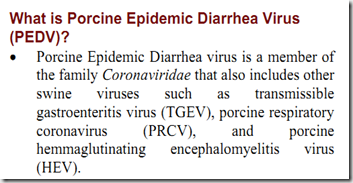
image


With the recent emergence of another coronavirus – MERS-CoV – and the history of human epidemic sparked by the SARS coronavirus a decade ago, there is understandable interest in PEDV both by agricultural and public health interests. 


It should be quickly noted, however, that we’ve seen no evidence of human infection due to PEDV coronavirus, so PEDV is not considered a zoonotic disease.


While SARS and MERS are both betacoronaviruses,  PEDV is an alphacoronavirus (two other genera also exist, Gammacoronavirus, and Deltacoronavirus).  The first two (alpha & beta) are believed to originate in bats (but are found in many other species), with the second two (Gamma & Delta) are believed to have an avian origin.


Although PED (porcine epidemic diarrhea) has been recognized in Asia since the 1970s, it has been considered exotic in North America.  Starting around 2010, China reported a sudden increase related pig deaths, which was the subject of the following CDC’s EID Journal dispatch published in August of 2012.

New Variants of Porcine Epidemic Diarrhea Virus, China, 2011

Wentao Li, Heng Li, Yunbo Liu, Yongfei Pan, Feng Deng, Yanhua Song, Xibiao Tang, and Qigai He

Abstract

In 2011, porcine epidemic diarrhea virus (PEDV) infection rates rose substantially in vaccinated swine herds. To determine the distribution profile of PEDV outbreak strains, we sequenced the full-length spike gene from samples from 9 farms where animals exhibited severe diarrhea and mortality rates were high. Three new PEDV variants were identified.

<SNIP>

The first confirmed PED case in the People’s Republic of China was reported in 1973. Almost 2 decades later, an oil emulsion, inactivated vaccine was developed and has since been in wide use throughout the swine industry in China. Until 2010, the prevalence of PEDV infection was relatively low with only sporadic outbreaks; however, starting in late 2010, a remarkable increase in PED outbreaks occurred in the pig-producing provinces.

(Continue . . . )


All of which serves as prelude to a study, published yesterday in the open access journal mBio, that takes a detailed look at the:


Origin, Evolution, and Genotyping of Emergent Porcine Epidemic Diarrhea Virus Strains in the United States

Yao-Wei Huanga,b, Allan W. Dickermanc, Pablo Piñeyroa, Long Lid, Li Fangd, Ross Kiehnee, Tanja Opriessnigf,g, Xiang-Jin Menga

ABSTRACT

Coronaviruses are known to infect humans and other animals and cause respiratory and gastrointestinal diseases. Here we report the emergence of porcine epidemic diarrhea virus (PEDV) in the United States and determination of its origin, evolution, and genotypes based on temporal and geographical evidence. Histological lesions in small intestine sections of affected pigs and the complete genomic sequences of three emergent strains of PEDV isolated from outbreaks in Minnesota and Iowa were characterized. Genetic and phylogenetic analyses of the three U.S. strains revealed a close relationship with Chinese PEDV strains and their likely Chinese origin. The U.S. PEDV strains underwent evolutionary divergence, which can be classified into two sublineages. The three emergent U.S. strains are most closely related to a strain isolated in 2012 from Anhui Province in China, which might be the result of multiple recombination events between different genetic lineages or sublineages of PEDV. Molecular clock analysis of the divergent time based on the complete genomic sequences is consistent with the actual time difference, approximately 2 to 3 years, of the PED outbreaks between China (December 2010) and the United States (May 2013).

The finding that the emergent U.S. PEDV strains share unique genetic features at the 5′-untranslated region with a bat coronavirus provided further support of the evolutionary origin of PEDV from bats and potential cross-species transmission. The data from this study have important implications for understanding the ongoing PEDV outbreaks in the United States and will guide future efforts to develop effective preventive and control measures against PEDV.

IMPORTANCE The sudden emergence of porcine epidemic diarrhea virus (PEDV), a coronavirus, for the first time in the United States causes significant economic and public health concerns. Since its recognition in May 2013, PEDV has rapidly spread across the United States, resulting in high mortality in piglets in more than 17 States now.

The ongoing outbreaks of Middle East respiratory syndrome coronavirus in humans from countries in or near the Arabian Peninsula and the historical deadly nature of the 2002 outbreaks of severe acute respiratory syndrome coronavirus create further anxiety over the emergence of PEDV in the United States due to the lack of scientific information about the origin and evolution of this emerging coronavirus.

Here we report the detailed genetic characterization, origin, and evolution of emergent PEDV strains in the United States. The results provide much needed information to devise effective preventive and control strategies against PEDV in the United States.

<SNIP>

In summary, we report here the emergence of PEDV in the United States and detailed genetic and phylogenetic analyses of the complete genomic sequences of three emergent U.S. PEDV strains from Minnesota and Iowa. The findings that the emergent U.S. PEDV strains are most closely related to Chinese G2a strains suggest that the emergence of the PEDV in the United States likely originated from China. However, the exact source of the origin is difficult to identify at this point. The finding that the emergent PEDV strains in the United States share unique genetic features with a bat coronavirus further suggests a possible evolutionary origin of PEDV from bat species and potential cross-species transmission. The information presented in this study will guide the current control measures to stop the ongoing spread of PEDV in the United States and also provides important clues for the development of an effective vaccine against the emergent PEDV strains.

(Continue . . . )


Whether the result of an introduction from China, or evolutionary events here in the United States, pig producers are now confronted with at least three new variants of this virus.  PEVD has the potential to cause extensive economic damage to pork producers across the nation.


It is just one of the many coronaviruses that affect animals species, but thankfully, not humans. 


Other non-zoonotic coronaviruses include Infectious bronchitis virus (IBV) in birds, (TEGV) transmissible gastroenteritis in swine, Bovine coronavirus (BCV), Feline coronavirus (FCoV), canine coronavirus (CCoV), and coronaviruses that target turkeys and ferrets.


The rub, as always, is that viruses are moving targets.  As we’ve just seen, a number of new variants have appeared here in the United States and in China over the past three years.  None have shown any signs of infecting humans, but until 2012, we’d never seen evidence of the MERS-CoV jumping species either. 


Which illustrates the importance of good surveillance and testing of livestock for infectious diseases, even those that don’t currently pose a threat to human health.


Because with viruses, an unexpected change in behavior can be literally only a few mutations away.

Saturday, August 31, 2013

Study: Novel & Variant Swine Influenzas In Korean Pigs

Reassortant pig[6]

Since pigs can be infected by more than one flu virus at the same time, it is possible for two viruses to swap genetic material (reassort), resulting in a new hybrid strain.


# 7621


We’ve more evidence today that nature’s laboratory continues to produce new, and possibly troublesome, flu viruses from a report that appeared yesterday in the journal Influenza and other Respiratory Viruses.


Swine are considered excellent `mixing vessels’ for influenza because they are susceptible to a variety of human, swine, and avian strains of flu.  As such, they have the opportunities to be co-infected by two different strains simultaneously.


The most common swine flu viruses are H1N1, H1N2, H3N1, H3N2, and H2N3. These viruses, when they jump to humans, are called variant viruses (e.g. H3N2v).


Starting in 2011, the H1N1v virus was found to have acquired the M (matrix) gene from the 2009 H1N1 pandemic virus. Since then, this M gene has been showing up regularly in all three swine variant viruses (H1N1v, H1N2v, H3N2v).


The CDC has speculated that `This M gene may confer increased transmissibility to and among humans, compared to other variant influenza viruses.’ – CDC HAN 2012


The concern with these variant swine flu infections, as with any novel flu, is that each new human exposure provides the virus another opportunity to better adapt to human physiology.


All of which brings us to a new study that has not only found the first evidence of H3N2v in swine outside of the United States, but also finds a new H3N1 reassortant virus that appears to transmit well among ferrets and replicate well in human cell lines.


Excerpts from the study’s abstract follow, after which I’ll return with more:


Emergence of H3N2pM-like and novel reassortant H3N1 swine viruses possessing segments derived from the A (H1N1)pdm09 influenza virus, Korea

Philippe Noriel Q. Pascua, Gyo-Jin Lim, Hyeok-il Kwon, Su-Jin Park, Eun-Ha Kim, Min-Suk Song, Chul Joong Kim, Young-Ki Choi

Article first published online: 30 AUG 2013

Result

We identified reassortant H3N2 (H3N2pM-like) and H3N1 swine viruses containing A(H1N1)pdm09-like segments in Korean pigs that are genetically closely related to strains recently detected in pigs and humans in North America.


Although the H3N2pM-like and novel H3N1 reassortants demonstrated efficient replication in mice and ferrets, all the H3N1 strains exhibited growth advantage over the representative H3N2pM-like virus in human airway cells.


Interestingly, A/swine/Korea/CY02-07/2012(H3N1) and A/swine/Korea/CY03-13/2012(H3N1) reassortants were more readily transmitted to respiratory-droplet-contact ferrets compared with the H3N2pM-like (A/swine/Korea/CY02-10/2012) isolate. Furthermore, serologic evaluation showed poor antigenicity to contemporary reference human seasonal H3N2 vaccine strains.

Conclusions

We report here for the first time the isolation of H3N2pM-like viruses outside North America and of novel reassortant swine H3N1 viruses with A(H1N1)pdm09-derived genes. Apart from further complicating the genetic diversity of influenza A viruses circulating in domestic pigs, our data also indicate that these strains could potentially pose threat to public health asserting the need for continuous virus monitoring in these ecologically important hosts.


One of the biggest lessons learned from the past few years was that influenza viruses don’t always follow the script.


Not only did the last pandemic virus emerge from the `wrong’ species (pigs instead of birds), it came from the `wrong’ continent (North America instead of Asia) and from a completely unexpected lineage (H1N1).


While pigs have long been considered potential mixing vessels for influenza viruses, today that threat is taken more seriously than it was in the past. The continued evolution in swine viruses, particularly reassorting with `humanized’ strains like H1N1pdm, is of particular concern.


image


Undoubtedly, influenza reassortments happen all the time and mostly outside the view of scientists. Most are viral flashes in the pan, are unable to compete with more biologically fit flu viruses, and quickly disappear into the evolutionary dustbin.


But occasionally, the right genetic combination will be generated, and a new emerging virus is born.


All of which highlights the need for continual and enhanced surveillance of humans, livestock, and wild birds for emerging viral threats. Because it isn’t a question of if another pandemic will emerge.


It’s only a matter of when.

Thursday, August 29, 2013

Michigan Reports 1st H3N2v Case Of 2013

image 

Credit CDC


# 7615


Compared to last year, when more than 300 cases of H3N2v were reported across the country (mostly associated with livestock exposure at county & state fairs),  2013 has seen relatively few cases of swine variant influenza reported.


Prior to today, just 16 cases have been reported to the CDC over the summer.  Nevertheless, the CDC and local public health departments remain on alert for new cases, and it is likely that some cases go unidentified.


Last weekend, in CDC Updates H3N2v County & State Fair Advice, we looked at the latest guidance from the CDC for fairgoers and exhibitors.


On July 5th, the CDC released a HAN Advisory On H3N2v, alerting doctors to the possibility that more cases could turn up this summer.


Also in July the CDC also released two new interim guidance documents on H3N2v for local public health agencies; one on case definitions, and the other on surveillance and specimen collection.


The CDC’s most recent assessment of the risk of H3N2v reads:


CDC Assessment

It's possible that sporadic infections and even localized outbreaks among people with this virus will continue to occur. While there is no evidence at this time that sustained human-to-human transmission is occurring, all influenza viruses have the capacity to change and it's possible that this virus may become widespread. Illness associated with H3N2v infection so far has been mostly mild with symptoms similar to those of seasonal flu. Like seasonal flu, however, serious illness, resulting in hospitalization and death is possible. In 2012, for example, 309 infections with H3N2v were detected. Of these cases, 16 people were hospitalized and one of these people died. Most of the people who were hospitalized and the person who died had one or more health or age factor that put them at high risk of serious flu-related complications.

People at high risk of serious complications from seasonal influenza and H3N2v include children younger than 5, people with certain chronic conditions like asthma, diabetes, heart disease, weakened immune systems, pregnant women and people 65 years and older.

CDC has issued guidance for people attending fairs where swine might be present this fair season, including additional precautions for people who are at high risk of serious flu complications. Limited serologic studies indicate that adults may have some pre-existing immunity to this virus while children do not. Most cases of H3N2v infection have occurred in children who have little immunity against this virus.


Today Michigan reports their first detection of a swine variant flu infection this year, that of a child who was exposed to an infected pig at the Berrien County Youth Fair, which ran from August 12th to the 17th.


Here is a link to the Berrien County Health Department’s announcement of today’s case.


First Case of Influenza A H3N2 Variant Detected for 2013
FOR IMMEDIATE RELEASE: August 29, 2013

LANSING – Today, August 29, 2013, the Michigan Departments of Community Health (MDCH), and Agriculture and Rural Development (MDARD), along with the Berrien County Health Department (BCHD) have identified one case of an H3N2 variant (H3N2v) in a child who was a swine exhibitor at the recent Berrien County Youth Fair, which took place August 12-17, 2013.


The child, who was not hospitalized, is reported to have contracted H3N2v after exposure to swine at the fair. In addition, a sick pig from the fair tested positive for Influenza A H3N2 at the National Veterinary Services Laboratories in Ames, Iowa. MDCH, MDARD, and BCHD are working with the Berrien County Youth Fair (BCYF) board to reach out to swine exhibitors who attended the fair to identify additional illnesses. As a precaution, Michigan public health agencies have conducted an extensive multi-state outreach to meat processing plants that were identified as being in receipt of live swine from the fair. These facilities have been made aware of the potential exposure to their employees, symptoms of illness, and given instruction on seeking care and testing. MDARD has notified managers at eight additional fairs scheduled to take place in the coming weeks, and asked them to reach out to swine exhibitors and the fair veterinarians about the H3N2v case and to use proper safety measures to prevent spreading illnesses.


“Influenza is common to swine and is not a food safety concern,” said Dr. James Averill, MDARD Animal Industry Division Director and State Veterinarian. “Berrien County Youth Fair had hand washing stations, posters, and good biosecurity practices in place, and it’s important that all fairs continue these practices.”


Symptoms of H3N2v infection in people are similar to those of seasonal flu viruses and can include fever and respiratory symptoms, such as cough and runny nose, and possibly other symptoms, such as body aches, nausea, vomiting, or diarrhea. Infections with influenza viruses (including variant viruses like H3N2v) can sometimes cause severe disease, even in healthy people. This can include complications, such as pneumonia, which may require hospitalization, and sometimes results in death. People who are at high risk of developing complications if they get influenza include children younger than 5 years of age, people 65 years of age and older, pregnant women, and people with certain long-term health conditions, such as asthma, diabetes, heart disease, weakened immune systems, and neurological or neurodevelopmental conditions.


“While this variant flu virus has rarely been shown to spread from person to person, we remain on the look-out for such secondary cases. In addition, any individual with flu-like-symptoms at this time, prior to the traditional flu season, should contact their medical provider and local health department,” said Dr. Rick Johansen, Medical Director of the BCHD.


The incubation period (the time it takes from exposure to illness) for this influenza, like the usual seasonal influenza, is 1 to 7 days; and most commonly 2 days. Therefore, it is unlikely that there will be new cases from direct exposure at the recent Berrien County Youth Fair. Early treatment works best and may be especially important for people with a high risk condition. Currently there is no vaccine for H3N2v and the seasonal flu vaccine will not protect against H3N2v.


"While Michigan did see a handful of H3N2v cases in 2012, this first case for 2013 should serve as an important reminder of the simple steps that can be taken to protect our health as we would with any flu season," said Dr. Matthew Davis, Chief Medical Executive with the MDCH. "Washing your hands, covering your nose and mouth when you sneeze or cough, and staying home when you feel sick are some of the best ways to protect yourself and others from becoming ill. This serves as a good reminder for Michigan residents that everyone 6 months and older should get a seasonal flu vaccine each year."

Below are some steps that you can take to protect yourself and prevent the spread of any illness:

  • Avoid close contact with sick people.
  • Cover your nose and mouth with a tissue when you cough or sneeze. Throw the tissue in the trash after you use it.
  • Wash your hands often with soap and water. If soap and water are not available, use an alcohol-based hand rub.
  • Do not eat or drink in livestock barns or show rings.
  • Avoid touching your eyes, nose and mouth. Germs spread this way.
  • If you are sick, stay home from work or school until your illness is over.
  • Avoid contact with pigs if you have flu-like symptoms. Wait 7 days after your illness started or until you have been without fever for 24 hours without the use of fever-reducing medications, whichever is longer. If you must have contact with pigs while you are sick, take the protective actions listed above.
  • Get an annual influenza vaccination.

For more information about H3N2v, visit www.cdc.gov/flu/swineflu/h3n2v-basics.htm.

Friday, August 02, 2013

Illinois Reports H3N2v Infection

image

H3N2 Characterization – Credit CDC


#7536


While the numbers remain small this summer, yesterday a new state (Illinois) reported a confirmed case of H3N2v (Swine variant) influenza in a human – bringing to 15 the total thus far in 2013 (previous reports: Ohio 1, Indiana 13).


Until a couple of years ago we rarely saw more than 3 or 4 human cases each year, but 2011 saw a dozen cases reported, and last year (2012) more than 300 infections confirmed - mostly in Midwestern states, and nearly all associated with attendance at county and state fairs.


Last year’s big spike in cases did not come until August, and so it is a little too soon to know how this year will compare. And a reminder: these numbers are likely an undercount of actual infections, as not everyone who gets sick seeks medical care, or gets tested.


The most commonly reported strain:  H3N2v –  a reassorted swine H3N2 virus which acquired the M (matrix) gene from the 2009 H1N1 virus - was first detected in humans in July of 2011.


While this virus appears no more severe than seasonal flu (which can sometimes be very serious) and does not as yet transmit in humans in  a sustained and efficient manner, the CDC is nonetheless monitoring it closely. 


This from the CDC’s H3N2v BASICs FAQ.

Why is CDC concerned about H3N2v?

CDC is concerned about H3N2v for a few reasons.


First, infections with influenza viruses (including variant viruses like H3N2v) can sometimes cause severe disease, even in healthy people. This can include complications (like pneumonia), which can require hospitalization, and sometimes result in death.


Second, this virus seems to spread more easily to humans from pigs than other swine influenza viruses.


Third, influenza viruses are always changing. It’s possible the H3N2v virus could change and begin spreading easily from person to person.


Fourth, studies conducted by CDC and others have indicated that children younger than about 10 years old have little to no immunity against H3N2v virus. Adults seem to have more immunity, perhaps because they might have been previously exposed to similar viruses in their lifetimes.


Is H3N2v dangerous?

Currently, the severity of human illness associated with H3N2v resembles that of seasonal flu.


Keep in mind that even seasonal influenza can be a serious disease. Sometimes seasonal influenza can lead to complications (like pneumonia). It also can lead to hospitalization and even death.


Next stop, the State of Illinois announcement on their H3N2v detection, then I’ll return with a little more.


FOR IMMEDIATE RELEASE

August 1, 2013

CONTACT:

Sabrina L. Miller
(312) 814-8194

www.idph.state.il.us

State Health Department Confirms H3N2v Influenza Case

Common flu precautions recommended

CHICAGO – The Illinois Department of Public Health (IDPH) laboratory has confirmed one case of what is known as the H3N2v influenza virus, which has now been reported in three states this year –Illinois, Indiana and Ohio. IDPH is working with local health officials to alert the public on ways to reduce the risk of transmission of this virus. The confirmed case is a Boone County child with mild symptoms who had contact with swine while helping an exhibitor at the DuPage County Fair which was held in late July.


H3N2v is a variant form of influenza A, which was first detected in swine in 2011 and the first human cases were reported in 2012, including four cases in Illinois. The CDC is currently reporting more than a dozen cases in the U.S. this year. All infections in 2013 have occurred in people following contact with swine, and cases of the virus being transmitted from person to person are rare. So far, the severity of illnesses associated with this virus in people has been similar to the severity of illnesses associated with seasonal flu virus infections.


“The H3N2v virus is relatively new, but the Illinois Department of Public Health, the Illinois Department of Agriculture and our federal partners are monitoring this situation closely,” said IDPH Director Dr. LaMar Hasbrouck. “We want you to enjoy your time at the state or county fair, so one key thing to do to stay healthy is to wash your hands frequently, especially if you are around swine.”


Tips to avoid influenza include:

  • Wash your hands frequently with soap and water before and after exposure to animals.
  • Do not take food or drinks into animal areas; do not eat, drink or put anything in your mouth while visiting animal areas.
  • Do not take toys, pacifiers, cups, baby bottles, strollers or similar items into animal areas.
  • Avoid close contact with animals, especially swine.
  • Avoid contact with animals if you have influenza-like symptoms.
  • Use caution when deciding to visit an animal area if you have an underlying health condition or if persons are younger than 5 years or older than 65 years or pregnant.

Influenza is contracted through droplets when an infected person or animal coughs or sneezes. Those droplets can either be inhaled or can be on a surface you touch with your hand, and then touch your mouth or nose.


Influenza symptoms include fever, cough, sore throat, runny or stuffy nose, body aches, headache and fatigue. Illness can last a week or two. Certain people have a higher risk of serious infection from influenza including the very young, elderly, pregnant women, people with weakened immune systems and those with asthma, diabetes and heart disease. If you have, or do come into contact with swine and are experiencing influenza symptoms, contact your health care provider.


On July 5th, the CDC released a HAN Advisory On H3N2v, alerting doctors to the possibility that more cases could turn up this summer.


Last month the CDC also released two new interim guidance documents on H3N2v for local public health agencies; one on case definitions, and the other on surveillance and specimen collection.


We’ll be checking the CDC’s  FluView report later today for any other cases that may have been detected over the past week.


While the public health risk posed by these variant flu viruses appears low right now, emerging flu viruses can abruptly change, and so could that assessment.


Which is why we always pay particularly close attention whenever a novel (or variant) flu strain tries to jump to humans.

Saturday, July 06, 2013

CDC H3N2v Resources

image 

Credit NASPHV


# 7453


Between MERS-CoV, H7N9, H5N1, and the emerging swine (variant) H3N2v virus, the attentions of public health officials around the globe are focused on multiple emerging viral threats this year.   


While generally viewed as the least `virulent’ of the four – H3N2v infected 309 people (that we know of) in 2012, and displayed signs of limited human-to-human transmission. 


This year, we have reports of at least 12 infections in Indiana (see Indiana Reports 8 More H3N2v Cases).  Studies suggest (see CID Journal: Estimates Of Human Infection From H3N2v (Jul 2011-Apr 2012)) that a large number of cases may be going unidentified.


On June 28th, the CDC provided the following assessment on this virus’ ability to spread in humans.


CDC will continue to watch this virus closely to make sure there are no changes in the epidemiology of related human infections. That means watching for any changes in the severity of illness caused by infection with this virus and any signs that the virus is becoming more adept at spreading from person-to-person.

Like all influenza viruses, it’s possible that mutations could occur that would allow this virus to become more severe or to spread more easily between people.


The risk of this virus triggering a full-blown pandemic is considered relatively low, however, because serology studies have suggested that significant numbers of adults have some existing immunity against this virus.


Children younger than about 10 years old, however, have little to no immunity against H3N2v virus.


Given this, a more likely scenario if H3N2v were to become more transmissible among people would be localized outbreaks in pockets of the population that do not have immunity against this virus, for example, in day care or school settings.


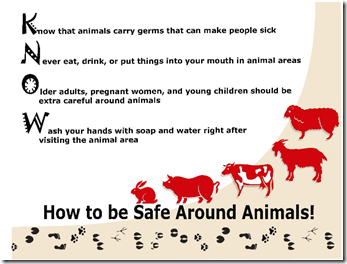
For now, the emphasis is on preventing the spread of infection from swine to humans, to deprive the virus opportunities to better adapt to people.  Accordingly, the CDC has produce a good number of resources (see links below), such as the following poster:


image


A list of resources, and posters (suitable for printing) are available on the following CDC webpage:


Fact Sheet: Protect Yourself Against H3N2v

Resources
Print Materials

Information and materials, including educational posters  [389 KB, 1 page]External Web Site Icon that can be displayed around animal exhibits, are available in Compendium of Measures to Prevent Disease Associated with Animals in Public Settings, 2011External Web Site Icon.

Flyer: Key Facts For People Exhibiting Pigs at Fairs  [640 KB, 2 pages]

Flyer: Take Action to Prevent the Spread of Flu Between People and Pigs at Fairs  [438 KB, 2 pages]

Flyer: Issues for Fair Organizers to Consider When Planning Fairs  [1.4 MB, 2 pages]


Materials from North Carolina Department of Agriculture and Consumer ServicesExternal Web Site Icon:

Reduce Your Risk (English)  [22 KB, 1 page]External Web Site Icon, Reduce Your Risk (Spanish)  [22 KB, 1 page]External Web Site Icon


Materials from Colorado Department of Public Health and EnvironmentExternal Web Site Icon


Signs for Strollers at Fairs [85 KB, 2 pages]External Web Site Icon


Videos

Video Podcast: CDC Recommendations to Reduce the Risk of H3N2v Flu Virus Infection for Fairgoers and Swine Exhibitors [5 MB, 5 min 51 sec]

Dr. Lyn Finelli discusses CDC’s recommendations for reducing the risk of infection with H3N2v flu viruses for fairgoers and swine exhibitors.