Showing posts with label NIH. Show all posts

Tuesday, April 21, 2015

AJTMH/NIH: The Threat From Fake & Substandard Pharmaceuticals

image


# 9964


A topic we’ve touched on in the past, and coincidentally mentioned last Saturday (see Early Signs Of Artemisinin-Resistant Malaria In Africa), is the proliferation of fake or substandard pharmaceuticals around the globe; everything from antimalarials, to antibiotics, to chemotherapy agents.


Three years ago, in Interpol & FDA: Operation Pangea V, we looked at a consortium of 100 nations engaged in a crackdown on illegal pharmaceutical sales via the Internet. That marked the fifth year that Operation Pangea has been run, and according to Interpol, thousands of illegal websites have been targeted.


Some of these drugs may have none of the promised active ingredients, while others may be less potent than advertised, or are laced with potentially dangerous substitutes or fillers. Often more money is spent trying to duplicate the packaging of a legitimate product, than is spent producing the medicine itself.


And the end result can not only be tragic for the user – but also to society – as using substandard medicines is one of the ways that drug resistant bacteria, viruses, and parasites can be created and spread.


Yesterday the NIH, in concert with the publication of a series of reports in the AJTMH (The American Journal of Tropical Medicine and Hygiene), released the following statement.


For Immediate Release: Monday, April 20, 2015

Global pandemic of fake medicines poses urgent risk, scientists say

Poor quality medicines are a real and urgent threat that could undermine decades of successful efforts to combat HIV/AIDS, malaria and tuberculosis, according to the editors of a collection of journal articles published today. Scientists report up to 41 percent of specimens failed to meet quality standards in global studies of about 17,000 drug samples. Among the collection is an article describing the discovery of falsified and substandard malaria drugs that caused an estimated 122,350 deaths in African children in 2013. Other studies identified poor quality antibiotics, which may harm health and increase antimicrobial resistance. However, new methodologies are being developed to detect problem drugs at the point of purchase and show some promise, scientists say.

Seventeen articles in all, detailing various aspects of the issue and proposing possible solutions, are included in a special journal supplement “The Global Pandemic of Falsified Medicines: Laboratory and Field Innovations and Policy Perspectives,” published online ahead of print by The American Journal of Tropical Medicine and Hygiene. Several articles suggest policy interventions, including an international framework and the adoption of stricter national laws against drug counterfeiting.

“This problem continues to spread globally, creating an even greater challenge to cooperation among stakeholders, many with limited resources,” noted the supplement’s co-editor, Joel Breman, M.D., M.P.H., senior scientist emeritus at the National Institutes of Health’s Fogarty International Center. “The need is urgent for collaboration among those with expertise in policy, science, technology, surveillance, epidemiology and logistics, in order to secure global supply chains.”

<SNIP>

An urgent and coordinated international response is required to address the pandemic of poor quality drugs, the scientists maintain. Policy proposals include a global agreement, similar to the Framework Convention on Tobacco Control External Web Site Policy, and stricter national laws to prosecute those who knowingly sell counterfeit medicines.

In addition to Fogarty, the supplement is sponsored by the Bill and Melinda Gates Foundation and the New Venture Fund.

The individual articles will be published online at: http://www.ajtmh.org/content/early/recent External Web Site Policy

(Continue . . . )


While bogus medicines – devoid of any therapeutic benefit - have been reported around the globe, researchers at the London School of Hygiene & Tropical Medicine analyzed 2,028 antimalarials from Tanzania and Cambodia and found that while as many as  31% were substandard, none sampled were completely fake.


From another related press release (Fake malaria drugs not as common as previously reported) we get the following summations:


Dr Harparkash Kaur from the London School of Hygiene & Tropical Medicine, lead investigator of the drug quality programme of the ACT Consortium, said: "Although there have been alarming reports about the prevalence of fake antimalarials, our study provides ample data showing that the quality of drugs is not so bad based on comprehensive sampling and analysis presented here. This type of study is very cost intensive, both for the purchase and analysis of drugs. The lack of falsified medicines in Cambodia and Tanzania are reassuring, but the presence of substandard medicines is definitely a concern."

Dr Shunmay Yeung from the London School of Hygiene & Tropical Medicine, lead author of the study in Cambodia - one of the epicentres of resistance to artemisinin - said: "Falsified medicines have received much attention globally, but substandard drugs are far more prevalent and of great concern. Not only do they leave patients with malaria undertreated, which could be fatal, but they may also contribute to the development of resistance to ACTs, the most effective drugs for malaria. Generally, the fact that no falsified antimalarials were identified reflects the positive impact of the country's effort to control drug quality."

 
But whether wholly bogus, adulterated, or simply substandard – these counterfeit medications represent a serious threat to global health.


Unless you are buying your prescription drugs from an unscrupulous online pharmacy, Americans are most likely to encounter these fake or substandard medications while traveling to developing countries.  The CDC’s Traveler’s Health website offers the following advice.


Counterfeit Drugs

Bottle of pills

Counterfeit (or fake) medicines are manufactured using incorrect or harmful ingredients. These medicines are then packaged and labeled to look like real brand-name and generic drugs. Counterfeit medicines are unsafe because they may not be effective or may even harm you.

Counterfeiting occurs throughout the world, but it is most common in countries where there are few or no rules about making drugs. An estimated 10%–30% of medicines sold in developing countries are counterfeit. In the industrialized world (countries such as the United States, Australia, Japan, Canada, New Zealand, and those in the European Union), estimates suggest that less than 1% of medicines sold are counterfeit.

The only way to know if a drug is counterfeit is through chemical analysis done in a laboratory. Counterfeit drugs may look strange or be in poor-quality packaging, but they often seem identical to the real thing. The only way to make sure you have the real thing is to bring all the drugs you will need during your trip with you from the United States, rather than buying them while you are traveling.

Pills being manufactured

If an emergency occurs and you must buy drugs during your trip, you can reduce your chances of buying drugs that are counterfeit:

  • Buy medicines only from licensed pharmacies and get a receipt. Do not buy medicines from open markets.
  • Ask the pharmacist whether the drug has the same active ingredient as the one that you were taking.
  • Make sure that the medicine is in its original packaging.
  • Look closely at the packaging. Sometimes poor-quality printing or otherwise strange-looking packaging will indicate a counterfeit product.
  • If you buy drugs online, visit Buying Prescription Medicines Online: A Consumer Safety Guide to learn how to buy safely.

Friday, March 27, 2015

NIH: Ebola Virus More Stable Than Previous Study Suggested

image

Credit CDC PHIL

# 9873


Last August, while Ebola was still accelerating in West Africa, we saw a study warning that the Ebola Virus Is Rapidly Evolving.  Specifically, that 99 Ebola viruses taken from 78 people from Sierra Leone during the month of June, and found that the virus is showing a marked propensity to accumulate `interhost and intrahost genetic variation’ as it passages through the population.


This led to media reports such as Ebola virus mutating rapidly as it spreads from Nature News, and  Ebola Is Rapidly Mutating As It Spreads Across West Africa via NPR’s Goats & Soda Blog.


As I noted at the time,  while scientists have the ability to sequence and compare these variant viruses, they don’t necessarily know what these individual mutations (or their aggregate) means to the virus, or how it might change its behavior.


Still, this study raised the level of concern over how this virus was evolving, and what changes in its behavior that might eventually bring.


Yesterday the NIH announced a far more reassuring survey of the Ebola virus’s evolution, which found a far less aggressive rate of change in the virus than previously announced.  First the NIH announcement, followed by a link to the study, then I’ll be back with a bit more.


NIH study finds no evidence of accelerated Ebola virus evolution in West Africa


The Ebola virus circulating in humans in West Africa is undergoing relatively few mutations, none of which suggest that it is becoming more severe or transmissible, according to a National Institutes of Health study in Science. The study compares virus sequencing data from samples taken from patients in Guinea (March 2014), Sierra Leone (June 2014) and Mali (November 2014).


“The Ebola virus in the ongoing West African outbreak appears to be stable—that is, it does not appear to be mutating more rapidly than viruses in previous Ebola outbreaks, and that is reassuring,” said Anthony S. Fauci, director of the National Institute of Allergy and Infectious Diseases (NIAID), part of NIH. “We look forward to additional information to validate this finding, because understanding and tracking Ebola virus evolution are critical to ensuring that our scientific and public health response keeps pace.”

Obtaining virus samples for analysis was challenging for researchers during the outbreak. The NIAID study published today relies on data from the Guinea and Sierra Leone cases as well as samples from two case clusters in Mali obtained from the International Center for Excellence in Research (ICER) located in Bamako. NIAID and the Malian government have been partners in the ICER since 2002. The Mali case clusters originated from people who became infected in Guinea and traveled to Mali, where they were diagnosed.

Today’s study, from NIAID’s Rocky Mountain Laboratories, finds that there appear to be no genetic changes that would increase the virulence or change the transmissibility of the circulating Ebola virus, and that despite extensive human-to-human transmission during the outbreak, the virus is not mutating at a rate beyond what is expected. Further, they say, based on their data it is unlikely that the types of genetic changes thus far observed would impair diagnostic measures, or affect the efficacy of candidate vaccines or potential virus-specific treatments.

As of March 11, the World Health Organization listed more than 24,000 confirmed, suspected or probable cases of Ebola virus disease in West Africa, with about 10,000 deaths.


Mutation rate and genotype variation of Ebola virus from Mali case sequences

T. Hoenen1,*, D. Safronetz1,*, A. Groseth1,*,  K. R. Wollenberg2,*, O. A. Koita3,  B. Diarra3, I. S. Fall4, F. C. Haidara5, F. Diallo5, M. Sanogo3, Y. S. Sarro3, A. Kone3, A. C. G. Togo3, A. Traore5, M. Kodio5, A. Dosseh6, K. Rosenke1, E. de Wit1, F. Feldmann7, H. Ebihara1, V. J. Munster1, K. C. Zoon8, H. Feldmann1,†,‡, S. Sow5,†,‡


The occurrence of Ebola virus (EBOV) in West Africa during 2013–2015 is unprecedented. Early reports suggested that in this outbreak EBOV is mutating twice as fast as previously observed, which indicates the potential for changes in transmissibility and virulence and could render current molecular diagnostics and countermeasures ineffective. We have determined additional full-length sequences from two clusters of imported EBOV infections into Mali, and we show that the nucleotide substitution rate (9.6 × 10⁻⁴ substitutions per site per year) is consistent with rates observed in Central African outbreaks. In addition, overall variation among all genotypes observed remains low. Thus, our data indicate that EBOV is not undergoing rapid evolution in humans during the current outbreak. This finding has important implications for outbreak response and public health decisions and should alleviate several previously raised concerns.


Last night Lisa Schnirring of CIDRAP News reviewed these findings, and looked at reports of two new Ebola cases in Liberia, an update on the American being treated at the NIH, and news on one of the candidate vaccines in:


Gene study finds no worrisome changes in Ebola virus

Lisa Schnirring | Staff Writer | CIDRAP News

A genetic analysis published today of Ebola virus samples over the course of the outbreak found few changes and noted that the virus is apparently more stable than a study back in August had suggested.

(Continue . .. )

Friday, March 13, 2015

NIH Statement On Arrival Of American HCW With Ebola Virus For Treatment

NIH Clinical Center

The NIH Clinical Center.  


# 9820


Yesterday the news broke that for the second time, the NIH will admit and treat an American Healthcare worker infected with the Ebola virus, this time having been air-evac’d overnight from Sierra Leone to their facility in in Bethesda, Md..


Although not exactly routine, the past six months has shown that Ebola cases can be successfully – and safely – treated in modern hospitals.  


On October 24th, the NIH released Ms. Nina Pham, the Texas nurse who was admitted 8 days earlier infected with the virus.  This NIH facility also admitted and treated two other `high risk exposure’ cases who turned out not to be infected.


This statement from the NIH.


For Immediate Release: Friday, March 13, 2015

UPDATE: American healthcare worker with Ebola virus disease arrives safely at NIH Clinical Center

An American healthcare worker who tested positive for Ebola virus while volunteering services in an Ebola treatment unit in Sierra Leone has arrived safely at the NIH Clinical Center for care and treatment. The individual was transferred from Sierra Leone via private charter medevac in isolation and admitted to the NIH Clinical Center at 4:44 a.m. ET. The patient’s condition is still being evaluated. No additional details about the patient are being shared at this time.

The patient has been admitted to the NIH Clinical Center’s Special Clinical Studies Unit (SCSU) that is specifically designed to provide high-level isolation capabilities and is staffed by infectious diseases and critical care specialists. The unit staff is trained in strict infection control practices optimized to prevent spread of potentially transmissible agents such as Ebola. NIH is taking every precaution to ensure the safety of our patients, NIH staff, and the public.

This will be the second patient with Ebola virus disease admitted to the NIH Clinical Center. An earlier patient was treated successfully and released free of disease. The NIH Clinical Center also previously admitted two individuals who experienced high-risk exposures to the Ebola virus while working on the Ebola response in West Africa, but who were ultimately found not to be infected.

(Continue . . .)


Monday, December 15, 2014

NIH Statement On Early Ebola Vaccine Trial Data

A 39-year-old woman receives a dose of the investigational NIAID/GSK Ebola vaccine at the NIH Clinical Center in Bethesda, Maryland.


# 9443


Although previously reported in a NEJM article (see Chimpanzee Adenovirus Vector Ebola Vaccine — Preliminary Report), the NIH has produced the following statement regarding the early, encouraging  results of phase I testing of an Ebolavirus vaccine.


Note: This NIAID/GSK candidate vaccine is not the same vaccine whose trial was temporarily halted last week after four test subjects developed joint pains (see Ebola Vaccine Trial Halted Temporarily After Joint Pains: Geneva Hospital).


While there is still a long way to go before this – or any other Ebola vaccine – can be certified as both safe and effective, these early results will help pave the way for Phase 2/3 clinical trials, likely to be held in West Africa.


Ebola Vaccine Prompts Immune Response

December 15, 2014

At a Glance
  • An experimental vaccine to prevent Ebola virus disease was well-tolerated and produced immune system responses in all 20 healthy adults who received it.
  • Based on these results, researchers are planning further trials to assess the safety and effectiveness of the vaccine.

The Ebola virus spreads through direct contact with the blood or secretions of an infected person. The 2014 Ebola outbreak in West Africa is the largest Ebola outbreak in history. As of early December, more than 17,000 cases and 6,000 deaths have been reported. There are no approved drugs, but early care can improve survival. The scale of this outbreak has intensified efforts to develop a protective vaccine.

NIH’s National Institute of Allergy and Infectious Diseases (NIAID) developed and tested 3 earlier investigational Ebola vaccine candidates that began Phase 1 clinical trials in 2003. The candidate Ebola vaccine in the current study was developed collaboratively by scientists at NIAID’s Vaccine Research Center and GlaxoSmithKline (GSK) based on knowledge gained from those earlier studies.

The NIAID/GSK candidate vaccine contains segments of genetic material from 2 Ebola virus species, known as Sudan and Zaire. The genetic material is delivered by a carrier virus, or vector, called chimpanzee-derived adenovirus 3, which causes a common cold in chimpanzees but no illness in humans. Both the vector and the Ebola genetic material have been shown to be safe in humans in other studies.

Twenty volunteers between the ages of 18 and 50 participated in the phase 1 clinical trial, which took place at the NIH Clinical Center. Ten received an intramuscular injection of vaccine at a lower dose and 10 at a higher dose. The team reported their interim results online on November 26, 2014, in the New England Journal of Medicine.

All 20 volunteers produced anti-Ebola antibodies within 4 weeks of receiving the vaccine. Antibody levels were higher in those who received the higher dose vaccine. The vaccine also prompted the production of immune system cells called CD8 T cells, which are important to immune protection. Four weeks after vaccination, CD8 T cells were detected in 2 volunteers who had received the lower dose and 7 who had received the higher dose vaccine.

“We know from previous studies in nonhuman primates that CD8 T cells played a crucial role in protecting animals that had been vaccinated with this NIAID/GSK vaccine and then exposed to otherwise lethal amounts of Ebola virus,” says first author Dr. Julie E. Ledgerwood. “The size and quality of the CD8 T cell response we saw in this trial are similar to that observed in nonhuman primates vaccinated with the candidate vaccine.”

No serious adverse effects were seen in any of the volunteers. Two people who received the higher dose vaccine developed a brief fever within a day of vaccination.

This and other Ebola vaccine candidates continue to be evaluated by international research teams.

Related Links:

(Continue . . .)


Wednesday, October 08, 2014

NIH: H7N9 Vaccine Candidate Works Much Better With An Adjuvant

image


# 9162


Although it is difficult to get anyone to care about anything other than Ebola right now, the truth is there are a number of other emerging viruses that also have a high fatality rate, and that carry with them a reasonable degree of pandemic potential.  


H5N1 – which emerged in Vietnam in 2003 and subsequently spread across much of Asia and into the Middle East – is perhaps the best known avian flu virus, but H7N9 – which first appeared in the spring of 2013- is seen as being an even bigger threat (see Eurosurveillance: Genetic Tuning Of Avian H7N9 During Interspecies Transmission).


Producing an effective human vaccine against H7N9 has been viewed as presenting serious challenges, as previous experimental  H5 and H7 vaccines have required unusually large amounts of antigen (up to 12x normal) to induce a good immune response.


A specification that would greatly reduce the number of shots that could be produced each year, and would cripple any emergency vaccination response. 


One possible solution is the use of adjuvants   - additives often used in European flu vaccines to increase their immune response.  But adjuvants have never been licensed for use in U.S. flu vaccines, would likely require an EUA (Emergency Use Authorization), and might make some people reluctant to take the vaccine.


About a year ago, the we saw the NIH Begins Phase II Clinical Trials On H7N9 Vaccine Candidates, to test a variety of H7N9 vaccine formulations across two clinical trials - involving as many as 1700 volunteers - who would receive various strength H7N9 vaccines (adjuvanted and non-adjuvanted).


Today, the results of that trial have been published (​MJ Mulligan et al. Serological responses to an avian influenza A/H7N9 vaccine mixed at the point-of-use with MF59 adjuvant: a randomized clinical trial. JAMA)., and the following NIH press release provides us with the not unexpected news that the H7N9 candidate vaccine only produced an acceptable immune response when administered with an adjuvant. 


According to their study: Without adjuvant, immune responses produced by the investigational vaccine were minimal regardless of vaccine dosage.


Candidate H7N9 Avian Flu Vaccine Works Better with Adjuvant

Results of Large NIH-Sponsored Trial Published

​An experimental vaccine to protect people against H7N9 avian influenza prompted immune responses in 59 percent of volunteers who received two injections at the lowest dosage tested, but only if the vaccine was mixed with adjuvant—a substance that boosts the body’s response to vaccination. Without adjuvant, immune responses produced by the investigational vaccine were minimal regardless of vaccine dosage, according to findings from a clinical trial sponsored by the National Institute of Allergy and Infectious Diseases (NIAID), part of the National Institutes of Health.

The Phase 2 trial enrolled 700 healthy adults aged 19 to 64 years old at four NIAID-sponsored Vaccine and Treatment Evaluation Units (VTEU) in the United States. It was led by Mark J. Mulligan, M.D., of Emory University, Atlanta. Results appear in the current issue of the Journal of the American Medical Association.

The first recognized human H7N9 avian influenza cases occurred in China in early 2013. Most people who have become infected with the virus had contact with infected poultry. The virus does not sicken birds, but can cause people to become seriously ill, with approximately 67 percent of reported cases requiring hospitalization. As of September 4, 2014, a total of 452 laboratory confirmed cases, including 166 deaths, had been reported to the World Health Organization.

“Although this influenza virus does not currently spread easily from person to person, all novel influenza viruses have the potential to evolve to cause widespread illness or death,” said NIAID Director Anthony S. Fauci, M.D. “Therefore, it is prudent to conduct clinical trials such as this one to be prepared in the event of an H7N9 avian influenza pandemic.”

The experimental vaccine, made from inactivated H7N9 virus grown in chicken eggs, was manufactured by Sanofi Pasteur (Swiftwater, PA). The adjuvant, MF59, used widely in Europe but not licensed in the United States, was manufactured by Novartis Vaccines (Marburg, Germany) and was mixed with the vaccine just prior to use. Both products were supplied by the Biomedical Advanced Research and Development Authority (a part of the Department of Health and Human Services) from the National Pre-Pandemic Influenza Vaccine Stockpile.

The 700 study volunteers were divided into groups of approximately 100 each. All received two injections, spaced 21 days apart, and had blood drawn on both inoculation days as well as on three additional time points. Two groups received vaccine at either 15 micrograms (mcg) or 45 mcg without adjuvant. Without adjuvant, even those participants who received the higher dosage vaccine had minimal immune responses. This was not unexpected, as an earlier clinical trial of an experimental unadjuvanted vaccine based on H7 avian influenza virus elicited little or no detectable antibody responses.

The remaining five groups of participants received two injections of vaccine at one of three different dosages (3.75 mcg, 7.5 mcg or 15 mcg). Three of the groups received MF59 adjuvant with both inoculations, while the final two groups received only one dose of adjuvant with their first or second injection of vaccine. No serious vaccine-related adverse events were reported in any of the groups. Participants who received adjuvant reported more mild pain and tenderness at the inoculation site than those who received only vaccine. In general, the inoculations were well-tolerated and side effects were mild.

The researchers used a standard test called the hemagglutination inhibition (HAI) antibody assay to assess the likelihood that the experimental vaccine would provide protection against influenza disease. HAI levels of 40 or more signal that an influenza vaccine induced an immune reaction that is likely to prevent influenza disease. In this trial, the key HAI assays were performed on blood samples taken at 42 days after the first inoculation.

Among the volunteers who received two injections of the lowest dose of vaccine along with two doses of adjuvant, 59 percent had HAI levels of 40 or more. The most surprising finding, noted the researchers, came from the volunteer group that received 15 mcg dose vaccines and just one dose of MF59 at the time of the first vaccine. Among that group, the antibody responses were not significantly lower than those who received two doses of adjuvant, suggesting that a single dose of adjuvant given with the first dose of vaccine may be sufficient to prompt a significant immune response. If true, this would be of particular importance in the event of a pandemic, when adjuvant-sparing and vaccine antigen-sparing vaccine regimens could be used to stretch available supplies of vaccine and adjuvant as far as possible.

In addition to Emory University, the NIAID VTEUs at Cincinnati Children’s Hospital and Medical Center; the University of Iowa in Iowa City; and the University of Texas Medical Branch at Galveston participated in this trial.

(Continue . . . )

Thursday, August 28, 2014

NIH To Launch Trials On Ebola Vaccine Candidate

image
Credit CDC PHIL


# 9014


The story has been filtering through the news wires for a couple of hours, but the embargo has just come off the following NIH press release, which outlines the plans for testing this (and other) experimental vaccine candidates.


NIH to Launch Human Safety Study of Ebola Vaccine Candidate

Trial is First in Series of Accelerated Safety Studies of Ebola Vaccines

Embargoed for Release: Thursday, August 28, 2014, 9:30 a.m. EDT


Initial human testing of an investigational vaccine to prevent Ebola virus disease will begin next week by the National Institute of Allergy and Infectious Diseases (NIAID), part of the National Institutes of Health.


The early-stage trial will begin initial human testing of a vaccine co-developed by NIAID and GlaxoSmithKline (GSK) and will evaluate the experimental vaccine’s safety and ability to generate an immune system response in healthy adults. Testing will take place at the NIH Clinical Center in Bethesda, Maryland.


The study is the first of several Phase 1 clinical trials that will examine the investigational NIAID/GSK Ebola vaccine and an experimental Ebola vaccine developed by the Public Health Agency of Canada and licensed to NewLink Genetics Corp. The others are to launch in the fall. These trials are conducted in healthy adults who are not infected with Ebola virus to determine if the vaccine is safe and induces an adequate immune response.


In parallel, NIH has partnered with a British-based international consortium that includes the Wellcome Trust and Britain’s Medical Research Council and Department for International Development to test the NIAID/GSK vaccine candidate among healthy volunteers in the United Kingdom and in the West African countries of Gambia (after approval from the relevant authorities) and Mali.


Additionally, the U.S. Centers for Disease Control and Prevention has initiated discussions with Ministry of Health officials in Nigeria about the prospects for conducting a Phase 1 safety study of the vaccine among healthy adults in that country.

<SNIP>


The investigational vaccine now entering Phase 1 trials was designed by Nancy J. Sullivan, Ph.D., chief of the Biodefense Research Section in NIAID’s Vaccine Research Center (VRC). She worked in collaboration with researchers at the VRC, the U.S. Army Medical Research Institute of Infectious Diseases, and Okairos, a Swiss-Italian biotechnology company acquired by GSK in 2013.


Phase 1 clinical trials are the first step in what is typically a multi-stage clinical trials process). During Phase 1 studies, researchers test an investigational vaccine in a small group of people to evaluate its safety and the immune response it provokes. Phase 2 clinical trials of investigational vaccines are designed to further assess safety and immune response in larger numbers of volunteers. Under certain circumstances, the vaccine’s ability to prevent infection or disease (called efficacy) can be determined in a Phase 2 trial. Phase 3 clinical trials are directed predominantly at determining efficacy.


The NIAID/GSK Ebola vaccine candidate is based on a type of chimpanzee cold virus, called chimp adenovirus type 3 (ChAd3). The adenovirus is used as a carrier, or vector, to deliver segments of genetic material derived from two Ebola virus species: Zaire Ebola and Sudan Ebola. Hence, this vaccine is referred to as a bivalent vaccine. The Zaire species of the virus is responsible for the current Ebola outbreak in West Africa.


The vaccine candidate delivers one part of Ebola’s genetic material to human cells, but the adenovirus vector does not replicate. Rather, the Ebola gene that it carries allows the cells of the vaccine recipient to express a single Ebola protein, and that protein prompts an immune response in the individual. It is important to know that the Ebola genetic material contained in the investigational vaccine cannot cause a vaccinated individual to become infected with Ebola.


“The experimental NIAID/GSK vaccine performed extremely well in protecting nonhuman primates from Ebola infection,” Dr. Fauci noted.


The candidate vaccine builds upon three earlier NIAID-developed investigational Ebola vaccines that began Phase 1 clinical trial testing in 2003.


“The knowledge gained from each of those trials has contributed to the development of the candidate vaccine we are now studying, as well as our improved understanding of human immune responses to investigational Ebola vaccines,” said John R. Mascola, M.D., director of NIAID’s Vaccine Research Center.


The Phase 1 clinical trial, called VRC 207, will be led by principal investigator Julie E. Ledgerwood, D.O., chief of the VRC’s clinical trials program, and will be conducted among 20 healthy adults ages 18 to 50 years. Participants will be divided into two groups of 10 participants each. One group will receive an intramuscular injection of the NIAID/GSK experimental vaccine. The second group will receive a single injection of the same vaccine but at a higher dose.


A number of safety features are built into the study’s design, including daily and weekly reviews of patient data by clinical staff and the study protocol team. Additionally, the trial features a staged enrollment plan that requires interim safety reviews after three participants have been vaccinated and have undergone three days of follow up before enrolling additional study participants into the group. Participants in both groups will be seen and evaluated by clinical staff nine times over a 48-week period.

Additional Phase 1 Tests of the NIAID/GSK Vaccine

As part of the VRC 207 trial, NIAID will also test a version of the NIAID/GSK vaccine that contains genetic material from only the Zaire Ebola species. Hence, this vaccine is referred to as a monovalent vaccine. This portion of the Phase 1 safety study, which will also involve 20 healthy adults, is expected to begin in October at the NIH Clinical Center and potentially another U.S. location. Dr. Ledgerwood will also lead that effort. The VRC 207 clinical trial is being conducted based on expedited review and approval by the U.S. Food and Drug Administration.


In parallel, NIH has partnered with an international consortium that includes the British-based Wellcome Trust, as well as Britain’s Medical Research Council and Department for International Development to test the same NIAID/GSK monovalent vaccine candidate. The vaccine candidate will be tested among 60 healthy volunteers at the University of Oxford in England and among 40 healthy volunteers in Mali by the University of Maryland School of Medicine Center for Vaccine Development and its Center for Vaccine Development in Mali (a joint enterprise of the University of Maryland School of Medicine and the Ministry of Health of Mali). Additionally, the vaccine candidate is expected to be tested among 40 healthy volunteers in Gambia after approval from the relevant authorities.


The Oxford trial is expected to launch in mid-September pending ethical and regulatory approval.

“Today’s announcement shows how private and public partners can pull together to quickly respond to this critical public health emergency. Developing a new vaccine is complex with no guarantees of success, and we are still in the early days for our Ebola vaccine candidate. But we are encouraged by progress so far and will do the best we can, along with WHO and our partners, to speed up development and explore ways in which the vaccine could contribute to this or future Ebola outbreaks,” said Dr. Moncef Slaoui, chairman of Global R&D and Vaccines at GSK.


Initial safety and immunogenicity data from the Phase 1 trials of the NIAID/GSK investigational Ebola vaccine are expected in late 2014.

Vesicular Stomatitis Virus (VSV) Ebola Vaccine Testing

The NIH will also collaborate with the U.S. Department of Defense in support of efforts by NewLink Genetics Corp., a biopharmaceutical company in Ames, Iowa, to conduct Phase 1 safety studies of the investigational recombinant vesicular stomatitis virus Ebola vaccine (called VSV-EBOV) developed by and licensed from the Public Health Agency of Canada. Those clinical trials are expected to begin in the fall at the Clinical Trials Center of Walter Reed Army Institute of Research in Silver Spring, Maryland.


For more information about these early-stage Ebola vaccine clinical trials, see Questions and Answers: Phase 1 Clinical Trials of NIAID/GSK Investigational Ebola Vaccine.


NIAID conducts and supports research — at NIH, throughout the United States, and worldwide — to study the causes of infectious and immune-mediated diseases, and to develop better means of preventing, diagnosing and treating these illnesses. News releases, fact sheets and other NIAID-related materials are available on the NIAID Web site at http://www.niaid.nih.gov.

Wednesday, June 25, 2014

Research: Monoclonal Antibodies Against Nipah

image

Geographic Range of Nipah, Hendra, and fruit bats of the Pteropodidae family – Credit WHO


# 8782


In 2011, in  NIH: Investigating A Potential Treatment For Hendra & Nipah Viruses we looked at research using the human monoclonal antibody (hmAb) m102.4 to protect African green monkeys (AGMs) against a Hendra Virus challenge. Twelve subjects were infused with a 100-mg dose of m102.4 beginning at either 10, 24, or 72 hours after infection and again about 48 hours later.


All twelve primates that received the antibodies survived, while all control subjects died by day 8.


The results were so promising, Australian health officials requested m102.4 for emergency use in a woman and her 12-year-old daughter who had been exposed to a horse with the Hendra virus in 2010. Both the woman and child survived and showed no side effects from the treatment (cite).


Similarly, in 2009, research published in PLoS Pathogens  illustrated its protective effect against Nipah in ferrets (see A Neutralizing Human Monoclonal Antibody Protects against Lethal Disease in a New Ferret Model of Acute Nipah Virus Infection).


Monoclonal antibodies would not work like a vaccine and confer long-term protection.  Instead, a single injection (or series of injections) is hoped to serve as a treatment, or to work as a temporary (several week) prophylaxis.


While the research above was promising, most of these studies involved starting treatment before, or just shortly after, infection, an unrealistic scenario for most therapeutic uses.  


Today, we’ve a new study – conducted by University of Texas Medical Branch at Galveston, the Uniformed Services University of the Health Sciences at Bethesda, MD and three NIH Labs (2 at Hamilton, MT & 1 Frederick, MD) -  that shows impressive results (on non-human primates, anyway), even when therapy is started 5 days post exposure.


Science Translational Medicine

INFECTIOUS DISEASE

Therapeutic Treatment of Nipah Virus Infection in Nonhuman Primates with a Neutralizing Human Monoclonal Antibody

Thomas W. Geisbert1,2,*,†, Chad E. Mire1,2,*, Joan B. Geisbert1,2, Yee-Peng Chan3, Krystle N. Agans1,2, Friederike Feldmann4, Karla A. Fenton1,2, Zhongyu Zhu5, Dimiter S. Dimitrov5, Dana P. Scott4, Katharine N. Bossart6, Heinz Feldmann7 and Christopher C. Broder3,†

Abstract

Nipah virus (NiV) is an emerging zoonotic paramyxovirus that causes severe and often fatal disease in pigs and humans.

There are currently no vaccines or treatments approved for human use. Studies in small-animal models of NiV infection suggest that antibody therapy may be a promising treatment. However, most studies have assessed treatment at times shortly after virus exposure before animals show signs of disease.

We assessed the efficacy of a fully human monoclonal antibody, m102.4, at several time points after virus exposure including at the onset of clinical illness in a uniformly lethal nonhuman primate model of NiV disease.

Sixteen African green monkeys (AGMs) were challenged intratracheally with a lethal dose of NiV, and 12 animals were infused twice with m102.4 (15 mg/kg) beginning at either 1, 3, or 5 days after virus challenge and again about 2 days later. The presence of viral RNA, infectious virus, and/or NiV-specific immune responses demonstrated that all subjects were infected after challenge.

All 12 AGMs that received m102.4 survived infection, whereas the untreated control subjects succumbed to disease between days 8 and 10 after infection. AGMs in the day 5 treatment group exhibited clinical signs of disease, but all animals recovered by day 16. These results represent the successful therapeutic in vivo efficacy by an investigational drug against NiV in a nonhuman primate and highlight the potential impact that a monoclonal antibody can have on a highly pathogenic zoonotic human disease.

Copyright © 2014, American Association for the Advancement of Science


                Now that this hmAb has been shown effective against the Nipah virus in non-human primates, researchers hope they may have the basis for what will eventually become a viable treatment for these deadly viruses.  For a bit more background, the following is an excerpt from a press release from the University of Texas Medical Branch.


                Researchers one step closer to countering deadly Nipah virus

                June 25, 2014

                Human antibody therapy successfully combats virus five days after infection

                An interdisciplinary research team from the University of Texas Medical Branch at Galveston, the Uniformed Services University of the Health Sciences and three groups within the National Institutes of Health reports a new breakthrough in countering the deadly Nipah virus. The human monoclonal antibody known as m102.4 is the first effective antiviral treatment for Nipah that has the potential for human therapeutic applications.


                Nipah and the closely related Hendra virus are highly infectious agents that emerged from Pteropid fruit bats in the 1990s, causing serious disease outbreaks in a variety of domestic animals and humans in Australia, Malaysia, Singapore, Bangladesh and India. Recent Nipah outbreaks have resulted in acute respiratory distress syndrome and encephalitis, person-to-person transmission and greater than 90 percent fatality rates among people. These properties make both Nipah and Hendra viruses a concern to human and livestock health.

                (Continue . . . )

                For some other blogs on the development, and testing of monoclonal antibodies, you may wish to revisit:


                Wednesday, September 18, 2013

                NIH Begins Phase II Clinical Trials On H7N9 Vaccine Candidates

                image


                # 7785


                As we’ve discussed before, the production of an H7N9 vaccine is not going to be as simple, or straightforward, as was the H1N1 pandemic vaccine in 2009.   With that flu - it was essentially a strain change - substituting the swine-origin H1N1 virus for the seasonal H1N1 component that has been part of the flu shot for decades.


                Avian viruses – like H5 and H7 – are an entirely different kettle of fish, and prior experiences with H5N1 and H7N1 vaccines has shown that they are not so easily made.


                Last May we saw an analysis of some of the problems inherent in creating and deploying an  H7N9 vaccine published in JAMA, penned by CIDRAP’s  Michael T. Osterholm, PhD, MPH; Katie S. Ballering, PhD; and Nicholas S. Kelley, PhD.

                Major Challenges in Providing an Effective and Timely Pandemic Vaccine for Influenza A(H7N9)

                Michael T. Osterholm, PhD, MPH; Katie S. Ballering, PhD; Nicholas S. Kelley, PhD

                JAMA. 2013;():1-2. doi:10.1001/jama.2013.6589.

                Published online May 9, 2013


                Previous  H5 and H7 experimental vaccines have required unusually large amounts of antigen (up to 12x normal) to induce a good immune response, a specification that would greatly reduce the number of shots that could be produced each year.   One possible solution is the use of adjuvants   - additives often used in European flu vaccines to increase their immune response.


                But adjuvants have never been used in the U.S. flu vaccines, would likely require an EUA (Emergency Use Authorization), and might make some people reluctant to take the vaccine.


                Right now, no one knows what the optimal antigen/adjuvant formulation would be for an effective, and practical H7N9 vaccine.


                Today, the NIH released a detailed summary of their plans to test a variety of H7N9 vaccine formulations across two clinical trials - involving as many as 1700 volunteers - who will received various strength H7N9 vaccines (adjuvanted and non-adjuvanted). When complete, we should have a much better idea of what will be involved in creating a pandemic H7N9 vaccine.  Full results, however,  are not expected until December of 2014.


                National Institute of Allergy and Infectious Diseases (NIAID)

                Contact

                Jennifer Routh 
                301-402-1663

                For Immediate Release: Wednesday, September 18, 2013

                NIH begins testing H7N9 avian influenza vaccine candidate

                Possible role for adjuvants to be examined

                Researchers at nine sites nationwide have begun testing in humans an investigational H7N9 avian influenza vaccine. The two concurrent Phase II clinical trials, sponsored by the National Institute of Allergy and Infectious Diseases (NIAID), part of the National Institutes of Health, are designed to gather critical information about the safety of the candidate vaccine and the immune system responses it induces when administered at different dosages and with or without adjuvants, substances designed to boost the body’s immune response to vaccination.


                Human cases of H7N9 influenza first emerged in China in February 2013, with the majority of reported infections occurring in the spring. As of Aug. 12, 135 confirmed human cases, including 44 deaths, have been reported by the World Health Organization. Most of these cases involved people who came into contact with infected poultry. Although no H7N9 influenza cases have been reported outside of China and the virus has not demonstrated sustained person-to-person transmission, there is concern that it could mutate to pose a much greater public health threat.


                “H7N9 avian influenza virus — like all novel influenza virus strains to which people have not been exposed — has the potential to cause widespread sickness and mortality,” said NIAID Director Anthony S. Fauci, M.D. “We are now testing a vaccine candidate with and without adjuvant in an effort to prepare for and, hopefully, protect against this possibility.”


                The two clinical trials, which will enroll healthy adults ages 19 to 64, will evaluate an investigational H7N9 vaccine developed by Sanofi Pasteur. The candidate vaccine was made from inactivated H7N9 virus isolated in Shanghai, China in 2013. Adjuvants are being tested with the investigational vaccine because previous vaccine research involving other H7 influenza viruses has suggested that two doses of vaccine without adjuvant may not produce an immune response adequate to provide effective protection. In pandemic situations, adjuvants also can be used as part of a dose-sparing strategy, which would allow production of more doses of vaccine from the available supply of the viral antigen, thereby allowing a greater number of people to be vaccinated more quickly.


                The first clinical trial, led by Mark J. Mulligan, M.D., of Emory University in Atlanta, will enroll as many as 700 study participants who will be randomly assigned to one of seven groups (up to 100 participants in each group). Each group will receive two equivalent dosages (3.75 micrograms [mcg], 7.5 mcg, 15 mcg or 45 mcg) of the candidate vaccine, approximately 21 days apart. Five of the groups will receive the vaccinations along with MF59 adjuvant, developed by Novartis Vaccines and Diagnostics.


                Of these five groups, three will receive adjuvant with both vaccinations; one group of participants will receive adjuvant only with the first vaccination; and another group of participants will receive adjuvant only with the second vaccination. Two groups of participants will not receive adjuvant. The MF59 adjuvant that is being tested is also contained in the Fluad seasonal influenza vaccine currently licensed in Europe and Canada for use in people age 65 years or older.


                The second trial, led by Lisa A. Jackson, M.D., M.P.H., of Group Health Research Institute in Seattle, will enroll as many as 1,000 participants. Each participant will be randomly assigned to one of 10 groups (up to 100 participants per group) and will receive two equivalent doses (same dosages as the other trial) of the investigational H7N9 vaccine given 21 days apart.


                Seven of these groups will receive the vaccinations either with or without AS03 adjuvant, developed by GlaxoSmithKline Biologics. Two groups will receive their first vaccination with AS03 or MF59 adjuvant and then receive the alternate adjuvant at time of second vaccination. One group will receive the MF59 adjuvant at both vaccinations. The AS03 adjuvant that is being tested was used in a 2009 H1N1 influenza vaccine, Pandemrix, used in several European countries during the 2009-2010 H1N1 influenza pandemic.


                In both studies, which are expected to conclude in December 2014, a panel of independent experts will closely monitor safety data at regular intervals throughout the trial.


                The vaccine studies are being conducted at the eight NIAID-funded Vaccine and Treatment Evaluation Units: Baylor College of Medicine, Houston; Children’s Hospital Medical Center, Cincinnati; Emory University, Atlanta; Group Health Cooperative, Seattle; Saint Louis University, St. Louis; University of Iowa, Iowa City; University of Maryland School of Medicine, Baltimore; and Vanderbilt University, Nashville. The University of Texas Medical Branch at Galveston will conduct the trial as a subcontractor to Baylor College of Medicine.


                Further information about both clinical trials can be found at http://www.ClinicalTrials.gov using the identifiers: NCT01938742 and NCT01942265.

                For more information, visit NIAID’s Influenza Web portal. For U.S. government information on avian and pandemic influenza, see http://www.Flu.gov External Web Site Policy


                NIAID conducts and supports research — at NIH, throughout the United States, and worldwide — to study the causes of infectious and immune-mediated diseases, and to develop better means of preventing, diagnosing and treating these illnesses. News releases, fact sheets and other NIAID-related materials are available on the NIAID Web site at http://www.niaid.nih.gov.


                Regardless of what influenza virus causes the next pandemic, the reality is that it will take 5 or 6 months to begin to produce any useful quantity of vaccine, and many people would be waiting a year or more to receive one.


                Instead – at least in the opening months -   we will be looking to measures like social distancing, school closures, hand hygiene & masks (aka Nonpharmaceutical Interventions NPIs) along with neuraminidase (NA) inhibiting antiviral drugs (NAIs) like oseltamivir (Tamiflu ®) and Zanamivir (Relenza ®) to help mitigate its impact.


                image

                image


                Should H5N1, H7N9, MERS-CoV or any other novel virus threaten, we’ll be talking a good deal more about NPIs.

                Friday, March 08, 2013

                NIH Study: Climate & Influenza Transmission

                image

                Credit PloS Pathogens


                # 6990


                Over the past couple of years we’ve examined several studies looking at the seasonality of influenza – both in temperate and tropical climes – the most recent being earlier this week in PLoS One: High Humidity Reduces Flu’s Infectivity.


                In that study researchers tested the viability of influenza viruses at various relative humidity (RH) levels between 7% and 73%. Infectivity was assessed by the viral plaque assay.


                They found that above 40% RH, infectivity dropped sharply.


                Which fits nicely with the yearly increase of influenza across temperate zones during the winter, when RH is often 75% lower than during the summer months.


                But it does little to explain the year-round transmission of influenza in tropical climes.


                Last December, we took a run at another study (see Influenza Virus Survival At Opposite Ends Of The Humidity Spectrum) conducted by researchers from Virginia Tech – that looked at a much broader range of humidity levels (up to 100%).


                They found both extremely low and extremely high humidity humidity appeared to aid and abet the viability of the flu virus – at least when it resides in mucus and respiratory fluids like those found in your nose, throat, or lungs.


                Essentially, these researchers inoculated droplets of simulated respiratory fluids (containing salts & proteins) with influenza viruses, and tested their survivability at different humidity levels.

                • At low humidity (< 50%) the droplets evaporated quickly, and the virus survived well in a dry environment.
                • At high humidity (near 100%), the droplets were stable, and the virus survived as well.

                But at humidity levels in-between, the droplets slowly dried out, increasing the concentration of salts and proteins to which the viruses were exposed, decreasing their survival rate.


                These studies suggest that there is a `sweet spot’ in RH (approx 40%-95%) where flu viruses have difficulty surviving. At levels above or below, the virus fares much better.


                This would help explain why influenza is primarily a winter event in temperate zones, but can still transmit in the exceptionally humid tropics year-round.


                In 2008 researchers Jeffrey Shaman and Melvin Kohn established a correlation between the AH (Absolute Humidity) and the survival, and transmission of the influenza virus (see It's Not So Much The Heat, It's The Humidity).


                Absolute humidity modulates influenza survival, transmission, and seasonality

                Jeffrey Shaman, and Melvin Kohn


                In 2010, Jeffrey Shaman returned with Virginia E. Pitzer, Cécile Viboud, Bryan T. Grenfell and Marc Lipsitch – and penned a study in PLoS Biology called:

                 
                Absolute Humidity and the Seasonal Onset of Influenza in the Continental United States

                (Excerpt)

                Here we extend these findings to the human population level, showing that the onset of increased wintertime influenza-related mortality in the United States is associated with anomalously low absolute humidity levels during the prior weeks. We then use an epidemiological model, in which observed absolute humidity conditions temper influenza transmission rates, to successfully simulate the seasonal cycle of observed influenza-related mortality.


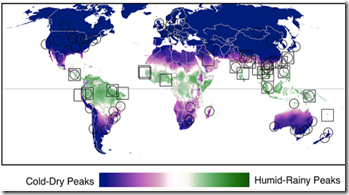
                Shaman and Viboud  et al. return today with a new NIH/Fogarty study appearing in PloS Pathogens that finds it is both cold-dry and humid-rainy conditions that can exacerbate influenza outbreaks.


                A finding that fits rather nicely with the Virginia Tech research mentioned above.


                Environmental Predictors of Seasonal Influenza Epidemics across Temperate and Tropical Climates

                James D. Tamerius, Jeffrey Shaman, Wladmir J. Alonso, Kimberly Bloom-Feshbach, Christopher K. Uejio, Andrew Comrie, Cécile Viboud

                Abstract (reparagraphed for readability)

                Human influenza infections exhibit a strong seasonal cycle in temperate regions. Recent laboratory and epidemiological evidence suggests that low specific humidity conditions facilitate the airborne survival and transmission of the influenza virus in temperate regions, resulting in annual winter epidemics. However, this relationship is unlikely to account for the epidemiology of influenza in tropical and subtropical regions where epidemics often occur during the rainy season or transmit year-round without a well-defined season.


                We assessed the role of specific humidity and other local climatic variables on influenza virus seasonality by modeling epidemiological and climatic information from 78 study sites sampled globally.


                We substantiated that there are two types of environmental conditions associated with seasonal influenza epidemics: “cold-dry” and “humid-rainy”.


                For sites where monthly average specific humidity or temperature decreases below thresholds of approximately 11–12 g/kg and 18–21°C during the year, influenza activity peaks during the cold-dry season (i.e., winter) when specific humidity and temperature are at minimal levels. For sites where specific humidity and temperature do not decrease below these thresholds, seasonal influenza activity is more likely to peak in months when average precipitation totals are maximal and greater than 150 mm per month.


                These findings provide a simple climate-based model rooted in empirical data that accounts for the diversity of seasonal influenza patterns observed across temperate, subtropical and tropical climates.


                For more, we have a press release from the NIH/Fogarty International Center.


                NIH study sheds light on role of climate in influenza transmission

                Two types of environmental conditions—cold-dry and humid-rainy—are associated with seasonal influenza epidemics, according to an epidemiological study led by researchers at the National Institutes of Health's Fogarty International Center. The paper, published in PLOS Pathogens, presents a simple climate-based model that maps influenza activity globally and accounts for the diverse range of seasonal patterns observed across temperate, subtropical and tropical regions.


                The findings could be used to improve existing current influenza transmission models, and could help target surveillance efforts and optimize the timing of seasonal vaccine delivery, according to Fogarty researcher Cecile Viboud, Ph.D., who headed the study. "The model could have a broader application, encouraging researchers to analyze the association between climatic patterns and infectious disease across a wide range of diseases and latitudes," said Viboud.


                Human influenza infections exhibit a strong seasonal cycle in temperate regions, and laboratory experiments suggest that low specific humidity facilitates the airborne survival and transmission of the virus in temperate regions. Specific humidity is the ratio of water vapor to dry air in a particular body of air while relative humidity—commonly used in weather forecasts—is the amount of water vapor in the air relative to its capacity to hold water vapor, and is primarily a function of temperature.


                Data from animal studies indicate low temperature and humidity increase the duration of the virus's reproduction and expulsion in infected organisms and virus stability in the environment, increasing the probability of transmission through coughing, sneezing or breathing. In contrast, high temperature seems to block airborne transmission.


                (Continue . . . )


                While climatic conditions appear to play a big role in the infectivity of influenza, it is by no means the only factor.  Again, from the press release:


                "Further work should focus on examining the role of population travel and other factors in influenza transmission," notes Mark Miller, M.D., director of Fogarty's Division of International Epidemiology and Population Studies. "


                Understanding the climatic conditions under which influenza (and perhaps other) viruses transmit best may provide us with an improved ability to forecast regional outbreaks.


                But perhaps as importantly, this knowledge may also show us how to adjust indoor environments to curb flu transmission. The upshot from the NIOSH report from earlier this week (see press release Higher indoor humidity inactivates flu virus particles) reads:


                The study concludes that maintaining indoor relative humidity at levels greater than 40% can significantly reduce the infectious capacity of aerosolized flu virus.


                Something that environmental managers at hospitals, office buildings, schools, and other locations may want to take notice of before we enter the next influenza epidemic.

                Friday, January 25, 2013

                NIH Statement On Lifting Of The H5N1 Research Moratorium

                image


                # 6883


                Just over a year ago, in response to safety concerns raised by biosecurity experts over certain types of H5N1 research, a group of researchers proposed a temporary (60 day) moratorium on their work. 


                After more than a year, that self-imposed moratorium was lifted earlier this week (see Scientists Declare End To H5N1 Research Moratorium).


                Here in the United States, the NIH has yet to put the finishing touches on their framework policies for H5N1 research, and so research here won’t restart immediately.


                Today, the directors of the NIH and NIAID released a joint statement, indicating that decisions should be forthcoming in the next few weeks.


                Statement of Drs. Collins and Fauci concerning intention to lift moratorium

                January 25, 2013

                One year ago, scientists in the H5N1 influenza research community announced that they would voluntarily suspend certain “gain-of-function” experiments involving highly pathogenic avian influenza (HPAI) H5N1 viruses pending a broad international dialogue about the future direction of this research.


                That dialogue — which has included experts in the life sciences, public health, biosecurity, biosafety, law, and science policy communities — has been highly productive, with numerous meetings and publications helping to clarify the most critical issues associated with this type of research.


                Countries where this research is (or might be) conducted have had the opportunity to review their policies and parameters for funding, conducting, and communicating about this research. In this context, the H5N1 influenza research community has announced their intention and support for resuming their research in those countries with final guidelines in place.


                The Department of Health and Human Services (HHS) has worked in a transparent and collaborative fashion to develop a framework for reviewing funding decisions regarding research that might increase mammalian transmission of HPAI H5N1 viruses by respiratory droplets. We anticipate that the final framework for HHS funding decisions regarding HPAI H5N1 gain-of-function experiments will be complete in the next several weeks. In the meantime, U.S.-funded researchers (both those working in the United States, including those in government laboratories, as well as those working overseas) have agreed not to resume these types of HPAI H5N1 gain-of-function experiments pending finalization of the HHS Framework.


                Understanding how influenza viruses become human pandemic threats is vitally important to global health preparedness. We applaud the international H5N1 influenza research community for the spirit in which they instituted this extended “pause” on their work, which has provided time for thoughtful consideration of its implications.

                Francis S. Collins, M.D., Ph.D.
                Director, National Institutes of Health

                Anthony S. Fauci, M.D.
                Director, National Institute of Allergy and Infectious Diseases
                National Institutes of Health

                Wednesday, December 19, 2012

                CIDRAP News Coverage Of The H5N1 NIH Workshop

                image

                BSL-4 Lab Worker - Photo Credit –USAMRIID


                # 6794


                For the past couple of days researchers and policy makers have been meeting at the National Institutes of Health (NIH) to discuss the future of HHS funded H5N1 avian influenza gain-of-function studies – research that seeks to enhance the host range, transmissibility, or pathogenicity of the H5N1 virus.


                Research of this type has been voluntarily suspended since very early this year when – due to a prolonged debate over the publication of a pair of controversial research papers (see The Furor Over H5N1 Research Continues) - a group of the world’s leading researchers announced a moratorium on specific types of bird flu research (see Scientists Announce 60 Day Moratorium On Some H5N1 Research).


                Although not being webcast, Lisa Schnirring at CIDRAP NEWS has been providing excellent daily coverage of this NIH workshop. 


                Follow the links below to get the details.


                H5N1 researchers question proposed HHS funding framework

                Lisa Schnirring * Staff Writer

                Dec 17, 2012 (CIDRAP News) – Federal health officials are in the midst of crafting a framework for funding H5N1 avian influenza gain-of-function studies, and today at a workshop they heard varied feedback from researchers, biosecurity experts, and others.


                The 2-day workshop, held at the National Institutes of Health (NIH), is the latest chapter in an intense scientific controversy that was triggered by the publication of two recent studies involving lab-engineered H5N1 strains that showed signs of being transmissible in mammals.

                (Continue . . .)


                Experts at NIH meeting say H5N1 research moratorium may end soon

                Lisa Schnirring * Staff Writer

                Dec 18, 2012 (CIDRAP News) – As a meeting to discuss issues related to federally funded H5N1 avian influenza research wrapped up today, experts anticipated that a voluntary moratorium on work with lab-modified strains that have increased transmissibility might end soon and said they sensed agreement about lab biosecurity levels.


                The National Institutes of Health (NIH) held the 2-day meeting to gather feedback from flu researchers, others in the science community, and the public on its draft framework for funding H5N1 gain-of-function studies and to continue an international dialogue on issues related to benefits and risks of the research.

                (Continue . . .)

                Tuesday, September 25, 2012

                NIAID Video: How Influenza Pandemics Occur


                # 6581


                NIAID, the National Institute of Allergy and Infectious Diseases, has recently released a 3 1/2 minute video that explains, very nicely, the emergence and potential spread of new influenza viruses.


                The NIAID Youtube Channel is a terrific resource, with more than 2 dozen informative videos, covering a variety of medical and research topics.


                This video is somewhat similar to the NIAID video I highlighted last April (see NIAID Video: Antigenic Drift).


                Well worth a look.