Showing posts with label Naegleria. Show all posts

Monday, May 18, 2015

A Reminder About Naegleria

image

Photo  Credit Florida DOH


# 10,060


Last week a small news item appeared out of Baton Rouge, LA regarding a pair of municipal employees who apparently falsified records and failed to check the local water supply for adequate levels of chlorine designed to keep Naegleria fowleri in check. 


An amoeba that, when ingested through the nose, can cause a fatal brain infection.  


2 plead guilty in failure to test St. John water sites for deadly amoeba

THE ASSOCIATED PRESS  
May 12, 2015 - 6:50 pm EDT

 BATON ROUGE, Louisiana — Two former employees of a south Louisiana water system have pleaded guilty to covering up their failure to properly collect and test water samples from sites where a dangerous type of amoeba was found.

(Continue . . . )


Long time readers will recall that in 2013 we saw a 4 year-old infected in Louisiana through contact with the municipal water supply. Subsequently we saw the St. Bernard Parish Water Supply Tests Positive For Naegleria Fowleri, which prompted an increase in chlorination.


Prior to that, in 2011, 2 people in Louisiana became infected through the introduction of tap water into their sinuses using a neti pot. These incidents caused the Louisiana Health Department to recommend that people `use distilled, sterile or previously boiled water to make up the irrigation solution’ (see Neti Pots & Naegleria Fowleri).

Is Rinsing Your Sinuses Safe? - (JPG)

Photo Credit FDA


While extraordinarily rare in the United States, every year Pakistan reports a dozen or more infections from this `killer amoeba’ , as chlorination of their water supplies is often inadequate, and for many, nasal ablutions are part of their daily ritual.


Even though it is unlikely to lurk in most modern municipal water supplies, the advice to boil water for use in neti pots is prudent given the almost universal fatal outcome from infection.


As rare as it is, it is more common for people to acquire this infection while swimming in warm, usually stagnant fresh water lakes and ponds. After introduction of this Free Living Amoeba (FLA) into the nasal passages, it makes a direct bee line to the brain, where is causes PAM (Primary Amebic Meningoencephalitis). 


Up until recently, there was little that could be done for someone infected, and the illness was almost always fatal. 


Last summer the CDC held a COCA Call On Naegleria Fowleri & Cryptosporidium for clinicians, with guidance on a new investigational drug called miltefosine, which – for the first time on record -  was used to successfully treat a victim of  PAM or Primary amebic meningoencephalitis last summer (see MMWR: CDC Imports Investigational Drug For Amoebic Infections).


While progress, this remains a largely fatal infection.


Naegleria infection happen almost anywhere, but in the United States is most common in the warmer southern states. Every year the State of Florida issues warnings to people on how to avoid this rare, but deadly, parasite.  This from last summer’s campaign.


FOR IMMEDIATE RELEASE         Contact: Communications Office

June 4, 2014                  (850) 245-4111

THE FLORIDA DEPARTMENT OF HEALTH REMINDS RESIDENTS OF THE DANGERS OF NAEGLERIA FOWLERI

TALLAHASSEE -The Florida Department of Health cautions those who swim frequently in Florida’s lakes, rivers and ponds during warm temperatures about the possible presence of  Naegleria fowleri. Contact with this amoeba is rare, but the organism targets a person’s brain and usually results in death. Adverse health effects on humans can be prevented by avoiding nasal contact with the waters, since the amoeba enters through the nasal passages. Though there are only 34 reported casesin Florida since 1962, Naegleria fowlerican cause Primary Amebic Meningoencephalitis(PAM) disease which usually leads to death once infected.  As a precaution, health officials recommend the following:

  • Avoid water-related activities in bodies of warm freshwater, hot springs and thermally polluted water such as water around power plants.
  • Avoid water-related activities in warm freshwater during periods of high water temperature and low water levels.
  • Hold the nose shut or use nose clips when taking part in water-related activities in bodies of warm freshwater such as lakes, rivers, or hot springs.
  • Avoid digging in or stirring up the sediment while taking part in water-related activities in  shallow, warm freshwater areas.
  • Please note exposure to the amoeba may also occur when using neti pots to rinse your sinuses of cold/allergy-related congestion or conducting religious rituals with tap water.
  • Use only boiled and cooled, distilled, or sterile water for making sinus rinse solutions for neti pots or performing ritual ablutions.

If you experience any of these symptoms after swimming in any warm body of water, contact your health care provider immediately:headache, fever, nausea, disorientation, vomiting, stiff neck, seizures, loss of balance, or hallucinations. It is essential to seek medical attention right away, as PAM usually becomes fatal within five days of exposure.

Remember, this disease is rare and effective prevention strategies can allow for a safe and relaxing summer swim season.


For more information on the Naegleria parasite, you can also visit the CDC’s Naegleria webpage.

Saturday, July 12, 2014

Kansas DHE Reports Naegleria Fowleri Fatality

image

L & R: Trophozoites of N. fowleri in brain tissue, stained with H&E.

Center: Ameboflagellate trophozoite of N. fowleri. Credit: DPDx


# 8828


Of the many and varied infections reported in North America each year, Naegleria Fowleri is among the rarest, and almost certainly one of the deadliest, that we know of.  Sometimes called the `brain eating amoeba’ in the media, this parasite lurks in warm, often stagnant fresh water, and is usually responsible for 2 or 3 infections every summer.


Just last month the CDC held a COCA Call On Naegleria Fowleri & Cryptosporidium for clinicians, with guidance on a new investigational drug called miltefosine, which – for the first time on record -  was used to successfully treat a victim of  PAM or Primary amebic meningoencephalitis last summer (see MMWR: CDC Imports Investigational Drug For Amoebic Infections).


Although infections usually occur while swimming in warm, freshwater lakes and streams, last year we saw a 4 year-old infected in Louisiana, through contact with the municipal water supply. Subsequently we saw the St. Bernard Parish Water Supply Tests Positive For Naegleria Fowleri, which prompted an increase in chlorination.


Also, in 2011 we saw a new wrinkle when 2 people in Louisiana became infected through the introduction of tap water into their sinuses using a neti pot. These incidents caused the Louisiana Health Department to recommend that people `use distilled, sterile or previously boiled water to make up the irrigation solution’ (see Neti Pots & Naegleria Fowleri).

Is Rinsing Your Sinuses Safe? - (JPG)

Photo Credit FDA


The bottom line is that after introduction of this Free Living Amoeba (FLA) into the nasal passages, it makes a direct bee line to the brain, usually with tragic results. Yesterday, the State of Kansas announced the death of a 9 year-old girl (see local media report) from PAM, although the exact route of exposure is uncertain.

FOR IMMEDIATE RELEASE


July 11, 2014

KDHE Office of Communications
communications@kdheks.gov, 785-296-0461

Fatal Primary Amoebic Meningoencephalitis (PAM) Case Reported

TOPEKA, Kan. - Kansas Department of Health and Environment has been notified of a fatal case of primary amoebic meningoencephalitis (PAM) caused by Naegleria fowleri, a free-living amoeba found in freshwater, in a resident of Johnson County. The investigation indicates there were several potential fresh water exposures in Kansas, so the actual source of the infection cannot be determined.

Initial laboratory examination has identified the presence of Naegleria fowleri in a specimen from the patient, and additional laboratory testing by the U.S. Centers for Disease Control and Prevention is pending. This is the second known case of PAM caused by Naegleria fowleri in Kansas. The first case occurred in 2011.

Naegleri fowleri can be found in freshwater environments around the world, but infection causing PAM is extremely rare. From 1962 to 2013, there have been 132 cases reported in the United States, with 34 of those cases occurring from 2004 to 2013. Most cases have occurred in southern-tier states. The risk of infection is very low, but increases during the summer months when water temperatures rise and more people participate in water-related activities. The infection typically occurs when the amoeba enters the body through the nose while the person is swimming underwater or diving and travels to the brain.

“We are very saddened to learn of this unfortunate circumstance, and our thoughts and prayers are with the family and friends during this difficult time,” said Robert Moser, MD, KDHE Secretary and State Health Officer, “It is important for the public to know that infections like these are extremely rare and there are precautions one can take to lower their risk – such as nose plugs.”

Symptoms usually appear about five days after infection, but can range between one and seven days, and include headache, fever, nausea and vomiting, stiff neck, confusion, lack of attention to people and surroundings, loss of balance and bodily control, seizures, and hallucinations. This infection cannot be spread from person to person or contracted from a properly maintained swimming pool.

Though the risk of infection is extremely low, the following precautions might decrease the possibility of infection:

  • Hold your nose shut, use nose clips, or keep your head above water when taking part in water-related activities in bodies of warm freshwater.
  • Avoid putting your head under the water in hot springs and other untreated thermal waters.
  • Avoid water-related activities in warm freshwater during periods of high water temperature.
  • Avoid digging in, or stirring up, the sediment while taking part in water-related activities in shallow, warm freshwater areas.

There is no known way to control the occurrence of Naeglaria fowleri in freshwater lakes and rivers.

For more information on healthy swimming visit the CDC website at http://www.cdc.gov/healthyswimming/.


Naegleria infection happen almost anywhere, but in the United States is most common in the warmer southern states. Every year the State of Florida issues warnings to people on how to avoid this rare, but deadly, parasite.  Here the Florida Department of Health offers some additional common sense safety advice on how to avoid this parasite.

image

Photo Credit – Florida DOH

For more information on the Naegleria parasite, you can also visit the CDC’s Naegleria webpage.

Thursday, June 19, 2014

Reminder: COCA Call Today On Naegleria Fowleri & Cryptosporidium

image

L & R: Trophozoites of N. fowleri in brain tissue, stained with H&E. Center: Ameboflagellate trophozoite of N. fowleri. Credit: DPDx


#8760


A reminder that later today (June 19th) at 2pm EDT, the CDC will conduct an online COCA call on two important waterborne pathogens;  Naegleria Fowleri – which, while rare, can cause an almost always fatal brain infection - and Cryptosporidium.


This call is particularly important for clinicians, as last year, for the first time – two children who received an investigational drug called miltefosine  - survived. (see MMWR: CDC Imports Investigational Drug For Amoebic Infections).


But to be effective, this infection must be recognized early, and treatment initiated as soon a possible.  Hence the need to get the world out to clinicians on this important development.


Healthy Swimming: Prevent and Treat Infections Caused by Brain-Eating Amebas and Chlorine-Tolerant Parasites

Image of Continuing Education Credits abbreviation. = Free Continuing Education

Date:Thursday, June 19, 2014

Time:2:00 – 3:00 PM (Eastern Time)

Dial:888-233-9077 (U.S. Callers)
             773-799-3915 (International Callers)

Passcode:4972213

Webinar:https://www.mymeetings.com/nc/join.php?i=PW2017964&p=4972213&t=c

Presenter(s)

Jennifer Cope, MD, MPH
Medical Epidemiologist
Waterborne Disease Prevention Branch
National Center for Emerging and Zoonotic Infectious Diseases ─ CDC

Michele Hlavsa, RN, MPH
Epidemiologist
Waterborne Disease Prevention Branch
National Center for Emerging and Zoonotic Infectious Diseases ─ CDC

Overview

Swimming and other water-related activities are popular during the summer. However, Naegleria fowleri, known as the brain-eating ameba, may be present in warm freshwater and can result in primary amebic meningoencephalitis (PAM) – a rare disease that is almost always fatal. Additionally, the chlorine-tolerant parasite Cryptosporidium, is one of the most frequent causes of waterborne disease among humans in the United States. During this COCA call, clinicians will learn about PAM and diarrhea resulting from Cryptosporidium, how to prevent these diseases, and what to do if you suspect your patient has one of them.

(Continue . . . )


For some of my earlier blogs on Naegleria Fowleri, you may wish to check out:


Naegleria Fowleri: Rare, Deadly & Avoidable

Louisiana: St. Bernard Parish Water Supply Tests Positive For Naegleria Fowleri

Florida Reports Naegleria fowleri Infection


And for more on Cryptosporidium, you may wish to revisit these blogs:

Eurosurveillance: More Tales From The Crypto

More Tales From The Crypto

UK: Return To The Crypto

Friday, June 13, 2014

Upcoming COCA Call: Naegleria Fowleri & Cryptosporidium Prevention And Treatment

image

L & R: Trophozoites of N. fowleri in brain tissue, stained with H&E. Center: Ameboflagellate trophozoite of N. fowleri. Credit: DPDx


# 8738


Two serious summer-time related infections are often linked to recreational swimming; Cryptosporidium and PAM (Primary Amoebic Meningoencephalitis) associated with Naegleria fowleri infection.  Of the two, Cryptosporidium is by far the most common, but PAM (until recently) has been considered almost invariably fatal.


Nearly every summer we follow sporadic cases of both (see Naegleria Fowleri: Rare, Deadly & Avoidable & Tales From The Crypto), but this year, there is important news regarding the treatment of PAM.


Last year, for the first time in 3 decades, we saw survivors of PAM in the United States – two children – who had received an investigational drug called miltefosine. Last year the CDC announced:

Clinicians: CDC now has an investigational drug called miltefosine available for treatment of free-living ameba (FLA) infections caused by Naegleria fowleri, Balamuthia mandrillaris, and Acanthamoeba species. If you have a patient with suspected FLA infection, please contact the CDC Emergency Operations Center at 770-488-7100 to consult with a CDC expert regarding the use of this drug.


But to be effective, this infection must be recognized early, and treatment initiated as soon a possible.  Hence the need to get the world out to clinicians on this important development.


Next week the CDC will hold a COCA (Clinician Outreach Communication Activity) call for clinicians on both Cryptosporidium and Naegleria.  While primarily of interest to clinicians, others in health-related fields may find these web events of interest as well.  Details follow:


Healthy Swimming: Prevent and Treat Infections Caused by Brain-Eating Amebas and Chlorine-Tolerant Parasites

Image of Continuing Education Credits abbreviation. = Free Continuing Education

Date:Thursday, June 19, 2014

Time:2:00 – 3:00 PM (Eastern Time)

Dial:888-233-9077 (U.S. Callers)
             773-799-3915 (International Callers)

Passcode:4972213

Webinar:https://www.mymeetings.com/nc/join.php?i=PW2017964&p=4972213&t=c

Presenter(s)

Jennifer Cope, MD, MPH
Medical Epidemiologist
Waterborne Disease Prevention Branch
National Center for Emerging and Zoonotic Infectious Diseases ─ CDC

Michele Hlavsa, RN, MPH
Epidemiologist
Waterborne Disease Prevention Branch
National Center for Emerging and Zoonotic Infectious Diseases ─ CDC

Overview

Swimming and other water-related activities are popular during the summer. However, Naegleria fowleri, known as the brain-eating ameba, may be present in warm freshwater and can result in primary amebic meningoencephalitis (PAM) – a rare disease that is almost always fatal. Additionally, the chlorine-tolerant parasite Cryptosporidium, is one of the most frequent causes of waterborne disease among humans in the United States. During this COCA call, clinicians will learn about PAM and diarrhea resulting from Cryptosporidium, how to prevent these diseases, and what to do if you suspect your patient has one of them.

Objectives

At the conclusion of the session, the participant will be able to accomplish the following:

  • Describe the epidemiology, clinical features, diagnostic testing, and treatments available
  • Discuss the steps that can be taken to prevent PAM and cryptosporidiosis
  • State the protocol for contacting CDC to obtain clinical consultation, diagnostic testing, and the investigative drug miltefosine for treatment of PAM caused by Naegleria fowleri

Additional Resources


And for more on Cryptosporidium, you may wish to revisit these blogs:


Eurosurveillance: More Tales From The Crypto
More Tales From The Crypto
UK: Return To The Crypto

Thursday, June 05, 2014

Naegleria Fowleri: Rare, Deadly & Avoidable

image

Credit CDC


# 8710


While exceedingly rare in the United States, nearly every summer we hear of one or two (almost always fatal) infections with Naegleria Fowleria, the so-called `brain eating amoeba’.  Last year, in  mid-August (see Florida Reports Naegleria fowleri Infection) we learned of an 12-year-old boy with the infection, and in July (see Arkansas: Naegleria fowleri Shuts Water Park) the victim was a 12-year-old girl.


Although most infections occur while swimming in warm, freshwater lakes and streams, last year we saw a 4 year-old infected in Louisiana, through contact with the municipal water supply. Subsequently we saw the  St. Bernard Parish Water Supply Tests Positive For Naegleria Fowleri, which prompted an increase in chlorination.


Although usually only a danger to swimmers, in 2011 we saw a new wrinkle when 2 people in Louisiana became infected through the introduction of tap water into their sinuses using a neti pot. These incidents caused the Louisiana Health Department to recommend that people `use distilled, sterile or previously boiled water to make up the irrigation solution’ (see Neti Pots & Naegleria Fowleri).

Is Rinsing Your Sinuses Safe? - (JPG)

Photo Credit FDA


The bottom line is that after introduction of this Free Living Amoeba (FLA) into the nasal passages, it makes a direct bee line to the brain, where is causes PAM (Primary Amebic Meningoencephalitis).  Up until recently, there was little that could be done for someone infected, and the illness was almost always fatal.  


Last year, however, the CDC announced:


Clinicians: CDC now has an investigational drug called miltefosine available for treatment of free-living ameba (FLA) infections caused by Naegleria fowleri, Balamuthia mandrillaris, and Acanthamoeba species. If you have a patient with suspected FLA infection, please contact the CDC Emergency Operations Center at 770-488-7100 to consult with a CDC expert regarding the use of this drug.

Although most cases of primary amebic meningoencephalitis (PAM) caused by Naegleria fowleri infection in the United States have been fatal (129/132 in the U.S., 1), there have been four well-documented survivors in North America: one in the U.S. in 1978 2, 3, one in Mexico in 2003 4, and two additional survivors from the U.S. in 2013. It has been suggested that the original U.S. survivor’s strain of Naegleria fowleri was less virulent, which contributed to the patient’s recovery. In laboratory experiments, the original U.S. survivor’s strain did not cause damage to cells as rapidly as other strains, suggesting that it is less virulent than strains recovered from other fatal infections 5.


Remarkably, after 35 years without seeing a survivor in the United States, last year two children survived this infection. The CDC describes their outcomes:


The first, a 12-year-old girl, was diagnosed with PAM approximately 30 hours after becoming ill and was started on the recommended treatment within 36 hours. She also received the investigational drug miltefosine 6-8 and her brain swelling was aggressively managed with treatments that included cooling the body below normal body temperature (therapeutic hypothermia). This patient made a full neurologic recovery and returned to school. Her recovery has been attributed to early diagnosis and treatment and novel therapeutics including miltefosine and hypothermia.

A second child, an 8-year-old male, is also considered a PAM survivor, although he has suffered what is likely to be permanent brain damage. He was also treated with miltefosine but was diagnosed and treated several days after his symptoms began. Cooling of the body below normal body temperature was not used.


Naegleria infection happen almost anywhere, but in the United States is most common in the warmer southern states. Every year the State of Florida issues warnings to people on how to avoid this rare, but deadly, parasite. 


This from the Florida DOH.


FOR IMMEDIATE RELEASE         Contact: Communications Office


June 4, 2014                  (850) 245-4111


THE FLORIDA DEPARTMENT OF HEALTH REMINDS RESIDENTS OF THE DANGERS OF NAEGLERIA FOWLERI

TALLAHASSEE -The Florida Department of Health cautions those who swim frequently in Florida’s lakes, rivers and ponds during warm temperatures about the possible presence of  Naegleria fowleri. Contact with this amoeba is rare, but the organism targets a person’s brain and usually results in death. Adverse health effects on humans can be prevented by avoiding nasal contact with the waters, since the amoeba enters through the nasal passages. Though there are only 34 reported casesin Florida since 1962, Naegleria fowlerican cause Primary Amebic Meningoencephalitis(PAM) disease which usually leads to death once infected.  As a precaution, health officials recommend the following:

  • Avoid water-related activities in bodies of warm freshwater, hot springs and thermally polluted water such as water around power plants.
  • Avoid water-related activities in warm freshwater during periods of high water temperature and low water levels.
  • Hold the nose shut or use nose clips when taking part in water-related activities in bodies of warm freshwater such as lakes, rivers, or hot springs.
  • Avoid digging in or stirring up the sediment while taking part in water-related activities in  shallow, warm freshwater areas.
  • Please note exposure to the amoeba may also occur when using neti pots to rinse your sinuses of cold/allergy-related congestion or conducting religious rituals with tap water.
  • Use only boiled and cooled, distilled, or sterile water for making sinus rinse solutions for neti pots or performing ritual ablutions.

If you experience any of these symptoms after swimming in any warm body of water, contact your health care provider immediately:headache, fever, nausea, disorientation, vomiting, stiff neck, seizures, loss of balance, or hallucinations. It is essential to seek medical attention right away, as PAM usually becomes fatal within five days of exposure.

Remember, this disease is rare and effective prevention strategies can allow for a safe and relaxing summer swim season.


For more information on the Naegleria parasite, you can also visit the CDC’s Naegleria webpage.
Friday, September 13, 2013

Louisiana: St. Bernard Parish Water Supply Tests Positive For Naegleria Fowleri


image

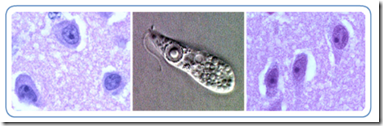
L & R: Trophozoites of N. fowleri in brain tissue, stained with H&E. Center: Ameboflagellate trophozoite of N. fowleri. Credit: DPDx


# 7760


Each summer we generally hear of one or two cases of  Naegleria Fowleri infection – often called the `killer amoeba’ by the press – usually connected to swimming in warm, stagnant pools of fresh water. In mid-August, in Florida Reports Naegleria fowleri Infection we learned of an 12-year-old boy with the infection, and in July (see Arkansas: Naegleria fowleri Shuts Water Park) the victim was a 12-year-old girl.


Last week, a third case was reported in Louisiana, that of a 4-year-old Mississippi child visiting a St. Bernard Parish home, who (according to this NOLA.COM report) appears to have contracted the amoeba while playing on a slip-and-slide.  The announcement from the Louisiana Department of Health & Hospitals follows:


DHH Confirms Death of a Child Associated with Rare Amoeba Found in St. Bernard Parish Home
Initial tests of parish water system negative for Naegleria fowleri, State and Parish taking precautions to protect the public

Thursday, September 5, 2013  |  Contact: Media & Communications: Phone: 225.342.1532, E-mail: dhhinfo@la.gov

BATON ROUGE, La.—The federal Centers for Disease Control and Prevention (CDC) has confirmed that a child who died from encephalitis, caused by the Naegleria fowleri amoeba, contracted the illness while visiting a home in St. Bernard Parish, the Department of Health and Hospitals announced Thursday.

While water samples taken from the home tested positive for Naegleria fowleri, initial tests of the parish water system are negative for Naegleria fowleri. Because some DHH tests showed low levels of chlorine in some areas of the system, the parish is taking preventative measures to flush its water system and DHH will perform additional testing.  These actions are being done out of an abundance of caution to ensure public safety.

(Continue . . . )


Additional testing has been completed, and yesterday the Louisiana Dept of Health announced that Naegleria had been detected at four locations in the St. Bernard Parish’s water system.


CDC Confirms Rare Ameba in St. Bernard Water System
State health department says water is safe to drink, but urges residents to take precautions

Thursday, September 12, 2013  |  Contact: Media & Communications: Phone: 225.342.1532, E-mail: dhhinfo@la.gov

BATON ROUGE, La.—Additional test results from the federal Centers for Disease Control and Prevention (CDC) confirm the presence of the rare ameba Naegleria fowleri in four locations of the St. Bernard Parish water system, the Louisiana Department of Health and Hospitals (DHH) announced Thursday.

DHH announced last week that the encephalitis death of a child that had visited St. Bernard Parish was connected to the rare ameba, which testing confirmed was present at the home. Because some water samples showed low residual levels of chlorine, DHH sent additional water samples to the CDC for testing last week and St. Bernard parish began flushing its water lines with additional chlorine last week, as a precautionary measure.

Assistant Secretary for Public Health J.T. Lane said, "We know that chlorine kills Naegleria fowleri, which is why it was critical that the parish proactively began flushing its water system with additional chlorine last week. The parish will continue this action until it raises chlorine residuals to recommended levels, and this process will continue for several weeks. DHH is working with parish officials to provide assistance and support to the parish's staff to ensure that chlorine levels are being monitored daily."

State Health Officer Jimmy Guidry said, "The water is safe to drink and there are basic precautions that families can take -- such as chlorinating their pools and avoiding getting water in their noses -- to protect themselves, though infection from this ameba is very rare."

While the water is safe to drink, there is a risk if the ameba enters their nose. There are basic precautions that families can take -- such as chlorinating their pools and avoiding getting water in their noses -- to protect themselves, though infection from this ameba is very rare."

Today's confirmation is from four sites located in Violet and Arabi. DHH scientists pulled samples from hydrants and faucets that connected directly to the water lines. Hundreds of liters of water were filtered in order to capture any amebas that might be present in the water.

Naegleria fowleri is a rare infection that has been associated with three deaths traced to water in Louisiana since 2011. Two people died in 2011, in addition to the death being announced last week. The CDC confirmed that Naegleria fowleri was the cause of the death after specialized testing was conducted.

PRECAUTIONARY MEASURES FOR FAMILIES

According to the CDC, personal actions to reduce the risk of Naegleria fowleri infection should focus on limiting the amount of water going up a person's nose and lowering the chances that Naegleria fowleri may be in the water.  For information on preventative measures, please visit the CDC Website here: http://www.cdc.gov/parasites/naegleria/prevention.html

To prevent any risk when using drinking water, make sure water does not go up your nose.  Some common sense suggestions from the CDC include:

  • DO NOT allow water to go up your nose or sniff water into your nose when bathing, showering, washing your face, or swimming in small hard plastic/blow-up pools.
  • DO NOT jump into or put your head under bathing water (bathtubs, small hard plastic/blow-up pools) - walk or lower yourself in.
  • DO NOT allow children to play unsupervised with hoses or sprinklers, as they may accidentally squirt water up their nose. Avoid slip-n-slides or other activities where it is difficult to prevent water going up the nose.
  • DO run bath and shower taps and hoses for 5 minutes before use to flush out the pipes. This is most important the first time you use the tap after the water utility raises the disinfectant level.
  • DO keep small hard plastic/blow-up pools clean by emptying, scrubbing, and allowing them to dry after each use.
  • DO use only boiled and cooled, distilled, or sterile water for making sinus rinse solutions for neti pots or performing ritual ablutions.
  • DO keep your swimming pool adequately disinfected before and during use. Adequate disinfection means:
      1. Pools: free chlorine at 1-3 parts per million (ppm) and pH 7.2-7.8
      2. Hot tubs/spas: free chlorine 2-4 parts per million (ppm) or free bromine 4-6 ppm and pH 7.2-7.8
      3. If you need to top off the water in your swimming pool with tap water,
  • DO place the hose directly into the skimmer box and ensure that the filter is running.
  • DO NOT top off by placing the hose in the body of the pool.


(Continue . . . )


Although the primary route of infection is from swimming in shallow, warm, (usually stagnant) fresh-water lakes and streams, in 2011 we saw a couple of cases in Louisiana related to the use of Neti Pots for nasal irrigation (see FDA Advice On Safe Use Of Neti Pots).

Is Rinsing Your Sinuses Safe? - (JPG)

Photo Credit FDA

Daily nasal irrigation is also practiced by many in the Muslim community, and that has led to dozens of deaths in recent years in Karachi, Pakistan where tap water standards are suspect. This recent report from last June:

Another man dies due to naegleria fowleri

KARACHI: The deadly waterborne infection, which is caused by an amoeba Naegleria fowleri claimed another life in the city on Saturday. With this case, the death toll, caused by this fatal infection, is now three since January 2013.


Last year, we saw Pakistan: Naegleria Fowleri Blamed For 10 Deaths, while in 2011, the CDC’s EID journal carried the following dispatch on a much bigger outbreak:


Primary Amebic Meningoencephalitis Caused by Naegleria fowleri, Karachi, Pakistan
Sadia Shakoor, Mohammad Asim Beg, Syed Faisal MahmoodComments to Author , Rebecca Bandea, Rama Sriram, Fatima Noman, Farheen Ali, Govinda S. Visvesvara, and Afia Zafar
Abstract

We report 13 cases of Naegleria fowleri primary amebic meningoencephalitis in persons in Karachi, Pakistan, who had no history of aquatic activities. Infection likely occurred through ablution with tap water. An increase in primary amebic meningoencephalitis cases may be attributed to rising temperatures, reduced levels of chlorine in potable water, or deteriorating water distribution systems.


While the risks of developing PAM (primary amebic meningoencephalitis) from the use of a Neti pot is very low, given this infection is almost always fatal, it makes sense to follow the FDA’s advice to boil the water first.


Last month, in MMWR: CDC Imports Investigational Drug For Amoebic Infections, we learned that the CDC was making available an experimental drug for the treatment of PAM.  While there’s not a lot of history of using this drug to treat these infections, the CDC believes there is enough evidence that it provides a `survival advantage’ to have imported the drug for this use.

The State of Florida has a 1-minute PSA on this amoebic threat, which you can view below.


The Florida Department of Health offers some additional common sense safety advice on how to avoid this parasite.

image

Photo Credit – Florida DOH

For more information on the Naegleria parasite, you can also visit the CDC’s Naegleria webpage.

Friday, August 23, 2013

MMWR: CDC Imports Investigational Drug For Amoebic Infections

image

L & R: Trophozoites of N. fowleri in brain tissue, stained with H&E. Center: Ameboflagellate trophozoite of N. fowleri. Credit: DPDx


#7596


Amoebic infections by Naegleria fowleri resulting in PAM (Primary Amebic Meningoencephalitis) or by Acanthamoeba and Balamuthia mandrillaris producing GAE (Granulomatous amoebic encephalitis) are fortunately exceedingly rare, but for the unlucky few who are infected, survival is rare.


The CDC only reports one survivor of Naegleria fowleri out of 128 cases diagnosed in the United States (cite) over the past 50 years.


Survival from GAE is very rare as well, and those few who do survive usually experience significant neurological impairment.


This summer, we’ve already seen a couple of Naegleria infections linked to swimming in freshwater lakes reported in the United States (see Florida Reports Naegleria fowleri Infection, Naegleria fowleri Shuts Water Park), and last year, we saw two cases in Louisiana linked to nasal irrigation using tap water (see FDA Advice On Safe Use Of Neti Pots).


Until recently, treatment options have been limited to supportive care, but now the CDC is making available a drug (Miltefosine)– currently used outside of the U.S. to treat visceral and cutaneous leishmaniasis – to victims of FLA (Free Living Amoebic) in the United States.


While there’s not a lot of history of using this drug to treat these infections, the CDC believes there is enough evidence that it provides a `survival advantage’ to have imported the drug for this use.


Here is the CDC MMWR release from yesterday:


Investigational Drug Available Directly from CDC for the Treatment of Infections with Free-Living Amebae

Weekly

August 23, 2013 / 62(33);666-666

Infections caused by free-living amebae (FLA) are severe and life-threatening. These infections include primary amebic meningoencephalitis (PAM) caused by Naegleria fowleri* and granulomatous amebic encephalitis caused by Balamuthia mandrillaris† and Acanthamoeba species.§ Although several drugs have in vitro activity against FLA, mortality from these infections remains >90% despite treatment with combinations of drugs.


Miltefosine is a drug used to treat leishmaniasis and also has shown in vitro activity against FLA (1), but as an investigational drug, it has not been readily available in the United States. With CDC assistance, however, miltefosine has been administered since 2009 for FLA infections as single-patient emergency use with permission from the Food and Drug Administration. Although the number of B. mandrillaris and Acanthamoeba species infections treated with a miltefosine-containing regimen is small, it appears that a miltefosine-containing treatment regimen does offer a survival advantage for patients with these often fatal infections (2). Miltefosine has not been used successfully to treat a Naegleria infection, but the length of time it has taken to import miltefosine from abroad has made timely treatment of fulminant Naegleria infections difficult.


CDC now has an expanded access investigational new drug (IND) protocol in effect with the Food and Drug Administration to make miltefosine available directly from CDC for treatment of FLA in the United States. The expanded access IND use of miltefosine for treatment of FLA is partly supported by 26 case reports of FLA infection in which miltefosine was part of the treatment regimen (Division of Foodborne, Waterborne, and Environmental Diseases, National Center for Emerging and Zoonotic Infectious Diseases, CDC, unpublished data, 2013). Miltefosine generally is well-tolerated, with gastrointestinal symptoms the most commonly reported adverse effects. Clinicians who suspect they have a patient with FLA infection who could benefit from treatment with miltefosine should contact CDC to consult with an FLA expert. For diagnostic assistance, specimen collection guidance, specimen shipping instructions, and treatment recommendations, clinicians should contact the CDC Emergency Operations Center at 770-488-7100.

Reported by

Corresponding contributor: Jennifer R. Cope, Div of Foodborne, Waterborne, and Environmental Diseases, National Center for Emerging and Zoonotic Infectious Diseases, CDC, jcope@cdc.gov, 404-718-4878.

Saturday, July 27, 2013

Arkansas: Naegleria fowleri Shuts Water Park

image

Photo  Credit Florida DOH


# 7519


While extraordinarily rare, each summer we usually hear about one or more cases of infection with Naegleria fowleri,  dubbed the `brain eating amoeba’ by the media.


Yesterday the Arkansas Department of Health (ADH) confirmed earlier local media reports of a case of PAM (primary amebic meningoencephalitis) due to this parasite in a 12 year-old girl who recently swam in the Willow Springs water park in Little Rock.


First stop, the ADH announcements (2), after which I’ll have more:


Friday, Jul 26, 2013

ADH Confirms Case of Parasitic Meningitis

Little Rock -- The Arkansas Department of Health (ADH) has confirmed a case of a rare form of parasitic meningitis. A case of primary amebic meningoencephalitis (PAM) -- a very rare form of meningitis caused by an ameba associated with warm rivers, lakes and streams -- was confirmed with the assistance of the Centers for Disease Control and Prevention.


Based on our ongoing investigation, the most likely source of infection is the Willow Springs Water Park. There was another case of PAM possibly connected with Willow Springs in 2010. Based on the occurrence of two cases of this rare infection in association with the same body of water and the unique features of the park, the ADH has asked the owner of Willow Springs to voluntarily close the water park to ensure the health and safety of the public.


The organism that causes PAM is known as Naegleria fowleri. It is commonly found in warm freshwater and soil all over the world and can cause a rare but severe brain infection that is usually fatal. Naegleria cannot be passed from person-to-person. The organism typically infects people by entering the body through the nose as they are swimming and diving. Individuals cannot be infected with Naegleria by swimming in properly cleaned, maintained and disinfected swimming pools.


While infection with Naegleria can occur anywhere, it usually occurs in the warm southern U.S. From 2003-2012, there have only been 31 reported infections in the U.S. This case is only the sixth case in Arkansas in 40 years.

(Continue . . . )


Friday, Jul 26, 2013

ADH Offers Further Guidance on Naegleria

Little Rock -- The Arkansas Department of Health (ADH) would like to remind the public that infection from naegleria fowleri, or parasitic meningitis, is very rare. If you swam at Willow Springs Water Park more than 8 days ago, you are NOT at risk for the infection. Even if you swam at Willow Springs in the past week, your risk of infection is exceedingly low.


“If you do not have symptoms, there is no test or preventive antibiotic or treatment needed,” said Dirk Haselow, MD, State Epidemiologist at ADH.


Persons with infection will develop symptoms such as fever, vomiting, stiff neck, headache, light sensitivity, irritability, sleepiness, confusion, or mental status changes within 7 days. If you develop two or more of these symptoms, please contact your doctor.


The Arkansas Department of Health (ADH) has confirmed a rare case of primary amebic meningoencephalitis (PAM) caused by an ameba associated with warm rivers, lakes and streams. The organism that causes PAM is known as Naegleria fowleri. It is commonly found in warm freshwater and soil all over the world and can cause a rare but severe brain infection that is usually fatal.


Naegleria cannot be passed from person-to-person. The organism typically infects people by entering the body through the nose as they are swimming and diving. Individuals cannot be infected with Naegleria by swimming in properly cleaned, maintained and disinfected swimming pools.
For more information visit: LINK


Local media describes this girl’s condition as `stable’, and that she in a medically induced coma. Historically, the prognosis with this type of infection has been very poor, with only 1 patient out of 128 diagnosed in the United States surviving (cite) over the past 50 years.


Although the primary route of infection is from swimming in shallow, warm, (usually stagnant) fresh-water lakes and streams, in 2011 we saw a couple of cases in Louisiana related to the use of Neti Pots for nasal irrigation (see FDA Advice On Safe Use Of Neti Pots).

Is Rinsing Your Sinuses Safe? - (JPG)

Photo Credit FDA


Daily nasal irrigation is also practiced by many in the Muslim community, and that has led to dozens of deaths in recent years in Karachi, Pakistan where tap water standards are suspect. The most recent report I can find comes from late June:


Another man dies due to naegleria fowleri


KARACHI: The deadly waterborne infection, which is caused by an amoeba Naegleria fowleri claimed another life in the city on Saturday. With this case, the death toll, caused by this fatal infection, is now three since January 2013.


Last year, we saw Pakistan: Naegleria Fowleri Blamed For 10 Deaths, while in 2011, the CDC’s EID journal carried the following dispatch on a much bigger outbreak:


Primary Amebic Meningoencephalitis Caused by Naegleria fowleri, Karachi, Pakistan
Sadia Shakoor, Mohammad Asim Beg, Syed Faisal MahmoodComments to Author , Rebecca Bandea, Rama Sriram, Fatima Noman, Farheen Ali, Govinda S. Visvesvara, and Afia Zafar
Abstract

We report 13 cases of Naegleria fowleri primary amebic meningoencephalitis in persons in Karachi, Pakistan, who had no history of aquatic activities. Infection likely occurred through ablution with tap water. An increase in primary amebic meningoencephalitis cases may be attributed to rising temperatures, reduced levels of chlorine in potable water, or deteriorating water distribution systems.


Since millions of people swim in waters where this amoeba naturally occur (or practice nasal irrigation) and only a small handful of infections result, the odds of acquiring this infection are exceedingly low.  


Still, as this infection is almost always fatal, is largely avoidable, and often involves kids - the state of Florida - which has had its share of cases over the years, takes the threat seriously.


The following short video comes from from the Volusia County Health Department.


The Florida Department of Health offers some common sense safety advice on how to avoid this parasite.


image

Photo Credit – Florida DOH

For more information on the Naegleria parasite, you can visit the CDC’s Naegleria webpage.

Tuesday, October 09, 2012

Pakistan: Naegleria Fowleri Blamed For 10 Deaths

image

L & R: Trophozoites of N. fowleri in brain tissue, stained with H&E. Center: Ameboflagellate trophozoite of N. fowleri. Credit: DPDx


# 6619


Naegleria fowleri, commonly called the `brain eating amoeba’, has been blamed for 10 deaths in Karachi, Pakistan over the summer according to a Pakistani official with the World Health Organization.


The AP is reporting this morning that Musa Khan, the head of Pakistan’s DEWS (Disease Early Warning System), announced that the deaths occurred between March and September.


You may recall that I mentioned this outbreak, and the ongoing coverage by the newshounds on FluTrackers  (see this thread) back in July.


While it is exceedingly rare, we hear of a few fatal cases of PAM (Primary Amoebic Meningoencephalitis) each year caused by this water-borne organism.


It is usually acquired while swimming in warm lakes and streams, but last year we saw a couple of cases in Louisiana related to the use of Neti Pots for nasal irrigation (see FDA Advice On Safe Use Of Neti Pots).


Is Rinsing Your Sinuses Safe? - (JPG)

Photo Credit FDA


Nasal irrigation is practiced daily by many in the Muslim community, and is suspected to be the route by which these Pakistani infections were acquired.


Several years ago nasal irrigation with N. fowleri contaminated tap water in Karachi, Pakistan was suspected to have caused 13 cases over 18 months. The CDC’s EID journal carried a dispatch on this outbreak in 2011:


Primary Amebic Meningoencephalitis Caused by Naegleria fowleri, Karachi, Pakistan

Sadia Shakoor, Mohammad Asim Beg, Syed Faisal MahmoodComments to Author , Rebecca Bandea, Rama Sriram, Fatima Noman, Farheen Ali, Govinda S. Visvesvara, and Afia Zafar
Abstract

We report 13 cases of Naegleria fowleri primary amebic meningoencephalitis in persons in Karachi, Pakistan, who had no history of aquatic activities. Infection likely occurred through ablution with tap water. An increase in primary amebic meningoencephalitis cases may be attributed to rising temperatures, reduced levels of chlorine in potable water, or deteriorating water distribution systems.


This latest outbreak has inspired heated debate over the water quality in Pakistan’s largest city (pop 13 million).   This report from today’s Express Tribune:


Despite low chlorine level, KWSB insists there’s nothing fowl(eri)

By Saad Hasan / Samia Malik

Published: October 9, 2012

KARACHI:

As more cases of the deadly illness caused by the amoeba Naegleria fowleri continue to surface, officials have started wrangling with one another over the quality of water that runs through the city’s pipelines.


<SNIP>


The managing director of KWSB, Misbahuddin Fareed, said on Monday that the results showed that the level of chlorine was indeed low – it was 0.15 (parts per million) ppm when it should have been at least 0.5 ppm.


Despite this, the manager refused to believe that the water was contaminated and asked Aga Khan University to conduct research to determine whether the water did indeed carry the organism. “Our water is running water anyway. It does not stagnate and allow germs to multiply.” He said that the organisation checks the quantity of water every three hours.

(Continue . . .)


Since millions of people swim in waters where this amoeba naturally occur (or are otherwise exposed) and only a small handful of infections result, the odds of acquiring this infection are extraordinarily low.


Still, as this infection is almost always fatal, that makes the advice of using distilled, sterile or previously boiled water in your neti pot a reasonable enough precaution.


The Florida Department of Health has some common sense safety advice on how to avoid this parasite.

image

Photo Credit – Florida DOH


For more information on the Naegleria parasite, you can visit the CDC’s Naegleria webpage.

Friday, August 24, 2012

FDA Advice On Safe Use Of Neti Pots

 Is Rinsing Your Sinuses Safe? - (JPG)

Photo Credit FDA

# 6516


Regular readers of this blog are no doubt aware that we saw two fatal cases of PAM (Primary Amoebic Meningoencephalitis) in Louisiana attributed to sinus irrigation using tap water (see Neti Pots & Naegleria Fowleri) last fall.


While rare, most Naegleria fowleri parasite infections occur in young children or teens exposed while swimming along the bottom of warm, often stagnant fresh water lakes or streams. 


According to the CDC’s FAQ on Naegleria, we average 2 to 4 infections each year in the United States with this parasite. .


But a few years ago nasal irrigation with N. fowleri contaminated tap water in Karachi, Pakistan was suspected to have caused 13 cases over 18 months. Earlier this summer (see this FluTrackers Thread) a number of new cases were reported in Pakistan, once again with suspicions cast towards contaminated tap water.


In the wake of the first two cases of N. fowleri in the United States associated with use of neti pots, the FDA has released some safety guidelines to reduce (and hopefully) eliminate the risks.


Is Rinsing Your Sinuses Safe?

Little teapots with long spouts have become a fixture in many homes for reasons that have nothing to do with tea.


Called neti pots, they are used to rinse the nasal passages with a saline (salt-based) solution, and have become popular as a treatment for congested sinuses, colds and allergies, and for moistening nasal passages exposed to dry indoor air.


However, the Food and Drug Administration (FDA) has concerns about the risk of infection tied to the improper use of neti pots and other nasal rinsing devices. The agency is informing consumers, manufacturers and health care professionals about safe practices for using all nasal rinsing devices, which include bulb syringes, squeeze bottles, and battery-operated pulsed water devices.


These devices are generally safe and useful products, says Steven Osborne, M.D., a medical officer in FDA’s Center for Devices and Radiological Health (CDRH). But they must be used and cleaned properly.


Most important is the source of water that is used with nasal rinsing devices. Tap water that is not filtered, treated, or processed in specific ways is not safe for use as a nasal rinse.


Some tap water contains low levels of organisms, such as bacteria and protozoa, including amoebas, which may be safe to swallow because stomach acid kills them.  But these “bugs” can stay alive in nasal passages and cause potentially serious infections, according to the Centers for Disease Control and Prevention (CDC).


Improper use of neti pots may have caused two deaths in 2011 in Louisiana from a rare brain infection that the state health department linked to tap water contaminated with an amoeba called Naegleria fowleri.

<SNIP>

What types of water are safe to use in nasal rinsing devices?

  • Distilled or sterile water, which you can buy in stores.  The label will state “distilled” or “sterile.” 
  • Boiled and cooled tap water—boiled for 3-5 minutes, then cooled until it is lukewarm. Previously boiled water can be stored in a clean, closed container for use within 24 hours.
  • Water passed through a filter with an absolute pore size of 1 micron or smaller, which traps potentially infectious organisms. CDC has information on selecting these filters, which you can buy from some hardware and discount stores, or online.

How do I use and care for my device?

  • Wash and dry hands.
  • Check that the device is clean and completely dry.
  • Use the appropriate water as recommended above to prepare the saline rinse, either with the prepared mixture supplied with the device, or one you make yourself.
  • Follow the manufacturer’s directions for use.
  • Wash the device with distilled, sterile, or boiled and cooled tap water, and then dry the inside with a paper towel or let it air dry between uses.

(Continue . . . )


For more on this rare, but generally fatal parasitic infection, you may wish to visit the CDC’s webpage:


Naegleria fowleri - Primary Amebic Meningoencephalitis (PAM)

image

Photo Credit CDC

Naegleria fowleri (commonly referred to as the "brain-eating ameba or amoeba"), is a free-living microscopic ameba*, (single-celled living organism). It can cause a very rare, but severe, infection of the brain called primary amebic meningoencephalitis (PAM). The ameba is commonly found in warm freshwater (e.g. lakes, rivers, and hot springs) and soil. Naegleria fowleri usually infects people when contaminated water enters the body through the nose. Once the ameba enters the nose, it travels to the brain where it causes PAM, which is usually fatal. Infection typically occurs when people go swimming or diving in warm freshwater places, like lakes and rivers. In very rare instances, Naegleria infections may also occur when contaminated water from other sources (such as inadequately chlorinated swimming pool water or heated and contaminated tapwater) enters the nose.


And for previous blogs on this fascinating parasite, you may wish to revisit:


The Return Of Naegleria fowleri
Neti Pots & Naegleria Fowleri
Sometimes It’s Zebras

Friday, July 20, 2012

The Return Of Naegleria fowleri

image

L & R: Trophozoites of N. fowleri in brain tissue, stained with H&E. Center: Ameboflagellate trophozoite of N. fowleri. Credit: DPDx


# 6442


While it is exceedingly rare, each summer we hear of one or two fatal cases of PAM (Primary Amoebic Meningoencephalitis) here in the United States caused by an infection usually acquired while swimming in warm lakes and streams.


Tragically, an 8-year old boy from South Carolina has become the latest victim (see Amoeba kills Sumter youthThe State).


Blake Driggers reportedly fell ill a week after swimming in Lake Marion and was rushed to the hospital by his family.


Roughly a week later he died. With no effective treatment, survival with this infection is very rare. 


Last year, in Sometimes It’s Zebras I wrote about this usually fatal form of meningitis caused by the Naegleria fowleri parasite.


N. flowleri is an amoeba, which can often be found in the silt at the bottom of warm water lakes and streams. If absorbed through the nostrils - it can make a beeline towards the brain.


Although usually only a danger to swimmers, last year we saw a new wrinkle when 2 people in Louisiana became infected through the introduction of tap water into their sinuses using a neti pot.


image

Photo Credit – Wikipedia Commons


These incidents caused the Louisiana Health Department to recommend that people `use distilled, sterile or previously boiled water to make up the irrigation solution’ (see Neti Pots & Naegleria Fowleri).


While it made a lot of headlines, this was not the first time that nasal irrigation has been linked to PAM. Several years ago N. fowleri contaminated tap water in Karachi, Pakistan may have caused 13 cases over 18 months.


According to the CDC’s FAQ on Naegleria, we average 2 to 4 infections each year in the United States with this parasite.  They list the common sources of the amoeba as:

Where is Naegleria fowleri found?

Naegleria fowleri is found around the world. In the United States, the majority of infections have been caused by Naegleria fowleri from freshwater located in southern-tier states (2). The ameba can be found in:

  • Bodies of warm freshwater, such as lakes and rivers
  • Geothermal (naturally hot) water, such as hot springs
  • Warm water discharge from industrial plants
  • Geothermal (naturally hot) drinking water sources
  • Soil
  • Swimming pools that are poorly maintained, minimally-chlorinated, and/or un-chlorinated
  • Water heaters with temperatures less than 47°C (3, 4)

Naegleria fowleri is not found in salt water, like the ocean.


Since millions of people swim in waters where this amoeba naturally occur (or are otherwise exposed) and only a small handful of infections result, the odds of acquiring this infection are extraordinarily low.


But the Florida Department of Health has some common sense safety advice on how to avoid this parasite.


image

Photo Credit – Florida DOH

For more information on the Naegleria parasite, you can visit the CDC’s Naegleria webpage.


UPDATE:

While I was writing this blog, Ronan Kelly and Alert over at FluTrackers were posting on a recent spate of deaths due to Naegleria – once again in Karachi, Pakistan.


The number of deaths being reported varies depending on the source, but the media is reporting between 3 and 8 fatalities over the past couple of weeks. 


You can follow the media reports in this thread.