Showing posts with label Norovirus. Show all posts

Monday, May 11, 2015

CID Study: Airborne Norovirus In Healthcare Facilities

image


# 10,033


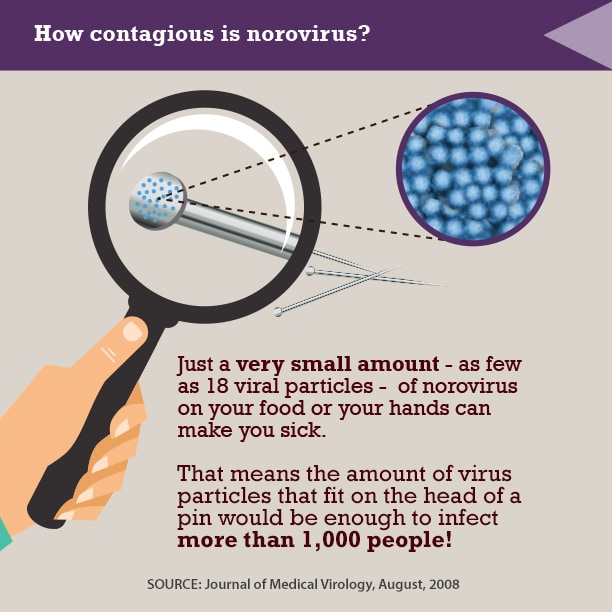
As the CDC graphic above illustrates, when it comes to infectivity, Norovirus is hard to beat.   The `accepted’ mode of transmission has long been the fecal-oral route, but over the past few years we’ve seen evidence supporting an `airborne’ or aerosolized transmission.


Last week, a new study was published in Clinical Infectious Diseases that looked for, and found, norovirus in ambient air samples taken at from 8 hospitals, both  inside and outside of an infected patient’s room.


First a link to the study, and some excerpts from the abstract and press release, after which I’ll return with more:


Detection and quantification of airborne norovirus during outbreaks in healthcare facilities

Laetitia Bonifait1,  Rémi Charlebois1, Allison Vimont2, Nathalie Turgeon1, Marc Veillette1, Yves Longtin3, Julie Jean2,4, and Caroline Duchaine1,5

ABSTRACT

Methods. A total of 48 air samples were collected during norovirus outbreaks in 8 healthcare facilities. Samples were taken 1 m away from each patient, in front of the patient's room and at the nurses' station. The resistance to aerosolization stress of murine norovirus MNV-1 bioaerosols was also tested in vitro using an aerosol chamber.

Results. Norovirus genomes were detected in 6/8 healthcare centers. The concentrations ranged from 1.35x101 to 2.35x10³ genomes per m3 in 47% of air samples. Norovirus MNV-1 preserved its infectivity and integrity during in vitro aerosol studies.

Conclusion. Norovirus genomes are frequently detected in the air of healthcare facilities during outbreaks, even outside patients' rooms. In addition, in vitro models suggest this virus may withstand aerosolization.


An accompanying press release to the CID study states:

According to Professor Duchaine, this previously unknown mode of norovirus propagation could explain why gastroenteritis outbreaks are so hard to contain: "The measures applied in hospital settings are only designed to limit direct contact with infected patients. In light of our results, these rules need to be reviewed to take into account the possibility of airborne transmission of noroviruses. Use of mobile air filtration units or the wearing of respiratory protection around patients with gastroenteritis are measures worth testing."

 
Currently, the recommendations from the CDC on the Healthcare Worker’s use of PPEs (Personal Protective Equipment) when dealing with Norovirus reads:


Personal Protective Equipment

  1. If norovirus infection is suspected, adherence to PPE use according to Contact and Standard Precautions is recommended for individuals entering the patient care area (i.e., gowns and gloves upon entry) to reduce the likelihood of exposure to infectious vomitus or fecal material.    (Category IB)(Key Question 1.C.4) 
  2. Use a surgical or procedure mask and eye protection or a full face shield if there is an anticipated risk of splashes to the face during the care of patients, particularly among those who are vomiting. (Category IB)(Key Question 3.C.2.a)
  3. More research is needed to evaluate the utility of implementing Universal Gloving (e.g., routine use of gloves for all patient care) during norovirus outbreaks. (No recommendation/unresolved issue)


Most of the CDC’s guidance documents for HCWs dealing with Norovirus cases stress patient cohorting and hand hygiene.  Respiratory protection isn’t mentioned in any of the following documents.


Previously, in Vomiting Larry And His Aerosolized Norovirus, we looked at the physics involved in aerosolizing virus particles via projectile vomiting , while in  Norovirus: The Gift That Keeps On Giving, we looked at an incident involving a girl’s soccer team where 17 girls were exposed via a reusable grocery bag, likely contaminated from an airborne route.


Assuming more studies showing the aerosolized spread of noroviruses are published, infection control experts may need to revisit the use of some form of respiratory protection (N95, facemasks, etc.)  for HCWs caring for infected patients.

Saturday, April 04, 2015

EID Journal: Emerging Norovirus GII.17 - Guangdong, China

image


# 9900


Noroviruses - which are often mistakenly called `stomach flu’ - are single-stranded RNA viruses that (like influenza) are able to evolve rapidly. So we typically see a new dominant norovirus strain emerge every two or three years. In 2009, we saw the emergence of the New Orleans strain of GII.4, while in 2012, the Sydney strain appeared.


Victims usually experience nausea, frequent vomiting & diarrhea, and stomach pain – and may also suffer from headache, fever, and body aches.


Outbreaks from these viruses are the bane of cruise ships, schools, and hospitals – anywhere large numbers of people congregate.  While the illness usually runs its course in 1 to 3 (very long) days - among those who are aged or infirmed -the virus can take a heavy toll.

According to the CDC, in the United Sates each year the norovirus:

  • causes about 21 million cases of acute gastroenteritis (inflammation of the stomach or intestines or both)
  • contributes to about 70,000 hospitalizations and 800 deaths, mostly among young children and the elderly

With new strains appearing every few years, and most requiring a ridiculously low infectious dose, the ability for norovirus to spread is legendary.  In Vomiting Larry And His Aerosolized Norovirus, we looked at work done by the UK’s Health and Safety Laboratory, where they created a robot that  . . . you guessed it . . . vomits.

image

Credit UK’s Health & Safety Laboratory

By adding a florescent dye marker to robot’s `vomitus’, researchers have determined that droplets – too small to be readily seen – can end up as far as 3 meters away from the source.


The `standard’ mode of norovirus transmission is considered to be the fecal-oral route, but limited airborne transmission is increasingly being considered a factor.


The CDC – in a an MMWR report from 2011 called Updated Norovirus Outbreak Management and Disease Prevention Guidelines describes transmission thusly:

Transmission

Norovirus is extremely contagious, with an estimated infectious dose as low as 18 viral particles (41), suggesting that approximately 5 billion infectious doses might be contained in each gram of feces during peak shedding. Humans are the only known reservoir for human norovirus infections, and transmission occurs by three general routes: person-to-person, foodborne, and waterborne.

Person-to-person transmission might occur directly through the fecal-oral route, by ingestion of aerosolized vomitus, or by indirect exposure via fomites or contaminated environmental surfaces.


While the numbers change almost years, there are currently 6 identified genogroups of norovirus (GI-GVI).  GI and GII genogroups are known to infect humans, and GI has 9 known genotypes, while GII has 22. 


The most common source of human infection for more than a decade has come from Genogroup II, genotype 4 (abbreviated as GII.4).


Yesterday, however, the CDC’s EID Journal carried a dispatch describing a recently emerged GII.17 strain.  Although sporadic GII.17 cases have been previously reported in Africa, Korea, Taiwan, and Japan, the first major outbreak was documented in Guangzhou last November, and it is now reportedly spreading rapidly across China. 


Gastroenteritis Outbreaks Caused by Norovirus GII.17, Guangdong Province, China, 2014–2015

Jing Lu1, Limei Sun1, Lin Fang, Feng Yang, Yanling Mo, Jiaqian Lao, Huanying Zheng, Xiaohua Tan, Hualiang Lin, Shannon Rutherford, Lili Guo, Changwen Ke, and Li HuiComments to Author

Abstract

In the past decade, the most prevalent norovirus genotype causing viral gastroenteritis outbreaks worldwide, including China, has been GII.4. In winter 2014–15, norovirus outbreaks in Guangdong, China, increased. Sequence analysis indicated that 82% of the outbreaks were caused by a norovirus GII.17 variant.

Norovirus infection is a leading cause of nonbacterial gastroenteritis outbreaks in industrialized and developing countries (1,2). On the basis of amino acid identity in viral protein 1, noroviruses can be divided into at least 6 genogroups (GI–GVI). GI and GII infect humans and can be further classified into genotypes; at least 9 genotypes belong to GI and 22 belong to GII (3). During the past decade, most reported norovirus outbreaks were caused by GII.4 norovirus (4,5). New variants of GII.4 have emerged approximately every 2–3 years and have caused norovirus gastroenteritis pandemics globally (6). Since 1999, the major circulating genotype in mainland China has been GII.4, accounting for 64% of all genotypes detected (7). In winter 2014–15, norovirus outbreaks in Guangdong Province, China, increased. Sequence analyses showed that the major cause of continuous gastroenteritis outbreaks in the region was a rarely reported norovirus genotype: GII.17.

<SNIP>

Sequence comparison with archived GII.17 strains from GenBank suggests that the GII.17 genotype identified in Guangdong is a newly emerged variant, differing from GII.17 strains detected before 2011. The recent detection of this new variant in samples from patients with sporadic cases in several regions of Asia (e.g., Korea, Japan, and Taiwan) and from groundwater in Kenya (11) suggests that this variant of GII.17 has circulated in a wide range of areas in recent years. For GII.17, most (66 [83%] of 80) sequences from the GenBank database are restricted to region C, the short conserved sequences of the N terminus of the capsid gene. This conserved region has been widely used for genotyping strains (12) and phylogenetic studies (13). To include more reference strains and to illustrate the relationship between GII.17 from Guangdong and other regions, we mainly used region C for phylogenetic analyses in this study. Similarly, phylogenetic analysis based on the nearly full length of capsid sequences also showed that the newly emerged GII.17 variant in Guangdong clustered with the strains from Japan and Taiwan in 2013 and 2014 and differed from GII.17 strains detected before 2011 (Technical Appendix[PDF - 159 KB - 2 pages] Figure 2).

In conclusion, a norovirus genotype GII.17 variant emerged in winter 2014–15 and caused outbreaks in multiple cities in Guangdong Province, China. The distribution of GII.17 genotype among patients with sporadic cases of gastroenteritis remains unknown. In future studies, epidemiologic and virologic surveillance should be broadened to better clarify virologic, clinical, and epidemiologic patterns of this newly emerged norovirus.


Of note, GII.17 made news last summer in Norovirus GII.17 Predominates in Selected Surface Water Sources in Kenya and was suspected as the cause of an outbreak recently in Taiwan. 


Whether GII.17 spreads as rapidly, and as thoroughly, as the Sydney GII.4 strain that emerged in 2012  remains to be seen, but the timing is right for seeing a new strain take hold. 


One of the keys to prevention is good hand hygiene, unfortunately, unlike with many other bacteria and viruses, alcohol gel doesn’t do a particularly good job of killing the virus (see CMAJ: Hand Sanitizers May Be `Suboptimal’ For Preventing Norovirus). 


The CDC offers this advice to help prevent the spread of this virus.

image

Thursday, March 21, 2013

CDC: Norovirus Now Leading Cause Of Gastroenteritis In Children


norovirus 3D structure

Norovirus – Credit HPA


# 7020


Prior to the introduction of a pair of live, attenuated  Rotavirus vaccines in the middle of the last decade (RotaTeq and Rotarix), nearly all children in the United States were infected by one of the Rotaviruses before their 5th birthday (cite). 


The CDC estimated the pre-vaccine disease burden in the United States each year as:


• more than 400,000 doctor visits,
• more than 200,000 emergency room visits,
• 55,000 to 70,000 hospitalizations, and
• 20-60 deaths


With the introduction of the Rotavirus vaccine in 2006, the number youngsters needing emergency department care or hospitalization due to the Rotavirus had dropped by about 85% by 2010 (cite).


As the number of Rotavirus cases begins to go down, it is not terribly surprising to find a new king of the stomach virus hill among children.


From a study just published in the New England Journal of Medicine, we learn that Norovirus has now taken the lead as the number one cause of gastroenteritis in children in the United States.


Special Article

Norovirus and Medically Attended Gastroenteritis in U.S. Children

Daniel C. Payne, Ph.D., M.S.P.H., Jan Vinjé, Ph.D., Peter G. Szilagyi, M.D., M.P.H., Kathryn M. Edwards, M.D., Mary Allen Staat, M.D., M.P.H., Geoffrey A. Weinberg, M.D., Caroline B. Hall, M.D., James Chappell, M.D., Ph.D., David I. Bernstein, M.D., Aaron T. Curns, M.P.H., Mary Wikswo, M.P.H., S. Hannah Shirley, B.S. , Aron J. Hall, D.V.M., M.S.P.H., Benjamin Lopman, Ph.D., M.P.H., and Umesh D. Parashar, M.B., B.S., M.P.H.

N Engl J Med 2013; 368:1121-1130

March 21, 2013 DOI: 10.1056/NEJMsa1206589

<SNIP>

Conclusions

Since the introduction of rotavirus vaccines, norovirus has become the leading cause of medically attended acute gastroenteritis in U.S. children and is associated with nearly 1 million health care visits annually. (Funded by the Centers for Disease Control and Prevention.)


For some more background on this CDC-funded study, we go to the CDC Newsroom.


Norovirus is now the leading cause of severe gastroenteritis in US children

Norovirus is now the leading cause of acute gastroenteritis among children less than 5 years of age who seek medical care, according to a new study published in the New England Journal of Medicine.  Norovirus was responsible for nearly 1 million pediatric medical care visits for 2009 and 2010 in the United States, amounting to hundreds of millions of dollars in treatment costs each year.


“Infants and young children are very susceptible to norovirus infections, which often result in a high risk of getting dehydrated from the sudden onset of intense vomiting and severe diarrhea,” said Dr. Daniel Payne, an epidemiologist in the Division of Viral Diseases at the Centers for Disease Control and Prevention. “Our study estimates that 1 in 278 U.S. children will be hospitalized for norovirus illness by the time they turn 5 years of age. It is also estimated that about 1 in 14 children will visit an emergency room and 1 in 6 will receive outpatient care for norovirus infections.”

<SNIP>


“Our study confirmed that medical visits for rotavirus illness have decreased,” said Dr. Payne. “Also, our study reinforces the success of the U.S. rotavirus vaccination program and also emphasize the value of specific interventions to protect against norovirus illness.” Norovirus vaccines are currently being developed, which may be especially important for young children and elderly people who are high risk.


(Continue . . .)


Noroviruses, which are often mistakenly called `stomach flu’, are single-stranded RNA viruses that are able to evolve rapidly, so we typically see a new dominant norovirus strain emerge every two or three years. 


After exposure and a short incubation period (12-24 hours), the victim usually experiences nausea, frequent vomiting & diarrhea, and stomach pain – and may also experience headache, fever, and body aches.


The illness generally runs its course in 1 to 3 (very long) days, and most people recover. But among those who are aged or infirmed, the virus can take a heavy toll. According to the CDC, each year the norovirus:


  • causes about 21 million cases of acute gastroenteritis (inflammation of the stomach or intestines or both)
  • contributes to about 70,000 hospitalizations and 800 deaths, mostly among young children and the elderly


There are five genogroups (GI, GII, GIII, GIV, and GV) of noroviruses that can infect a variety of species, but  most human infections stem from genogroups GI and GII. GII noroviruses have at least 19 subtypes.


The most common cause of human illness is from Genogroup II, genotype 4 (abbreviated as GII.4).


In 2009, we saw the emergence of the New Orleans strain of GII.4, which had been the dominant strain for the past three years.


That is, until a new strain discovered a year ago by Professor Peter White and his team in the School of Biotechnology and Biomolecular Sciences in Australia (see UNSW: Sydney 2012 Norovirus Rising) - began to spread globally last fall.


In short order it was being reported in Japan, Taiwan, Europe, the UK, and North America (see Eurosurveillance: Emergence & Spread Of GII.4 Variant Norovirus).


According to a recent MMWR Report On New Norovirus GII.4 Sydney Strain, by December of 2012, the new Sydney strain was the cause of 58% of the norovirus outbreaks across the United States.


While reportedly `no worse’ than previous strains (which admittedly isn’t much comfort for those afflicted), levels of immunity to this emerging strain are exceedingly low, and it spreads like wildfire (see Vomiting Larry And His Aerosolized Norovirus).


Without a vaccine (yet) against Norovirus, prevention is key. 


One of the best preventatives is good hand hygiene, unfortunately, unlike with many other bacteria and viruses, alcohol gel doesn’t do a particularly good job of killing the virus (see CMAJ: Hand Sanitizers May Be `Suboptimal’ For Preventing Norovirus).


The CDC offers this advice to help prevent the spread of this virus.

image

Thursday, January 24, 2013

MMWR Report On New Norovirus GII.4 Sydney Strain

norovirus 3D structure

Norovirus – Credit HPA


# 6878


Regular readers of this blog are aware that we’ve paid more attention this year to norovirus than in previous years, simply because there’s a lot of it going around this winter.


In Eurosurveillance: Emergence & Spread Of GII.4 Variant Norovirus, we looked at early indications that a new variant of Norovirus was on the rise in Europe, and around the world.  


A few days later, I carried comments by the man who discovered this new strain - Professor Peter White, and his team in the School of Biotechnology and Biomolecular Sciences – see (UNSW: Sydney 2012 Norovirus Rising).


Noroviruses, which are often mistakenly called `stomach flu’, are single-stranded RNA viruses that are able to evolve rapidly, so we typically see a new dominant norovirus strain emerge every two or three years.


Victims usually experience nausea, frequent vomiting & diarrhea, and stomach pain – and may also suffer from headache, fever, and body aches.


The illness generally runs its course in 1 to 3 (very long) days, and most people recover. But among those who are aged or infirmed, the virus can take a heavy toll. According to the CDC, each year the norovirus:


  • causes about 21 million cases of acute gastroenteritis (inflammation of the stomach or intestines or both)
  • contributes to about 70,000 hospitalizations and 800 deaths, mostly among young children and the elderly


Today the CDC has confirmed what many have suspected; that this new Sydney strain of norovirus is contributing heavily to this year’s norovirus season here in the United States.


In a press release mailed out today, the CDC previewed today’s MMWR report:

New norovirus strain causing most norovirus outbreaks in United States

Not yet known if strain will cause more outbreaks than previous years


A new strain of norovirus called GII.4 Sydney was the leading cause of norovirus outbreaks in the United States from September to December 2012, according to a study published in Morbidity and Mortality Weekly Report released today by the Centers for Disease Control and Prevention. The new strain was detected in Australia in March 2012, and caused outbreaks in that country and several other countries.


CDC researchers analyzed 2012 data collected through CaliciNet on norovirus strains associated with outbreaks in the United States. They found that of the 266 norovirus outbreaks reported during the last four months of 2012, 141 were caused by the GII.4 Sydney strain.


“The new strain spread rapidly across the United States from September to December 2012,” said Dr. Aron Hall, epidemiologist, CDC’s Division of Viral Diseases (DVD). “The proportion of reported outbreaks caused by this strain increased dramatically from 19 percent in September to 58 percent in December


A link to and excerpt from today’s MMWR.


Notes from the Field: Emergence of New Norovirus Strain GII.4 Sydney — United States, 2012

Weekly

January 25, 2013 / 62(03);55-55

EXCERPT

GII.4 noroviruses remain the predominant cause of norovirus outbreaks, and the GII.4 Sydney strain appears to have replaced the previously predominant strain, GII.4 New Orleans. Compared with other norovirus genotypes, GII.4 noroviruses have been associated with increased rates of hospitalizations and deaths during outbreaks (5). Health-care providers and public health practitioners should remain vigilant to the potential for increased norovirus activity in the ongoing season related to the emergent GII.4 Sydney strain.


Continued surveillance for norovirus outbreaks through CaliciNet and additional data on clinical and epidemiologic features of outbreaks collected through the National Outbreak Reporting System (NORS)§ will enable further assessment of the public health implications of the new GII.4 Sydney strain, including any association with increased severity or level of activity in the ongoing 2012–13 winter norovirus season. Proper hand hygiene, environmental disinfection, and isolation of ill persons remain the mainstays of norovirus prevention and control (1).


One of the keys to prevention is good hand hygiene, unfortunately, unlike with many other bacteria and viruses, alcohol gel doesn’t do a particularly good job of killing the virus (see CMAJ: Hand Sanitizers May Be `Suboptimal’ For Preventing Norovirus).


The CDC offers this advice to help prevent the spread of this virus.


image

Tuesday, January 15, 2013

UNSW: Sydney 2012 Norovirus Rising

norovirus 3D structure

Norovirus – Credit HPA


# 6857


Adding to an already busy influenza season, many places across the Northern Hemisphere are dealing with outbreaks of a new strain of Norovirus; dubbed (for its place and year of discovery) Sydney 2012.


Noroviruses, which are often mistakenly called `stomach flu’, are single-stranded RNA viruses that are able to evolve rapidly, so we typically see a new dominant norovirus strain emerge every two or three years. 


After exposure and a short incubation period (12-24 hours), the victim usually experiences nausea, frequent vomiting & diarrhea, and stomach pain – and may also experience headache, fever, and body aches.


The illness generally runs its course in 1 to 3 (very long) days, and most people recover. But among those who are aged or infirmed, the virus can take a heavy toll. According to the CDC, each year the norovirus:


  • causes about 21 million cases of acute gastroenteritis (inflammation of the stomach or intestines or both)
  • contributes to about 70,000 hospitalizations and 800 deaths, mostly among young children and the elderly


There are five genogroups (GI, GII, GIII, GIV, and GV) of noroviruses that can infect a variety of species, but  most human infections stem from genogroups GI and GII.   GII noroviruses have at least 19 subtypes.


The most common cause of human illness is from Genogroup II, genotype 4 (abbreviated as GII.4).


In 2009, we saw the emergence of the New Orleans strain of GII.4, which has been the dominant strain for the past three years.


In March of 2012, a new strain was detected in Sydney, Australia, and since that time it has made its way to Japan, Taiwan, Europe, the UK, and North America (see Eurosurveillance: Emergence & Spread Of GII.4 Variant Norovirus).


While reportedly `no worse’ than previous strains (which admittedly isn’t much comfort for those afflicted), levels of immunity to this emerging strain are exceedingly low, and it spreads like wildfire (see Vomiting Larry And His Aerosolized Norovirus).


image

Credit UK’s Health & Safety Laboratory


Today, excerpts from a press release out of the University of New South Wales (UNSW) regarding the discovery, genetic sequencing (it’s a hybrid of two older strains), and potential of this new GII.4 norovirus.


New norovirus strain could cause severe gastro epidemic

15 January 2013

UNSW researchers have discovered a new strain of norovirus that they warn could cause a severe epidemic of acute gastroenteritis in Australia this winter.


<SNIP>


Professor Peter White, and his team in the School of Biotechnology and Biomolecular Sciences in the Faculty of Science, identified the new strain from Sydney patients last March, in collaboration with researchers at the Prince of Wales Hospital.


Of the 40 different strains of norovirus circulating in the community at any time, only one type, known as GII.4, causes epidemics and pandemics.


Professor White, a molecular virologist, said his team found that Sydney 2012 was a member of these notorious GII.4 noroviruses.


“So I knew straight away it was a potentially pandemic strain,” he said.


Team member, Dr John-Sebastian Eden, worked out the complete genetic sequence of the virus.


“I noted it was quite different to what we’d seen before. It was a hybrid,” Dr Eden said.


They found Sydney 2012 was a combination of two strains that originated in Holland and Japan in about 2007, and must have initially emerged in a patient who was infected with both.

<SNIP>

It is expected to become the dominant strain in Australia in winter, taking over from the previous pandemic strain known as New Orleans 2009.


“As many as 400,000 people could become infected,” Professor White said.


Pandemic norovirus strains have emerged around the world five times, in 1996-97, 2002, 2004, 2006 and 2009.

(Continue . . . )


Conveniently, the latest update from the UK’s HPA on norovirus activity was released today as well. The HPA estimates that there are 288 uncounted cases for every case officially diagnosed.


HPA update on seasonal norovirus activity: 15 January 2013

15 January 2013

Latest figures from the Health Protection Agency (HPA) show there have been 4,407 laboratory confirmed cases of norovirus this season (from week 27 to week 01 2013). The latest figures are 56 per cent higher than the number of cases reported at this point last year, when there were 2,828 cases.


<SNIP>

A new strain of norovirus called Sydney 2012 has been circulating this season. Although this was detected through HPA surveillance at the start of the season it was not the dominant strain at that time. Later testing has revealed that it is now the dominant strain. This could be an explanatory factor in why there was an early start to the season.

(Continue . . .)


The `standard’ mode of norovirus transmission is considered to be the fecal-oral route, although limited airborne transmission is increasingly being considered a factor.


This from the the CDC’s MMWR report from 2011 called Updated Norovirus Outbreak Management and Disease Prevention Guidelines describes transmission thusly:


Transmission

Norovirus is extremely contagious, with an estimated infectious dose as low as 18 viral particles (41), suggesting that approximately 5 billion infectious doses might be contained in each gram of feces during peak shedding. Humans are the only known reservoir for human norovirus infections, and transmission occurs by three general routes: person-to-person, foodborne, and waterborne.


Person-to-person transmission might occur directly through the fecal-oral route, by ingestion of aerosolized vomitus, or by indirect exposure via fomites or contaminated environmental surfaces.


One of the keys to prevention is good hand hygiene, unfortunately, unlike with many other bacteria and viruses, alcohol gel doesn’t do a particularly good job of killing the virus (see CMAJ: Hand Sanitizers May Be `Suboptimal’ For Preventing Norovirus).


The CDC offers this advice to help prevent the spread of this virus.


image


Sage advice, as this is one nasty virus you really don’t want to catch.

Wednesday, January 02, 2013

HPA Norovirus Update

norovirus 3D structure

Norovirus – Credit HPA


# 6817


The UK’s HPA has released a new update on their busy norovirus season, which has prompted headlines in British papers announcing more than One Million Cases this year.


That number is an extrapolation, based on the assumption that there are 288 uncounted cases for every case officially diagnosed.


So take it as an estimate, not a precise count.  Still, reported cases of norovirus are well ahead of last year’s numbers across the UK.


HPA update on seasonal norovirus activity: 2 January 2013

2 January 2013

Latest figures from the Health Protection Agency (HPA) show there have been 3,877 laboratory confirmed cases of norovirus this season (from week 27 to week 51 2012). The latest figures are 72 per cent higher than the number of cases reported at this point last year, when there were 2,255 cases.


During the Christmas period there is typically a drop in the number of laboratory reports. In previous norovirus seasons the general trend is that cases increase in the New Year and we expect to see cases rise again over the next few weeks.


During the two weeks up to 30 December there were 29 hospital outbreaks reported, compared to 70 in the previous fortnight, bringing the total of outbreaks for the season to 590.


Cases of norovirus have risen earlier than expected this winter season and this is a trend that has been seen across Europe and other parts of the world. It has not yet been determined why this has been the case and activity varies significantly from year to year.


John Harris, an expert in norovirus from the HPA said: “As we have seen in previous years there has been a dip in the number of confirmed laboratory reports owing to the Christmas and New Year period. However, in line with other norovirus seasons we will expect to see an increase in the number of laboratory reports in the next few weeks.


“Norovirus is very contagious, and anyone who has had it knows it is very unpleasant. If you think you may have the illness then it is important to maintain good hand hygiene to help prevent it spreading. We also advise that people stay away from hospitals, schools and care homes as these environments are particularly prone to outbreaks.”


Norovirus can be transmitted by contact with contaminated surfaces or objects, by contact with an infected person, or by the consumption of contaminated food or water. Symptoms of norovirus include a sudden onset of vomiting and/or diarrhoea. Some people may have a temperature, headache and stomach cramps. The illness usually resolves in one or two days and there are no long-term effects.

Ends

Notes to editors

  1. Indications from Europe and Japan are that norovirus activity also started to increase early. In Australia the norovirus season also peaks during the winter but this season it has gone on longer than usual and they are seeing cases into their summer. The HPA is following up with colleagues internationally.
  2. The number of laboratory confirmed cases represents just a fraction of the actual amount of norovirus activity as it is estimated that for each confirmed case, there are a further 288 unreported cases, as the vast majority of those affected do not seek healthcare services in response to their illness. Data from The Infectious Intestinal Diseases II (IID II) report can be found at the Food Standards Agency website [external link].

(Continue . . . )


For more on noroviruses, you may wish to revisit the following blogs.

 
Vomiting Larry And His Aerosolized Norovirus
An Unwanted Lagniappe From The Kitchen
UK: Norovirus Season Starts Early

Monday, December 31, 2012

Vomiting Larry And His Aerosolized Norovirus

image

Credit UK’s Health & Safety Laboratory


# 6812


Sounding vaguely like an invention lifted from one the Tom Swift books of my youth (e.g. Tom Swift and His Atomic Earth Blaster, Tom Swift and His Electric Rifle), Vomiting Larry is a dummy that . . . well, vomits.

 
All in the name of science, of course.


In order to test how well (and how far) Norovirus (aka `The Winter Vomiting Bug’) can spread through the air, scientists have created a dummy that spews. A move, I suspect, prompted primarily by a lack of willing  human volunteers for this study.


By adding a florescent dye marker to Larry’s `vomitus’, researchers at the UK’s Health & Safety Laboratory have determined that droplets – too small to be readily seen – can end up as far as 3 meters away from the source.


Vomiting Larry featured on the BBC website

noravirus

Winter Vomiting bug has been very much in the news of late due to the recent major outbreaks of norovirus, which causes this illness. A recent article on the BBC news website has highlighted the work that the Health and Safety Laboratory has done to establish the extent with which the surrounding environment becomes contaminated when an individual vomits.


This is an important consideration for infection control during outbreaks of norovirus where the key symptom is projectile (forced) vomiting. Catherine Makison of HSL's Occupational Hygiene Unit has developed a humanoid simulated vomiting system affectionately known as "Vomiting Larry".


"Larry" was primed with a vomitus substitute (to which a fluorescent marker was added so as to identify even small splashes post vomiting), and simulated vomiting was carried out. As the BBC video shows graphically, these tests demonstrated the full extent of room contamination post vomiting and that small droplets can spread over three metres from the "Larry" system, which are not easily visible under standard white hospital lighting.


HSL studies have shown that Norovirus can be isolated from these small droplets at concentrations capable of causing an infection. This information might highlight why this robust and highly infectious virus is transmitted between people so readily.


The outcomes of these studies have contributed to reviews of healthcare guidance in hospitals and are due to be published in relevant journals in the near future.


The role of direct aerosolized human-to-human transmission of norovirus remains less than clear, although there are numerous anecdotal reports that suggest that it happens.


The CDC – in a an MMWR report from 2011 called Updated Norovirus Outbreak Management and Disease Prevention Guidelines describes transmission thusly:


Transmission

Norovirus is extremely contagious, with an estimated infectious dose as low as 18 viral particles (41), suggesting that approximately 5 billion infectious doses might be contained in each gram of feces during peak shedding. Humans are the only known reservoir for human norovirus infections, and transmission occurs by three general routes: person-to-person, foodborne, and waterborne.


Person-to-person transmission might occur directly through the fecal-oral route, by ingestion of aerosolized vomitus, or by indirect exposure via fomites or contaminated environmental surfaces.


And last May, in Norovirus: The Gift That Keeps On Giving, we looked at an incident involving a girl’s soccer team where 17 girls were exposed via a reusable grocery bag, likely contaminated from an airborne route.


image


While one of the keys to prevention is good hand hygiene, unlike with many other bacteria and viruses, alcohol gel doesn’t do a particularly good job of killing the virus (see CMAJ: Hand Sanitizers May Be `Suboptimal’ For Preventing Norovirus).


Which makes a good old fashion hand scrubbing with soap and water the best preventative.


As new studies that show the aerosolized spread of noroviruses are published, hospital infection control policies may need to revisit the use of facemasks for HCWs caring for infected patients.

Thursday, December 06, 2012

An Unwanted Lagniappe From The Kitchen


image

Norovirus – Credit CDC PHIL 


LagniappeA little something extra given to a customer. 


# 6766


The CDC estimates that norovirus (aka the `Winter Vomiting Bug’ or less accurately, `Stomach Flu’) causes more than 20 million cases of gastroenteritis each year in the United States. Anyone who has endured it can attest that a bout with norovirus is misery incarnate.


The CDC maintains an extensive Norovirus webpage where they describe the illness, how it is spread, and how to avoid infection. Among known causes of foodborne illness, norovirus is the largest culprit.


image


The CDC’s NOROVIRUS: FOR FOOD HANDLERS page warns:


The virus can easily contaminate food because it is very tiny and infective. It only takes a very small amount of virus particles (fewer than 100) to make someone sick.


Food can get contaminated with norovirus when:

  • infected people who have stool or vomit on their hands touch the food,
  • it is placed on counters or surfaces that have infectious stool or vomit on them, or
  • tiny drops of vomit from an infected person spray through the air and land on the food.


All of which makes the thorough cleaning of plates and utensils used in restaurants a priority. 


According to a PLoS One  study, published yesterday, the prescribed methods of cleaning these items in restaurants does a good job against common bacteria – like Escherichia coli K-12 and Listeria innocua – but not so well in sanitizing against norovirus.


The open access study is called:


Efficacies of Sodium Hypochlorite and Quaternary Ammonium Sanitizers for Reduction of Norovirus and Selected Bacteria during Ware-Washing Operations

Lizanel Feliciano, Jianrong Li*, Jaesung Lee, Melvin A. Pascall*


Abstract

Cross-contamination of ready-to-eat (RTE) foods with pathogens on contaminated tableware and food preparation utensils is an important factor associated with foodborne illnesses. To prevent this, restaurants and food service establishments are required to achieve a minimum microbial reduction of 5 logs from these surfaces.


This study evaluated the sanitization efficacies of ware-washing protocols (manual and mechanical) used in restaurants to clean tableware items. Ceramic plates, drinking glasses and stainless steel forks were used as the food contact surfaces. These were contaminated with cream cheese and reduced-fat milk inoculated with murine norovirus (MNV-1), Escherichia coli K-12 and Listeria innocua.


The sanitizing solutions tested were sodium hypochlorite (chlorine), quaternary ammonium (QAC) and tap water (control). During the study, the survivability and response to the experimental conditions of the bacterial species was compared with that of MNV-1.


The results showed that current ware-washing protocols used to remove bacteria from tableware items were not sufficient to achieve a 5 log reduction in MNV-1 titer. After washing, a maximum of 3 log reduction in the virus were obtained. It was concluded that MNV-1 appeared to be more resistant to both the washing process and the sanitizers when compared with E. coli K-12 and L. innocua.


(Continue . . . )


Essentially, these researchers took silverware, ceramic plates, and glassware – inoculated them with norovirus, E. coli, and Listeria – and ran them through standard dishwasher or hand washing protocols with either a bleach solution or quaternary ammonium compound (QAC) solution.


After that, they tested them for residual pathogens.


Although commercial dishwashers did a better job than did handwashing, with both, significant contamination from the norovirus remained behind.


The authors write:


Conclusions

From the results of our study, it could be concluded that QAC and sodium hypochlorite sanitizers normally used to inactivate bacteria in manual and mechanical ware-washing operations were unable to produce the same level of virus inactivation under similar conditions, irrespective of the nature of the tableware item tested.

Further studies are needed to develop more effective ware-washing protocols for the removal of viruses from food contact surfaces/tableware items. Also, the combination of different detergents and sanitizing solutions (especially those containing surfactant agents) should be evaluated since they may help to enhance the removal and inactivation of non-enveloped viruses.


Obviously, people who are sick should not be handling food, but people can shed the virus even after they stop showing symptoms.


So one of the keys to prevention is good hand hygiene.

Unfortunately, unlike with many other bacteria and viruses, alcohol gel doesn’t do a particularly good job of killing the virus, something we discussed last year in  CMAJ: Hand Sanitizers May Be `Suboptimal’ For Preventing Norovirus.


Which makes a good old fashion hand scrubbing with soap and water the best preventative.


The CDC recommends the following steps to protect yourself from the virus.

image


And of course, the obvious question is . . .if norovirus escapes routine dishwashing protocols, what about other viruses like Hepatitis A and influenza?


Reportedly, these researchers will be looking at those viruses next.

Sunday, November 11, 2012

UK: Norovirus Season Starts Early

image

80% of Norovirus Outbreaks occur between November & April - Credit CDC 


# 6710


Whether you call it Norwalk or Norovirus – the more descriptive `Winter Vomiting Bug’, or the less accurate `stomach flu’  - the virus behind millions of cases of gastroenteritis each year can pack more misery into 72 hours than should be allowed by law.


Long the scourge of crowded institutions - like nursing homes, cruise ships, hospitals and schools - the virus also circulates readily in the community, taking advantage of low levels of human immunity and its ease of spread.


After exposure and a short incubation period (12-24 hours), the victim usually experiences nausea, frequent vomiting & diarrhea, and stomach pain – and may also experience headache, fever, and body aches.


The illness generally runs its course in 1 to 3 (very long) days, and most people recover.


But among those who are aged or infirmed, the virus can take a heavy toll. According to the CDC, each year the norovirus:


  • causes about 21 million cases of acute gastroenteritis (inflammation of the stomach or intestines or both)
  • contributes to about 70,000 hospitalizations and 800 deaths, mostly among young children and the elderly


Last month in JAMA, a study of 407 norovirus outbreaks across 308 nursing homes showed an 11% increase in fatalities during times when a facility was experiencing an outbreak.


JAMA. 2012 Oct 24;308(16):1668-75.

Hospitalizations and mortality associated with norovirus outbreaks in nursing homes, 2009-2010.

Trivedi TK, DeSalvo T, Lee L, Palumbo A, Moll M, Curns A, Hall AJ, Patel M, Parashar UD, Lopman BA.


A short (2 minute) video on this paper may be viewed below. Among their recommendations, it is important to identify an outbreak early, take preventative measures, and nursing staff who become infected should not return to work until at least 48 hours after their symptoms have abated.


Already this winter, I’m aware of a couple of outbreaks here in Central Florida, and in the post-hurricane Sandy recovery, we’ve media reports that Viral outbreak at Hurricane Sandy evacuation shelter shuts 3 Brooklyn schools.


And from the UK today,  reports that their `winter vomiting bug season’ has gotten off to an early start.


Stomach flu earlier, worse in Britain

Published: Nov. 11, 2012 at 12:35 AM

LONDON, Nov. 11 (UPI) -- Norovirus, or the stomach flu, is 27 percent higher in Britain than at the same time last year and six weeks earlier than usual, health officials say.

(Continue . . .)


Earlier this week, the HPA posted the following notice on their Syndromic Surveillance site, indicating reports of vomiting were elevated, suggesting `community-based norovirus activity’.


image


One of the keys to prevention is good hand hygiene.


Unfortunately, unlike with many other bacteria and viruses, alcohol gel doesn’t do a particularly good job of killing the virus, as we discussed last year in  CMAJ: Hand Sanitizers May Be `Suboptimal’ For Preventing Norovirus.


Which makes a good old fashion hand scrubbing with soap and water the best preventative.


The primary method of infection is via the fecal-oral route. The CDC describes it this way:


Norovirus and Food

Norovirus is a leading cause of disease from contaminated foods in the United States. Foods that are most commonly involved in foodborne norovirus outbreaks include leafy greens (such as lettuce), fresh fruits, and shellfish (such as oysters). However, any food item that is served raw or handled after being cooked can become contaminated with noroviruses.

Norovirus Spreads Quickly

Norovirus can spread quickly from person to person in crowded, closed places like long-term care facilities, daycare centers, schools, hotels, and cruise ships. Noroviruses can also be a major cause of gastroenteritis in restaurants and catered-meal settings if contaminated food is served.


The viruses are found in the vomit and stool of infected people. You can get it by

  • Eating food or drinking liquids that are contaminated with norovirus (someone gets stool or vomit on their hands, then touches food or drink).
  • Touching surfaces or objects contaminated with norovirus and then putting your hand or fingers in your mouth.
  • Having direct contact with a person who is infected with norovirus (for example, when caring for someone with norovirus or sharing foods or eating utensils with them).

People with norovirus illness are contagious from the moment they begin feeling sick until at least 3 days after they recover. But, some people may be contagious for even longer.


The role of direct aerosolized human-to-human transmission of norovirus remains a bit murky, although there are numerous anecdotal reports that suggest that it happens.


The CDC – in a an MMWR report from 2011 called Updated Norovirus Outbreak Management and Disease Prevention Guidelines describes transmission thusly:


Transmission

Norovirus is extremely contagious, with an estimated infectious dose as low as 18 viral particles (41), suggesting that approximately 5 billion infectious doses might be contained in each gram of feces during peak shedding. Humans are the only known reservoir for human norovirus infections, and transmission occurs by three general routes: person-to-person, foodborne, and waterborne.


Person-to-person transmission might occur directly through the fecal-oral route, by ingestion of aerosolized vomitus, or by indirect exposure via fomites or contaminated environmental surfaces.


The CDC recommends the following steps to protect yourself from the virus.


image


Good advice, but frankly - having already gone through at least one memorable bout with the virus - if I found myself caring for someone with Norovirus in my household, I’d take a few extra precautionary steps.


According to:


GUIDELINE FOR THE PREVENTION AND CONTROL OF NOROVIRUS GASTROENTERITIS OUTBREAKS IN HEALTHCARE SETTINGS

Taranisia MacCannell, PhD, MSc ; Craig A. Umscheid, MD, MSCE ; Rajender K. Agarwal, MD, MPH ; Ingi Lee, MD, MSCE ; Gretchen Kuntz, MSW, MSLIS ;Kurt B. Stevenson, MD, MPH 3 and the Healthcare Infection Control Practices Advisory Committee (HICPAC)

(EXCERPT)

PERSONAL PROTECTIVE EQUIPMENT

23. If norovirus infection is suspected, adherence to PPE use according to Contact and Standard Precautions is recommended for individuals entering the patient care area (i.e., gowns and gloves upon entry) to reduce the likelihood of exposure to infectious vomitus or fecal material.    (Category IB) (Key Question 1.C.4)

  
24. Use a surgical or procedure mask and eye protection or a full face shield if there is an anticipated risk of splashes to the face during the care of patients, particularly among those who are vomiting. (Category IB) (Key Question 3.C.2.a) 


25. More research is needed to evaluate the utility of implementing Universal Gloving (e.g., routine use of gloves for all patient care) during norovirus outbreaks. (No recommendation/unresolved issue) 


One of the reasons I keep a generous supply of exam gloves, and surgical (& N95) masks in my emergency kit. 


And finally, earlier this year in Norovirus Sequelae we looked at  a new study appearing in Clinical Infectious Diseases that found a link between norovirus infection and ongoing gastrointestinal complaints.


Researchers looked at the records of more than 1700 military personnel who were treated for AGE (acute gastroenteritis) during three known norovirus outbreaks.


By comparing them to controls, they determined that those with a history of AGE were at increased risk of developing chronic gastrointestinal disorders.


Since this was a fairly small study, and some variability was detected in outcomes across the three outbreaks studied, more research will be needed to confirm their findings and to determine how long these after effects may persist.


Still, this is one virus that you want to avoid catching, if at all possible.

Monday, June 25, 2012

Norovirus Sequelae


# 6404


Last month I wrote a blog called Norovirus: The Gift That Keeps On Giving, about an outbreak of this nasty gastrointestinal malady among a group of teenage girls at a soccer tournament in 2010.  


It now appears that the above title may have been more appropriate than I imagined, as a new study appearing in Clinical Infectious Diseases finds a link between norovirus infection and ongoing gastrointestinal complaints.


According to the CDC norovirus sickens more than 20 million Americans every year, hospitalizes up to 70,000, and contribute to 800 deaths.  The CDC maintains an extensive Norovirus webpage where they describe the illness, how it is spread, and how to avoid infection.


image


As if enduring 24 to 48 hours of vomiting and diarrhea wasn’t enough, today’s study suggests that those who experience a norovirus infection are at substantially greater risk of developing chronic dyspepsia, constipation and GERD (Gastroesophageal reflux disease).


In the following study researchers looked at the records of more than 1700 military personnel who were treated for AGE (acute gastroenteritis) during three known norovirus outbreaks. 


By comparing them to controls, they determined that those with a history of AGE were at increased risk of developing chronic gastrointestinal disorders.


Since this was a fairly small study, and some variability was detected in outcomes across the three outbreaks studied, more research will be needed to confirm their findings and to determine how long these after effects may persist.


Post-infectious gastrointestinal disorders following norovirus outbreaks

Chad K. Porter1, Dennis J. Faix, Danny Shiau, Jennifer Espiritu, Benjamin J. Espinosa, and Mark S. Riddle

Results. We identified 1,718 subjects from three outbreaks. After controlling for important demographic covariates, the incidence of constipation, dyspepsia and GERD was approximately 1.5 fold higher (p<0.01) in AGE exposed subjects than matched subjects. We also noted variability in outcome incidence across outbreaks.

Conclusions. It appears that the risk of dyspepsia, constipation and GERD are higher among those who have AGE during a confirmed norovirus outbreak. While these findings need confirmation, they suggest that dysmotility may result subsequent to these infections. If confirmed, the costs and morbidity associated with the chronic consequences of norovirus should be considered.


Dysmotility is a generic medical term to describe diseases of the GI tract (esophagus, stomach, small and large intestines) where the muscles do not function properly.


The primary route of infection is the fecal-oral route (although there is evidence it can also be airborne), and the best intervention is . . . you guessed it . . .  washing your hands.


Unfortunately, unlike with many other bacteria and viruses, alcohol gel doesn’t do a particularly good job of killing the virus, as we discussed last year in  CMAJ: Hand Sanitizers May Be `Suboptimal’ For Preventing Norovirus.


For more information, the CDC’s hand hygiene website provides many useful resources, including a link to a new iPad/iPhone application called iScrub.


image

Wednesday, May 09, 2012

Norovirus: The Gift That Keeps On Giving


# 6319


The hallmark of a Norovirus infection is that during the first 12 hours of vomiting and diarrhea you are afraid you might die, and during the second 12 hours you begin to fear you won’t.


While the vast majority afflicted recover, among the elderly and frail this illness can induce serious dehydration and on rare occasions can be fatal.


According to the CDC, each year the norovirus:


  • causes about 21 million cases of acute gastroenteritis (inflammation of the stomach or intestines or both)
  • contributes to about 70,000 hospitalizations and 800 deaths, mostly among young children and the elderly


The CDC maintains an extensive Norovirus webpage where they describe the illness, how it is spread, and how to avoid infection. Among known causes of foodborne illness, norovirus is the largest culprit.


image

Source CDC


From the Journal of Infectious Diseases today we’ve an epidemiological investigation that examined a norovirus outbreak among a girl’s soccer team and found a common denominator (a reusable grocery bag) and evidence suggestive of aerosol contamination.


In today’s IDSA journal report (and accompanying commentary) we get a fascinating look what may be the `perfect human pathogen’, and how it was easily spread among 17 girls at a soccer tournament in 2010.


First, the press release, then the study:

Public release date: 9-May-2012

Investigators trace of role reusable grocery bag in norovirus outbreak

Oregon investigators recently mapped the trail of an outbreak of a nasty stomach bug among participants in a girls' soccer tournament to a reusable open top grocery bag stored in a hotel bathroom. Their findings, which illustrate the role that inanimate objects can play in spreading norovirus infection, appear in The Journal of Infectious Diseases.


Noroviruses are a leading cause of gastroenteritis worldwide and the most common cause of foodborne outbreaks in the United States. Highly contagious, even in low concentrations, the viruses spread efficiently from feces and vomit by direct contact or by indirect transmission from viral contamination of surfaces. In October 2010, a cluster of gastroenteritis that appeared in a group of people with no apparent direct physical contact with a pathogen challenged investigators to find the cause and take appropriate control measures.


In the study, Kimberly K. Repp, PhD, MPH, of Oregon Health and Sciences University, and William E. Keene, PhD, MPH, of the Oregon Public Health Division in Portland, investigated an outbreak in a group of 17 Oregon girls, 13-14 years old, and their four adult chaperones attending a soccer tournament in Washington state. All had traveled in private automobiles, shared hotel rooms, and eaten at local restaurants. Eight cases were identified, including the index patient who was presumably infected prior to the trip. There was no direct contact between the original patient and her teammates after her symptoms began; before her overt symptoms began she left her room and moved in with a chaperone. The girl subsequently began vomiting and having diarrhea in the chaperone's bathroom. The outbreak affecting the rest of the team began several days later; they were exposed by handling a bag of snacks that unfortunately had been stored in the hotel bathroom. Virus aerosolized within the bathroom likely settled onto the grocery bag and its contents. Matching viruses were found on the reusable shopping bag two weeks later.

(Continue . . . )


A Point-Source Norovirus Outbreak Caused by Exposure to Fomites

  1. Kimberly K. Repp1, and William E. Keene2


The authors describe the route of infection by saying:


Aerosolization of vomit and feces has been demonstrated to be of major importance in norovirus outbreaks [13]. Even viruses aerosolized from flushing a toilet can contaminate surfaces throughout a bathroom [14]. Once a fomes is contaminated, transfer to hands and other animate objects can readily occur [15]. The more confined the space (eg, most bathrooms), the more intense would be the “fallout” [13].


The authors also take notice of some of the lesser known hazards of reusable grocery bags (see my earlier blog It’s In The Bag).


Accompanying this research letter is an informative editorial by Aron J. Hall called:


Noroviruses: The Perfect Human Pathogens?

  1. Aron J. Hall


The role of direct aerosolized human-to-human transmission of norovirus remains a bit murky, although there are numerous anecdotal reports that suggest that it happens.


The CDC – in a an MMWR report from 2011 called Updated Norovirus Outbreak Management and Disease Prevention Guidelines describes transmission thusly:


Transmission

Norovirus is extremely contagious, with an estimated infectious dose as low as 18 viral particles (41), suggesting that approximately 5 billion infectious doses might be contained in each gram of feces during peak shedding. Humans are the only known reservoir for human norovirus infections, and transmission occurs by three general routes: person-to-person, foodborne, and waterborne.

Person-to-person transmission might occur directly through the fecal-oral route, by ingestion of aerosolized vomitus, or by indirect exposure via fomites or contaminated environmental surfaces.